

We all feel anger from time to time, but it’s easy to write it off as a purely negative emotion. The truth is, your frustration is often a valuable signal worth paying attention to. This article explores what anger really is, why it arises, and how you can use it as a tool for understanding your own needs and boundaries.
Instead of trying to suppress or ignore your anger, you can learn to listen to what it’s telling you. We’ll cover the core reasons behind your anger, healthy ways to process it, and common mistakes to avoid, so you can respond constructively rather than react impulsively.

Key Takeaways
- Anger is a primary emotion and a signal, not inherently negative.
- It often indicates a violated boundary, unmet need, or perceived injustice.
- Healthy expression uses assertive communication, not aggression.
- Pause and breathe before reacting to give yourself time to process.
- Seek professional help if anger feels overwhelming or harms your relationships.
What is Anger and Why Do We Feel It?
Anger is a primary human emotion, right up there with joy and sadness. It is a physiological and psychological response to a perceived threat, injustice, or frustration. Think of it as a vital signal. When you feel anger rising, it often means a personal boundary has been crossed, an expectation has gone unmet, or a need is not being addressed. Your body prepares for action. Instead of labeling anger as purely negative, try seeing it as valuable information. It can offer insights into your inner state and external circumstances, prompting you to identify and address underlying issues constructively.
The Core Reasons Why Anger Arises

The Core Reasons Why Anger Arises
Anger is your body’s ‘fight or flight’ response kicking in. It prepares you to defend yourself against a perceived threat, whether that threat is physical or emotional. Often, anger signals that a personal boundary has been violated or is being challenged. You might feel it when someone dismisses your opinion or invades your personal space.
Unmet expectations or needs are significant triggers. When you expect a partner to help with chores and they don’t, or you need support and it’s not offered, anger can surface. It can also mask other vulnerable emotions like sadness, fear, or vulnerability. You might feel angry when you are actually hurt or scared. Recognizing this can help you address the real issue underneath.
Healthy Ways to Process and Respond to Anger
Healthy Ways to Process and Respond to Anger
The first step is to acknowledge and validate your feelings without judgment. Tell yourself, ‘I am feeling angry, and that is okay.’ Then pause before reacting. Give yourself a few seconds or minutes to process the emotion before you speak or act.
Identify the specific trigger. What situation or comment caused the anger? Reflect on what the anger might be signaling. Is it an unmet need, a boundary violation, or a frustration about something else? When you feel anger rising, practice deep breathing. Inhale for four counts, hold for four, exhale for four. This calms your nervous system.
When you communicate, use ‘I’ statements to express your feelings assertively and respectfully. Say ‘I feel frustrated when the dishes are left out’ instead of ‘You always leave the dishes out.’ Engage in physical activity to release tension. A brisk walk or a few jumping jacks can help dissipate the energy.
Journaling about anger can help you identify patterns and underlying causes. Write down what happened and how you felt. Cognitive restructuring involves challenging negative thought patterns that fuel anger. Ask yourself if your thoughts are accurate or if there is another perspective. Mindfulness practices allow you to observe your anger without immediate reaction. Notice the sensation in your body and let it pass without acting on it.
Common Mistakes in Handling Anger and How to Avoid Them
Believing anger is always negative: Anger is a neutral emotion that provides information. It is how you respond to it that matters. Confusing anger with aggression: Anger is an emotion; aggression is a behavior. Healthy expression uses assertive communication, not aggression. Suppressing anger until it explodes: Ignoring anger can lead to resentment or uncontrolled outbursts. Acknowledge and process it as it arises. Using anger to manipulate or control: Anger should be a tool for self-understanding and healthy communication, not for power dynamics. Attributing anger solely to external factors: While external triggers exist, examine internal triggers like unmet needs or boundaries. Expecting anger to disappear immediately: Managing anger is an ongoing process. Consistent practice of coping strategies is key.
Simple Tools to Help You Manage Your Anger
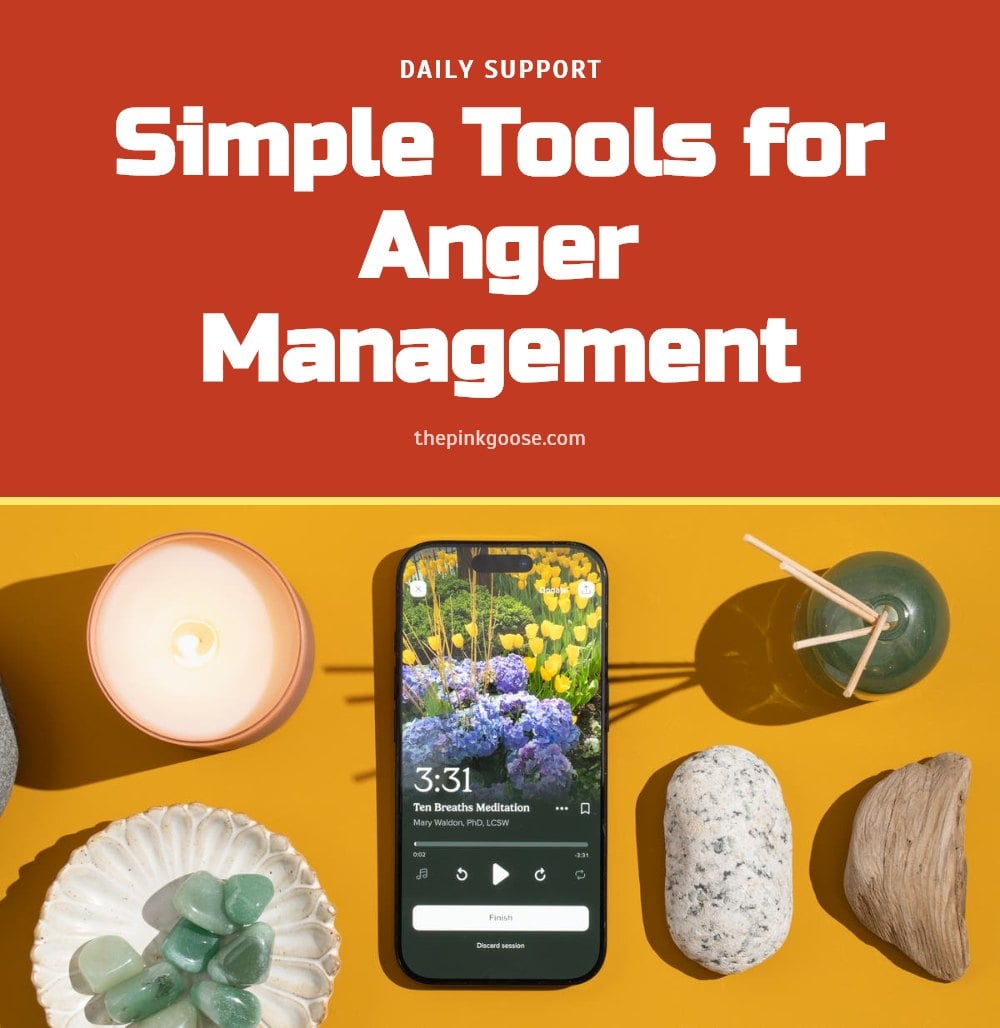
Having a few simple tools on hand can make a real difference when anger rises.
- Journal or Notebook: Write down your thoughts, feelings, and triggers. This helps you spot patterns and understand what is really going on.
- Pen: Keep one with your journal for reflective writing whenever you need it.
- Stress Ball (optional): Squeezing one provides a physical outlet for pent-up tension and offers a tactile distraction in the moment.
- Meditation Apps (optional): Use them for guided mindfulness practices and deep breathing exercises. They help you observe anger without reacting immediately and promote calm.
Understanding the Timeline for Anger Management
Managing anger is an ongoing process, not a quick fix. With consistent practice, you can expect to see noticeable improvements in your ability to cope over weeks or months.
- Consistency is Key: Regularly applying coping strategies, self-reflection, and assertive communication yields the best results.
- Professional Support: Seeking guidance from a therapist can accelerate your learning and help you implement effective strategies more quickly.
When to Seek Professional Help for Anger
Sometimes professional help is necessary for managing anger safely and effectively.
- Immediate Help: If anger leads to thoughts of harming yourself or others, seek professional support right away.
- Therapist or Counselor: Consult one if anger causes significant distress, relationship problems, or negatively impacts your daily functioning.
- Doctor: If you experience physical symptoms of chronic anger like persistent headaches, digestive issues, or high blood pressure, see a doctor to rule out underlying health concerns.
Frequently Asked Questions
Is it normal to feel angry often?
Yes, feeling angry frequently is a common human experience. It becomes a concern when it starts to negatively impact your daily life, relationships, or health. If you find yourself angry most of the time, it may be worth exploring underlying triggers or speaking with a therapist.
How can I stop myself from lashing out when I’m angry?
When you feel anger rising, pause and take a few deep breaths to calm your body’s fight or flight response. Give yourself a moment to identify the specific trigger and what you really need. Then, communicate your feelings using ‘I’ statements, like ‘I feel frustrated when…’
Can anger actually be good for me?
Anger itself is a neutral emotion that can be beneficial when understood and expressed healthily. It can motivate you to address injustices, set boundaries, and protect yourself. The key is how you respond to it, not the emotion itself.
What’s the difference between anger and aggression?
Anger is an emotion, while aggression is a behavior. Anger is the internal feeling of frustration or irritation, whereas aggression involves acting out in a harmful or controlling way toward others. Healthy anger management focuses on assertive communication, not aggression.
How long does it take to manage anger effectively?
Managing anger is an ongoing process, not a quick fix. With consistent practice of coping strategies like deep breathing, journaling, and assertive communication, you can expect noticeable improvements over weeks or months. Regular self-reflection helps speed up the learning curve.
Final Thoughts
Start by acknowledging your anger without judgment and pausing before you act. This simple shift can help you uncover what your frustration is really about, whether it’s a boundary that needs reinforcing or an unmet need. Managing anger is an ongoing process, and with consistent practice, you can expect to see improvements in how you cope over weeks or months. Remember, anger is not your enemy, it’s a messenger.
This article is for informational purposes only and does not constitute medical or professional advice. If you are experiencing overwhelming anger, thoughts of harming yourself or others, or if anger is significantly impacting your life, please consult a qualified therapist, counselor, or healthcare provider.
