

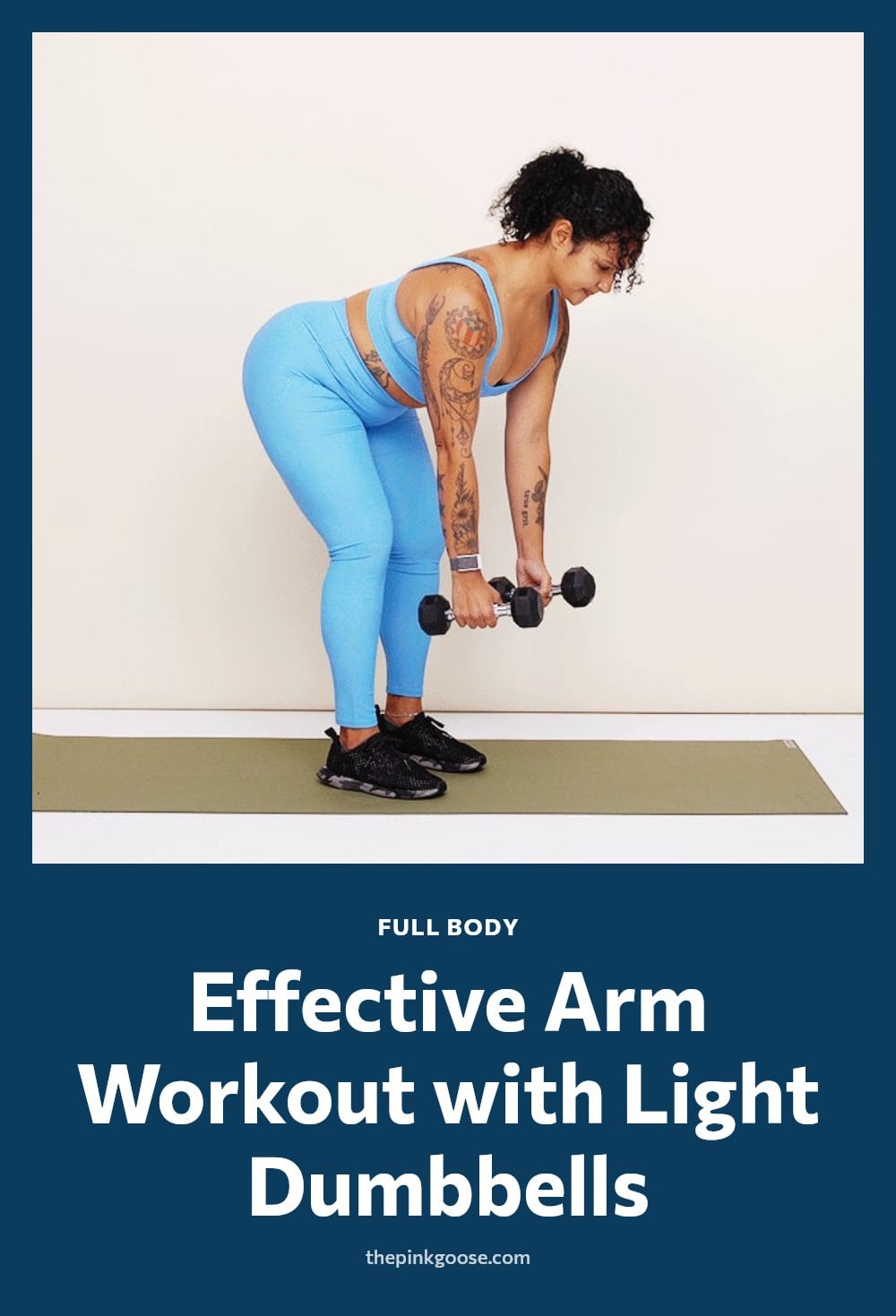
You want stronger, more defined arms, but the idea of heavy lifting or bulky gym equipment might feel intimidating. Light dumbbells are actually the perfect tool for building lean muscle and endurance right at home. This article covers a complete arm workout that targets your biceps, triceps, and shoulders using weights you already have or can easily find.
Key Takeaways
- Use light dumbbells (1-10 pounds) to build muscle endurance and definition without bulk.
- Perform 2-3 arm workouts per week with at least 48 hours of rest between sessions.
- Focus on controlled movements and proper form over speed or heavy weight.
- Warm up for 5-10 minutes before and cool down with static stretches after each workout.
- Gradually increase weight or repetitions over time for continued progress.
Getting Started: Your Arm Workout Essentials
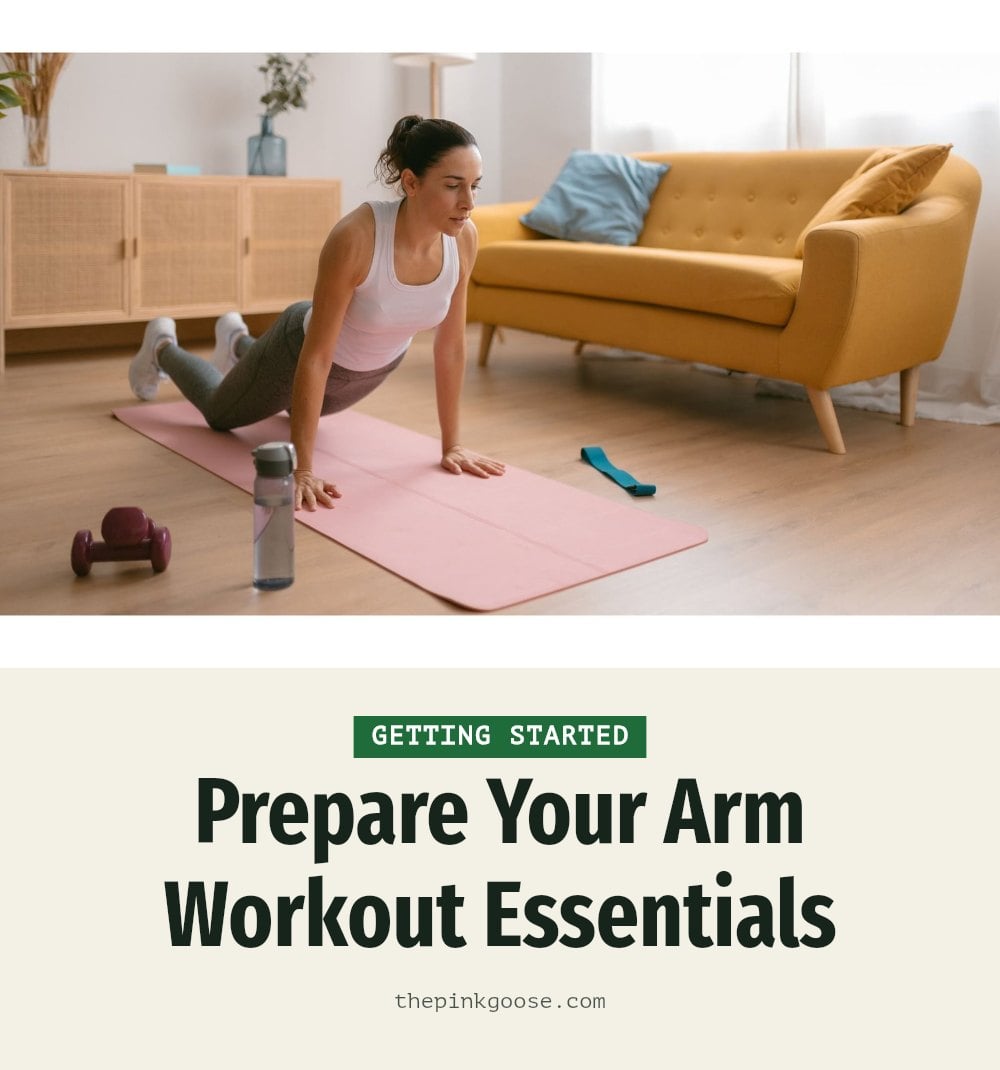
Light dumbbells are your best friend for arm toning and endurance. Using weights in the 1- to 10-pound range allows you to perform higher repetitions, which builds muscle definition without adding bulk. For this workout, you will need a pair of light dumbbells, comfortable athletic clothing, supportive shoes, and a water bottle. An exercise mat is optional but helpful for floor exercises. Before starting any new exercise program, consult a healthcare professional, especially if you have pre-existing shoulder, elbow, or wrist issues.
1. Warm-Up: Arm Circles
Stand with your feet shoulder-width apart and extend your arms straight out to the sides at shoulder height. Make small, controlled circles forward for 30 seconds, then reverse direction and circle backward for another 30 seconds. This movement increases blood flow to the shoulder joints and prepares the muscles for work.
- Time: 30 seconds forward, 30 seconds backward
- Form cue: Keep your arms parallel to the floor and your shoulders relaxed, not hunched
- Make it easier or harder: Use smaller circles for less intensity or larger circles for more range of motion
2. Bicep Curls
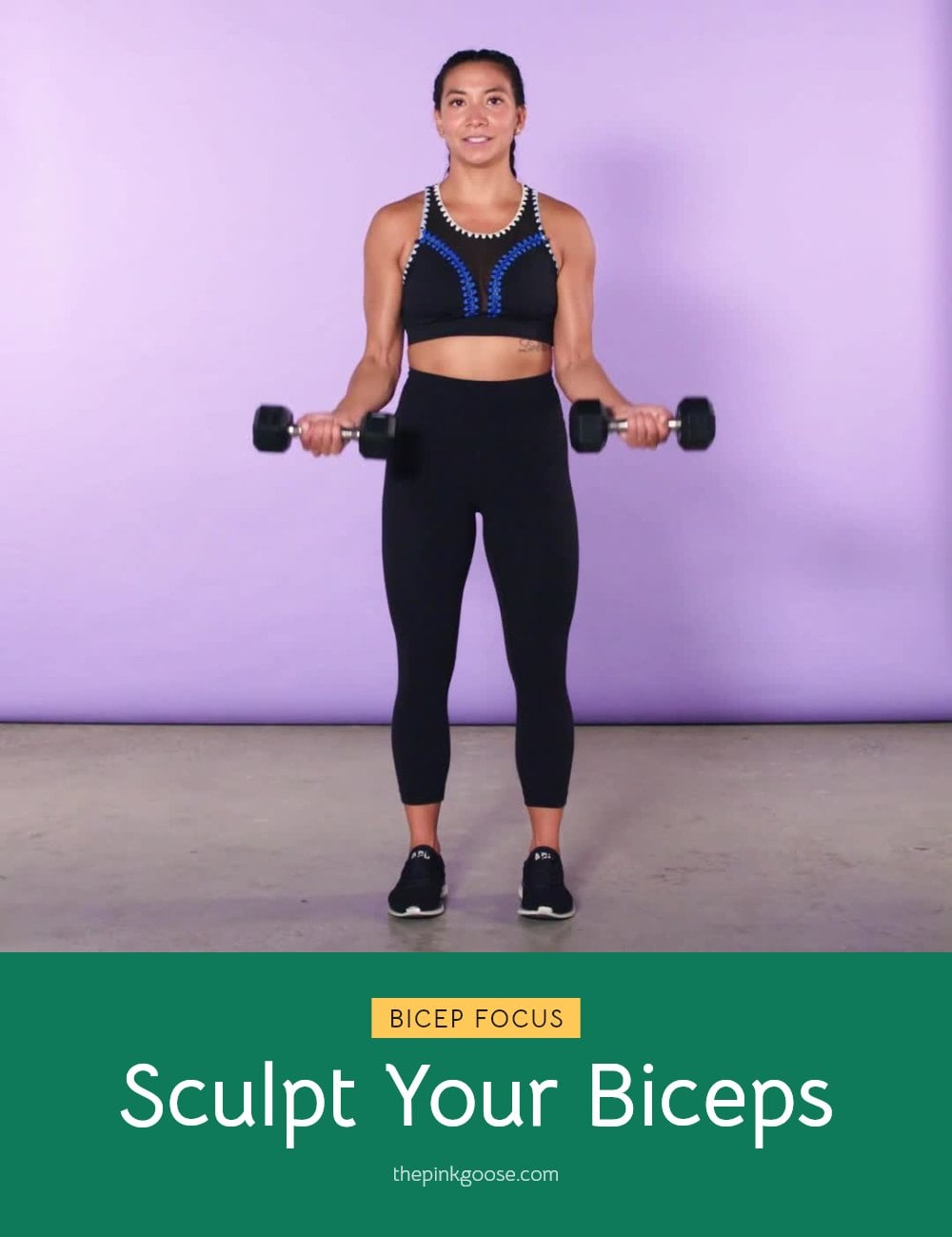
Stand with your feet hip-width apart, holding a dumbbell in each hand with your palms facing forward. Keep your elbows tucked close to your ribs and your upper arms stationary. Curl the weights up toward your shoulders, squeezing your biceps at the top, then lower them slowly with control.
- Sets and reps: 2-3 sets of 10-15 repetitions
- Form cue: Move slowly and avoid swinging your body or using momentum
- Make it easier or harder: Use lighter dumbbells for easier, heavier for more challenge
3. Overhead Tricep Extensions
Stand with your feet shoulder-width apart and hold one dumbbell with both hands, lifting it straight overhead. Keeping your elbows pointing forward and close to your ears, bend your elbows to lower the dumbbell behind your head. Extend your arms back up to the starting position, focusing on engaging your triceps.
- Sets and reps: 2-3 sets of 10-15 repetitions
- Form cue: Keep your elbows pointed forward and do not let them flare out to the sides
- Make it easier or harder: Use a lighter dumbbell for easier, or perform the exercise seated for better stability
4. Lateral Raises
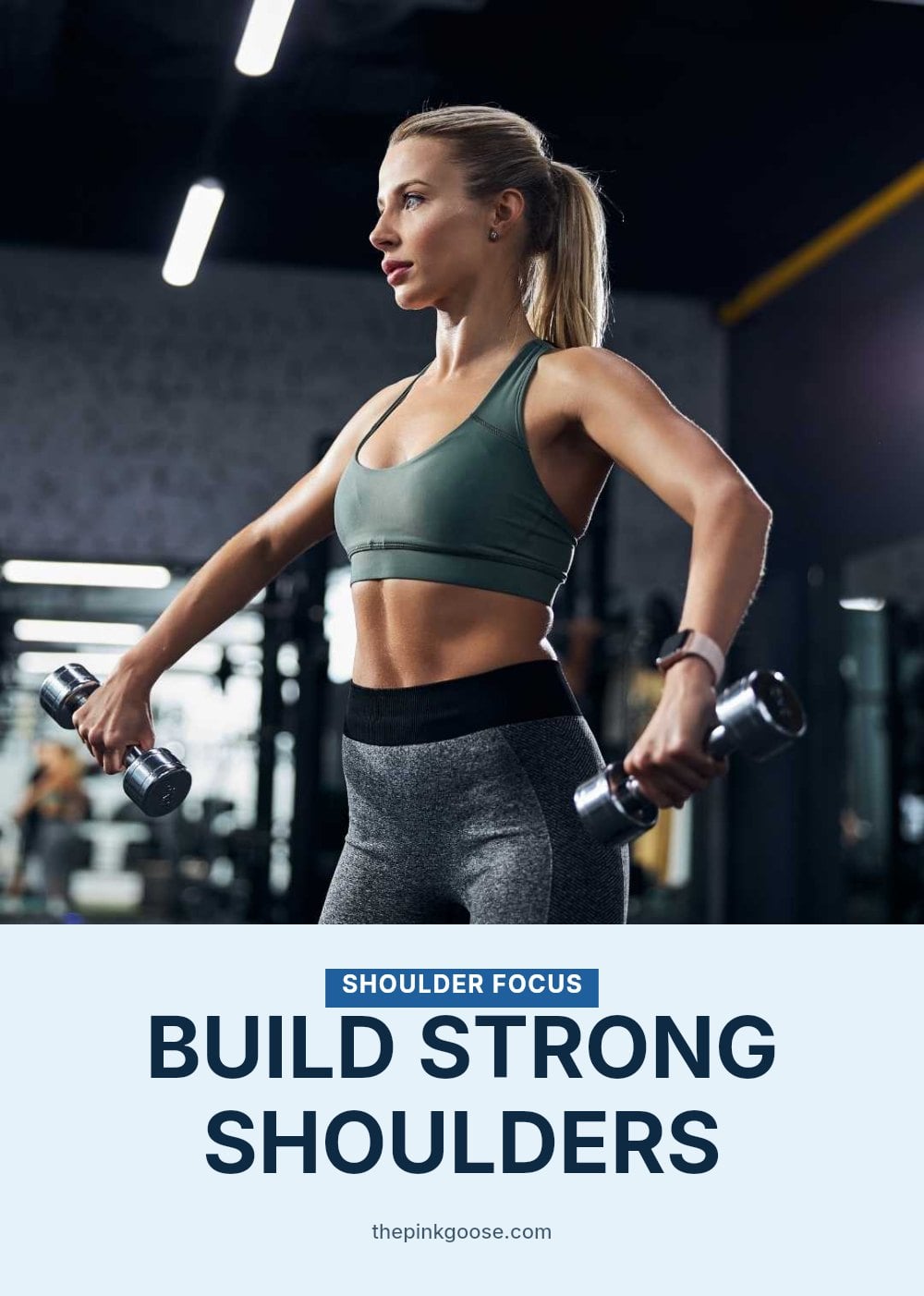
Stand with your feet hip-width apart, holding a dumbbell in each hand at your sides. Maintain a slight bend in your elbows throughout the movement. Raise both arms out to the sides until they reach shoulder height, leading with your elbows. Lower the weights back down with control.
- Sets and reps: 2-3 sets of 10-15 repetitions.
- Form cue: Lead with your elbows and do not lift higher than your shoulders.
- Make it easier or harder: Use lighter weights to master the motion, or increase to heavier dumbbells within the 1-10 pound range for more challenge.
5. Hammer Curls
Hold a dumbbell in each hand with your palms facing each other, as if you were holding a hammer. Keep your wrists straight and stable. Curl the weights straight up toward your shoulders, maintaining the neutral palm position, then lower them slowly. This variation targets both the biceps and the forearms.
- Sets and reps: 2-3 sets of 10-15 repetitions.
- Form cue: Keep your wrists straight and stable throughout the curl.
- Make it easier or harder: Use lighter weights to focus on form, or increase the weight for more resistance.
6. Tricep Kickbacks
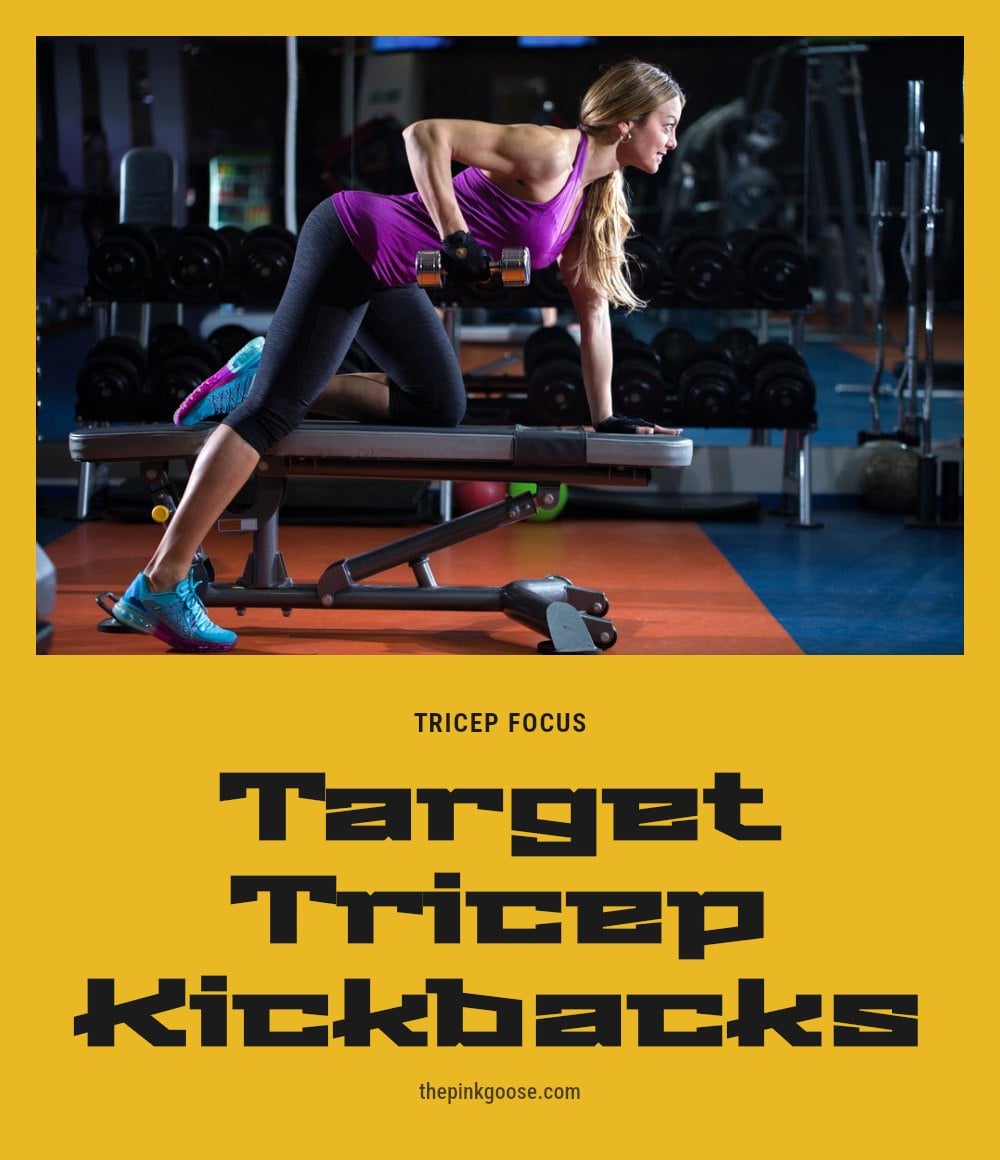
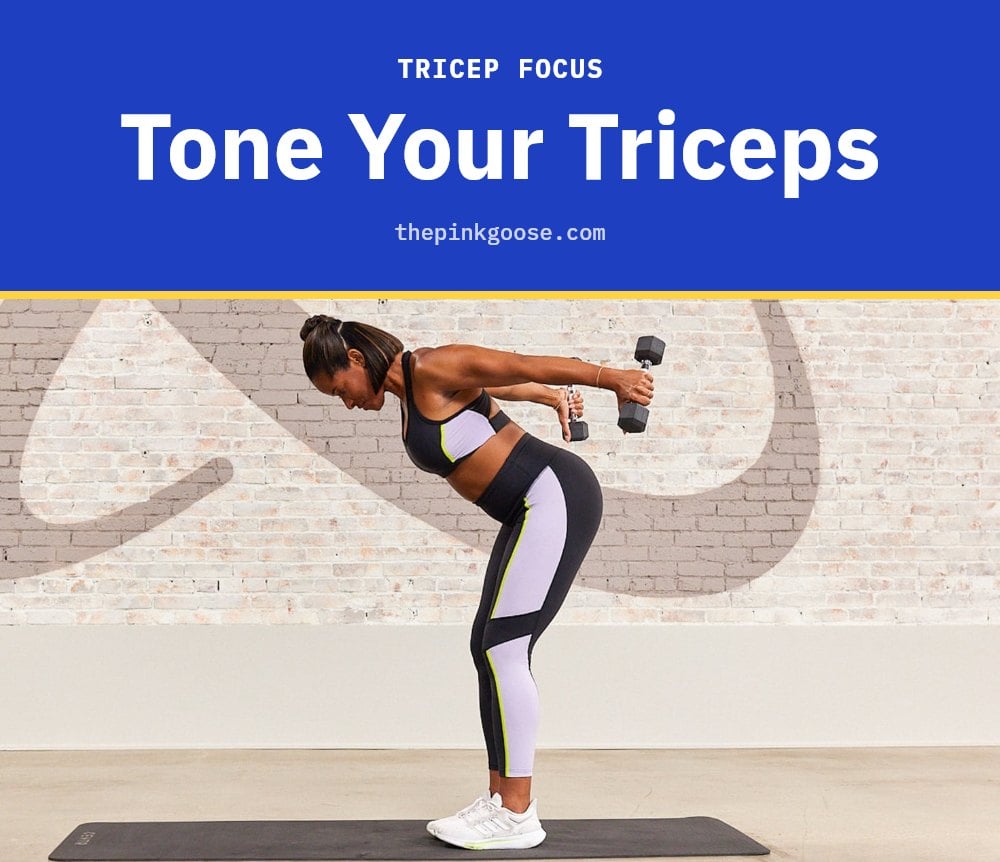
Hinge forward at your hips, keeping your back flat, and place one hand on a chair or table for support if needed. Hold a dumbbell in the other hand, with your elbow bent at 90 degrees and tucked close to your ribs. Extend your forearm straight back until your arm is fully extended, squeezing your triceps at the top. Return to the starting position slowly. Complete all reps on one side before switching.
- Sets and reps: 2-3 sets of 10-15 repetitions per arm.
- Form cue: Keep your upper arm stationary; only your forearm moves.
- Make it easier or harder: Perform the exercise without weight to practice form, or increase the dumbbell weight for more challenge.
7. Front Raises
Stand tall with your feet hip-width apart, holding a dumbbell in each hand in front of your thighs with your palms facing your body. Keeping your arms straight but not locked, raise them forward to shoulder height. Lower the weights back down with control, avoiding any swinging motion.
- Sets and reps: 2-3 sets of 10-15 repetitions.
- Form cue: Do not shrug your shoulders; keep your core tight throughout.
- Make it easier or harder: Use lighter weights to focus on controlled movement, or increase the weight for more resistance.
8. Cool-Down: Arm and Shoulder Stretches
Finish your workout with static stretches to improve flexibility and aid recovery. For a tricep stretch, raise your right arm overhead, bend your elbow, and reach your hand down toward the middle of your back. Gently pull your elbow with your left hand until you feel a stretch. For a bicep stretch, extend your right arm straight out in front, palm up, and use your left hand to gently pull your fingers back toward your body.
- Time: Hold each stretch for 20-30 seconds, then switch sides.
- Form cue: Keep your shoulders relaxed and avoid bouncing.
- Make it easier or harder: Reduce the stretch intensity by not pulling as far; increase it by holding the stretch longer or pulling slightly more.
Your Weekly Arm Workout Schedule
For best results, aim for 2-3 arm workouts per week with at least 48 hours of rest between sessions. Consistency matters more than intensity. Here is a sample weekly schedule:
| Day | Activity |
|---|---|
| Monday | Arm workout (all 6 exercises) |
| Tuesday | Rest or light cardio |
| Wednesday | Arm workout (all 6 exercises) |
| Thursday | Rest |
| Friday | Arm workout (all 6 exercises) |
| Saturday | Rest or active recovery |
| Sunday | Rest |
Rest days allow your muscles to repair and grow stronger. Stick with the plan, and you may notice visible changes in 4-8 weeks.
Common Arm Workout Mistakes to Avoid
Avoid these common mistakes to keep your workouts safe and effective.
- Using Momentum: Don’t swing the weights. Control both the lift and the lower to keep the tension on your muscles.
- Skipping Warm-Up/Cool-Down: Always prepare your muscles with 5-10 minutes of light cardio and dynamic stretches, and finish with static stretches to aid recovery.
- Ignoring Pain: Muscle fatigue is normal, but sharp pain is not. Stop immediately if you feel a sharp or sudden pain in a joint or muscle.
- Holding Breath: Breathe out as you lift or push, and breathe in as you lower or release. This keeps your core stable and oxygen flowing.
- Locking Elbows: Keep a slight bend in your elbows during extensions and presses to protect the joint from strain.
Frequently Asked Questions
How often should I do arm workouts with dumbbells?
Aim for 2-3 sessions per week, with at least 48 hours of rest between them. This gives your muscles time to recover and adapt, which is essential for building strength and definition. Rest days are just as important as workout days.
Can I get bulky from lifting light weights?
No, lifting light dumbbells in the 1- to 10-pound range for higher repetitions builds muscle endurance and lean definition, not bulk. Women generally lack the testosterone levels needed to build significant muscle size from this type of training.
What if I don’t have dumbbells at home?
You can substitute household items like water bottles, canned goods, or resistance bands to mimic the weight. Focus on the same controlled movements and rep ranges. The key is to challenge your muscles without sacrificing form.
How long until I see results from arm workouts?
With consistent effort 2-3 times per week, you may start to see visible changes in arm tone and strength within 4 to 8 weeks. Individual results vary based on factors like genetics, diet, and overall activity level.
Final Thoughts
For the best results, stick to this workout 2-3 times a week and give your muscles at least 48 hours to recover. You may start to notice changes in arm tone and endurance within 4-8 weeks if you stay consistent. My tip: pick a schedule that fits your week and treat it like a non-negotiable appointment with yourself.
This article is for general informational purposes only and does not constitute medical or professional advice. Always consult a healthcare professional before starting a new exercise program, especially if you have any pre-existing health conditions or concerns. Stop immediately if you experience sharp pain.
