

Have you ever started a new routine with tons of motivation, only to lose steam a few weeks later? The problem isn’t you, it’s the system. Atomic Habits offers a practical framework for building lasting change through tiny, consistent actions. In this article, I’ll walk you through the core principles and show you exactly how to apply them to your daily routine, from fitness to self-care.

Key Takeaways
- Focus on who you want to become (e.g., ‘I am a healthy eater’) rather than just setting goals.
- Design your environment to make good habits obvious and bad habits invisible.
- Use the Two-Minute Rule to start new habits with less than two minutes of effort.
- Pair a new habit with an existing one using habit stacking for automatic reminders.
- Track your habits visually and reward yourself immediately to stay motivated.
What Are Atomic Habits and How Can They Transform Your Life?
Atomic Habits, a framework by James Clear, centers on making tiny, incremental changes to your behavior that compound into significant long-term results. Instead of relying on willpower, it builds systems using four laws: Make it Obvious, Attractive, Easy, and Satisfying. This approach fosters lasting positive change in any area of your life, from fitness to self-care.
1. Identify Your Desired Identity

Instead of setting goals like “I want to eat healthier,” focus on who you want to become. Say “I am a healthy eater.” This identity-based approach shifts your mindset, making it easier to adopt habits that align with your new self-perception. When you see yourself as a reader, you naturally pick up a book. When you identify as a runner, lacing up your shoes feels more natural. Your habits then become proof of your identity, not just actions you force yourself to do.
2. Make It Obvious: Design Your Environment

Place cues for good habits in plain sight. Keep your workout clothes by your bed or your water bottle on your desk. Conversely, make bad habits invisible. Store unhealthy snacks out of reach or put your phone in another room during focused work time. My tip: I always lay out my yoga mat the night before, so it’s the first thing I see in the morning. It makes it almost impossible to ignore. Environment design works because your brain automatically follows what it sees.
3. Make It Attractive: Use Temptation Bundling
Pair a habit you need to do with a habit you want to do. For instance, only allow yourself to listen to your favorite podcast while doing laundry. This makes the less appealing task more attractive by associating it with an immediate reward. My tip: I only watch my favorite show while I’m on the treadmill. It makes the workout fly by. The key is to link the two so the enjoyable activity becomes a built-in incentive for the one you tend to avoid.
4. Make It Easy: Apply the Two-Minute Rule

Start with two minutes: Pick a new habit and shrink it until it takes less than two minutes. Read one page instead of a chapter, or put on your sneakers instead of planning a full workout. The goal is consistency, not intensity. Once you start, continuing often feels easier than stopping.
Tip: When I want to meditate, I just sit down for two minutes. Often I end up meditating for longer, but that two-minute commitment gets me started without resistance.
5. Make It Easy: Implement Habit Stacking
Attach it to an existing habit: Use the formula: After I [current habit], I will [new habit]. This piggybacks on routines you already do automatically, so you don’t have to remember the new behavior separately.
- After I pour my morning coffee, I will write down three things I’m grateful for.
- After I brush my teeth, I will do 10 squats.
- After I take off my work shoes, I will change into workout clothes.
Stacking leverages your existing routines to trigger new behaviors without extra willpower.
6. Make It Satisfying: Use Habit Tracking
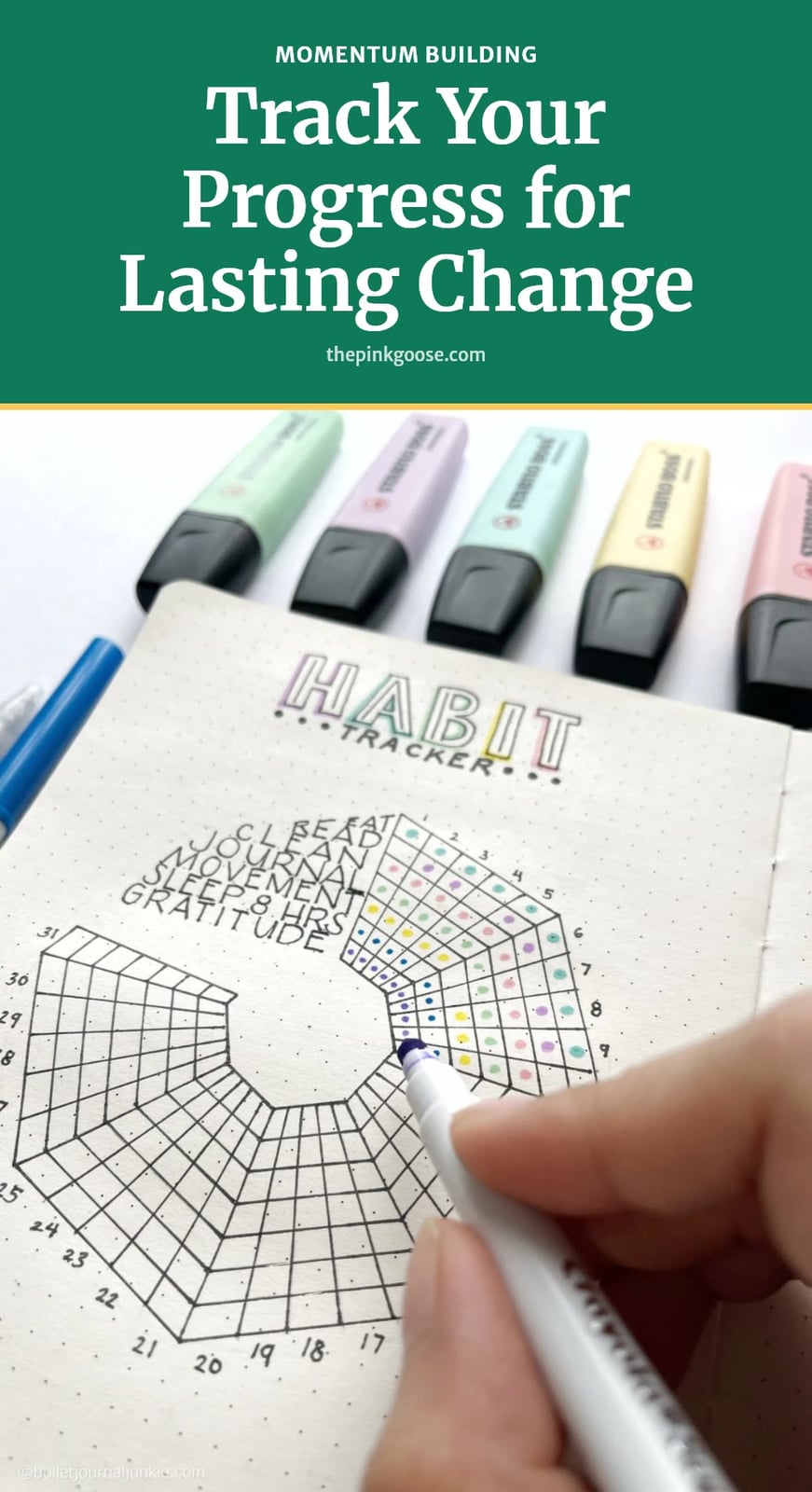
Track visually for satisfaction: Marking a calendar, filling a journal, or using a habit-tracking app gives you immediate proof of progress. Seeing a chain of completed days motivates you to keep the streak alive and reinforces your new identity.
Good to know: I use a simple wall calendar and put a big X for every day I complete a habit. There is something so satisfying about seeing those chains of Xs. It turns consistency into a game I want to win.
7. Make It Satisfying: Reward Yourself Immediately
Reward yourself right after: New habits need instant gratification. Do not wait for long-term results. Give yourself a small, immediate treat after completing the habit.
- Listen to your favorite song.
- Watch a short funny video.
- Enjoy a specific tea or a piece of dark chocolate.
Pro move: After I finish my daily stretching, I allow myself to scroll through Pinterest for five minutes. It is a small reward, but it works because it arrives right when I need the satisfaction boost.
8. Break Bad Habits: Make Them Invisible
Remove the cues for bad habits from your environment. If you want to stop mindlessly snacking, don’t keep snacks on your counter. Out of sight, out of mind is a powerful principle for disrupting unwanted behaviors.
Quick tip: I moved my phone charger out of my bedroom, so I’m not tempted to scroll before bed. It’s truly helped me sleep better.
9. Break Bad Habits: Make Them Difficult
Add friction to bad habits. If you want to reduce screen time, delete social media apps from your phone and only access them on your computer. The more effort required to engage in a bad habit, the less likely you are to do it.
Tip: I put my TV remote in a drawer in another room. It’s a small barrier, but often enough to make me reconsider mindless watching.
10. Embrace the Goldilocks Rule
Stay motivated by working on tasks that are ‘just right’ in difficulty, not too hard to be discouraging, not too easy to be boring. This means continually challenging yourself slightly as your habits become easier, ensuring sustained engagement and growth.
Good to know: If a workout feels too easy, I’ll add an extra rep or a heavier weight. If it’s too hard, I’ll scale back. Finding that sweet spot is key.
11. Never Miss Twice
Understand that missing a habit once is an accident; missing it twice starts a new, undesirable habit. The key is to get back on track immediately after a slip-up. Don’t let one missed day snowball into a week of missed days.
Pro move: If I miss my morning meditation, I make sure to do it that evening, even for just a few minutes. Consistency, not perfection, is the goal.
Common Mistakes When Applying Atomic Habits
Trying to change too much at once: Focus on one or two habits at a time. Building momentum on a single change prevents overwhelm and increases your chances of sticking with it.
Relying solely on willpower: Systems and environment design are more powerful than sheer motivation. Arrange your surroundings so good habits are easy and bad habits are hard.
Not tracking progress: Without visual proof, it’s easy to lose motivation and underestimate your consistency. A simple calendar or app keeps you honest and motivated.
Giving up after a single setback: One missed day is not a failure; it’s an opportunity to recommit. Get back on track immediately, and remember that consistency, not perfection, is the goal.
Frequently Asked Questions
How long does it take for a habit to become automatic?
There is no set number of days that works for everyone. For some habits, you might start doing them automatically within a few weeks, while others can take several months. The key is consistency, not a specific timeline. Focus on showing up every day, and the automaticity will come with time.
Can I use Atomic Habits for mental health goals?
Yes, the principles can be applied to mental health goals, such as building a meditation practice or reducing negative self-talk. However, they are not a substitute for professional therapy or medical treatment. If you are dealing with a serious mental health condition, please consult a licensed professional.
What if I miss a habit for a few days?
The most important thing is to get back on track immediately. Missing a habit once is an accident, but missing it twice can start a new, unwanted habit. Don’t let one slip-up turn into a week of missed days. Just resume your routine as soon as you can, without guilt.
Is Atomic Habits just about productivity?
No, the framework applies to any area of life, including health, relationships, finances, and personal growth. It is about building systems for any behavior you want to change, not just work-related tasks. The four laws can be used to build good habits and break bad ones in any domain.
How do I choose which habits to start with?
Start by identifying the identity you want to build, then choose one or two habits that directly support that identity. For example, if you want to become a runner, start with the habit of putting on your running shoes every morning. Focus on one habit at a time to avoid overwhelm and build momentum.
Final Thoughts
My tip: pick just one habit to start with, apply the Two-Minute Rule, and use habit stacking to attach it to something you already do. Realistically, you might not see big changes in the first week, but consistency over the next few weeks will build momentum. Small steps, repeated daily, are the secret to lasting transformation.
