

If you’ve been feeling unusually tired or foggy, you might wonder if your B12 levels are to blame. This essential vitamin plays a key role in your energy, nerve health, and red blood cell production, but it’s not something your body makes on its own. In this article, I’ll cover the best food sources of B12, who may need extra attention to their intake, and what to consider before reaching for a supplement.

Key Takeaways
- Vitamin B12 is naturally found only in animal products like meat, fish, eggs, and dairy.
- Vegans and vegetarians should rely on fortified foods or supplements to meet the 2.4 mcg daily requirement.
- Older adults and people taking certain medications may have trouble absorbing B12 from food.
- Deficiency can take years to develop, but symptoms like fatigue and numbness should not be ignored.
- Consult a healthcare professional before starting a B12 supplement, especially at high doses.
What is Vitamin B12 and Why Is It So Important?
Vitamin B12 is a water-soluble nutrient your body needs for red blood cell formation, nerve function, and DNA synthesis. It’s naturally found in animal products like meat, fish, eggs, and dairy, which is why it’s a key concern for anyone on a plant-based diet. Getting enough B12 helps maintain your energy levels and supports long-term neurological health.
How B12 Works in Your Body
B12, also called cobalamin, is water-soluble, so your body doesn’t store large amounts like fat-soluble vitamins. To absorb it, your stomach must produce a protein called intrinsic factor. Without enough intrinsic factor, even a B12-rich diet won’t deliver the vitamin to your bloodstream.
Once absorbed, B12 is stored in the liver. This storage can hold enough for several years, which is why deficiency symptoms often take a long time to appear. But when stores run low, the effects can be significant.
1. Signs You Might Be Low on B12
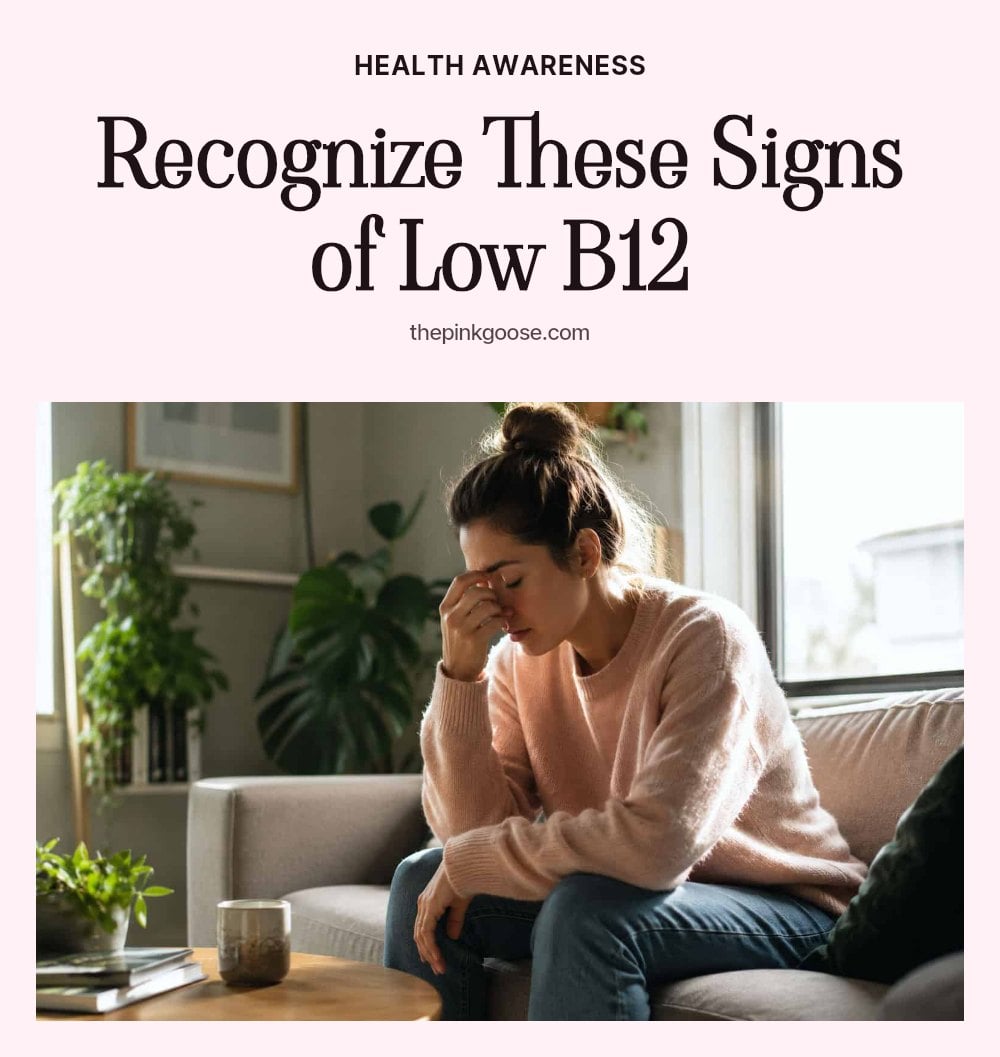
- Fatigue and weakness: Low energy that doesn’t improve with rest is one of the earliest and most common signs of low B12.
- Neurological symptoms: Numbness, tingling in the hands or feet, balance problems, and memory issues can develop as deficiency progresses.
- Megaloblastic anemia: Without enough B12, your body produces abnormally large red blood cells that can’t function properly, leading to severe fatigue and shortness of breath.
Who Needs to Pay Extra Attention to B12 Intake?
Vegans and vegetarians are at higher risk because B12 is naturally found only in animal products. If you don’t eat meat, fish, eggs, or dairy, your diet likely lacks this vitamin unless you rely on fortified foods or supplements.
Older adults often produce less stomach acid, which reduces the body’s ability to absorb B12 from food. The same problem can occur with certain medications, including proton pump inhibitors for acid reflux and metformin for diabetes. If any of these apply to you, talk with your doctor about monitoring your B12 levels.
Getting Enough B12 Through Your Diet
Getting Enough B12 Through Your Diet
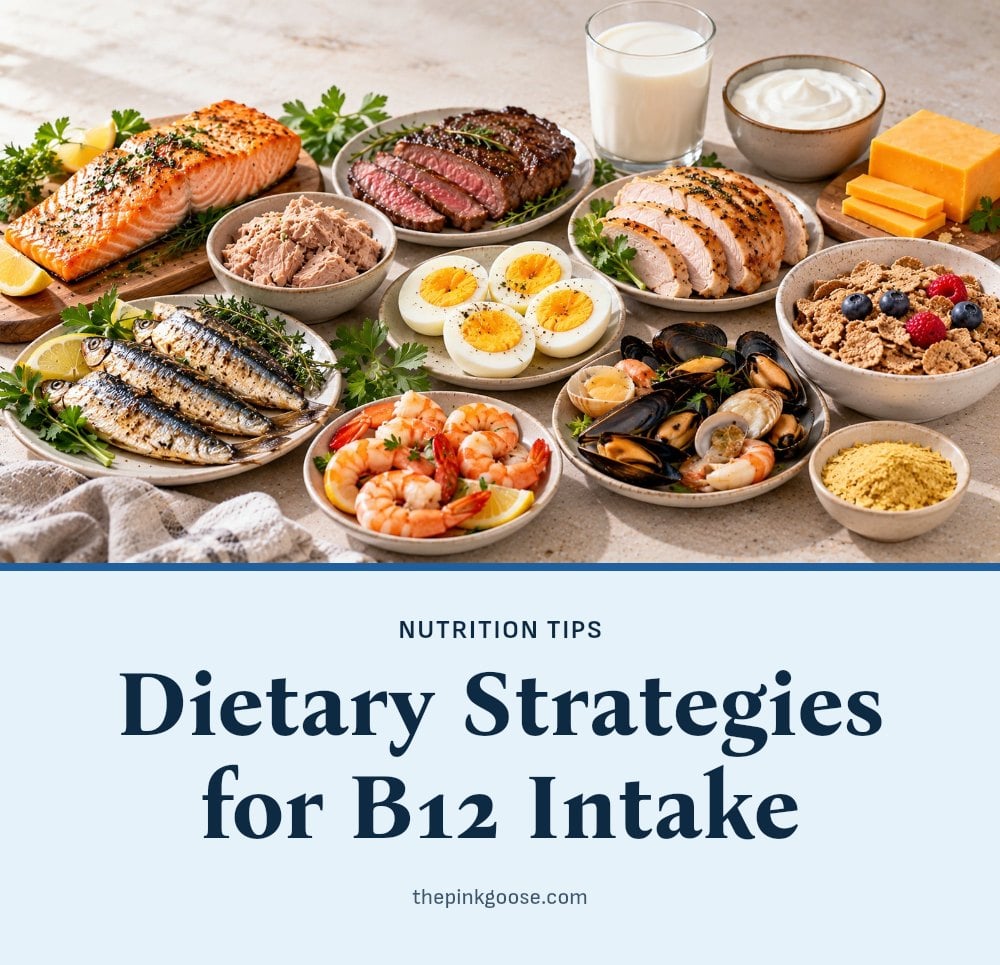
If you eat animal products, you have straightforward options. A 3-ounce serving of cooked beef liver provides far more than the daily requirement, while a single egg gives about 0.6 micrograms. Three ounces of cooked salmon delivers roughly 4.8 micrograms, and a cup of whole milk adds about 1.1 micrograms. My tip: spread your intake across the day since B12 is water-soluble and your body absorbs it more efficiently in smaller amounts.
For plant-based diets, fortified foods are your main source. Look for plant milks (almond, soy, oat) that list cyanocobalamin on the ingredient label, one cup typically provides 1 to 3 micrograms. Many breakfast cereals are fortified with 6 micrograms per serving, and two tablespoons of fortified nutritional yeast can deliver around 4 micrograms. The RDA for adults is 2.4 micrograms, so check labels to confirm you’re meeting that target consistently.
Considering a B12 Supplement?
Considering a B12 Supplement?
Consult a professional: Always talk to your doctor before starting any new supplement. They can check your current B12 levels with a simple blood test and recommend the right dose for your situation.
Choose wisely: Look for supplements labeled cyanocobalamin or methylcobalamin. Cyanocobalamin is the most studied and cost-effective form, while methylcobalamin is the active form your body can use directly. Sublingual tablets and sprays are options if you have absorption concerns.
Consistent intake: If you’re vegan or vegetarian, make fortified foods or supplements a regular part of your routine. A daily 25 to 100 microgram supplement is common for maintenance, but your doctor will confirm what’s right for you.
Common B12 Misconceptions to Avoid
Common B12 Misconceptions to Avoid
Spirulina isn’t enough: Don’t rely on unfortified plant foods like spirulina, algae, or fermented foods as reliable B12 sources. They may contain B12 analogs that block absorption of the real vitamin.
Fatigue isn’t always B12: Don’t assume all fatigue is due to B12 deficiency. Iron deficiency, thyroid issues, sleep problems, and stress can cause similar symptoms. A blood test is the only way to know.
Self-diagnosis is risky: Avoid self-diagnosing a deficiency based on symptoms alone. Neurological damage from low B12 can become irreversible if left untreated, so get medical confirmation.
Ignoring symptoms: Don’t ignore persistent numbness, tingling, memory problems, or balance issues. These neurological signs warrant a doctor visit, not a wait-and-see approach.
When to Talk to Your Doctor About B12
When to Talk to Your Doctor About B12
See your doctor if you experience fatigue, numbness, tingling, memory issues, or balance problems that don’t resolve. Also consult before starting any B12 supplement, especially high doses above 1,000 micrograms daily.
Schedule a check-in if you’re vegan, vegetarian, over 50, or have conditions like celiac disease, Crohn’s, or pernicious anemia that affect absorption. B12 injections must be administered by a healthcare professional, never attempt self-injection.
Frequently Asked Questions
What is the best form of B12 supplement?
Look for supplements labeled cyanocobalamin or methylcobalamin. Cyanocobalamin is the most studied and cost-effective form, while methylcobalamin is a naturally occurring form your body can use directly. Both are effective, so choose the one that fits your budget and preference.
How long does it take to recover from B12 deficiency?
Recovery time varies depending on the severity of the deficiency and the treatment method. With proper supplementation, many people start to feel better within a few weeks, though full correction of symptoms may take several months. Your doctor can monitor your progress with follow-up blood tests.
Is it possible to take too much B12?
B12 is considered very safe, and there is no established upper limit for intake because excess is excreted in urine. However, high doses above 1,000 micrograms daily should only be taken under medical supervision to rule out other causes of your symptoms and to ensure the right dose for your needs.
Can I get B12 from plant-based foods naturally?
No, plant-based foods do not naturally contain active B12. Some foods like spirulina, algae, and fermented foods may contain B12 analogs, but these can actually block absorption of the real vitamin. If you follow a vegan or vegetarian diet, rely on fortified foods or a supplement for your B12 intake.
Final Thoughts
My tip: If you’re vegan or over 50, don’t wait for symptoms to appear. Ask your doctor for a simple blood test to check your B12 levels. With proper food choices or a supplement, most people can correct a deficiency within weeks to months. Paying attention to this one nutrient can make a real difference in how you feel every day.
This article is for informational purposes only and does not constitute medical advice. Vitamin B12 needs vary by individual, and symptoms of deficiency can overlap with other conditions. Always consult a healthcare professional for personalized guidance, especially before starting a new supplement or if you have persistent health concerns.
