

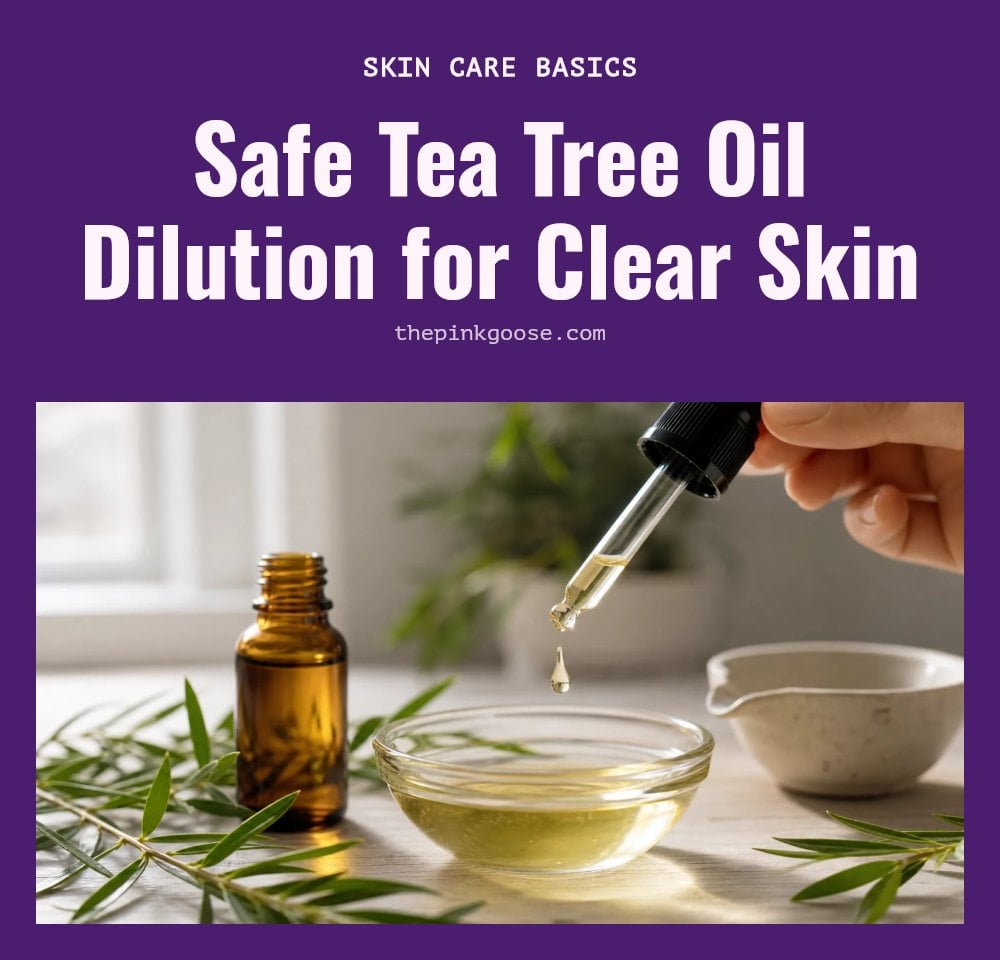
You have probably heard that tea tree oil can help with acne or minor skin irritations, but using it straight from the bottle is a recipe for redness and burning. The secret is safe dilution with a carrier oil, and that is exactly what this article walks through. I will cover the right ratios, the best carrier oils, and the step-by-step method so you can get the benefits without the irritation.
Key Takeaways
- Always dilute tea tree oil with a carrier oil before applying it to your skin.
- A general dilution is 1-2 drops of tea tree oil per 12 drops of carrier oil (5-10% mixture).
- For sensitive skin, use 1 drop of tea tree oil per 24 drops of carrier oil (about 2.5% dilution).
- Perform a patch test on your inner forearm 24 hours before widespread use.
- Store tea tree oil in a cool, dark place to prevent oxidation and irritation.
The Safe Way to Use Tea Tree Oil on Your Skin
Always dilute tea tree oil with a carrier oil before applying it to your skin. A common dilution is 1-2 drops of tea tree oil per 12 drops of carrier oil, which gives about a 5-10% mixture. Perform a patch test on a small area, like your inner forearm, 24 hours before widespread use to check for any irritation.
Gather Your Essentials for Safe Application
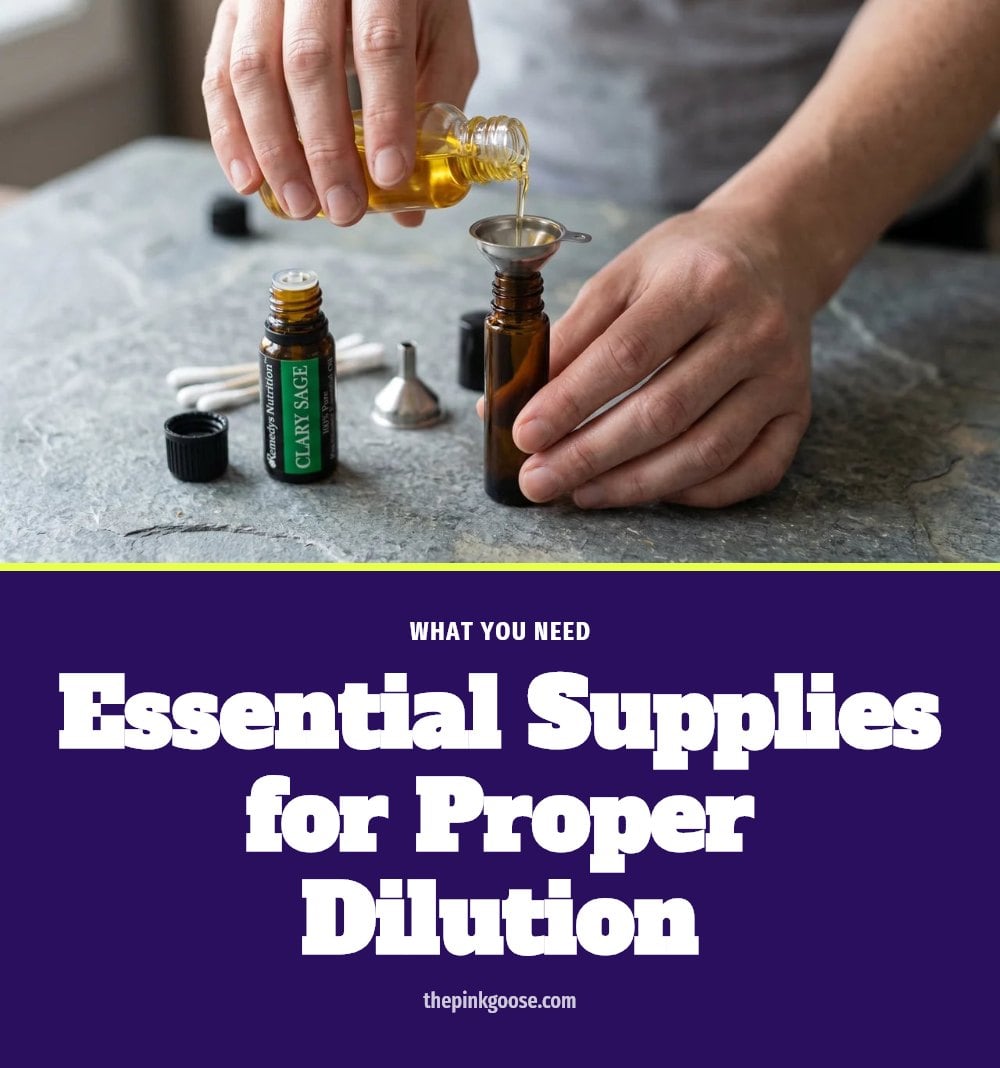
You will need a few key items to use tea tree oil safely.
- Pure tea tree essential oil: Look for 100% pure oil from Melaleuca alternifolia.
- A carrier oil: Choose jojoba, coconut, almond, or olive oil to dilute the essential oil.
- Mixing tools: A small, clean glass container and a dropper for precise measurement.
Step-by-Step Guide to Diluting Tea Tree Oil

Follow these steps to dilute and apply tea tree oil safely.
- Choose your carrier oil: Pick a carrier oil that suits your skin type. Jojoba works well for acne-prone skin, while coconut oil is good for dry skin.
- Determine the dilution ratio: For general use, mix 1-2 drops of tea tree oil with 12 drops of carrier oil (5-10% dilution). For sensitive skin, use 1 drop of tea tree oil with 24 drops of carrier oil (2.5% dilution).
- Mix the oils: Combine the tea tree oil and carrier oil in a clean glass container. Stir or shake thoroughly to blend.
- Perform a patch test: Apply a small amount of the mixture to your inner forearm and wait 24 hours. If no redness or irritation appears, it is safe to use.
- Apply to the target area: Use a cotton swab or pad to dab the diluted oil onto the affected skin. Avoid the eyes and mucous membranes.
Understanding Why Dilution is Essential
Tea tree oil is a concentrated essential oil, and that potency is exactly why it needs a carrier oil. Applied directly, it can trigger redness, itching, and dryness, because the active compounds, like terpinen-4-ol, are strong antimicrobials that can overwhelm the skin’s natural barrier. Dilution is not about weakening the effect; it is about delivering those compounds safely so they can work without causing irritation.
When you mix tea tree oil with a carrier oil like jojoba or coconut, you create a buffer that allows for gradual absorption. This way, the beneficial properties reach the skin at a concentration it can handle. Skipping this step risks an adverse reaction that might outweigh any potential benefit, especially for sensitive or compromised skin.
My tip: think of dilution as the difference between a splash and a sip. A small, controlled amount can help, while too much, too fast, often backfires. Properly diluted, tea tree oil can be part of a gentle routine, but undiluted, it is more likely to cause harm than help.
Common Mistakes to Avoid When Using Tea Tree Oil
Applying undiluted oil: This is the most common mistake. Tea tree oil is highly concentrated and can cause redness, itching, or burning if used straight. Always mix it with a carrier oil first.
Skipping the patch test: Even with a diluted mixture, your skin might react. Apply a small amount to your inner forearm and wait 24 hours before using it on a larger area.
Using too high a concentration: More is not better. Start with a lower dilution, especially if you have sensitive skin. A 2.5% dilution (1 drop per 24 drops of carrier oil) is a safe starting point.
Improper storage: Exposure to light and air can oxidize the oil, making it more irritating. Store your tea tree oil in a dark, cool place in an airtight container.
Pro Tips for Maximizing Tea Tree Oil Benefits
Choose the right carrier oil: Match your carrier oil to your skin needs. Jojoba oil is non-comedogenic and works well for acne-prone skin, while coconut oil can help with dryness.
Store properly: Keep your tea tree oil in a dark, cool place to prevent oxidation. A cabinet away from the stove or window is ideal.
Listen to your skin: If you notice any redness, stinging, or irritation after application, stop using the oil immediately. Your skin is telling you something.
Consistency is key: Use the diluted mixture regularly, typically once or twice daily, but don’t overdo it. Over-application can lead to dryness or irritation.
What to Expect: Timeline and Considerations
Results for skin conditions like acne or minor fungal issues can vary. Many people notice improvements within days to weeks of consistent, diluted application. Frequency typically ranges from once to twice daily, depending on your skin’s sensitivity and the concern you’re addressing.
The cost of tea tree oil and carrier oils is generally affordable, making it a budget-friendly option for a natural skincare routine. A single bottle of tea tree oil lasts a long time since you only use a few drops per application.
When to Consult a Healthcare Professional
Severe reactions: If you experience intense redness, burning, blistering, or a persistent rash, stop use and see a healthcare professional.
No improvement or worsening: If your skin condition does not improve after several weeks of consistent use, or if it gets worse, consult a dermatologist.
Special situations: If you have underlying skin conditions, are pregnant, or are breastfeeding, talk to your doctor before using tea tree oil.
Accidental ingestion: Tea tree oil is toxic if swallowed. If this happens, seek immediate medical attention.
Frequently Asked Questions
Can I put tea tree oil directly on a pimple?
No, you should never apply undiluted tea tree oil directly to a pimple. It is highly concentrated and can cause redness, burning, and peeling. Always mix it with a carrier oil first, even for spot treatments.
How often can I use diluted tea tree oil on my skin?
Frequency typically ranges from once to twice daily, depending on your skin’s sensitivity and the concern you are addressing. Start with once a day and see how your skin reacts before increasing to twice daily.
What is the best carrier oil for tea tree oil?
The best carrier oil depends on your skin type. Jojoba oil works well for acne-prone skin because it is non-comedogenic, while coconut oil is good for dry skin. Almond oil and olive oil are also suitable options.
Can tea tree oil help with dandruff?
Tea tree oil is commonly used for its potential antifungal and antimicrobial properties, which may help with dandruff. Dilute a few drops in a carrier oil and massage it into your scalp, or add it to your shampoo. Always dilute first.
Is tea tree oil safe for all skin types?
Tea tree oil can be safe for most skin types when properly diluted, but it is not suitable for everyone. People with very sensitive skin, eczema, or broken skin should use a lower dilution (about 2.5%) and always patch test first. If you have a skin condition, consult a dermatologist before use.
Final Thoughts
My tip: Start with the lower dilution (1 drop per 24 drops of carrier oil) if you have any history of skin sensitivity. With consistent, diluted use, you may notice improvements in days to weeks, but do not expect overnight results. Stick with a safe routine, and your skin will thank you.
This article is for informational purposes only and is not a substitute for professional medical advice. Always consult a dermatologist or healthcare provider before starting any new skin care routine, especially if you have a pre-existing condition, are pregnant, or are breastfeeding.
