

You want to see more definition in your arms, legs, and core, but you don’t have time for the gym or a big equipment budget. Toning is really about two things: building lean muscle and reducing body fat so that muscle shows through. This article walks you through a four-week at-home workout plan that combines strength training and cardio, plus the nutrition and recovery habits that make it all work.
Key Takeaways
- Combine strength training 3-5 times a week with cardio to reduce body fat and build lean muscle.
- Use compound exercises like squats, lunges, and push-ups to work multiple muscle groups at once.
- Progressively increase resistance or reps each week to keep your muscles adapting and growing.
- Eat enough protein, whole grains, fruits, and vegetables to support muscle repair and fat loss.
- Allow 7-9 hours of sleep per night and take rest days for proper muscle recovery.
What Does "Toning" Actually Mean for Your Body?
Toning is about building lean muscle while reducing body fat so your muscles become more visible and defined. It is not the same as simply losing weight on the scale. You achieve this look by combining strength training, which builds muscle, with cardiovascular exercise and a balanced diet that supports fat loss and muscle repair.
Essential Tools for Your At-Home Toning Journey

You do not need a gym to get started. A few simple tools make a big difference in comfort and effectiveness.
- Yoga mat: Provides cushioning for floor exercises and prevents slipping.
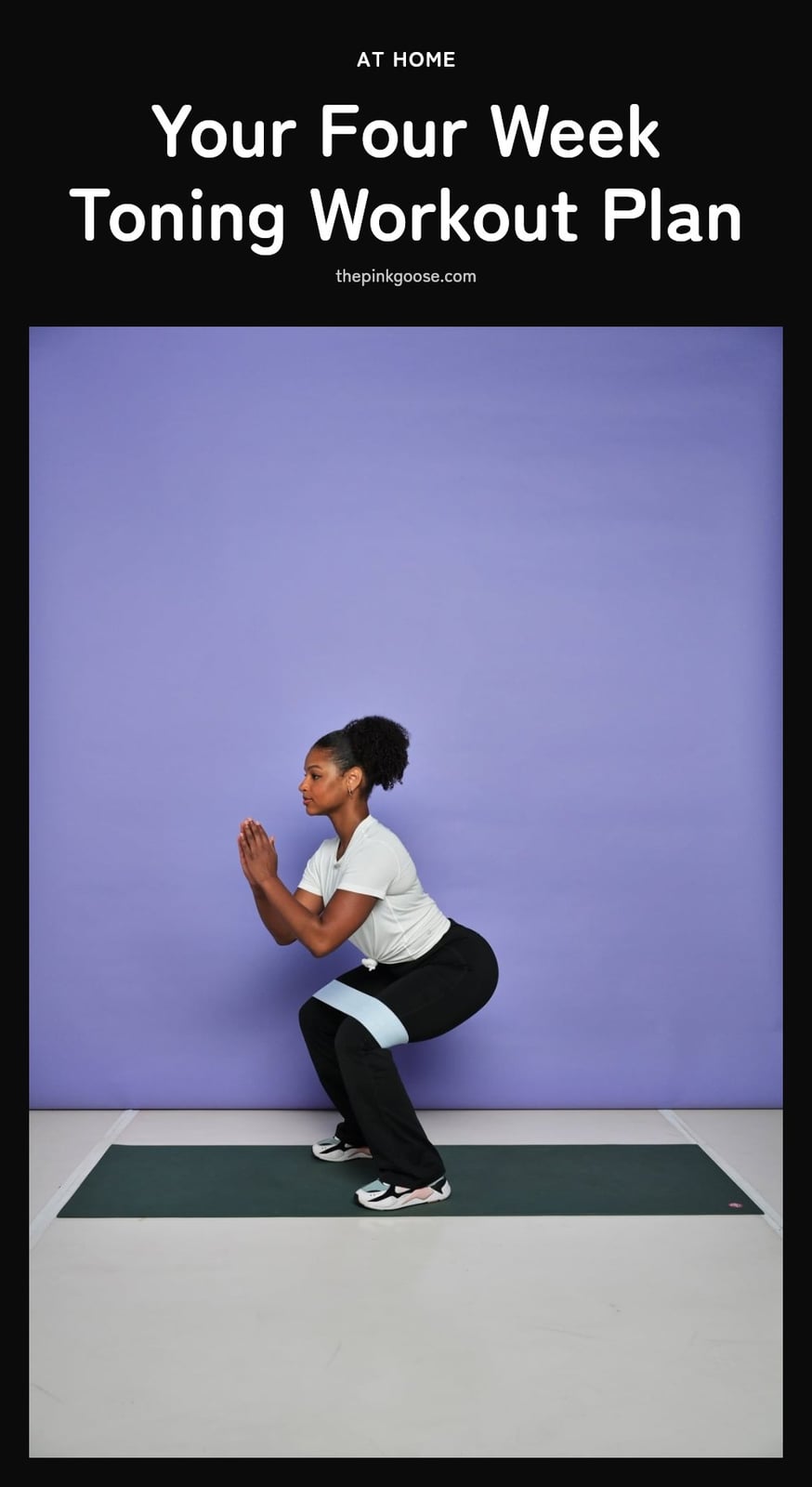
- Resistance bands: Offer light to heavy resistance, letting you progress without buying heavier weights.
- Dumbbells: Allow you to add progressive overload to moves like squats and presses.
- Supportive athletic shoes: Protect your feet and ankles during standing exercises and cardio.
- Water bottle: Staying hydrated keeps your energy up and muscles working properly.
Your Four-Week At-Home Toning Workout Plan

Aim for 3 to 5 workouts per week, mixing strength and cardio. Here is a general structure you can follow for four weeks.
- Warm up: Spend 5 to 10 minutes doing light cardio, jumping jacks, high knees, or brisk walking, to increase blood flow and loosen muscles.
- Perform compound exercises: Choose moves that work multiple muscle groups at once, such as squats, lunges, push-ups, and rows. These give you the most results per minute.
- Increase intensity gradually: Each week, add one more repetition, increase your resistance band tension, or shorten rest periods. This is progressive overload, and it keeps your muscles adapting.
- Prioritize form over speed: Slow down each rep and focus on controlled movement. Good form prevents injury and ensures the target muscles do the work.
- Include cardio sessions: Add 2 to 3 cardio days per week, such as brisk walking, jogging, or HIIT intervals. Cardio helps burn calories and reveal the muscle you are building.
- Cool down and stretch: Finish each session with 5 to 10 minutes of gentle stretching and deep breathing to lower your heart rate and improve flexibility.
Fueling Your Body for Toning: Nutrition Essentials

What you eat directly affects how your muscles repair and how much body fat you lose. A balanced diet supports both processes.
Prioritize protein
Protein provides the amino acids your muscles need to recover and grow after workouts. Include sources like lean meat, eggs, dairy, beans, or tofu at each meal.
Choose whole foods for energy
Whole grains, fruits, and vegetables supply the carbohydrates and micronutrients that fuel your workouts and keep your metabolism running well. They also help you feel full longer.
Hydrate consistently
Water is essential for muscle contraction, joint lubrication, and transporting nutrients. Drink water throughout the day, and have a glass before, during, and after exercise.
Common Toning Mistakes to Avoid on Your Journey
Neglecting Strength Training: Cardio burns calories, but it won’t build the muscle that creates definition. Add resistance work at least twice a week.
Poor Form: Incorrect movement patterns reduce effectiveness and raise injury risk. Watch your alignment in a mirror or record yourself.
Lack of Progressive Overload: Muscles adapt quickly. Increase reps, add a heavier band, or shorten rest periods every few weeks.
Ignoring Nutrition: You can’t out-exercise a poor diet. Protein, vegetables, and whole grains fuel recovery and fat loss.
Expecting Overnight Results: Visible changes typically take 4 to 8 weeks of consistent work. Patience is part of the process.
Skipping Rest Days: Muscle fibers repair and grow during rest, not during workouts. Schedule at least one or two rest days per week.
Best Tips for Staying Motivated and Seeing Results
Track Your Progress: Take measurements or photos every two weeks. Numbers on the scale don’t tell the whole story; seeing changes in how clothes fit can keep you going.
Listen to Your Body: Mild muscle soreness is normal. Sharp or persistent pain means stop and modify the exercise or rest.
Stay Hydrated: Water supports every muscle contraction and helps regulate body temperature during workouts. Sip throughout the day, not just during exercise.
Prioritize Sleep: Aim for 7 to 9 hours per night. Sleep is when your body releases growth hormone and repairs muscle tissue.
Find a Workout Buddy: A friend who checks in on your schedule or joins you for a video-call session can keep you accountable on low-motivation days.
When to Consult a Healthcare Professional
If you have a pre-existing health condition, such as heart disease, joint issues, or high blood pressure, talk to your doctor before beginning a new exercise program. Stop any workout immediately if you feel sharp pain, dizziness, or shortness of breath. If you are unsure about your form on a particular exercise, a single session with a certified personal trainer can help you learn safe technique.
Frequently Asked Questions
How long does it take to see toning results?
Visible results from a consistent routine typically begin to appear within 4 to 8 weeks. More significant changes in muscle definition and body composition often become noticeable after 12 weeks or more of regular strength training and balanced nutrition.
Can I tone without equipment?
Yes, bodyweight exercises like squats, lunges, push-ups, and planks are highly effective for building strength and muscle, especially for beginners. As you get stronger, you can increase intensity by adding more reps, slowing down the movement, or using resistance bands.
Is cardio or strength training better for toning?
Both are necessary. Strength training builds the muscle that creates definition, while cardio helps burn calories and reduce overall body fat so the muscle underneath becomes visible. Aim for at least two strength sessions per week combined with regular cardio.
What should I eat to support muscle toning?
Focus on a balanced diet rich in protein (lean meat, eggs, dairy, legumes) to repair and grow muscle, plus whole grains, fruits, and vegetables for energy and nutrients. Staying hydrated and avoiding drastic calorie cuts also supports muscle growth and fat loss.
How often should I work out to get toned?
For best results, aim for 3 to 5 workouts per week that combine strength training and cardiovascular exercise. This frequency allows enough stimulus for muscle growth and fat loss while still giving your body adequate time to recover between sessions.
Final Thoughts
Stick with a mix of strength and cardio workouts 3 to 5 days a week, and you can expect to start seeing visible changes in 4 to 8 weeks. My tip: pick one compound exercise you enjoy most, like squats or push-ups, and focus on improving your form before adding more weight or reps. Consistency and patience will get you there faster than any quick fix.
This article is for general informational purposes only and does not constitute medical or professional advice. Always consult a healthcare professional before starting any new exercise program, especially if you have pre-existing health conditions or concerns. Stop exercising immediately if you experience sharp pain, dizziness, or shortness of breath.
