

Winter air is a moisture thief. Cold outdoor air holds little water, and indoor heating dries things out even more, leaving your skin tight, flaky, and uncomfortable. The good news? A few smart swaps and habits can make a big difference.
This article walks you through a simple winter skin survival checklist: daily skincare essentials, protective habits, indoor tweaks, and ingredient know-how to keep your barrier strong and your skin comfortable all season.
Key Takeaways
- Use lukewarm water for showers and keep them under 10 minutes.
- Apply moisturizer to damp skin to lock in hydration.
- Run a humidifier and keep your thermostat between 68 and 72 degrees Fahrenheit.
- Seek ceramides, hyaluronic acid, and glycerin; avoid harsh alcohols and fragrance.
- Wear SPF 30+ daily, even on cloudy or snowy days.
Why Your Skin Suffers in Winter
Winter skin problems start with the air around you. Cold outdoor air holds little moisture, and indoor heating systems dry the air even further. This low humidity pulls water from your skin, leaving it tight and flaky. Your skin’s natural barrier, which normally locks in hydration and keeps irritants out, becomes compromised. Once that barrier weakens, water loss increases and sensitivity jumps. The result is that familiar dry, irritated feeling that no lightweight lotion can fix.
Daily Skincare Essentials for Winter
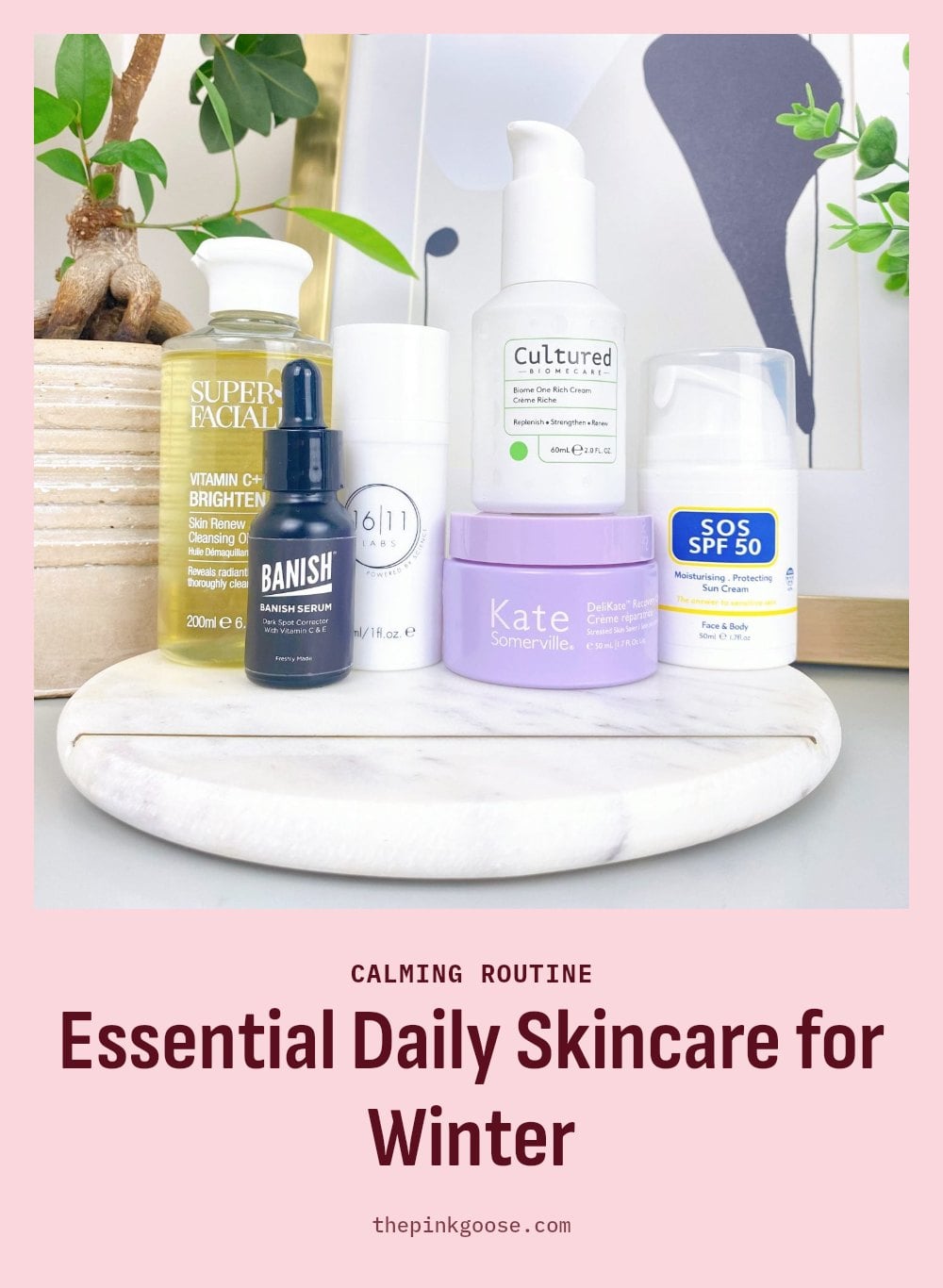
Swap your summer routine for these winter essentials. Apply each to damp skin for maximum absorption.
- Gentle cream cleanser that won’t strip natural oils
- Hydrating serum with hyaluronic acid or glycerin
- Thick cream or ointment moisturizer for barrier repair
- Facial oil to seal in moisture overnight
- Lip balm with SPF for wind-chapped lips
- Eye cream with ceramides for the delicate eye area
- Body butter applied right after a shower
- Hand cream after every hand wash
- Exfoliating acid used only once a week
- Sunscreen as the final morning step
- Soft cotton cloth to pat skin dry, not rub
- Warm water for cleansing, never hot
Smart Habits to Protect Your Skin

Your daily habits matter as much as your products. Small changes protect your skin all winter.
- Take lukewarm showers under 10 minutes
- Drink eight glasses of water daily for internal hydration
- Wear gloves outdoors to shield hands from wind
- Wrap a scarf around your face in cold air
- Apply sunscreen SPF 30+ every morning
- Reapply sunscreen before midday outdoor activities
- Pat skin dry with a soft towel after washing
- Moisturize hands immediately after drying them
- Use a humidifier in your bedroom at night
- Wear a hat to protect your forehead and ears
- Layer clothing to avoid overheating and sweating
- Switch to a silk pillowcase to reduce friction
Indoor Environment Boosters

Your home’s indoor air can undo all your skincare work. Here is how to balance it.
- Run a humidifier in rooms where you spend most time
- Set thermostat between 68 and 72 degrees Fahrenheit
- Place a bowl of water near radiators to add moisture
- Open a window for 5 minutes to circulate fresh air
- Use a hygrometer to keep humidity at 40 to 60 percent
- Clean your humidifier weekly to prevent mold growth
- Add houseplants like ferns to naturally raise humidity
- Avoid space heaters that blast dry hot air directly
- Hang laundry to dry indoors instead of using a dryer
- Take shorter showers to reduce steam and heat loss
- Keep bathroom door open after showering to spread moisture
- Place a damp towel over a drying rack near heat vents
Ingredients to Seek and Avoid
Read the label before you buy. These ingredients help or hurt winter skin.
- Seek: Hyaluronic acid draws moisture into the skin.
- Seek: Glycerin pulls water from the air to your skin.
- Seek: Ceramides fill gaps in the skin barrier.
- Seek: Fatty acids strengthen the barrier.
- Seek: Petroleum jelly seals moisture in overnight.
- Seek: Shea butter locks in hydration without clogging pores.
- Avoid: Harsh alcohols like denatured alcohol strip natural oils.
- Avoid: Strong fragrances can irritate sensitive winter skin.
- Avoid: Sulfate-based cleansers that foam heavily and dry out skin.
- Avoid: Over-exfoliating with strong acids or scrubs more than once a week.
- Avoid: Stripping cleansers that leave your face feeling tight.
- Avoid: Products with a short ingredient list that lacks moisturizers.
Common Winter Skin Mistakes to Fix
These five mistakes make winter dryness worse. Here is how to fix them.
- Mistake: Using the same lightweight moisturizer year-round. Instead: Switch to a rich cream or ointment.
- Mistake: Skipping sunscreen because it is cold or cloudy. Instead: Apply SPF 30+ daily, even indoors near windows.
- Mistake: Taking very hot showers to warm up. Instead: Use lukewarm water and keep showers under 10 minutes.
- Mistake: Over-exfoliating to remove flakes. Instead: Exfoliate gently once a week and moisturize right after.
- Mistake: Ignoring early signs of irritation or discomfort. Instead: Stop using any product that stings or reddens your skin.
- Mistake: Moisturizing only your face. Instead: Apply body lotion right after showering to damp skin.
- Mistake: Washing with harsh bar soaps. Instead: Use a gentle cream or oil-based cleanser.
- Mistake: Skipping lip balm. Instead: Use a balm with SPF and reapply throughout the day.
- Mistake: Blotting skin dry with a rough towel. Instead: Pat skin gently with a soft towel.
- Mistake: Leaving skin wet after washing. Instead: Apply moisturizer within 60 seconds of drying.
- Mistake: Using the same pillowcase all winter. Instead: Switch to a silk or satin case to reduce friction.
- Mistake: Ignoring cracked or bleeding skin. Instead: See a dermatologist if symptoms persist.
Frequently Asked Questions
Why does my skin get so dry in winter?
Cold outdoor air holds little moisture, and indoor heating systems dry the air further. This low humidity pulls water from your skin, and the natural barrier that locks in moisture becomes compromised, leading to increased water loss and sensitivity.
Can I still exfoliate my skin in winter?
Yes, but be gentle and avoid over-exfoliating. Over-exfoliation can damage the skin barrier, making dryness and irritation worse. If you do exfoliate, choose a mild product and limit it to once a week, and always follow with a rich moisturizer.
What ingredients should I look for in winter skincare products?
Look for humectants like hyaluronic acid and glycerin to attract moisture, emollients like ceramides and fatty acids to fill barrier gaps, and occlusives like petroleum jelly or shea butter to seal moisture in. Avoid products with strong fragrances or harsh alcohols that can irritate sensitive skin.
How often should I moisturize my body in winter?
Moisturize at least twice a day, especially after bathing and before bed. Apply to damp skin right after washing to lock in hydration. Don’t forget areas like hands and feet, which are often exposed to cold air.
Is a humidifier really effective for winter skin?
Yes, a humidifier adds moisture back into the air, which helps prevent your skin from drying out. Run one in rooms where you spend the most time, and keep the thermostat between 68 and 72 degrees Fahrenheit to reduce dryness.
When should I see a dermatologist for winter skin issues?
See a doctor or dermatologist if your skin becomes severely cracked, bleeding, or shows signs of infection. Also seek professional help if you experience persistent redness, itching, or burning that doesn’t improve with a consistent winter skincare routine.
Final Thoughts
Stick to a consistent routine: cleanse gently, moisturize on damp skin, and protect with SPF and warm layers. Expect noticeable improvement in comfort and appearance within a few days to a week of consistent care.
If your skin stays severely cracked, bleeding, or infected despite your best efforts, see a dermatologist. Winter skin is manageable, and your barrier will thank you for the extra care.
This article is for general informational purposes only and is not a substitute for professional medical advice. If you have a persistent skin condition, severe symptoms, or concerns about a product reaction, consult a dermatologist or healthcare provider.
