Every other chair at my salon this month has someone going darker. A root shadow, a gloss, a full melt back to brown. I watched one woman stare at her new dark blonde in the mirror like she had just found something she lost.
This article collects 36 ideas for Blonde to Brunette Hair—from a quick gloss to a full balayage shift, for fine strands to thick coils, for round faces and long ones. I bookmarked the collarbone lob with curtain bangs six times while writing this. My fine hair goes flat by four and that cut held.
Dark Blonde With Bright Face-Framing Highlights
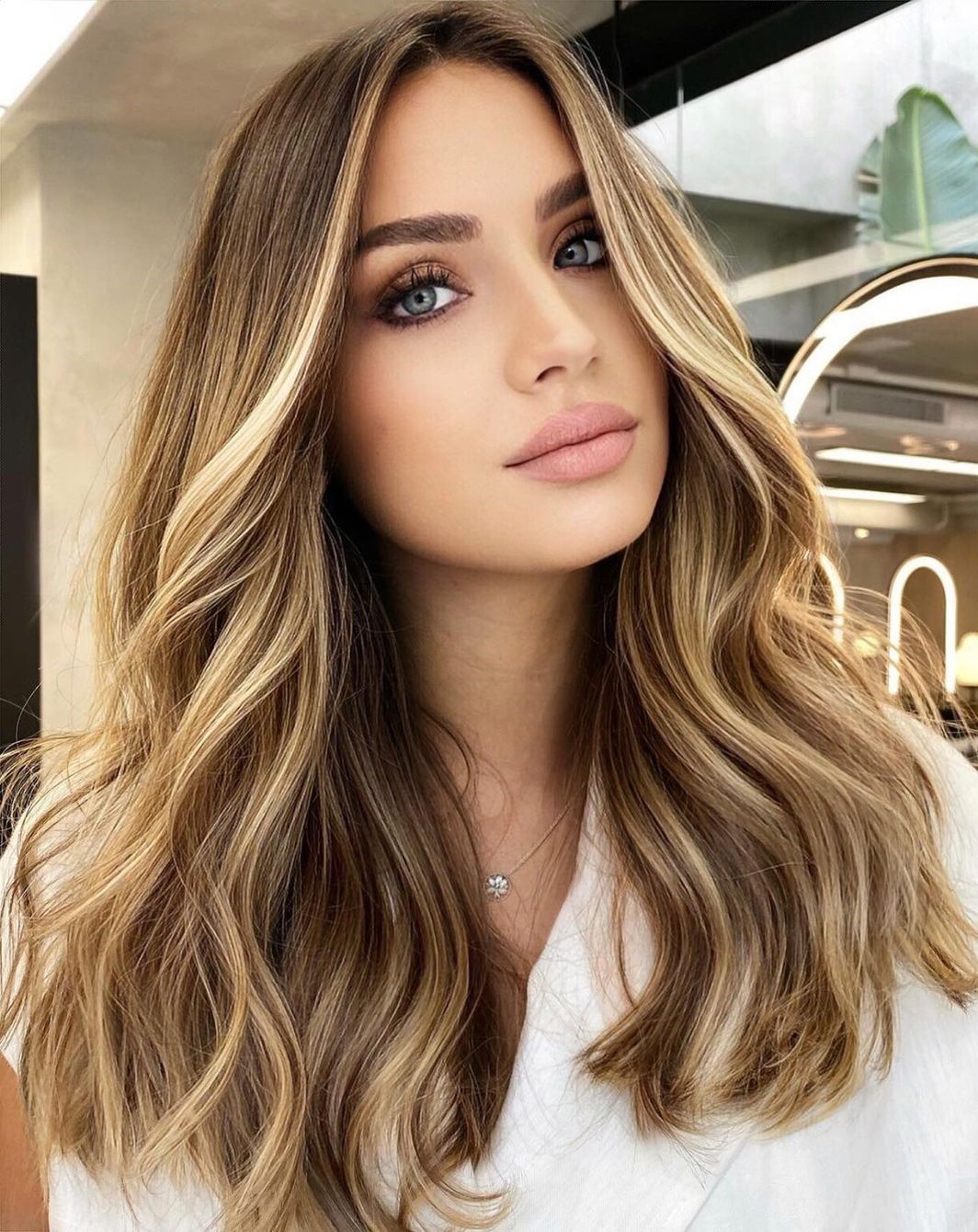
Those bright blonde highlights around the front of a dark blonde base do exactly what you think: they pull light to the centre of your face. The technique is a foil highlight placed close to the hairline, painted in a warm, almost honey tone so it reads natural, not striped. On a collarbone-length layered cut with medium to thick wavy texture, the contrast lands softly. The middle part helps the brightness sit evenly on both sides. This is for anyone who wants their hair to do the work of a highlighter without committing to all-over blonde. The grow-out line stays hidden for a solid six weeks because the dark base does not shift.
Dark Blonde Balayage With Sun-Kissed Highlights
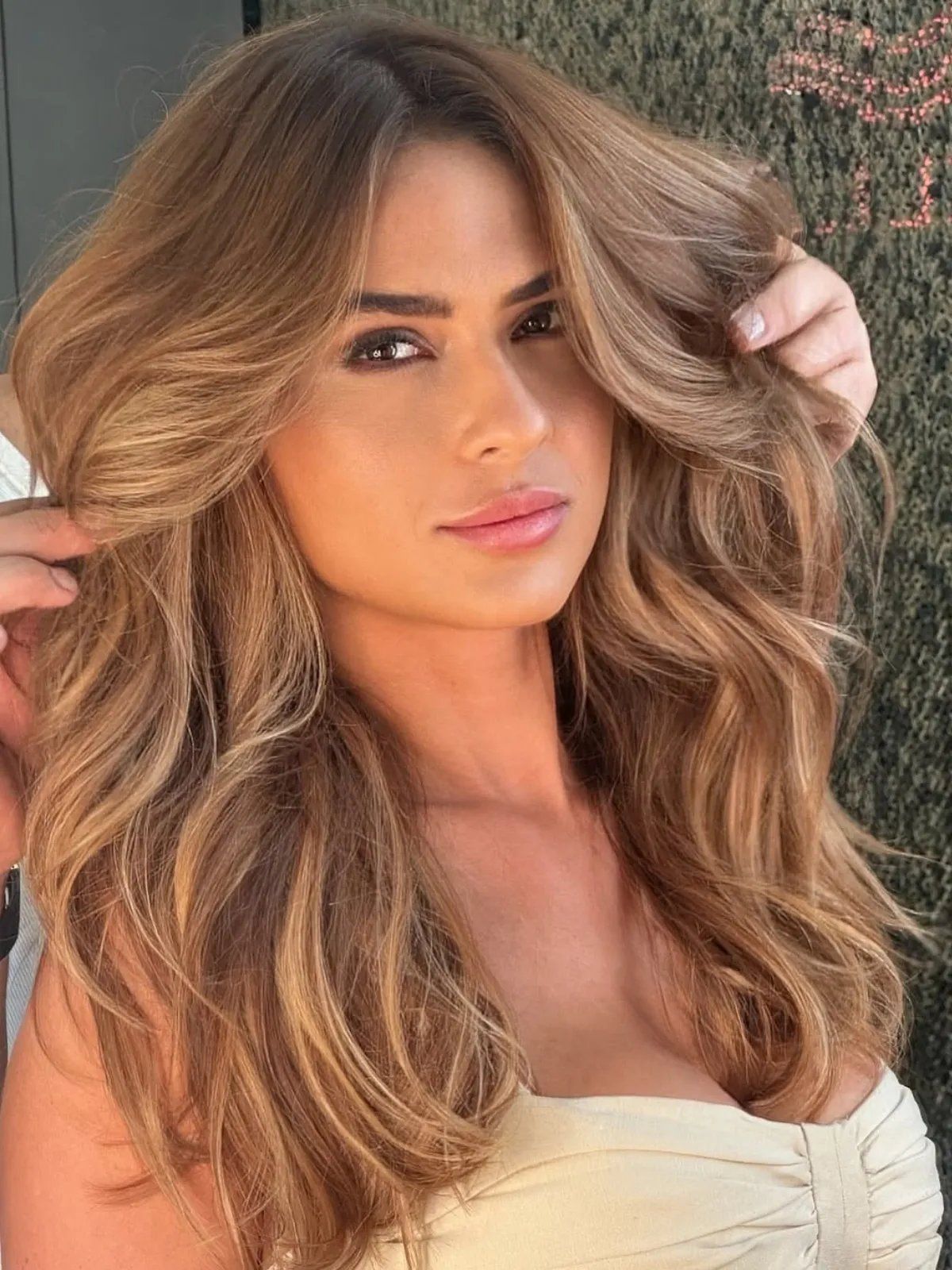
This is the one that finally convinced me balayage isn’t just for blondes who want to stay blonde. The dark blonde sun kissed balayage starts darker at the root and paints lighter pieces where the sun would hit: the crown, the cheekbones, the ends. A hand-painted technique, no foils, no harsh line. The stylist takes sections and sweeps the lightener on freehand, feathering it so the grow-out looks like a shadow, not a stripe. The tone stays warm, think honeyed wheat, not ash. Collarbone length with long layers that catch the light. Thick texture helps the colour read dimensional. Ask for a soft root shadow and sun-kissed blonde highlights that peak around the face. Tell them you want the colour to look like it happened outside, not in a bowl.
Dark Blonde With Subtle Natural Highlights
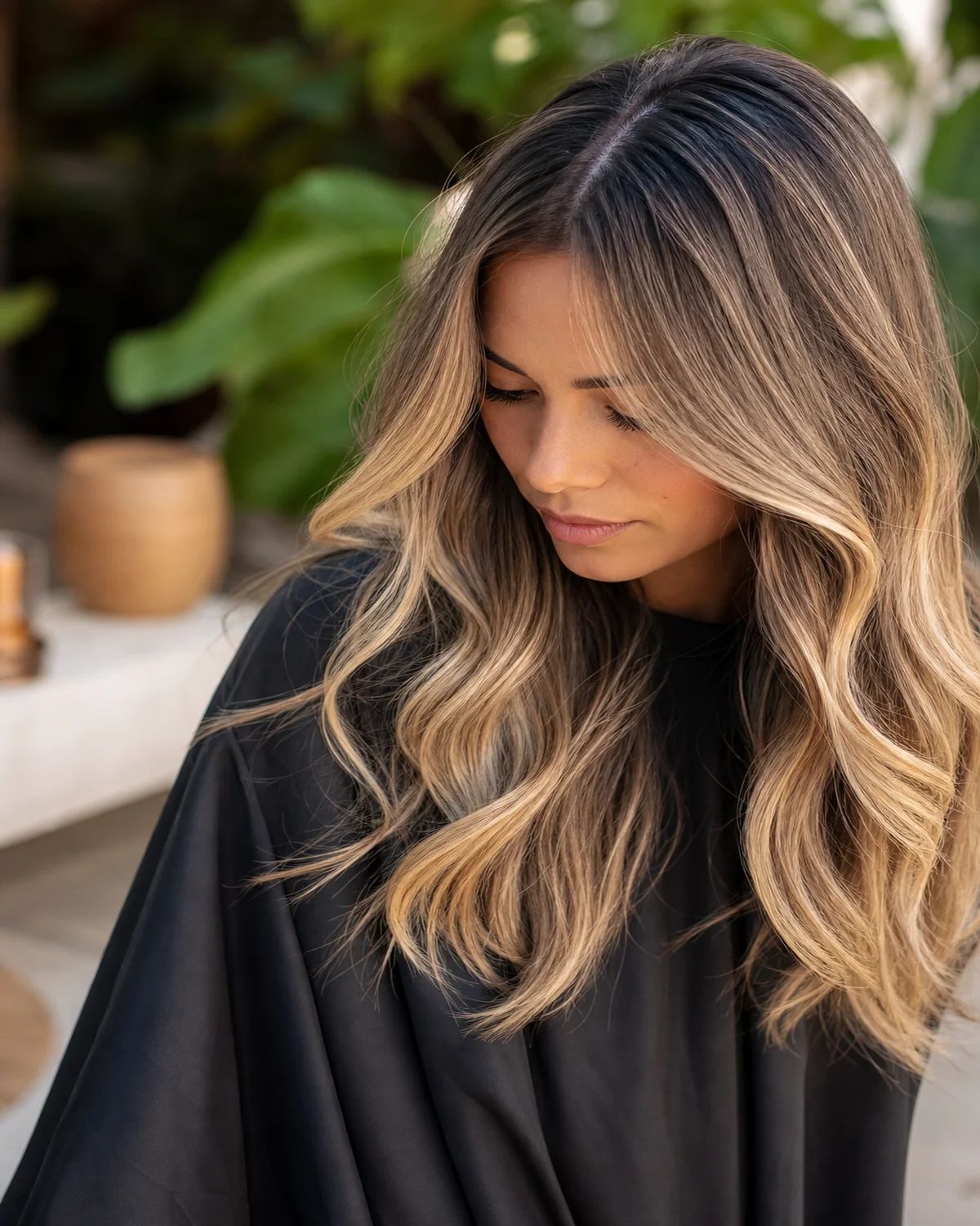
Have you ever watched a colour fade and thought, actually, that looks better than day one? That is the logic behind dark blonde natural highlights. The base stays a warm mushroom brown, and the lighter pieces are painted in a shade only two levels lighter, thin sections, widely spaced. On mid-back length with thick, wavy texture, the effect reads like your hair got sun on a long weekend, not like you sat in a chair for three hours. A wavy blowout takes about 15 minutes with a medium-hold spray. The upkeep is the real win: a refresh every 10 to 12 weeks because the subtle highlights do not create a hard line when they grow out.
Dark Blonde With Golden Blonde Highlights
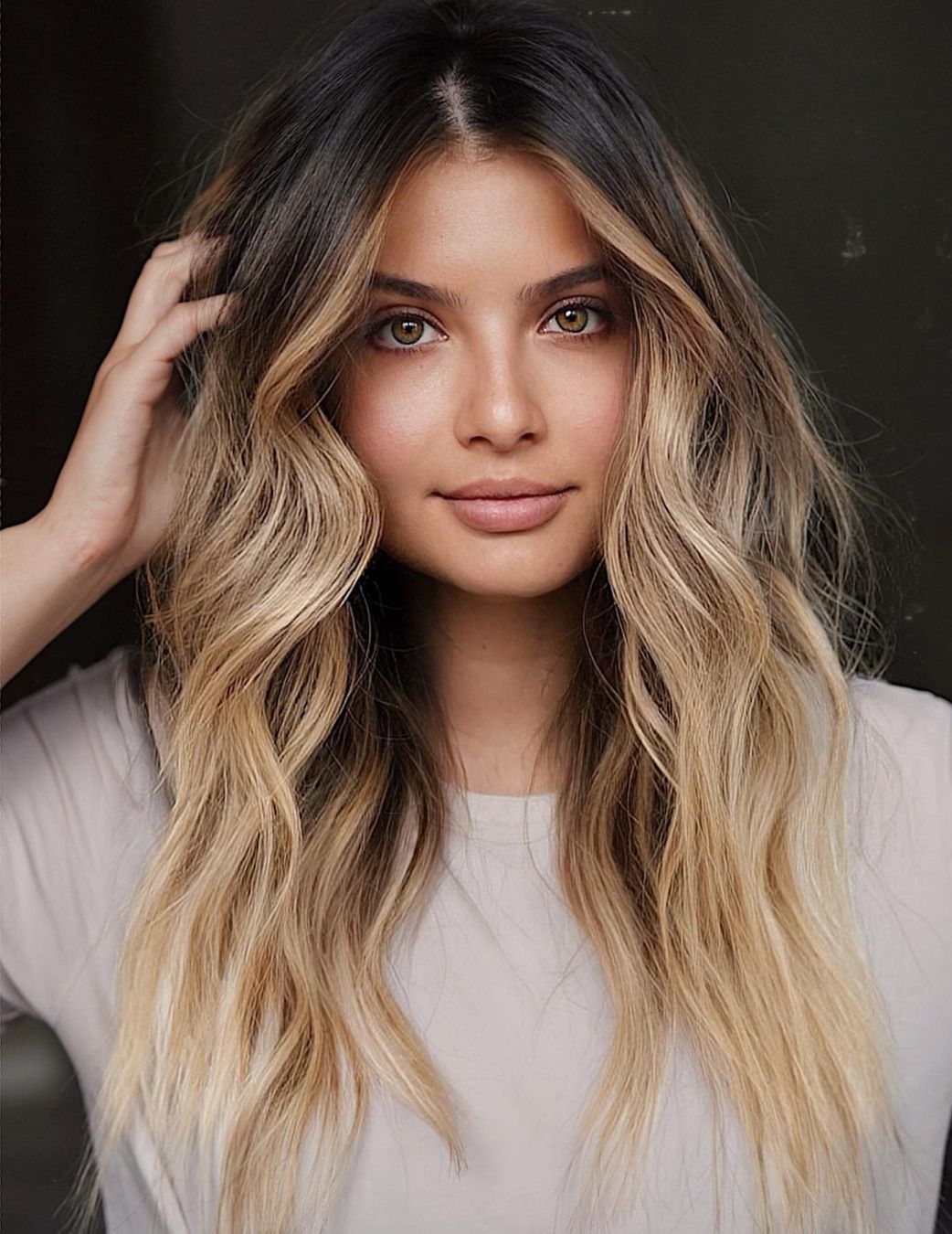
I wanted to hate the warmth. Golden blonde highlights can tip into orange fast, especially on a dark blonde base that already carries yellow undertones. But this version, painted on mid-back layers with thick wavy texture, stays in the honey zone. The trick is the technique: the colourist weaves the highlight slices fine and spaces them wide, so the gold reads as dimension, not a stripe. This is a salon job. The formula needs a colourist who can judge how much the base will warm up during processing. A box kit will pull brass within two washes. A professional toner with a violet-beige blend keeps the gold soft, not aggressive.
Shoulder Length Dark Blonde With Lighter Highlights
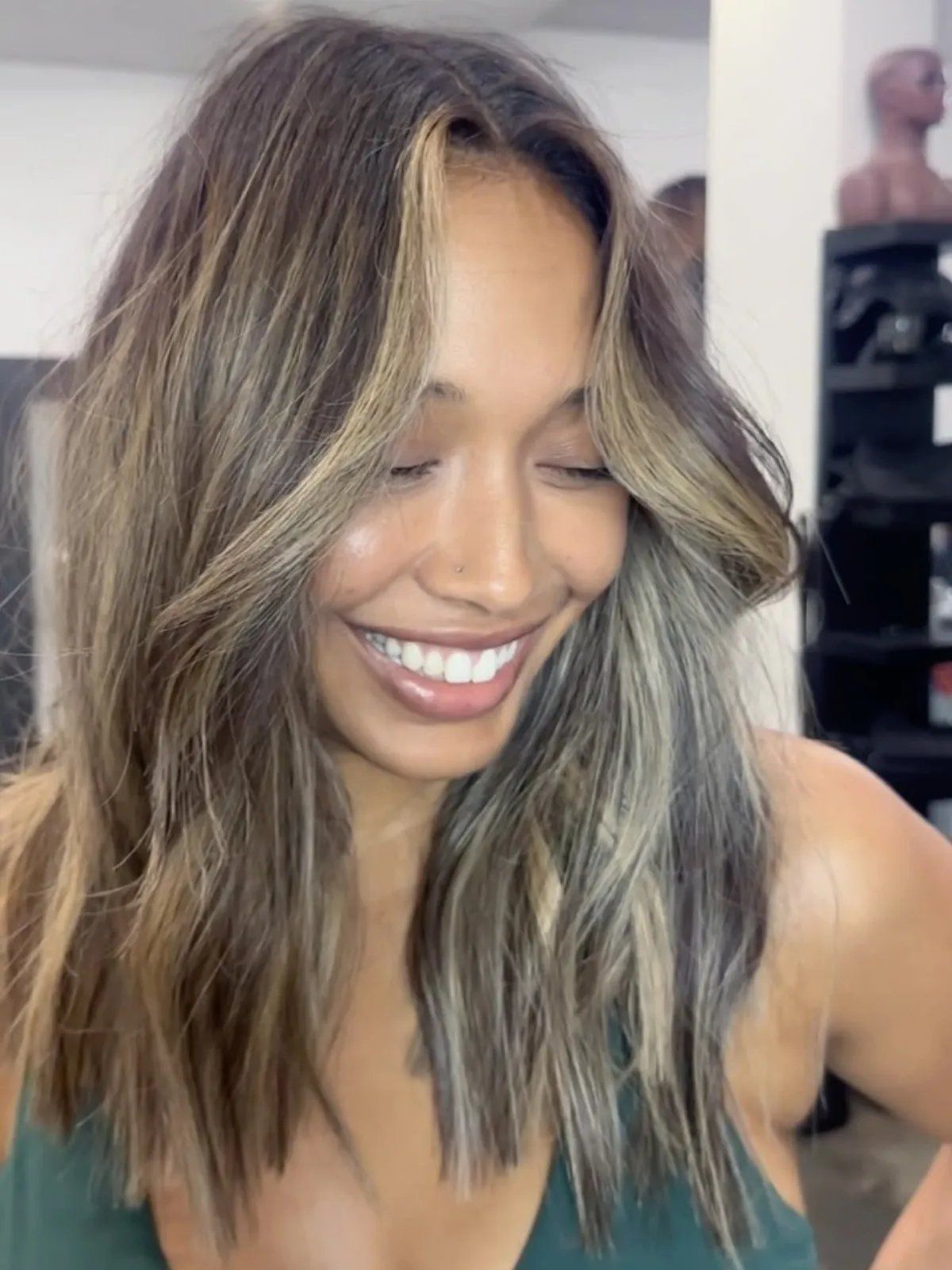
A shoulder-length cut with long layers and a side part needs contrast to hold visual weight, otherwise it reads flat. The lighter blonde highlights here sit on the top layer and around the face, lifting the dark blonde base without overpowering it. On fine to medium density wavy hair, the contrast creates the illusion of thickness. The honest downside: the side part means the highlights are heavier on one side. When you flip your part, the distribution looks uneven. A trim every eight weeks keeps the ends from thinning out, and the colour refresh can stretch to 12 to 16 weeks if the base is your natural shade.
Collarbone Lob With Curtain Bangs and Balayage
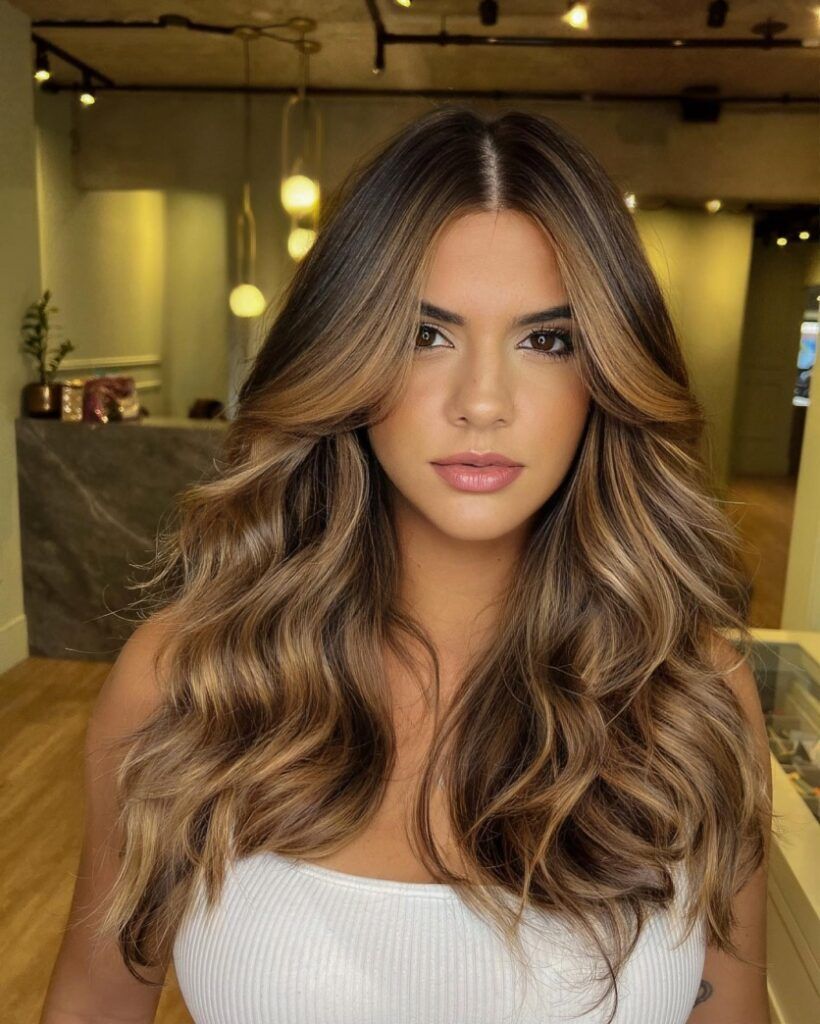
I will admit, I was skeptical about curtain bangs on a lob. They can go wispy fast, or worse, separate into sad little strings by noon. But this dark brown blonde balayage lob with curtain bangs holds up. The collarbone length gives the waves enough weight to drop, not puff. Medium density wavy hair is the sweet spot here — fine hair might need a texture spray to keep the fringe from going flat. The curtain bangs frame without committing to full fringe maintenance. A quick blast with a round brush in the morning and you are done.
That natural-looking blend of dark brown and blonde tones means the grow-out is forgiving. I got about ten weeks before the root line felt obvious. For a wedding or a dinner out, the waves take fifteen minutes. For a Tuesday, just brush and go. The versatility is real.
Dark Brown To Golden Blonde Balayage Lob
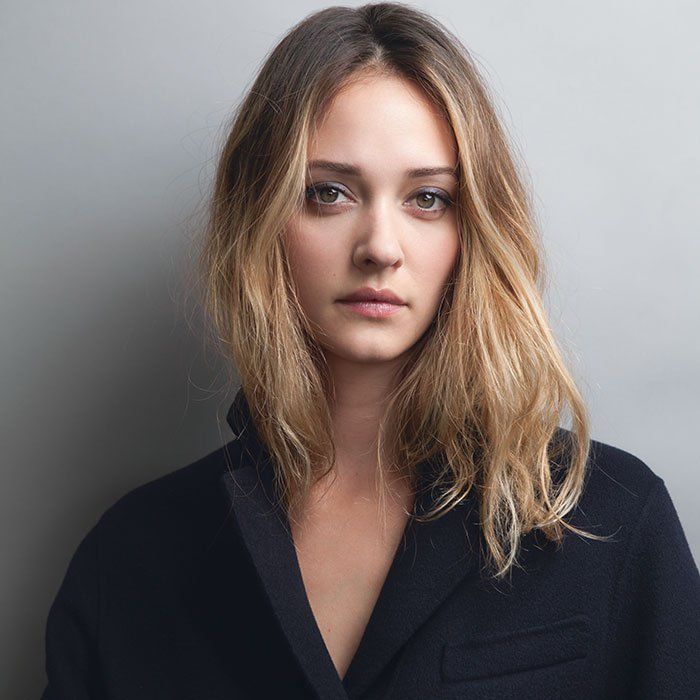
This is the best grow-out in this roundup. The dark brown to golden blonde balayage starts about two inches from the root, so the line is soft, not a stripe. The lob hits collarbone, which means the golden blonde highlights land on the lower half and catch light when you move. The technique is a hand-painted balayage, not foils — that is what keeps the transition blurred. Wavy, medium density texture helps the colour read dimensional. The honest downside: golden tones can turn brassy fast if your water is hard or you use the wrong shampoo. A purple shampoo once a week keeps it from going orange. Book this, it is not a bathroom-mirror job.
No Bangs Dark Brown To Ash Blonde Balayage Lob
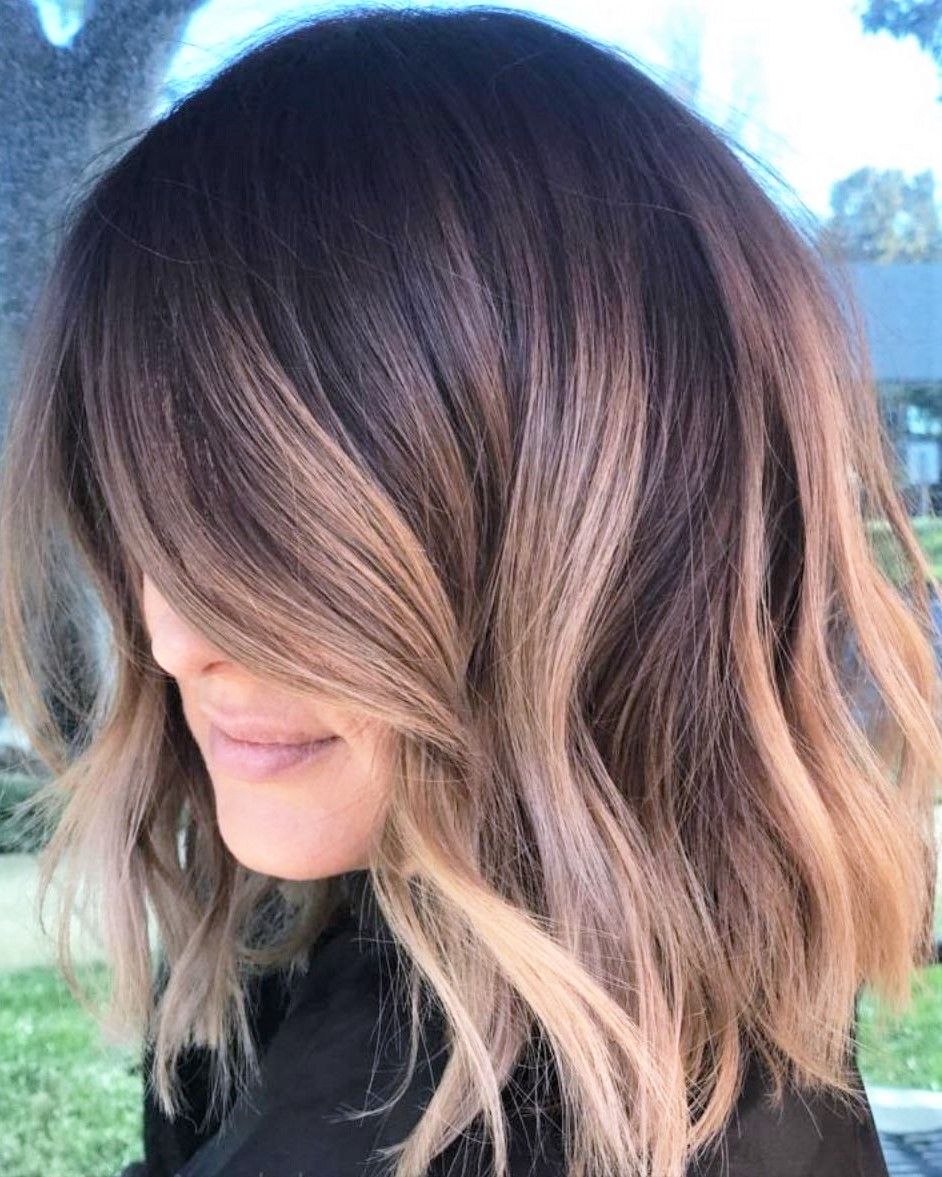
Can ash blonde really work on a dark brown base without looking muddy? I had my doubts. This dark brown ash blonde balayage proves it can, but the tone has to be right. The lob sits at collarbone with no bangs, which keeps the focus on the colour transition. The ash blonde highlights are painted in, not woven through the whole head, so the dark base stays dominant. That is what stops the muddiness. Wavy, medium density hair lets the cool tones reflect without washing out.
The brassiness risk is real. Ash tones fade faster than warm ones, and hard water turns them greenish-grey. A purple shampoo is non-negotiable, and you will need a toner refresh every ten to twelve weeks. If you are not ready for that schedule, pick a warmer blonde instead. I like the edge this look has, but it asks for commitment.
Dark Brown Base With Blonde Highlights and Balayage
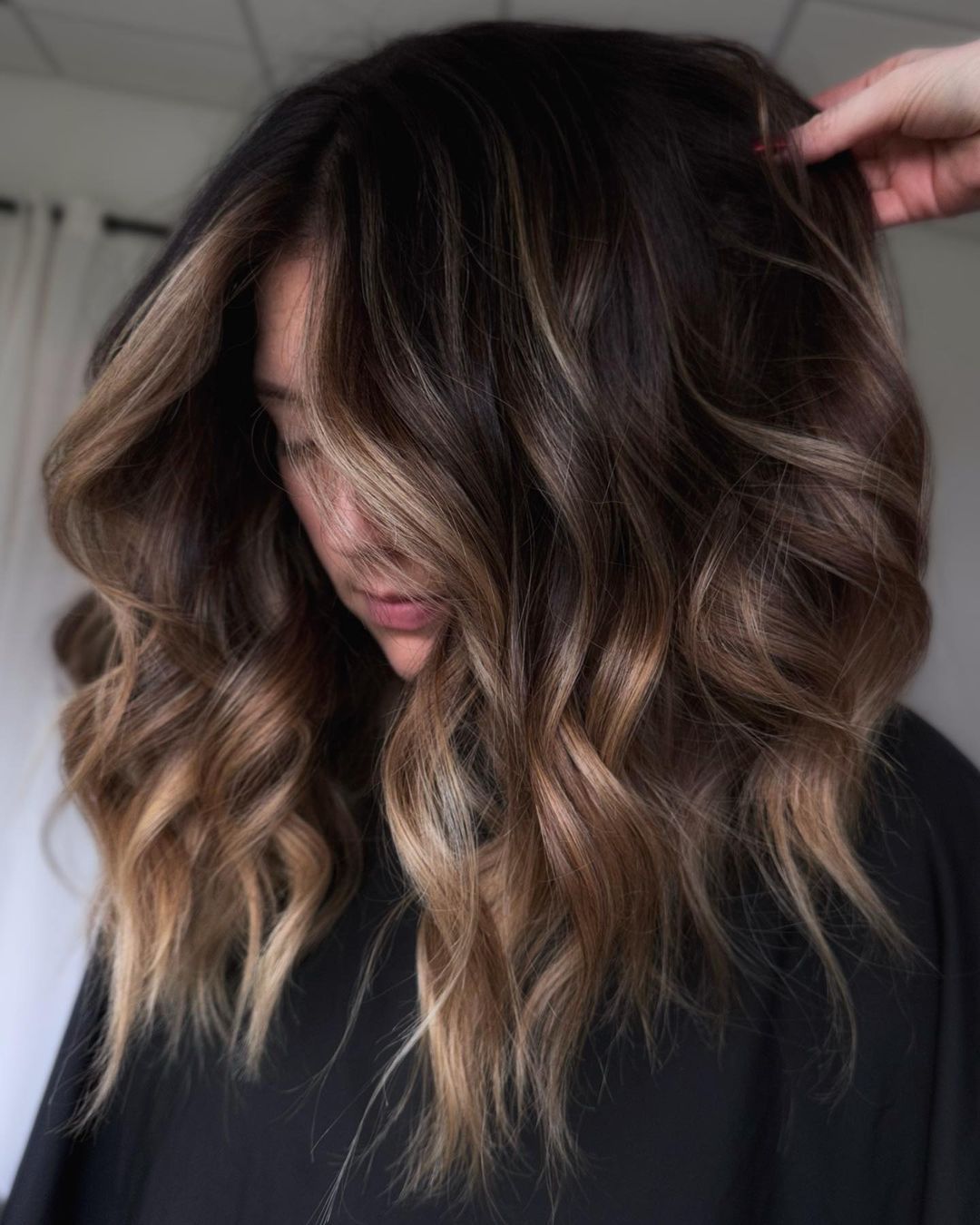
My gut says this is the most dramatic option here, and that is not a bad thing. The dark brown blonde highlights balayage keeps the root dark and the ends bright, so the contrast is stark. Thick, wavy hair carries that contrast well — the blonde highlights and balayage sit on the surface while the dark base stays deep underneath. The collarbone length with layers keeps it from looking heavy. This is a salon job, no question. The blonde needs to be lifted enough to read against dark brown, and that takes a skilled hand. Trying to do this at home with a box dye will give you orange streaks. I have seen it. I have done it. Do not.
Brunette Base With Blonde Balayage Highlights
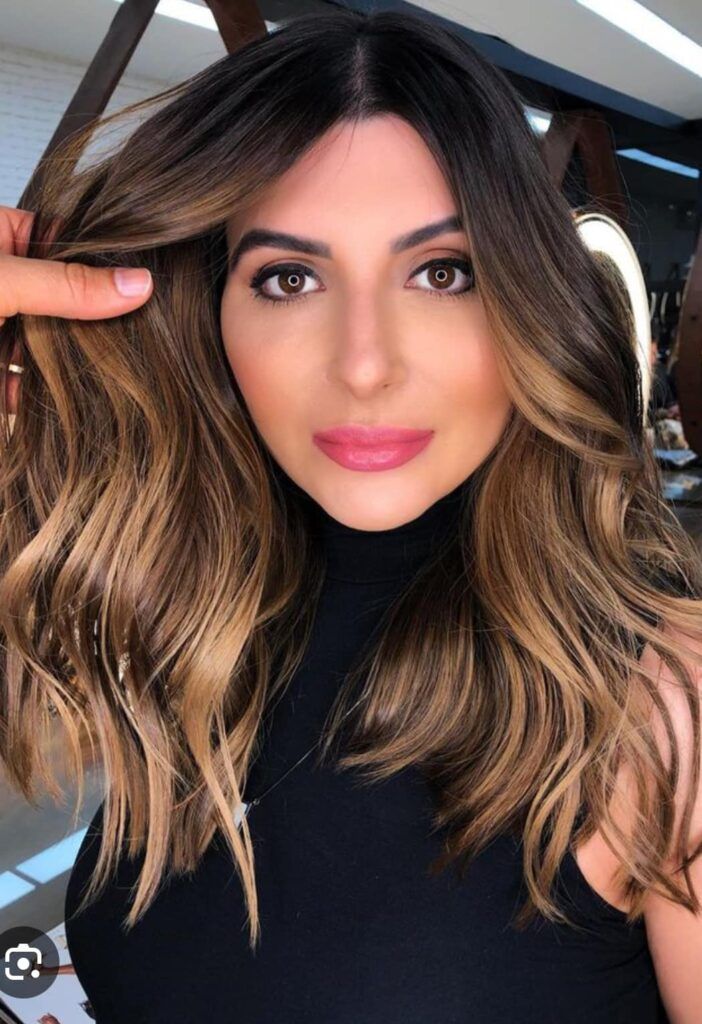
This one flatters medium to warm skin tones best, because the brunette blonde balayage has a soft, warm lift that reads natural. The brunette base is a true medium brown, not espresso, and the blonde balayage highlights start around the cheekbones and fade lighter toward the ends. That placement means the contrast hits where light naturally falls. Wavy, medium density hair is ideal — the waves catch the blonde pieces and create movement. The upkeep is real: the blonde balayage highlights need a toner every eight to ten weeks, or they drift yellow. If your hair is very fine, the contrast can look harsh rather than dimensional. Skip this one if you want a low-maintenance colour. It looks best when it is fresh.
Dark Brown With Blonde Highlights and Side Part
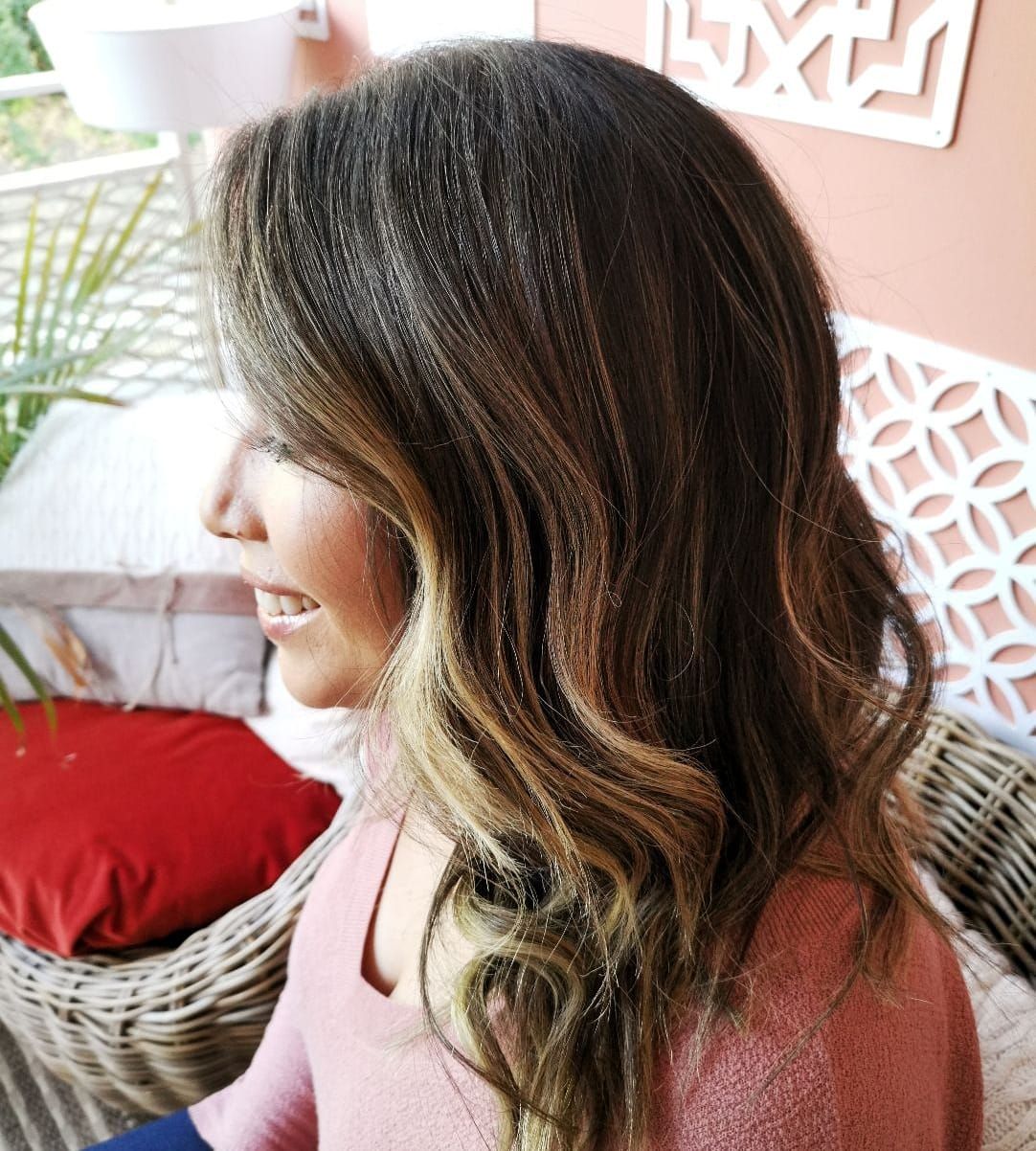
Does a side part still count as a decision when you wake up late and your hair falls that way anyway? This one does. The dark brown base sits heavy and serious, then the blonde highlights hit the waves like someone turned on a lamp. Collarbone length, layered, no bangs. The contrast is the whole point. Medium density wavy hair carries it best. The side part adds volume where fine hair goes flat by 4 pm. Takes about 20 minutes with a curling iron for defined waves. Touch-ups every 6 to 8 weeks. A side parting can add volume. The grow-out is not subtle, but that is the look.
Dark Brown To Blonde Balayage With Face-Framing Bangs
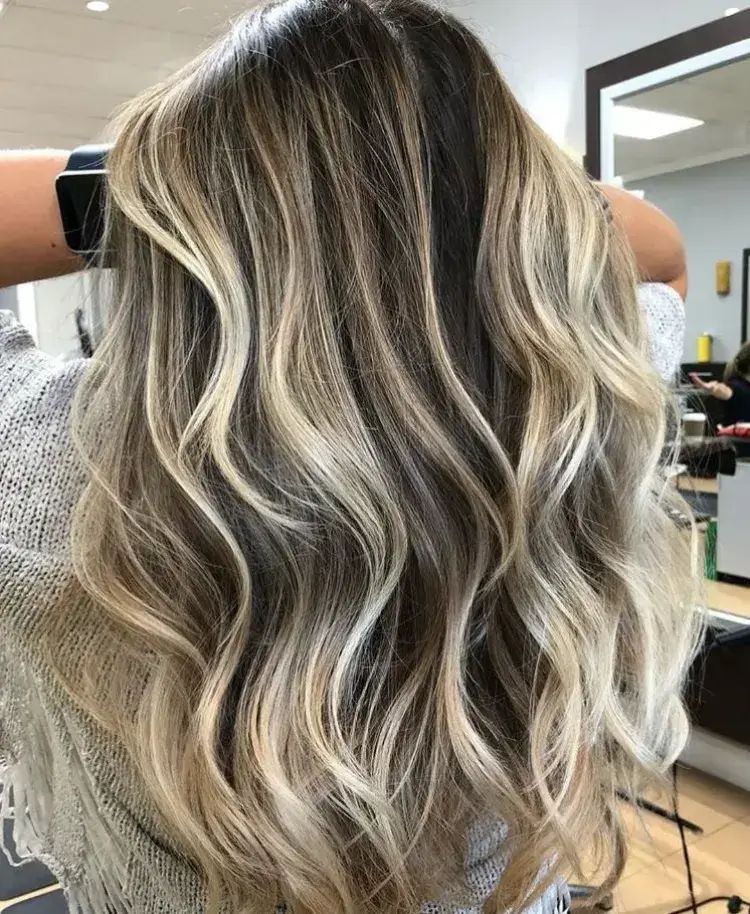
This is the one you book. Dark brown to blonde balayage bangs that land right at the cheekbone. Collarbone lob, side-parted, wavy. The face-framing bangs pull the lightness forward, so the dark base does not swallow the whole thing. Medium density wavy hair. The technique is a proper balayage, hand-painted, no foils. That means the grow-out line stays soft. Styling takes about 20 minutes for the waves and bangs. A texturizing spray helps. Honest downside: the bangs need a trim every three weeks or they hit your lip and you hate them. Touch-ups every 8 to 10 weeks.
Shoulder Length Dark Brown With Blonde Balayage and Side Bangs
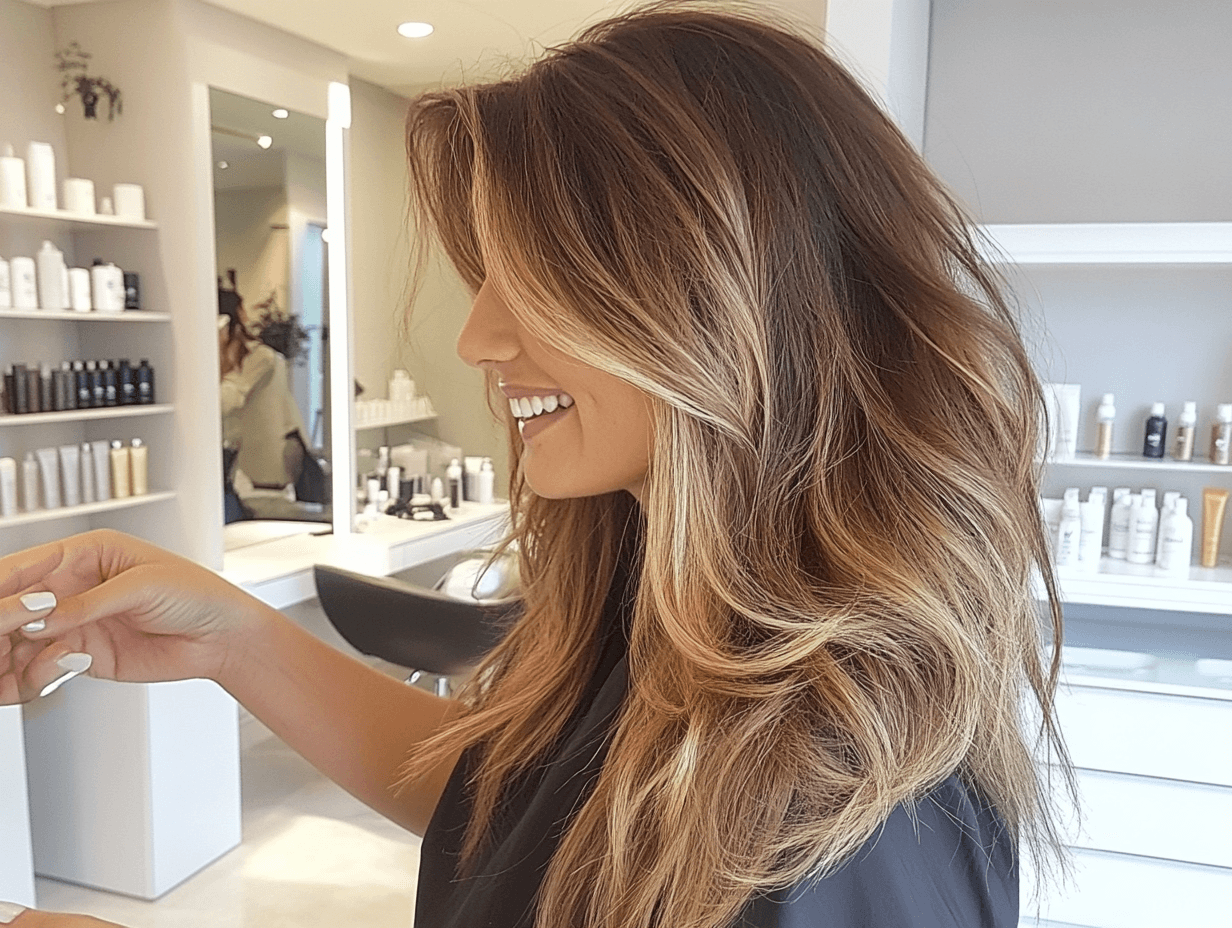
I will admit I was skeptical about side bangs with a balayage. The dark brown to blonde balayage shoulder length sits on a layered cut, collarbone-skimming, with side bangs that sweep across. Thick wavy texture. The blonde pieces land mostly on the ends and the face-framing layers, so the root stays dark and the transition reads soft. Who it suits: anyone with a round or square face who wants the bangs to break up the line without committing to full fringe. Who should pass: fine, straight hair. The side bangs separate by noon and the lighter pieces show split ends faster than the brown. Loose curls and a texturizing spray. Touch-ups every 8 to 10 weeks.
Blonde To Light Brown Balayage With Textured Ends
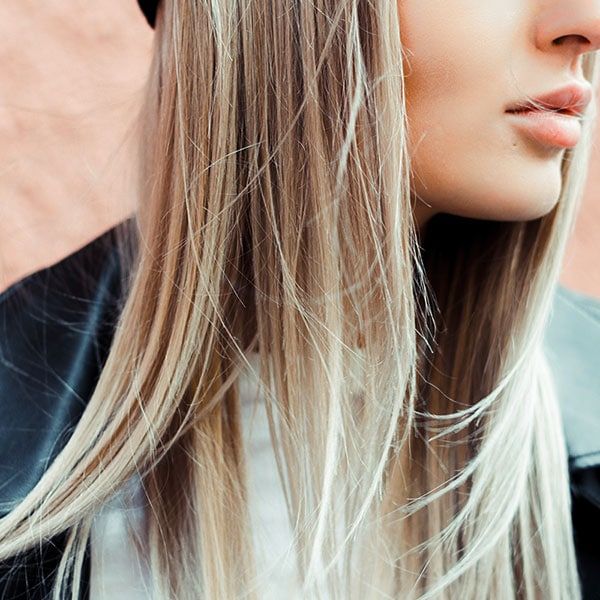
When did going darker start feeling like a cheat code? The blonde to light brown balayage starts at the root and shifts into light brown tones through the mid-lengths and ends. Blunt cut with subtle layers, collarbone length, middle part. Straight, fine density. The grow-out is the selling point. Because the light brown sits close to the natural root shade, you get 12 to 16 weeks between touch-ups. The textured ends keep fine hair from looking stringy. Styling takes about 10 minutes with a flat iron and a bit of texturizing paste. The ends stay sharp. No bangs to trim. No brassiness because there is not enough lift to turn orange.
Medium Brown Base With Caramel Blonde Curls
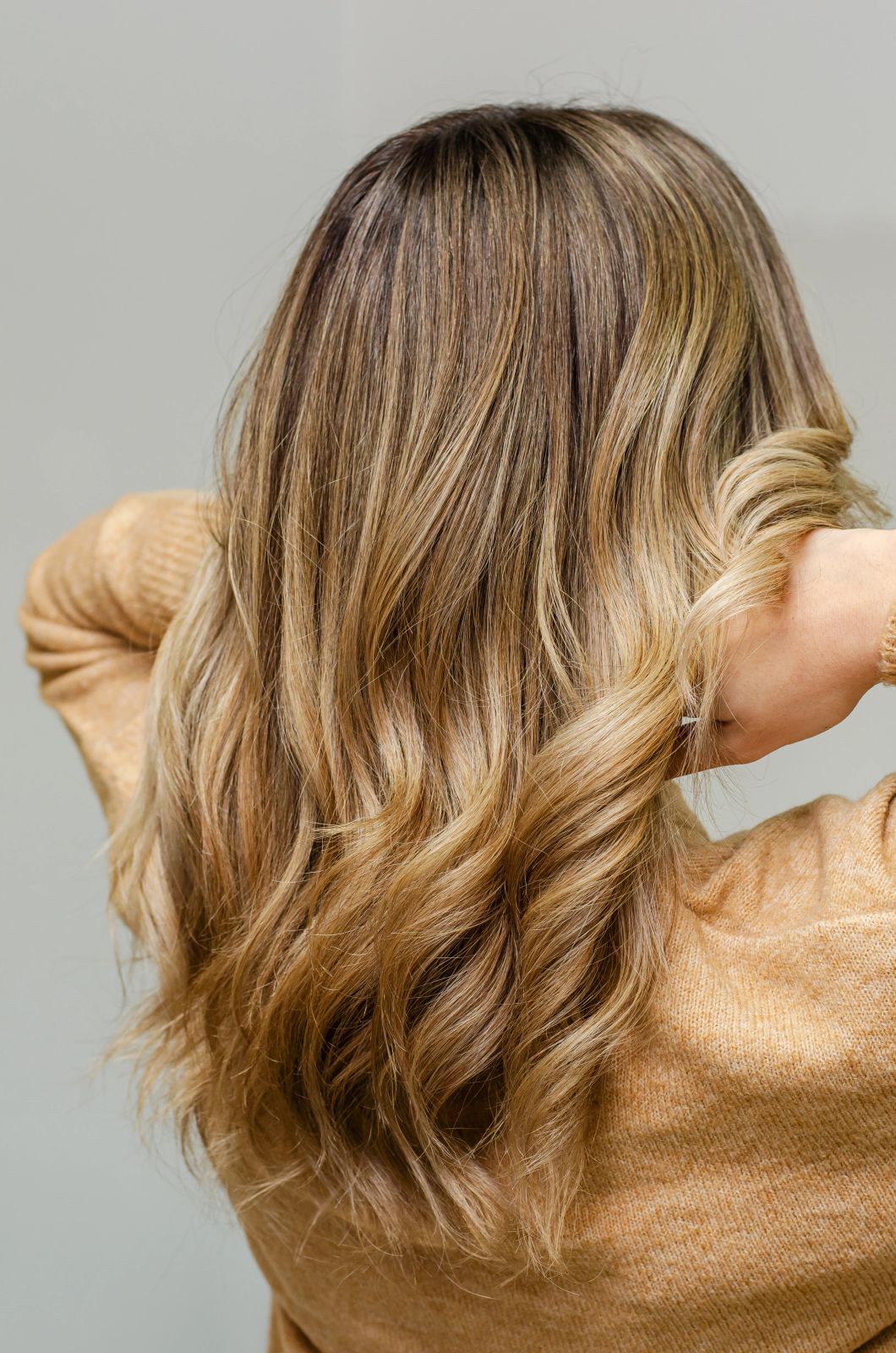
This is what happens when you ask for caramel and the stylist actually listens. Medium brown caramel blonde base, shoulder length, long layers, middle part. The caramel blonde highlights wrap through the curls, not just on top. Medium density curly hair. The technique is a slice-and-paint balayage. The stylist takes thin sections and paints the caramel through the mid-length to the ends, leaving the root medium brown. That means the curl pattern stays defined and the colour lands where the light hits. Takes about 30 minutes with a curl cream and diffuser. Touch-ups every 6 to 8 weeks. Good for a wedding, a birthday, a Tuesday. Any day you want your hair to look like it costs more than it did.
Medium Brown With Blonde Highlights and Wavy Texture
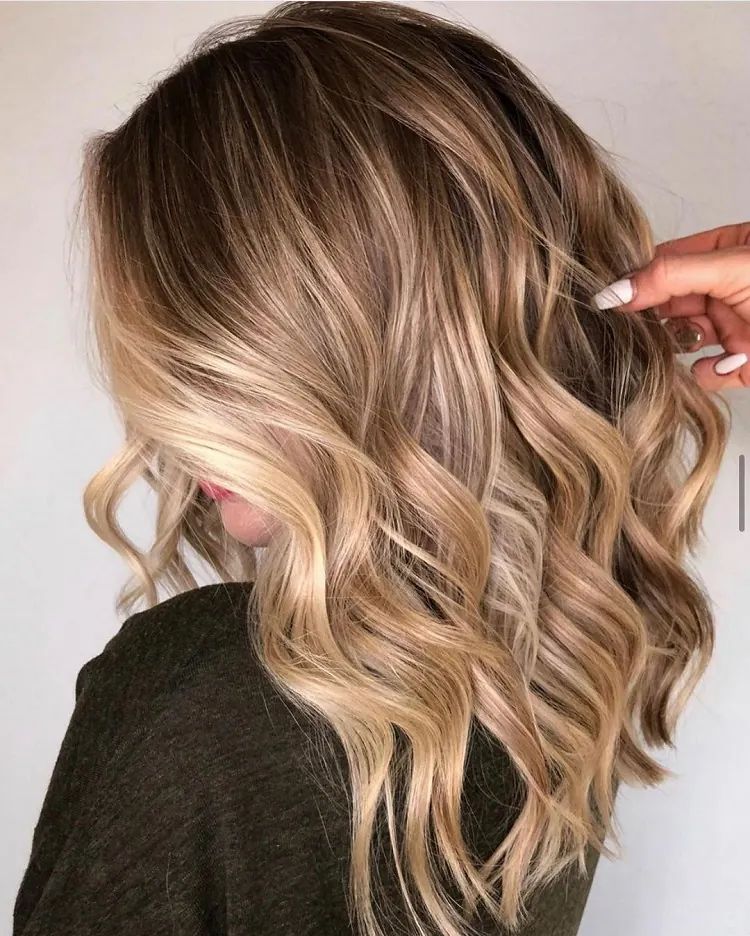
Bright blonde pieces throughout the medium brown base, that is the move here, and I actually prefer this to the more curated, face-framing-only approach. The difference is that evenly distributed highlights read as sun-struck rather than intentional, which works for a wavy, collarbone-length cut with no bangs and a side part. A DIY kit will get you a similar effect if you have medium to thick texture and patience for sectioning, but the salon version has better placement around the crown, where the light hits. The tone is warm, leaning golden, so it flatters warm undertones and looks dimensional even when the waves drop by day two.
Medium Brown Shag With Full Bangs and Blonde Highlights
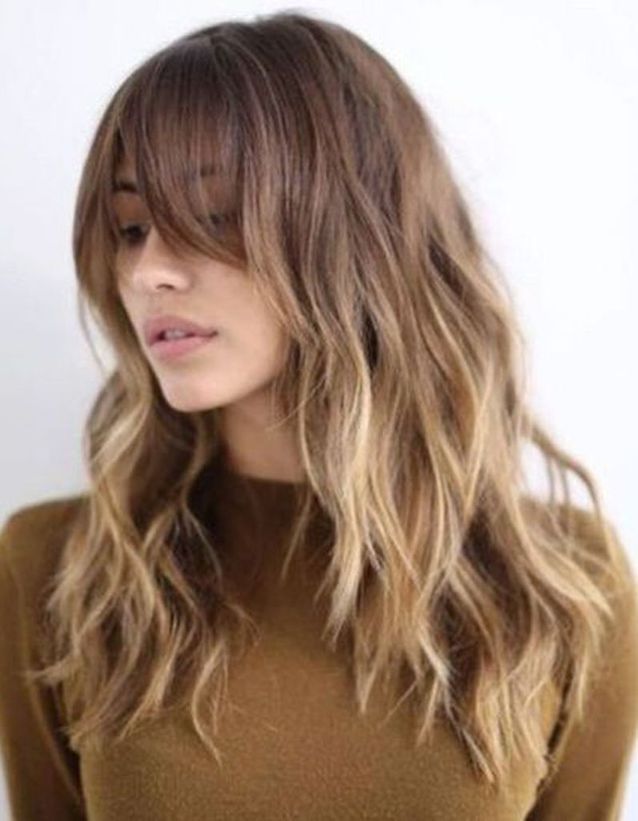
The full bangs sit just above the brow, the shag layers stack through the collarbone length, and the blonde highlights are woven through the medium brown base to catch the texture. This is a cut that genuinely flatters medium thickness and wavy texture, because the layers give volume without looking sparse. The honest downside is the daily styling. Those full bangs need a blow-dryer and a round brush every morning, and the textured waves take about twenty minutes with a sea salt spray. If your hair is fine or your mornings are short, skip the fringe and keep the shag. The tone stays neutral-warm, so the highlights blend rather than pop.
Dark Brown Base With Sharp Blonde Tips Bob
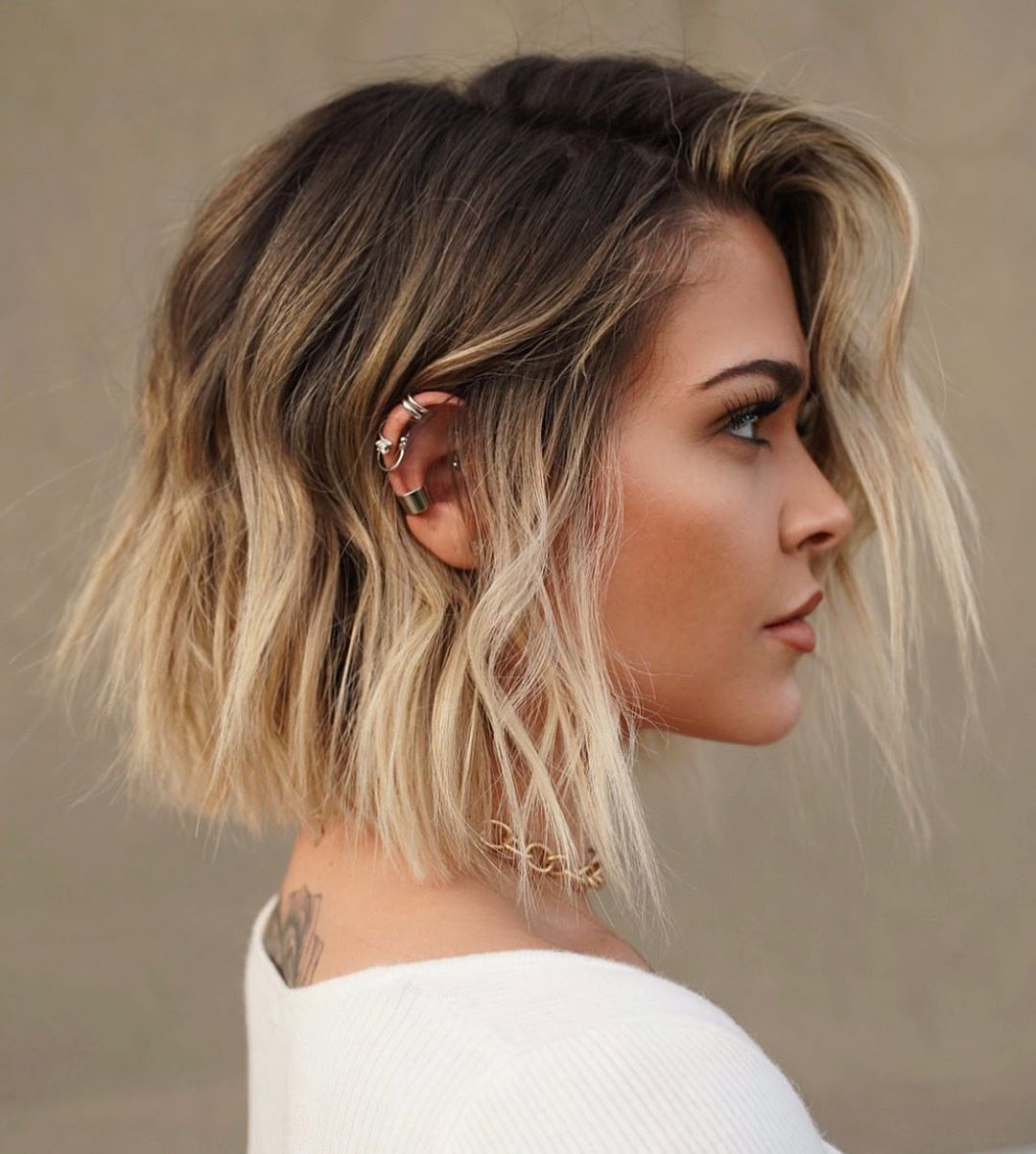
Can a bob survive a two-tone color without looking like a costume prop? This one does, barely. The dark brown base sits at chin length, the blonde tips hit the ends with a sharp contrast, and the fine, wavy texture keeps the whole thing from feeling heavy. The wear reality is that the blonde tips show every split end by week four, so a trim every six weeks is non-negotiable, and the color needs a touch-up every five weeks to keep the line crisp. The tone is cool, almost ash, which reads modern but requires a purple shampoo to keep the brass away. The side part and messy waves keep it from feeling severe.
Visual Idea
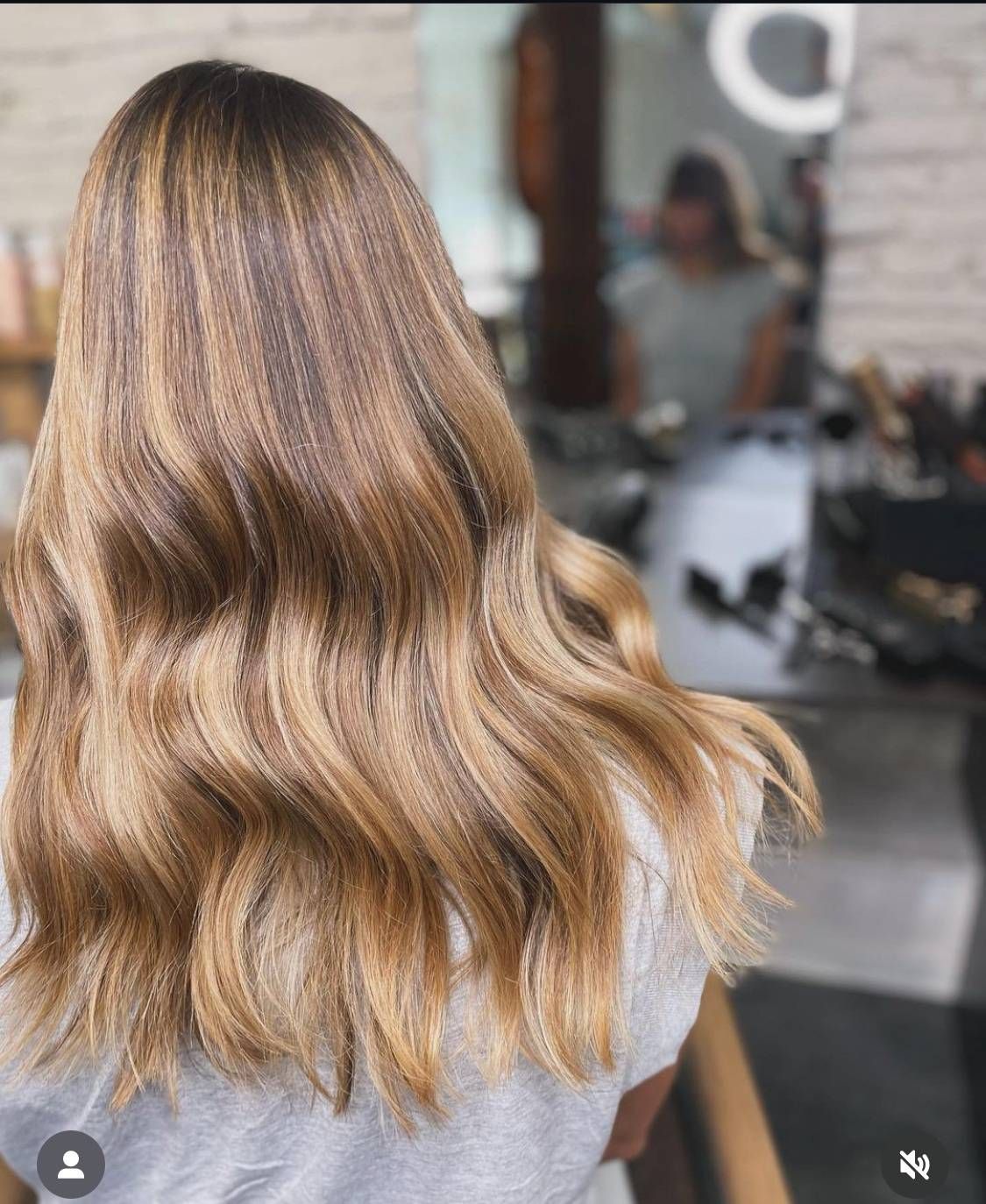
This is the balayage technique at its most natural: the dark brown base graduates into golden blonde without a visible line, and the mid-back length gives the color room to breathe. The stylist paints the lightener onto the midshaft and ends, leaving the roots dark, then blends upward with a sweeping motion. The result is warm-toned, wavy, and thick, with a middle part that lets the color fall symmetrically. No bangs, no sharp transitions, just a soft lift that reads as grown-in rather than applied. The layers keep the weight off the ends, so the waves hold their shape through a full day.
Mid-Back Visual Idea
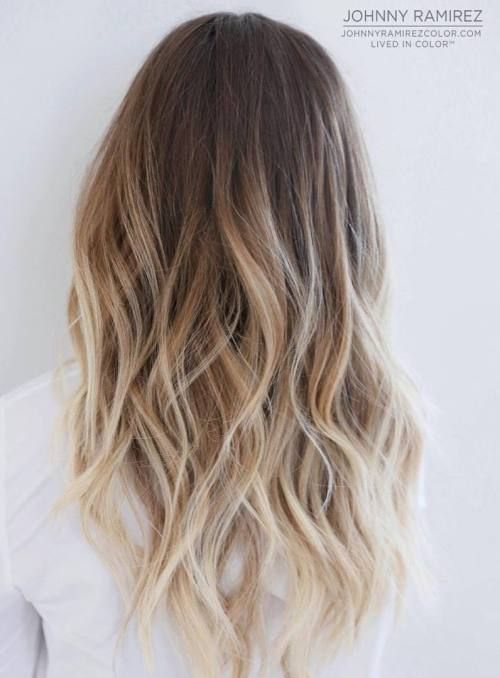
I expected a darker root, a lighter mid, and a hard line between them. Instead, this balayage moves from dark blonde at the crown to light blonde at the tips with a smooth transition that looks like a week at the beach. The mid-back length, wavy texture, and medium density mean the color sits evenly without pooling at the ends. A DIY version would risk a banded look, because the blending requires a feathering motion that is hard to replicate on the back of your own head. The tone is neutral, neither warm nor cool, which makes it wearable for most undertones. The middle part and no-bangs styling keep the focus on the gradient.
Collarbone Visual Idea
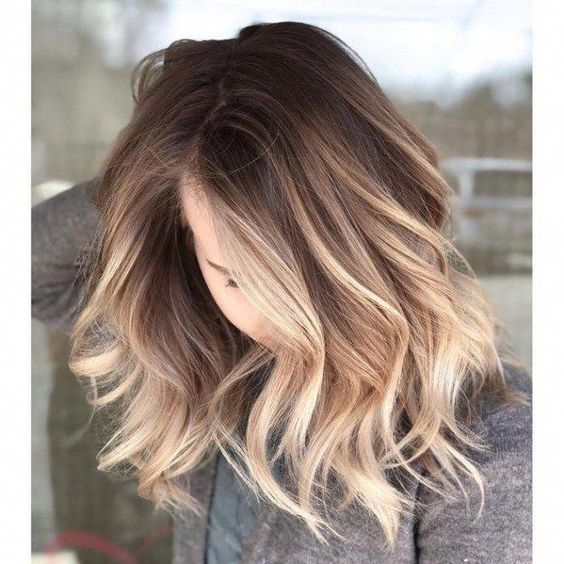
That blonde contrast hits before you notice anything else. A dark brown base, then it drops into blonde at the ends — collarbone length, loose waves, medium density. The middle part keeps it clean. Who it flatters: anyone who wants the drama without the commitment of full blonde. The downside is real, though. Those light ends are the most fragile part of the strand, and at collarbone length, they take more brushing, more heat, more everything. If your hair is already compromised, this is a gamble. Fine hair might not carry the weight of the contrast without looking thin at the bottom.
Dark Brown To Blonde Ombre Visual Idea
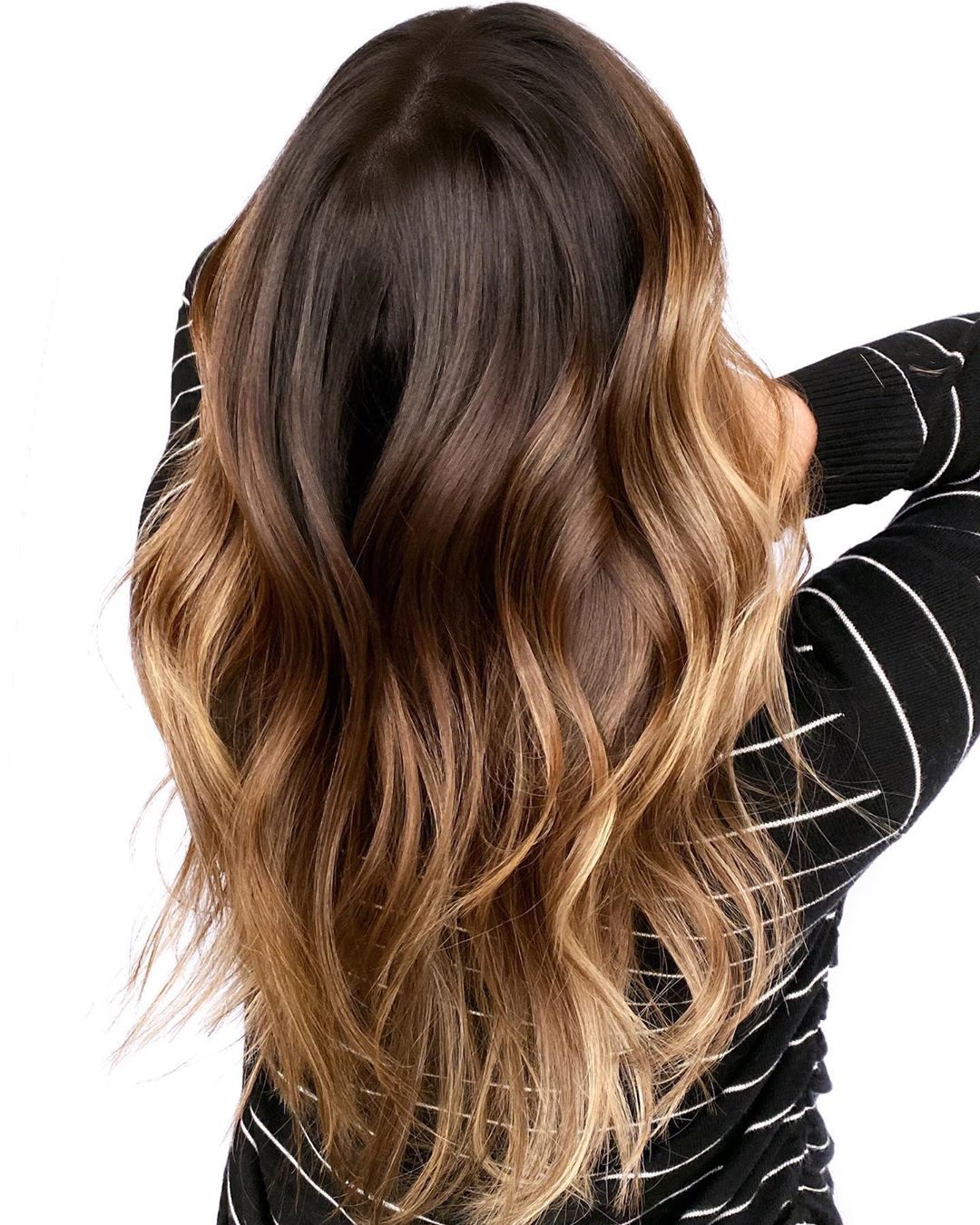
When did dark brown to blonde ombre stop looking like a relic and start looking this intentional? The back view tells the story: mid-back length, thick, wavy texture, a middle part. The ombre effect means the dark brown root fades into blonde gradually, no hard line, no abrupt shift. That is the whole point — it reads like your hair lightened on its own over a long summer. But here is the wear reality. The ombre grows out well because the root is already dark, so you can stretch eight to ten weeks between touch-ups. The blonde ends will still need a purple shampoo every third wash to stay cool. Thick hair holds the gradient better; fine hair might lose the visual weight.
Layers Visual Idea
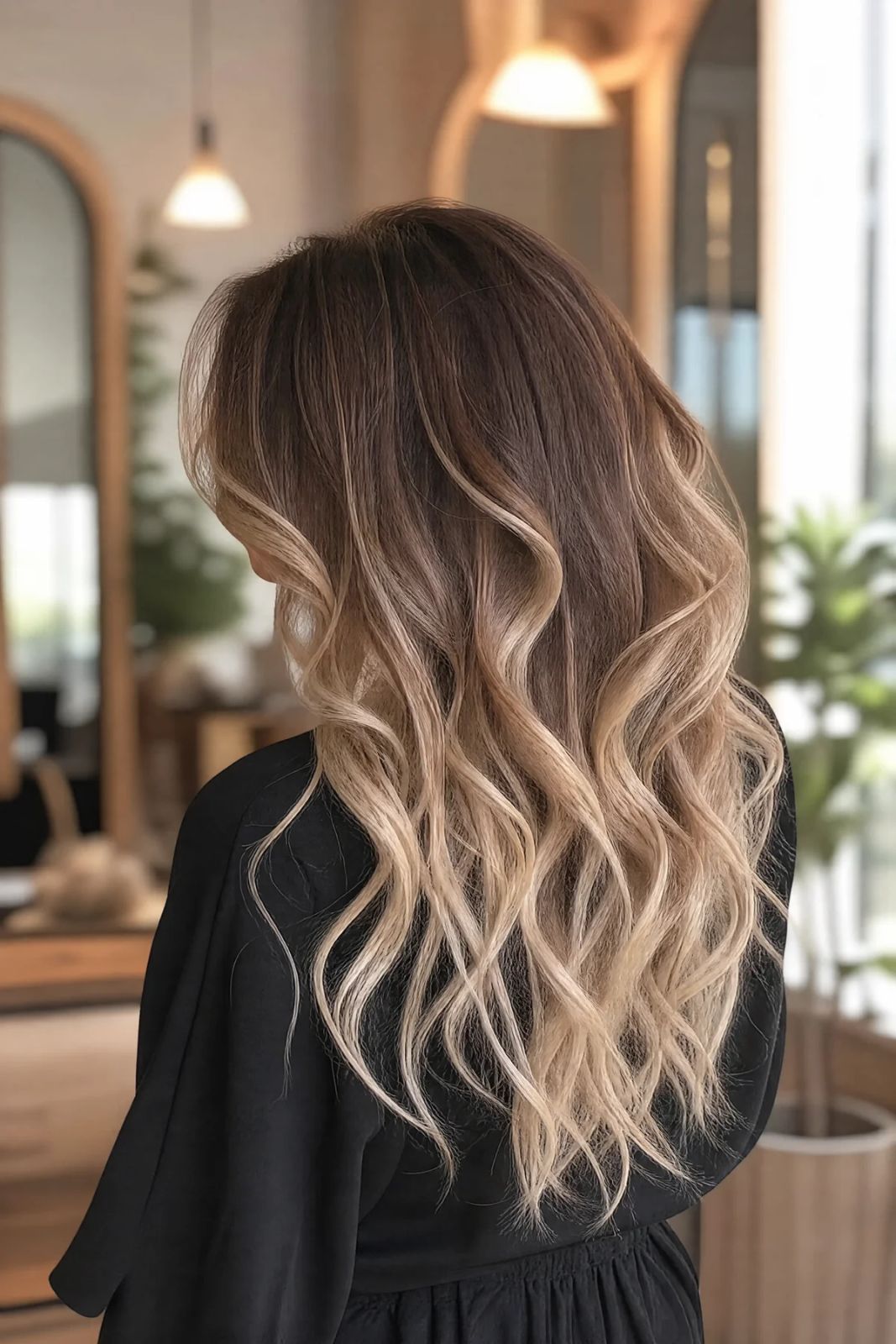
This is the one that makes you stop scrolling. Dark brown base, blonde balayage, mid-back length, thick wavy hair, a middle part. The layers are cut to let the colour move — the blonde hits the high points of each wave, the dark sits in the dips. Seamless is the word. To style it, you need a heat protectant and a large-barrel curling iron. Take one-inch sections, wrap away from the face, leave the ends out for a soft finish. Then run your fingers through to break up the curl. The layers do the rest. Thick hair carries this best; the layers keep it from turning into a triangle. Fine hair might need fewer layers to avoid looking sparse at the ends.
No Bangs Visual Idea
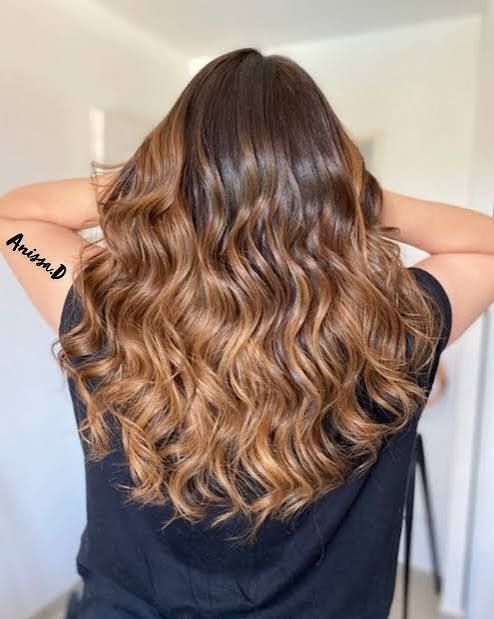
I looked at this and thought: that is the transition I wanted three years ago. Dark brown to golden blonde ombré, no bangs, mid-back length, thick wavy texture, a middle part. The smooth transition from dark to light is what makes it work — no harsh line, no stripe. Ombré versus balayage: ombré is more deliberate, a clear fade from dark to light, while balayage is painted sections that melt into the base. This is ombré. DIY is not an option unless you have a friend who has done it before and a lot of patience. The risk of a banded look is too high. Book it.
Side View Back Slightly Visible Visual Idea
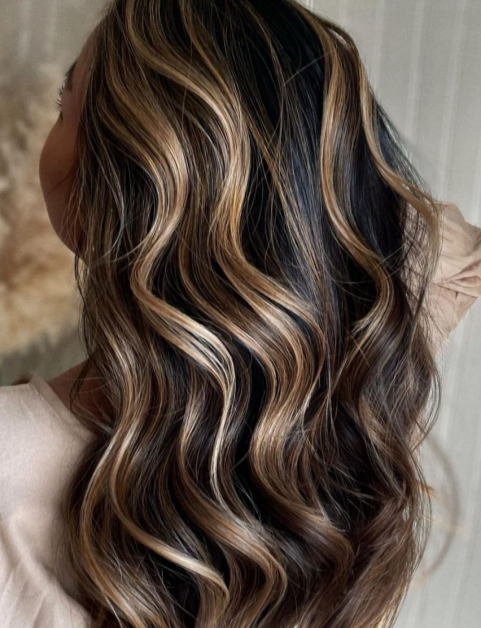
The side view catches the light first. Dark brown base, blonde and caramel highlights, mid-back length, thick wavy texture, a middle part. That rich highlight contrast is the selling point — the caramel warms the blonde, keeps it from going ashy. Who it suits: warm and neutral undertones, medium to thick density, wavy or curly texture. The honest downside is brassiness. Caramel and blonde together can pull orange after a few weeks if you do not use a toning shampoo. Thick hair hides the grow-out well; fine hair might show the root line faster. The layers keep the waves from falling flat, but they also mean a trim every eight weeks to keep the shape.
Front View Slightly Side Visual Idea
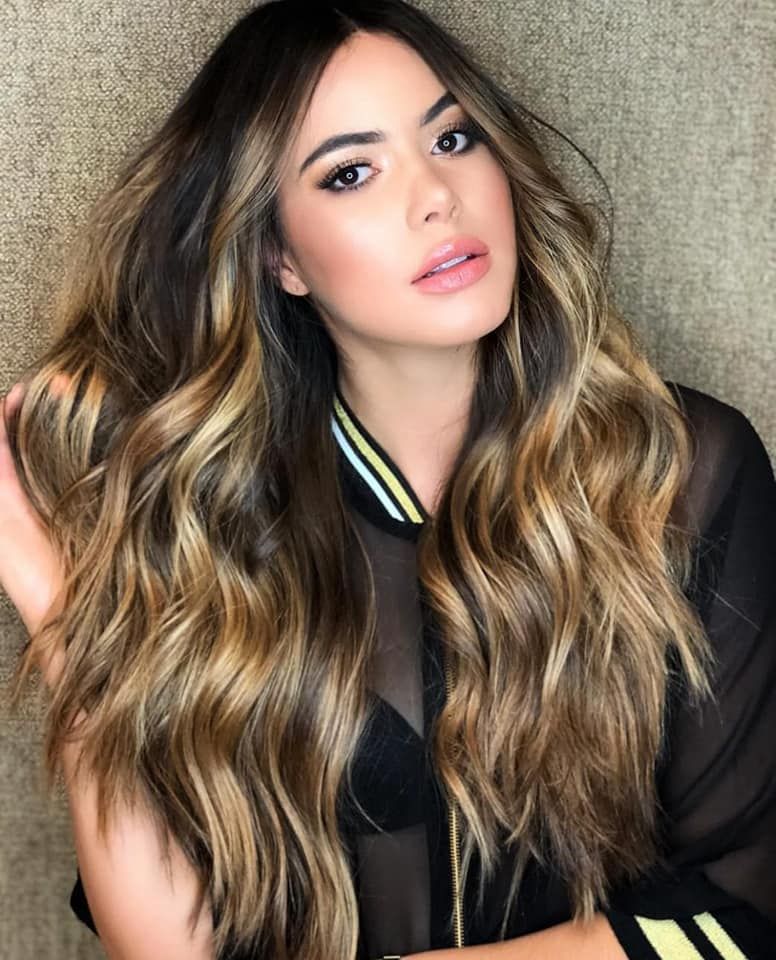
Ever had a money piece that just sits there, doing nothing? This one doesn’t. The dark brown base drops into a thick blonde streak at the front, honey-toned, not icy, so it reads warm against the rest of the mid-back length. Loose waves help it blend, but the real trick is the tone: a cool blonde here would fight the base, honey just softens the line. I’ve seen these go brassy by week three if the stylist lifts too high. Ask for a low-lift blonde on the money piece, it fades slower and the root line stays blurred longer.
The middle part helps, too. A side part would dump all that brightness on one side, and then you are just a stripe. The middle splits it evenly, so the money piece reads like intentional framing, not an accident. Thick, wavy texture holds the wave through day two, fine hair would need a curl refresher by noon. No bangs, which is smart: bangs compete with the money piece for attention. One focal point is enough.
Dark Blonde To Light Blonde Ombr Visual Idea
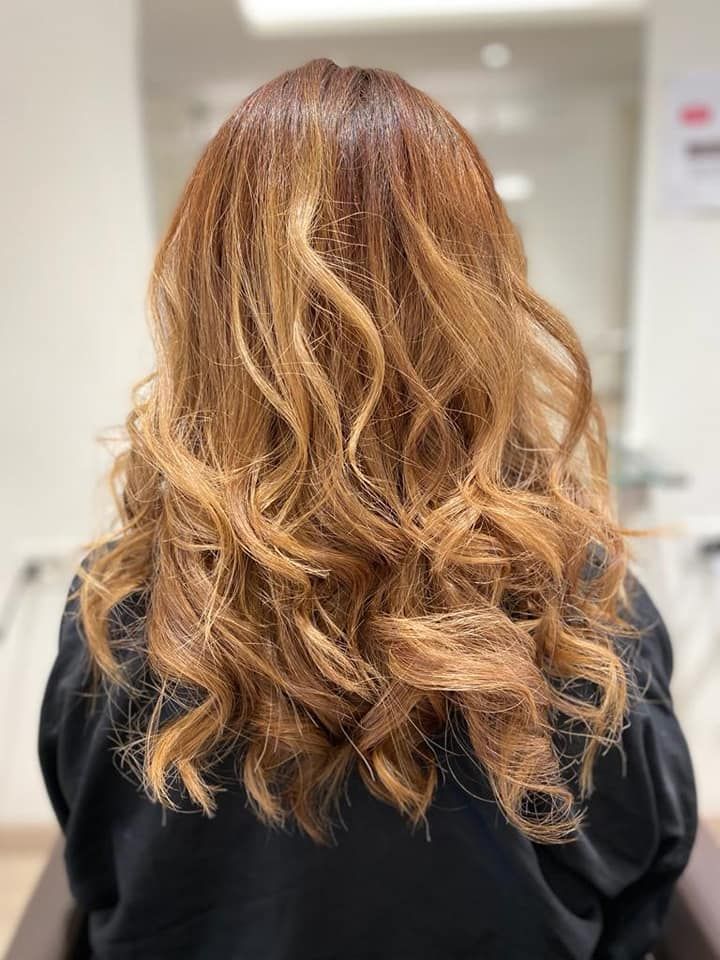
Best grow-out in this roundup. The ombré transition here is clean: dark blonde at the root, light blonde by the ends, no stripe in between. On medium-density hair, that gradient hides the regrowth line for months, because the root is already dark. The honest downside is brassiness on fine hair. Fine strands lift faster and the light ends can pull yellow by week four, especially if the base is warm. Tell your stylist you want a cool-toned light blonde on the ends and a neutral dark blonde at the root, no gold. That keeps the ombré looking intentional, not like you forgot to book a touch-up.
Back View Visual Idea
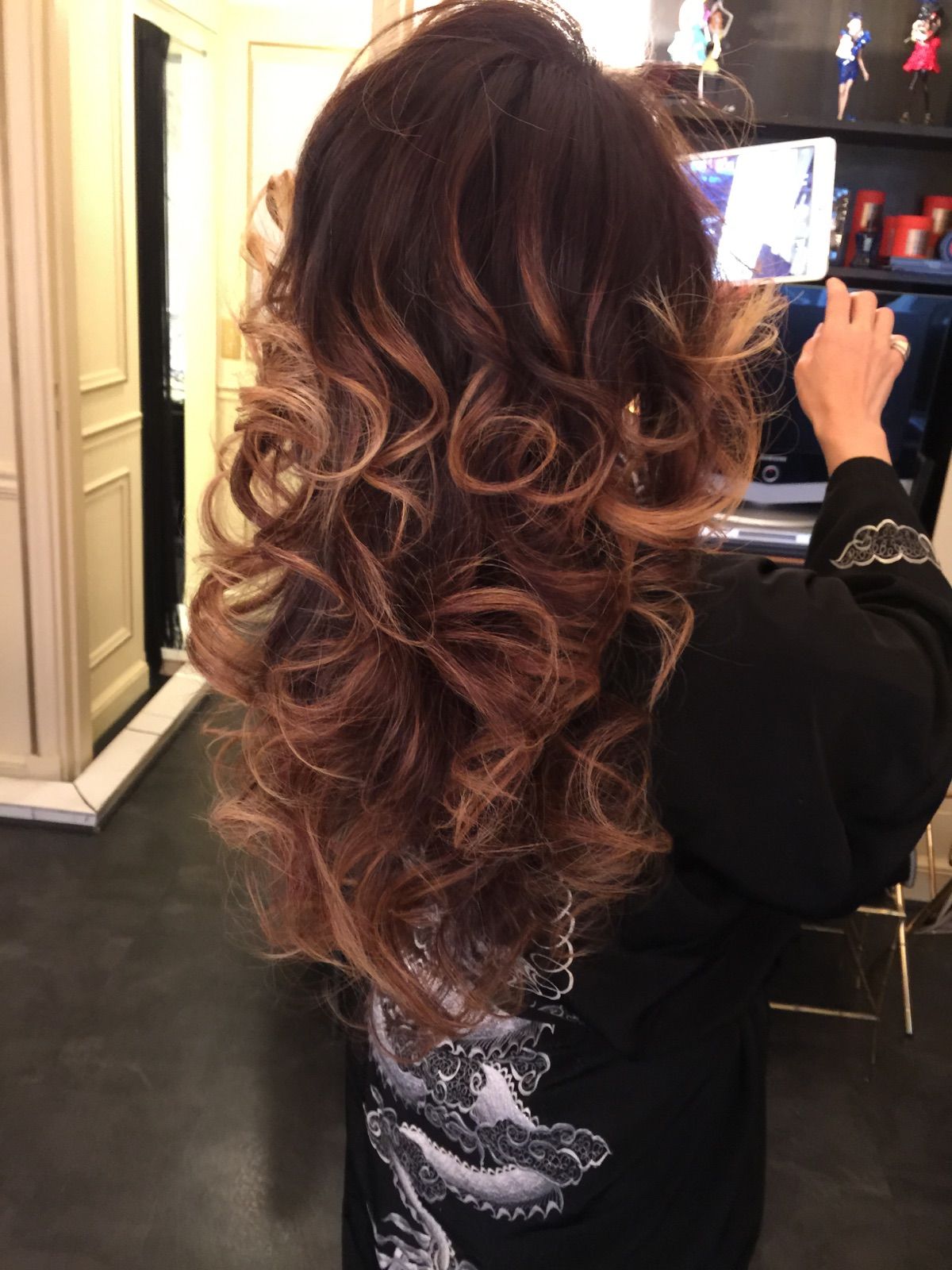
That contrast stopped me. Dark brown base, then blonde balayage highlights that start mid-shaft and widen toward the ends. It is not subtle, and that is the point. Subtle highlights blur into the base, you get dimension but no drama. This is drama, the kind you see from across a room. The back view shows the full spread: thick, wavy hair, loose curls, the blonde pieces catching light while the brown stays deep. A side-by-side with subtle highlights would be boring after this.
DIY is a hard no here. The contrast means the blonde has to land in the right places, not patchy, not too high. A friend with a brush kit will give you a stripe, not a gradient. Book the salon, show them the back view you want, and expect three hours. The payoff is a colour that does not disappear in low light.
Long Visual Idea
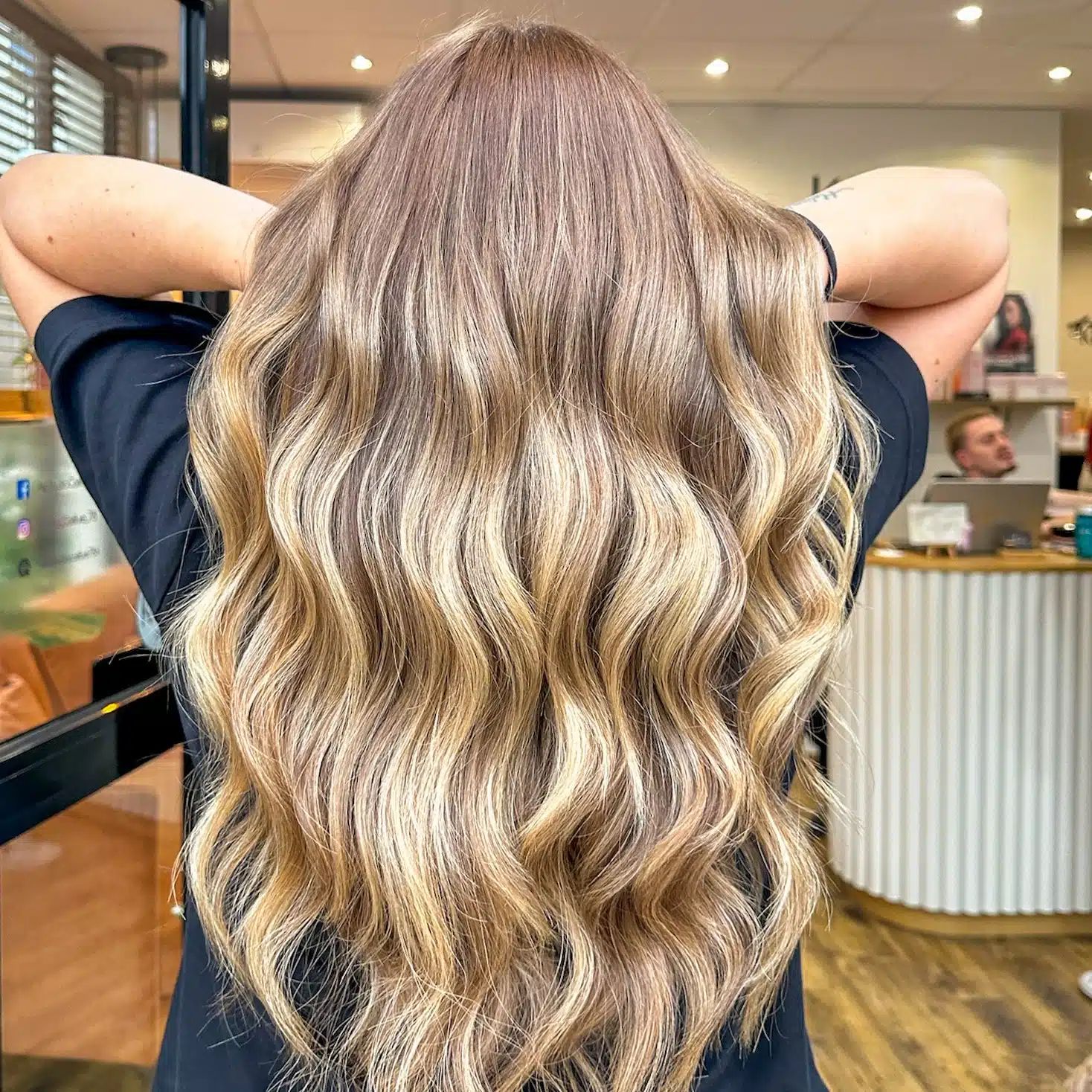
Honey blonde balayage on a dark brown base, long, no bangs, middle part. The warmth is the whole story here. Honey reads golden, not brassy, and on thick, wavy hair it catches light in a way ash tones never do. Long layers keep the weight but let the colour breathe, so the honey moves through the ends without the roots going flat. This flatters warm undertones, the kind that tan, not burn. If your skin runs cool, honey can pull orange, and that is a regret you cannot tone out in one wash.
The honest downside is brassiness at week five. Honey is a warm tone by design, but on porous hair it can shift toward copper faster than you expect. A purple shampoo will not fix that, it cancels yellow, not orange. You need a blue shampoo, used once a week, and even then the ends may need a toner at the six-week mark. Worth it for the dimension, but know what you are signing up for.
Long Layers Visual Idea
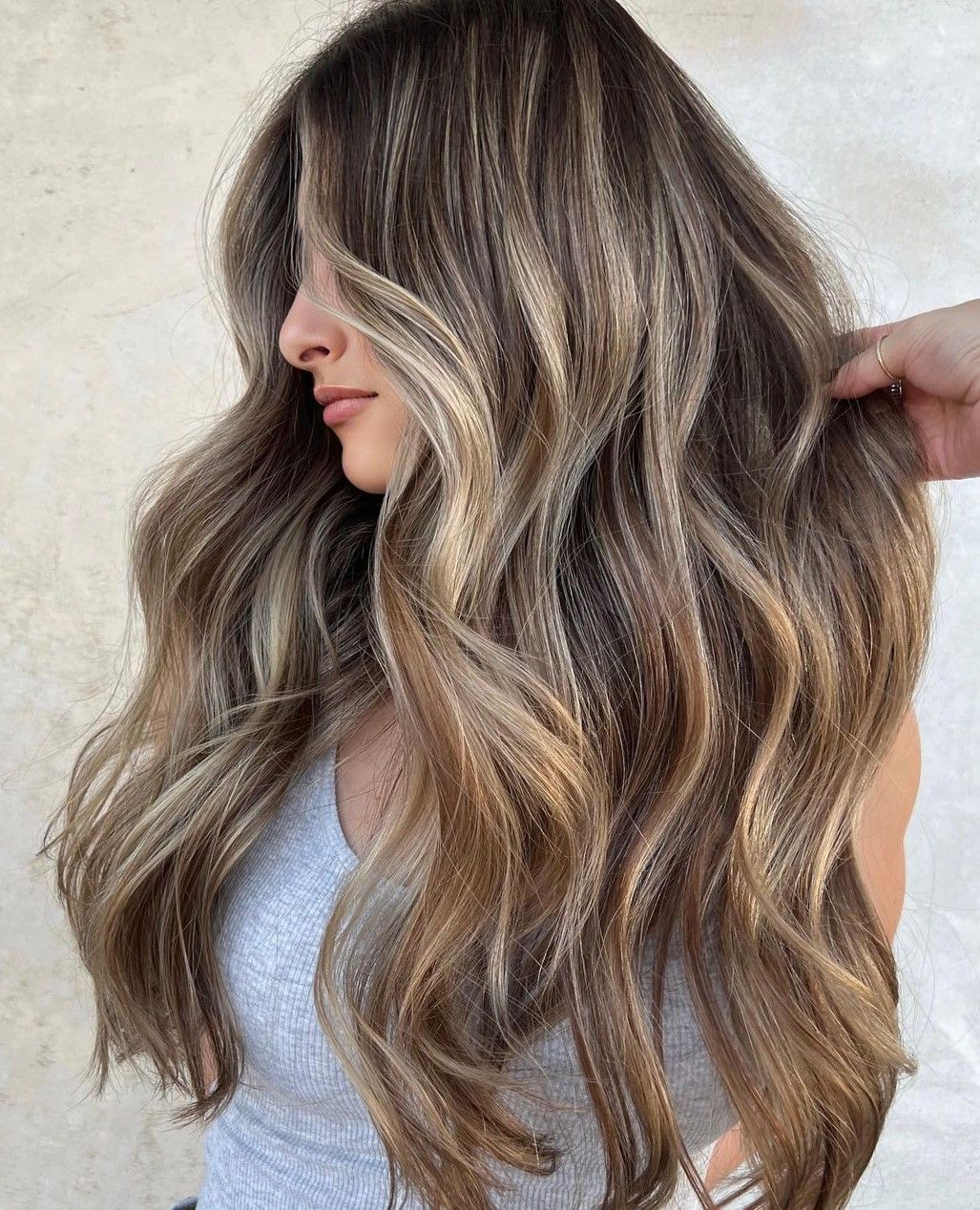
Have you ever had a colour that looks better on day four than day one? This one does. The dark brown base with blonde balayage and highlights is rich enough that the blonde does not overpower, and the long layers mean the grow-out is a slow fade, not a hard line. Face-framing bangs catch the light pieces first, which softens the whole thing. Thick, wavy texture holds the loose wave without product, and the middle part keeps the bangs from separating into two triangles. Styling is a ten-minute blow-dry with a round brush on the bangs, then air-dry the rest. It holds through a work week with one refresh.
Middle Visual Idea
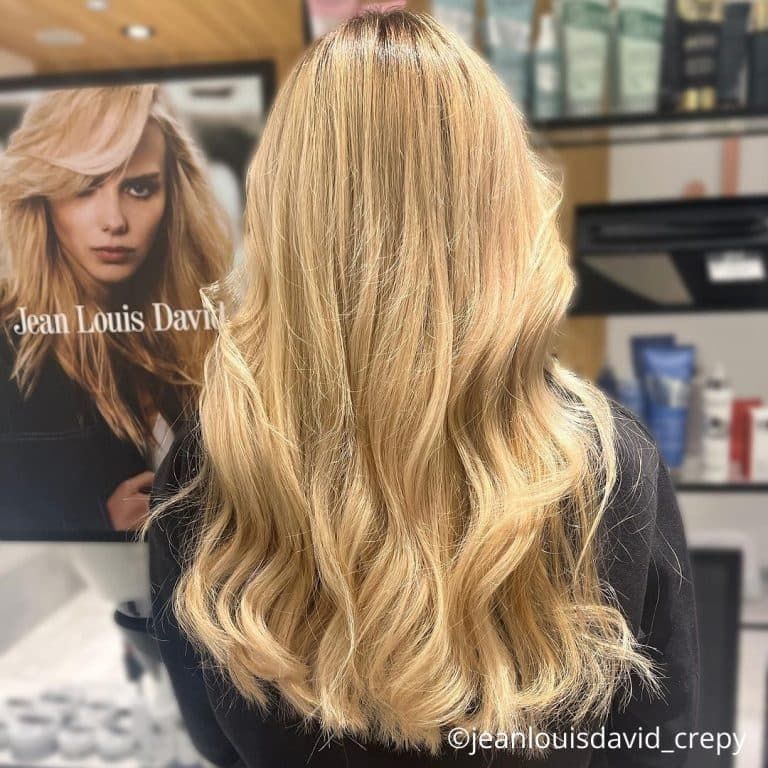
The balayage transition from dark blonde to light blonde is the real story here, not the middle part. A stylist paints freehand sections, starting the lighter colour lower so the root stays dark and the grow-out is invisible for months. The mid-back length and thick, wavy texture let the gradient breathe; on fine straight hair you would see every seam. Ask for a soft, sunkissed lift with no harsh lines, and keep the tone neutral to stop brassiness at week four. This is not a quick in-and-out appointment, book three solid hours.
Side-Swept Visual Idea
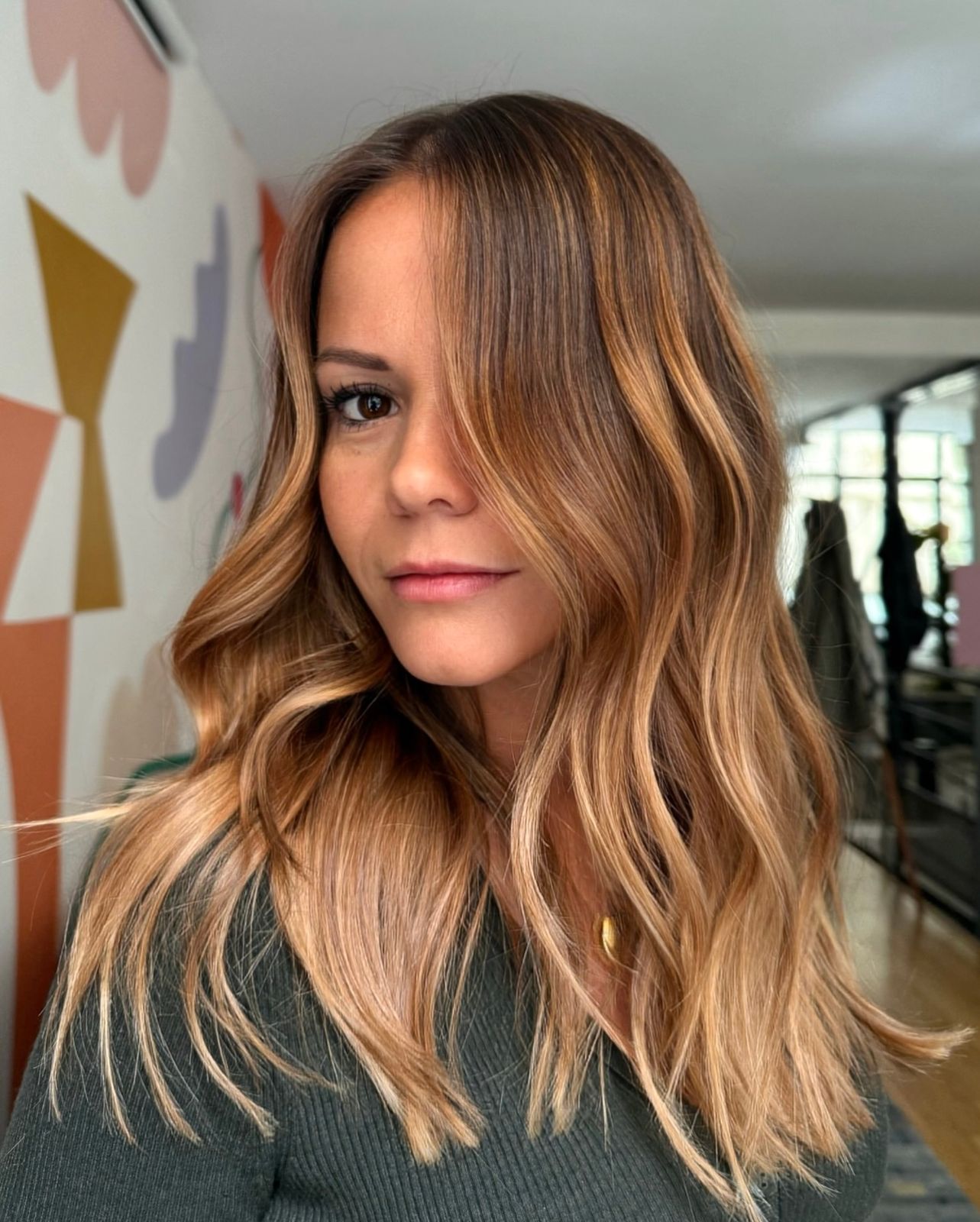
That first look at a side-swept lob with a uniform all-over light blonde makes me twitch. The transition from dark blonde to light blonde here uses balayage highlights, keeping the base dark and the high points lighter, which gives the hair dimension a single-process shade lacks. A DIY version will almost certainly look patchy, the side part lifts less, and the warmth will read as brass. This is a salon conversation, period. A professional can place the colour so the side-swept bangs catch light and the rest of the colour flows naturally.
Curtain Bangs Visual Idea
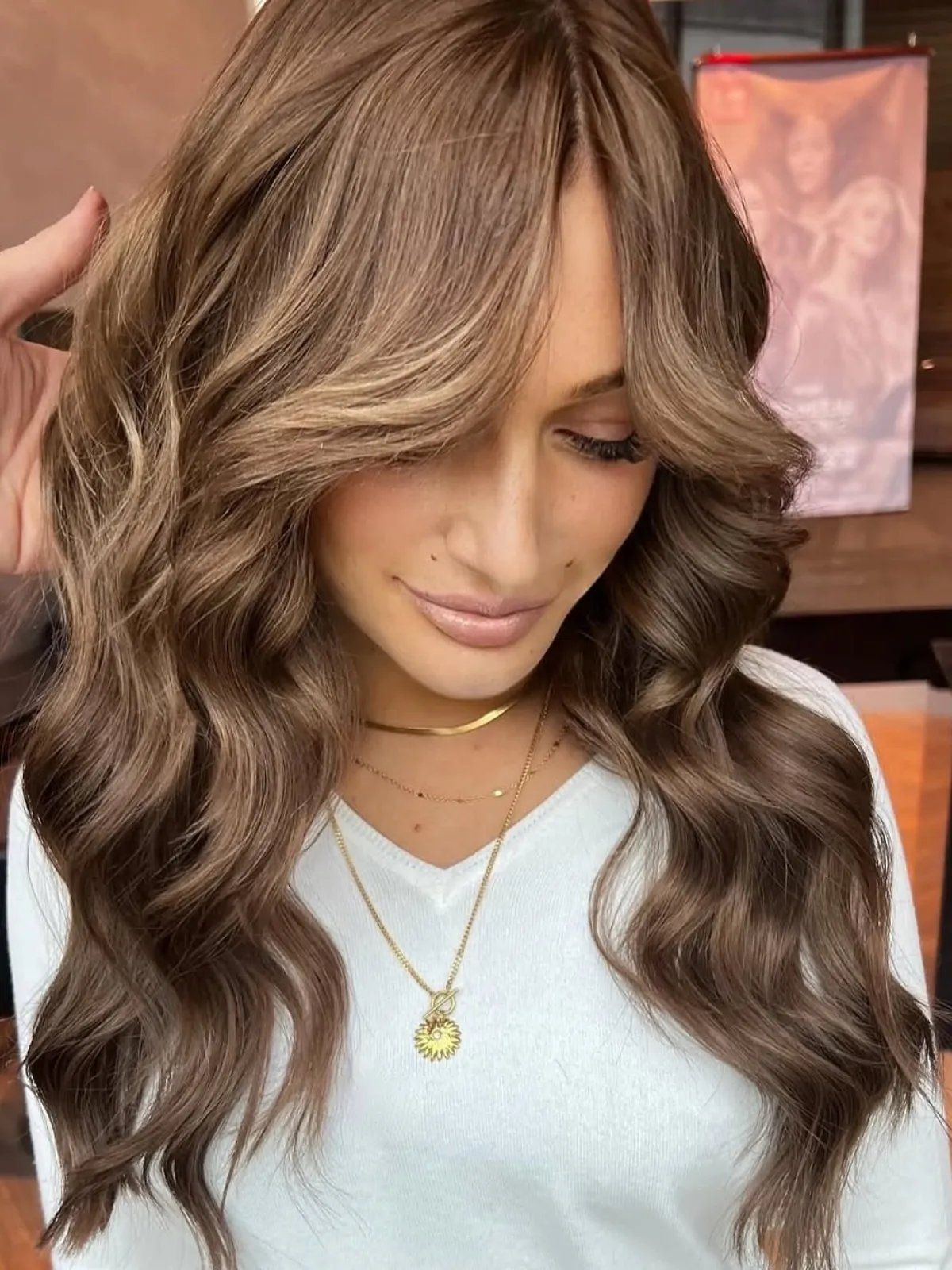
The ash blonde highlights here sit on a dark blonde base, not a light one, and that is what makes the curtain bangs look intentional instead of accidental. Ash tones cancel the warmth a dark base often throws, so the blonde reads cool and clean. The thick, long waves hold the shape without extra teasing.
The honest downside is brassiness. Ash can fade into a greenish yellow if the base is too warm, and a purple shampoo is not optional, it is the line between a cool blonde and a tired one. A toner every six weeks is the real cost of this look.
Wavy Visual Idea
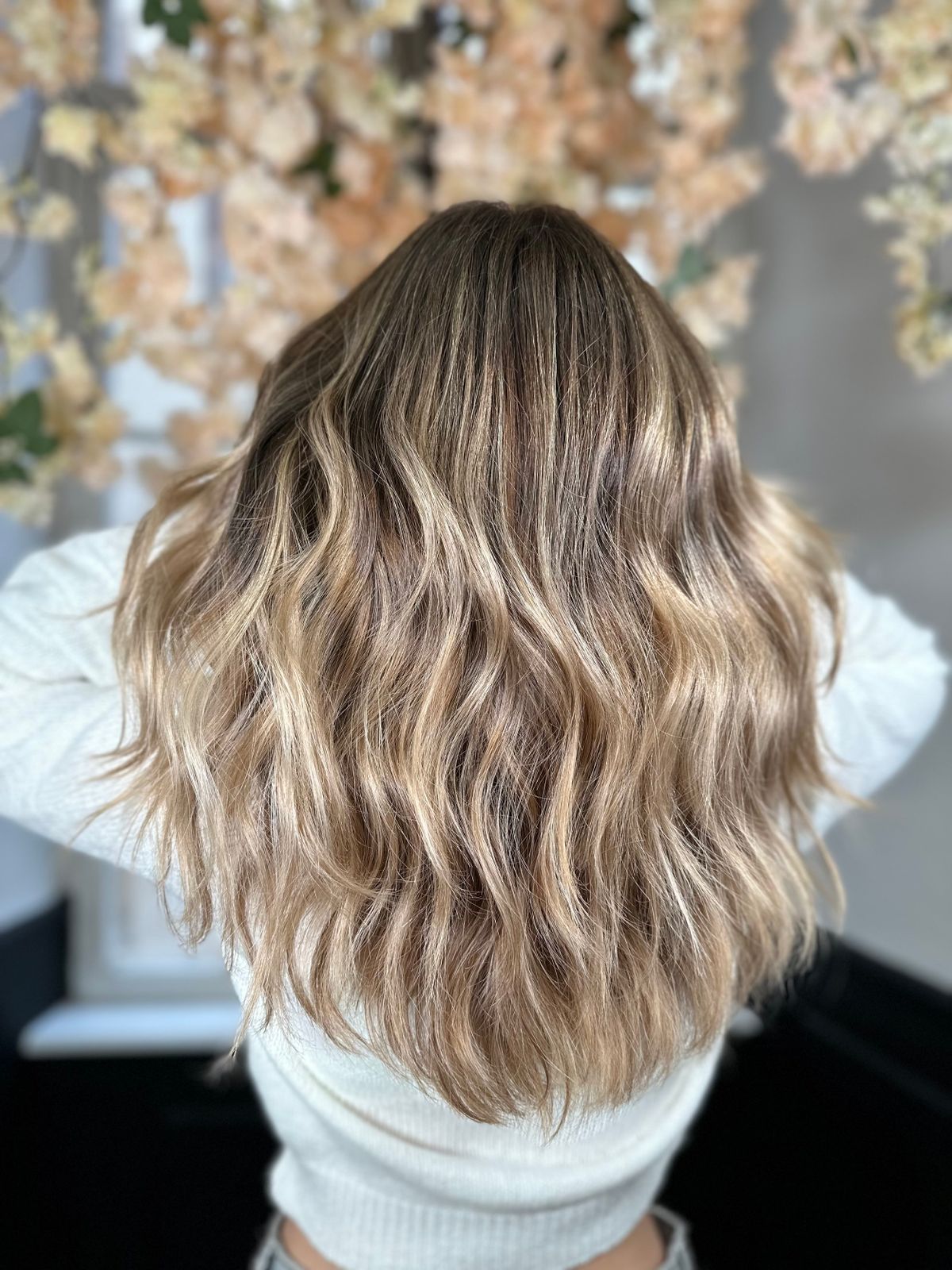
Ever notice that a balayage transition from dark blonde to light blonde always photographs best when the wave is already there? That is not a coincidence.
The waves create shadows that hide the colour transition, so you do not need a perfect root shadow. The mid-back length and thick texture demand a salt spray or a mousse to hold the wave; without product, it falls flat by late afternoon. The upkeep is a toner every two months to keep the light blonde from turning yellow, but the grow-out is the easiest part of this whole thing.
Lob Visual Idea
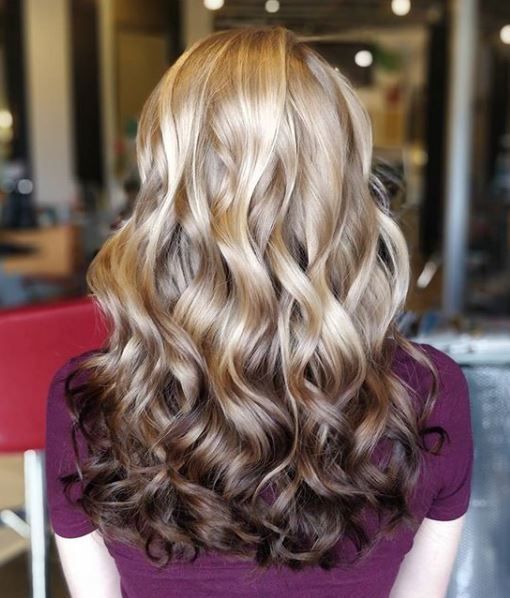
The mistake most people make with an ombré from dark brunette to blonde on a lob is letting the transition start too high. It should begin around the ears and graduate softly to the ends, not look like two separate colours glued together. The collarbone length and loose curls help the gradient read as intentional, but if the toner is skipped the ends turn orange within three weeks. A purple shampoo will only do so much, book a toning visit before the brass wins.
Air Dried Wavy Visual Idea
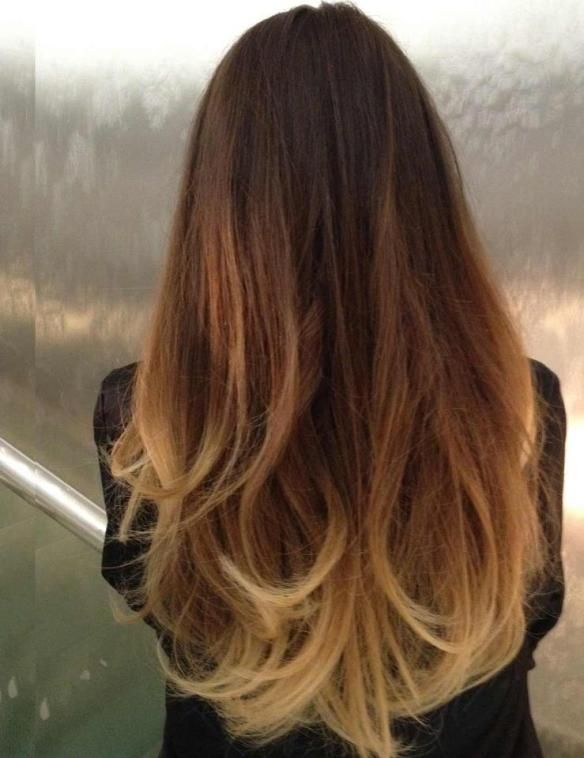
I wanted to hate this. Air-dried ombré usually reads as a split end waiting to happen. But the brunette base with blonde ombré highlights here is so gradual it looks like the colour grew that way. Mid-back length, thick waves, no heat. The transition starts around the chin and softens into a buttery blonde at the ends. The layers are cut to encourage the wave, not fight it. Middle part, no bangs. The trick is the ombré placement: the blonde starts low enough that the darker root has weight and shine. When you air dry, the ends dry lighter and the roots stay rich. No brassiness, just a slow fade that buys you months between salon visits. I was wrong. This works.
Final Thoughts
I walked into this expecting to prefer the high-contrast blonde tips. Ended up saving a soft caramel balayage that I keep coming back to. The one I would actually book? The dark brown base with bright face-framing pieces. It buys you six weeks before the grow-out line shows. That is a win.