

Blue hair has moved past the punk phase and into something more wearable. The current trend leans toward lived-in color with a glossy finish, which means you can go electric or stay subtle without looking like a costume.
These 21 Blue Hair Dye Ideas cover the full spectrum, from low-maintenance balayage on dark bases to full-on vibrant blues that demand attention. Whether your hair is fine and falls flat or you wrestle with a visible grow-out line, there is a shade and technique here that actually works with your texture and schedule. No fluff, just color.
Mid-Back Length Waves With Electric Blue Tips
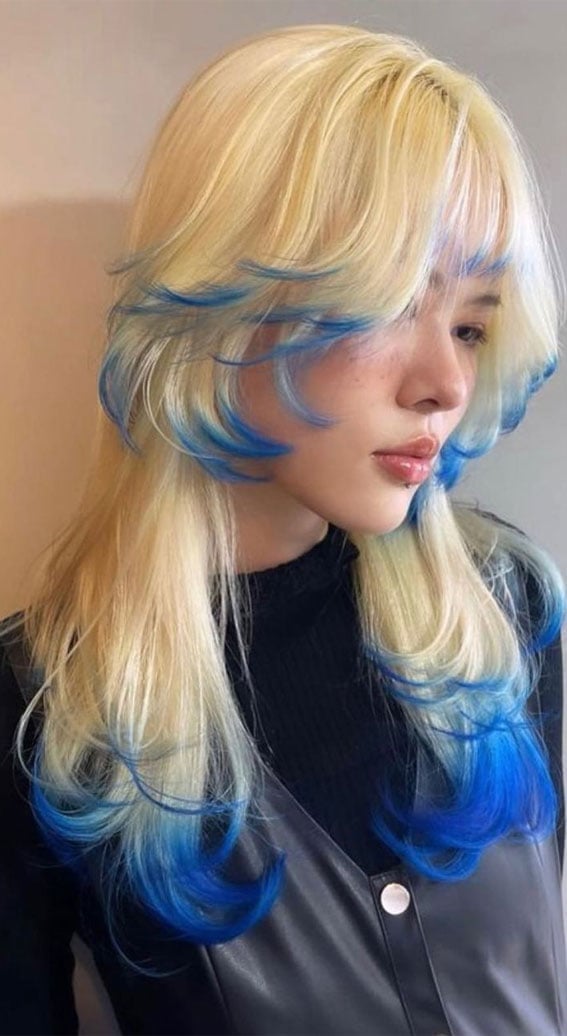
The blue is placed exactly where the layers fall, so the color moves with every wave instead of sitting in a solid block. A blonde base keeps the overall look bright, while the electric blue tips and layered sections create contrast. Medium to thick wavy hair starting at shoulder length works best, and the curtain bangs soften round and heart faces. Ask your colorist for: mid-back blonde with electric blue tips and layers, curtain bangs. Use a texturizing spray on the ends to make the blue accents pop, and plan a trim every 8 to 10 weeks to keep the layers defined.
The middle parting and wavy blowout keep the style current. This is a salon-only job, since the blonde base needs lifting before the blue can take hold, and the placement of the blue sections requires a practiced hand. Expect about three hours in the chair for the initial application.
Chin Length Blunt Bob With Blue Ombre
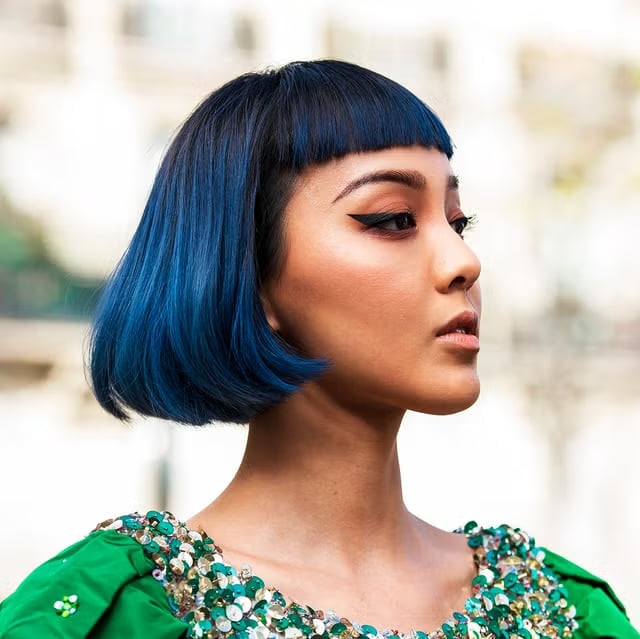
Can fine, straight hair handle a bold blue without looking flat? Yes, when the ombre does the heavy lifting. The deep dark blue at the roots transitions to electric blue at the ends, which adds visual depth and the illusion of thicker hair. Micro bangs keep the look sharp, and they suit oval and long faces best. Ask your colorist for: chin length blunt bob, micro bangs, dark to electric blue ombre. A flat iron keeps the ends sleek, and the bob needs a trim every 6 to 8 weeks to maintain the blunt line. The side parting gives the cut a little asymmetry, which helps the ombre read as intentional.
Bright Blue Chin Length Bob With Blunt Bangs
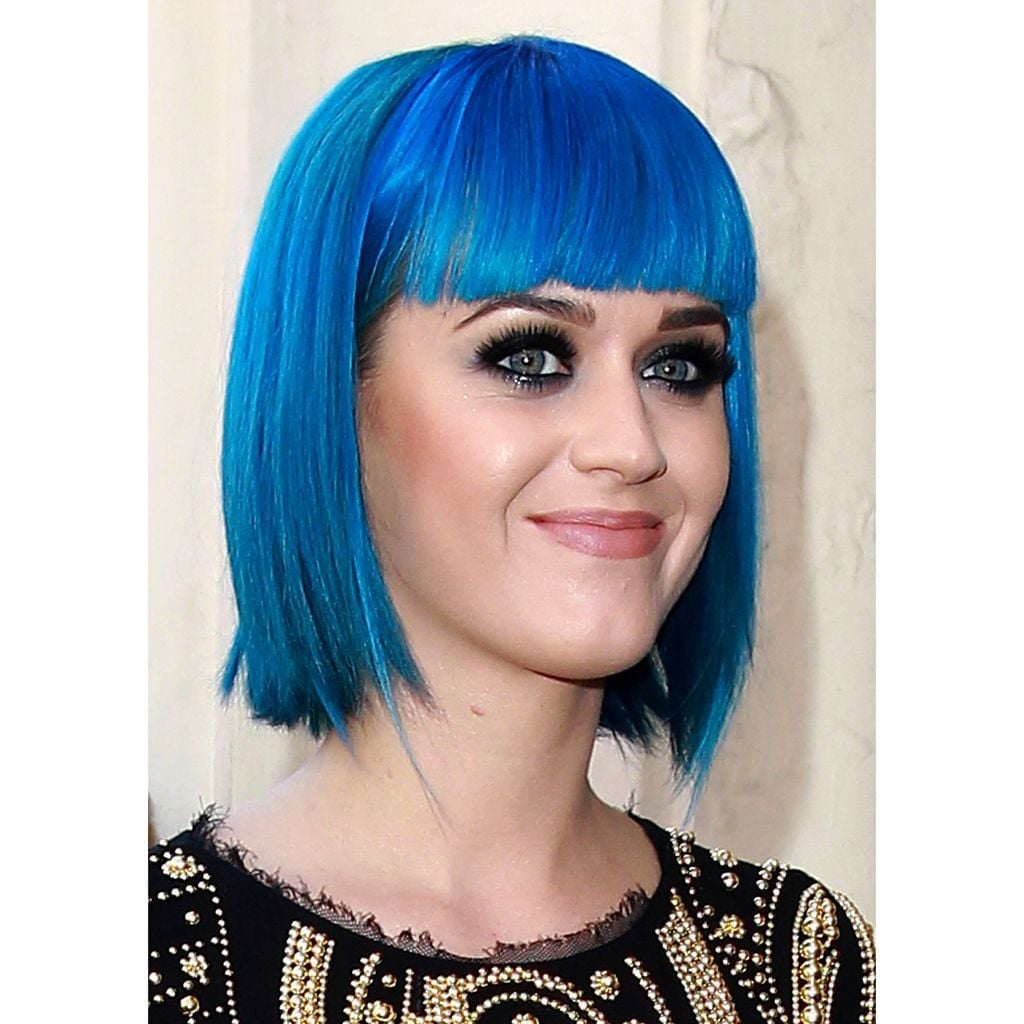
A solid bright blue is a different commitment than a blended or highlighted version. This one is uniform, intense and leaves no room for doubt. The blunt bangs and middle parting require precision, so this is strictly a salon cut. Fine straight hair at least chin length carries the look cleanly, and the blunt bangs work well on oval and square faces. Ask your colorist for: chin length bob, blunt bangs, bright blue color. A smoothing serum keeps the sleek finish intact, and both the bob and bangs need a trim every 4 to 6 weeks. The straight blowout style makes the vivid blue color a single, deliberate statement.
Shoulder Length Teal Blue Waves With Curtain Bangs
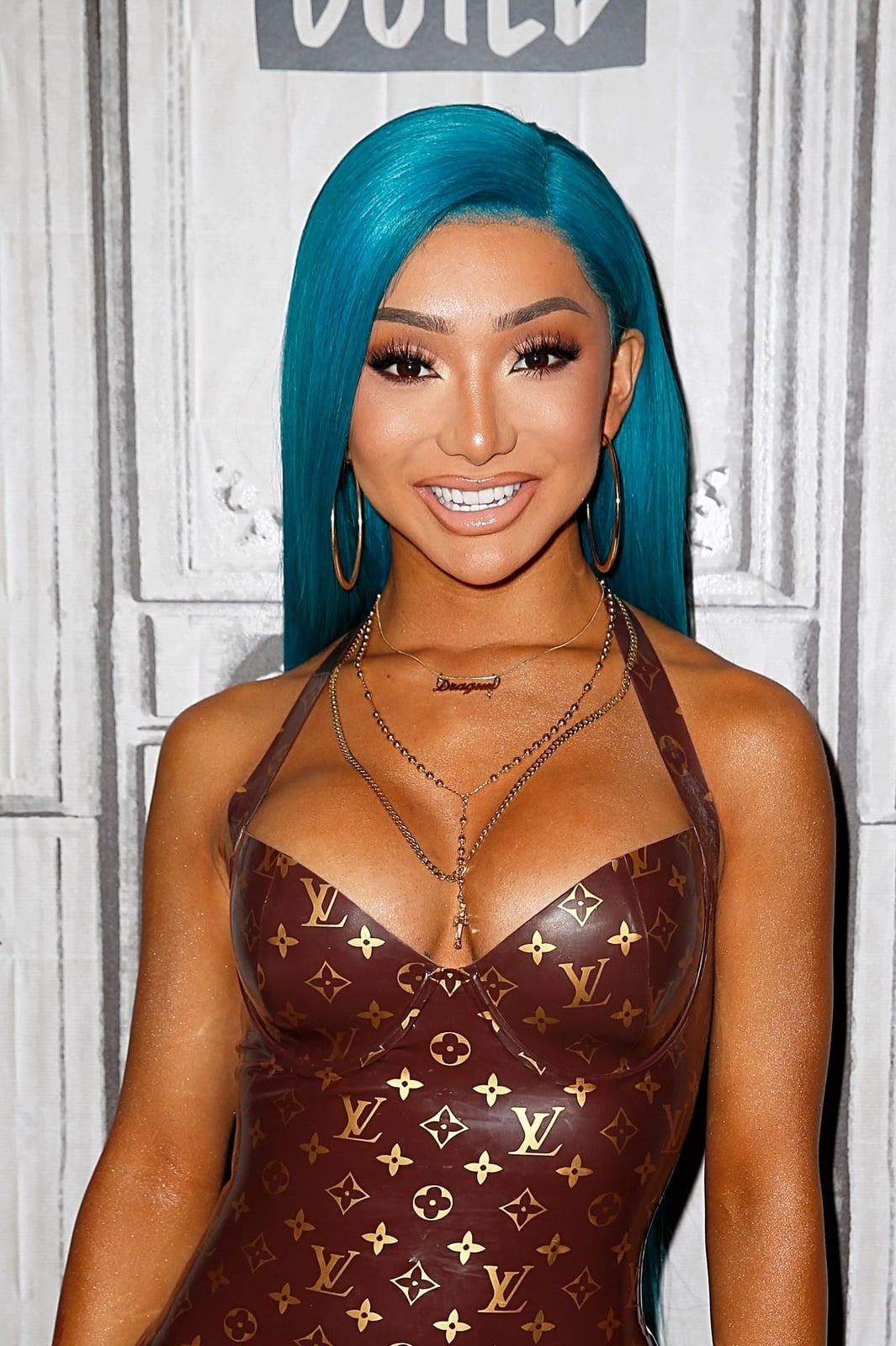
Teal blue sits between green and blue on the spectrum, which gives it a cooler, slightly moodier feel than a straight cobalt. The bright teal color here is applied uniformly, and the soft waves and blowout finish keep it from looking flat. Thick wavy hair starting at shoulder length carries the volume best, and the curtain bangs soften round and heart faces. Ask your colorist for: shoulder length teal blue hair, curtain bangs, soft waves. A large barrel curling iron creates the wave pattern, and a trim every 8 weeks keeps the ends healthy. The middle parting and long layers add movement, so the color shifts as the hair moves rather than sitting in a single block.
Bright Blue Wavy Bob With Side Swept Fringe
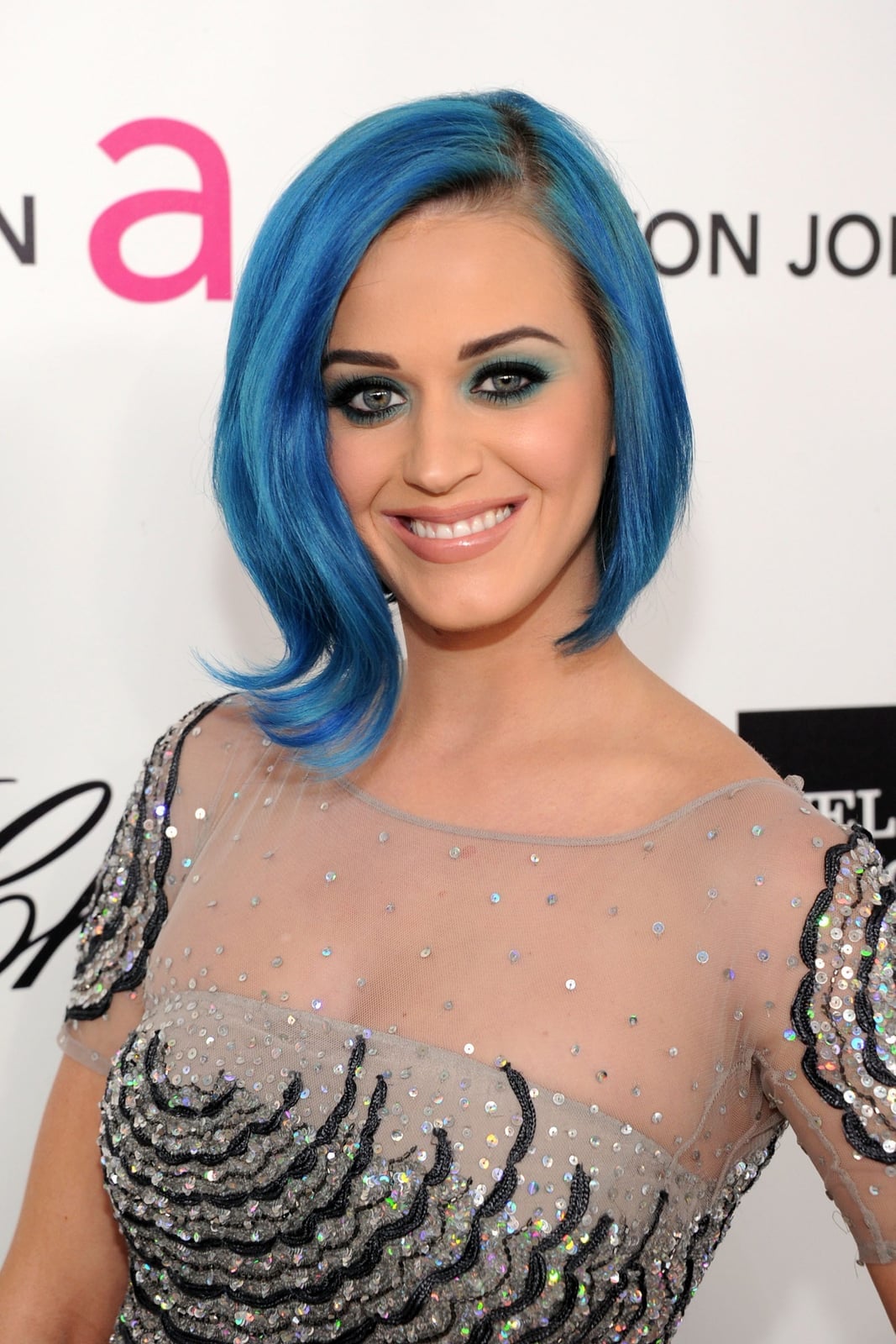
The side swept fringe gives this bright blue bob a softer entry point than a blunt bang would. The color is uniform and bold, but the wavy texture and side parting keep it from feeling severe. Fine to medium wavy hair at least chin length works well here, and the side swept fringe suits most face shapes. Ask your colorist for: chin length bright blue bob, side swept fringe, soft waves. A texturizing spray helps define the waves without weighing them down, and the bob and fringe need a trim every 6 weeks. The waves also help the color look dimensional, since light hits the peaks and valleys differently.
Mid-Back Length Uniform Deep Blue Waves
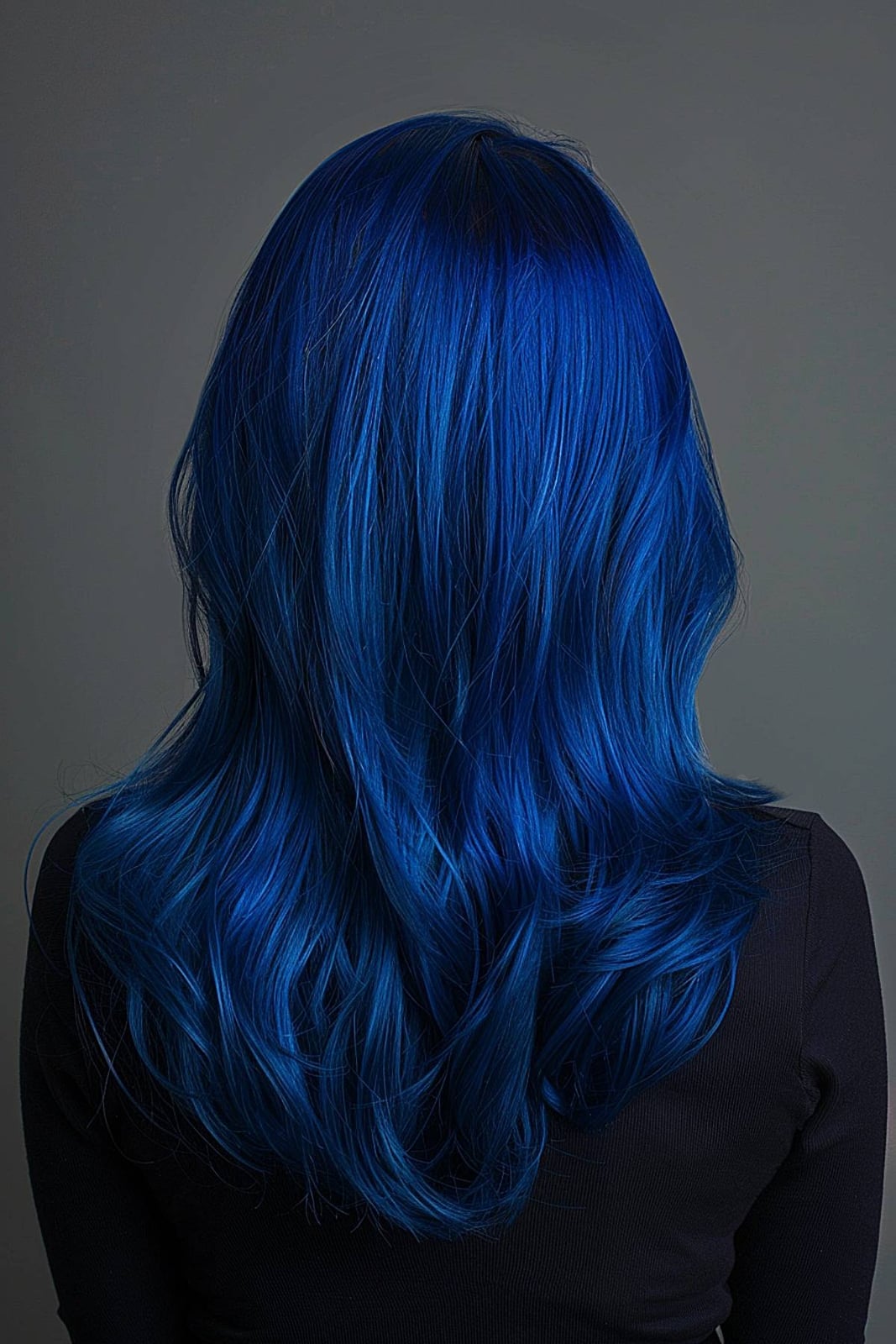
Is there any payoff bigger than a wall of uniform, intense blue on thick wavy hair? The color saturates every strand from root to tip, and the loose waves make the depth feel almost liquid. It works best on thick, wavy hair that already has some natural movement. The texture carries the color without fighting it. Straight or fine hair tends to show every tiny unevenness in the saturation, so this is one of those cases where density matters.
Ask your colorist for: mid-back uniform deep blue, loose waves. This kind of saturation demands a pre-lighten to a very pale blonde, which is hard on the hair and takes a full day in the chair. Between touch-ups every four to six weeks and a gloss treatment every other wash, you are signing up for maintenance. But for the days the light hits it right, it is worth the effort.
Mid-Back Length Glossy Dark Blue Waves
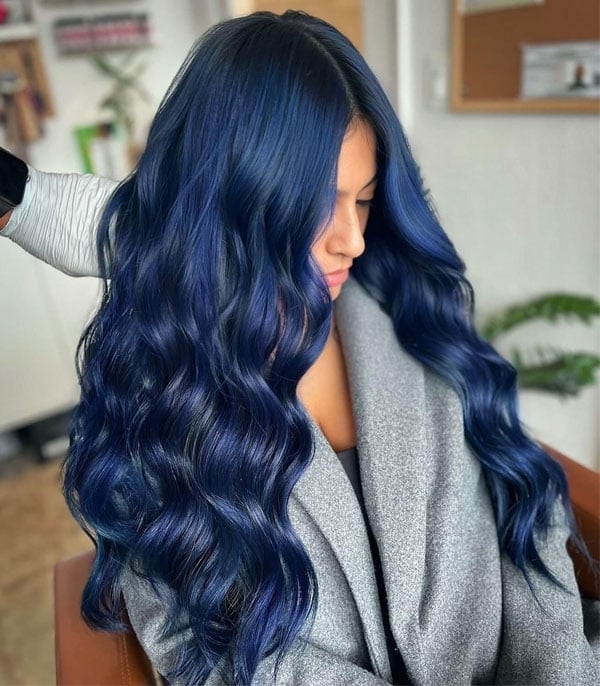
A glossy dark blue blowout is not the same as a midnight blue. This shade leans richer and less moody, with a shine that looks polished. The voluminous waves and middle parting keep it from feeling like a costume, and the thick texture gives the color something to bounce off. It suits anyone with wavy or thick hair at mid-back length who wants a blue that works for a client meeting and a dinner date in the same day.
Ask your colorist for: mid-back glossy dark blue waves. A clear gloss over the color seals the cuticle and adds a reflective finish. This finish typically lasts four to six weeks before you need another gloss appointment. The waves are a blowout, so plan about 20 minutes with a round brush and a heat protectant. A trim every 10 to 12 weeks keeps the ends looking polished.
Mid-Back Length Vibrant Blue Straight Hair
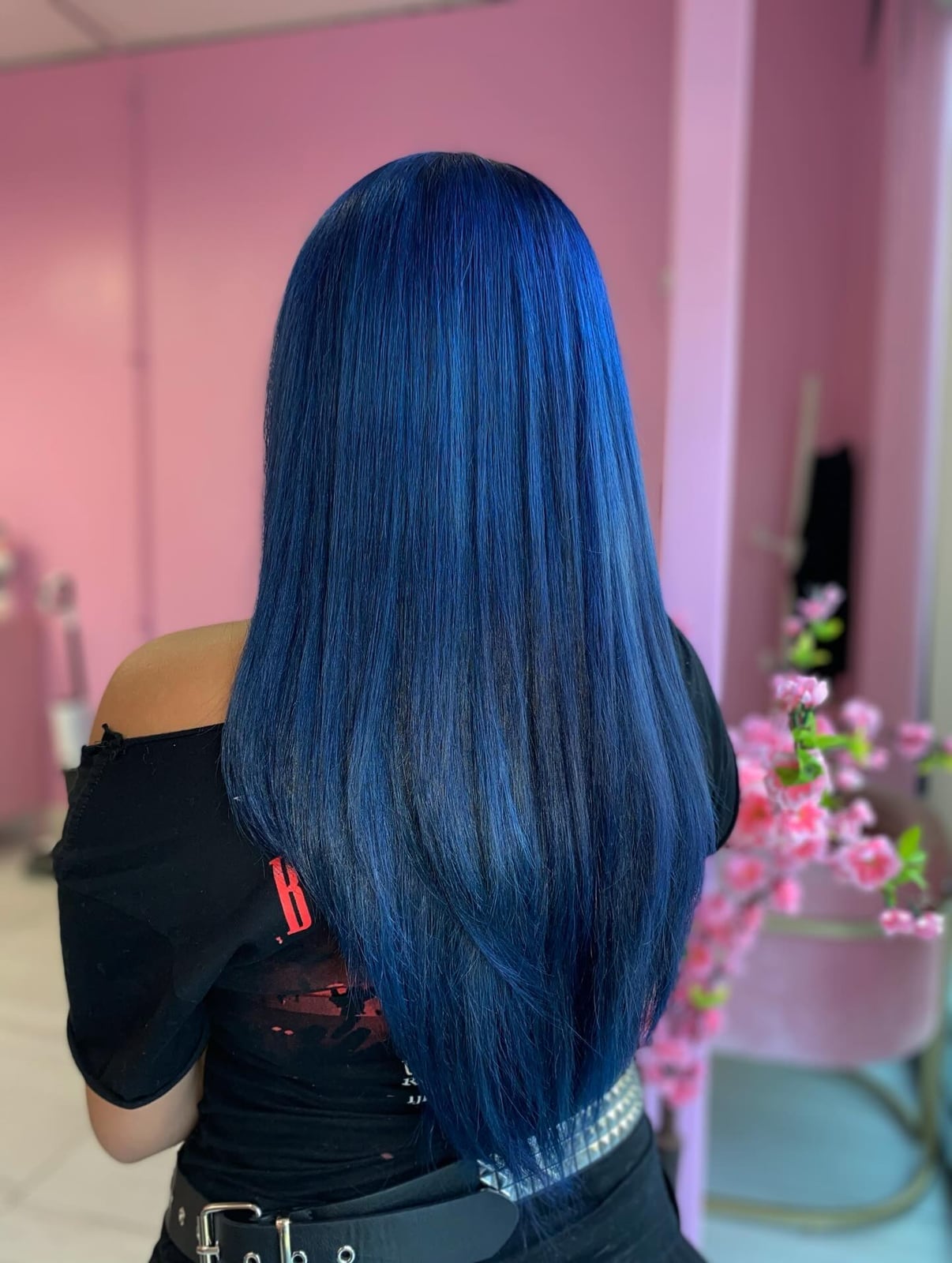
The design here is deceptively simple: a straight, mid-back length cut in a uniform vibrant blue, with subtle lighter undertones that only show when the light hits the hair directly. Those undertones are the result of a partial highlight before the blue is applied, which keeps the base from reading flat. Thick straight hair is the ideal canvas because the sleek surface reflects the color evenly, fine or wavy textures would scatter the light and mute the effect.
Ask your colorist for: mid-back vibrant blue straight hair. The application is a single-process color over a pre-lightened base, with a few babylights woven in for the undertone. It takes about three hours in the chair and needs a toning shampoo every four to five washes to keep the blue from leaning green. A flat iron with a heat protectant is your daily tool; the trim rhythm is every 10 to 12 weeks to maintain the clean line.
Mid-Back Length Navy Blue Straight Hair, Layers
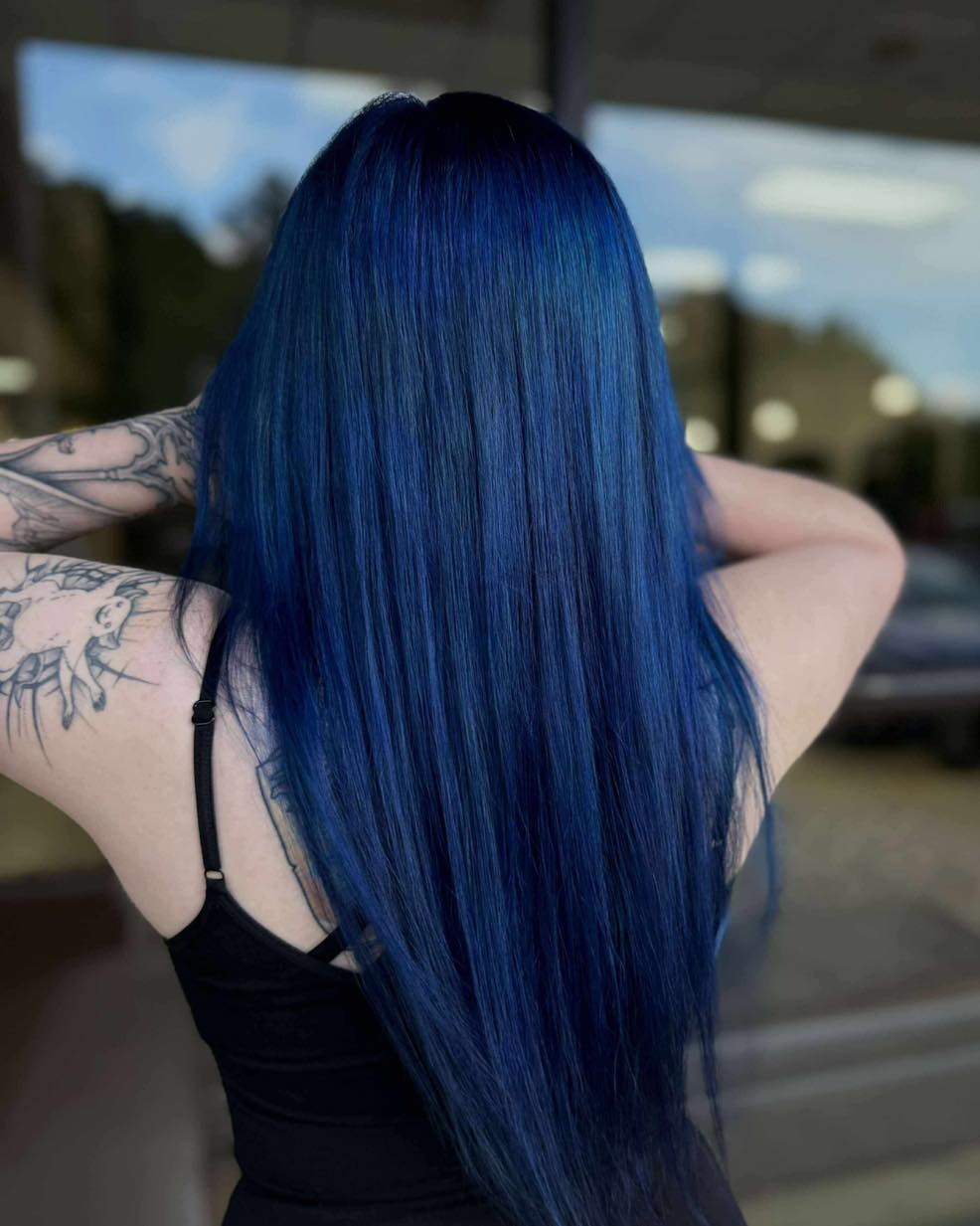
Navy blue is the entry point for anyone who wants blue without the full carnival. The deep shade reads as almost black in low light but reveals its true color in the sun, which makes it practical for conservative workplaces. It works best on thick straight hair at mid-back length. The density keeps the color from looking thin, and the subtle layers add movement without breaking the uniform finish. Ask your colorist for: mid-back navy blue straight hair. The color is a single-process application over dark hair, which means no bleach and less damage. Use a smoothing cream and a flat iron for the sleek finish; a trim every 10 to 12 weeks keeps the ends healthy.
Mid-Back Length Deep Midnight Blue Waves With Glossy Finish Of The Dye
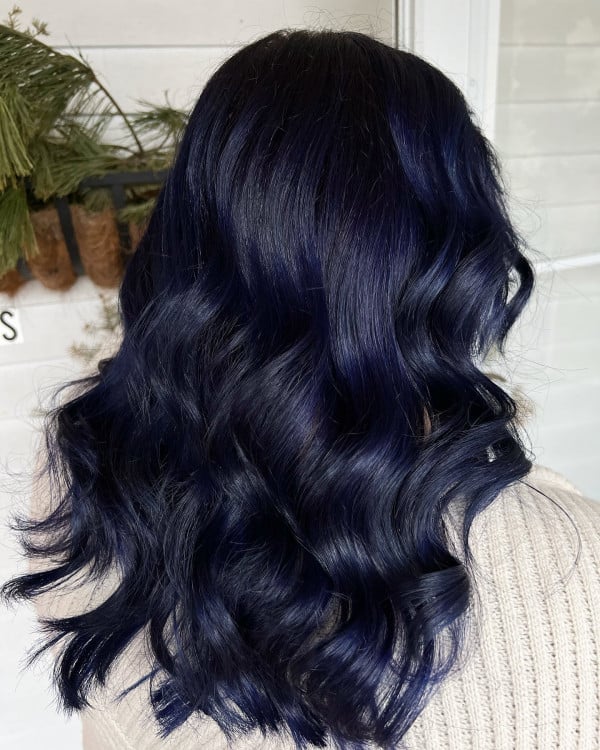
The deep midnight blue here is almost black at the root and lightens slightly toward the ends, giving the loose waves a sense of depth that a flat color cannot match. The subtle lighter blue undertones catch the light selectively, so the hair looks different from every angle. It suits thick wavy hair at mid-back length. The texture needs the weight to hold the wave pattern without frizz. Fine hair would lose the shape by midday.
Ask your colorist for: mid-back deep midnight blue waves. This is a salon-only color. The undertones require a two-step process: a base color and a hand-painted gloss that adds the lighter notes. A DIY gloss kit cannot replicate the precision. The color holds for about six weeks before the undertones start to fade, and a toning shampoo every third wash extends the life. Apply a wave-enhancing mousse to damp hair and air-dry or diffuse for the shape; a trim every 10 to 12 weeks keeps the layers from looking ragged.
Mid-Back Length Black With Blue Balayage
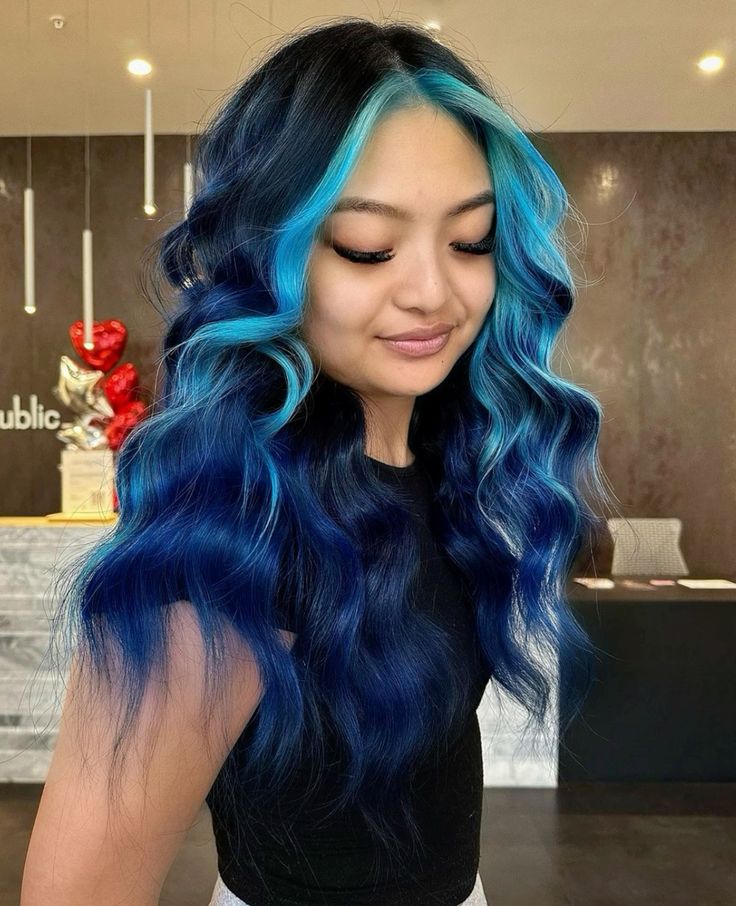
A black base with bright blue balayage is a deliberate splash of color concentrated toward the ends. The placement here stays within the lower third of the hair, which keeps the roots dark and the contrast sharp. Thick wavy hair at least mid-back length carries this best, as the weight of the hair lets the blue sit in the waves. Ask your colorist for: mid-back black with bright blue balayage. Specify that you want the blue to stay below the shoulders and to avoid the crown, so the color is an accent rather than a full commitment.
The key to this technique is the density of the balayage. Dense enough to be visible, sparse enough that the black base still dominates. The ends need a light hold product to keep the blue defined without looking overworked. Trim every 10-12 weeks to keep the ends healthy, since the bright blue requires pre-lightening that can dry out the lengths.
Mid-Back Length Black With Blue Ombré Ends
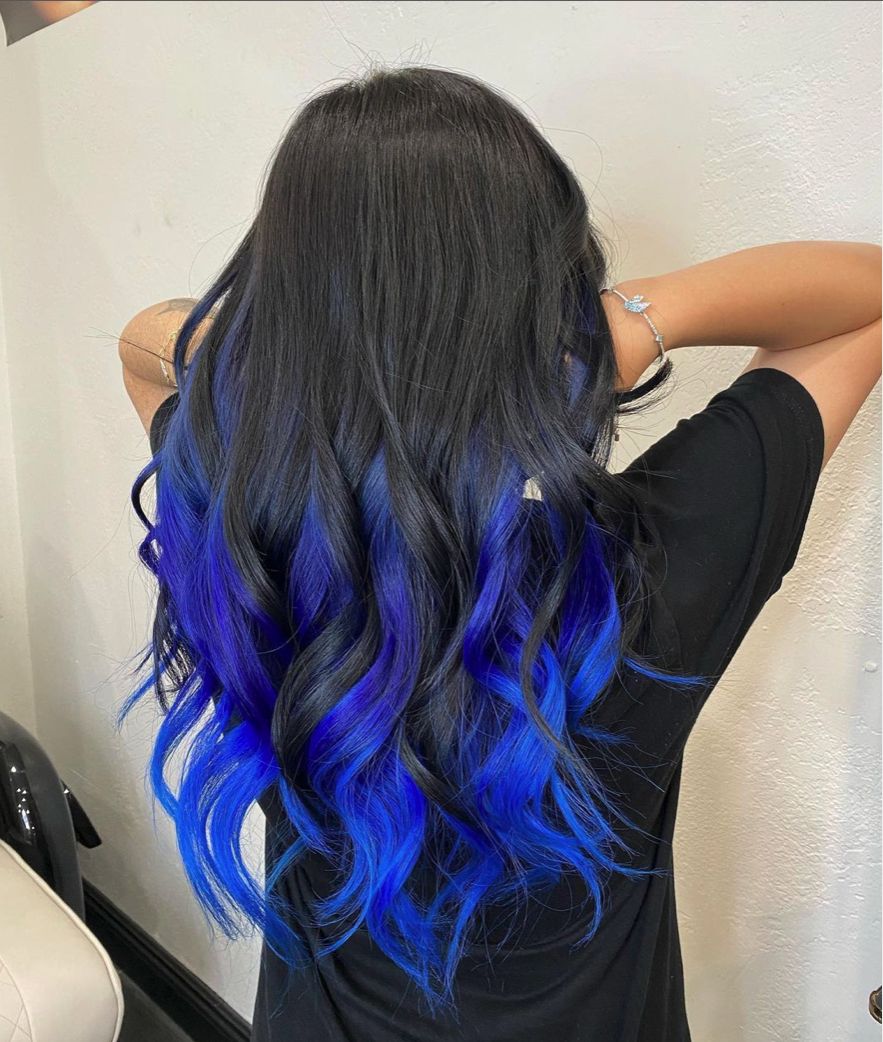
Where balayage is painted on, ombré is a cleaner transition. This version starts black at the roots and shifts to bright blue at the ends, with a more defined line of demarcation than the balayage above. It creates a bolder, more graphic contrast that works best on thick wavy hair at least mid-back length. Ask your colorist for: mid-back black with bright blue ombré ends. The grow-out is straightforward: because the color lives only on the ends, you can go 12-16 weeks between touch-ups compared to the 8-10 that a balayage demands. A smoothing serum on the lengths prevents the ombré line from looking harsh as it grows.
Shoulder Length Black With Blue Face-Framing
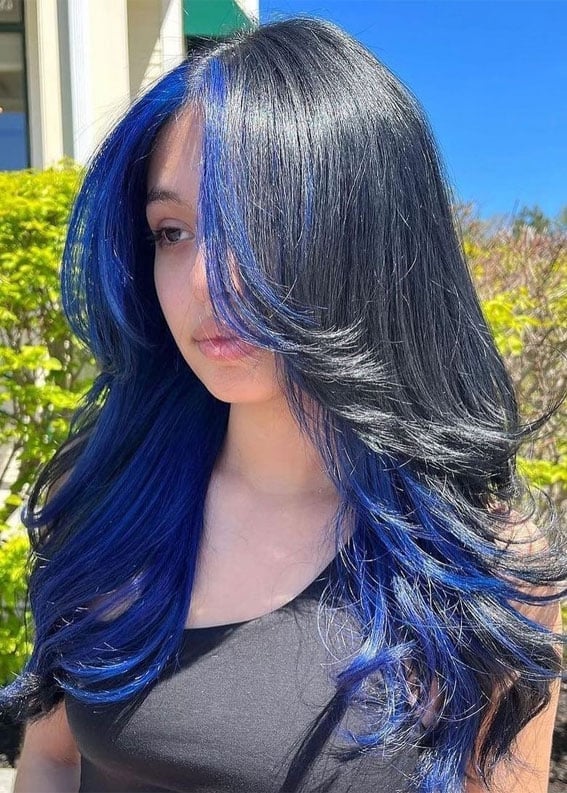
Face-framing highlights are the most efficient way to test blue without covering the whole head. The technique applies bright blue pieces only around the face, leaving the black base untouched. This placement draws attention to the front without requiring full saturation. It works particularly well for shoulder length wavy hair with face-framing bangs, as the blue catches the movement of the blowout. Ask your colorist for: shoulder length black with bright blue face-framing pieces. This is a good option for an accent look that is still appropriate for everyday wear. The blue pieces also make an easy seasonal switch: try it for summer festivals or winter holidays, then let the color fade out without a full redo.
Collarbone Length Dark Base With Blue Highlights
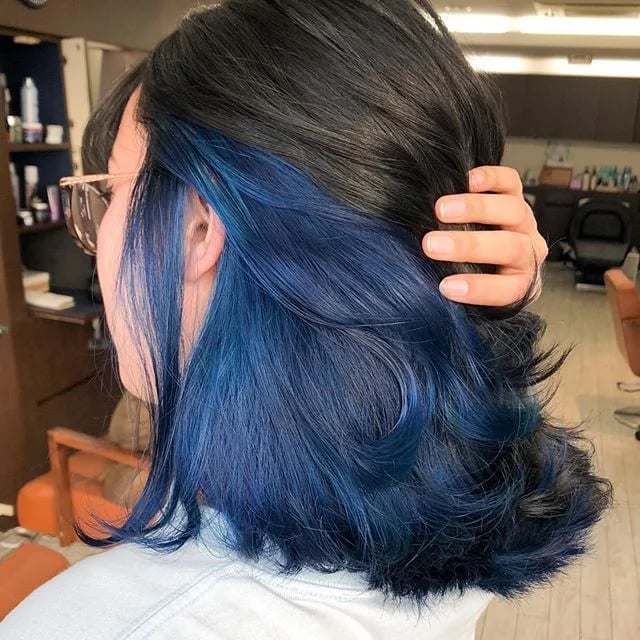
Blue highlights on a dark base work best when the base is not quite black. A dark brown or deep espresso gives the blue a warmer backdrop that stops the contrast from feeling harsh. On collarbone length wavy hair with a side parting, the highlights sit naturally in the bends of the waves. Ask your colorist for: collarbone dark base with blue highlights. The pre-lightening required for the blue can make the highlighted strands more prone to split ends, especially at collarbone length where the hair has been through past processing. A trim every 8 weeks keeps the blue from looking frayed.
Collarbone Length Dark Blue With Lighter Highlights and Curtain Bangs
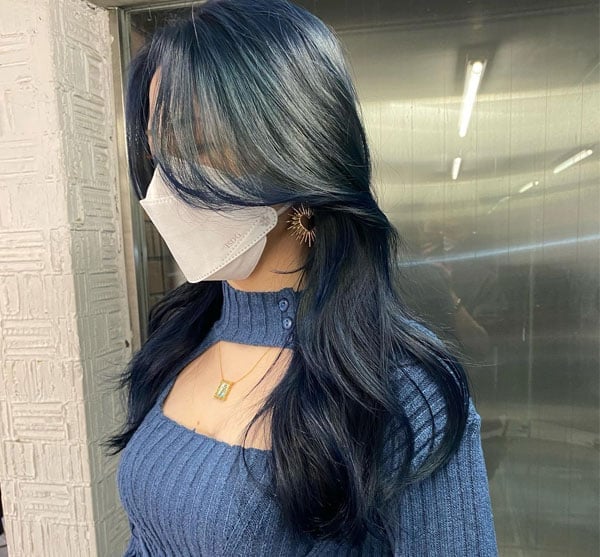
Dark blue as a base is already a statement, but adding lighter blue highlights keeps it from reading as a single flat block. The lighter pieces sit subtly within the waves, creating dimension that shifts with movement. On collarbone length wavy hair with curtain bangs, the highlights catch the light around the face without overwhelming the dark base. Ask your colorist for: collarbone dark blue with lighter blue highlights, curtain bangs. The curtain bangs mean a trim every 6-8 weeks to keep the shape, and the dark blue base will need a toning appointment every 4-6 weeks to prevent it from pulling green. A blowout with a round brush on the bangs keeps the front polished while the rest air dries.
Collarbone Length Blue With Lighter Balayage
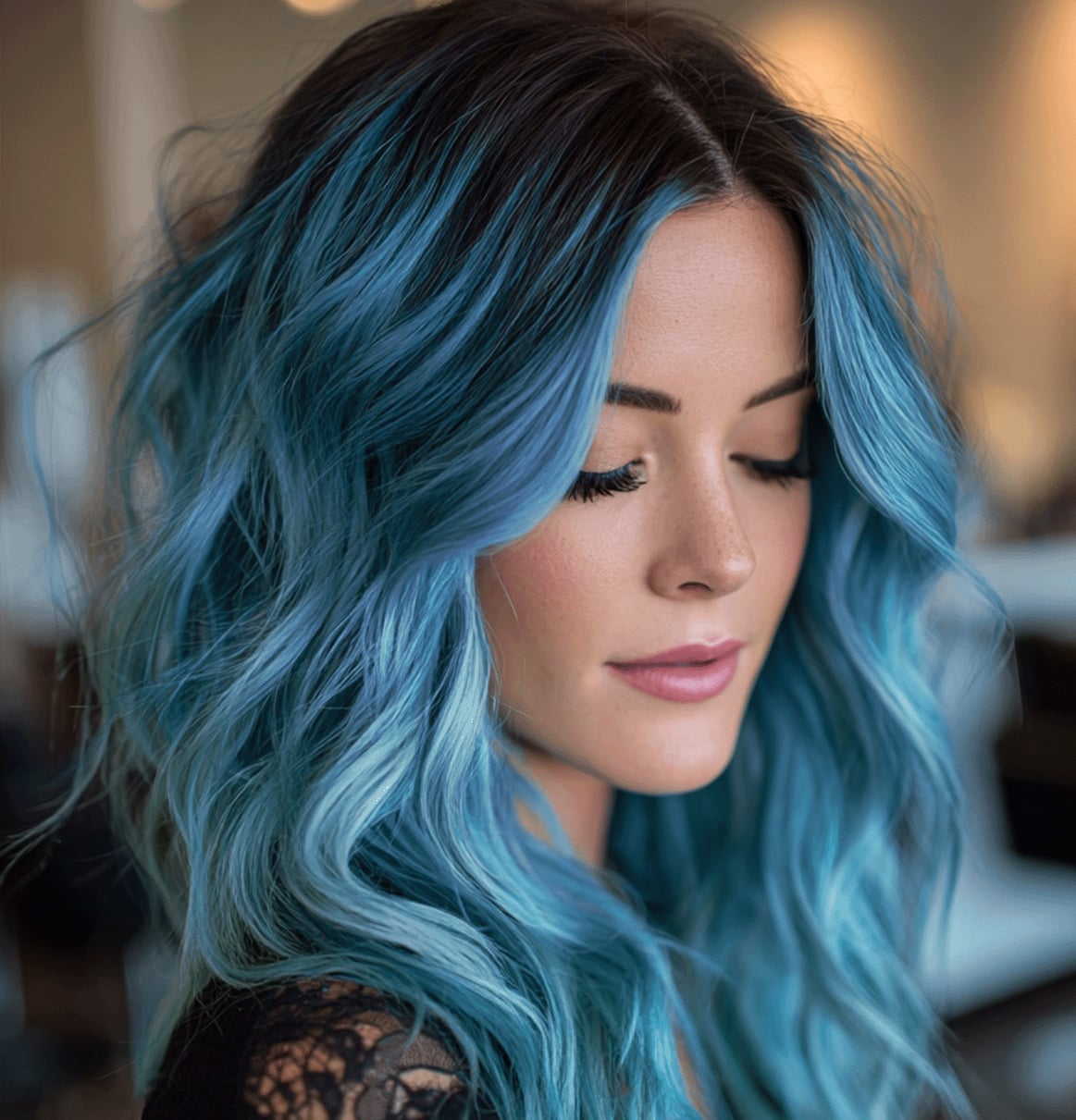
Balayage sounds lovely until you realize it is not a set-it-and-forget-it color. This collarbone-length cut with soft layers keeps a dark blue base and lifts the ends to a lighter blue, which means the lighter sections show every bit of fade before the dark does. A salon application is non-negotiable here, hand-painting a gradient on thick wavy hair is not a bathroom-mirror job. The honest drawback: that bright blue at the ends turns a muddy green-blue without a purple shampoo every other wash. Ask your colorist for: collarbone length dark blue with lighter blue balayage.
Mid-Back Length Dark Blue With Lighter Balayage
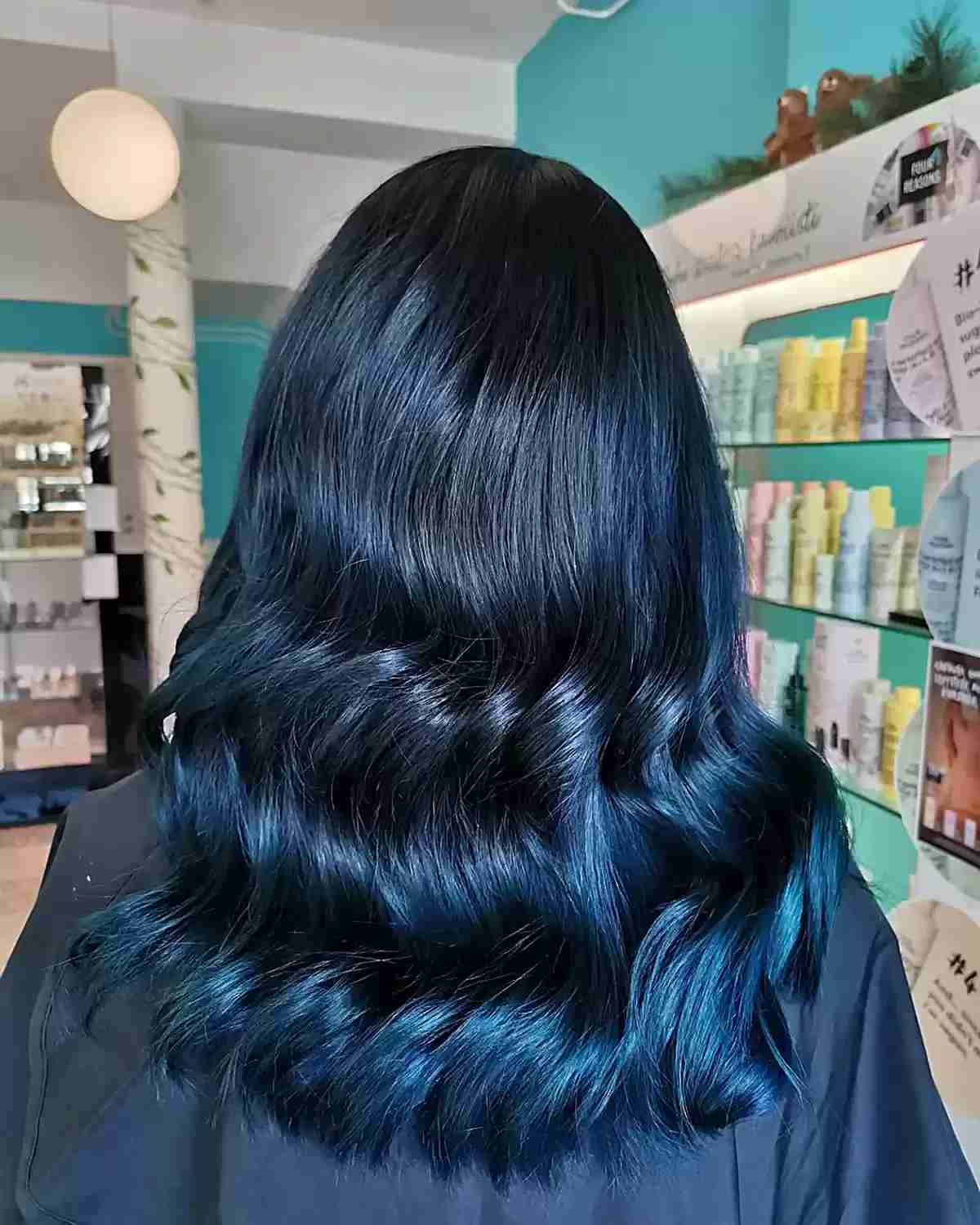
This is a year-round color that just changes its personality with the weather. The dark blue base keeps things grounded, while the lighter blue balayage at the ends catches more light in summer and reads as a deep jewel tone in winter. Thick wavy hair at least mid-back length gives the gradient room to breathe, short hair makes the transition look more like a dip-dye than a blend. The middle parting and loose waves let the lighter pieces fall naturally around the face without bangs to distract. A shine serum on the ends helps the lighter blue reflect instead of looking chalky. Ask your colorist for: mid-back dark blue with lighter blue balayage.
Mid-Back Length Blue With Lighter Blue Highlights
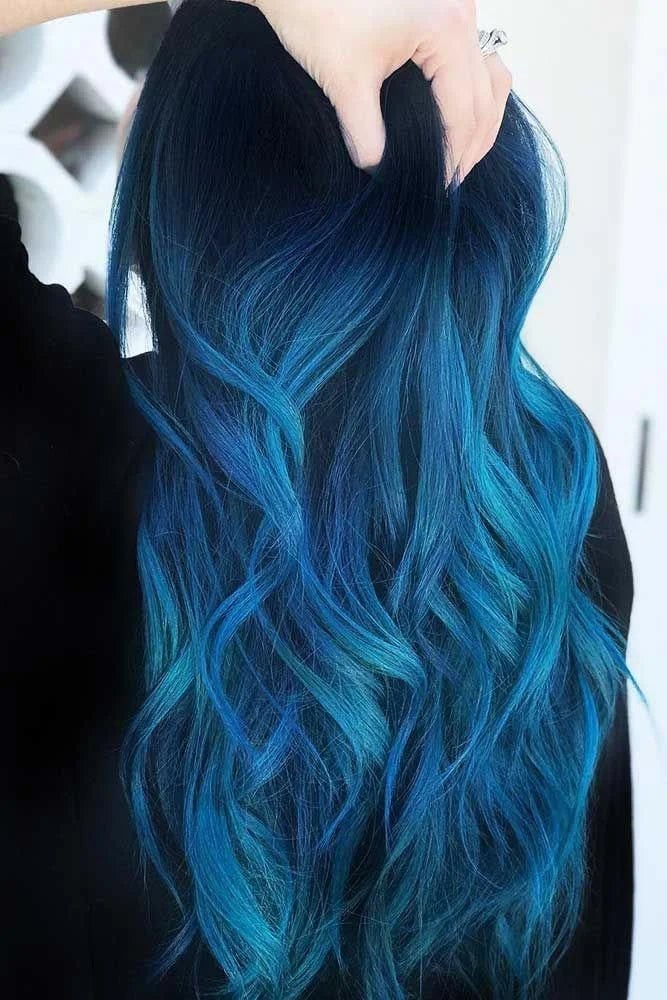
The trick here is placement: the lighter blue highlights sit on the surface of each wave, not underneath, so the movement of thick wavy hair pulls them forward. On a mid-back length with layers, the highlights wrap around the curves of the cut and do not fall in straight stripes. A rich blue base keeps the overall tone from washing out, and the lighter pieces add dimension, not damage. The focus stays on the color shift through the lengths. A texturizing spray lifts the wave pattern and lets each highlighted strand catch its own sliver of light. Ask your colorist for: mid-back blue with lighter blue highlights.
Mid-Back Length Blue And Purple Blend
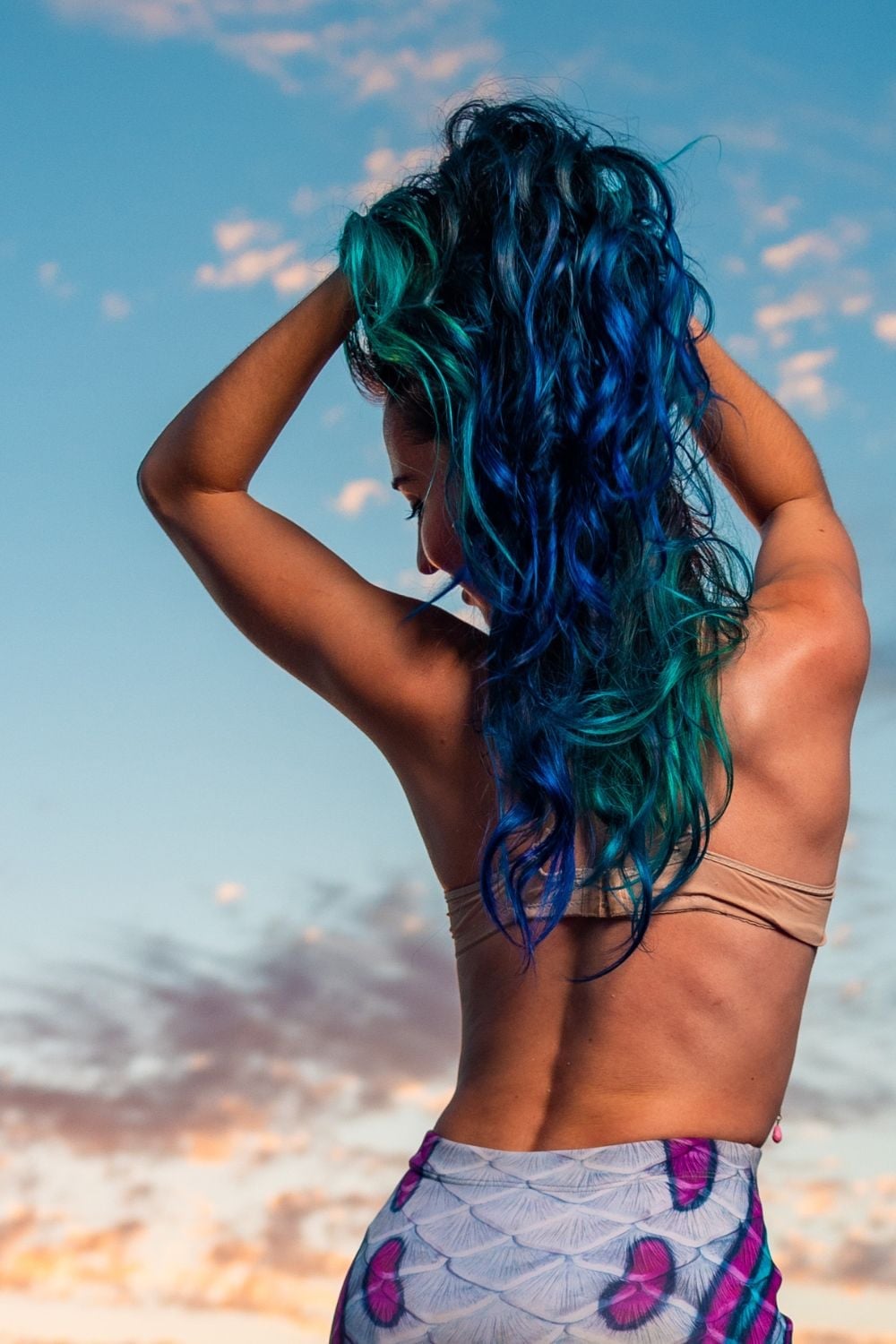
Blue and purple together demand a practical rule: if you have warm undertones, the blend can pull a muddy violet, while cool undertones let both colors read clearly. Thick wavy hair at mid-back length with long layers gives the two tones room to layer without turning into a single gray-blue mess. The middle parting and loose waves keep the blend visible from root to tip rather than clumping the blue on one side and purple on the other. A color-safe styling cream protects the saturation between washes. Trim every 10-12 weeks keeps the ends from fraying and dulling that dual-tone finish. Ask your colorist for: mid-back blue and purple blend waves.
Collarbone Length Navy Blue Wavy Hair
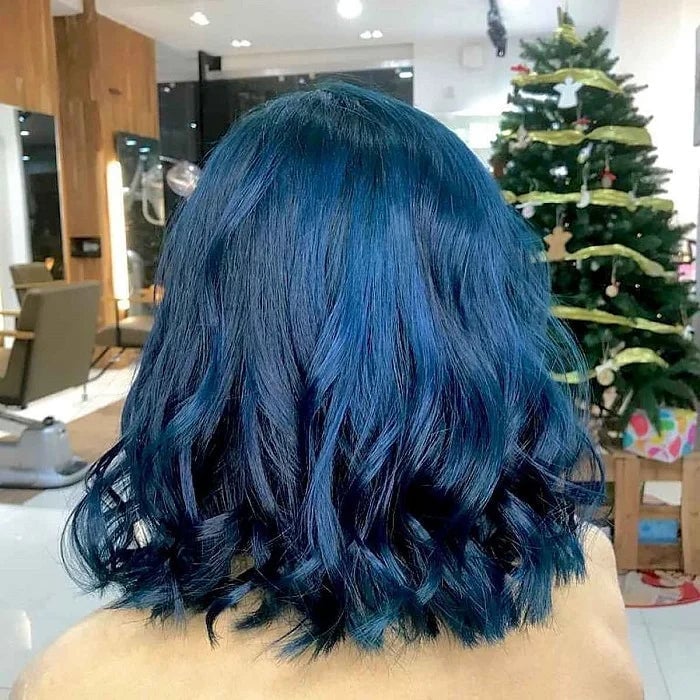
Navy blue is the color that looks like it took effort but actually fades gracefully. It goes to a softer slate instead of a brassy green. On a collarbone-length cut with soft layers and medium wavy texture, the deep shade reads as a solid block of color rather than a gradient. The back view shows how the layers break up the darkness just enough to keep it from looking flat. A salon application ensures the navy saturates evenly; at-home dye tends to grab the ends darker and leave the roots patchy. A texturizing spray between washes lifts the wave pattern without drying the color out. Ask your colorist for: collarbone navy blue wavy hair.
Mid-Back Light Blue With Ash Undertones
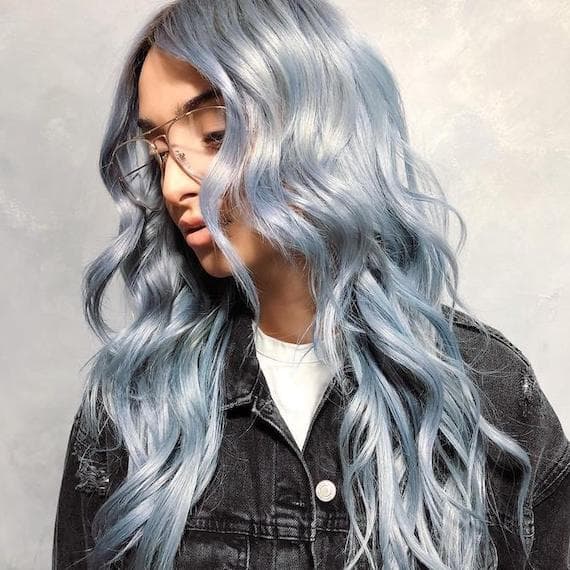
Getting a pastel shade to feel grown-up comes down to the undertone. This mid-back length has a light blue base pulled into ash territory, so it lands somewhere between smoky and ethereal. The fine, wavy texture and air-dried finish keep the whole thing from feeling like a wig. No bangs keep the focus on the color itself.
Ask your colorist for: mid-back light blue with ash undertones. This shade works best on hair that is already pre-lightened to a pale blonde, since ash undertones need a clean canvas to register. The layers add movement, which matters because a solid pastel on stick-straight hair can look flat. A curl-defining cream helps the waves hold their shape without weighing down the fine texture.
Final Thoughts
For a subtle approach, opt for blue balayage or highlights on a darker base. For a bold statement, consider an all-over vibrant blue, but be prepared for more frequent toning and upkeep.
- Wash with cool water and color-safe shampoo to preserve vibrancy.
- Deep condition weekly to maintain moisture and shine in colored hair.
- Use color-depositing conditioners or toners every 4-6 weeks to refresh the shade.
- Limit heat styling and always use a heat protectant spray.
- Schedule salon gloss treatments every 6-8 weeks for maintenance.
Embrace the blue. Find the shade that speaks to you.
