
I keep seeing the woman in the chair next to mine ask for gray blending highlights, and I get it. The silver is coming in fast, and she wants it to look like a choice, not a surrender. I think that is the whole trick, making the gray read as the plan.
Here are 24 ways to wear Gray Blending Highlights, from a six-week grow-out to a full salon day. Some need thick hair, some work on fine strands, some go short, some stay long. I have fine hair that flattens by 4 pm, so I notice which cuts hold and which collapse. This is the honest version, with the upkeep included.
Long Layered Hair With Silver Blends
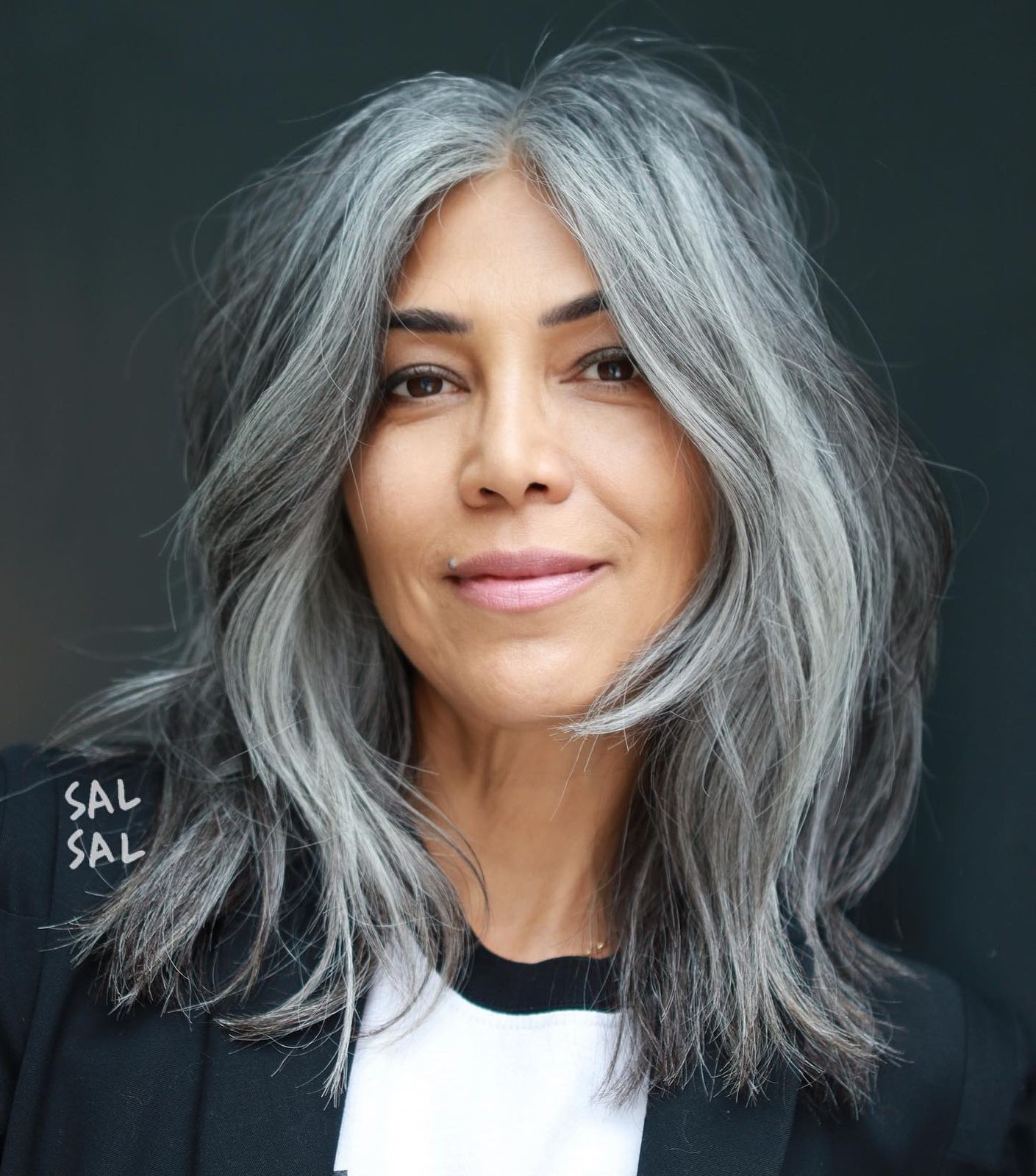
That middle part and those loose waves do something specific: they let the silver settle where it naturally falls, not where a stylist painted it. The base is a soft natural gray, and the lighter strands weave through the layers like they grew there. On thick, wavy hair this reads as texture, not color work. The length hits mid-back, which means the weight pulls the wave pattern open instead of letting it curl into itself. No bangs, no fuss, just a trim every ten to twelve weeks to keep the ends from splitting up into the blend.
This is the grow-out winner of the batch. The root line never announces itself because there is no root line, the gray blending highlights are already your natural shade plus a few lifted pieces. You book it once, then you maintain it with a haircut. That is the whole deal.
Pixie Cut With Silver Highlights
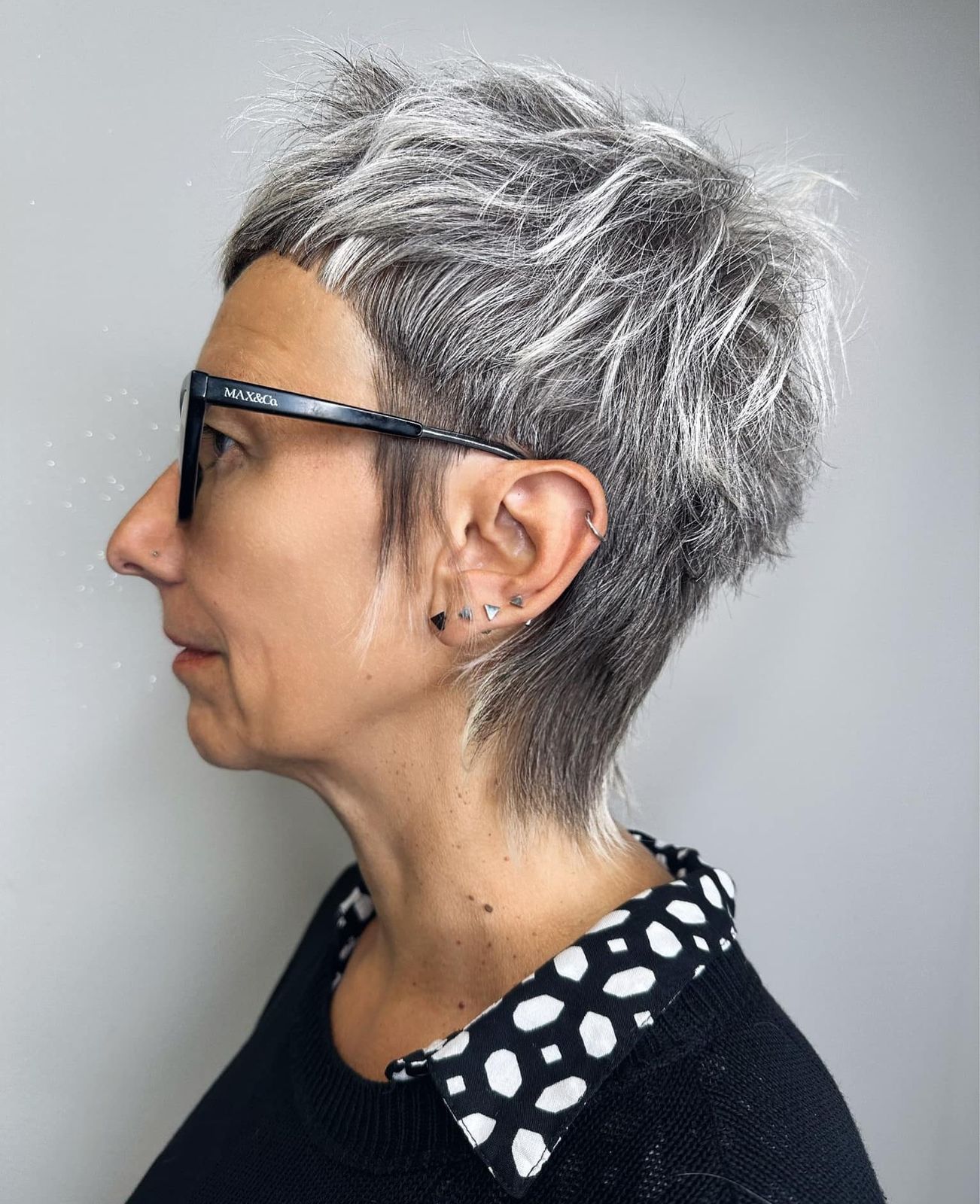
Can a pixie look soft? This one does. The fine, wavy texture keeps the silver highlights from reading as stripes, they melt into the natural gray base instead. Length sits right at the ear, with short, textured bangs that break up the hairline. The technique matters here, the stylist has to place each highlight close to the root on a canvas this short, or you get spots. Honest downside: the shape needs a trim every four to six weeks, and the spiky finish requires daily work with a texturizing product. But the color itself is low-maintenance, the grow-out blends because the base is already gray.
Bob With Blunt Bangs and Subtle Gray
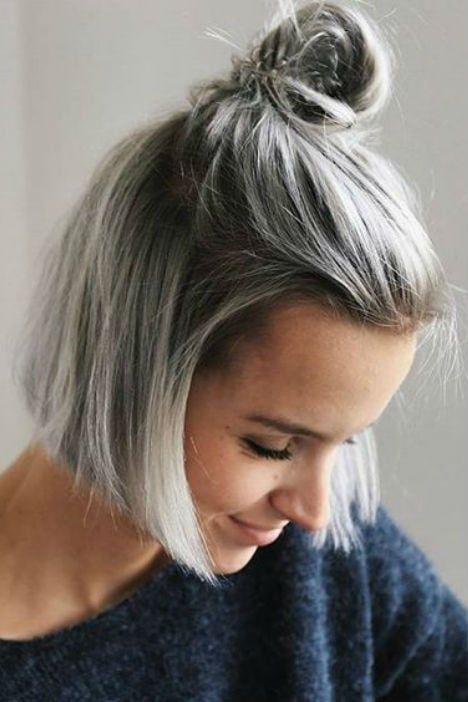
This is the one that looks like you meant it. The chin-length bob is straight, fine, and uniform in shade, a soft gray with barely-there lighter strands that only catch the light when you turn your head. The blunt bangs hit just above the brow, and the middle part keeps everything symmetrical. Compared to the dimensional layered looks in this roundup, this one is graphic, almost severe. That is its strength. The color technique is restrained, no high-contrast streaks, just a whisper of lift across the surface. You need a flat iron and a steady hand to keep the line clean, and a trim every six to eight weeks or the bangs start splitting at the ends.
Angled Bob With Silver and Ash Blonde
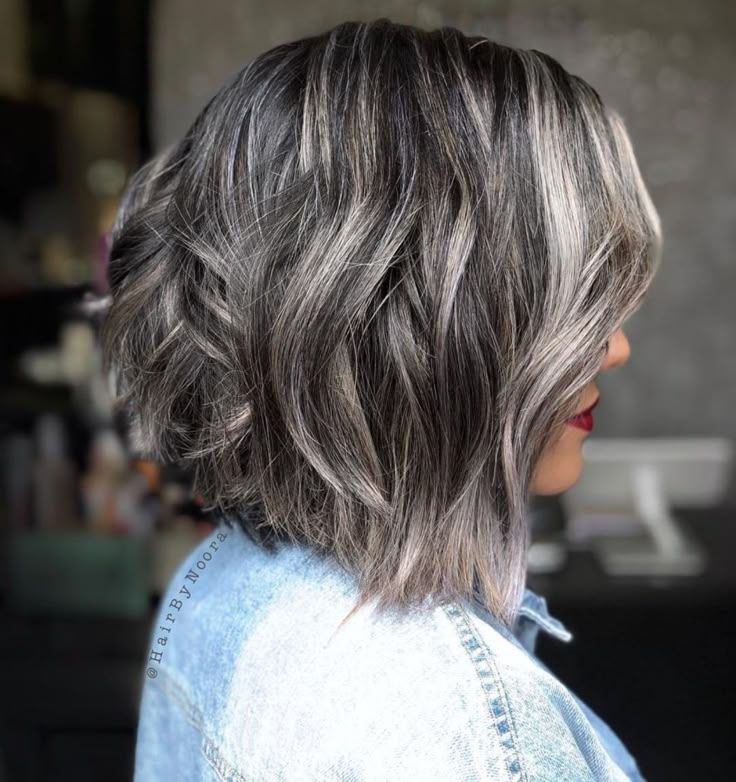
I will admit I was skeptical about mixing silver and ash blonde on a chin-length cut. Then I saw how the side part lets the darker gray base sit heavy on one side while the lighter pieces sweep forward. The angle drops shorter in the back, which gives the wavy, medium-density texture somewhere to land without looking bulky. Styling steps: spray in a texturizing mousse, rough dry with a diffuser, then break up the waves with your fingers. That is it. The highlights stay defined because the cut does not have a lot of interior layering to muddy the contrast. A trim every six to eight weeks keeps the angle sharp, but the color itself fades gracefully because the base is already gray.
Mid-Back Waves With Dark Gray Blend
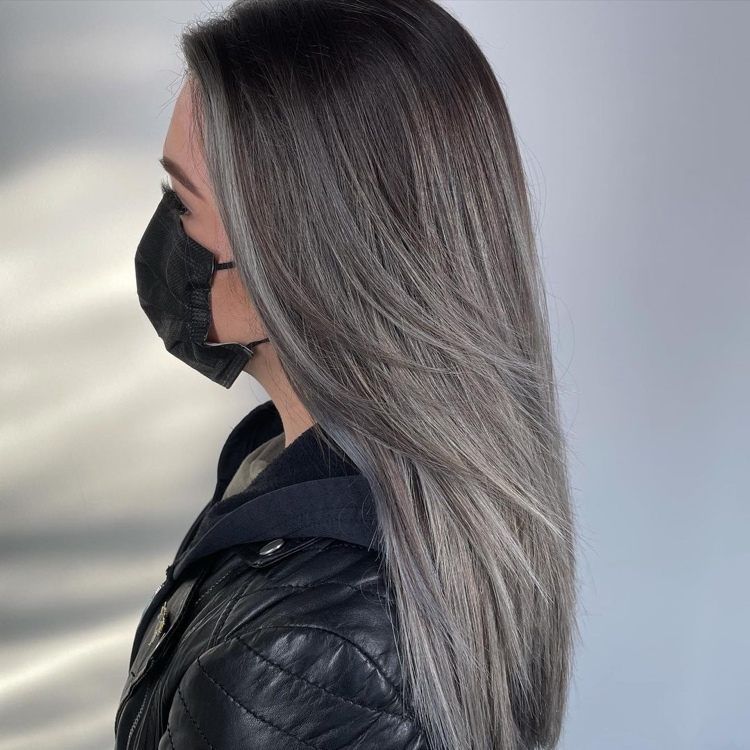
October light hits this one differently than June light, and that is the point. The mid-back length is thick and wavy, with a dark gray base that reads almost charcoal in shadow and opens into silver where the waves catch. The middle part lets the weight fall evenly, and the layers are cut deep enough to move without tangling. This is a year-round look, but it lands hardest in the transition months, when the low sun makes the blend look dimensional instead of flat. The technique is a soft root shadow with painted highlights through the mid-lengths, so the grow-out never announces itself. A trim every ten to twelve weeks keeps the ends healthy, and a curl cream enhances the wave pattern without heat.
Shag With Ash Gray and Wind-Swept Style

I want to love this cut on everyone, but I’ve seen too many people try it at home and end up with something that looks more like a bad 80s perm than an ash gray shag cut. The problem is the ash tone: it pulls muddy on fine, wavy hair when you don’t have a stylist controlling the placement. The side swept bangs need a professional eye to land at the right angle, and the wind-swept texture is a styling trick, not a happy accident. Book it, this is not a bathroom-mirror job.
Lob With Ash Blonde Highlights
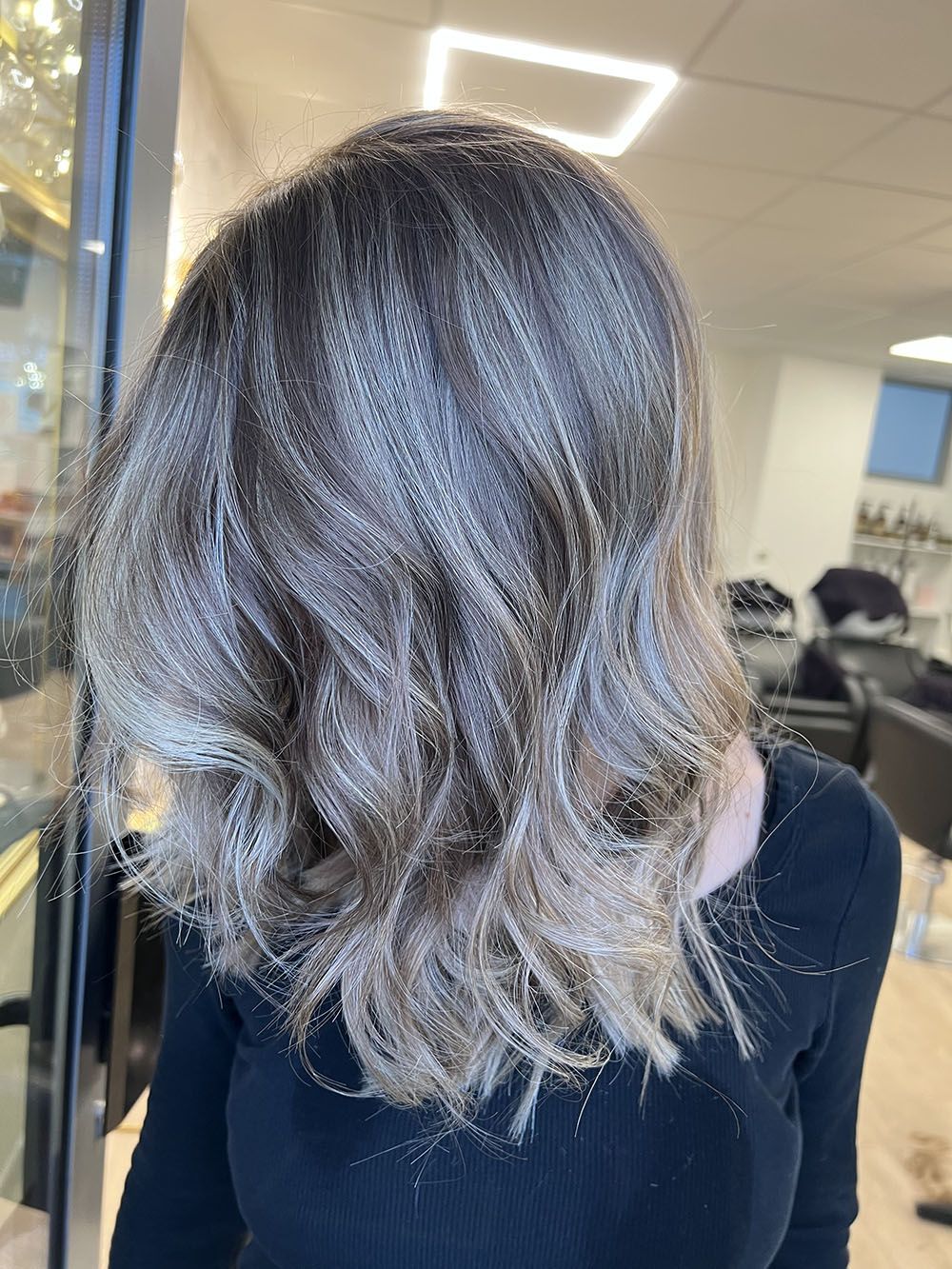
The lob with ash blonde highlights is one of those colours that makes you look like you just came from a weekend in the mountains, even if you spent it on the couch. The gray base keeps it grounded, the ash blonde lifts it. This works best on medium density hair with some natural wave, because the highlights need something to catch light against. On very fine straight hair, the contrast can look flat.
It brightens a warm complexion without going brassy, which is rare for a blonde blend. The honest downside: the ash blonde will fade to a warmer tone after about six weeks, so you are looking at a toning appointment every second month if you want to keep that cool edge.
Slicked Back Pixie With Subtle Gray
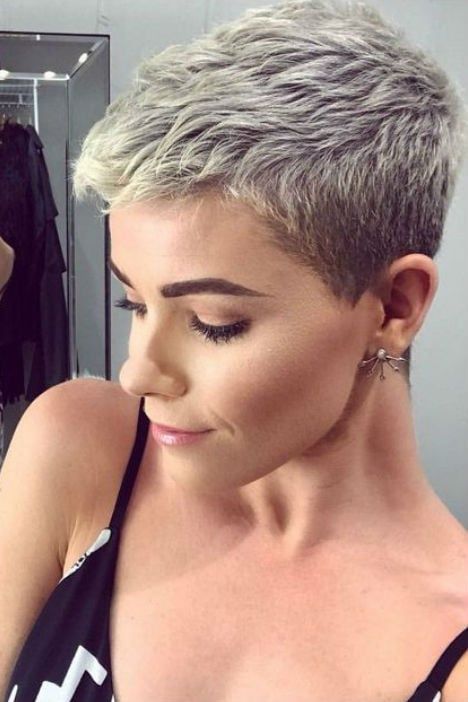
I booked this cut once and learned something about my own fine hair: slicked back styles show every single cowlick and growth pattern by day three. The subtle gray blending helps because the lighter strands diffuse the scalp showing through, but the real work is the daily gel or pomade application. The fine, straight texture holds the slick shape for about four hours, then needs a re-apply. Trims every four to six weeks are non-negotiable, the ear-length line blurs fast. It is a polished look, but it is also a high-maintenance one.
Collarbone Lob With Blended Gray Highlights
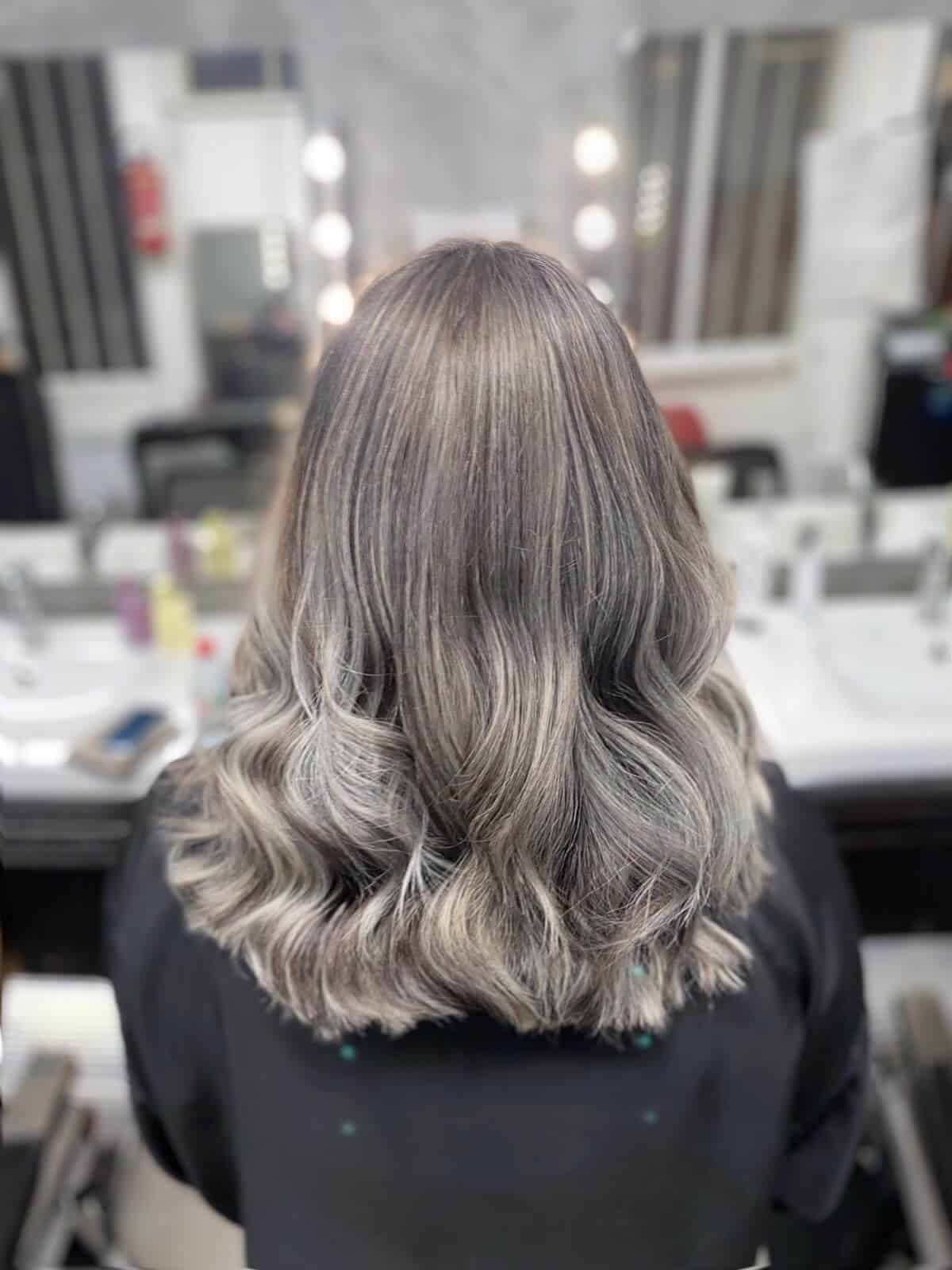
Have you ever wondered how some gray blending looks like it grew in naturally and some looks like a stripe? The answer is the technique. This collarbone lob gray blending uses a foilyage method, where the stylist paints the lightener onto the mid-lengths and ends, then wraps each section in foil to process. The result is a seamless fade from the darker root into the gray highlights, with no visible line of demarcation.
The medium density, straight-to-wavy texture helps the colour sit evenly. The honest downside: foilyage takes longer than standard balayage, about three hours in the chair, and the gray tones need a purple shampoo every third wash to keep them from warming up. The middle part shows the dimension best, so if you are a side part person, you might lose some of the effect.
Bob With Lavender and Ash Blonde Tones
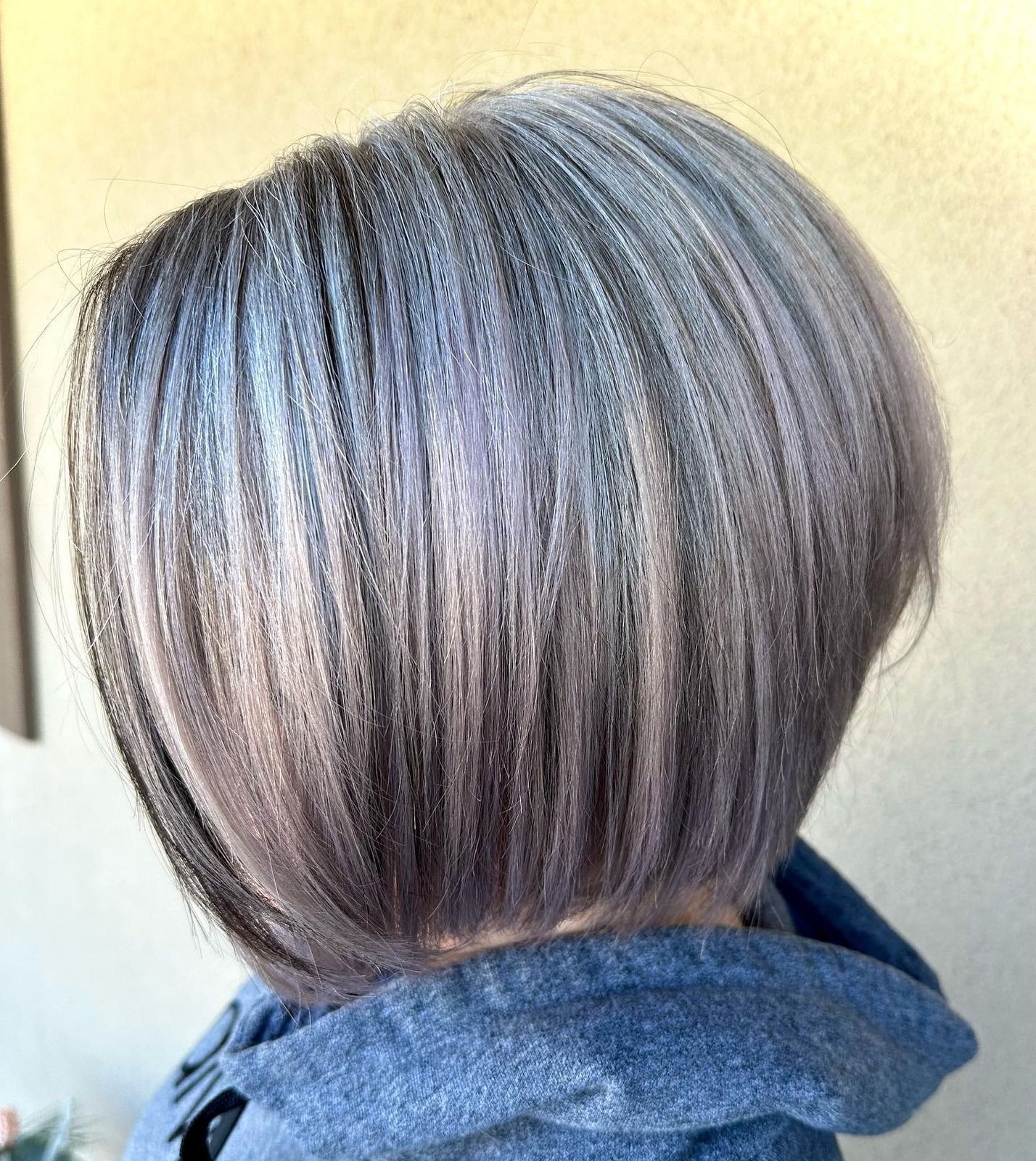
A gray bob with lavender highlights is not the same thing as a pastel pink bob, and that distinction matters. The lavender here is subtle, almost a whisper, mixed into the ash blonde highlights rather than painted on as a separate colour. It reads as a cool silver with a hint of violet, not a fashion colour. The straight, medium density texture keeps the lavender from looking muddy, because the tone sits on top of the cuticle rather than sinking in. This is a salon-only job, the lavender needs a pre-lightened base to hold, and the bob shape needs a trim every six to eight weeks to keep the chin-length line sharp.
Wavy Bob With Natural Gray Highlights
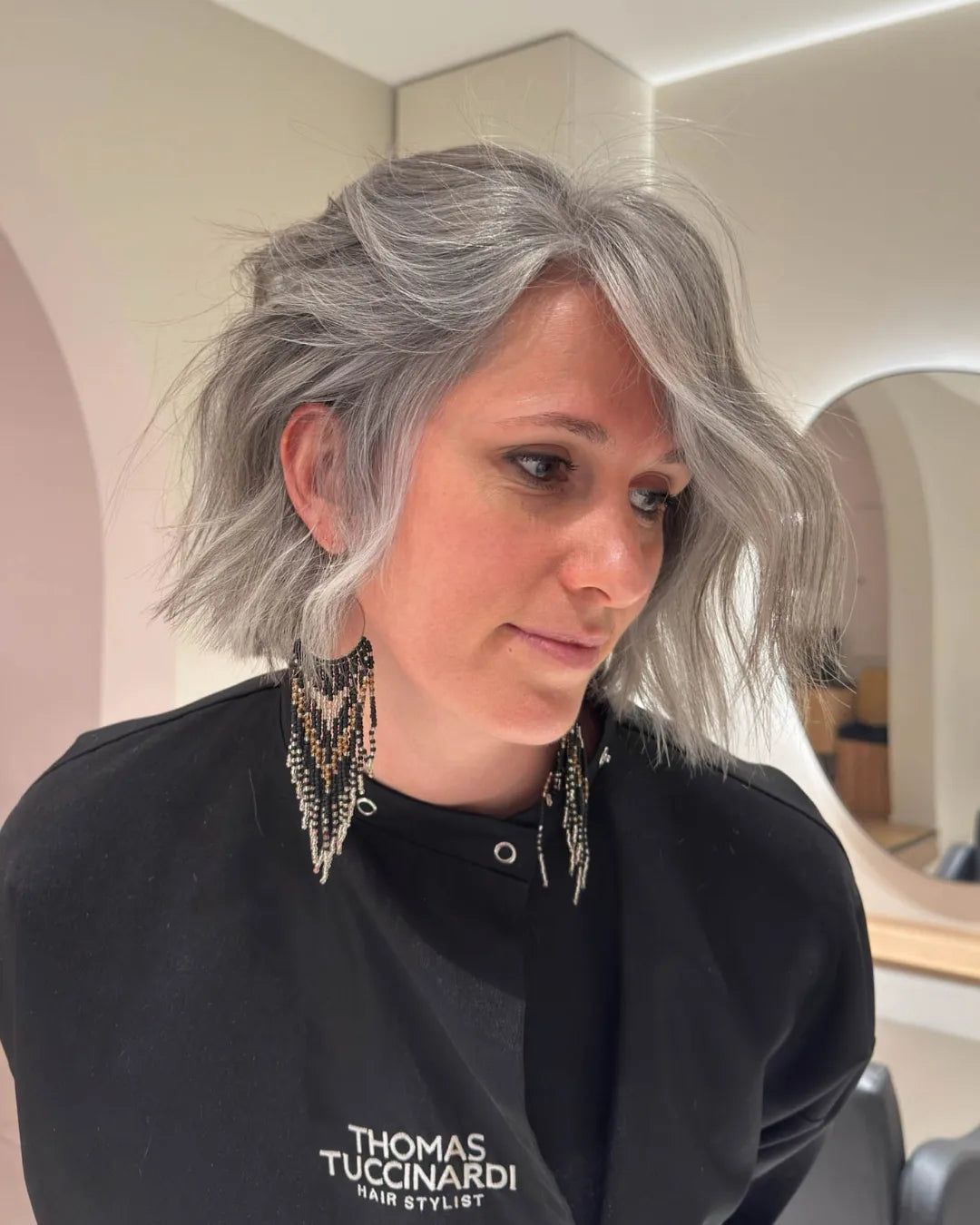
A chin-length wavy bob with a side part is the sweet spot for anyone who wants to keep their natural gray but add a little life to it. The gray base carries the look, while lighter gray highlights are woven through to give the waves some depth without turning the whole thing silver. This works best on medium density hair, because the waves need a bit of body to show off the colour variation. On very fine hair, the highlights can get lost in the texture. The side part softens a round face, and the wavy blowout keeps it from feeling severe. If you are embracing your gray but want more dimension, this is the one.
Sleek Bob With Full Bangs and Gray Highlights
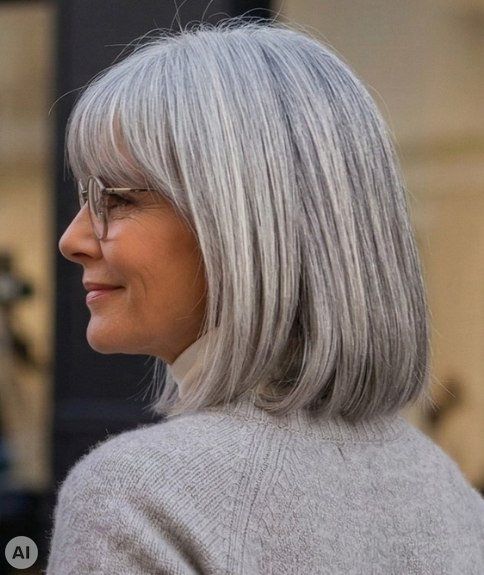
Monday morning, you iron this bob straight, and by Tuesday you are already negotiating with your own hair. The sleek bob with full bangs and gray highlights is a commitment, not a casual fling. The gray base with lighter gray highlights reads beautifully when the hair is straight and polished, but that sleekness demands daily attention. If your texture leans wavy, expect frizz by noon unless you are willing to spend time with a straightener and a smoothing serum. The middle part and full fringe frame the face evenly, which suits oval and heart shapes well. The honest downside: this is not a wash-and-go cut. Book the salon time, keep up with trims every six to eight weeks, and accept that the fringe will need its own styling routine.
Icy White Blonde With Gray Undertones
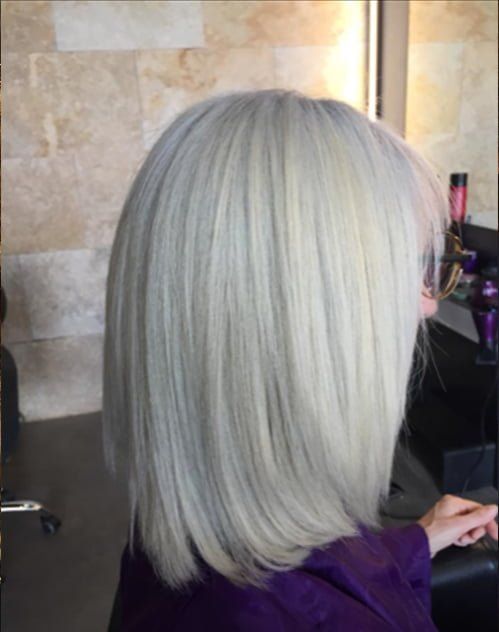
Want to know how they get that icy white blonde to look so cool it almost hums? The trick is in the undertones, not the base. This angled bob is styled straight and sleek with a middle parting, and the colour is a white blonde with subtle gray undertones running through it. The gray is what kills the yellow, turning a plain platinum into something frostier. Fine, straight hair is ideal here, because the sharp, defined cut shows off the colour without any wave interference. The maintenance is the catch: this shade needs regular toning to keep the gray undertones from drifting warm, and a trim every six to eight weeks to hold the line. Ask your stylist for a toner with a violet or blue base to keep it icy between visits.
Pixie With Side Bangs and Gray Highlights
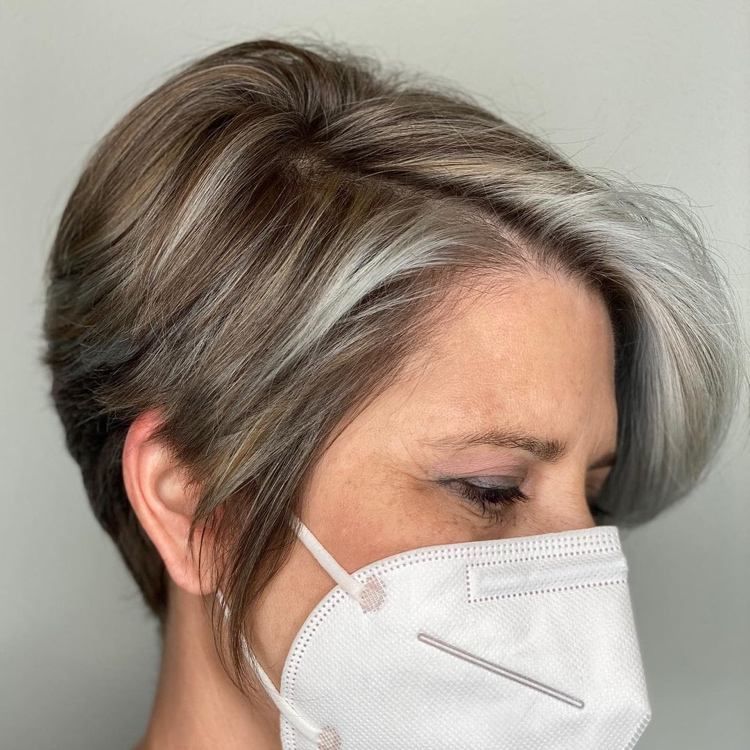
A pixie with side bangs and a side parting is the smartest summer cut I know. The hair sits at ear length, straight and fine, with a natural air-dried texture that shrugs off humidity. The gray blending here is distinct, with noticeable highlights that create a contrast you can see from across the room. This is a low-effort style: a bit of texturizing spray and you are out the door. The side bangs soften the look, which helps if you have a strong jawline. It is also a great option for a beach vacation, because it dries fast and does not need a brush. Just keep the shape honest with a trim every four to six weeks, or the whole thing starts to look like a helmet.
Angled Bob Back View With Silver Highlights
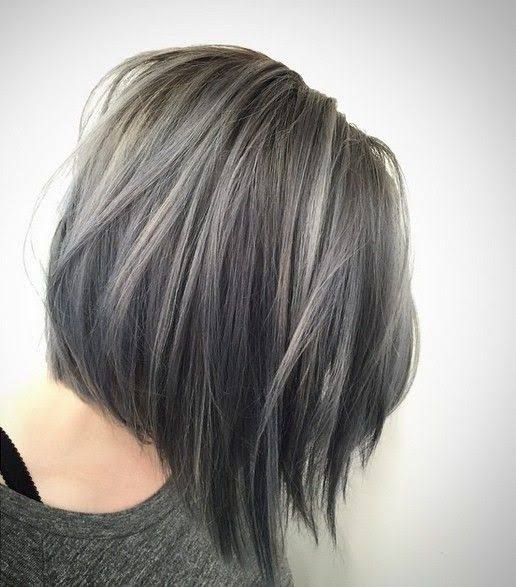
The first thing I thought when I saw this angled bob from the back was: that is how you do silver without the damage. The gray base carries the look, with blended silver highlights woven through the layers, and the whole thing sits at chin length with a middle part. The mistake people make is thinking they can get this silver on fine hair without paying for it. Over-processing is the real risk here, because fine strands do not have the density to hide breakage. The technique matters more than the shade: a skilled stylist will place the silver highlights so they blend, not stripe. This cut needs daily straightening to keep the angle sharp, and a smoothing serum to keep the fine texture from flying away. Book the salon, skip the DIY bleach, and tell your stylist you want soft, blended silver, not a solid block of it.
Ash Gray Bob With Side-Swept Fringe
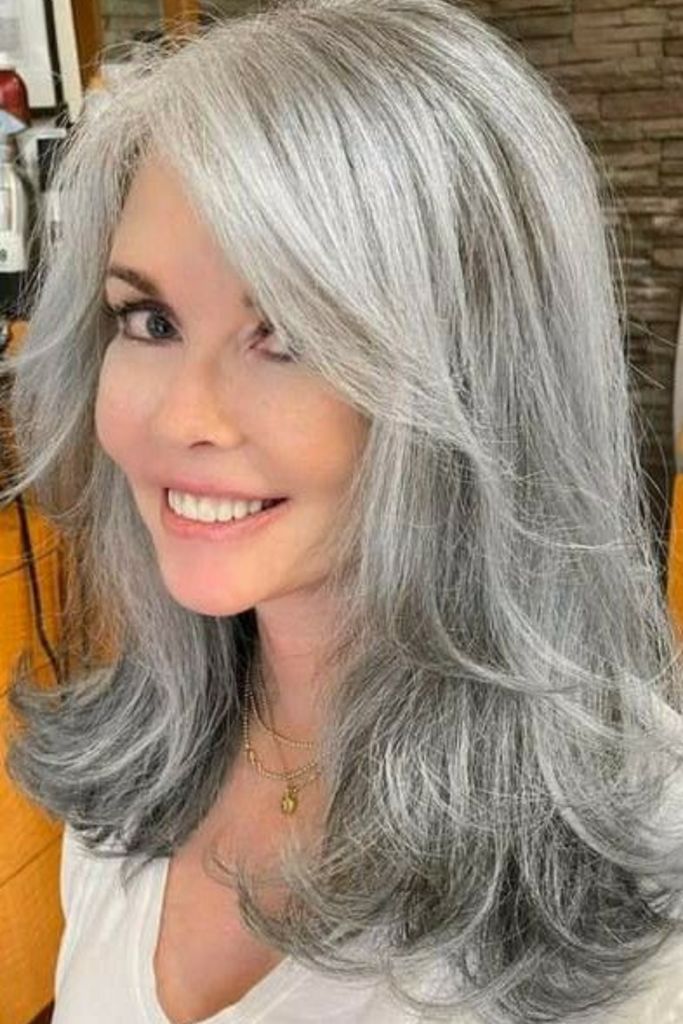
This one is a winner for anyone with cool-toned skin and fine to medium hair. The ash gray base sits at chin length, with blended lighter gray highlights woven through the wavy layers. That side-swept fringe does the heavy lifting: it softens a strong jawline without shortening the face the way a blunt bang can. The tone reads icy, not muddy, which is rare for a gray blend on finer textures. It is a salon job, no question — that seamless blend between the base and the lighter strands takes a practiced hand.
Layered Bob With Medium Gray and Silver
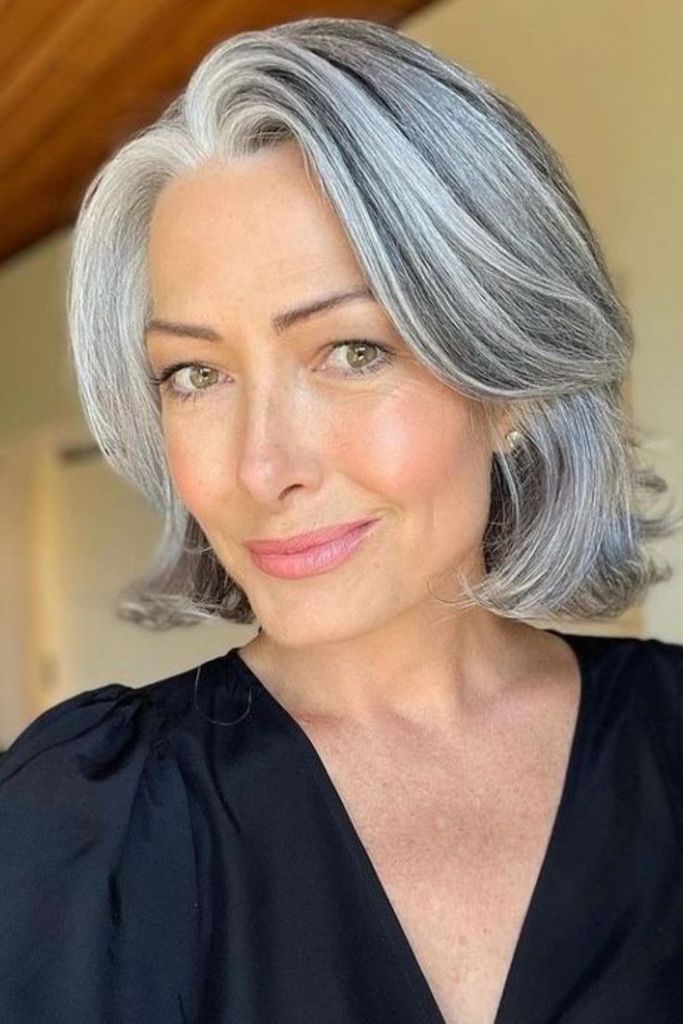
I will admit I was skeptical about a uniform gray shade on straight, fine hair. Then I saw this chin-length bob with medium gray to light gray blended tones and subtle silver highlights running through the layers. The smooth, layered blowout is the only way to wear it — air drying leaves it flat by noon. A round brush and a smoothing serum are non-negotiable. The payoff is a sophisticated, even tone that does not go brassy, and the lighter strands add dimension without looking streaky. Trims every six to eight weeks keep the bob crisp.
Shoulder-Length Waves With Ashy Gray Blend
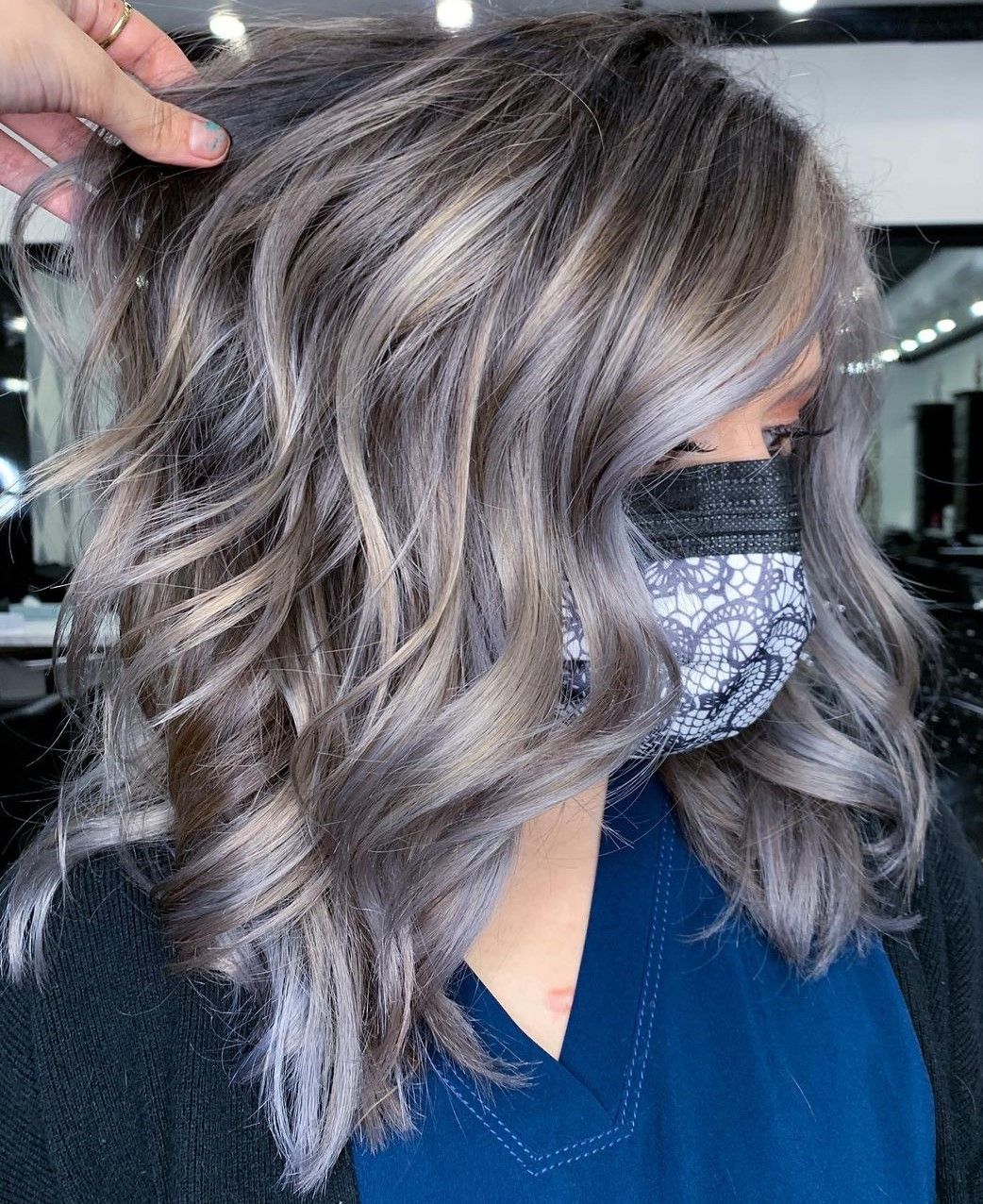
Ever wonder how they get that ashy gray tone to look soft instead of flat? The technique is a two-step process. First, the base is lifted to a pale blonde. Then a cool ash toner is applied, and lighter highlights are painted on to create depth. The collarbone length and middle part let the wavy layers fall naturally, so the blend reads dimensional, not striped. This is not a bathroom-mirror job — the toner alone requires precise timing to avoid a muddy green cast. Book the consultation first.
Dark Gray Lob With Silver and Ash Blonde
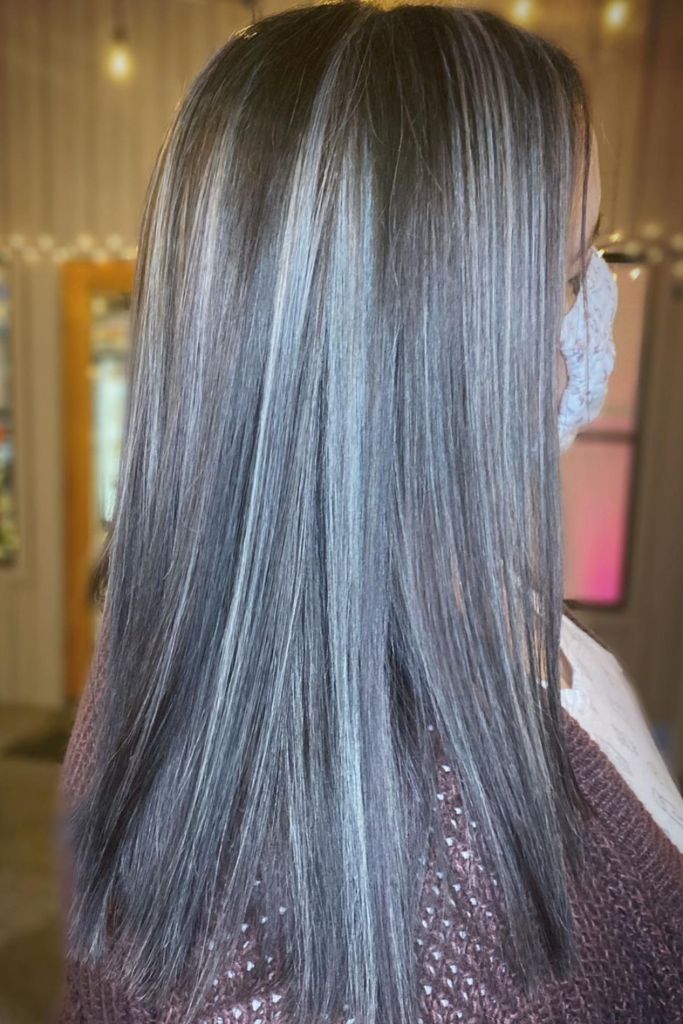
I have seen a lot of gray blends, and most of them play it safe with low contrast. This one does not. The dark gray base at collarbone length is punctuated by blended silver and ash blonde highlights that sit right on top. The result is bolder than a traditional babylights but softer than a chunky foil. The honest downside: the ash blonde pieces will fade faster than the silver, so you are looking at a toner refresh around week four. Still, for anyone who wants gray blending highlights with punch, this is the one.
Thick Wavy Bob With Natural Gray Tones
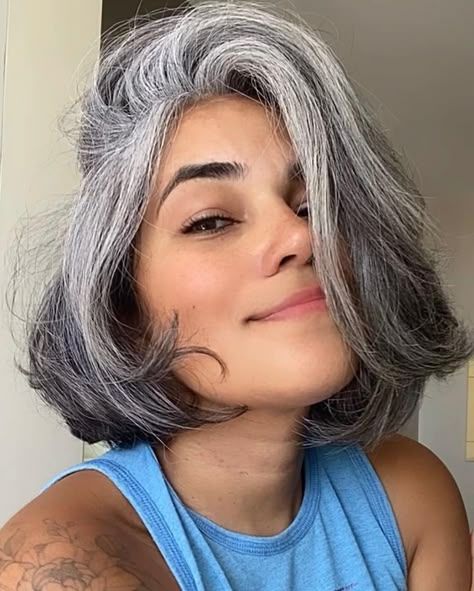
Thick, wavy hair does not always take well to salon gray blending — the texture can swallow the color. This chin-length bob with a middle part works because the natural gray tones are enhanced, not fought. Air drying with a texturizing spray is all it needs; the wave pattern does the rest. The DIY part is real: a gloss at home every few weeks keeps the gray from yellowing, and the bob shape holds its line without a salon trim for up to eight weeks. It is the lowest-maintenance entry in this roundup.
Mid-Back Layers With Subtle Gray Highlights
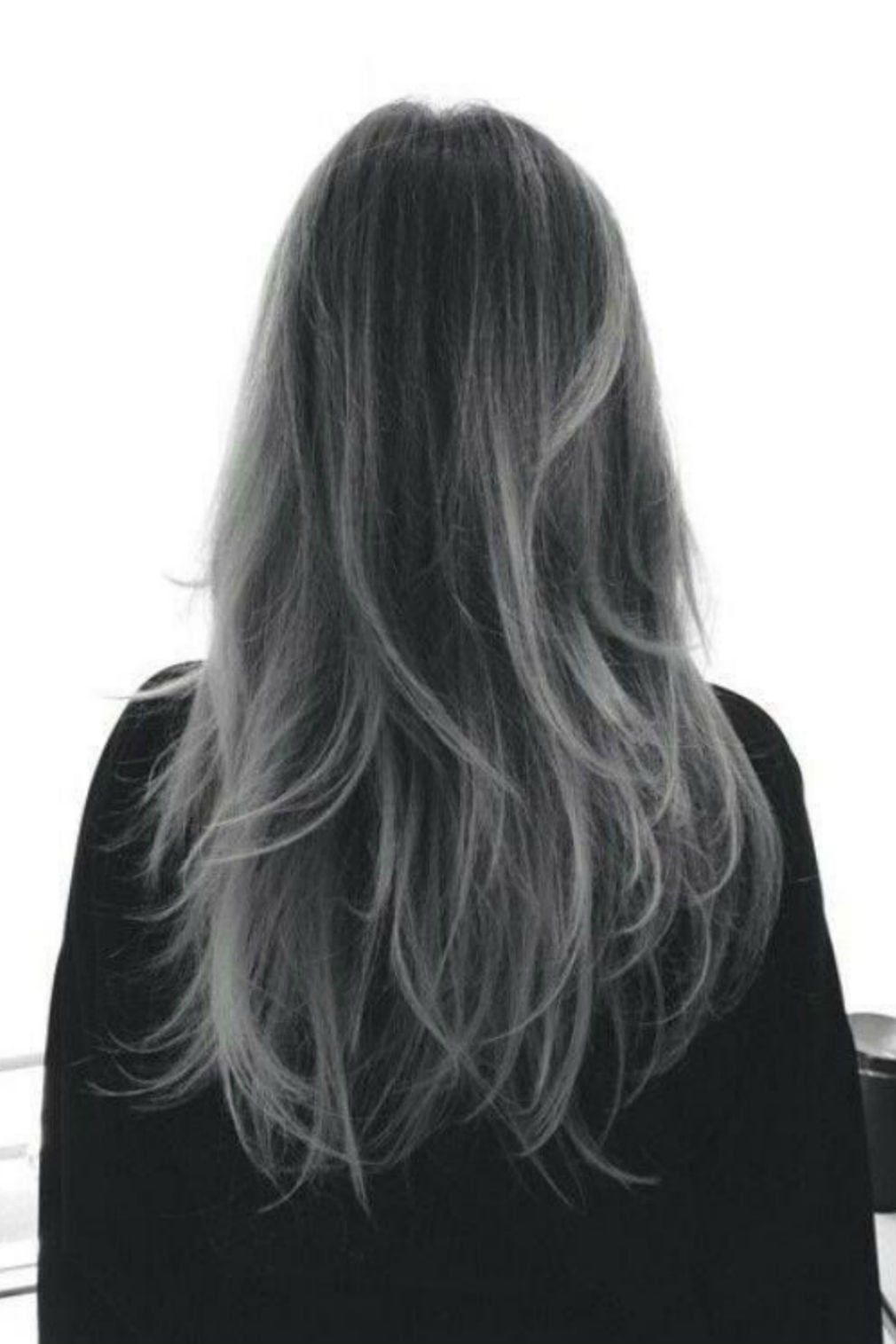
From behind, the waves fall in a soft gray curtain, no harsh lines anywhere. The layered cut moves with the hair instead of fighting it, and subtle gray highlights long hair like this is exactly the point. Medium density and straight-to-wavy texture let the lighter gray pieces peek through without shouting. Because the color sits close to the base, the grow-out lands gently. No dark root line panic at week five, just a gradual softness. A trim every ten to twelve weeks keeps the layers from turning shapeless. Otherwise, air dry or diffuse and let the waves do the work. The blended tones buy you months of calm.
That is the real trick with subtle gray blending: it does not demand a touch-up the moment you see a half inch of new growth. The layers help, too. When the longest strands hit mid-back and the shorter ones frame the shoulders, new growth disappears into the shape. Straight hair will show the line faster, but wavy or medium density hides it well. I have watched friends with this cut go four months between salons and still look intentional.
Thick Wavy Bob With Seamless Gray Blend
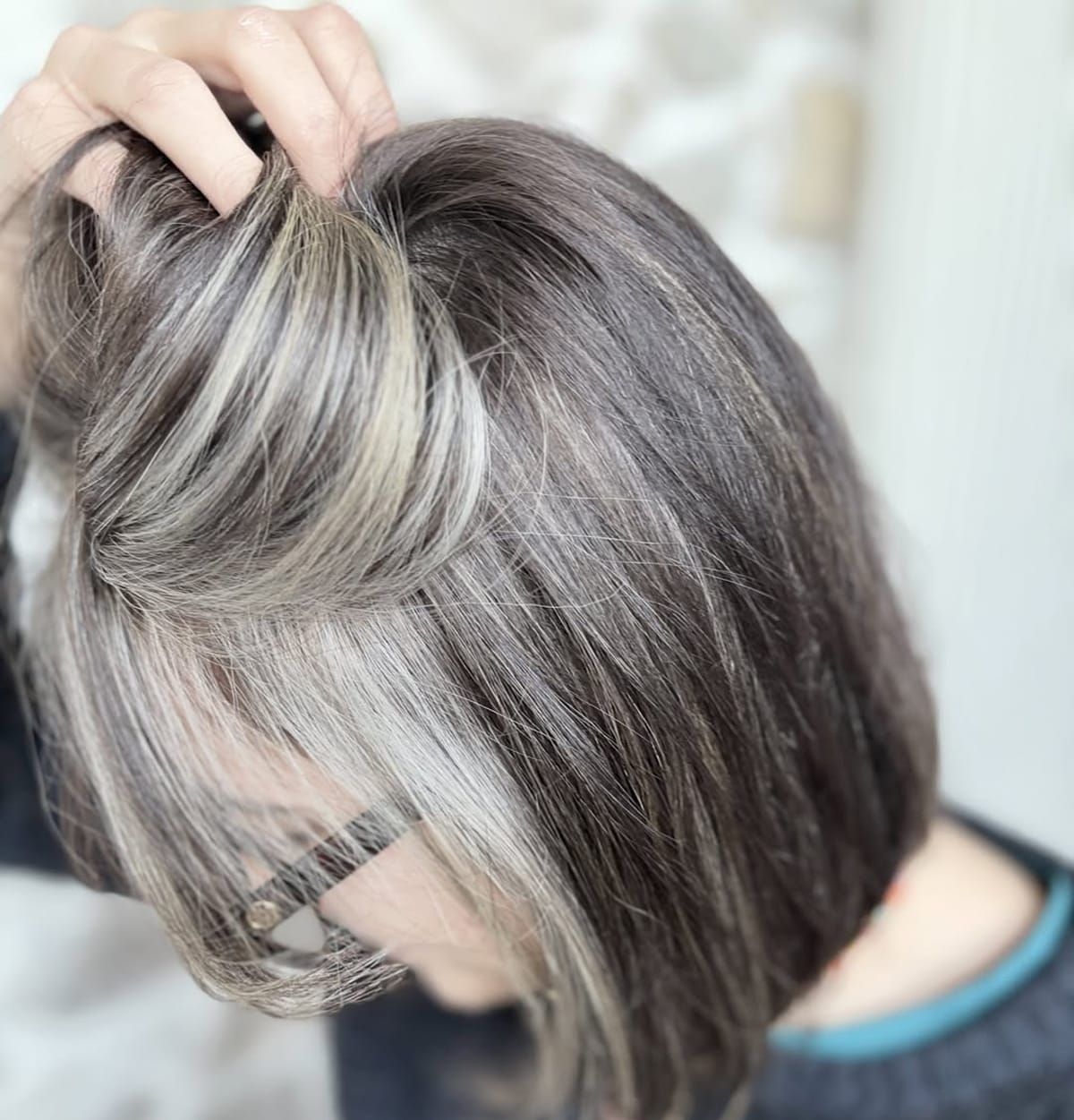
How does a bob with thick, wavy hair read as a seamless gray blending bob and not a stripey mess? The answer is sectional painting, not a single-glaze pass. The stylist applies a lighter gray tone only to the mid-lengths and ends, leaving the root zone dark. On a collarbone bob with a middle part, that creates depth. The thick texture absorbs the color instead of fighting it. The honest downside: this is not a bathroom-mirror job. One uneven section and the blend looks splotchy. A blowout with a round brush smooths the wave pattern so the gray reads as deliberate. Book a consultation first.
Dark Gray Lob With Platinum Highlights
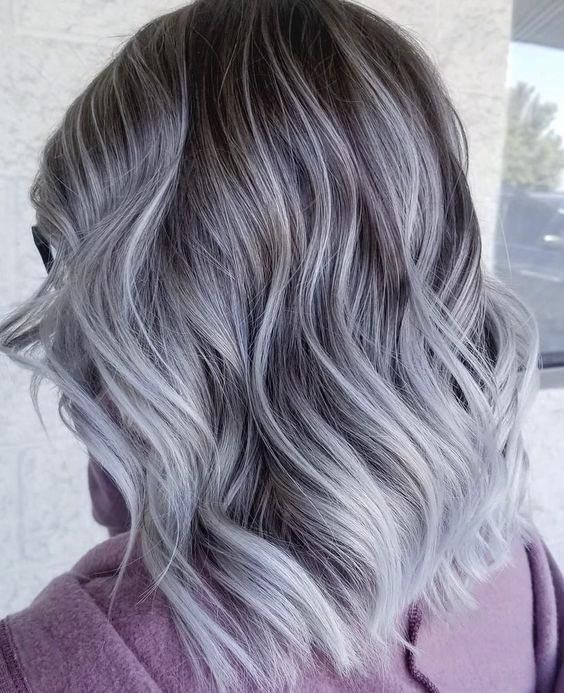
That high-contrast combination lands hardest in the shorter days of autumn and winter, when the light is low and a dark gray lob with platinum highlights catches every lamp and candle. The dark gray base anchors the collarbone length, and the platinum blonde pieces sit in loose waves, framing the back view. Medium density hair holds the contrast well, finer textures might let the dark overwhelm the blonde. This is a salon-only technique, the platinum needs a careful lift from the dark gray, and a single home bleach job could mean brass. A texturizing spray and a diffuser keep the waves defined, because flat waves flatten the whole effect.
Thick Wavy Bob With Blended Gray Highlights
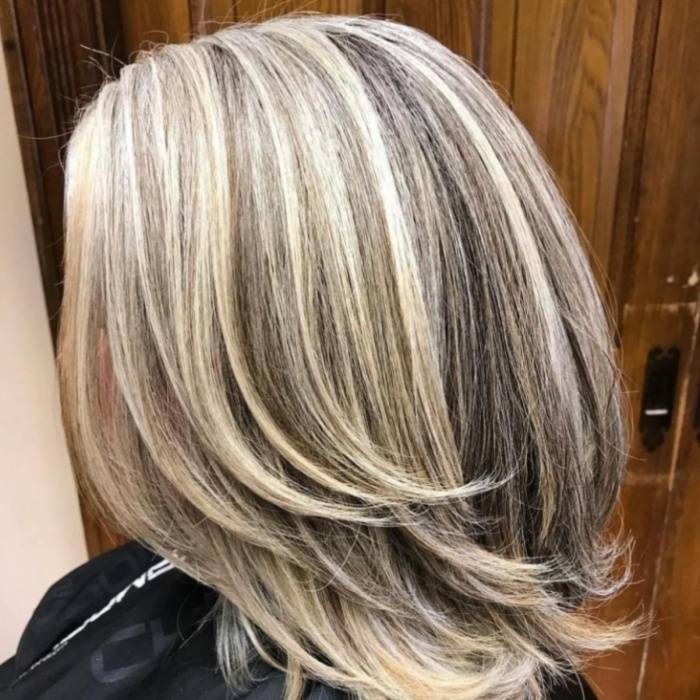
The mistake people make with thick, wavy hair and a blended gray highlights bob is asking for highlights that look the same from every angle. That is a recipe for a solid stripe. The color needs variation: a lighter gray on the outer wave, a darker tone underneath, so the bob reads as dimensional. Thick hair in a collarbone length with a middle part has too much volume to carry a single flat tone. The honest downside is that achieving that variation at home is close to impossible. The stylist has to weave the two grays into the wave pattern, not across the surface. A blowout with a round brush shows the depth best, but even air-dried waves will work if the application was right.
Final Thoughts
After writing all of these, I keep coming back to the slicked back pixie. I was not planning to recommend it, but the contrast of silver against dark roots does something a full gray never does. It is sharp, but not severe, and it buys you a month of grow-out without looking undone.
- Tone at week six, not week ten.
- Trim the baseline every eight weeks.
- Use a purple shampoo once a week.
- Ask for a root shadow at the first sign of a line.
Book the consultation first. That is the whole secret.