

I’ve been staring at winter hair colours with my fine, muddy blonde roots showing at week five and thinking: how much do I care? Turns out, a lot of the expensive-looking options this season are also the ones that don’t demand a salon every five weeks. Copper red holds longer than I expected. Dark tones just blur the line.
This roundup of 29 Low Maintenance Winter Hair Colors runs from warm browns to cool ash, from shoulder-length bobs to mid-back layers. Every one is picked for real grow-out and real flat-by-4pm hair. No mystery toners, no six-hour bleach jobs.
Natural Dark Blonde With Subtle Highlights
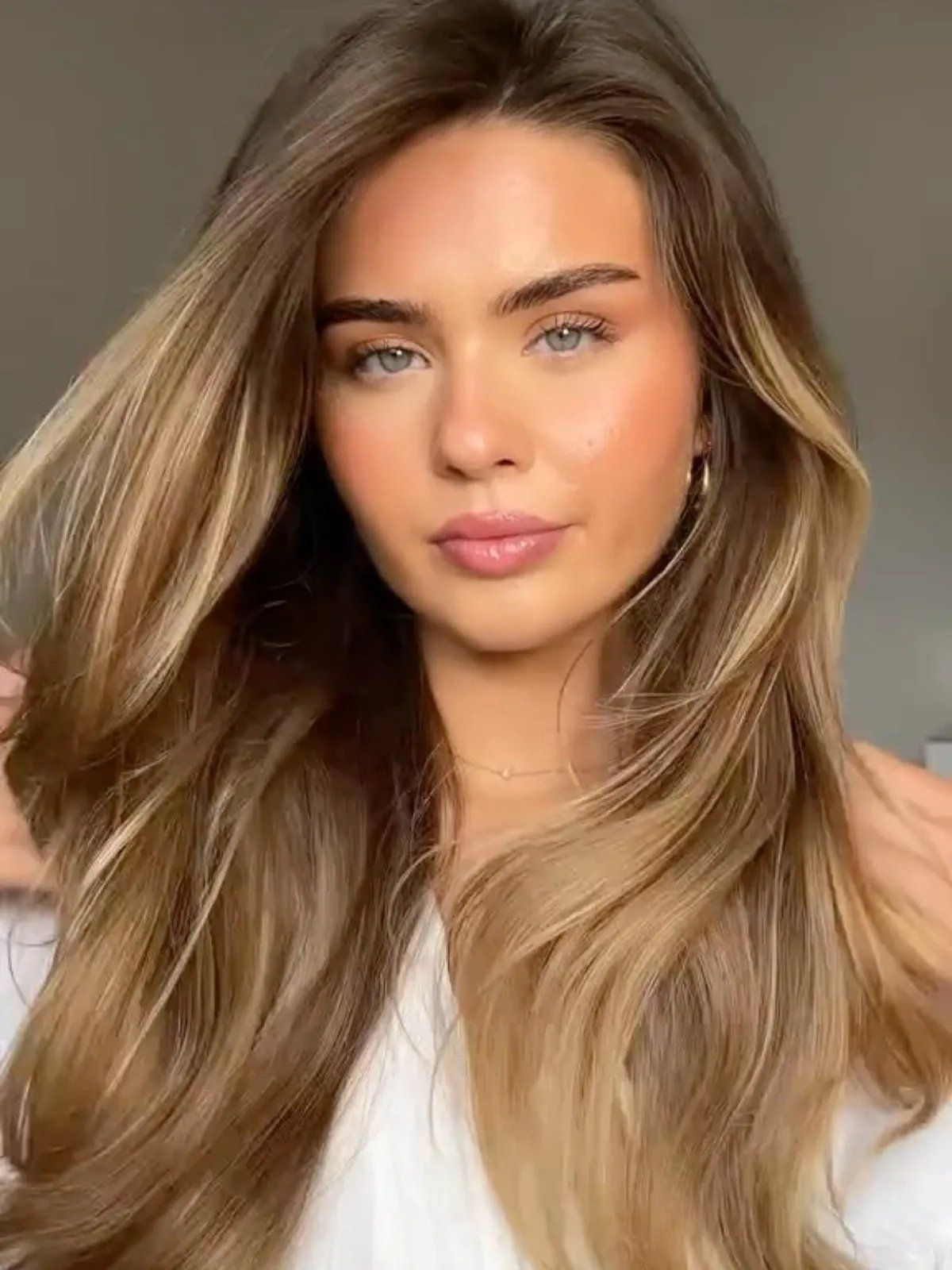
A dark blonde base with lighter blonde highlights is the color equivalent of a good denim jacket: it goes with everything and nobody notices when you wear it twice. The technique is foil highlights, placed sparingly so the contrast reads as sun-kissed dimension rather than a full commitment. The tone stays neutral, neither ashy nor golden, which means it won’t pull brassy or muddy on wavy, thick hair at collarbone length. The middle part and blowout waves help the highlights catch light evenly. This is a color that flatters medium to warm skin tones and fine to medium density hair, but if your base is already light blonde, the subtle lift may not register.
Vibrant Copper Red Mid-Back Layers
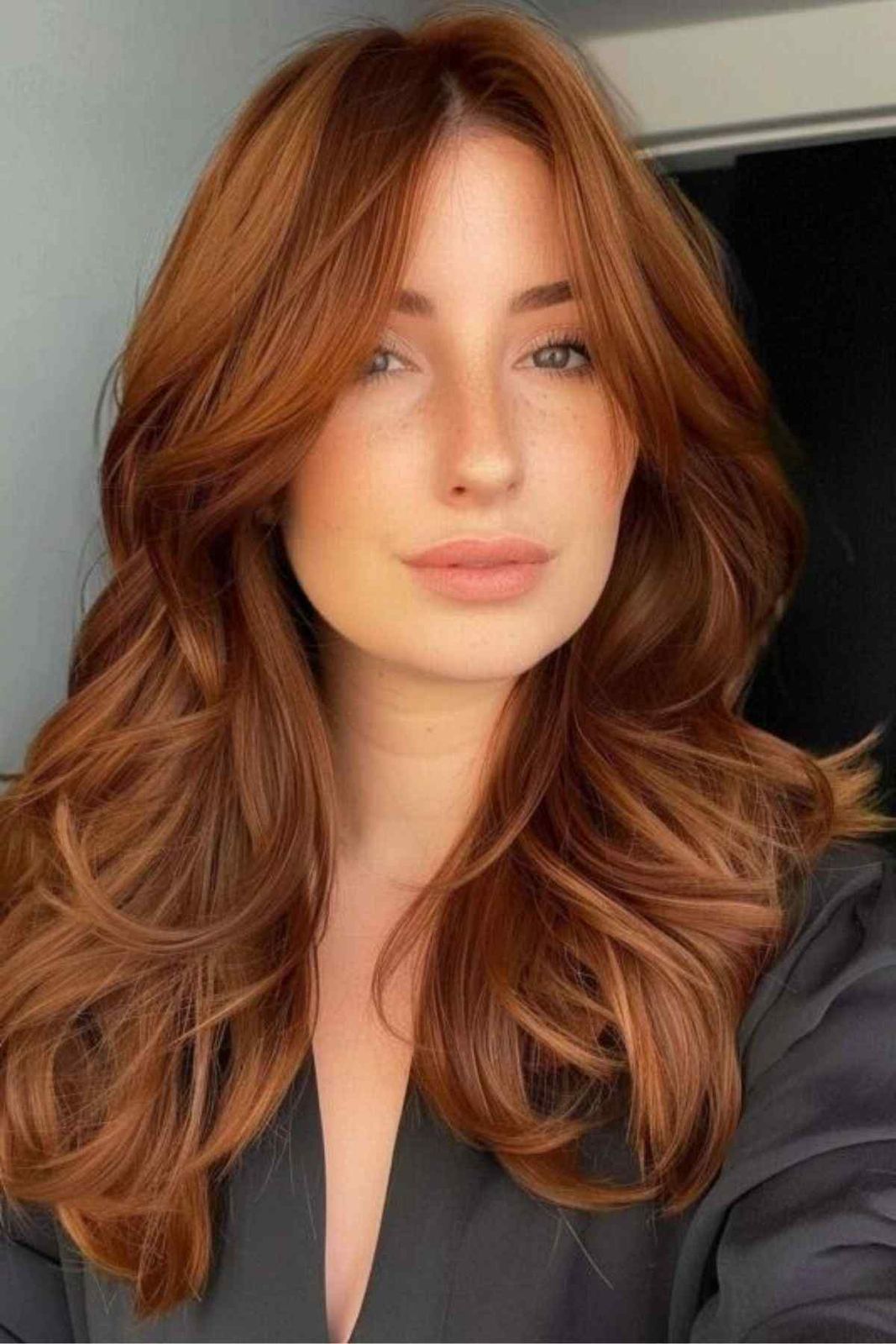
Vibrant copper red hair is the loudest thing on this list, and I mean that as a compliment. It sits opposite the muted browns and beiges that dominate winter color palettes, and it wins by being unapologetic. The long layers and face-framing layers give the mid-back length movement, so the copper catches light differently with every turn of the head. The tone is warm and saturated, not brassy, which matters on wavy, thick hair that tends to hold pigment well.
Wear and upkeep: expect to refresh with a color-depositing conditioner every few washes, and book a gloss every six to eight weeks if you want the vibrancy to stay loud. The grow-out is forgiving because the layers blend the regrowth line, and the mid-back length means you can pull it back when the roots start to tell. This is not a color for anyone who wants to ignore their hair for three months. But if you want a winter color that announces itself from across the room, this is it.
Dark Blonde With Blonde Money Piece
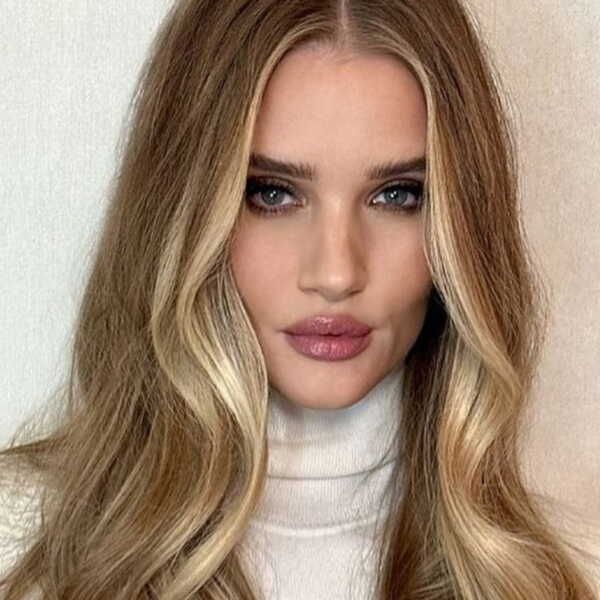
Why does a blonde money piece work when all-over highlights feel like a commitment? Because the technique isolates the brightness to the front sections only, leaving the dark blonde base untouched everywhere else. The curtain bangs are cut to blend into the money piece, so the blonde frames the face without a hard line. The tone of the money piece is a warm, buttery blonde that lifts the complexion without washing it out. On wavy, thick hair at shoulder length, the contrast reads as intentional, not accidental. The middle part and soft waves distribute the blonde evenly across both sides. This is a salon technique, not a bathroom-mirror job, but the payoff is a color that grows out softly for months.
Dark Blonde Suede With Side Bangs
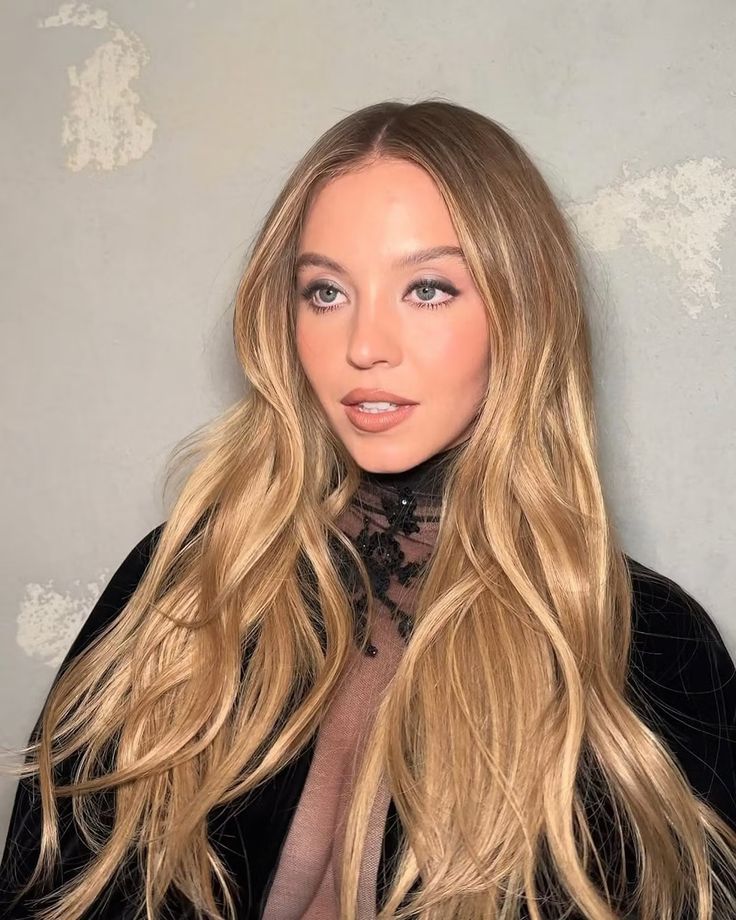
I will confess: I was skeptical that dark blonde with golden highlights could look this soft without turning brassy by week three. The suede-like blonde tone is the key, a warm neutral that sits between beige and caramel, with subtle golden highlights woven through the mid-back length. The side-swept bangs are the real workhorse here, they require a quick brush and nothing else, no round brush, no heat, no prayer.
Wear and upkeep: the highlights are placed to blend with the base, so regrowth is not obvious for eight to ten weeks. The wavy, medium density texture helps the color read as dimensional rather than flat. A side part keeps the bangs swept naturally, and the long layers prevent the mid-back length from feeling heavy. This is a color that looks polished on day one and still acceptable on day six. The only caveat: if your hair is very fine, the subtle golden highlights may not lift enough to register.
Medium Brown With Warm Undertones
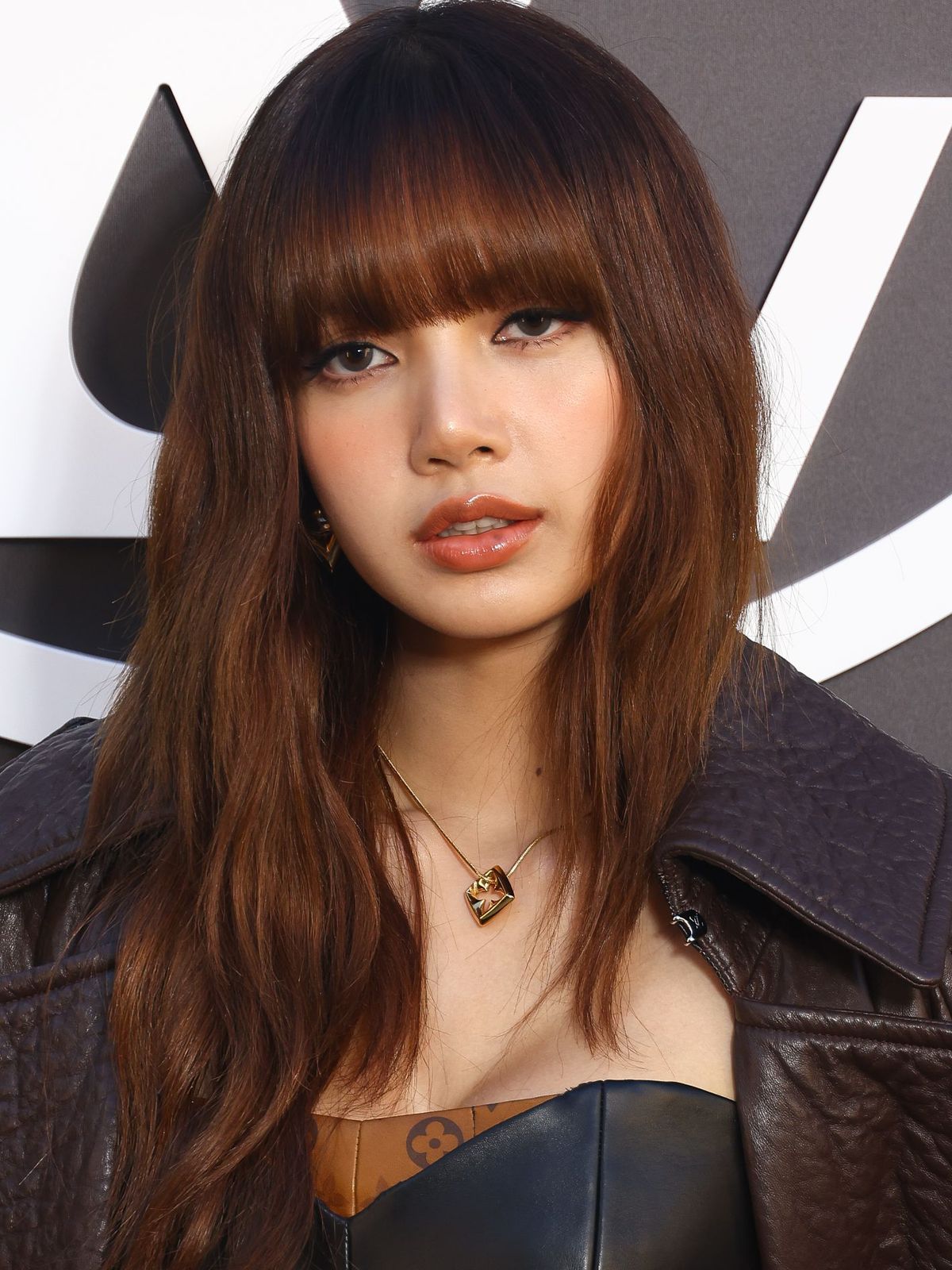
Medium brown warm undertones are the winter coat of hair colors: practical, flattering, and nobody asks if it is real. The blunt bangs are the detail that makes this look intentional rather than default. The tone is a rich, warm brown with no ash or gold, just a natural depth that reads expensive on straight, thick hair at mid-back length. The middle part and slight natural movement keep the blunt bangs from looking severe.
This color flatters medium to olive skin tones best, the warmth in the brown picks up the warmth in the complexion without competing with it. If your skin is very cool or very pink, the warm undertones may read as brassy rather than rich. The blunt bangs require a trim every four to six weeks, but the rest of the hair can go twelve weeks between color appointments. The straight texture helps the blunt bangs sit cleanly, and the thick density gives the mid-back length weight. This is a color that hides gray well and grows out without a visible line.
Vibrant Copper Mid-Back Straight
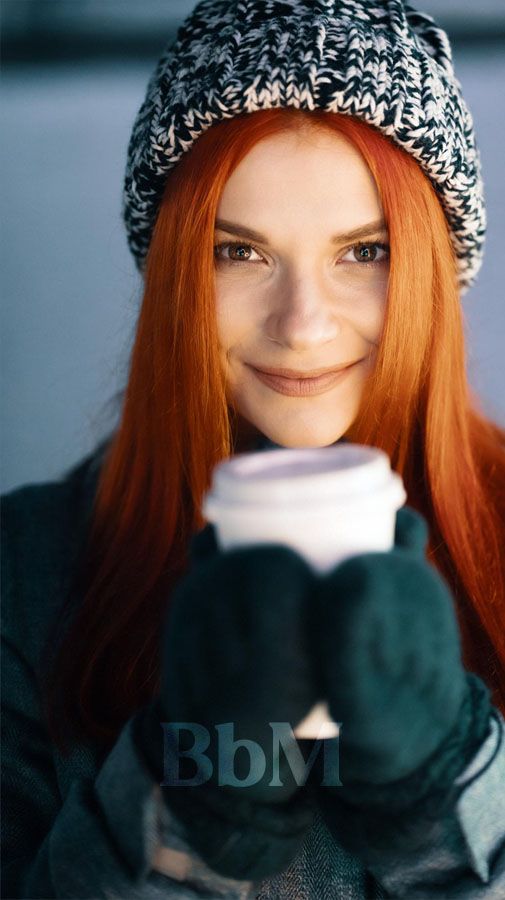
There’s a certain thrill in walking into winter with vibrant copper hair, a shade that practically glows against grey skies and snow. The mid-back length, cut with long layers and a middle part, falls straight and air dried, which means I wash it, comb it, and leave. The technique here is a single-process colour with subtle warmer undertones woven through, so it reads rich, not flat. Straight, medium density hair carries this best; the copper catches light along the strands. It’s a salon job, no question, but the grow-out is forgiving because the warmth blends into the root. For a season of dark brunettes and ash blondes, this is the rebellious choice that somehow fits right in.
Dark Brown Bob With Blonde Balayage

Can you do dark brown with blonde balayage at home? I’ve tried, and the answer is no, not if you want it to look like this. This chin-length bob, parted on the side and styled straight, needs a salon because the balayage technique requires painting the blonde onto a dark base with precision, and a bathroom mirror and a bowl of bleach will not get you there. The payoff is a dimensional colour that grows out softly, no harsh line. On thick, straight hair, the bob holds its shape, and the blonde pieces frame the jaw without screaming for attention. Book the appointment, it’s not a DIY project.
Medium Brown With Caramel Highlights
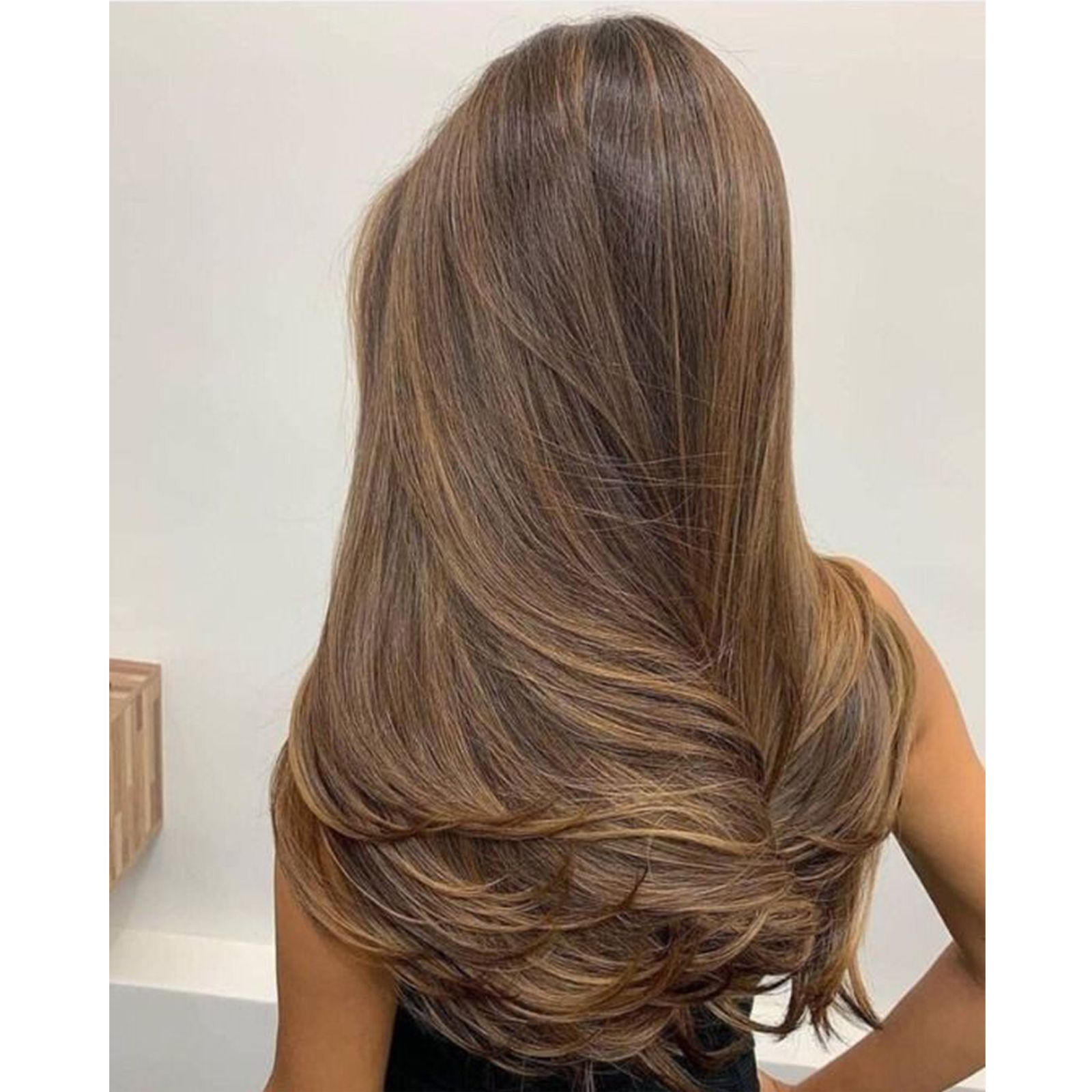
This is the colour that makes you look like you just came from a beach vacation, even in February. Medium brown with caramel highlights, plus a few honey pieces, sits on a mid-back length with layers and a middle part, styled in a blowout with soft waves. The technique is foil highlights, and the tone is warm, which is why it works in winter: it counters the grey light that makes everything look flat.
The honest downside is upkeep. Dimensional highlights fade, and caramel and honey tones shift warmer or duller depending on your shampoo. On thick, wavy hair, the colour hides regrowth for a while, but by week eight the brightness starts to muddy. A gloss at the salon every couple of months keeps the caramel from turning brassy, and that’s the real cost of looking effortlessly sun-kissed.
Espresso Brown Layered Bob
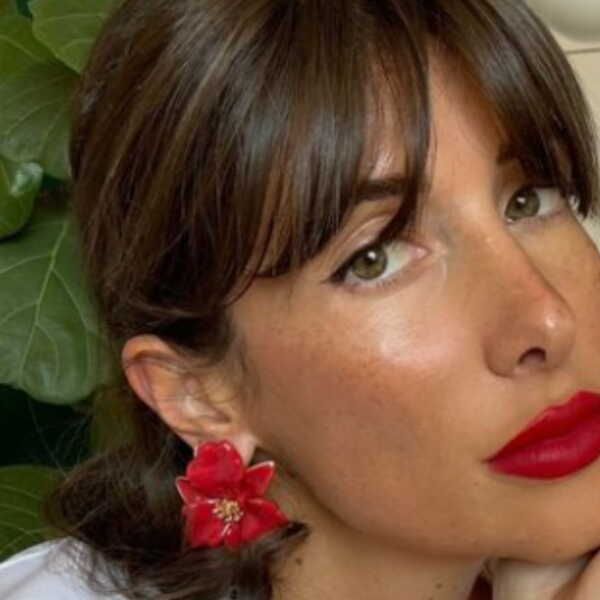
I confess, I used to think a solid dark colour would look flat in winter light. Then I saw this espresso brown solid tone on a chin-length layered bob, and I was wrong. The trick is the richness of the shade: it’s so deep it absorbs light, and the layers catch it, so the hair has movement without needing highlights. The bob, parted on the side and styled smooth with a slight inward curl, suits medium density straight hair, and the solid colour means no grow-out lines, just a trim every six to eight weeks. The mistake people make is going too matte; this one has a subtle gloss that keeps it from disappearing in January.
Deep Burgundy Mid-Back Waves
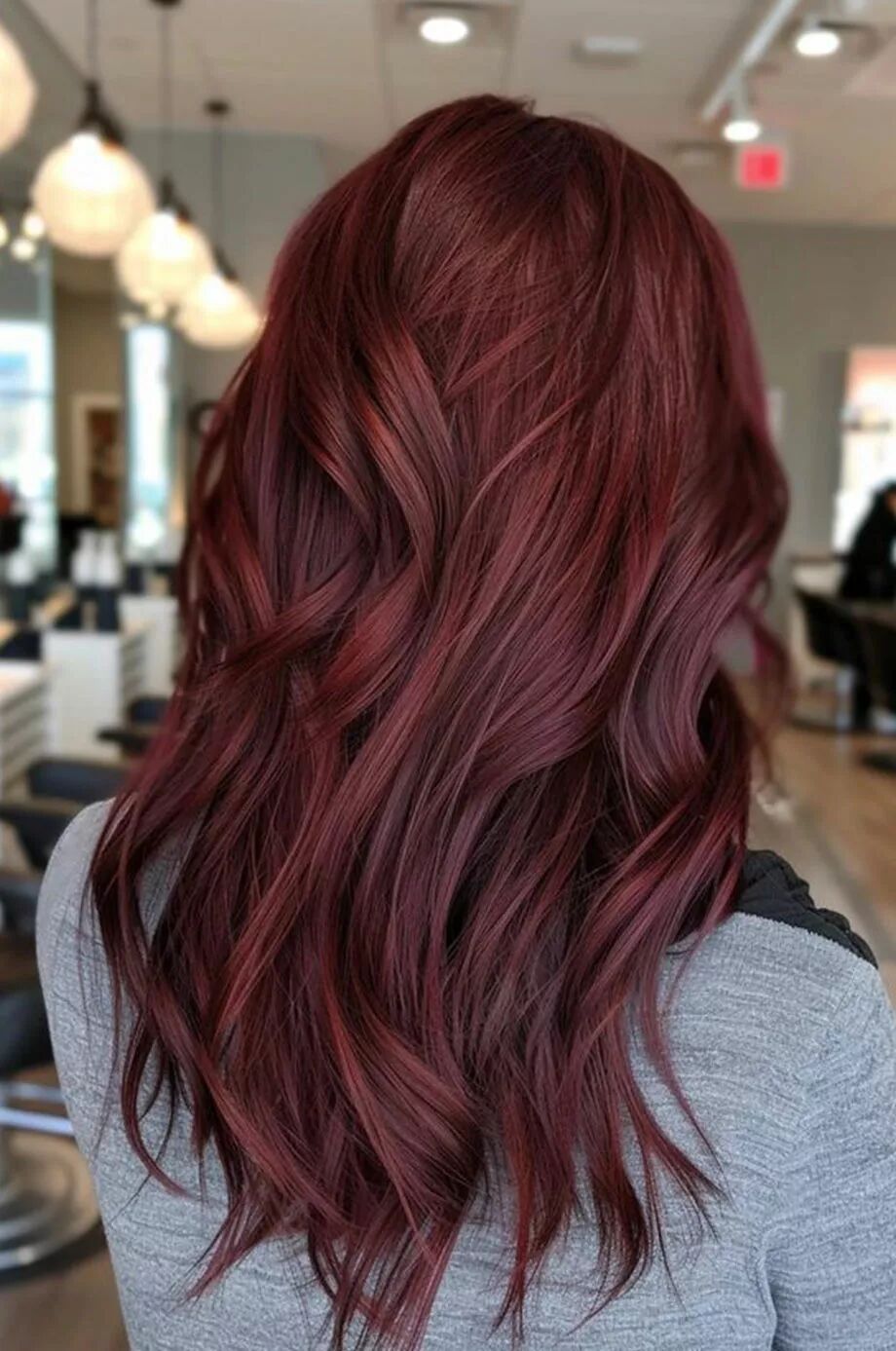
Who actually suits deep burgundy hair? If you have warm undertones, this is your winter colour, it brings out the rosiness in your skin and makes you look alive when the sun is scarce. The shade, a rich burgundy with subtle lighter tones woven through, sits on mid-back length with layers and a middle part, styled in loose waves. The technique is a gloss or a demi-permanent, which means it fades gradually rather than showing a harsh root line. On thick, wavy hair, the waves catch the burgundy and give it depth. But if your undertones are cool, this can read as too purple, so pass it by. It’s a salon colour, and the grow-out is forgiving, but the vibrancy does fade, so plan for a refresh every couple of months.
No Bangs Vibrant Copper Mid-Back Waves
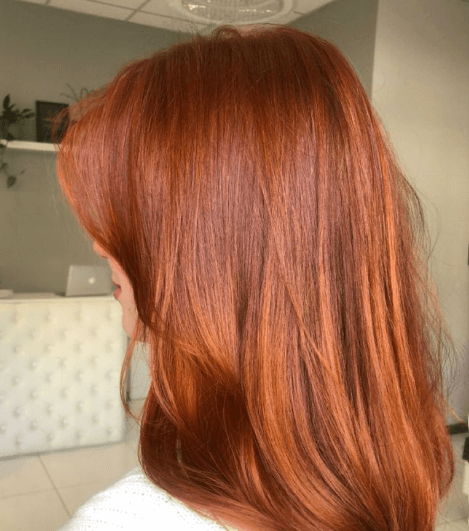
That vibrant copper shade hits the light differently every hour. Morning sun pulls it orange. Afternoon fluorescents make it almost red. The long layers keep the color from pooling in one flat block, and the soft waves catch enough light to show the true depth. Mid-back length means the fade happens gradually, not in a harsh line at the roots. Thick, wavy texture holds the pigment longer than fine hair does, which is the one lucky break copper gives you.
Color-depositing mask every third wash. That is the trade. Skip it and the tone drifts toward brassy by week four. A trim every eight to ten weeks keeps the ends healthy enough to hold the dye. No bangs means no constant fading on the front pieces from face oils and washing. The grow-out is a slow blend, not a stripe. I have watched friends with copper commit to the mask routine and still have a wearable color at week ten. I have also watched them skip it and wonder why their hair turned rusty. The mask is not optional.
Collarbone Dark Brown With Blonde Highlights Bob
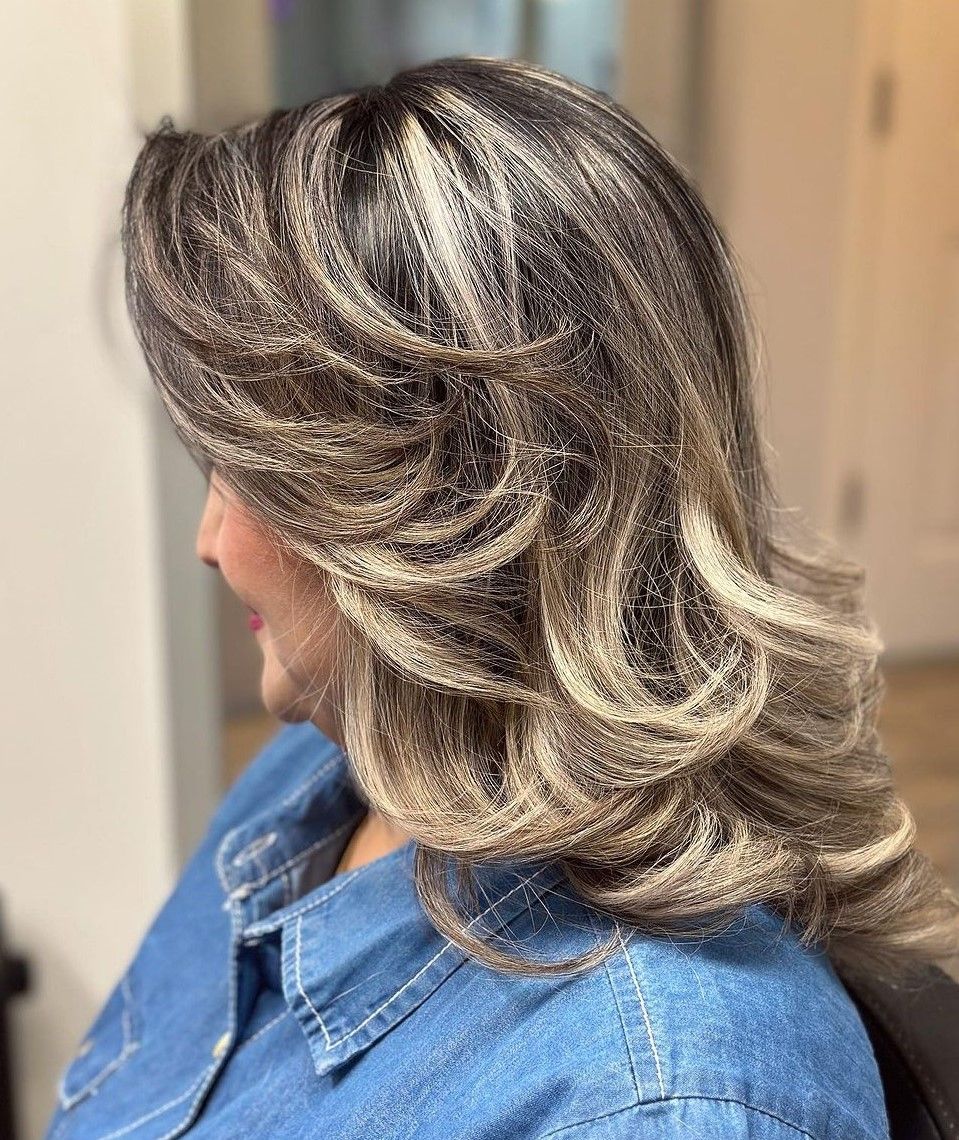
A dark brown with blonde highlights beats a full blonde at grow-out every time. The dark base hides the root line for six weeks, easy. The blonde pieces, painted as a balayage, soften the line further because they start lower on the strand. Collarbone length hits a sweet spot: short enough that the highlights travel down quickly, long enough that the technique has room to breathe. Wavy, thick texture lets the blonde sit on the surface instead of sinking into the underlayer. A side part shifts the weight so the highlights fall forward. I compared this to a solid dark brown once and regretted it. Solid brown needed a root touch-up at week four. This one still looked intentional at week eight.
Long Layers Deep Burgundy Mid-Back Vintage Waves
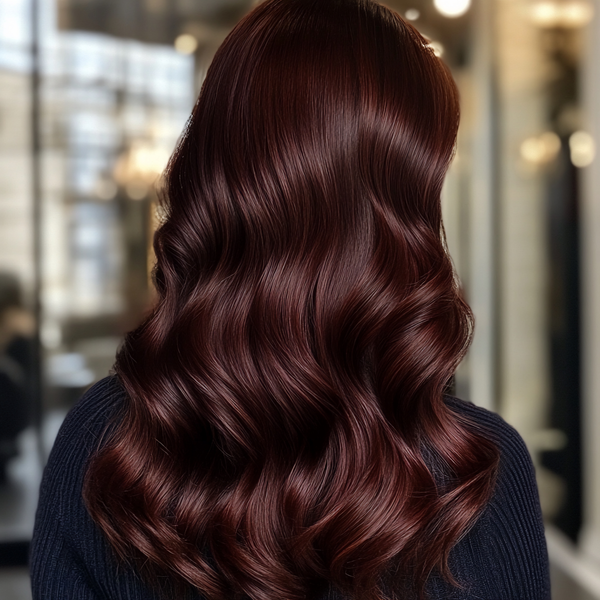
How does a deep burgundy glossy finish stay low maintenance when reds are famous for fading? The answer is in the application. The color is applied as a single-process, all-over formula, not painted in highlights or babylights. That means every strand gets the same saturation, so when it fades, it fades evenly. No patchy spots. No stripe at the regrowth. The long layers are cut to hold a vintage wave pattern, which actually helps the color: the bends in the hair catch light and hide the early dullness that comes around week five. Thick, wavy texture grips the pigment better than fine, straight hair does. Mid-back length means the oldest color is at the ends, and those ends get trimmed every eight to ten weeks anyway. The side part lets the wave set fall naturally over one shoulder, keeping the shape intact. No bangs means no front pieces fading faster from washing and face contact. The technique is straightforward: one bowl, one brush, one even coat. Ask your stylist for a single-process burgundy with no dimension added. It sounds too simple. It works.
Dark Blonde With Beige Balayage
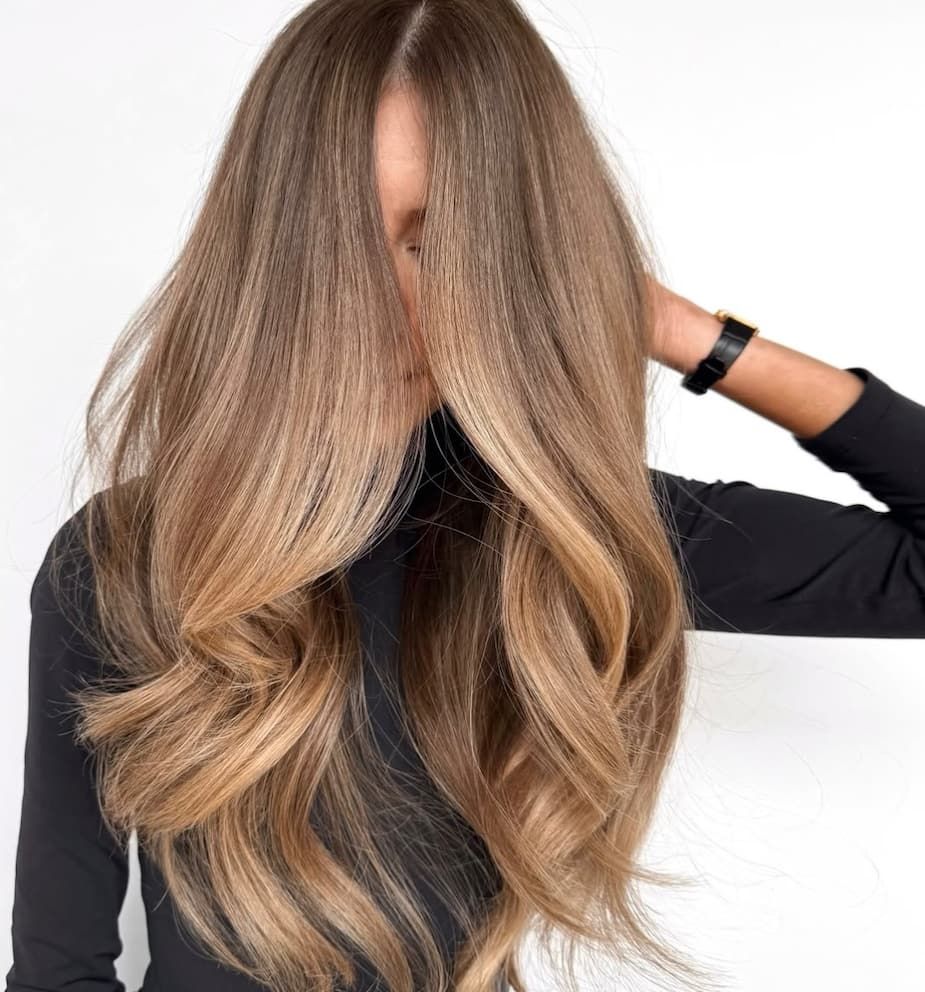
Gray sky, gray coat, gray pavement. A dark blonde with beige balayage is the one warm note in a winter wardrobe that runs neutral. The dark blonde base sits close to the natural root color for most people, so the grow-out is nearly invisible. The beige blonde balayage is painted in soft, sweeping sections, starting a few inches from the root and tapering lighter toward the ends. That placement means the color grows out as a shadow, not a stripe. Mid-back length gives the balayage enough canvas to spread the beige tone gradually. Thick, wavy texture catches the light in the lighter sections and lets the base sit quietly underneath. A middle part keeps the color balanced on both sides. The wintery feel comes from the beige tone itself: it is warm without being yellow, soft without being ashy. It reads like the color of a cashmere sweater, not a beach vacation. No bangs means no front pieces fading faster from winter hat friction. A gloss every eight to ten weeks refreshes the beige without a full color appointment. That is the whole maintenance plan.
Dark Brown Auburn Undertones Lob
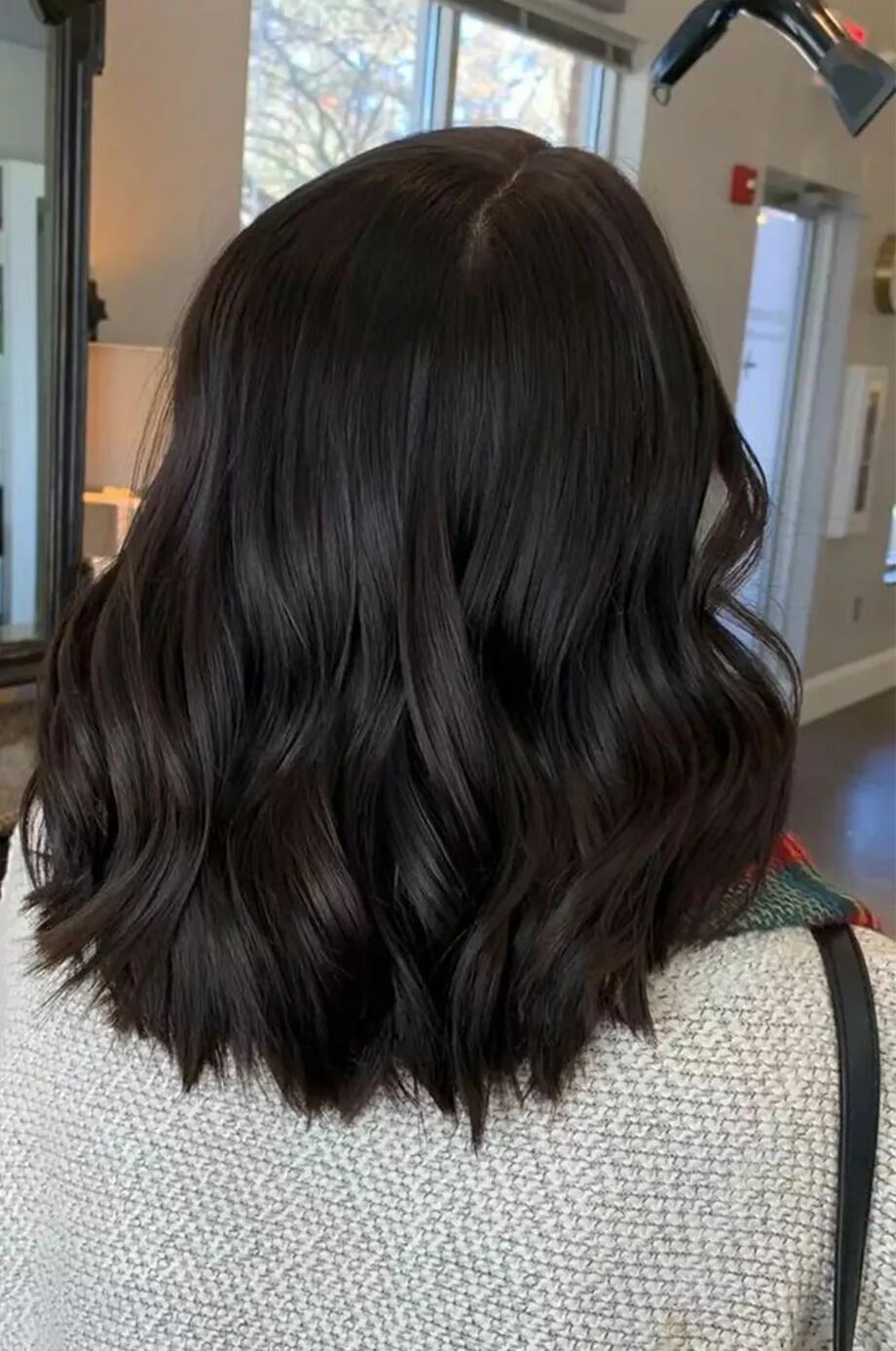
A dark brown with auburn undertones reads warm without committing to full red. The undertones sit under the surface, visible in direct light and subtle in shade. That is the trick: they add dimension without a visible root line. The collarbone-length lob keeps the shape clean and the color contained. Wavy, medium-density texture lets the auburn catch light in the bends without overwhelming the base. A middle part centers the weight and shows the undertones evenly on both sides. Grow-out is invisible because the base is dark brown and the undertones are woven through, not painted on top. A trim every six to eight weeks keeps the lob shape sharp and the ends healthy. No bangs means no extra fading on the front pieces. This is a color that works for anyone who wants warmth without upkeep. Pass if you want a visible red tone. This one is a whisper, not a shout.
Ash Blonde With Blue Grey Tones
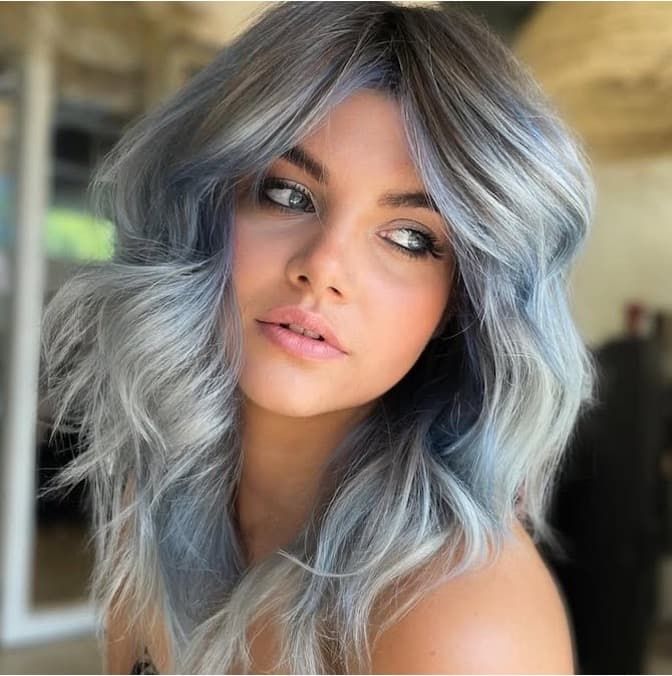
This one is a commitment, but I will say this for it: when it works, it works. The ash blonde with blue grey tones lands somewhere between cool and cold, and the striking balayage placement keeps the root line soft for about six weeks. Collarbone length on medium-density wavy hair, no bangs, a middle part. The honest downside? Blue and grey fade fast. You will need a toning shampoo in rotation by week three, and if your water is hard, expect a greenish cast before you catch it. Not a set-it-and-forget-it colour, but the grow-out is real.
Chocolate Brown With Auburn Undertones
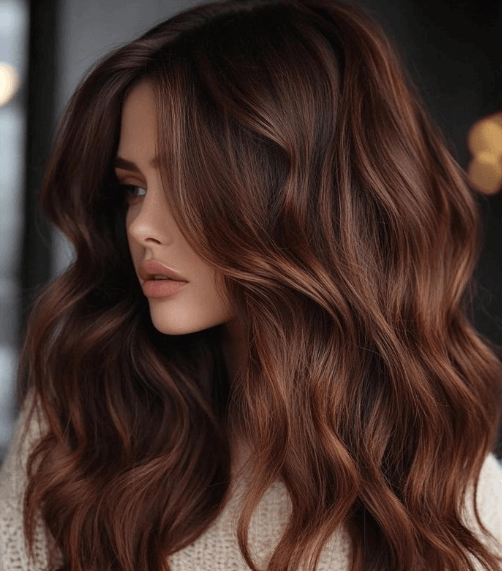
I will confess something. I have spent a lot of time chasing colours that need a touch-up every four weeks, and I am tired. This one is not that. The chocolate brown with auburn undertones is a rich single-process base on mid-back length, layered, wavy, thick hair. No bangs, middle part, air-dry friendly.
The auburn shows in sunlight and reads as a warm brown everywhere else. Grow-out is invisible because the undertone is subtle and the base is close to natural. A quick blowout or air-dry, a trim every eight to ten weeks, and you are done. That is the whole routine. I booked this twice in one season, and I will keep booking it.
Dark Base With Berry Ombre
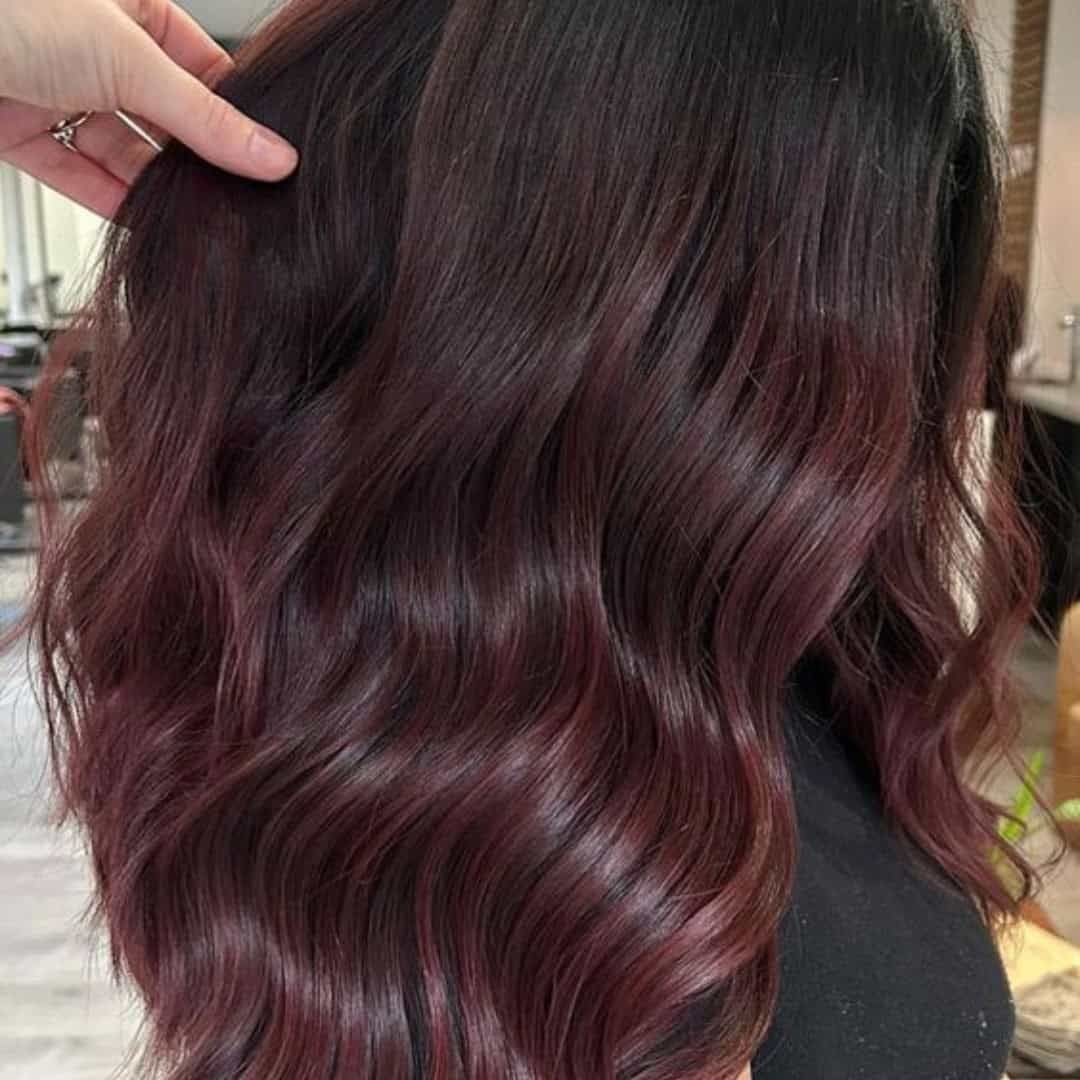
When did brown start looking this expensive? The dark base with berry ombre starts at the root and shifts to a deep plum somewhere around the jaw on this collarbone-length long bob. Wavy, medium density, middle part, no bangs. The technique is not a bathroom-mirror job: getting a seamless berry transition without a muddy line takes a professional hand. The payoff is a colour that grows out like a shadow, no harsh demarcation. I would not try this at home. Book the consultation first.
Visual Idea
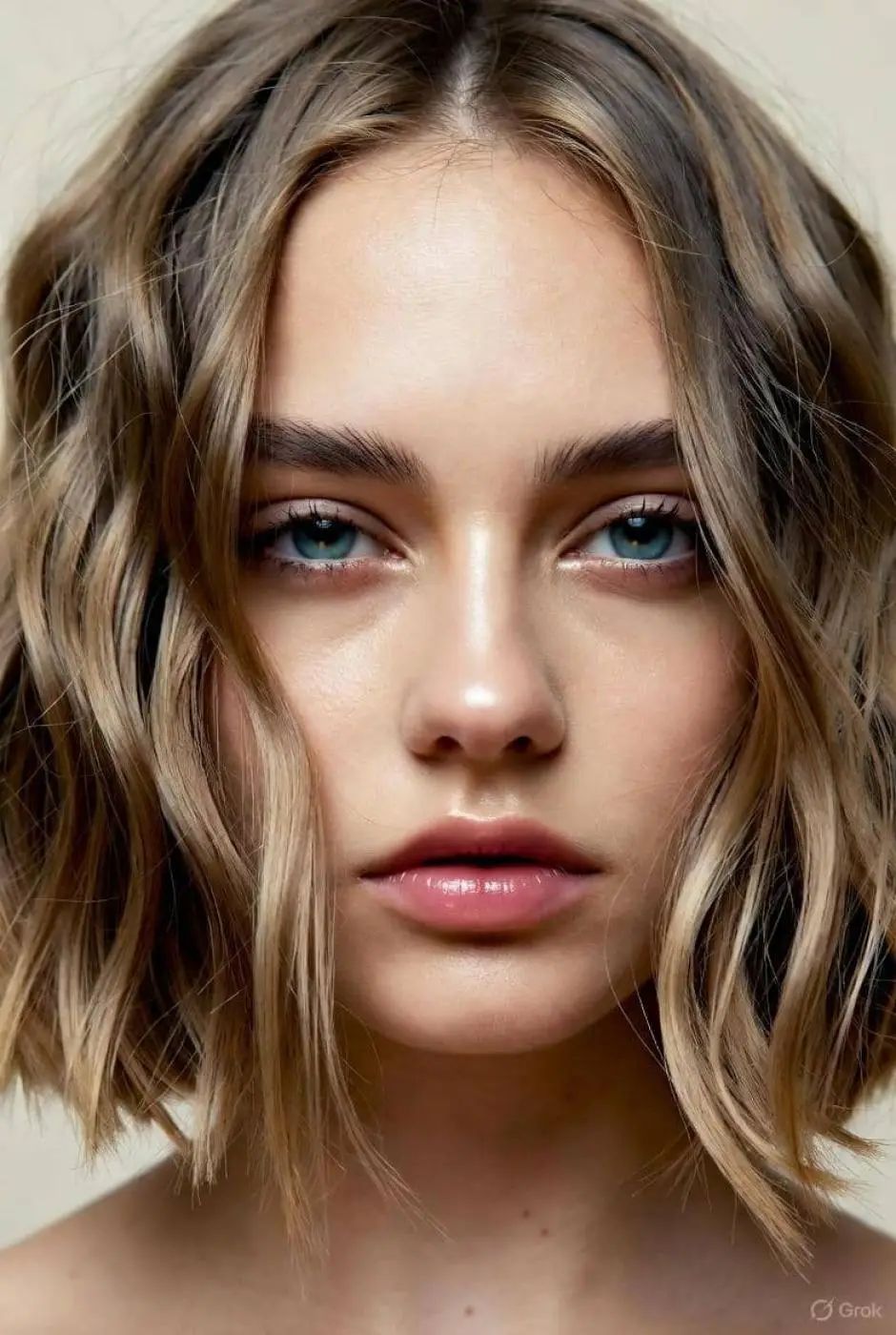
Best grow-out in this roundup. The mistake people make with ash blonde is letting the root line go sharp, a hard stripe that screams overdue. This chin-length bob dodges it completely: darker roots that melt into subtle highlights, no visible line. Wavy blowout, medium density, middle part, no bangs. The darker base does the heavy lifting, the highlights add dimension without demanding a toner every third wash. It is not a low-maintenance colour, it is a clever one.
Collarbone Visual Idea
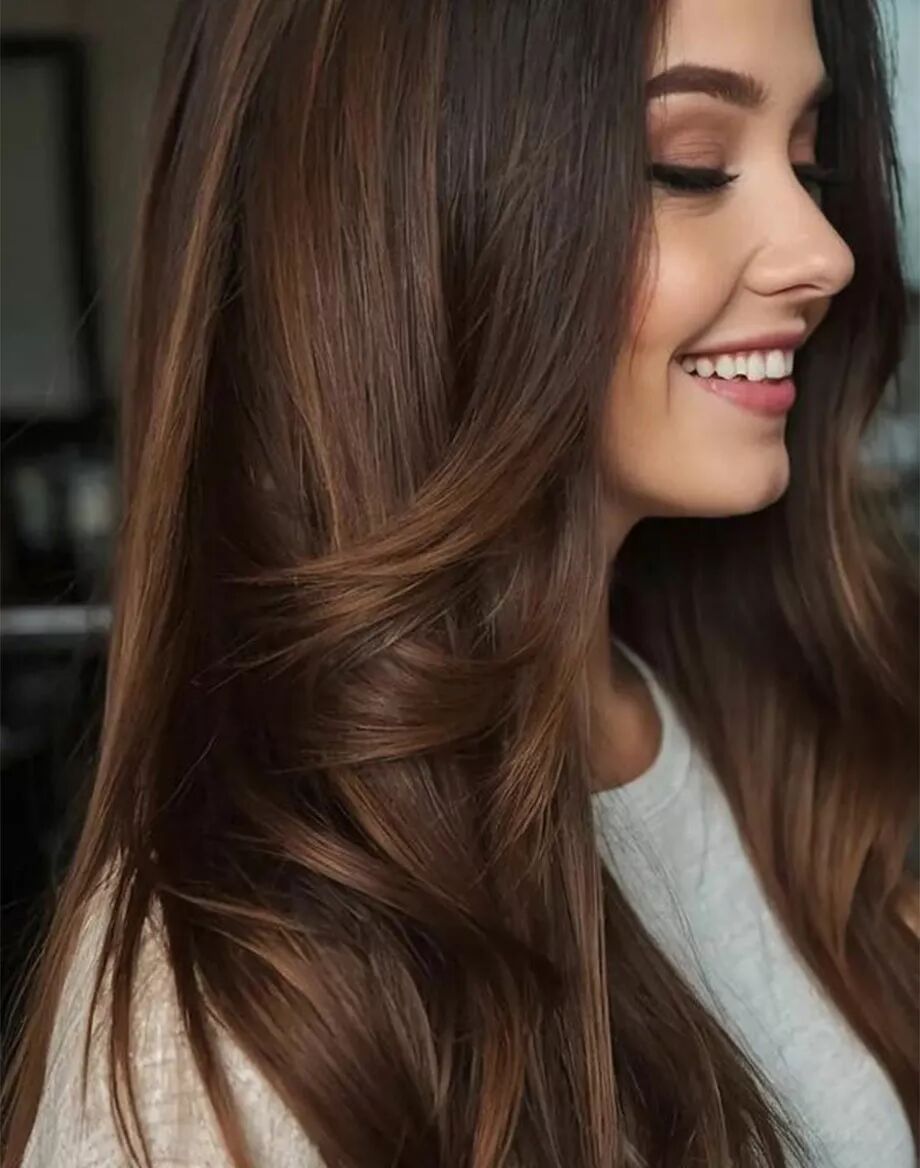
How do you get dimension without a hard grow-out line? The answer is placement. This collarbone cut uses a dark brown base with subtle caramel highlights, painted in a soft balayage that starts low and stays sparse. Wavy, thick hair, middle part, no bangs, a blowout finish. The caramel hits the mid-lengths and ends, so regrowth blends into the base instead of fighting it. No heavy foils at the root, no stripe, just a colour that fades gracefully. That is the technique, and it works.
Mid-Back Visual Idea
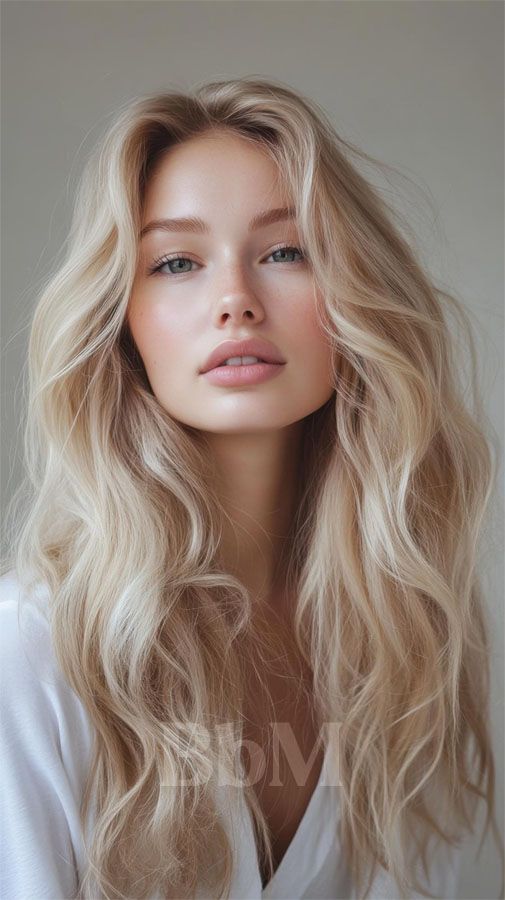
The creamy blonde is the first thing you notice, but the beige undertones are what keep it from washing you out by February. That subtle warmth stops the blonde from going brassy or ashy too fast. On thick, wavy hair at mid-back length, the soft waves catch the light in a way that hides regrowth for a solid eight weeks. The middle part and long layers mean the colour lands evenly without heavy face-framing pieces that need constant toning. No bangs simplifies everything. You wash, you air-dry, you go. The beige undertone does the work of a purple shampoo without the purple shampoo schedule. I have fine hair and I would still consider this. The density gives the colour something to bounce off. Just know that creamy blonde on thick hair means more product to process, so book a double-length appointment and bring a podcast.
The upkeep list is short. One gloss treatment every six to eight weeks keeps the beige from drifting yellow. A trim every ten weeks stops the long layers from splitting at the ends. And a clarifying wash once a month to strip mineral buildup. That is it. No root shadow, no foil schedule, no panic at week five. The grow-out is a softer blonde, not a dark stripe, because the base is already light enough to blend. For someone who wants blonde but cannot live in the salon, this is the version that lets you forget you have colour at all.
Layered Visual Idea
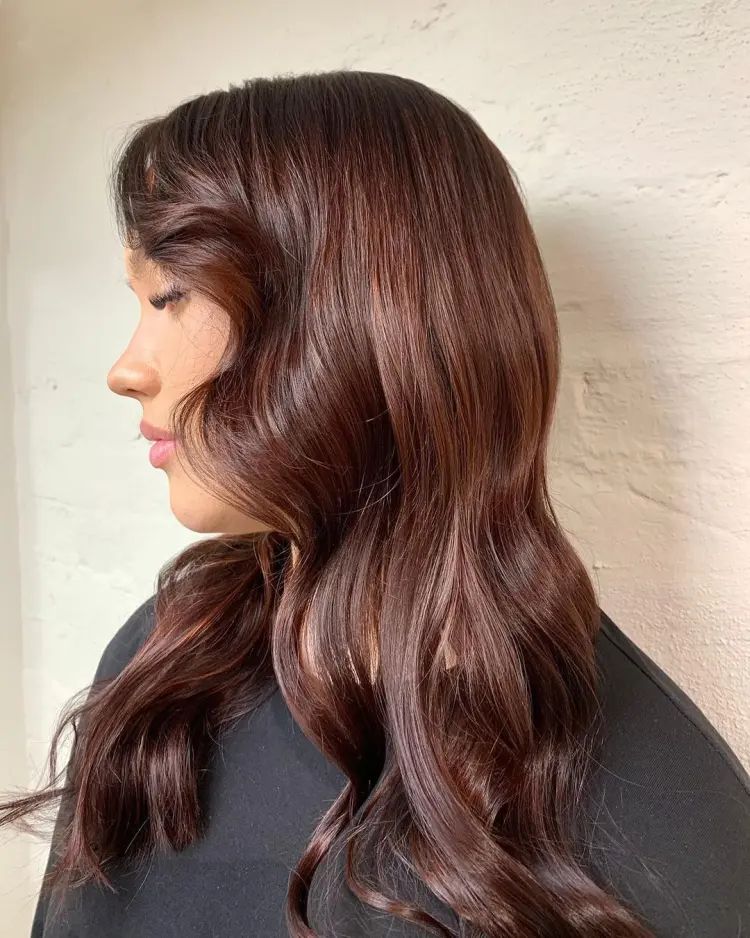
Does mahogany brown with red undertones actually work for winter, or is it one of those colours that looks good on the model and muddy on everyone else? It works, but only if your skin has warmth to it. The mahogany base is deep enough to read neutral, but the subtle red undertones catch the light and give your complexion something to reflect. On collarbone-length layered hair with loose waves, the colour moves with the cut. The layers let the red peek through at the ends without screaming. Medium-density hair is the sweet spot here. Too fine and the red overpowers the brown. Too coarse and the mahogany reads flat. The side part helps the colour fall where it flatters most. This is a salon colour, not a box job. The red undertone needs a professional mix to stay subtle. But once it is done, you can let it grow for three months before anyone notices a line.
No Bangs Visual Idea
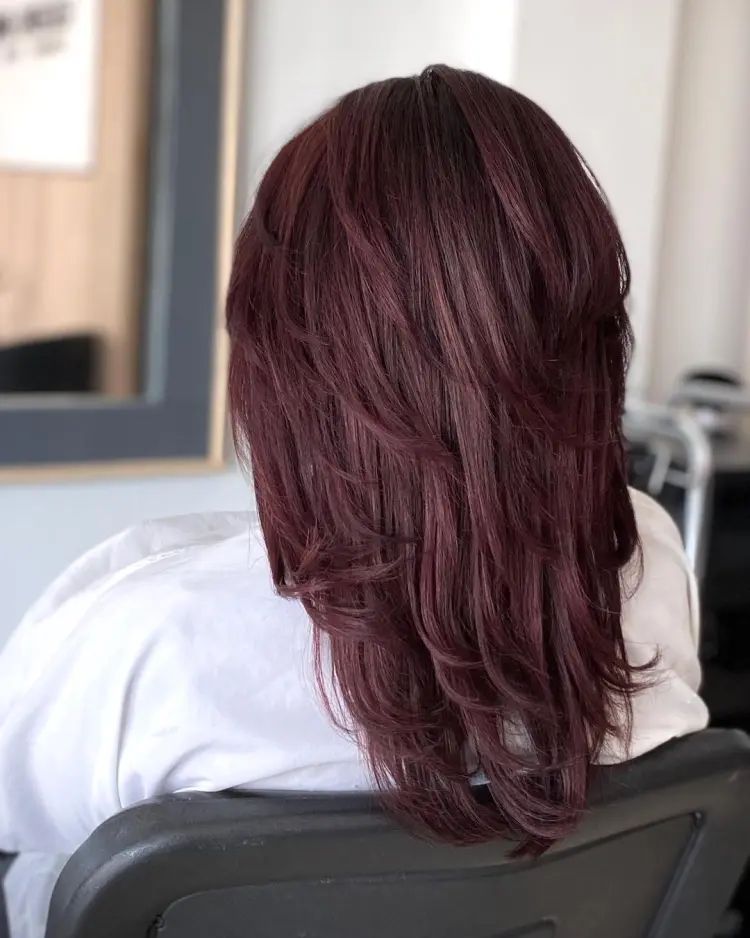
Mahogany brown wins over every other rich brown shade I have tested. Chestnut goes flat by week three. Espresso reads black in low light. But mahogany with subtle red undertones holds dimension because the red catches warm light while the brown absorbs cool light. On collarbone-length layered hair with loose waves and a side part, the colour shifts as you move. No bangs means the colour runs uninterrupted from root to end, which matters for a shade this deep. The red undertone is the difference between a brown that sits there and a brown that glows. Medium-density hair gives the colour enough surface to work without looking heavy. Side part over middle here. The asymmetry lets the red hit the light at different angles. Salon only. A box red will pull too orange or too purple. A stylist can keep the red subtle enough that you do not look like you tried.
Layers Visual Idea
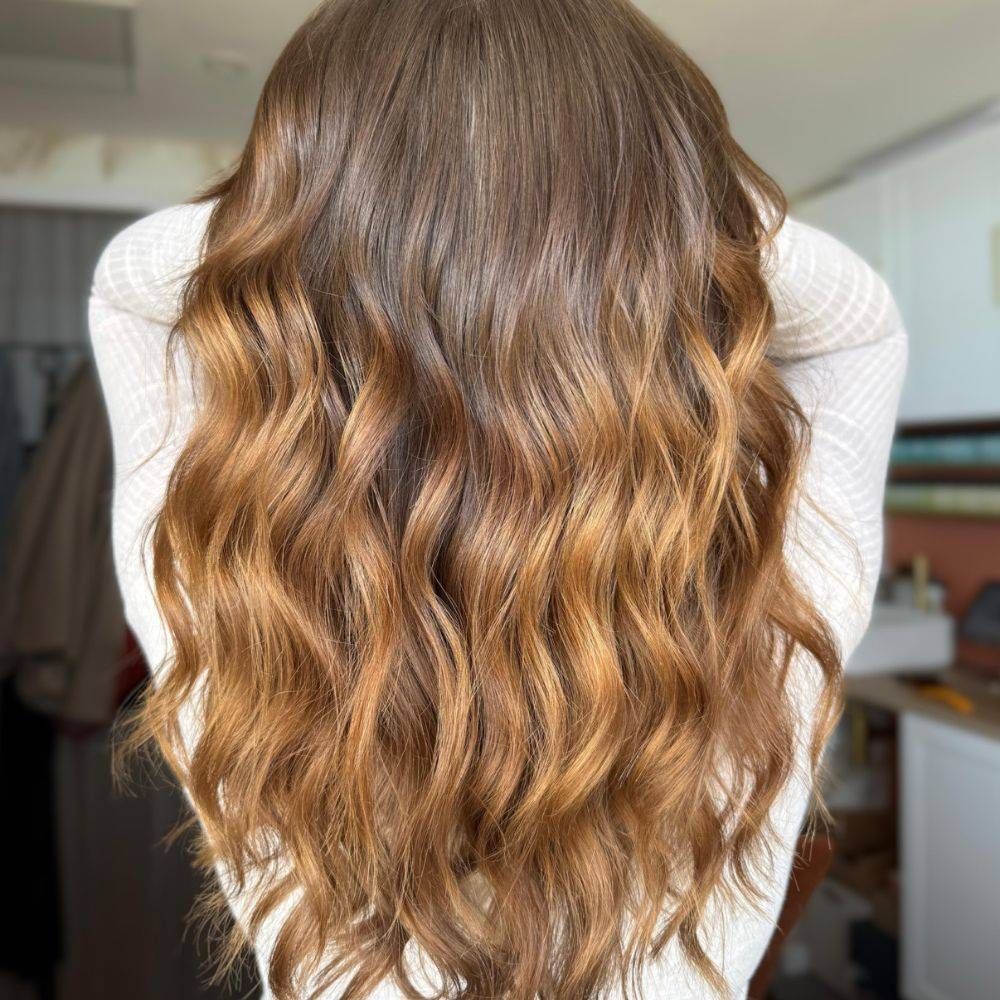
December light is grey and low. Caramel and honey highlights on a medium brown base are the trick to making your hair look lit from within when the sun clocks out at 4 pm. The medium brown base grounds the colour, the caramel adds warmth and the honey pieces catch whatever light is left. On mid-back layered hair, the back view shows the full range. The middle part lets the highlights fall symmetrically down the length. Thick, wavy texture is ideal here. The waves bend the highlights so they flash at different points, not in one solid stripe. This is a balayage application, painted freehand so the transition from brown to caramel to honey is soft. No harsh lines, no regrowth panic. The warm tones bridge autumn into winter without looking like you are still holding onto summer. A gloss every eight weeks keeps the honey from turning brassy and the caramel from fading flat.
The occasion for this colour is every day. It does not need a blowout to read intentional. Second-day waves look better than first-day because the texture grabs the highlights. The layers mean the colour lands heavier at the ends, which is where you want it for movement. A trim every ten weeks keeps the layers from losing their shape. No bangs simplifies the grow-out. The balayage grows into a softer version of itself, not a stripe. If you want a winter colour that does not require a full face of makeup to justify it, this is the one.
Front View Visual Idea
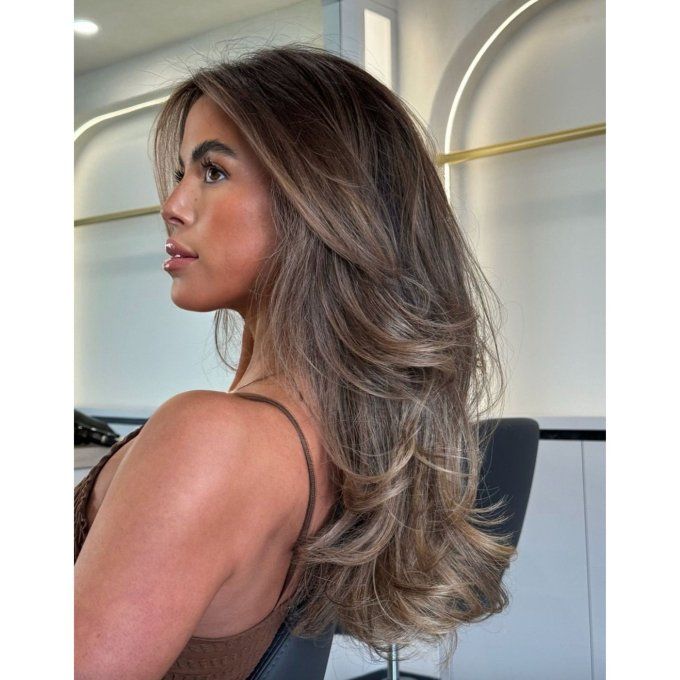
Do you know the biggest mistake people make with dark blonde and ash brown highlights? They try to do it themselves. The dark blonde base needs to be deep enough that the ash brown highlights read as texture, not as a mistake. And the root shadow has to land exactly at the crown, not halfway down the shaft. On mid-back layered hair with a middle part and soft blowout waves, the front view shows exactly where the highlights should fall. Thick, wavy texture helps the colour sit naturally. The layers let the ash brown peek through without overpowering the base. This is a salon service. A root shadow requires a stylist to paint the regrowth zone while keeping the ends light. Ash brown highlights need a toner that will not grab green. And the placement has to follow the part so the colour lands where the eye lands. I tried a root shadow at home once. It looked like I had dipped my head in dirt. Book the professional. The grow-out is worth it. You get ten weeks before the shadow needs a refresh, and the highlights blend into the base without a hard line. The front view will look intentional, not experimental.
The DIY line is simple. If you want a single-process colour that covers grey, do it at home. If you want a dark blonde base with ash brown highlights and a root shadow that looks like you were born with it, go to the salon. The technique requires two different formulas and a precise application sequence. The root shadow goes on first, then the highlights are painted through the mids and ends. A good stylist will feather the shadow so there is no demarcation line. The result is a colour that grows out soft. No stripe, no band, no panic at week four. Just a dark blonde that slowly lightens toward the ends. For winter, this is the colour that works with grey coats and low light. It does not compete. It sits there and looks expensive.
Chin Visual Idea
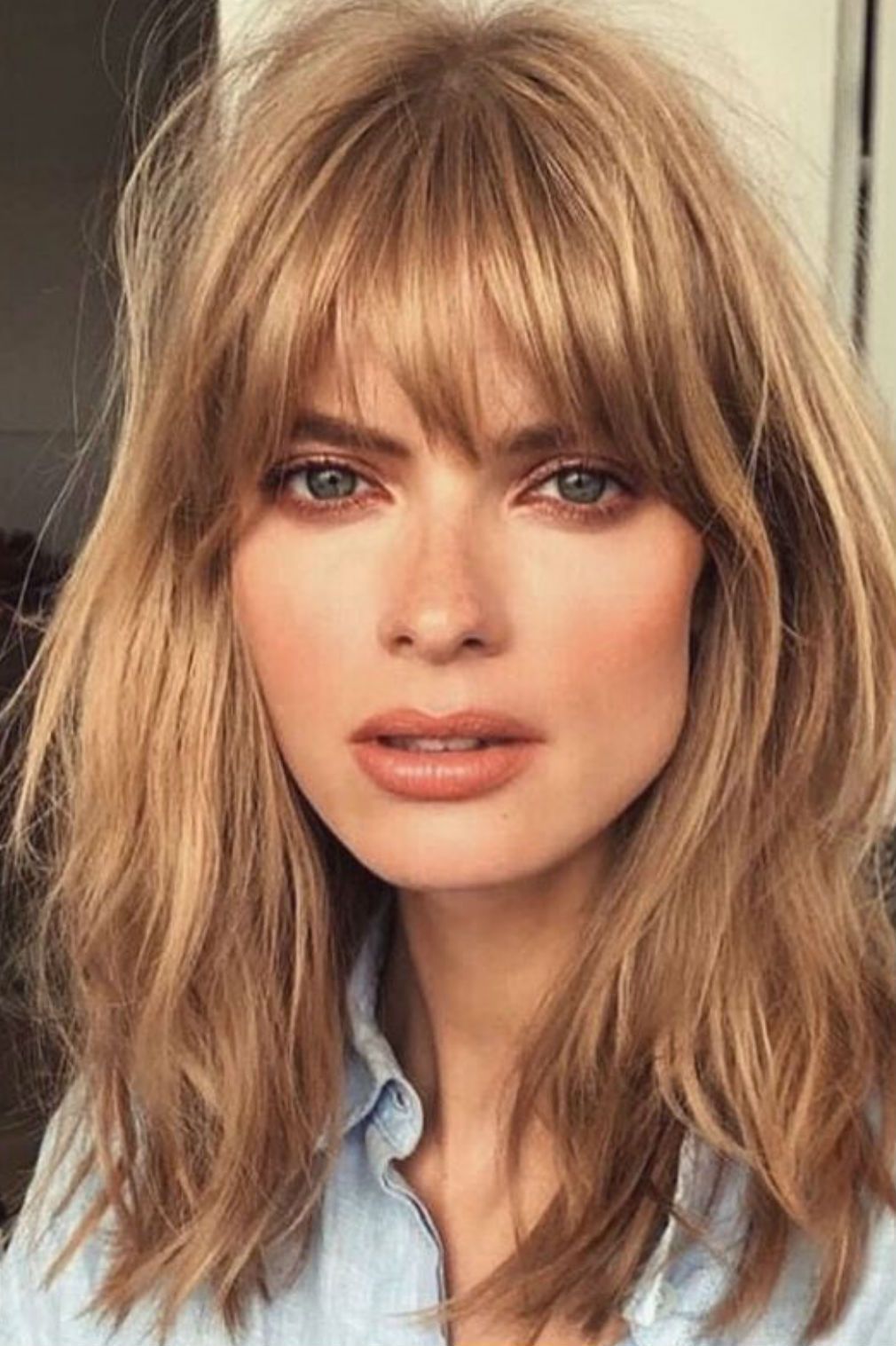
Ash blonde at chin length is the color that makes everyone ask how you got it so cool. The tone is deliberately muted, almost grey, which reads expensive against winter coats. Fine, straight hair holds this shade well because there is no warmth to fight, no brass to manage. The blunt bob keeps the shape clean and the color even. But here is the honest downside: on very fine hair, ash blonde can look flat by week three, like the color drained out. A purple shampoo once a week keeps it from going muddy. The middle part widens a round face, so consider that before you commit.
Dirty Blonde With Subtle Highlights Visual Idea

I have to confess: I expected this color to look like I just forgot to wash it. It does not. Dirty blonde with subtle highlights on a textured shag cut is the rare combination that actually looks better on day three. The curtain bangs fall into place with a quick blast of heat, and the waves hold their shape without product. Medium density hair is ideal here, enough body to keep the shag from collapsing. The subtle highlights catch light at the ends, so the grow-out is soft, no harsh line. I air-dried it once and it still looked intentional. That is not nothing.
Copper Red Visual Idea
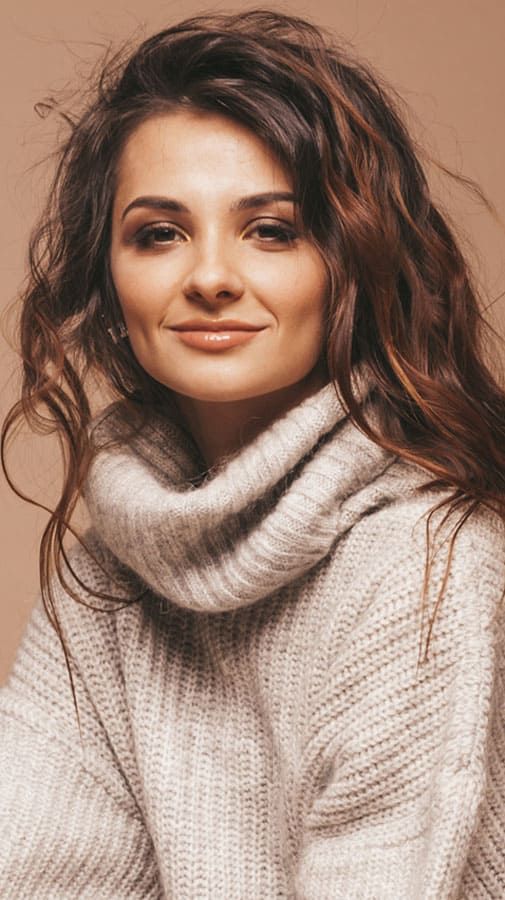
Can a copper red be low maintenance? Yes, if you build it right. The technique here is a single-process all-over color on mid-back layers, no highlights, no balayage. That means one formula, one bowl, one application. The tone is warm copper, not fire engine, so fading looks like a shift, not a failure. Thick, wavy hair holds the pigment longer because the cuticle is naturally raised. The back view shows the color uninterrupted, which is the whole point. A single-process copper fades evenly, no patchy roots, no stripe effect. It is not a six-hour appointment, it is a two-hour sit and done.
Dark Brown Solid Tone Visual Idea
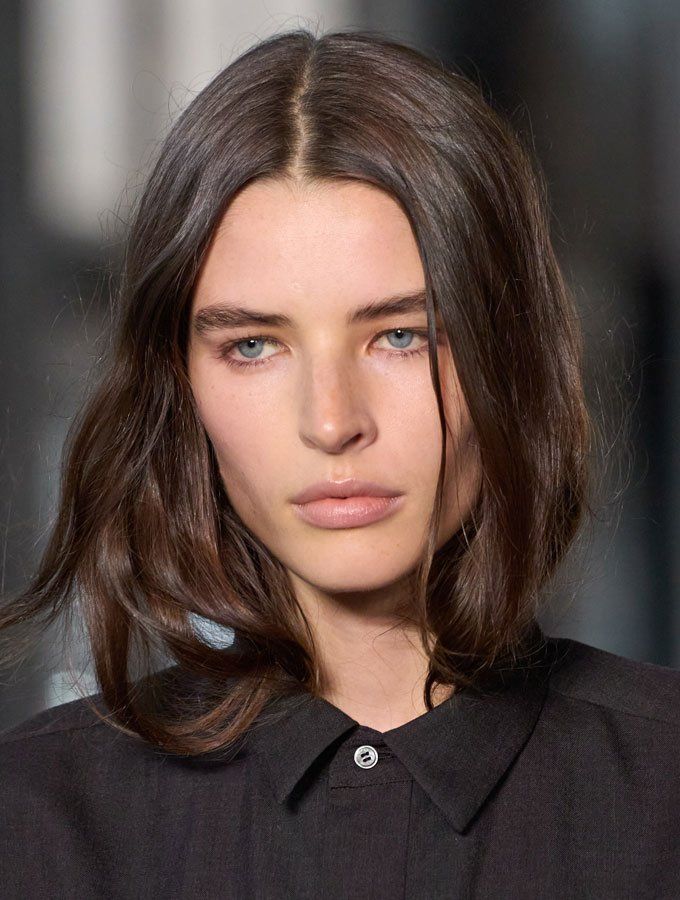
A solid dark brown on a chin-length blunt bob is the color you can do yourself. No highlights, no root shadow, no toner. The technique is a single all-over application, one shade, one bowl. The tone is neutral brown, no red or ash, which means it works on warm and cool skin alike. Fine, wavy hair looks thicker with a solid tone because there is no contrast to break up the line. The air-dried finish in the photo is real, not staged. A box dye will get you close, just match your natural level. This is not a salon color, it is a bathroom mirror color.
Final Thoughts
After staring at 29 photos and reading every one of these notes, I am booking the dark brown with warm undertones for next week. No highlights, no balayage, just a single shade that looks richer as it fades. The copper red is tempting but I know my commitment.
