

Blue hair has moved past the punk phase and into something quieter. The shift is toward deeper, cooler tones that read as deliberate rather than loud, with lived-in color and glossy natural texture leading the way.
This collection of 20 ideas for Classy Blue Hair Color spans everything from a low-maintenance blue-black to a vibrant ombré that needs more frequent toning. It covers short bobs and long waves, fine hair and thick, and addresses the real struggles: a visible grow-out line, a shade that fades too fast, and a fringe that won’t behave.
Deep Blue-Black Loose Waves
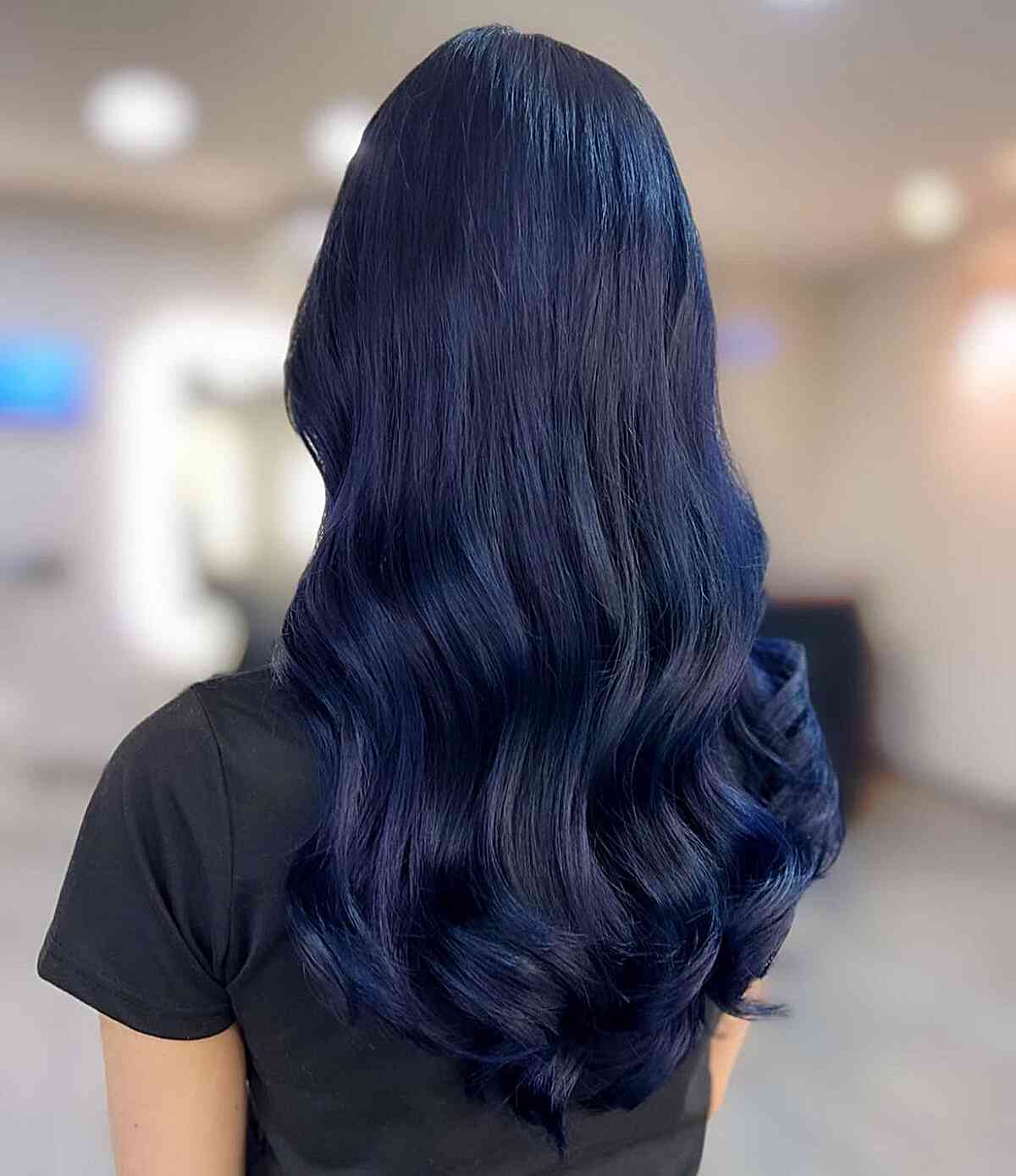
This color works because it is not black pretending to be blue; it is a deep blue-black that reads as black in low light and reveals its true tone only when the light hits the waves. The color is built from a near-black base with a concentrated blue pigment layered throughout, so the hue shifts rather than sits flat. Thick, wavy textures starting at mid-back length show the dimension best; finer hair can still carry it, but the waves need a bit of body to catch the light. Ask your colorist for: deep blue-black color, mid-back length waves. A smoothing serum applied to damp hair before air-drying or blow-drying seals the cuticle and keeps the gloss visible between salon visits.
The depth of a blue-black like this means the grow-out is gentle. Roots show as a soft shadow rather than a harsh line, so you can stretch to eight weeks between touch-ups. Loose waves are the natural styling partner here: they break up the color surface so the blue has room to breathe.
Dark Gray Base With Bright Blue Balayage
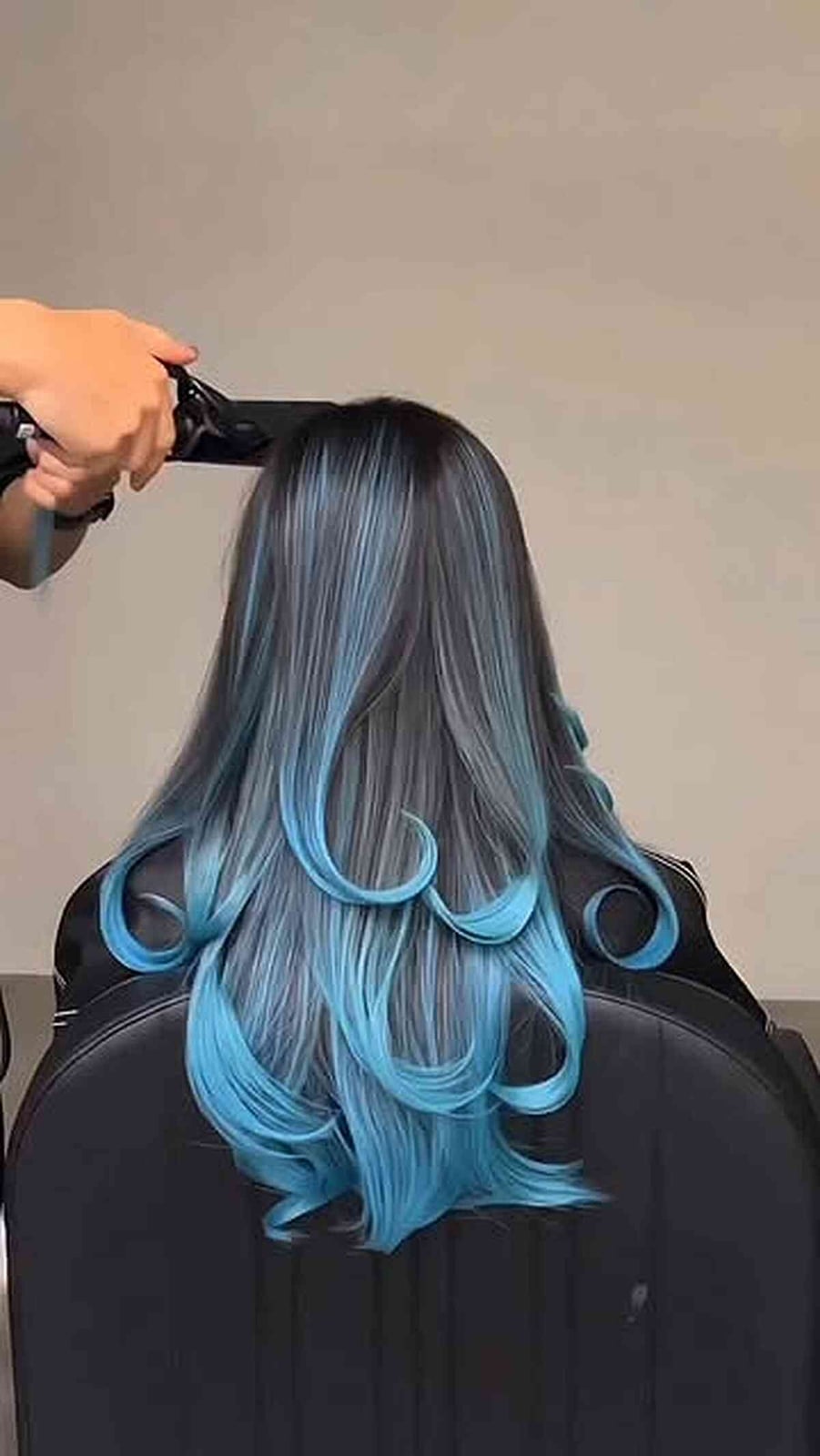
A solid navy all-over color is a commitment. This version is a smarter bet: a dark gray base keeps the roots low-maintenance, while bright blue balayage adds punch only where the light hits. The contrast is deliberate. The gray recedes into the background, and the blue reads as an accessory. Thick, wavy hair at mid-back length carries the transition best because the waves hide the line where the gray meets the blue. Ask your colorist for: dark gray base with bright blue balayage, mid-back waves. Dry hair with a texturizing spray lifts the wave definition and makes the balayage pop without extra heat.
If your natural base is medium blonde, the gray will require pre-toning. If it is already dark, you skip that step. The balayage itself needs a lift to pale yellow before the blue can stick, so expect about three hours in the chair. The payoff is a color that fades gradually rather than growing out in patches.
Rich Deep Blue-Black Soft Waves
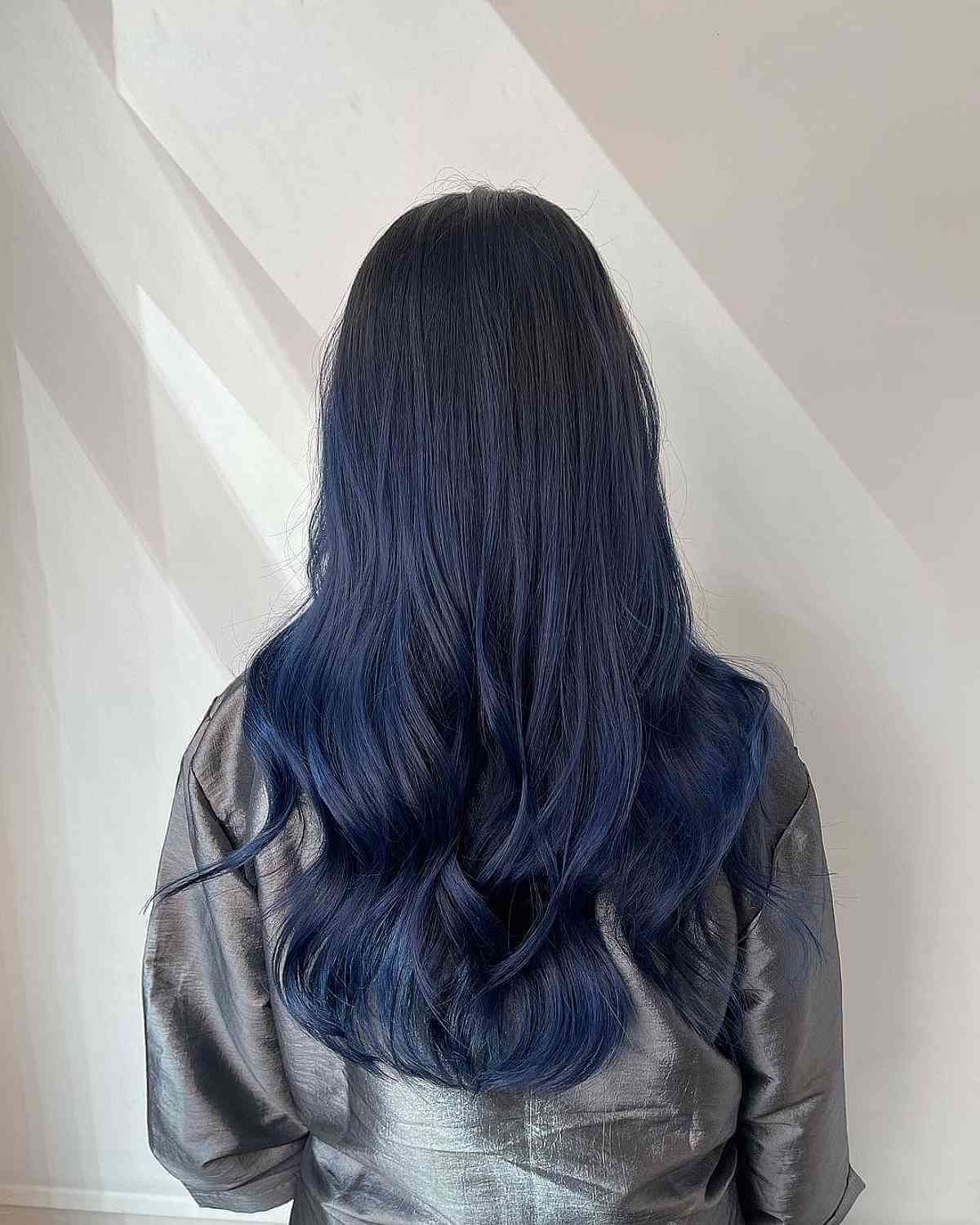
How do you ask for a blue that does not look purple, green or accidental? You specify a deep blue-black with a cool, almost metallic finish. The shade sits entirely on the blue side of the spectrum, with no violet or teal undertones. It works best on thick, wavy hair at mid-back length, where the density holds the saturation. Ask your colorist for: deep blue-black, soft loose waves. A leave-in conditioner applied to damp hair before air-drying tames the frizz without weighing the waves down. The upkeep is straightforward: a color-safe shampoo every other wash, and a gloss treatment every four weeks to keep the blue from turning muddy.
Dark Base Lob With Electric Blue Streaks
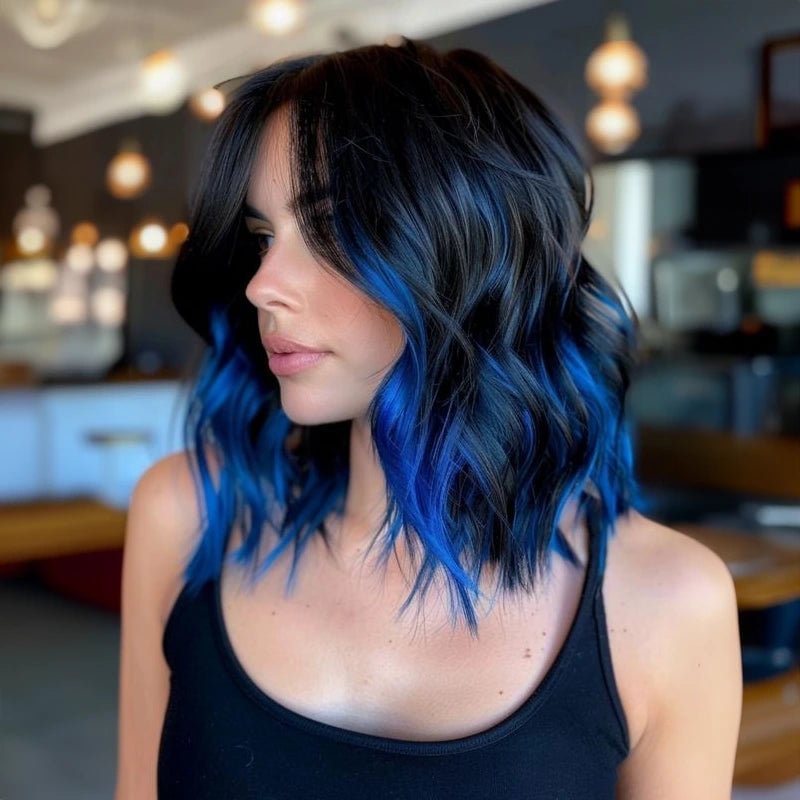
The lob with curtain bangs is a forgiving cut for most face shapes: the length softens a strong jaw, and the bangs break up a long forehead. Here, the cut supports the look, and the color is the surprise. The dark base keeps the roots calm, while electric blue streaks are concentrated in the ends, so the color lands away from the scalp. Thick, wavy textures starting at collarbone length handle the contrast best; finer hair may find the streaks look sparse. Ask your colorist for: dark base lob, curtain bangs, electric blue streaks. The curtain bangs need a trim every four to six weeks to keep the shape, and the blue requires a toning shampoo once a week to stay bright and avoid fading to green.
Collarbone Waves With Dark Blue Balayage
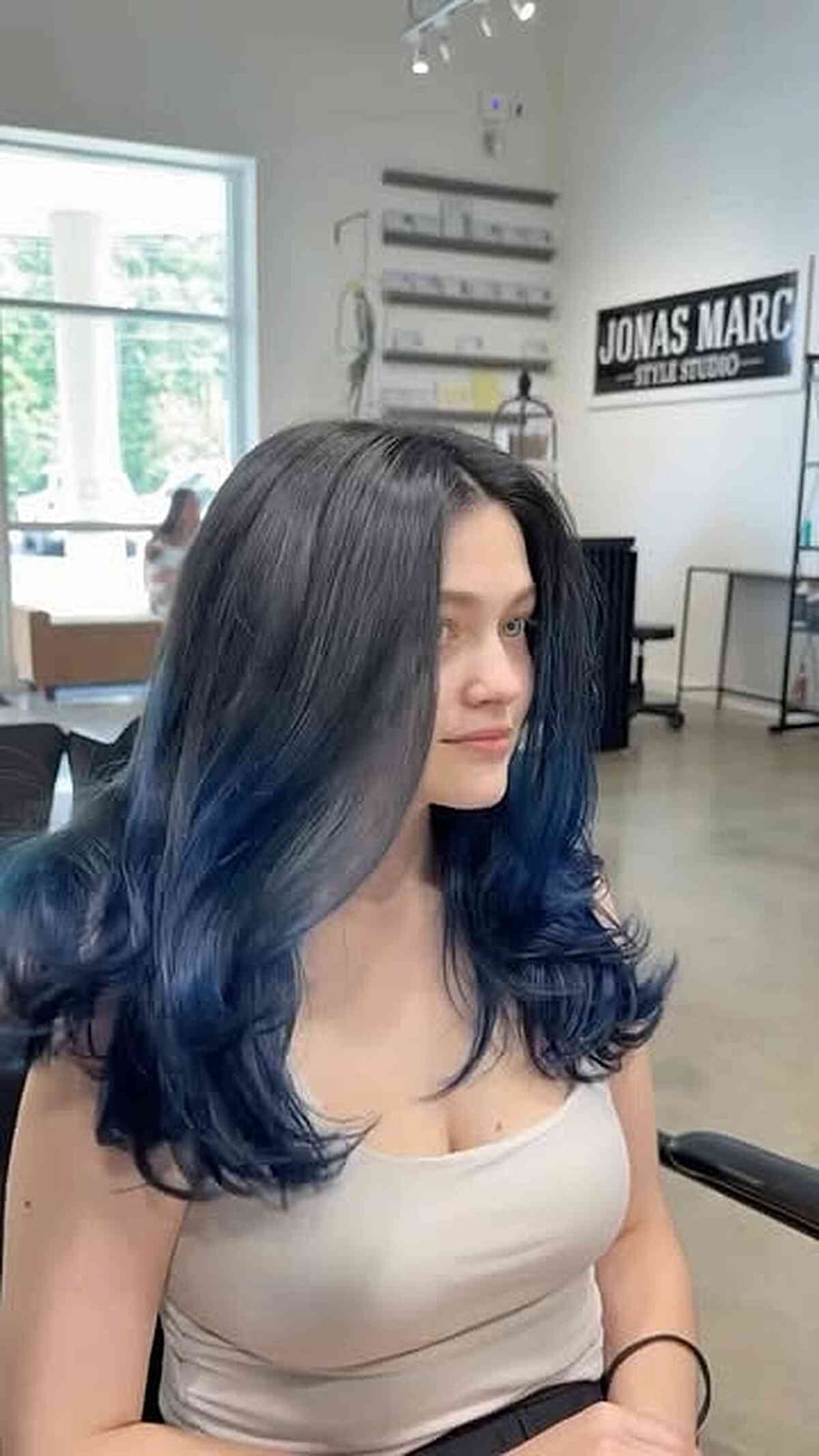
A dark blue base with lighter blue balayage creates dimension without the high contrast of a black-to-blue jump. The transition is subtle, so the roots grow out as a soft shadow rather than a visible line. This is the wear-reality advantage: you can go six to eight weeks between touch-ups, and nobody will call it grown out. The collarbone length works for medium-density, wavy hair because the waves hide the balayage seam and the shorter length keeps the color concentrated near the face. Ask your colorist for: collarbone length, dark blue base, lighter blue balayage. A texturizing spray on dry waves enhances the blended effect and keeps the ends from looking too uniform.
Vibrant Blue Mid-Back Length Waves
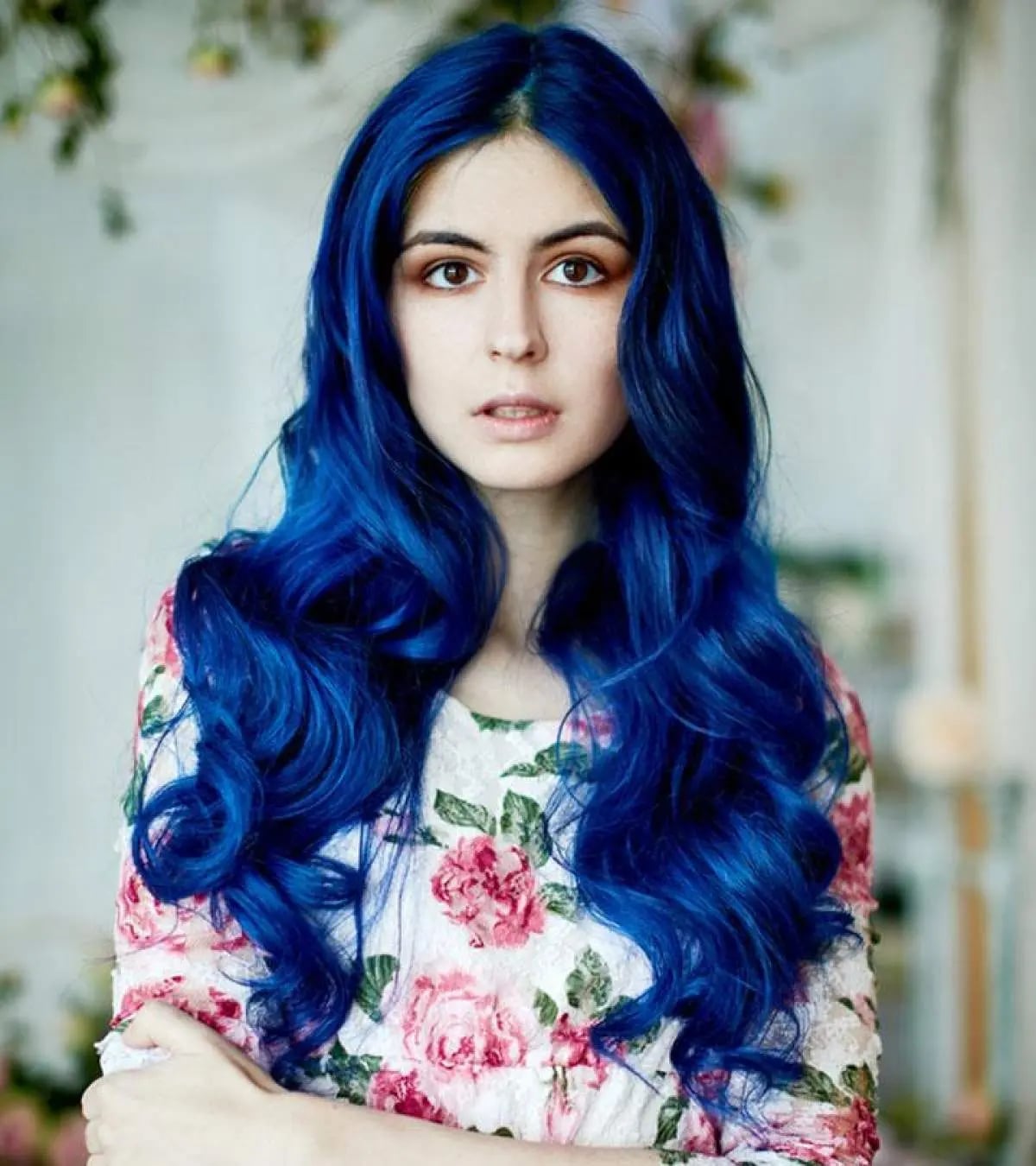
This is a uniform vibrant blue with no second shade or root shadow to complicate it, which makes the color itself the main event. The side-parted loose waves give the mid-back length enough surface area to show off the pigment fully, and the thick, wavy texture keeps the solid color from looking flat. Summer and festival season are the obvious windows for this, but the absence of fading or grown-out roots on day one is the real argument for it. Thick, wavy hair of mid-back length is the ideal starting point; the waves keep the color dimensional, and the density supports the saturation without needing multiple passes.
Ask your colorist for: vibrant blue, mid-back length waves. A shine serum on dry hair keeps the finish reflective, which matters more with a uniform shade than with a gradient. A trim every eight to ten weeks keeps the ends healthy enough to hold the pigment evenly.
Dark Gray To Blue-Purple Gradient Waves
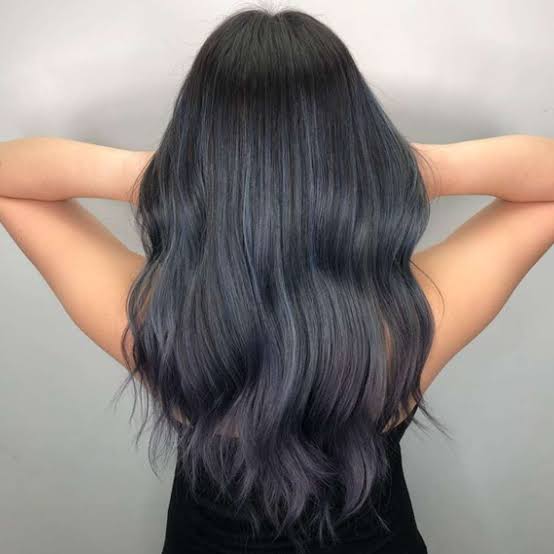
The dark gray base here is not a neutral beige-gray but a cool, almost charcoal tone, which makes the shift into blue-purple at the ends feel like a natural progression. The loose waves are uniform and the middle part keeps the gradient symmetrical, so the effect looks precise. A thick, wavy texture of mid-back length is the right canvas because the movement helps the gradient blend without harsh lines. This is a salon-only project, not a box-dye situation, for two reasons: the base needs to be pre-lightened evenly to accept the blue-purple, and the transition zone requires a skilled hand to avoid a stripe.
Ask your colorist for: dark gray to blue-purple gradient, mid-back waves. A color-depositing mask applied every third wash keeps the ends from fading into an unintended pastel. Expect about three hours in the chair for the initial application.
Fine Hair With Uniform Dark Blue Highlights
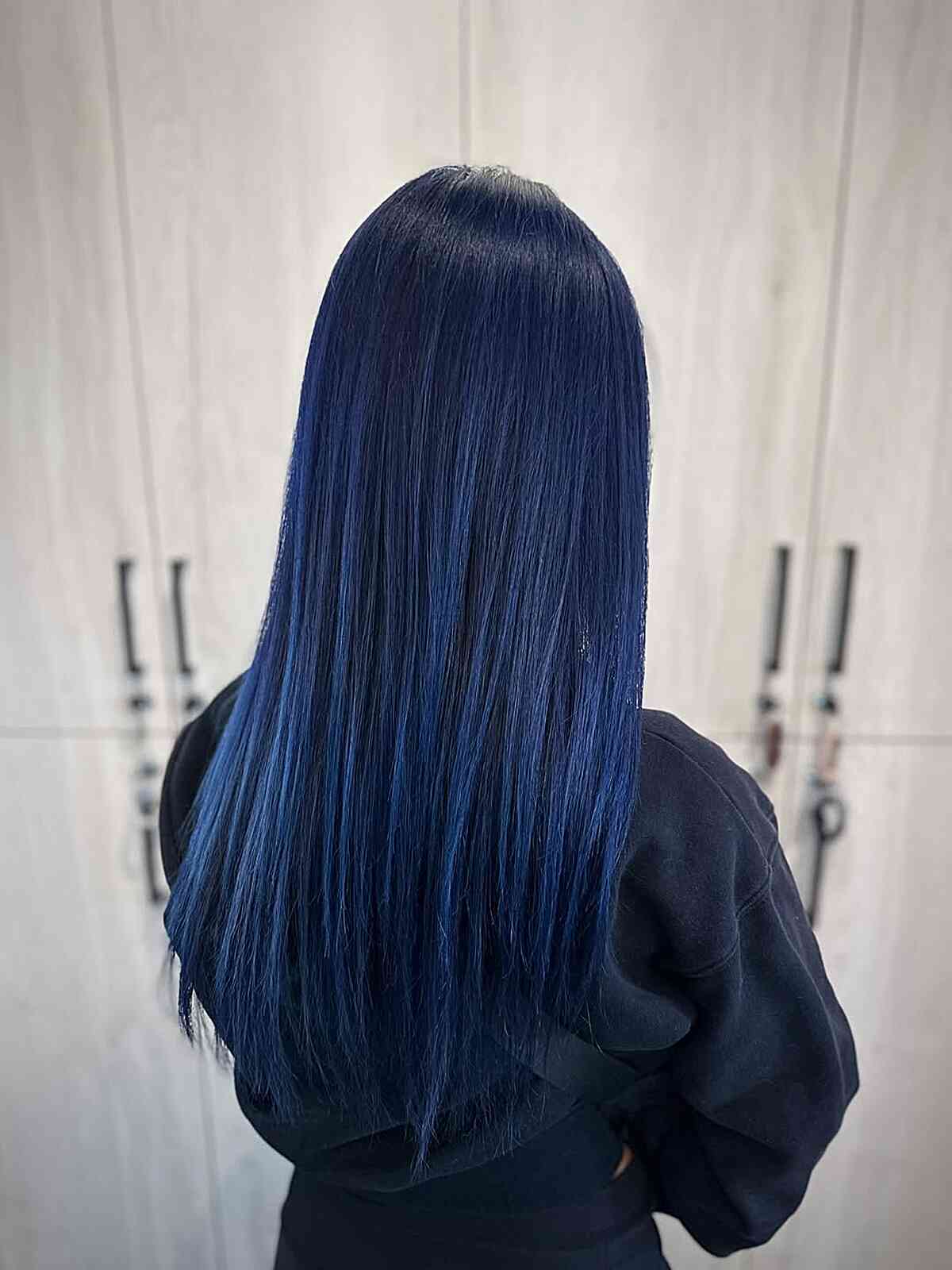
Chunky highlights on fine hair can look like you ran out of color halfway through, so the approach here is different: the base is a uniform dark blue, and the lighter blue highlights are woven in sparingly, fine enough to create dimension without streaks. The straight, sleek styling and middle part keep the texture smooth so the highlights sit flush against the base. The real drawback is that fine hair holds less pigment, so the lighter blue sections will fade faster than the dark base and may need a refresh every four to five weeks to keep the contrast from looking faded. Mid-back length is manageable for this technique because the highlights have enough length to register without packing into a small area.
Ask your colorist for: fine hair, uniform dark blue with subtle blue highlights. A lightweight volumizing spray at the roots before blow-drying compensates for the weight of the color without flattening the fine texture.
Dark Brown To Light Blue Ombré Waves
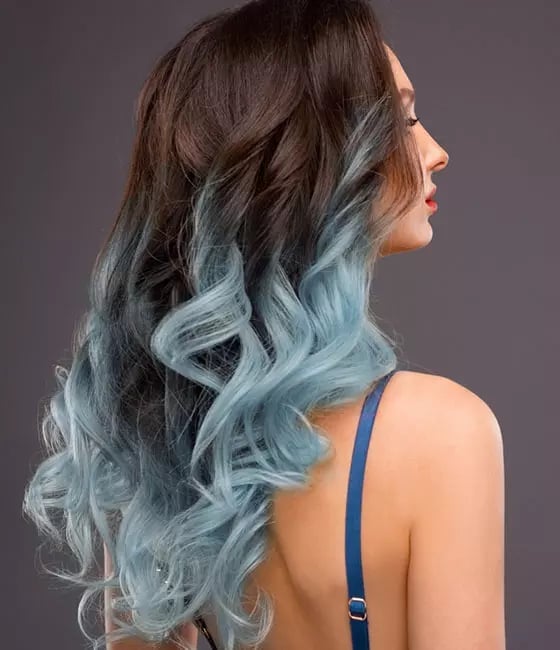
Is it possible to do an ombré that does not look like you forgot to dye the top half? Yes, if the transition starts below the ear and moves gradually into a dusty, light blue rather than a sharp line. The dark brown base here is warm enough to keep the overall tone from turning icy, and the loose, voluminous waves soften the shift so the eye travels down the length instead of stopping at the color change. Thick, wavy hair of mid-back length gives the ombré enough vertical space to graduate naturally. The middle part and side view make the gradient the focal point, so keep the styling simple: scrunch waves with a curl cream and let them air-dry partially before diffusing.
Ask your colorist for: dark brown to light blue ombré, voluminous waves. The key words to use are “soft transition” and “dusty blue ends” to make sure the fade lands on the muted side rather than a bright, electric tone.
Dark Blue Base With Vibrant Blue Ombré
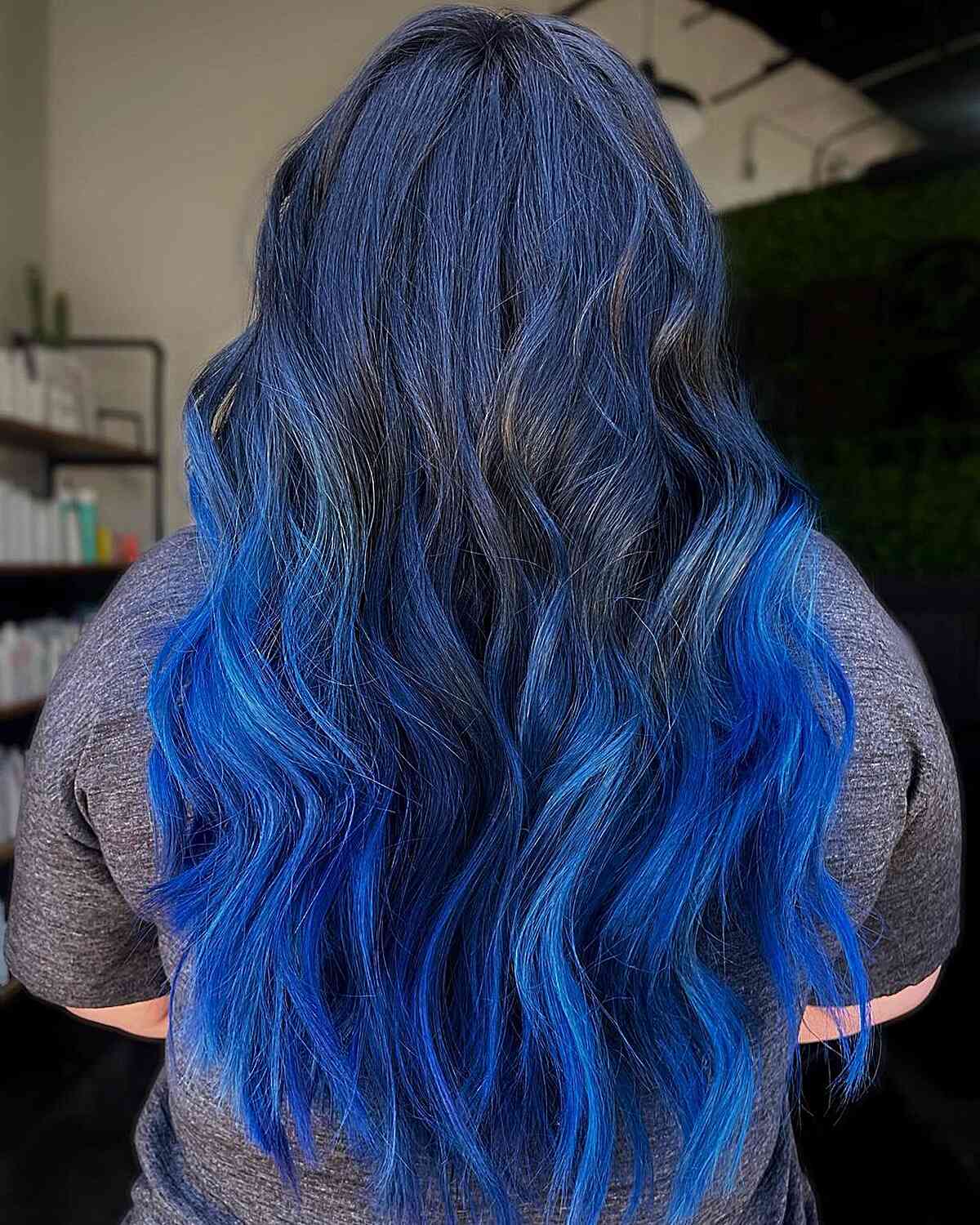
A dark blue base with a vibrant blue ombre is a two-tone strategy that solves the grow-out problem before it starts. The dark root matches the base, so new growth blends in for about six to eight weeks before the contrast between virgin hair and the ombre becomes visible. The loose waves and mid-back length let the transition sit low enough that the color difference looks deliberate. Thick, wavy hair supports the saturation on both the dark base and the bright ends without the lighter sections looking thin. The upkeep is straightforward: a color-protecting shampoo and conditioner at every wash, and a toning gloss on the ombre section every four weeks to keep the blue from pulling green as it fades.
Ask your colorist for: dark blue base, vibrant blue ombre ends. A root shadow is not needed here because the dark base already does the work of hiding new growth.
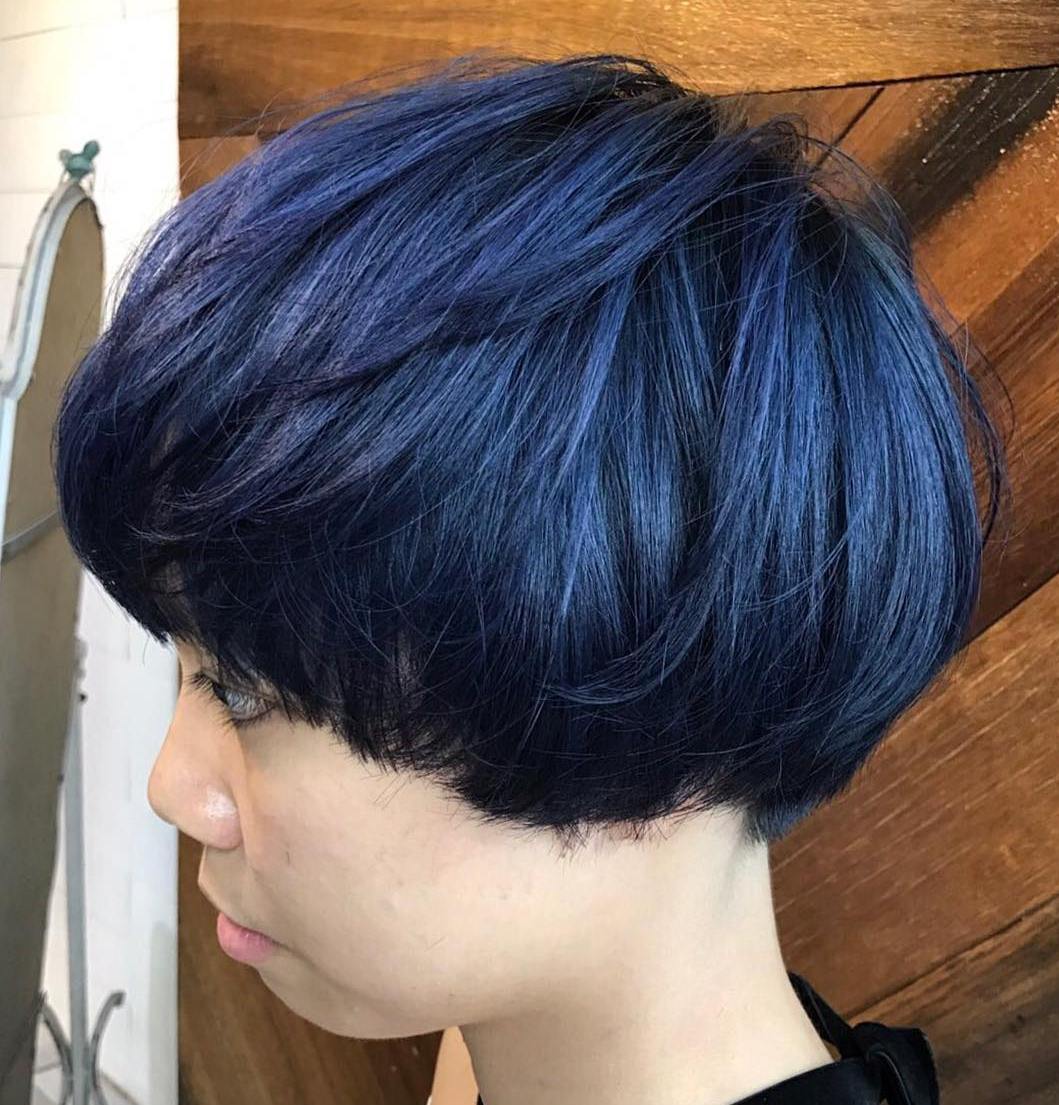
Chin Length Bob With Blunt Bangs And Blue Streaks
A chin-length bob with blunt bangs and a middle part is a geometry lesson in hair: the horizontal line of the bangs meets the clean cut of the bob, and the blue highlights are the exclamation point. Thick, straight texture holds this shape best, and the blunt bangs work for oval and long faces by shortening the visual length of the face. Ask your colorist for: chin length bob, blunt bangs, dark base with blue highlights. Blow-dry with a round brush for volume, and expect a trim every six weeks to keep the bangs from grazing your lashes.
Black Base With Blue Ombré Waves
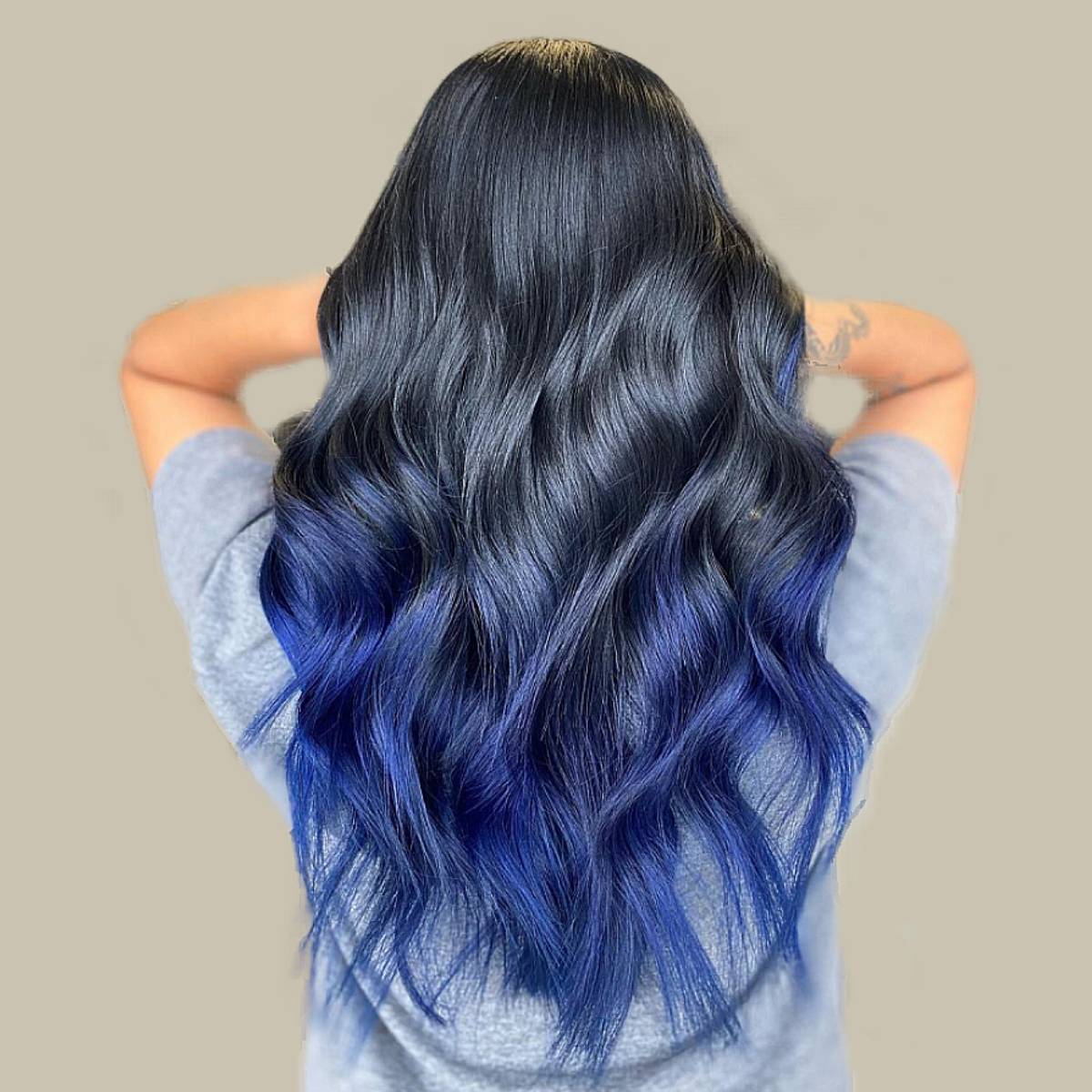
Solid black is sleek but reads as a single note, and all-over blue is a commitment that shows every root. A black base with a vibrant blue ombré sits between them: the dark roots keep the grow-out line invisible for weeks, while the blue ends give the color movement. Mid-back length, thick, wavy hair is the ideal canvas for this contrast. Ask your colorist for: black base with vibrant blue ombre, mid-back waves.
This is strictly a salon job. The black base needs a permanent tint, and the ends require pre-lightening before the blue can take. Expect about three hours in the chair. A purple shampoo once a week keeps the blue from turning greenish, but the black base needs nothing beyond a standard color-safe conditioner.
Collarbone Bob In Midnight Blue
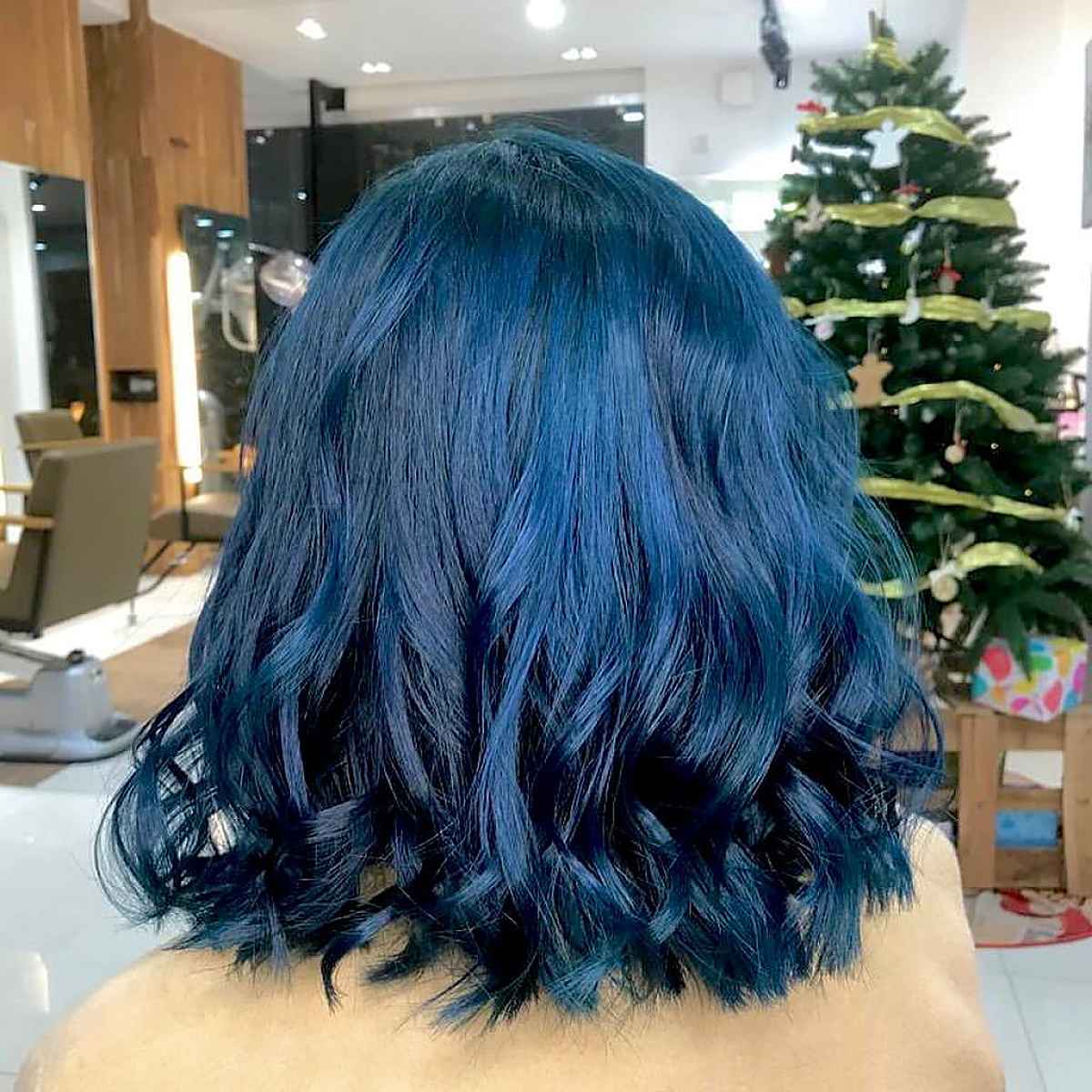
Midnight blue is a single-process color that looks black in low light and reveals itself as blue in direct sun. On a collarbone-length bob with thick, wavy texture, the depth of the shade appears saturated and glossy. Ask your colorist for: collarbone length bob, midnight blue color. The application is straightforward: the colorist applies the formula from root to tip on unbleached hair, so no pre-lightening is needed if your base is a level four or darker. The tone is solid and even, fading gradually over eight to ten weeks without patchiness.
Collarbone Lob With Purple Ombré
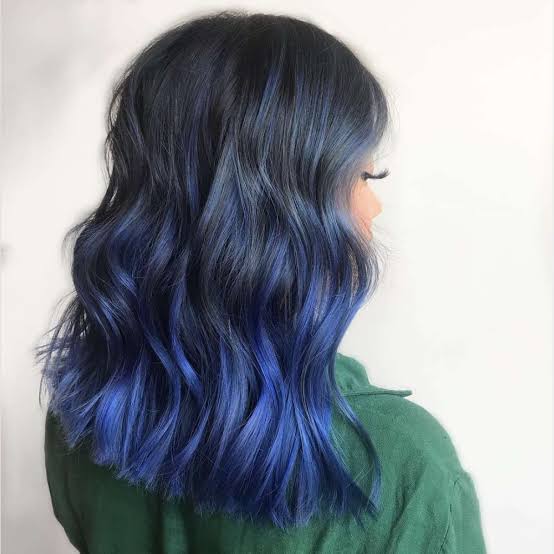
A collarbone-length lob with a dark base and a purple ombré is a transitional color, one that works for autumn when you want something warmer than blue but cooler than red. The medium texture and loose waves show the gradient clearly: the dark root section takes up the top half, and the purple starts around the chin. Ask your colorist for: collarbone lob, dark base to purple ombré. This is a low-maintenance option for the season because the dark base lets you skip root touch-ups for two months, and the ombré fades into a dusty lavender rather than a muddy brown. The ombré also works as a preview before going full violet next appointment.
Chin Length Bob With Micro Bangs In Solid Blue, Close-Up Take
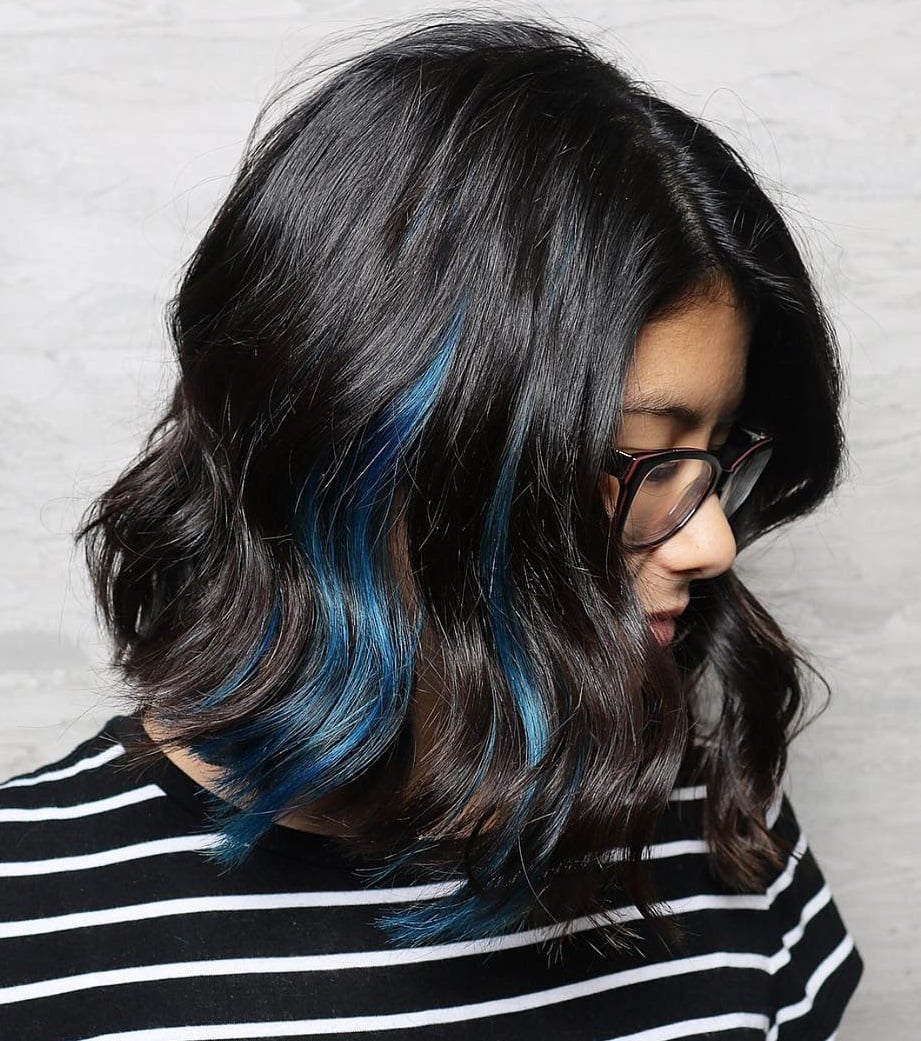
A practical rule for solid, vibrant blue on fine hair: the color looks best when the cut is sharp enough to match the pigment’s density. A chin-length bob with micro bangs and a side parting is exactly that kind of cut. The fine, straight texture means the color saturates evenly, but it also means the shade can fade to a dusty, uneven tone within three weeks if the hair is not pre-lightened to a very pale blonde. The micro bangs suit oval and heart faces, but they demand a trim every three weeks to stay out of your eyes. Ask your colorist for: chin length bob, micro bangs, solid blue color. The real drawback is the fade speed: fine hair at this length needs a blue-toned gloss every three to four weeks to keep the solid blue from turning patchy.
Vibrant Blue Mid-Back Straight Blowout
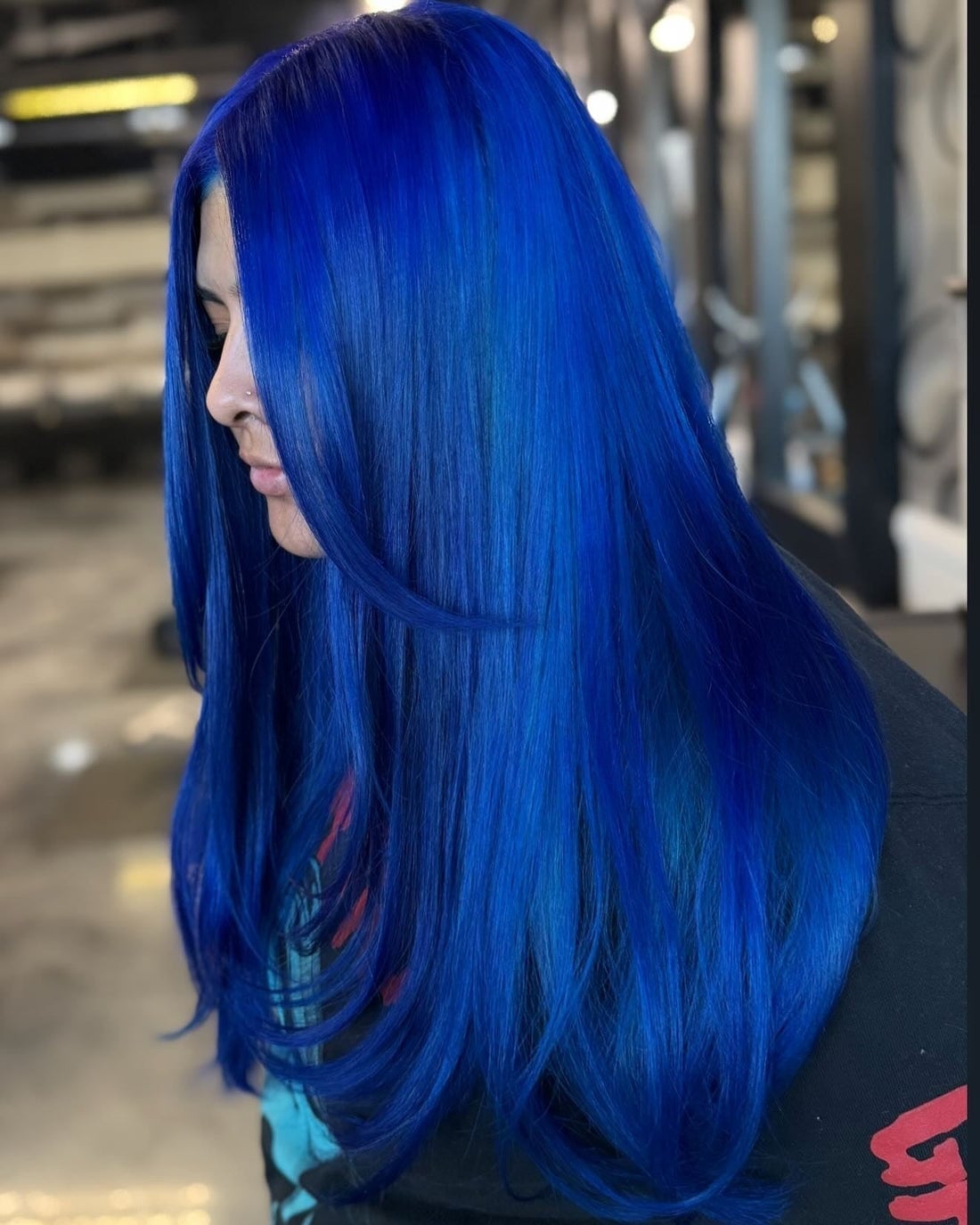
This is a straight blowout, not a flat-ironed one. The difference is a side part, a round brush, and a finish that moves rather than hangs. Thick, straight hair at mid-back length can hold this shape for about two days before the roots start to soften. Ask your colorist for: vibrant blue, mid-back length straight blowout. The uniform color means you see every new millimeter of growth, so budget for a root touch-up every four to five weeks.
A boar bristle brush during blow-drying distributes the hair’s natural oils and keeps the blue looking glossy rather than dusty. The heat styling also speeds up color fade on the ends. A cool shot of air at the end seals the cuticle and buys you another day between washes.
Blue and Teal Braided Buns With Root Shadow
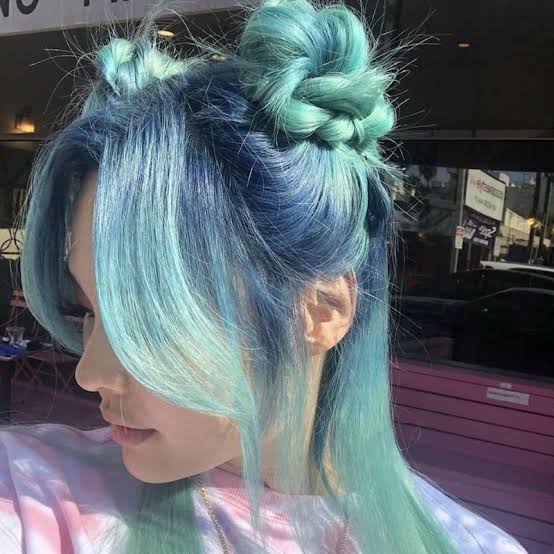
This is a two-part color job that looks deliberate rather than accidental. The root shadow keeps the grow-out line soft, while the blue and teal blend needs a lightening step before the color goes on. Fine, wavy hair at a long length works well for this style because the braids hold without extra product. Ask your colorist for: blue and teal blend, root shadow, braided buns.
This is a salon-leaning project: the color application takes two to three hours, and the braiding is something you can do at home once the color is done. It works for festivals or any occasion where you want the hair to be part of the event. A middle parting and curtain bangs keep the front from looking too severe against the sculpted buns.
Dark Base With Ocean Blue Ombré Waves
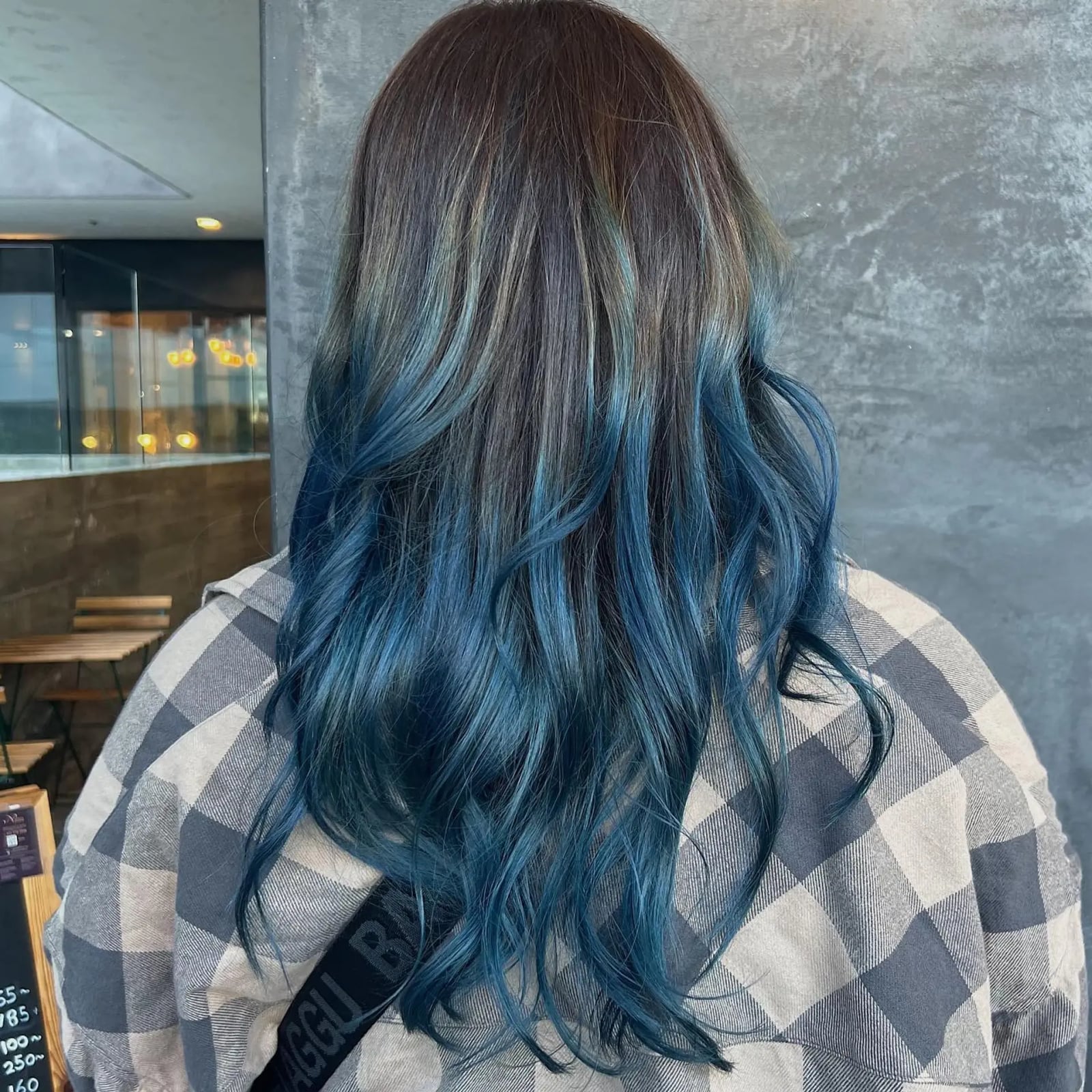
The transition from a dark base to ocean blue ends works best on thick, wavy hair at mid-back length. The wave pattern hides the blending line, so the ombré appears as a gradient. This is a vertical design: the color starts below the chin and deepens toward the ends. It suits those who want a vivid color effect without a full head of blue. The middle part and long layers keep the look grounded.
Collarbone Lob In Vibrant Electric Blue With Loose Waves
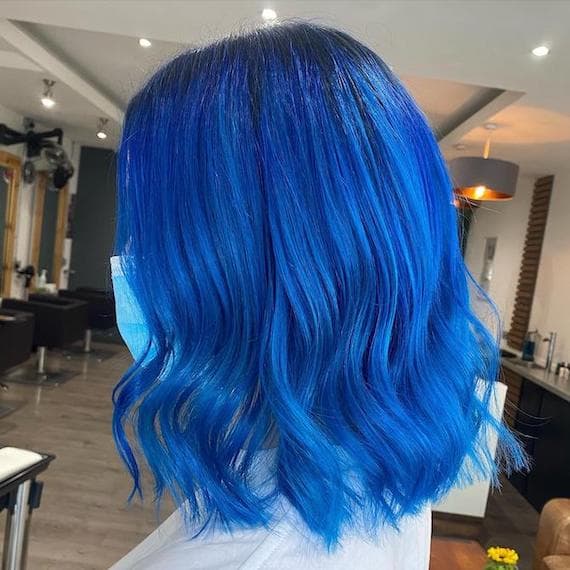
For a vibrant electric blue at home, start with clean, dry hair that has been pre-lightened to a pale yellow or white, then apply the color in sections from root to tip. For a collarbone lob with thick, wavy texture, divide the hair into four quadrants and use a tint brush to work the color through each section. The loose waves help disguise any unevenness in application, but the color itself needs to be uniform. A side view shows the full saturation best. The steps are: lighten the hair to level 9 or 10, apply the blue color, process for the full time the brand specifies, then rinse with cool water and follow with a color-depositing conditioner. Ask your colorist for: collarbone length lob, vibrant electric blue color. Use a purple shampoo once a week between toning sessions.
Black Base With Blue Peekaboo Highlights
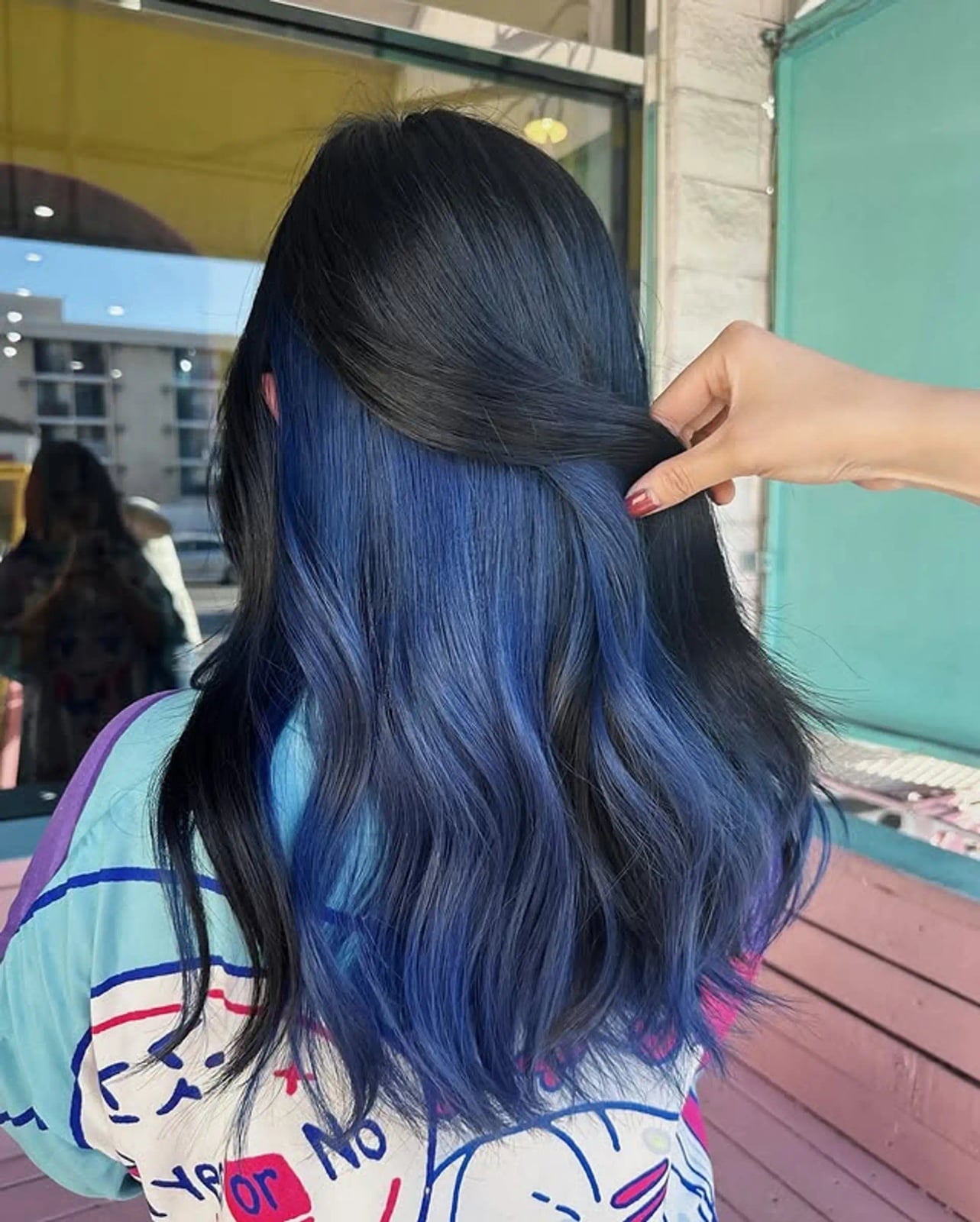
Peekaboo blue highlights on a black base are the opposite of a full commitment. The color lives underneath, so it shows only when the hair moves or when you tuck a side behind your ear. Thick, wavy hair at mid-back length has enough volume to hide the highlights when they need to be discreet. Ask your colorist for: black base with blue peekaboo highlights. The honest downside is the contrast maintenance. The black base fades to a brownish tone in about six weeks, and the blue highlights shift toward teal around the same time. A blue-toned gloss on the highlights every four to five weeks keeps the two colors distinct. If you skip the gloss, the peekaboo effect turns into a muddy blend rather than a surprise.
Final Thoughts
For a sophisticated blue, opt for darker, cooler tones like deep navy or blue-black bases with subtle dimension, or choose ombré and balayage techniques that blend seamlessly. If your hair is fine, keep one blunt baseline and skip heavy layers to maintain density. Let the color grow out gracefully with a root shadow or lived-in balayage.
- Use color-safe shampoo and conditioner to preserve vibrancy.
- Wash with cool water to prevent color stripping.
- Use a color-depositing conditioner weekly to refresh the tone.
- Limit heat styling to prevent fading and damage.
- Schedule toning appointments every 6 to 8 weeks.
Discover your perfect shade of sophisticated blue.
