
A wig is the quickest way to test a color you would not commit to on your natural hair. Soft face-framing layers and lived-in tones are replacing the flat-ironed poker-straight looks of recent seasons, making even bold shades feel wearable.
This collection of 16 Colors Wig Styles covers everything from low-upkeep solid neutrals to high-impact rainbow ombre. Whether your hair is fine and needs volume or you want a fringe that actually behaves, each option lists the base shade, technique, tone, length and texture so you know exactly what you are getting.
Deep Burgundy Layers With Curtain Bangs
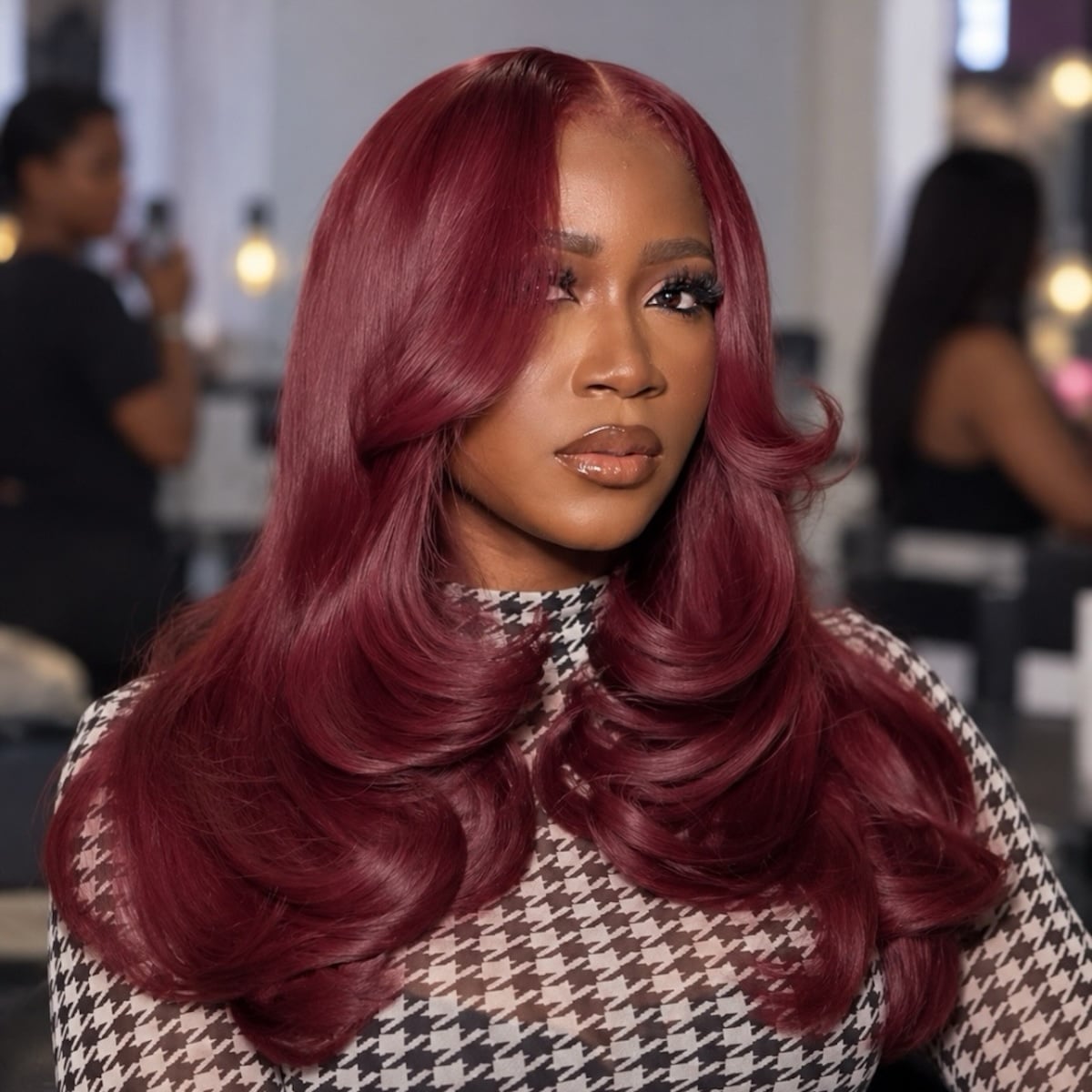
The trick to a deep burgundy base that does not land flat is the undertone. This one has a subtle red kick that catches overhead light, and the mid-back length gives the voluminous blowout room to move. The curtain bangs are cut to sweep outward, not straight across, so they soften round and heart face shapes without demanding a daily restyle.
Ask your colorist for: a deep burgundy base with red undertones, mid-back layers, curtain bangs. A large-barrel curling iron refreshes the waves in about ten minutes. The fringe needs a trim every four to six weeks to keep the shape crisp.
Blunt Chin Bob With Blonde Money Piece
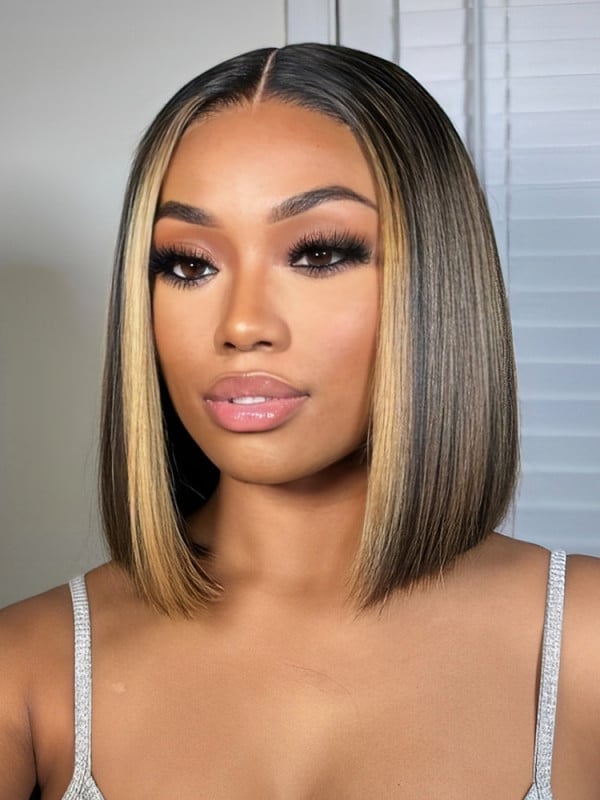
Can fine, straight hair carry a blunt bob? Yes, if the cut is chin-length and the color adds contrast. The dark brown base grounds the look, while the blonde money piece pulls light forward to the face. The middle part keeps the geometry clean. A flat iron seals the ends for that glossy finish. Ask your colorist for: a chin-length blunt bob, dark brown with a blonde money piece, middle part. The money piece needs a toning appointment every four weeks to stay cool.
Salt and Pepper Collarbone Bob
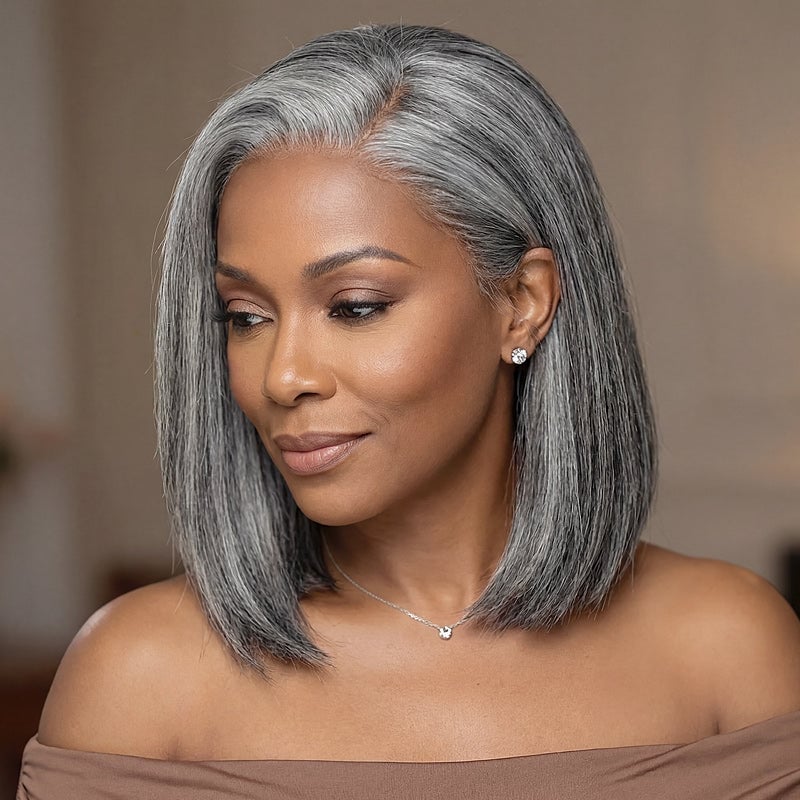
A salt and pepper bob is often compared to a solid silver shade, but the difference is visible. The mixed dark and light strands create a textured effect that reads as natural, not dyed. This collarbone-length version sits just below the jaw, so it works for both round and square face shapes. The fine texture and slight blowout keep it from looking heavy. Ask your colorist for: a collarbone bob, salt and pepper color, straight with a slight blowout. A texturizing spray adds volume without weight. A trim every six to eight weeks maintains the bob line.
Long Wavy Salt and Pepper Gray Blend
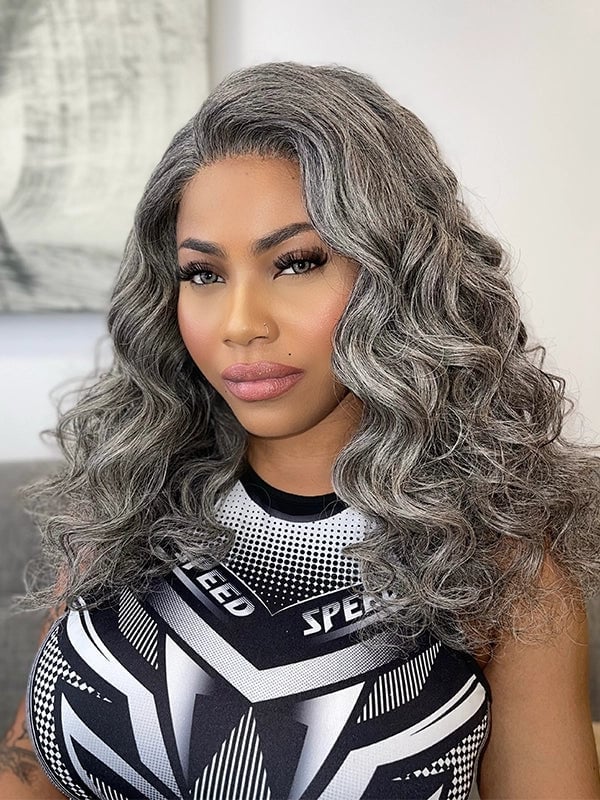
Long waves and a salt and pepper gray blend work together because the loose movement breaks up the color evenly. The thick texture holds the wave pattern without product, and the mid-back length gives the silver strands room to read as intentional rather than grown out. A middle part keeps the weight distributed. Ask your colorist for: mid-back layers, a salt and pepper gray blend, loose waves. Air drying with a curl-defining cream takes about twenty minutes of scrunching, then hands-off time. A trim every eight to ten weeks prevents split ends from dulling the gray.
Vibrant Burgundy Red High Ponytail
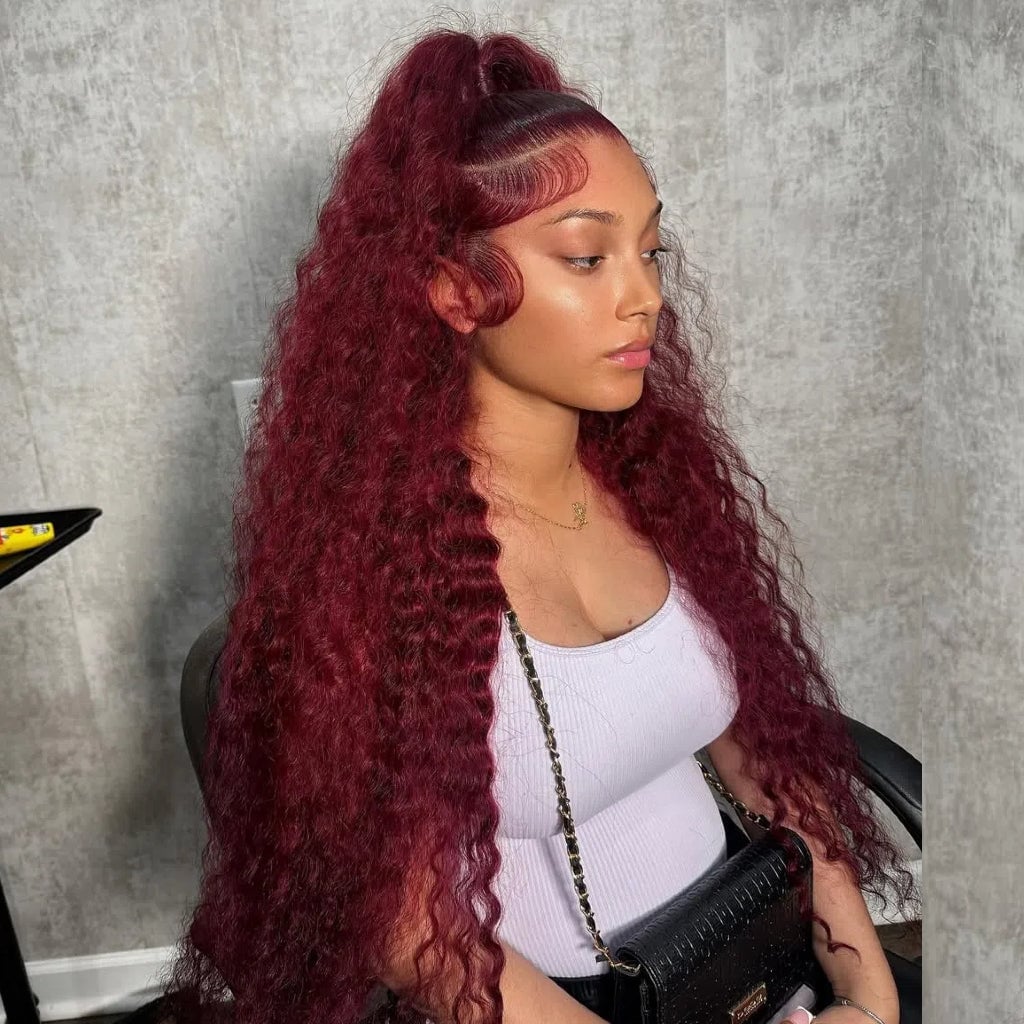
How do you make a high ponytail feel finished rather than thrown up? Start with a 99J burgundy red shade, deep and warm enough to look deliberate. The curly texture adds volume at the crown, and the wispy face-framing pieces soften the pulled-back silhouette. Mid-back length gives the ponytail weight. Ask your colorist for: a mid-back curly cut, 99J burgundy red, a high ponytail with wispy face-framing pieces. This is a party-ready style: a strong elastic and a frizz-taming serum are all it takes to keep the shape for the evening.
Rainbow Bob With Large Curls and Curtain Bangs
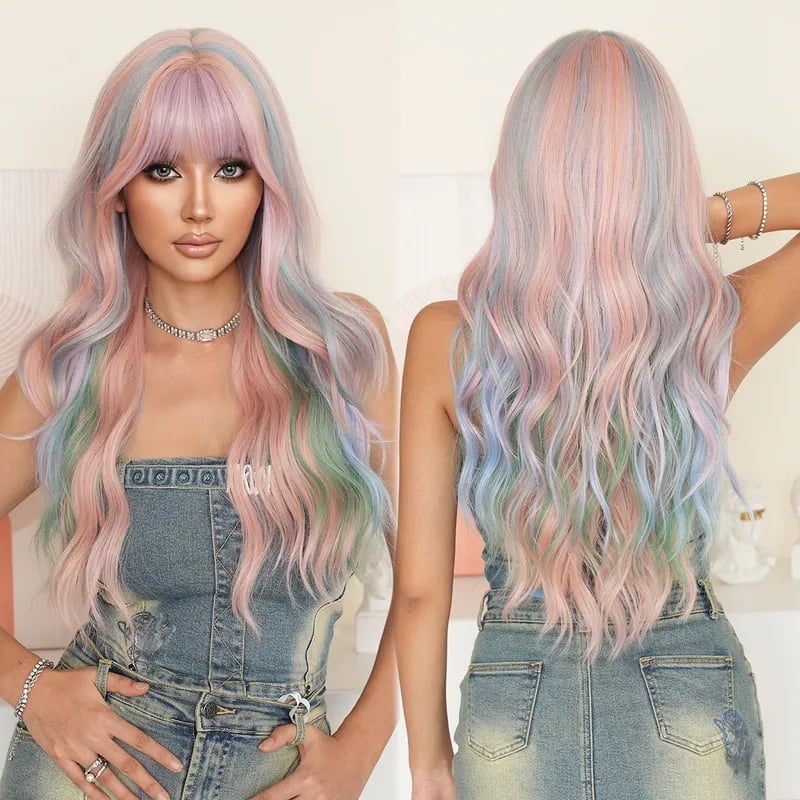
The rainbow bob wig is a masterclass in controlled chaos: a shoulder-length bob cut with curtain bangs, then colored in sections of pink, blue, and green that meet at the middle parting. Large curls give each color block its own bounce, so the palette reads as playful rather than muddy. This is a salon build, not a weekend DIY. The color placement alone takes hours, and the curls need setting to hold their shape. Ask your colorist for: shoulder-length bob, rainbow colors, large curls, curtain bangs. Use a wide-tooth comb on wet hair to keep the curl pattern intact.
Ombre Waves Pink Purple to Mint Green Blue
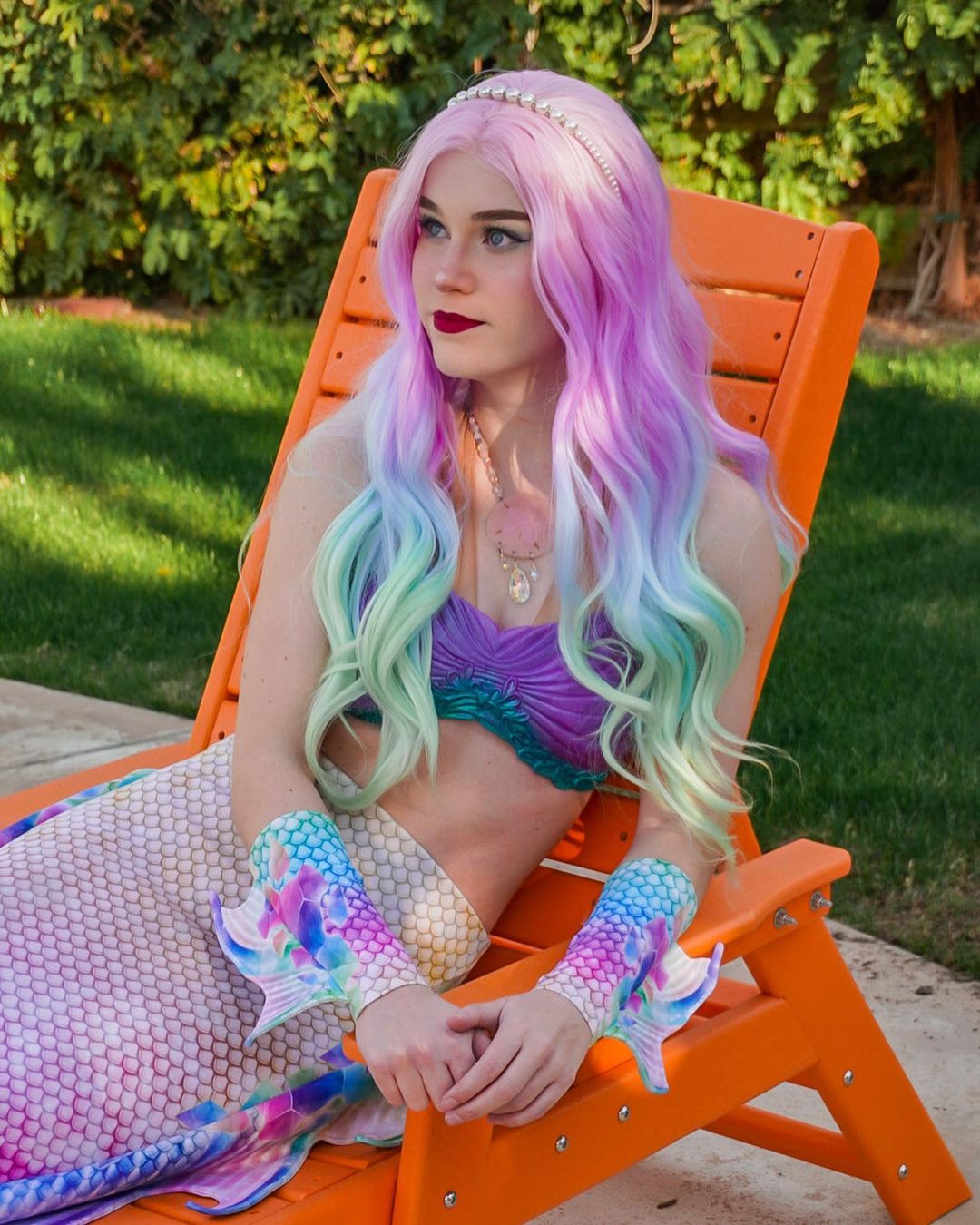
This ombre wig starts with pink and purple at the roots, then shifts through mint green to blue at the ends, all on fine, wavy hair that reaches mid-back. The transition is gradual, which keeps the colors from fighting each other. Vibrant tones like these dull fastest at the ends, and the blue can turn teal if it oxidizes. A color-depositing shampoo helps, but a professional toner every four to six weeks is the real fix. Ask your colorist for: mid-back length, pink-purple to mint-blue ombre, loose waves. If you prefer low-maintenance color, this one will test your patience.
Reddish Brown Blowout With Loose Waves
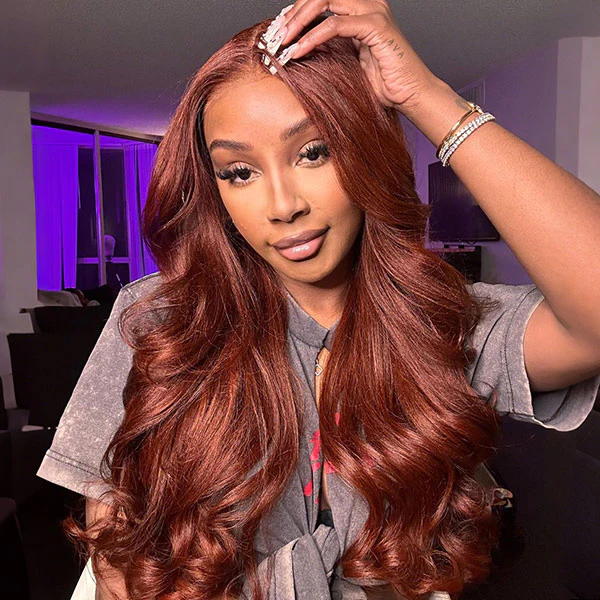
For thick, wavy hair, ask for a blowout with loose waves, and the volume does the work. This mid-back length reddish-brown style proves it. The rich color adds depth without going dark, and the waves give the thick texture room to move. A volumizing mousse at the roots keeps the lift from falling flat by midday. Refresh the waves with a large barrel iron, and you are set for the day. Ask your stylist for: mid-back length, reddish-brown color, loose voluminous waves, blowout. It suits all face shapes because the length and wave pattern balance proportion naturally.
Rich Auburn Layers With Subtle Highlights
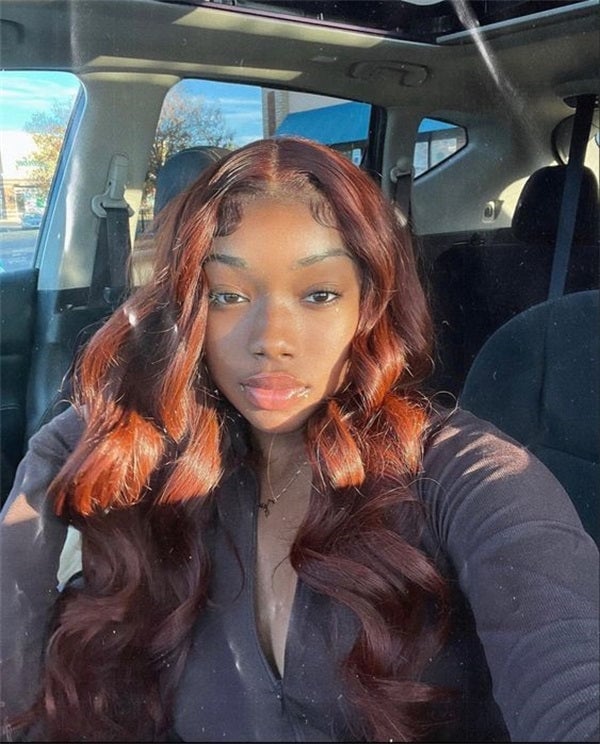
The rich auburn base here carries subtle lighter highlights that land around the face, giving the wavy blowout a dimension that flat color cannot match. On thick wavy hair that reaches mid-back, the layers keep the weight from pulling the waves straight. Auburn fades warmer than it starts, so a gloss every six to eight weeks keeps the tone honest. Ask your colorist for: mid-back length, rich auburn with subtle highlights, wavy blowout. The highlights grow out softly rather than leaving a harsh line, which stretches the time between touch-ups.
Ash Grey Base With Silver Highlights
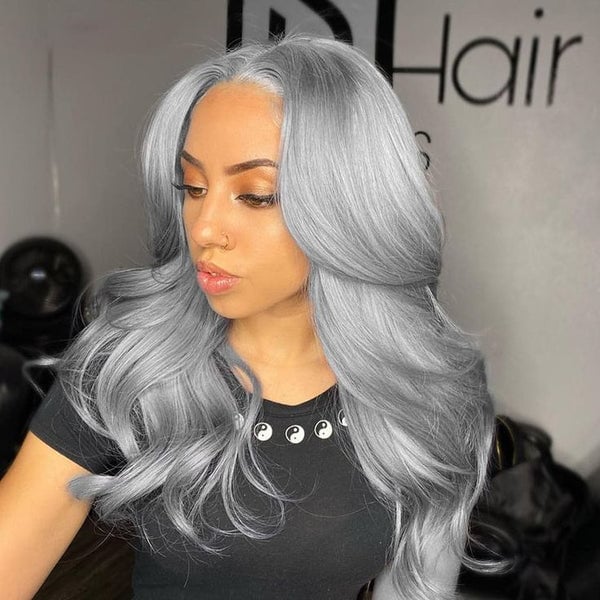
Compared to a warm grey that tips beige, this ash grey base stays cool, with silver highlights woven through the mid-back length to catch the light. The thick, wavy texture gives the highlights something to hold onto, and the blowout keeps the ends smooth. The catch is brassiness: ash tones pull warm within weeks without a purple shampoo in rotation. Ask your colorist for: mid-back length, ash grey with silver highlights, blowout. A toner every four to six weeks is the price of admission for this color.
Pastel Pink With Blue Green Streaks Side Part
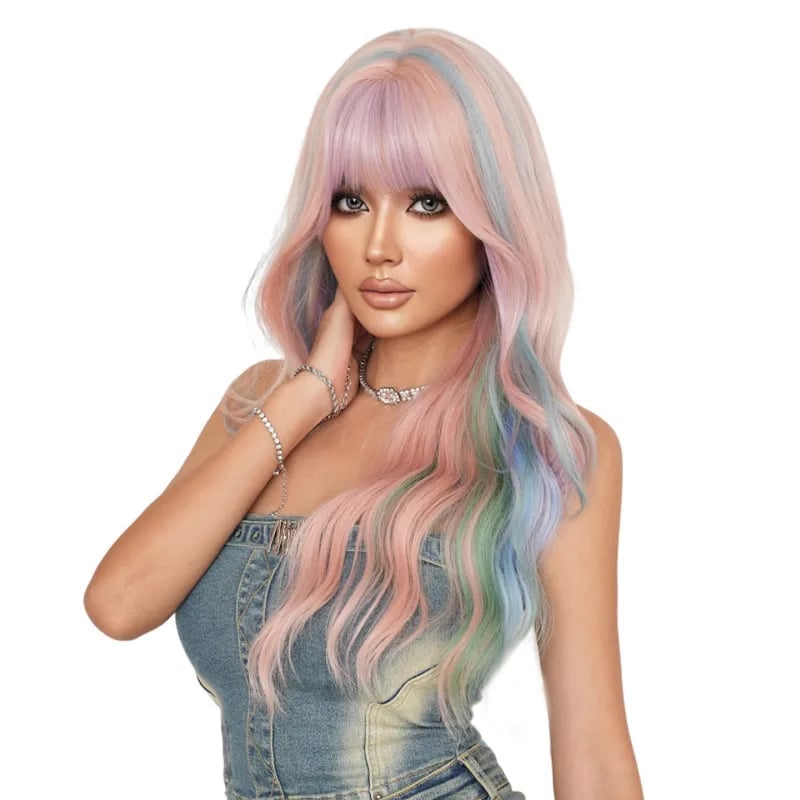
A pastel pink base is the canvas, but the blue and green streaks woven through are what make this wig stand out. The side part and curtain bangs soften the rainbow effect, so it lands as playful. Fine, wavy hair starting at mid-back suits this best; the side part also works for oval and long faces.
Ask your colorist for: mid-back length, pastel pink with blue green streaks, side part, loose waves. A wide-tooth comb on damp hair keeps the wave pattern intact. The pastel shades and bright streaks mean the color will need professional refreshes to stay this clear, pastels fade faster than saturated tones.
Medium Brown Balayage With Curtain Bangs
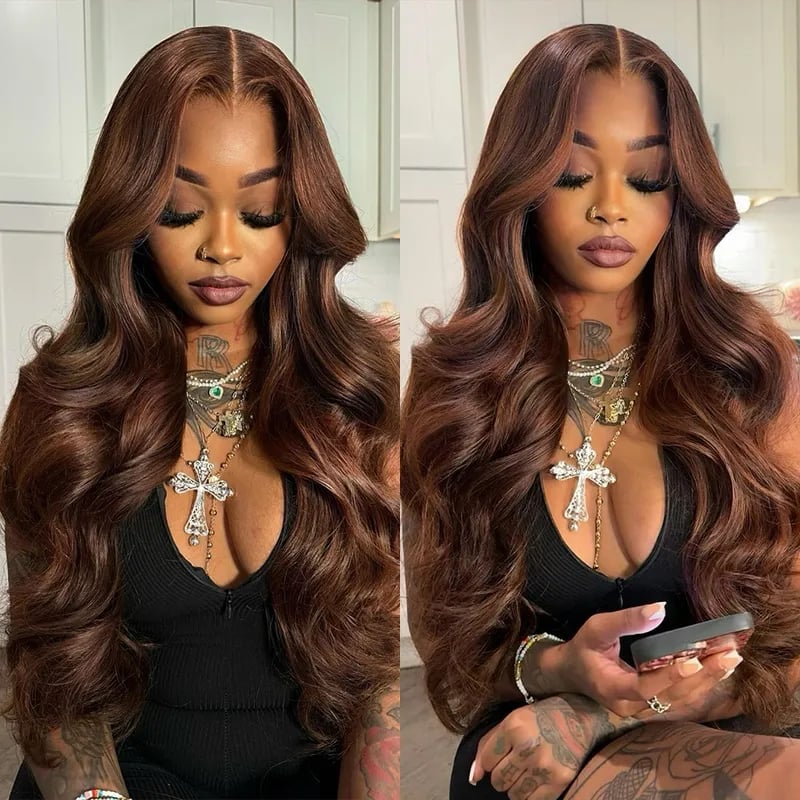
A medium brown base with subtle lighter brown balayage sits somewhere between a full highlight and a sunkissed grow-out. The balayage technique paints the lighter pieces onto the surface only, so the dimension looks built-in rather than striped. Thick, wavy hair starting at mid-back carries the loose waves and curtain bangs best; the curtain bangs also soften round and heart faces. Ask your colorist for: mid-back layered cut, medium brown with lighter brown balayage, curtain bangs. A texturizing spray adds definition, and a trim every eight to ten weeks keeps the layers from tangling.
Light Purple Collarbone Bob With Straight Fringe
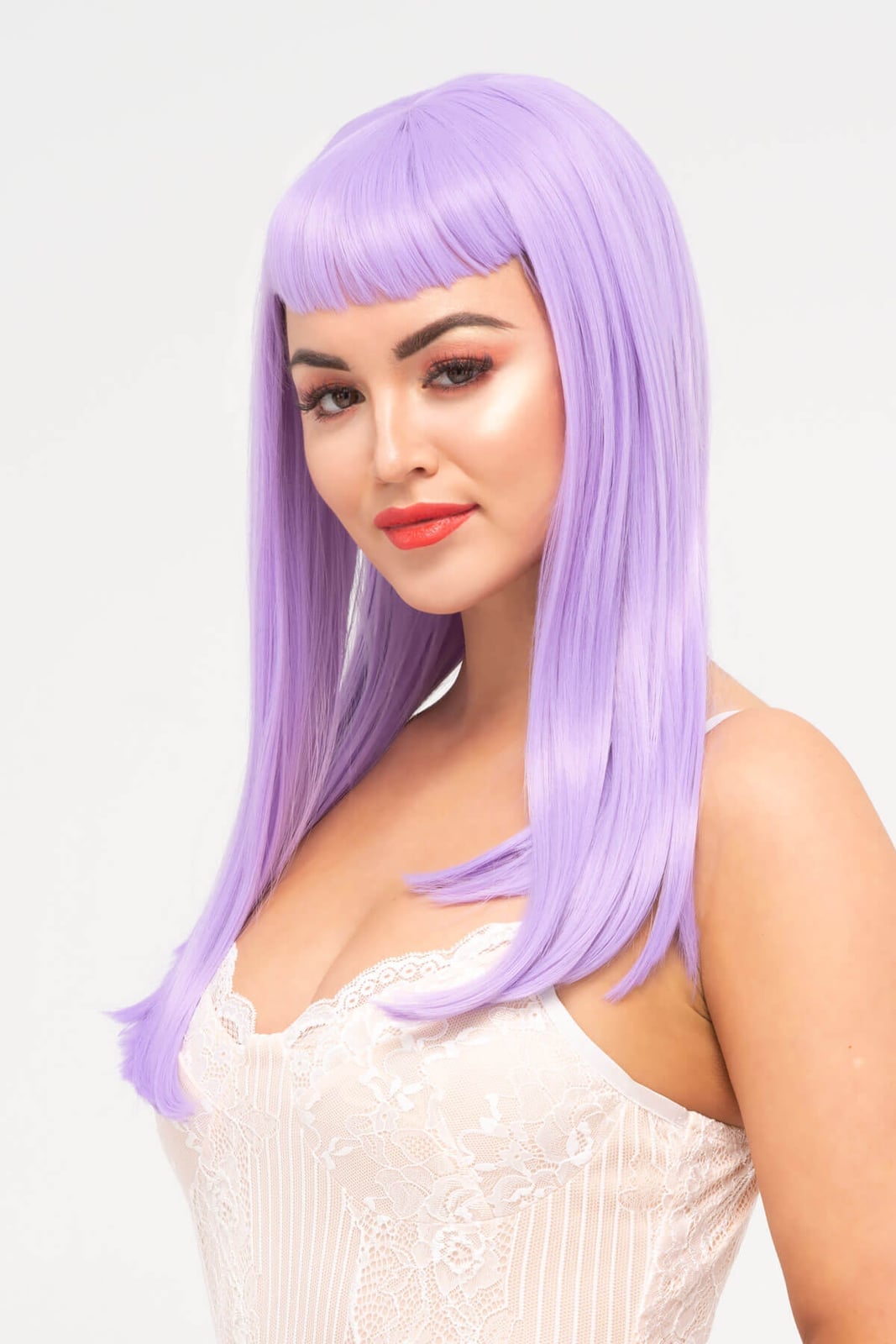
This collarbone-length long bob with a short, straight fringe and uniform light purple color is straightforward in shape but requires maintenance on the bangs every three to four weeks. Fine, straight hair starting at the collarbone works well; the fringe suits most face shapes. Ask your colorist for: collarbone length long bob, light purple color, short straight fringe. Use a heat protectant spray before any touch-ups with a flat iron to keep the color from dulling.
Pastel Pink Lilac Waves With Blonde Roots
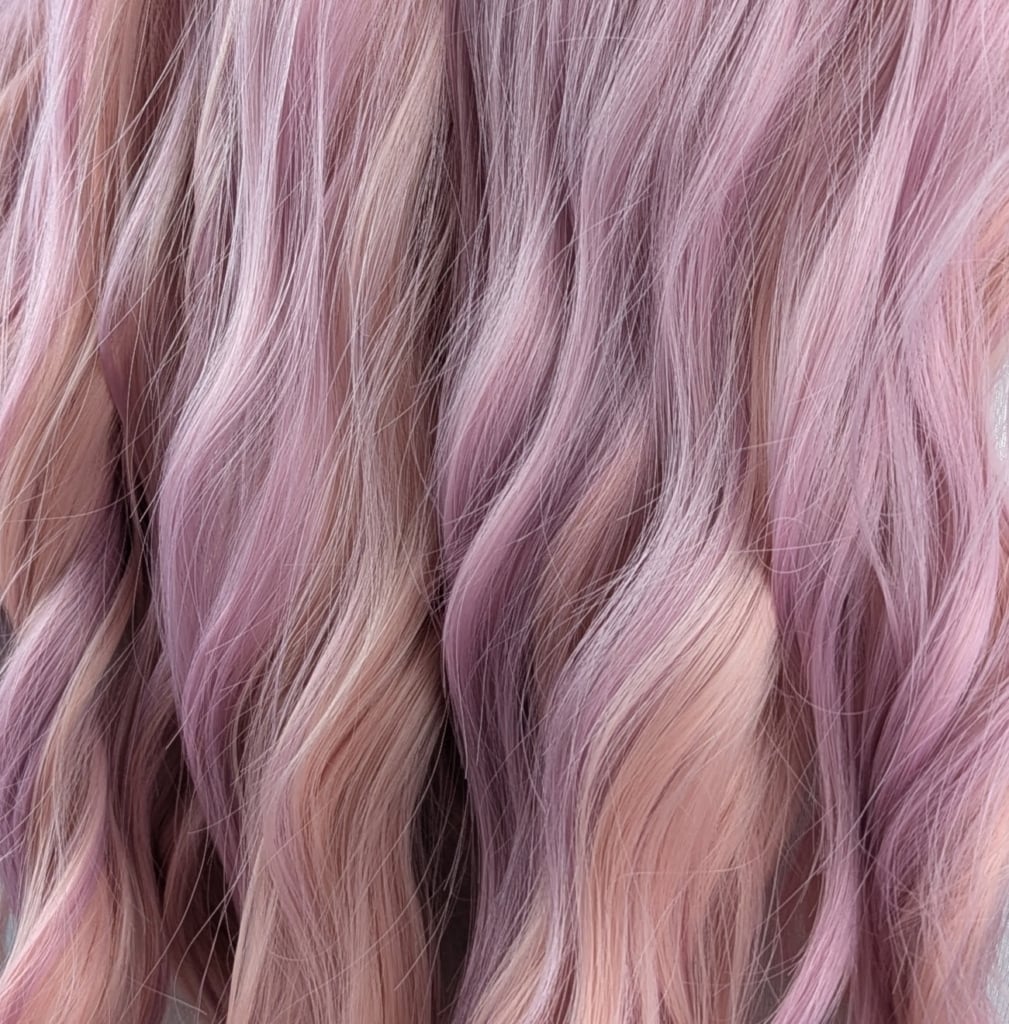
A collarbone-length wavy cut with curtain bangs and a middle part gets an update here with pastel pink and lilac tones against lighter blonde roots. The blonde roots act as a built-in grow-out, so the line between new growth and color is softer than a solid pastel. This is a salon-only job. The blonde lift and pastel overlay require two separate processes, and the pastels fade fastest of any shade. The honest drawback is that a purple shampoo alone won’t save the pink once it shifts; the whole tone needs refreshing every four to six weeks. Ask your colorist for: collarbone length wavy cut, pastel pink and lilac with blonde roots, curtain bangs.
Dark Red Cherry Red Ombre Waves
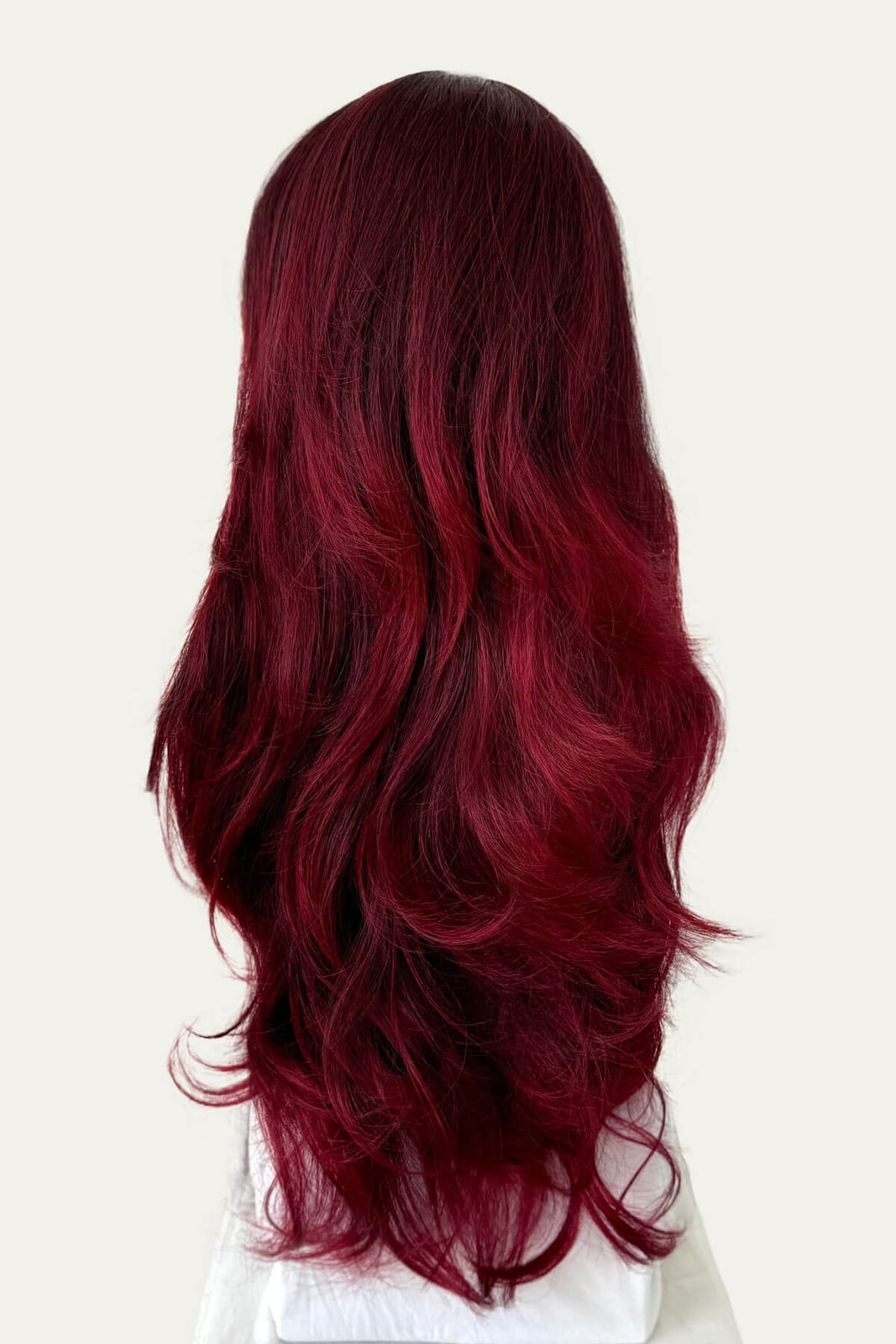
An ombre transition looks best when the darker base and lighter ends are in the same color family. Here, a dark red base graduates into a vibrant cherry red, so the shift creates depth instead of two separate colors. Thick, wavy hair starting at mid-back holds the loose flowing waves and the gradient well. Ask your colorist for: mid-back length, dark red to cherry red ombre, loose waves. This works for evening occasions or any moment that calls for a statement. The color shifts with movement, so straight styles will not show the ombre as clearly.
The back view highlights how the cherry red intensifies toward the ends. The ombre technique paints the lighter color onto the lower sections, leaving the root area darker and lower-maintenance than a full red dye job.
Dark Brown Honey Blonde Balayage Waves
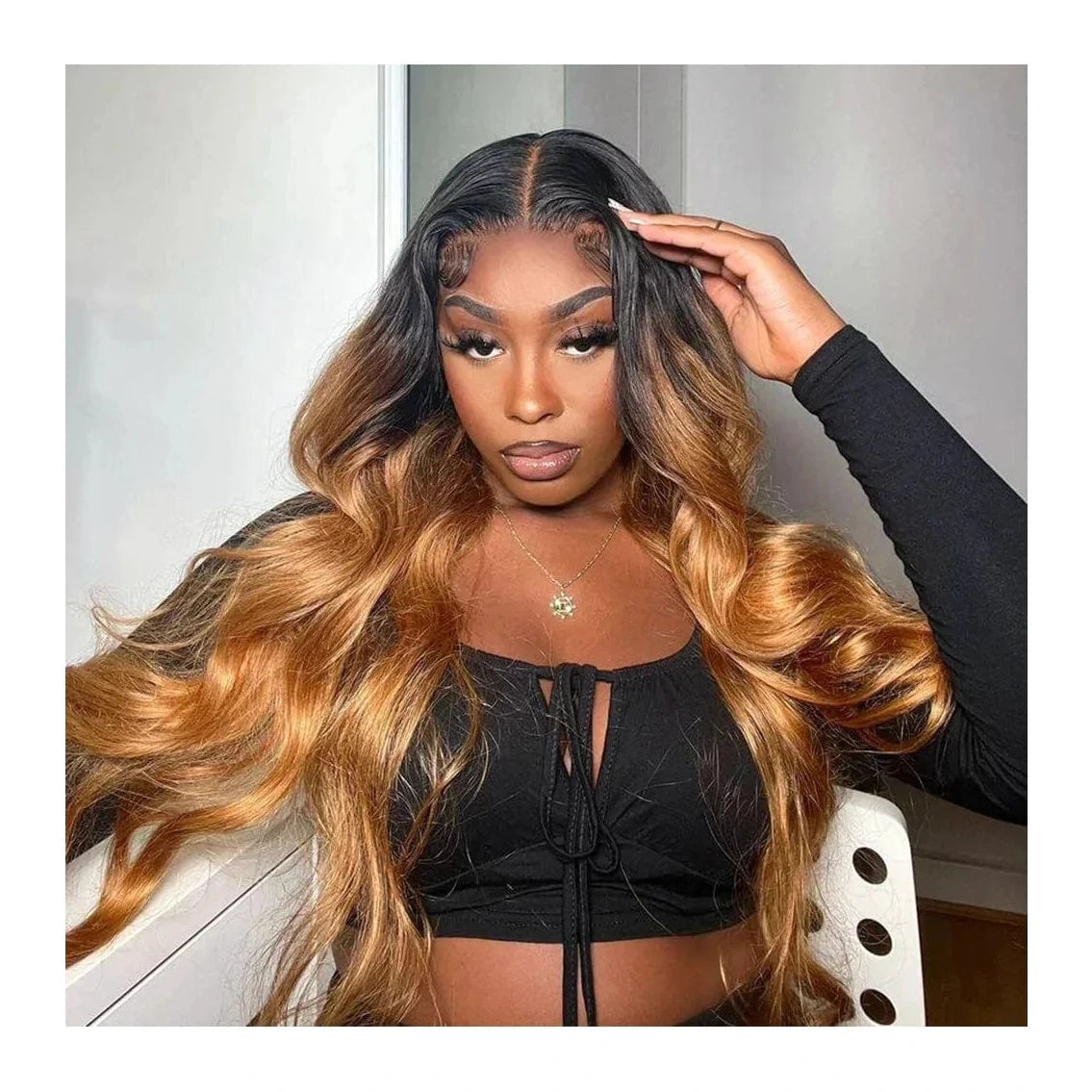
Balayage is a low-commitment color technique, but this version commits hard to warmth. A dark brown base cools the contrast while honey blonde pieces wrap around the mid-back length, stopping just shy of the roots for a grown-in effect that looks deliberate. The loose waves and thick texture let the balayage show at different angles, and the curtain bangs keep the face-framing soft without being severe.
This works best on thick, wavy hair starting at mid-back; the face-framing layers soften round and heart shapes without losing length. Ask your colorist for: dark brown base with honey blonde balayage, loose waves. A texturizing spray adds definition without crunch, and a trim every eight to ten weeks keeps the ends from thinning out. It is a salon color only, thanks to the lifted honey shade, but the grow-out is the real payoff: subtle, warm, and never urgent.
Final Thoughts
Fine hair benefits from a blunt baseline and minimal layers. Round faces should let the length fall past the chin. Bold colors and complex techniques like ombre or rainbow will need more frequent salon visits for touch-ups on the wig itself.
- Wash wigs with cool water and sulfate-free shampoo every 10-20 wears.
- Condition wigs thoroughly, focusing on mid-lengths to ends.
- Allow wigs to air dry on a stand; avoid direct heat.
- Store wigs on a mannequin head to maintain shape.
Experiment with color; a wig makes it easy.