

Balayage is a freehand color technique that creates soft, natural-looking highlights with a seamless blend from root to tip. Right now, the trend leans toward lived-in dimension with warm blonde and beige tones, moving away from heavy contrast or chunky streaks.
This collection of 18 Cute Balayage ideas covers a range of lengths and textures, from long beachy waves to chin-length bobs with face-framing pieces. Whether your hair is fine and falls flat or you need a color that grows out gracefully without a harsh line, there is a balayage here that fits your cut and routine.
Long Wavy Beachy Blonde Balayage
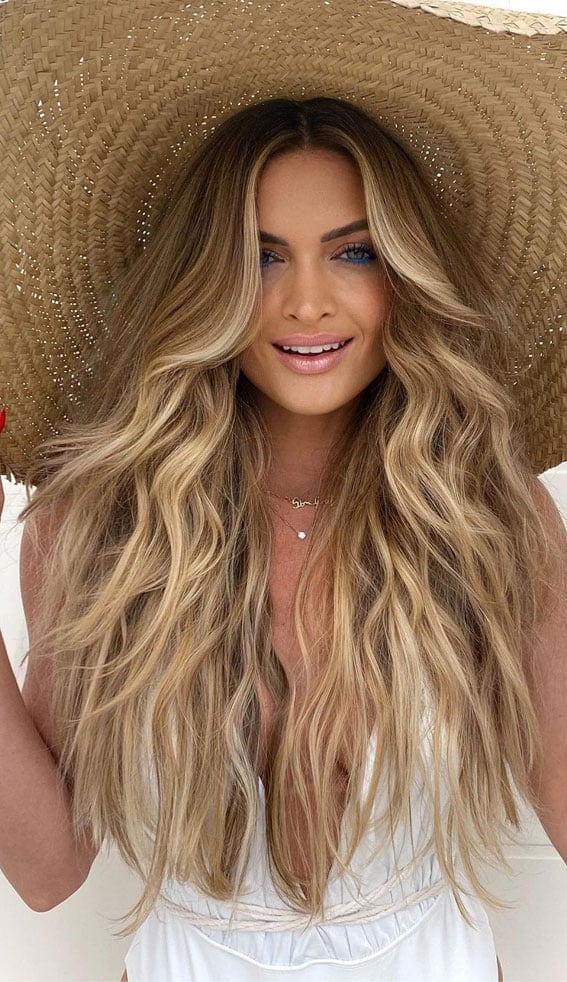
This is the balayage that makes you look like you just stepped off a beach vacation without actually having to deal with sand. The mid-back length gives enough canvas for the warmer base to melt into sun-kissed ends, and the curtain bangs soften the whole thing without committing to a full fringe. Thick, wavy hair of this length is the ideal starting point; the curtain bangs also help balance round and heart faces by breaking up the width at the cheekbones.
Ask your colorist for: long wavy balayage, beachy blonde, curtain bangs. Air drying or diffusing is enough for the natural wave pattern to show up, but the curtain bangs will need a trim every four to six weeks to stay in their lane. A toning appointment every six to eight weeks keeps the blonde from veering too brassy.
Long Layered Balayage With Caramel Dimension
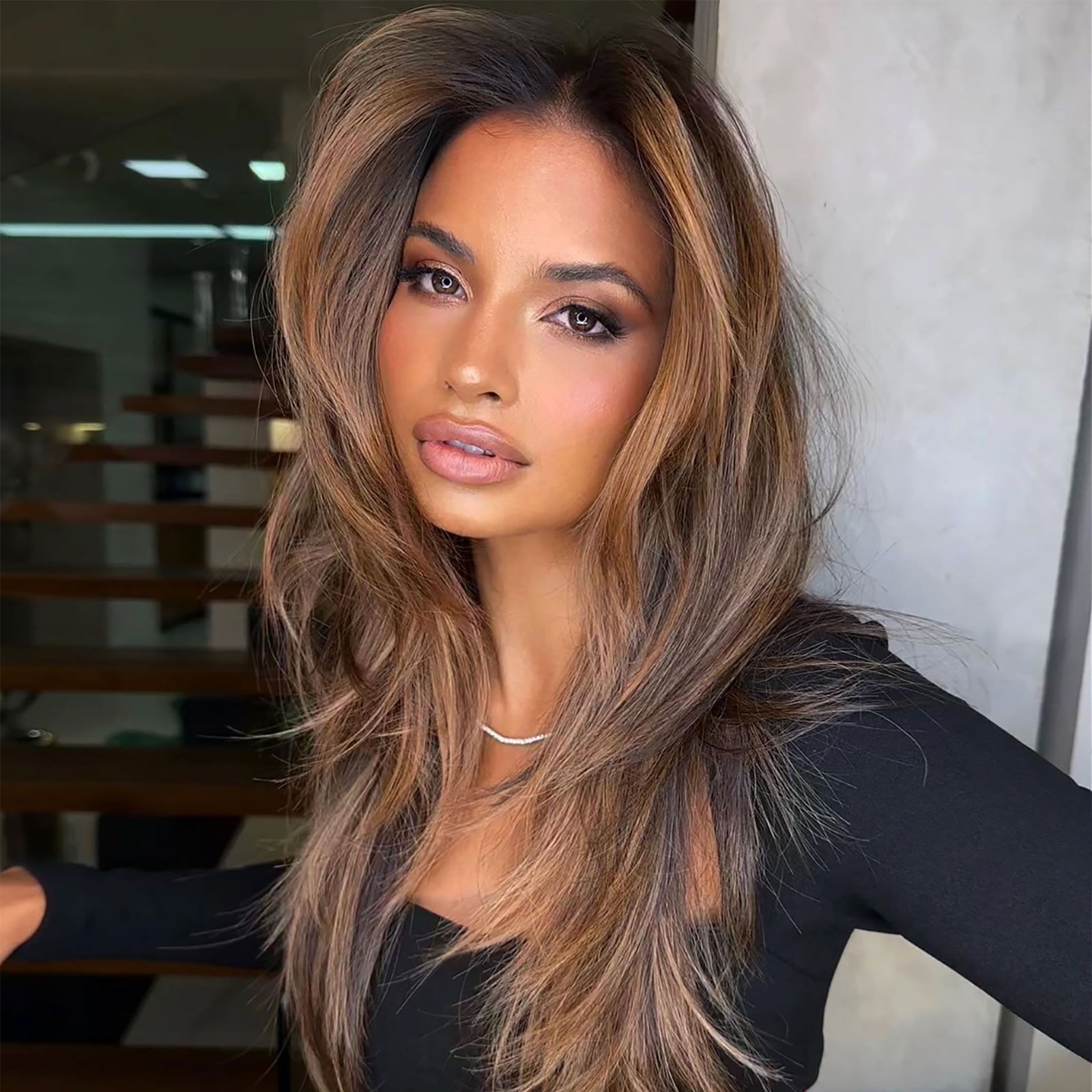
The trick here is that the caramel and blonde pieces are woven into the dark brown base, which gives the dimension depth instead of just contrast. Long layers keep the weight from dragging the waves flat, and the curtain bangs pull the lighter tones forward so the face gets the brightest part of the blend. A side parting adds a little lift at the root on the heavier side.
Ask your colorist for: long layered balayage, dark brown with caramel blonde, curtain bangs. The technique requires a skilled hand to keep the transition soft and not stripey, so this is strictly a salon project. The color grows out without a harsh line for months.
Collarbone Balayage With Face-Framing Highlights
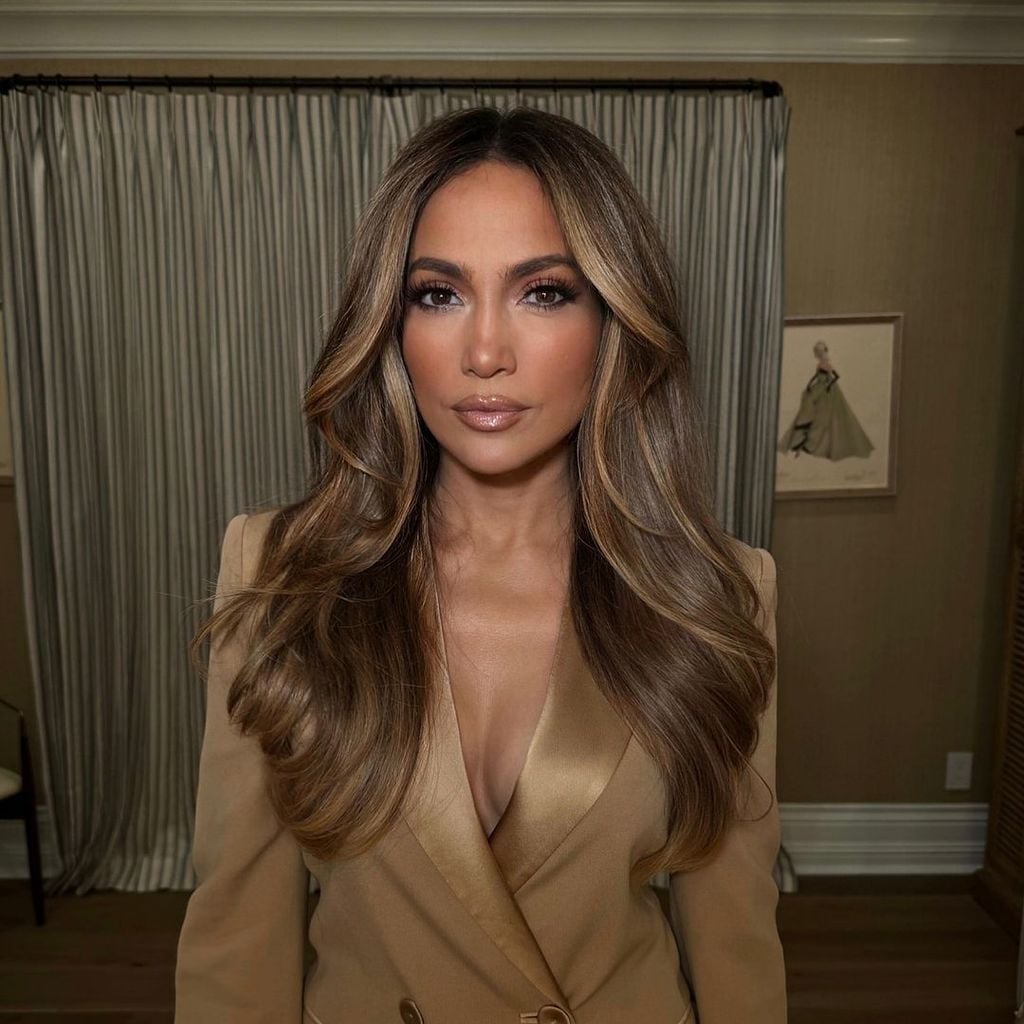
Wondering how to get that lighter-around-the-face effect without looking like you have old highlights? The answer is in the placement: the lighter blonde balayage is concentrated around the curtain bangs and the front sections, while the dark blonde base stays deeper through the back. At collarbone length, the contrast is deliberate. Ask your colorist for: collarbone length balayage, dark blonde with blonde highlights, curtain bangs. Specify that you want the face-framing pieces to start a couple of inches from the root so the grow-out stays soft. A blowout with waves shows off the dimension best.
Collarbone Lob With Soft Caramel Balayage
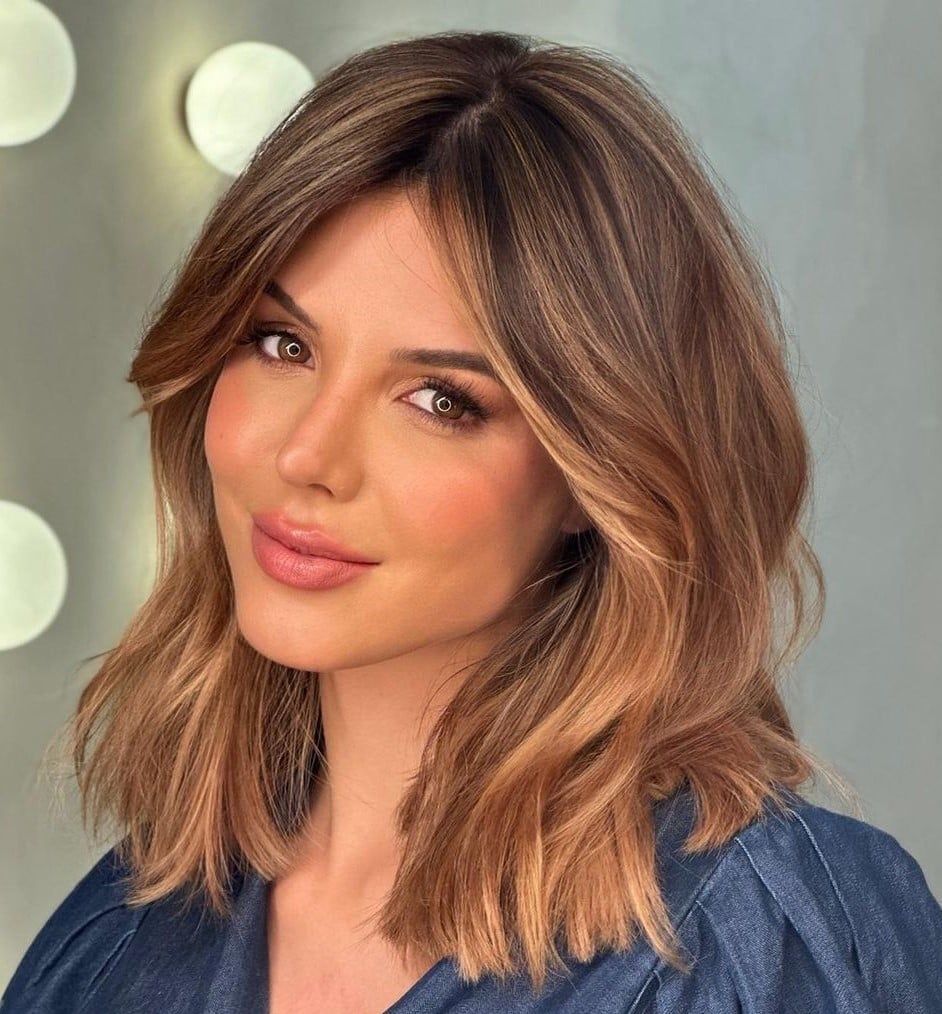
A lob is already lower maintenance than longer cuts, but add a soft caramel balayage on a medium brown base and you have a color that fades gracefully rather than announcing itself. Fine, wavy texture works well here because the lob cut removes bulk without losing shape, and the curtain bangs add movement around the face. The caramel is subtle enough that it does not overwhelm finer strands.
Ask your colorist for: collarbone lob, medium brown with caramel balayage, curtain bangs. Styling is straightforward: a texturizing spray at the roots and a quick wave with a flat iron takes about ten minutes. A side parting helps create volume on top where fine hair tends to go flat.
Shoulder Length Layers With Brown Blonde Balayage
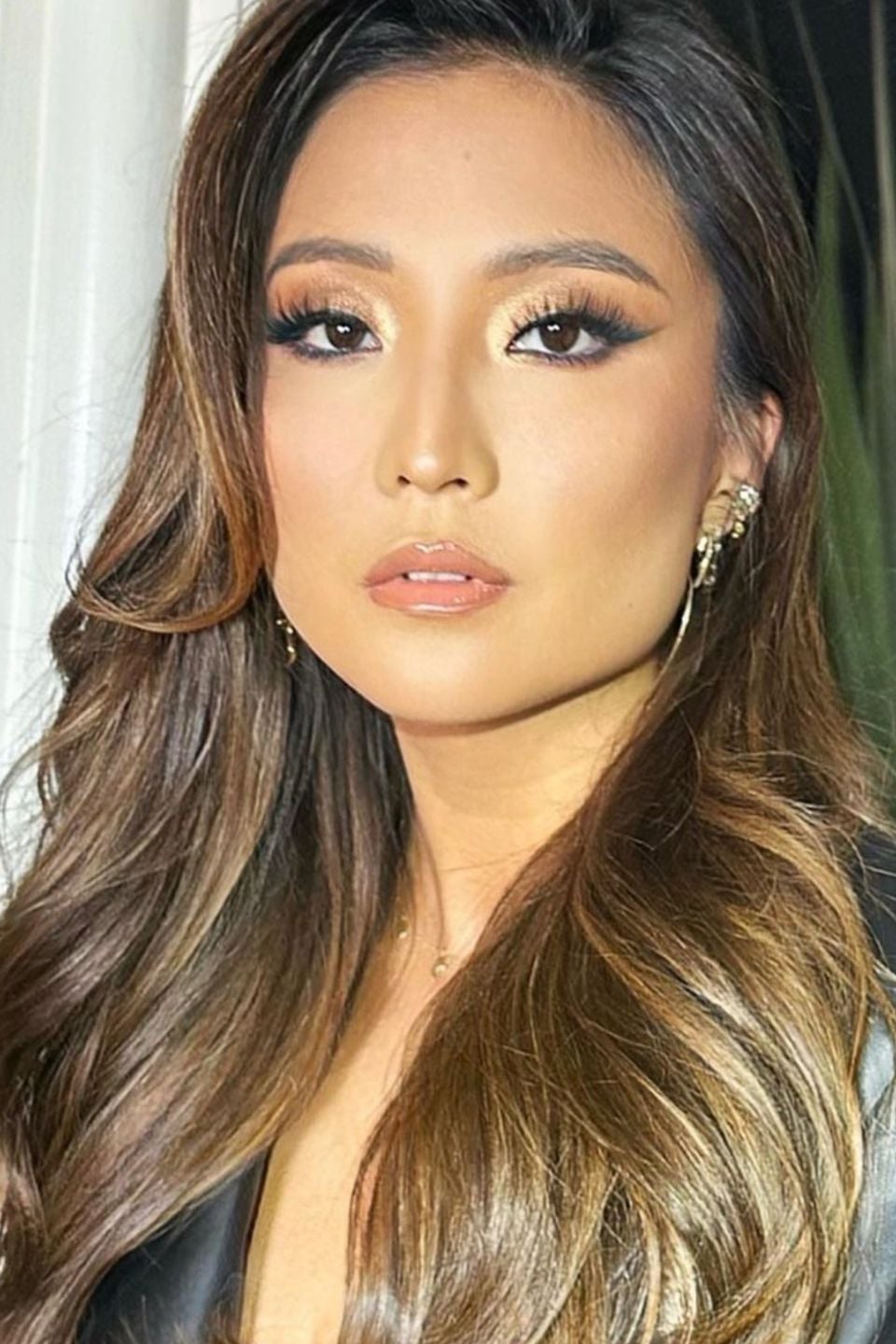
The dark brown base with lighter brown and blonde balayage highlights creates a contrast that looks like natural sun exposure. Shoulder length keeps the layers visible without the weight of longer hair pulling them straight, and the curtain bangs tie the whole thing together. This color looks better slightly undone than overly polished.
Ask your colorist for: shoulder length layered hair, dark brown with brown blonde balayage, curtain bangs. A DIY version of this is risky because the blend needs to be soft enough to avoid stripes; a salon does it in about two and a half hours. Sea salt spray enhances the wave pattern, and the curtain bangs need a trim every four to six weeks to keep the shape.
Collarbone Lob With Dimensional Caramel Balayage and Wavy Medium
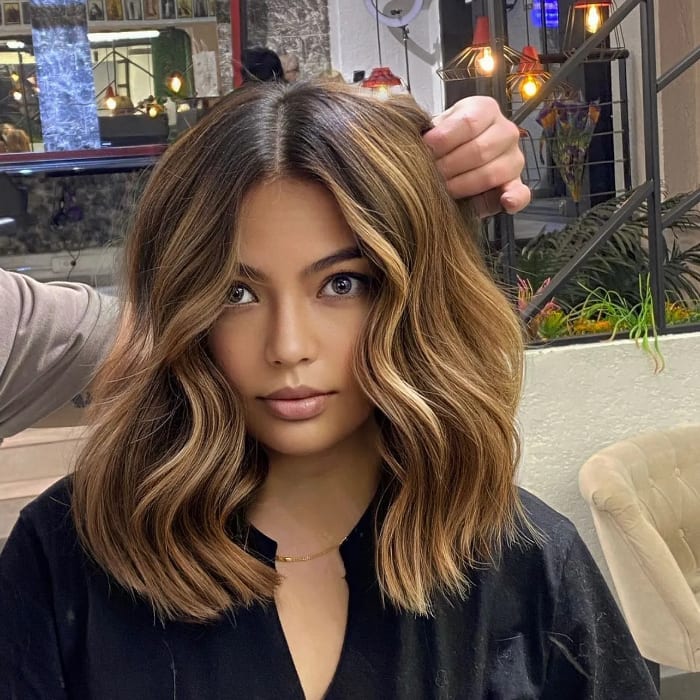
A middle part and collarbone length create a balanced silhouette that elongates round faces without pulling too much weight from shorter frames. The lob keeps the line clean, while the medium brown base with caramel and blonde balayage adds warmth without going full gold. Ask your colorist for: collarbone blunt lob, medium brown with caramel blonde balayage. The loose waves come from a texturizing spray on dry hair, and a trim every six to eight weeks holds the shape.
Collarbone Bronde Balayage Lob
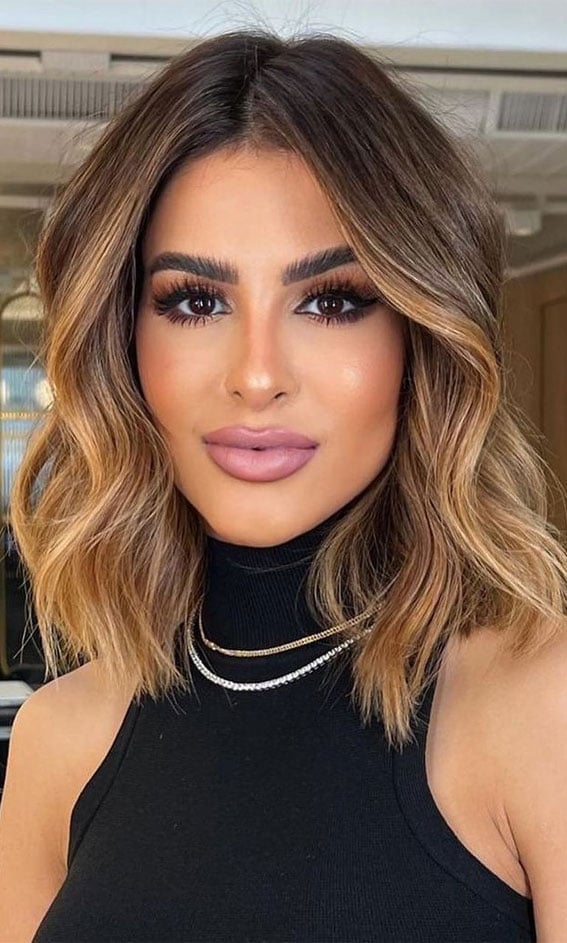
Bronde sits between brunette and blonde, which means it works for anyone who wants lighter ends without a dramatic root line. The lob length keeps the weight off the color, so the balayage blend looks natural. Ask your colorist for: collarbone bronde balayage lob, natural blend. Bronde can lean brassy if the toner fades unevenly. A purple shampoo once a week keeps the tone neutral between appointments.
Chin Length Bob With Caramel Balayage
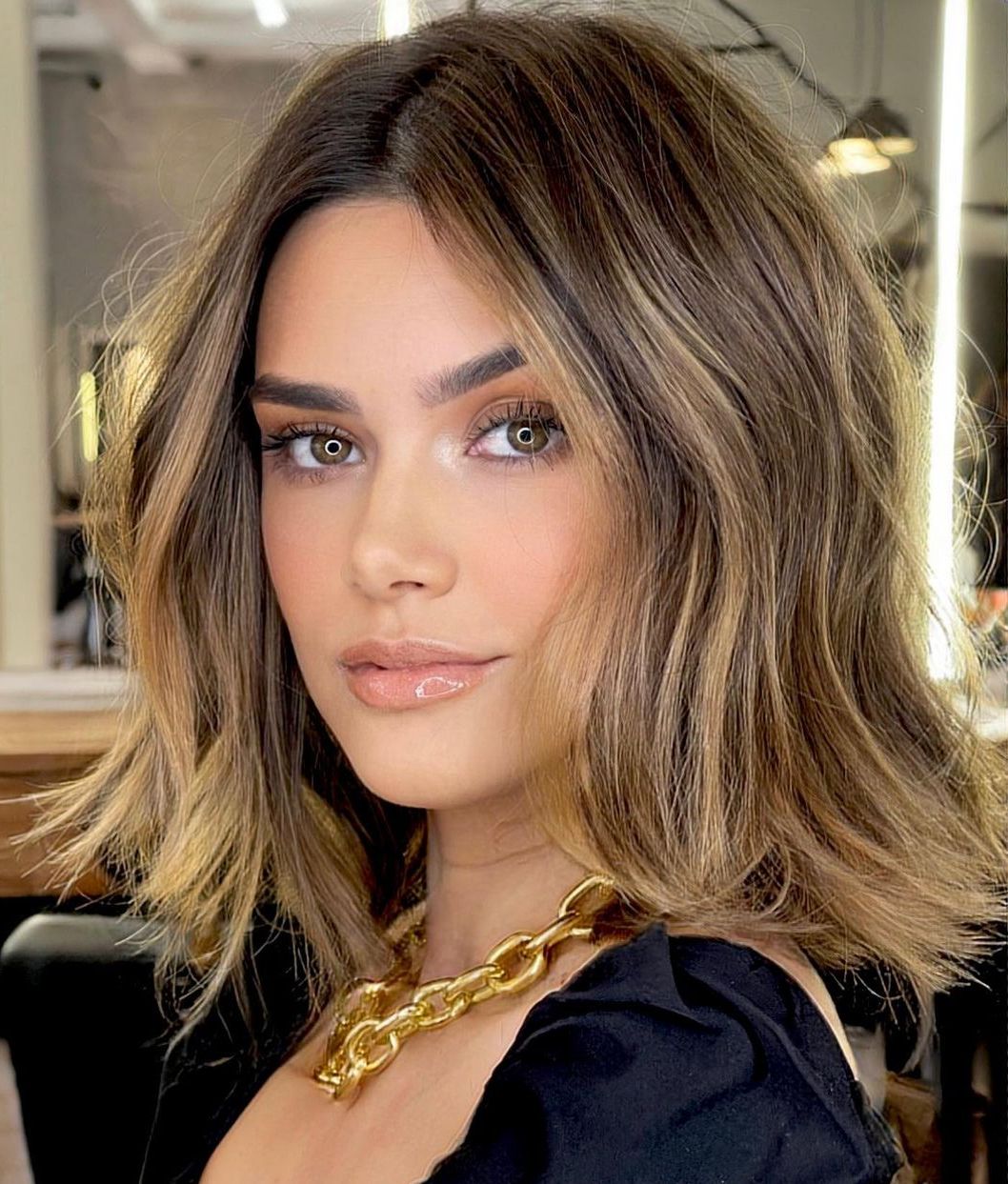
A chin-length bob with a middle part relies on precision, and this one delivers it with a dark brown base and subtle caramel balayage that never overwhelms the cut. The slightly wavy texture looks air-dried, which saves you heat styling on most days. Ask your colorist for: chin length bob, dark brown with subtle caramel balayage. A trim every six weeks keeps the bob from turning into a shag, and a quick finger-comb with a texture spray is all the morning effort it asks for.
Chin Length Angled Bob With Blonde Balayage
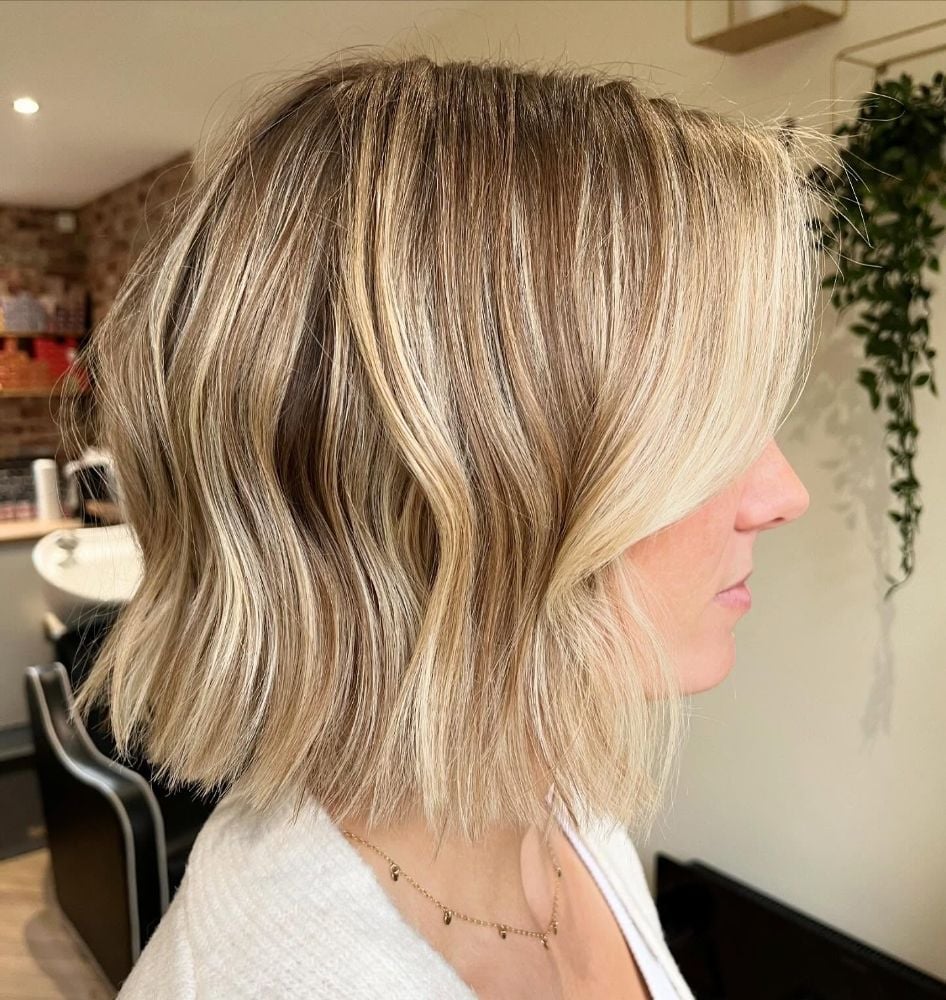
How do you get a chin-length angled bob to look this dimensional without heavy layers? The side-swept bangs and side part do the heavy lifting, while the blonde base with lighter blonde balayage adds depth around the face. Ask your colorist for: chin length angled bob, blonde with lighter blonde balayage, side-swept bangs. The angle is cut longer in front, so the front pieces sweep forward naturally. A texturizing spray keeps the waves from falling flat by midday.
Chin Length Angled Bob With Caramel Balayage and Side-Swept Bangs
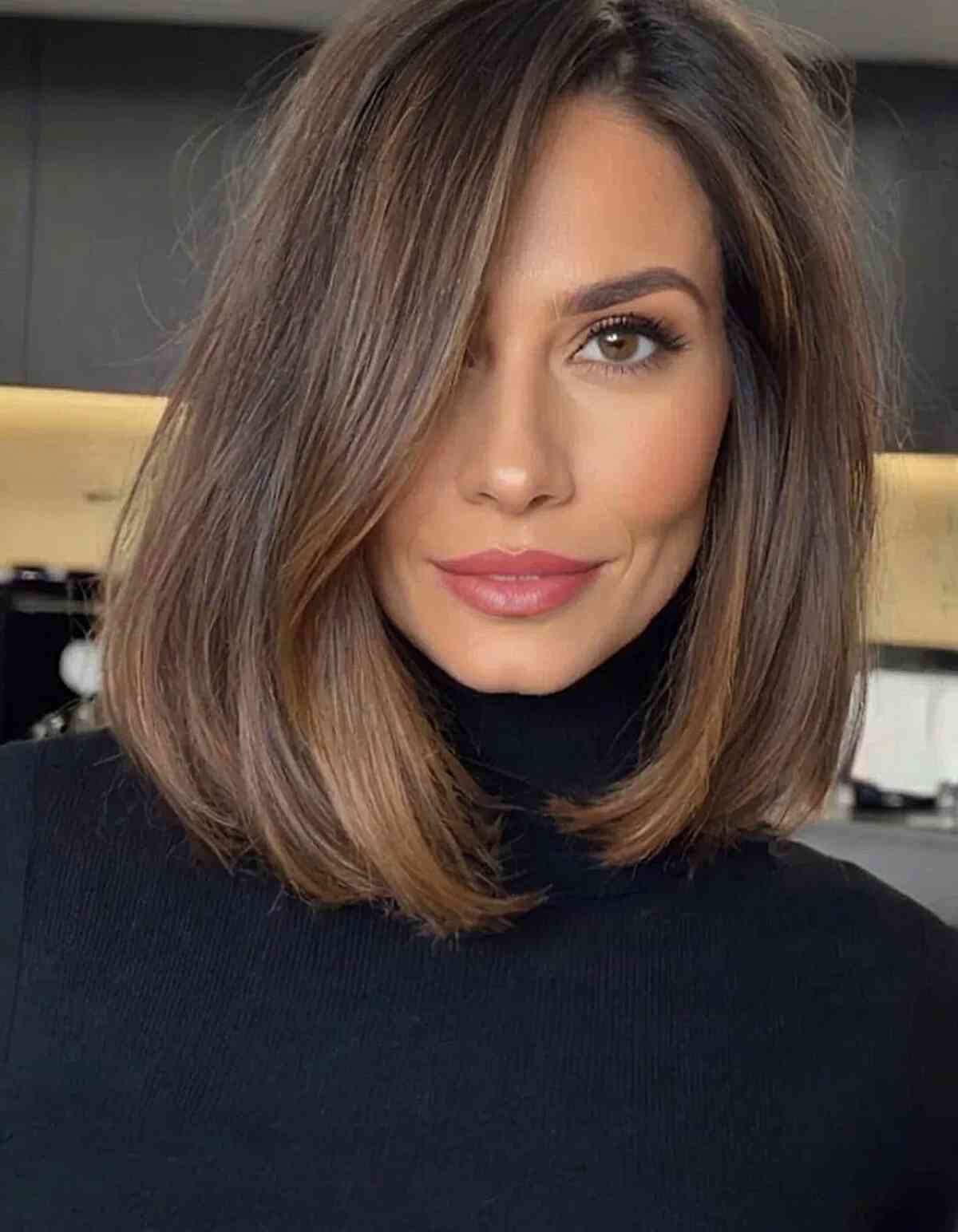
The angled bob with side-swept bangs is built on geometry: the sharp diagonal line visually shortens a long face, and the side part pushes volume to one side. The medium brown base with caramel balayage adds dimension without competing with the cut. Ask your colorist for: chin length angled bob, medium brown with caramel balayage, side-swept bangs. The one real drawback is that fine straight hair can struggle to hold the angle’s volume. Root volume and a trim every six weeks keep the line crisp.
Collarbone Shag With Copper Balayage
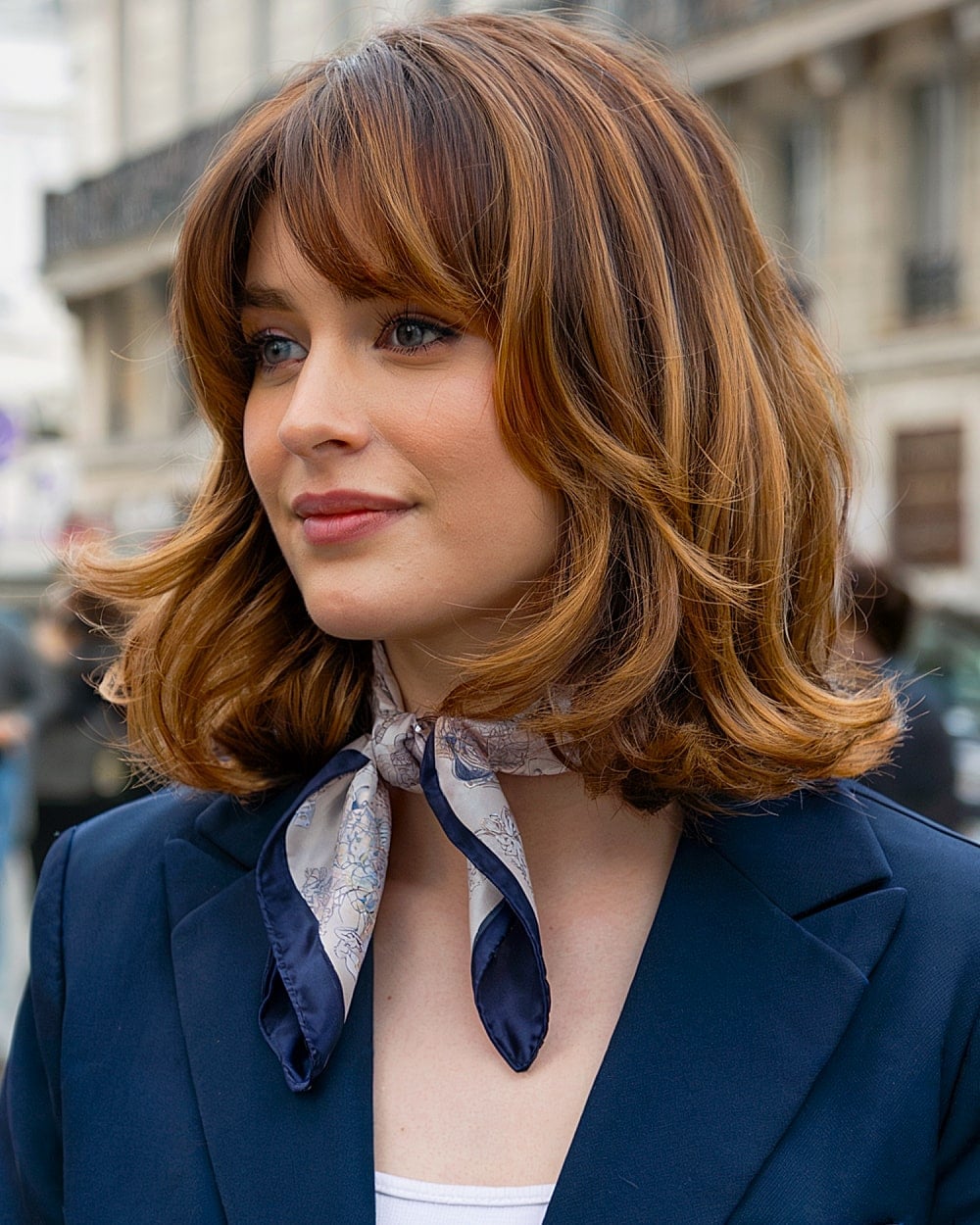
This is not a subtle shimmer of copper; it is a full-on copper red base with lighter copper highlights woven through a collarbone-length shag. If you have been eyeing rose gold but suspect it would fade pink on you, this is the warmer cousin that actually stays. Medium density wavy hair at collarbone length is the sweet spot, and the full bangs suit oval and long faces best.
Ask your stylist for: collarbone shag, copper red with lighter copper highlights, full bangs. Style it with a texturizing paste through the ends and expect to trim those bangs every four to six weeks. This one works for everyday, but it also pulls its weight at a summer festival when the sun hits it.
Shoulder Length Curly Balayage
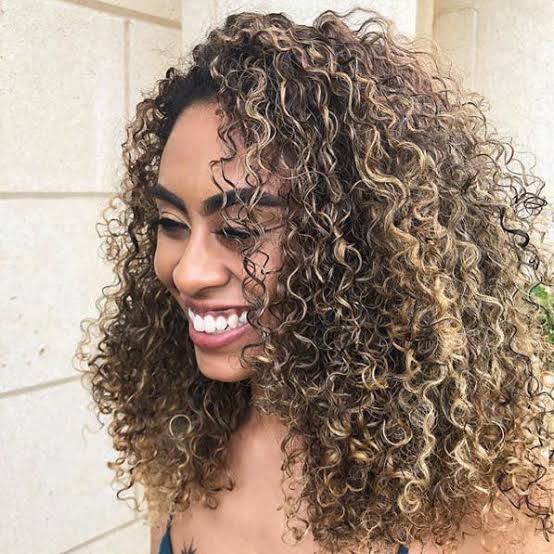
That side part pulls the lighter pieces forward, so the dimension lands where it shows. Thick, curly hair at this length holds the shape well, and a side part adds balance to round faces. Ask your colorist for: shoulder length curly hair, dark brown with honey blonde balayage. Work a curl cream through wet hair and diffuse on low for definition, then trim every eight to twelve weeks.
Mid-Back Waves With Honey Blonde Balayage
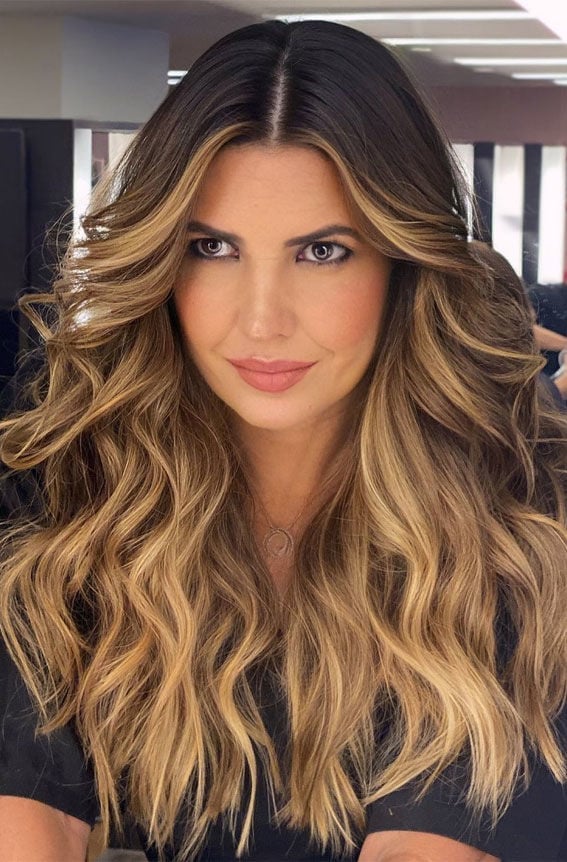
Honey blonde balayage on a dark brown base works because the warmth of the honey resembles a natural lightening, not a separate color. On thick, wavy hair cut to mid-back length with long layers, the honey pieces are painted closer to the roots at the top and soften into a gradient below. The middle part lets the lighter strands fall evenly on both sides, which elongates round faces.
Ask your colorist for: mid-back length wavy hair, dark brown with honey blonde balayage. The technique uses a sweeping motion instead of foils, so the blend is gradual. A smoothing serum helps control frizz, and a trim every six to ten weeks keeps the ends from thinning out.
Long Layered Dark Brown With Caramel Blonde
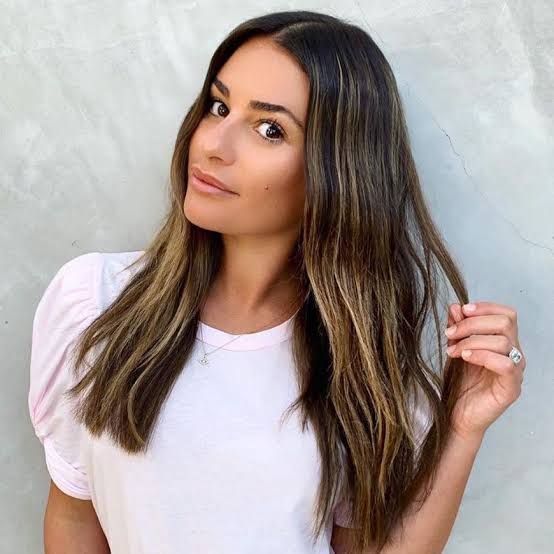
When you book this, have a clear request ready. The payoff depends on where the lighter pieces land. Long, layered dark brown hair gets caramel and blonde balayage that is heaviest around the face, then softens into the lengths. That face-framing placement is the part you need to describe, not just the general color. Thick, wavy hair of mid-back length or longer handles the contrast well, and a side part adds volume to finer textures.
Ask your colorist for: long layered hair, dark brown with caramel blonde balayage, face-framing. Specify that you want the lighter pieces to start a few inches from the root at the hairline so the grow-out looks planned. Use low heat to encourage the wave pattern, and schedule layer trims at eight to ten weeks.
Mid-Back Dark Hair With Subtle Brown Balayage
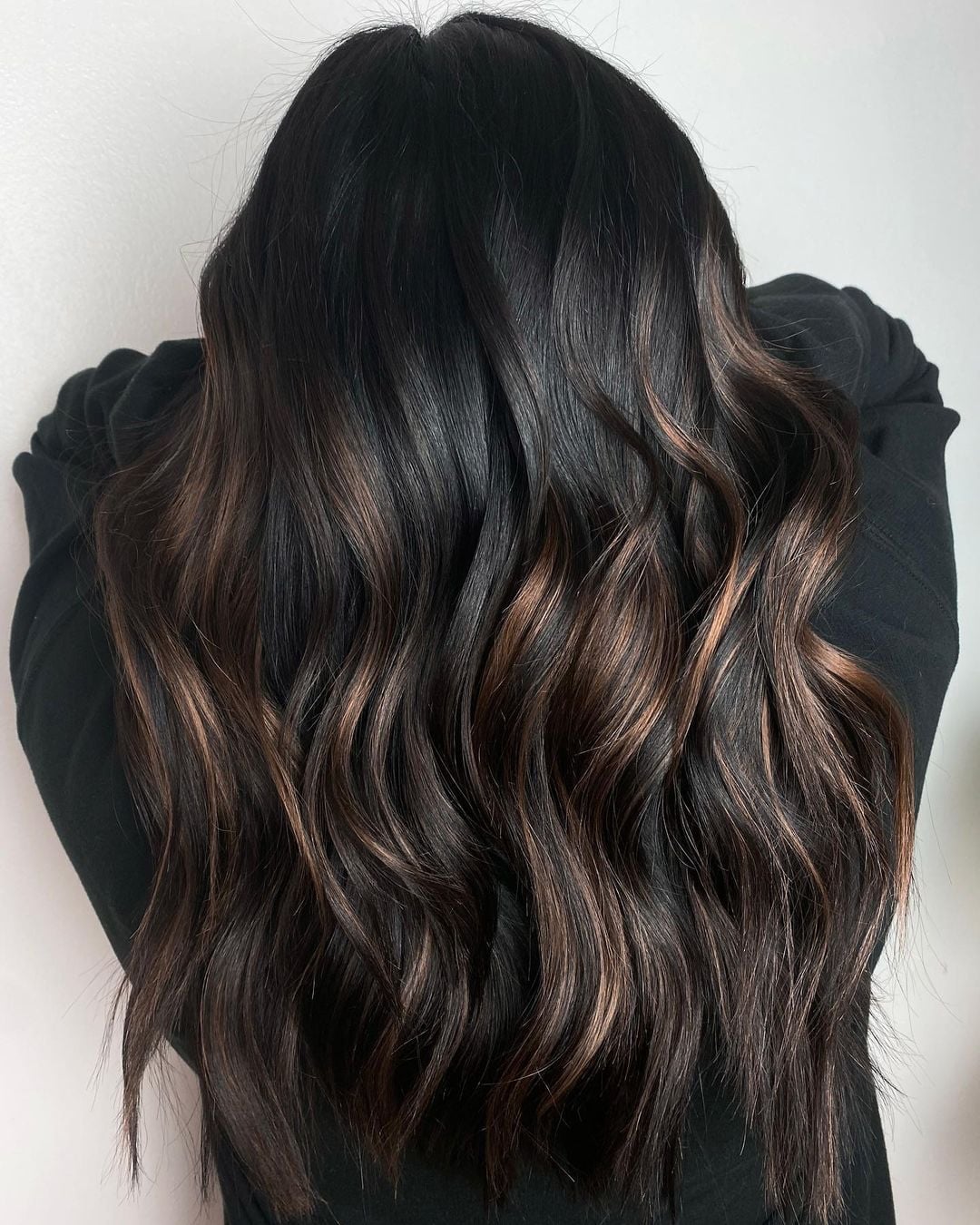
This is the difference between a dramatic blonde stripe and a whisper of dimension. Black hair gets subtle brown balayage woven through the mid-lengths and ends, so the color shift is visible only when the light catches the waves. Thick, wavy hair at mid-back length benefits from the long layers that create movement without losing weight. Ask your colorist for: mid-back length hair, black with subtle brown balayage. A shine serum brings out the brown pieces, and a trim every six to ten weeks keeps the ends healthy. The upkeep is lower than high-contrast balayage since the root line barely shows.
Mid-Back Dark Blonde To Platinum Balayage
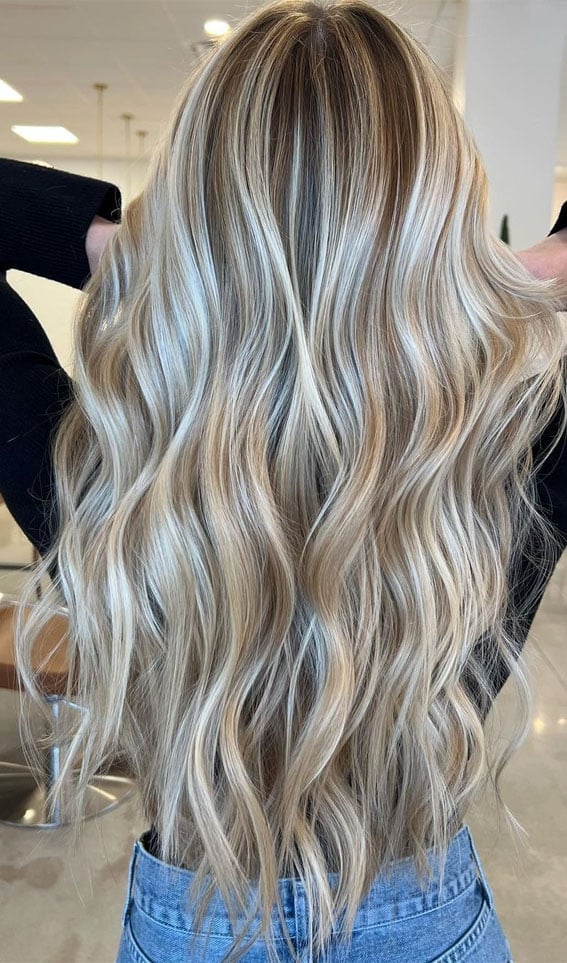
Platinum doesn’t stay platinum on its own. This mid-back length cut keeps thick wavy hair in loose layers, with a middle part and no bangs, so the dark blonde base melts into lighter platinum through the lengths. It suits thick, wavy hair that’s already mid-back or longer, since the weight helps the gradient read clearly. Ask your colorist for: mid-back length hair, dark blonde to platinum blonde balayage.
Upkeep is the real conversation here. Platinum tones pull brassy within weeks, so a purple shampoo in your regular rotation keeps the ends cool between toning visits. Budget for a toner every four to six weeks and a trim every eight to ten to keep the wavy ends from splitting. The payoff is dimensional and bright, but it’s a high-maintenance commitment, not a set-it-and-forget-it color.
Mid-Back Red To Blonde Gradient Balayage
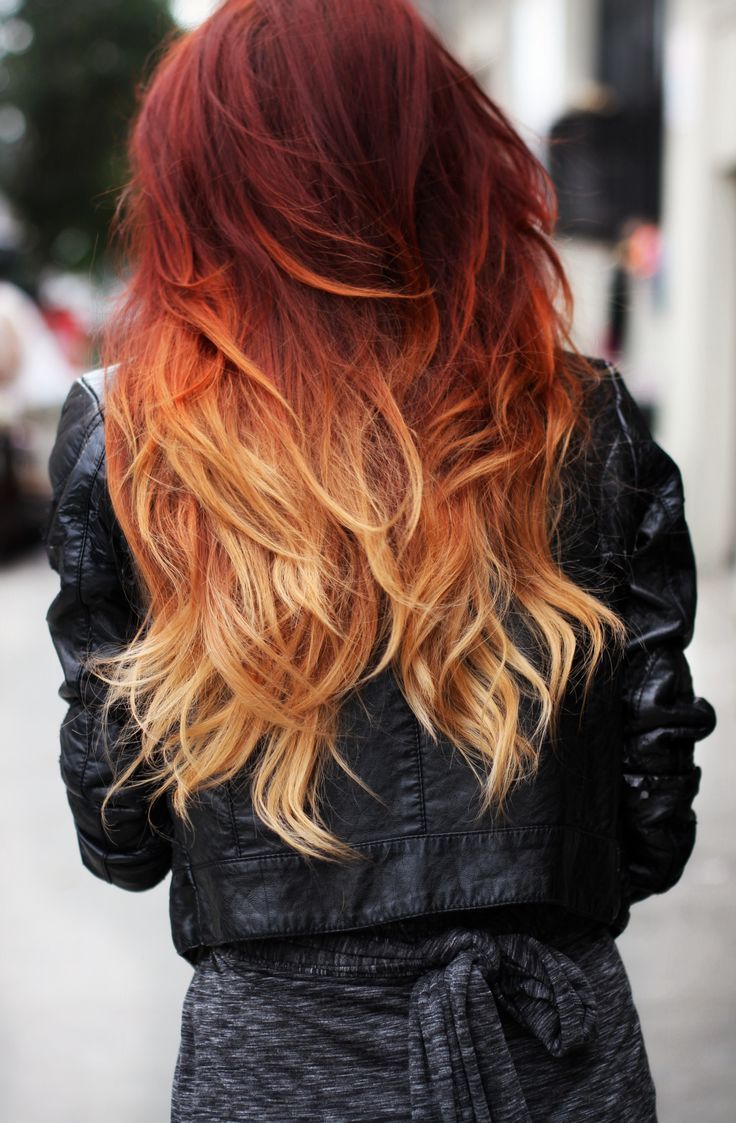
This is less a highlight and more a color journey. The deep red roots shift to vibrant orange through the mid-lengths, then land on light blonde ends, all on thick wavy hair cut in layers to mid-back with no bangs. That smooth gradient requires the colorist to pre-lighten in sections, then glaze each zone separately so the tones blend rather than stripe. It suits thick wavy hair of mid-back length or longer, where the layers give the transition room to breathe. Ask your colorist for: mid-back length hair, deep red to blonde gradient balayage.
The technique is the whole game. Red pigments are stubborn, so the depth at the roots has to be placed deliberately to avoid muddying the blonde. The result is a striking, artistic finish, but it needs color-safe products from day one and periodic toning on the blonde ends to keep them from turning brassy against the red.
Mid-Back Dark Brown With Blonde Balayage, Wavy
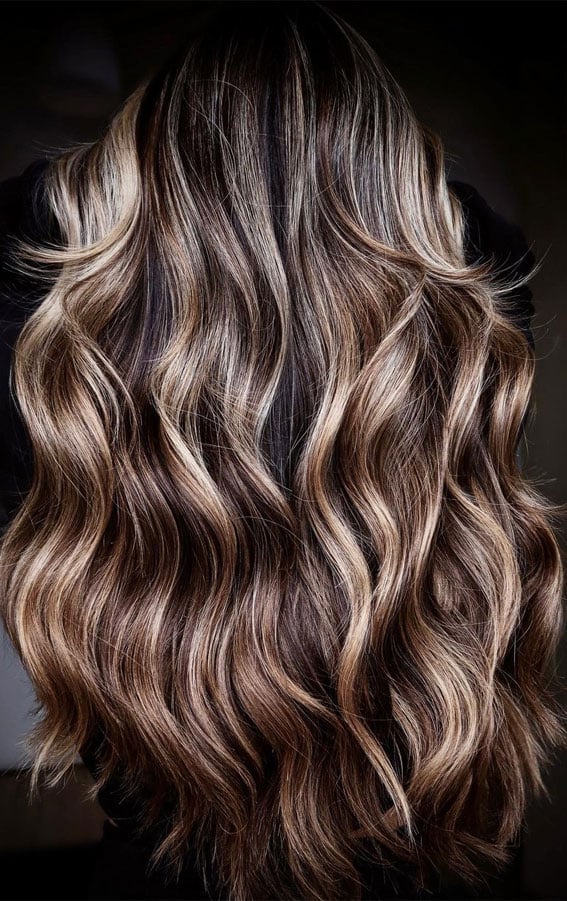
Dark brown bases take balayage well, but the dimension only shows if the blonde is placed with contrast in mind. This mid-back length cut keeps thick wavy hair in loose layers with a middle part and no bangs, so the lighter pieces catch movement and look natural. It suits thick wavy hair of mid-back length or longer, and the middle part helps elongate round faces. Ask your colorist for: mid-back length hair, dark brown with blonde balayage. A texturizing spray enhances the waves, and a trim every six to ten weeks keeps the ends tidy. Doing this at home rarely lands well; the blend needs a skilled hand to avoid streaks.
Final Thoughts
For fine hair, keep the balayage lighter at the ends and mid-lengths to maintain volume, avoiding heavy saturation near the root. Thicker hair can handle deeper, more blended tones that add definition without weighing the hair down.
- Toning typically needed every 8-10 weeks to maintain blonde balayage shades.
- Use a color-safe shampoo and conditioner to preserve the balayage tones.
- Deep condition weekly to keep hair hydrated and smooth.
- Trim ends every 6-10 weeks to prevent split ends and maintain shape.
Find the balayage that complements your style and lifestyle.
