

Honey blonde is the shade that keeps showing up in the salon chair, and for good reason: it adds warmth without going orange. This season, the shift is toward lived-in color with soft face-framing layers and curtain bangs, moving away from chunky highlights and poker-straight styling.
These 18 Simple Honey Hair ideas cover the range from subtle highlights to dimensional balayage, across lengths that start at the collarbone and go to mid-back. The collection works for fine hair that needs volume as much as for thick hair that needs movement. If your current blonde has gone brassy or your grow-out line is too visible, this list has a fix for you.
Mid-Back Honey Blonde Balayage With Curtain Bangs
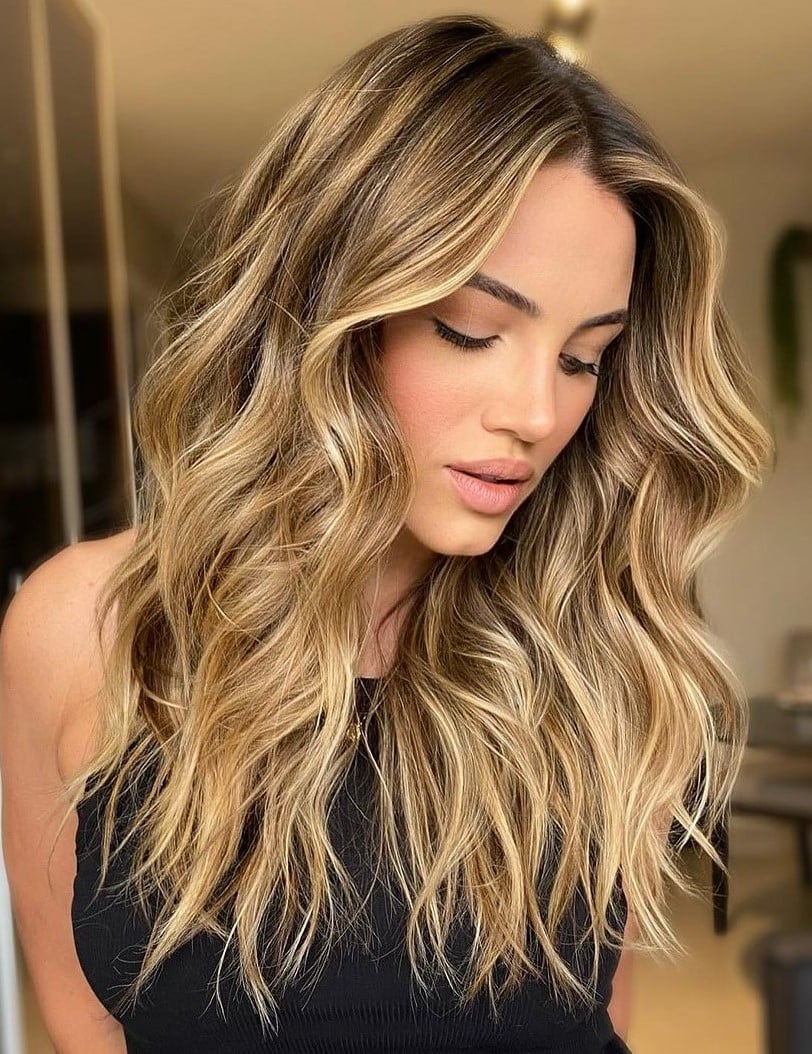
The darker root base here creates a natural grow-out. A honey blonde balayage painted onto mid-back length, loose wavy layers produces a shade that looks warm and dimensional instead of uniform. The lighter highlights start a few inches down. Curtain bangs and a middle parting frame the face without shortening the silhouette. Thick, wavy texture starting at mid-back length works best; curtain bangs soften round and oval faces. Ask your colorist for: honey blonde balayage with darker roots, loose wavy layers, curtain bangs.
A large barrel curling wand builds the waves in about twenty minutes. The curtain bangs need a trim every four to six weeks to stay in shape. The balayage itself can stretch ten to twelve weeks between appointments, which is the point.
Long Layered Honey Blonde With Soft Waves
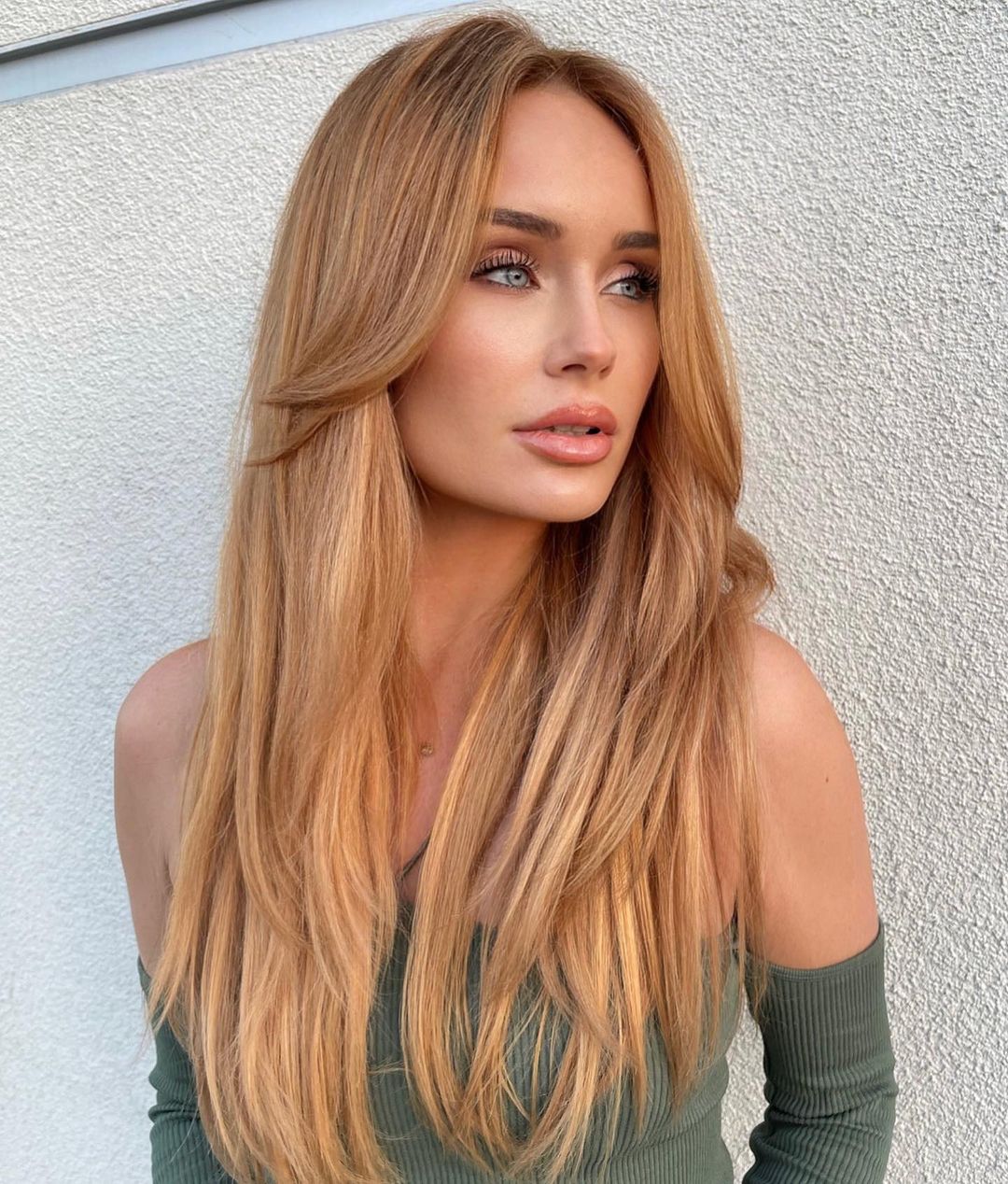
Does a warm blonde work on straight, thick hair? Yes, when the tone has enough depth to avoid washing out the texture. Long layers keep the weight from making the shape feel heavy, and a balayage placed through the mid-lengths and ends adds movement without a harsh root line. Curtain bangs finish the silhouette. This suits thick, healthy hair past the shoulders; the curtain bangs work with most face shapes. Ask your colorist for: long honey blonde balayage, soft waves, face-framing curtain bangs.
This works for everyday wear and special occasions equally well. A texturizing spray on dry hair defines the soft waves in minutes. The salon commitment is the balayage refresh every ten weeks, but the grow-out phase looks intentional rather than urgent.
Collarbone Honey Chestnut Balayage Waves
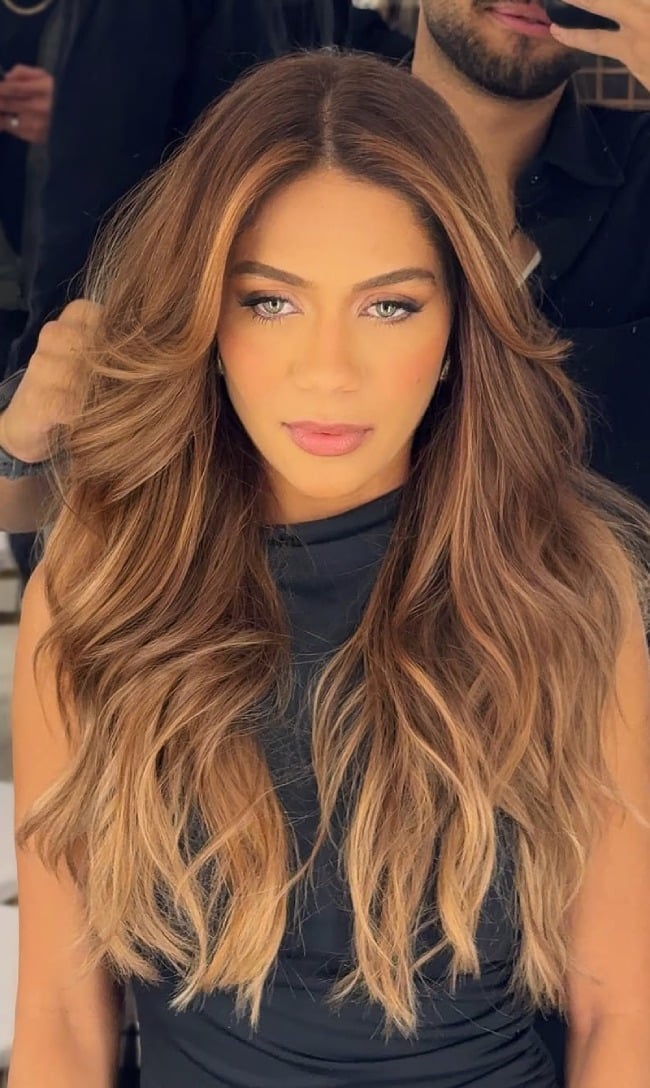
Cool-toned blondes can flatten fine wavy hair. A honey chestnut balayage on a rich brown base does the opposite: the warmth adds visual density at the roots while the lighter pieces create the illusion of volume through the ends. Curtain bangs and a middle parting keep the collarbone length from feeling too round. Fine to medium wavy texture starting at collarbone length is the sweet spot; curtain bangs soften square and oval faces. Ask your colorist for: honey chestnut balayage, collarbone length, soft waves, curtain bangs. Fine hair shows brassiness faster, so a toning appointment every six weeks keeps the honey from veering orange.
Collarbone Honey Blonde With Curtain Bangs
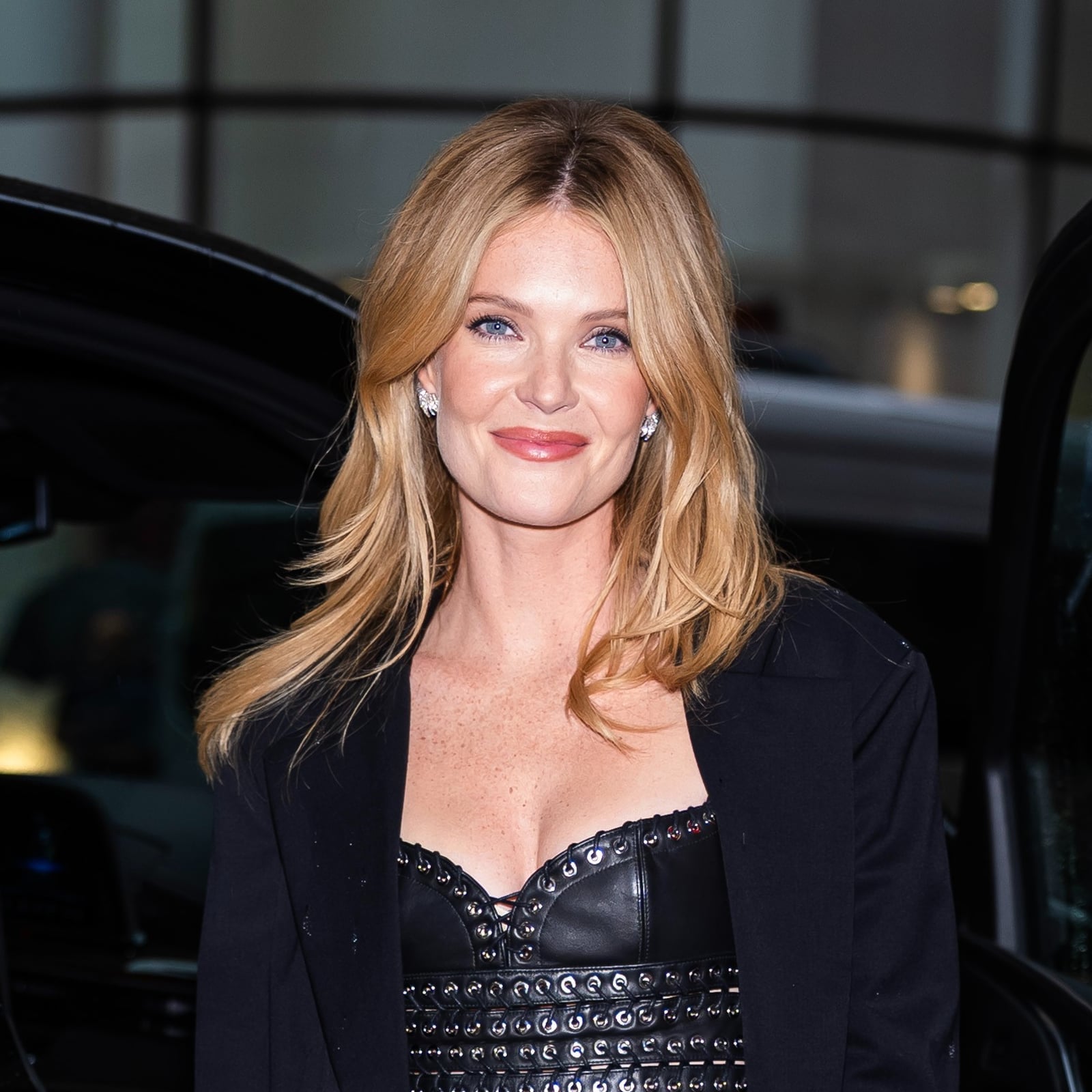
Subtle highlights are the difference between a salon color and a box dye. This collarbone honey blonde uses fine ribbons of lighter blonde through the top layers, keeping the base warm and the overall effect dimensional. Curtain bangs frame the face, while the subtle layers in the cut prevent the length from sitting flat. Medium density wavy hair starting at collarbone length takes this best; curtain bangs suit most face shapes. Ask your colorist for: collarbone honey blonde, subtle highlights, curtain bangs, soft waves. Bring a photo of the exact warmth you want, honey is a range, not a single shade.
Collarbone Wavy Honey Blonde Balayage
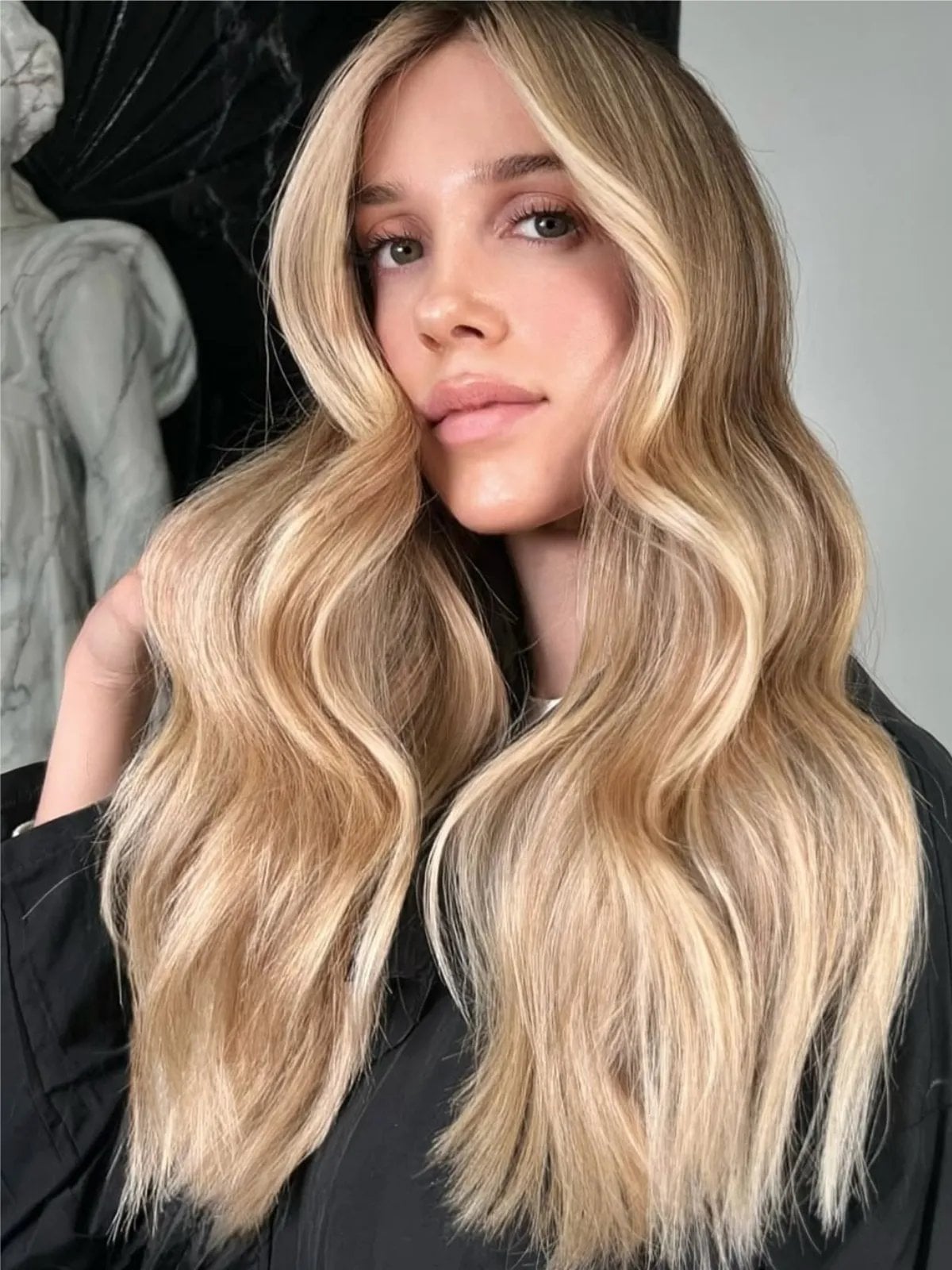
The lived-in look of this honey blonde balayage comes from how the lighter pieces are placed: concentrated around the face and through the ends, with the root kept darker. Collarbone-length thick, wavy hair holds the shape of a blowout well, and the face-framing layers and curtain bangs prevent the shorter length from feeling boxy. A middle parting completes the symmetry. Thick, wavy hair starting at collarbone length is ideal; curtain bangs soften round and heart faces. Ask your colorist for: collarbone honey blonde balayage, wavy blowout, curtain bangs.
This is a salon-only color. The daily styling requires a medium round brush for the blowout to enhance the natural wave, about fifteen minutes. Balayage on collarbone length needs a refresh every ten to twelve weeks, which is manageable since the grow-out blends into the darker root.
Collarbone Bob With Honey Brown Highlights
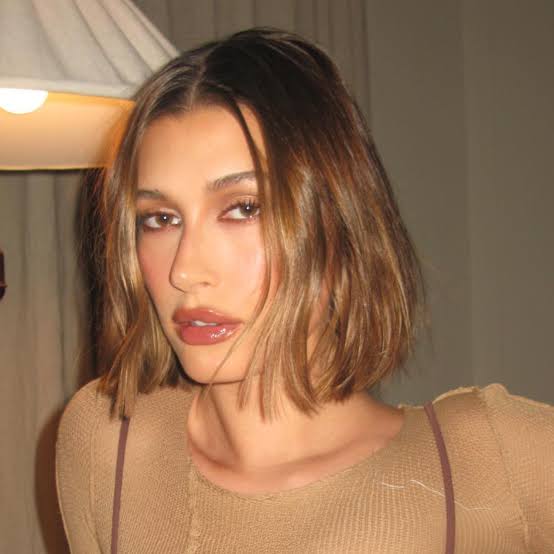
What is the one thing that turns a honey brown bob from dimensional to just streaky? Packing the highlights too close to the root. This collarbone bob keeps the warm honey brown base dominant and places subtle lighter highlights a half-inch from the scalp, so the color breathes. The soft curtain bangs and loose waves on medium density hair do the rest. Ask your colorist for: collarbone bob, honey brown base, subtle highlights, curtain bangs. The real drawback: those same subtle highlights can read as grown-out if your colorist spaces them too far apart, so book a consultation before the bowl comes out.
Mid-Back Warm Brown With Honey Money Piece
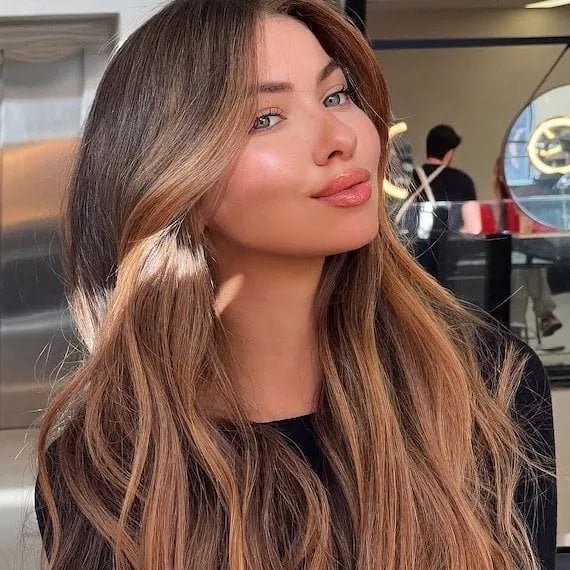
The honey blonde money piece is painted first, then the rest of the color follows. On this mid-back length, the warm brown base is applied from root to tip, but the sections framing the face get a separate honey blonde formula that is lighter by three or four shades. The stylist paints that face-framing stripe from just above the brow to the jaw, then softens the transition with a balayage sweep through the mid-lengths. Curtain bangs keep the money piece visible even when the hair is tucked behind an ear.
Ask your colorist for: warm brown base, honey blonde money piece, face-framing highlights. The remaining highlights are woven through the back sections, spaced about an inch apart, so the overall tone stays warm rather than striped. Thick, wavy hair holds the contrast best, because the texture scatters light across both shades.
Collarbone Honey Blonde With Subtle Highlights
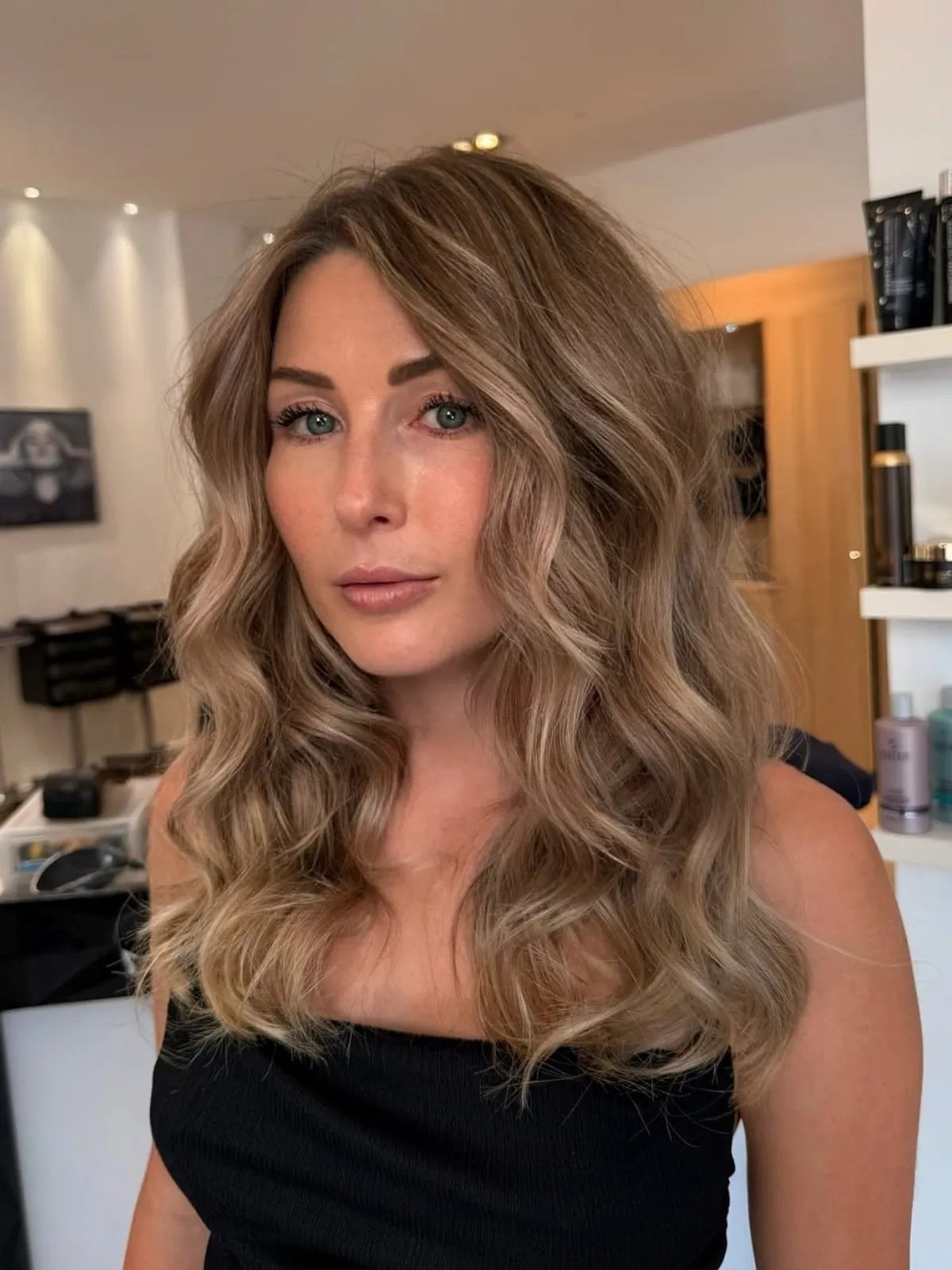
The honey blonde base here is the star, not the highlights. On collarbone-length hair with medium density and a middle parting, the color shows as a single warm tone until the light hits it. That is the trick: the subtle lighter highlights are fine ribbons, no wider than a pencil, placed only on the top layer and the ends. They add movement without changing the overall honey blonde impression. No bangs means the color runs uninterrupted from the part to the ends, which keeps the application clean. Ask your colorist for: collarbone honey blonde, subtle highlights, soft waves. Gentle waves let the light catch those thin ribbons at different angles, so the dimension looks natural.
Shoulder Length Honey Blonde Highlights
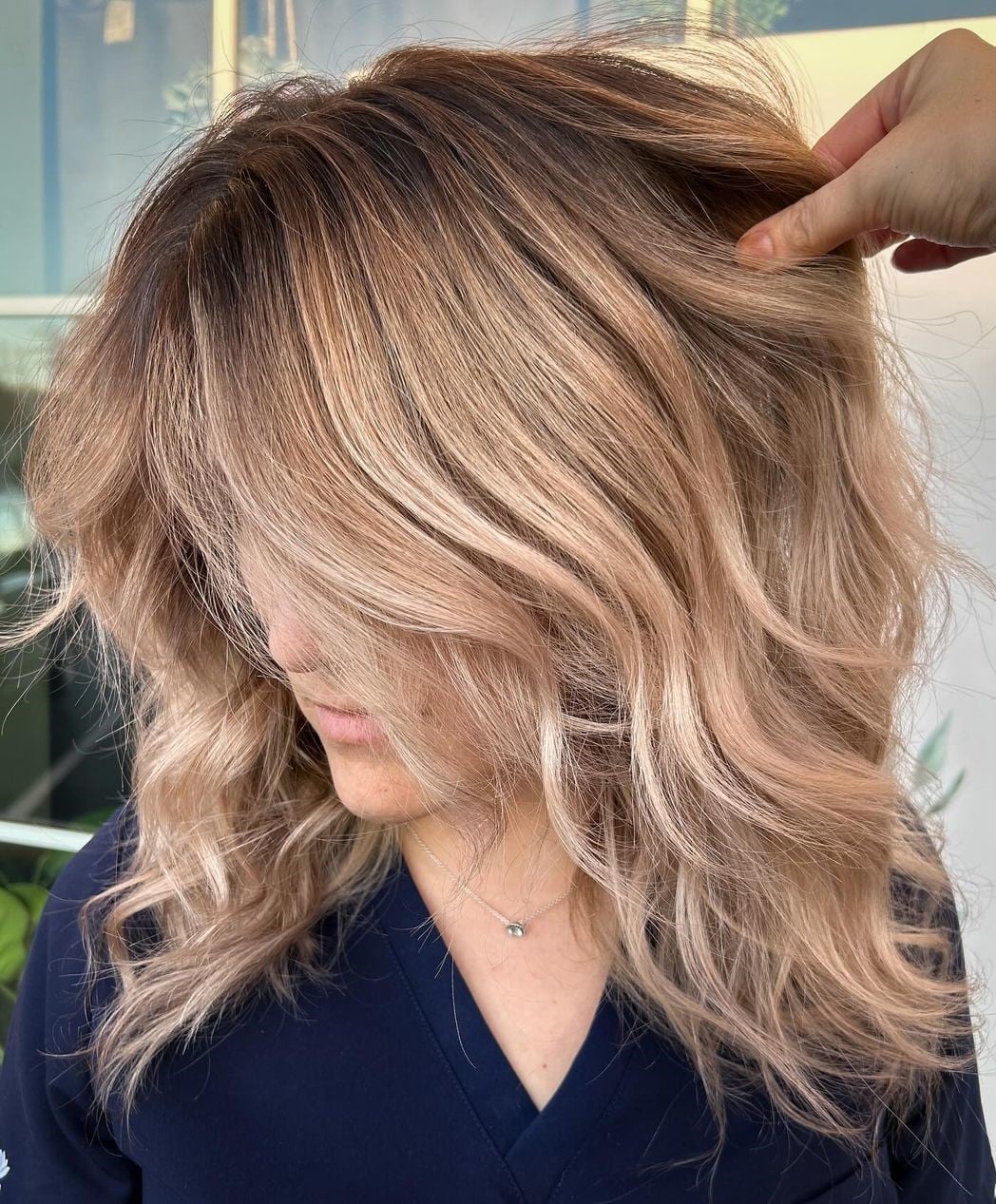
A side parting and fine, wavy texture are the secret to making honey blonde highlights look like they belong. On shoulder-length hair, the side part creates a deeper section of hair on one side, so the highlights sit where the eye naturally goes. The honey blonde tone is woven through the top and mid-lengths, leaving the underside a shade darker for depth. Fine hair benefits from this placement: the highlights add perceived density without the weight of all-over color. Ask your colorist for: shoulder length, honey blonde highlights, soft blowout. If your hair is very fine, skip highlights in the bottom inch to avoid a see-through effect at the ends.
Shoulder Honey Blonde Balayage Wavy Blowout
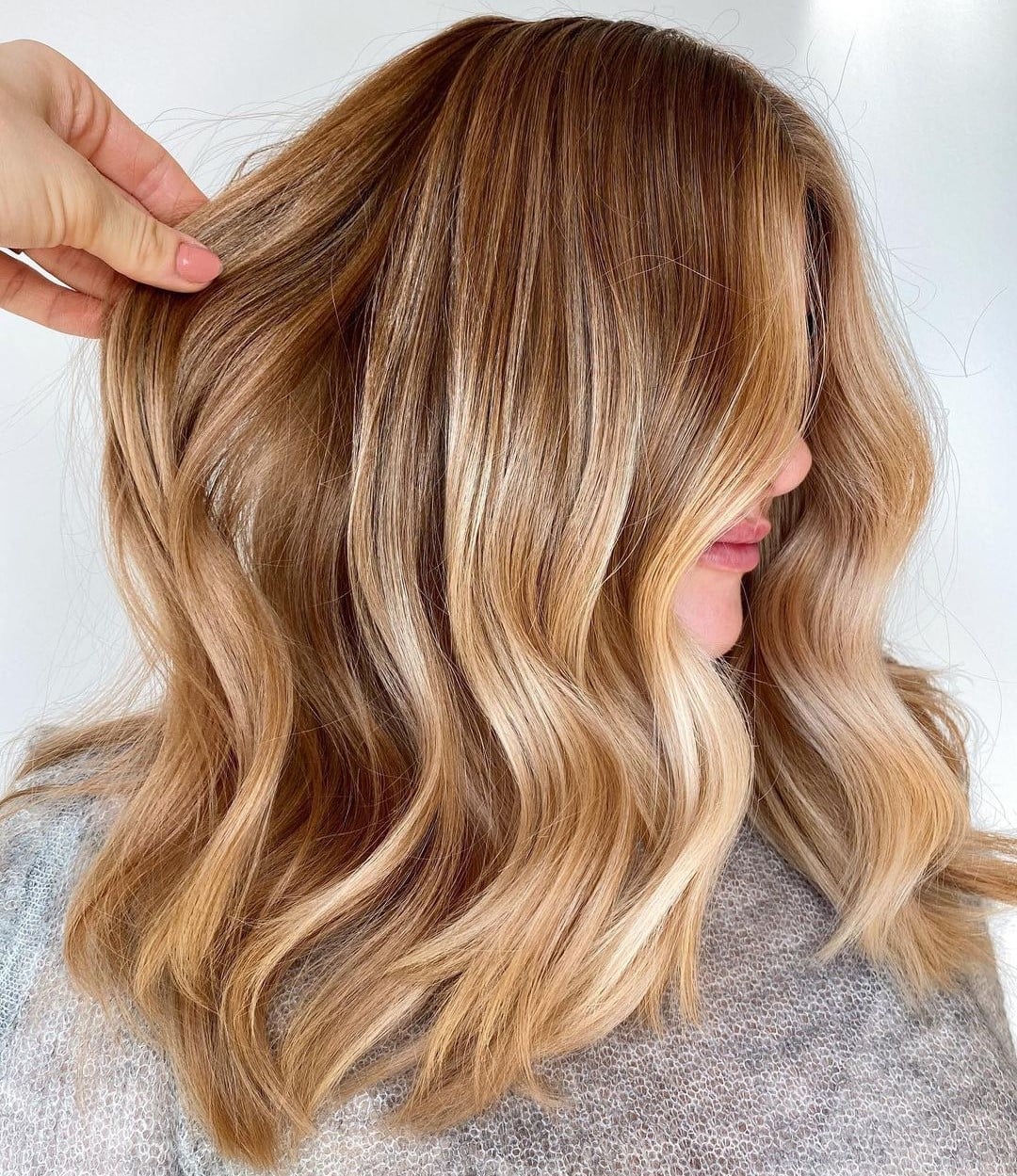
The wavy blowout on this shoulder-length cut does the heavy lifting for the honey blonde balayage. The color transition starts mid-shaft, with the warmer base at the root and the lighter honey tones concentrated from the ears down. The side view shows how the layers break the balayage into separate ribbons of light and dark. Thick, wavy texture holds the wave pattern longer than fine hair would, which means the blowout can last two days with dry shampoo. Ask your colorist for: shoulder length honey blonde balayage, wavy blowout. The real drawback: that seamless blend requires a gloss treatment every six weeks to keep the warm tone from pulling brassy.
Mid-Back Honey Blonde With Lighter Highlights
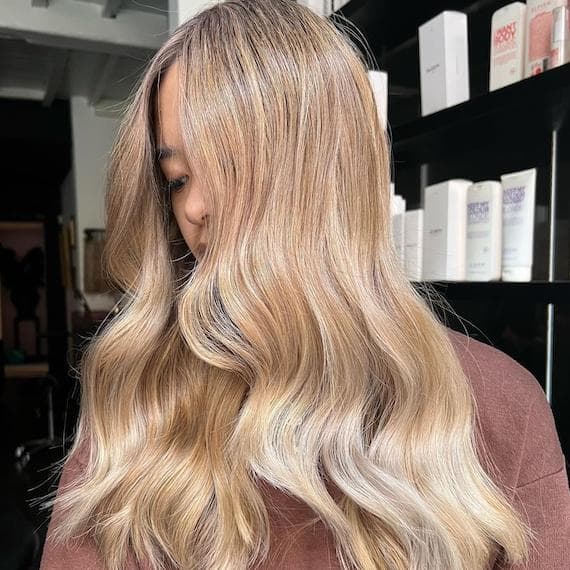
The design here is straightforward: a honey blonde base gets a brightness boost from lighter blonde highlights placed throughout the mid-back length. Thick, wavy hair with layers takes well to this approach because the lighter pieces catch the movement and add depth. A middle parting keeps the distribution even on both sides. Ask your colorist for: mid-back honey blonde, lighter blonde highlights, loose waves. The blowout itself is a smoothing-cream situation, about twenty minutes with a round brush if your hair is already prepped.
The key is the highlight placement. Instead of painting thick sections from root to tip, the lighter strands are woven in at varying densities, so the honey base stays visible. That means the color looks dimensional, not striped. A toning appointment every eight to twelve weeks keeps the lighter pieces from turning brassy, but the natural root grow-out is less obvious than with a solid blonde. The layers help the waves stack without weighing down the ends.
Mid-Back Honey Blonde With Dimensional Highlights, Wavy
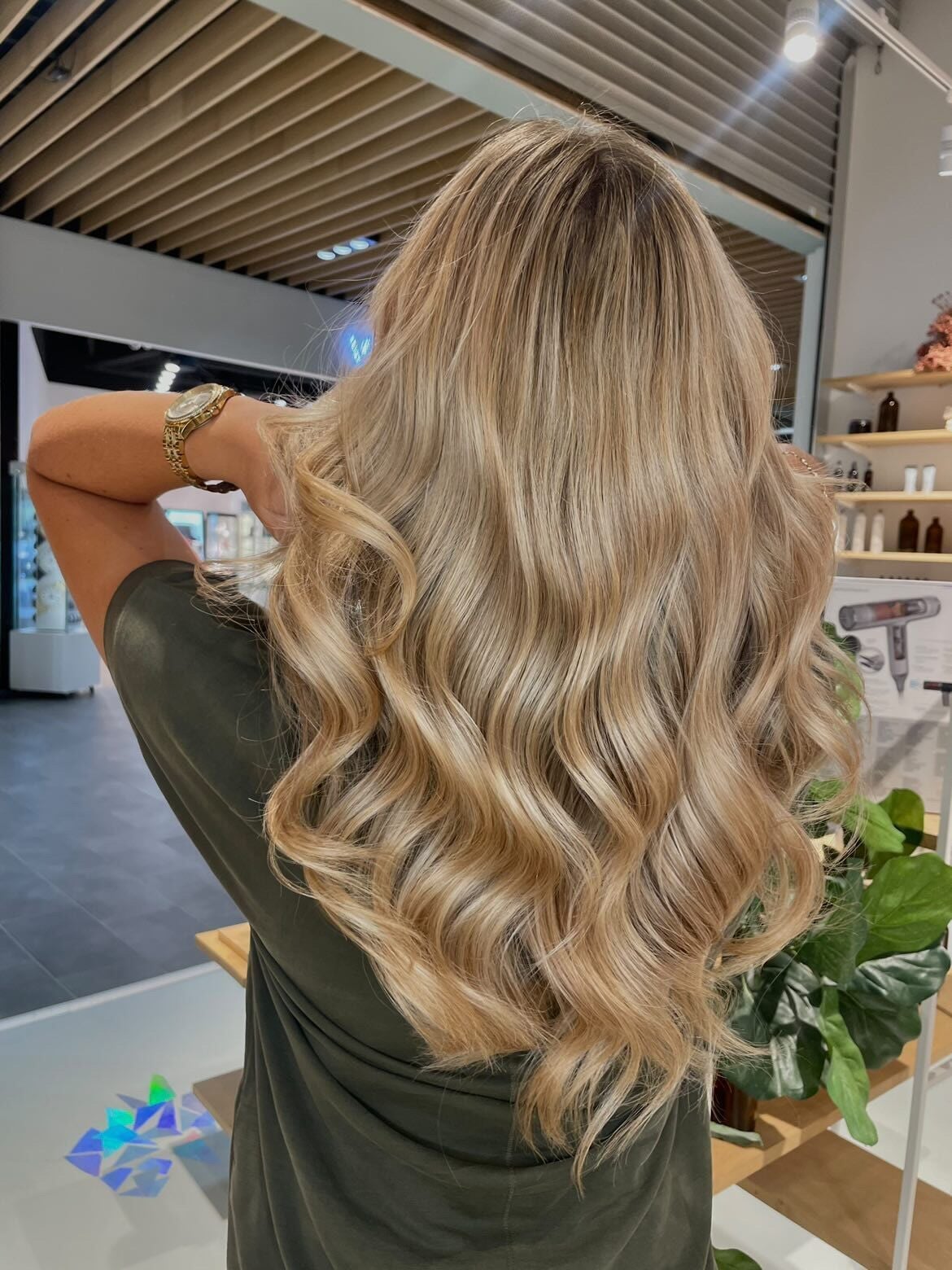
From the back view, this one earns its keep through contrast. The honey blonde base grounds the color while lighter, dimensional highlights travel through the waves, creating a lived-in effect that does not rely on perfect symmetry. Thick, wavy hair at mid-back length is the ideal starting point because the texture naturally breaks up the lighter pieces, so they never look painted on. A middle parting anchors the shape. Ask your colorist for: mid-back honey blonde base, dimensional highlights, loose waves.
The waves themselves are loose and flowing, achieved with a diffuser on medium heat rather than a curling iron. That keeps the texture soft and the gloss visible. The real draw is how the highlights interact with the wave pattern: the lighter strands sit on the crests of the waves, so the dimension shifts as the hair moves. A trim every six to eight weeks keeps the ends healthy enough to hold the wave without fraying.
Back View Honey Blonde Balayage Waves
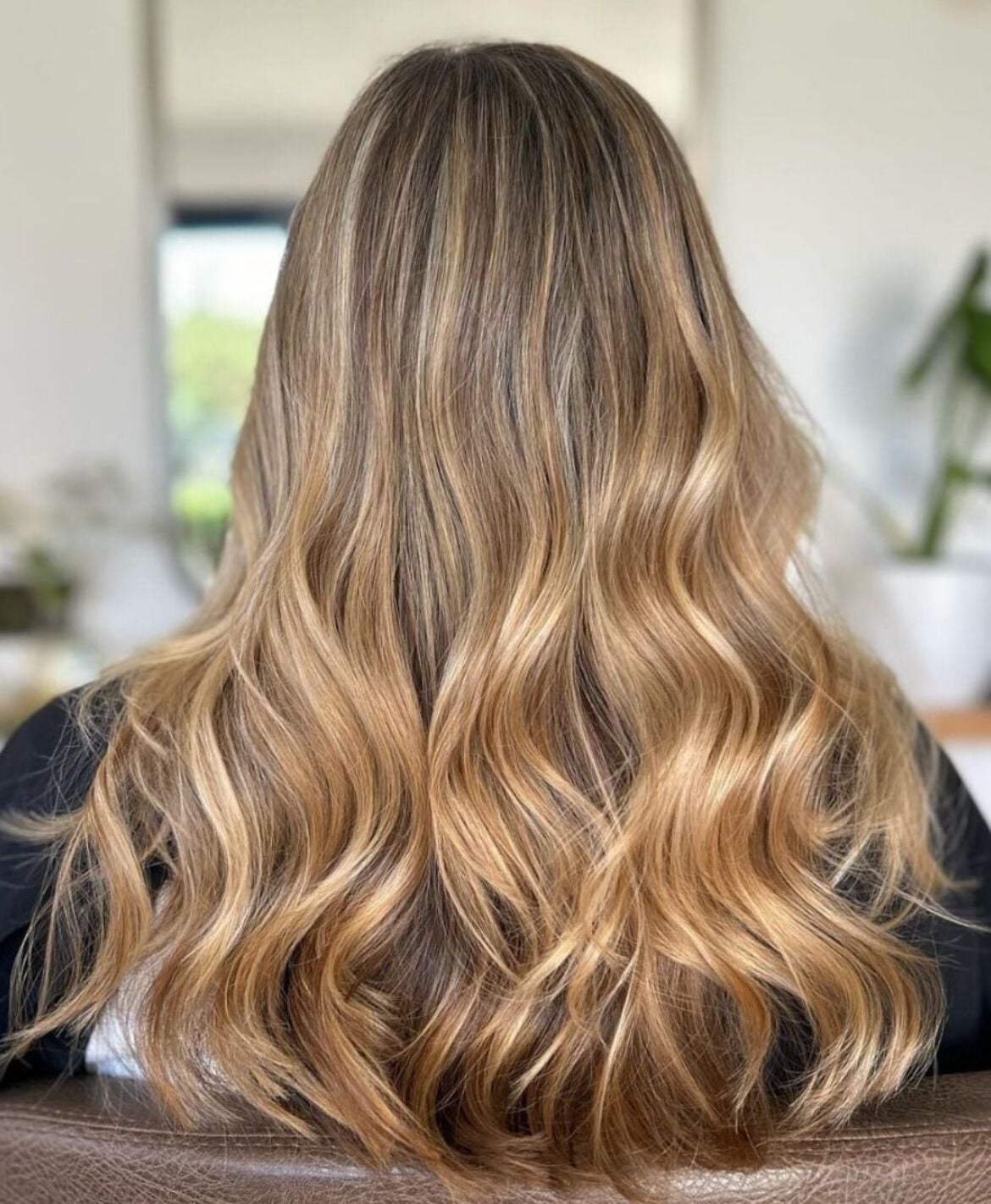
A solid honey blonde can look flat on thick hair. This balayage version solves that by painting lighter tones onto the surface of each section, so the depth comes from the darker base underneath rather than from uniform highlights. The result is more movement and a glossier finish, since the color is concentrated on the outer layers rather than scattered throughout. Thick, wavy hair at mid-back length is the natural candidate. Ask your colorist for: mid-back honey blonde balayage, wavy texture, natural finish. This is a salon-only technique, about two and a half hours for the application and processing. The trade-off is a longer refresh cycle: balayage grows out softer than foils, so you can stretch toning to ten or twelve weeks before the lighter pieces start to look muddy.
Mid-Back Honey Blonde Balayage With Layers
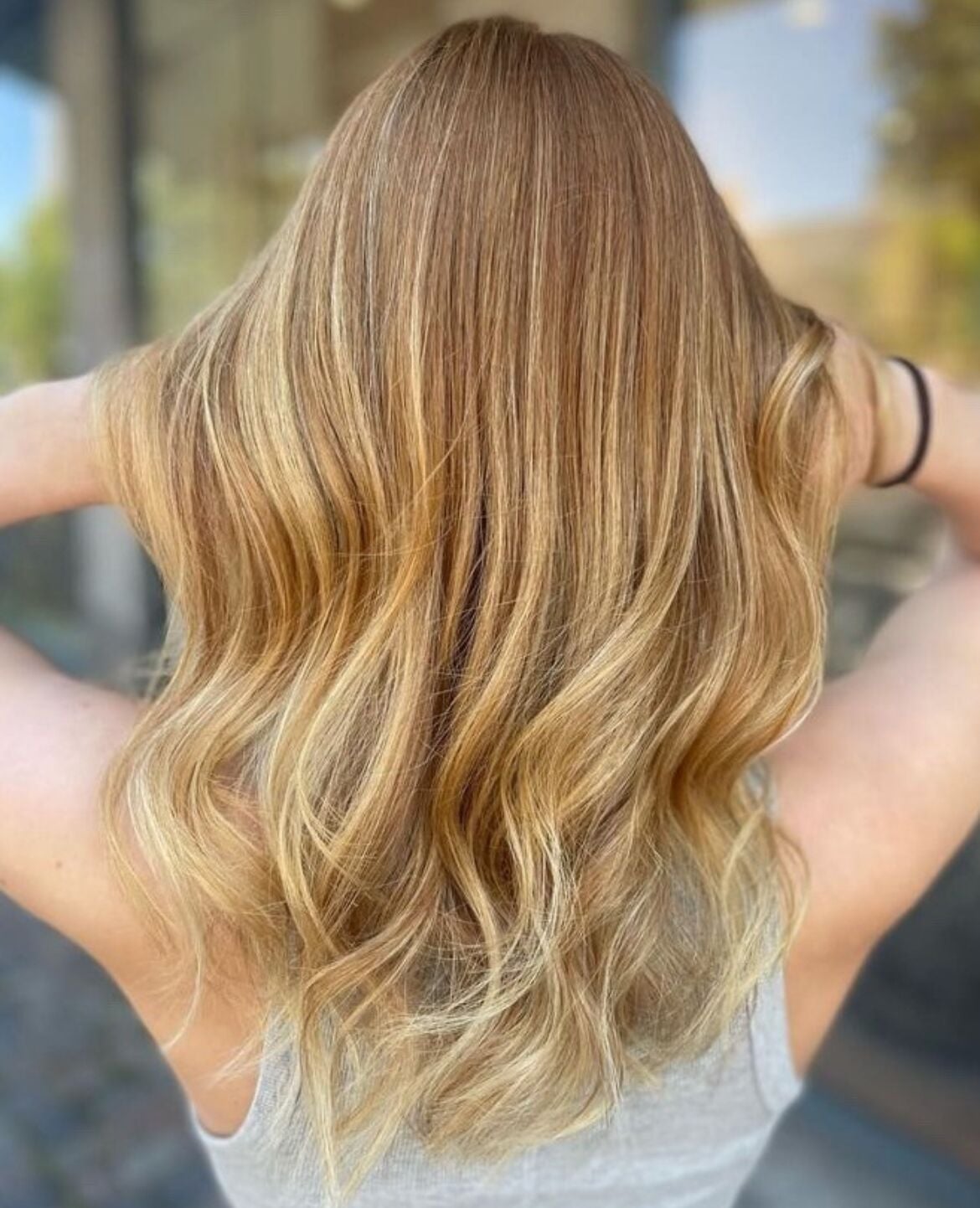
This combination pairs a warm honey blonde balayage with soft face-framing layers, and the back view confirms the logic: the lighter blonde tones sit against a warmer base, so the dimension reads as depth rather than contrast. Thick, wavy hair at mid-back length benefits from the layers because they prevent the weight from pulling the waves straight. A middle parting keeps the face-framing pieces balanced. Ask your colorist for: mid-back honey blonde balayage, face-framing layers, loose waves.
When you book the appointment, bring a reference photo that shows the back view specifically. Many balayage applications look good from the front but lose their structure from behind. The layers here start around the collarbone and graduate down, so the waves stack rather than drop. The balayage itself should be painted freehand, with the lighter tones concentrated on the mid-lengths and ends to keep the root area darker. That softens the grow-out phase considerably.
Mid-Back Honey Blonde With Subtle Highlights, Layers
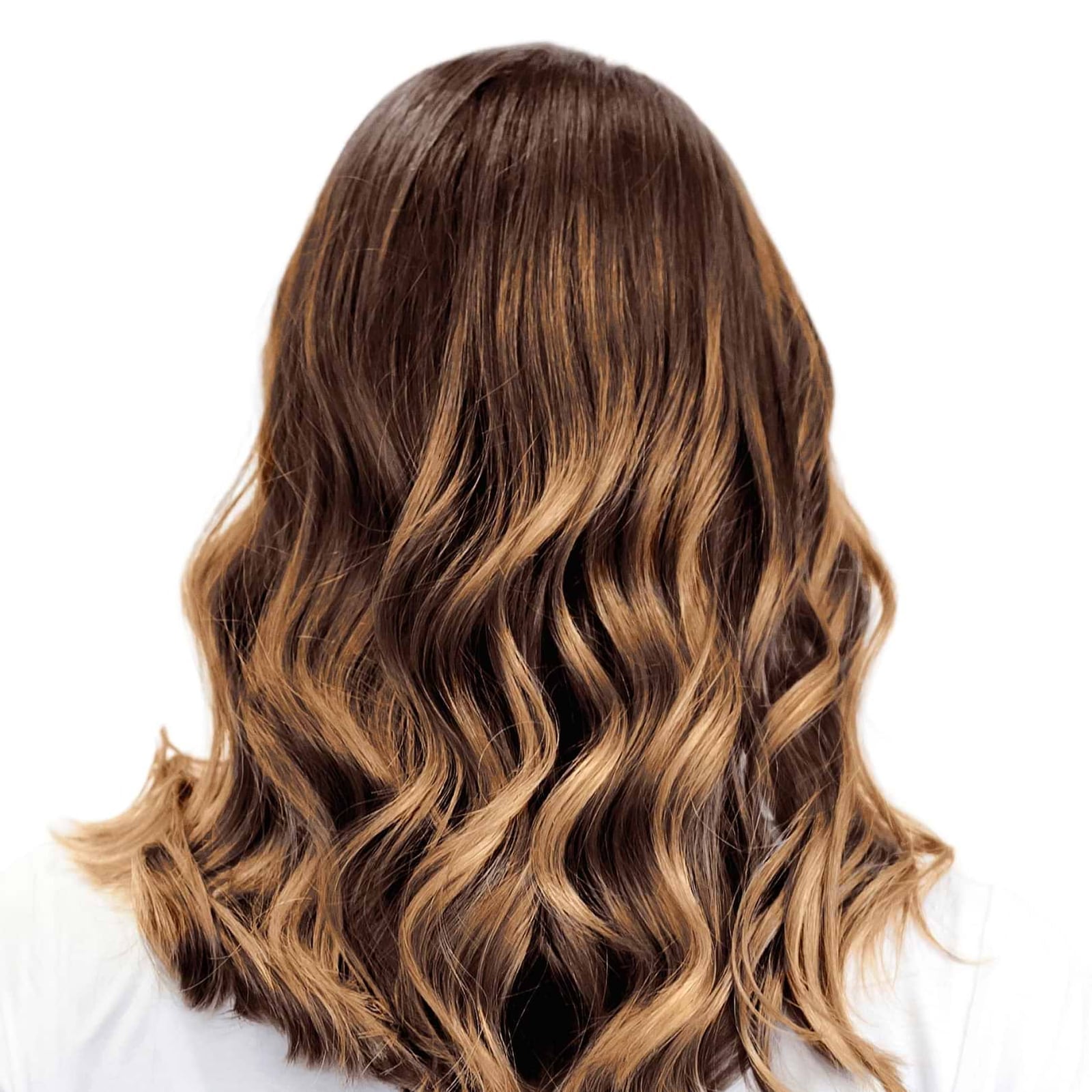
The grow-out phase is where subtle highlights earn their keep. Because the lighter strands are woven sparingly into a rich honey blonde base, the regrowth looks like natural depth. Thick, wavy hair at mid-back length benefits from this approach: the highlights add a glow without requiring a root touch-up every six weeks. A glossy finish helps the subtle pieces reflect light even as the base darkens slightly between appointments. Ask your colorist for: mid-back honey blonde, subtle lighter highlights, loose waves.
Subtle highlights can feel underwhelming right after the appointment if you are used to a brighter blonde. The payoff comes at week six, when the color has settled and the base has softened, and the highlights look like they grew in naturally. Use a smoothing serum on the ends before styling to keep the wave pattern defined and the gloss intact. Refresh the highlights every eight to twelve weeks; the layers need a trim every six to eight to keep the ends from splitting.
Mid-Back Honey Blonde Half-Up Twist
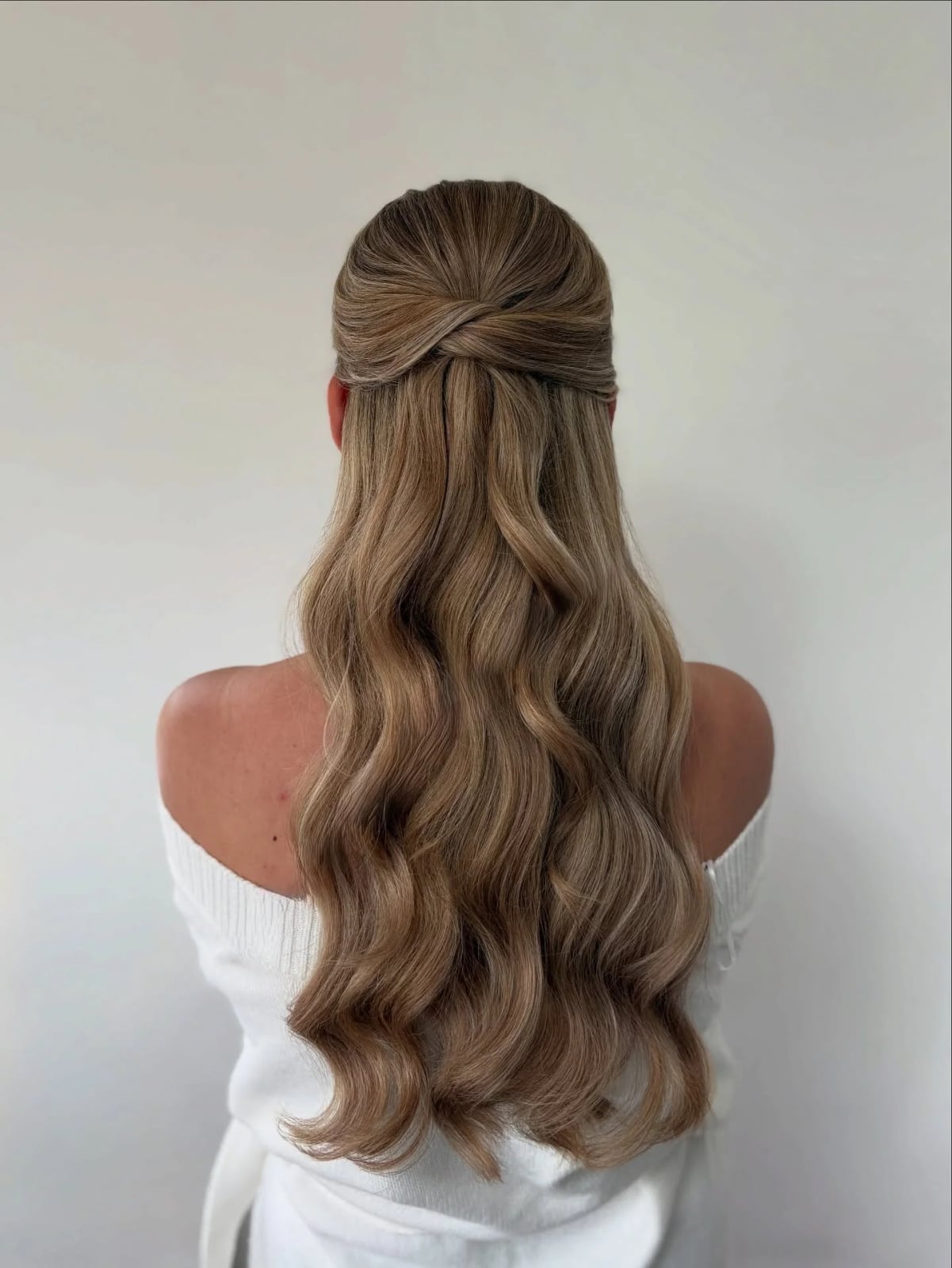
A half-up twist is not a ponytail, and that distinction matters. This version keeps the length down and pulls the top back with a middle parting, so the style looks polished. Fine, wavy hair at mid-back length benefits most: the twist adds volume without requiring teasing or product. Ask your colorist for: mid-back honey blonde, soft waves, half-up twist with face-framing pieces. Gather a section from each temple, twist them toward the back, and secure with bobby pins that disappear into the honey shade. Leave the front pieces loose to soften the line. It works for brunch or a wedding, and it takes about four minutes.
Honey Blonde With Subtle Layers
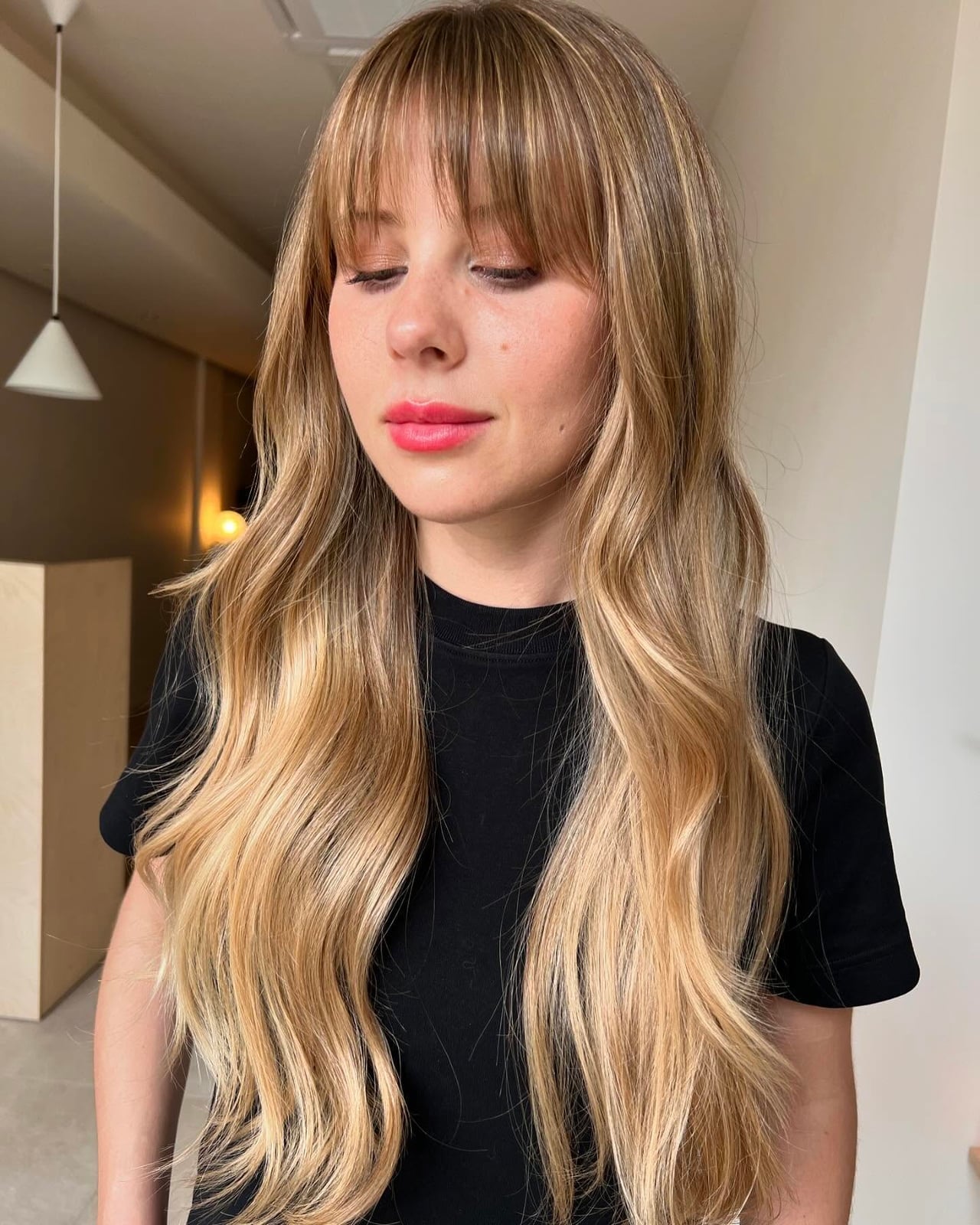
The honey blonde color stands out, and the cut lets it breathe. Full bangs and thick, wavy texture keep the shape from looking too precious, and the mid-back length means the layers add movement without choppiness. Ask your colorist for: honey blonde with subtle layers. The finished result looks air-dried but polished. A smoothing serum tames the wave without flattening the lift the layers provide.
Honey Lane Hair Extensions Specialist
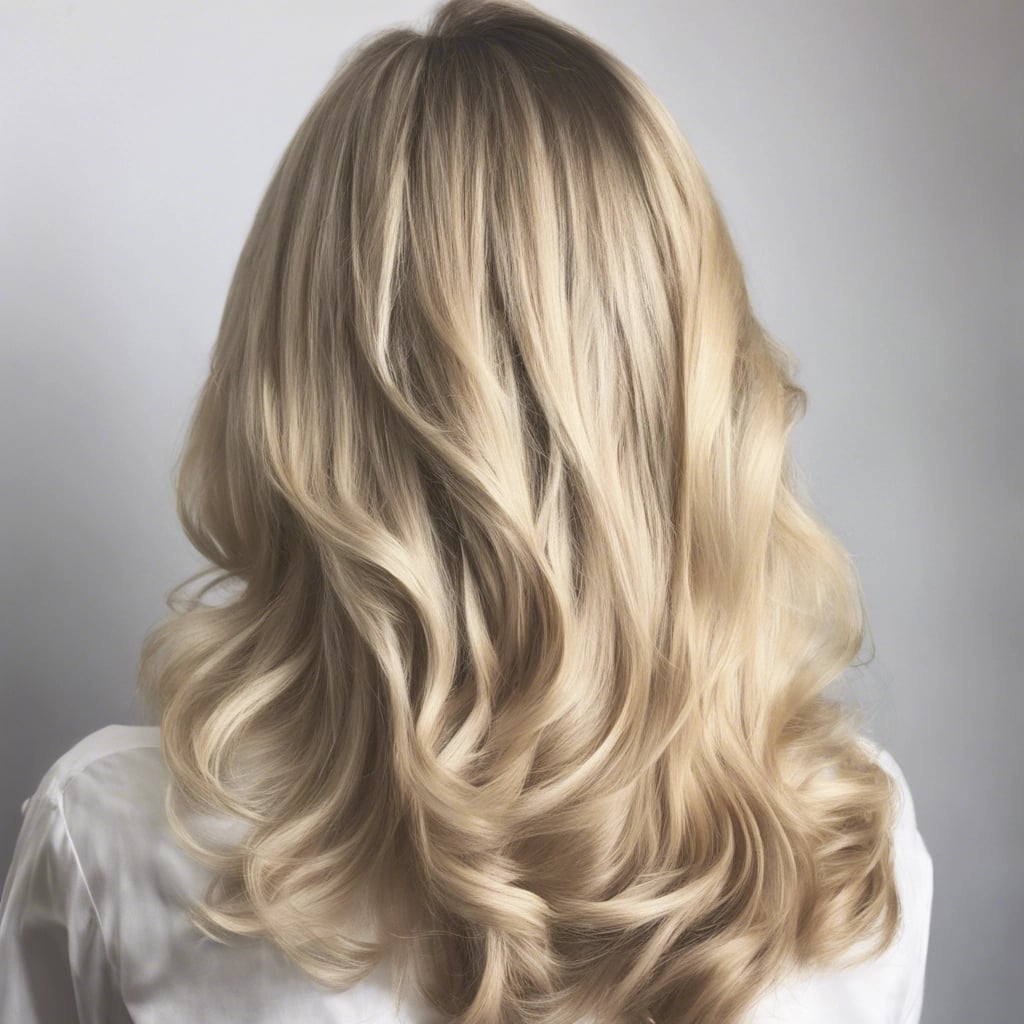
Some honey blonde looks require a second pair of hands. When the color involves a balayage with dark roots and the length is mid-back with long layers, the precision matters more than the price tag. A salon with a color specialist and extension experience can map the placement so the honey tones graduate naturally from the root shadow. This is not a DIY project: the technique demands sectioning and a steady hand. A consultation covers the shade match and the application method, and the appointment itself runs a few hours. The result is a blowout-ready wave pattern that holds its shape.
Final Thoughts
For fine hair, choose subtle highlights and soft layers that keep the ends light; skip heavy balayage that can weigh the hair down. For thick hair, dimensional balayage adds movement and prevents a solid block of color. Honey blonde works best when it looks like you were born with it.
- Use a purple shampoo or toner every 2-3 weeks to keep honey tones from turning brassy.
- Schedule balayage or highlight touch-ups every 8-12 weeks, depending on how fast your grow-out shows.
- Spray a heat protectant before blow-drying or styling to preserve shine and hair health.
- Wash 2-3 times a week with color-safe shampoo and conditioner to hold the warmth longer.
Embrace the warmth and radiance of honey blonde.
