

Vanilla blonde sits somewhere between beige and butter, a neutral base that reads as bright without tipping into yellow. The current shift favors lived-in color with soft face-framing layers and curtain bangs, which means this shade works best when it is not perfectly uniform.
This collection of 20 simple vanilla blonde ideas runs the gamut from a cropped pixie to mid-back lengths, with variations in root shadow, balayage, and highlight placement. Whether your hair is fine and tends to fall flat or you are managing a visible grow-out line, there is a version here that keeps the tone creamy and the upkeep reasonable.
Mid-Back Champagne Vanilla Blonde With Balayage
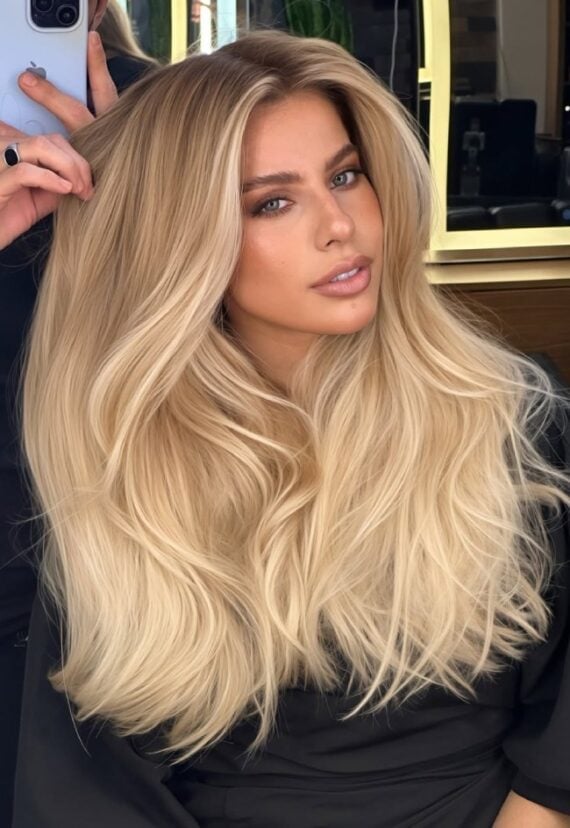
The design here leans on a subtle balayage, painting a rich champagne vanilla blonde in sweeping strokes that stay bright without turning brassy. Long layers and a middle parting let the color move naturally, so the grow-out line stays soft for months. This works best on thick, wavy hair that starts at mid-back, and it suits oval and long face shapes well.
Ask your colorist for: mid-back champagne vanilla blonde with subtle balayage. Keep the tone bright with a purple shampoo once a week, and book a toner every six to eight weeks to hold that creamy neutral base.
Chin Length Bob With Creamy Vanilla Blonde
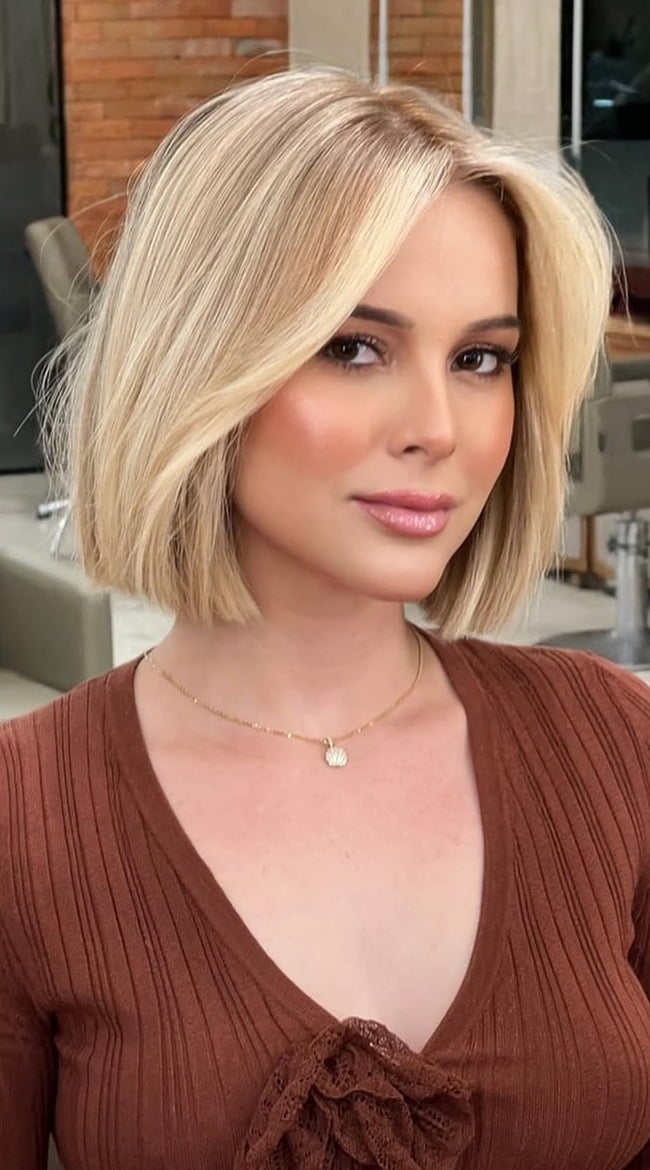
Wondering if a bob can work on fine hair? This chin-length cut with soft waves and a blowout proves it, as the creamy vanilla blonde adds a glossy fullness that reads as thicker. Curtain bangs and a middle parting soften round and square faces, and the length sits just at the chin to elongate a shorter face. Ask your colorist for: chin-length creamy vanilla blonde bob with curtain bangs. Shape the curtain bangs forward with a round brush while blow-drying, and you are out the door.
Ultra Cropped Pixie In Vanilla Blonde
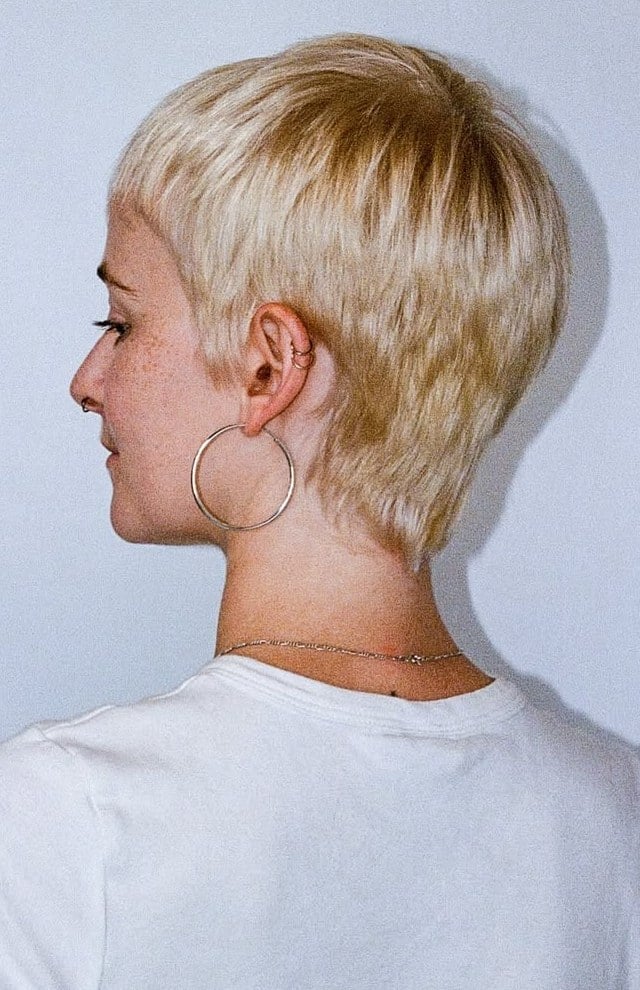
An ultra-cropped pixie ending at the ear is a commitment, especially in a bright vanilla blonde that demands regular toning. The texture here is fine and straight, slicked back for a clean, modern line, and the short length means every root shows quickly. This is a salon visit every four to six weeks for a trim, and the color needs a toner roughly every six weeks to avoid brass. Ask your colorist for: ultra cropped vanilla blonde pixie, textured styling. If you are not ready for that maintenance cycle, skip this one.
Collarbone Vanilla Blonde With Curtain Bangs
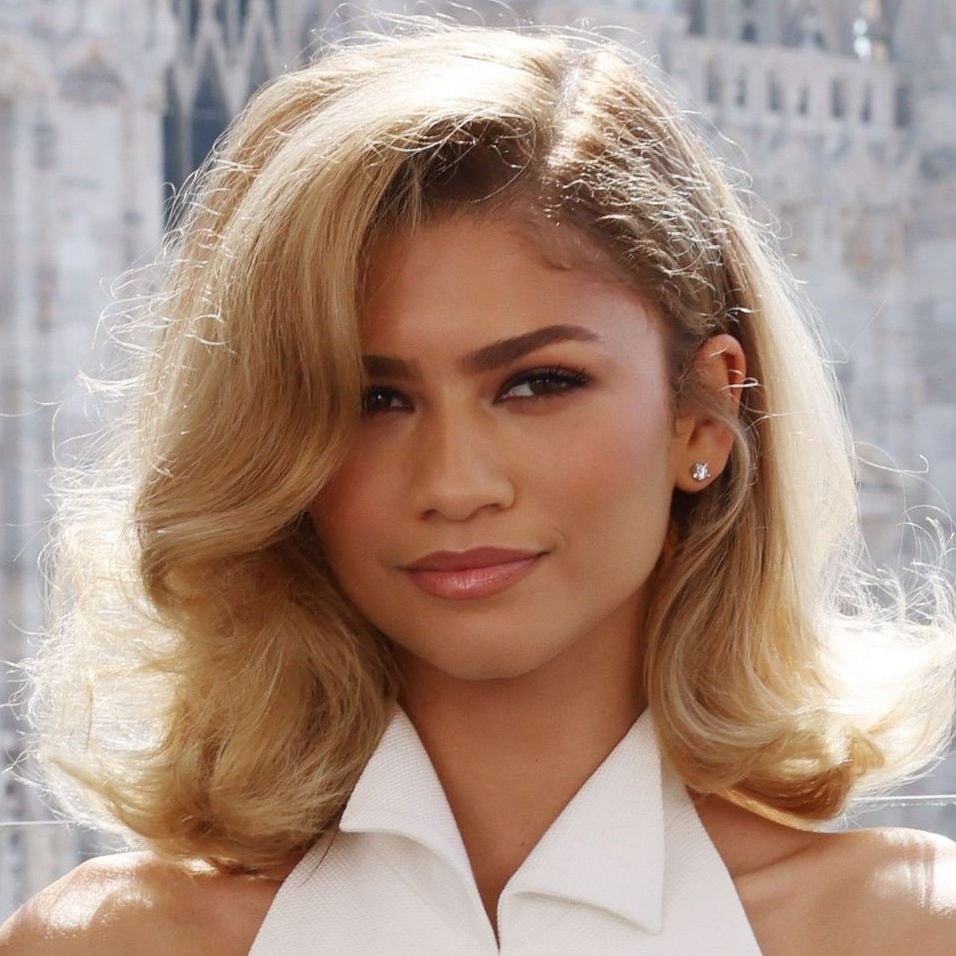
The curtain bangs here are cut to brush the cheekbones, and they are the whole point of this collarbone-length cut. Fine, wavy hair holds the soft waves and blowout finish without weighing down, and the vanilla blonde stays clean with subtle lighter tones woven through the lengths. This suits angular faces well, as the curtain shape softens the jaw.
Ask your colorist for: collarbone vanilla blonde with curtain bangs, soft waves. When you ask, specify that the bangs should hit the cheekbone when dry, and plan a trim every six to eight weeks to keep the shape honest.
Collarbone Vanilla Blonde Lob Highlights
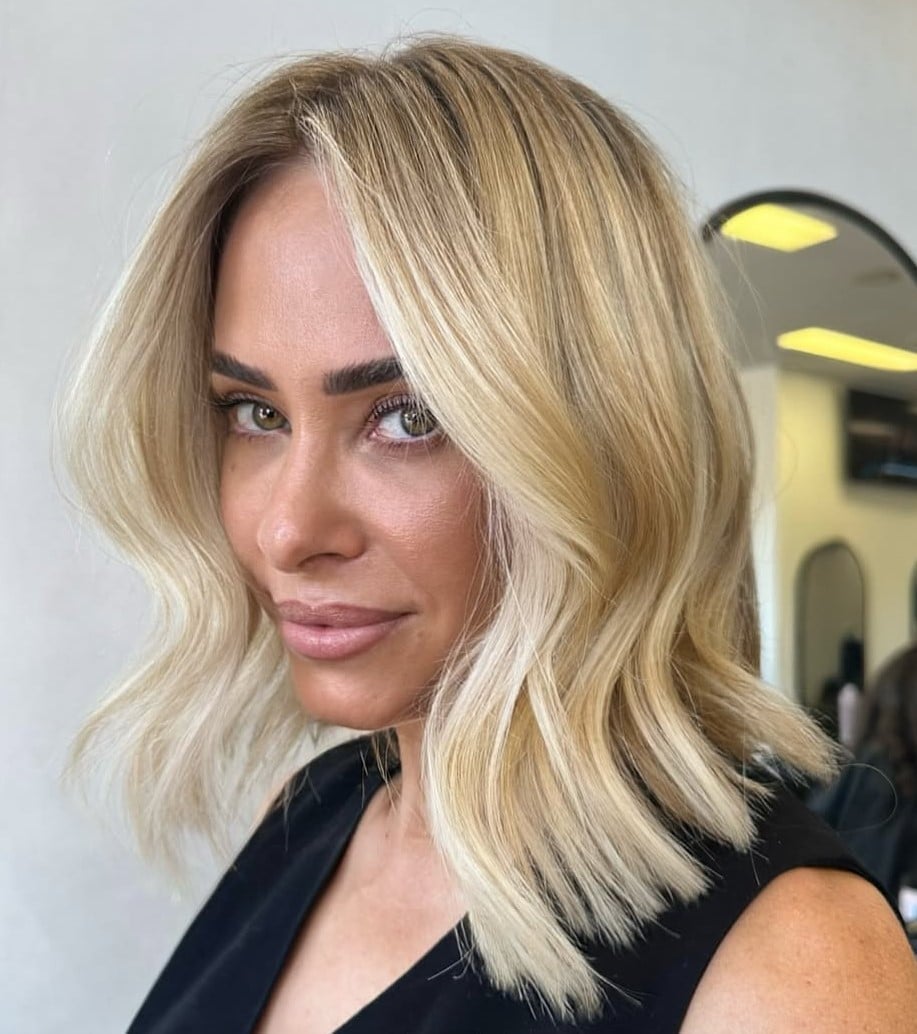
Set this against a solid color, and the difference is dimension: a vanilla blonde base with lighter blonde highlights gives the lob a lived-in depth that a single shade cannot. Thick, wavy hair starting at the collarbone takes the soft layers and curtain bangs well, and the shape suits round and heart faces. The drawback is upkeep, since the highlights need a toner every six to eight weeks to stop them from pulling yellow. Ask your colorist for: collarbone vanilla blonde lob, soft layers, curtain bangs. A smoothing serum on damp hair before air-drying keeps the wave pattern defined.
Collarbone Layers Vanilla Blonde Highlights
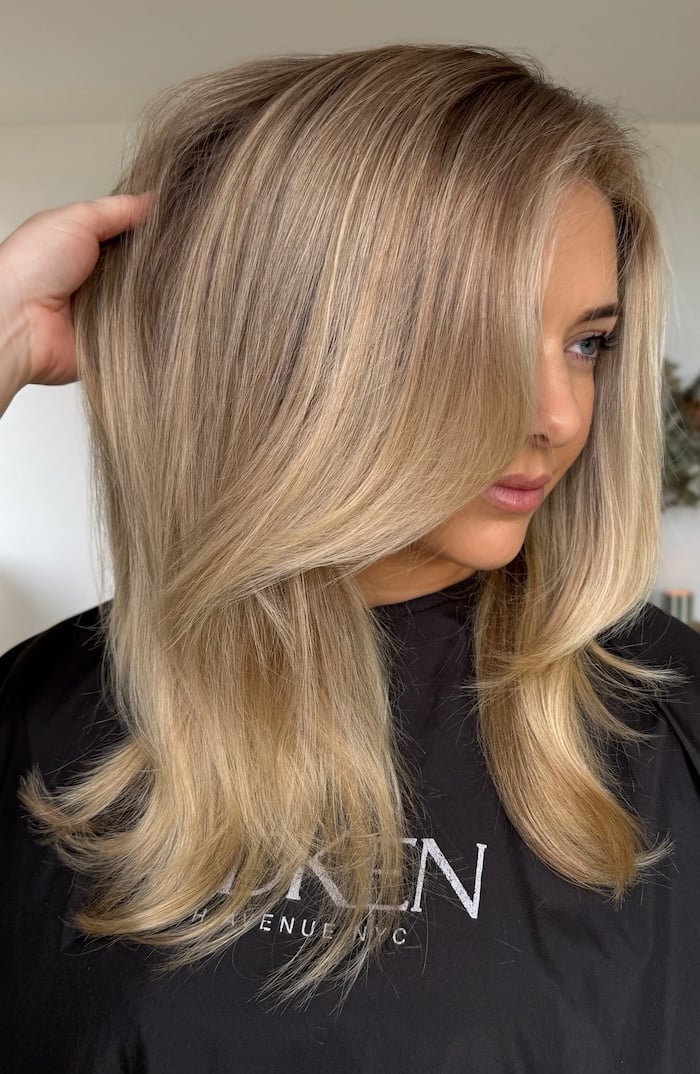
The design here is precise: face-framing layers are painted with subtly lighter highlights so the vanilla blonde base reads as dimensional, not flat. Ask your colorist for: collarbone vanilla blonde with face-framing layers. Thick, wavy hair is the ideal canvas; the layers themselves soften square and oval faces without losing length. A smooth blowout with a round brush keeps the ends neat and the highlights visible.
Collarbone Vanilla Blonde With Root Shadow
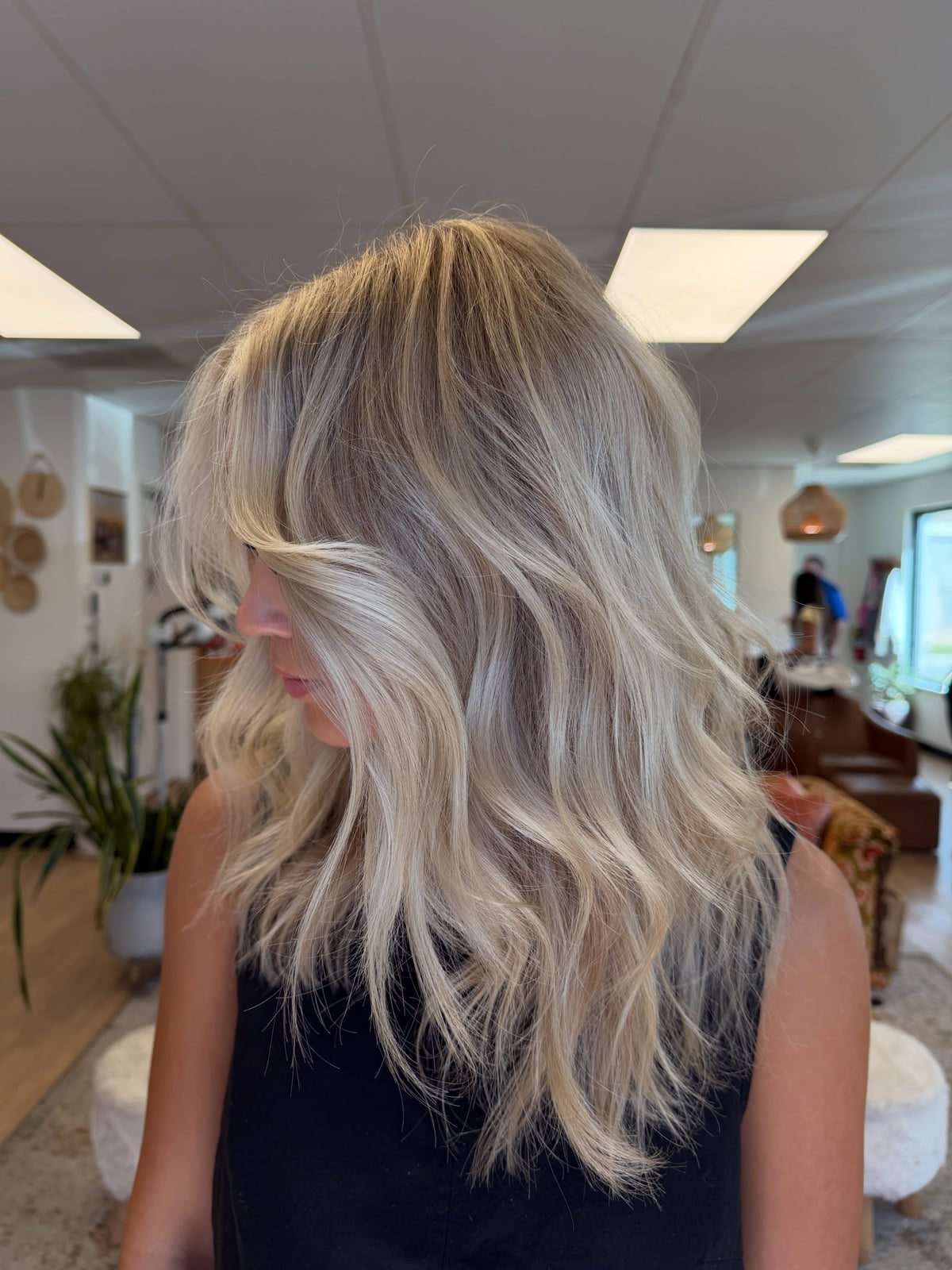
What happens when you want vanilla blonde but hate the every-four-weeks root touch-up? A root shadow is how you buy time. The colorist paints a slightly darker tone at the roots and blends it into the vanilla blonde lengths, so the grow-out line fades rather than screams. Ask your colorist for: collarbone vanilla blonde with root shadow and curtain bangs.
Thick, wavy hair works best here; curtain bangs also help soften round and heart face shapes. The root shadow buys you about six to eight weeks before the next appointment. Trim the baseline every eight weeks to keep the collarbone shape crisp.
Collarbone Golden Blonde Lob
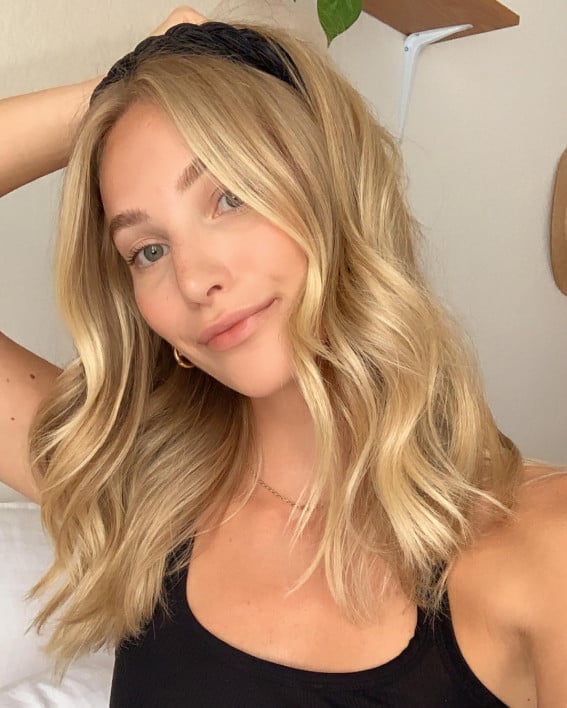
The middle parting and soft waves keep it from feeling flat. Ask your colorist for: collarbone golden blonde lob, soft waves. Oval and long face shapes benefit from the horizontal weight of the lob. Medium, wavy hair at the collarbone holds the blowout well. A shine spray adds the glossy finish the golden tone deserves.
Shoulder French Vanilla Blonde Waves
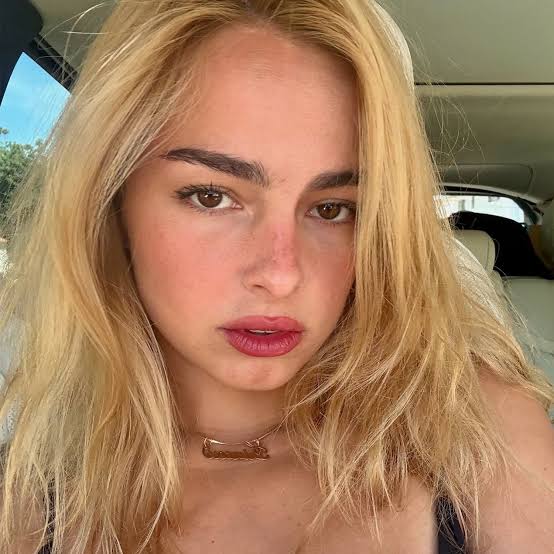
The color here is a French vanilla blonde, which is a cooler, creamier take on the standard vanilla base. Subtle highlights are woven through the long layers to keep the tone from looking flat at this shoulder length. Ask your colorist for: shoulder length french vanilla blonde with long layers. Medium, wavy hair starting at the shoulders is the target; the long layers work with most face shapes. Air-dry with a texturizing spray for a natural, lived-in finish rather than a polished blowout.
Collarbone Vanilla Blonde Balayage Layers
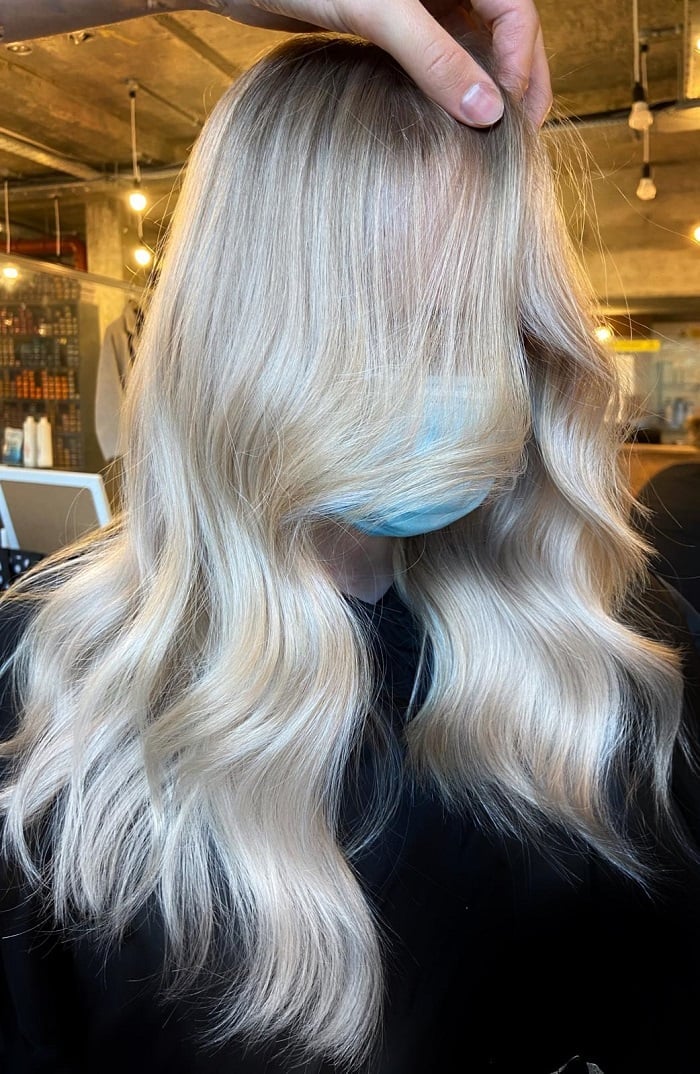
Balayage on a collarbone cut is a salon technique, not a DIY project. The colorist hand-paints lighter tones onto the surface and ends of thick, wavy hair, creating a bright vanilla blonde that softens at the root. Ask your colorist for: collarbone vanilla blonde balayage with curtain bangs. The curtain bangs frame the face while the balayage adds dimension without obvious regrowth lines. Expect about two and a half hours in the chair for the initial application.
Mid-Back Vanilla Blonde With Face-Framing Layers
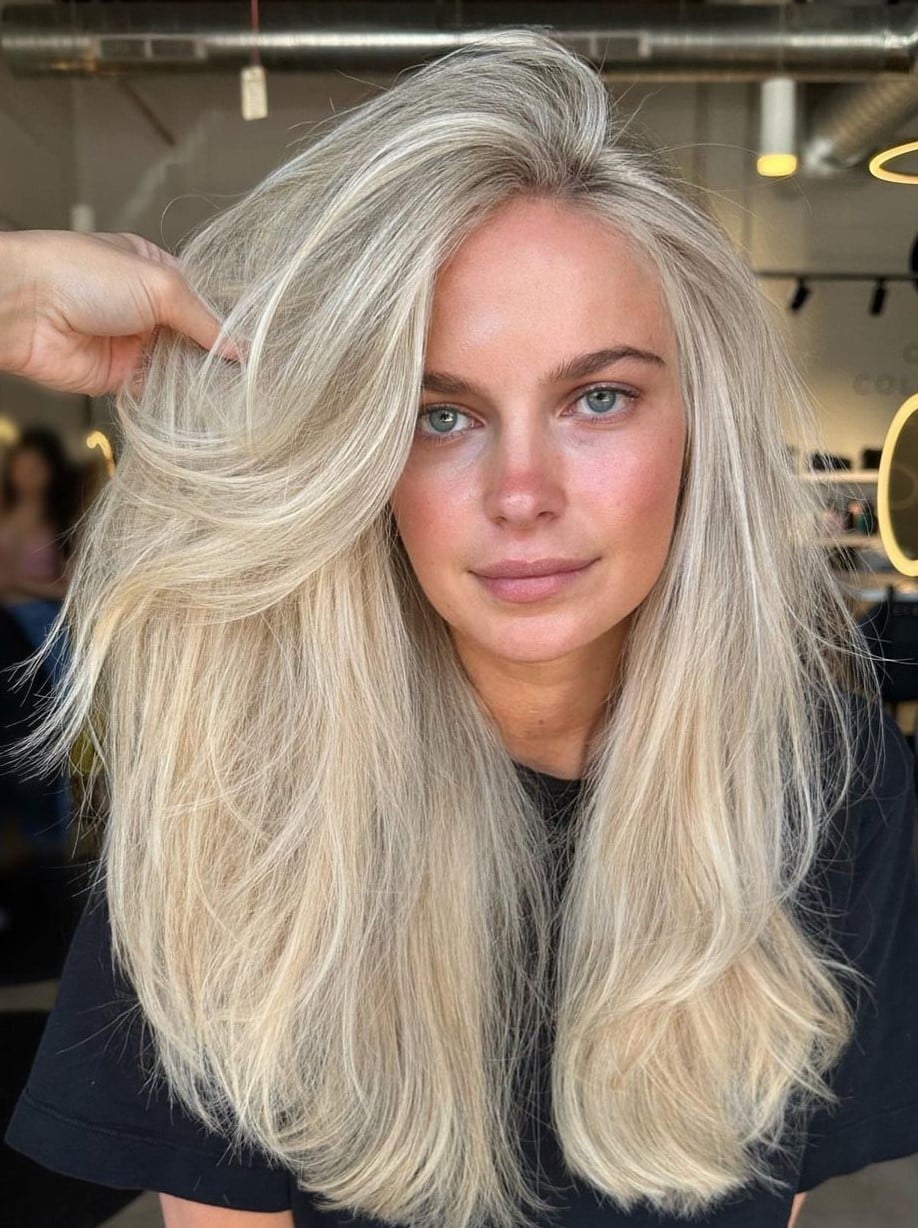
Face-framing layers earn their keep here by adding movement without sacrificing length. This mid-back cut uses long layers that start around the collarbone, creating a soft frame for the face while keeping the rest of the hair full. The vanilla blonde base is lifted by lighter highlights woven through the top sections, giving the color depth that a single-process tone lacks. Thick, wavy textures benefit most from this approach, as the layers prevent the weight from pulling the waves flat.
Ask your colorist for: mid-back vanilla blonde with face-framing layers. The layers require a trim every eight weeks to maintain their shape. Between cuts, use a large-barrel curling iron on the mid-lengths and ends to reinforce the wave pattern after blow-drying. The middle part keeps the layering symmetrical, so avoid shifting it to one side for more than a day if you want the balance to hold.
Mid-Back Vanilla Blonde Soft Waves
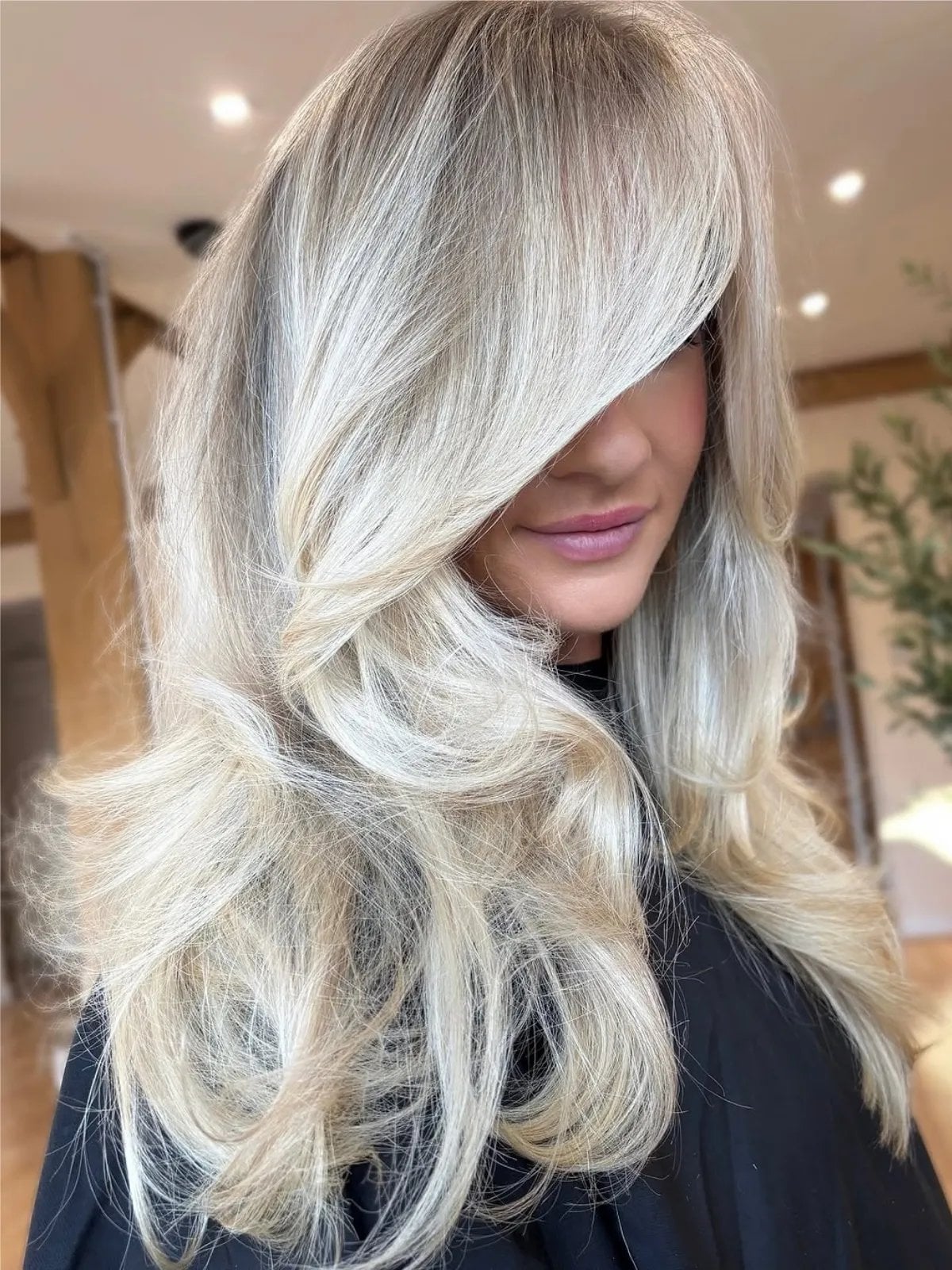
Soft waves are a reliable choice for thick, wavy hair, and this mid-back version makes the most of that texture. The vanilla blonde tone is rich rather than pale, with subtle highlights that add dimension. The face-framing layers are cut to blend into the waves, so the shape looks polished. A middle parting keeps everything centered and balanced.
Ask your colorist for: mid-back vanilla blonde with soft waves and face-framing layers. This combination works well for oval and long face shapes, as the width from the waves softens the length. A volumizing mousse applied to damp roots before blow-drying gives the lift that keeps the waves from falling flat by midday. The layers and waves work together to create volume, but if your hair is fine, skip heavy products that weigh down the ends.
Mid-Back Vanilla Blonde With Curtain Bangs
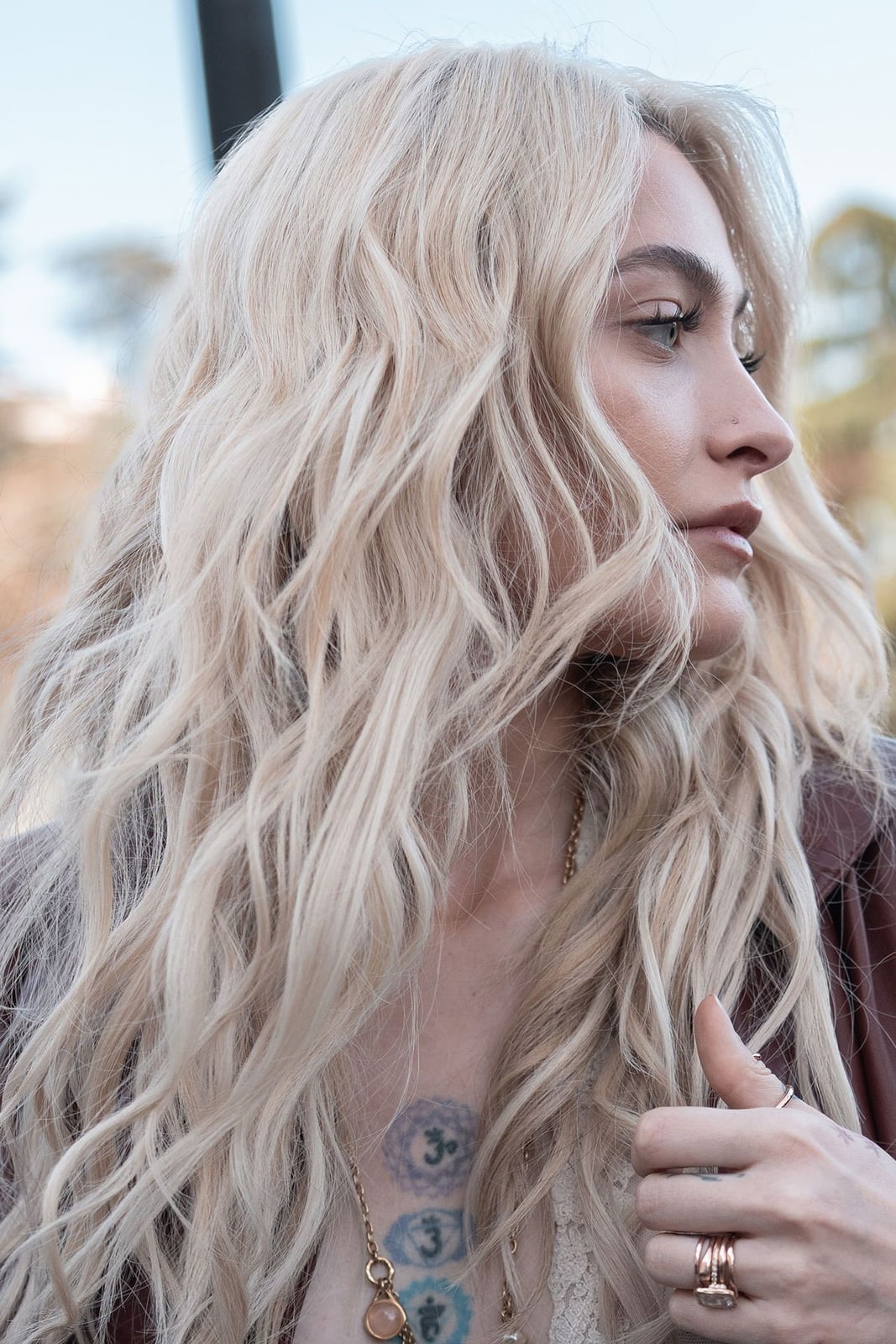
Curtain bangs and a mid-back length create a balanced silhouette that frames the face without overwhelming it. The vanilla blonde base here is accented by subtle, lighter highlights that follow the natural fall of the hair, so the color feels dimensional rather than flat. The curtain bangs are cut to blend into the face-framing layers, which keeps the transition smooth whether the hair is worn straight or wavy. Ask your colorist for: mid-back vanilla blonde with curtain bangs. The subtle highlight technique uses fine sections of lighter color around the face and through the mid-lengths, avoiding the chunky look that can date the style. A middle parting lets the bangs fall naturally to each side, softening round and heart face shapes. Blow-dry the bangs with a round brush, directing them away from the face, to maintain the open shape that makes curtain bangs work.
Mid-Back Vanilla Blonde With Face-Framing Highlights and Curtain Bangs
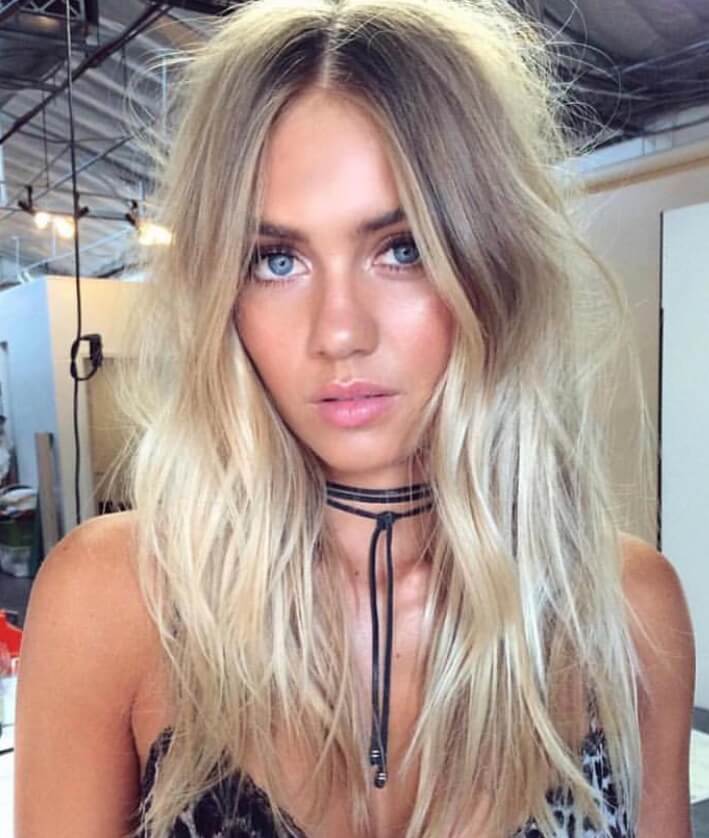
Face-framing highlights and curtain bangs are a practical duo: the highlights draw attention to the face, while the bangs soften the transition. The vanilla blonde base here is warmed by lighter highlights that start at the cheekbones and taper through the mid-lengths, creating a gradient effect that mimics natural sun exposure. The curtain bangs are cut to graze the cheekbones, blending into the layers below.
Ask your colorist for: mid-back vanilla blonde with face-framing highlights and curtain bangs. The highlights should be painted in fine ribbons, not thick chunks, to keep the vanilla tone looking creamy. This combination suits most face shapes because the highlights can be placed to flatter the individual features. For styling, a flat iron adds subtle bends to the ends without making the hair look rigid. The curtain bangs will need a trim every six to eight weeks to stay at the right length, and the highlights benefit from a gloss every fourth week to keep the vanilla tone from warming up.
Mid-Back Vanilla Blonde Air-Dried Texture
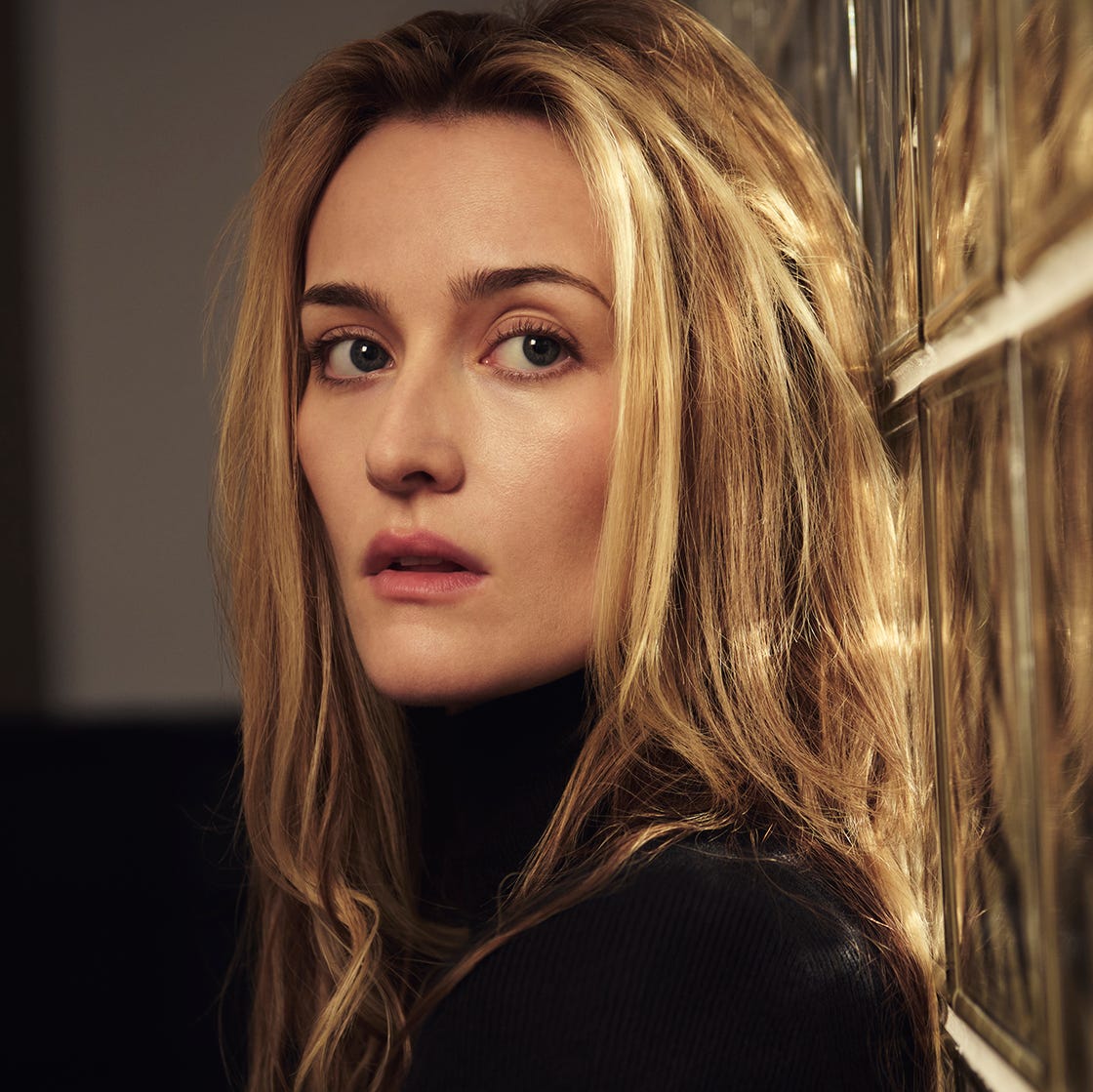
For air dried hair, the cut and color have to do the work the heat tools usually handle. This mid-back style uses long layers to encourage natural wave formation, while the vanilla blonde base gets a subtle root shadow that adds depth at the roots and lighter highlights through the lengths for dimension. The color looks intentional, not neglected.
Ask your colorist for: mid-back vanilla blonde with root shadow and air-dried texture. The root shadow should be one to two shades darker than the ends, which buys you about six weeks before the grow-out line becomes obvious. Thick, wavy textures take to air drying best. Apply a styling product to damp hair, then scrunch from the ends upward. The layers prevent the hair from drying into a shapeless block, and the middle part keeps the fall symmetrical. A trim every eight weeks maintains the layer shape, and a purple shampoo once a week keeps the vanilla tone from turning brassy.
Mid-Back Vanilla Chai Blonde Balayage, Wavy
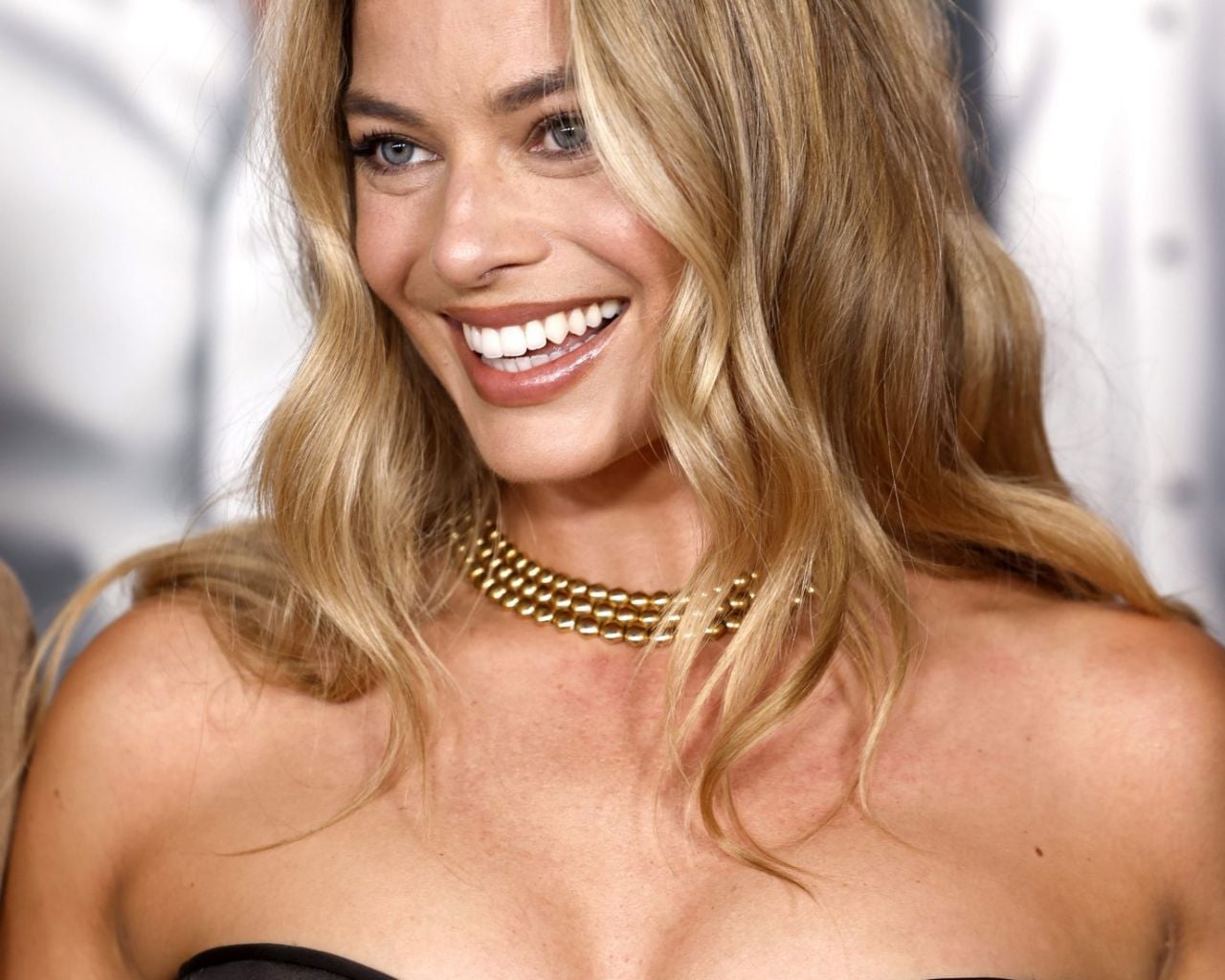
A vanilla chai blonde is essentially the warmer, cozier cousin of a classic vanilla blonde. The mid-back length has long layers with subtle balayage that keeps the tone lived-in. Ask your colorist for: mid-back vanilla chai blonde with balayage. The warm undertone means it won’t go brassy, but it also won’t go icy. The drawback: if your hair pulls orange during lightening, this shade needs a careful toner to avoid tipping into copper territory. Thick, wavy hair starting at mid-back works best, and the air-dried finish means you can skip the heat tools on most days.
Mid-Back Vanilla Blonde Balayage Waves With Long Layers
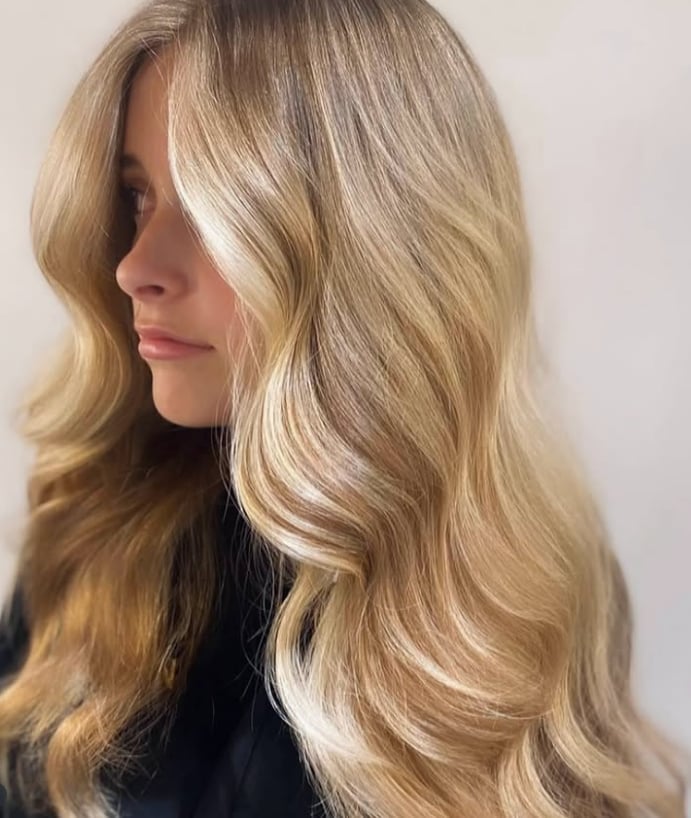
This one is a solid investment in chair time, so plan accordingly. The mid-back length has long layers and a side parting, with a vanilla blonde base and subtle balayage that adds dimension without looking striped. Ask your colorist for: mid-back vanilla blonde with balayage and waves. The balayage technique means the color is painted on freehand, which creates softer regrowth than foil highlights. A full appointment runs about three hours, and you will need a toner refresh every six to eight weeks to keep the vanilla tone from warming up. The layers give the waves movement, so a round brush and a smoothing balm are all you need for styling. Thick, wavy hair starting at mid-back is the ideal candidate, and the side parting works well for oval and long face shapes.
Mid-Back Vanilla Blonde With Lighter Highlights
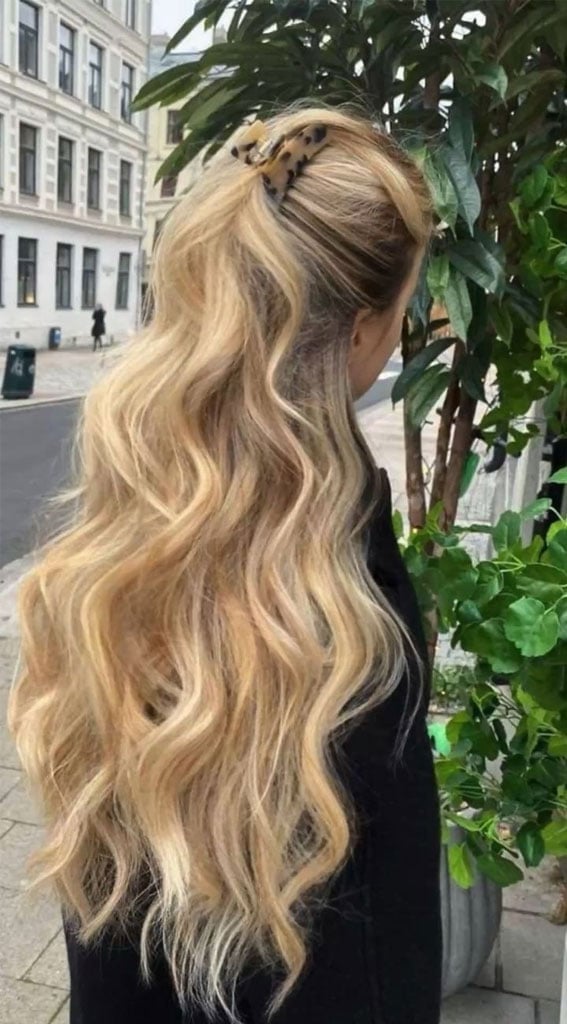
The half-up style here does double duty: it shows off the dimension and keeps thick hair off your neck. The mid-back length has a vanilla blonde base with lighter highlights woven through for contrast. Ask your colorist for: mid-back vanilla blonde with lighter highlights. This combination works well with thick, wavy hair because the highlights prevent the color from reading as one flat block. If your hair is fine or low density, the lighter pieces can suggest more volume. Who should pass? Anyone who wants a low-maintenance grow-out. The lighter highlights will show root growth faster than a solid balayage, so expect a touch-up every six weeks. The half-up style itself works for most face shapes, and braids or twists add visual interest without extra effort.
Mid-Back Platinum Blonde With Root Shadow
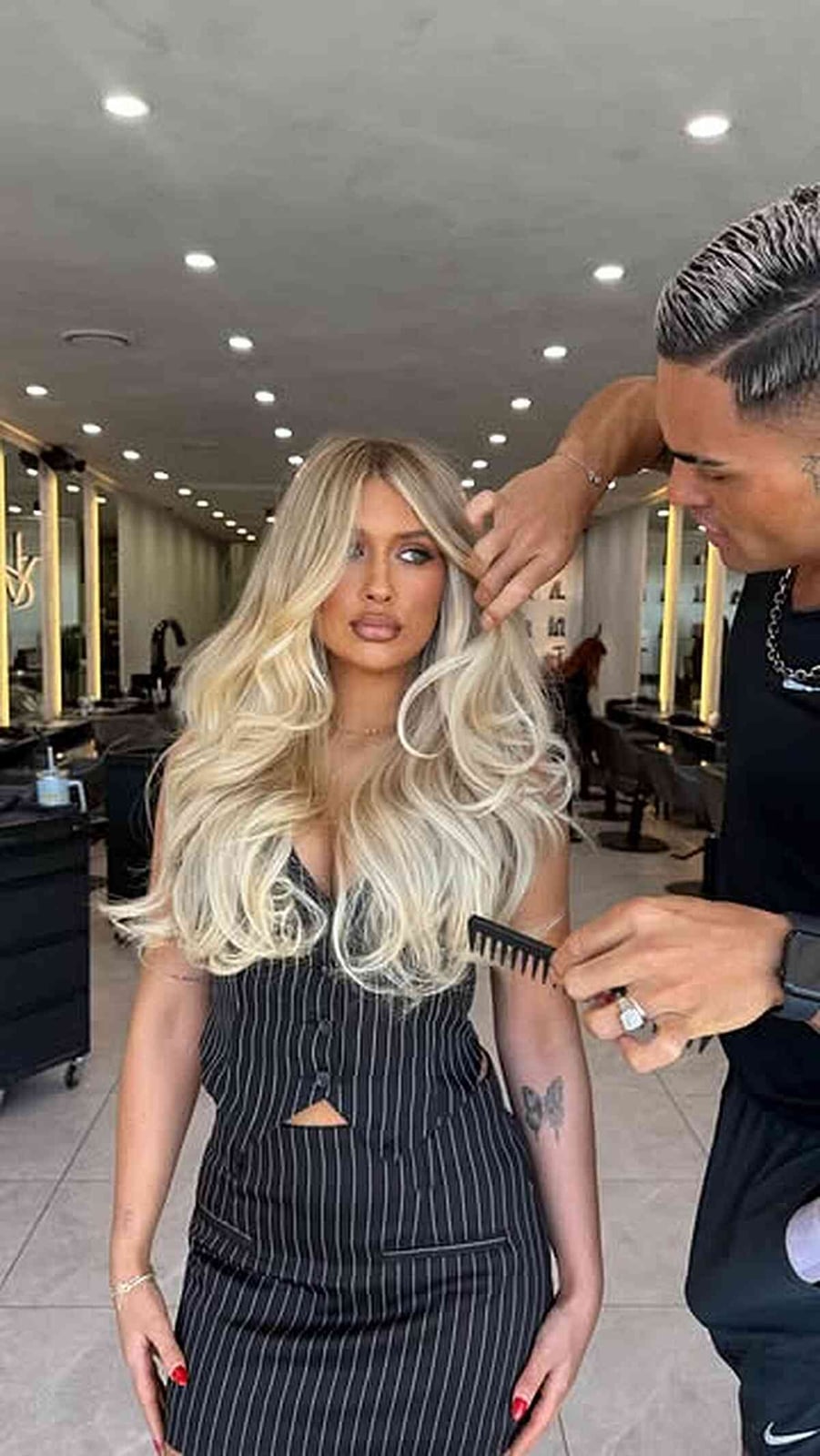
A practical rule: platinum blonde is a commitment, but a root shadow buys you time. The mid-back length has long layers and side-swept bangs, with a platinum blonde shade and a visible root shadow for depth. Ask your colorist for: mid-back platinum blonde with root shadow and voluminous curls. This is strictly a salon job. Platinum requires lifting the hair to pale yellow before toning, and the root shadow is painted on to blend the grow-out. The side-swept bangs soften square and round faces, and the voluminous curls add drama. Who should skip it? Anyone who washes hair daily or spends a lot of time in chlorinated water. The root shadow helps, but the platinum sections still need a purple shampoo once a week to stay cool. Trim every eight weeks to keep the layers sharp.
Mid-Back Vanilla Blonde Balayage Lived-In, Layers
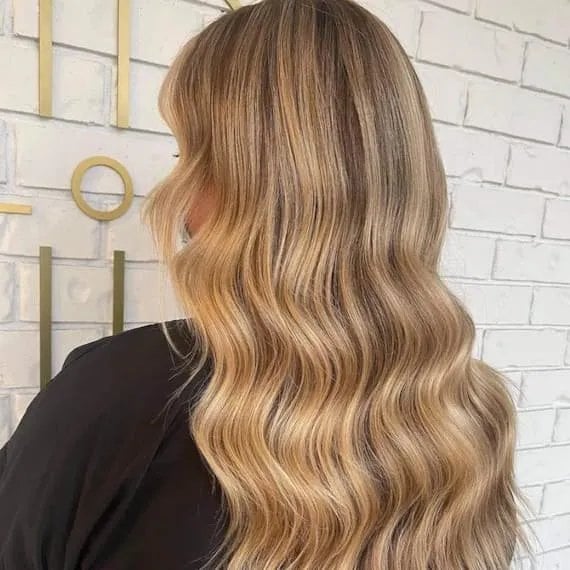
A lived-in balayage is the opposite of a freshly done foil set, and that is exactly the point. The back view of this mid-back length shows a middle parting and loose waves, with a vanilla blonde base and balayage that blends into a slightly deeper tone at the roots. Ask your colorist for: mid-back vanilla blonde with balayage for a lived-in look. The color grows out gracefully because there is no harsh line between the root and the blonde. A trim every eight weeks keeps the layers from getting stringy, and the waves can be achieved with a blow-dryer and a large round brush. Medium density, wavy hair starting at mid-back suits this style best. The trade-off: the lived-in effect is intentionally soft, so it will never have the high-impact shine of a full highlight. For everyday wear, that is usually a fair exchange.
Final Thoughts
When choosing your vanilla blonde, consider your natural base color. A subtle root shadow can help blend brassiness for those with darker roots, while a solid tone works well for lighter bases.
- Schedule a toner every 4-6 weeks to keep the shade from turning brassy.
- Use color-safe shampoo and conditioner to preserve the tone.
- Deep condition weekly to maintain shine and combat dryness.
- Trim split ends every 6-8 weeks to keep the color looking fresh.
Vanilla blonde is your go-to for a bright, creamy, and sophisticated look.
