

I keep seeing the same thing in the chair next to mine: brown that reads cool, not muddy. Ash brown is having a quiet moment, and it’s not the flat, grey-toned disaster I remember from my early salon days. Done right, it’s the colour that makes you look like you woke up with a plan.
Here are 33 ways to wear Ash Brown Hair, from air-dried and low-maintenance to sleek and polished. I’ve included cuts for fine hair that goes flat by 4 pm, thick hair that needs weight removed, and grow-out timelines that don’t lie. Whether you’re booking a full transformation or just toning what you have, this is the honest breakdown.
Muted Ash Brown Collarbone Waves
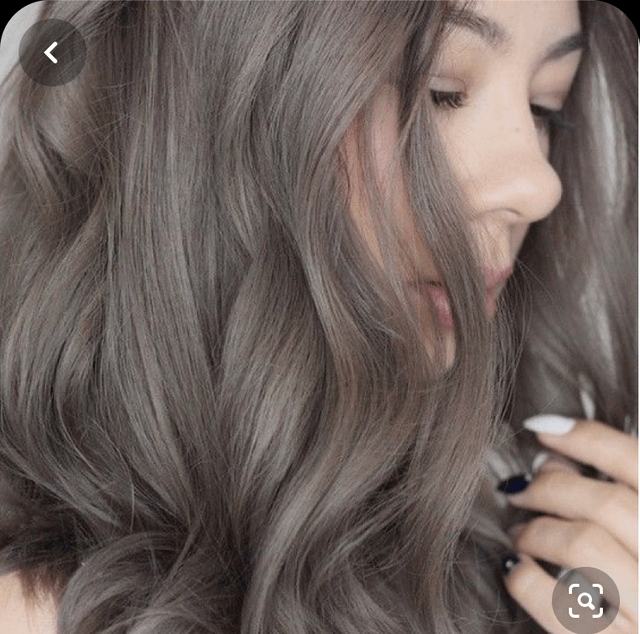
Have you ever looked at a hair colour and thought, that is exactly what my skin needs? That is muted ash brown hair with cool undertones. The tone sits somewhere between a true brown and a soft grey, no warmth, no red. It lands on collarbone waves that are loose enough to catch light but not so defined they look curled. Medium density hair holds this shape best; finer strands will need a texture spray to keep the wave from dropping by lunch. The side part softens a rounder face, and the ash tone reads cool next to warm skin. I have worn this shade through three seasons and it never fights my complexion.
Dark Brown With Cool Ash Tones
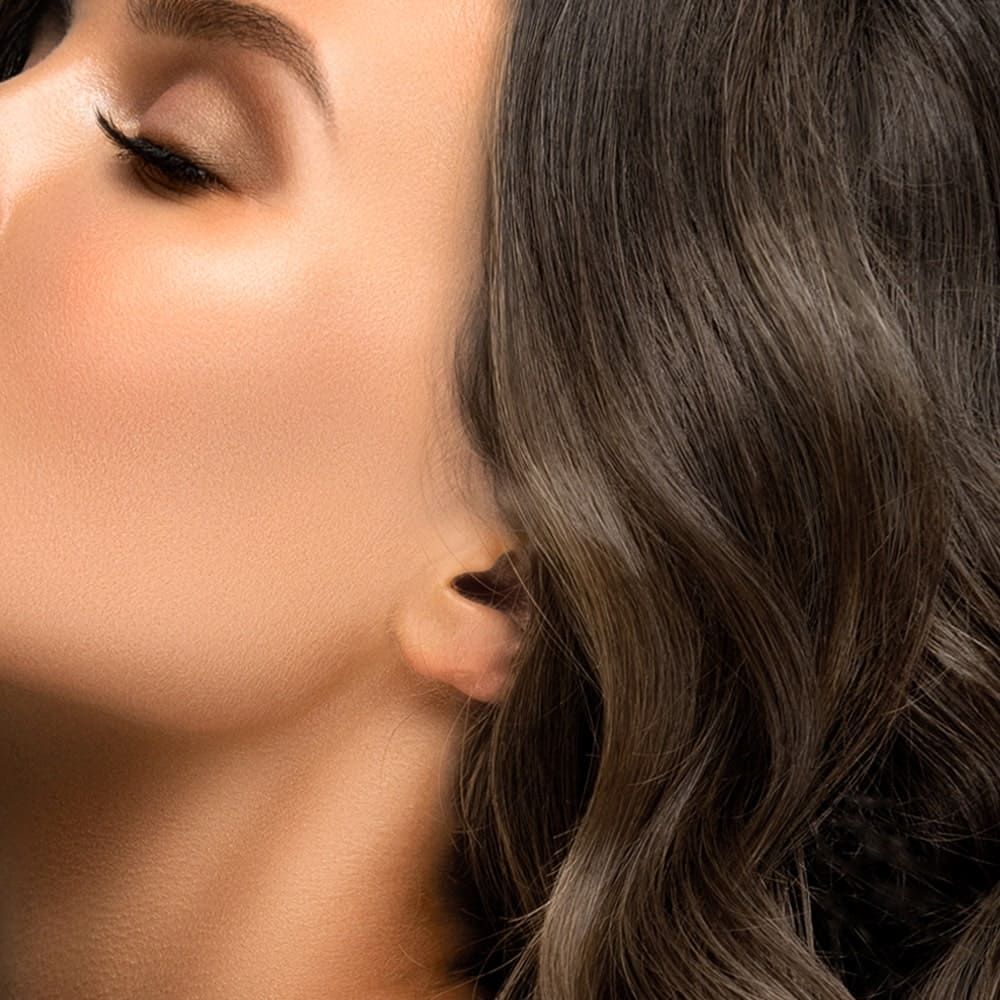
Dark ash brown hair with cool ash tones is not a single colour, it is a negotiation. The stylist starts with a deep brown base, then weaves in a cool-toned gloss that knocks out any hint of copper. No highlights, no balayage, just a uniform shift that makes the hair look denser than it is. The collarbone length with long layers keeps the shape from feeling heavy, and the side part adds a little asymmetry. Fine hair benefits from the gloss because it smooths the cuticle and adds a reflective finish. I have seen this technique turn a flat brown into something that catches light like a still lake.
Fine Hair Ash Brown With Layers
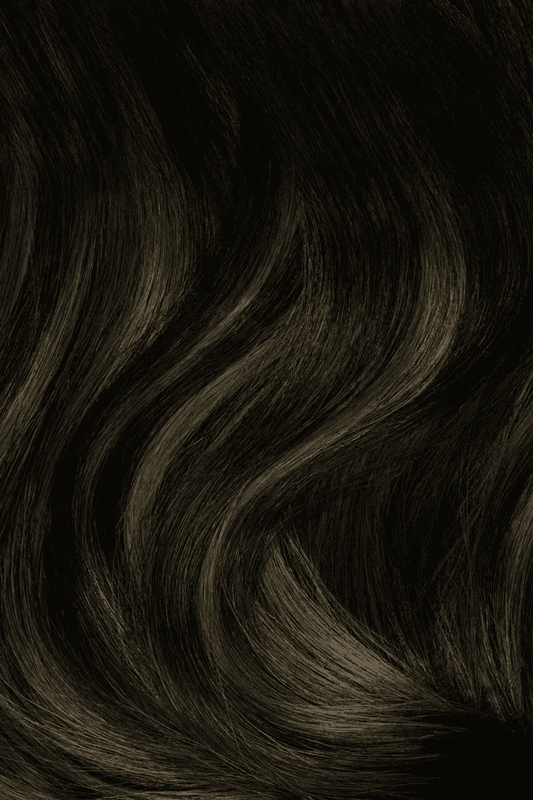
I will admit, I was skeptical about ash brown for fine hair. The fear is that ash undertones will wash out a low-density head, and sometimes they do. The trick is keeping the tone soft, not smoky. On collarbone layers with a middle part, the ash undertone reads as depth rather than flatness. Straight fine hair catches the colour evenly, so the tone stays consistent from root to end. The honest downside: ash fades faster on fine strands because the cuticle is more porous. A purple shampoo once a week keeps the brass away, but you have to be consistent.
Deep Ash Brown Bob With Soft Waves
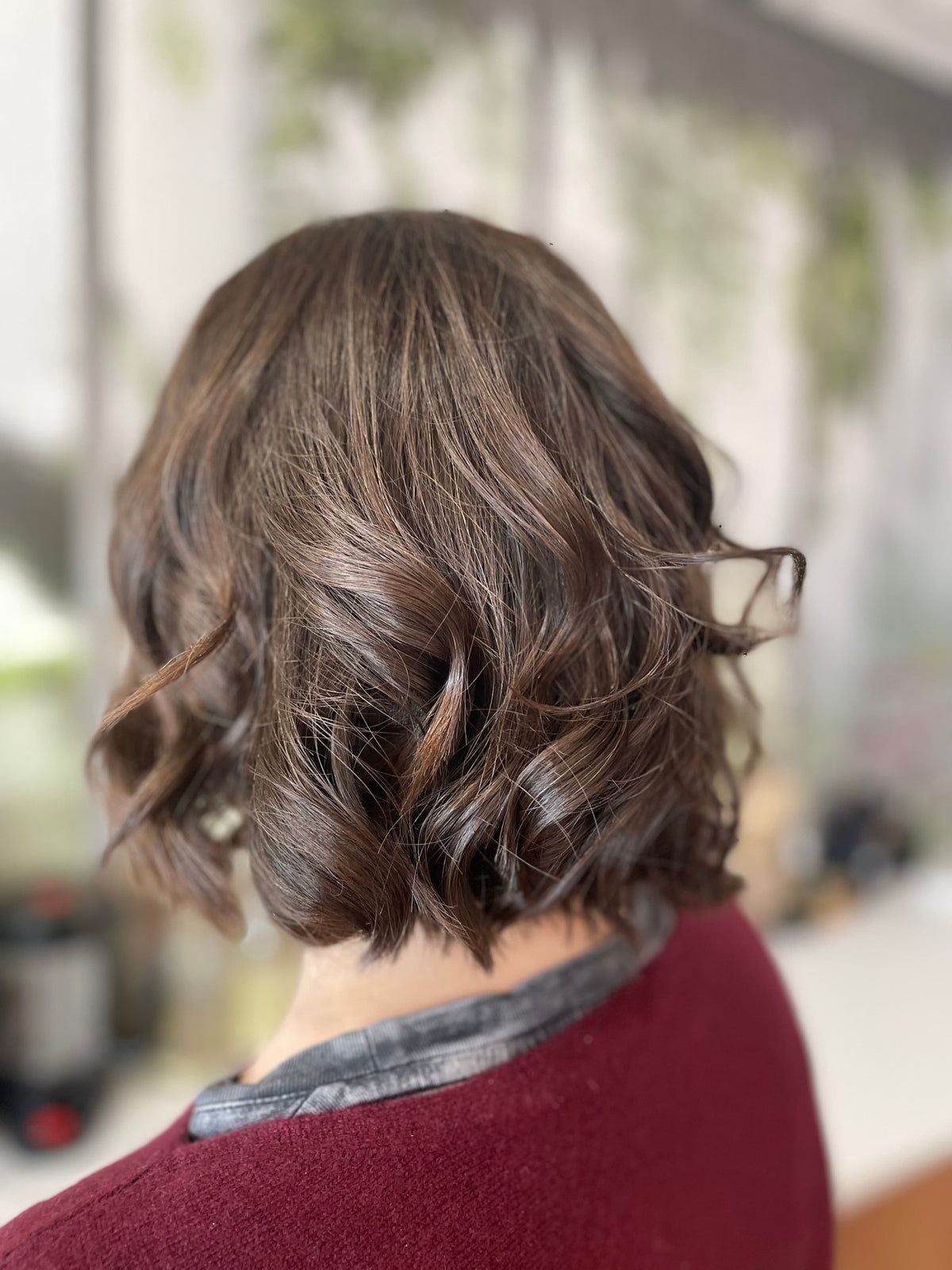
Monday morning, you wash it, wave it, and walk out the door. By Wednesday, the deep ash brown bob with cooler undertones still holds its shape because the bob cut does not let the wave travel far. The back view shows a blunt baseline that gives the illusion of thickness, even on medium-density hair. Soft waves break up the solid colour so it does not look flat. This is a year-round shade: cool enough for winter, subtle enough for summer. The tone stays true for about six weeks before the first hint of warmth peeks through. A colour-depositing conditioner in the shower buys you another two.
Sleek Vintage Waves In Dark Ash Brown
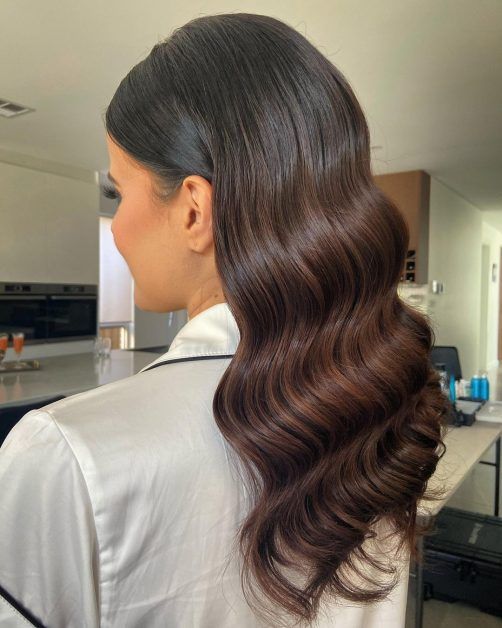
Beach waves are fine for a Saturday. Sleek ash brown hair with vintage waves is for the days you need to look like you have your life together. The difference is in the finish: beach waves are piecey and matte, while vintage waves are smooth, uniform and glossy. The dark ash brown base with subtle lighter ash tones adds dimension without breaking the sleek line. Fine, straight hair is ideal for this because it holds a crisp wave without frizz. The styling steps are: a heat protectant, a medium-barrel iron, a boar bristle brush to smooth, and a strong hold spray. It takes twenty minutes, not five. But it lasts through dinner.
Uniform Ash Brown Straight Cut
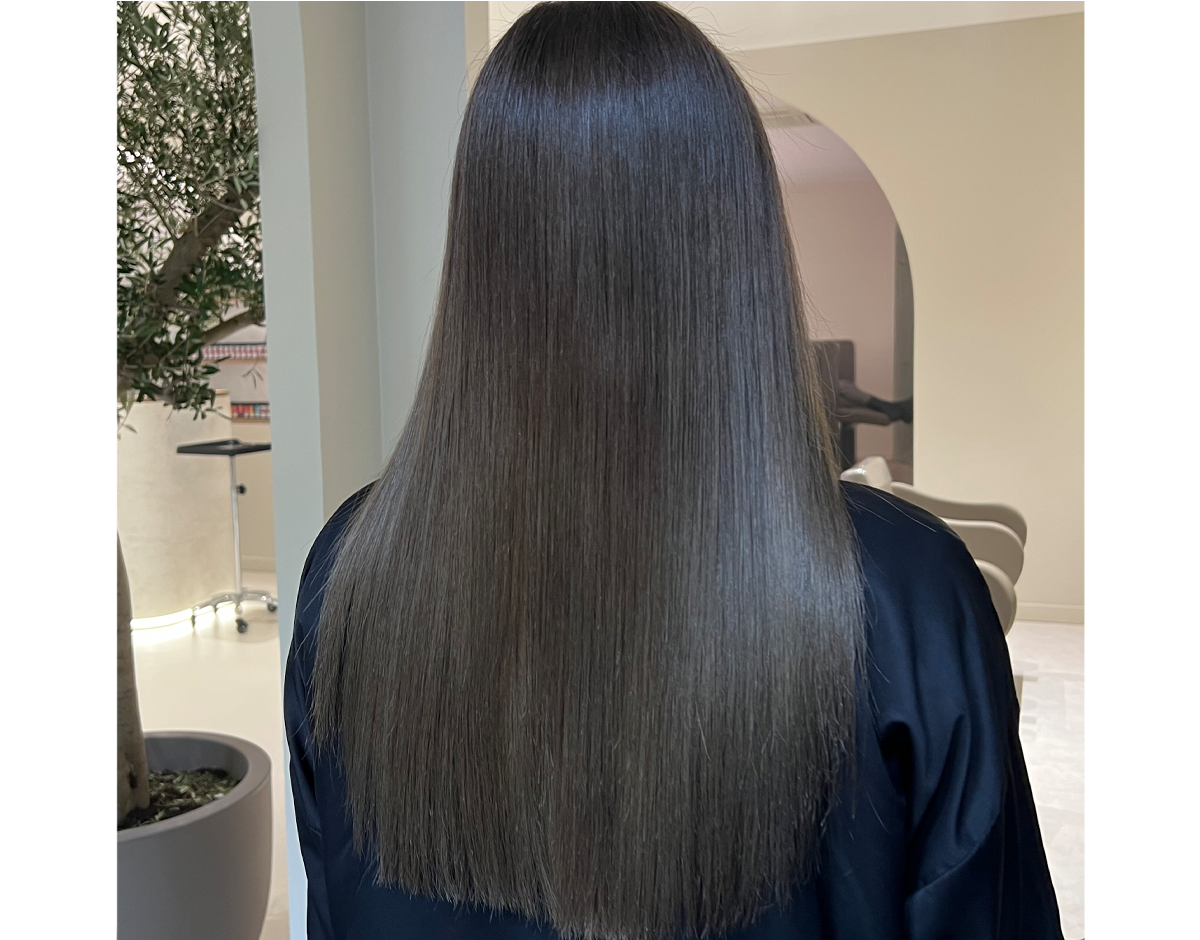
Ever noticed how a uniform ash brown colour looks simple but never is? That mid-back, straight, sleek length with a middle part and no bangs reads as minimal, but the precision is everything. A cool-toned ash brown this even requires a steady hand and a bowl of colour that stays consistent from root to tip. The technique is a single-process gloss, no highlights, no shadow root. That means every grow-out line shows at week six, not week ten. Straight, fine texture holds the sleek finish best. Thick hair can look bulky without some internal layering, so ask your stylist to keep one blunt baseline but remove weight underneath. This is a salon job, not a bathroom-mirror project. The line has to be that clean.
Air Dried Ash Brown Thick Hair
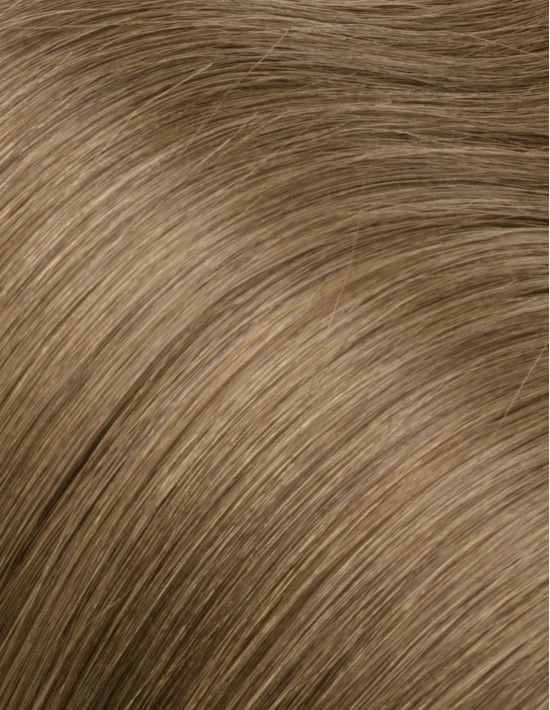
A cool ash brown shade on air dried, mid-back straight hair with a middle part and no bangs looks like it took no effort. That is the point. Thick, straight texture holds this shape without a round brush. The colour is a single-process ash tone, no dimension, no warmth. It works best on hair that already has weight and density. Fine hair would look flat here, the lack of layers means no movement. The grow-out is visible at week eight, so a root touch-up every ten to twelve weeks keeps the cool tone from drifting muddy. This is a salon colour, but the daily styling is five minutes of air drying and walking away.
Wavy Thick Ash Brown With Layers
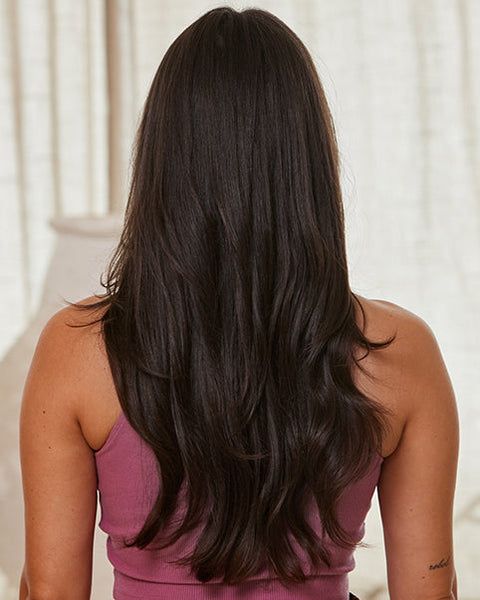
You wake up, scrunch, leave the house. That is the appeal of this ash brown with layers on wavy, thick, mid-back hair with a middle part and no bangs. The layers remove bulk so the waves stack instead of expanding into a triangle. The colour is a single-process ash brown with subtle cool undertones, no highlights, no root fade. The technique is straightforward: the stylist applies one formula from root to end. That means grow-out is uniform, not patchy. Upkeep is a trim every eight to ten weeks to keep the layers from growing into one blunt block. The colour fades to a warmer brown around week ten, so a gloss every two to three months keeps it cool. Thick, wavy texture is the ideal match. Fine hair would lose the wave pattern by lunch.
Rich Deep Ash Brown Waves
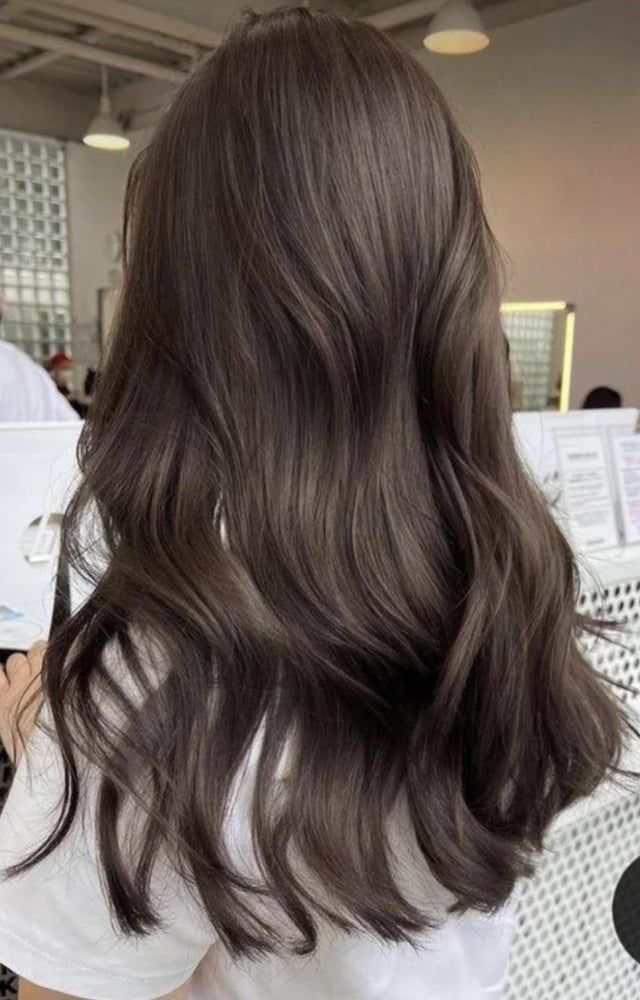
This is the colour that makes you look like you already packed your sweaters. Rich ash brown hair, mid-back, long layers, wavy, thick, no bangs, middle part. The deep ash brown base reads cool without going grey. The technique is a single-process gloss, saturated, no dimension. That means every strand reflects the same muted tone. It lands in autumn because it matches the light. Bright summer sun would pull out any warmth underneath. This is a salon colour, the depth is hard to get right at home. The waves take fifteen minutes with a medium barrel. The colour fades to a flat brown around week eight, so a deposit-only gloss at week six keeps it from looking tired.
Ash Brown With Blonde Balayage
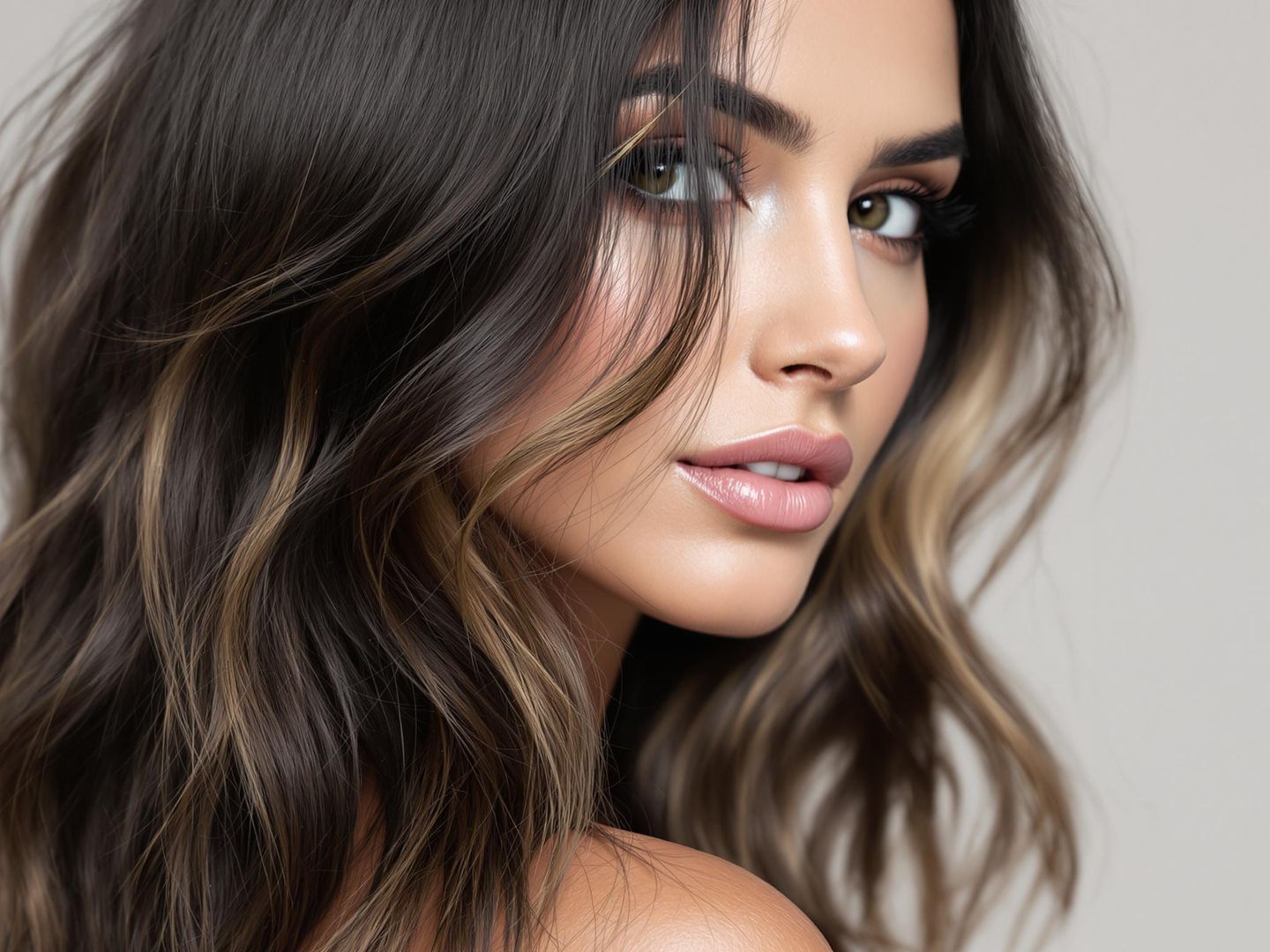
The technique here is what makes this ash brown blonde balayage work. The base is a cool ash brown, mid-back, long layers, wavy, thick, side part, no bangs. The balayage starts below the ears, painted sections of lighter ash blonde tones that stay cool, not golden. The stylist paints freehand, no foils, no solid line. That means the grow-out is soft, no harsh root stripe at week four. The lighter ash blonde pieces catch the wave bends and create movement. Thick, wavy texture holds the contrast. Fine hair would need more saturation to read. This is a salon technique, three hours minimum.
Ask your stylist for a cool ash brown base with hand-painted lighter ash blonde pieces starting mid-length, kept cool, no warmth. The result is dimensional without being streaky.
Dark Brown With Ash Blonde Highlights
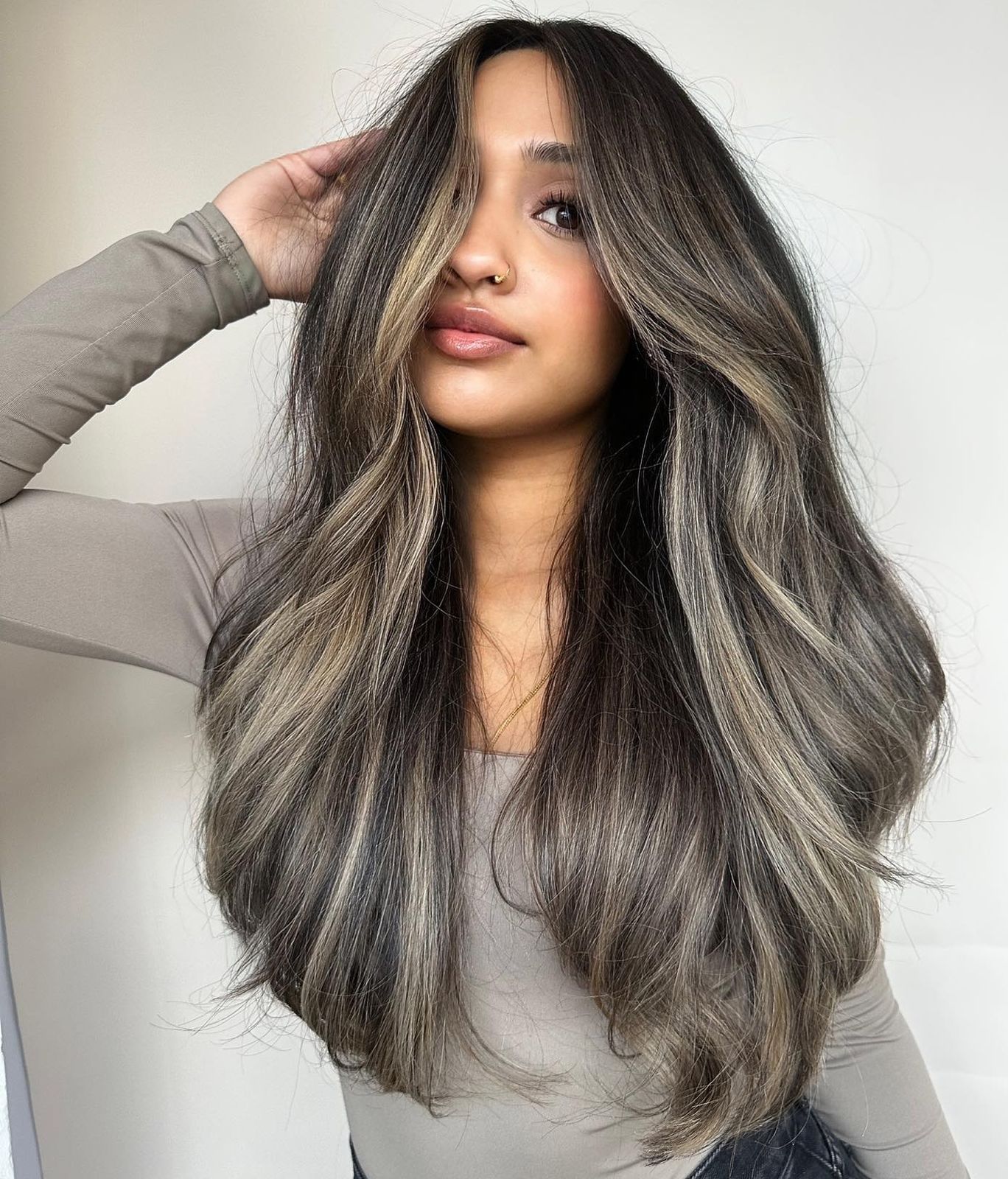
I have a confession. I keep booking this combination even though I know what it asks of me. The dark brown base goes deep and cool, and the ash blonde highlights cut through it like thin ribbons of light, but that contrast is the whole problem. The ash blonde highlights need a toner appointment every six to eight weeks or they drift warm, and on a dark brown ash blonde highlights base, warmth shows fast. My roots announced themselves at week five.
The mid-back length with side-swept bangs and loose waves gives the colour room to breathe. Thick, wavy texture helps the highlights land in visible streaks instead of getting swallowed. But the honest downside is the rhythm. You are on a six-week clock, and if you miss it, the ash goes brassy and the whole thing reads muddy. Beautiful when fresh, demanding when it is not.
Mid-Back Dark Brown With Ash Blonde Balayage
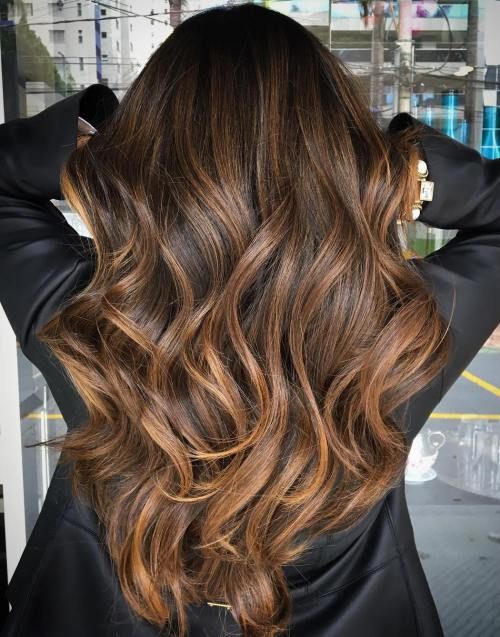
Who does this dark brown ash blonde balayage actually work for? Cool-toned skin, for one. The ash blonde balayage pulls silver-grey against a dark brown base, and on warm undertones that can look ashy in the bad way. Mid-back length with layers gives the balayage room to fan out, so the colour shifts from root to tip instead of stacking in one block. Wavy, thick texture helps the lighter pieces sit on top rather than hide underneath. The grow-out is soft because balayage paints freehand, no hard root line. That means trims every eight to ten weeks and a toner refresh around the same interval, but no frantic root touch-up at month two.
Layers Dark Brown With Ash Blonde Blowout
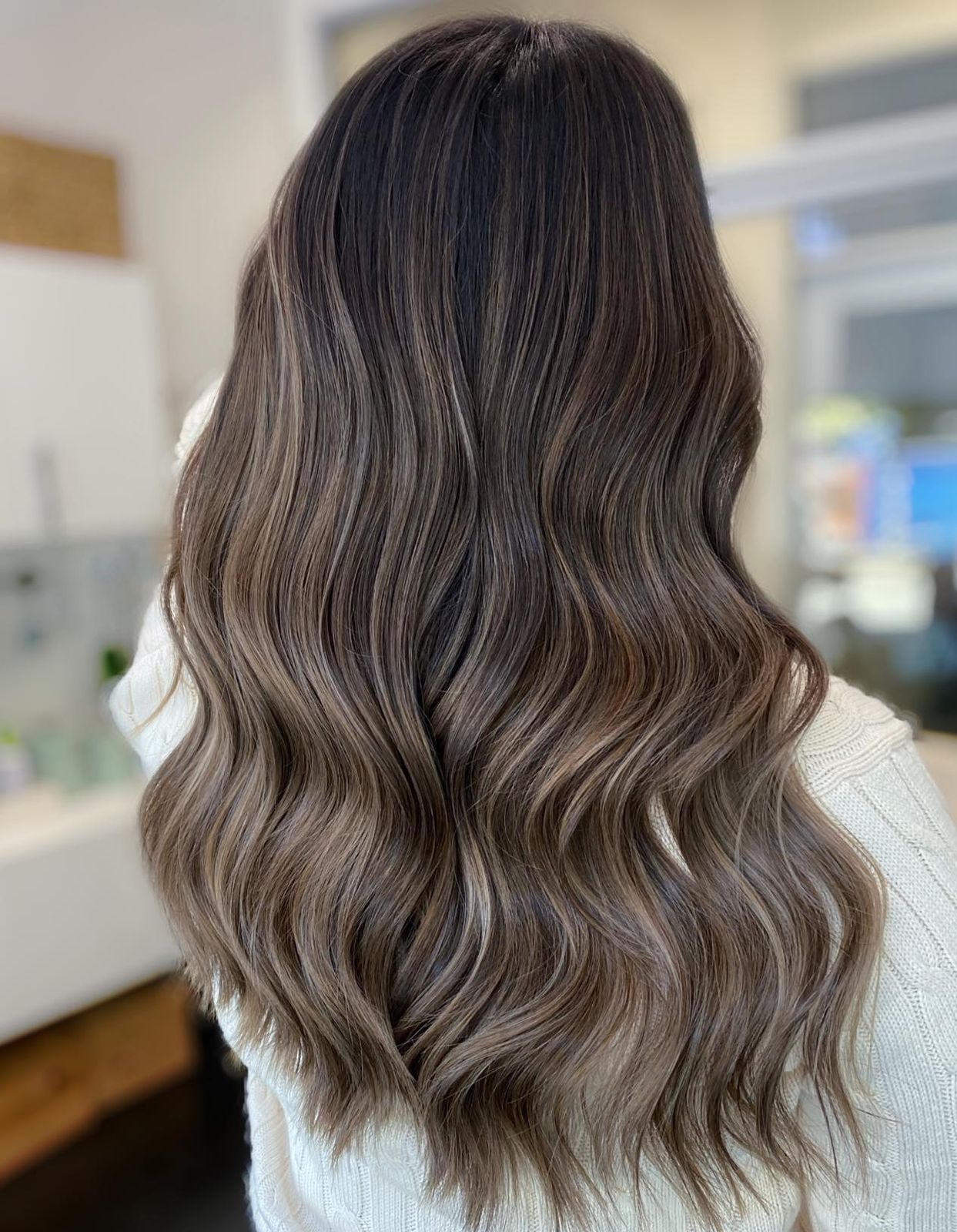
It is Tuesday morning and I have a blowout that needs to last through a workday and a dinner. This one does. The ash blonde highlights blowout is a mid-back layered cut with a wavy blowout, and the ash blonde highlights and balayage are placed high enough that the wave pattern catches them. The dark brown base stays heavy underneath, so the overall look is polished without being flat. Thick, wavy texture holds the shape because the layers are cut into the density, not fighting it. For fall, this reads rich and cool. For spring, the lighter pieces keep it from feeling heavy. The blowout takes about 25 minutes with a round brush, and the colour earns its keep across both seasons.
Shoulder Length Ash Blonde Balayage
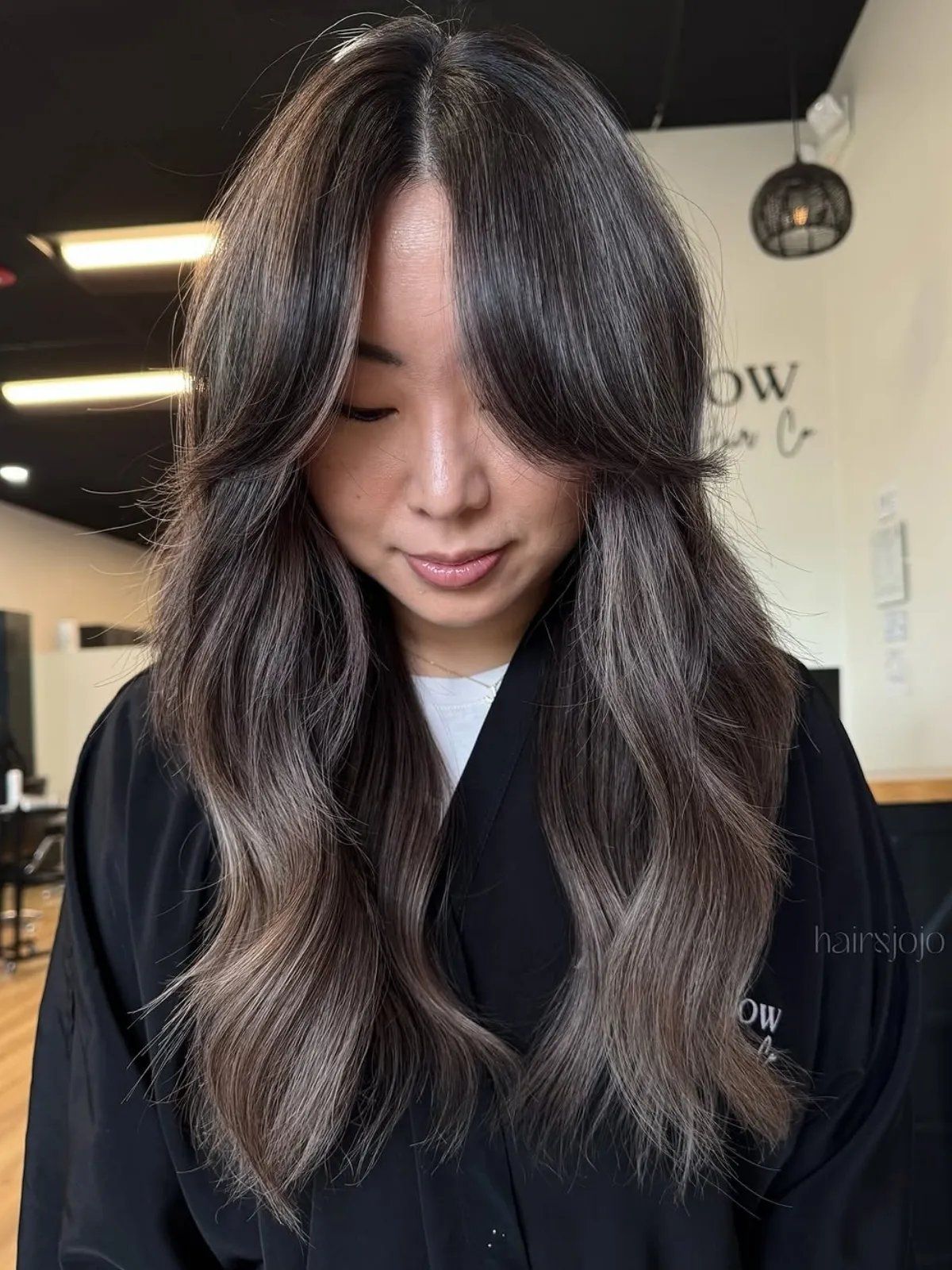
I will say it plainly. The ash blonde balayage shoulder length cut does more for this colour than longer hair ever could. On a shoulder-length layered cut with curtain bangs, the ash blonde balayage sits closer to the face and the contrast reads intentional rather than stretched out. Longer hair spreads the lighter pieces thin, and the ash tone can look diluted by the time it reaches the ends. Here, the colour lands in visible clusters around the waves and the bangs frame it. Thick, wavy texture keeps the shape from going flat by lunch. The curtain bangs pull the ash tone forward so it hits the light when you turn your head. That is the whole advantage of shorter length.
Collarbone Ash Brown Lob With Balayage
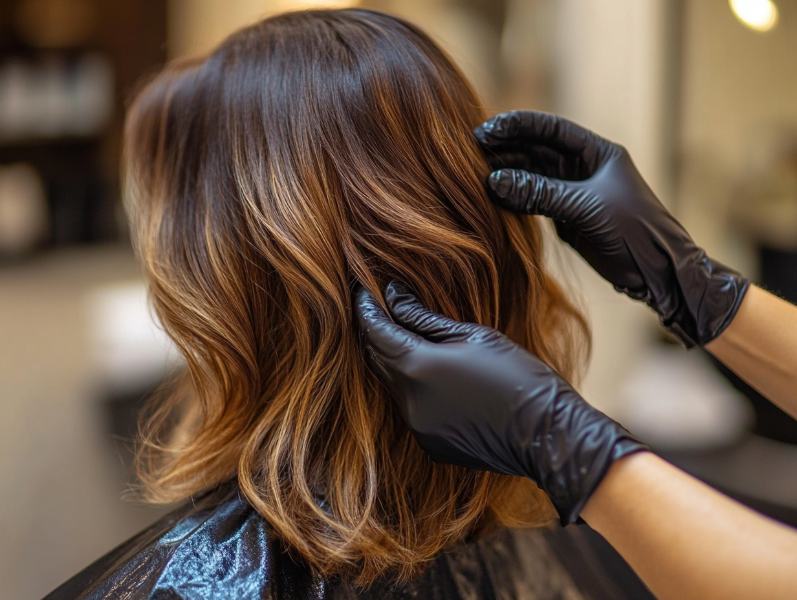
Can you do this ash brown lob balayage at home? No. And I say that as someone who has tried. The ash brown lob balayage is a collarbone-length cut with wavy texture and medium density, and the balayage highlights need a stylist who understands placement on a shorter canvas. Too high and the ash blonde balayage highlights sit at the root like a stripe. Too low and they vanish into the dark base. The lob itself is straightforward, a blunt baseline with soft interior layers, but the colour requires a freehand paint technique that a box dye cannot replicate. Wavy texture helps the lighter pieces peek through the movement, but the application has to be precise. Book the salon, skip the mirror.
Layers Ash Brown Balayage Collarbone Waves
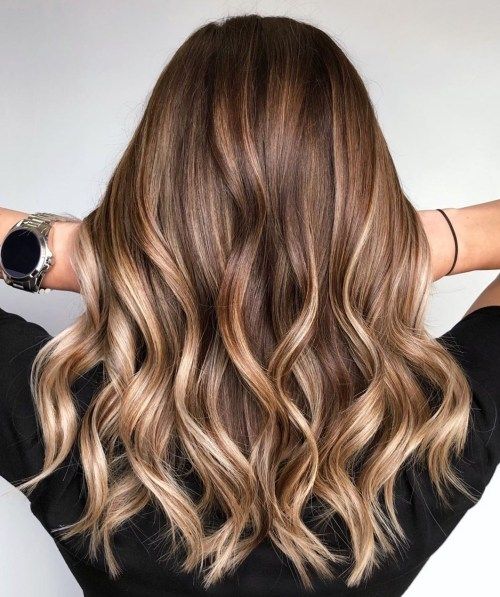
This is the balayage technique I geek out over, because it’s not about big streaks, it’s about a soft, blended colour technique that starts darker at the root and melts into cool, soft ash brown balayage cool tones at the ends. The collarbone length keeps the layers visible, and the middle part lets the waves fall where they want. For medium density wavy hair, this reads as movement, not bulk. When you ask for it, say you want a root smudge, a mid-length transition, and lighter pieces only around the face, no harsh lines anywhere. The tone is what sells it: too warm and it turns brassy, too flat and it goes muddy. A good stylist will map the placement to your natural part, so the colour grows out looking like a shadow, not a stripe.
Collarbone Ash Brown With Lighter Ash Blonde
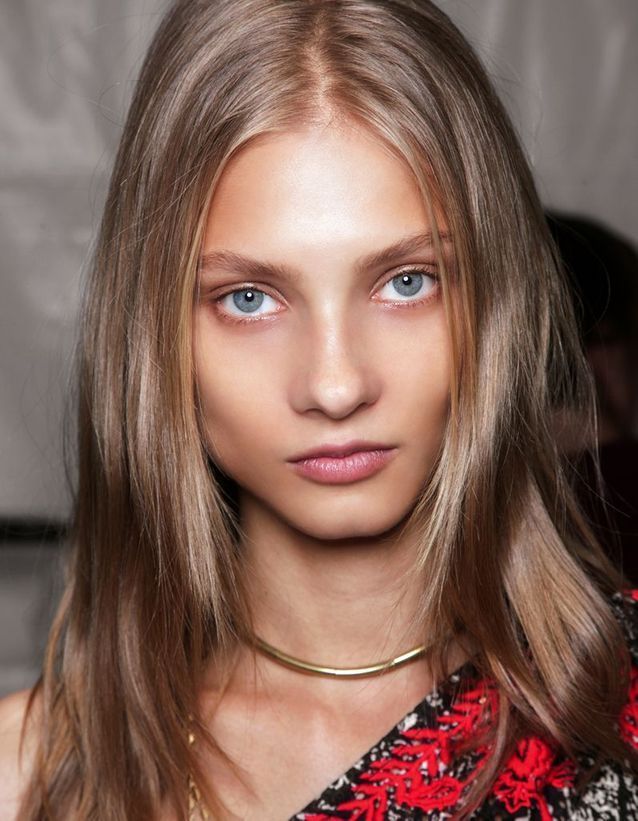
Does your skin run cool, with pink or blue undertones? Then this muted ash brown is your colour, because the ashy tone echoes the coolness instead of fighting it. The collarbone cut with soft layers and a middle part works on straight, medium density hair, and the lighter ash blonde highlights around the face add dimension without going brassy. Air drying takes about five minutes, and trims every six to eight weeks keep the ends from looking stringy. Highlights need a toning session every eight to ten weeks, but that’s the price of keeping the ash from turning muddy. If your skin runs warm, skip this one, it will wash you out.
Visual Idea
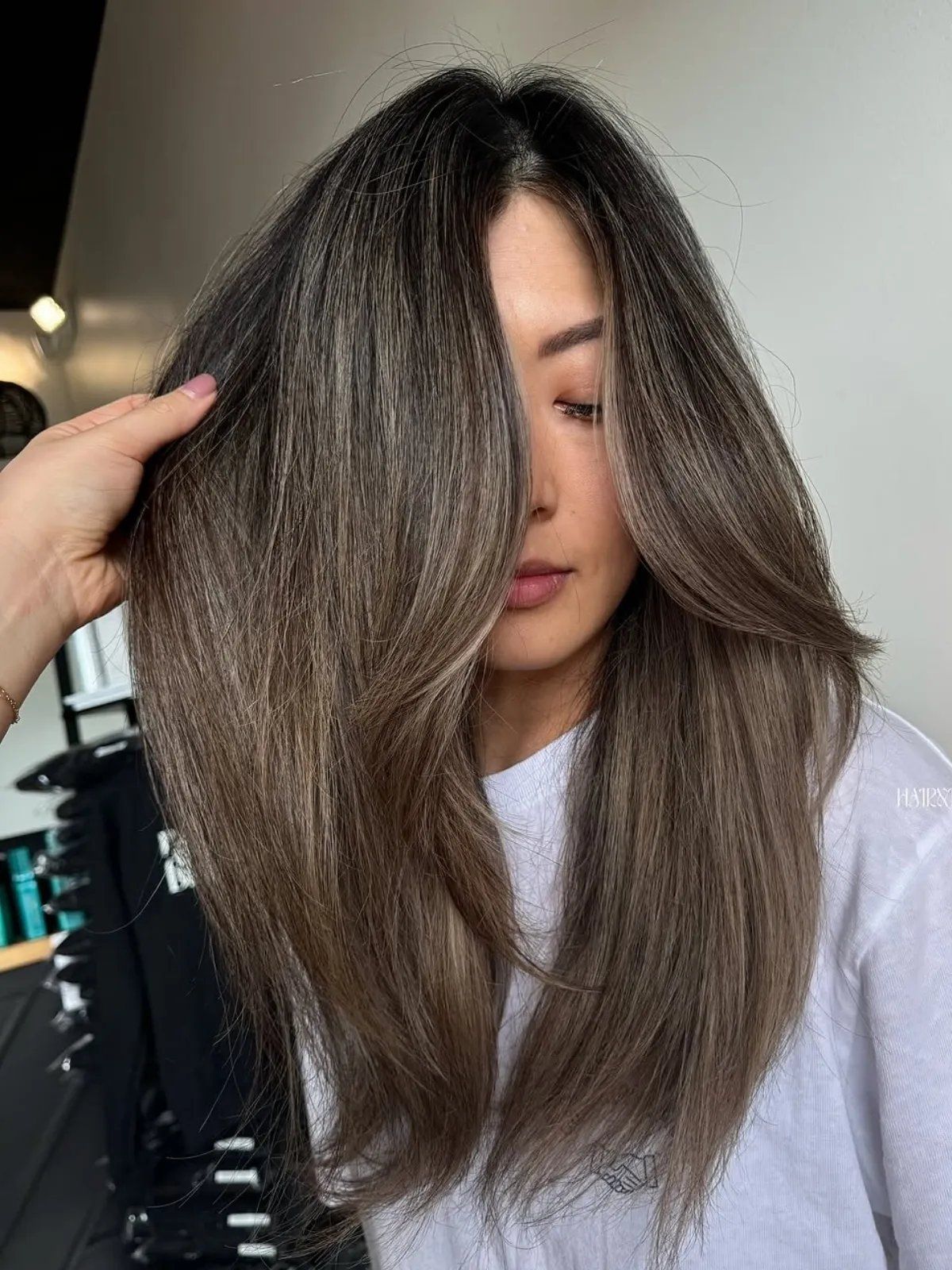
Mid-back, wavy, thick, and the ash brown base with subtle blonde highlights is doing all the work. This is the look you wear to a summer wedding, then again to a casual brunch the next day, because the waves hold their shape and the colour stays soft. The middle part and no bangs keep it grown-up, while the layers give it movement. For a formal event, tuck one side behind your ear and let the rest fall; for a day out, just run your fingers through it. The highlights are subtle enough that they don’t need constant touch-ups, which is exactly what I want from a colour that has to survive a whole season.
Mid-Back Visual Idea
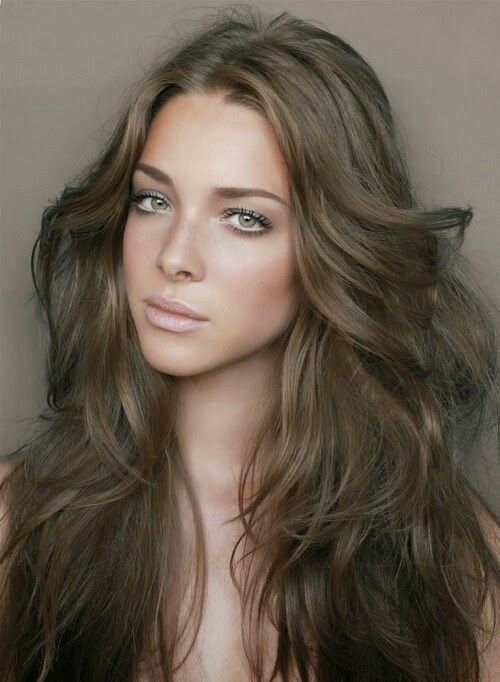
This is the ash blonde tone I’d pick for a spring refresh, hands down. The mid-back length with layers and side bangs keeps it from feeling heavy, and the wavy, thick texture gives it body that lasts. Air drying works here, which is rare for a colour this light, because the ash tone doesn’t need heat to look intentional. The side bangs soften the face, and the middle part keeps it modern. It’s a salon job, no question, but the payoff is a colour that reads cool and clean all season. If you’re between shades, this is the one that makes you look like you just came from the coast.
Layers Visual Idea
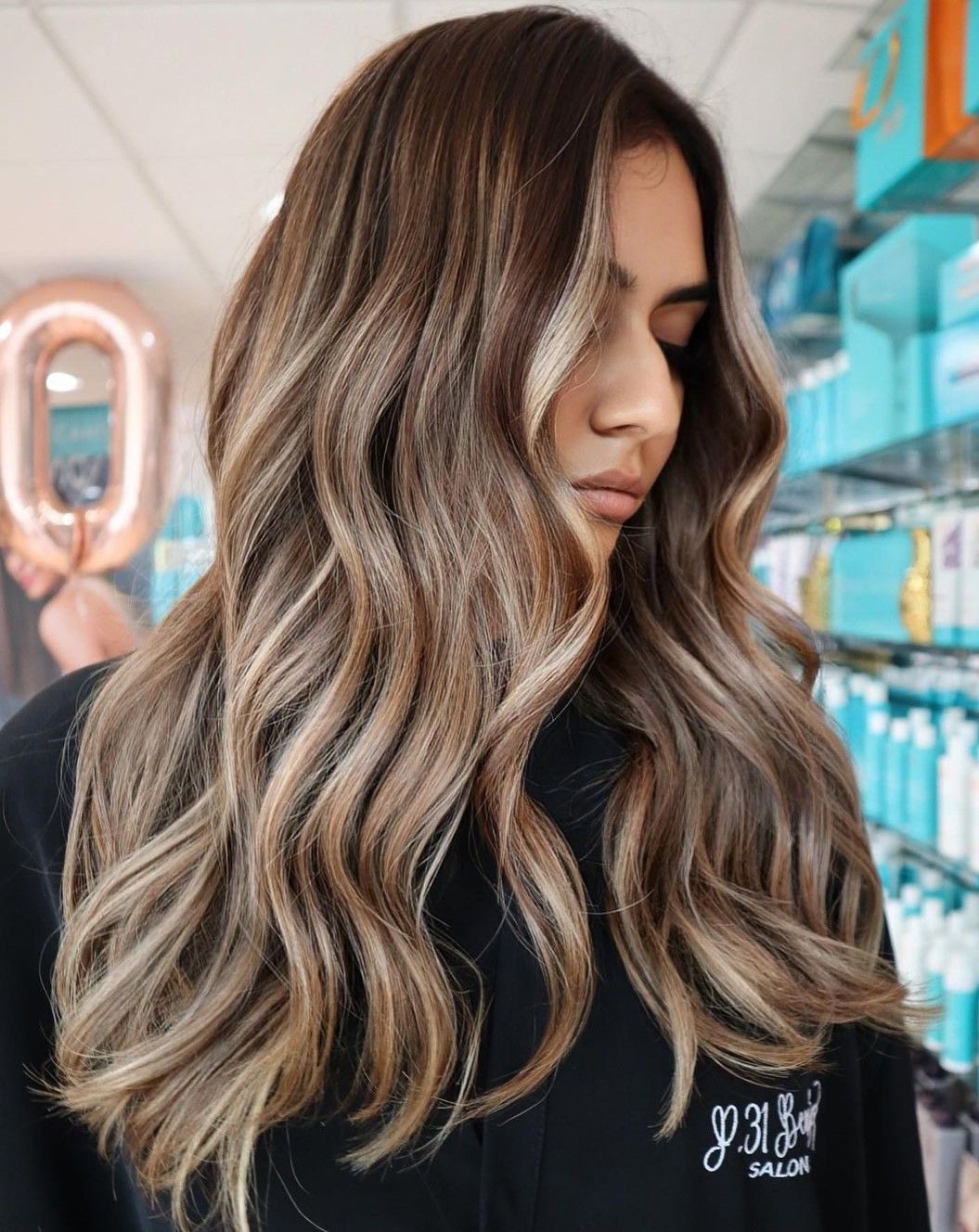
What I notice first about this one is how the blonde highlights sit so fine against the ash brown base that they read as texture, not as streaks. The technique is a careful hand-painted balayage, starting low and staying sparse, so each light piece lands where the layers catch it. On straight, fine hair that is the whole trick: too many highlights and the base goes muddy, too few and you have just brown. The middle part and the long, blunt-ish layers keep everything moving downward, which is what fine hair needs to look like it has actual weight. This is a salon job, no question, the kind where the stylist spends more time placing than painting.
Ash Brown With Subtle Highlights Visual Idea
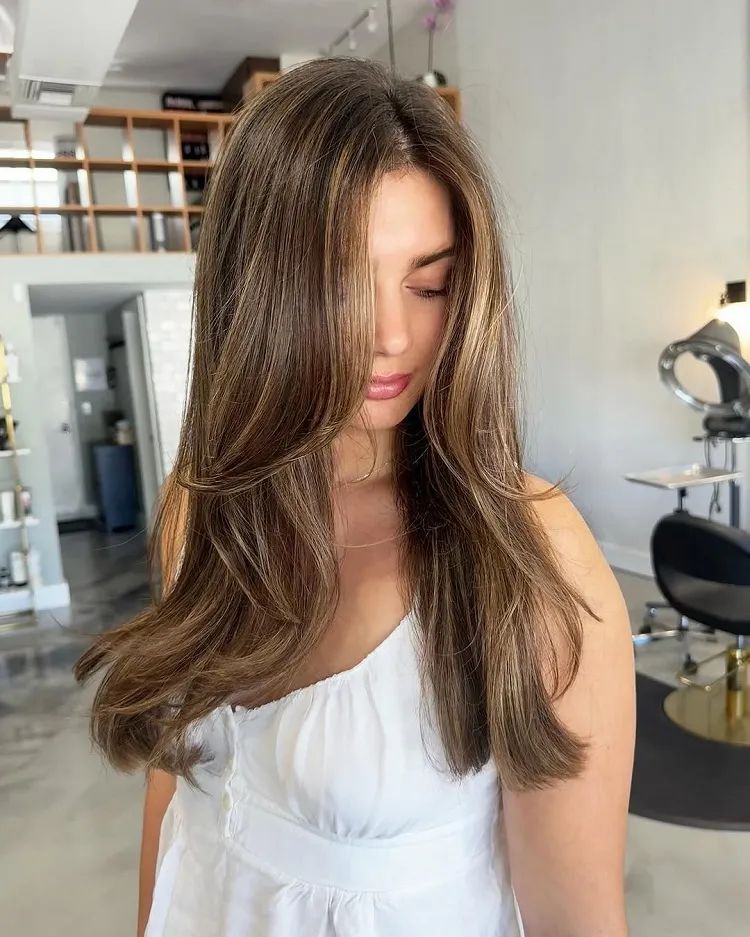
I will admit I am usually suspicious of face-framing pieces. They look great for a week and then they either blend into the base or they turn brassy, and you are stuck with a grown-out mess. This one is different because the lighter pieces are subtle, just a few shades off the ash brown base, so the contrast is quiet. The curtain bangs and loose waves carry the colour, and the medium density means the highlights show without shouting. My honest downside: those lighter pieces will fade first, and on ash brown they fade warmer, so expect a toning visit around week six if you want them to stay cool. The middle part and the mid-back length give you room to hide the grow-out while it happens, which is something. It is not a low-maintenance colour, but it is a forgiving one.
No Bangs Visual Idea
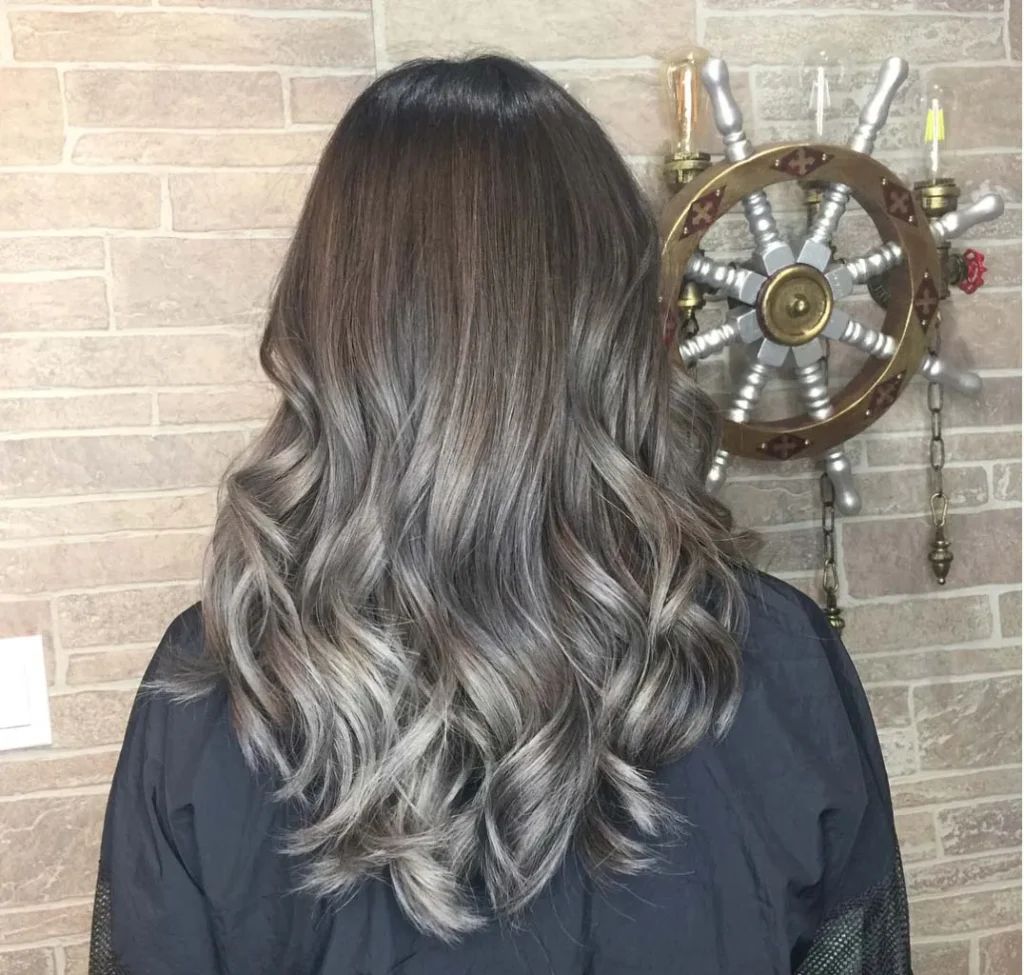
Can you wear an ash brown balayage with no bangs and still have it read as intentional? Yes, if your hair has some thickness to it. The back view here shows it best: the balayage sweeps through the mid-lengths and ends, leaving the root area dark and unbroken, which gives the eye a place to rest. On thick, wavy hair that is the ideal canvas, because the waves catch the lighter pieces and the density keeps the colour from looking sparse. If your hair is fine, skip the no-bang version, you will want some face-framing movement to break up the flatness. The middle part and the layers do the work here, and the upkeep is mostly about the ends, because the balayage grows out soft rather than harsh. A trim every ten weeks keeps the shape honest.
Chin Visual Idea
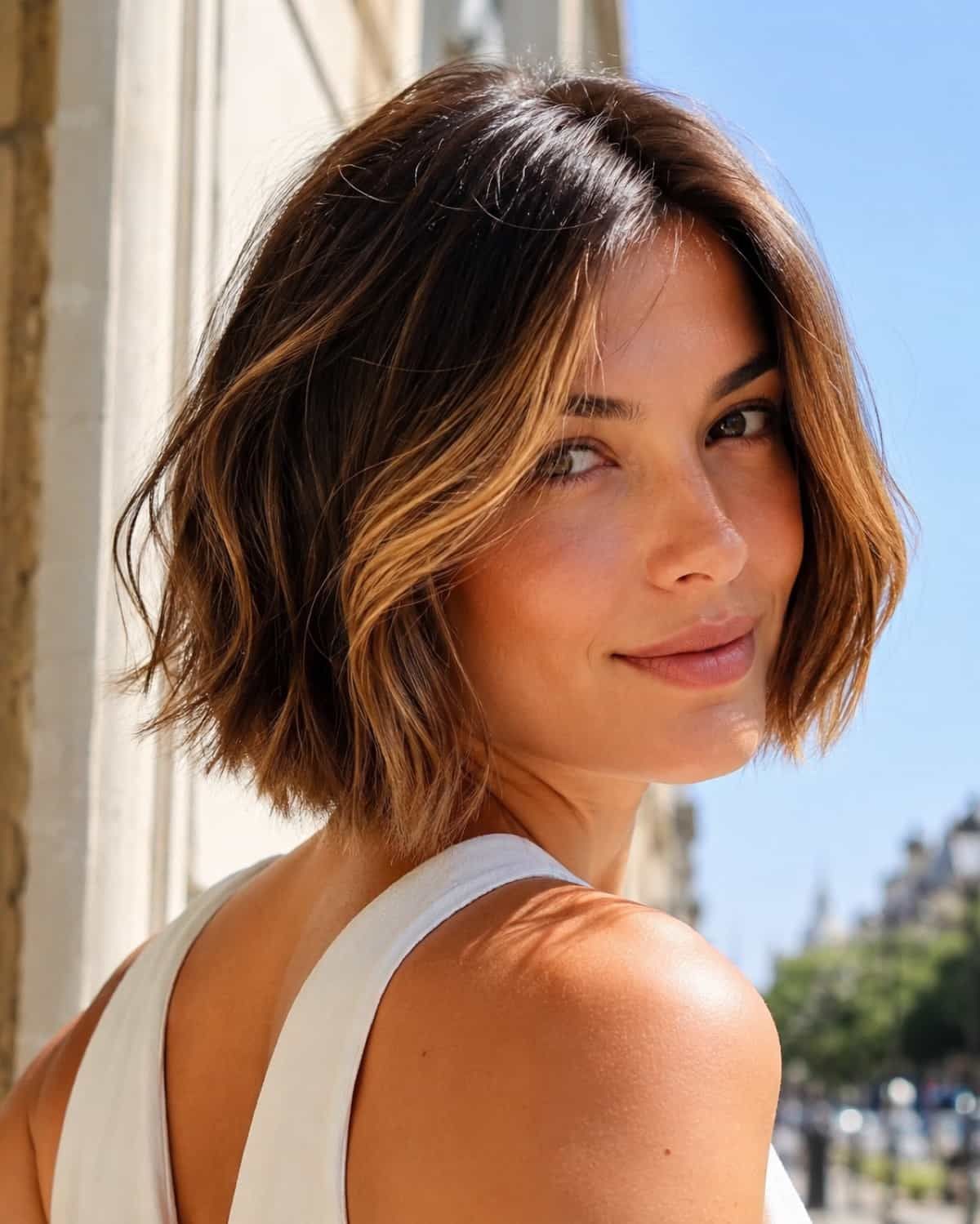
Tuesday morning, you wash it, you shake your head, you go. That is the reality of this chin-length bob with warm caramel balayage. The ash brown base keeps the cool depth, while the caramel pieces add just enough warmth to stop it from going grey. The side part and the textured waves mean it air-dries into something acceptable, and the chin length means it does not tangle into a knot by noon. It is a summer cut, honestly, the kind that works when you want to feel the air on your neck and not think about your hair again until dinner. The medium density is right for it, too much hair and the bob goes triangular, too little and it goes flat. The caramel will fade warm, so plan a gloss around month two if you want the contrast to stay.
Side-Swept Visual Idea
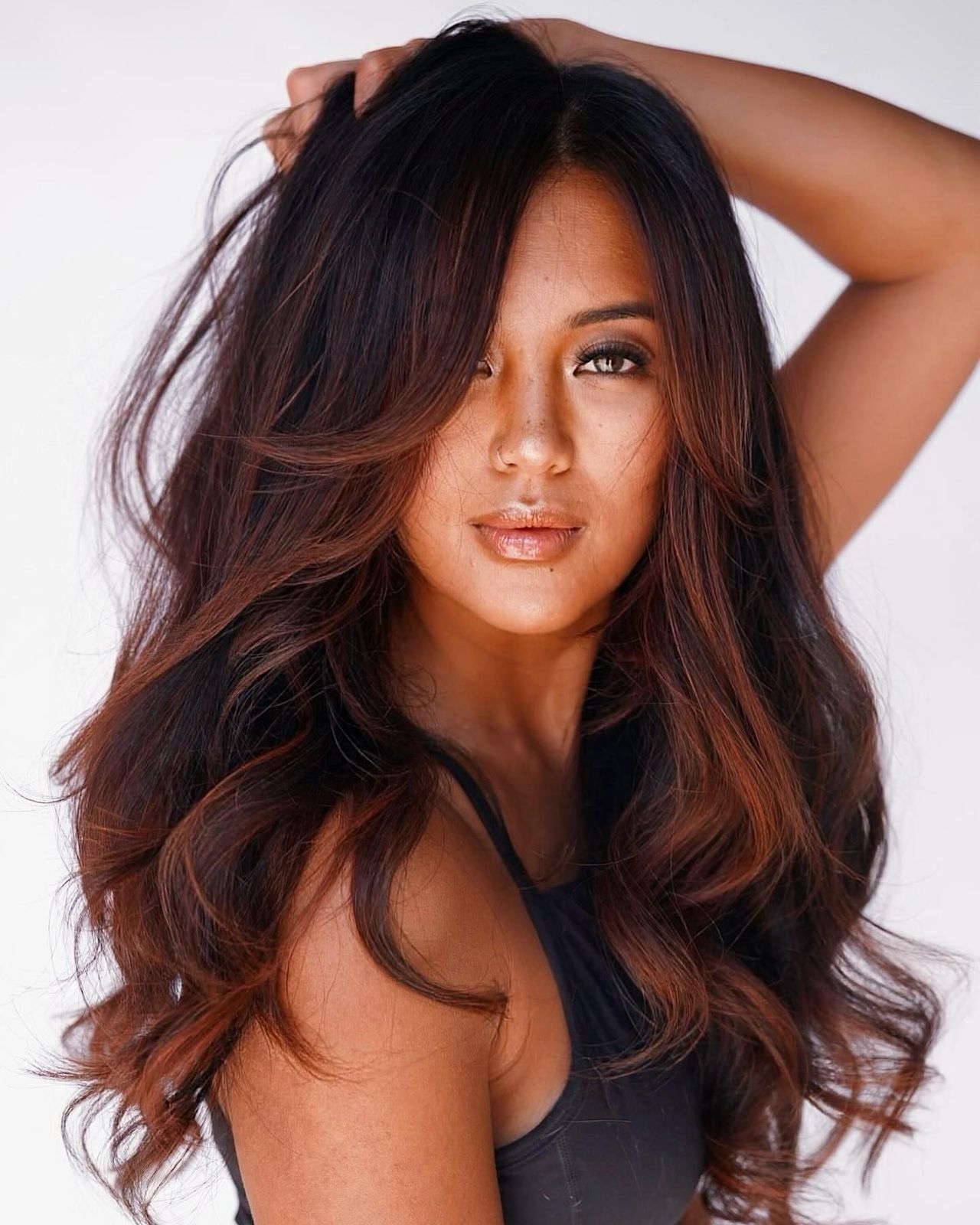
I am picking the warm caramel highlights over the cooler ash-toned ones for this one, and I know that sounds backwards for an ash brown article. The dark base does the cooling, the caramel ends do the lifting, and the contrast is what makes the whole thing work. The side-swept bangs and the voluminous blowout give it that old-school glamour that a fully cool palette would flatten. The thick, wavy texture is the reason it holds the shape, thin hair would lose the volume by lunch. If you want the cooler version, you will get a more modern, moodier feel, but you will also lose the warmth that makes this look feel alive. The mid-back length and the layers keep the movement going, and the contrast between the dark root and the lighter ends is the whole story. It is a statement, and it knows it.
Shoulder Visual Idea
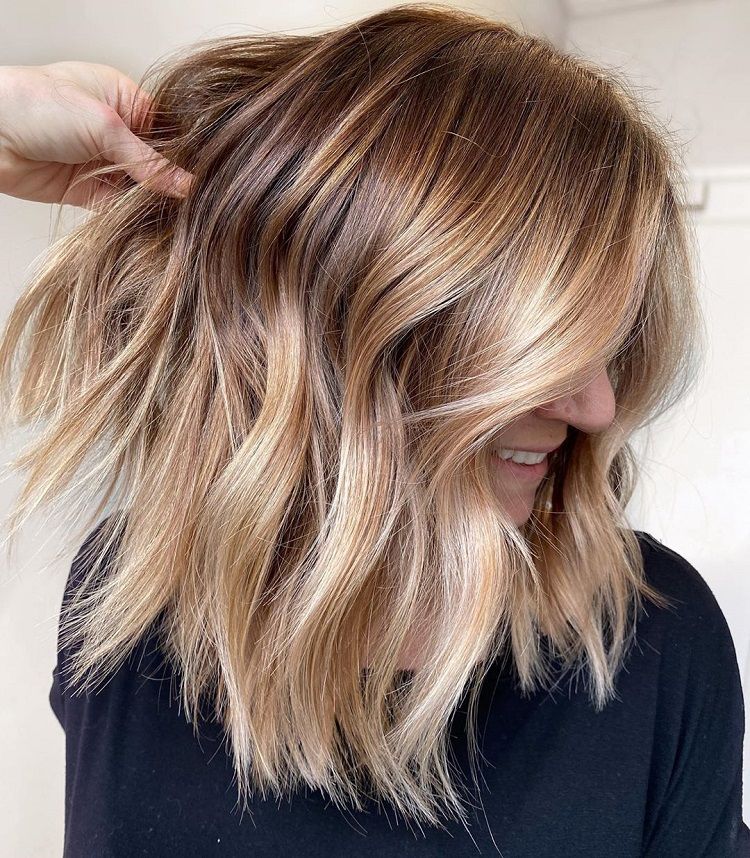
Can you get these textured layers and ash brown highlights at home? I wouldn’t try it. The side-swept bangs alone need a stylist’s eye to blend into the shoulder-length shape without leaving a chunky line. The ash brown base is a single-process colour, straightforward enough, but those blonde highlights require sectioning and foil work. Thick, wavy texture helps the textured waves hold their shape without a curling iron fight. Fine hair would eat these layers whole. Book the salon, bring a photo, and let someone else manage the back.
Front View Visual Idea
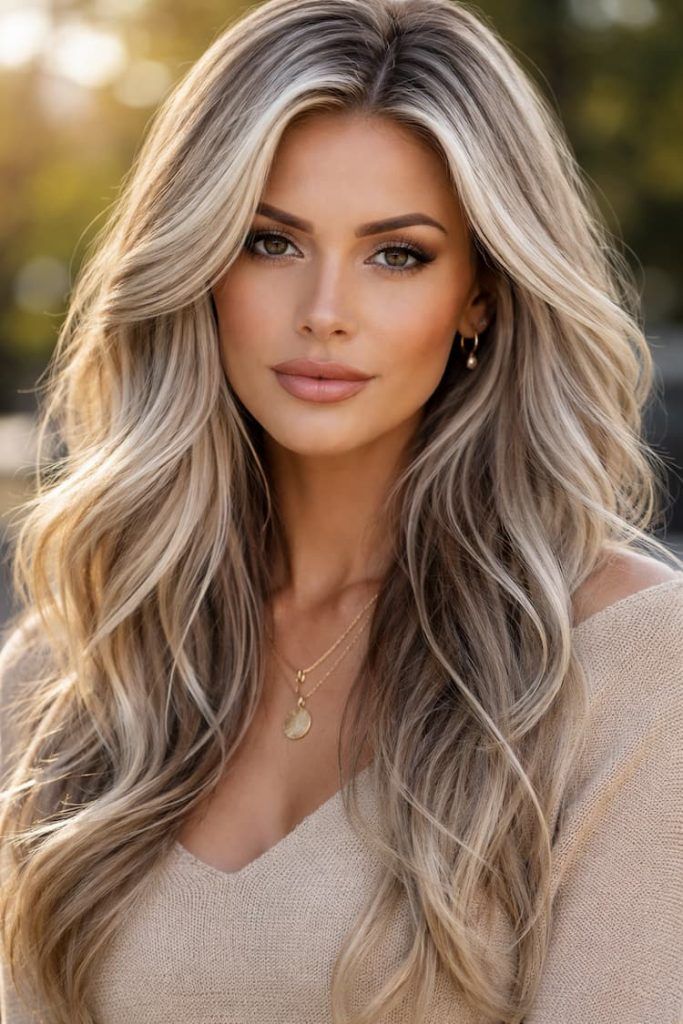
The ash brown base sits flat against the scalp, then the blonde highlights start about two inches down, which is the trick. A root shadow keeps the grow-out line invisible for weeks, and the highlights are painted in a graduated pattern, heavier at the mid-lengths, lighter at the ends. The wavy blowout adds volume at the crown and softens the transition between the two colours. Thick, wavy texture holds the wave pattern without product buildup. The middle part widens a round face, so consider a slight side sweep if that is your shape. The styling steps: rough dry the roots, then use a round brush on the mid-lengths, then wrap sections around a large barrel for the wave.
Long Layers Visual Idea
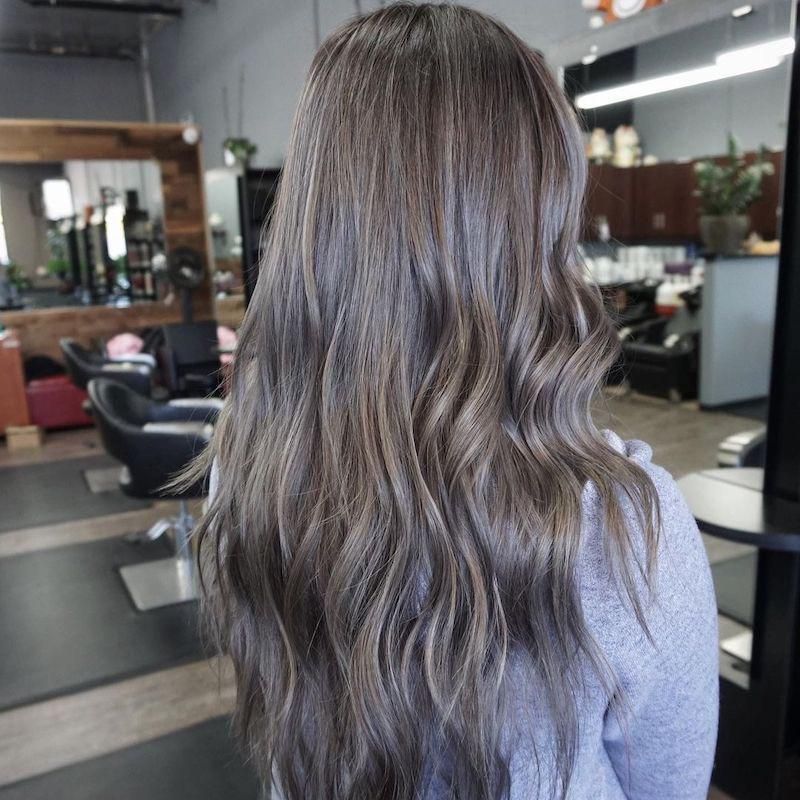
Does ash brown with ash blonde highlights work on thick, wavy hair? Yes, and it is one of the few colour combinations that does not fight the texture. The ash brown base cools down the warmth that thick hair naturally throws, and the ash blonde highlights add dimension without competing. The long layers are cut into the mid-back length, which keeps the weight from pulling the wave straight. The middle part lets the colour fall symmetrically, but a side part would work if you want more lift at the crown.
Wear and upkeep: the ash tones fade cooler than warm browns, so you can stretch washes to three or four days without brassiness. The long layers need a trim every ten weeks to keep the ends from thinning out. Wavy and thick textures hold the wave pattern for two days with a refresh spray. Low density hair would look sparse at this length, skip it.
Middle Visual Idea
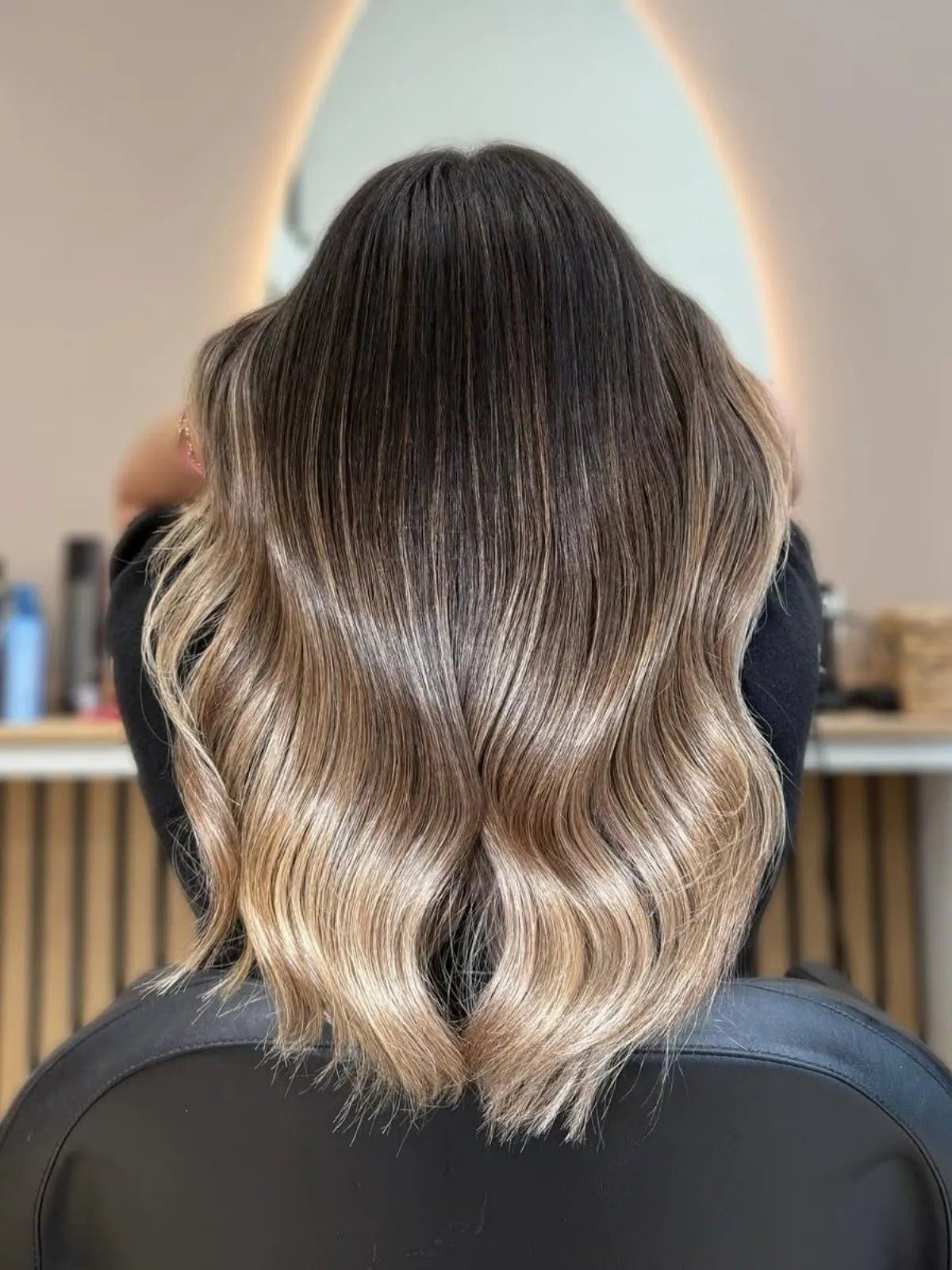
The stylist sets the ash brown base first, then paints the blonde highlights in a face-framing pattern, heavier around the front sections. The collarbone length and wavy blowout styling mean the highlights catch the light when you move your head. The middle part splits the colour evenly, so the front pieces mirror each other. This translates from day to evening by changing the wave: a looser wave for daytime, a tighter curl for evening. Medium density hair holds the wave without falling flat by dinner. The ash brown base reads cool against warm skin, and the blonde highlights add brightness without going golden. Thick hair would need the layers cut deeper to avoid a triangular shape.
Wavy Visual Idea
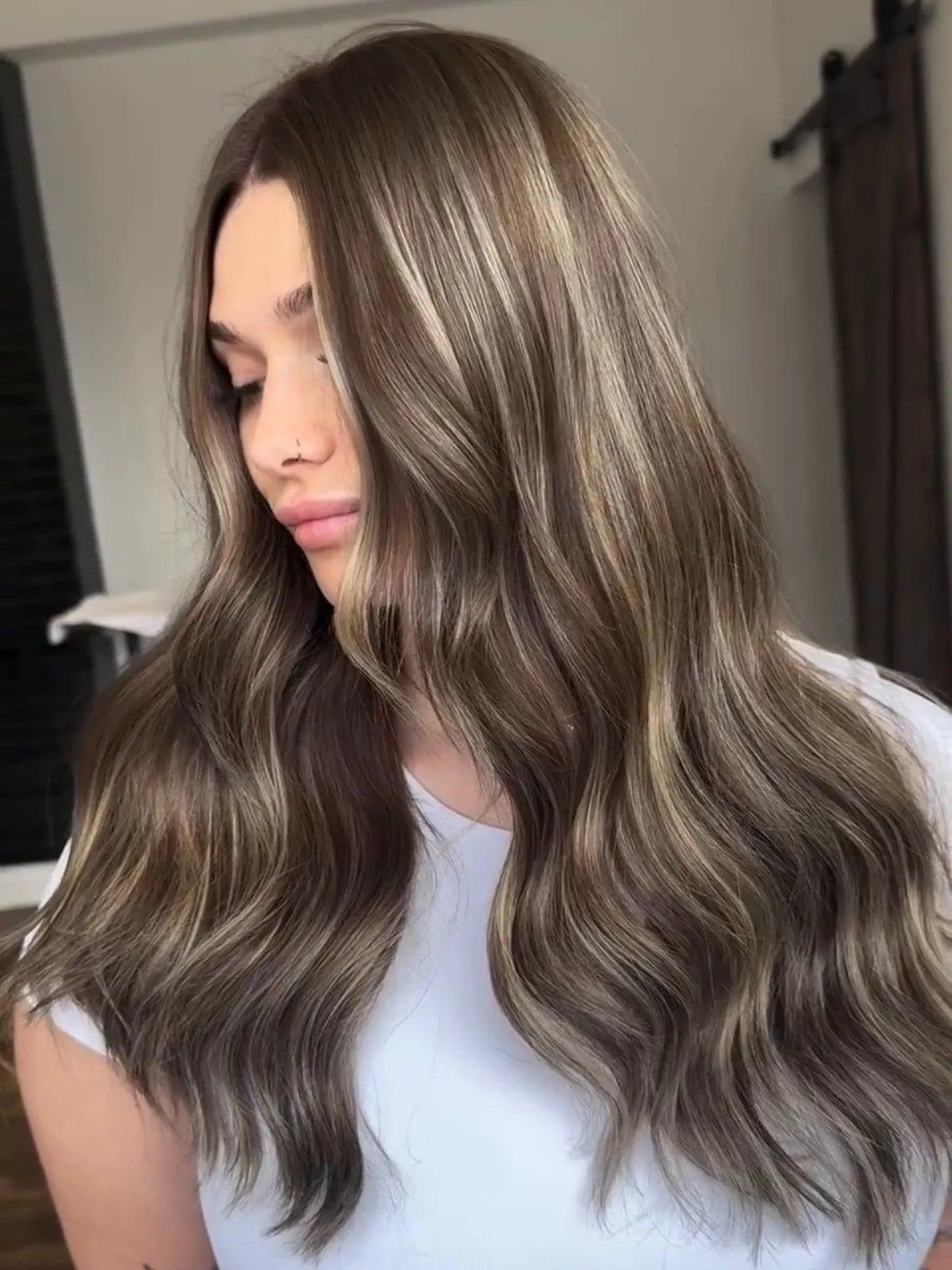
This is the summer update you didn’t know you needed. The ash brown base stays cool and grounded while bright blonde highlights catch the light like a sunstripe. Mid-back length with long layers keeps the wave from collapsing into a triangle, which thick hair does the second you stop paying attention. A middle part widens a round face, so know that going in. The waves are loose and intentional, not curled within an inch of their life. It’s a salon job, and it should be.
The colour technique here is what makes it work. The bright highlights sit on the surface, not carved in deep, so the ash brown remains the star. No brassiness, no warm compromise. This is the look you book for June and wear through September without a second thought.
Back View Visual Idea
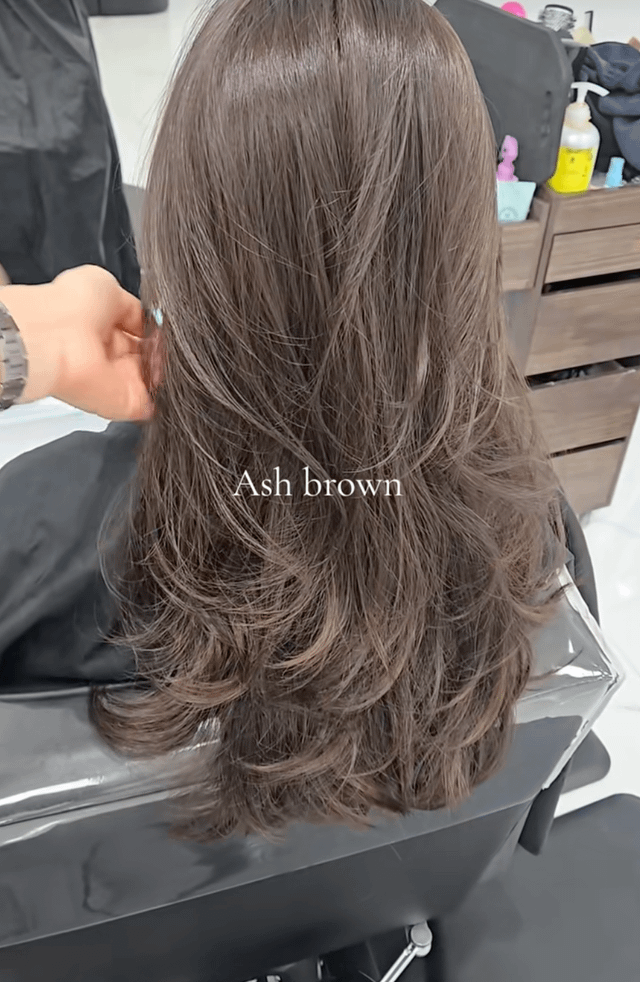
What you notice from the back is the precision. The ash brown tone is uninterrupted through the crown, then subtle highlights begin about halfway down, like the colour fades into a lighter version of itself. No harsh bands, no obvious foil lines. The technique is a soft balayage that paints the mid-lengths and ends only, leaving the root untouched. For thick, wavy hair this creates depth without weight. The layers are long and blended, so the shape holds whether you air-dry or blow it out. A middle part keeps the distribution even. This is quiet colour work, the kind that looks expensive because it doesn’t announce itself.
Shoulder-Length Visual Idea
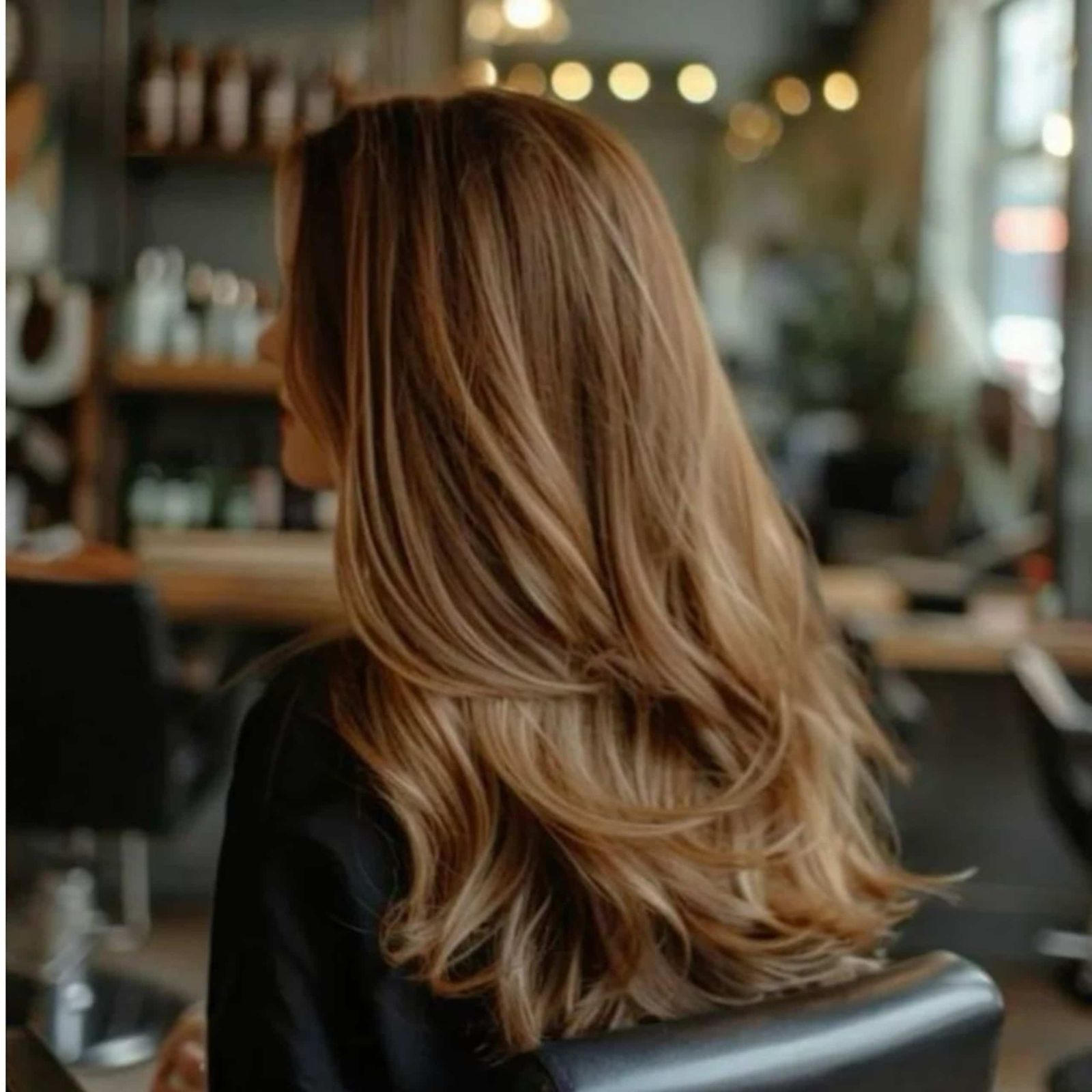
I’ll admit I was skeptical about this one. Shoulder-length with long layers and a middle part can read a little safe. The ash undertones in the brown base are there, subtle lighter pieces add a soft lift, and the ends have a slight wave that keeps it from looking too straight. But here is the honest downside: if your hair is medium density and you don’t style the layers forward, the cut can make it look thinner than it is. The movement is real, but it requires a round brush and a minute of attention. Without that, the layers just hang there, and the ash tone does all the work alone.
Side View Visual Idea
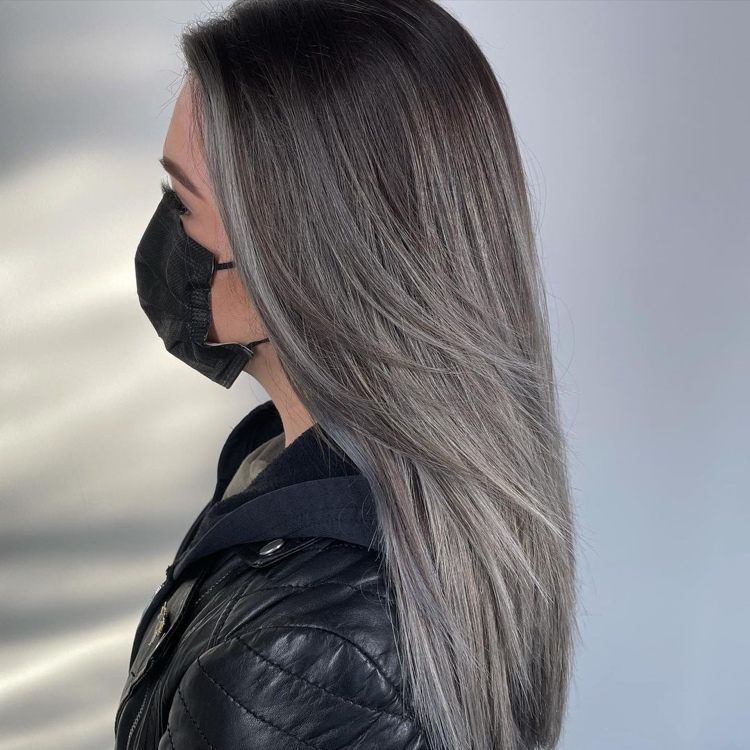
Have you ever seen grey highlights on a brown base and thought, that might actually work? Because it does. The ash brown base is cool and flat, no warmth, and the grey highlights read as a deliberate metallic sheen rather than an accident. This combination suits anyone with naturally cool undertones in their skin or hair that already leans ashy. The side view shows the dimension best: the grey pieces sit in the layers, catching the light differently than the base. Wear and upkeep are straightforward, a purple shampoo every few washes keeps the grey from turning muddy. The blowout here is smooth, the texture is straight and thick, so the shape holds without much effort. It’s unexpected, and that is the point.
Face-Framing Bangs Visual Idea
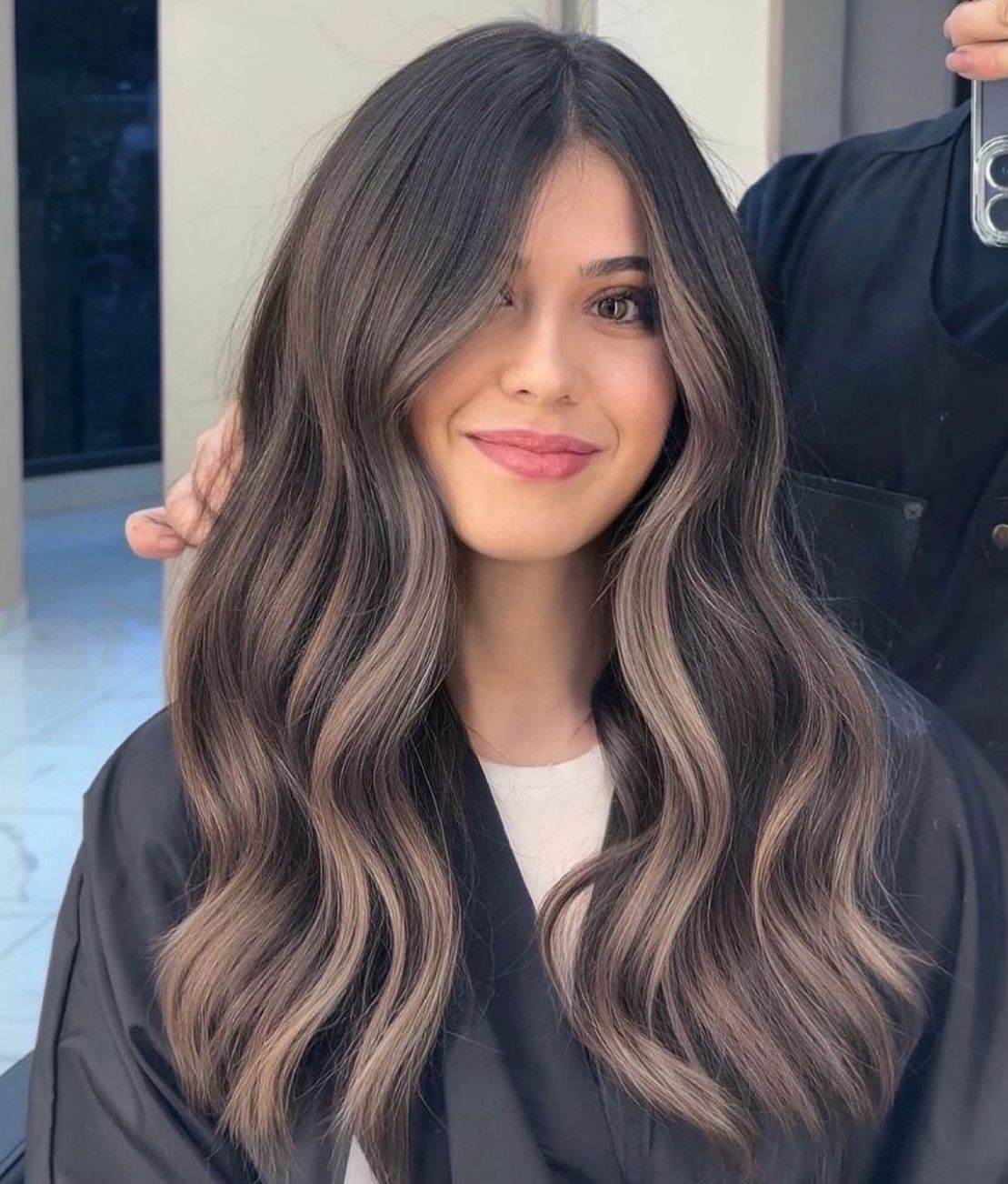
You walk into a room and the first thing someone notices is the light around your face. That is what face-framing bangs with ash blonde highlights do. The dark brown base stays deep and rich, then the ash blonde pieces are concentrated at the front, catching the light every time you turn your head. Collarbone length with layers and a middle part, the waves are soft and thick. This is the colour for a special event, a wedding or a dinner where you want to look polished without trying too hard. The bangs are the trick, they draw the eye up and keep the colour from feeling heavy. It is a salon job, book it a week before, not the day of.
Final Thoughts
After writing all of these, I noticed something: the best ash browns aren’t the darkest or the lightest. They’re the ones with a little dimension, a root shadow, a soft highlight, something to keep the colour from sitting flat on your head.
- Tone at week six, not week ten.
- Trim the baseline every eight weeks.
- Use a purple shampoo once a week.
- Ask for a root shadow if you go lighter.
I’m booking the collarbone lob with the subtle balayage next. It’s the one I keep coming back to.
