

I keep seeing grey roots that look intentional now, not overdue. Silver and ash blonde are everywhere in the salon chair next to mine. Winter is the season to try a cooler shade or let the natural white come through without fighting it.
These 28 Winter Hair Colors for Women Over 60 cover everything from a five-minute pixie to a lob that needs a round brush. Some work on fine hair that goes flat by 4 pm. Others need a weekly toning visit. My own grow-out line showed at week five, so I paid attention to which colors blur that line the longest.
Striking Grey Chin Bob with Volume
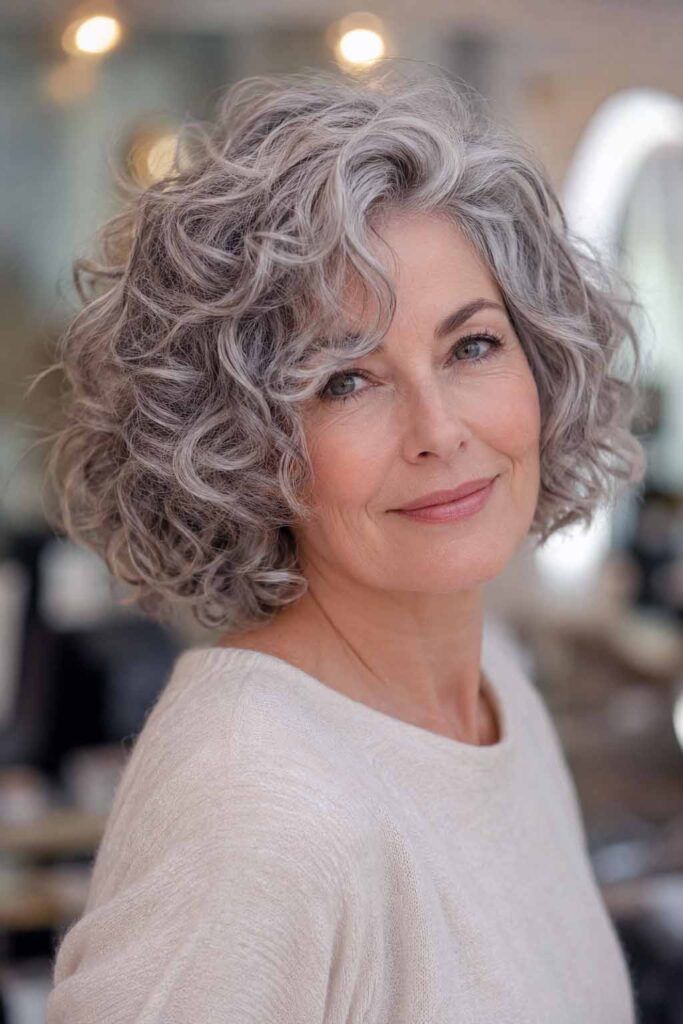
A chin-length bob that leans into natural texture instead of fighting it. The colour is a clean natural grey, no toner fighting the undertone. Curly and thick hair gets the volume here — the cut stacks weight at the crown so the curls spring up, not out. A side part keeps the shape from turning round. For straight or fine hair, this bob lands flat by noon. But if your hair already holds a curl, this is the shortest path to a full head of grey that looks deliberate.
Platinum Blonde Lob with Root Shadow
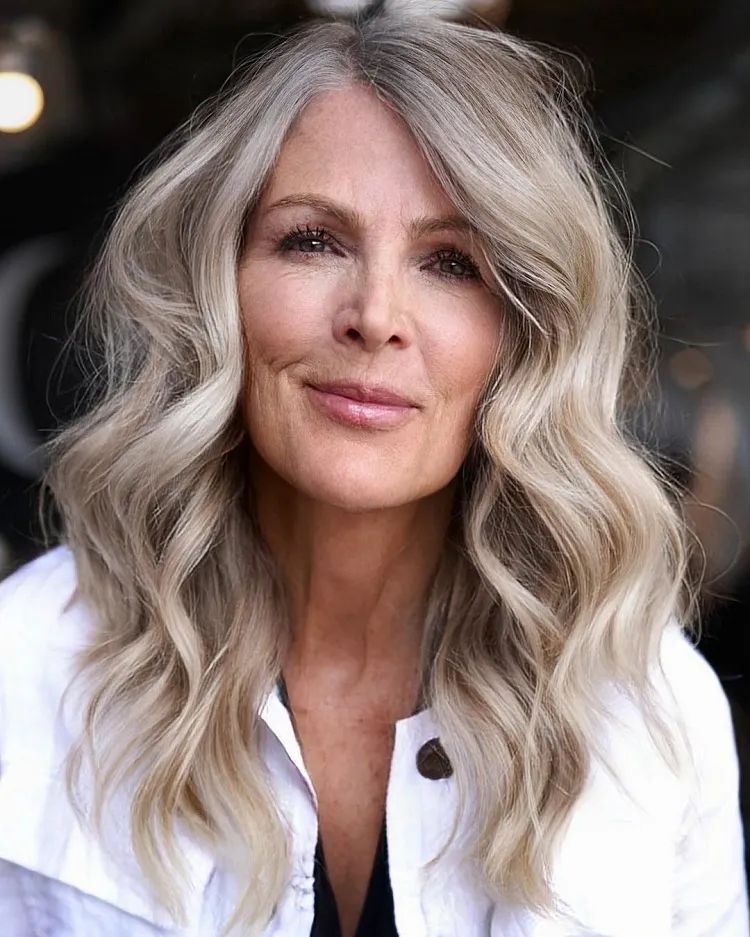
I saw the photo and thought, that is a lot of upkeep. Then I read the technique. A platinum blonde with root shadow means the dark base is painted an inch or two down from the scalp, then the ends go platinum. The root shadow blurs the line where new growth shows. On a mid-back lob with loose waves, the contrast reads expensive, not brassy. Fine to medium texture holds the wave without collapsing. Ask your stylist for a shadow root that matches your natural level two, and a toner that pulls violet, not blue.
Textured Ash Blonde Pixie Cut

Can a pixie this short survive fine, straight hair? Barely. The ash blonde pixie relies on texture that straight hair does not produce on its own. You will need a product with grip every morning, and the ash blonde color will grab every bit of yellow in your water. The cut itself is ear-length with a side part and no bangs, which means the shape lives or dies on the crown. If you skip a trim past week five, the nape grows into a tail. Looks modern for two weeks, needy for the other two.
Sleek Ash Blonde Asymmetrical Bob
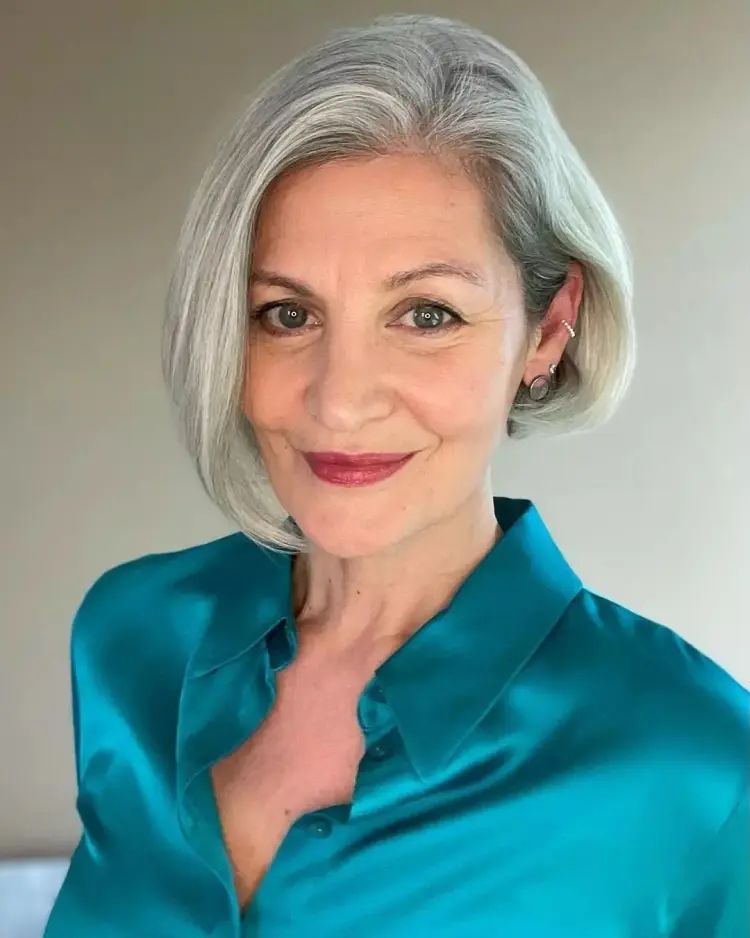
A symmetrical bob is safe. This ash blonde asymmetrical bob is not. One side hits the chin, the other sits shorter, and the deep side part makes the difference read as intentional. The silver tones in the colour keep the blonde from warming up against fine, straight hair. Side-swept bangs soften the angle without hiding it. You will need a flat iron every day, and the asymmetry means every trim matters — six weeks, not eight. If you want a bob that does not look like every other bob, this is it.
Textured Silver Grey Ear-Length Cut

The silver grey layered cut works best on straight hair with some density. Ear-length with side-swept bangs and a side part, it relies on texture spray and a quick blow-dry to keep the shape from falling flat. The silver grey color reads cool and clean, but it needs a purple shampoo every third wash or it turns beige. This cut flatters a longer face — the horizontal line at the ear adds width. If your hair is fine and sparse, the layers will expose the scalp. Know your density before you book.
Ear Textured Ash Blonde Pixie Crop

I have to admit something. I used to think a pixie on fine, wavy hair was a recipe for flat, sad results. Then I tried this ash blonde pixie crop. The ash blonde base reads cooler than beige, which matters when your skin has pink undertones. The texture comes from the cut itself, short layers that let each wave sit where it lands. Ear length means I can run my fingers through it once and leave. It is not a wash-and-wear cut, it needs a quick tousle with fingers, but that takes thirty seconds. My waves finally behave like I planned them.
Chestnut Bob with Blunt Bangs
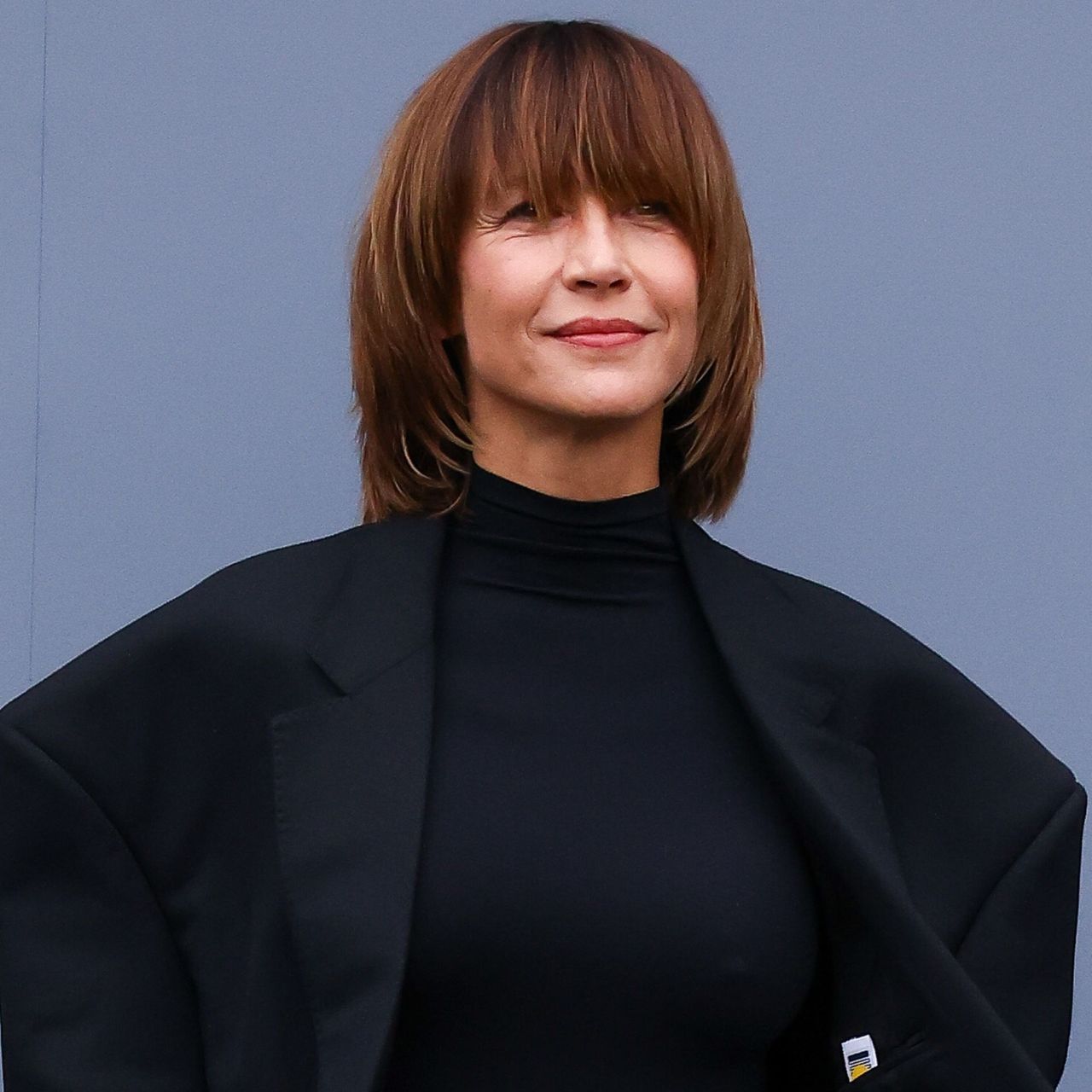
Tuesday morning, I am staring at my fringe in the bathroom mirror. That is the reality of a chestnut bob with blunt bangs. The colour is a deep chestnut brown with subtle blonde highlights, warm enough to stop the bob from looking heavy. The blunt bangs need a trim every three weeks. I mean it. By week four, they hit my lashes and I look like I am hiding. The fine, straight texture holds the sleek line, no curling iron required. The honest downside is the daily straightening, a quick pass with a flat iron, but if you skip it, the bangs separate and the whole sharp line blurs. I keep a mini iron in my desk drawer.
Golden Blonde Long Layers
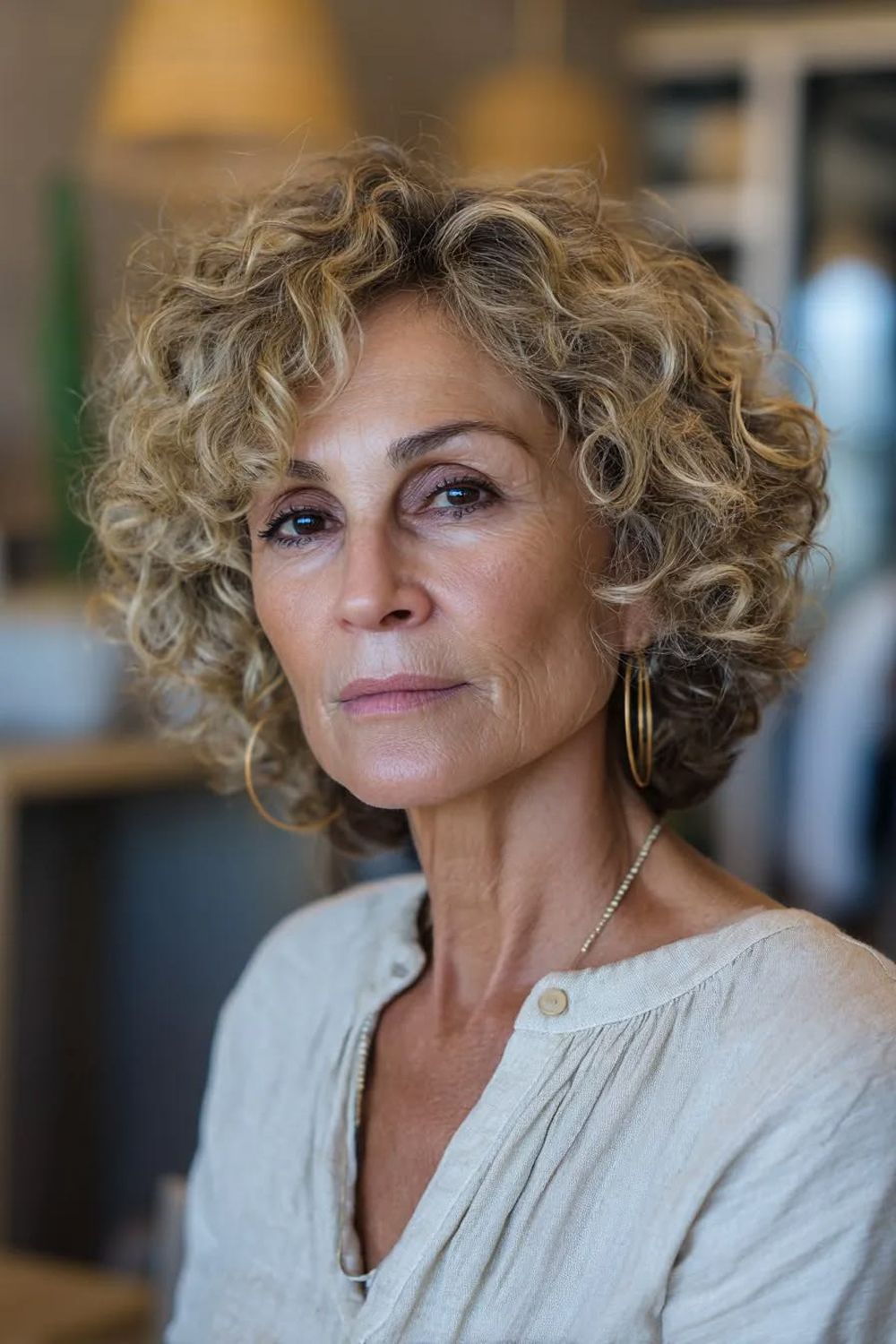
I saw this golden blonde long layers look and my first thought was, that is a lot of work. It is. But the technique is worth understanding. The golden blonde tone sits on the mid-lengths and ends, not the roots, which means the grow-out is soft instead of a harsh line. The base is a warm blonde, lifted enough to read golden without turning brassy. The long layers are cut into the curly texture, each curl defined and separate. Styling takes a few steps: a heat protectant, a curling wand on the mid-lengths, then finger-combing to break the curl into a loose wave. It holds for a full day. The middle part widens a round face, so I keep it.
The colour needs a toner refresh every six weeks. The layers need a trim every eight to ten weeks. It is not a low-maintenance look. But the golden blonde catches light in a way that makes the whole head look fuller.
Tousled Silver Grey Pixie

Do you have fine, straight hair and wonder if grey can still look intentional? This silver grey pixie says yes. The silver grey tone is cool and even, no yellow patches. The pixie cut is ear length with short, wispy bangs that blend into the top. The tousled texture comes from a texturizing product worked through damp hair, then air-dried. It flatters fine hair because the short length stops the strands from lying flat against the scalp. Skip this if your hair is thick or coily. The cut relies on the hair’s natural ability to lift at the root, which fine, straight hair does well at this length. A trim every four to six weeks keeps the shape from turning into a helmet.
Salt and Pepper Grey Curly Bob
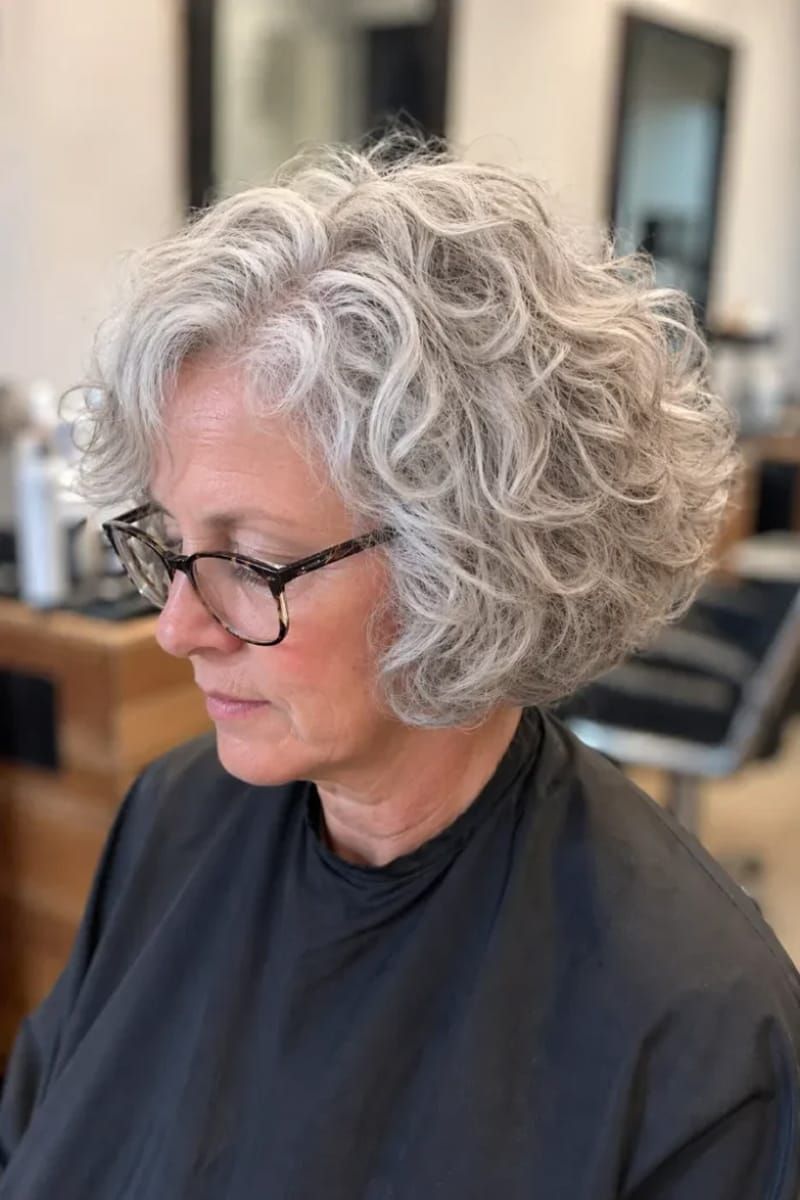
I notice that natural grey curls look best when you let them do what they want. This salt and pepper grey hair in a curly bob proves it. The colour is a mix of dark grey and white strands, no dye needed, just the natural salt and pepper grey pattern. The chin-length bob is cut with minimal layering so the curls keep their weight. The side part gives volume at the crown. Upkeep is simple: a diffuser on low heat, a leave-in conditioner, and a silk scarf at night to stop frizz. The curls hold for two days before I need to refresh with water. A trim every six to eight weeks keeps the bob from turning triangular. It is the most honest grey I have seen.
Ear Vibrant Silver Grey Pixie
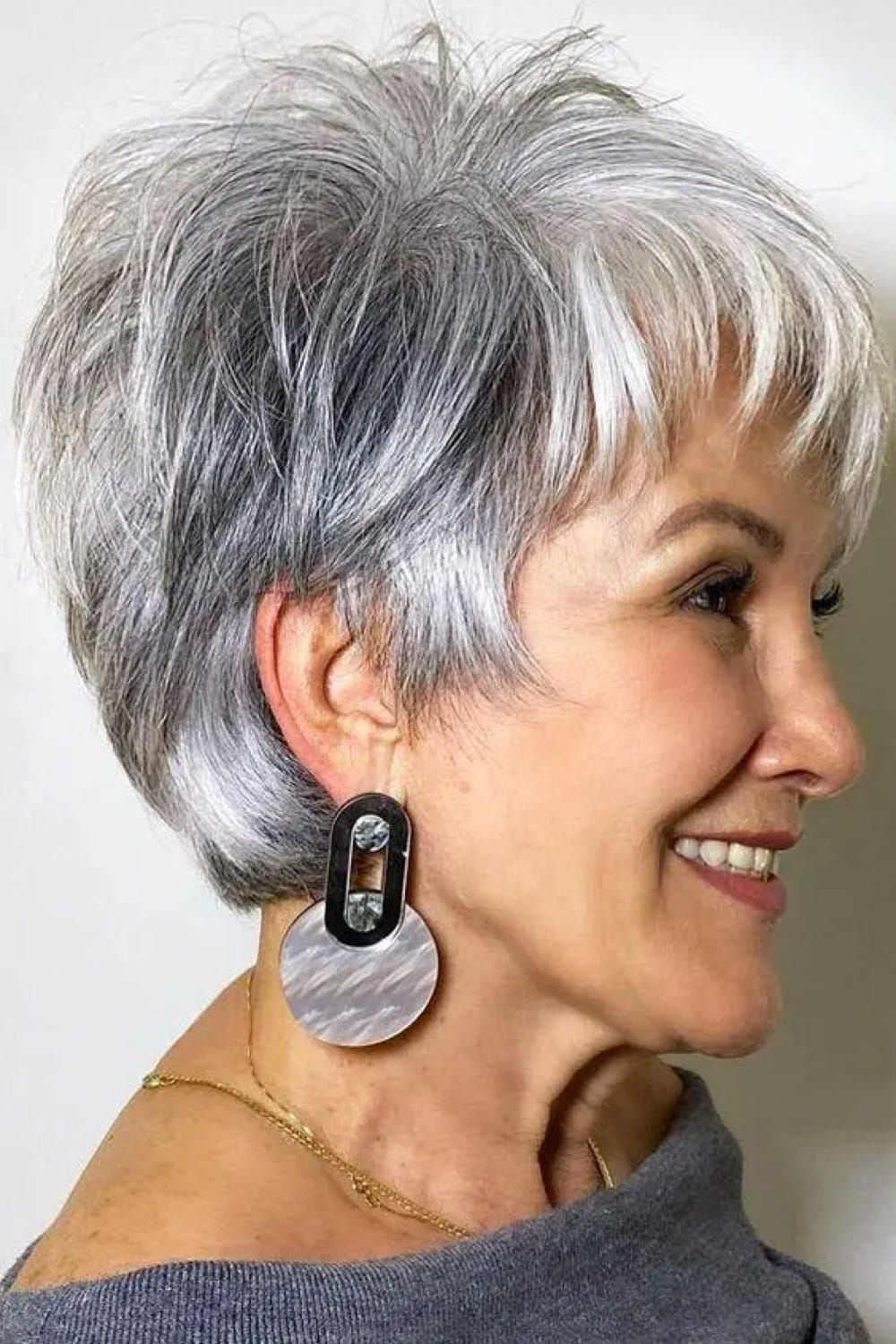
This is the one I’d pick. The vibrant silver grey pixie reads brighter and bolder than a washed-out silver, and that makes all the difference. The colour lands somewhere between polished metal and a winter sky, with a cool tone that catches light instead of swallowing it. Ear length keeps it sharp, and the fine, straight texture here is cut into piecey sections so it holds shape without a fight. Compared to a softer grey, this one announces itself. It does not whisper.
Dark Blonde Balayage Waves
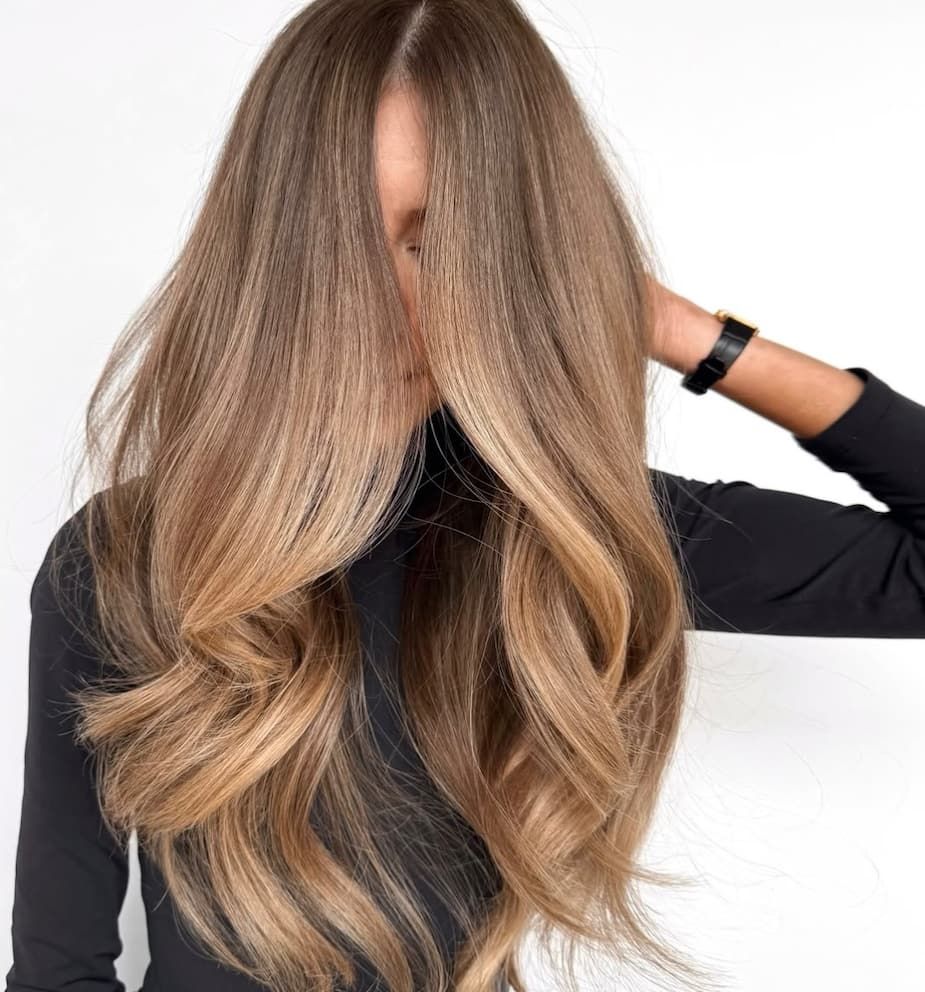
I saw this and immediately wanted to know how it was built. The dark blonde balayage starts with a deep, almost mushroom-toned base at the roots, then the lighter blonde balayage is painted on in thin, vertical sections from mid-length to the ends. That technique creates a gradient that looks like natural sun fade, not stripes. It works on thick, wavy texture because the waves catch each tone differently, adding dimension. Mid-back length gives the colour room to travel. What to ask for: a dark blonde base with hand-painted ribbons of light blonde, no foils at the root, and a tone that leans neutral so it does not turn yellow.
The result is dimensional without being busy. The grow-out is soft because the root is already dark, so you get about ten weeks before anything looks deliberate.
Shaggy Bob with Wispy Bangs

Do you have fine, straight hair that goes flat by noon? Then the shaggy bob with wispy bangs is worth a real conversation. The cut uses internal layers that remove weight from the interior while keeping the perimeter dense, which tricks the eye into seeing more volume than is actually there. The natural grey colour here reads cool and soft, no toner needed. The wispy bangs are cut with a point technique so they land light on the forehead, not heavy. The honest downside: if your hair is coarse or thick, the shag can look bulky rather than airy. This one flatters fine texture best, and the middle part widens a round face, so consider a slight side sweep instead.
Layered Lob with Blonde Highlights
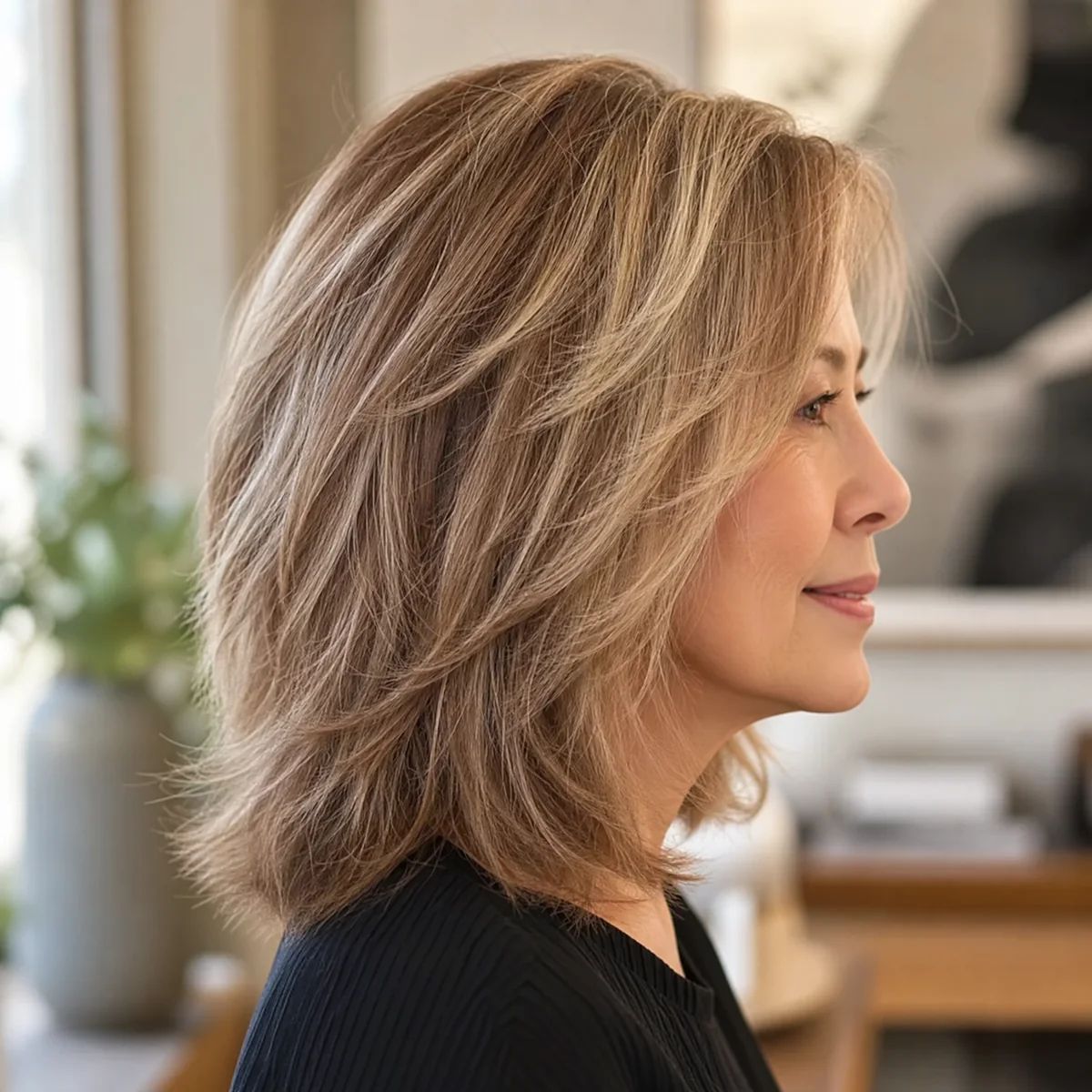
By Wednesday afternoon, most layered cuts have lost their shape. The layered lob with blonde highlights holds longer than it should, and I mean that as a compliment. The layers are cut on a diagonal, stacking from collarbone to the chin, so the shape stays visible even when the wave drops. The blonde highlights are woven through the top and around the face, which keeps the colour from going flat as the week wears on. Medium density, wavy texture is the sweet spot here. Upkeep means a trim every eight weeks to keep the layers landing right, and the highlights need a toning gloss every second visit to stay cool instead of brassy. The grow-out is forgiving because the base is medium blonde, so new growth blends rather than screams.
Grey Pixie with Dark Roots
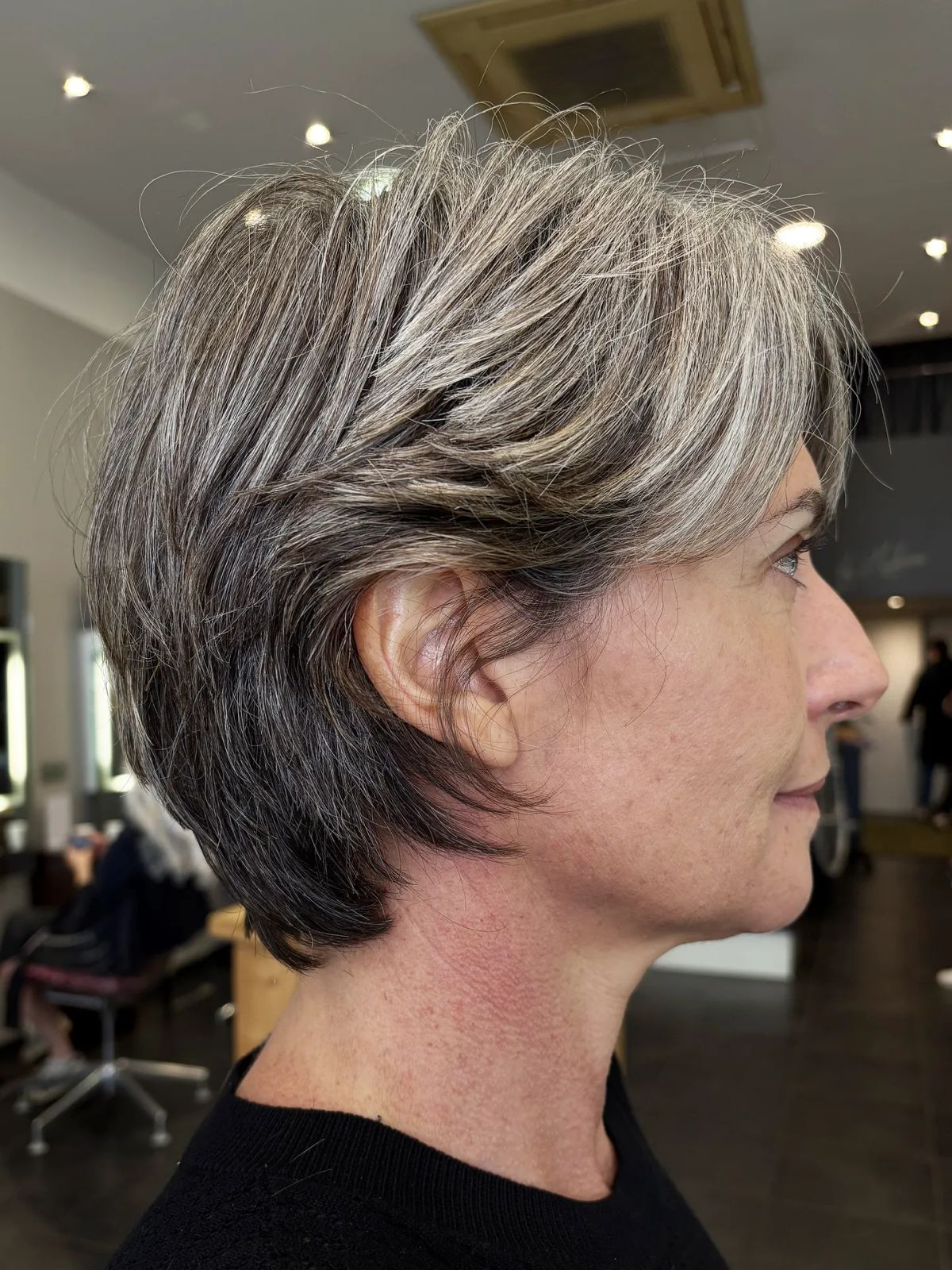
Picture this: you walk into the salon, you sit down, and you tell the stylist you want the roots to stay dark. The grey pixie with dark roots is built on contrast, not blend. The technique leaves one to two inches of natural or coloured dark root, then applies a cool silver grey from the mid-length to the tips. The side-swept bangs sweep across the dark root area, so the transition reads intentional. Ear length keeps the cut sharp, and the fine, straight texture here is cut into short layers that stack at the crown. The dark roots mean you skip the root touch-up for eight weeks, maybe ten. That is the whole point.
Textured Auburn Shag with Highlights
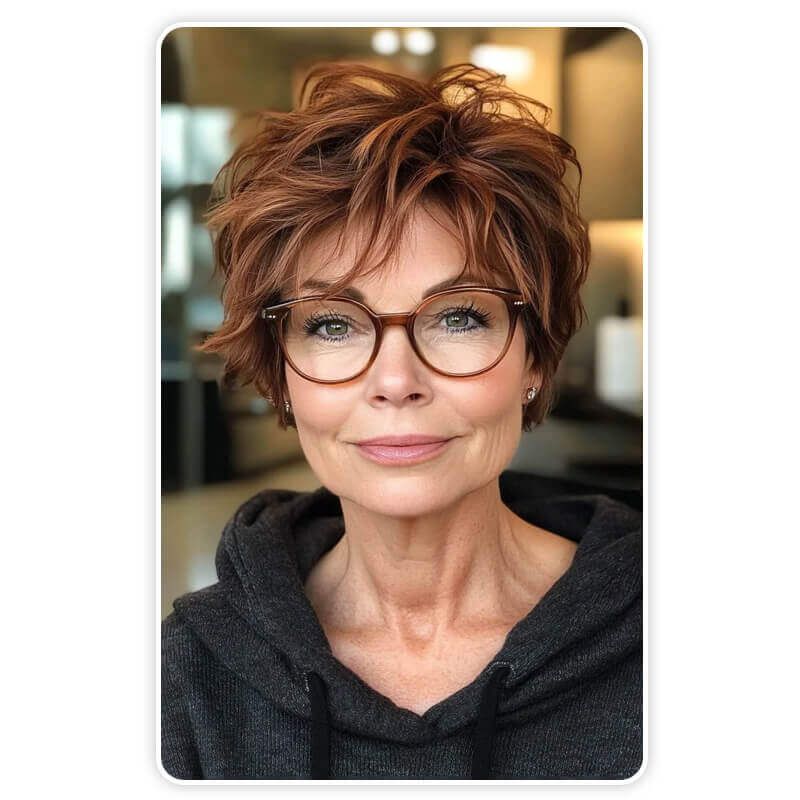
I have to confess: I was skeptical about auburn shag with highlights for women over 60. Then I saw a friend’s hair catch the winter light and it was a warm auburn that looked like it had been there all along, not a salon experiment. The technique is a shag cut with wispy bangs, the tone is that deep red-brown with subtle blonde highlights woven through the top layers. It lands at ear length on wavy, thick texture. The highlights lift the auburn without going brassy, which is the thing I always worry about. She told me her stylist used a gloss every eight weeks to keep the warmth from pulling orange. That sold me.
Short Silver Grey Curly Cut
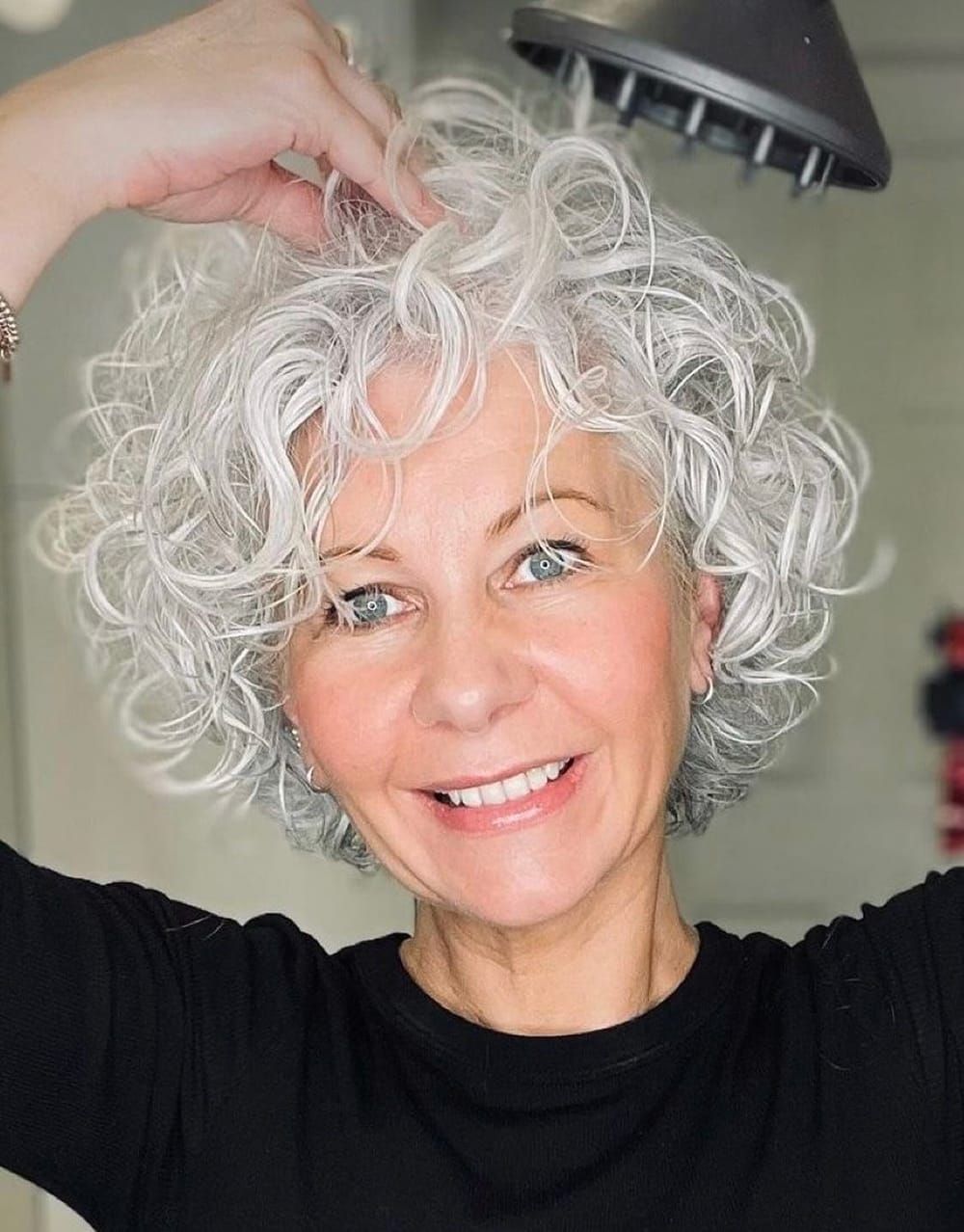
This is the one I send to friends who say their curls have lost their nerve. A short silver grey curly cut at ear length, no bangs, side part, defined curls on thick texture. The silver grey tone is cool and clean, no yellow, no blue. It works best on hair that already has some curl memory. If your hair is fine or straight, skip it. The cut relies on the curl to hold the shape. On thick, curly hair, it looks full and intentional. On anything else, it falls flat by noon. I have watched this happen.
Natural Grey Chin Bob
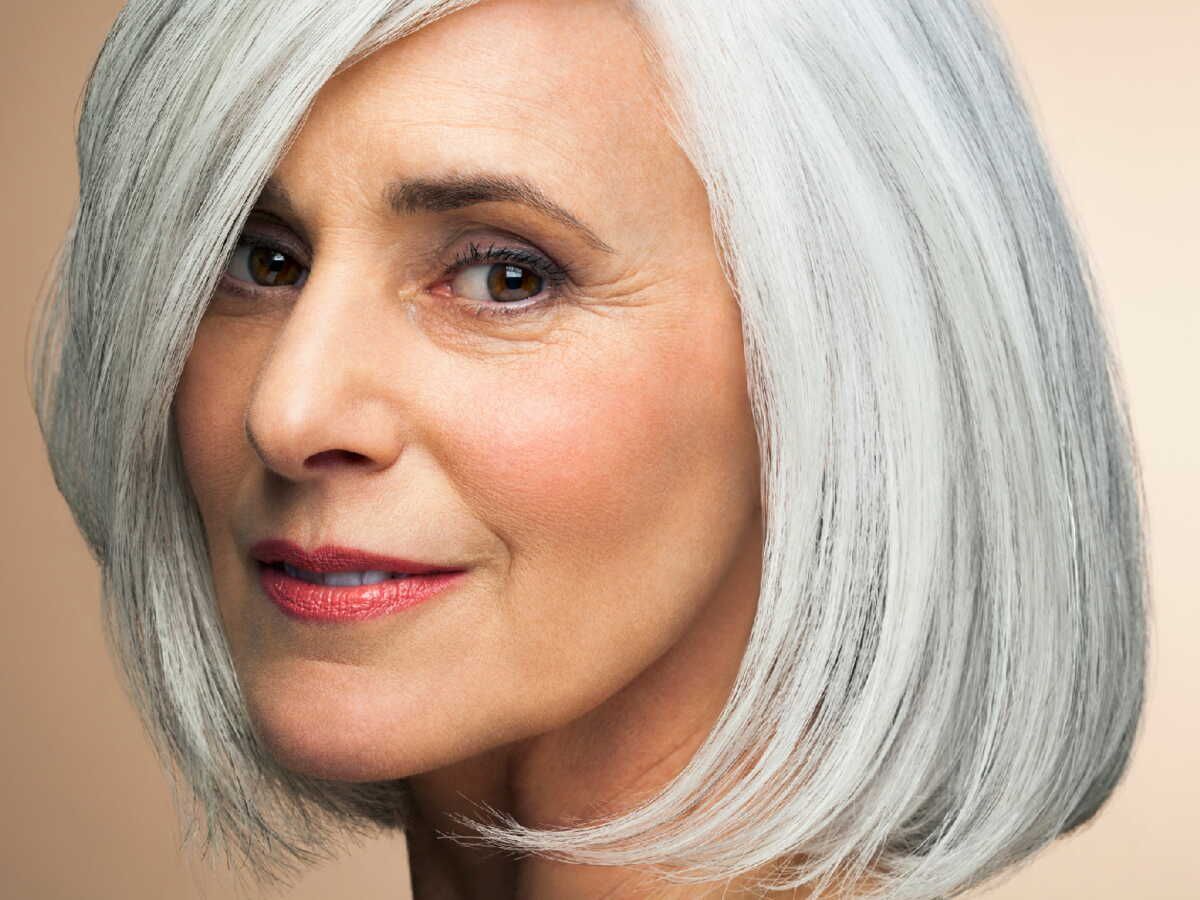
Can we talk about what it actually takes to keep a natural grey chin bob looking like this? The natural grey tone is the easy part. The hard part is the straight styling. This is a chin-length bob, side part, no bangs, straight texture, medium density. To get that sleek finish, you need a flat iron and a heat protectant every wash day. It is not a wash-and-go. I have tried. The bob holds its shape for about six hours before the ends start to flip. Trims every six weeks keep the line clean. A root shadow is not necessary because the grey is the point. But the daily styling is real. If you are not willing to iron it, this is not your cut.
Wavy Auburn Chin Bob
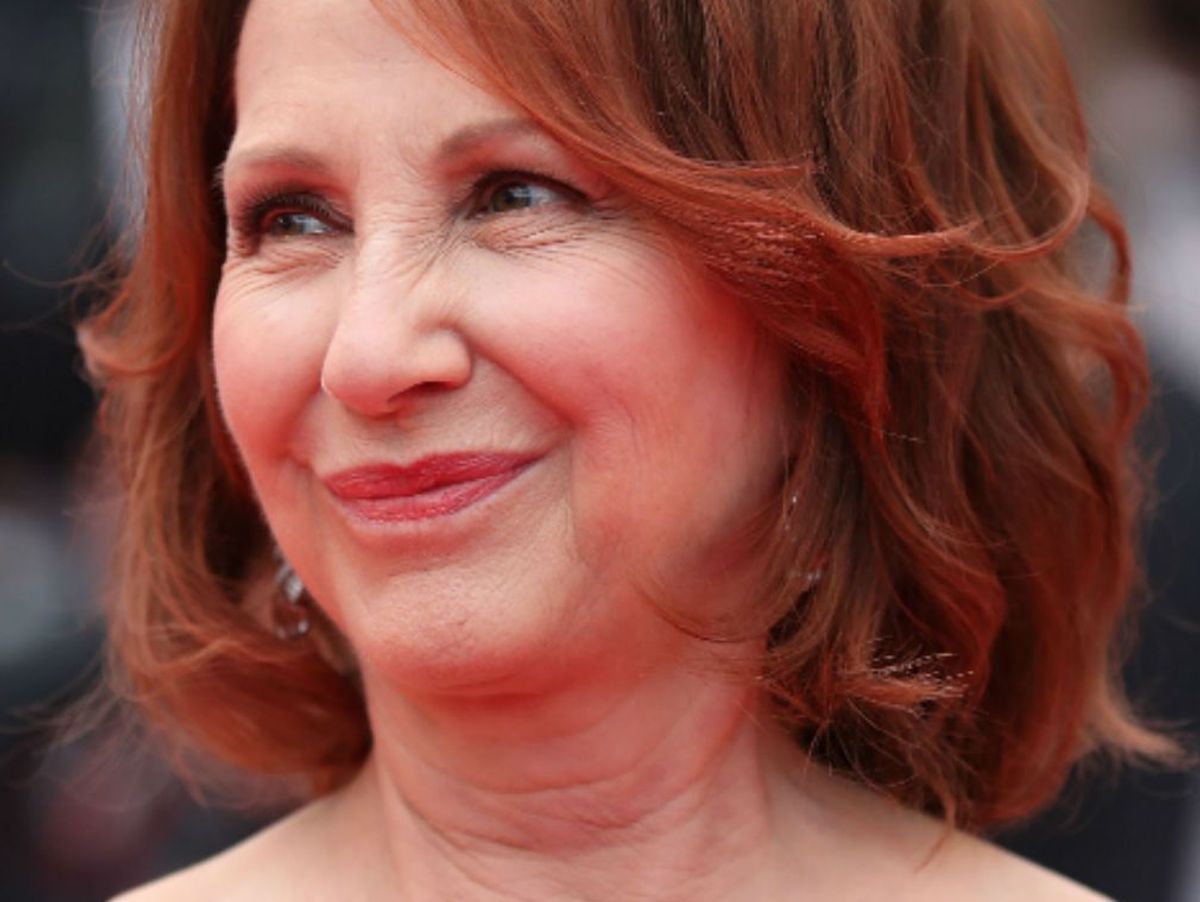
My gut reaction to a wavy auburn bob at chin length is that it is the color that does the work. The auburn hair tone is rich, deep red-brown with no copper glare. The technique is a single-process color on wavy, medium density texture. Side part, no bangs, the waves are natural or diffused, not curled. The bob is cut with a soft baseline so the waves do not flip out at the ends. The color fades faster than you think. A gloss every four to six weeks keeps the auburn from pulling pink or orange. The waves hide the grow-out line for about three weeks. After that, you see it.
Visual Idea
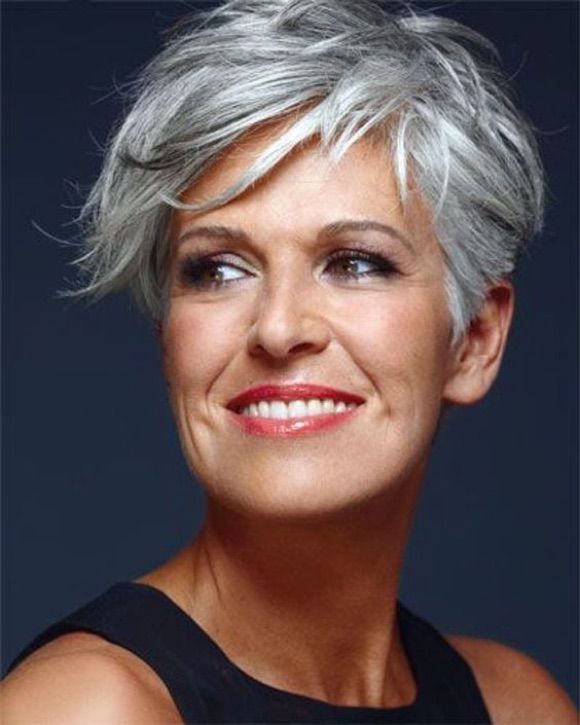
What I notice first is how the texture gives fine hair a reason to exist. This is a pixie at ear length, side-swept bangs, natural grey with subtle blonde highlights. The tone is cool grey with warm blonde pieces that catch the light. The technique is a textured cut on wavy, fine hair. The layers are short enough that the fine texture does not go flat. The side-swept bangs add movement where a blunt fringe would sit still. If your hair is fine and wavy, this cut gives it volume without product. If your hair is thick, the texture gets lost. Fine hair wins here.
Collarbone Visual Idea
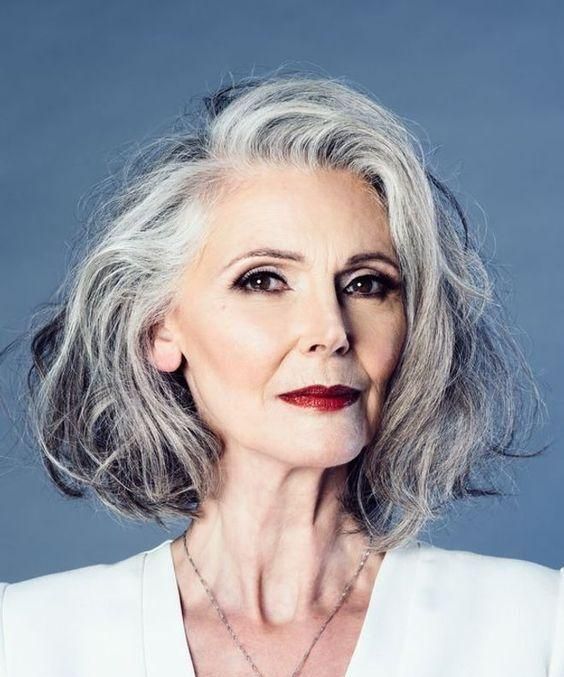
This is the one I keep coming back to. Natural grey, collarbone length, no bangs, a middle part, and the whole thing falls in soft waves that actually hold their shape past lunch. The texture is thick and wavy, which is why it works: fine hair would flatten this by 4 pm. The honest downside is the daily styling. Those waves are not born, they are made, so plan on a round brush and ten minutes of coaxing every morning. Worth it, though. Grey this natural looks expensive without trying.
Chin To Collarbone Visual Idea
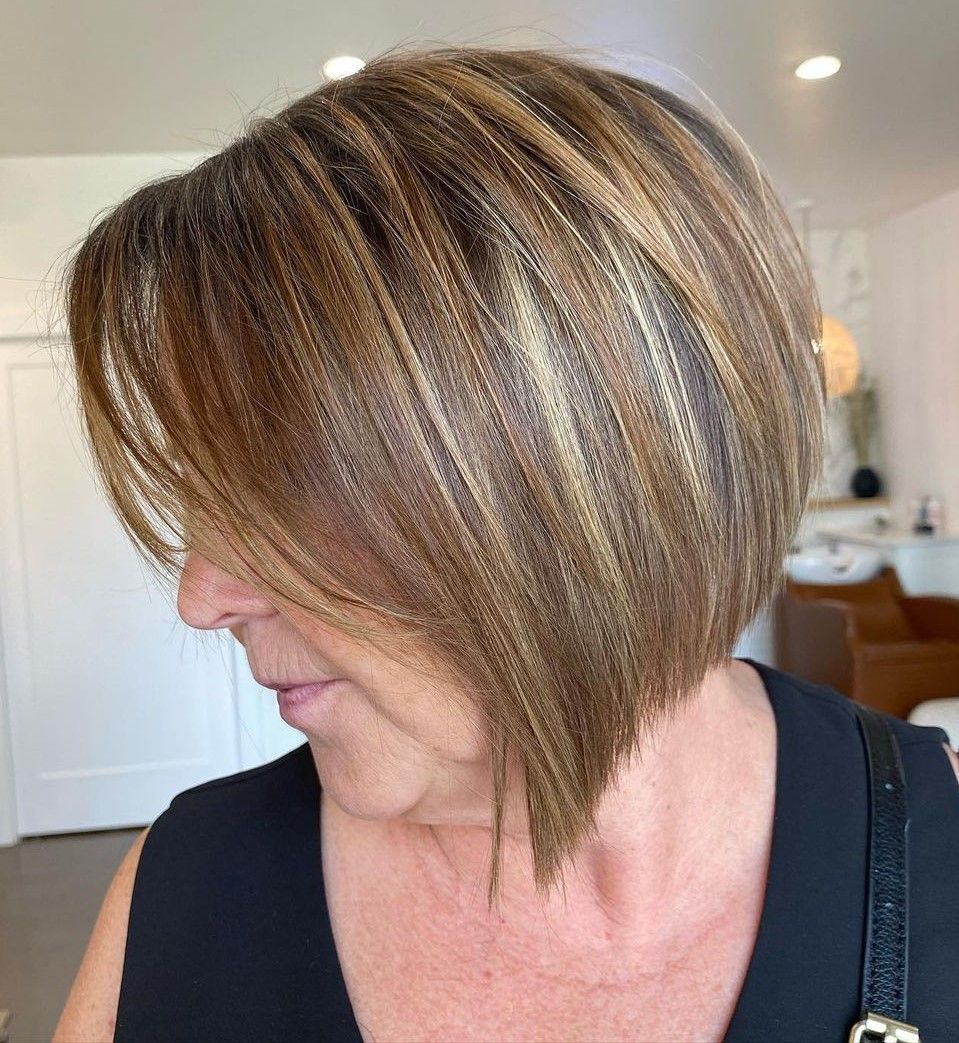
Have you ever wondered how some highlights look woven in instead of painted on? That is the trick here. The base is medium brown, chin to collarbone, cut on an angle with side-swept bangs and a deep side parting. The blonde highlights are placed closer to the face and lighter at the ends, so the colour graduates instead of stopping at one line. On fine, straight hair, that placement reads as depth, not damage. The angle of the cut does the rest of the work, pulling the eye down and adding movement where straight texture has none.
Chin Visual Idea
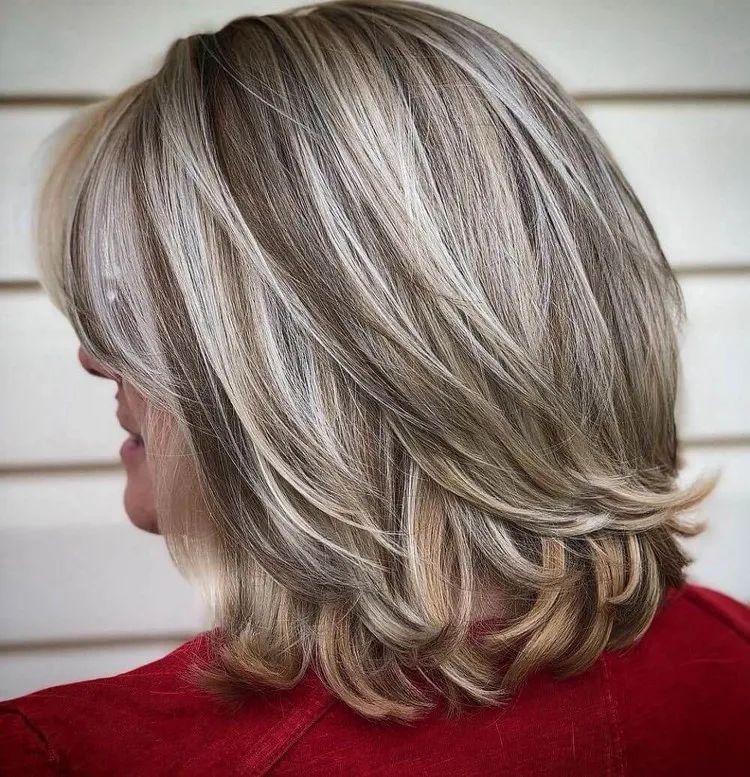
Silver Grey With Subtle Darker Lowlights Visual Idea
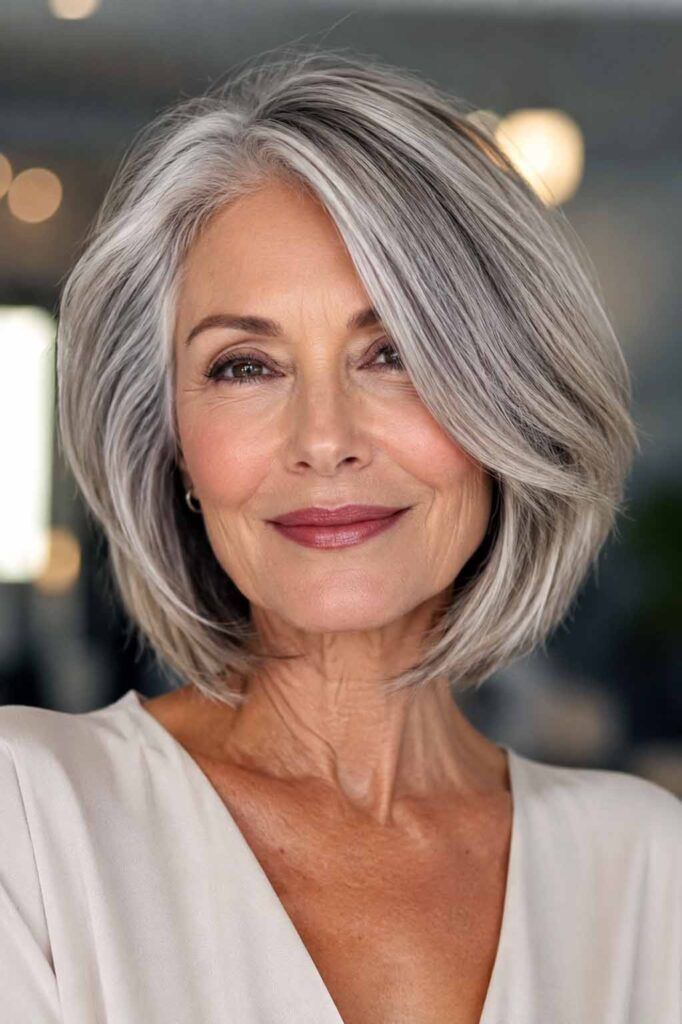
I will admit it, I used to think silver grey meant flat grey. The mistake is skipping the lowlights. This chin-length bob with side-swept bangs and a voluminous blowout works because the darker lowlights sit underneath, giving the silver a shadow that keeps it from washing out. On wavy, thick hair, that contrast is what makes the colour look deliberate instead of faded. The upkeep is real: lowlights fade faster than the silver, so expect a toner or gloss every six to eight weeks to keep the depth sharp.
Chin-Length Visual Idea
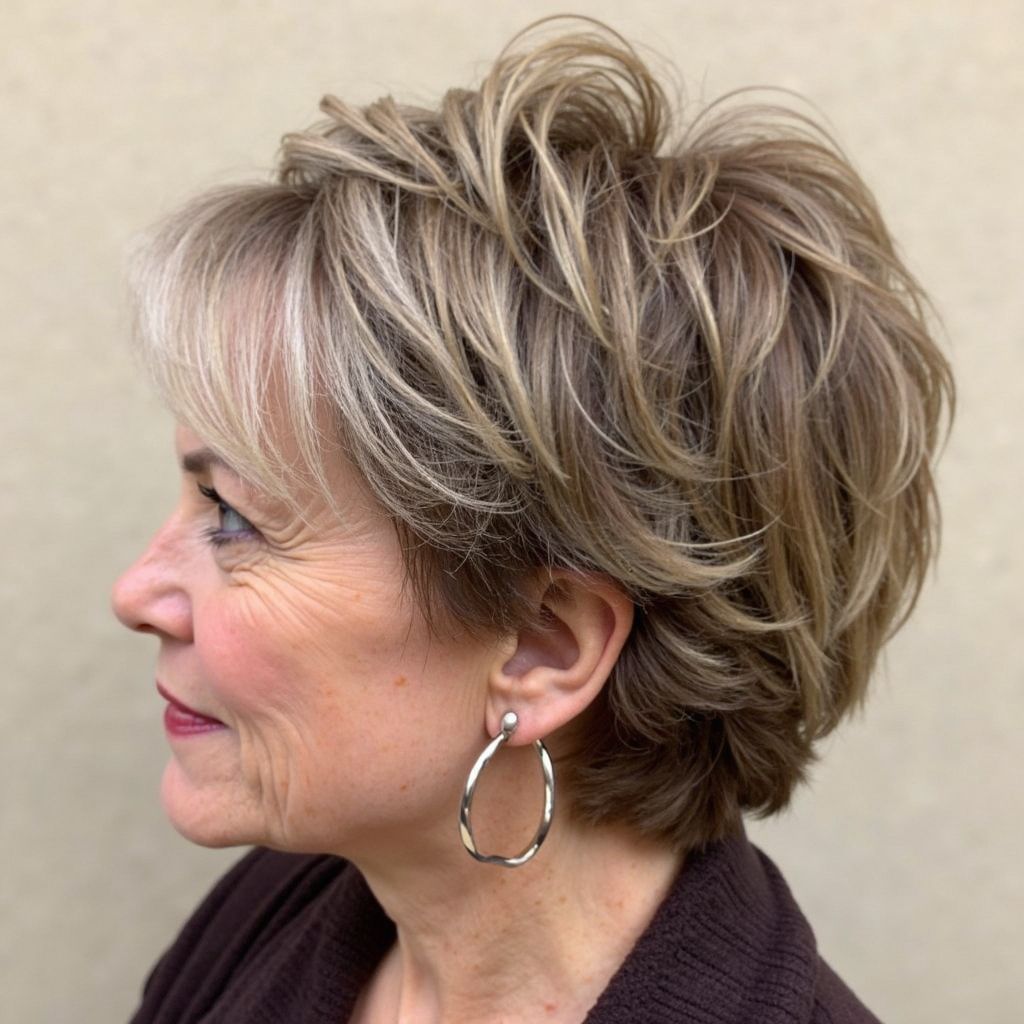
My gut says this is the most forgiving ash blonde I have seen in a while. Chin-length, side-swept bangs, and the layers are cut so the texture does the talking. The ash blonde base with lighter blonde highlights keeps the colour cool without going grey. The honest downside is the daily styling: those textured layers need a diffuser or a curling wand to look voluminous, and on wavy hair that is a ten-minute commitment every morning. Fine hair would struggle here, the layers need body to hold.
Warm Brown With Subtle Copper Highlights Visual Idea
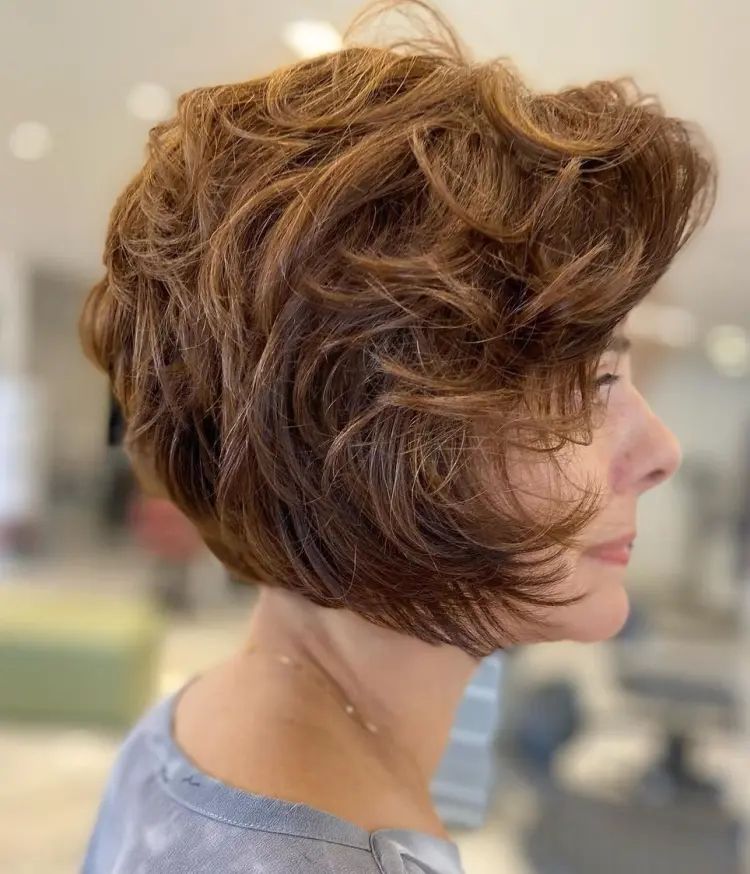
That copper is not shouting. It is whispering. A warm brown base keeps the whole thing grounded, then the colourist weaves in fine copper ribbons using a babylight technique, painting each section by hand so the highlight sits soft, never stripey. The tone lands somewhere between penny and cinnamon. On a chin-length layered bob with wavy texture, the copper catches the wave peaks and disappears into the troughs. That is the trick. Medium density hair holds the dimension without looking packed. A side part shifts where the copper falls. The whole thing reads like you spent a day in autumn sun, not three hours in a bowl.
Medium Brown With Blonde Highlights Visual Idea
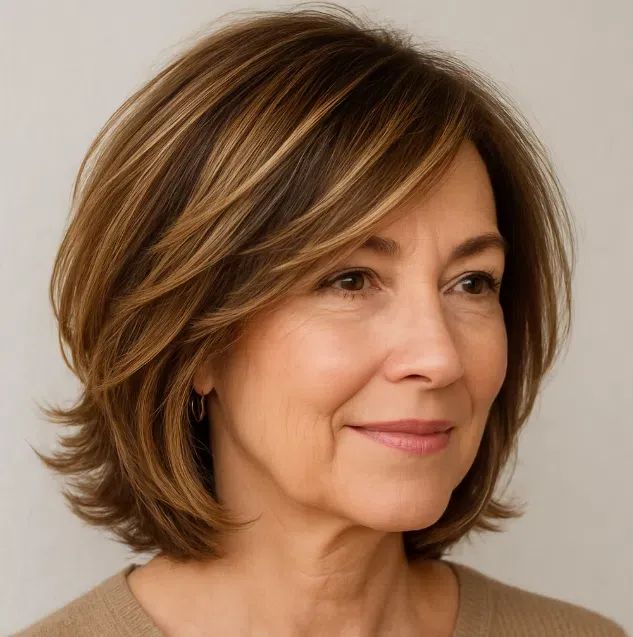
When did a collarbone layered bob with side-swept bangs start looking this bright? I used to think highlights were for people who wanted to be blonder. Then I watched a colourist paint thin blonde ribbons into medium brown hair, using a foil technique that lifts the mid-lengths and ends while leaving the root area untouched. The tone is a soft honey blonde, warm enough to read next to winter skin. The waves from a blowout spread the light across every layer. My own medium brown hair went flat by 3 pm. This one holds dimension all day. The bangs catch the first highlight. That is the whole point.
Grey Visual Idea
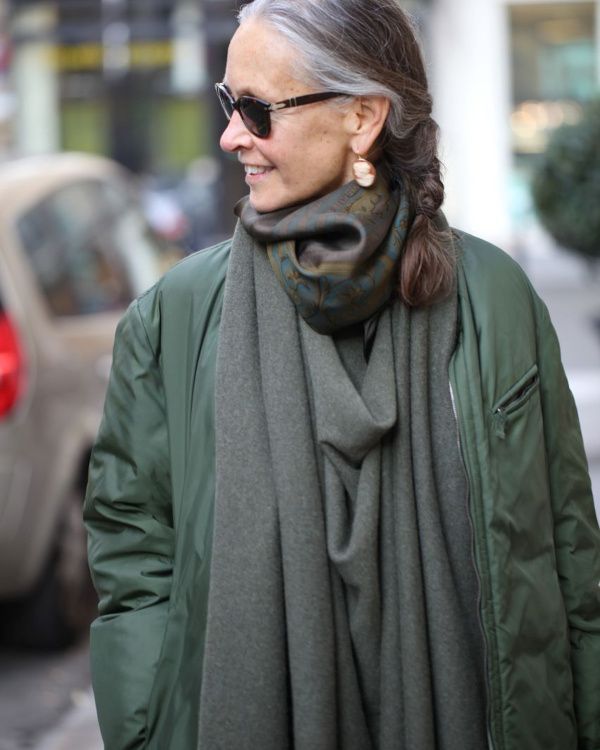
A grey braid for the holidays. That is the verdict. Not a complicated one, not a fishtail that takes fifteen minutes and a second person. A simple three-strand braid on collarbone-length grey hair, wavy and thick enough to hold the tension. The middle part keeps the braid centered. The grey reads silver in overhead light and pewter in dim rooms, which is exactly the range you want for a December dinner.
The trick is to braid damp, not wet. Wet grey hair shrinks as it dries and the braid loosens. Damp hair holds the shape and the grey stays cool, no yellow cast. Pull the strands gently, not tight. A looser braid on thick grey hair looks intentional, not rushed. For a holiday occasion, tuck the end under and pin it. Done in under ten minutes. Grey hair does not need a lot. It needs the right move.
Final Thoughts
After writing all 28 of these, I am booking the salt and pepper grey curly bob. It does the most with the least effort. No toner. No round brush. Just a diffuser and a trim every ten weeks.
