

I keep seeing the same thing in the chair next to mine: browns that read expensive, reds that don’t scream Halloween, and blondes that stay cool past week three. Winter colour is less about going dark and more about picking a shade that holds its nerve through grey light and dry heat.
These 30 Winter Hair Colors cover the range, from a ten-minute gloss to a full day in foils. I wrote them for anyone whose fine hair flattens by 4 pm, whose roots show at week five, or who just wants a colour that doesn’t need a pep talk every morning. Low upkeep, high reward, no salon marketing.
Medium Brown With Caramel Highlights
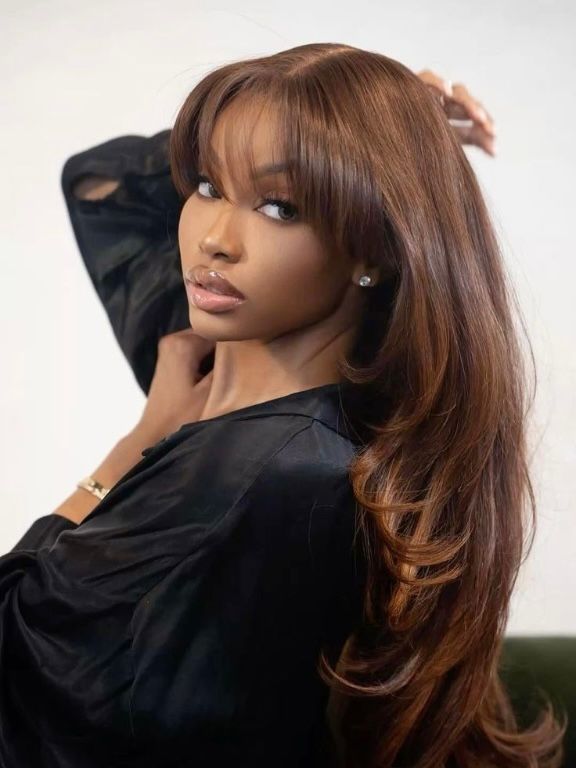
There’s a reason medium brown with caramel highlights keeps showing up in winter color conversations: it’s the rare shade that adds warmth without shouting about it. The caramel highlights catch the low winter light exactly the way a gold necklace catches a candle, subtle but unmistakably there. On a mid-back length with soft waves and full bangs, the effect is cozy rather than dramatic, which is precisely the point. This is a color for anyone who wants their hair to look expensive without looking like they tried. It flatters warm skin tones especially well, and the blend of brown and caramel reads naturally against a winter coat. The middle part and thick texture carry the blowout beautifully, so the color does the work while the cut holds its shape.
Dark Brown With Ash Blonde Balayage
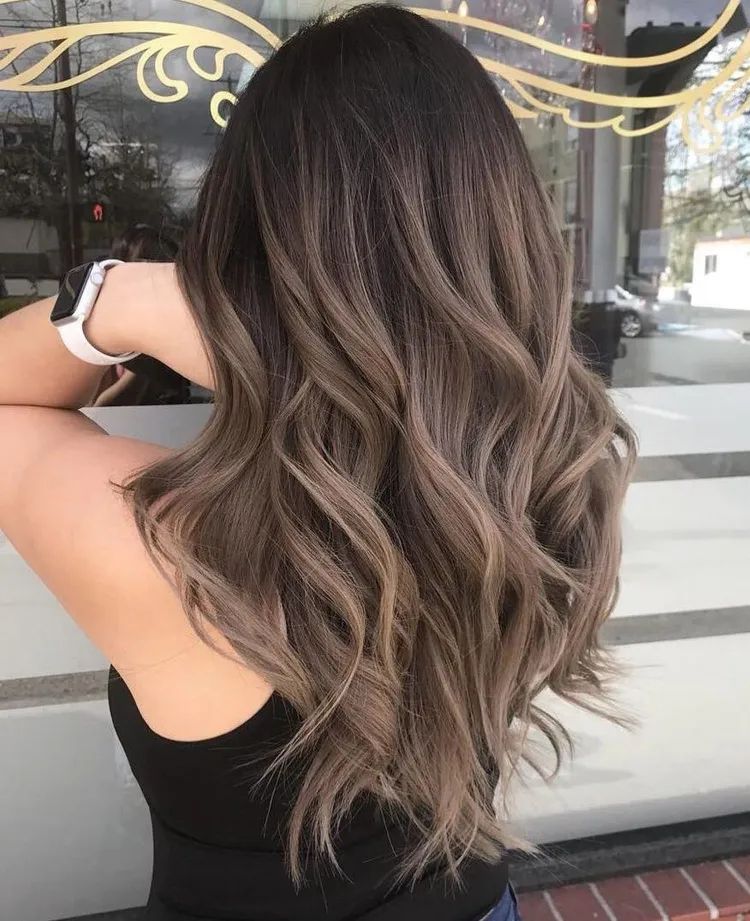
Ever wonder how some people manage to have blonde hair in winter without looking washed out? The secret is dark brown ash blonde balayage, where the dark base stays put and the ash blonde balayage does the lifting. The technique involves painting the lighter color directly onto the mid-lengths and ends, skipping the roots entirely. That’s what makes the grow-out so forgiving: your roots stay dark and natural for months, and you only need a touch-up every 10-12 weeks. The ash tone keeps the blonde cool and muted, which reads as intentional rather than brassy.
On mid-back length with loose waves and no bangs, the contrast between the dark base and the lighter ends gives the hair dimension that moves as you do. The medium density and wavy texture catch the light well, so the balayage shows off even in flat winter daylight. Styling takes about 15-20 minutes with a curling wand, but you can skip the heat on the lighter pieces to keep them from drying out. This is a salon job, not a bathroom-mirror project, because the placement needs to be precise to look this effortless. Book it, and you’ll have six calm weeks before you even think about your roots.
Deep Burgundy With Curtain Bangs
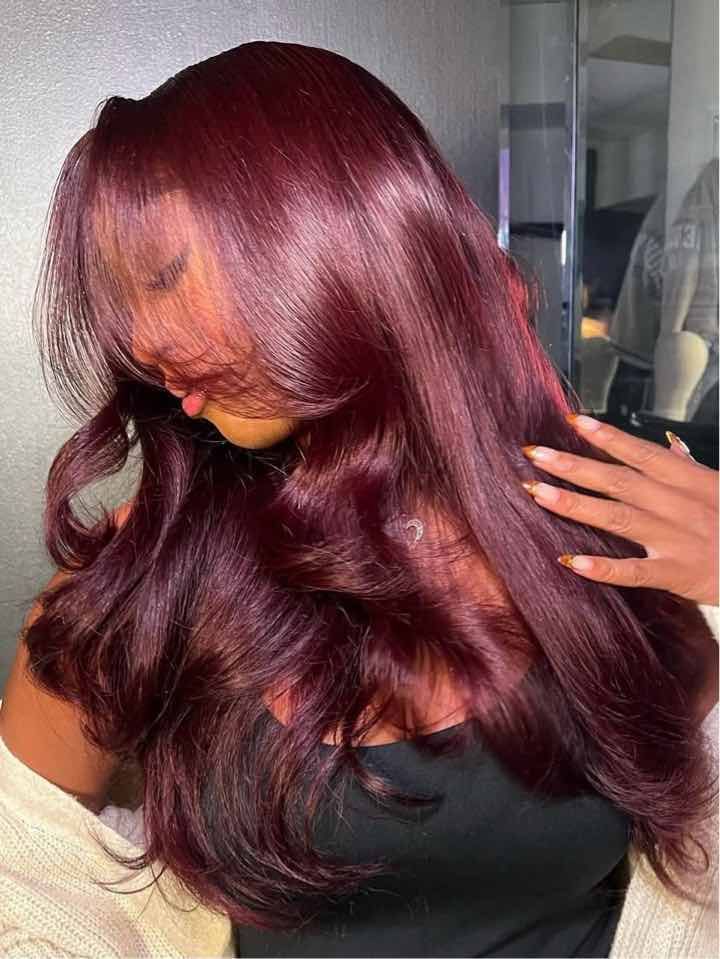
I took one look at this deep burgundy curtain bangs combo and felt my whole winter mood shift. This is the color that makes you want to wear velvet and drink something warm, it’s that rich. The deep burgundy is dark enough to feel serious but has enough red in it to catch the light when you move. On mid-back length with loose curls and a side part, the color reads as festive without being costume-y, which makes it perfect for holiday parties and cozy dinners alike. The curtain bangs frame the face without committing you to full fringe maintenance, and they blend into the long layers so the whole thing moves as one piece.
The straight, thick texture holds the blowout and curl style for a full evening, which is more than I can say for most winter hair. This is a salon color, no question, because getting burgundy to land this deep and even takes a skilled hand. It’s versatile in the best way: dress it up with a deep side part or let it air dry for a more relaxed take. The color does the heavy lifting, so your styling routine stays simple.
Platinum Blonde With Ash Undertones
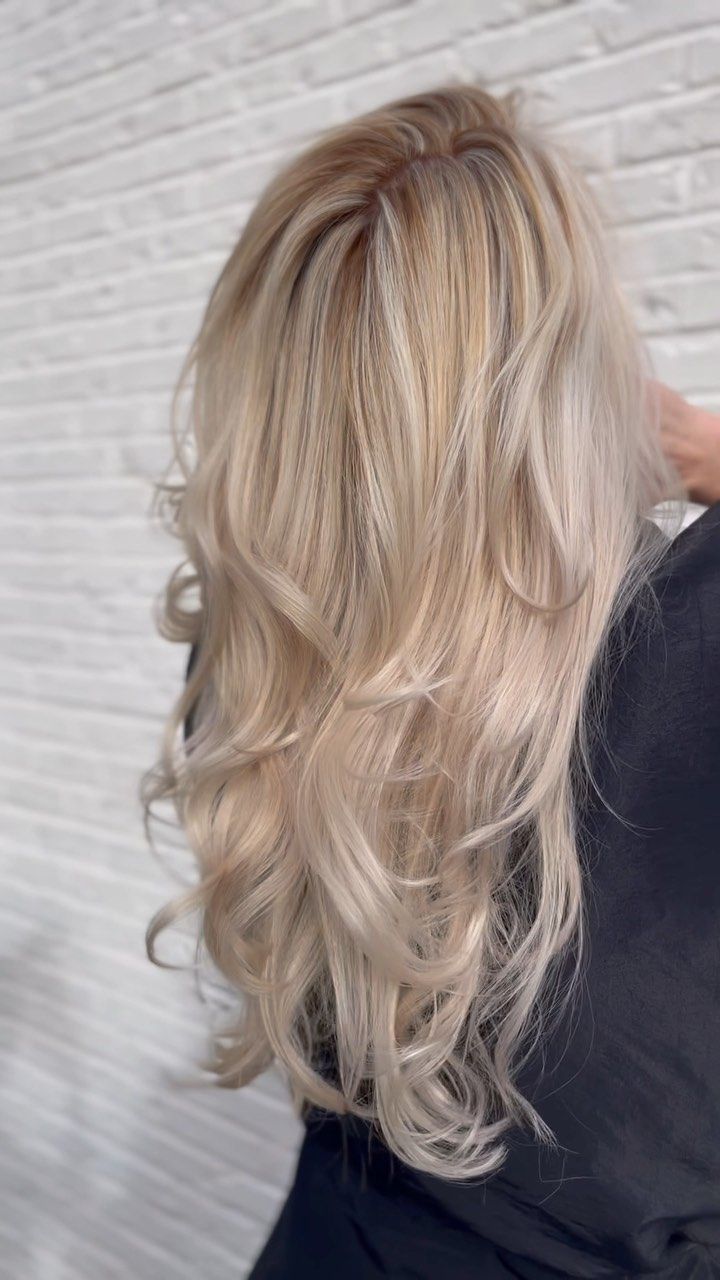
I’ll admit it: I’ve been tempted by platinum blonde more times than I can count, and every time I remember the upkeep and talk myself down. But platinum blonde ash undertones, with subtle babylights woven through, is the version that almost gets me. The ash undertones keep the blonde cool and icy, which is what makes it look so striking against winter skin. The babylights add dimension so it doesn’t read as a single flat block of color, which is the difference between expensive and costume. On mid-back length with loose waves and no bangs, the effect is bold but refined.
The honest downside is the maintenance: you’ll be toning every 2-3 weeks to keep the brassiness away, and roots need attention every 4-6 weeks. This is not a color for anyone who wants to roll out of bed and go. The thick, wavy texture helps the platinum look lived-in rather than harsh, but it still demands a commitment. If you’re not ready for that, a darker blonde with ash tones gives a similar cool effect with half the work. Styling takes about 20 minutes for loose waves, but the real time goes into keeping the color honest.
Layered Shag In Deep Burgundy
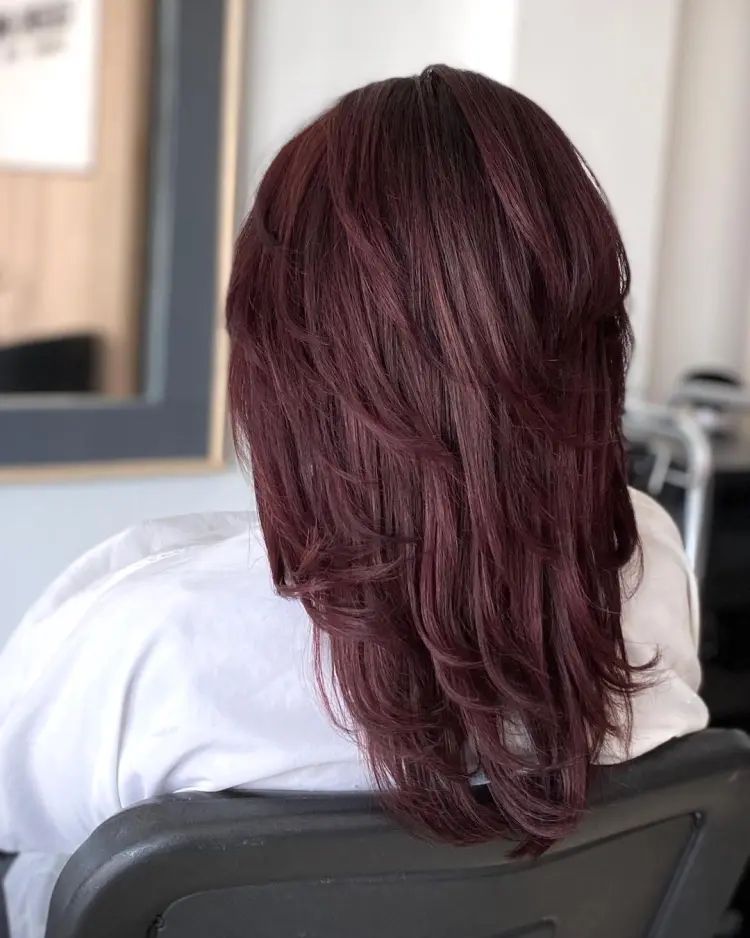
Best grow-out in this roundup. The burgundy shag haircut is the color equivalent of a good winter coat: deep, warm, and built to last. This deep burgundy shade has more depth than a bright red, which means it fades slower and reads as richer in low light. On a shoulder-length shag with full bangs and a middle part, the color and the cut work together to give the hair movement and texture without any effort. The wavy, thick texture holds the layered shape through a full week, and the color stays true for about six weeks before you need a touch-up. Compared to brighter reds, this one keeps its cool, which is exactly what you want when the days are short.
Vibrant Copper Loose Waves
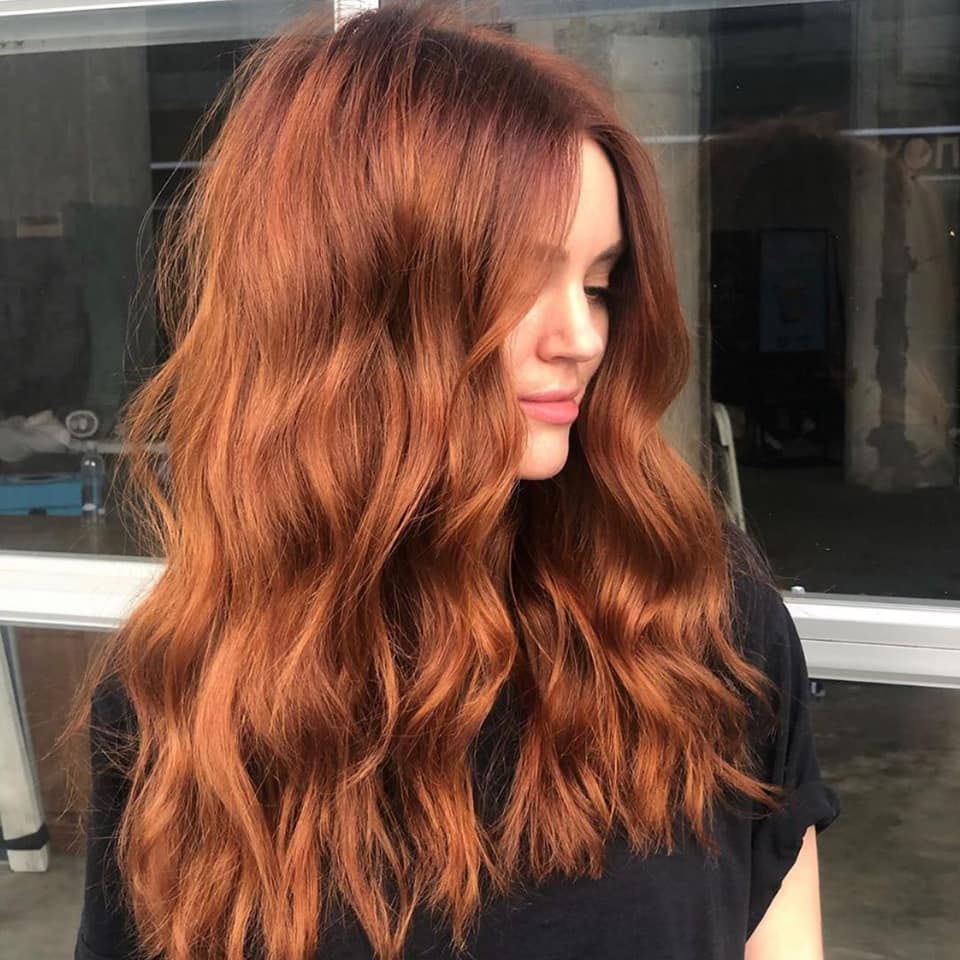
Vibrant copper hair color is the rare shade that changes its personality depending on the bulb above you. In morning light it reads almost orange, by afternoon it settles into a warm penny, and under restaurant lighting it turns into a quiet amber. That chameleon quality is why I keep coming back to it. The loose waves catch the light at different angles, so the colour never sits still. It is a mid-back length with long layers, and the movement matters because copper needs motion to show its depth. The tone is unapologetically warm, no ash to cool it down.
Here is the part nobody tells you. Copper fades fast, and it fades unevenly. The ends go first, then the mid-lengths, and suddenly your vibrant copper is a dull rust. A color-depositing shampoo or mask every other wash keeps it honest between salon visits. Loose waves take about fifteen to twenty minutes with a wand, and you will want a trim every six weeks to stop the ends from looking tired. This is not a set-it-and-forget-it colour. It is a commitment, but the payoff is a shade that looks different every time you catch your reflection.
Deep Wine Red Textured Waves
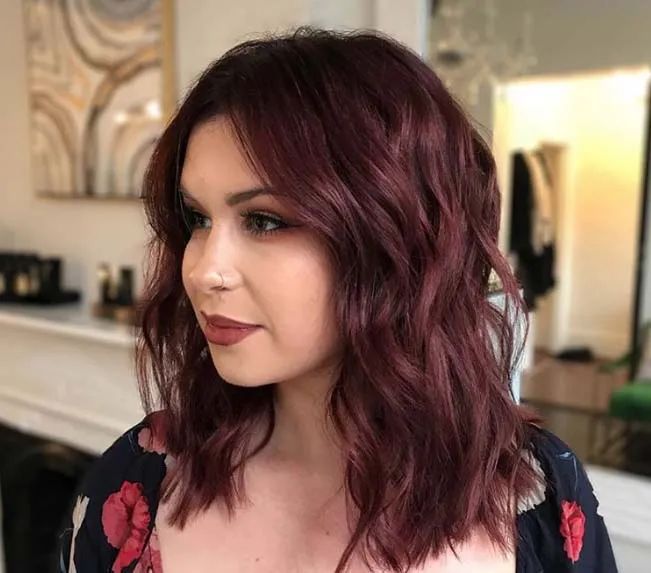
Have you ever tried to get deep wine red hair to stick at home? I have, and the result was a patchy mess that bled onto my pillowcase for a week. This is a salon colour, full stop. The rich wine red tone sits on a collarbone-length shag with curtain bangs, and the textured waves give it dimension so it does not read as one flat block of colour. Getting it right at home means fighting with developer ratios and hoping the pigment deposits evenly, which it will not. A professional can layer the colour so the depth shifts as the waves move. Book the appointment. Your bathroom mirror is not equipped for this one.
Copper-Brown Bob With Blunt Bangs
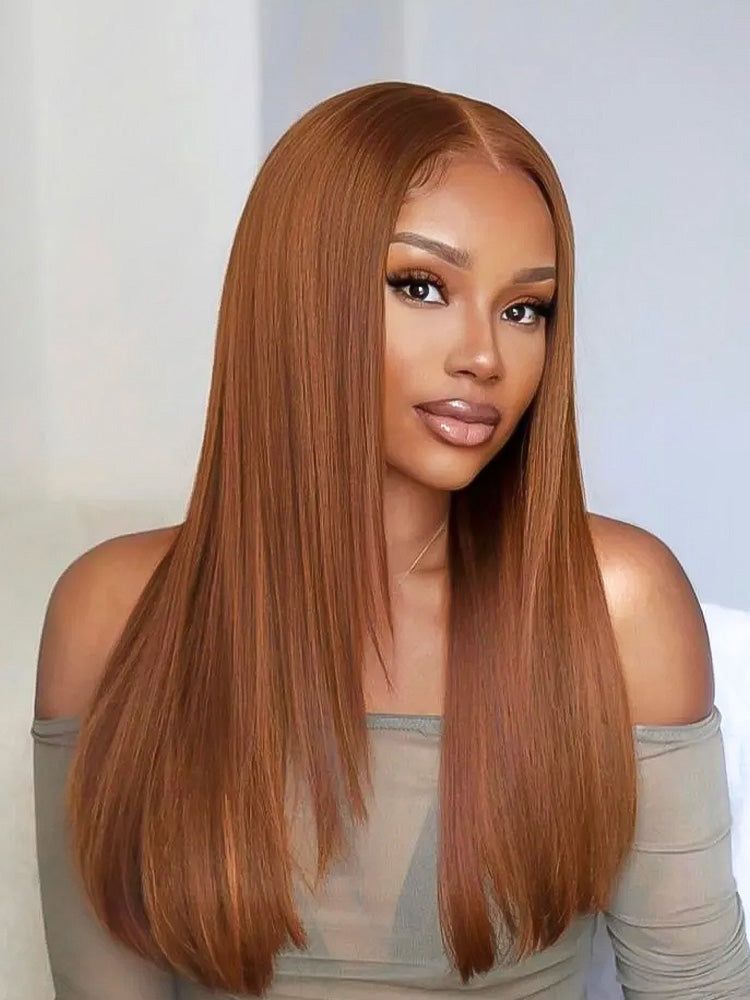
The right copper brown bob blunt bangs can make a fine-haired person look like they have twice the density they actually have. I say this as someone whose hair goes flat by 4 pm. The chin-length cut with a straight, sleek finish and blunt bangs creates a solid line that reads as thickness. The warm, medium copper-brown tone flatters warmer skin tones because it echoes the golden undertones rather than fighting them. Fine, straight textures hold this shape best, coarse or curly hair will push the blunt line around and lose the crispness. The middle part widens a round face, so consider a slight off-centre part if that is a concern. This is a precise cut, not a grow-out-friendly one.
Voluminous Bob In Warm Copper Red
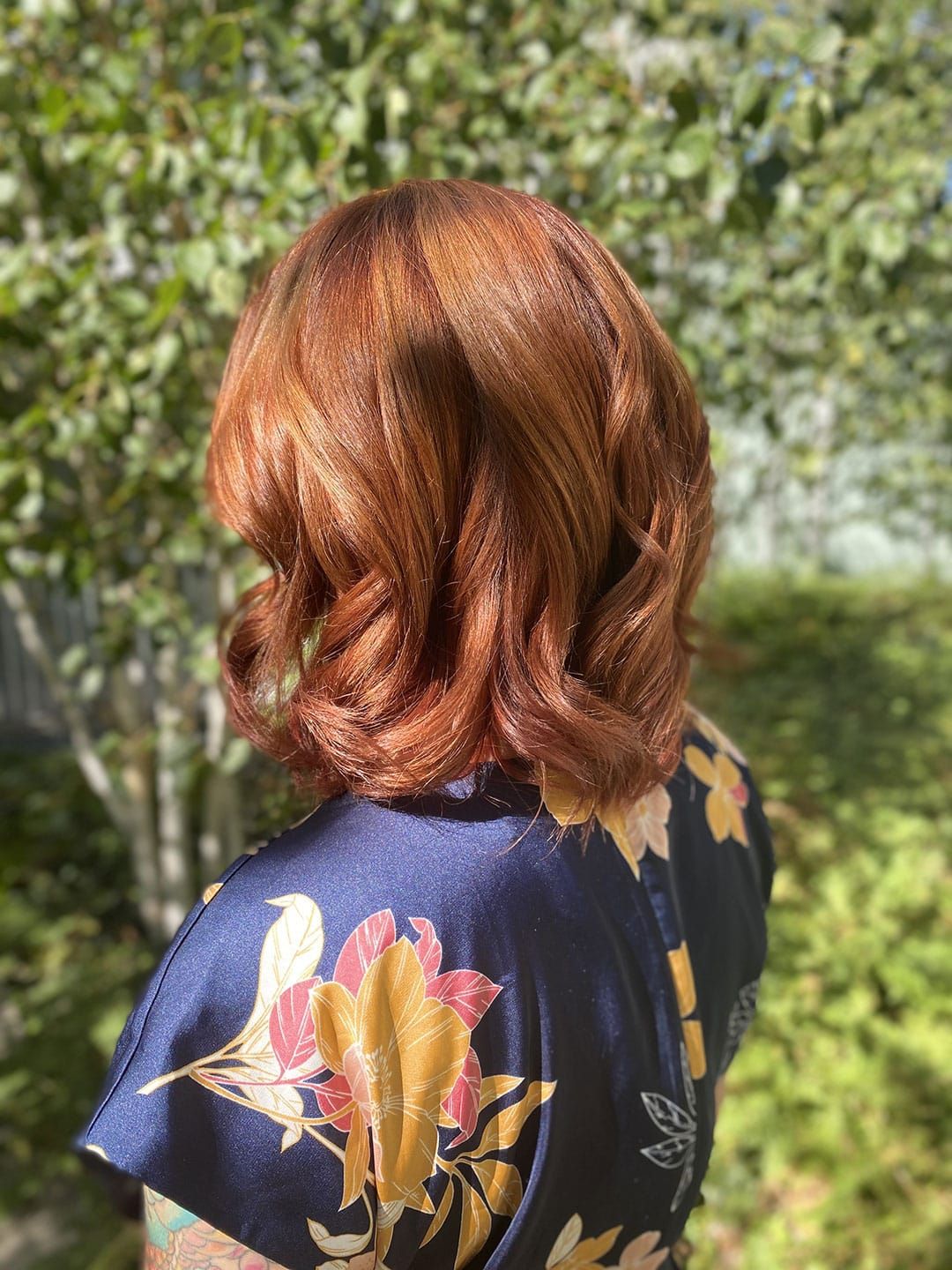
The warm copper red bob is what I want my hair to do for holiday parties without trying too hard. The ear-length cut with curled ends and serious volume feels festive without being costume-y. The warm copper red with subtle golden undertones catches candlelight in a way that flat browns cannot. A middle part and wavy, medium-density texture give it that blown-out bounce that reads as celebratory. This is the colour that makes you look like you are glowing, even when the only light source is a string of fairy lights. It is a mood, and the mood is cozy but polished.
Rich Chocolate Brown Blowout
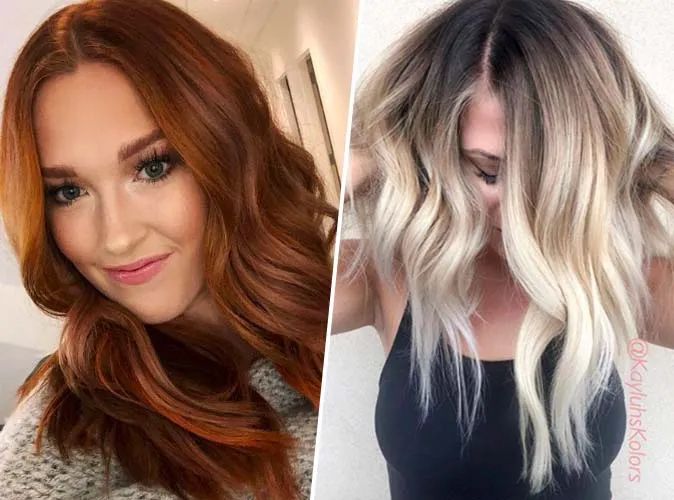
I will admit it, I forget how good rich chocolate brown hair looks until I see it done properly. The deep chocolate brown shade on a mid-back length with long layers is the definition of low-maintenance luxury. A smooth blowout on thick, straight hair takes about twenty to twenty-five minutes, and the payoff lasts for days if you protect it at night. The technique is all in the round brush, pulling sections taut to get that glossy, voluminous finish. Chocolate brown holds colour well, but it can fade to brassy tones if you skip the color-safe shampoo. A trim every eight weeks keeps the ends from splitting and the shape from losing its line.
The styling steps are simple but specific. Start with damp hair, apply a heat protectant, and rough-dry until about eighty percent dry. Then take one-inch sections, wrap each around a round brush, and dry with the nozzle pointing down to seal the cuticle. The result is a blowout that actually holds its volume. My roots showed at week five, but the grow-out line was soft enough that I could stretch it to week six without panic. That is the real gift of a rich brown, it forgives you.
Deep Wine Red Shag With Full Bangs
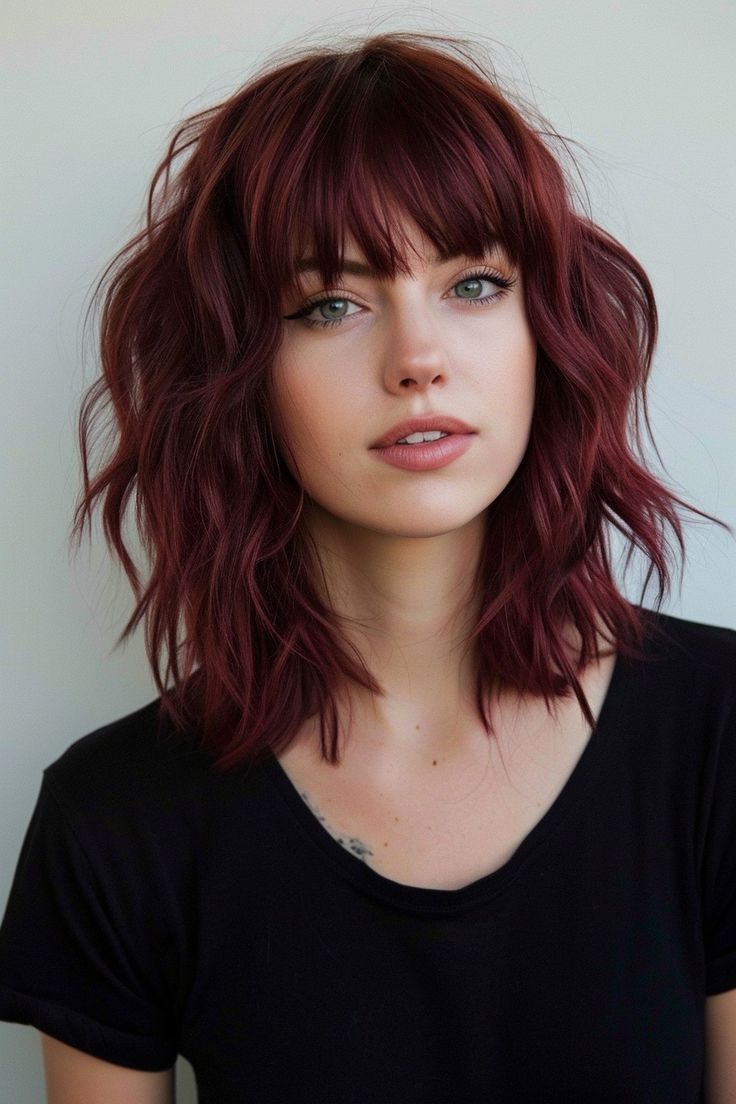
The technique here is the thing, because a deep wine red shag with full bangs is a lot of moving parts. The colour is applied root to tip, no shadow, no melt, which means the wine red shag reads saturated and deliberate. The shag layers are cut short through the crown, so the colour catches light at different depths, and the full bangs sit blunt, not feathered. That blunt edge against the layered body is the tension that makes the shape hold. On wavy, medium-density hair, the texture does the work, no round brush required. The colour is single-process, not painted, so the tone stays even, and the grow-out is a hard line by week four. That is the trade-off for this kind of saturation.
Vibrant Copper With Red Undertones
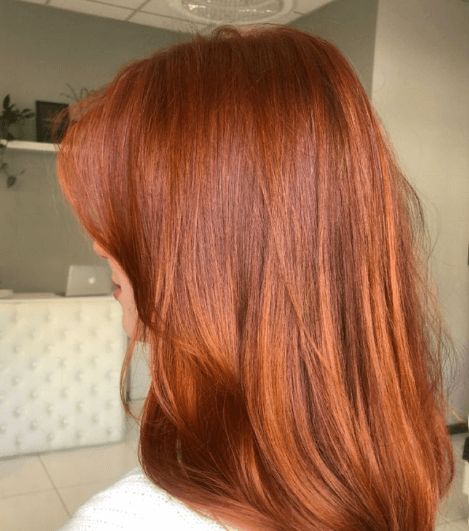
This is the colour that makes you check your reflection in every car window. The vibrant copper with red undertones is loud, but the red undertones keep it from turning orange, which is the thing that usually goes wrong with copper. On thick, wavy hair, the loose waves catch the copper at the crests and the red in the troughs, so the colour shifts as you move. The downside is real, though. Copper with red undertones fades fast, and it fades unevenly, the red goes first, then the copper pulls brassy. By week three, you are either toning or living with a different colour. I have done both. Toner every third wash is the honest rhythm, and a color-depositing conditioner in the shower is not optional, it is the difference between this and a muddy orange by week four.
Ash Brown With Subtle Blonde Highlights
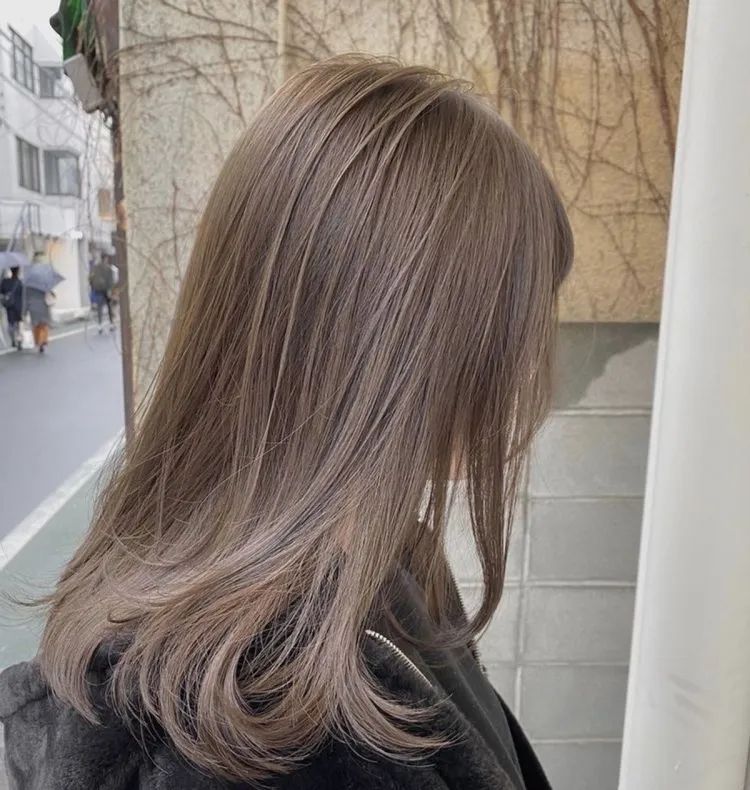
Is your skin tone cool, and is your hair fine? Then this ash brown with subtle blonde highlights is worth a conversation. The ash brown base reads greyish next to warm skin, so if you run golden, skip it, it will wash you out. On fine, straight hair, the subtle blonde highlights do what heavy highlights cannot, they add dimension without making the hair look thinner. The placement is low-contrast, a few shades lighter than the ash brown base, so the eye registers texture, not stripes. The ash brown subtle highlights are painted in thin sections through the mid-lengths and ends, never at the root, which keeps the grow-out soft. Middle part, straight with a soft wave at the ends, that wave is the only styling lift the fine texture needs.
Dark Blonde With Balayage
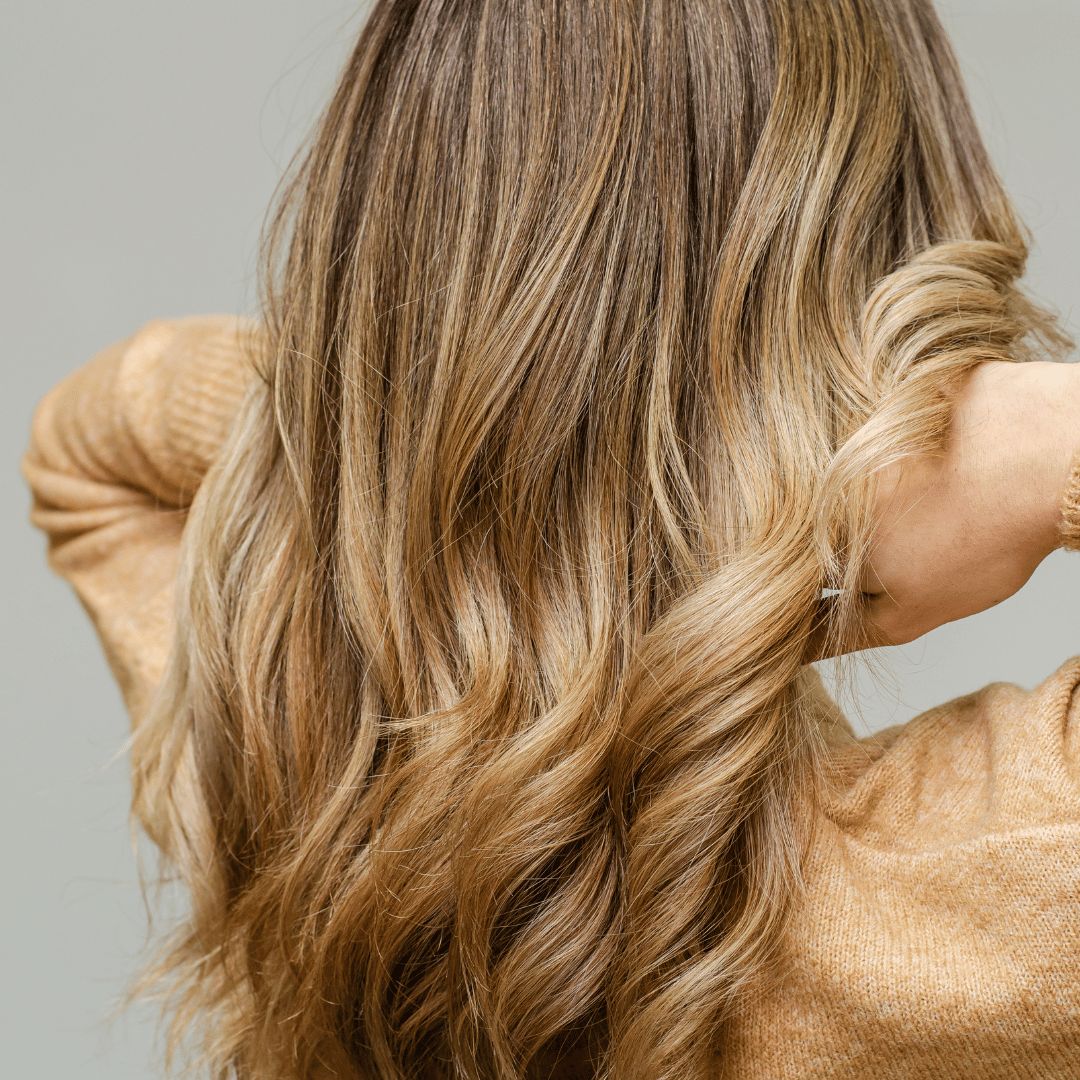
She bought a box at the drugstore. By the third section, the dark blonde base was patchy and the balayage highlights looked like stripes. That is the mistake. A dark blonde balayage is not a DIY job, because the technique is about placement, not colour. The stylist paints the balayage highlights freehand, concentrating them around the face and through the ends, leaving the root untouched. That soft root keeps the grow-out invisible for months. At home, you cannot control the saturation, you end up with a hard line where the lightener sat too long. The result on thick, wavy hair is dimensional, the dark blonde base grounds it, the balayage highlights lift it, and the collarbone length keeps the weight manageable. Book the appointment. This is not a bathroom-mirror project.
Deep Burgundy Mid-Back Length
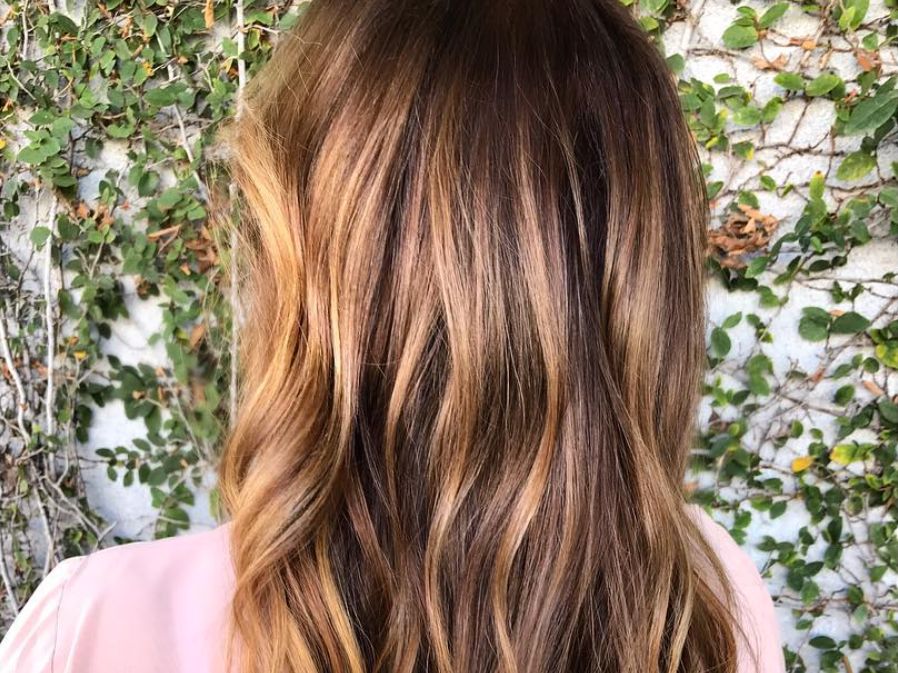
I was not expecting to like this colour as much as I do. The deep burgundy reads brown in low light and red in the sun, which is the kind of shift that keeps a mid-back length from feeling flat. On wavy, medium-density hair, the loose waves catch the deep burgundy at the bends, so the colour moves with the texture, it is not just a flat sheet of red. The real test is the week. By day five, most reds look tired. This one holds because the deep burgundy mid-back shade is dark enough that fading reads as a soft brown, not a brassy pink. The grow-out is the other surprise, the dark root blends into the burgundy without a harsh line, so you can stretch the salon visit to ten weeks. That is rare for a red. I would call that a win.
Dark Brown With Auburn Highlights Curls
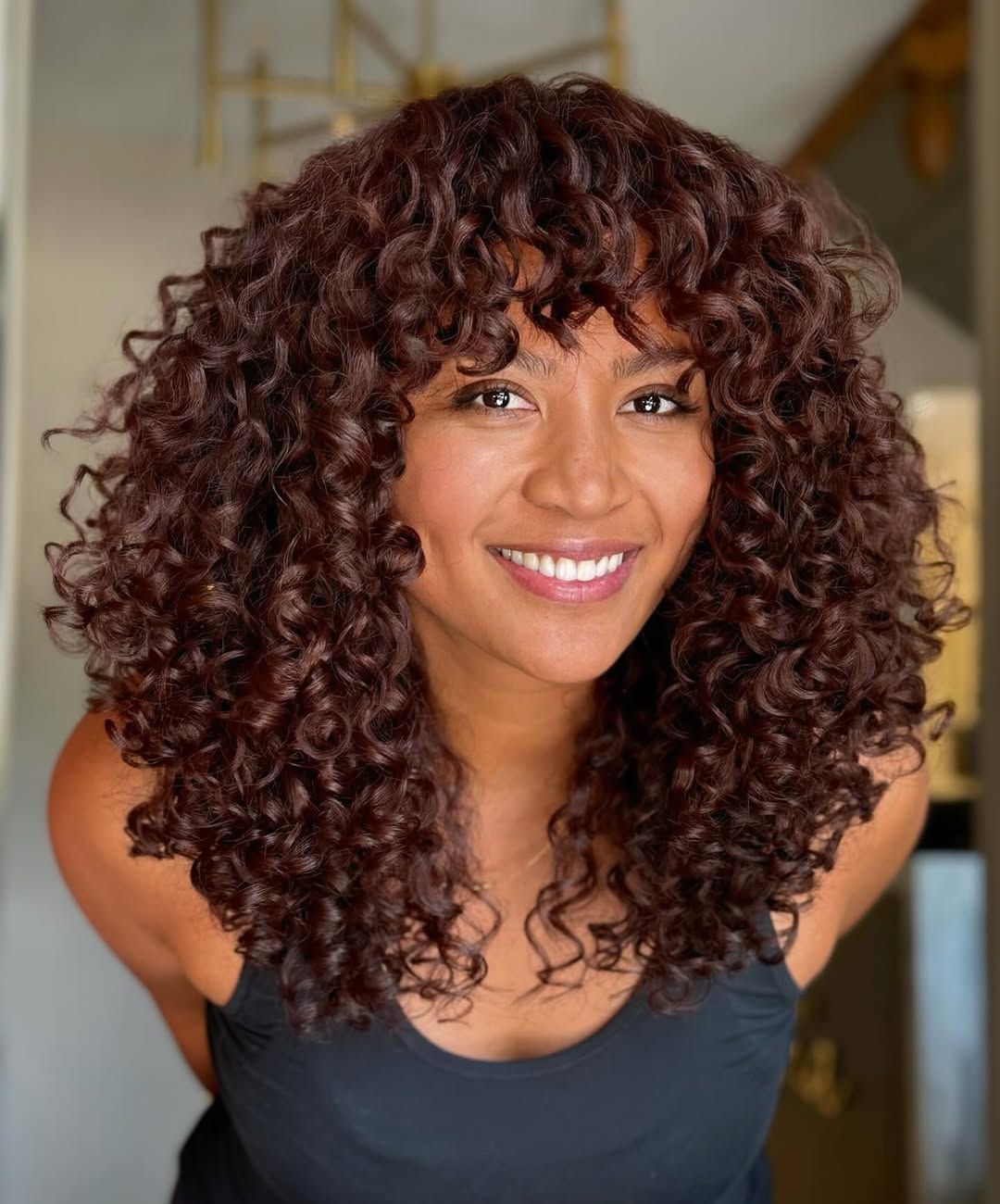
This is the best winter hair color I have seen for curly hair in a while. The dark brown auburn highlights curls combination gives a rich, dimensional curl pattern that catches the low winter sun without screaming for attention. The dark brown base keeps the roots from looking obvious at week four, and the auburn highlights add warmth without going orange. Curtain bangs at collarbone length soften a round face, and the middle part keeps the volume balanced on both sides. Thick curls hold this shape for two days before the definition starts to drop, which is better than most layered cuts on my own fine texture.
Deep Burgundy With Red Undertones Waves
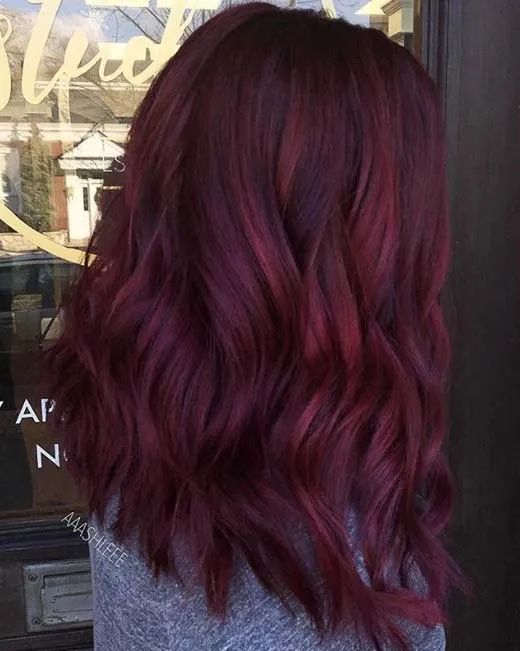
Does anyone actually tell you how fast red undertones shift? The burgundy with red undertones on this mid-back length looks rich and warm for the first two weeks, then the red undertones start pulling pink if you skip a toning wash. The deep burgundy base is forgiving, but the red undertones need a color-safe shampoo and cool water to stay dark. Loose waves on thick, wavy hair take about 15 minutes with a large barrel, and the long layers keep the weight manageable. The honest downside is the fade: by week five, the red is gone and you are left with a warm brown that is fine but not what you paid for.
Visual Idea
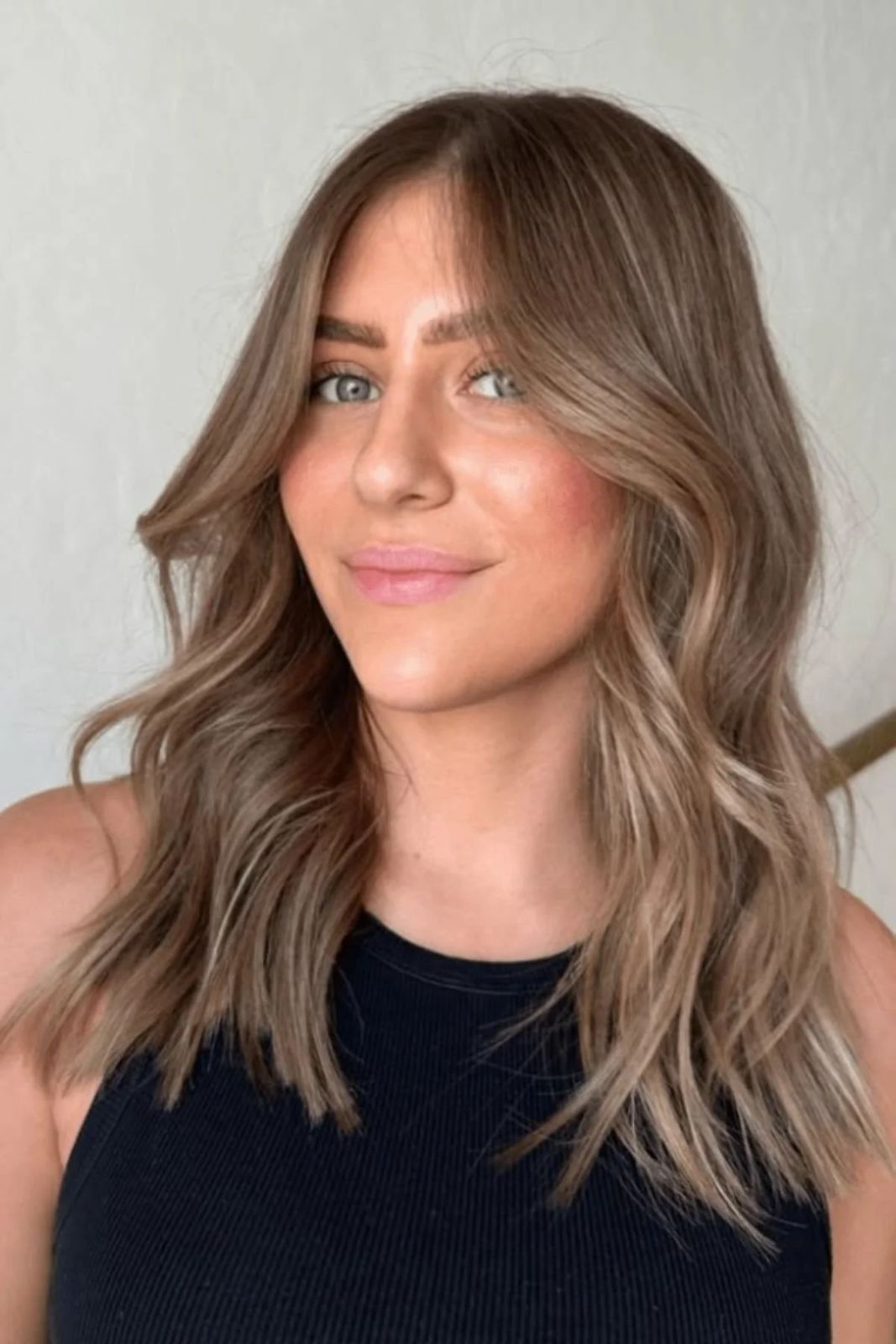
The cool-toned ash blonde with subtle beige highlights works best on skin with cool undertones, and I mean genuinely cool, not neutral. The side-swept bangs at collarbone length brighten the face without washing it out, which is the risk with ash tones on warm skin. Medium-density wavy hair holds the loose waves for about six hours before the crown goes flat, so a texture spray at the roots helps. The lob shape keeps the ends feeling thick, and the subtle beige highlights stop the ash from looking flat grey. This is a salon job, not a box color, because the beige highlights need a precise placement to avoid muddy patches.
Mid-Back Visual Idea
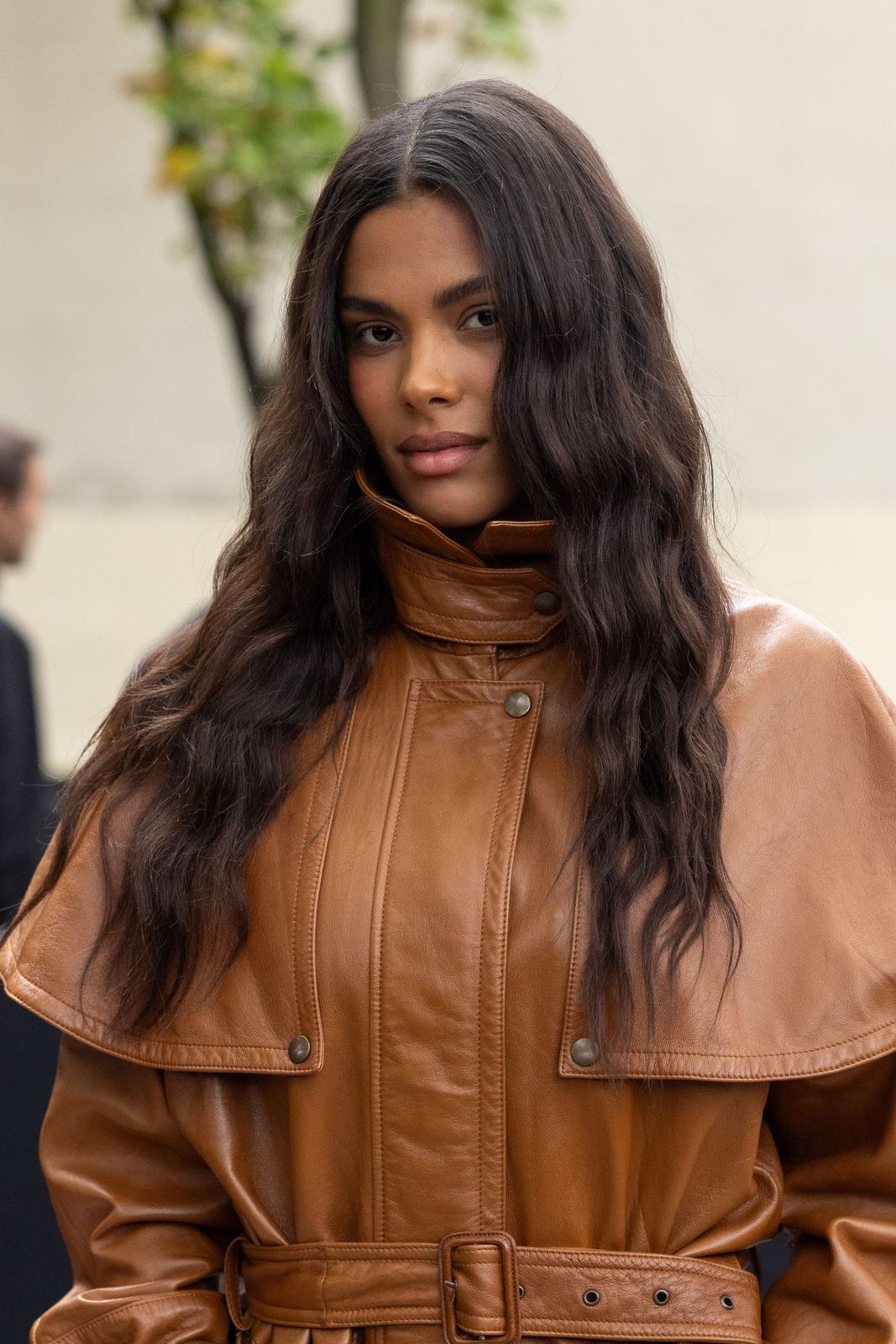
I did not expect to like a simple deep brown this much, but the rich, deep brown with subtle warm undertones looks expensive in a way that caramel highlights never do on me. The demi-permanent color is the key here, it deposits warmth without lifting the base, so the grow-out is a soft shadow instead of a harsh line. Thick, wavy hair at mid-back length needs the long layers to keep the shape from turning into a triangle, and the middle part helps the waves fall evenly on both sides. The loose, flowing waves take about 10 minutes with a round brush, and the warm undertones catch the light without looking brassy. This is the color you choose when you want depth, not dimension.
Deep Wine Red Visual Idea
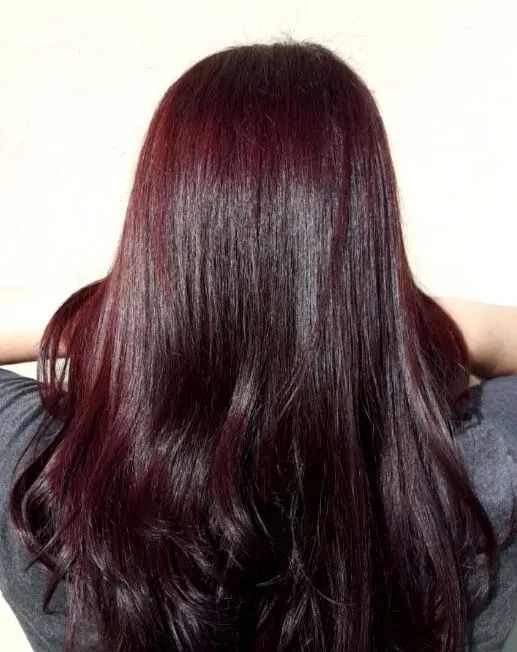
Deep wine red is the most reliable winter color I have tried. The deep wine red on this mid-back length holds its intensity for a full six weeks before it starts to soften, and the fade is even, not patchy. The long layers on wavy, medium-density hair keep the loose waves from getting heavy, and the middle part lets the color show evenly on both sides. The upkeep is simple: a color-safe shampoo and a trim every eight weeks to keep the ends from looking dull. The slow fade means you can stretch the toning to every fourth wash, which is rare for a red-based color. This is the one red that does not make me regret going dark.
Layers Visual Idea
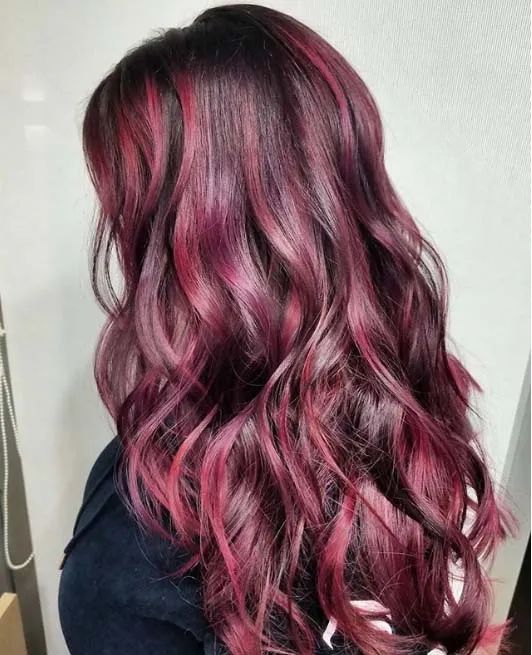
Want a winter color that doesn’t whisper? This one shouts. A dark base with magenta and pink highlights, mid-back length, wavy and thick. The side view catches the light differently than any brunette or red I have seen in December. The middle part keeps it grounded, the layers let those bright pieces surface without looking striped. This is not a subtle warm-up. It is a statement. A vibrant one.
Ash Blonde Base With Platinum Highlights Visual Idea
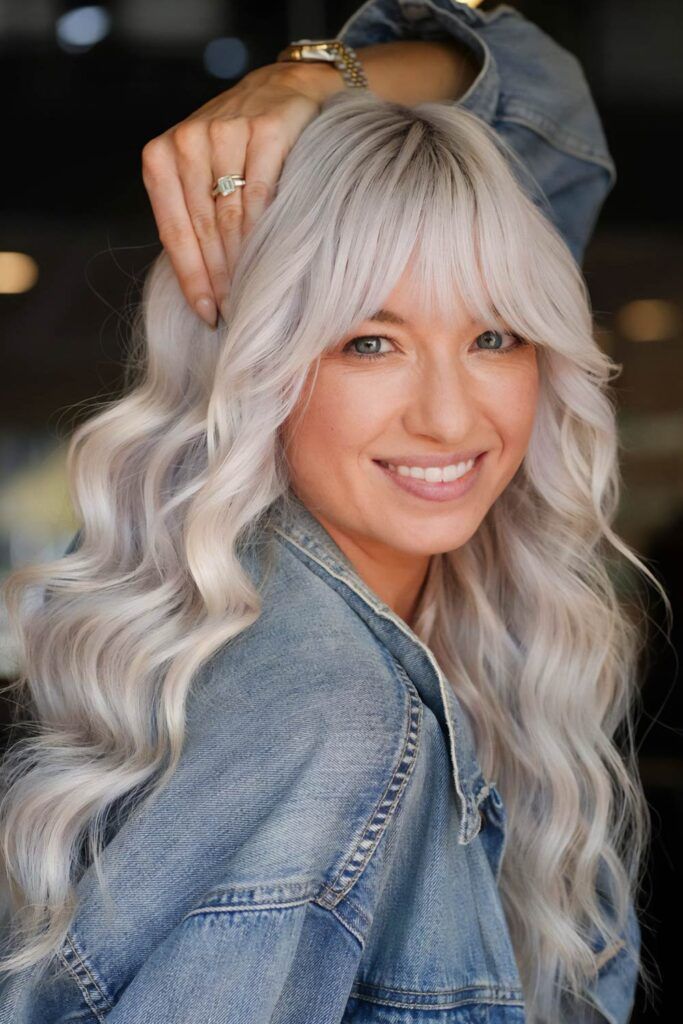
I will confess I have a complicated relationship with platinum. It looks incredible. An ash blonde base with platinum highlights, mid-back length, fine to medium wavy texture, full bangs. The icy tone reads cool and intentional, and the loose waves keep it from feeling severe.
Here is the honest part. This is a salon color, no shortcuts. The upkeep is real: toning every four weeks to keep the brass away, and the full bangs mean trims every three weeks if you care about shape. The damage on fine hair is not a maybe, it is a when. I have been there. I skipped the toning once and looked like a faded yellow lamp. Book the maintenance or skip the color.
Collarbone Visual Idea
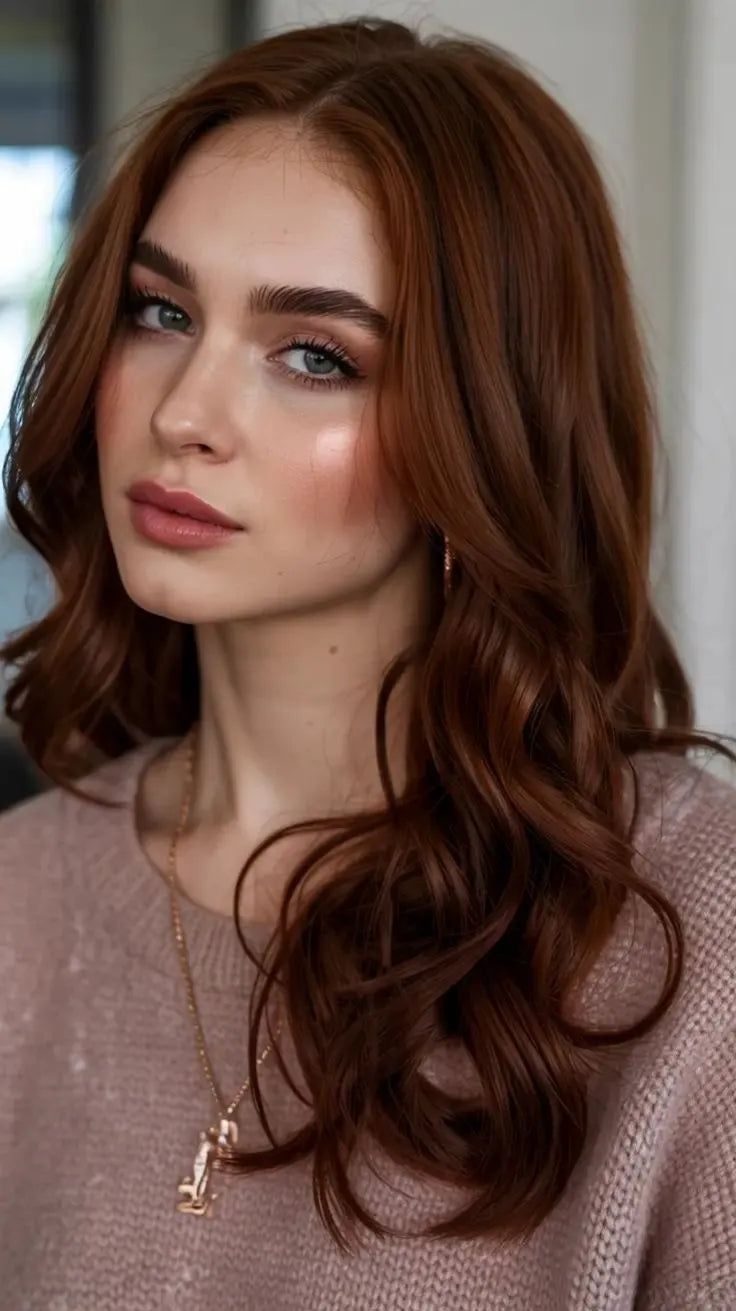
You walk into the salon, point at a swatch, and the stylist nods. Medium brown with subtle auburn undertones, collarbone length, wavy with medium density, no bangs. The middle part opens the face, the loose waves catch the auburn in low winter light. This flatters warmer skin tones because the undertone mirrors the gold in the skin. If your complexion runs cool, the auburn can read orange instead of rich. Know your undertone before you book.
Long Layers Visual Idea
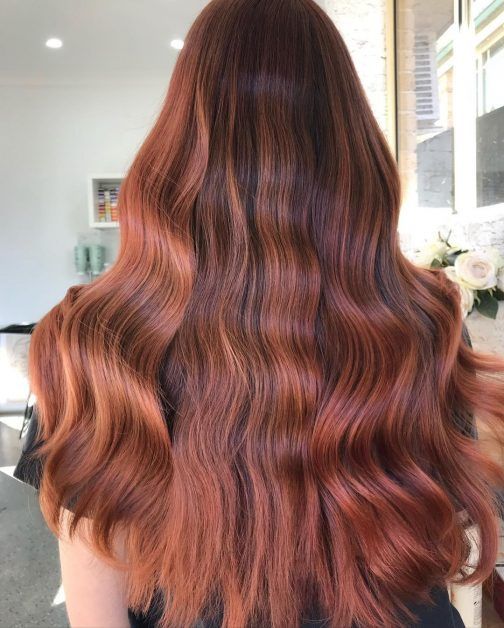
My first reaction to this color was that it belongs on a holiday card. A deep auburn base with copper and rose gold tones, mid-back length, thick and wavy, no bangs. The back view shows the layers catching the light at different points, and the multi-tonal effect adds warmth without being a single flat red.
This lands in winter because it does what the season cannot. It adds depth and warmth to a palette of gray coats and white snow. The copper reads festive, the rose gold keeps it modern. I wore a version of this to a December party and got three compliments before I took off my coat. That is the power of a color that works with the season instead of against it.
No Bangs Visual Idea
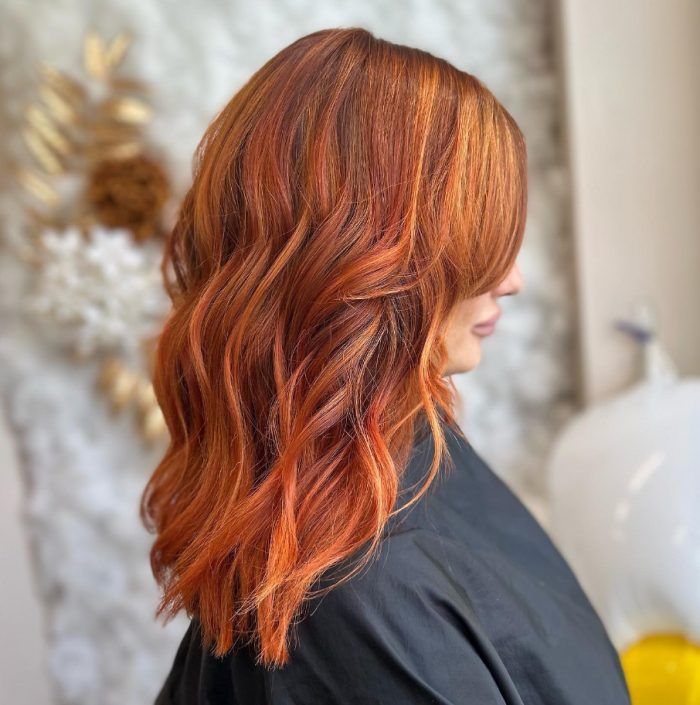
Best grow-out in this roundup. Ash blonde with subtle highlights, mid-back length, wavy with medium density, no bangs. The middle part and long layers let the color do the work. The ash tone fades gracefully because the highlights are subtle, not chunky. I have watched this grow out on a friend for four months. No harsh line, no urgent root touch-up. The lived-in look is the point. You wash it, you wave it, you go. That is the real wear reality of a color that does not fight you.
Curtain Bangs Visual Idea
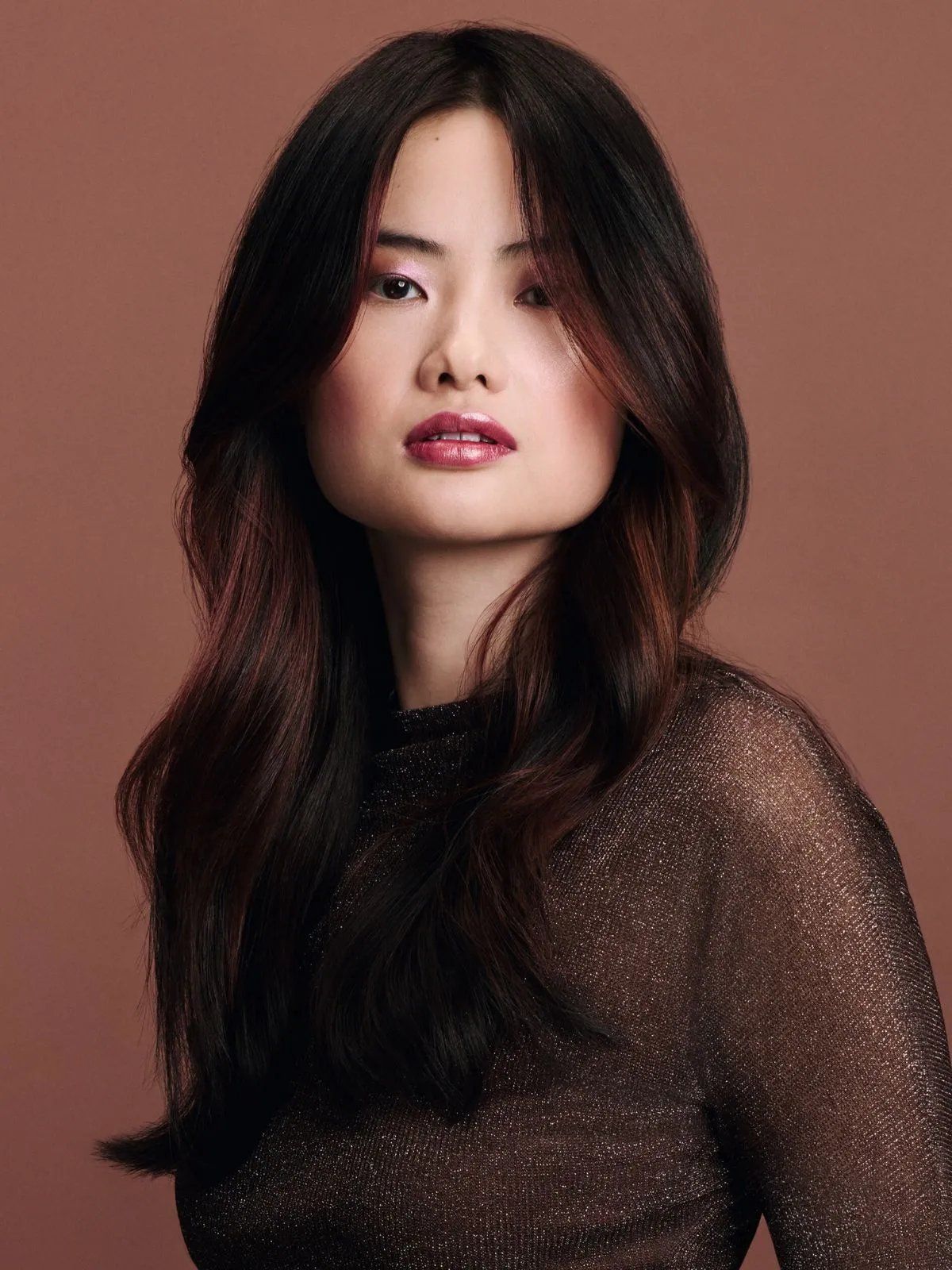
Ever notice how a set of curtain bangs can make a mid-back length feel intentional instead of just long? On a dark brown base, subtle auburn highlights are painted in thin sections, starting a few inches from the root. The technique keeps the color low-maintenance: the base stays deep, the auburn catches light without demanding full saturation. Curtain bangs frame the face by falling longer at the cheekbone and shorter near the brow, which softens the whole silhouette. The tone here is warm but not loud, auburn reads as natural against dark brown, no brassiness. Wavy, thick texture helps the bangs sit without constant re-styling. The layers in the cut let the highlights move, so the color shifts as the hair shifts.
What the photo cannot show: how the auburn pieces are concentrated around the face. The stylist placed them there on purpose. That is where the dimension lives, and where the curtain bangs catch it first. The rest of the length stays dark, which means grow-out is quiet. No harsh root line, no urgent toning appointment. Just a dark brown base with auburn highlights that fade slowly into the winter light.
Lob Visual Idea
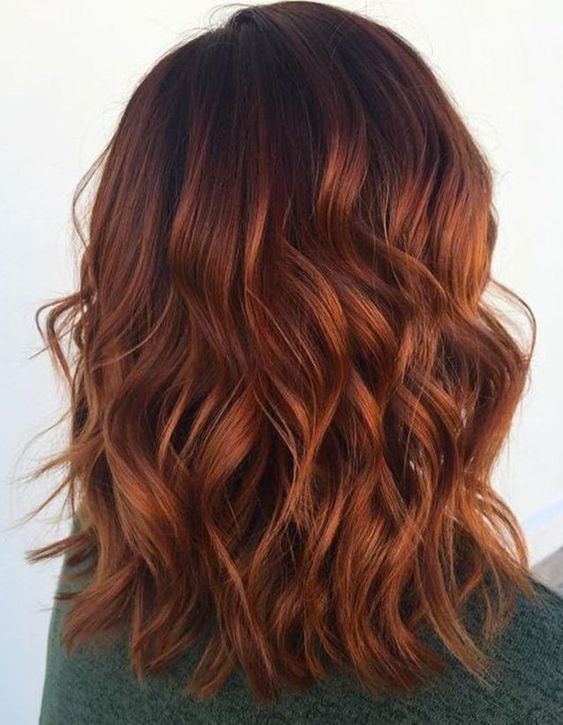
A lob at collarbone length with a dark brown base and copper and auburn highlights is the kind of multi-dimensional color that looks like a salon did it. Because a salon should do it. Getting copper and auburn to sit on the same head without turning muddy takes precision: the copper needs a warm starting point, the auburn needs a slightly deeper one. At home, you risk one tone swallowing the other. In a chair, the stylist sections the hair, applies each highlight separately, and controls the saturation. The result is a lob that catches winter light from two angles, copper on one side, auburn on the other. Wavy texture helps the tones blend. No bangs means the color runs uninterrupted from root to collarbone.
Side Swept Visual Idea
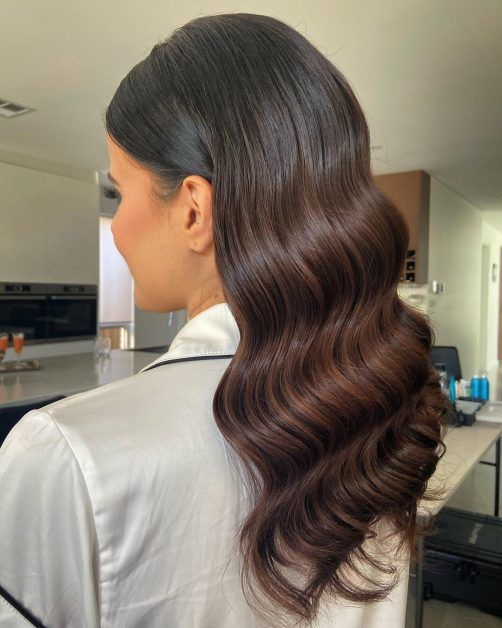
You sit down for a trim and leave with a whole color commitment. That is the side-swept long layers look with a dark brown base and subtle auburn highlights. The highlights are painted in thin ribbons through the mid-lengths and ends, leaving the root area untouched. The tone is warm auburn, not red, not copper, it lands somewhere between a spice cabinet and a winter sunset. Wavy, thick texture carries the color well because the waves catch the auburn at different depths.
The honest downside is the upkeep. The auburn highlights fade faster than the dark brown base, especially on wavy hair that gets washed more often. By week six, the auburn starts pulling warmer, more orange than the initial tone. A toning appointment at week eight keeps it from drifting. Side-swept bangs add another layer of maintenance: they expose the highlights at the front, which means the fade shows first where you see it most. The color is beautiful, but it asks for attention. Book the touch-up before you need it.
Front View Visual Idea
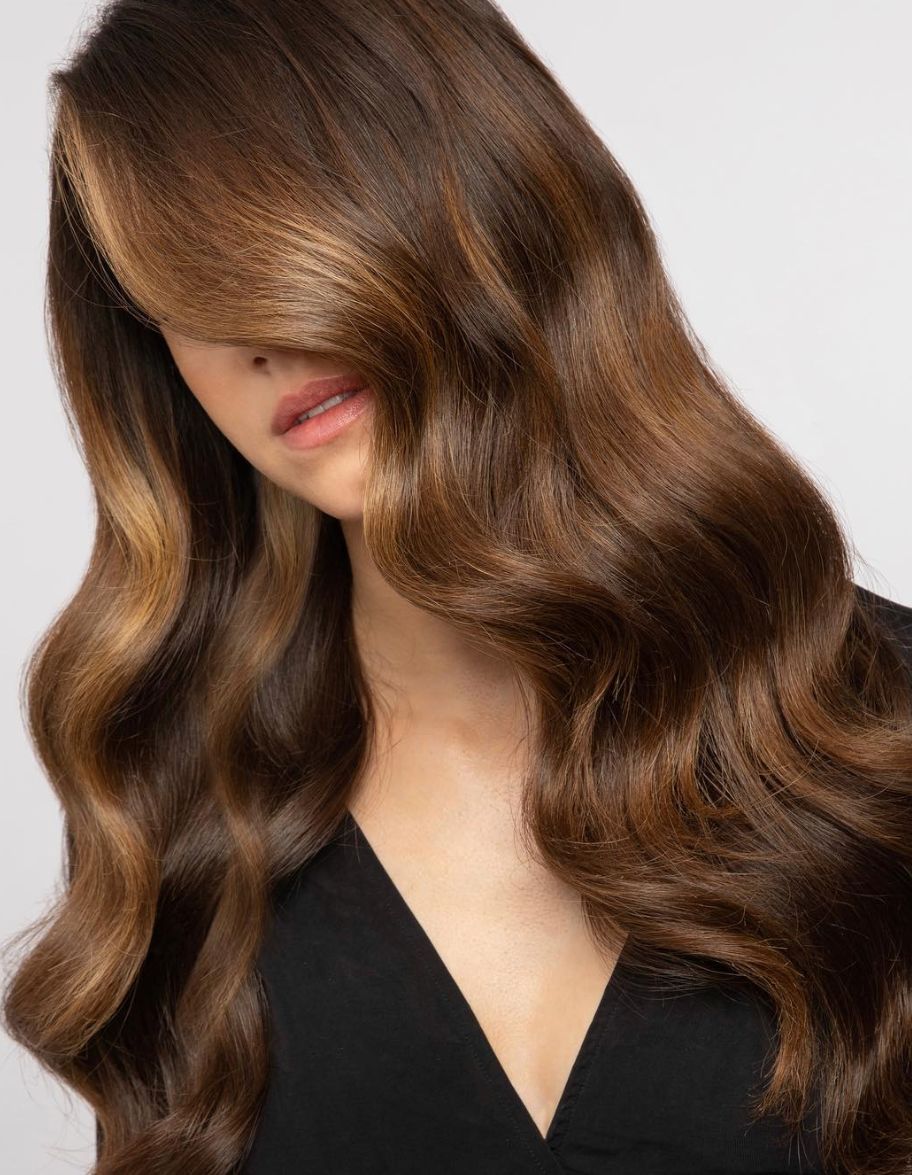
I will admit I was skeptical about espresso brown with subtle blonde undertones. Espresso can read flat, blonde undertones can read ashy, together they could land in a no-man’s-land. But the front view of this mid-back length with loose waves and no bangs shows why it works. The blonde undertones are not highlights, they are woven into the base color itself, a soft lift that keeps the espresso from sitting heavy. The tone is cool but not icy, the blonde reads as a whisper of warmth against the dark brown. Wavy, medium density texture lets the undertones catch light without needing layers. The middle part keeps the color symmetrical, the blonde undertones appear evenly on both sides. This is a color that flatters a wide range of skin tones because the espresso is neutral, the blonde is soft, neither fights the complexion.
The technique is a single-process color with a tonal shift, not a highlight application. That is why the grow-out is invisible. The root grows in as espresso, the ends stay espresso with a blonde whisper, there is no line. For winter, this is the quiet workhorse: no brassiness, no urgent toning, just a dark base that does not feel heavy.
Front View Slightly Angled Visual Idea
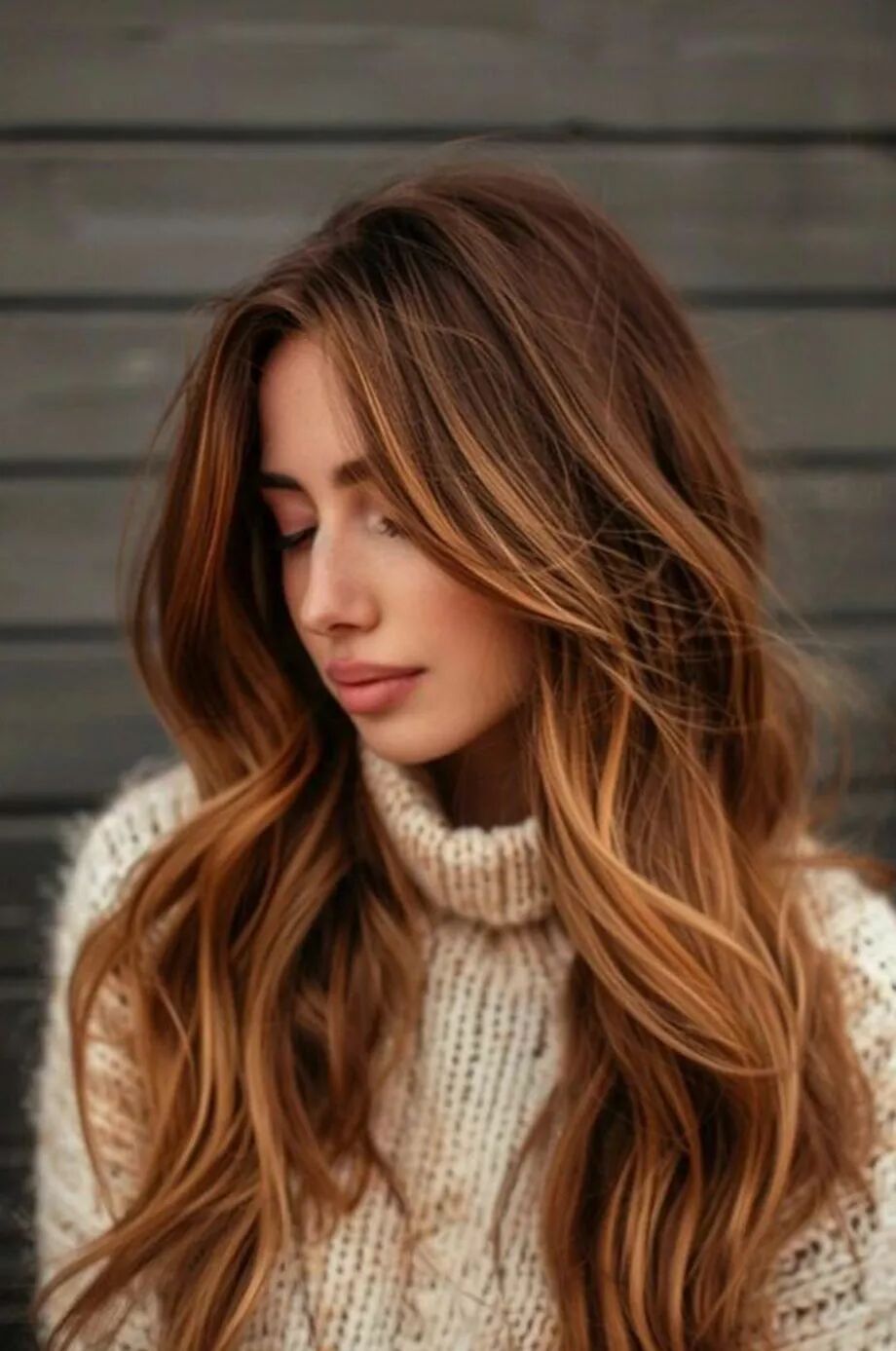
This is the color that makes you stop scrolling. Warm brown base with copper and gold highlights, mid-back length, loose waves, no bangs, and the light hits it from a slightly angled front view and suddenly the copper and gold are everywhere. The technique is a balayage, the copper and gold are painted freehand through the mid-lengths and ends, leaving the root area dark. The tone is warm across the board, copper reads rich, gold reads bright, together they create a dimension that shifts as the hair moves. Wavy, medium density texture holds the color well because the waves scatter the light across both tones. The middle part keeps the color balanced.
The wear and upkeep: copper and gold fade faster than a neutral brown. By week four, the gold starts pulling more yellow, the copper starts pulling more orange. A warm-toned gloss at week six resets both. The fade is not ugly, it is just less dimensional. The color still looks good, just not as good as week one. For winter, this catches the low sun beautifully, the copper and gold glow against the gray sky. But it asks for a toning appointment every six weeks. Worth it? When the light hits, yes.
Final Thoughts
After writing all of these, the one I keep coming back to is the copper-brown bob with blunt bangs. It breaks every rule I thought I had about winter hair, and it still works. That is the whole point of this list.
- Trim the baseline every eight weeks
- Tone copper shades at week six, not week ten
- A root shadow buys six calm weeks
- Purple shampoo once a week for ash tones
- Gloss at home between salon visits
I am booking the bob next week.
