

The inverted bob is a graduated cut with a shorter back that stacks into a longer front, giving the silhouette built-in movement. Right now the trend leans soft: curtain bangs, lived-in color, and a glossy natural finish instead of the poker-straight flat iron.
These 20 Cute Inverted Bob ideas span every length from ear to collarbone, with textures from pin-straight to wavy and colors from sharp black to ash blonde. They suit fine hair that needs volume, thick hair that can carry a blunt line, and round faces that benefit from a chin-skimming or longer front. You’ll find the one that holds its shape past noon.
Chin Length Inverted Bob With Curtain Bangs
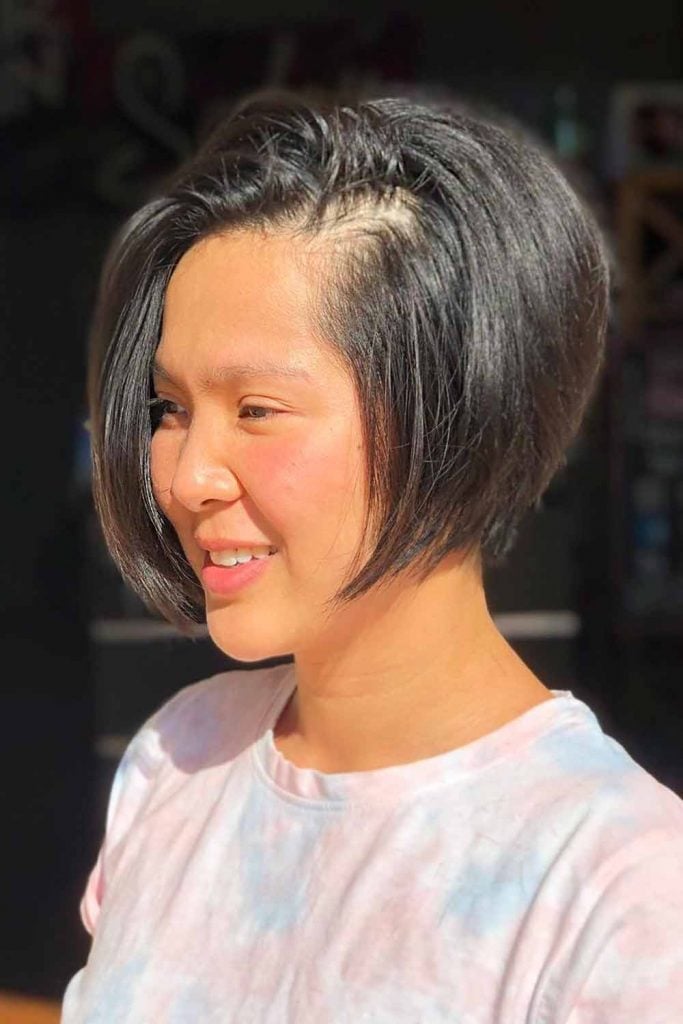
The inverted bob keeps the front longer than the back, which gives even thick, straight hair a sense of movement. The curtain bangs frame the face without committing to a full fringe. Ask your stylist for: chin length inverted bob, curtain bangs, middle part. Thick hair starting at chin length holds the shape well, and the soft bangs help round and oval faces feel balanced. Blow-dry those bangs with a round brush to encourage softness, and plan for a trim every six weeks to maintain the angle.
Smooth Inverted Bob With Side Swept Bangs
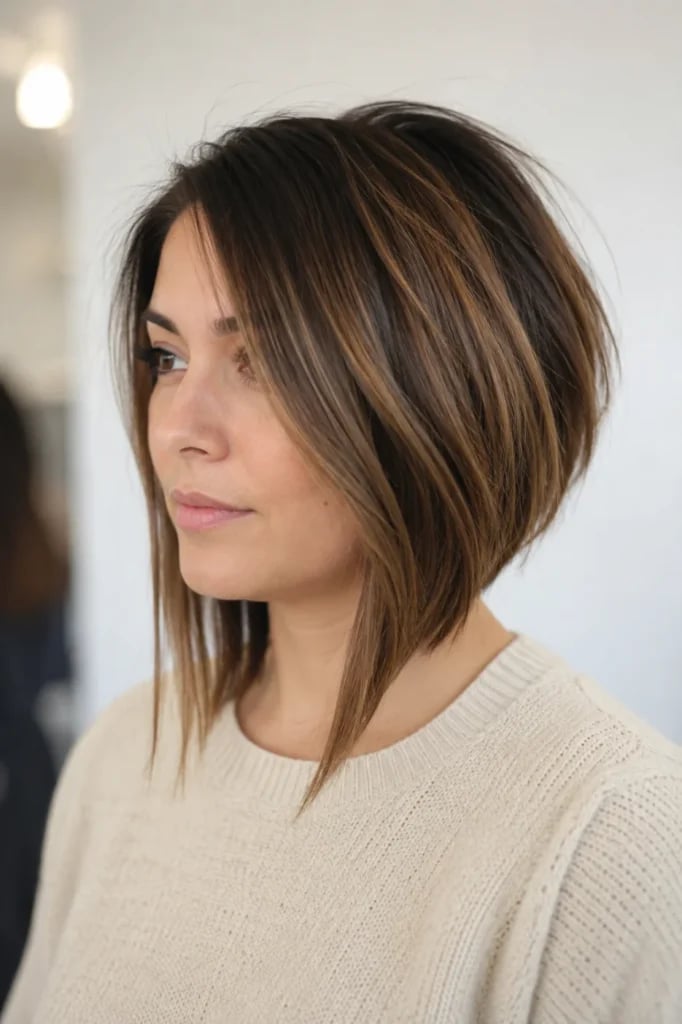
Fine, straight hair can feel flat, but the inverted shape and side-swept bangs add visual weight exactly where you need it. The side parting shifts the volume to one side, making the chin-length cut look fuller than it is. Ask your stylist for: chin length inverted bob, side swept bangs, side part. This cut genuinely flatters most face shapes, though those with very round faces may want the bangs a little longer. Use a small round brush to direct the fringe during styling, and get the baseline trimmed every six to eight weeks to keep the line crisp.
Sharp Black Inverted Bob
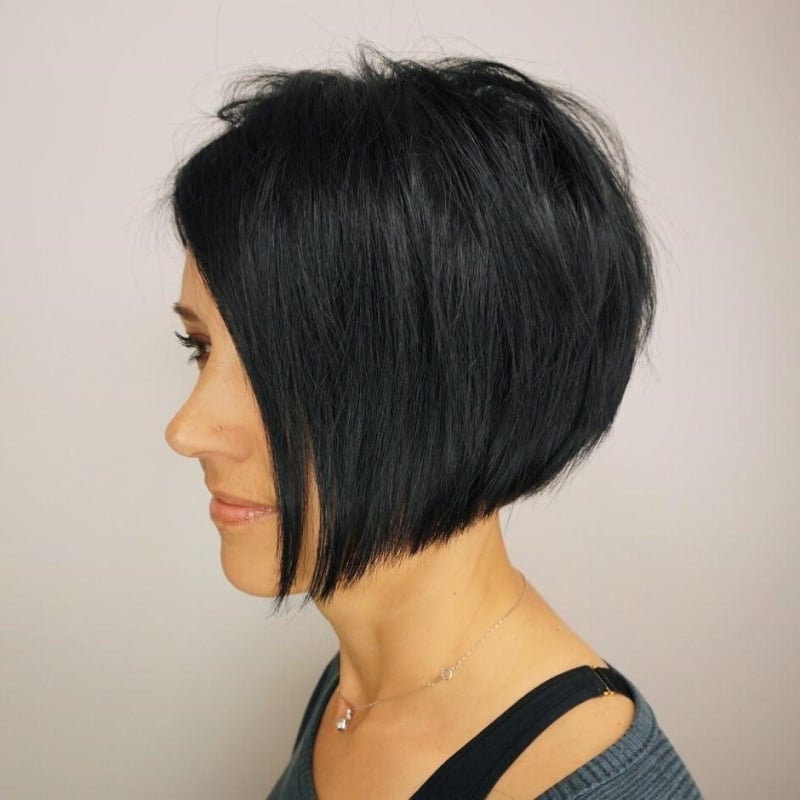
A chin-length inverted bob with no bangs relies entirely on precision: the stacked back must graduate cleanly into the longer front sections, and the side parting emphasizes the sharp angle. Thick, straight hair starting at chin length takes this cut best because the density holds the line. Ask your stylist for: chin length sharp inverted bob, no bangs, side part. The honest drawback is that any uneven growth shows immediately, so you need a trim every six weeks without fail.
Blonde Inverted Bob With Stacked Back
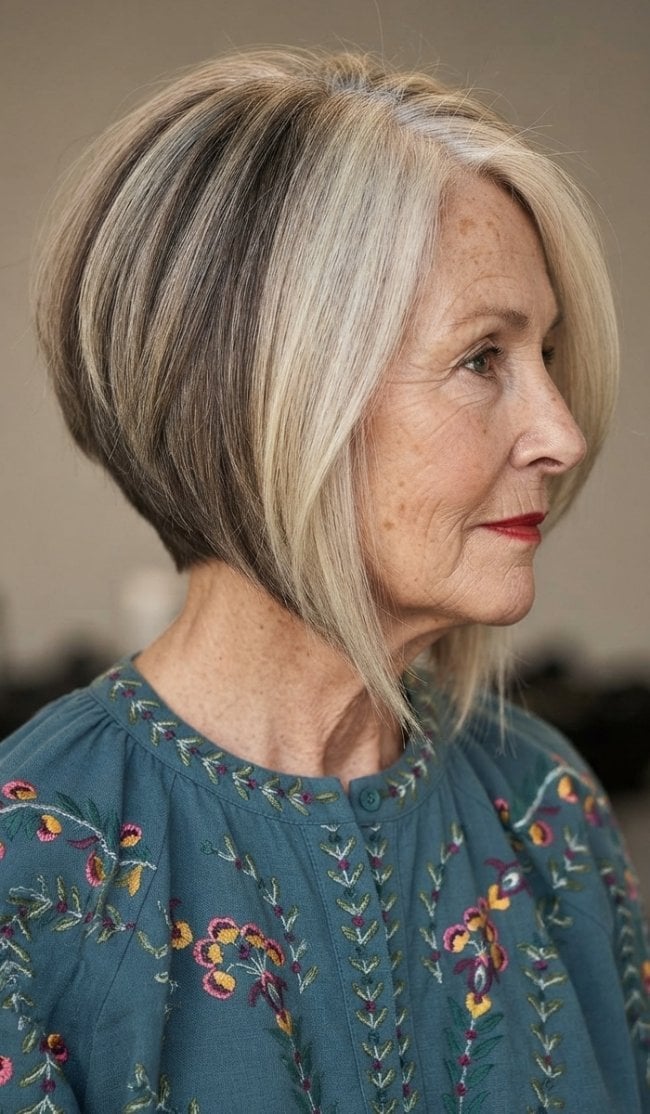
Unlike longer inverted bobs that rely on weight at the front, this ear-length version uses a stacked back to create volume where fine, wavy hair needs it most. The side-swept fringe softens the short length, and the natural gray streaks add dimension without needing frequent toning. Ask your stylist for: ear length inverted bob, stacked back, side swept fringe. This is an excellent cut for everyday wear, especially in warmer months when you want hair off the neck. Apply a volumizing product at the roots before blow-drying.
Ear Length Blonde Stacked Inverted Bob
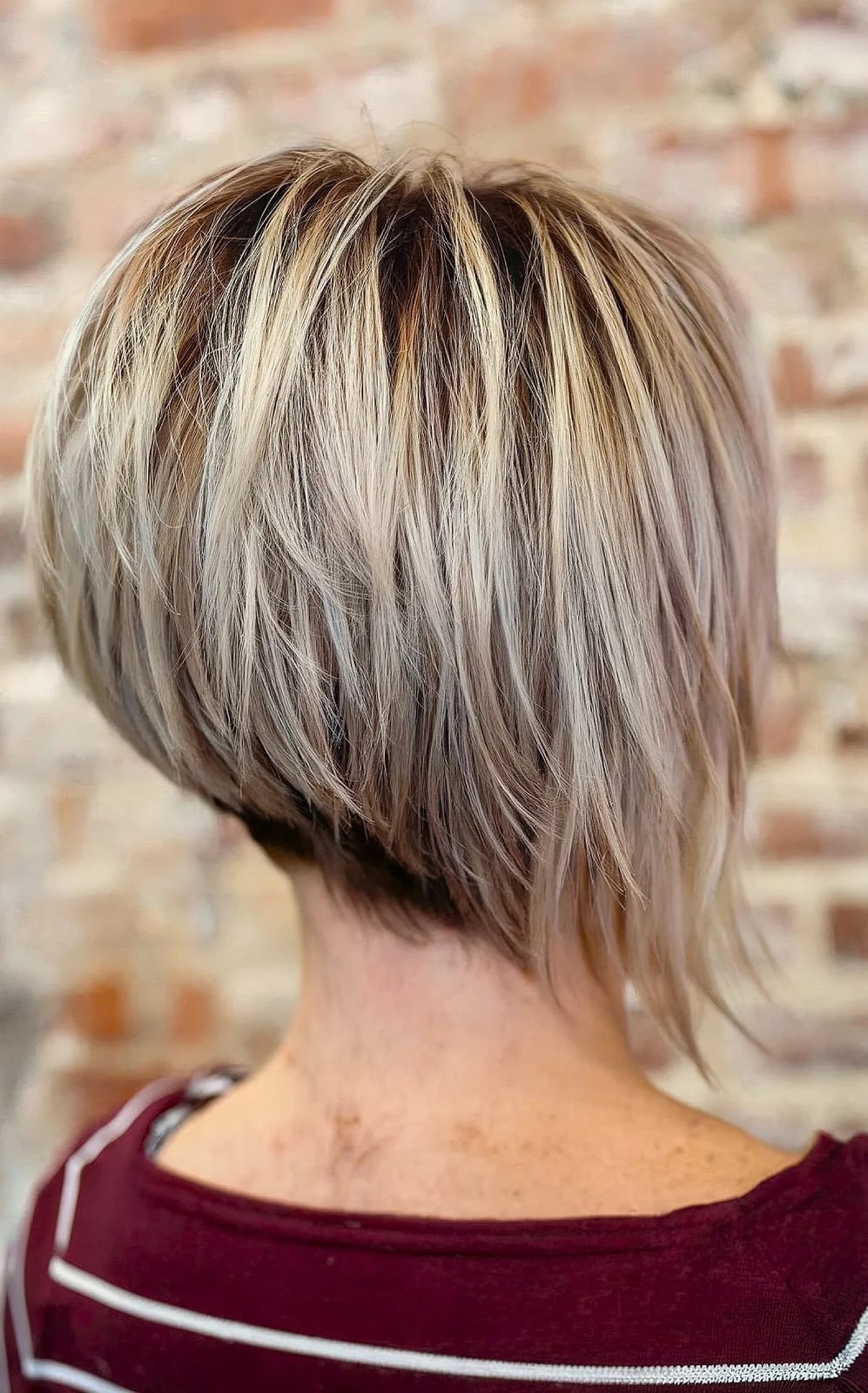
Stacked layers in the back of an ear-length bob do two things: they lift fine hair off the nape and create a rounded silhouette from behind. The middle parting keeps the front simple, letting the stacked shape do the work. Ask your stylist for: ear length stacked inverted bob, no bangs, middle part. Fine hair starting at ear length benefits most from the added fullness at the crown.
The upkeep on a stacked cut is slightly more demanding than a standard bob because the shortest layers grow out fastest. Apply a smoothing serum before styling to control flyaways, and plan for a trim every four weeks to preserve the shape. The subtle highlights help the layers read clearly without looking busy.
Short Red French Bob With Baby Bangs
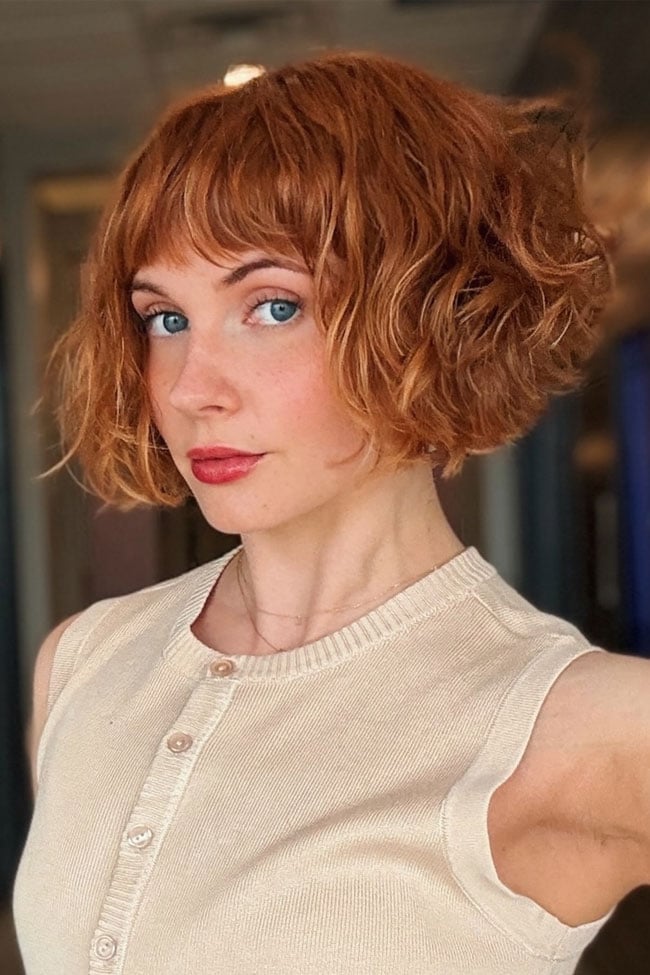
Does a French bob work on curly hair, or is it strictly a straight-hair sport? This ear-length version, cut with baby bangs and a middle parting, proves the opposite. The natural curl pattern gives fine hair the volume a blunt bob would borrow from scissors. Ask your stylist for: ear length french bob, baby bangs. A curl-defining cream and air drying are the only steps here, which makes this a genuine DIY cut. The baby bangs need trimming every two to three weeks, but the bob holds its shape for about eight.
Collarbone Inverted Bob With Pink Tones
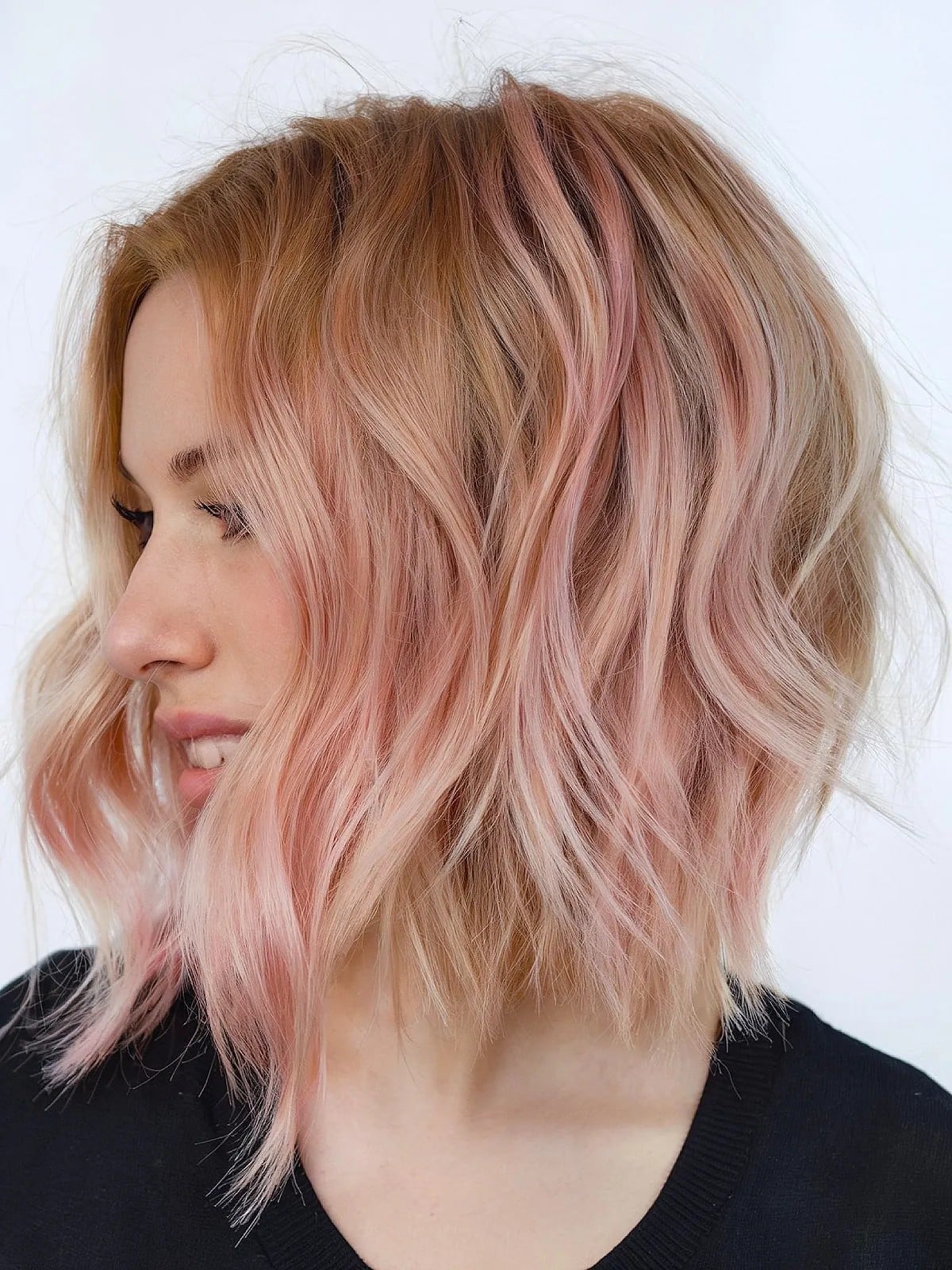
The inverted shape already moves forward, so adding pink and blonde tones turns it into something that belongs at a summer festival or a long weekend brunch. This collarbone-length version uses a side parting and loose waves to keep the fine texture from looking sparse. Ask your stylist for: collarbone length inverted bob, pink and blonde tones. A texturizing spray at the mid-lengths gives the waves enough grip without weighing them down. The color requires a toning appointment every four to five weeks to keep the pink from fading into brass.
Blonde And Brown Angled Bob With Face Framing
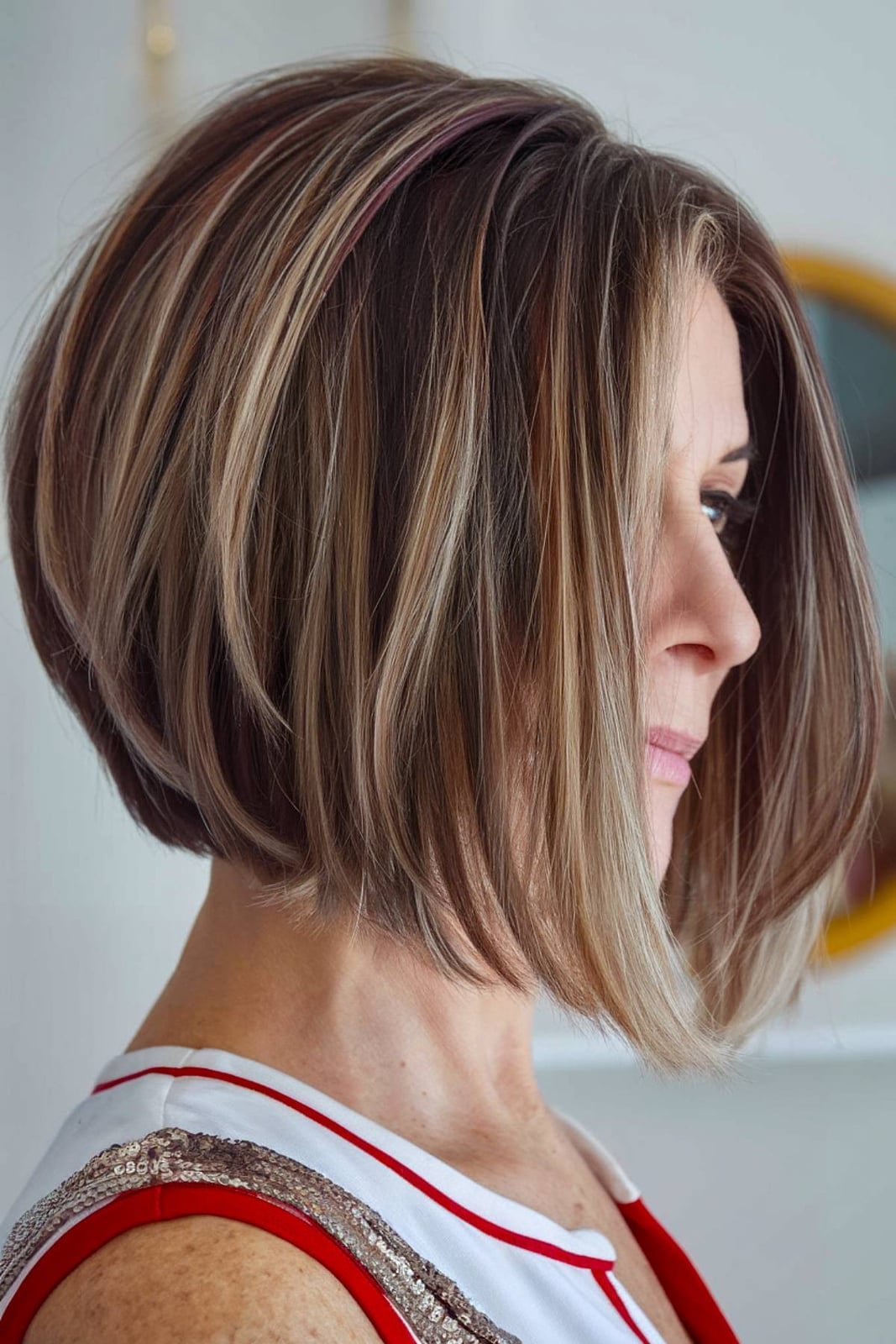
Does your jawline need softening without losing the sharpness of an angled bob? Face-framing layers do exactly that. This collarbone-length cut uses a side parting and soft waves, with blonde and brown highlights adding depth through the front sections. Ask your stylist for: collarbone length angled bob, face framing layers. A large barrel curling iron shapes the waves in about ten minutes. The face-framing pieces will need a trim every five to six weeks to stay at the right length, and the highlights benefit from a glaze every eight weeks.
Ash Blonde Collarbone Stacked Bob
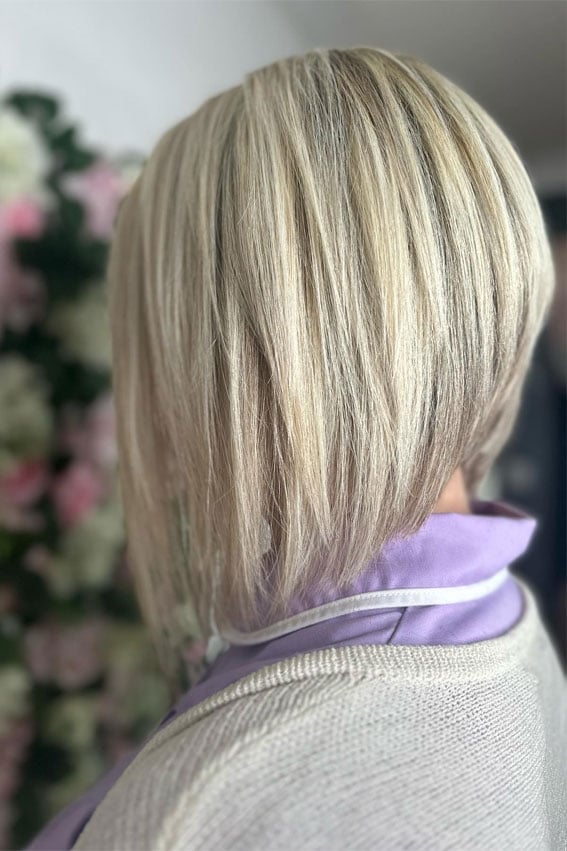
A stacked bob builds volume at the back through graduated layers, and this collarbone-length version adds an ash blonde base with darker roots. A straight blowout keeps the focus on the stacking shape. Ask your stylist for: collarbone length stacked bob, middle part. The shortest layers at the nape grow out quickly, so the stacked silhouette needs a trim every four weeks. The darker root line hides new growth for about six weeks before the ash tone needs refreshing.
Medium Density Ash Blonde Stacked Bob Back View
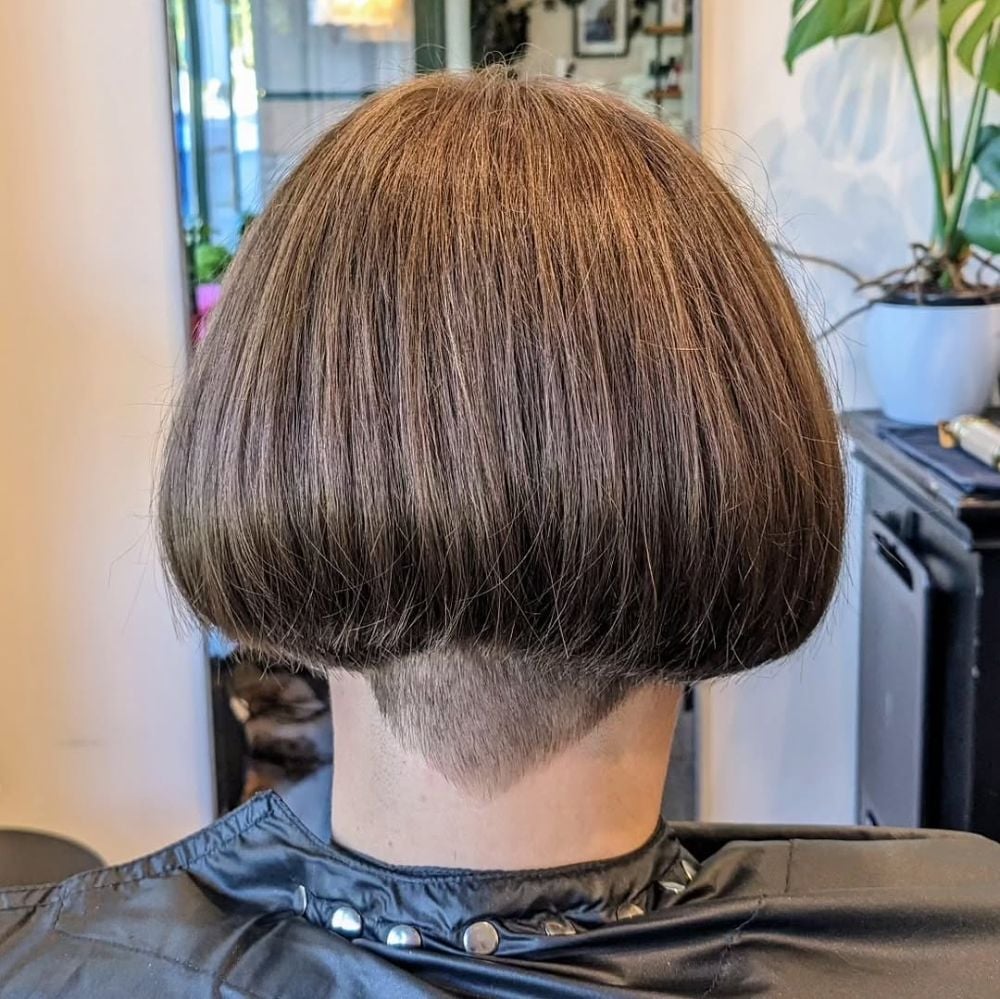
The back view of a stacked bob tells the real story. This collarbone-length version, styled straight, shows how the graduated layers create a rounded silhouette that medium density hair can hold without product. Ask your stylist for: collarbone length stacked bob, middle part.
A smoothing cream on the ends keeps the straight finish clean. The shortest layers at the nape will need trimming every four weeks to maintain the stacking shape. The ash blonde with darker roots means the color grows out softly, so you can stretch toning to eight weeks without a harsh line.
Thick Dark Brown Inverted Bob With Blonde Highlights
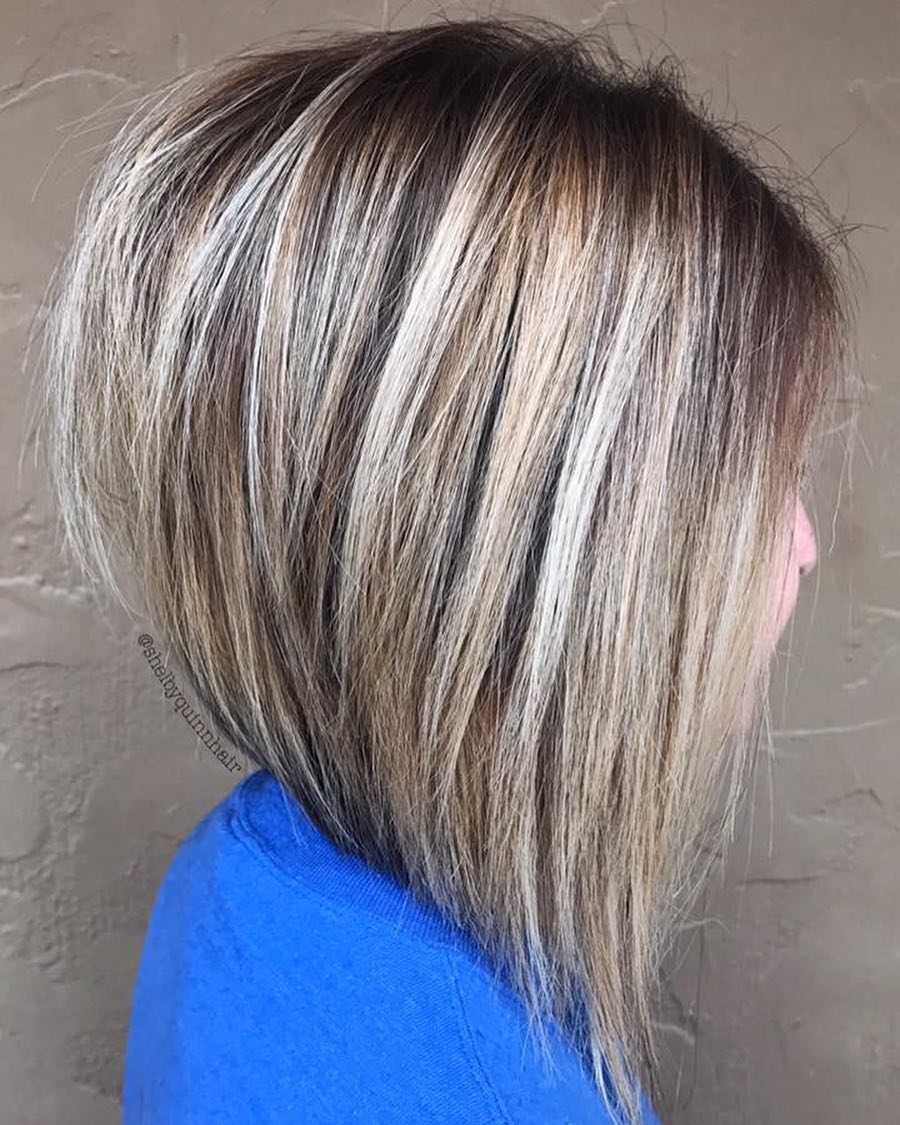
A dramatic angle is the whole point here, with a chin-length inverted bob cut so the front drops long while the back climbs short. Thick, straight hair holds that sharp diagonal line best, and the blonde highlights keep the dark brown base from reading as one solid block. Ask your stylist for: chin length inverted bob, dark brown with blonde highlights. A side parting adds to the precision, so bring a reference photo showing exactly how steep you want that angle.
Sharp Dark Brown Inverted Bob With Highlights
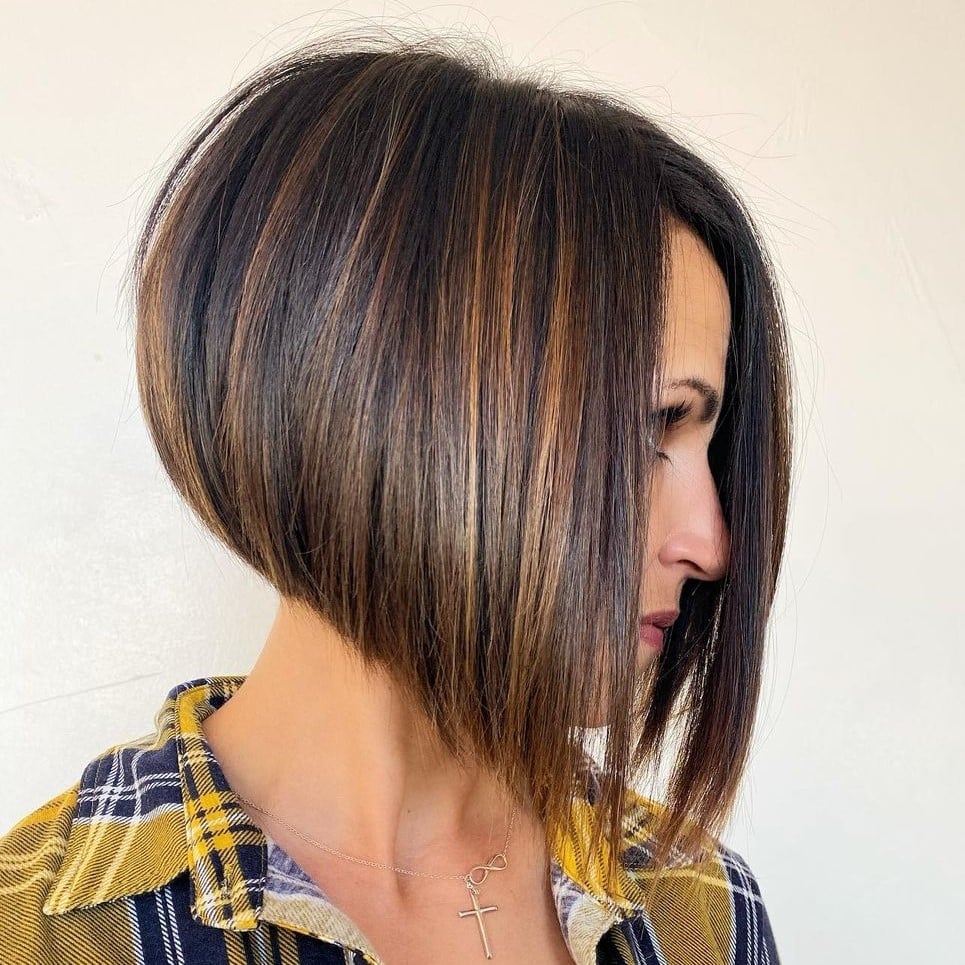
A sharp inverted bob like this one creates an obvious, deliberate line, rather than a softer, blended version that melts into the shoulders. The dark brown base with blonde highlights gives the angle even more definition, so every straight strand lands exactly where it was cut. This is a salon-only shape: the precision required for that crisp edge means a stylist, not a DIY trim. Ask your stylist for: chin length sharp inverted bob, dark brown with blonde highlights.
Textured Dark Brown Inverted Bob
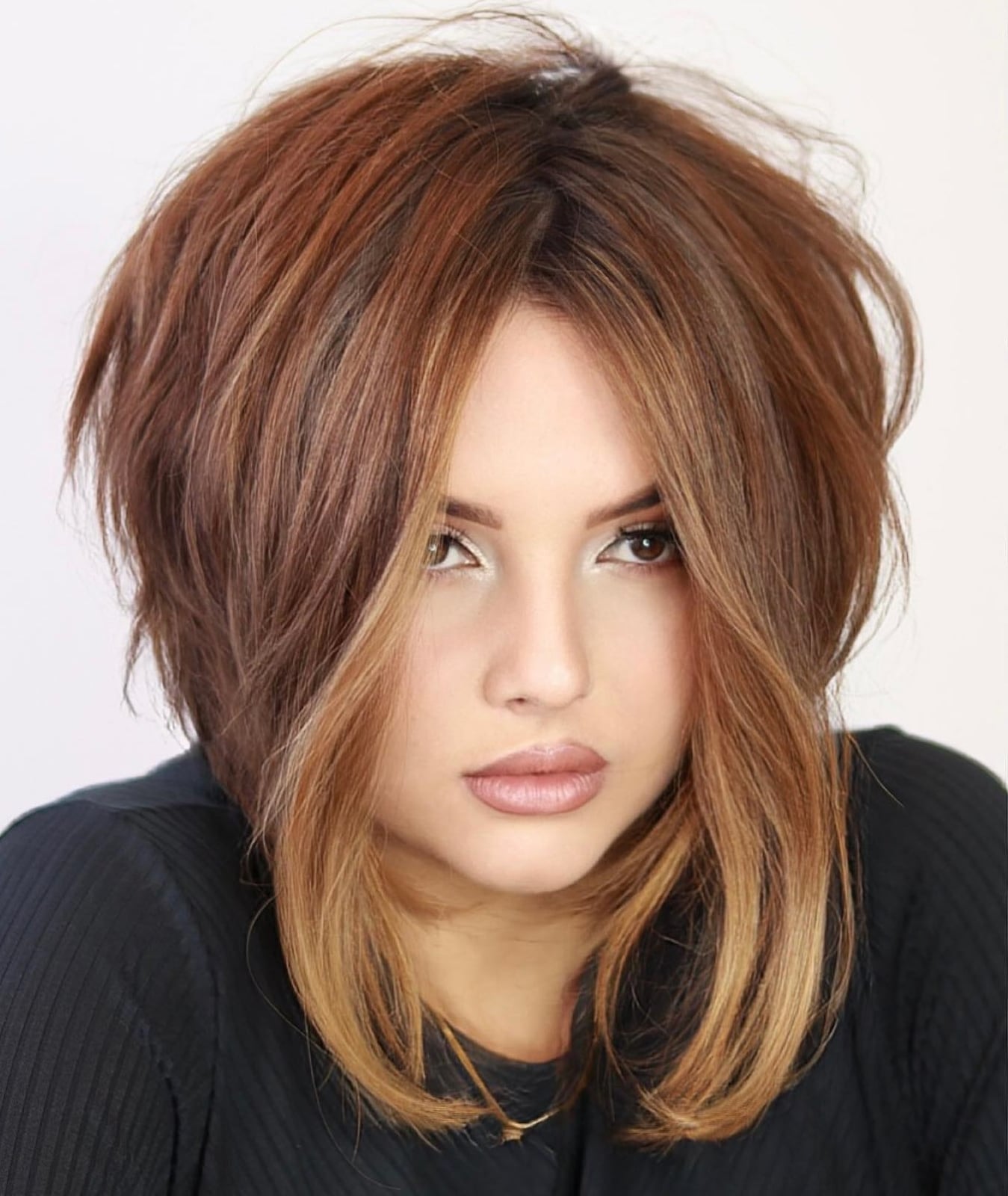
The stacked layers here are cut shorter at the back and graduate longer toward the front, which is the technical blueprint of an inverted bob. On medium wavy hair, those layers create natural movement rather than a flat wedge. The dark brown base with subtle highlights keeps the texture visible without competing with it. The real drawback: the stacked back grows out fast, so expect a trim every four to six weeks if you want to keep that precise shape. Ask your stylist for: chin length inverted bob, textured layers, dark brown.
Ash Blonde Inverted Bob With Root Shadow
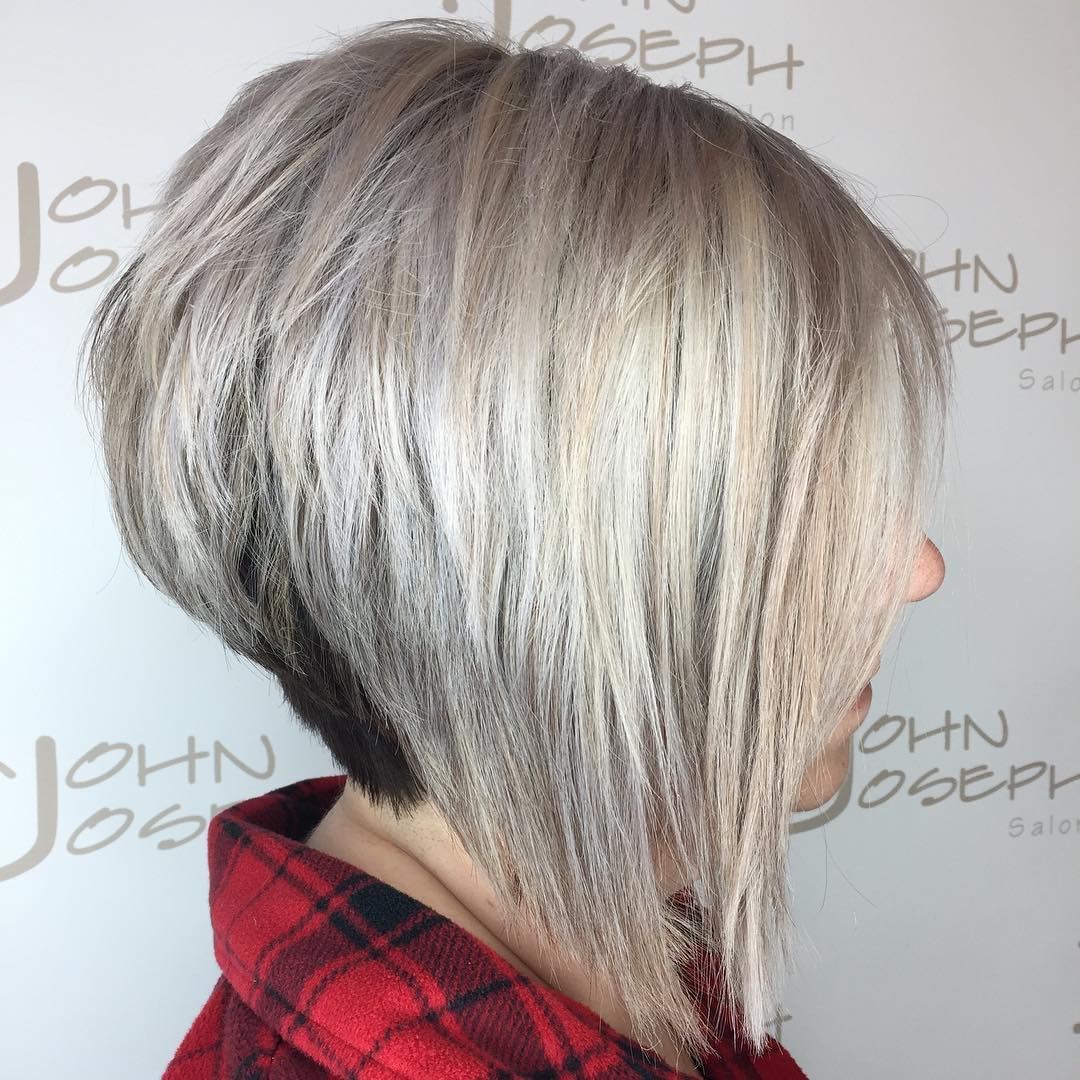
An ash blonde inverted bob with a dark root shadow is a low-maintenance color strategy disguised as a high-maintenance look. The root shadow means the grow-out line stays invisible for about six weeks, so you can skip the salon for an extra month between appointments. The side-swept bangs soften the chin-length line, and the wavy blowout keeps the texture from looking too severe.
Ask your colorist for: ash blonde with dark root shadow. A sea salt spray helps the waves hold their shape, and a toning appointment every four to six weeks keeps the ash from warming up.
Ash Blonde Inverted Bob With Stacked Back, Chin
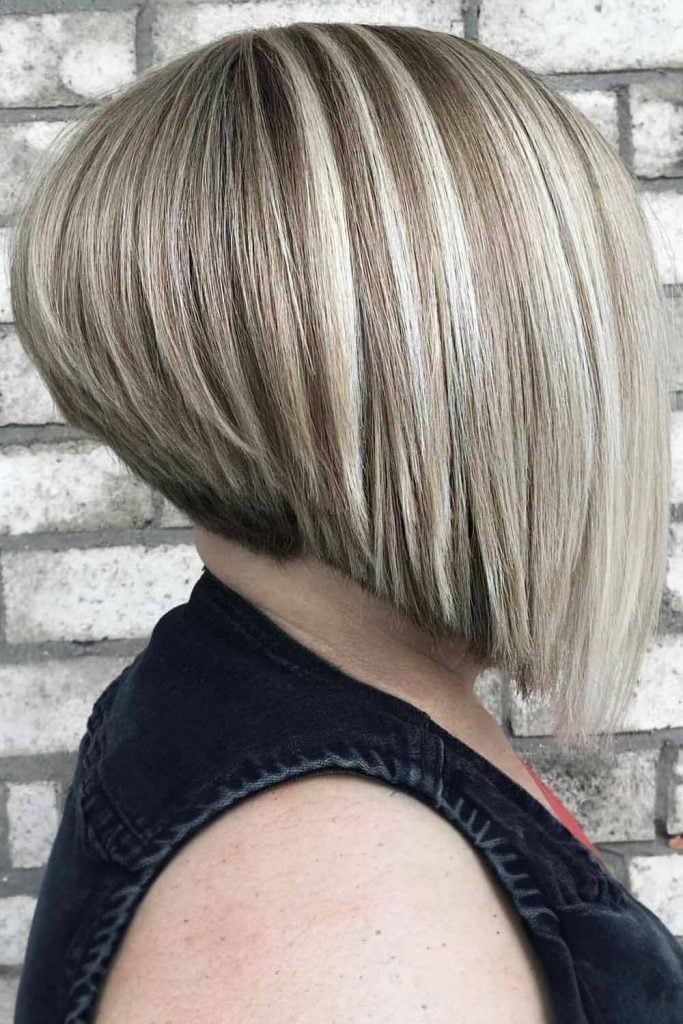
A stacked back is the inverted bob’s best trick for thick, straight hair: it removes bulk from the nape while letting the front pieces fall longer. This chin-length version in ash blonde with darker roots and highlights gives the shape both depth and dimension. The stacked back works best on hair with enough density to hold the graduation, so fine hair may find the contrast too subtle. Ask your stylist for: chin length inverted bob, stacked back, ash blonde. The blowout keeps it smooth, but the real work is in the cut.
Blonde Inverted Bob With Graduated Silhouette
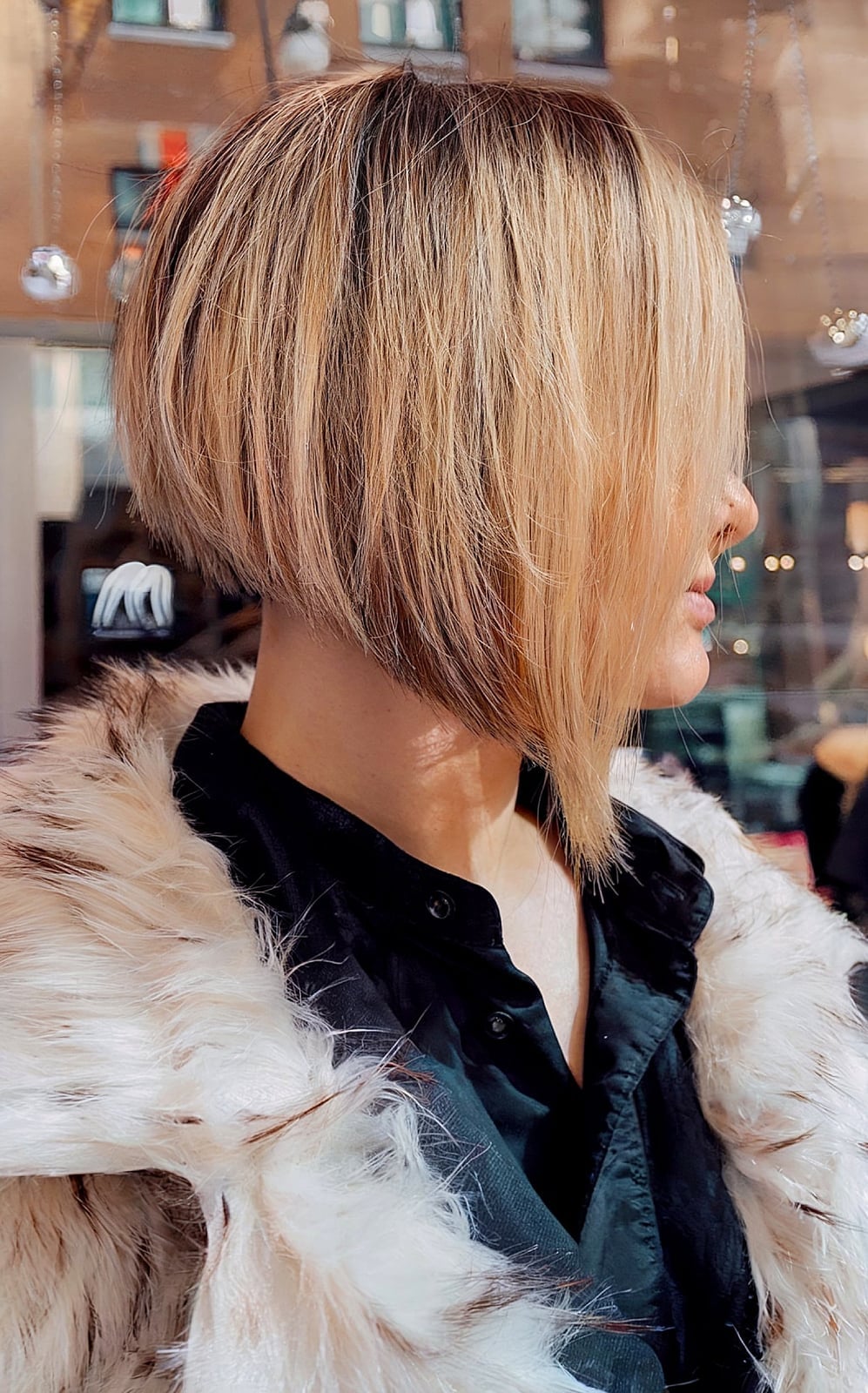
Fine, straight hair gains movement from the angle without losing its sleek edge. Ask your stylist for: chin length blonde inverted bob, subtle highlights, side part. A light hold hairspray sets the shape for the day, and a trim every six weeks keeps the line from losing its nerve.
Blonde Inverted Bob With Sharp Angle
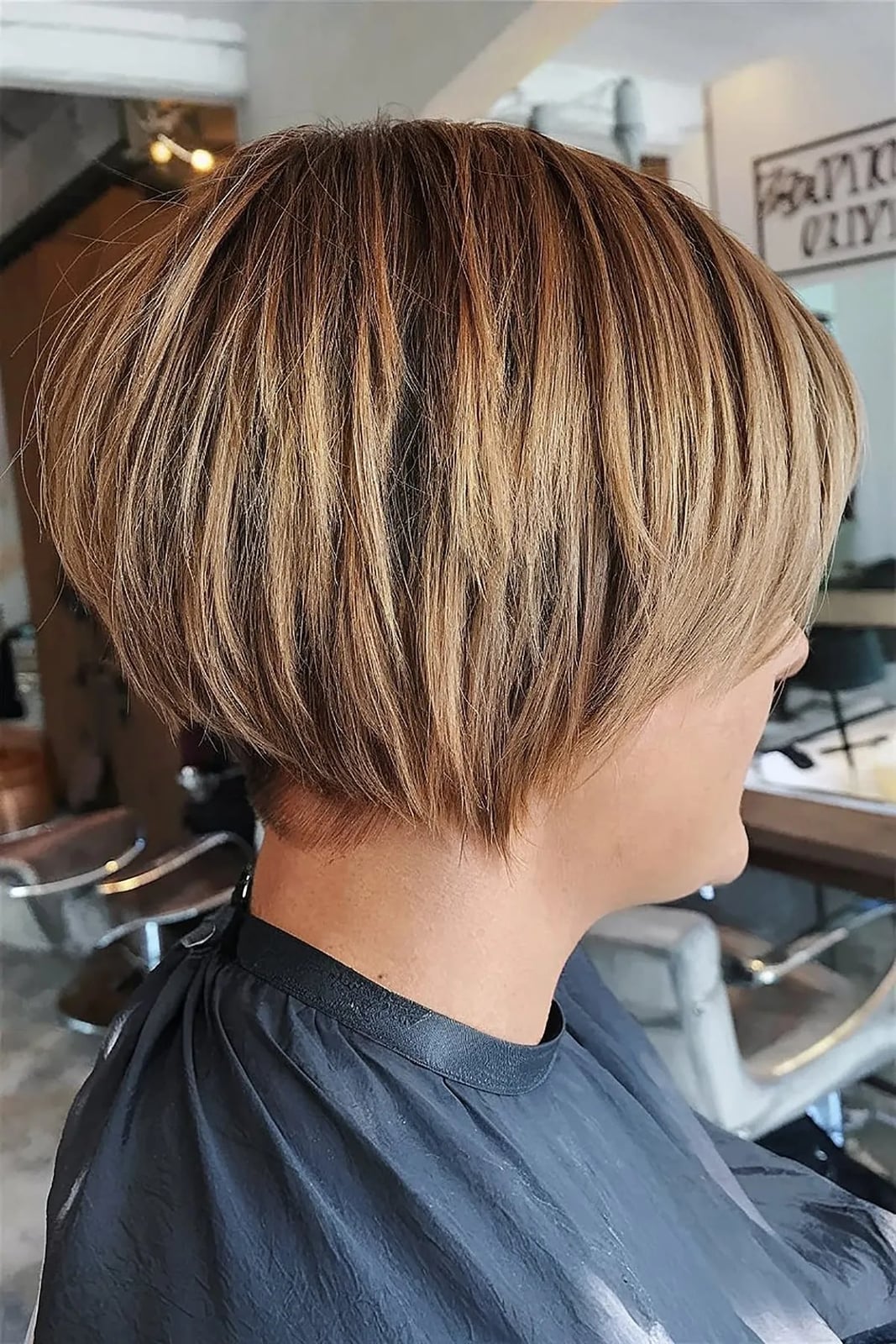
This one lands hard and clean. The collarbone length with a middle part and a sharp angle from back to front makes it a clear choice for evenings where polished hair matters. The downside is the precision: any grown-out section dulls the silhouette, so you commit to the shape or you skip it. Fine, straight texture lets the cut speak for itself, and the blonde highlights keep the line from looking too severe.
Dark Blonde Inverted Bob With Sharp Angle, Chin
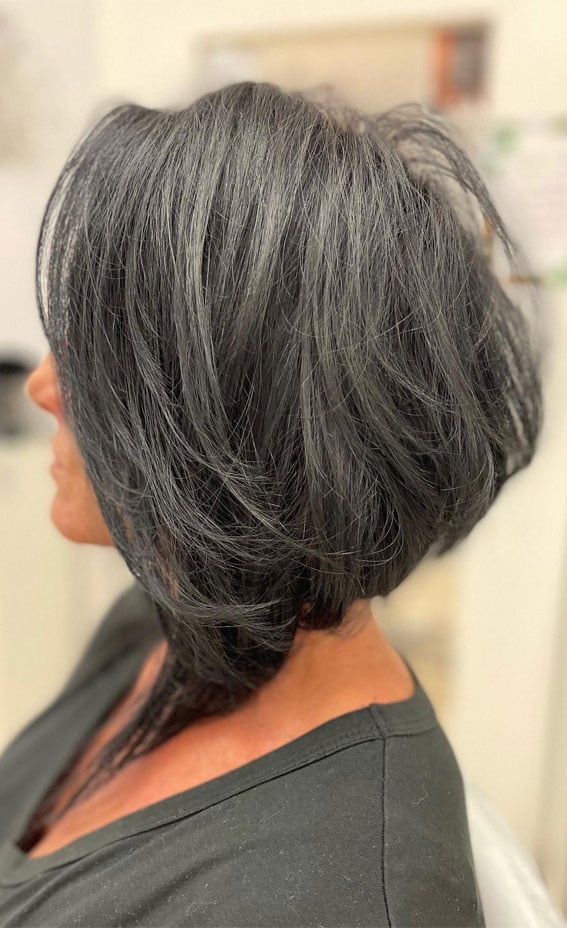
A sharp angle at chin length needs daily attention or it reads as accidental. Medium density straight hair holds the line best: a flat iron on low heat resets the edge each morning, and a trim every six weeks prevents the back from creeping toward the front. The dark blonde base with subtle highlights adds depth without the maintenance of a full balayage. No bangs means the parting stays central and the angle stays visible.
Ash Blonde Thick Inverted Bob Back View
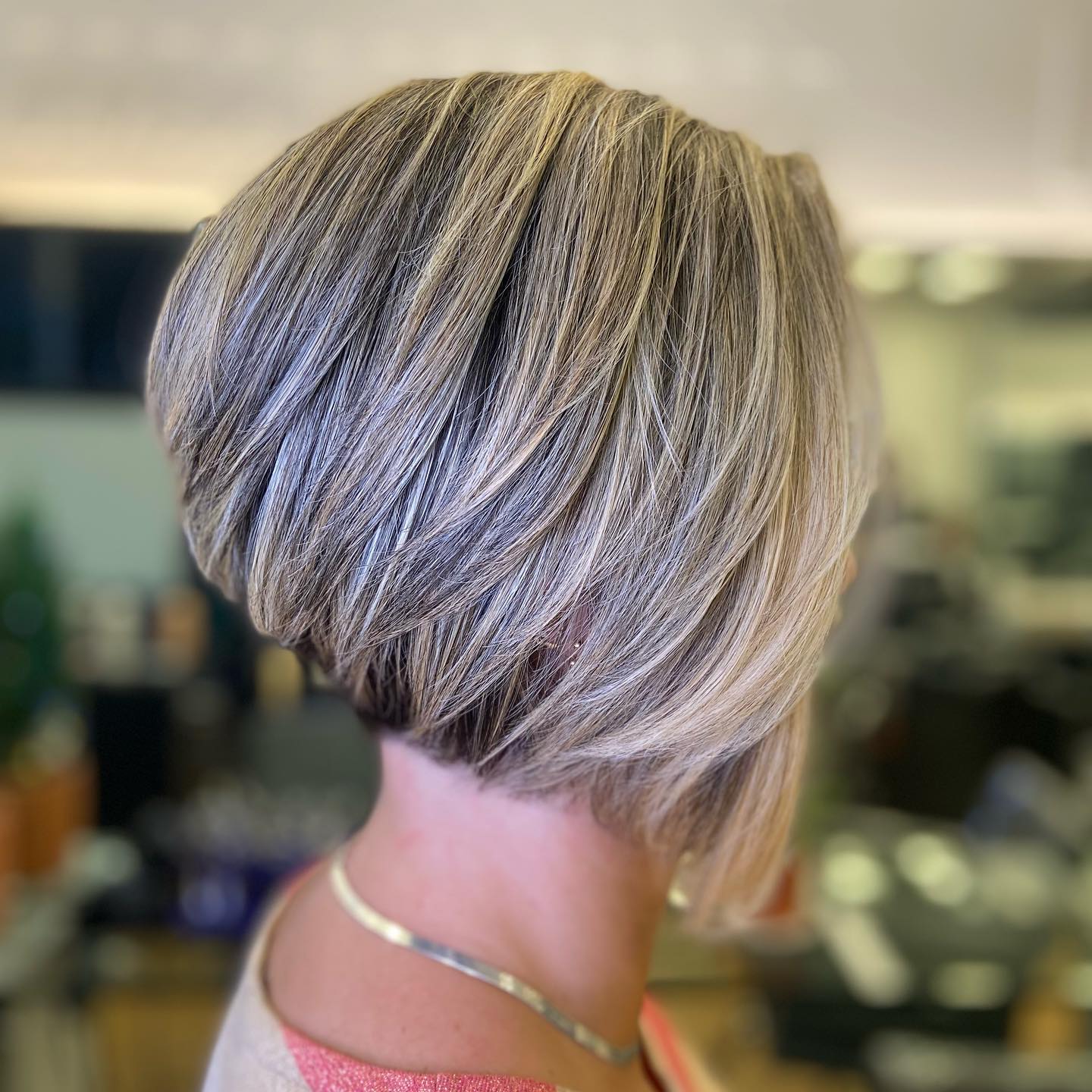
Thick hair and a stacked back: the stylist carves interior layers near the nape to remove bulk while keeping the collarbone front intact. The middle part and smooth blowout emphasize the inverted shape from every angle. The stacked section grows out fast and loses its crispness, so a monthly touch-up on the back layers is needed. Ash blonde highlights prevent the density from reading as one solid block.
Wavy Blonde Inverted Bob With Textured Ends
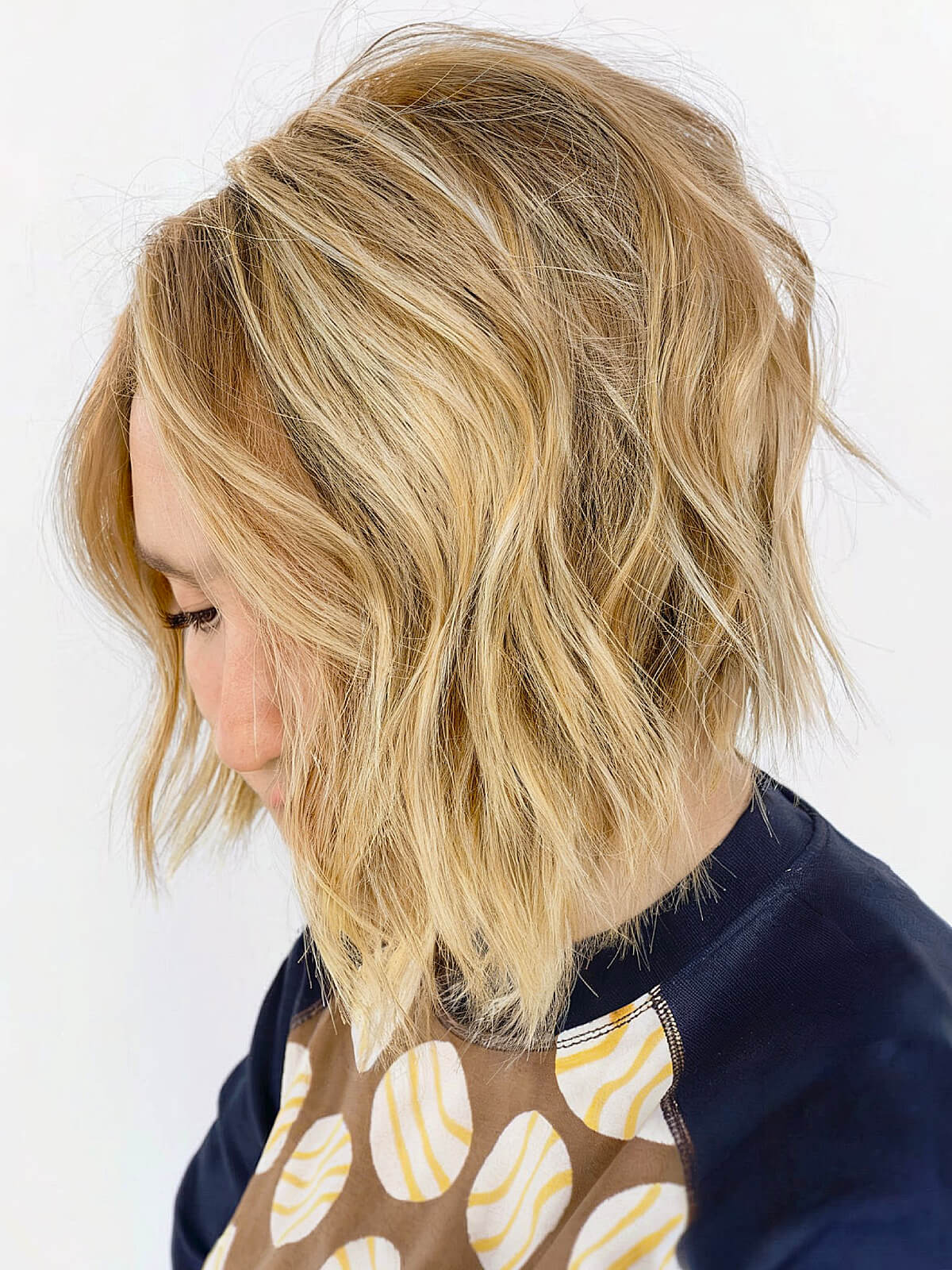
Fine, wavy hair at chin length can look sparse in a blunt cut, but textured ends and a middle part give it shape without weight. The inverted bob still does the work: shorter at the back, forward angle, blonde highlights that catch the wave. Air drying with a curl cream encourages the texture, and a trim every six to eight weeks keeps the ends from looking straggly. No bangs means the waves fall where they want.
Final Thoughts
Pick your inverted bob by texture first. Fine hair keeps volume with soft internal layers and a blunt baseline; thick hair can handle a sharper stacked back and more angle. A round face looks best when the front falls at or below the chin, while a longer face gains from width at the sides.
- Trim the baseline every six to eight weeks.
- Use a texturizing spray on wavy styles.
- Apply a heat protectant before blow-drying straight.
- Tone blonde shades every four to six weeks.
Master the modern bob for a fresh, stylish look.
