

Straight hair is a cheat code for a clean, deliberate silhouette. Right now, the shift is away from flat-ironed poker-straight ends and toward soft face-framing layers that give movement without losing that polished finish.
These 20 Straight Haircut Ideas cover the full spectrum, from low-upkeep chin-length bobs to layered mid-back cuts that need a trim every six to eight weeks. Whether your straight hair is fine and falls flat or thick and wants less weight, there is a shape here that holds its line. And yes, a few of them include bangs that actually sit still.
Mid-Back Layers With Curtain Bangs
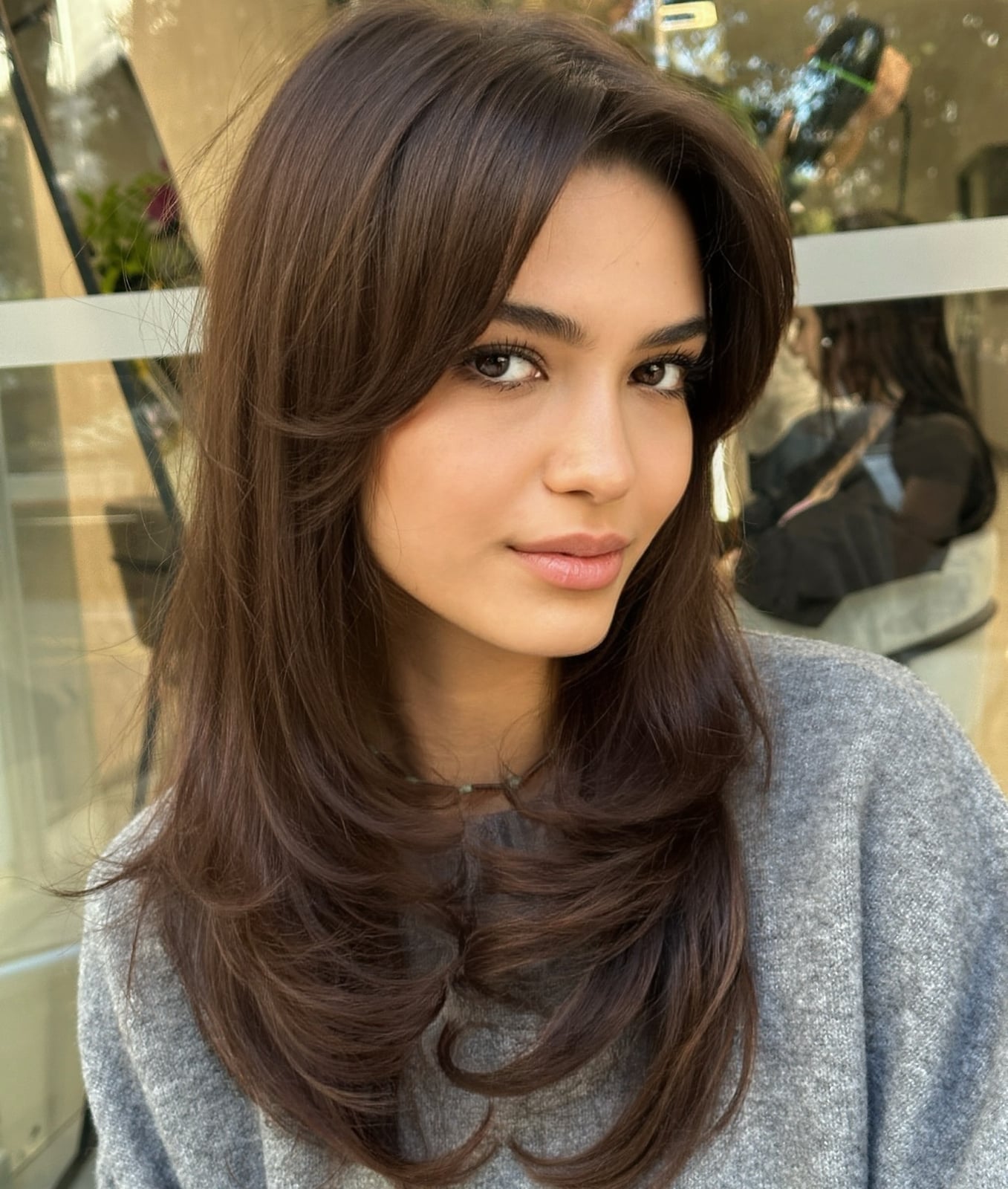
The whole point of curtain bangs is that they frame the face without a full fringe, and here they are cut to blend into voluminous, face-framing layers that start around the cheekbones. This mid-back length cut works best on thick, straight hair that can hold the shape of a blowout without collapsing. The curtain bangs soften a square or round face by drawing attention outward rather than across.
Ask your stylist for: mid-back length with voluminous layers and curtain bangs. The layers should be cut to add lift at the crown, not just scattered through the ends. Blow-dry the bangs with a round brush, directing them away from your face, and be prepared for a trim every six to eight weeks to keep the curtain shape defined.
Voluminous Dark Brown Mid-Back Layers
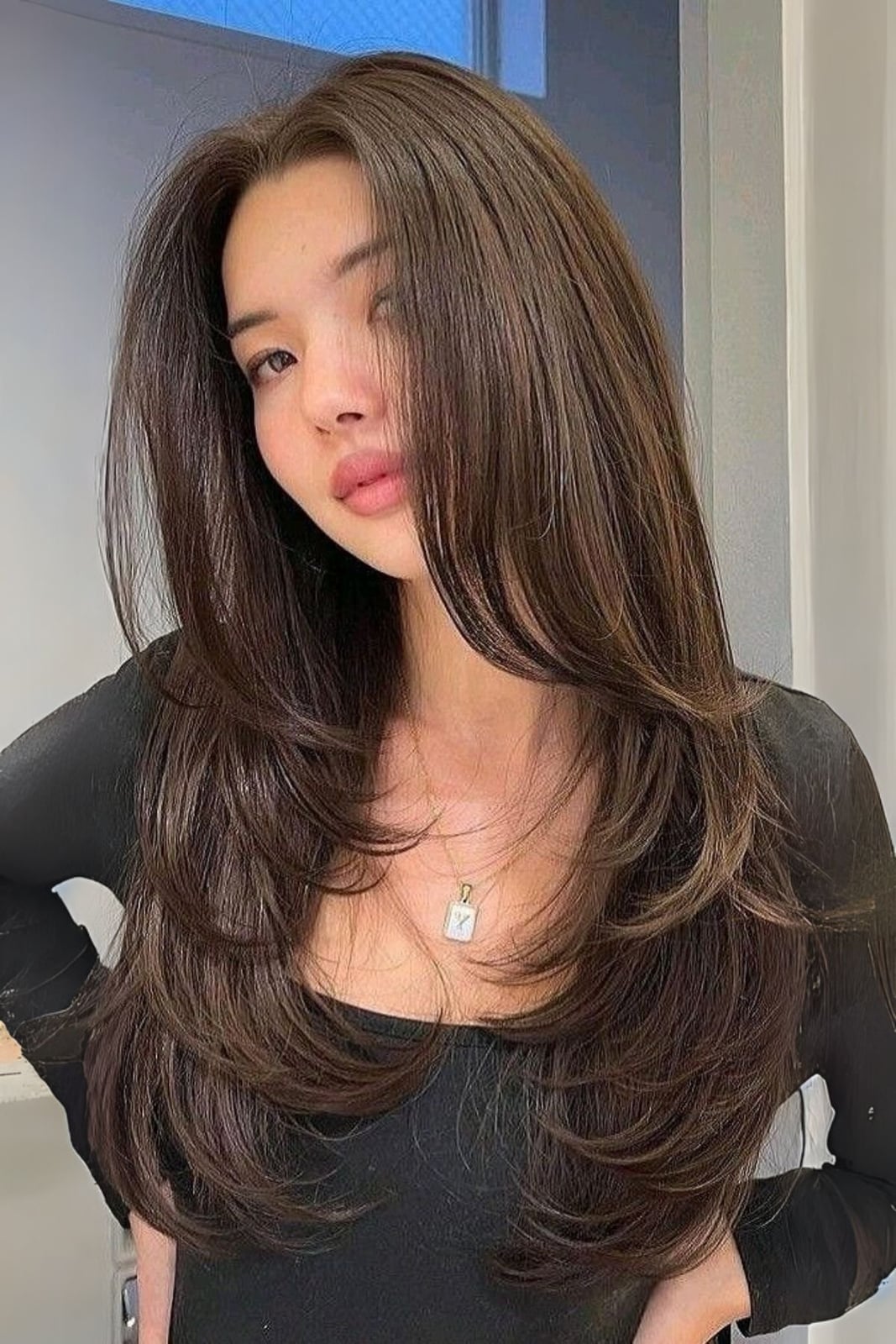
If you like the idea of long layers but prefer to skip the bangs entirely, this is the version that keeps all the volume at the crown and lets the rest fall clean. The long layers here are cut to remove weight from thick hair, so the ends move rather than sit in a heavy block. A middle parting keeps the look symmetrical and lets the layers stack evenly on both sides.
Ask your stylist for: mid-back length with well-defined long layers. During your blow-dry, use a large round brush to lift the roots at the crown, then point the nozzle down the shaft to smooth the cuticle. Plan for a trim every eight to ten weeks to maintain the layer shape; once the ends start to feel blunt, the volume at the top flattens out.
Brown Mid-Back Hair With Loose Waves
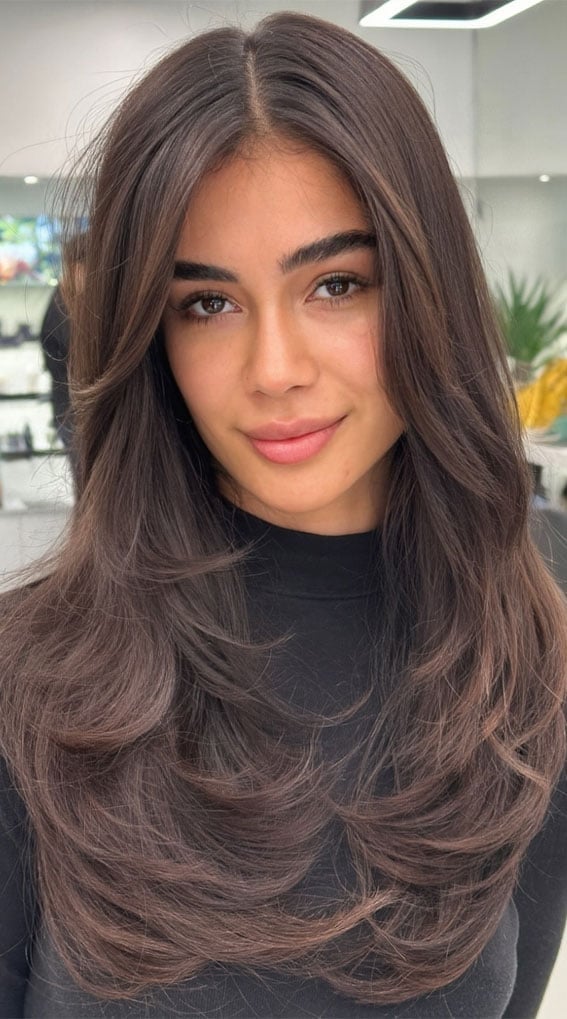
Loose waves on mid-back length hair achieve that lived-in texture without the effort of full curls, but the effect relies entirely on how the layers are cut. The subtle lighter highlights here add depth, so the waves show dimension in sections and avoid looking like one flat mass. A middle parting keeps the fall even and prevents the wave pattern from pulling to one side.
Ask your colorist for: mid-back length with soft layers and loose waves. This is a weekend or casual look, not a daily desk style, because achieving those waves takes a texturizing spray and some scrunching. The layers need to be long enough that the wave bends at the mid-lengths, not the root, otherwise the shape reads as frizz, not wave.
Dark Brown Layers With Grey Streaks
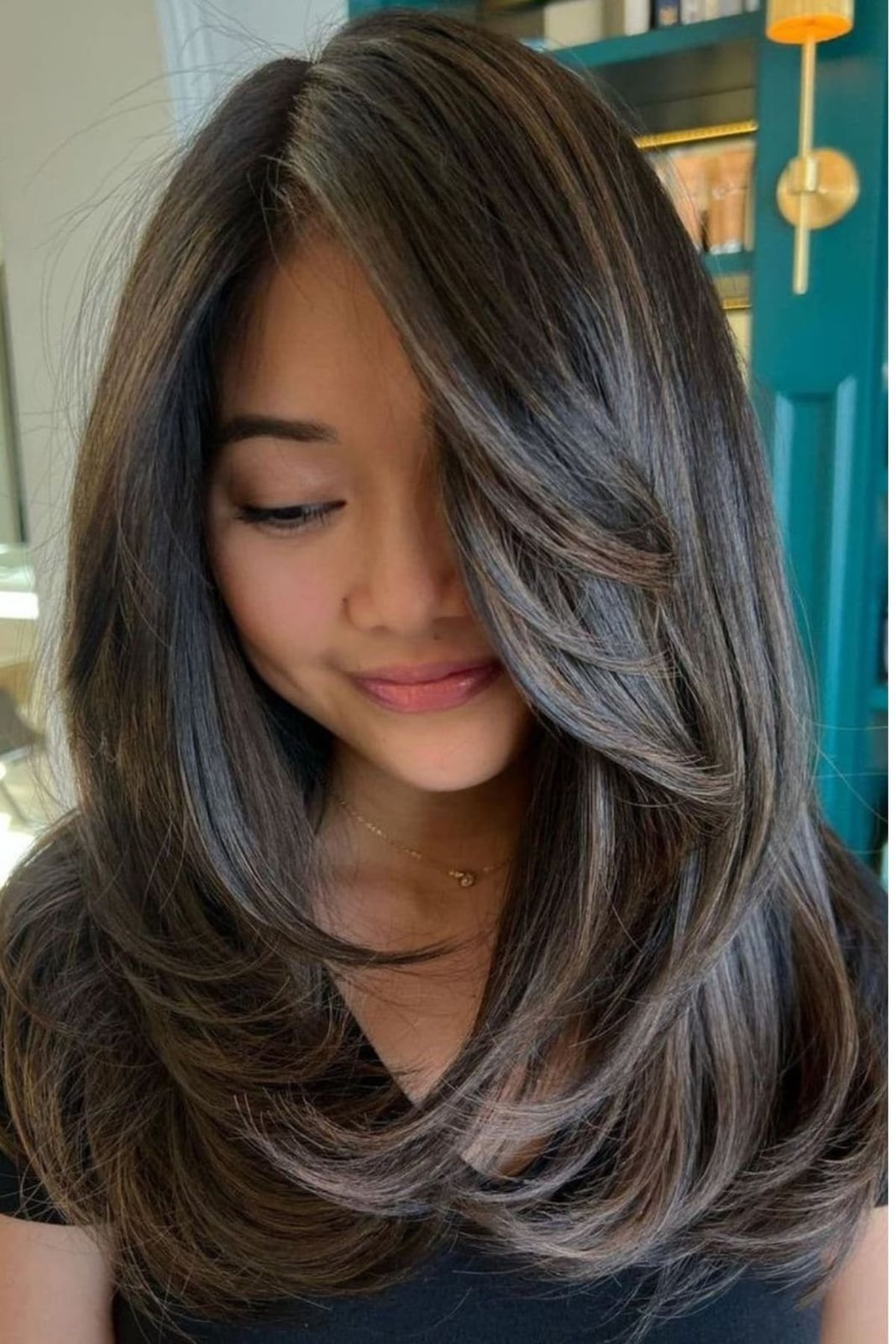
Subtle grey streaks in a dark brown base create a dimensional effect that reads as natural contrast. The long layers here are cut to let the streaks fall at different heights, so the grey appears scattered rather than concentrated in one stripe. A middle parting keeps the distribution even and prevents the streaks from pooling on one side.
Ask your colorist for: mid-back length with long layers and subtle grey streaks. The grey sections need to be woven through the ends, not rooted at the scalp, to maintain a soft grow-out. Use a color-safe shampoo and conditioner to keep the grey from turning brassy, and book a trim every eight to ten weeks to keep the layers sharp enough to show the contrast.
Glossy Mid-Back Hair With Subtle Dimension
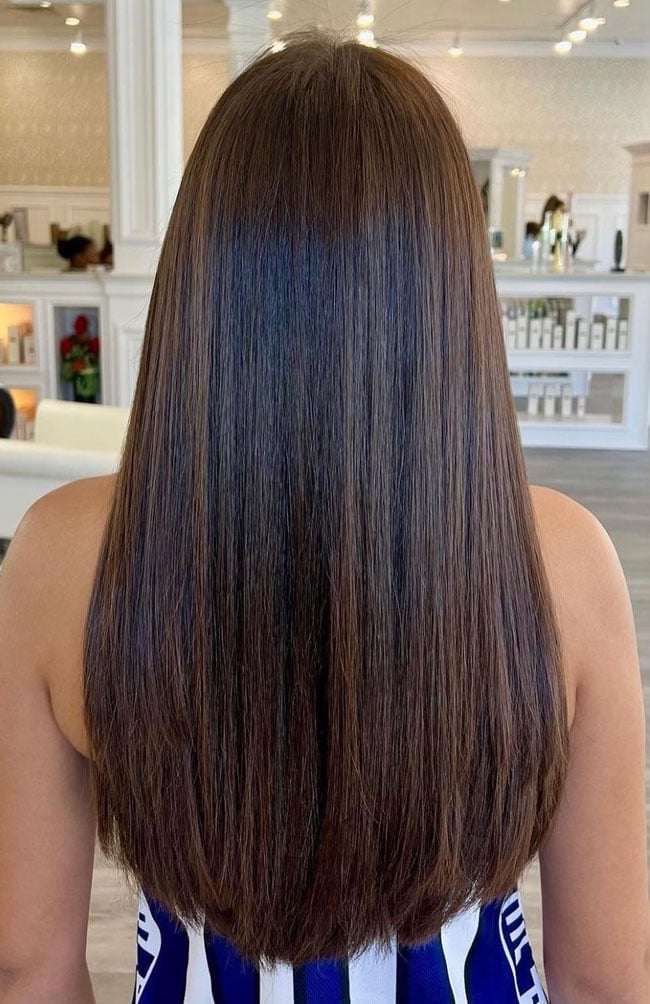
A glossy finish on mid-back hair requires commitment: this look demands a smooth blowout and a glossing serum applied to dry hair. The subtle layers here are cut to remove bulk from thick hair while keeping the ends full enough to reflect light. A dark brown base with lighter brown highlights adds depth without obvious contrast.
Ask your colorist for: mid-back length with subtle layers and dimensional highlights. The gloss effect fades after about a week, so you either refresh with a clear gloss treatment at the salon or accept a more matte finish between appointments. This is a salon-only cut: the layers need precise blending that is hard to replicate at home, and the highlights require a professional hand to stay subtle.
Mid-Back Layers With Side Parting
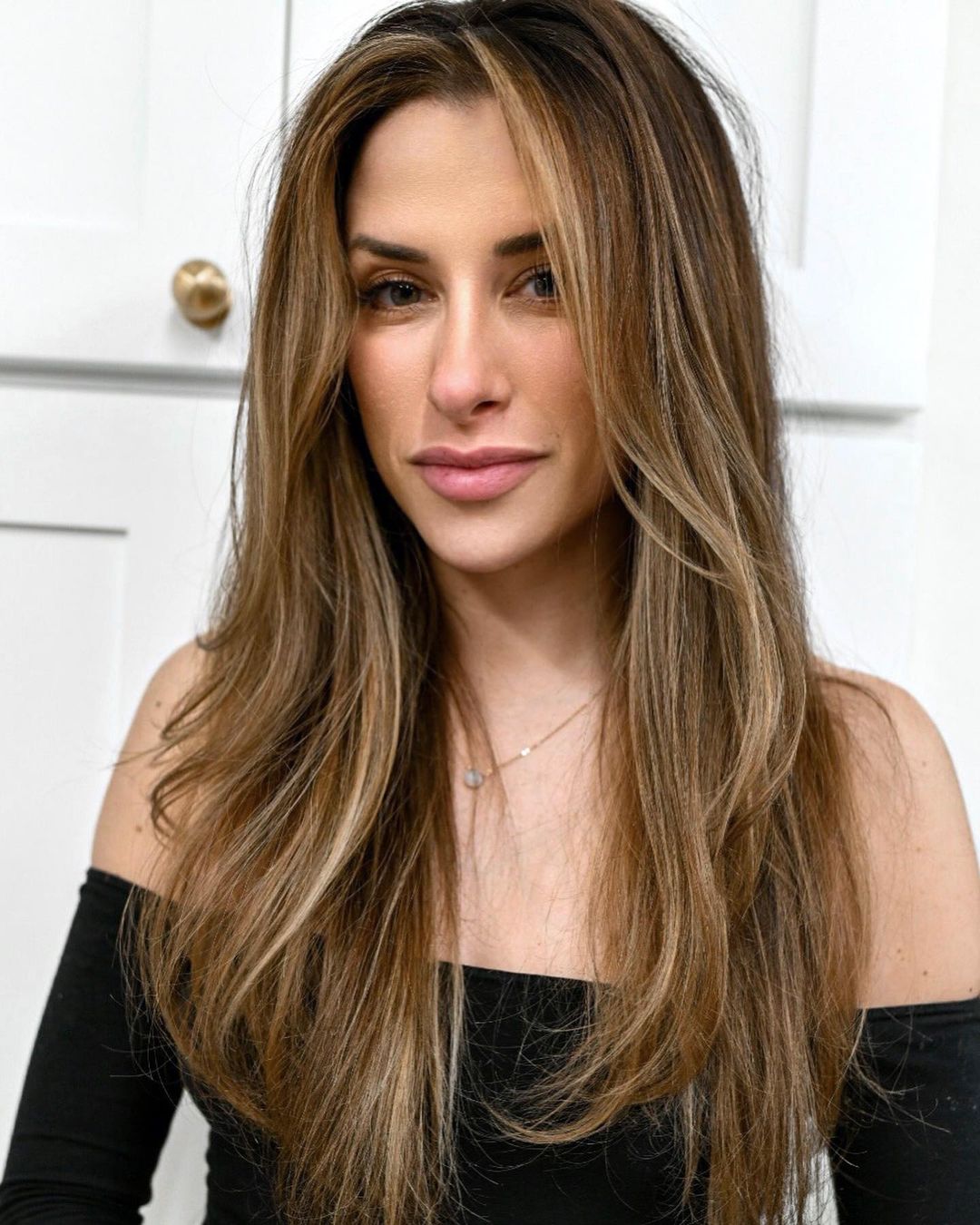
Wondering if face-framing layers work with fine hair? They do when the cut keeps weight at the ends and places the shortest layer around the jaw. This mid-back length uses long layers and curtain bangs swept to a side part, so the hair moves without losing density. The side parting adds lift at the root, which fine textures need. Ask your stylist for: mid-back length with long face-framing layers and curtain bangs. The effect suits oval, round and heart face shapes equally since the diagonal line breaks up width.
Sleek Dark Blonde Mid-Back Hair
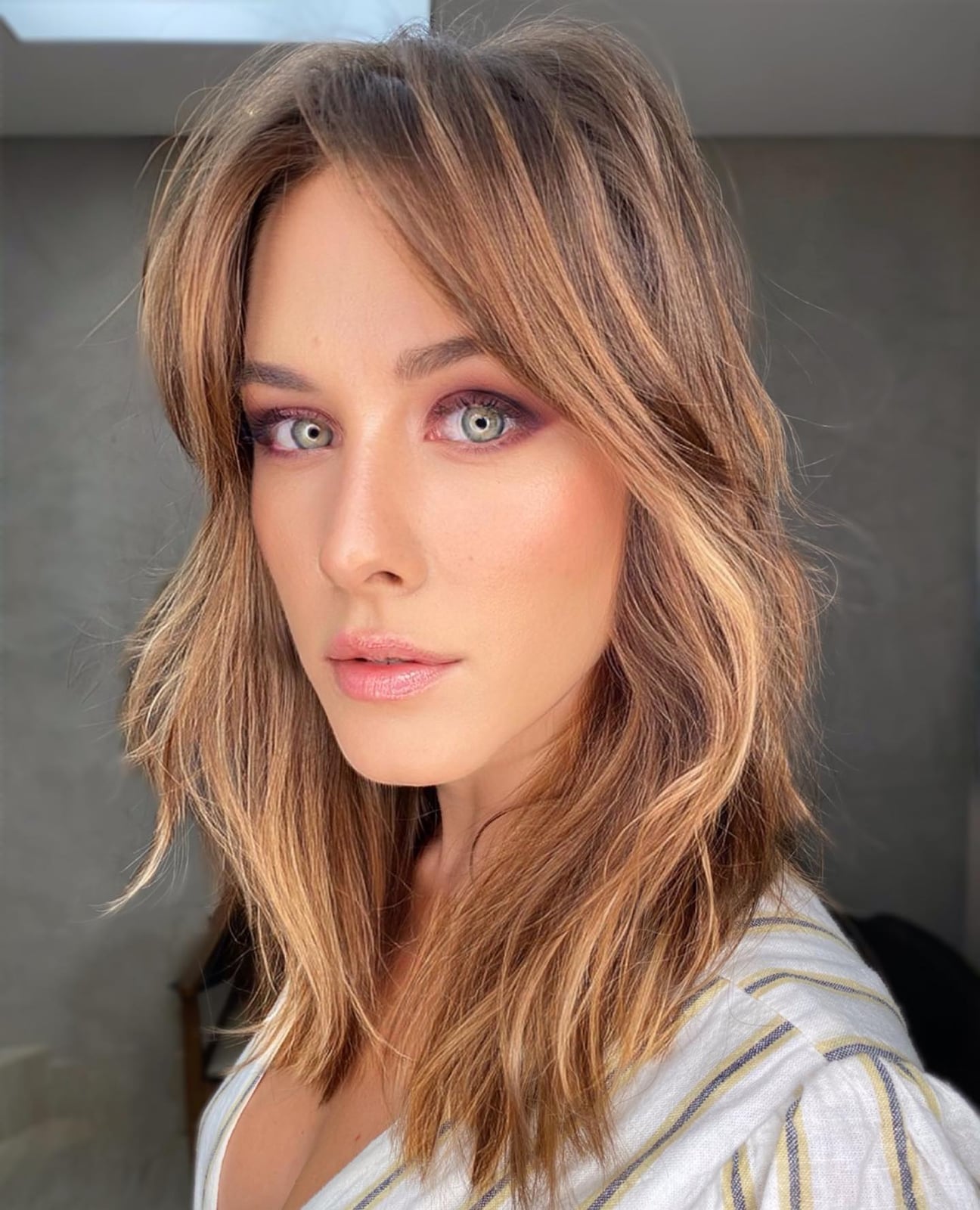
A mid-back length with zero visible layers and a middle part is the opposite of the blowout-with-movement approach above. This cut relies on extreme polish: every strand pressed flat, the ends blunt, the part ruler-straight. It works best on fine, straight hair because coarse textures resist the required sleekness. The subtle highlights are barely there, which keeps the look monochromatic and sharp. Ask your stylist for: mid-back length sleek style with subtle layers.
Upkeep is minimal between trims but the styling is not. You will need a flat iron, a heat protectant and patience. A trim every eight to ten weeks keeps the ends from splitting, because split ends show immediately on such a clean line.
Ash Blonde Collarbone Layers
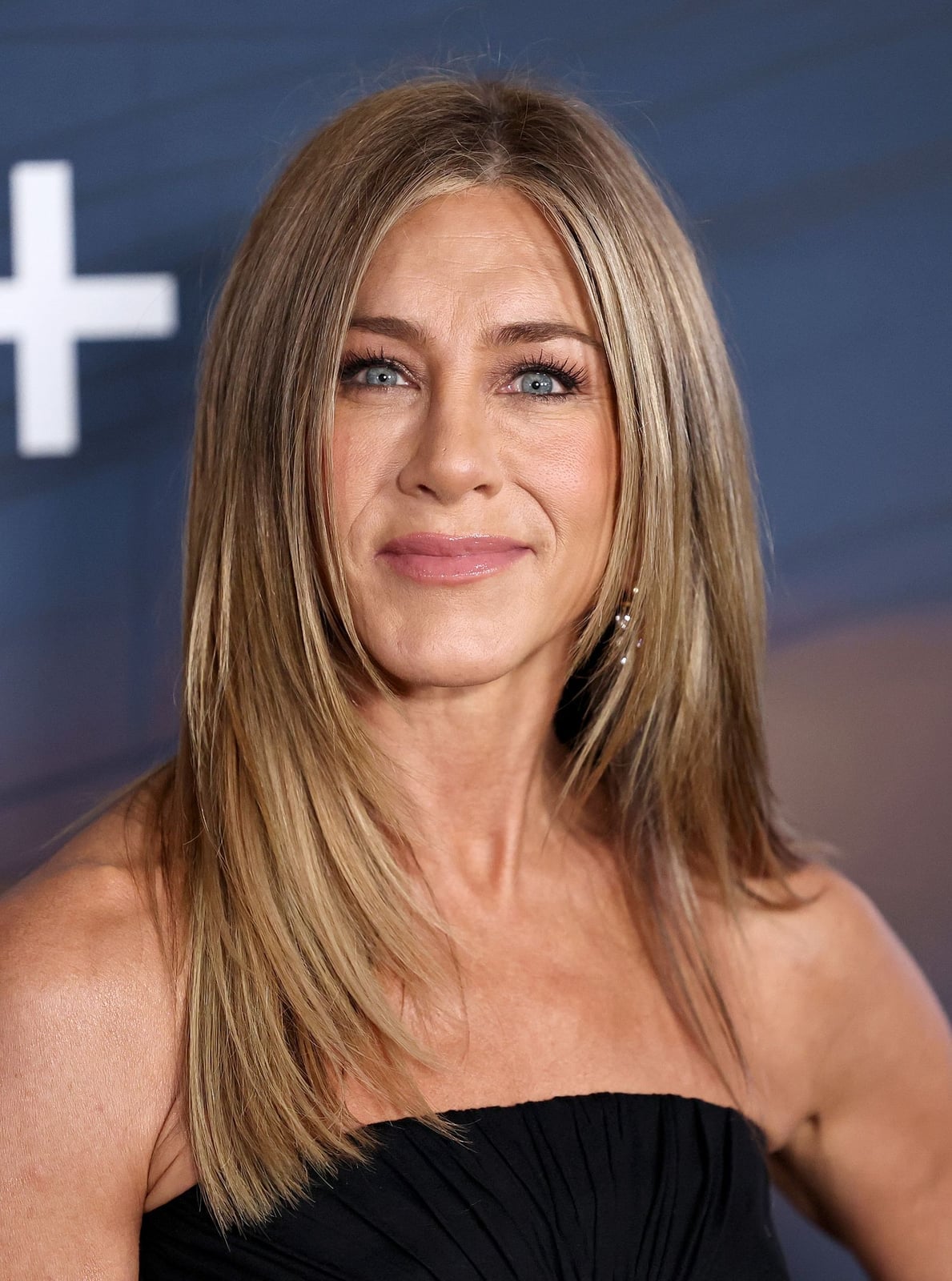
Not sure what to call that cool-toned blonde with soft movement? The cut is a collarbone length with long layers and curtain bangs, parted on the side. The color is an ash blonde with subtle highlights, so the tone stays icy and cool. Fine hair benefits from the layers here because they add volume without removing bulk. Ask your stylist for: collarbone length with soft layers and curtain bangs. Mention the ash tone specifically, and specify subtle highlights instead of chunky ones. Bring a photo of the exact shade you want, since ash can pull green if mixed wrong.
Collarbone Layers With Curtain Bangs
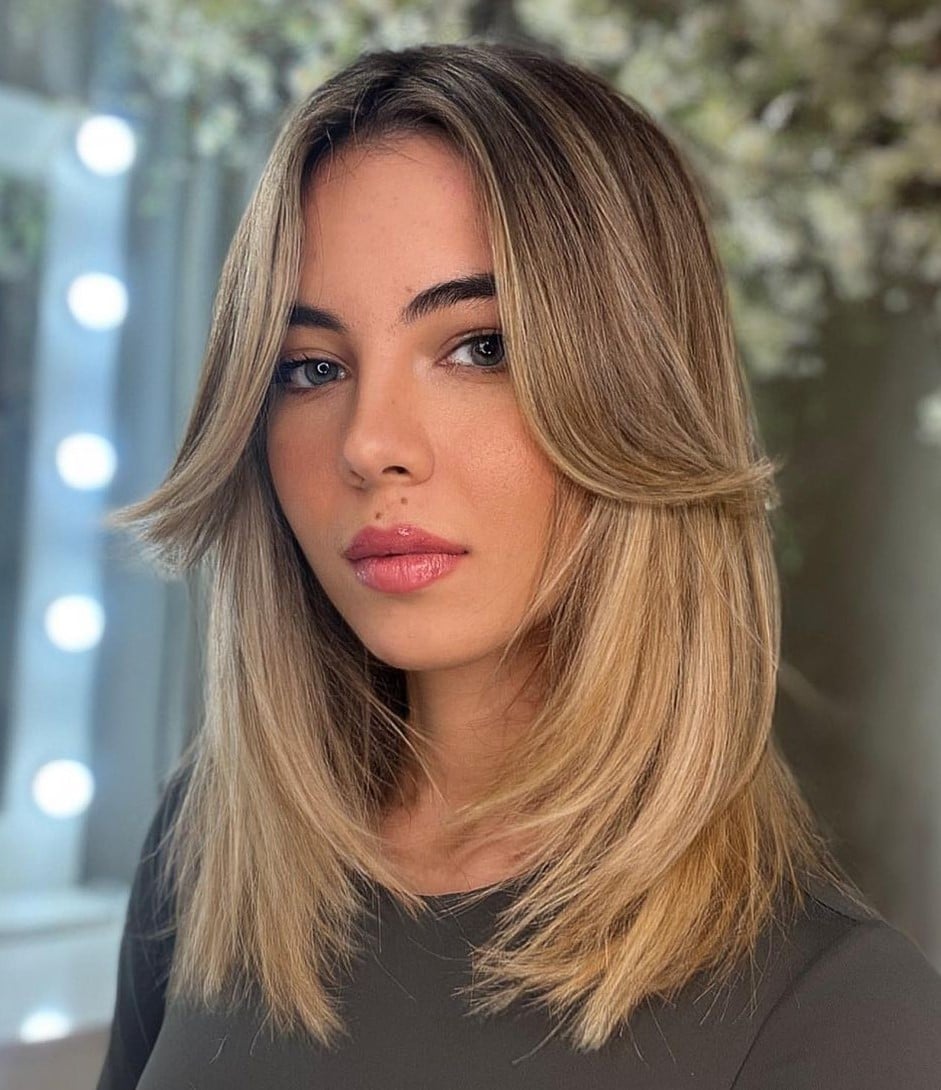
Curtain bangs at collarbone length have a specific behavior: they swing apart when you move and fall back together when you stop. The middle part anchors them, and the long layers beneath keep the shape from looking bottom-heavy. The texture here is medium, which holds the blowout shape better than fine hair would. Ask your stylist for: collarbone length with long layers and curtain bangs. The bangs should graze the cheekbones when dry, not the chin, because chin-length curtain bangs pull the eye down and shorten the neck visually.
Blonde Collarbone Cut With Angled Layers
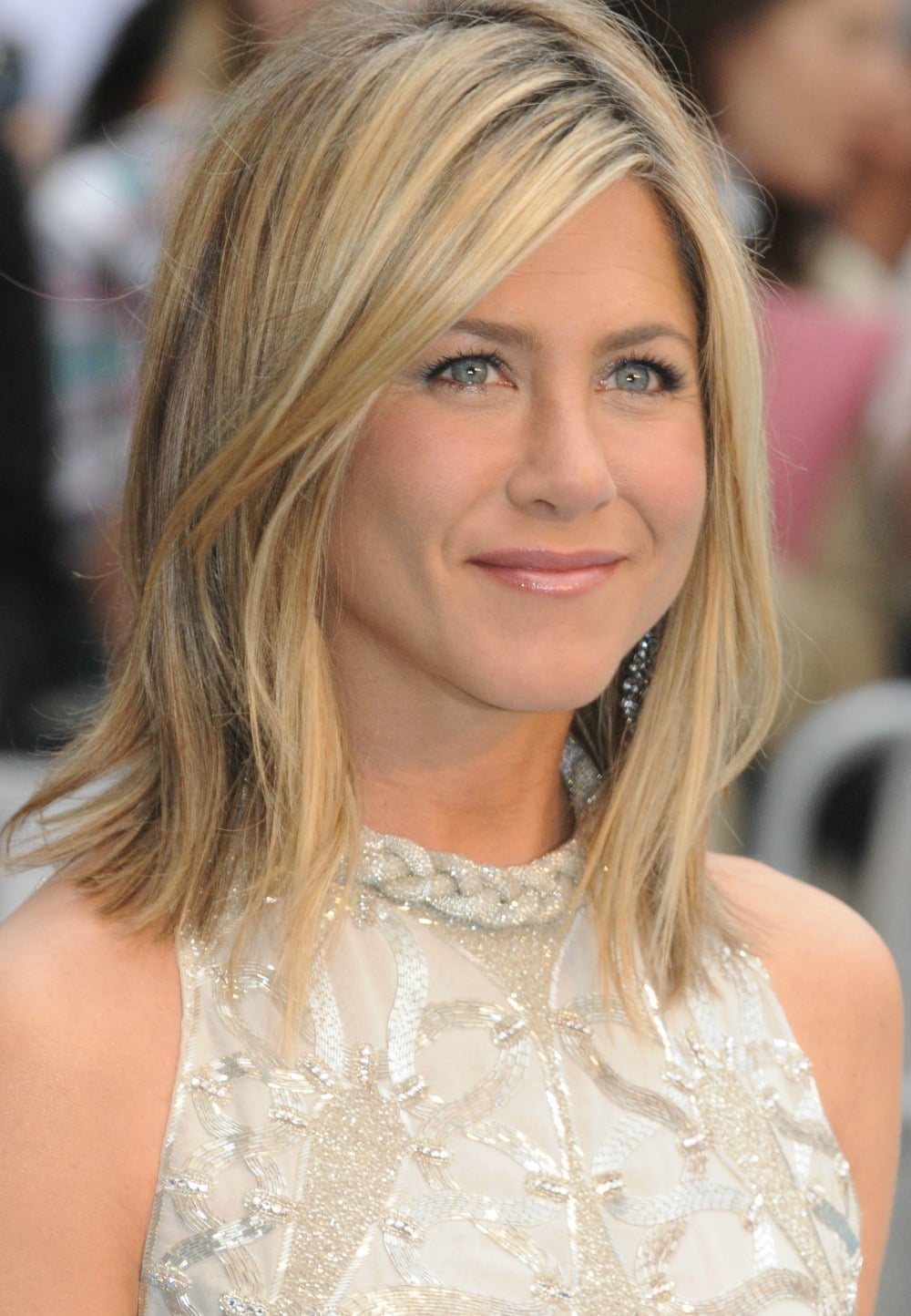
The technical trick here is that the layers are cut at an angle, not evenly distributed. The shortest layer hits around the ear, and the longest stays at the collarbone, which gives the hair a stacked shape that tapers forward. The side-swept bangs continue that diagonal line. This is a salon-only cut: trying to angle layers at home usually ends with a staircase effect. Ask your stylist for: collarbone length with angled layers and side-swept bangs. Medium-textured hair holds the shape best, and fine hair needs the layers kept subtle so the ends do not disappear.
Collarbone Length Layered Black Hair
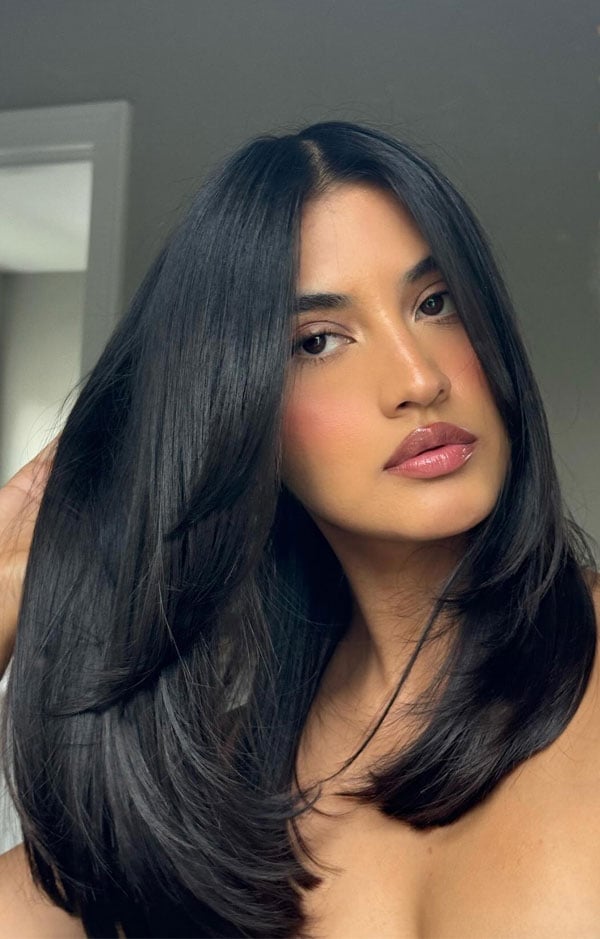
Thick, straight black hair cut to the collarbone with subtle layers creates movement without sacrificing density. It suits those with thick hair who want shape and a bit of swing, not a drastic reduction in bulk. Ask your stylist for: collarbone length with subtle layers. A smoothing cream enhances the glossy finish, but the real catch is that black hair can read flat without styling, a blowout or a quick pass with a round brush keeps the layers visible. Plan on a trim every eight to ten weeks to maintain the shape.
Collarbone Blunt Bob With Side Parting
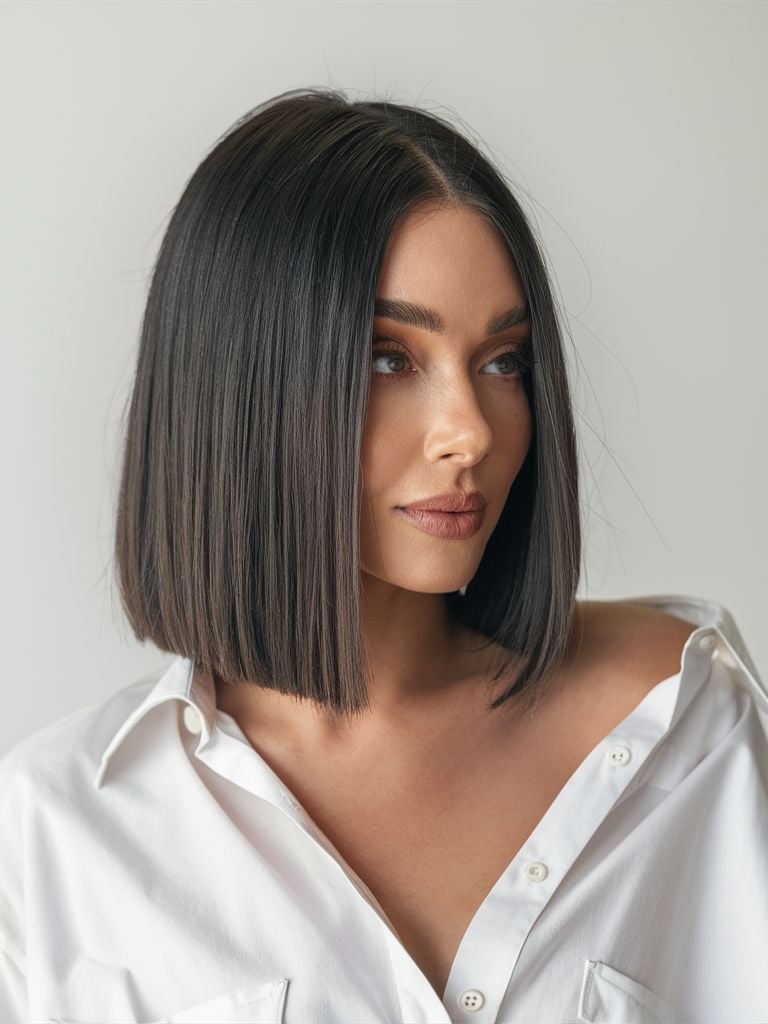
A blunt bob at the collarbone with a side parting is one of those cuts that works better on fine hair than most people think. The clean, sharp line creates the illusion of thickness and gives the ends a weighty finish that fine textures rarely get. Ask your stylist for: collarbone length blunt bob with a side parting. It flatters oval, heart and square face shapes equally well. A side parting also adds asymmetry, which keeps the blunt edge from feeling too severe. Trim every six to eight weeks or the line starts to look fuzzy.
Shoulder Length Long Bob With Waves
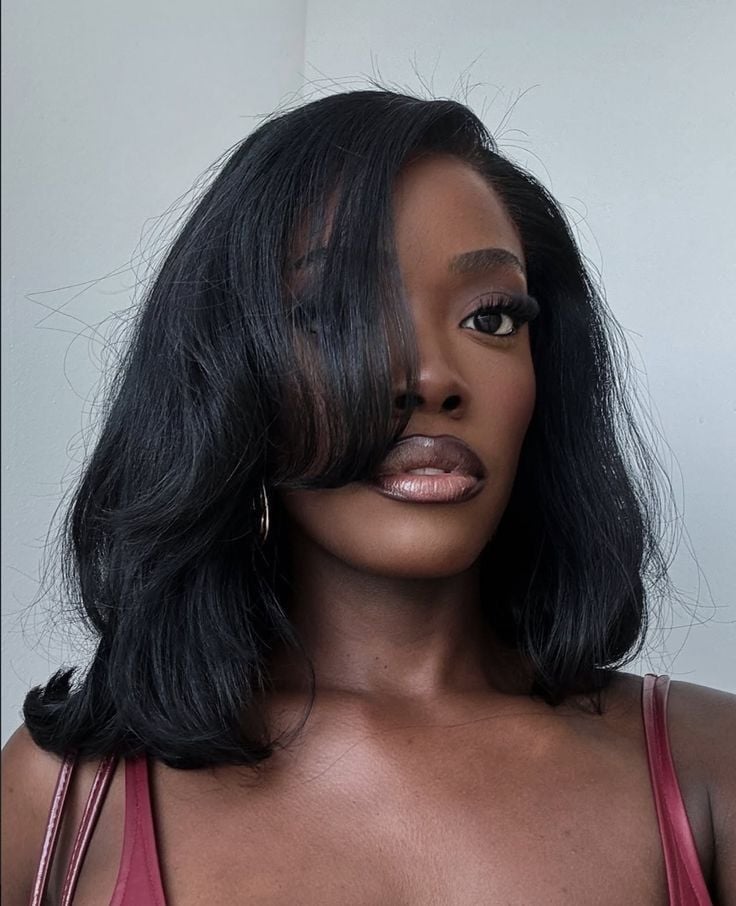
This long bob sits at the shoulder with soft curtain bangs and subtle waves, which puts it somewhere between a polished blowout and something you actually want to touch. Unlike a razor-cut shag that relies on texture, this version keeps the weight in the ends and lets the curtain bangs do the face-framing work. Ask your stylist for: shoulder length long bob with curtain bangs and soft waves. It suits thick straight hair that holds a wave without fighting it. The middle parting and soft bends make it a solid choice for casual settings or a work week where you want the hair to look intentional but not overdone.
Chin Length Sharp Bob With Dark Brown Base

A chin-length bob with a sharp, blunt line and a middle parting is a design that relies entirely on the precision of the cut. The dark brown base with subtle lighter tones adds depth without distracting from the silhouette. Ask your stylist for: chin length sharp bob with a middle parting. This is a salon-only cut. The line needs a stylist’s eye and a steady hand to land correctly. It suits fine to medium straight hair best, where the blunt edge can read as deliberate weight rather than thinness.
Sleek Chin Length Bob With Blonde Highlights
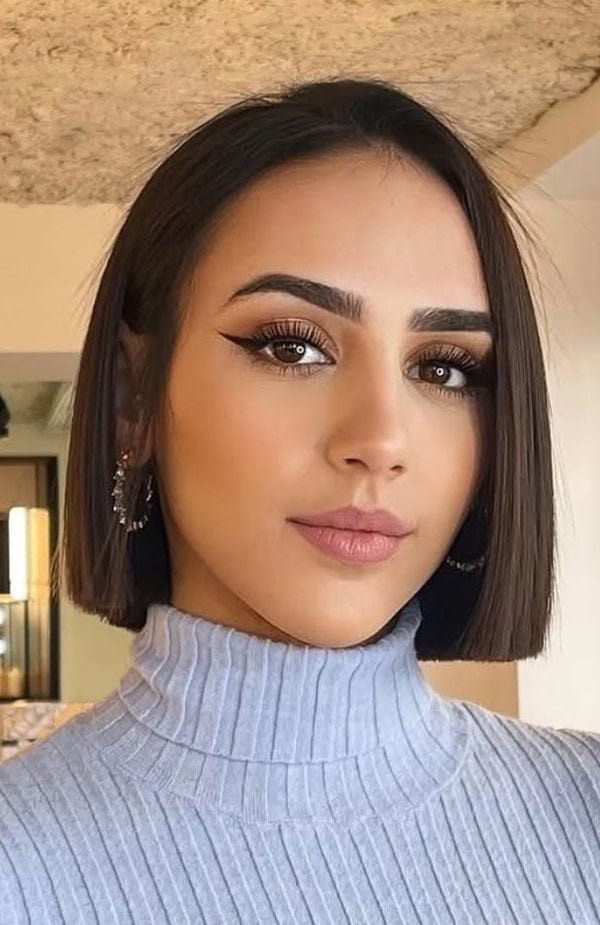
A chin length bob with a sleek finish and subtle blonde highlights looks best when it is just done. The fine texture and straight styling let the highlights show as thin ribbons of contrast, not chunky stripes. Ask your stylist for: chin length bob with subtle blonde highlights. The sleek finish demands a flat iron and a heat protectant, and the bob line needs a trim every six to eight weeks to stay sharp. The blonde pieces need a toning appointment every four to six weeks to keep the contrast clean.
Asymmetrical Medium Brown Bob
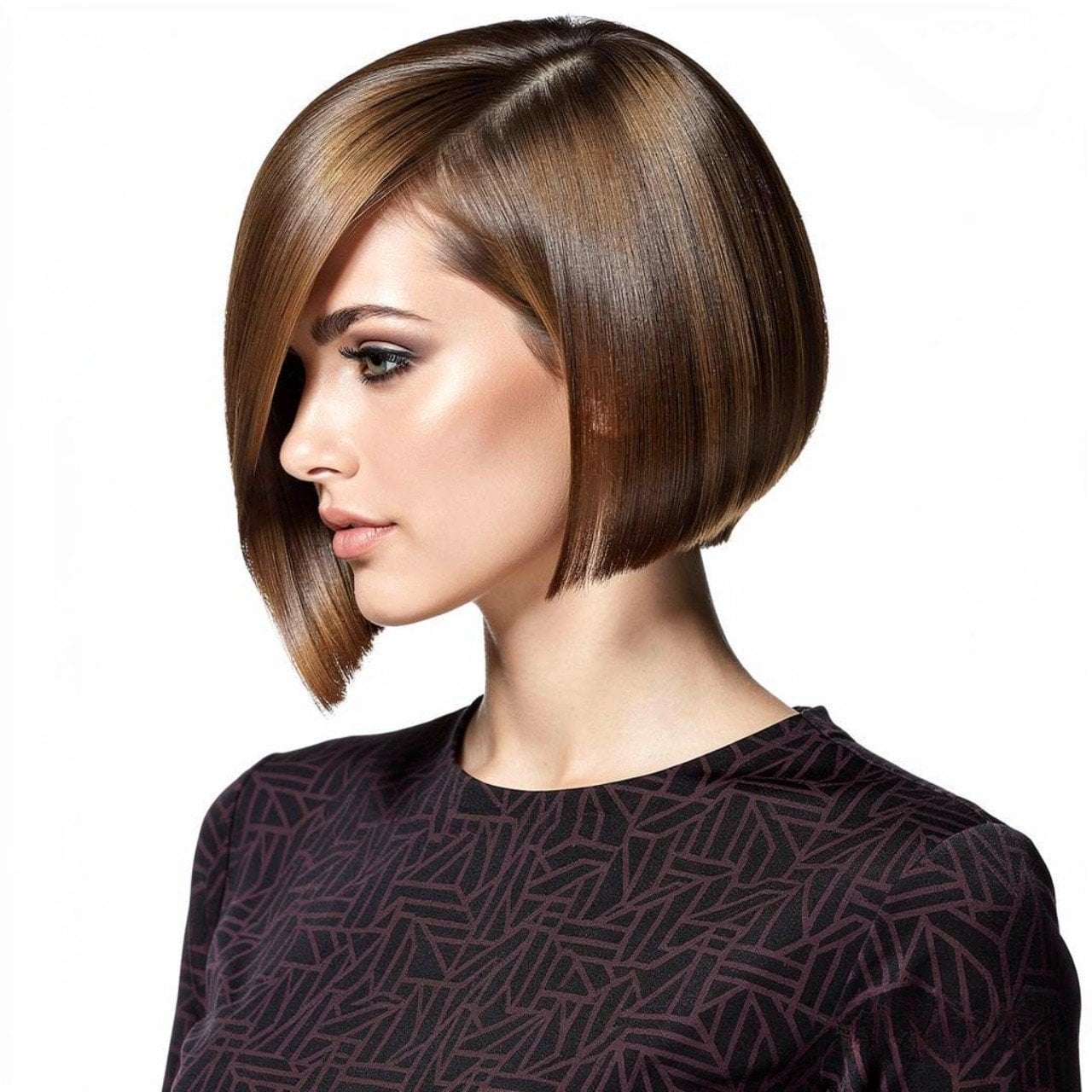
An asymmetrical cut on fine hair works because one side is longer, and that single difference creates the illusion of more volume. Medium brown with subtle highlights keeps the look natural while the uneven hemline draws the eye. This cut suits straight hair of chin length, where the asymmetry reads clearly. Ask your stylist for a chin length asymmetrical bob with a side parting. Asymmetry is not forgiving: if the shorter side grows out even half an inch, the balance is gone. Use a round brush to blow dry and book a trim every six to eight weeks to keep the line sharp.
Angled Bob With Side-Swept Fringe
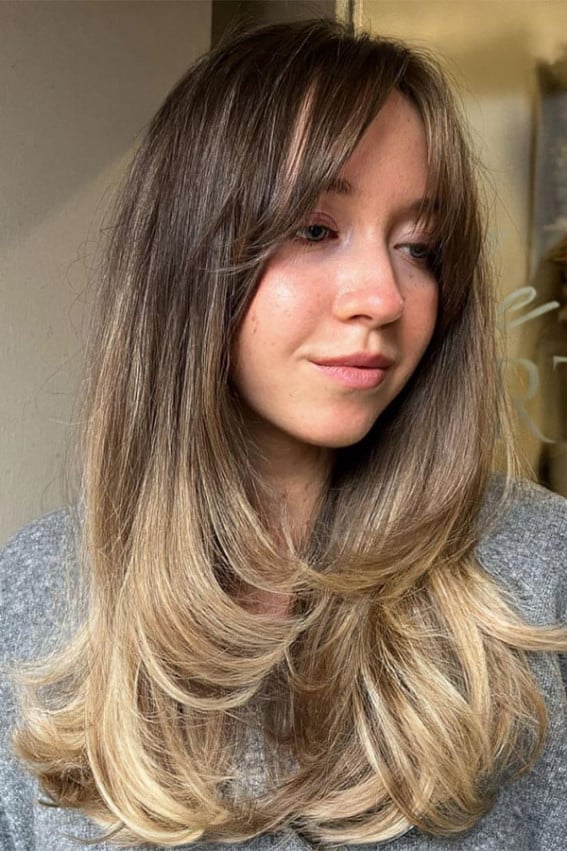
An angled bob with a side-swept fringe is a fair trade: you get a sharp, modern shape, but you also get a daily styling commitment. The deep side parting and sleek finish demand a flat iron, and the fringe will need a refresh every three weeks at home with scissors you probably should not use. This cut suits fine, straight hair of chin length, where the angle and fringe add structure. Ask your stylist for a chin length angled bob with a side-swept fringe. A salon trim every six to eight weeks keeps the angle precise. If you cannot commit to that rhythm, skip this one.
Angled Bob With Chunky Blonde Highlights
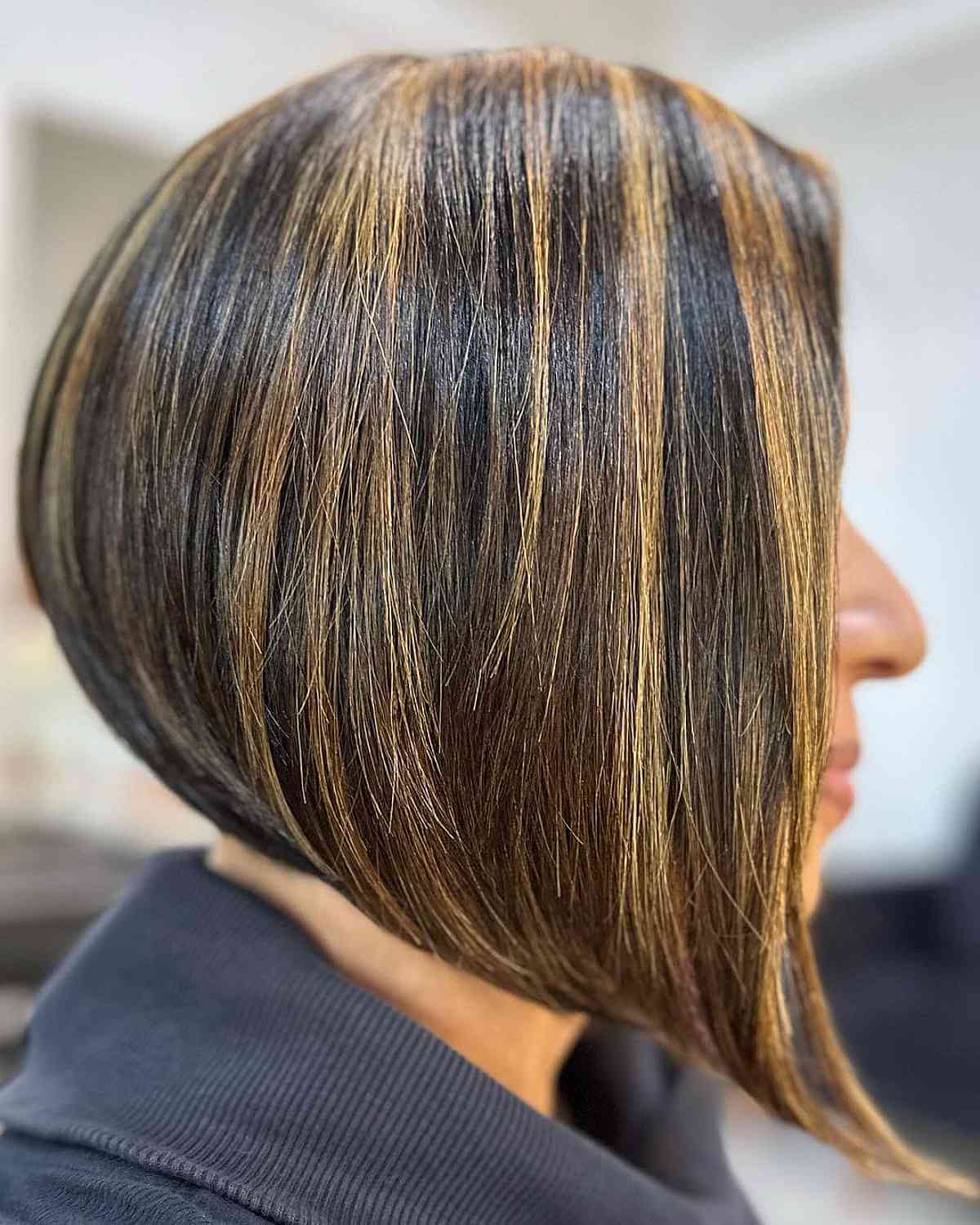
Chunky blonde highlights on a dark brown base add bold contrast, which works best on fine hair that needs visible dimension. This ear length angled bob makes the highlights the main event. Ask your stylist for an ear length angled bob with chunky blonde highlights. Chunky highlights grow out as obvious bands instead of a soft blend, so you will need a root touch-up every six to eight weeks. Use a color-safe shampoo to keep the blonde from turning brassy, and trim the angle at the same rhythm to preserve the shape.
Platinum Blonde Micro Bob With Baby Bangs
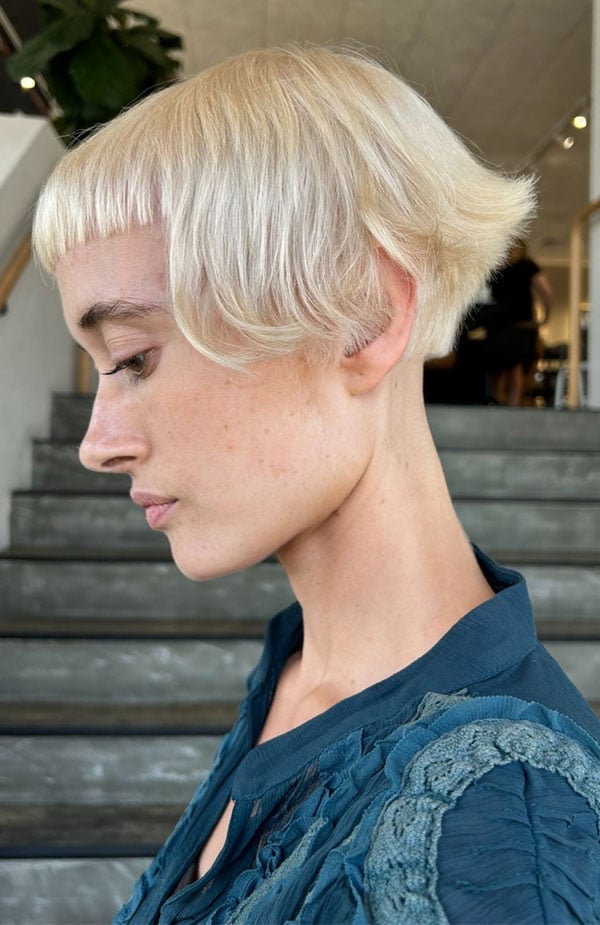
A micro bob is not a bob that got cut too short; it is a deliberate crop ending at the ear, and baby bangs take it further. This is the option for someone who wants a bold, modern shape instead of the more traditional chin length bob. The platinum blonde color and textured finish keep it from looking severe. This cut suits fine, straight hair of ear length, where the short length shows off the fine texture. Ask your stylist for an ear length micro bob with baby bangs. Baby bangs require a trim every two to three weeks, so plan your salon calendar accordingly.
Short Blonde Pixie With Textured Bangs
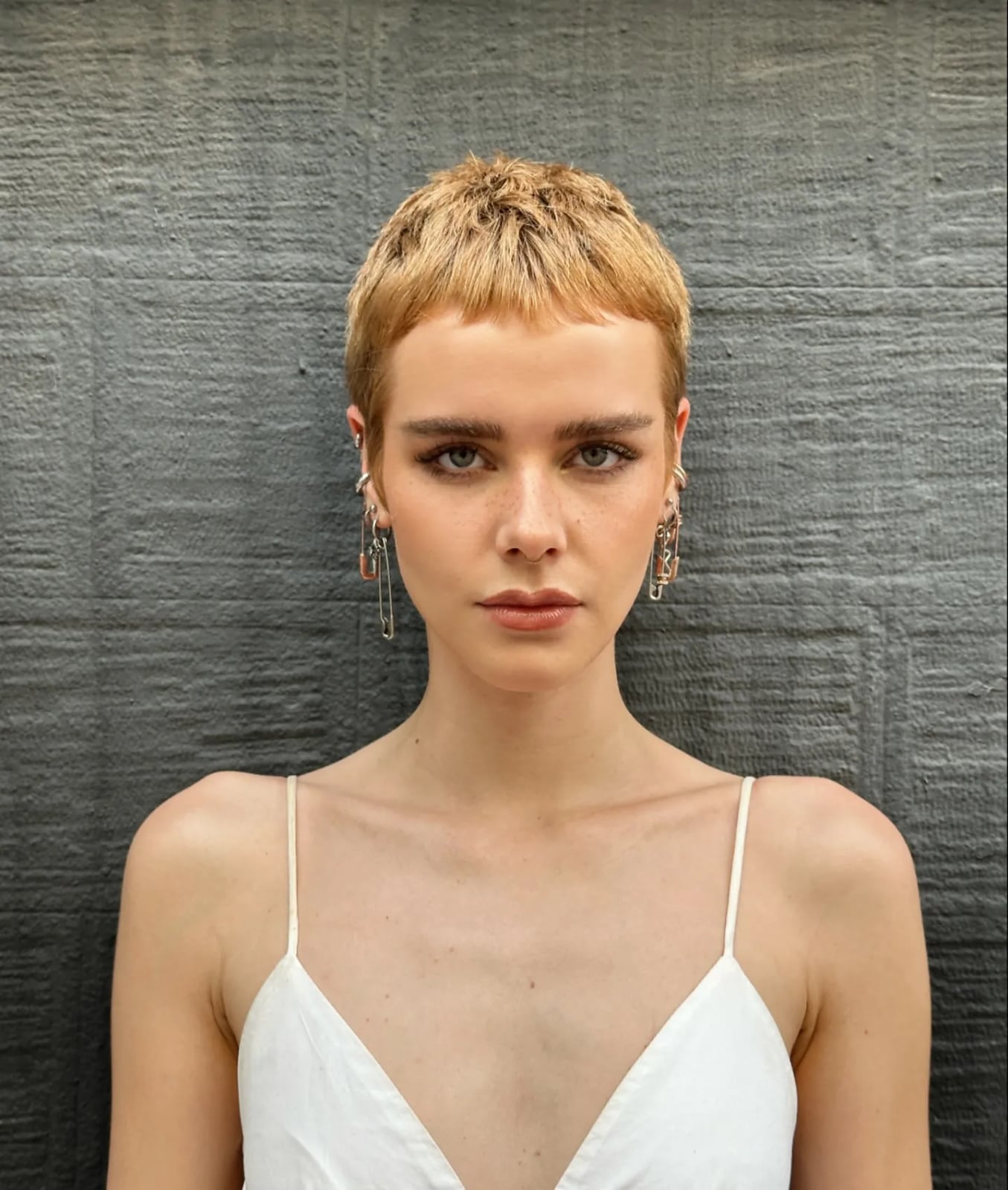
A short pixie is not a grown-out bob; it is its own shape, and the short, textured bangs swept across the forehead are what give it character. This ear length blonde cut works on fine straight hair because the texture adds the volume the length removes. Ask your stylist for a short pixie with textured bangs. Style the bangs with a wax or pomade, applied to dry hair, to keep the texture defined. This is a salon-only cut: the pixie needs a professional every four to six weeks, and the bangs need attention at the same interval to stay wearable.
Final Thoughts
Fine straight hair holds density better with blunt edges and minimal layers. Thicker textures can take more extensive layering to reduce bulk and add swing. Either way, the goal is a shape that stays sharp between trims.
- Trim blunt bobs every 6-8 weeks to maintain sharp lines.
- Use a heat protectant spray before any heat styling.
- Apply a smoothing serum for extra gloss and frizz control.
- Consider a clarifying shampoo monthly to remove product buildup.
Embrace the sharp lines and polished finish of straight hair.
