

Every other client at my salon is asking for a fringe this winter. I watched three women in one week point at their foreheads and say the same thing: shorter, heavier, more. I get it. Bangs are the fastest way to change a face without changing your whole life.
Winter Haircuts with Bangs are having a real moment, and this roundup of 28 ideas covers everything from a sharp bob to long collarbone layers, with upkeep levels from trim-every-eight-weeks to set-it-and-forget-it. I tested most of these on my fine, flat-by-4 pm hair, so you get the honest version: which ones hold, which ones need a round brush, and which ones I booked twice.
Collarbone Shag With Full Bangs

The collarbone is the sweet spot for a shag haircut with full bangs — long enough to show the layers, short enough that fine hair doesn’t sag. The ash blonde with lighter highlights adds depth, and the middle part keeps the fringe from feeling heavy. Textured waves are the point here: you want that slightly messy, piecey finish, not a perfect curl. A trim every six to eight weeks keeps the shape from turning into a grown-out blob. Skip this if your hair is very thick; the shag can turn into a triangle.
Voluminous Long Layers With Wispy Bangs

Can a long layered cut with bangs actually hold volume past noon? Yes, if the technique is right. The blowout starts with a round brush at the crown, lifting each section away from the scalp. The wispy bangs are cut short enough to sweep to the side, so they don’t fall flat against the forehead. The root shadow at the part helps the ash blonde look intentional, not grown-out. Straight, fine-to-medium density hair gets the most lift here — thick hair just lies heavier.
The upkeep is manageable. A trim every eight to ten weeks keeps the layers from losing their shape. The blowout takes about twenty minutes with a heat protectant. The bangs need a quick pass with the dryer each morning, but that is under a minute.
Textured Wavy Bob With Side-Swept Bangs
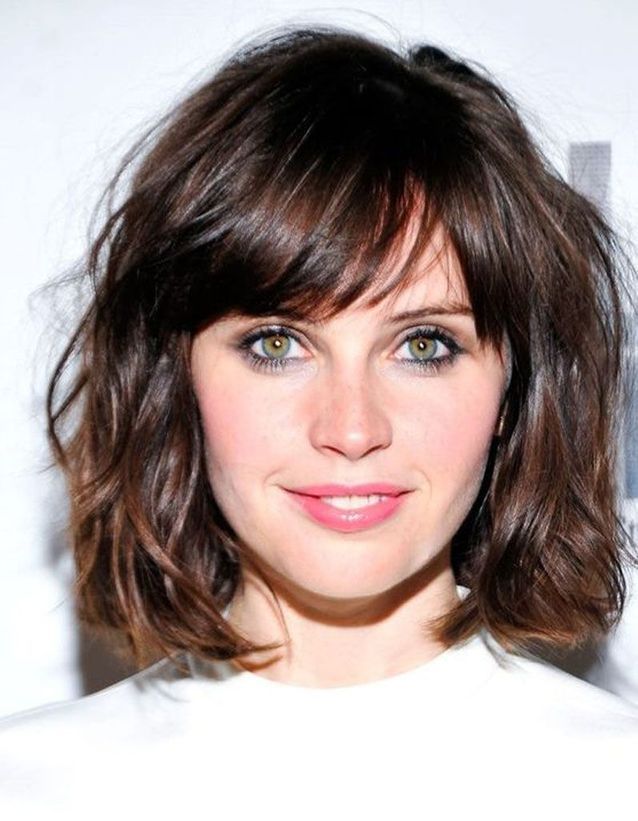
I will admit: I was skeptical about a wavy bob with side bangs on fine hair. But the texture here saves it. The waves are scrunched in, not curled, so they hold without product buildup. The side-swept bangs fall across the forehead instead of sitting straight down, which means they do not separate into greasy strands by evening. The dark brown base keeps the cut looking sleek even when the waves relax. A trim every six weeks is non-negotiable — the bob shows every split end.
Shoulder Length Shag With Blunt Bangs

Blunt bangs are the boldest choice in this roundup, and a shag cut with blunt bangs is the one that actually earns it. The honey blonde warms up the whole thing, and the middle part keeps the fringe from looking like a costume. The shaggy layers below the shoulder add movement, while the blunt line at the bangs holds its shape. What to tell your stylist: keep the bangs at eyebrow level, not shorter, and ask for the layers to start at the jaw. The shag shape needs a trim every six to eight weeks. The bangs will need a touch-up at week four.
Loose Waves On Long Layers With Wispy Bangs

Medium-thick wavy hair is the ideal candidate for long layers with wispy bangs. The weight of the hair holds the wave pattern without extra product, and the layers keep it from looking like one solid block. The dark brown base reads rich against the loose waves, and the wispy bangs soften the forehead without demanding daily styling. A trim every ten to twelve weeks is fine — the length hides the grow-out. The waves take about twenty minutes with a large barrel iron, but if your hair has natural bend, you can air-dry with a scrunch.
The wispy bangs are the real win here. They blend into the layers instead of sitting separate, so when they grow out, they just look like longer face-framing pieces. No awkward fringe phase.
Dark Brown Thick Shag With Full Bangs

Saturday morning, thick wavy hair, and a round brush I haven’t touched since 2019. That is the promise of this cut: you do not need the round brush. The shag layers do the work, stacking volume at the crown so the weight does not pull everything flat by noon. The full bangs land heavy and straight across the forehead, which means they need a blow-dryer every morning or they kink at the part. My thick hair tried this at home once. It looked like a hedge. A salon cut carves the interior layers so the wave pattern actually shows instead of clumping into one solid triangle. The dark brown reads rich and low-maintenance, no root shadow needed for eight weeks. Trim every six weeks or the shag shape blurs into a blob.
Sharp Black Bob With Blunt Bangs

Can a haircut look like a threat and a promise at the same time? This one does. The black bob with blunt bangs lands at the chin, a straight line with no texture, no softness, no mercy. On thick straight hair the sharp black bob holds its geometry for about four hours in humidity, then the bang pieces start migrating toward each ear. The honest downside is you cannot hide a bad grow-out day. Every millimeter of unevenness shows because there is no layer to absorb it. You will flat-iron this every single morning or you will look like you cut it yourself in a dark bathroom. The reward is a silhouette that stops conversation.
Mid-Back Layers With Full Bangs

Best grow-out in this roundup.
Long hair with full bangs is the rare cut that works for a wedding, a Tuesday and a video call where you only show your forehead. The length sits at mid-back, which means you can pull it back when the bangs are having a bad day. The full bangs are the commitment: they need a trim every four weeks or they hit your eyelashes and you start squinting. The layers start below the chin so the length keeps its weight and does not go triangle. Medium density wavy hair is the sweet spot here, enough texture to hold a loose wave without fighting the blow-dryer. A salon does this better because the bang graduation needs a steady hand. Book a Sunday slot, the whole thing takes an hour, and you walk out with a cut that works for three months before the layers need refreshing.
Shoulder Length Layers With Side Bangs

Fine straight hair has one problem: it sits flat and stays flat. The layered lob with side swept bangs solves it by cutting the interior layers short enough to lift at the root without removing all the length. The shoulder length gives you enough weight to keep the shape from floating away. The face-framing layers start at the cheekbone and sweep toward the jaw, which means the side bangs blend instead of sitting as a separate piece. This cut works best on fine to medium density hair because thick hair would puff the layers into a mushroom. The upkeep is a trim every eight weeks and a blow-dryer with a round brush for the bangs. Fifteen minutes, one direction, done.
Angled Bob With Side-Swept Bangs

I will admit I was wrong about the angled bob with side bangs. I thought the angle would fight my fine wavy texture and lose by lunch. It does not. The shorter back holds the wave, the longer front drapes over the collarbone and the ash blonde tone reads cool against warm skin without washing you out. The honest downside is the front pieces catch frizz by day two because there is not enough weight to pull them straight. A lightweight cream on damp hair solves it, no flat-iron needed. The angle needs a trim every six weeks or the line goes soft and the whole point disappears.
Collarbone Lob With Balayage Highlights

Can a lob actually feel dimensional? This one does, thanks to balayage highlights that start mid-shaft and get brighter toward the ends. The cut is a layered lob with full bangs, collarbone length, loose waves, medium density. The technique is what makes it: the colorist paints each section by hand, so the dark blonde base stays dark at the roots and the lighter pieces frame the face. No foils, no harsh line, no root panic at week four. The texture is wavy, scrunched with a texturizing spray, and the full bangs soften everything. A trim every six to eight weeks keeps the lob shape from turning into a shapeless blob.
Styling takes about 15 minutes. Scrunch in a texturizing spray, let it air dry halfway, then hit the ends with a curling wand for a few seconds. The balayage means you can skip the salon for three or four months between color appointments. That alone makes this a winter haircut that actually saves you time.
Platinum Blonde Blunt Bob

This is the haircut you book when you want people to know you booked it. The platinum blonde bob sits at chin length, straight, fine, with blunt bangs that hit just above the eyebrows. A middle part keeps it severe and clean. Compared to a softer lob or a rooted blonde, this one demands a salon visit every four to six weeks — the blunt cut shows every split end, and the platinum shows every half-inch of dark regrowth. You cannot do this at home. The bleach alone is a professional job, and the toner needs refreshing every other wash with a purple shampoo. Fine hair can fall flat here, so a volumizing spray at the roots is non-negotiable. Styling takes 15 to 20 minutes to get it perfectly straight and sleek. It is not low-maintenance. But if you want icy and bold, this is the one.
Textured Chin Length Shag With Wispy Bangs

Thick, wavy hair finally gets a cut that works with it instead of against it. The chin length shag with bangs is a textured shag, dark brown, tousled, with wispy bangs that feather across the forehead. The layers are cut short through the crown, which removes bulk and lets the natural wave sit without puffing out. A middle part keeps it symmetrical. The honest downside: if your hair is fine or straight, this shape can look stringy and flat rather than lived-in. The shag needs weight and texture to hold its shape. Styling takes about 10 minutes with a texturizing paste or spray, just scrunch and go. A trim every six to eight weeks keeps the layers from growing into a shapeless mop. The wispy bangs are low-maintenance — they grow out soft, not awkward.
Collarbone Layers With Curtain Bangs
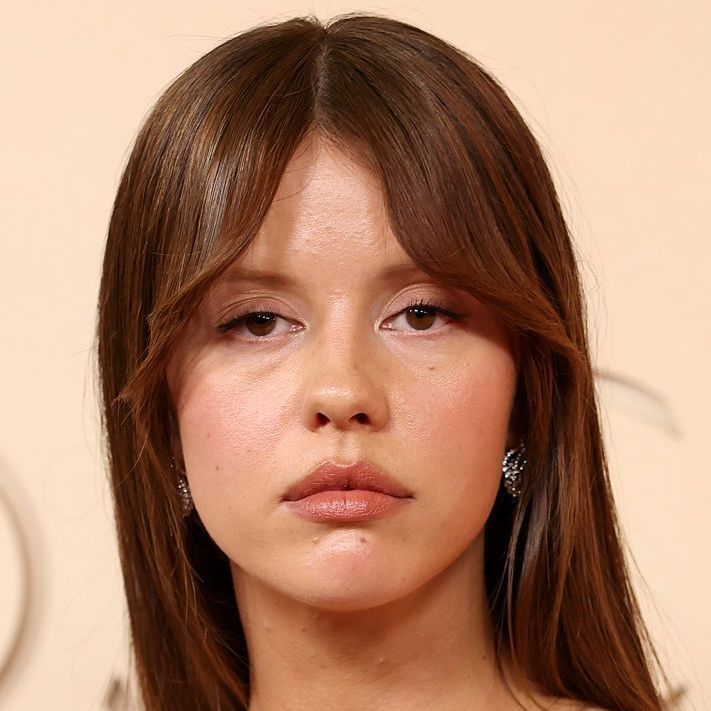
Monday morning, you have 12 minutes. The curtain bangs with layers need a round brush and a blow-dryer, and that is the whole routine. The cut is a long layered cut, collarbone length, medium brown, straight, medium density, with face-framing curtain bangs that part in the middle and sweep to the sides. The layers start at the cheekbone and get longer toward the ends, which keeps the shape soft and the weight distributed. The curtain bangs are the daily project: they need a quick blow-dry with the brush angled away from the face, then a spritz of heat protectant. The rest of the hair can stay straight or get a quick pass with a flat iron. A trim every six to eight weeks for the layers, but the bangs may need a touch-up every four weeks if you want them sitting exactly at the brow bone. They grow out gracefully, though — no awkward shelf phase.
Collarbone Lob With Soft Full Bangs

How much time does it take to get soft waves and a full fringe that actually sits right? About 15 minutes, if you know the trick. The cut is a lob, dark brown, collarbone length, wavy, medium density, with soft full bangs that graze the eyebrows. A middle part keeps it balanced. The soft waves are done with a large-barrel curling wand, wrapped away from the face, then brushed through with fingers. The bangs need a quick blast of warm air from a round brush, angled downward, then a cool shot to set them. A trim every six to eight weeks for the lob shape, but the bangs may need a salon visit every four weeks to keep them from growing into your eyes. The color is a single-process dark brown, no highlights, which means no root line to manage. That alone saves you 45 minutes of toning and stress every month.
Vibrant Copper Blunt Bob

This is the cut that stops conversation. A vibrant copper bob, chin length, blunt bangs, straight as a line. The colour is the whole point, warm and loud and completely intentional. On cool skin tones, it reads electric. On warm ones, it glows. But here is the honest downside: vibrant copper fades fast. Two weeks in, you will see it shift. Three weeks, you are booking a gloss. Fine, straight texture holds the blunt shape well, but the colour demands a cold rinse every wash and a purple shampoo in rotation. The cut is not the hard part. The upkeep is.
Dark Blonde With Lighter Highlights Collarbone Shag With Blunt Bangs
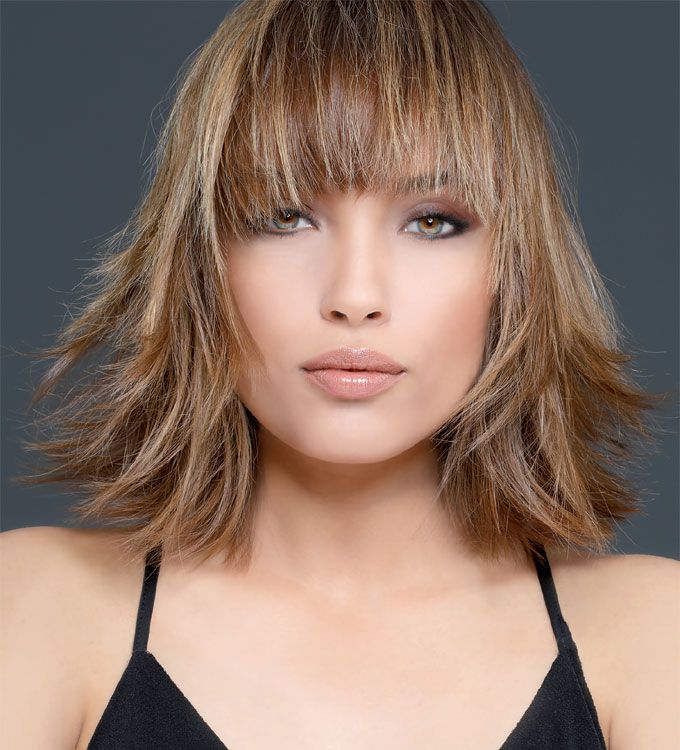
Blunt bangs on a shag haircut with blunt bangs is a specific choice. It works best on longer face shapes, where the heavy fringe shortens the vertical line and the shag layers add width at the cheekbones. The collarbone length keeps it from feeling severe. Dark blonde with lighter highlights adds dimension without a harsh root line, so you can stretch the colour eight to ten weeks. Wear and upkeep: the shag needs a trim every six to eight weeks, the bangs every three. Medium density wavy texture is ideal. Fine hair may look sparse through the layers. Thick hair needs internal texturising or it gets heavy.
Visual Idea

I will confess I underestimated curtain bangs. They look low effort, but they actually demand a round brush and a cool shot of air every morning. The collarbone length with wavy texture and dark brown base works because the curtain bangs bridge the face and the length. Middle part, soft wave, subtle highlights that catch light. The real test is day three. By then, the wave has dropped and the bangs need a dry shampoo and a quick re-curl. It is not a wash-and-go fringe. But it is the most versatile one in this roundup. You can pin them back, sweep them to one side, or let them hang.
Chin Visual Idea
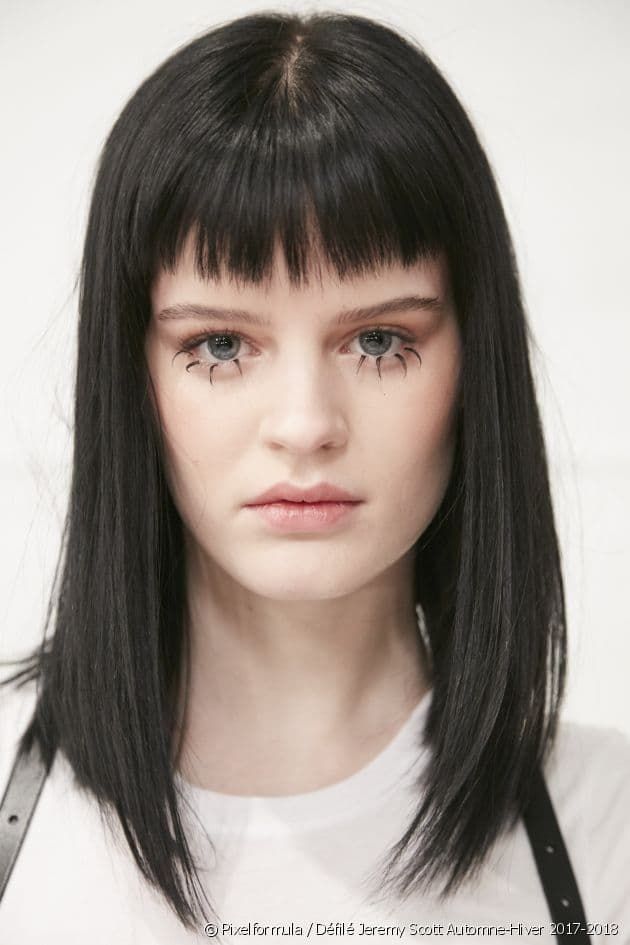
Can a blunt bob with blunt bangs look good air-dried? On fine, straight texture, yes. On anything with wave, no. The chin length hits right at the jaw, and the middle part and black colour make it graphic. The risk is severity. Blunt bangs plus blunt bob plus no styling can read like a helmet. The solution is texture. A dry texture spray at the roots, a little piece-y separation through the fringe. This is a salon cut, not a DIY trim. One uneven snip and the whole geometry collapses. The honest downside is grow-out. Every quarter inch shows.
Mid-Back Visual Idea

But the chair time is real. A full hour for the cut, longer if the highlights need a refresh. Thick, straight texture holds the shape best. Fine hair will need a volumising product at the roots or the weight of the length pulls it flat. The verdict: book it when you have a free morning and no plans to wash again for three days.
Collarbone Visual Idea

The curtain bangs here are doing something smart. They sweep away from the face, so the collarbone length and wavy blowout read as one soft shape, not two separate pieces. The middle part helps: it lets the layers fall forward without stacking bulk at the cheekbone. This is a cut that works for a dinner out or a Tuesday that feels like one.
The wavy blowout is the whole trick. Blow-dry the bangs forward with a round brush, then switch to a large barrel for the body of the hair. Curl away from the face, brush through once cool, and the waves land loose, not curled. The subtle highlights catch the light in each wave, which is why this lob photographs so well. Medium density hair holds the shape best; very fine hair might need a second pass with the brush.
Shoulder Length Visual Idea
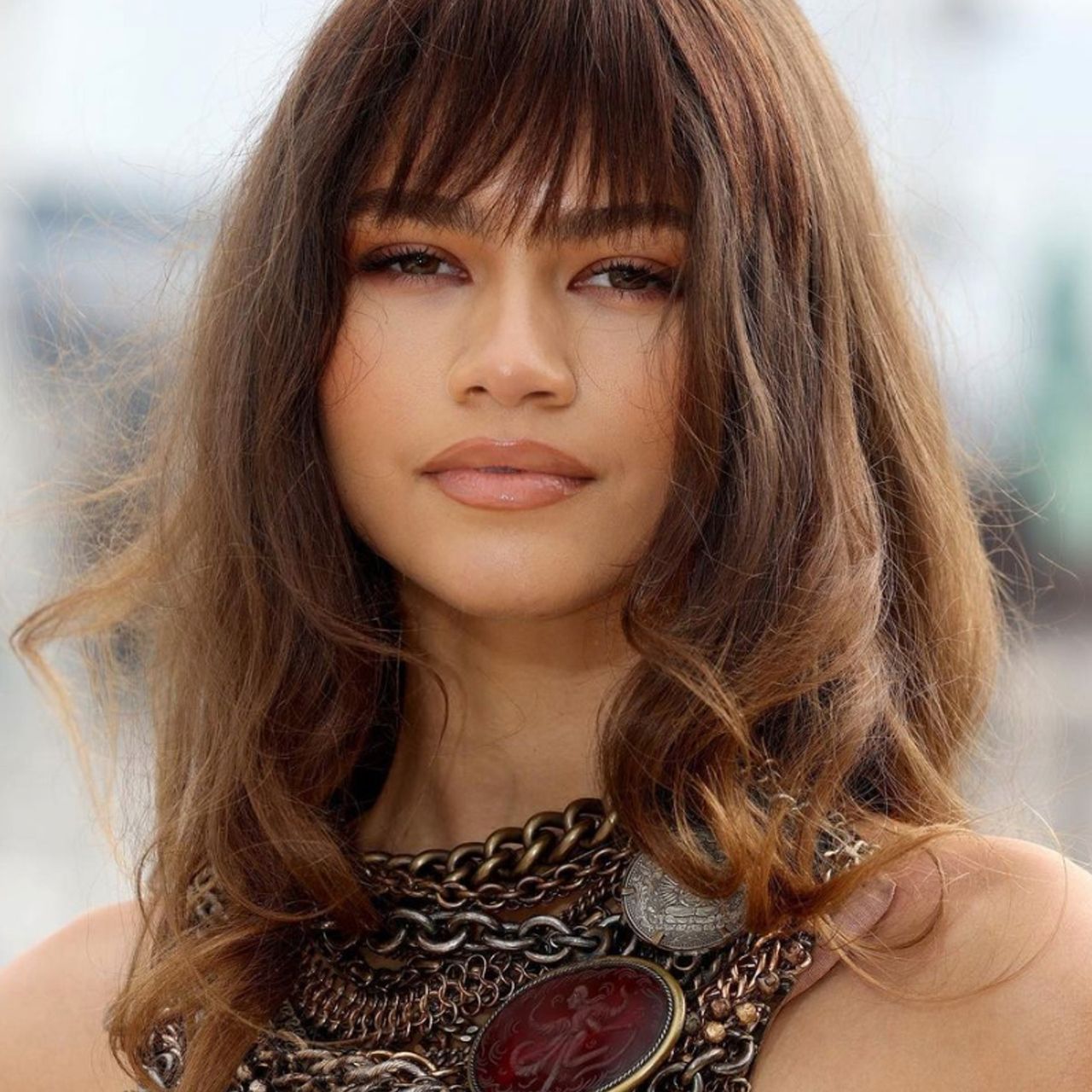
Do blunt bangs work on a round face? Yes, when the cut has enough length and the bangs hit just below the brow bone. This shoulder-length layered cut uses the full blunt bangs to create a horizontal line that balances the vertical length of the face. The medium brown base with subtle highlights adds dimension without making the bangs look heavy. Straight to wavy texture is ideal here: too much curl and the bangs will buckle at the ends. The middle part keeps the face open, and the slight waves in the body of the hair prevent the whole thing from reading severe. Wear and upkeep are moderate: the bangs need a trim every three weeks, but the layers can go six to eight. Anyone with a longer face shape should skip the full blunt bangs and go wispy instead.
Ear Visual Idea

I admit it: I want to like choppy bangs more than I actually do. On thick, wavy hair, they look fantastic for about two hours after styling. Then the wave memory kicks in, and the bangs start curling toward the forehead instead of lying where they were cut. This ear-length shag with choppy bangs and dark brown with blonde highlights is a high-difficulty salon cut that demands daily work. The side part helps train the bangs to one side, but the texture is the real boss. If your hair is thick and wavy, expect to wet and re-dry the bangs every morning. The payoff is that when they behave, the choppy ends create a piecey, undone look that no blunt bang can match.
Ash Blonde Visual Idea

Ash blonde is the cooler, more demanding cousin of beige blonde. This collarbone-length layered cut with blunt bangs and a side part reads expensive and modern, but the colour is not a set-it-and-forget-it situation. Ash blonde needs a purple shampoo in the rotation from week one, and a toner refresh every four to six weeks, or it pulls green. That is a salon job, not a bathroom-mirror fix. The payoff is that ash blonde cancels the yellow that warm blondes develop, so the colour stays cool and dimensional. The blunt bangs here are cut straight across, which works best with the straight texture of the hair. Any wave or bend in the bangs will show as an uneven line. If you want ash blonde but cannot commit to the toning schedule, go for a deeper shade with ash tones rather than a full platinum lift.
Dark Brown Visual Idea

I sat in the chair for a consultation on this exact cut last year. The stylist said, “You know this is a high-maintenance look, right?” I nodded. I was wrong.
The long layers and straight-across bangs on fine, straight dark brown hair look sleek for exactly one day. After that, the bangs separate and the length goes flat at the crown. The middle part exposes every bit of scalp at the root, so a dry shampoo is not optional, it is structural. Wear and upkeep for this look: a trim every three weeks for the bangs, six for the ends. The grow-out is the real cost. The straight-across bangs become curtain bangs by week four, which is fine if you planned for it. If you did not, you are pushing them to the side and hoping no one notices the uneven line. The sleek finish requires a flat iron pass on dry hair, which takes about ten minutes if the hair is already smooth. Fine hair holds the shape well once it is set, but it will not hold a bend or a wave without product. This is a cut for someone who likes a precise look and has the time to maintain it.
Bob Visual Idea
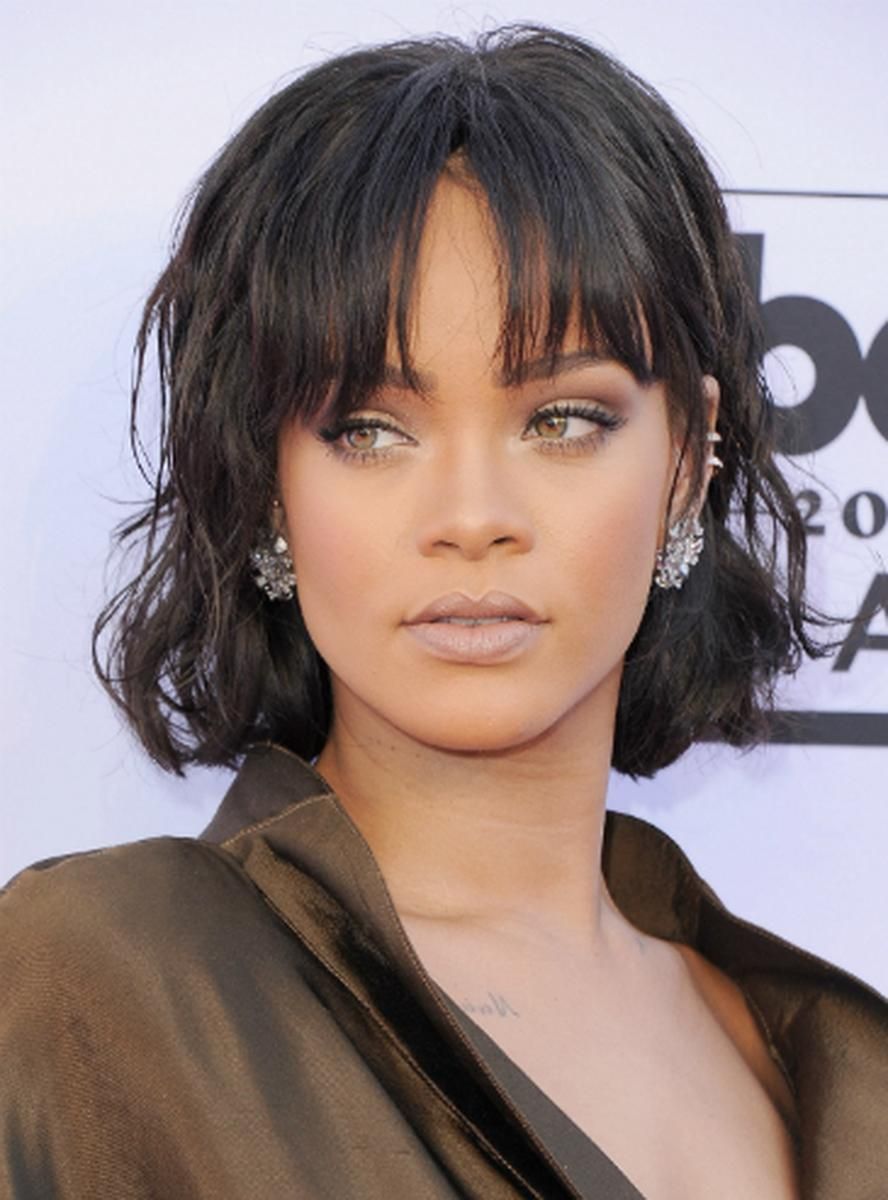
How do you get a blunt bob to look undone without looking messy? The trick is in the wave placement: a medium-barrel iron, clamped at the midshaft, twisted away from the face, held for five seconds and released. No brush, no comb, just fingers to break the wave apart. The blunt bangs stay straight, a flat line above the brow while the rest of the chin-length bob goes soft and wavy. That contrast, sharp fringe against tousled body, is what keeps the cut from reading as half-finished. The dark brown colour helps, too, no highlights to distract from the shape.
Blunt Bangs Visual Idea

A sleek bob with blunt bangs demands a straight, medium texture to land right, not coarse enough to push the fringe sideways, not so fine that the bob collapses into a triangle by noon. The side part here is doing real work, breaking the symmetry so the blunt line reads as deliberate instead of severe. Honest downside: this is a daily styling situation. Flat iron, heat protectant, a cool shot of air to set the fringe straight across. Skip a day and the bangs kink at the wrong angle, the bob loses its clean edge, and you spend the afternoon tucking hair behind your ears.
Blunt Bob Visual Idea
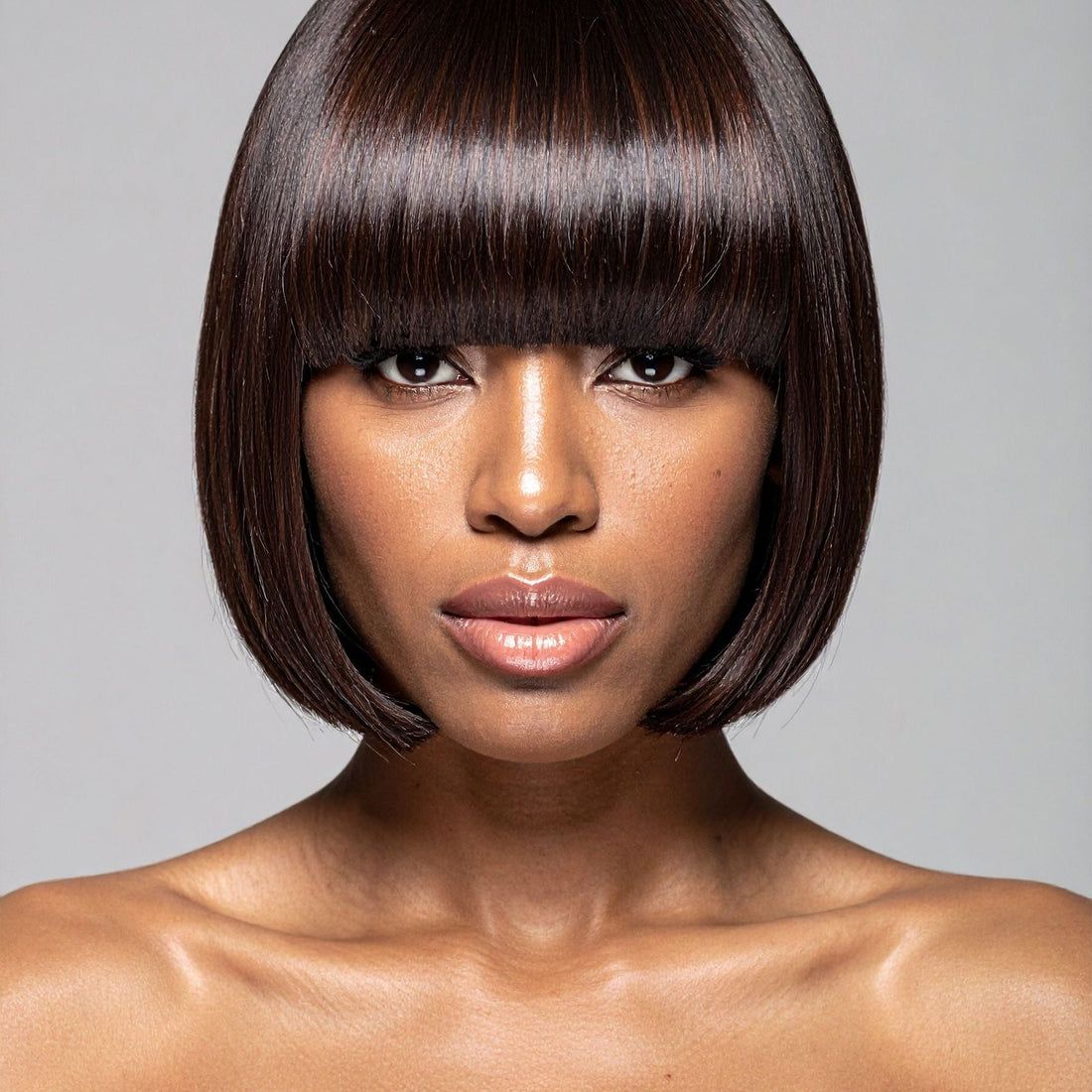
January light hits a sharp, blunt fringe and does not forgive a single uneven strand. On fine, straight hair, that precision is the whole point, the bob lands at the chin, the bangs stop just above the brow, and every line is a straight edge. The invisible part keeps the front section dense, no gap where the scalp shows through. This is not a bathroom-mirror job, the fringe requires a stylist with a steady hand and sharp shears, and then a return visit every three weeks to keep that line clean. Let it grow four weeks and the bangs hit the lashes, the bob softens into a rounded shape, and the whole winter look turns fuzzy.
Final Thoughts
After writing all 28, I noticed the same thing keeps coming up: blunt bangs read modern, wispy bangs read soft, and side-swept bangs read safe. None of them are wrong. But the ones that actually worked on my fine hair were the ones with a little texture cut in, not just a straight line across.
- Trim the baseline every six to eight weeks.
- Ask for a soft root shadow if you color.
- Dry the bangs first, always, before the rest.
- Skip the heavy product, it flattens by noon.
I am booking the collarbone shag with full bangs next. It held till midnight on day one.
