
I keep seeing the same thing in my feed and on the subway: structured silhouettes—cornrows, bobs, undercuts—paired with something soft. Pastel highlights, copper tones, a fringe that moves. It is not a hard winter uniform. It is a negotiation between cold-weather practicality and wanting to look like you tried.
These 31 Winter Hairstyles for Black Women range from five-minute afro fluffing to braids that take an afternoon. Some need a salon chair, some work on fine or low-density hair, some are strictly for thick coils. I tested the ones I could and watched the rest on friends. One thing is true: my roots showed at week five on every colour job here, and I am fine with that.
Geometric Cornrows to Voluminous Bun
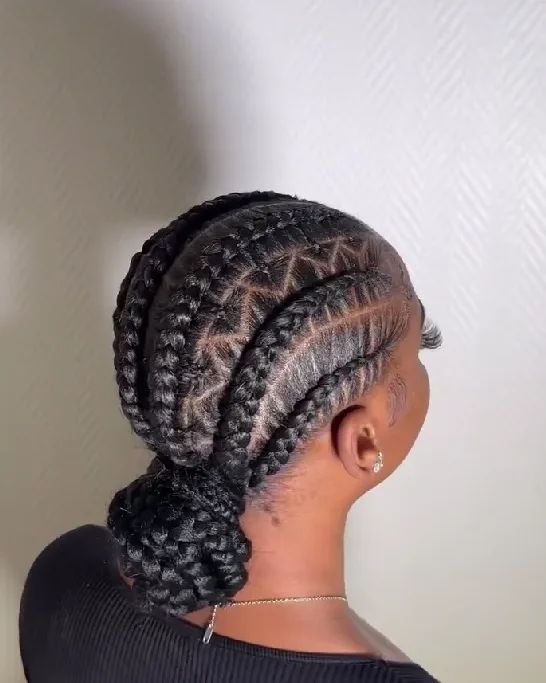
The lines here are precise enough to measure with a ruler. This geometric cornrow bun starts with intricate braiding that hugs the scalp in sharp angles, then sweeps everything into a low, full bun at the nape. No bangs, no loose ends, just structure. It flatters a long or oval face best — the horizontal lines widen a narrow forehead, and the bun adds weight below the ear. A square or round face can feel boxed in by the geometry. The texture is straight braids, so the pattern stays crisp for the full two weeks this lasts.
Short Textured Afro with Side Part
When did a short coily afro become the most practical winter choice? This one sits at ear length, no layers, no bangs, just a defined side part that breaks the roundness. The texture is pure coil, so it shrinks up on humid days and stays put in dry indoor heat. That matters from November through March. A side part softens a round face and adds height to a wider jaw. Skip it if your hair is fine or low-density — the shape needs density to hold its volume past noon.
Intricate Braids with Side Part
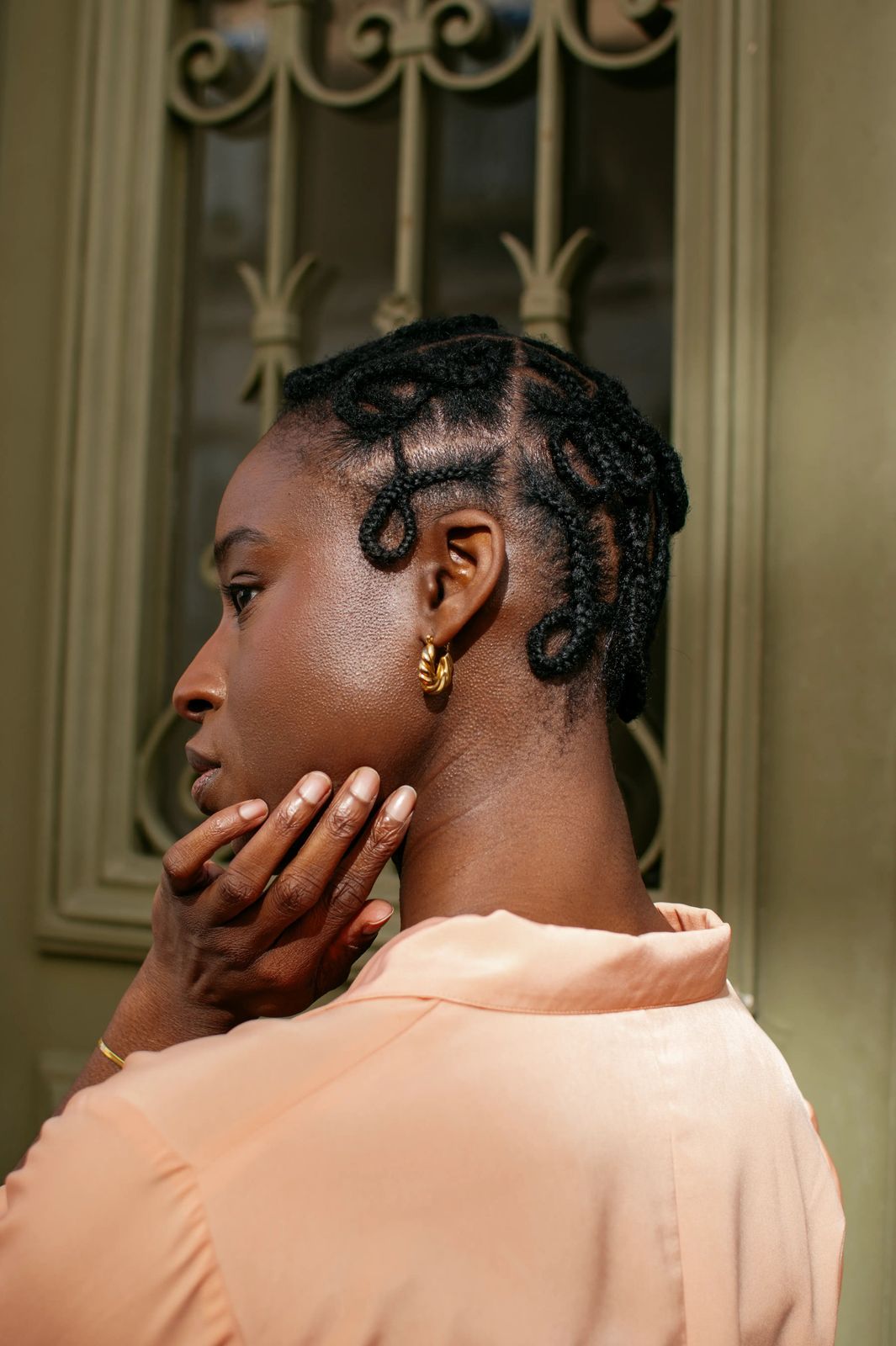
This is the kind of short braided style that makes you look twice. The intricate braided pattern runs from the hairline to the crown, each section woven with a precision that a mirror cannot replicate. No bangs, no loose strands, just a clean side part that lets the pattern speak. The texture is coily, braided straight, so the lines stay sharp for a week before frizz softens them. It suits any face shape because the braids distribute volume evenly. A stylist builds this, not a bathroom mirror.
Stacked Bob with Undercut and Sweep
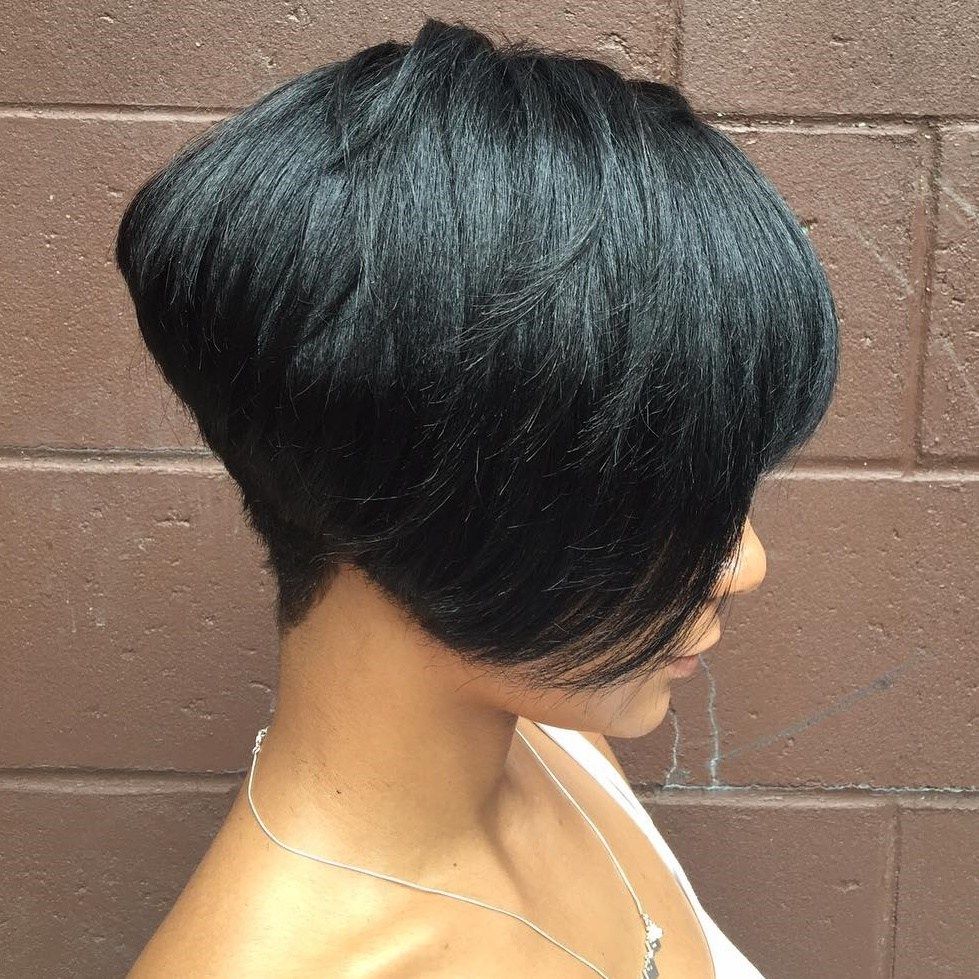
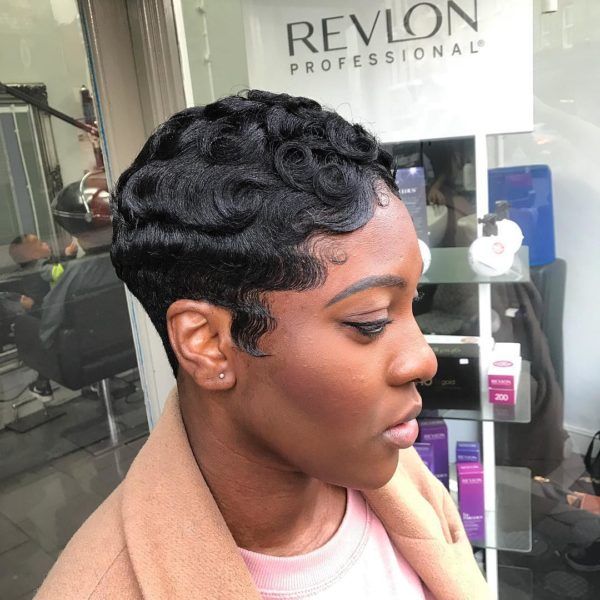
Everyone is wearing soft curls this winter, and then there is this. A stacked bob undercut that lands at chin length, with the back shaved close and the top layers falling forward in sweeping pieces. No bangs, just a deep side part that lets the top section swing. The texture is straight and fine, so the layers stack cleanly without poof. A round face gains structure from the undercut. An oval face loses nothing. The upkeep is real — the undercut needs a trim every four weeks, and the top layers demand a flat iron or a smoothing brush each morning. But it does not collapse by 4 pm.
Long Wavy Copper Red with Side Fringe
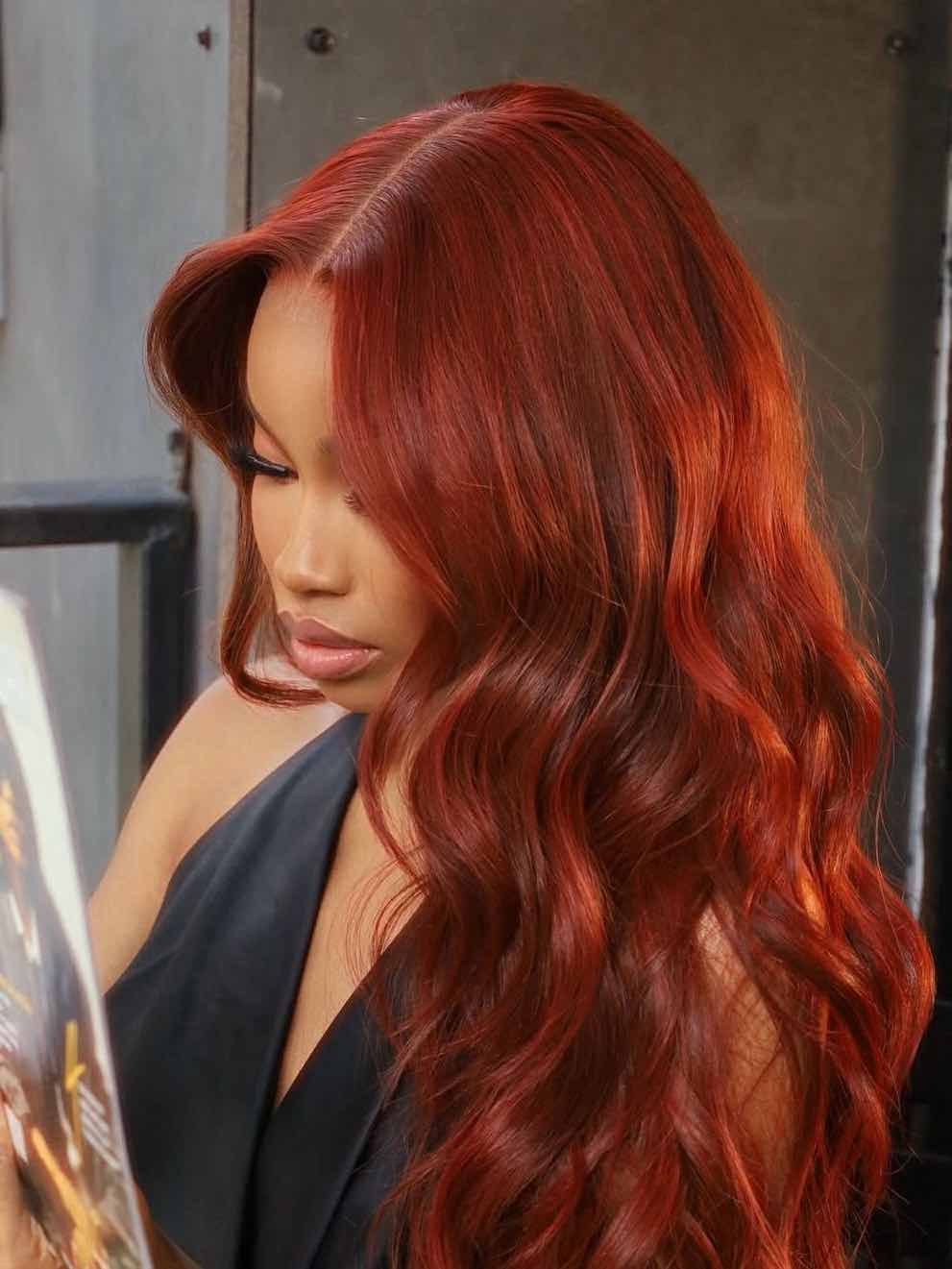
The colour is the first thing you notice. This long wavy copper hair sits somewhere between a new penny and a fall leaf, with a vibrant copper red that reads warm against cool winter light. The cut is long, past the shoulder, with loose layers that keep the ends from looking thin. A side-swept fringe breaks the length at the forehead, which helps if your face is long or your forehead is high. The texture is wavy, achieved with a large barrel or braids overnight.
Here is the short list. First, a heat protectant before any iron touches it. Second, a colour-depositing conditioner every third wash or the copper fades to orange by week three. Third, keep the fringe trimmed every six weeks or it lands in your eyes. It is not a set-it-and-forget-it colour. But the first time you catch it in a window, you will not care.
Braids with Curly Extensions and Highlights
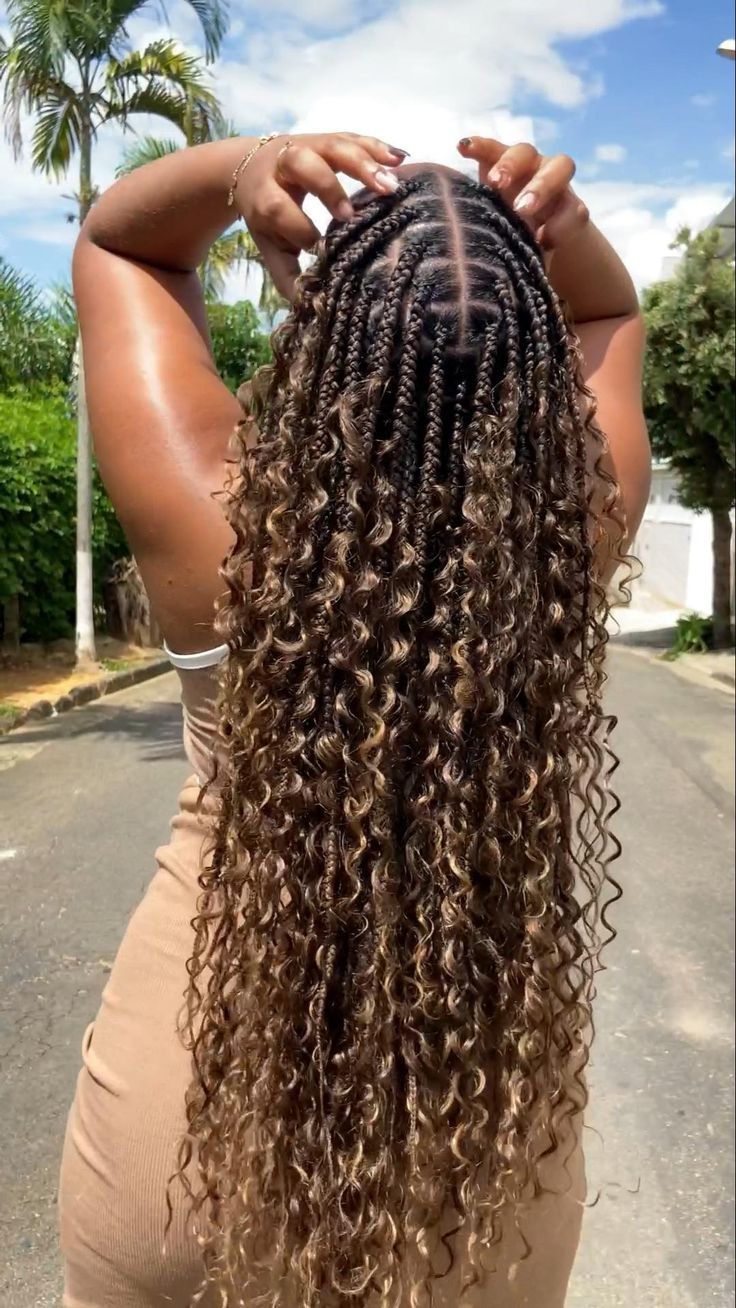
I’ll admit it: I used to think braids with curly extensions were a two-in-one trick that never quite landed. Then I saw the back view with the blonde highlights catching the light, and I changed my mind. The technique is simple in theory: you braid the base, then attach curly extensions at the ends, so you get the sleekness of a braid and the bounce of a curl in one style. The contrasting textures are what make it work, the straight braid against the coil reads intentional, not messy. Mid-back length means it swings when you walk, which is half the appeal. This is a salon install, not a weekend project, and it will take a few hours. For winter, it’s perfect, it keeps your own hair tucked away while the extensions do the heavy lifting. Wear it to holiday parties, to work, to the grocery store, no one will know you rolled out of bed.
Textured Top Undercut
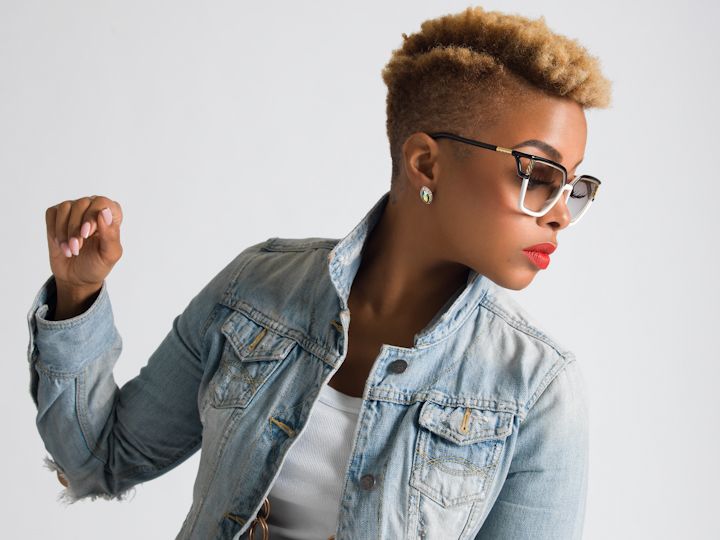
My gut reaction to a textured top undercut is always the same: I want it, then I remember I have to style it. The shaved sides are the easy part, they just need a razor every few weeks. The top is where the work lives, it needs daily product and a blow dryer to get that voluminous, piecey shape. The contrast is the whole point, clean sides against a textured crown. But if you are not ready to commit to a morning styling routine, this cut will defeat you by noon.
Box Braids with Curly Ends
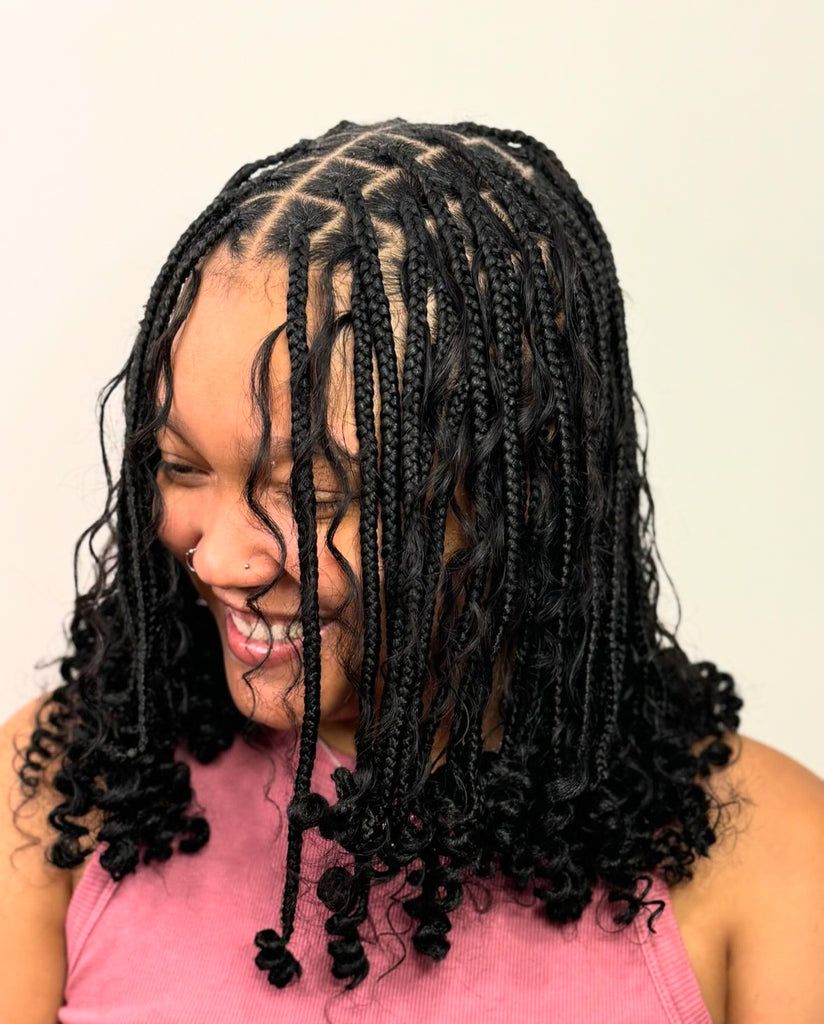
Precise observation: box braids curly ends are the only protective style that also looks like you did something to your hair. The shoulder length keeps them light enough to wear down without neck fatigue, and the middle part frames the face without needing a single bobby pin. The curly ends are the detail that separates these from every other braid in the room, they soften the lines and add movement. For winter, they are a smart choice because your real ends stay tucked inside the braid, safe from the cold air and the dry heat. This is a salon job, no question, the braids need to be even and the curls need to be set properly. But once they are in, you are done for a month.
Voluminous Coily Shoulder-Length Afro
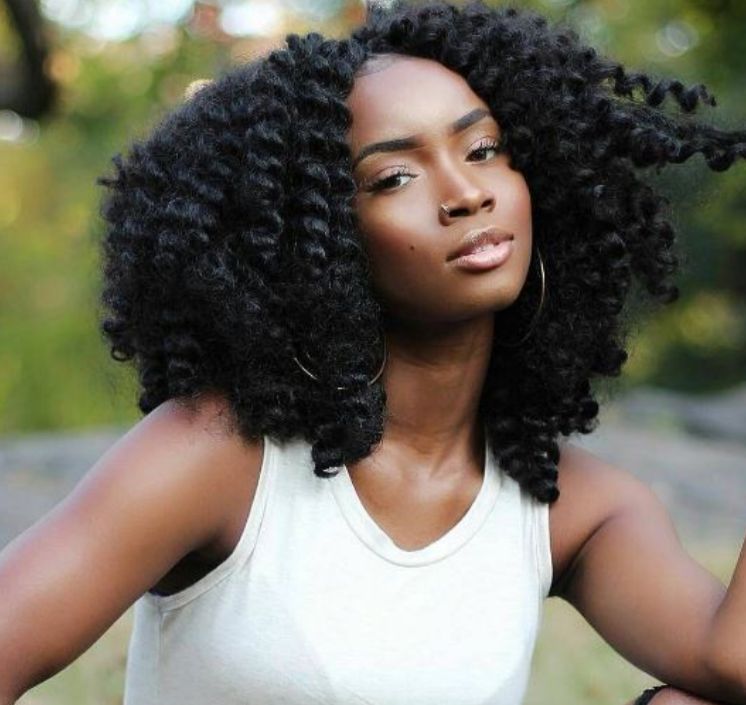
Is there a bigger gap between what a salon does and what I can do at home than with shoulder length coily hair? In the chair, the stylist shapes the voluminous coils with a pick and a trim, and it looks like a perfect cloud. At home, I get the same shape for about an hour, then it starts to settle and separate. The difference is the cut, a salon will layer the interior so the volume has a foundation, not just a top. If you have the patience and a good mirror, you can do it yourself, but be honest about your skill level. I have seen more lopsided afros than I can count.
Cornrows to Bantu Knots
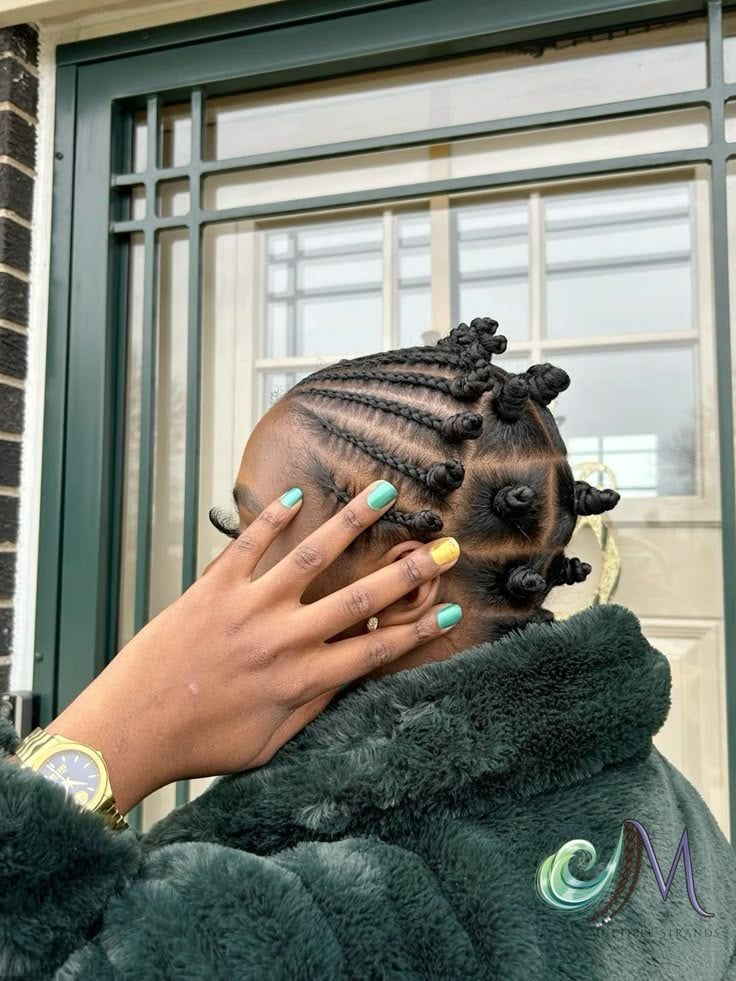
Ever notice how small decorative braids at the hairline turn a simple winter gathering into something special? These delicate braids add a touch of flair that feels made for festive holiday hair, especially when you have long wavy hair decorative braids woven through the front. The cut is long with soft layers that keep the weight moving, and the middle part lets the braids frame the face without hiding the length. Loose curls, set with large rollers, give the texture a wavy, medium-density bounce that holds through an evening of Christmas ornaments and conversation. The braids are thin, almost like cornrows to bantu knots, but they sit at the temple and ear, catching the light. They are not a protective style, but they feel intentional, like you planned the whole look around the holiday lights. For thick, straight-ish hair, this is a winner, though the braids need careful pinning to avoid snagging.
Long Wavy Hair with Christmas Ornaments
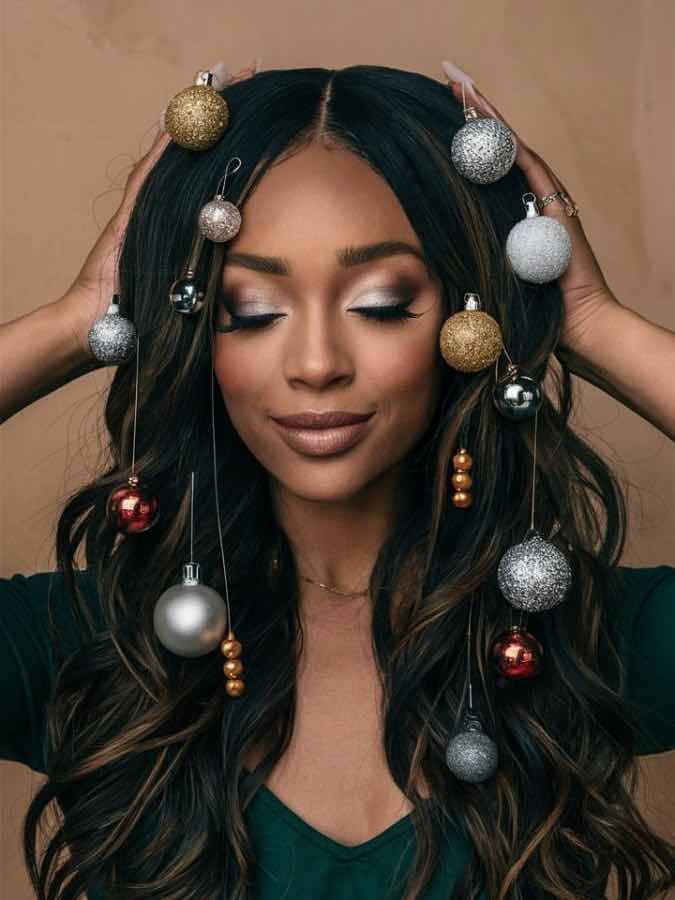
This is festive holiday hair that does not pretend to be anything else. The cut is long layers, no bangs, middle part, dark brown with subtle highlights. The hair is straight and thick, which matters because those ornaments need something to grip. Loose waves with a large roller give it shape without fighting the texture.
Who is this for? Someone with density. Thin hair will show every clip and wire. The ornaments are the point, so the cut stays simple. No layers short enough to snag, no bangs to flop sideways under the weight of a bauble. Christmas ornaments go on carefully, come off before sleep. This is a one-night look, and it knows it.
Short Afro with Faded Sides and Blonde Tips
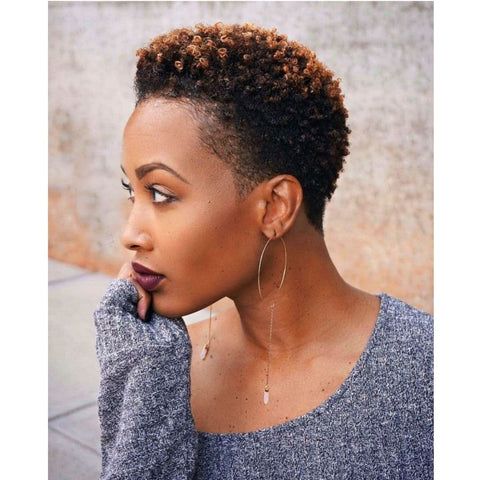
The fade starts mid-ear and graduates cleanly into the dense curls on top. That is the technique: a barber’s clipper work on the sides, scissor-over-comb on the crown, then the blonde tips applied to the longest curls only. The short afro blonde tips land on dark brown base, so the contrast reads sharp, not muddy. Faded sides keep the shape from looking like a helmet. The texture stays defined because the fade removes bulk where it would flatten. No bangs, no layers past the crown, just a clean architectural line from skin to colour.
Loose Curls with Decorative Braids
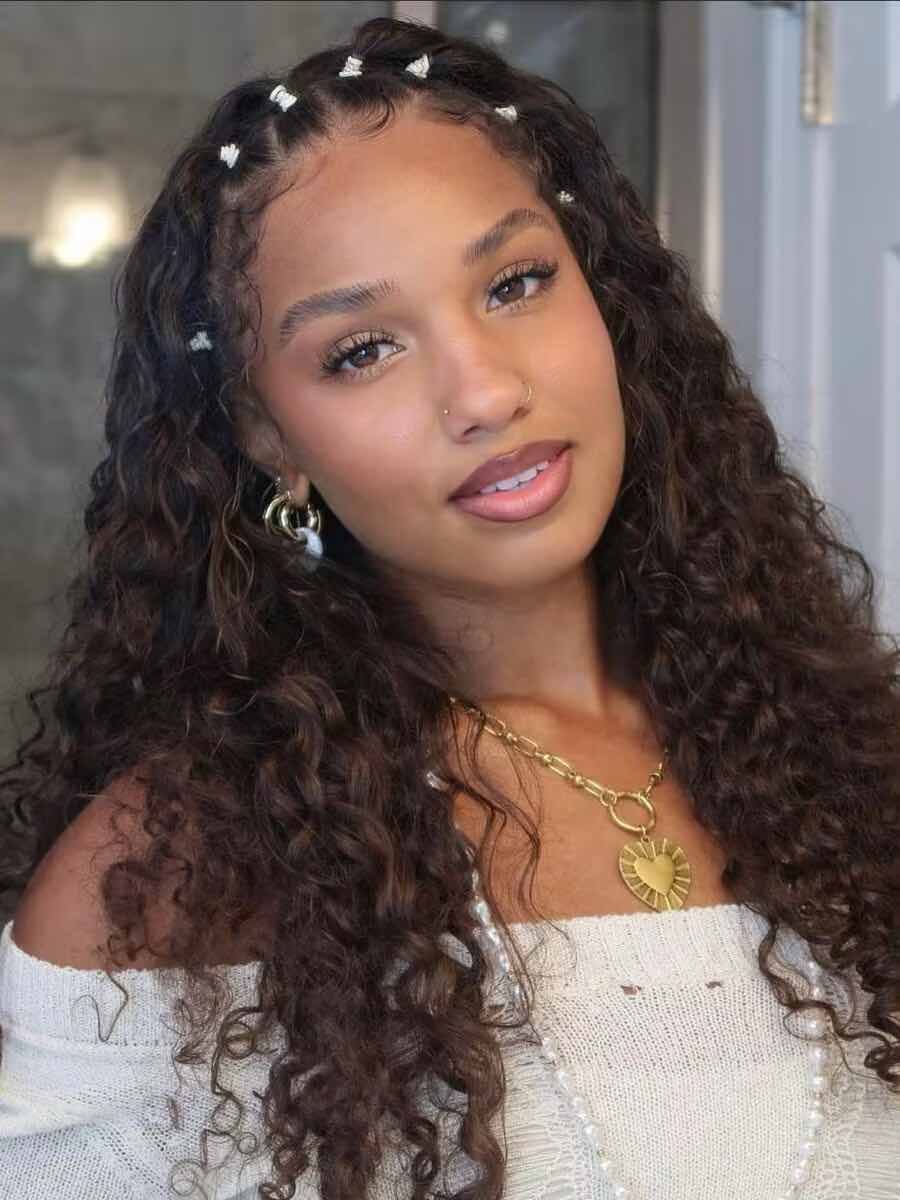
Why do small decorative braids hit harder in winter than in July? Because winter gatherings are indoors, under warm light, and people stand closer. The long wavy hair decorative braids sit at the hairline, three or four thin braids tucked behind the ear or crossing the temple. The rest of the hair is loose curls, mid-back, dark brown, no bangs, middle part. The braids add detail without requiring the whole head to be braided.
The curls need to be set first, then the braids added after, so the tension does not pull the wave pattern flat. A light serum keeps the loose sections from frizzing while the braids stay clean. Beads optional, but a single gold bead on the end braid catches the light in a way that reads intentional. This is a two-step style, but neither step is hard.
Honey Blonde Curly Layered Bob
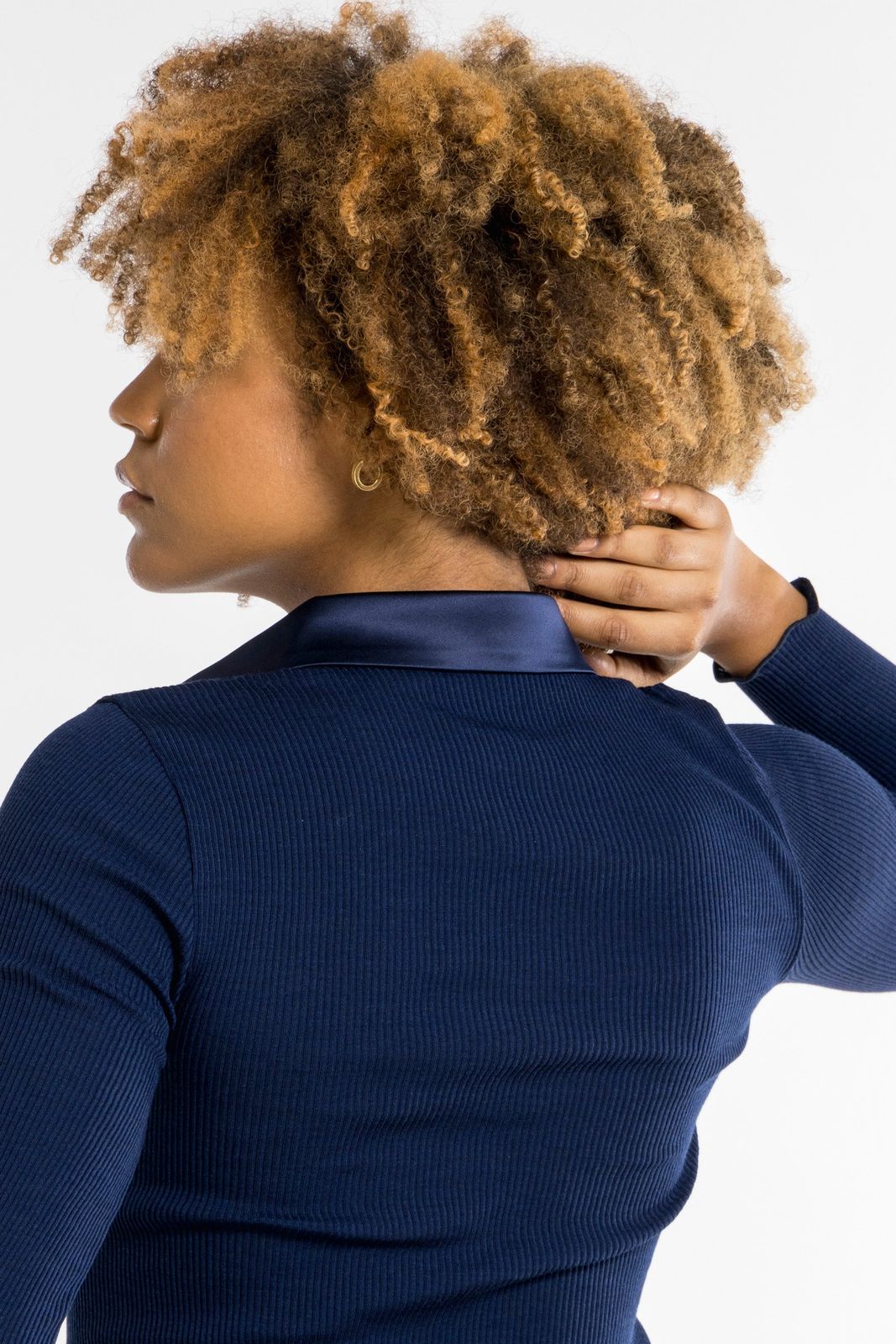
I will admit I was skeptical about a honey blonde curly bob on a blowout. The photo shows a chin-length layered bob, no bangs, side part, back view, and it is smooth and round and frankly enviable. The cut itself is a layered bob, which gives the curls room to stack without turning into a triangle. The honey blonde reads warm and expensive, not brassy. But here is the honest downside: achieving that smooth blowout on curly hair requires significant heat styling. You are not waking up to this. You are washing, defining with a product, air drying or diffusing, then flat ironing the ends. And the blowout needs daily refreshing. The layered bob shape itself is low maintenance, but the style you see in that photo is not. Regular trims keep the layers from separating and the honey blonde from looking muddy. I still like it. I just would not call it easy.
Long Curly Hair with Braided Babylights
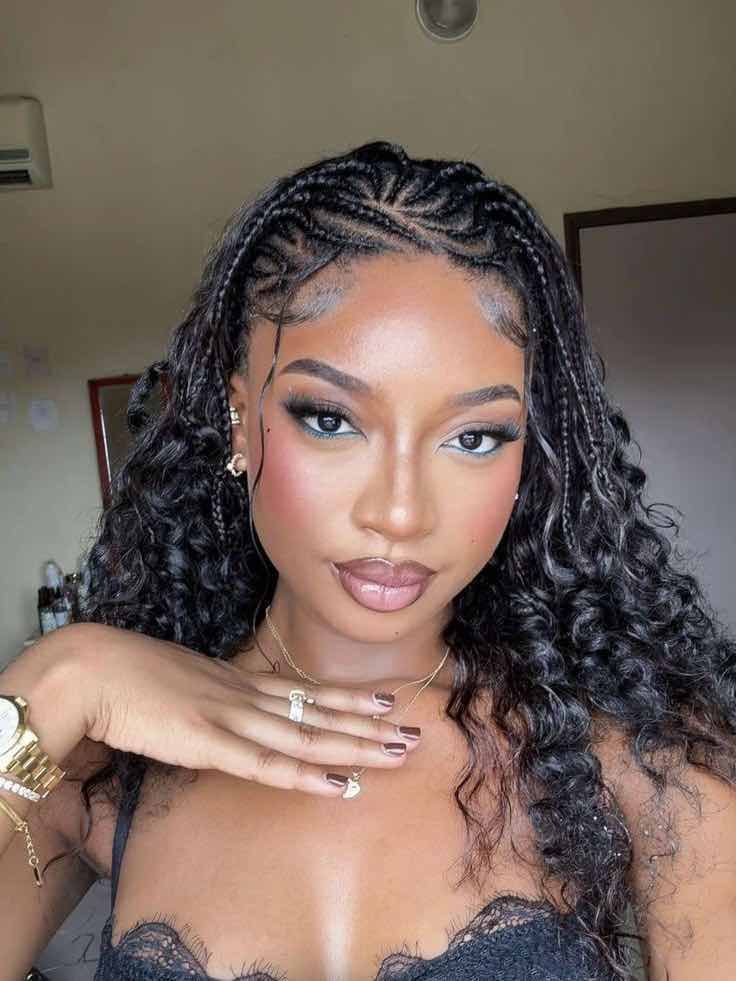
The braided hairline is the whole point here, and it’s the part that will either make you feel like royalty or make you want to cry into a satin pillow. This is long curly hair braided hairline territory: the intricate braids trace your edges and disappear into the volume, so the style reads as one deliberate piece, not a wig and a prayer. The middle part keeps the symmetry calm, and the curls carry the weight, literally and visually. Wind will test those delicate braids, and a hat will flatten the crown by noon unless you fluff it back up. That’s the trade: a hairline that looks intentional for the cost of a careful hand and a leave-in conditioner that respects the curl pattern. Skip the brush entirely, or you’ll be picking frizz out of the braids for a week.
Mid-Back Voluminous Braids with Loose Curls
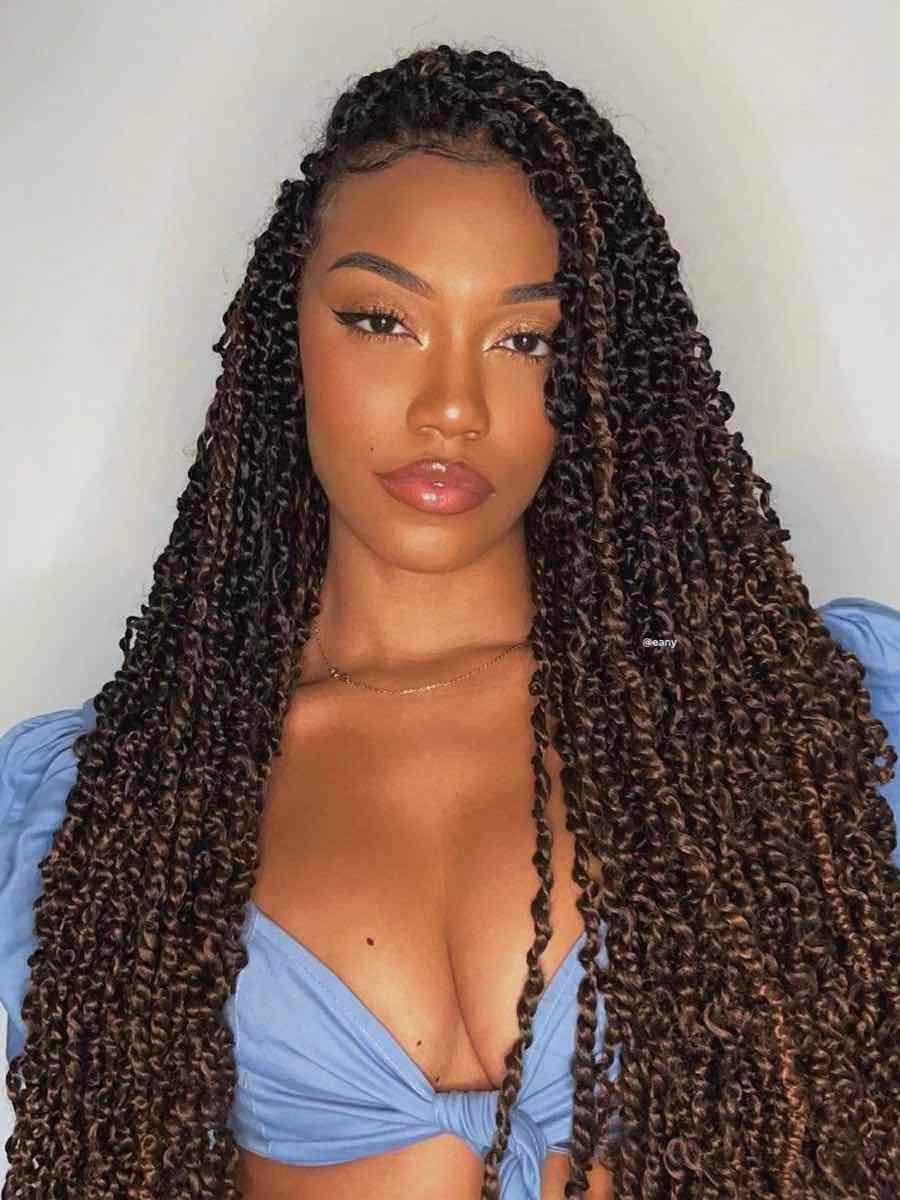
This is braided hair with loose curls, and it flatters anyone whose natural texture already bends or waves, because the loose tendrils blend with your own hair instead of fighting it. The voluminous braids give you the length, and the lighter brown highlights add dimension that reads as depth, not as an afterthought. If your hair is fine and straight, the contrast between the braids and the loose curls will look like two different styles fighting each other, so pass unless you’re ready to commit to a curl cream every morning. The middle part widens a round face, so a slight zigzag part would soften that. This one needs a salon installation, no question, because the braids have to be tight enough to hold the volume without pulling at your edges. Once they’re in, the curls do the talking, and you just keep your hands off them.
Thick Black Braids Mid-Back
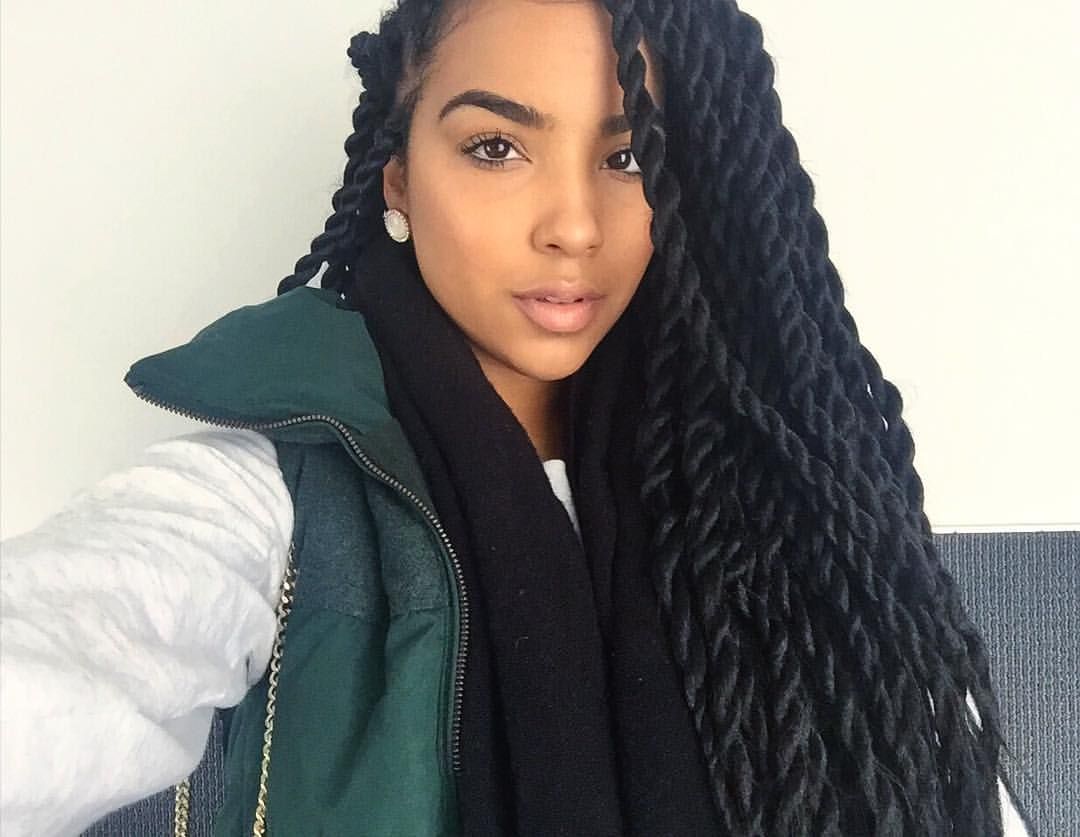
Long thick black braids beat the skinny kind every time, because thick braids read as a protective style that actually protects, not a style that snaps your edges by week three. The intricate braids here are substantial, so they hold their shape through wind, hats and the general chaos of a winter commute. Compared to a style with loose curls or extensions, these braids are the low-maintenance winner: you wash your scalp, oil your parts, and sleep in a satin bonnet, and they still look clean at week six. The middle part keeps the symmetry, and the black colour means no fading, no brassiness, no toning appointments. If you have a round face, the mid-back length pulls the eye down and lengthens the silhouette. Book the salon, because the tension has to be even, and a bad install will cost you more than the appointment.
Long Straight Black Braids
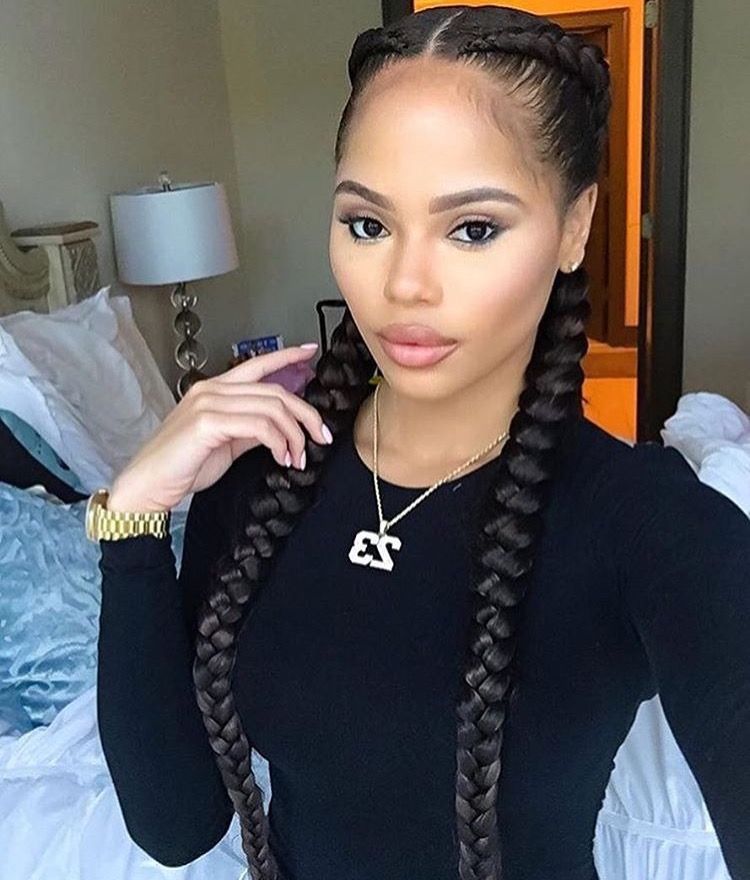
What do you wear to a winter wedding when you want to look done but not like you spent four hours on your hair? Long straight braids, mid-back, is the answer. The sleek, straight texture sits close to the head, so it works under a beanie without turning into a frizzy mess, and it reads as polished for a dinner or a party without any extra styling. The middle part frames the face evenly, and the black colour keeps it versatile, no colour upkeep, no root line to worry about. These braids are lighter than they look, so they won’t give you a headache by hour three, which is more than I can say for some thicker styles. A satin bonnet at night keeps the parts crisp, and a light spray keeps the shine from going dull. This is the style you set and forget, which is exactly what winter demands.
Visual Idea
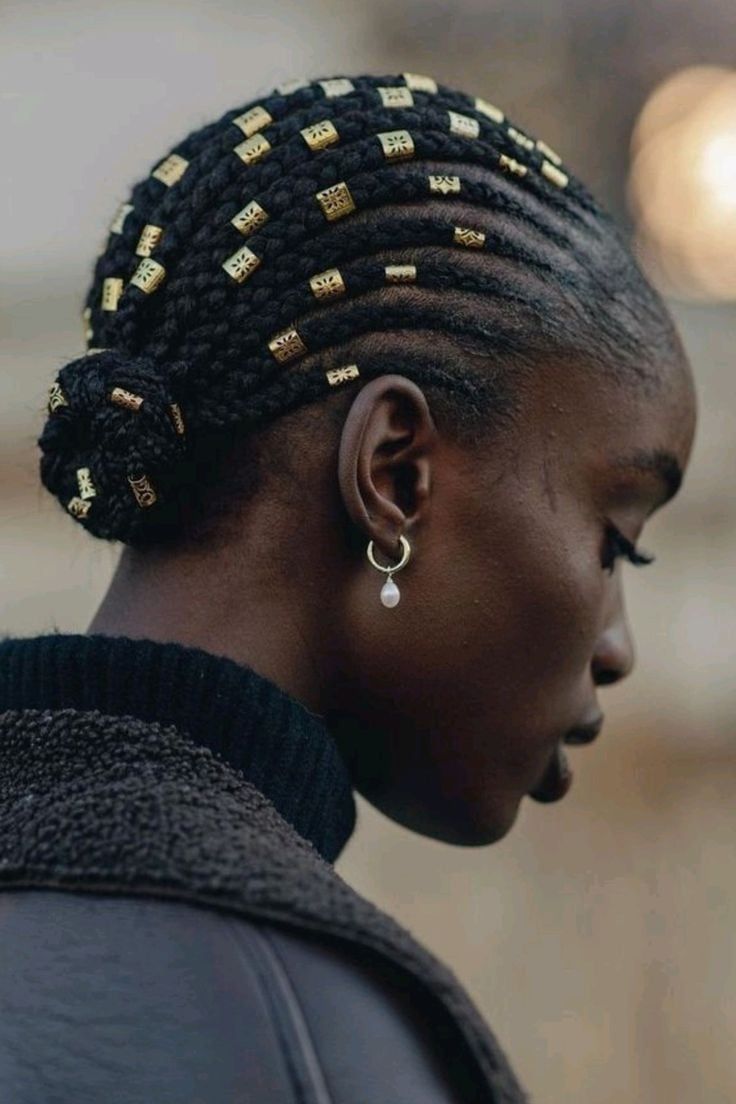
Gold beads on braids, and suddenly the whole updo has a point of view. The technique is simple: the braids are gathered into a bun at the back, and the beads catch the light every time you turn your head. The coily texture at the ends keeps the bun from looking severe, and the middle part balances the ornamentation. This is a salon job, because threading beads onto braids without pulling your edges takes a steady hand. The gold reads warm against dark hair, and it’s the kind of detail that gets compliments without you having to explain it. Wear it to a holiday party, and the beads do the talking.
Collarbone Visual Idea
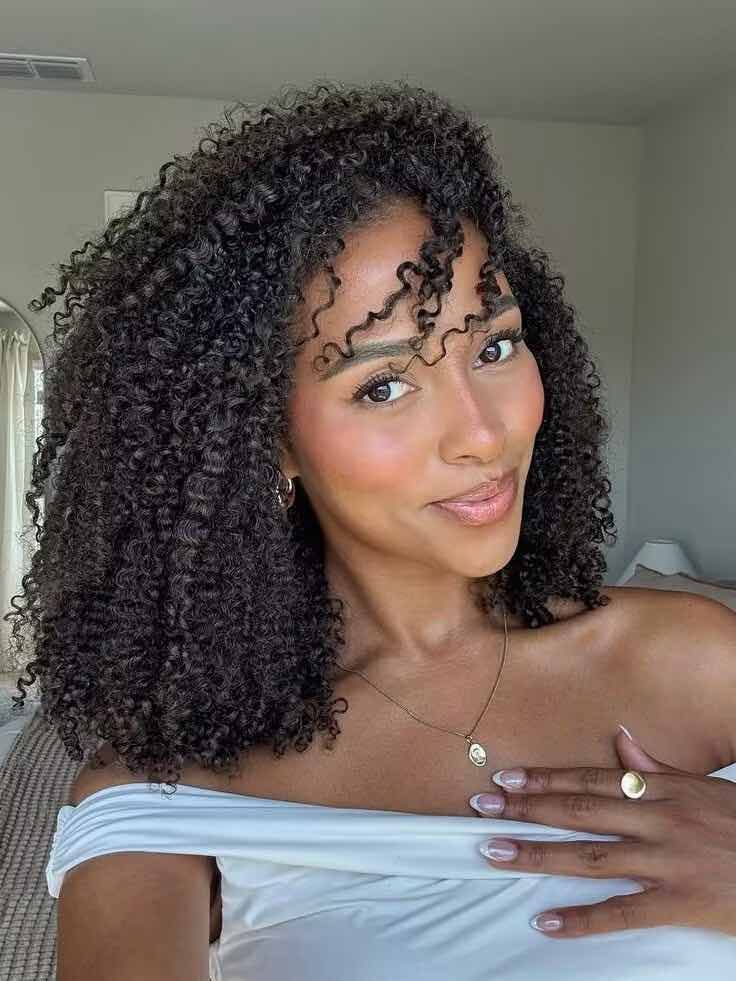
That collarbone bob with curtain bangs and defined spiral curls looks like it took three hours and a diffuser attachment. It didn’t, not if you start with damp hair and a leave-in that defines curls. The middle part does the heavy lifting here, it splits the curtain bangs evenly so they frame without fighting. Thick curly texture holds the spiral shape best, fine curls might drop by noon. I’d book the cut for the layers and the bang graduation, then style it at home. The dark brown base with subtle highlights keeps the definition visible, flat colour can hide the curl pattern.
Shoulder Visual Idea
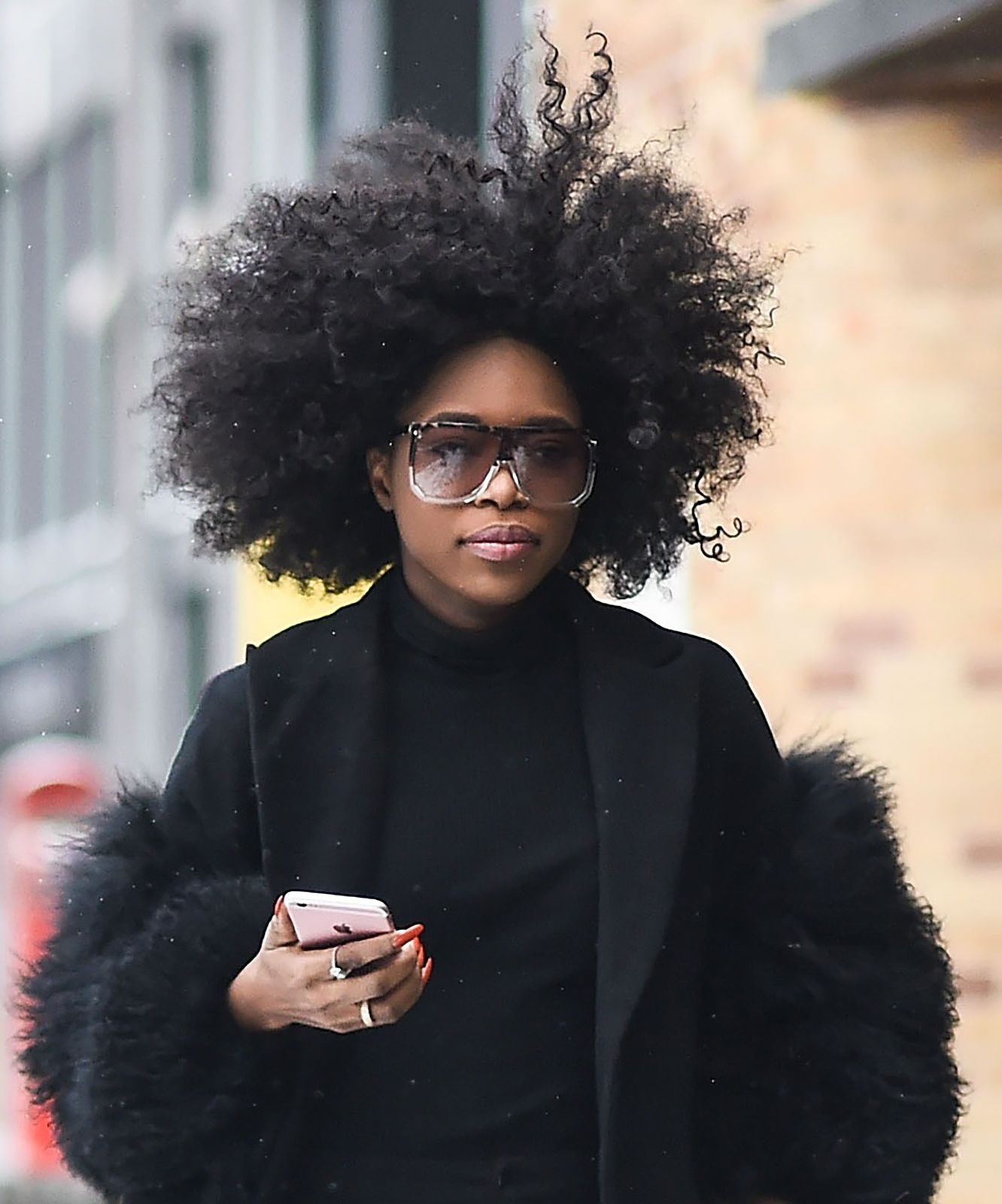
This voluminous afro holds up better than I expected through a winter week. The shoulder length gives it enough weight to stay rounded without collapsing, and the middle part keeps the volume balanced on both sides. Thick curly texture is the key here, fine hair would need a pick and prayers to get this lift. No bangs means you skip the daily fringe adjustment, which matters when hats compress everything. The natural dark brown shade reads rich against winter coats, no root line to watch.
Ear Visual Idea
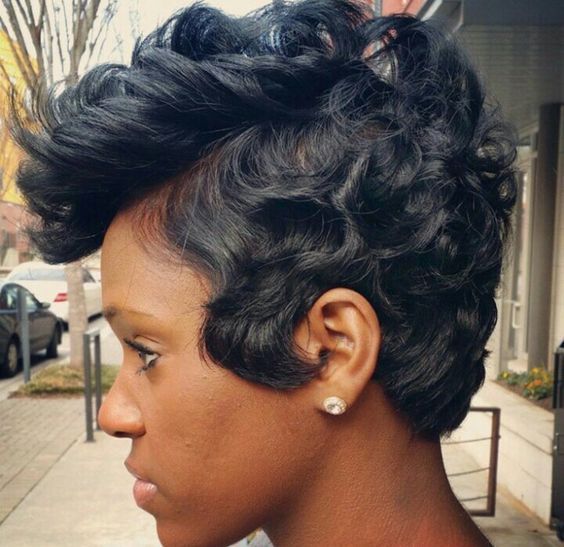
Who actually pulls off a voluminous pixie cut at ear length with side-swept bangs? Someone with wavy thick texture and a face shape that can handle width at the crown. The side part and side-swept bangs soften the short sides, so round faces don’t get that mushroom effect. Black colour keeps the contrast high against the voluminous curls on top, lighter shades can wash out the texture. Wavy thick hair gives the crown lift without product, straight fine hair would lie flat by lunch.
Very Short Visual Idea
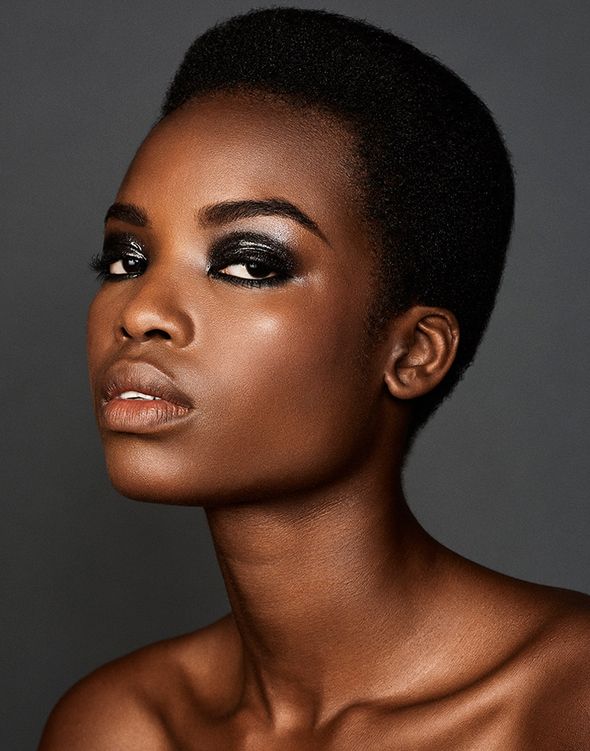
I looked at this sculpted short tapered cut and thought, that’s a morning commitment. Straight fine texture at very short length needs daily shaping, the smooth finish does not survive a pillow. No bangs and no visible parting means every strand sits exactly where it was placed. The sculpted shape is clean, but it asks for a warm cloth and a styling session every single day. Honest downside: skip this if you like five minutes between bed and door.
Visual Idea — A Black Woman With A Large
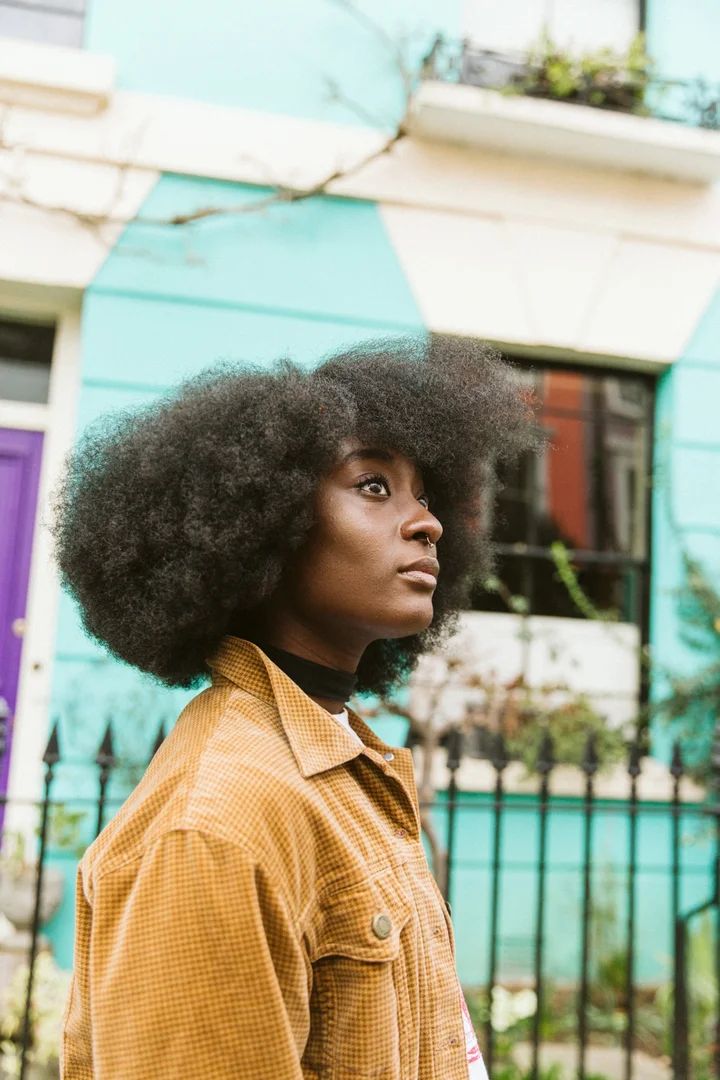
A voluminous afro at shoulder length with coily thick texture and a middle part lands as a winter statement because it does not shrink under a hat. The side view shows the full shape, the natural air-dried finish means no heat damage risk in cold dry air. Coily thick texture holds the volume for days, fine hair would need backcombing and prayers. The dark brown shade reads warm against grey winter light. This cut says I showed up, without saying it at all.
Mid-Back Visual Idea
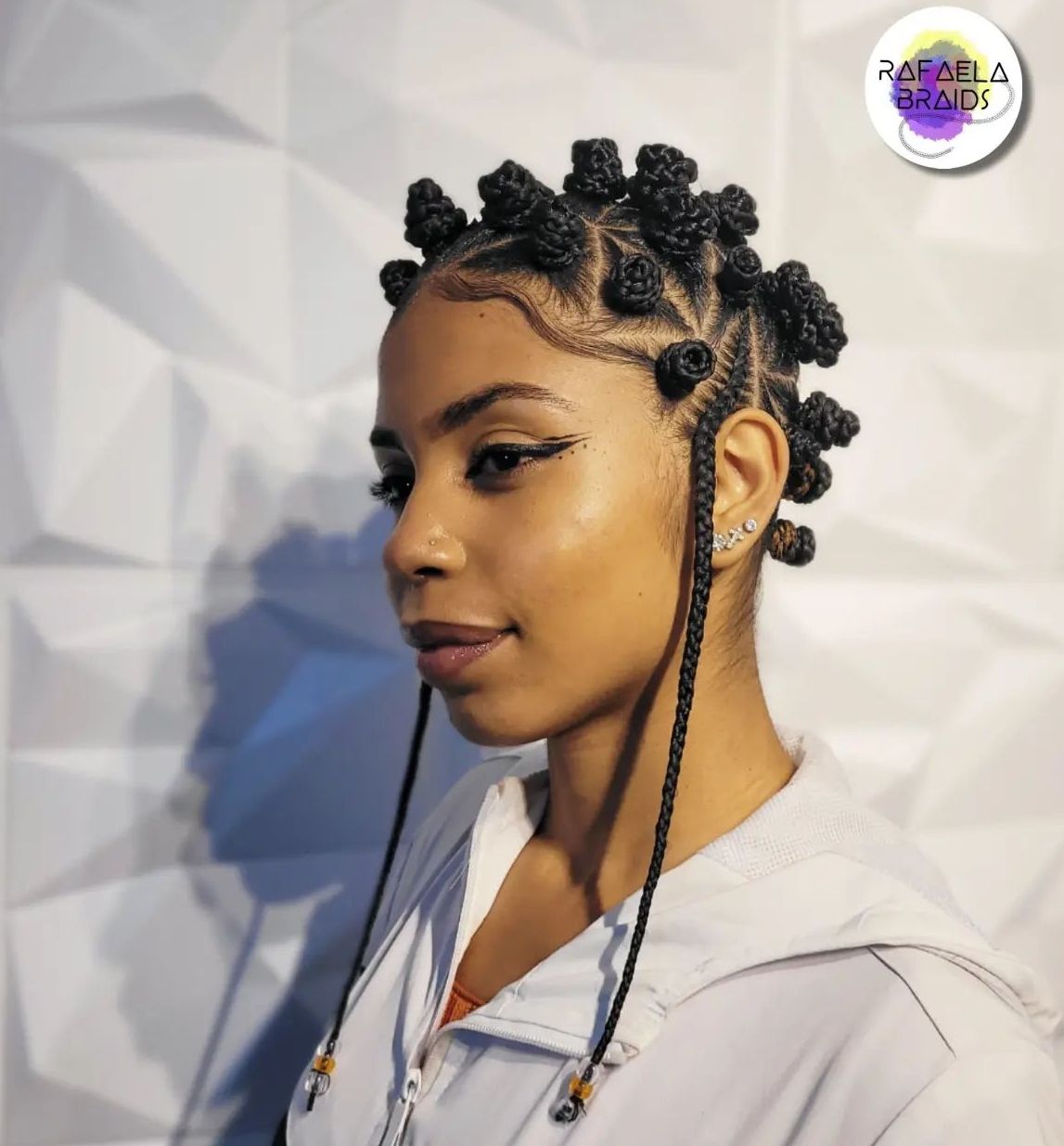
This is the most intricate Bantu knot styling I have seen that still reads as wearable. The cut starts with a middle part and rows of coily knots that sit close to the scalp, then drops into braided tendrils that reach mid-back. There are no bangs here, which is the point. The clean forehead line lets the geometry of the knots do all the work. Each knot is a small coil of hair twisted tight against the head, and the braided tendrils break up what would otherwise be a solid mass of texture. The layers are built into the tendrils, so the length tapers as it falls. This is a salon project, not a Saturday-morning experiment. The parting has to be precise and the knots need even tension to hold their shape. What I love is how the middle part frames a round face by adding vertical lines. The coily texture gives it volume that straight hair cannot fake.
Long Visual Idea
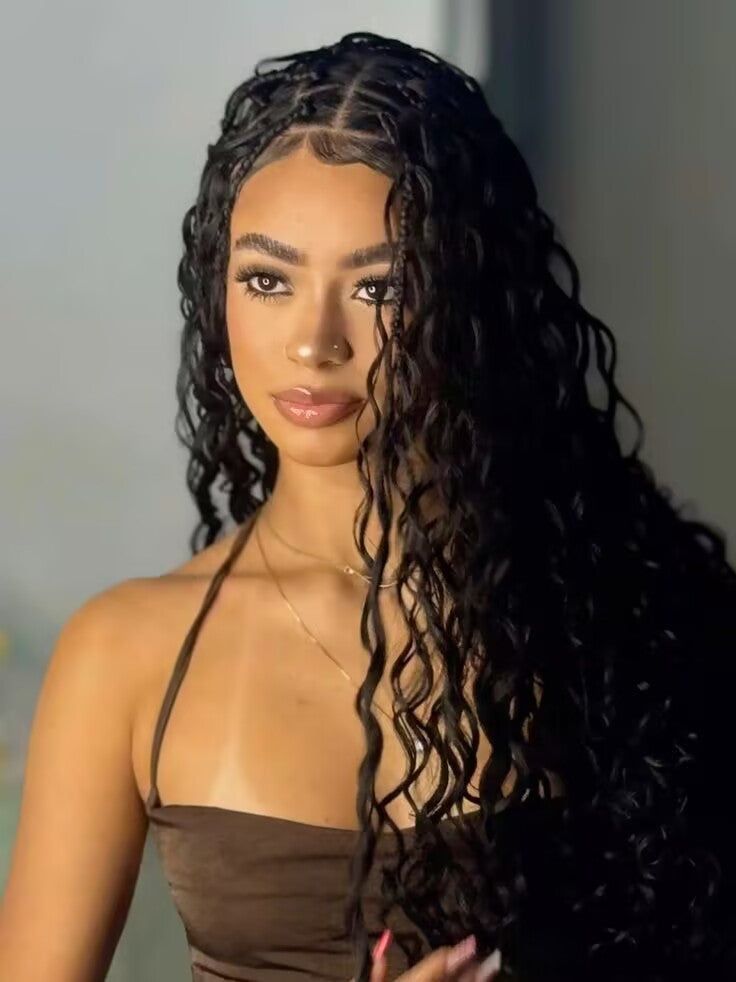
Have you ever worn a style that fights the weather instead of working with it? This combination of braids and loose waves is the exception. The cut is long and braided at the crown, then releases into loose waves that fall past the shoulders. A middle part splits the braided section evenly, and the wavy, curly texture gives the ends movement that braids alone never have. In winter humidity, the loose waves hold their bend without frizzing into a halo. The braided top means the roots stay neat for days, which is the real win. I wore a version of this through a wet week and the braids kept their shape while the waves softened. The upkeep is honest: the loose ends need re-curling every few days, and the braids need a trim at the ends when they start to fray. No bangs, no layers to speak of, just two textures that cover for each other. The length is the commitment.
Black Visual Idea
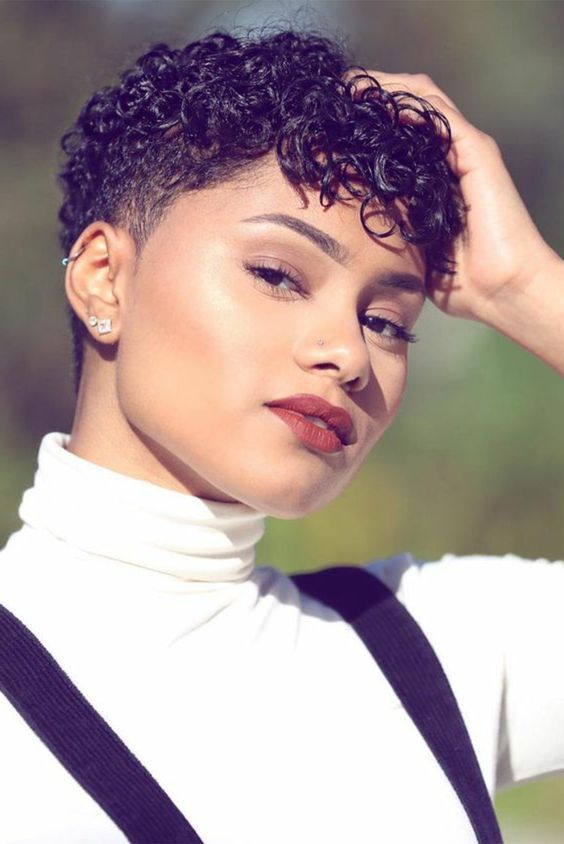
That defined curly cut with faded sides is the kind of style that makes me wish I had coily hair. The short cut sits close on the sides and blooms into bouncy, defined curls on top, with a short curly fringe that softens the forehead. The side part gives it direction, and the curly, coily texture is the whole story here. This flatters oval and heart-shaped faces best, because the volume on top adds height while the faded sides keep the width in check. If your hair is fine or low-density, the defined curl pattern will read as sparse, so you need actual coil density to make this work. The black colour keeps it sharp, no highlights to distract from the shape. This is a salon cut, the fade needs a steady hand and the curl definition needs a stylist who knows how to shape coily hair when it is dry.
Black And Blonde Highlights Visual Idea
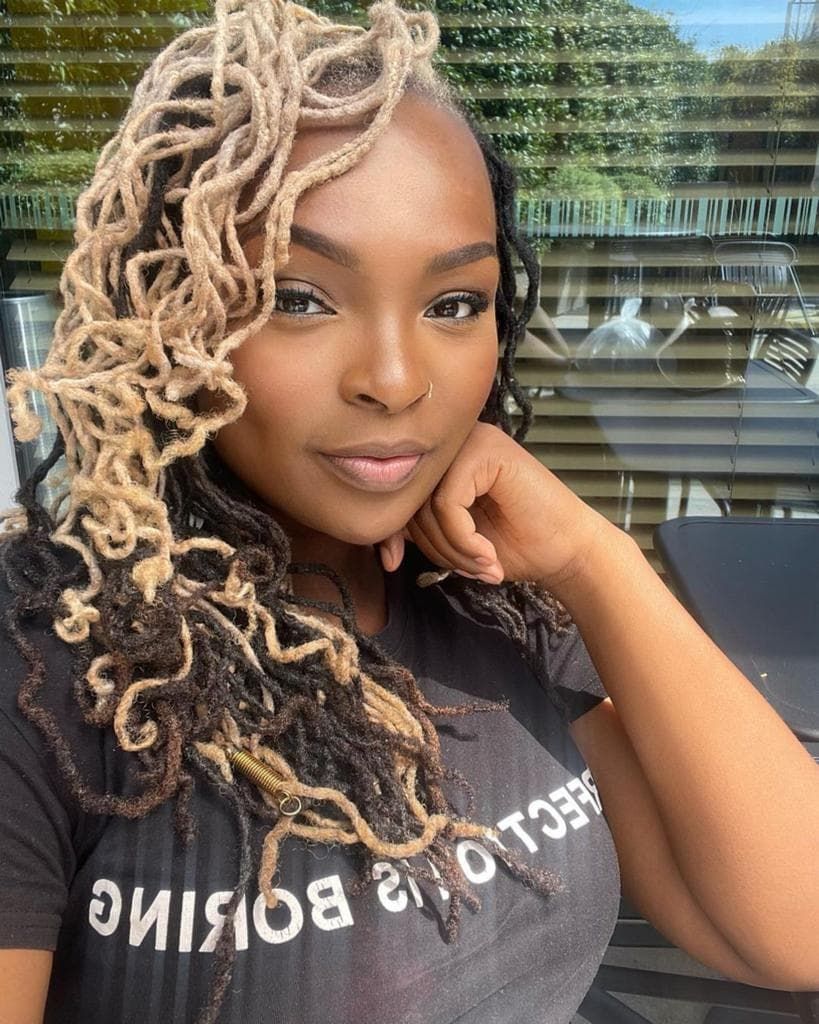
Solid black locs are classic, but these two-tone locs with blonde highlights have a visual punch that single-colour dreadlocks simply do not. The cut is mid-back length, with the black base and blonde highlights weaving through each loc so the colour reads as dimension, not stripes. No bangs, no layers to speak of, just the coily texture of the locs carrying the whole look. The blonde catches light in a way that solid black absorbs, so the style moves even when you are standing still. This is the difference between a hairstyle and a statement. The highlights need a toner to keep the blonde from going brassy, and the black base grows out soft, so the root line stays blurred. If you want drama without changing your whole texture, this is the version that delivers.
длинный Visual Idea
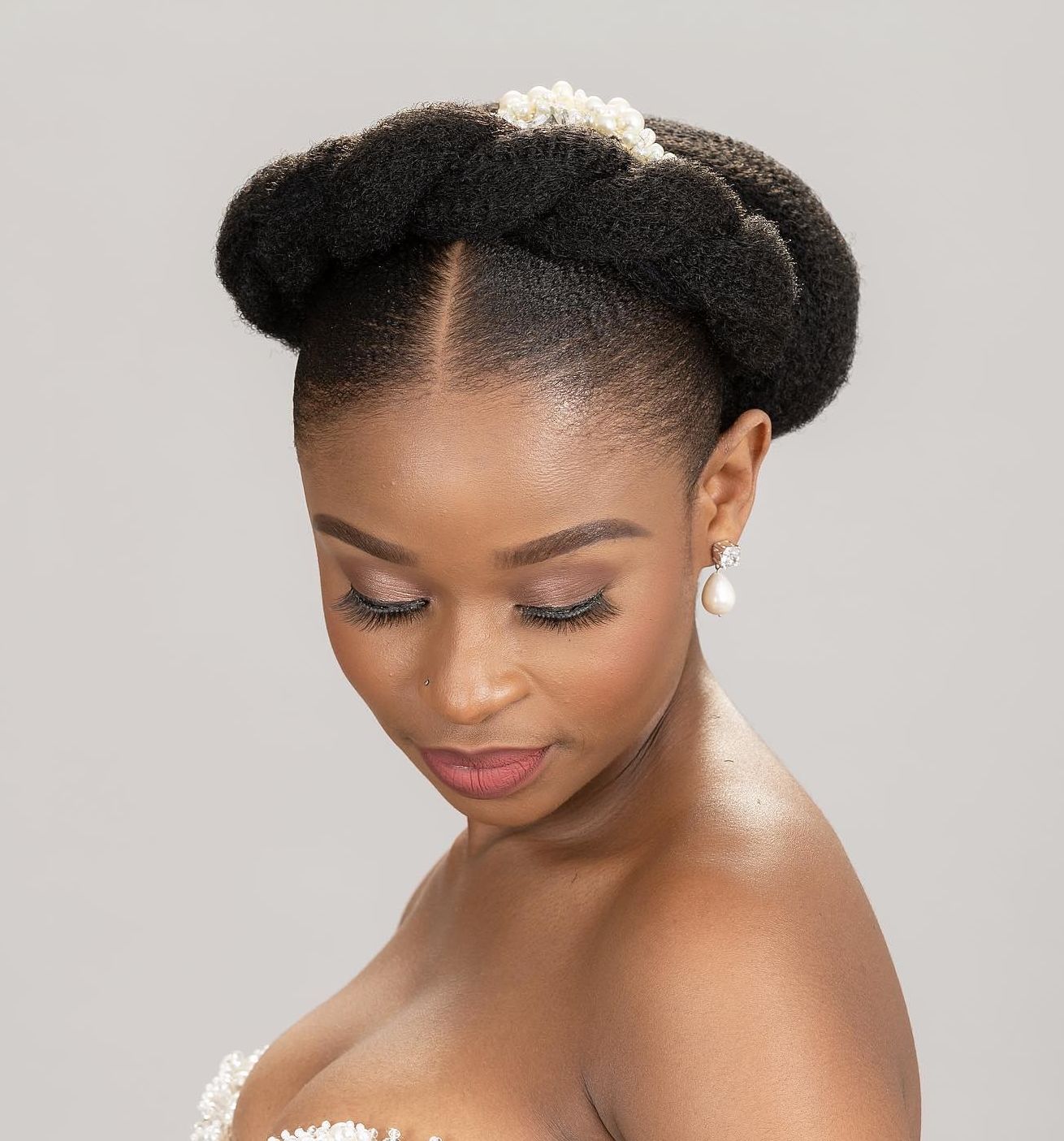
What makes an updo feel like a holiday event instead of a Tuesday meeting? The decorative element at the front of this sleek bun. The cut is long and pulled back into a gathered style, with straight texture that lies flat against the head. A middle part keeps the front clean, and the decorative detail adds the festive touch that separates this from a standard bun. This is the winter holiday choice when you want your hair out of the way but still dressed up. The straight texture is essential here, because the sleekness is the point. If your hair is coily or wavy, you would need to press it first, which is a time commitment. The length is all in the bun, so the style works for any length that can reach a ponytail. No bangs, no layers, just a clean line and one deliberate detail.
Natural Black Visual Idea
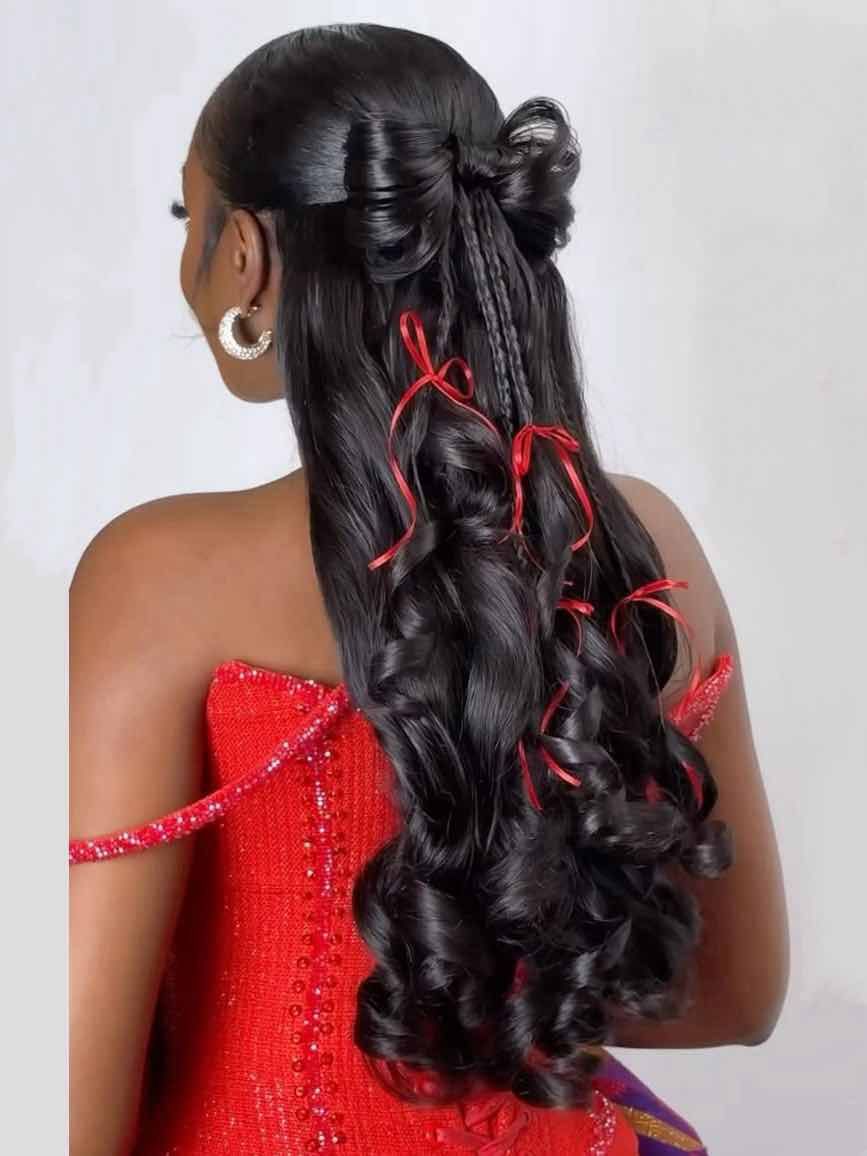
I have to confess something. I saw those red ribbons woven through natural black braids and immediately wanted to copy it. The cut is long, wavy, mid-back length with a side part and no bangs. The ribbons are the whole point. This is a half updo with braids and ribbons, and the layers are subtle, mostly in the back where the waves fall. The texture is wavy, so the ribbons catch the light differently as you move. I would not try this in a bathroom mirror. Braiding ribbon into a half updo requires sectioning, tension control and a second pair of hands for the back. It is a salon job, plain and simple. But the result? That contrast of black hair and red ribbon is worth the appointment.
Dreadlocks Visual Idea
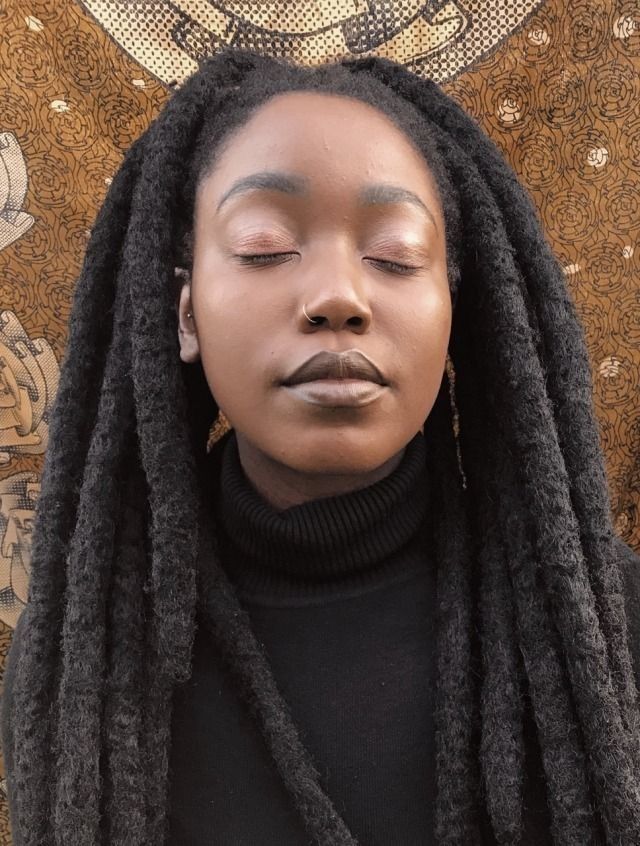
My gut reaction to long, thick dreadlocks in winter is always relief. No daily styling, no heat damage, no wet hair hitting cold air. These are mid-back length, black, with a middle part and no bangs. The texture is coily, which means they hold their shape without product. The cut is the locs themselves, no layers needed, just consistent thickness from root to tip. They stay neat through a week of hats and scarves if you wrap them at night. I wash mine every two to three weeks in winter, less often than summer, and I let them air dry fully before I leave the house.
Keeping them clean is the real work. A satin scarf at night stops the ends from drying out. I use a lightweight oil on the scalp, never the locs themselves, because buildup is harder to remove in cold months. They do not frizz the way loose hair does, but they do collect lint from wool scarves. The trade is worth it. I wake up, shake them out and go.
Final Thoughts
After writing all of these, I noticed something. The styles that held best were the ones that admitted winter is a negotiation—dry air, hat hair, shorter days. The geometric cornrows with the bun? That is what I am booking next. It survives a scarf, it does not need heat, and the grow-out is clean.
- Moisturize the ends every two days in dry air.
- Sleep on satin to keep braids from frizzing.
- Tone colour at week six, not week ten.
- Trim the baseline every eight weeks.