

Bantu knots are a protective style that wraps coily and thick hair into small coiled buns, creating a sculptural look that holds for days. The current trend leans toward glossy natural texture and precise geometric partings, turning a practical style into a deliberate design choice.
This collection of 20 Cute Bantu Knots Hairstyles covers everything from clean radial patterns to styles with beads and gold rings. It works for medium to long hair and any density, and it solves the struggle of keeping fine or low-density hair looking full without extensions. Each idea focuses on how the knots are built and how long they hold, so you know what to expect before you start.
Bantu Knots In Radial Pattern
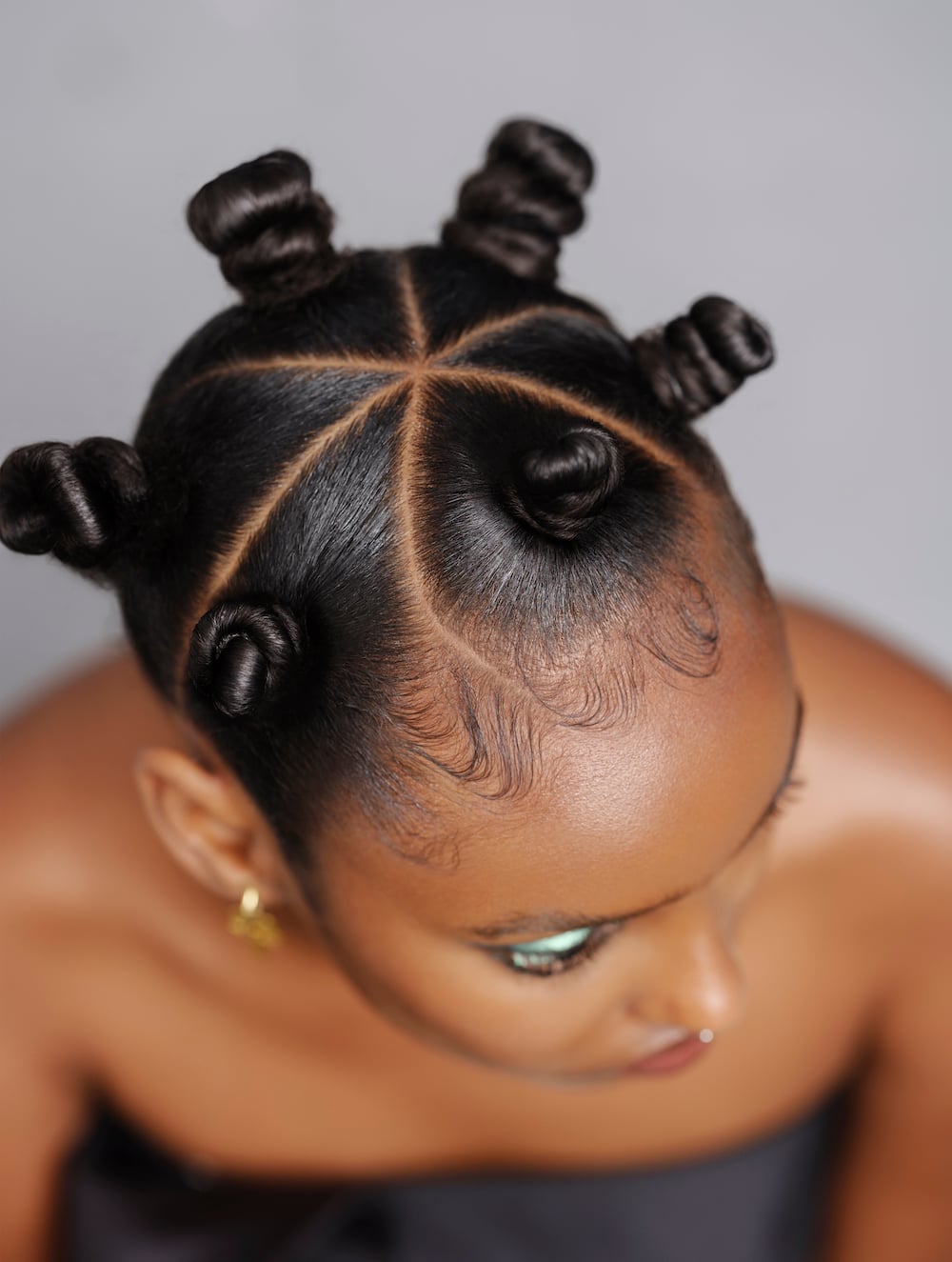
A precise radial pattern of bantu knots fans outward like a starburst, each section carved with a clean middle part. Coily, thick hair holds these lines best; the tighter the curl, the sharper the geometry stays. Ask your stylist for: bantu knots in a radial pattern with a precise middle part. The top-down view is the whole point. This is a style built to be seen from above, so those parting lines need to be crisp from the start.
Geometric Parting Bantu Knots
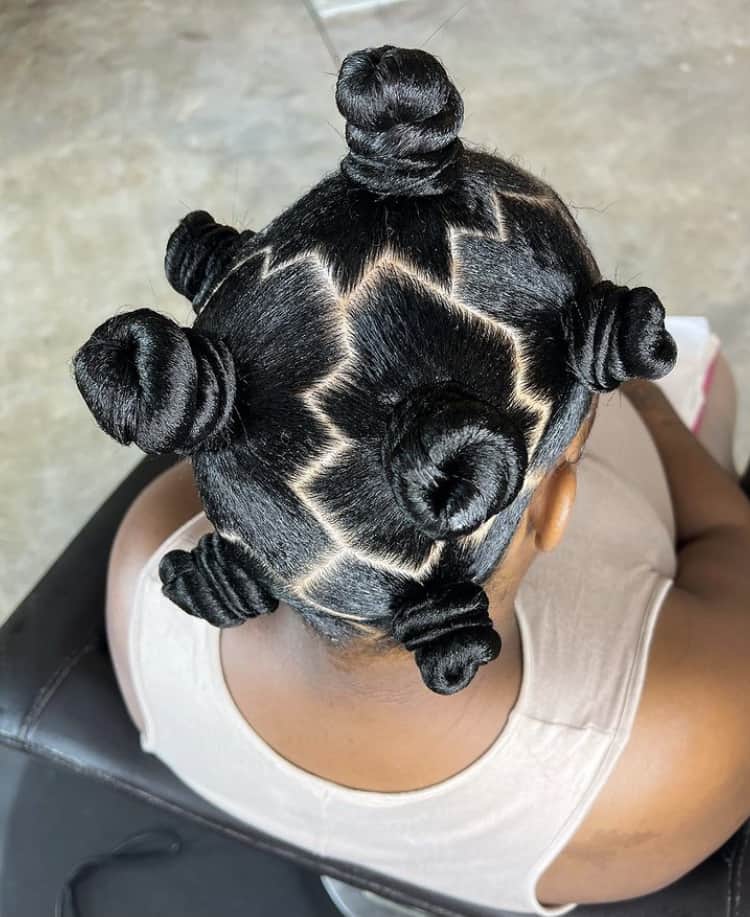
Ever wonder how to get those razor-sharp lines that look like a map of a city block? The answer is in the parting. This geometric parting bantu knots style uses angular sections, triangles, squares, sharp wedges, to frame each knot as its own little sculpture. Coily, thick hair takes the definition well, and black base color makes the scalp lines pop. Ask your stylist for: bantu knots with sharp, geometric partings. Bring a reference photo for the section shapes; describing a hexagon with hand gestures rarely works.
Intricate Bantu Knots Style
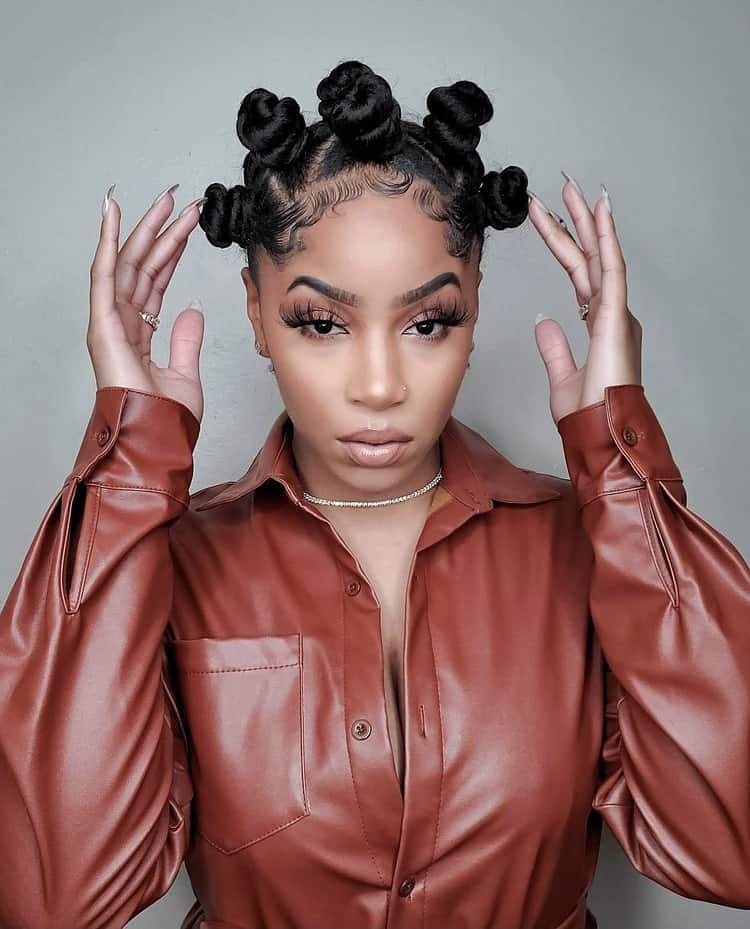
This version packs a lot of knots onto one head. Each section is small, the middle parting is dead straight, and the overall effect is a dense, textured surface that looks detailed. Coily, thick hair provides the grip needed to keep every knot tight.
Ask your stylist for: intricate bantu knots with a neat middle part. The hold depends on how well each knot is wound and secured at the tip, a loose wrap unravels by lunch. Plan for a salon visit of a couple hours, and sleep in a silk scarf to preserve the shape. The payoff is a style that stays intact for days without much fuss.
Neat Small Bantu Knots
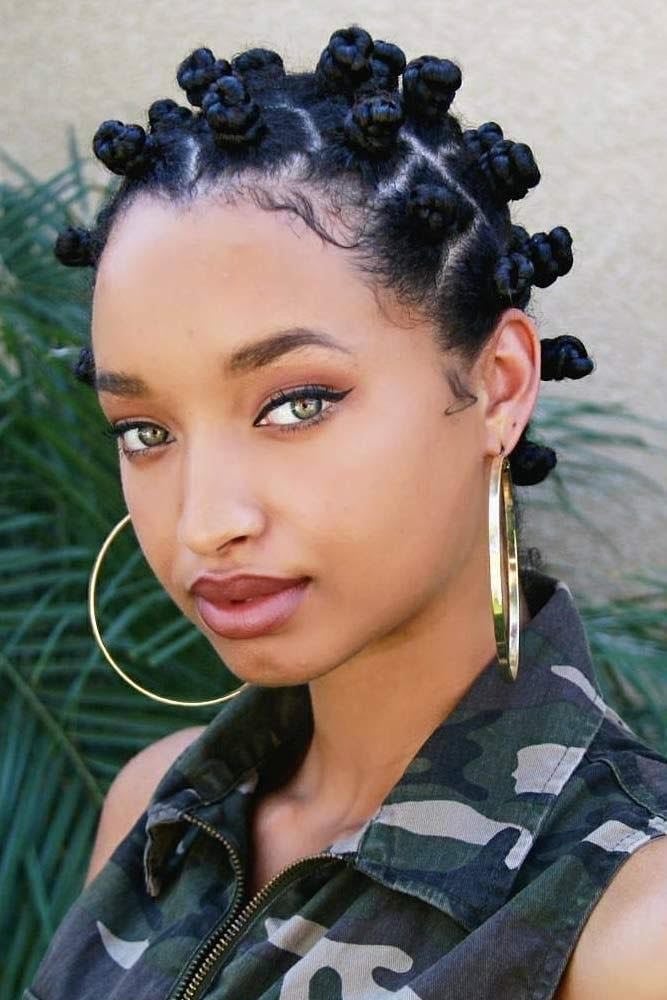
Smaller knots read as more uniform and tidy than larger, looser ones. Where big knots make a statement, these neat bantu knots hairstyle creates a consistent, almost pixelated texture across the whole head. Coily, thick hair holds the small sections without slipping. Ask your stylist for: small, neat bantu knots with a middle part. It is the difference between a patterned wallpaper and a bold mural. Both work, but one blends in better at the office.
Large Bantu Knots
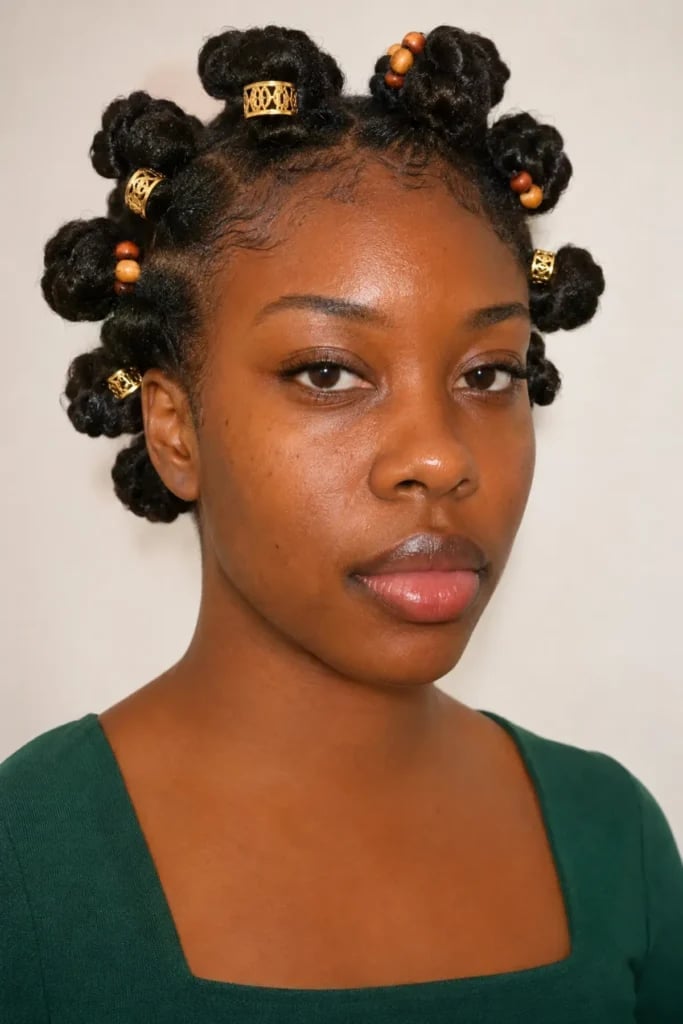
Fewer knots means each one gets more real estate. This large bantu knots style uses chunky sections distributed evenly from a middle part, creating a bold, graphic silhouette against the scalp. Coily, thick hair fills out the volume nicely. Ask your stylist for: large bantu knots evenly distributed with a middle part. The honest trade-off is weight, bigger sections pull more at the roots, and the thicker coils take longer to dry fully underneath. Not ideal for a rushed morning or a tender scalp.
Clean Bantu Knots With Root Shadow
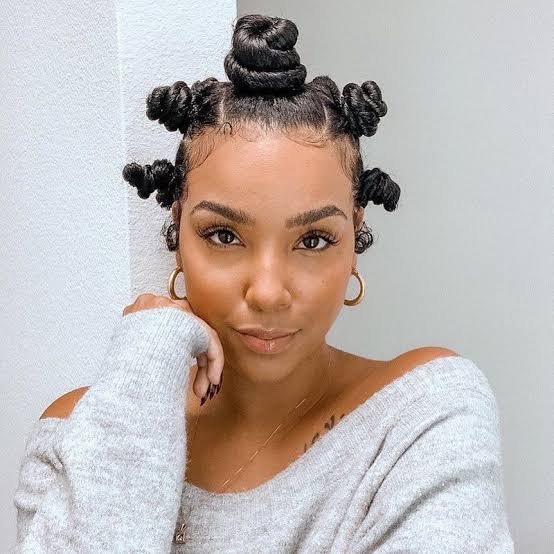
Neat bantu knots sit across the top of the head, and the black base color gets a quiet upgrade from a visible root shadow. That darker line at the roots adds depth. A root shadow on coily, thick hair creates a natural gradient. Ask your stylist for: neat bantu knots with root shadow effect. The shadow also buys you time between touch-ups, since new growth blends right in.
Geometric Pattern Back View Bantu Knots
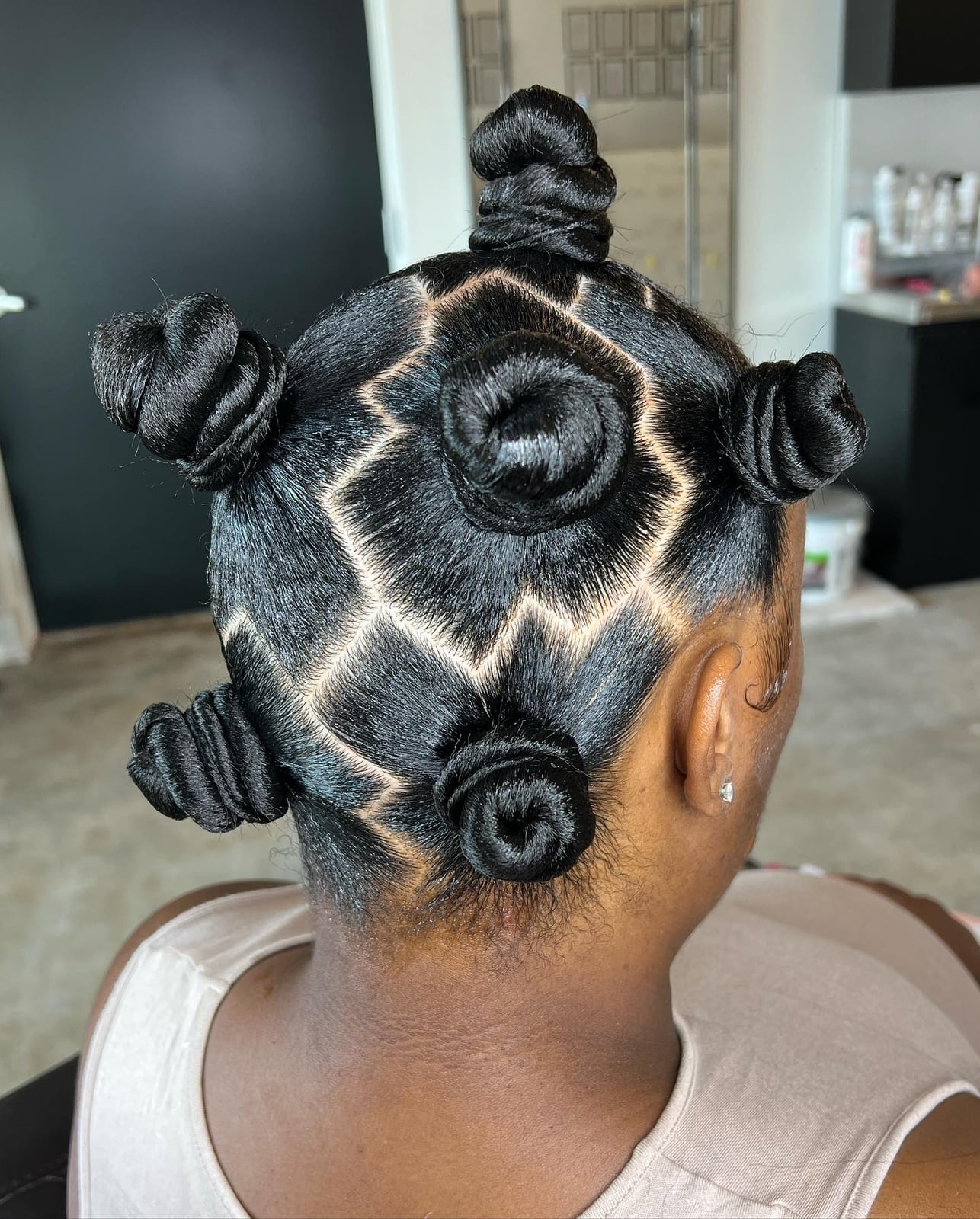
From the back, the scalp becomes a canvas: sharp parting lines carve a geometric pattern into the bantu knots, and the black color makes every line read clearly. The precision of the sections is what does the work here, not the hair itself. Coily, thick texture holds those sharp edges in place, so the design stays crisp rather than blurring into the next knot.
Ask your stylist for: bantu knots forming a geometric pattern on the back of the head. This is a look that asks for a second mirror and a patient hand, but the result is a pattern that shifts with every turn of the head.
Top View Geometric Parting Bantu Knots
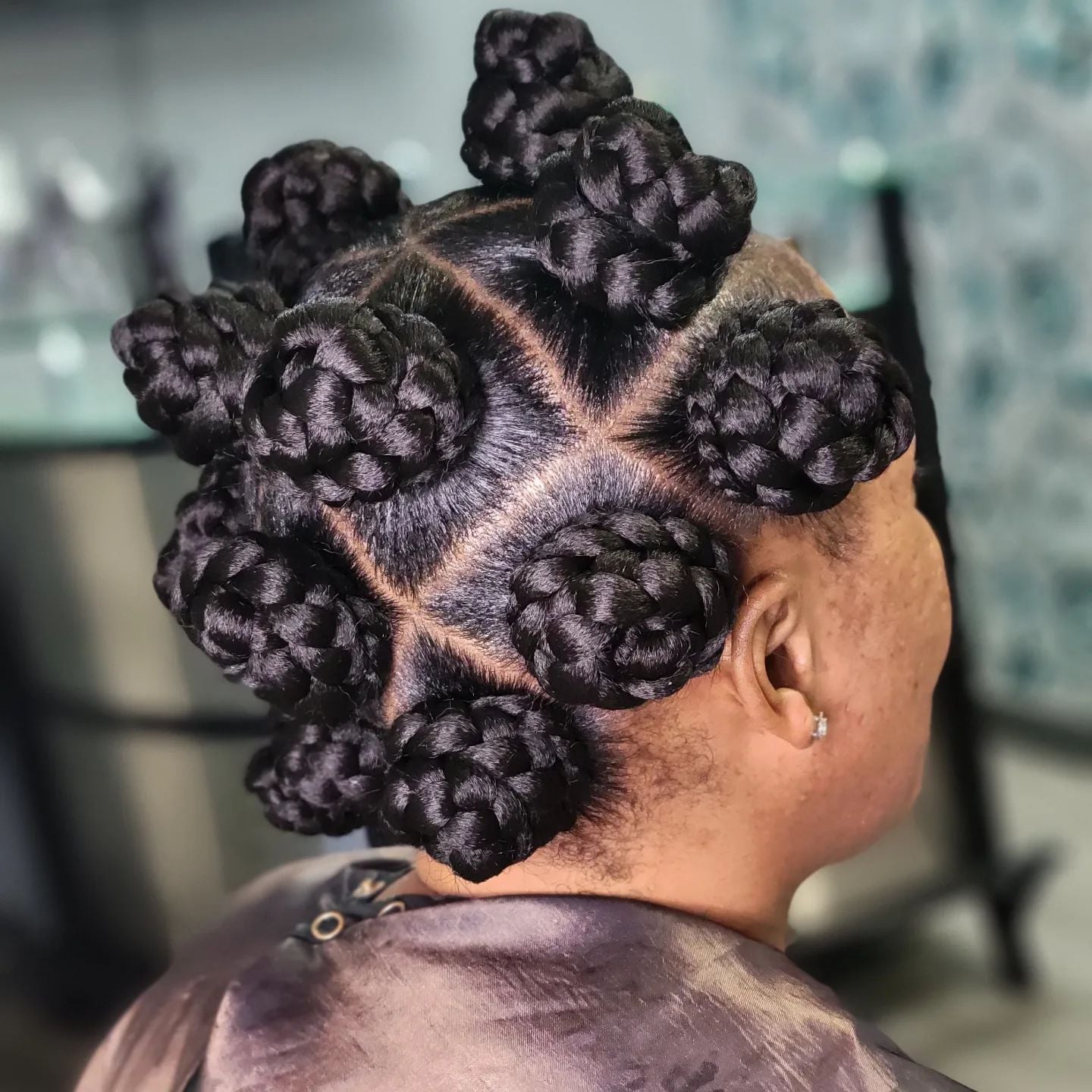
Ever wonder what a hairstyle looks like to someone standing on a balcony above you? The top view of these bantu knots answers that: a precise geometric parting pattern divides the scalp into clean sections, each knot sitting in its own plot of real estate. The black color and coily, thick texture give the lines contrast, so the pattern reads clearly from above. Ask your stylist for: bantu knots with a geometric parting pattern, top-down view. The middle parting anchors the whole design, making the symmetry the point rather than an accident.
Defined Bantu Knots Side Profile
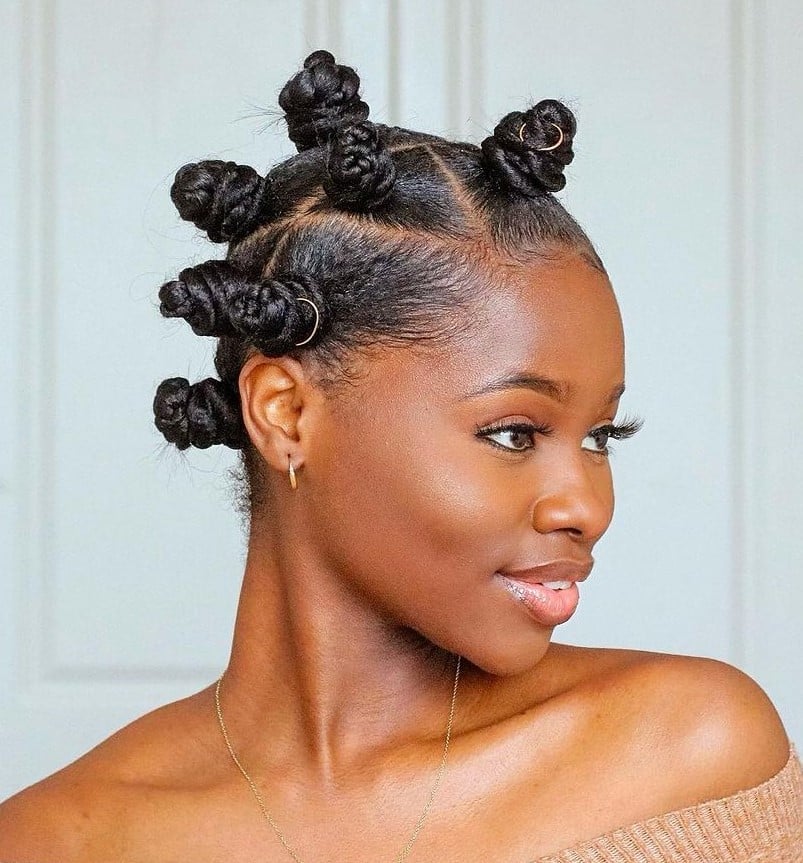
From the side, the shape of each knot matters more than the overall pattern. These bantu knots are wound tightly enough that the coily, thick texture stays visible in the twist, not smoothed into a blur. Neatly smoothed edges keep the side profile clean, so the eye lands on the knot shape itself. Ask your stylist for: well-defined bantu knots with a middle part, side profile. To keep that definition, re-twist any knots that loosen after a few days, and a light setting spray helps the shape hold between washes.
Bantu Knots With Baby Hairs
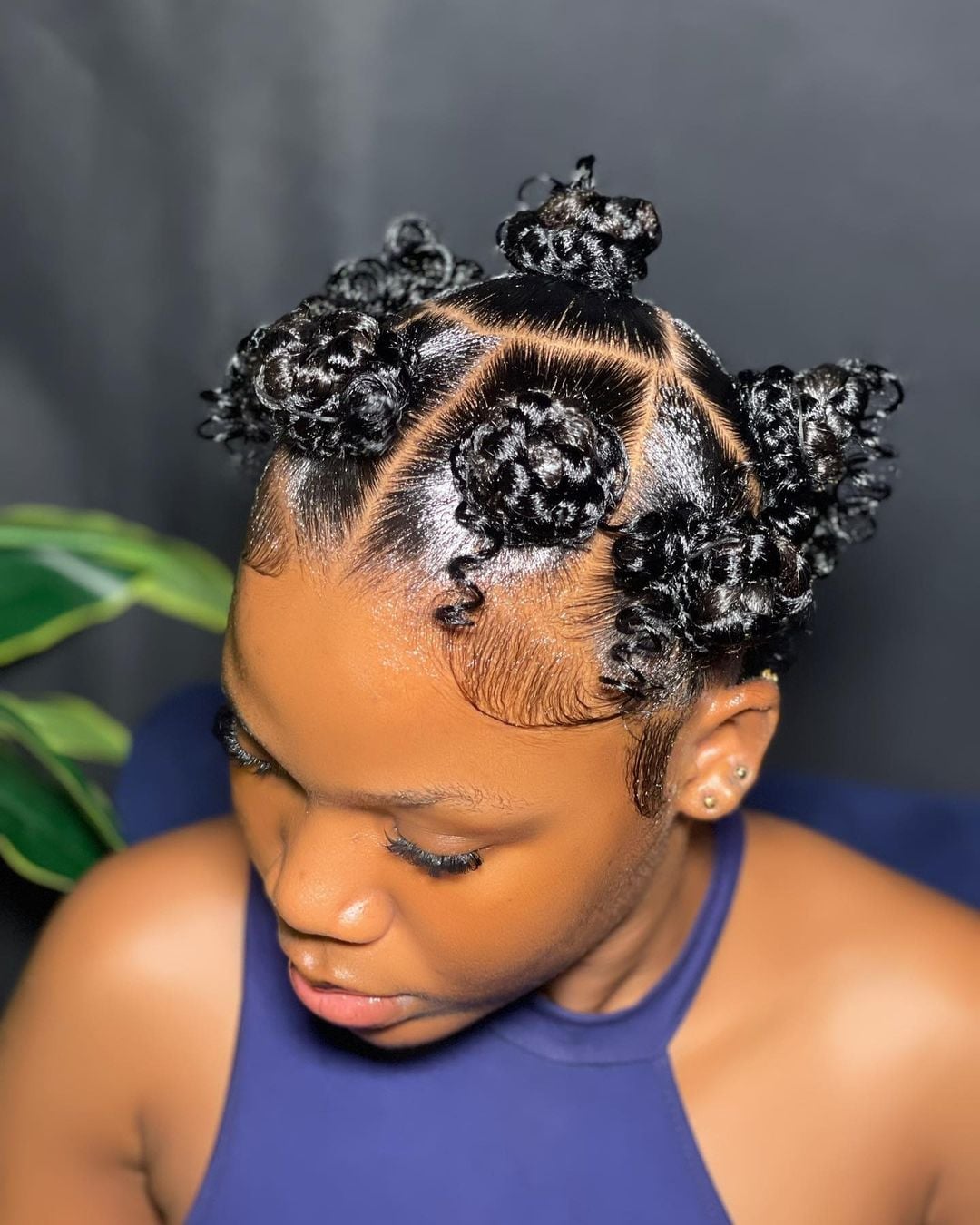
This is not the style where you leave your edges alone. Multiple bantu knots sit in a patterned arrangement, and the baby hairs are sculpted into defined curls that frame the face with a high-gloss finish. The contrast between the structured knots and the soft, curly baby hairs creates a deliberate look. Ask your stylist for: bantu knots with styled baby hairs. DIY is possible if you have a strong-hold gel and a fine-tooth comb, but a salon gets the symmetry and the gloss finish more reliably.
Curly Bantu Knots With Neat Baby Hairs
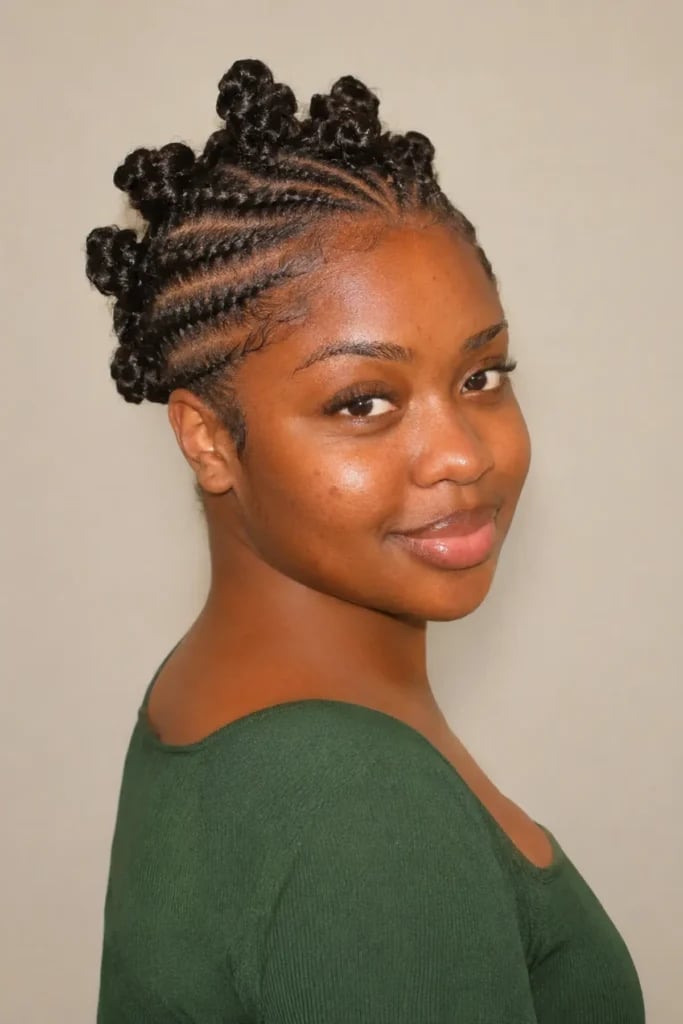
A middle parting splits these multiple bantu knots into two clean halves, with the baby hairs laid flat and curved around the hairline. Curly, thick hair holds this shape well because the natural texture grips the twist from the start. Ask your stylist for: curly bantu knots with neat baby hairs and a middle part. The shine comes from a lightweight serum patted on after the knots are set, not from anything heavy.
Uniform Small Bantu Knots
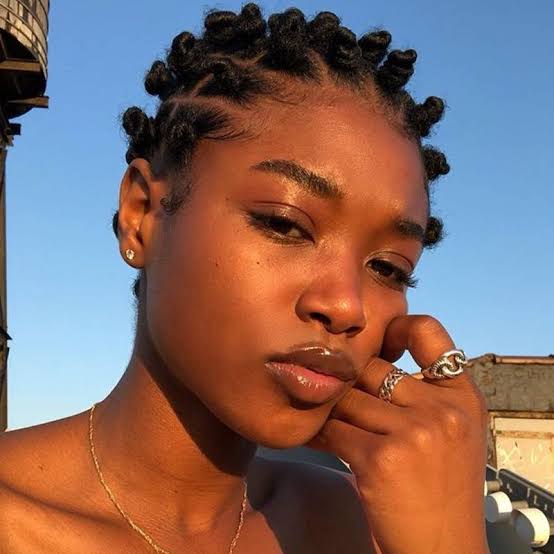
Natural sunlight catches every coil in these uniformly sized small bantu knots. The middle parting and laid baby hairs keep the front precise while the rest of the head shows consistent texture. Ask your stylist for: uniformly sized small bantu knots with laid baby hairs. A rat-tail comb is the tool for keeping knot size identical section to section, and edge control smooths the baby hairs into place.
Numerous Small Bantu Knots
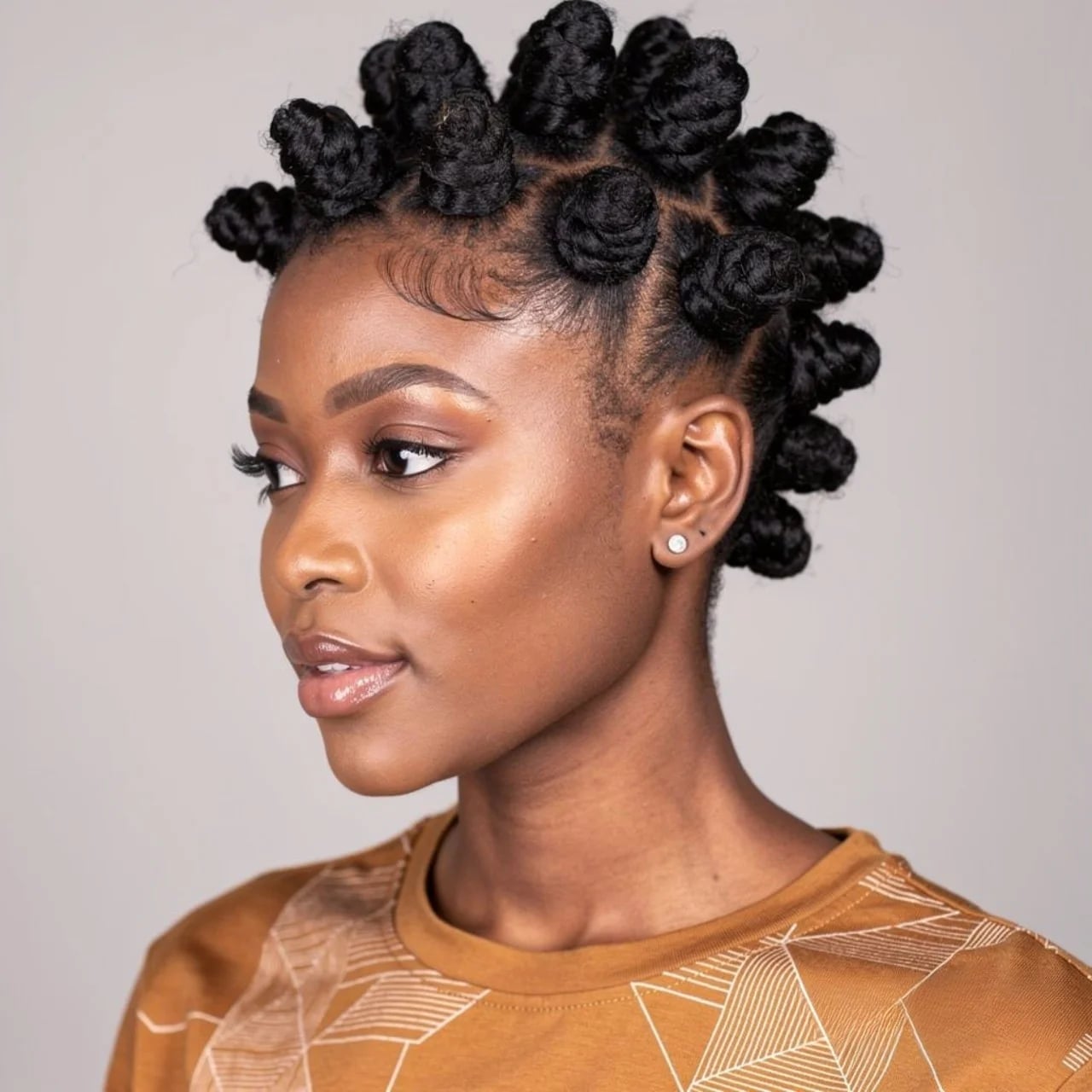
More knots mean more volume, and this ear-length style uses a middle parting to let the texture spread evenly across the scalp. Numerous small bantu knots pull tighter at the roots than a looser, larger set would, so scalp sensitivity is worth considering before you commit. Ask your stylist for: many small bantu knots with a middle part. The dense arrangement gives the hair a lifted, full shape that holds well for a few days.
Double Bantu Knots Top Style
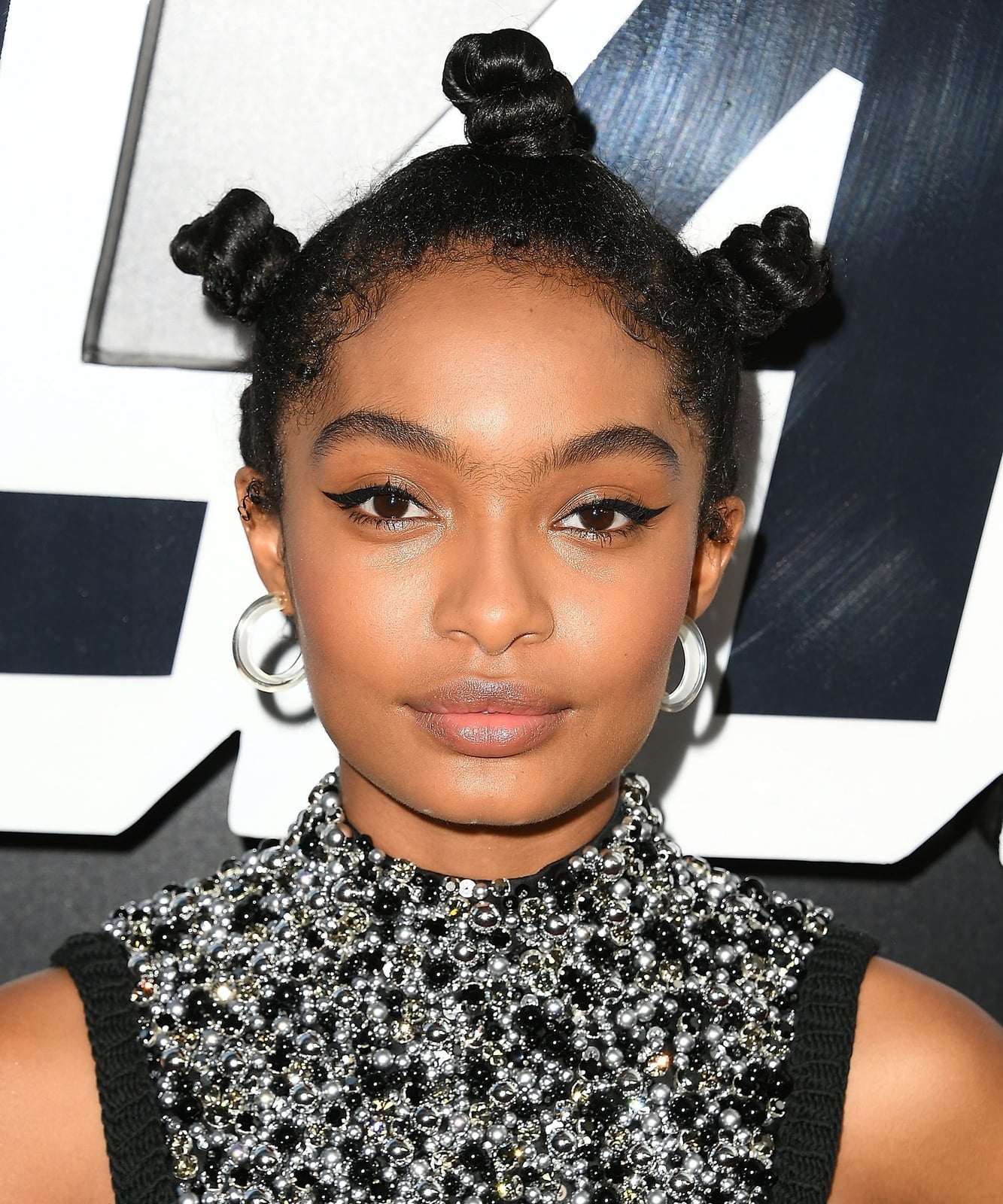
Two large bantu knots on top of the head create a cleaner silhouette than a full set of knots, with the rest of the black, coily hair pulled back and out of the way. It is a faster option for those who want the texture without the sectioning marathon. Ask your stylist for: two large bantu knots on top of the head. The base of each knot needs to be smooth so the style stays put, and a flexible hold spray keeps the pulled-back hair in place.
Bantu Knots With Gold Rings
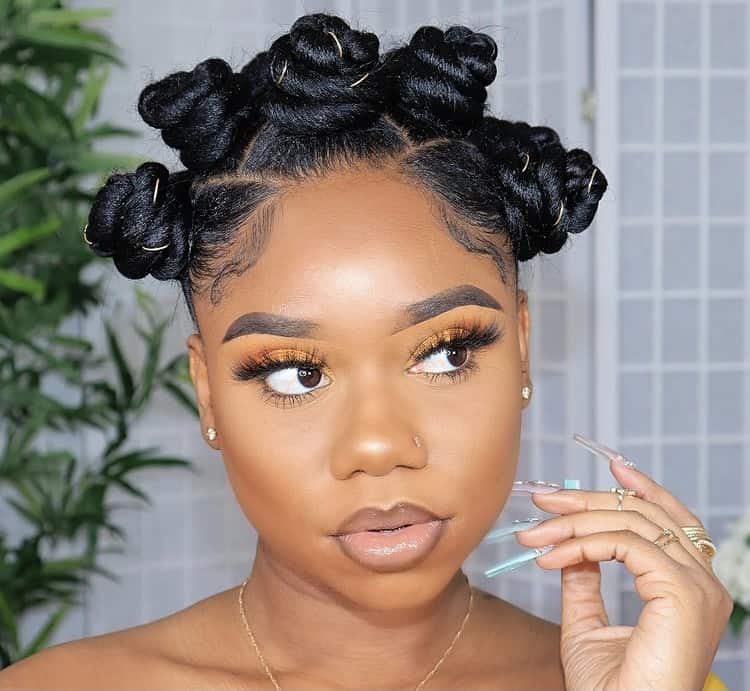
Gold rings add a metallic accent to large bantu knots without changing the structure of the style itself. The middle parting keeps the arrangement symmetrical, and the coily, thick texture holds the knots and the rings in place. Ask your stylist for: large bantu knots adorned with gold rings. The rings slide onto each knot before it fully tightens. This works for parties or special events where a little shine is the point.
Bantu Knots With Decorative Beads
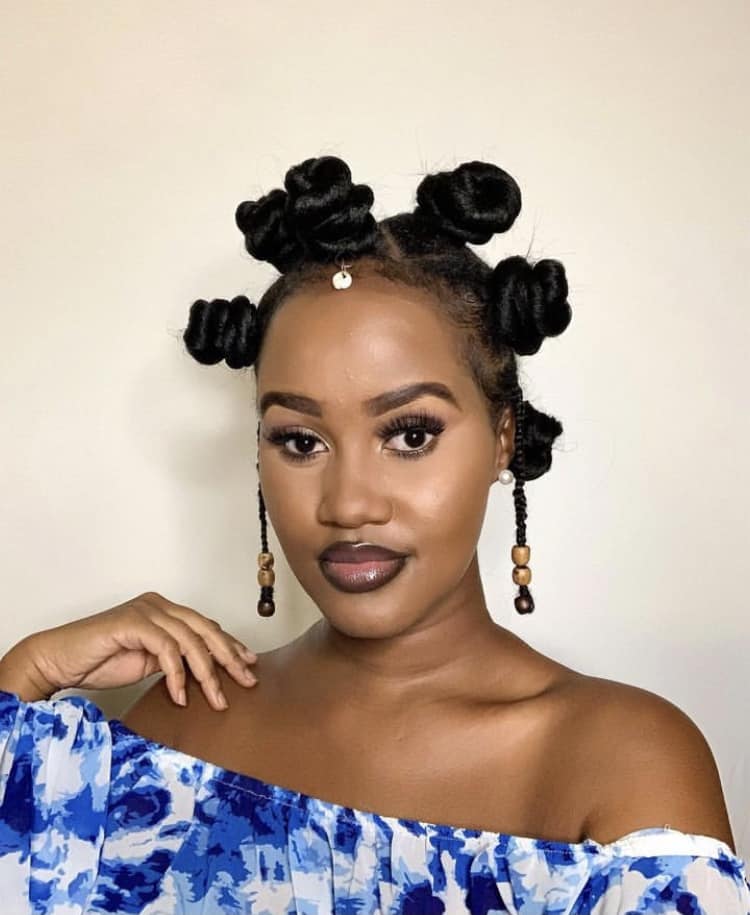
It’s not a knot, it’s a knot with a reward. Multiple bantu knots spread across the head, parted down the middle, with wooden beads threaded onto the braids that extend from each knot. The texture is coily and thick, the color is black, and the beads do the talking. Coily, thick hair types who want to add natural or colorful embellishments will get the most out of this look. Ask your stylist for: bantu knots with wooden beads on braided tails. Secure each bead firmly onto the braid so it stays put. The payoff is a style that works for festivals or summer events, and it’s a salon visit, not a bathroom-mirror job.
Bantu Knots With Braids and Beads
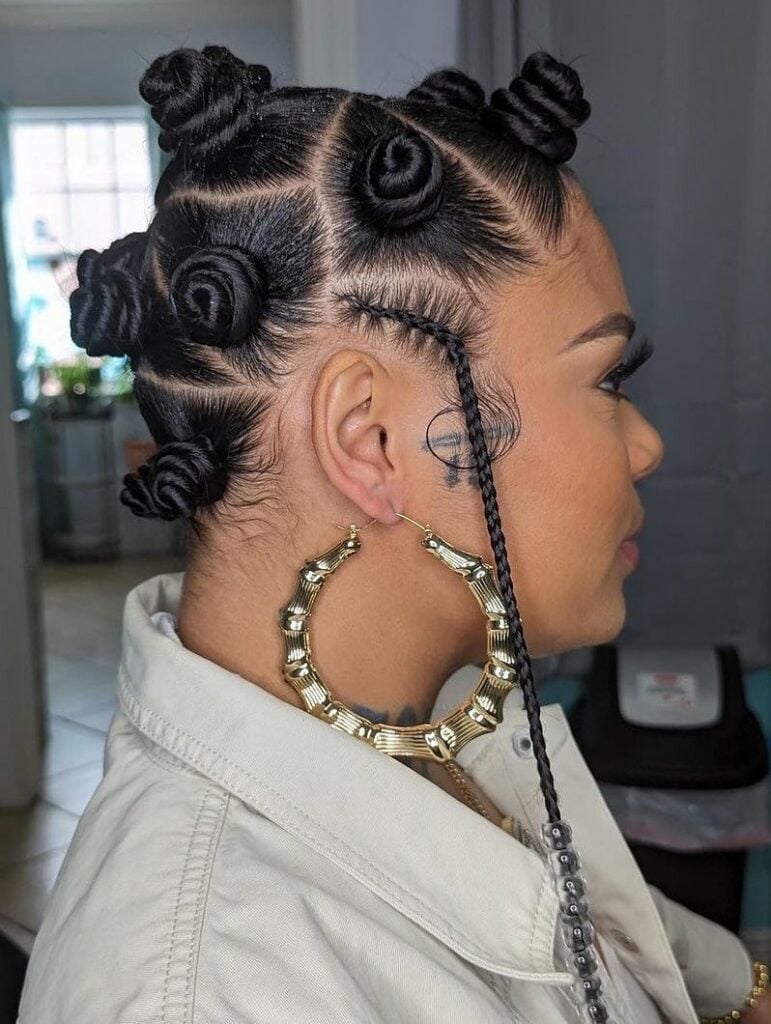
This one earns its keep from the side view. Bantu knots sit on a middle part, with intricate parting lines and several braids that drop down, each finished with dark beads. The hair is black, coily, and thick, and the beads add a tactile element that a plain knot cannot match. Coily, thick hair types who enjoy detailed styling with added texture and embellishments should take note. Ask your stylist for: bantu knots with intricate parting, braids, and dark beads. Condition the hair well before braiding to prevent tangles, and make sure those braids are neat.
Bantu Knots With Blonde Highlights and Beads
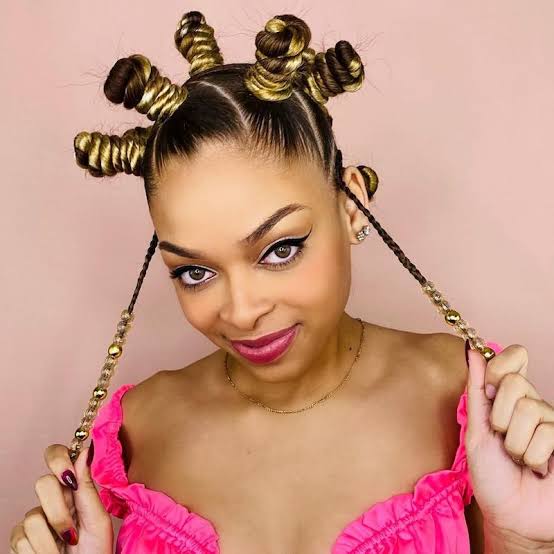
A grid pattern keeps the knots orderly while the color adds contrast. Brown base with blonde highlights, arranged in a grid, with gold beads and braided extensions attached. The texture is coily and thick, and the middle part splits the design cleanly. This style works well for those seeking a multi-dimensional look with decorative elements. Ask your colorist for: bantu knots with blonde highlights, gold beads, and braided extensions. Use a color-safe shampoo and conditioner to keep those highlights from turning brassy. Gently detangle the extensions to maintain the shape.
Bantu Knots With Red Undertones
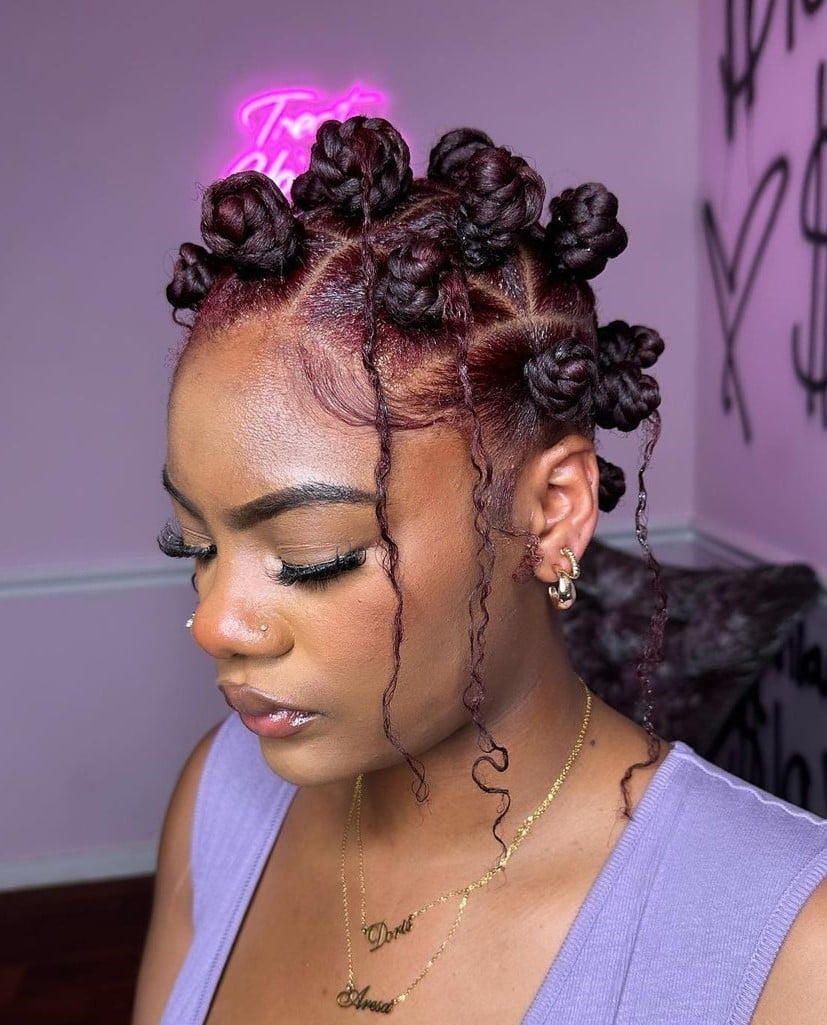
Numerous small bantu knots form a geometric pattern on dark brown hair with subtle red undertones. Loose tendrils frame the face, and the precise parting creates sharp lines between the sections. The side view reveals the intricate mapping of the scalp. Dark brown hair with subtle warmth and intricate styling will find it here. Ask your colorist for: bantu knots with a geometric pattern and subtle red undertones.
The red undertones show best in natural light, so expect them to fade after about four to six weeks. A color-depositing conditioner in a warm tone will stretch the interval between salon visits. Keep the tendrils smooth with a light serum, and the whole thing holds for about a week with careful handling.
Bantu Knots With Braids and Geometric Parting
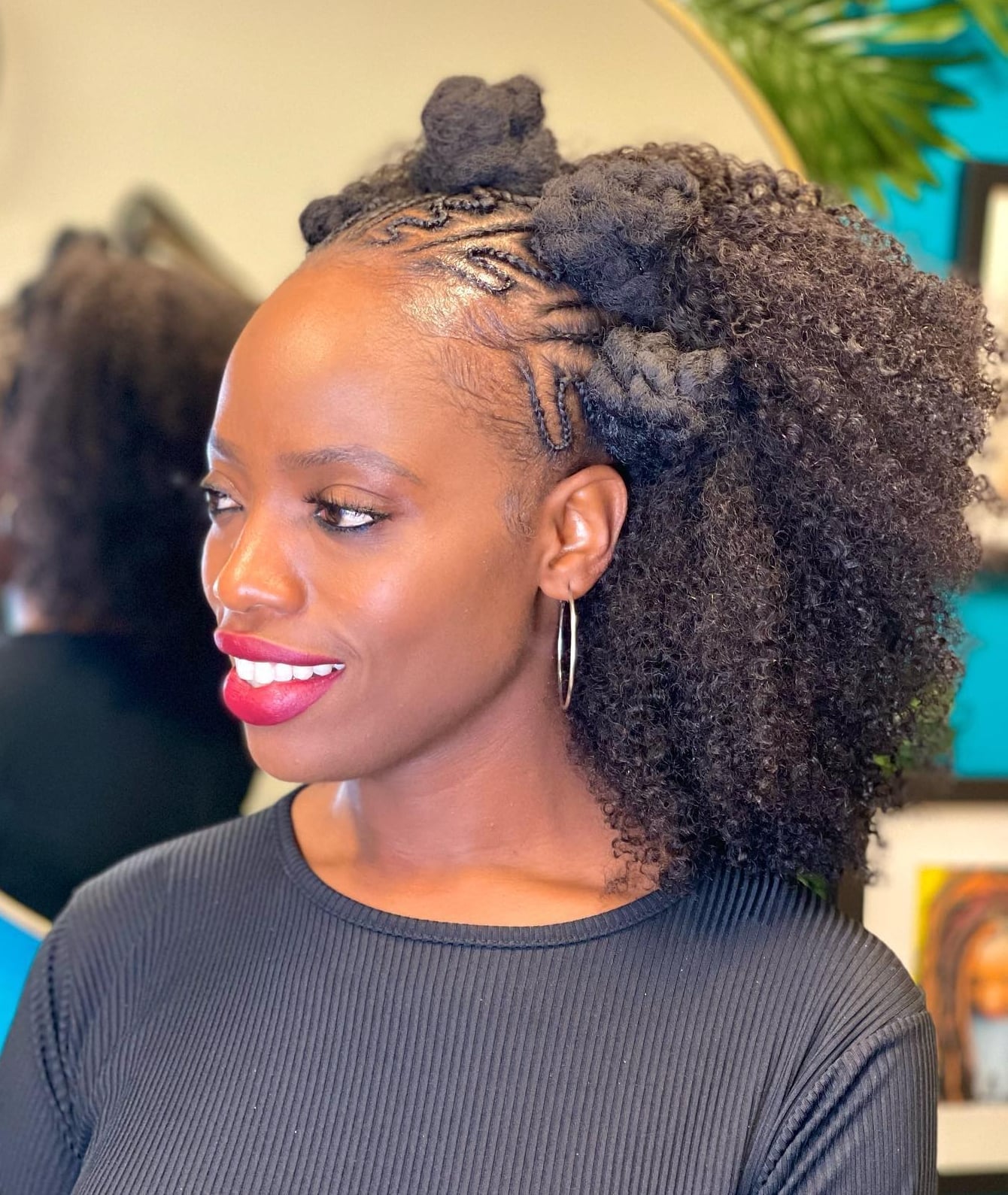
Start with a middle part, then map out the geometric sections on dry, detangled hair. Braid each section from the root to about two inches down, then twist the braid into a knot and secure the end. The hair is black, and the geometric parting is the star of the show. Coily, thick hair types who want a combination of braiding and knotting techniques will get the most mileage from this approach. Ask your stylist for: bantu knots with braids and intricate geometric parting.
This is a salon-level project, not a quick weekend experiment. The precision of the parting and the tightness of the braids determine whether the knots hold for a week or unravel by day two. If you try it at home, use a tail comb and work in small, even sections.
Final Thoughts
For maximum definition and longevity, ensure hair is well-moisturized and detangled before twisting into knots. The parting pattern sets the visual rhythm, so take your time with that step.
- Re-twist and re-knot hair every 5-7 days to maintain shape.
- Moisturize scalp and hair daily with a light oil or spray.
- Protect knots with a silk or satin bonnet at night.
- Consider a deep conditioning treatment every 2-3 weeks.
- Untwist carefully to avoid breakage when taking the style down.
Bantu knots are a timeless protective style with endless creative potential.
