
Feed-in braids start clean at the root and get their heft from added hair, so the part stays sharp and the braid holds its width all the way down. This year, smaller sections and subtler highlights are replacing chunky looks, and natural texture at the ends keeps the style from feeling too uniform.
This collection of 18 Cute Feed in Braids Hairstyles covers the range: quick four-hour installations for simple straight backs, full-day sessions for curved part patterns, and shoulder-length versions that cut down on weight. If you have fine hair that loses body in a standard braid, or you need a style that stays neat past week three without constant retightening, these options work around those limits.
In this article
- Heart-Shaped Feed-In Braids Mid-Back Length
- Thick Stitch Braids With Geometric Parting
- Clean Black Feed-In Braids Mid-Back
- Dark Brown Cornrows Down The Back
- Curved Cornrow Pattern With Loose Braids
- Mixed Braids and Loose Waves Mid-Back
- Braids Updo With Intricate Parting
- Braids High Bun With Cuffs and Beads
- Braided Cornrows to Ponytail
- Heart-Shaped Braids With Curly Ends
- Feed-In Braids With Gold Rings
- Blonde Highlighted Braids With Curly Ends
- Naturally Curly Braids With Gold Rings
- Black Box Braids With Loose Curly Ends
- Honey Highlighted Box Braids Shoulder Length
- Shoulder Length Braids With Curtain Bangs
- Shoulder Length Braids With Grey Highlights
- Blonde Braids With Curly Extensions High Ponytail
- Final Thoughts
01Heart-Shaped Feed-In Braids Mid-Back Length
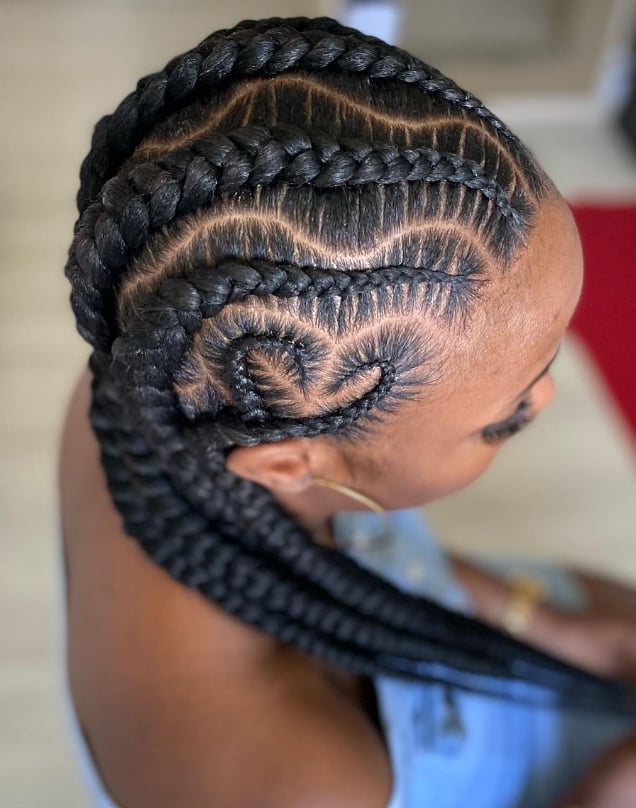
A heart pattern carved into the scalp with feed-in braids is not subtle, and that is the point. The design demands symmetry, so the middle parting and mid-back length help the shape read clearly from every angle. Ask your stylist for: feed-in braids in a heart pattern, mid-back length, black with subtle highlights. The style suits those with thick, straight hair who want a conversation piece rather than a background texture. The braids themselves are uniform and sleek, with the lighter strands catching light without competing with the scalp work.
02Thick Stitch Braids With Geometric Parting
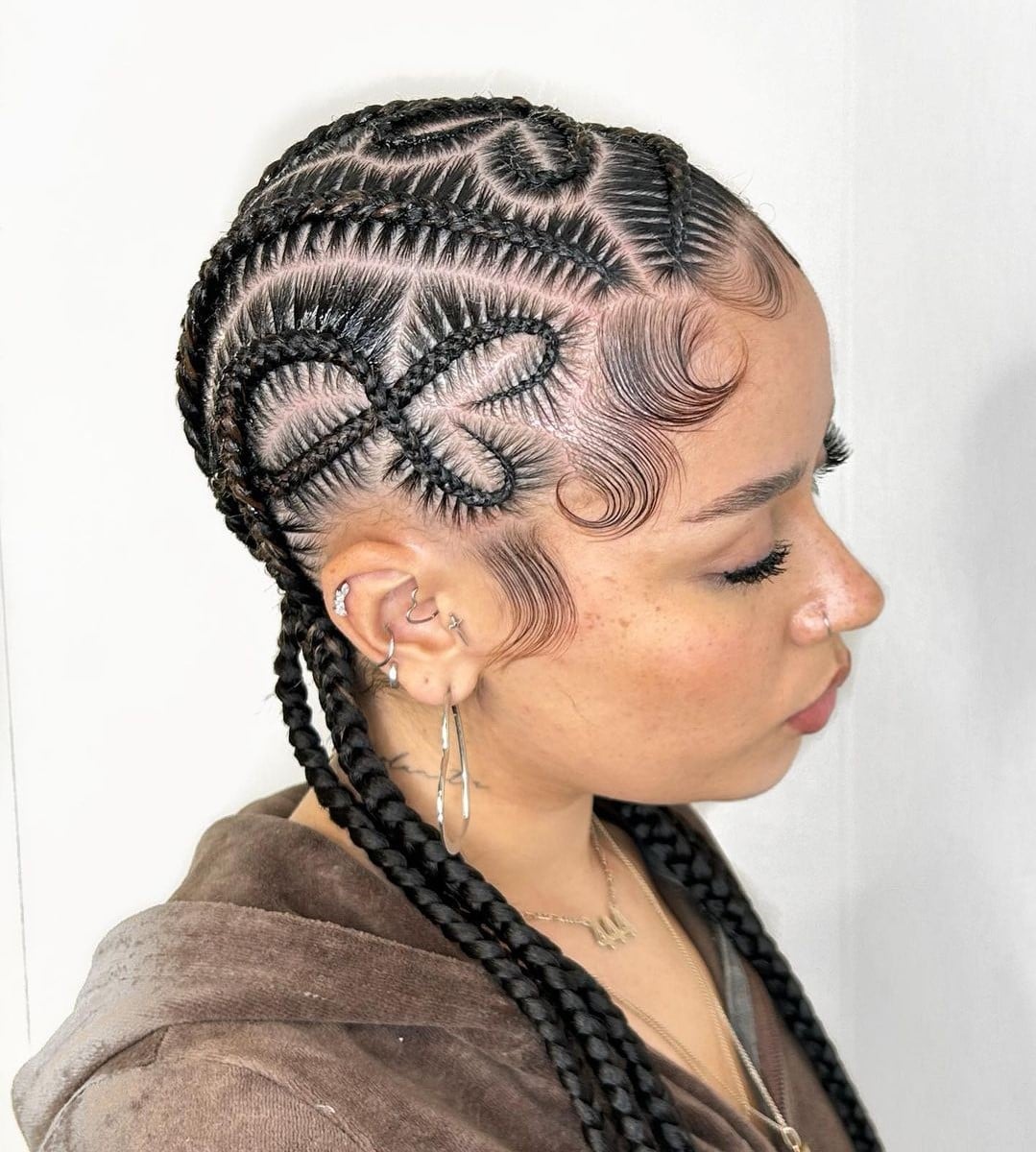
Stitch braids get their name from the tight, visible rows that look stitched onto the scalp. Here the parting is not a simple line: it is a geometric pattern that requires a clear plan before the first section is pulled. Ask your stylist for: thick stitch braids, geometric parting pattern, mid-back length. The baby hairs along the hairline are brushed down and gelled, which keeps the design looking intentional. This is a style for those who want the parting to do as much work as the braids themselves.
03Clean Black Feed-In Braids Mid-Back
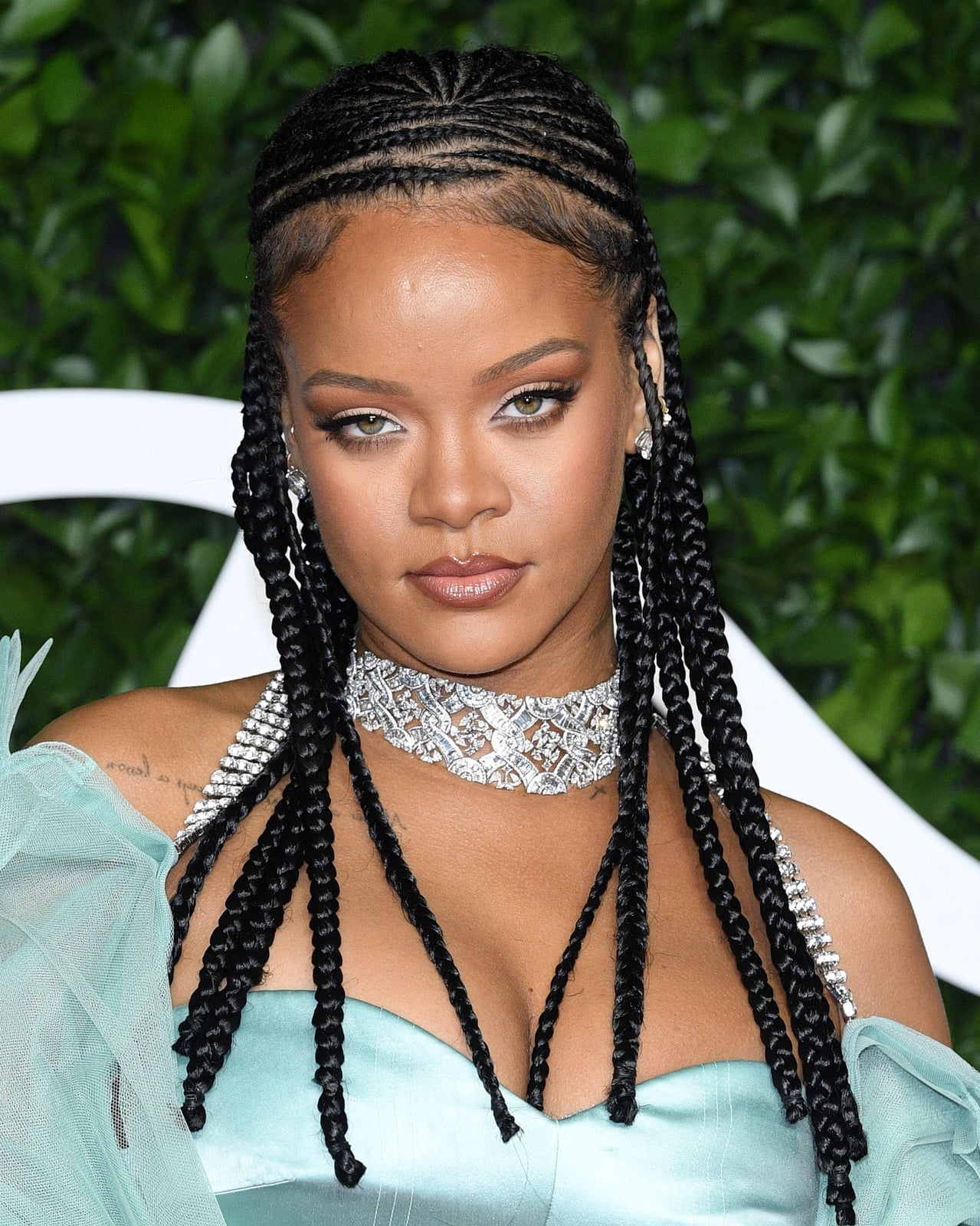
A clean black braid is not the same as a simple braid. The feed-in technique means the extension hair is added gradually, so there are no visible knots or bumps along the shaft, just a uniform thickness from root to tip. Ask your stylist for: clean feed-in braids, mid-back length, black color. The scalp is visible between each braid, which means any loose strand or frizz reads immediately. This style requires more frequent neatening than a looser braid would, especially around the hairline.
04Dark Brown Cornrows Down The Back
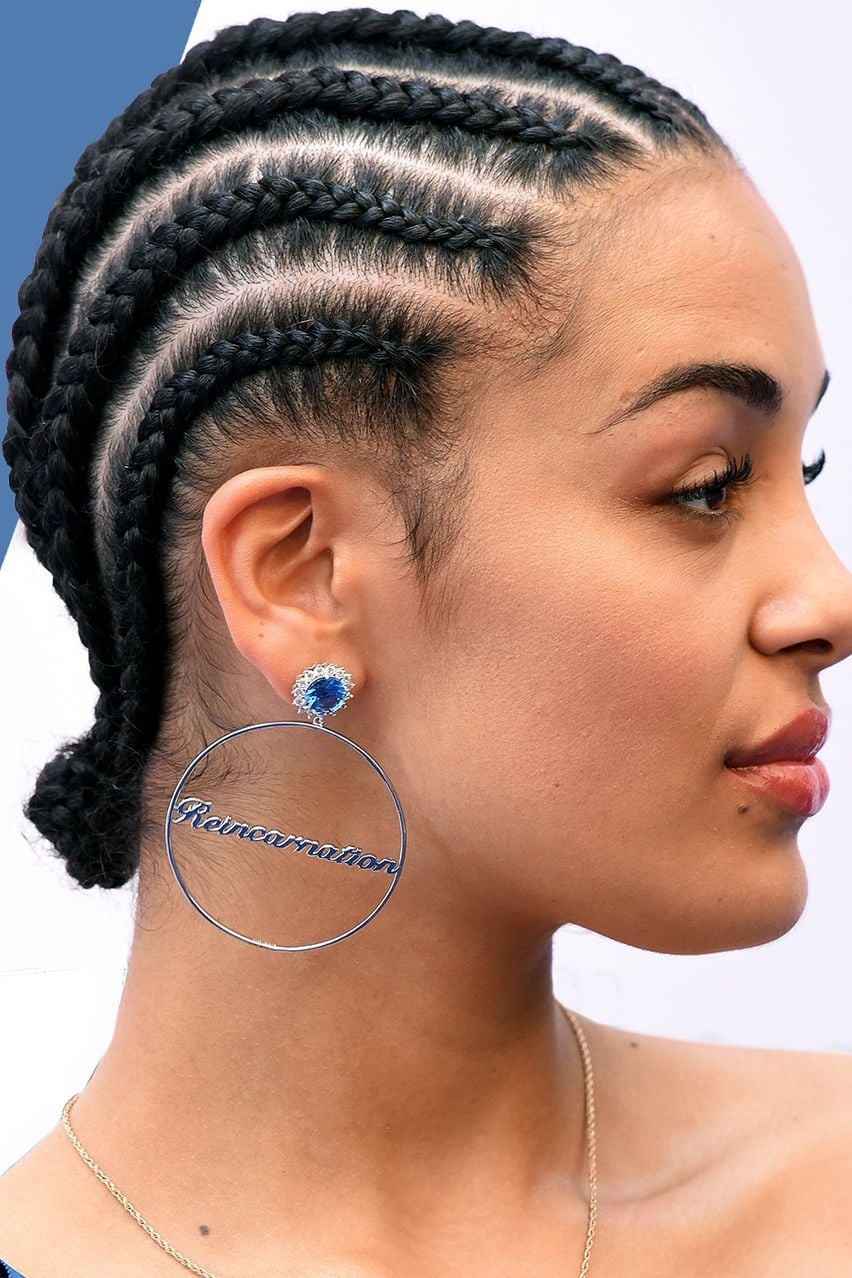
Cornrows hug the scalp tighter than feed-in braids, which creates a flatter, sleeker profile from root to end. Here the dark brown color reads as one solid block, so the texture of the cornrow pattern itself becomes the visual interest. Ask your stylist for: neat cornrows, mid-back length, dark brown color. Where a standard braid has visible volume, a cornrow relies on the ridge of the braid sitting directly against the scalp. It holds well for longer stretches between appointments, but the initial installation takes patience.
05Curved Cornrow Pattern With Loose Braids
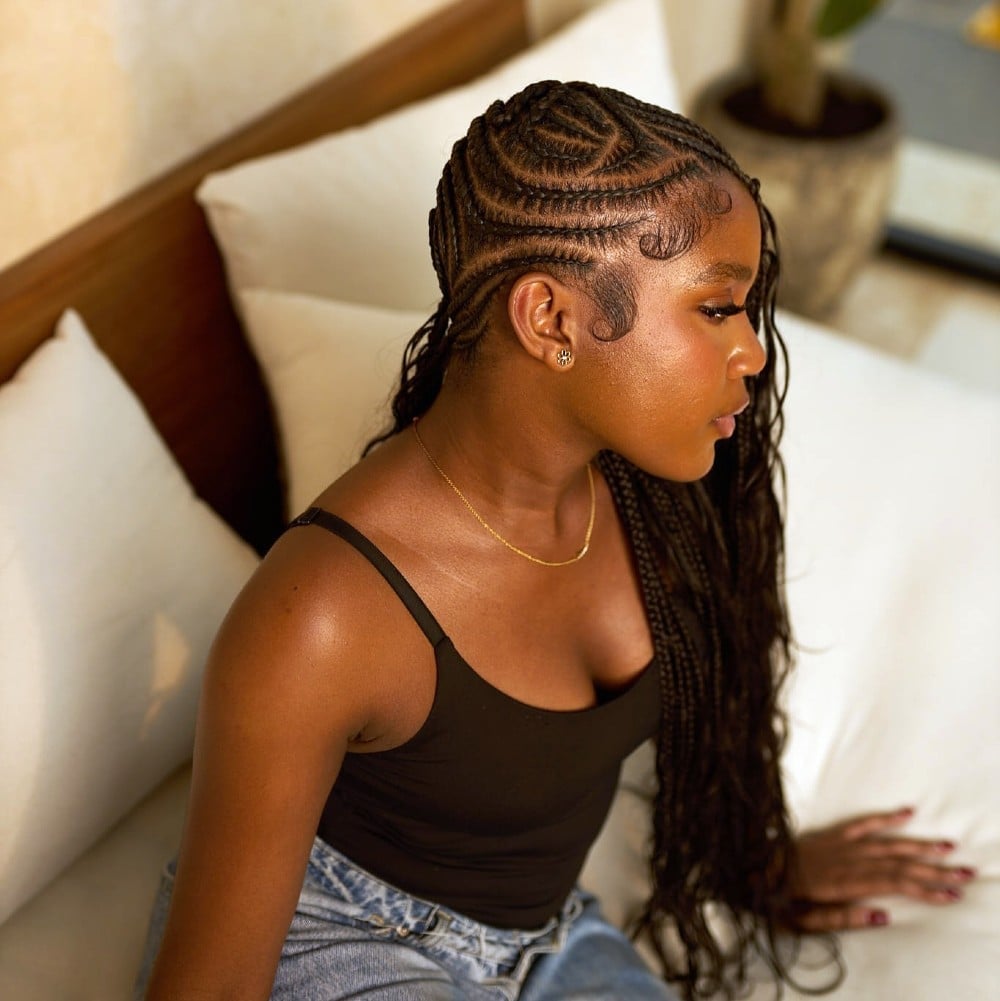
Can you keep the scalp design and still have hair that moves? Yes, if the cornrows stop halfway. Curved rows arc across one side of the head, then release into loose braids that fall to the mid-back. Ask your stylist for: curved cornrows on one side, loose braids to mid-back. The side parting gives the curve room to breathe without crowding the opposite side. The loose section moves differently from the cornrowed section, so the overall shape changes as you turn your head. It is a hybrid that keeps the pattern from feeling rigid.
06Mixed Braids and Loose Waves Mid-Back
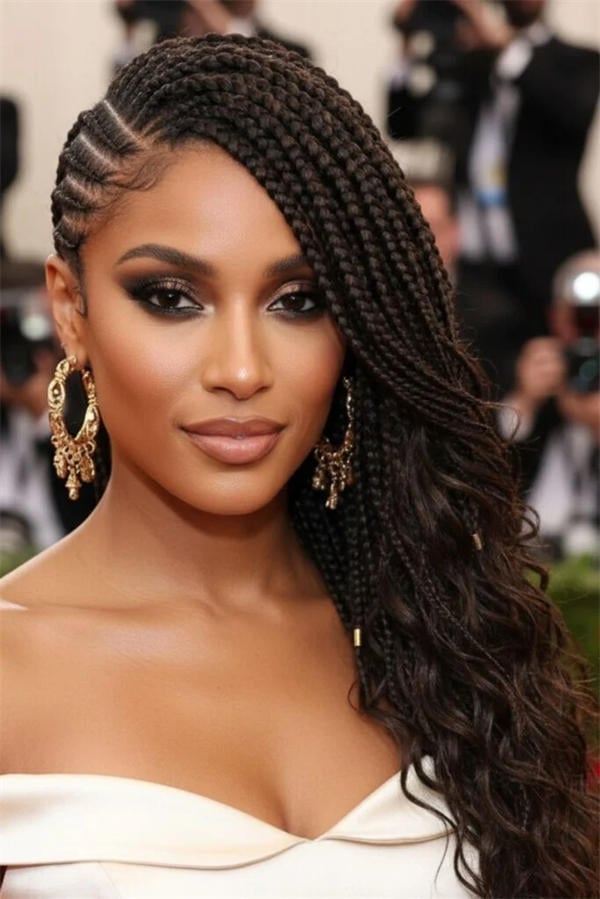
The clever design here keeps the scalp neat with thin feed-in braids starting from a side parting, then lets the length relax into loose waves. Thick, wavy hair at mid-back length holds the contrast best, so the braided section stays taut while the wavy portion has enough weight to fall smoothly. Ask your stylist for: feed-in braids transitioning to loose waves, mid-back length, side parting. Gently separate the wavy ends with your fingers to enhance their texture and volume. Do not comb them out.
07Braids Updo With Intricate Parting
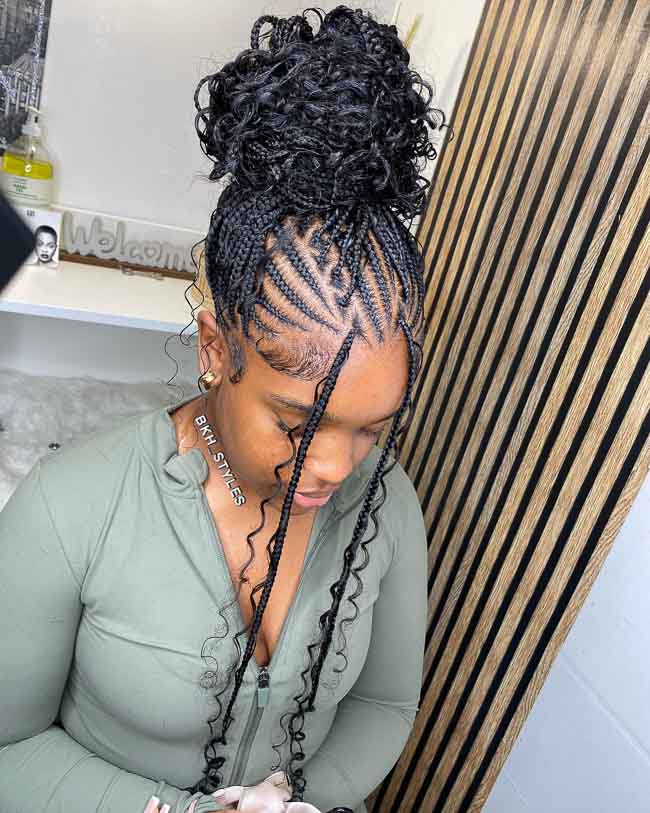
A geometric parting pattern on the scalp demands precision from the start, since every braid follows that map to the high bun. The braids feed into loose wavy strands that are gathered up, with a few left out to frame the face. Plan for a full salon session: the intricate parting alone takes time to section correctly. Mid-back length gives enough hair to build the bun with volume. Ask your stylist for: braids with intricate scalp pattern, high bun, loose wavy ends. Secure the bun firmly with bobby pins and a strong-hold hairspray for longevity through a long evening.
08Braids High Bun With Cuffs and Beads
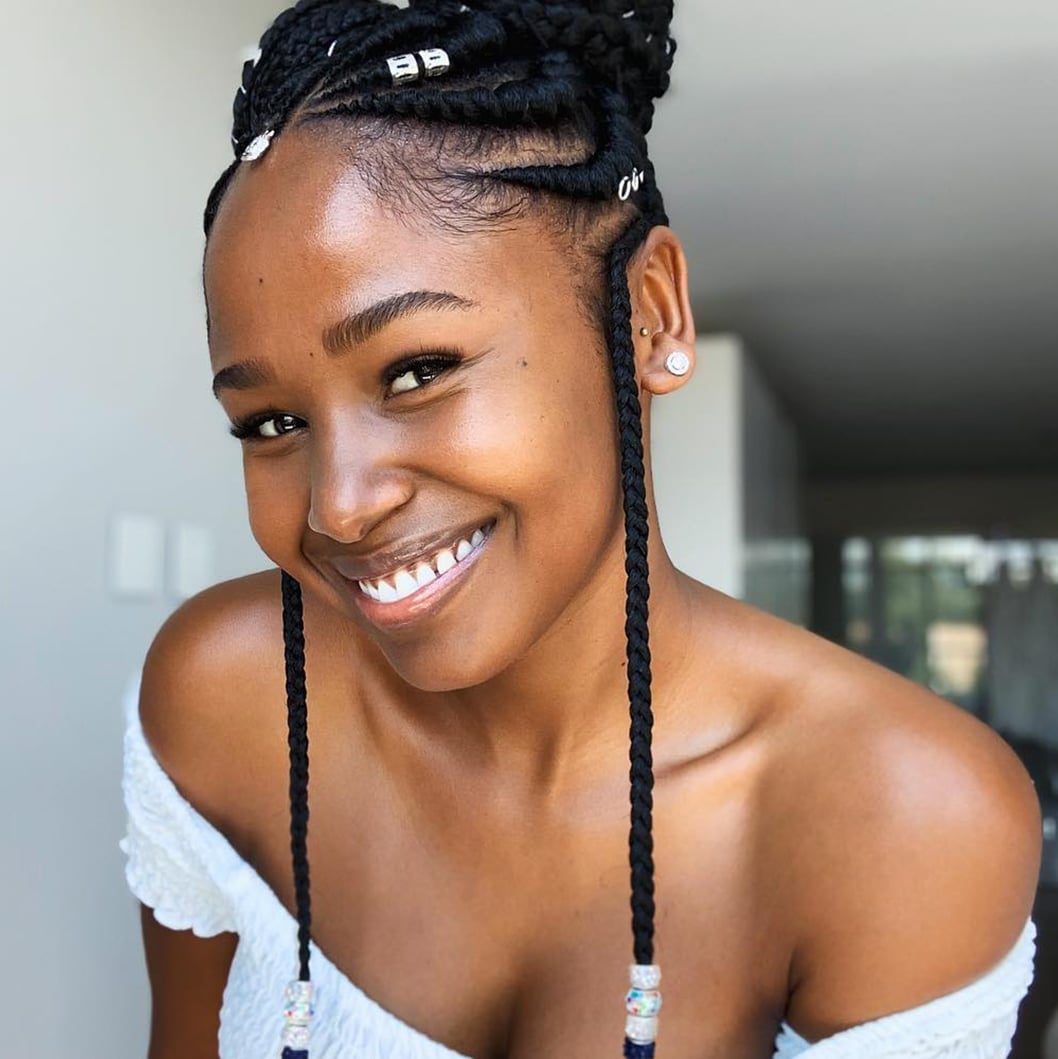
How do you ask for metal cuffs and clear beads woven into a braided high bun without sounding like you are guessing? You name the exact placement. The cuffs sit along the loose braids that fall to mid-back, while the beads punctuate the bun itself. Small feed-in braids keep the scalp tidy and the base secure. Ask your stylist for: feed-in braids into a high bun, loose braids with cuffs and beads. Attach accessories carefully to avoid snagging or breaking the braids. Straight, thick hair at mid-back length works best here, as it holds the bun shape without excess bulk.
09Braided Cornrows to Ponytail
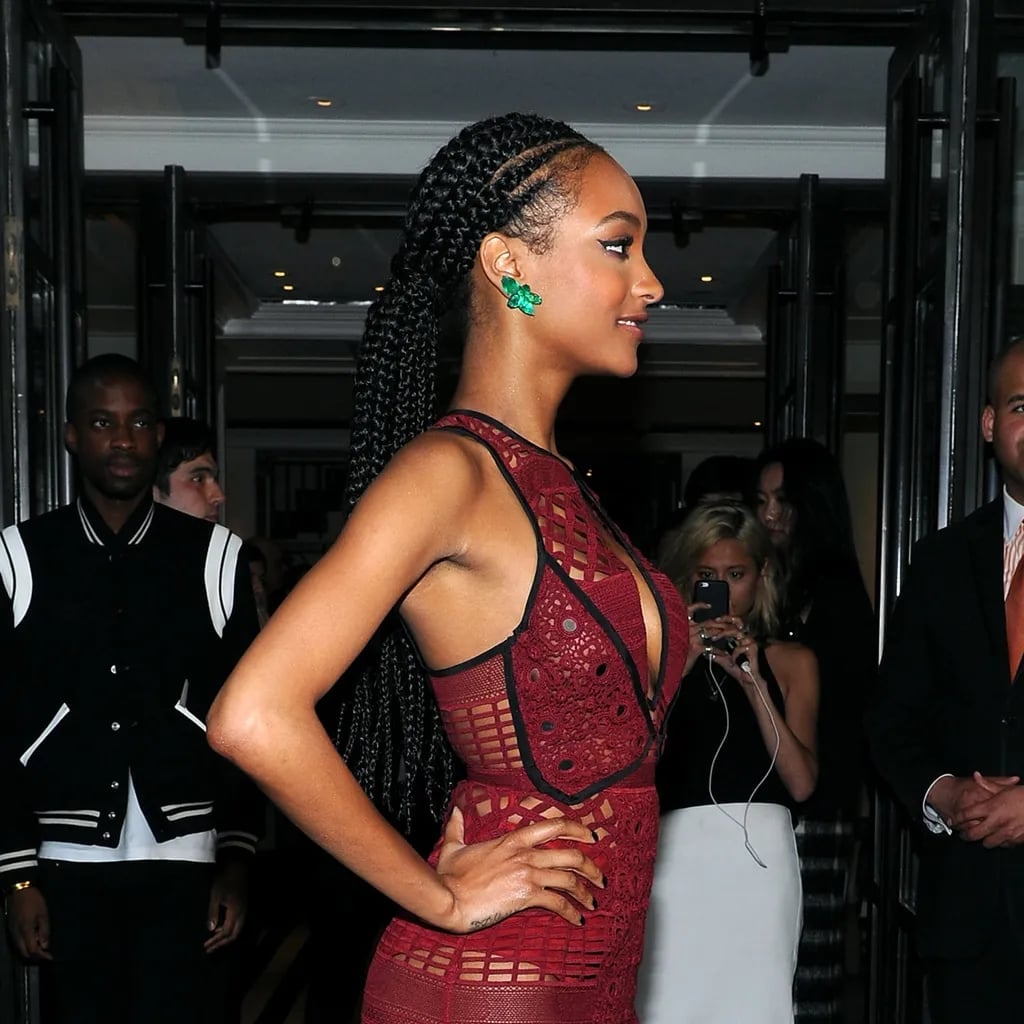
Neat cornrows that feed into a single thick ponytail wear well between washes. The middle parting keeps the scalp visible and the rows straight, while the ponytail gathers all that length into one coil. Coily, thick hair at mid-back length gives the ponytail natural body without extensions. Ask your stylist for: cornrows leading to a long coily ponytail, mid-back length. Use a satin scrunchie to tie the ponytail to prevent breakage at the elastic point. A trim every eight weeks keeps the ends from fraying against the band.
10Heart-Shaped Braids With Curly Ends
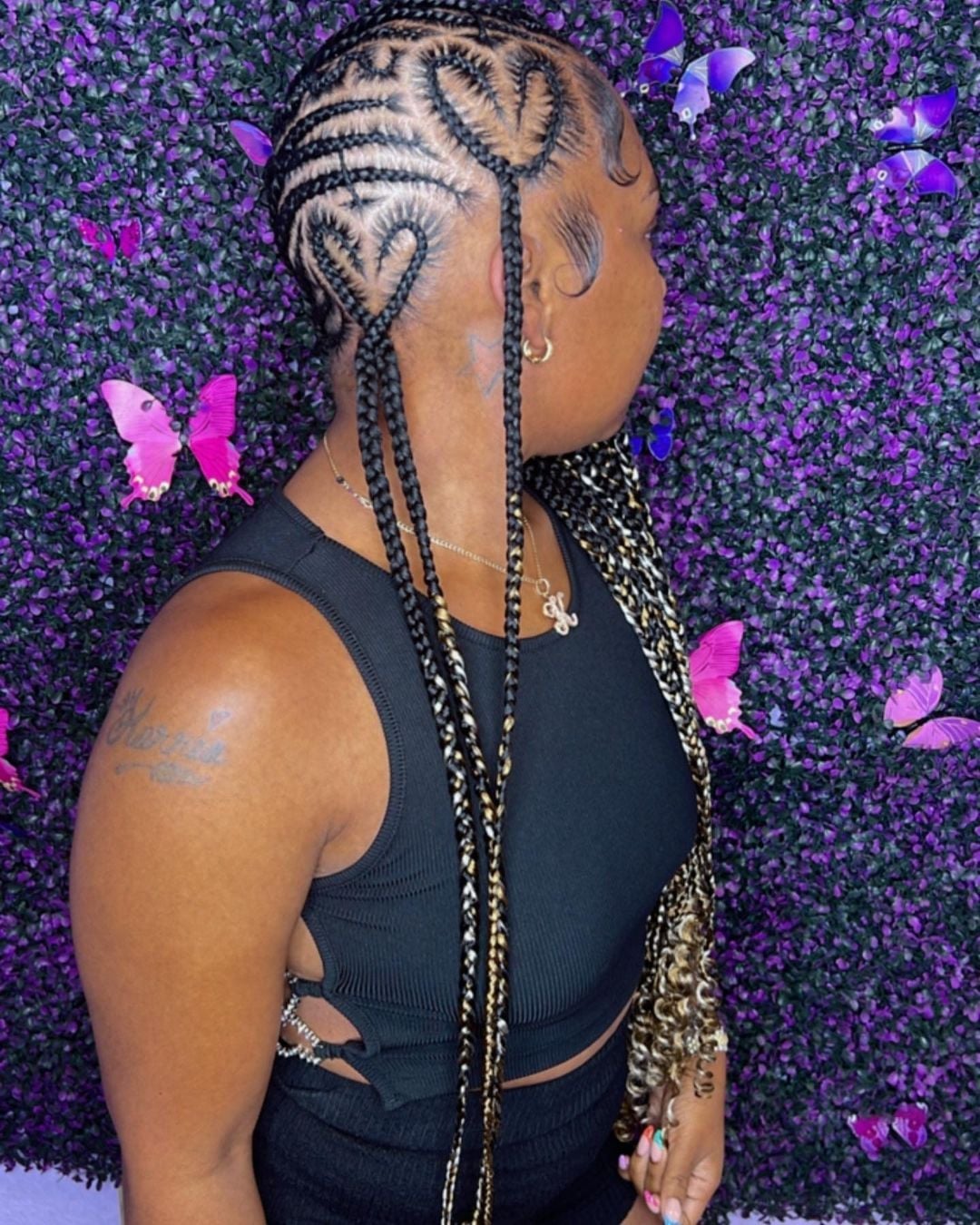
The heart shapes near the front are built by redirecting the feed-in braids into curved sections before they continue down the scalp. That pattern requires a steady hand and a clear plan before the first braid starts. Once the braids reach mid-back, the ends are left curly, creating a soft finish against the structured top. The black base with blonde highlights makes the heart shapes read clearly against the scalp. Ask your stylist for: heart-shaped feed-in braids, curly ends, black and blonde mix. Apply a curl-defining cream to the braided ends to maintain their shape and bounce.
11Feed-In Braids With Gold Rings
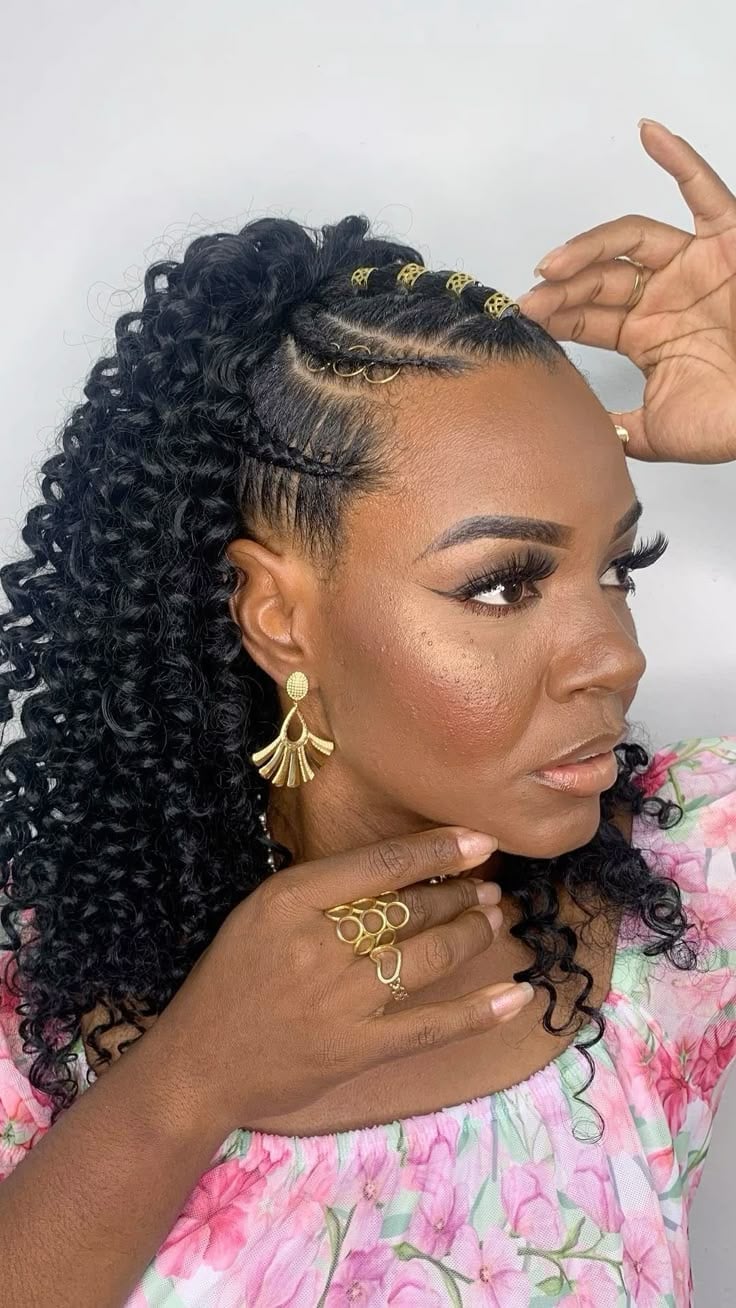
Thin feed-in braids with curly ends and subtle blonde highlights meet their match in gold rings placed along the hairline. This look suits those with thick, naturally curly hair that reaches mid-back. Ask your stylist for: feed-in braids with curly ends, mid-back length, gold rings. The rings slide onto individual braids and stay put without pinching; just check they aren’t too tight before you walk out.
12Blonde Highlighted Braids With Curly Ends
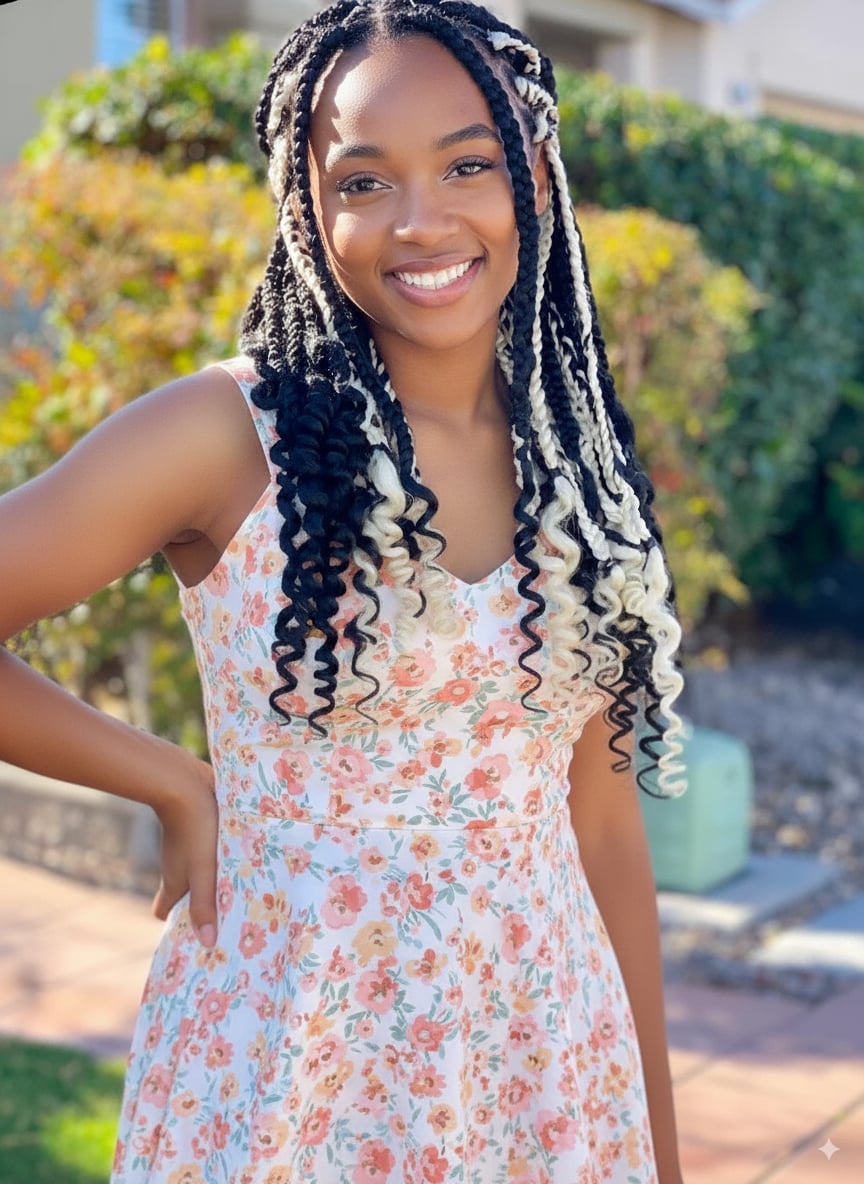
Blonde highlights woven into black feed in braids add dimension without a full color commitment. The contrast between the dark base and lighter strands keeps the eye moving, especially with curly ends that reflect light. This design works best on thick, curly hair at mid back length. Solid dark braids appear as one block; here the highlights break it up, so you get depth without extra bulk.
13Naturally Curly Braids With Gold Rings
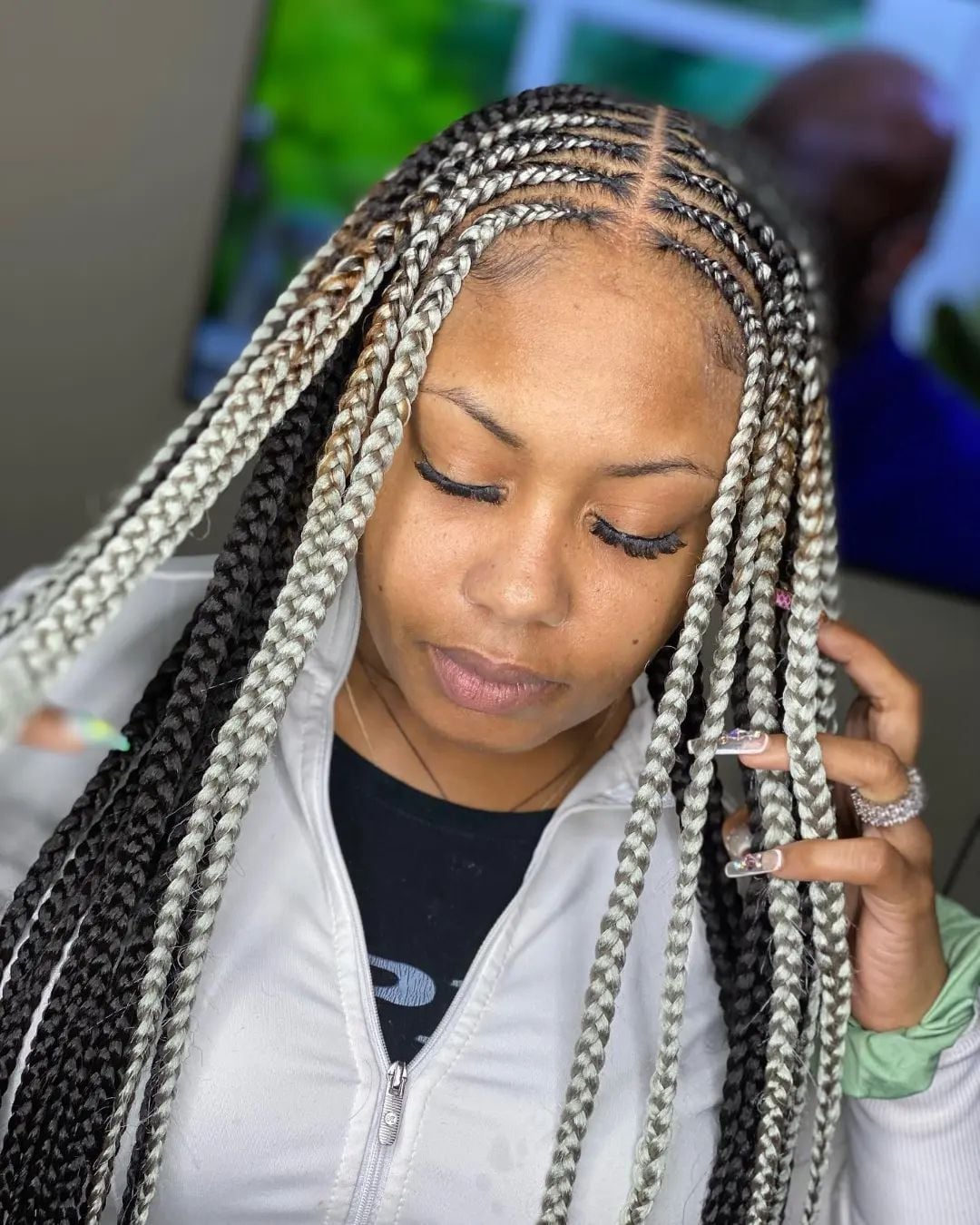
When your hair is already curly and thick, feed in braids that start with your natural texture hold the gold rings better and longer. The curly ends need regular hydration to stay defined, so a leave in conditioner becomes your evening routine. This is a salon only setup, but the payoff is a style that moves with your curl pattern instead of fighting it. The gold rings stay secure through a few washes, though you may need to nudge them back into place after sleeping.
14Black Box Braids With Loose Curly Ends
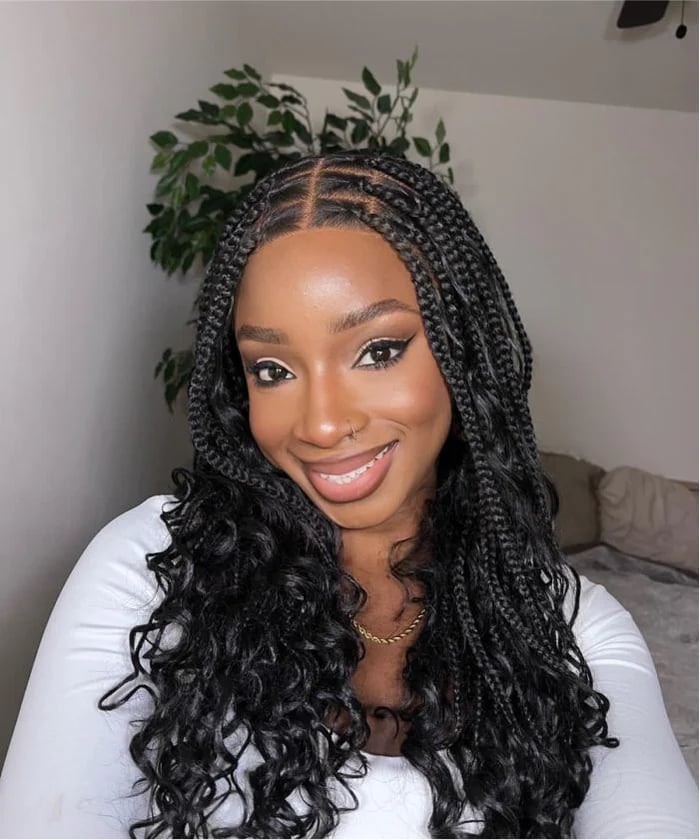
Box braids with loose, wavy ends look more relaxed than their straight-tipped cousins. The curly finish requires low heat to keep the pattern from unraveling into frizz. This is a salon only install, and the ends will need refreshing every few weeks if you want the curls to stay distinct. Skip this one if you prefer a set it and forget it braid. The texture demands attention.
15Honey Highlighted Box Braids Shoulder Length
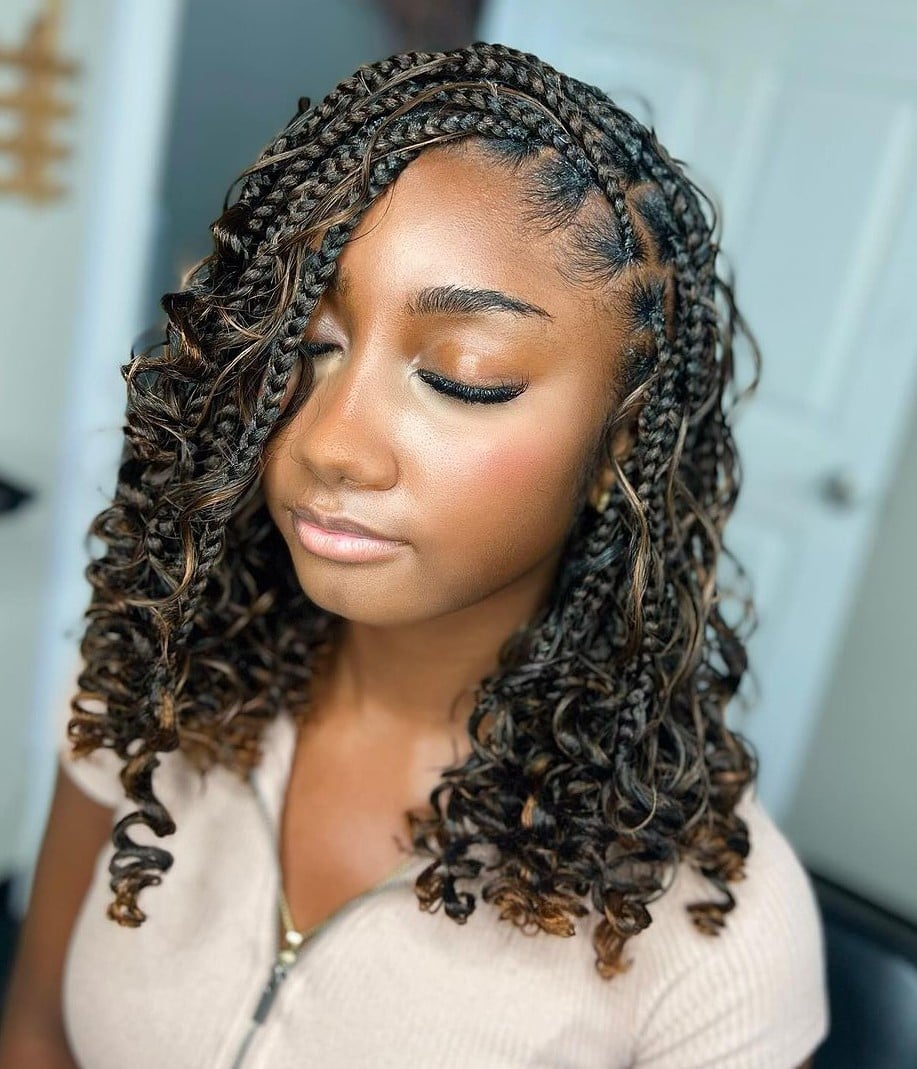
Shoulder-length box braids with honey highlights soften the jawline without the weight of longer extensions. The subtle warmth of the highlights breaks up the dark base, making the style read lighter overall. This length suits anyone who wants movement without mid-back commitment. Ask your stylist for: shoulder-length box braids with honey highlights and curly ends. The wavy ends frame the face, not the shoulders, so the visual weight stays where you want it.
16Shoulder Length Braids With Curtain Bangs
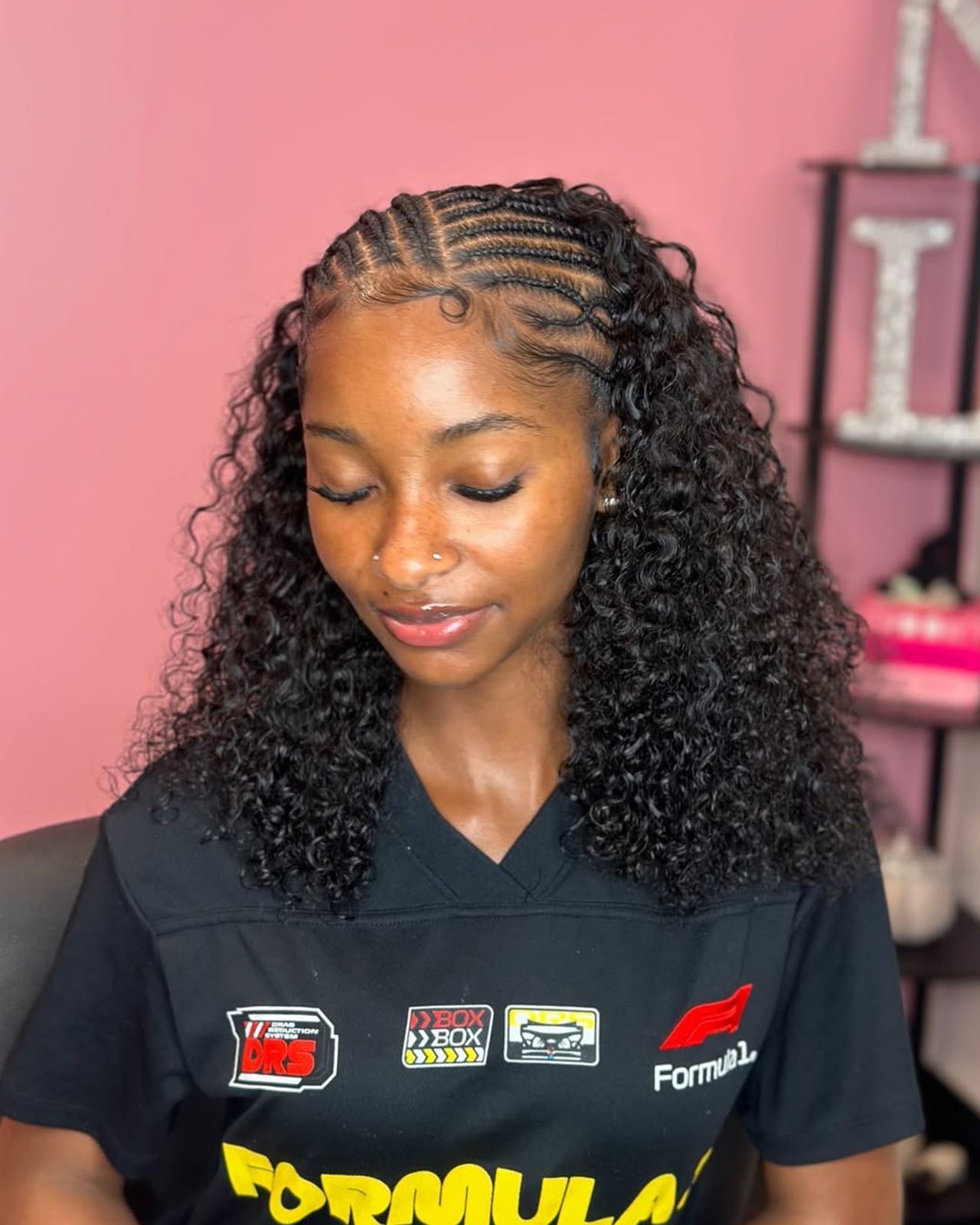
This is not your standard feed-in braid set with a blunt fringe. Here, the braids incorporate curly extensions and fall to shoulder length, while soft curtain bangs frame the face from a middle parting. The black color keeps the look grounded, and the wavy, thick texture gives the bangs actual movement instead of lying flat. Ask your stylist for: shoulder-length braids with curly extensions and curtain bangs. A texturizing spray on the bangs and loose curls enhances that piece-y separation. This is a solid everyday option for anyone who wants the polish of braids without sacrificing a softer, face-framing effect.
17Shoulder Length Braids With Grey Highlights
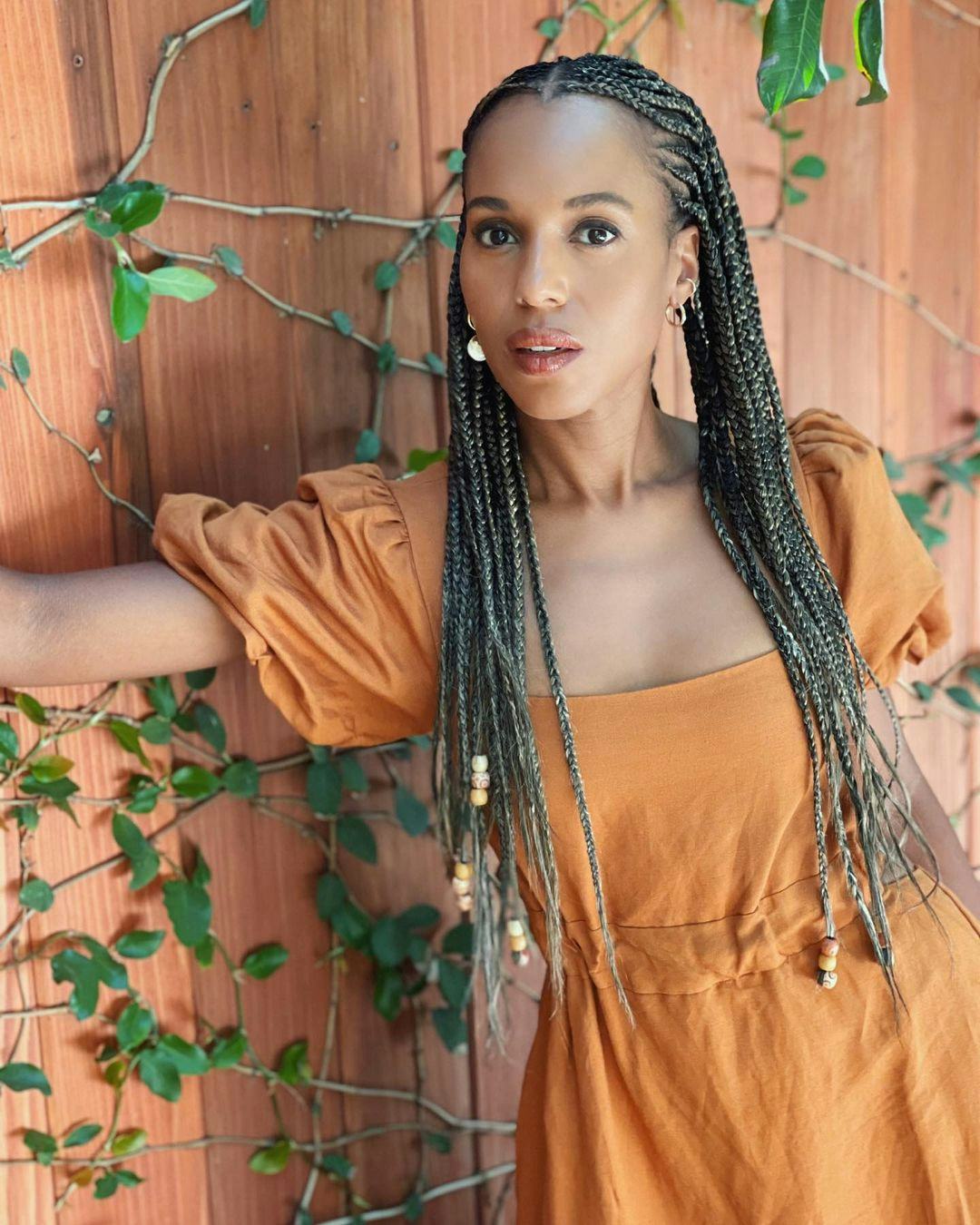
Grey highlights on black braids create a subtle, low-contrast look that appears natural. The thin, subtle streaks here are woven through shoulder-length feed-in braids, with a middle parting keeping the scalp pattern clean and the medium, wavy texture smooth. The contrast is low-key but visible enough to catch a second glance.
The upkeep is straightforward. Since the grey is woven into the braiding hair, it does not require toning the way a dye job would. What matters more is keeping the braids themselves from drying out. A regular deep conditioning treatment every couple of weeks will maintain the wavy texture and prevent frizz from dulling the highlights. Ask your stylist for: shoulder-length feed-in braids with subtle grey highlights.
18Blonde Braids With Curly Extensions High Ponytail
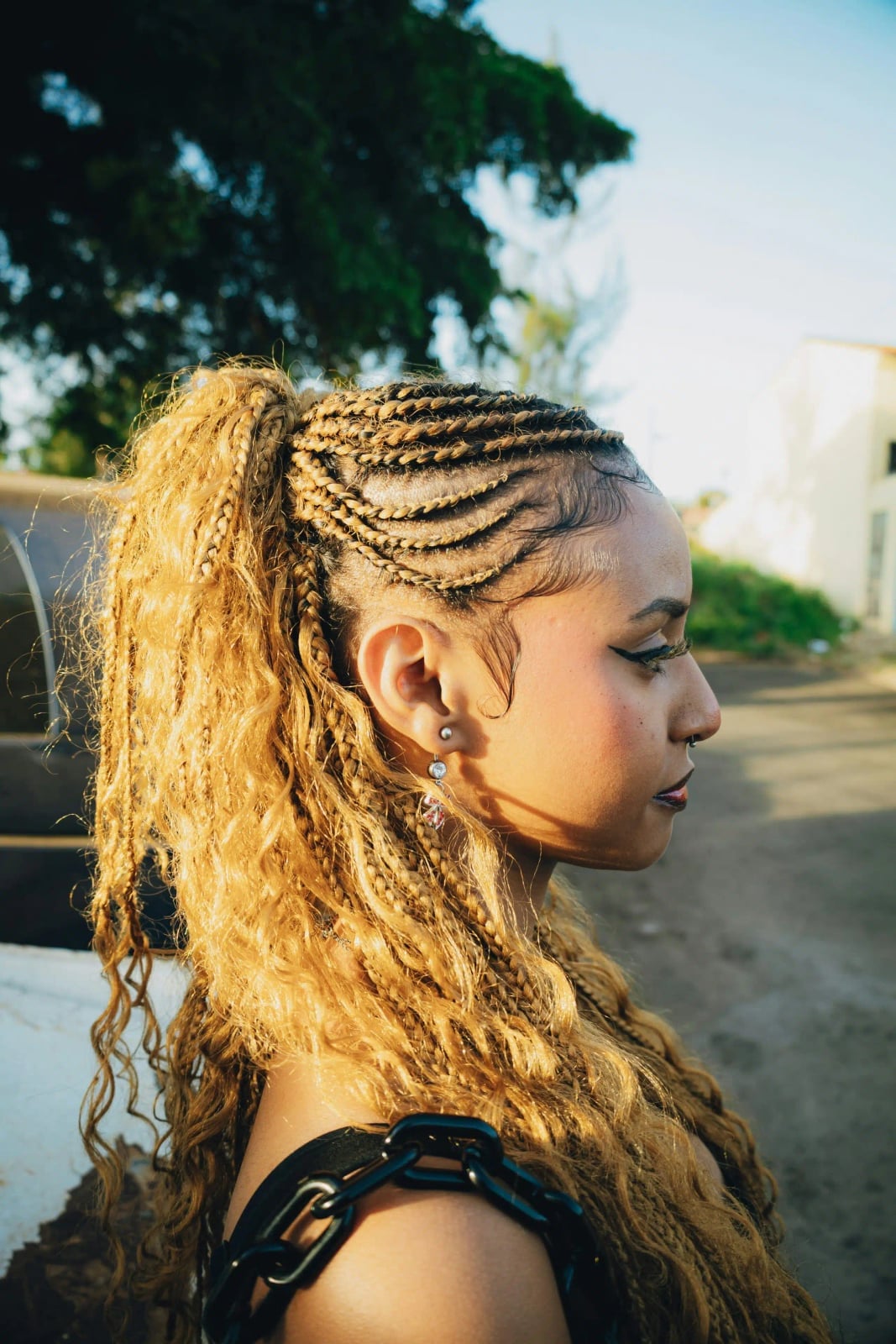
High ponytails on braids need a base with enough tension to hold the weight without pulling. Here, blonde feed-in braids with lighter highlights are gathered into a high ponytail, and curly extensions cascade from it down to mid-back. The thick, wavy-curly texture gives the ponytail volume that a straight braid cannot match, and the middle parting keeps the scalp pattern symmetrical. Ask your stylist for: blonde feed-in braids with curly extensions in a high ponytail. The technique involves braiding the crown section flat to the scalp, then transitioning into the ponytail at the crown peak. A satin scrunchie at the base minimizes tension and breakage. This is a party-ready build that relies on proper construction, not luck.
19Final Thoughts
If you want a low-maintenance style, stick with simpler feed-in patterns and skip the accessories. For intricate scalp designs, budget extra salon time and commit to professional upkeep.
- Keep scalp moisturized with a lightweight oil or spray, applied sparingly between braids.
- Protect braids from friction by wearing a silk or satin bonnet or scarf at night.
- Avoid excessive pulling or manipulation to prevent tension and maintain braid integrity.
- Cleanse the scalp gently with a diluted shampoo or micellar water if needed, and ensure thorough drying.
Feed-in braids are a canvas for creativity.