

Natural hair braid styles combine protective structure with the kind of visual texture that glossy, lived-in color can only enhance. The shift from rigid, uniform parts to softer, face-framing sections means braids now move like real hair, not a helmet.
These 18 ideas span chin-length bob braids to long individual strands with beads, so there is a hold level for every week of the month. The collection solves the struggle of fine braids that look skimpy at the root and the grow-out gap that shows too soon. If your natural hair needs a style that stays neat through sweat, sleep and a work week, these braids deliver.
Sleek Chin-Length Bob Braids
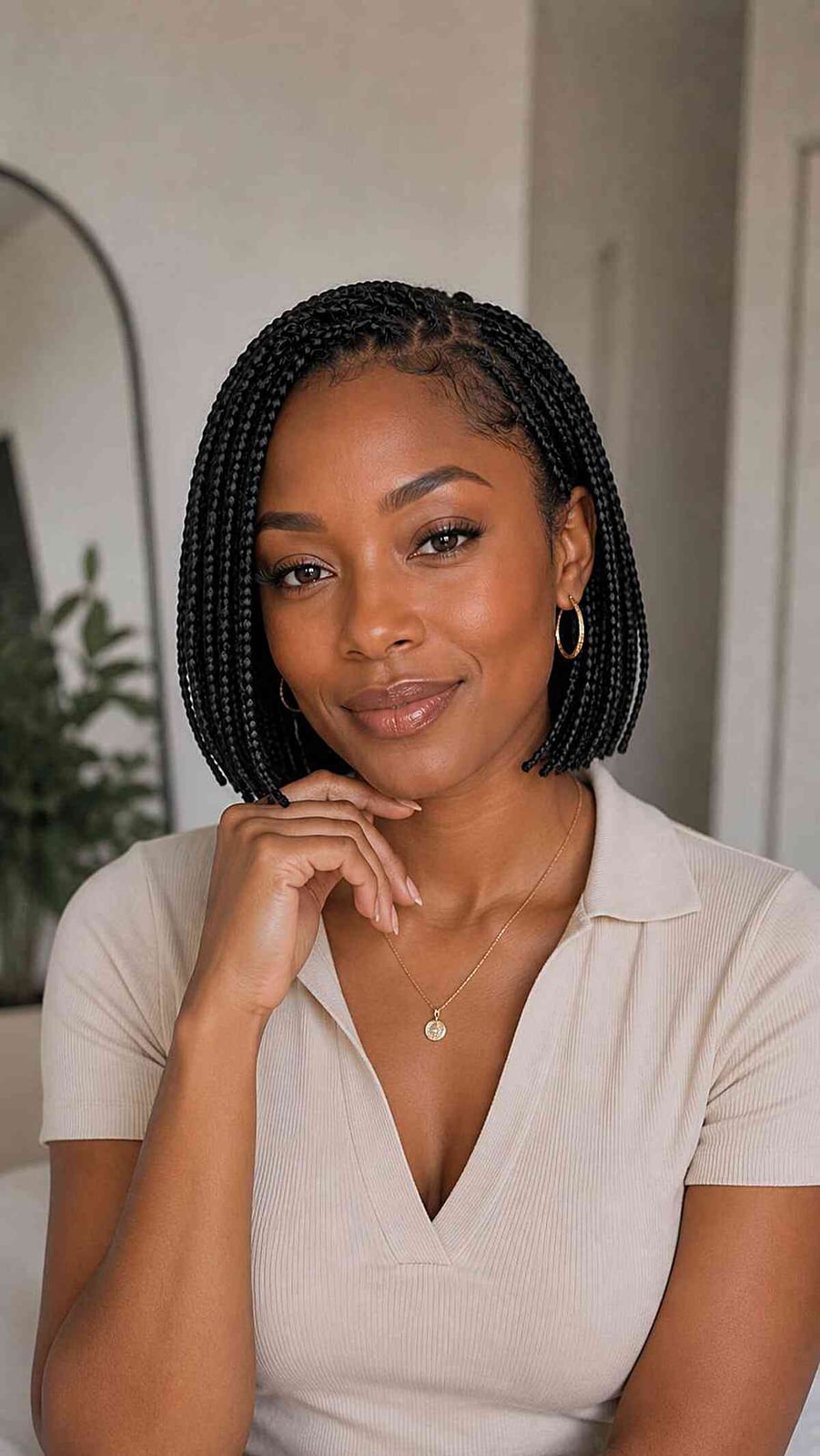
A precise chin-length bob built from uniformly small braids creates a silhouette that reads more structural than decorative. Those with fine to medium straight hair get the most out of this shape. The braids add density without bulk, and the middle part keeps the line clean. Ask your stylist for small, neat braids in a chin-length bob. The polished finish comes from a professional installation and regular hairline touch-ups every three to four weeks.
Bob Braids With Subtle Brown Highlights
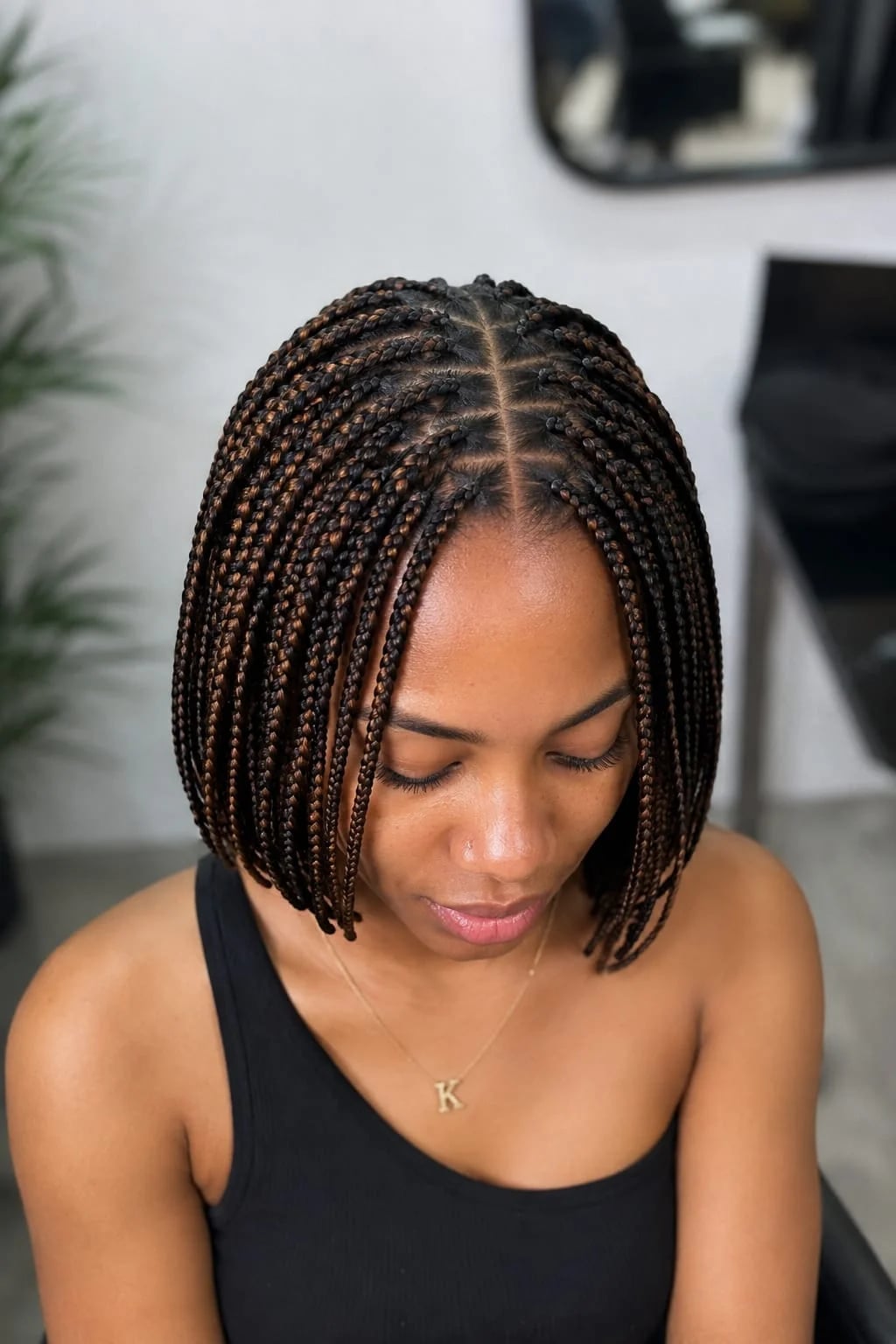
Solid black bob braids give you a sharp, monolithic shape. Add subtle brown highlights and the same cut reads as dimensional rather than flat, with the lighter strands catching light at different angles. Fine to medium straight hair works best for this precise bob. Ask your stylist for chin-length bob braids with subtle brown highlights. Trim the baseline every six to eight weeks to keep the line crisp.
Short Cornrows With Reddish Undertones
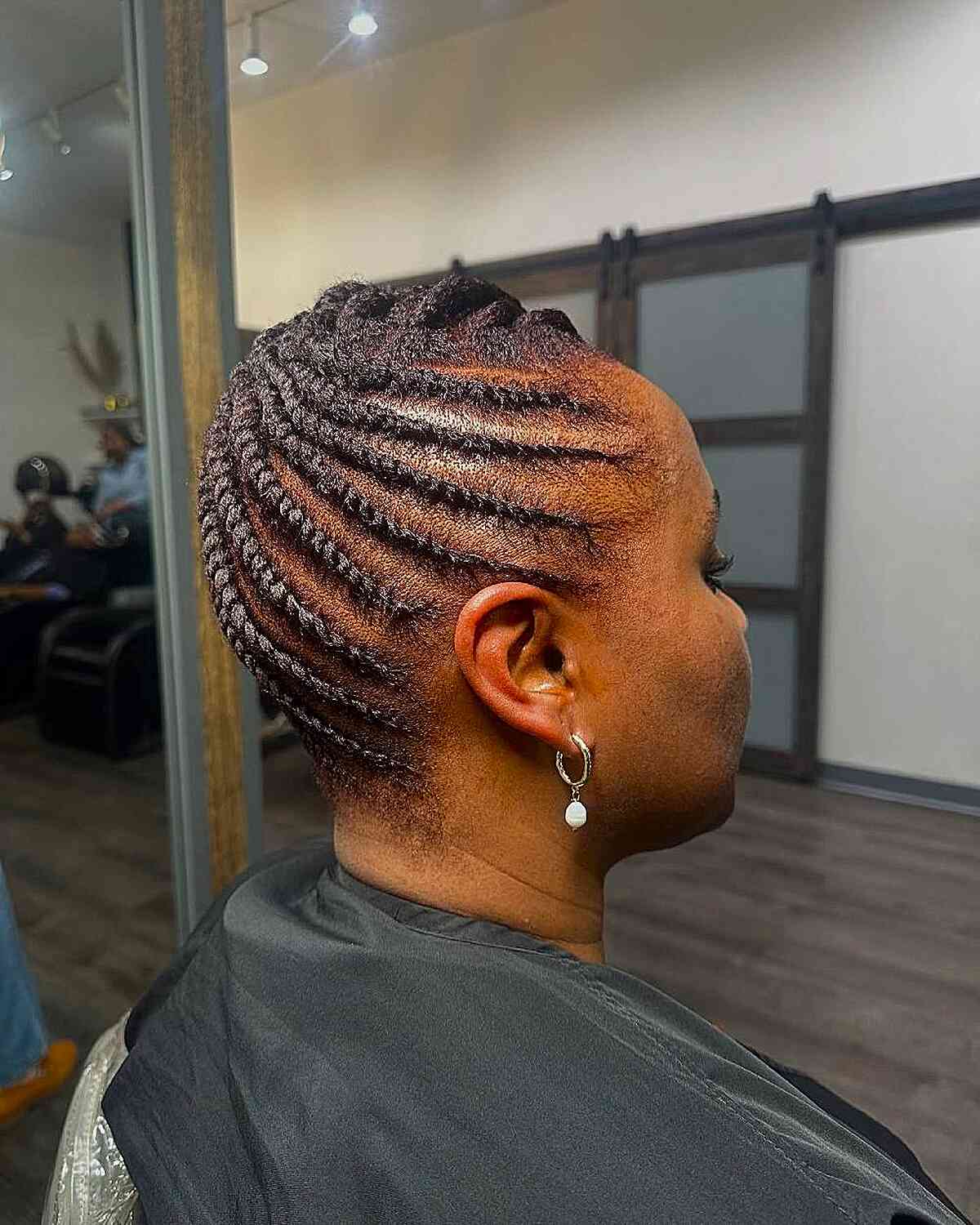
Cornrows that curve upward toward the crown rely on a precise pattern and a steady hand. On short, dense hair, the lines stay sharp and the reddish undertones in the black base become visible in natural light. Ask your stylist for short cornrows with an upward pattern, black with subtle red tones. A scalp serum helps manage itchiness between appointments, and a re-braid every three to four weeks keeps the rows intact.
Collarbone Length Cornrows to Loose Curls
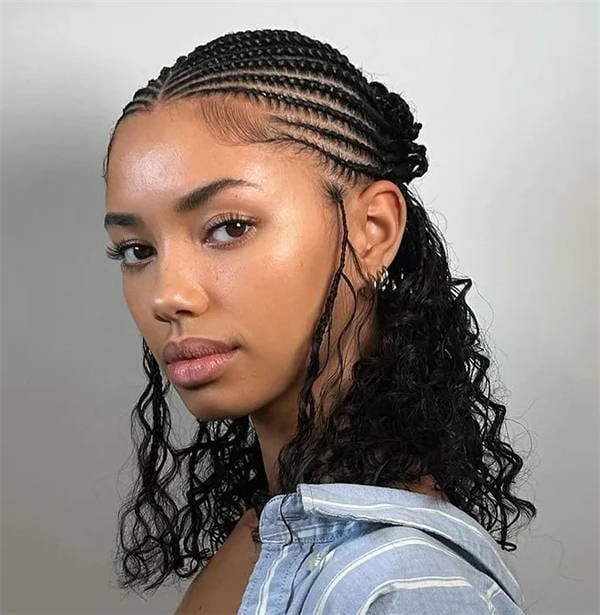
Ever wonder if you can have the neatness of cornrows without losing your curl pattern? This style keeps the scalp section braided and lets the rest fall in loose coils. Thick, curly hair starting at collarbone length benefits from the contrast. The braids add structure and the ends bring volume. Ask your stylist for cornrows transitioning into loose curls at collarbone length. A curl-defining cream on the loose sections keeps the texture defined, and the cornrows need a re-braid every four to six weeks.
Shoulder Length Cornrows with Loose Braids
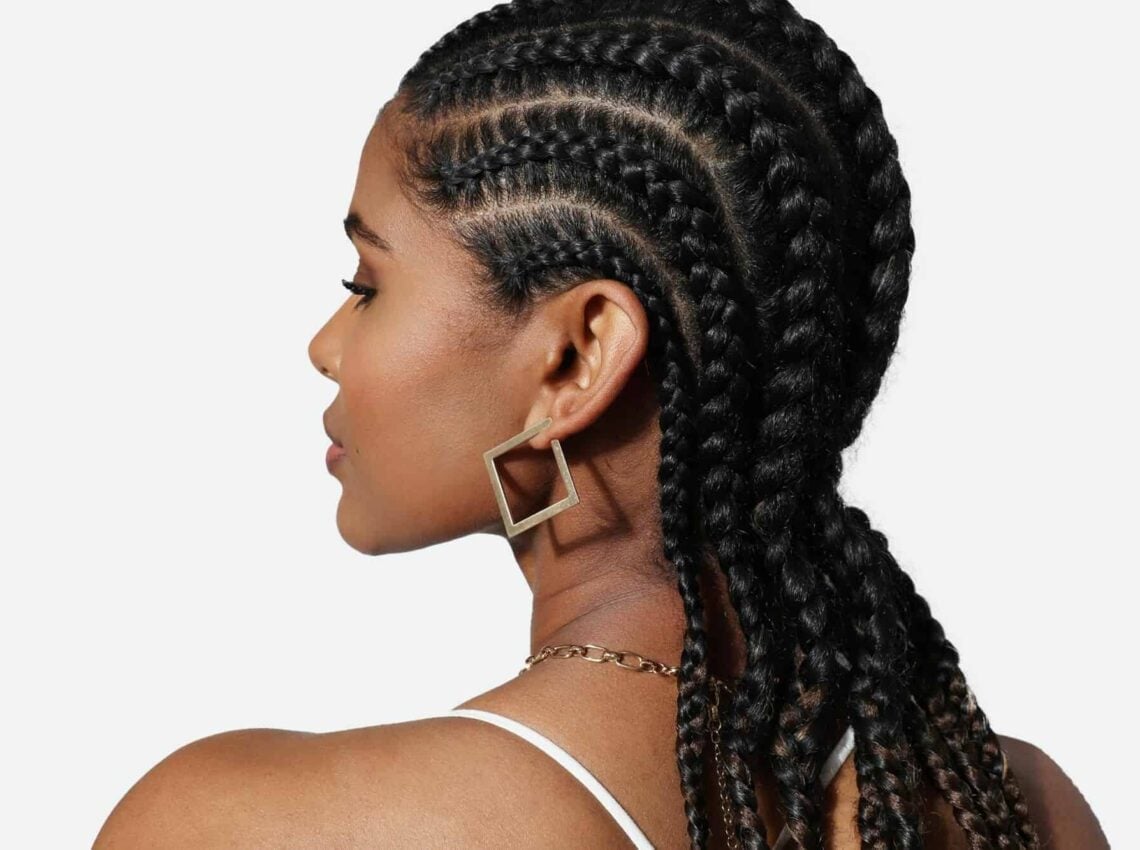
Neat cornrows from the hairline that open into loose braids at the shoulder give you the advantage of a sleek scalp and the movement of longer ends. Thick, straight hair holds the transition well. Ask your stylist for cornrows with loose braids to the shoulder. A light oil keeps the loose braids shiny, and the cornrows need a refresh every four to six weeks to maintain the clean start.
Mid-Back Neat Cornrows
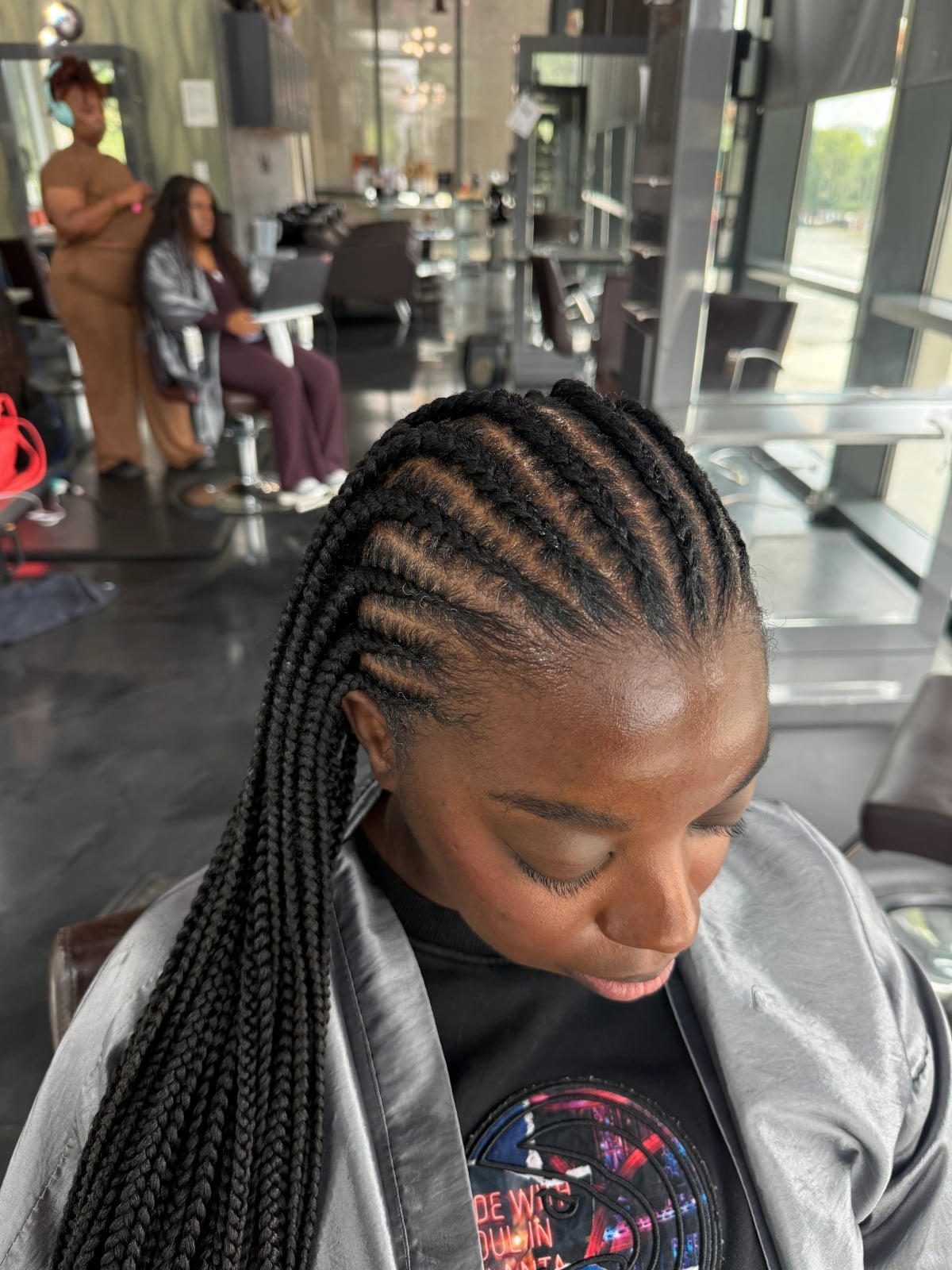
A middle part anchors these straight cornrows, which travel in clean rows from the forehead to the mid-back. The black, thick texture holds the braids tightly against the scalp, creating a sleek, uniform surface. This style works well for long faces, since the vertical lines add length without extra width at the sides.
Ask your stylist for: neat cornrows to mid-back. The front view shows how the scalp definition stays visible from root to end. Re-braid every four to six weeks to keep the crisp lines from softening.
Mid-Back Two Large Braids, Close-Up Take
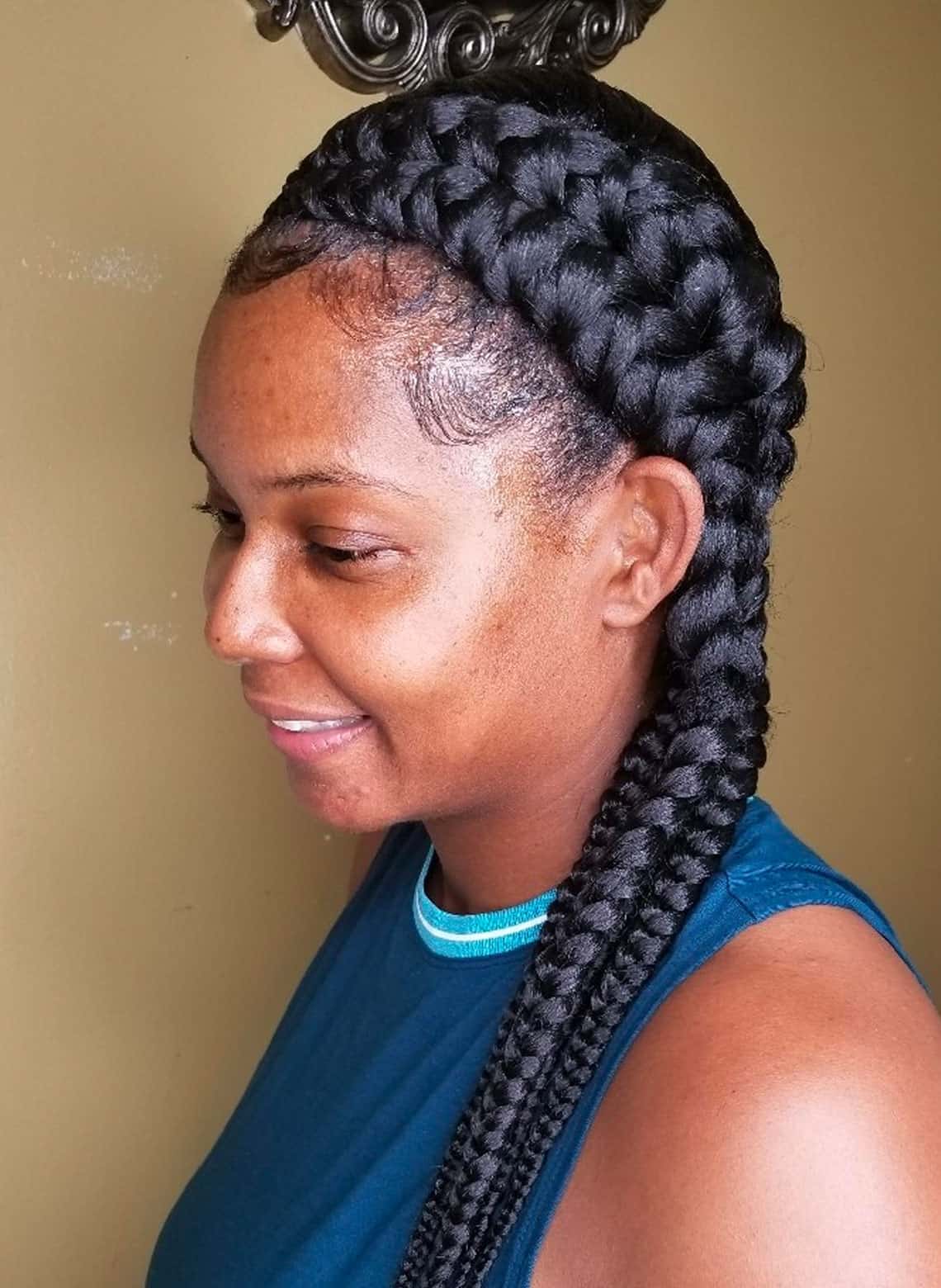
What is it about two large braids that feels so straightforward and yet so satisfying? The symmetry of a middle part feeding into two thick, neat braids that fall to the mid-back gives a clean, intentional shape that works for almost any occasion. The black, coily, thick texture holds the braids firmly against the scalp, creating a polished line from the hairline to the ends. This style suits most face shapes because the vertical lines add length without pulling attention to any one area.
Ask your stylist for: two large, neat braids to mid-back with a middle parting. The braids take about two to three hours in the chair, depending on your density, and hold their shape for six to eight weeks before the roots need redoing. A light sheen spray keeps the black color looking rich and the braids glossy without weighing them down. It is a low-commitment way to get a lot of impact.
Mid-Back Large Dutch Braids, Dark Brown
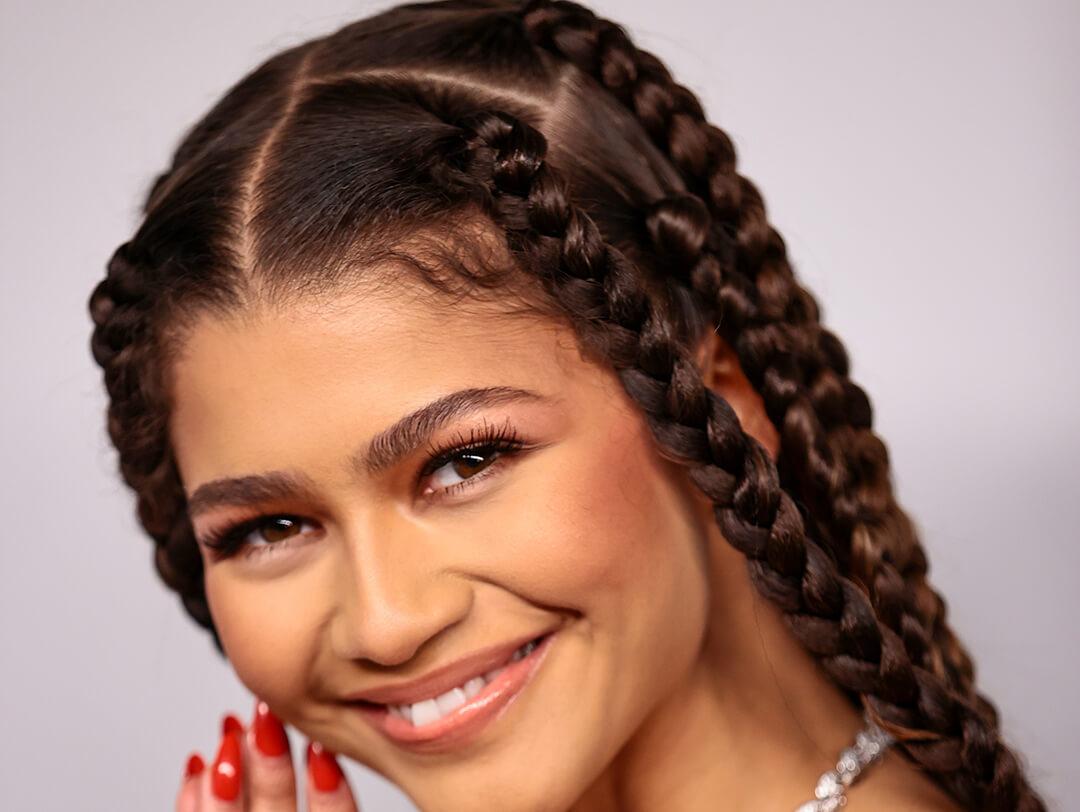
Dutch braids sit more prominently on the scalp than regular cornrows, and the dark brown color here gives them extra dimension. The front view shows a middle part with smaller braids near the face that feed into the two large braids extending to the mid-back. The coily, thick texture keeps the braids full and the raised sections defined.
Ask your stylist for: large Dutch braids with face-framing braids. This style suits oval and heart faces, since the added volume at the crown balances a narrower chin. Re-braid every four to six weeks to preserve the lift.
Mid-Back Braided Pigtails
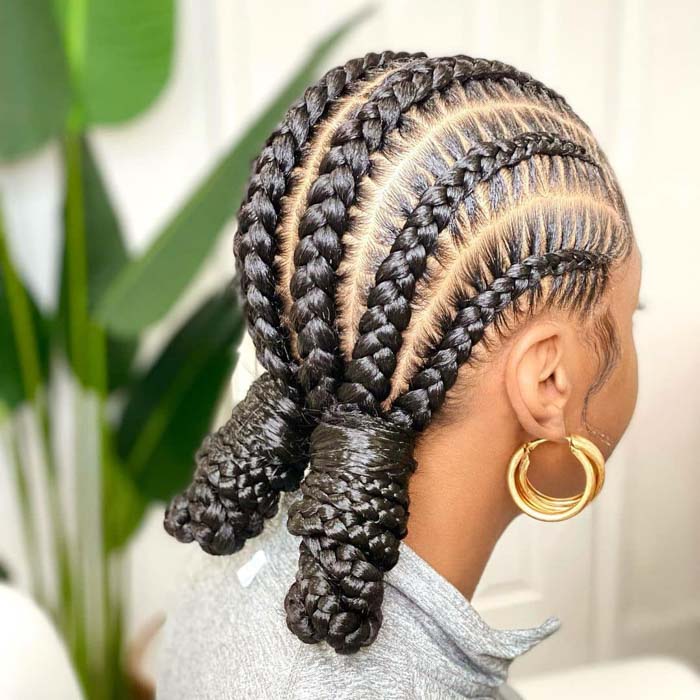
Two thick, straight black braids split evenly at a middle part and reach the mid-back. The back view confirms the symmetry: each pigtail is braided cleanly from the nape with a glossy finish. This style suits thick, straight hair, because the weight of the braids keeps them hanging smoothly.
Ask your stylist for: two thick, straight braided pigtails to mid-back. Re-braid every six to eight weeks to keep the ends neat.
Collarbone Braids and Twists
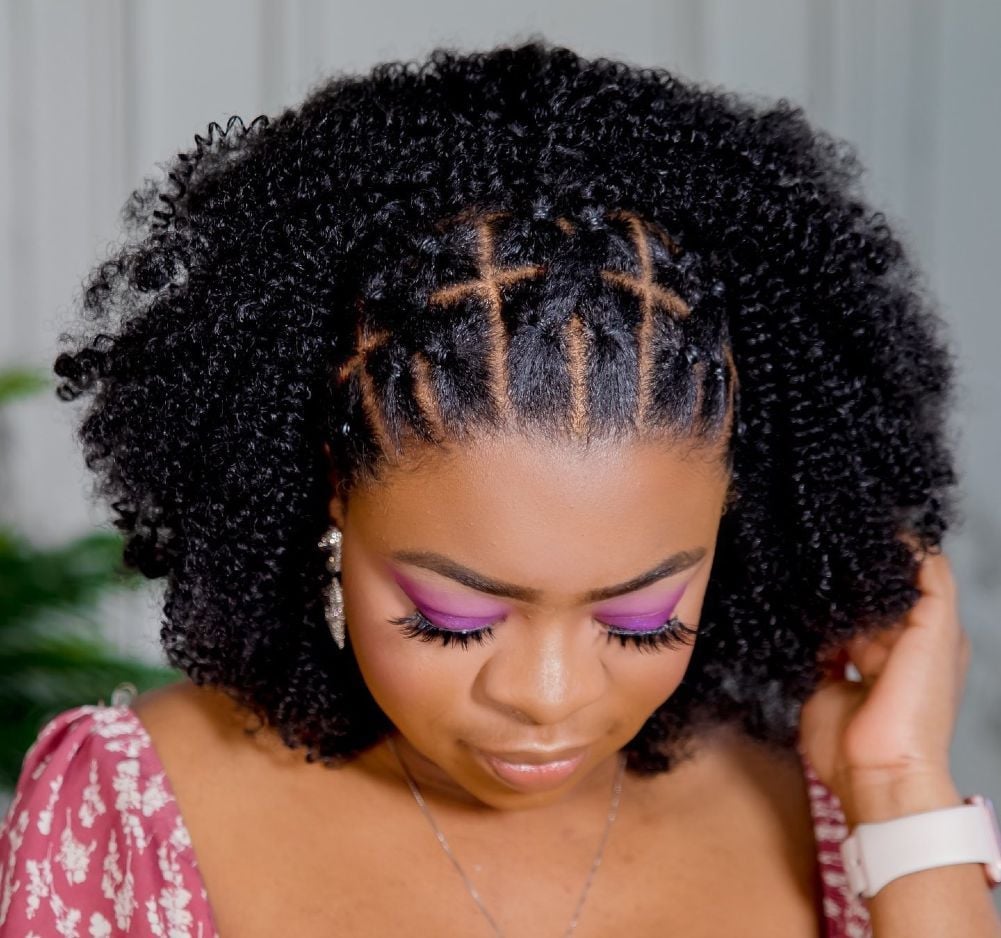
A detailed braided pattern runs along the scalp from a middle part, then transitions into twists that reach the collarbone. The front view shows how the black, coily, thick texture keeps both the scalp braids and the twisted sections defined. The mix of techniques adds visual texture without extra length.
Ask your stylist for: braids and twists with an intricate scalp pattern to collarbone length. This style suits oval and round faces, since the collarbone length offers a balanced midpoint between short and long. Book a salon session for the scalp work; maintaining the twists between appointments is straightforward.
Side-Swept Braided and Twisted Style
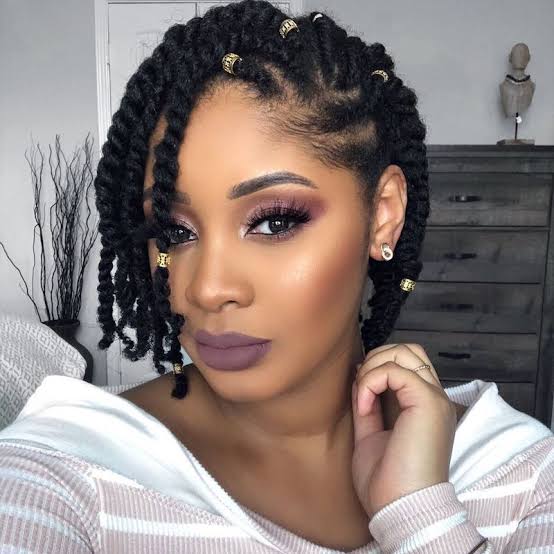
The design is asymmetrical on purpose: braids run along the scalp on one side, while twists cascade down the other, all in black, collarbone-length hair. This side-swept braided style suits thick, coily textures and balances square or heart-shaped faces by pulling attention to one side. Ask your stylist for: side-swept braids and twists. For evening events, the asymmetry adds drama without needing constant adjustment. A flexible hold hairspray keeps the side part defined; expect to re-braid the scalp sections every four to six weeks.
Mid-Back Loose Wavy Fine Braids
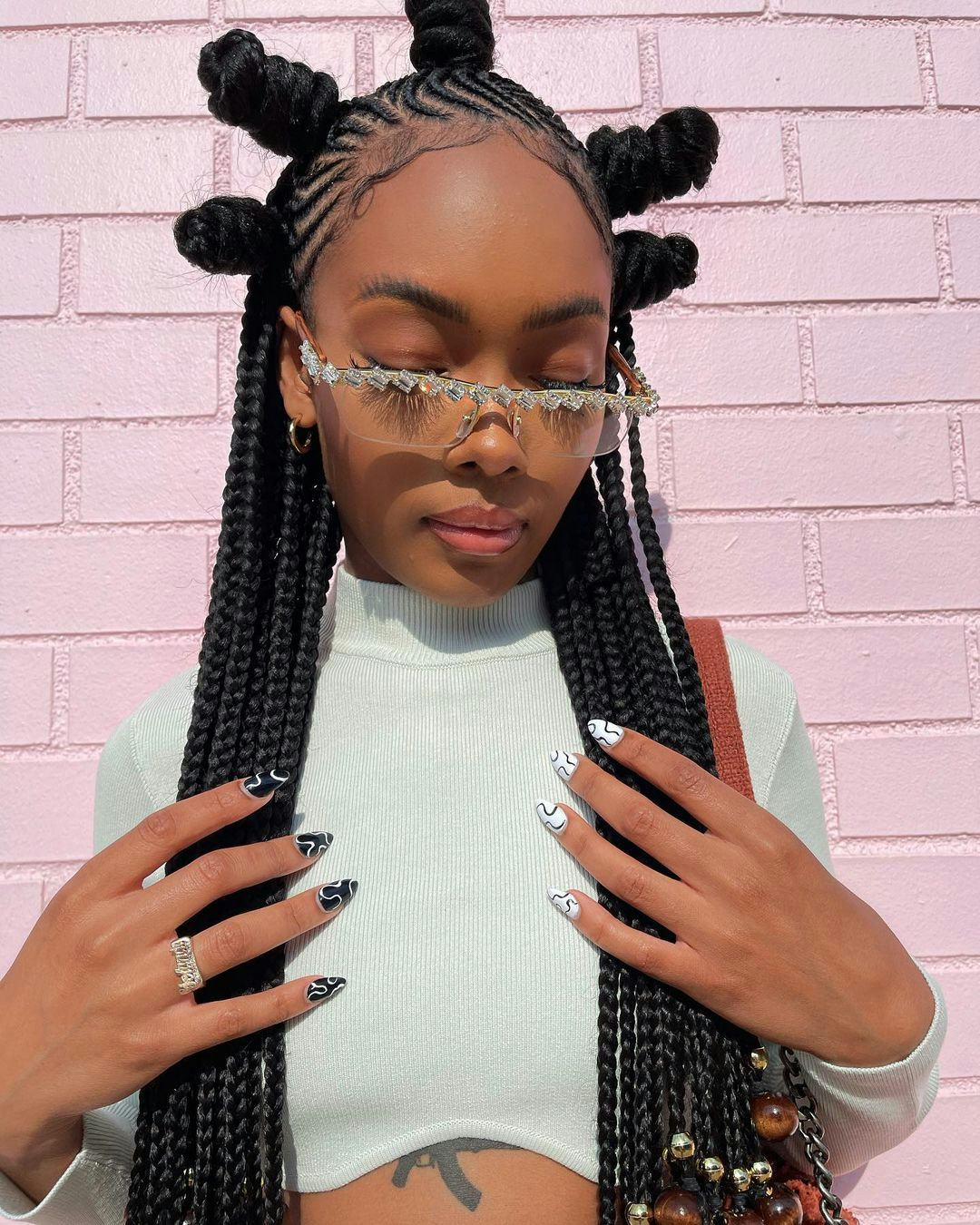
These braids are loose, wavy, and fine, falling to mid-back with a few strands left out around the face. The wavy texture softens the look but also means the braids can lose definition faster than a tighter, uniform plait. Fine, wavy hair at mid-back length is the ideal starting point; the face-framing pieces work for round and oval faces. Ask your stylist for: loose, wavy fine braids with face-framing strands.
A texturizing spray on the loose ends helps revive the wave between washes. Plan to re-braid every six to eight weeks to keep the shape clean.
Mid-Back Box Braids in a High Ponytail
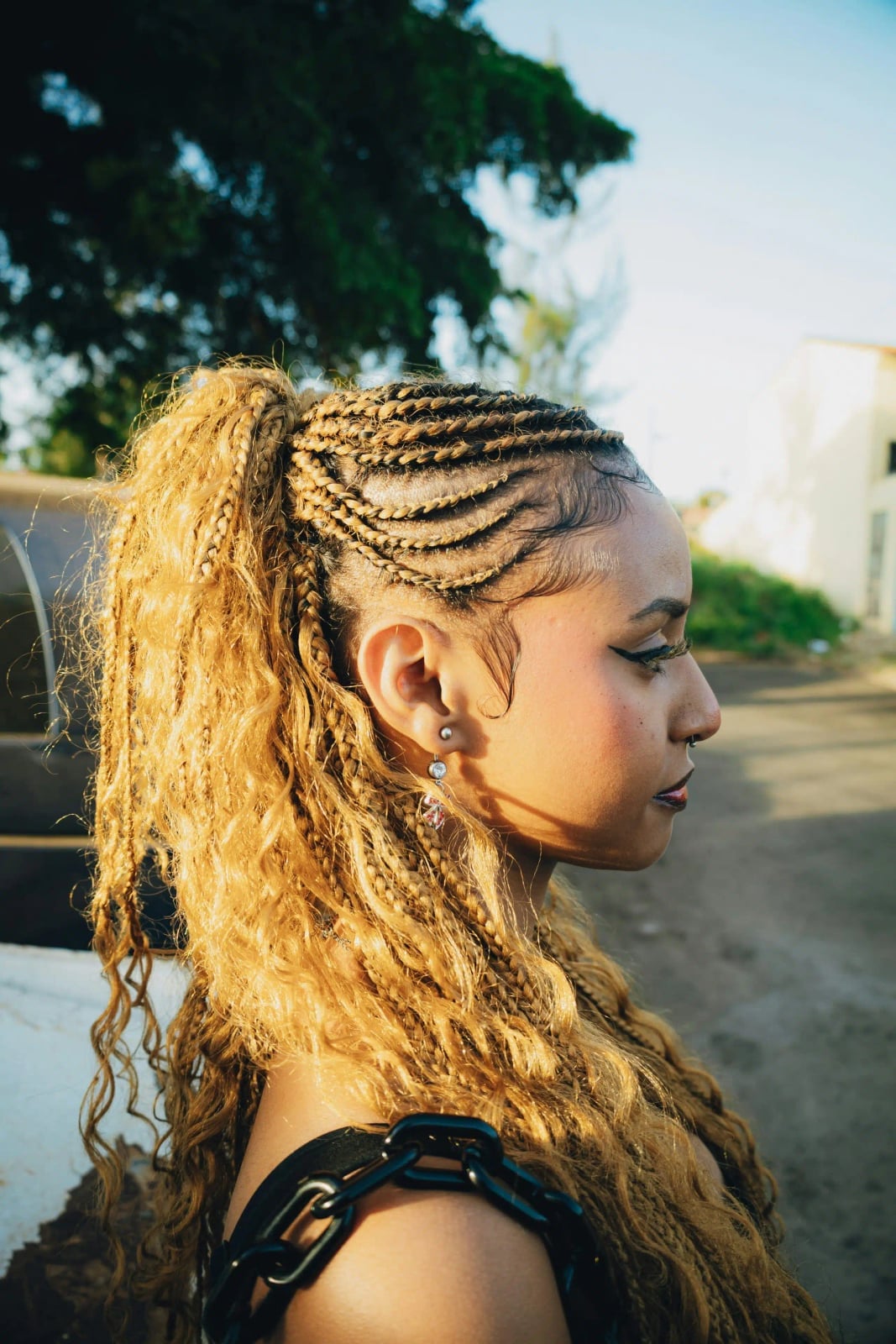
The cornrow pattern at the scalp is as important as the braids themselves: small box braids are pulled into a high ponytail, with the scalp work visible from every angle. The blonde color and curly, coily texture give the style lift, while the mid-back length adds weight. Oval and heart faces benefit from the vertical line of the ponytail. Ask your stylist for: box braids in a high ponytail with blonde highlights.
A silk scrunchie prevents breakage at the tie point. Re-braiding every six to eight weeks keeps the scalp design sharp.
Mid-Back Box Braids with Blonde Highlights
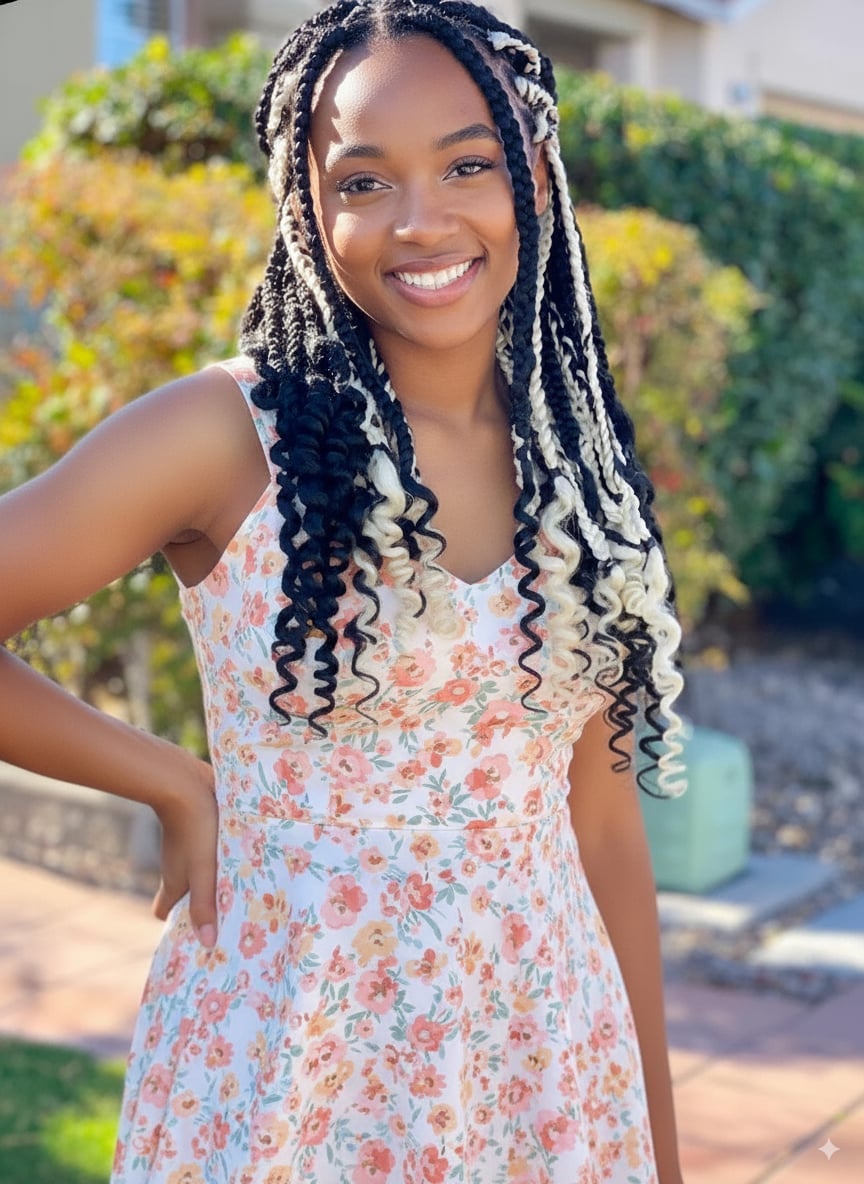
Solid black box braids are low maintenance, but the blonde highlights in this mid-back set demand a little more attention. The wavy, curled ends and thick texture make the two-tone effect pop, while the middle parting keeps the look balanced. Thick hair at this length carries the contrast well. Ask your stylist for: box braids with blonde highlights and wavy ends.
Use a serum on the ends to maintain curl definition and prevent frizz. The blonde sections may need a toning touch-up between installs, so budget for a re-braid every six to eight weeks.
Mid-Back Box Braids with Amber Beads
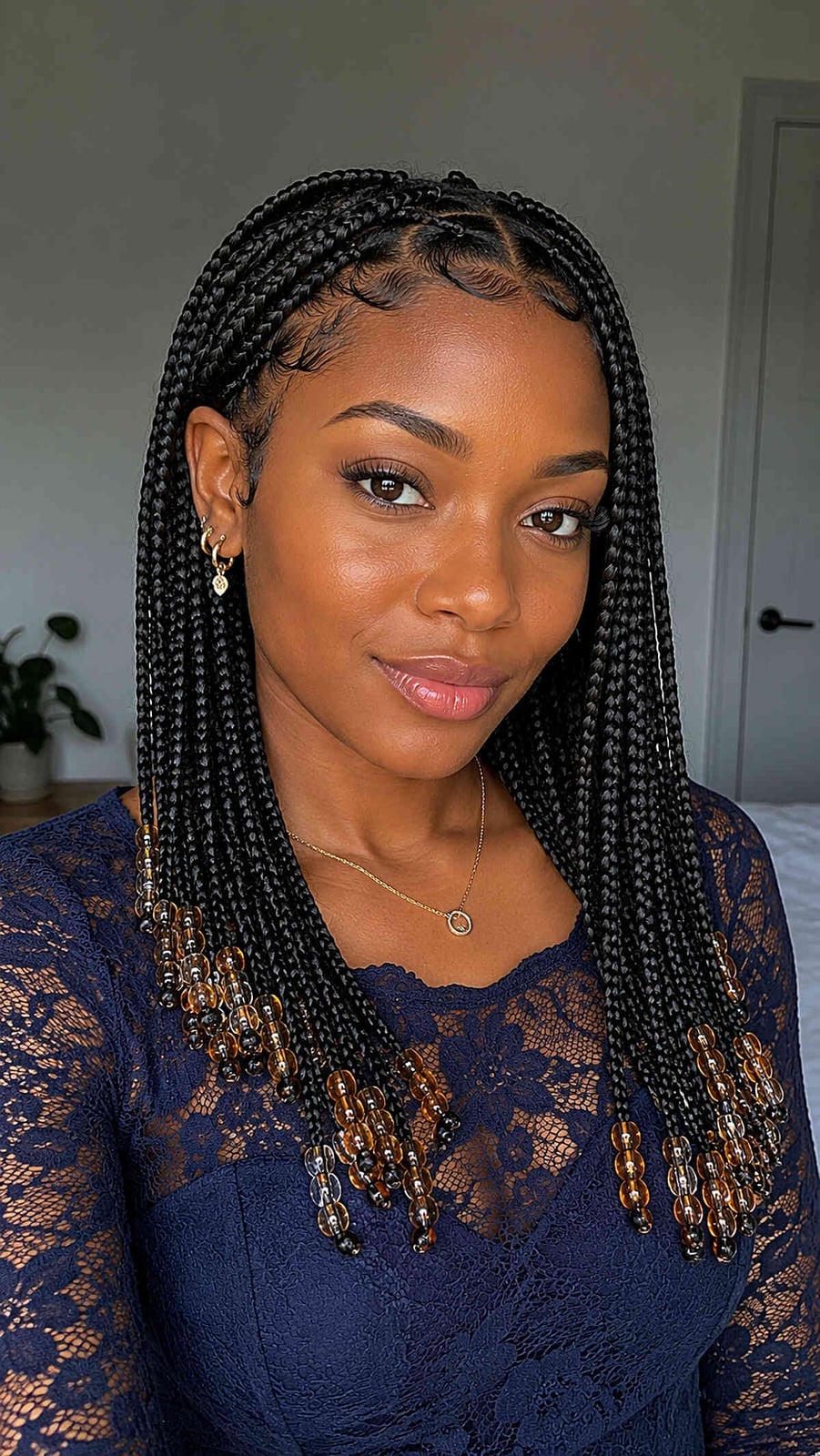
Amber beads are securely attached to black box braids that reach the mid-back, with neat baby hairs and a middle parting. Fine to medium straight hair at this length works best because the beads add weight. Ask your stylist for: box braids with amber beads. The decorative element makes this style suitable for everyday wear and festive occasions alike.
Mid-Back Intricate Scalp Braids
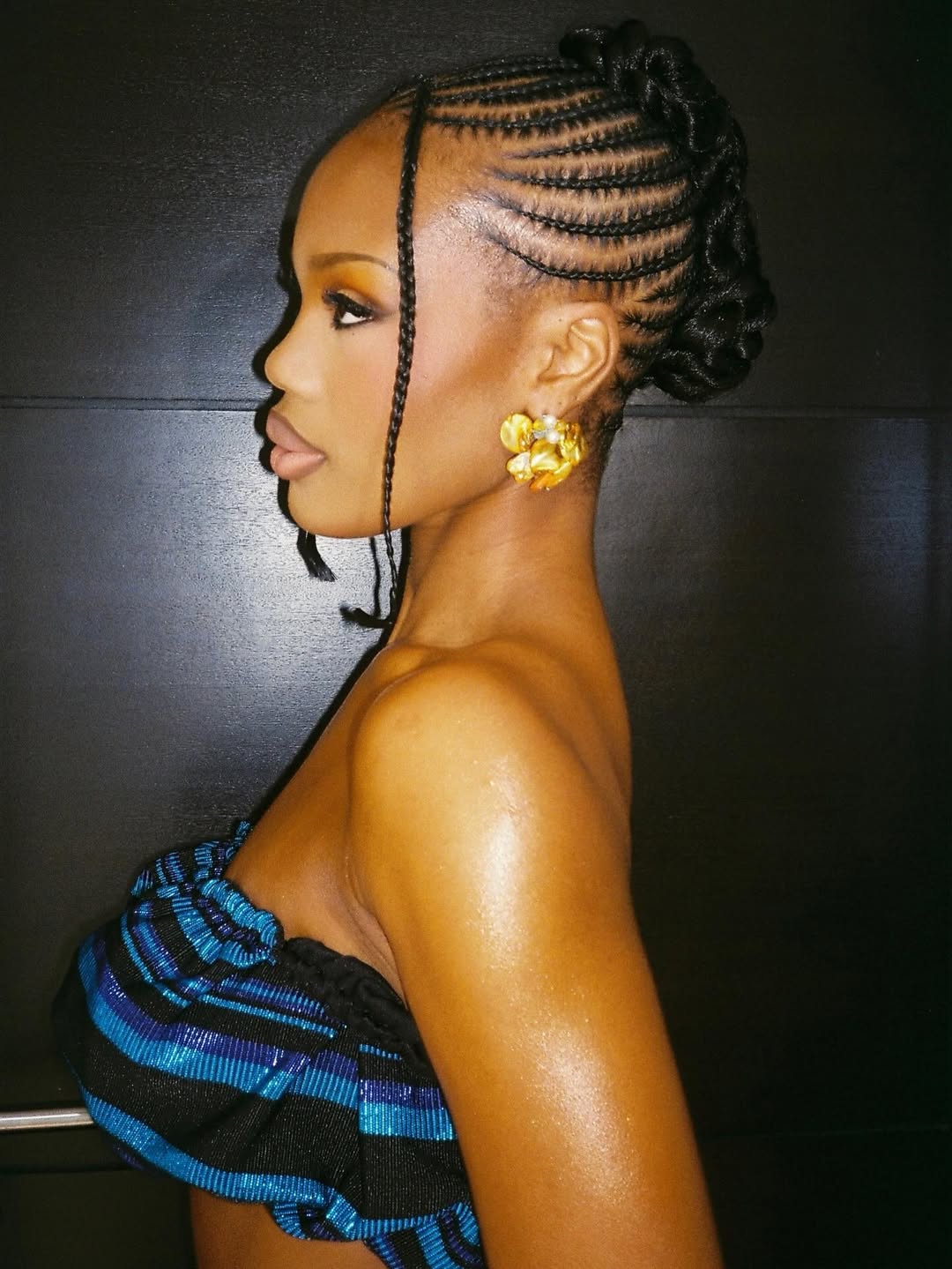
These are not your standard cornrows. Intricate scalp braids involve a detailed pattern that runs from the hairline down the middle part, transitioning into long, thin braids on coily hair. The design holds best on hair that can maintain a firm grip, so coily textures are the natural fit here, and the black color keeps the pattern sharp and readable. Ask your stylist for: intricate scalp braids into long thin braids.
This is strictly a salon job, and for good reason. The scalp pattern alone can take several hours to map out and braid, depending on complexity. Once done, the braids hold for about four to six weeks before the new growth starts to blur the design. Keep the scalp clean and apply a light oil to prevent buildup, but do not over-moisturize or the braids may loosen. This is a protective style that looks deliberate from every angle, but the chair time is significant.
Long Individual Braids with Mixed Beads
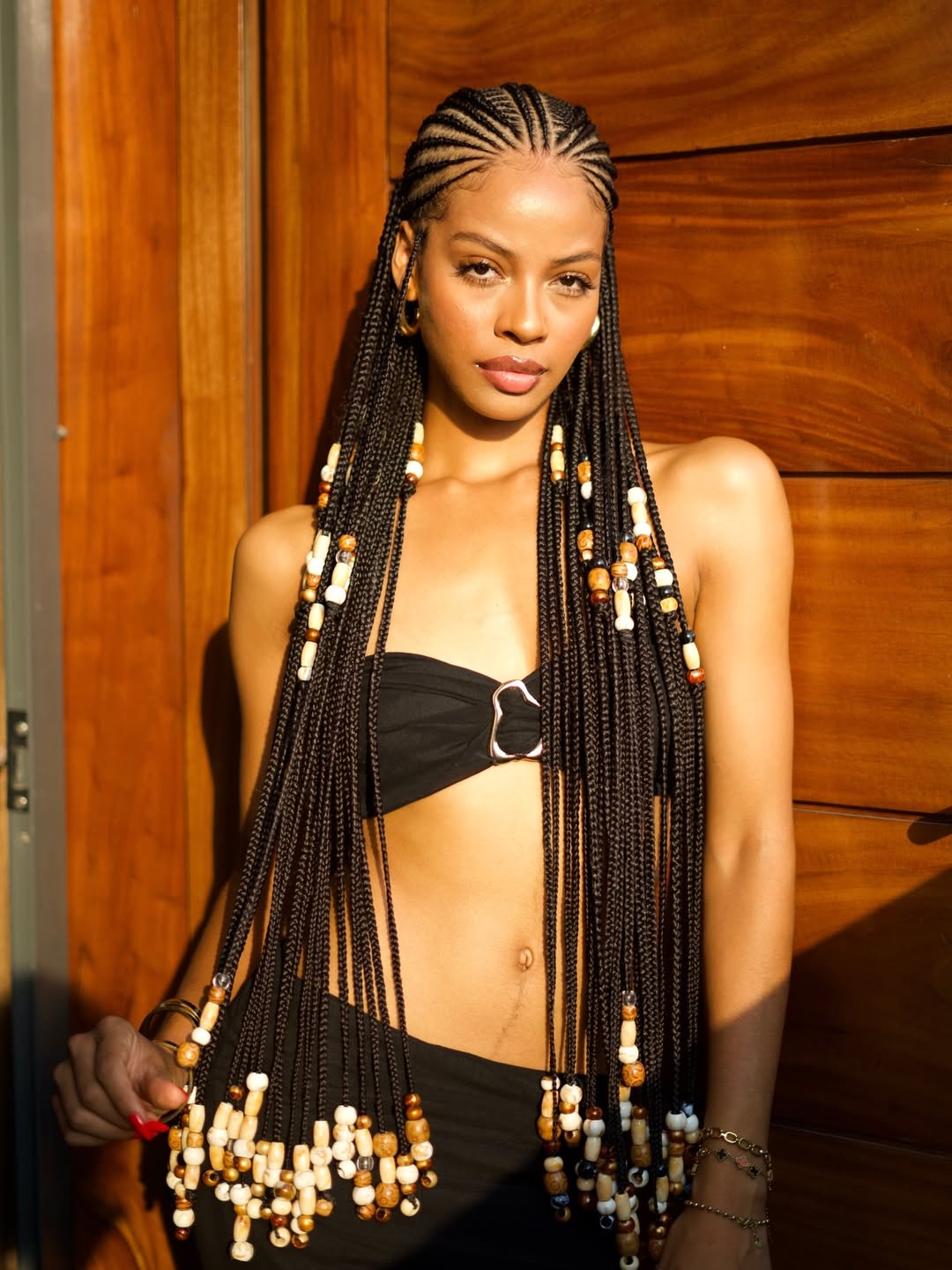
These braids are a commitment, but the payoff is genuine. Very long individual braids in black coily hair are threaded with a mix of wooden and cream-colored beads, creating a bohemian feel that works for festivals or a week by the water. The thick texture helps the braids hold their shape and keeps the beads from sliding. Ask your stylist for: very long individual braids with mixed beads.
The beads can snag on clothing or loose strands, and over time the knots may loosen, so check them weekly and retie as needed. The braids themselves last eight to ten weeks before the roots need redoing. Styling is straightforward: pull them back or let them hang, but avoid heavy manipulation near the beads to keep them secure. If you are not prepared to babysit small decorations, skip the beads and keep the braids plain.
Micro Braids Low Bun
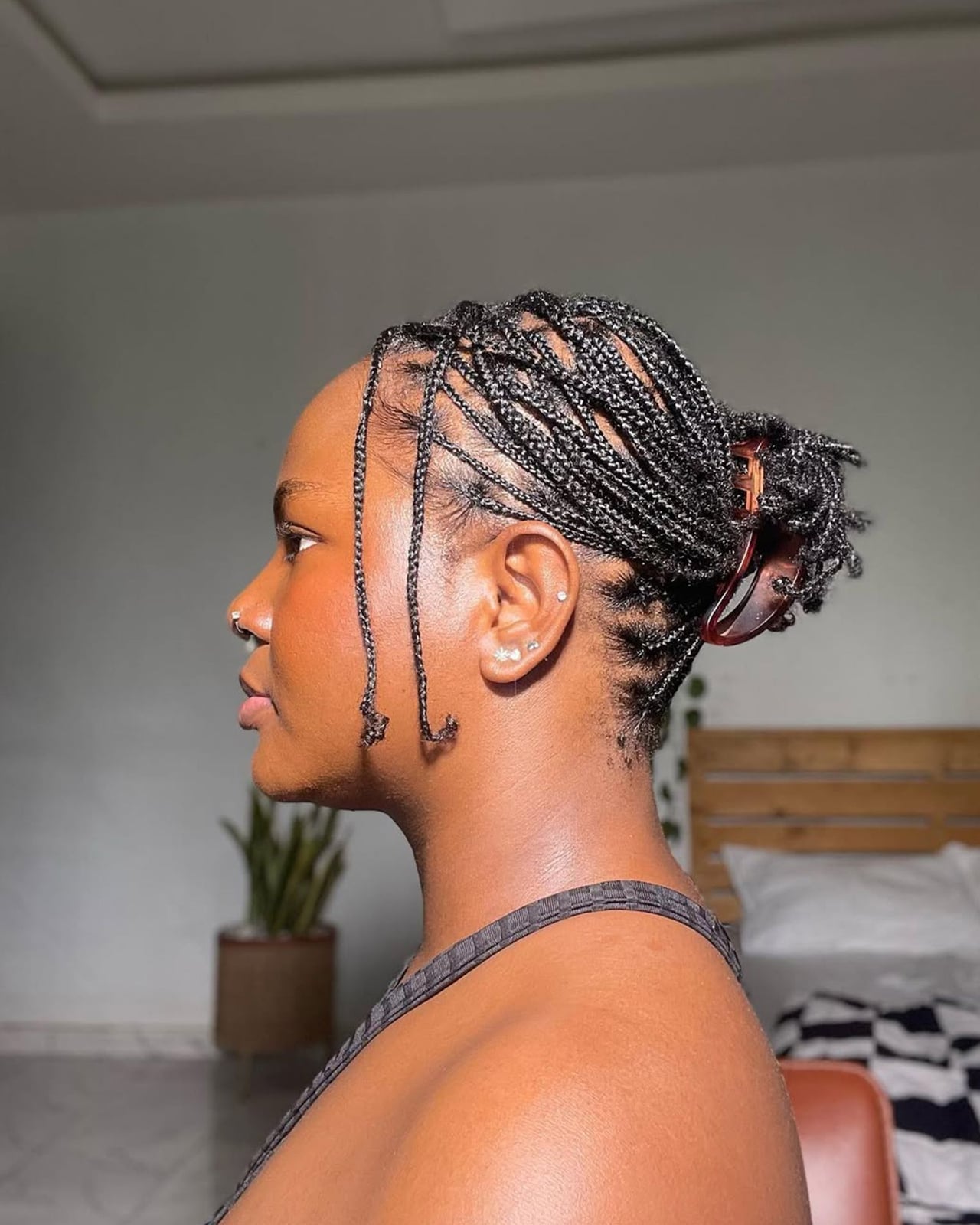
Micro braids look best when gathered, and a low bun at the nape of the neck is the most reliable way to wear them. The black, fine braids are dense enough to create a rounded shape, with a few loose strands left out to soften the face. This works for most face shapes because the bun sits low and does not add width. Ask your stylist for: micro braids styled into a low bun with face-framing strands. The braids hold for eight to ten weeks before the roots need attention, and a light-hold spray keeps the face-framing pieces in place without stiffness. It is a polished, low-maintenance option for evenings when you want the hair out of the way.
Final Thoughts
For a low-maintenance routine, choose larger, simpler braids like box braids or Dutch braids. Intricate scalp designs need a professional braider and regular upkeep. The right choice depends on your time, your texture, and how long you want the style to last.
- Maintain braid moisture with a lightweight spray, focusing on the scalp and ends.
- Protect braids from friction at night using a silk or satin bonnet.
- Avoid excessive manipulation to prevent unraveling and keep the style neat.
- Schedule professional touch-ups every 4 to 8 weeks depending on growth.
Braids are a canvas for creativity and protection.
