Waterfall braids, space buns, and segmented braids with colorful elastics are taking over school drop-offs. Soft face-framing layers and glossy natural textures are replacing the poker-straight styles of a few years ago, making hair look lived-in and touchable.
This collection of 20 Simple Children Hairstyles covers everything from a quick twisted ponytail to sculptural cornrows, so there is something for every texture and schedule. The range includes styles that work on fine hair that falls flat, thick hair that needs taming, and coily hair that benefits from protective styling. Each idea is built to hold through a full day of activity with minimal fuss.
Long Waterfall Braid With Flowing Hair
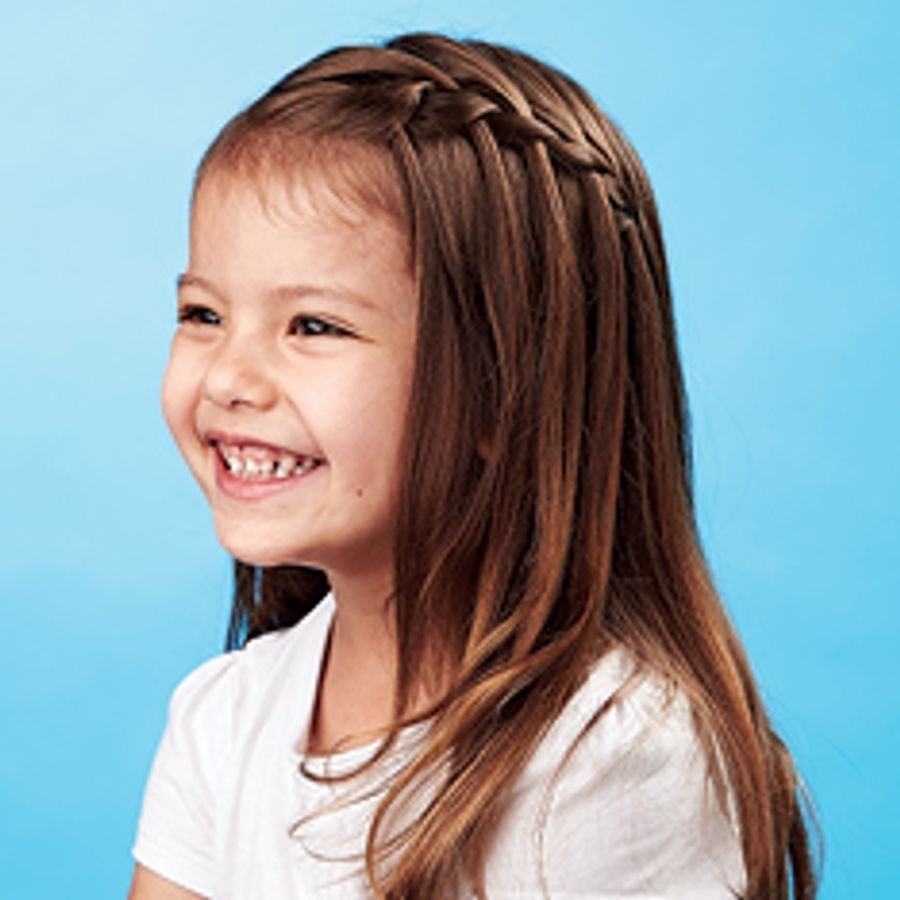
The design of a waterfall braid is clever: strands are woven through the crown section by section, then released so the rest of the hair falls straight and free. On thick, dark brown hair that reaches mid-back, the contrast between the braided band and the flowing lengths creates a polished look. A middle part keeps the look symmetrical, and the side view shows every twist.
Ask your stylist for: waterfall braid on crown, rest of hair down. Straight, thick hair holds a braid without slipping; children with layers may find shorter pieces escape the weave. Secure the end with a clear elastic, then refresh the braid weekly by re-tightening the sections. It holds all day through school and playground time, and the loose hair stays tidy because the braid acts like a headband.
High Messy Bun With Scrunchie Bow
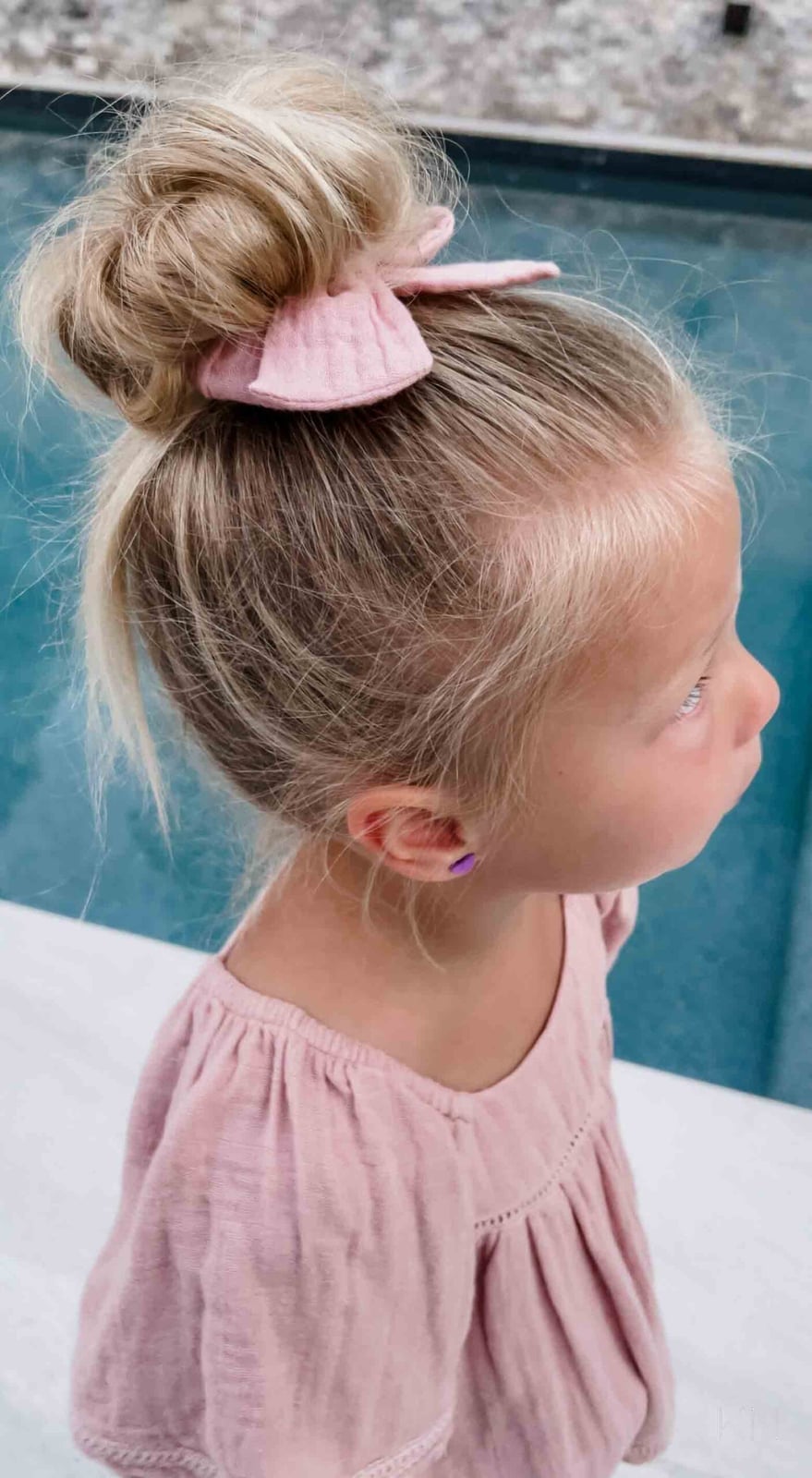
Can fine, straight hair pull off a messy bun? Yes, if you build it high and loose. On shoulder-length blonde hair, the trick is to wrap the hair around itself without smoothing it down, letting the natural texture create the volume. A pink scrunchie with a bow does double duty: it holds the bun and adds a pop of color. Ask your stylist for: high messy bun, pink scrunchie with bow. A middle part works well for oval and heart-shaped faces. Wrap the hair loosely, then pull a few face-framing strands out to soften the look. Add hairspray at the hairline to tame flyaways, and the style stays put through a full day of activity.
Mid-Back Messy Bun With Velvet Scrunchie
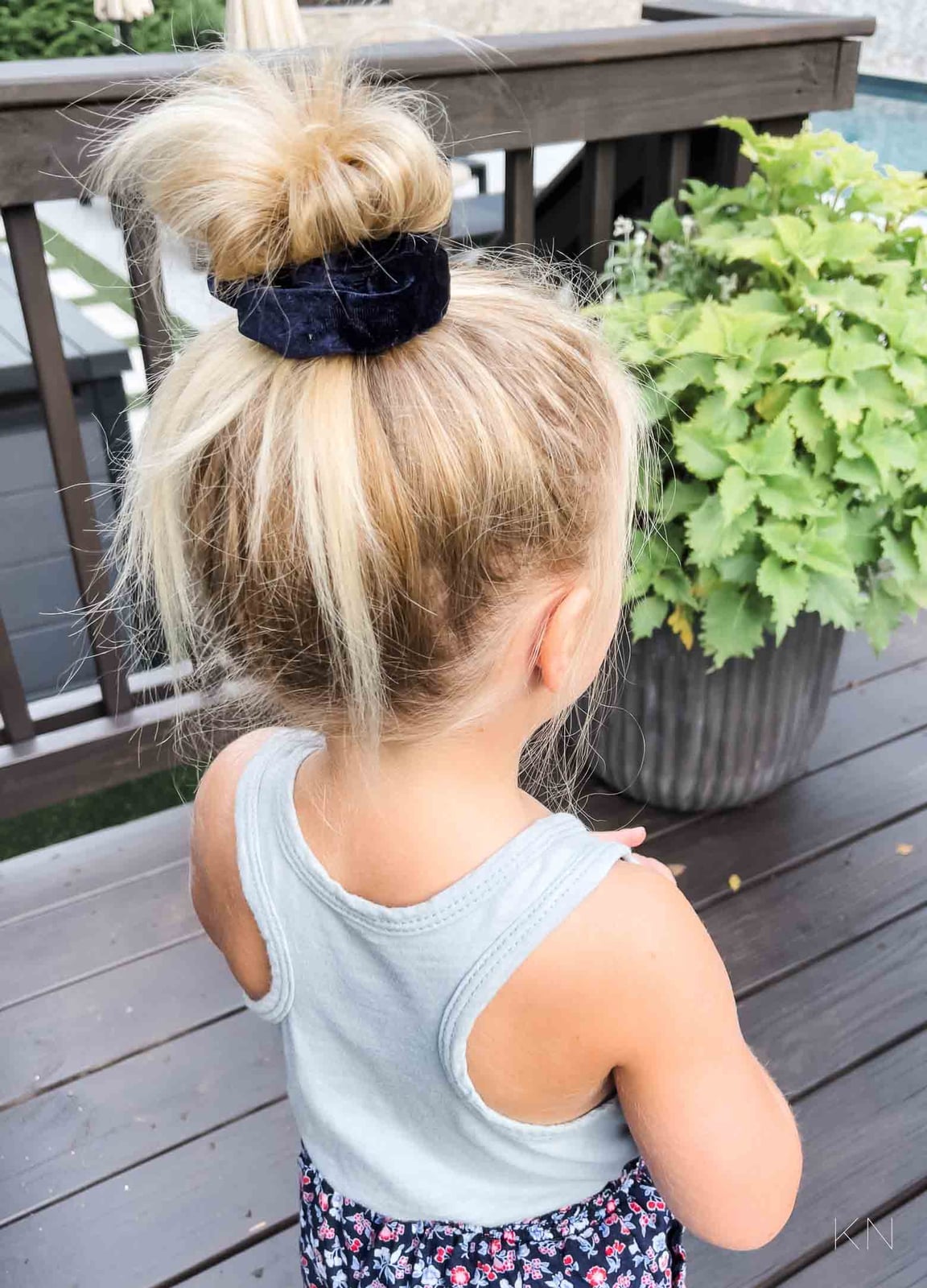
A messy bun on mid-back length hair is one of those styles that looks better the second day. The wavy texture of fine blonde hair gives the bun natural grip, so it does not slip out by lunch. A dark velvet scrunchie adds a soft contrast without competing with the hair color. Ask your stylist for: messy bun with velvet scrunchie. The middle part suits round faces, and the loose strands around the nape keep it from feeling severe. To build it, twist the hair loosely, then tuck the ends under the scrunchie for a fuller shape. The bun holds through active play, and refreshing it takes thirty seconds the next morning.
Double French Braids Into Low Ponytail
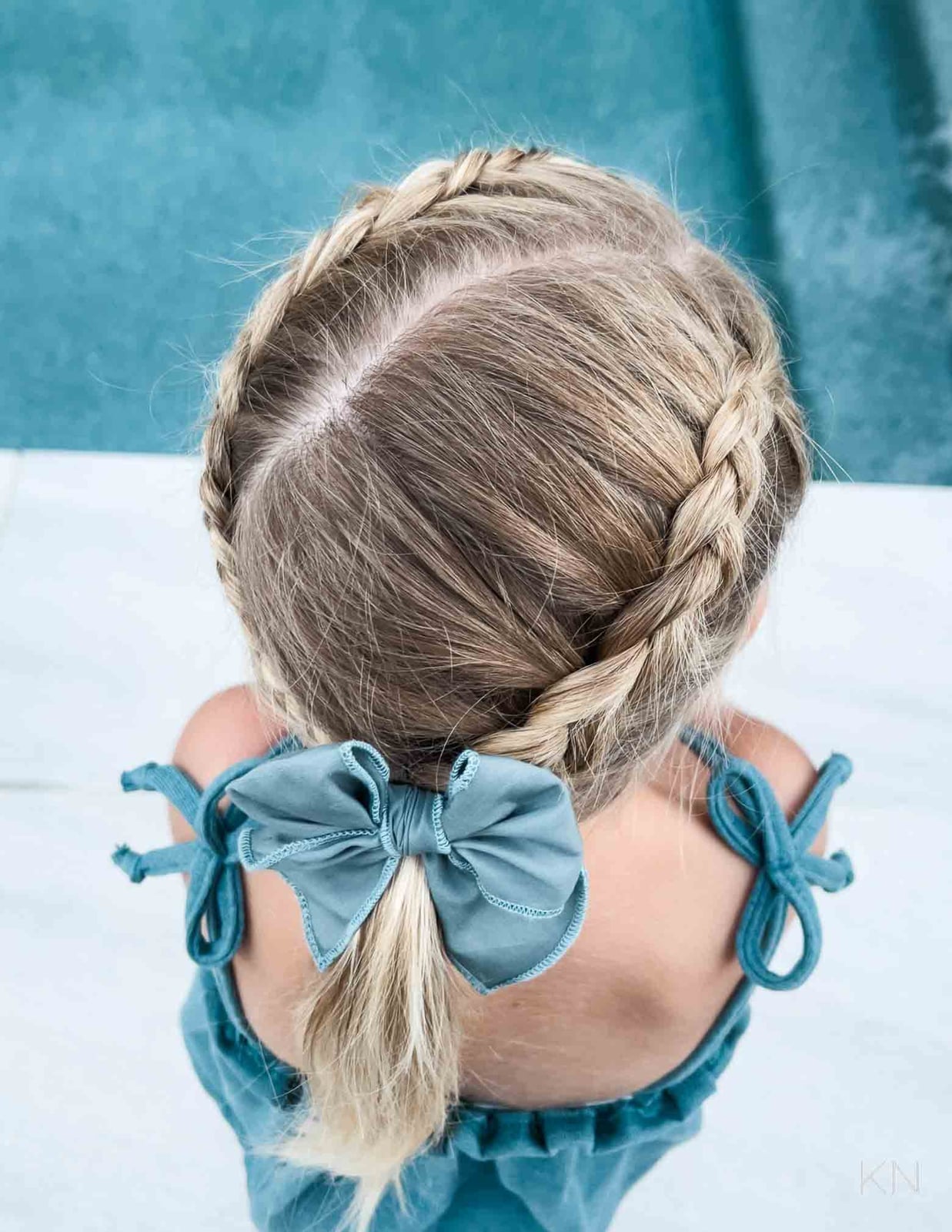
What do you say to get this exact look? Start with two French braids that begin at the crown and run down the sides, then meet in a low ponytail secured with a large blue bow. The thick, wavy blonde hair needs enough length to braid cleanly, and the middle part keeps the braids even. Ask your stylist for: double French braids into a low ponytail with a blue bow. This is a salon-level style: a stylist can section the hair precisely and keep the braid tension consistent. The braids and ponytail create a neat, symmetrical look that stays in place all day. The blue bow adds a finishing touch that feels special without being fussy.
Braided Space Buns With Blunt Bangs
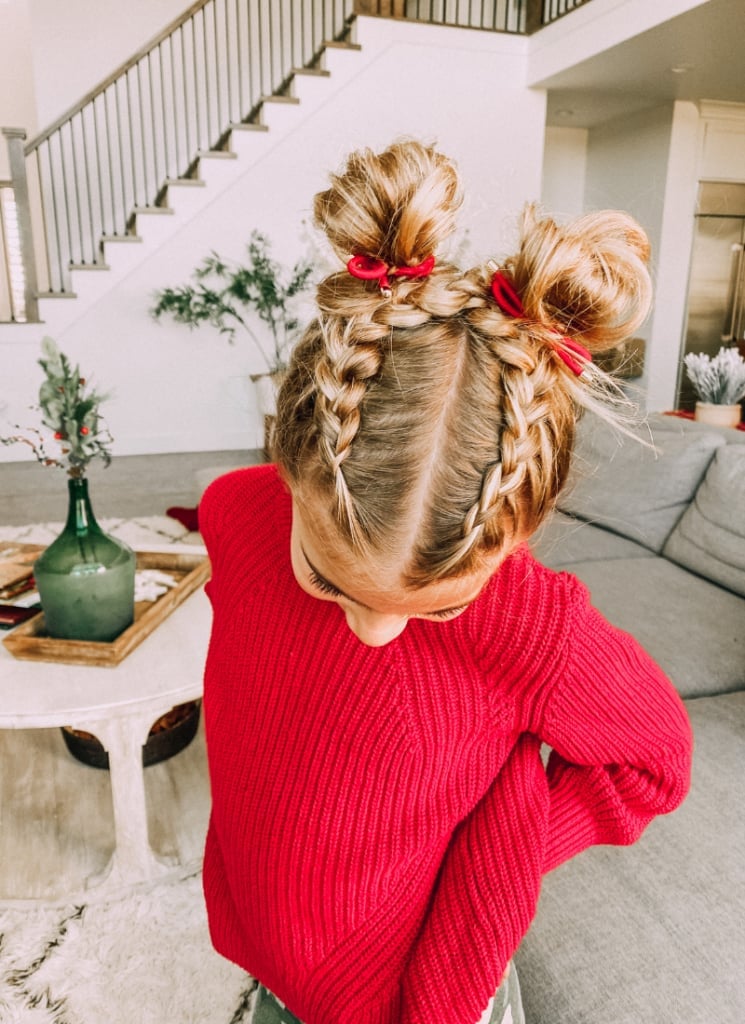
Space buns with braids sound like a salon project, but on shoulder-length fine blonde hair with blunt bangs, they are a solid DIY. The key is to braid each side tightly before twisting the braid into a bun and pinning it. Red bows at the base add a playful note. Ask your stylist for: two braided space buns with blunt bangs and red bows. The blunt bangs sit just above the brows, and the middle part suits round and oval shapes. At home, it takes about fifteen minutes once the braiding is familiar. The style holds all day, and the buns stay put as long as the pins are secure.
Mid-Back Twisted Ponytail
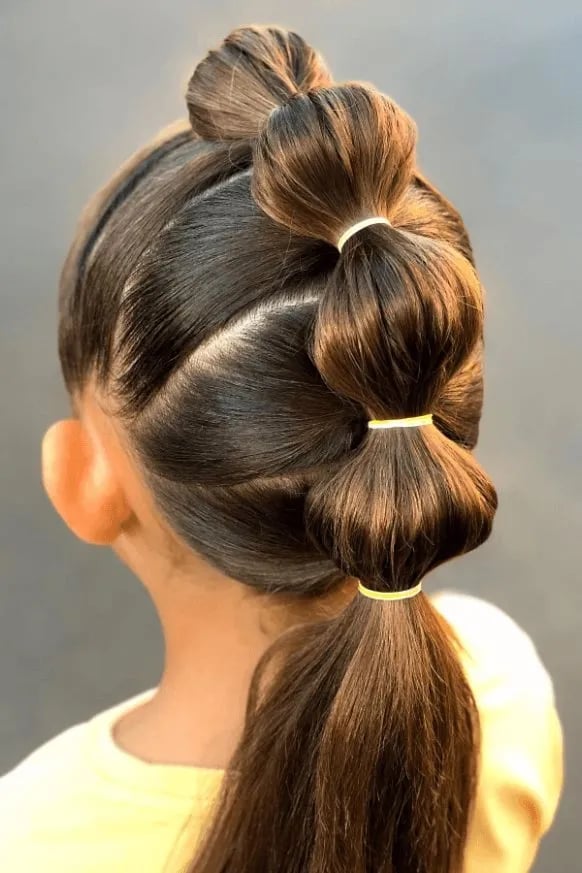
The clever part of this ponytail is that it wraps itself. A middle parting directs the hair into two equal sections, which are twisted together and then wrapped at the base to hide the elastic. Medium brown hair at mid-back length gives enough weight for the twist to hold without slipping. Straight, medium density texture is ideal, since fine or overly slippery hair might need a texture spray to grip.
Ask your stylist for: twisted ponytail. Section the hair from the nape, twist each half away from the face, then twist the two together and coil them around the elastic. A smoothing serum brushed through before you start keeps the finish sleek and the strands flat. This is a five-minute style that stays intact through a school day, no re-tightening required.
Shoulder Length Space Buns With Side Part
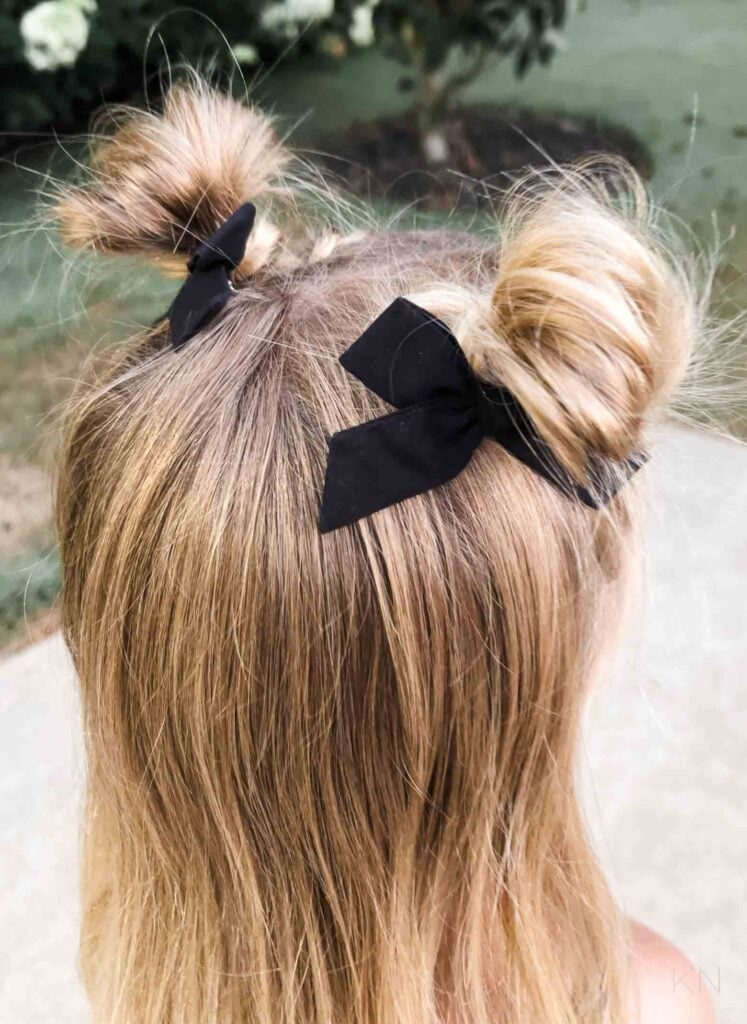
Fine, straight hair at shoulder length is the test case for space buns, because there is less bulk to hold the shape. A side part is the trick here, creating the illusion of more volume on one side before you divide the hair for the buns. Blonde strands wrap into two neat buns, each secured with a small black bow that adds grip without pulling. The hold is decent for a few hours of play, but expect the buns to soften as the day goes on. Ask your stylist for: two space buns with a side part and black bows. A tail comb to define the part and a strong elastic at each base are all you need.
Double Buns With Braids And Highlights
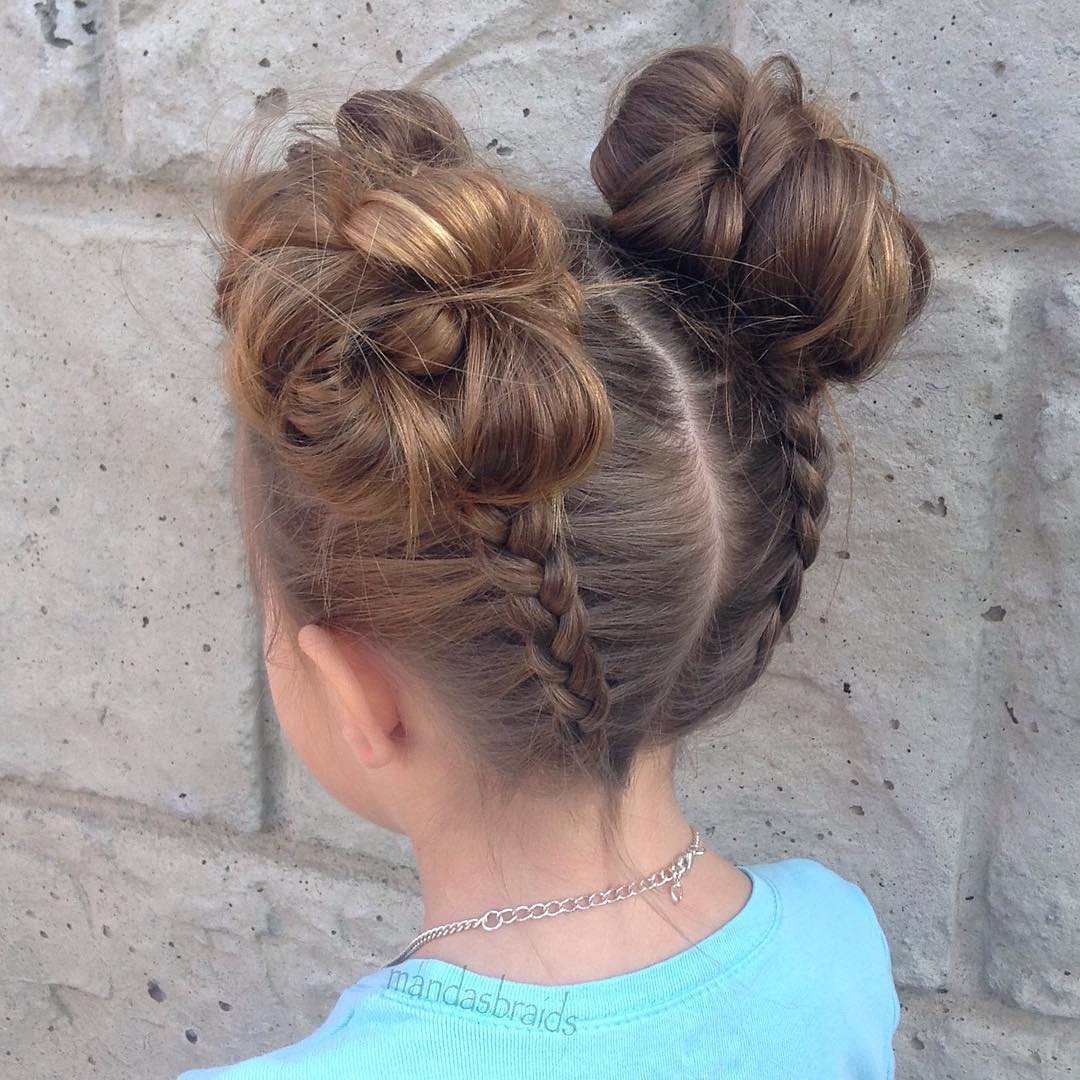
Where plain double buns can look sparse on fine hair, this version uses braided sections to build visual weight. Thick, wavy medium brown hair with subtle blonde highlights creates depth without extra product. The braids start near the crown and feed into two loosely gathered buns at the back, so the style appears carefully arranged.
On thick hair, the braids hold their shape and the buns stay full. On fine hair, the same technique tends to look deflated because the braids lack heft. Ask your stylist for: double buns with braided sections. After securing each bun, gently tug at the braid edges to soften them. The highlights shift in appearance across each twist, which is the whole point of the two-tone base.
Multiple Braided Pigtails With Beads
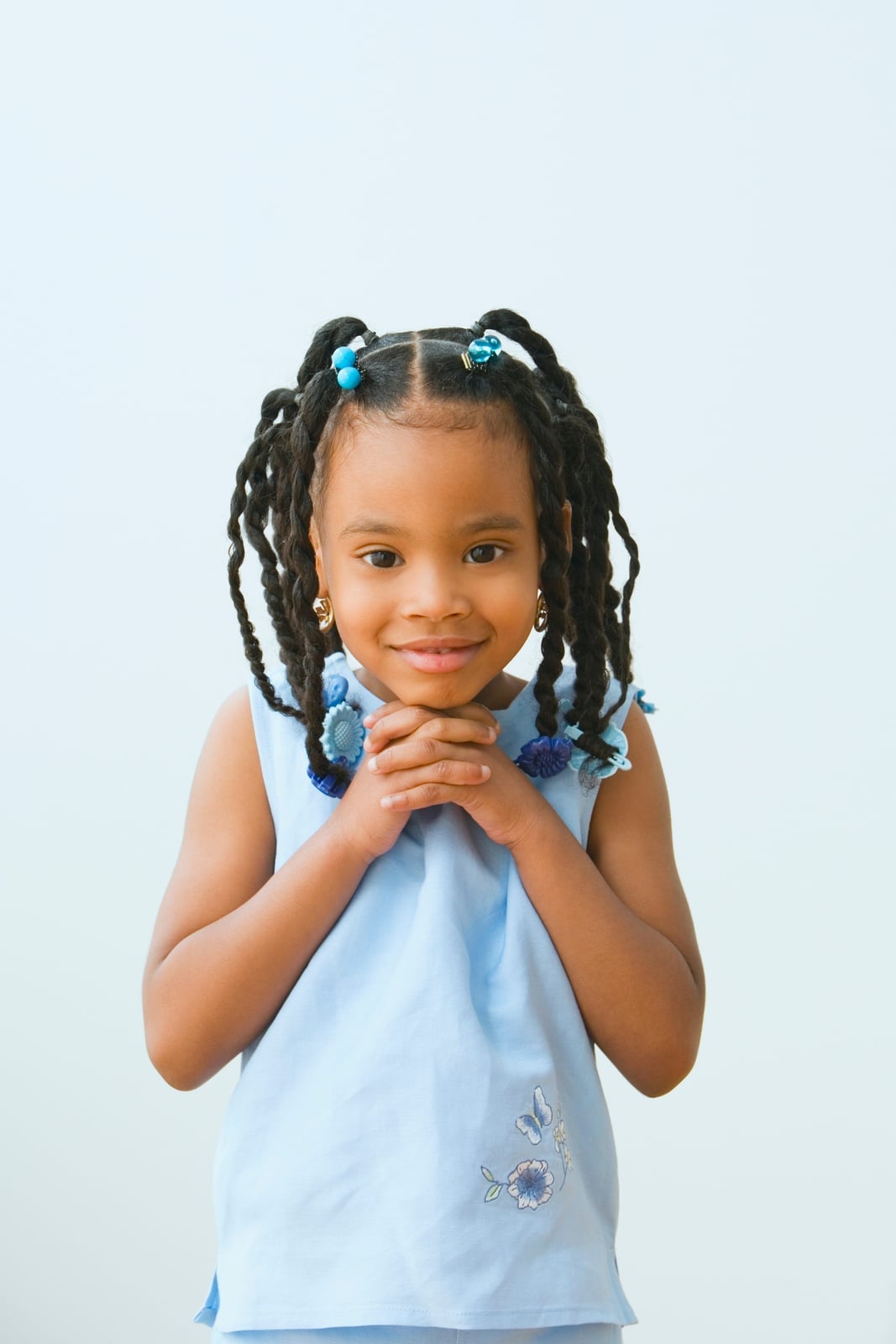
Divide the hair from a middle parting, then separate each side into four or five small sections. Braid each section from the root to the end, secure with a small elastic, then thread one blue bead onto each braid and pinch it closed. The result is neat pigtails with a tactile finish that children actually enjoy. Thick, coily dark brown hair at mid-back length is the natural fit here, since the texture holds the braid shape without slipping. Ask your stylist for: multiple braided pigtails with blue beads. A moisturizing leave-in applied before braiding keeps coily hair hydrated. This is a true DIY style, though the bead threading takes patience. The payoff is a style that lasts three to four days with minimal upkeep.
Cornrows With High Buns And Purple Bows
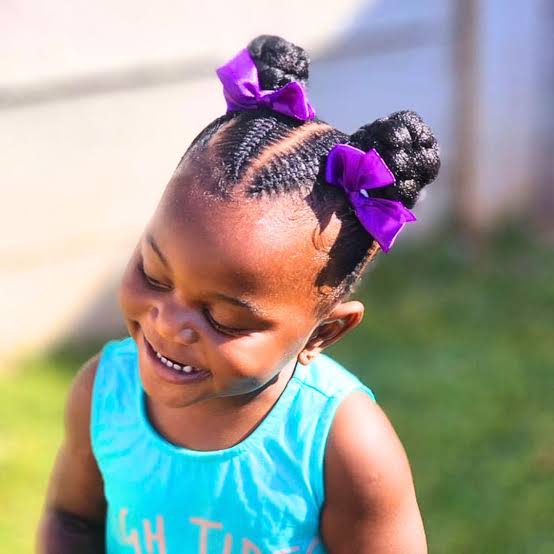
Cornrows that start at a middle parting and feed into two high buns are a geometry lesson in hair. The rows are tight against the scalp, which means the style stays clean for a week or more. Thick, coily black hair handles the tension well, and the high buns keep hair off the face and neck. Ask your stylist for: cornrows into two high buns with purple bows. The purple bows are decorative, not structural, so they can be swapped or removed without affecting the hold. Cornrows this precise take a salon appointment, not a bathroom mirror. Skip this one if your child dislikes the sensation of scalp tension during braiding.
Side Braided Ponytail
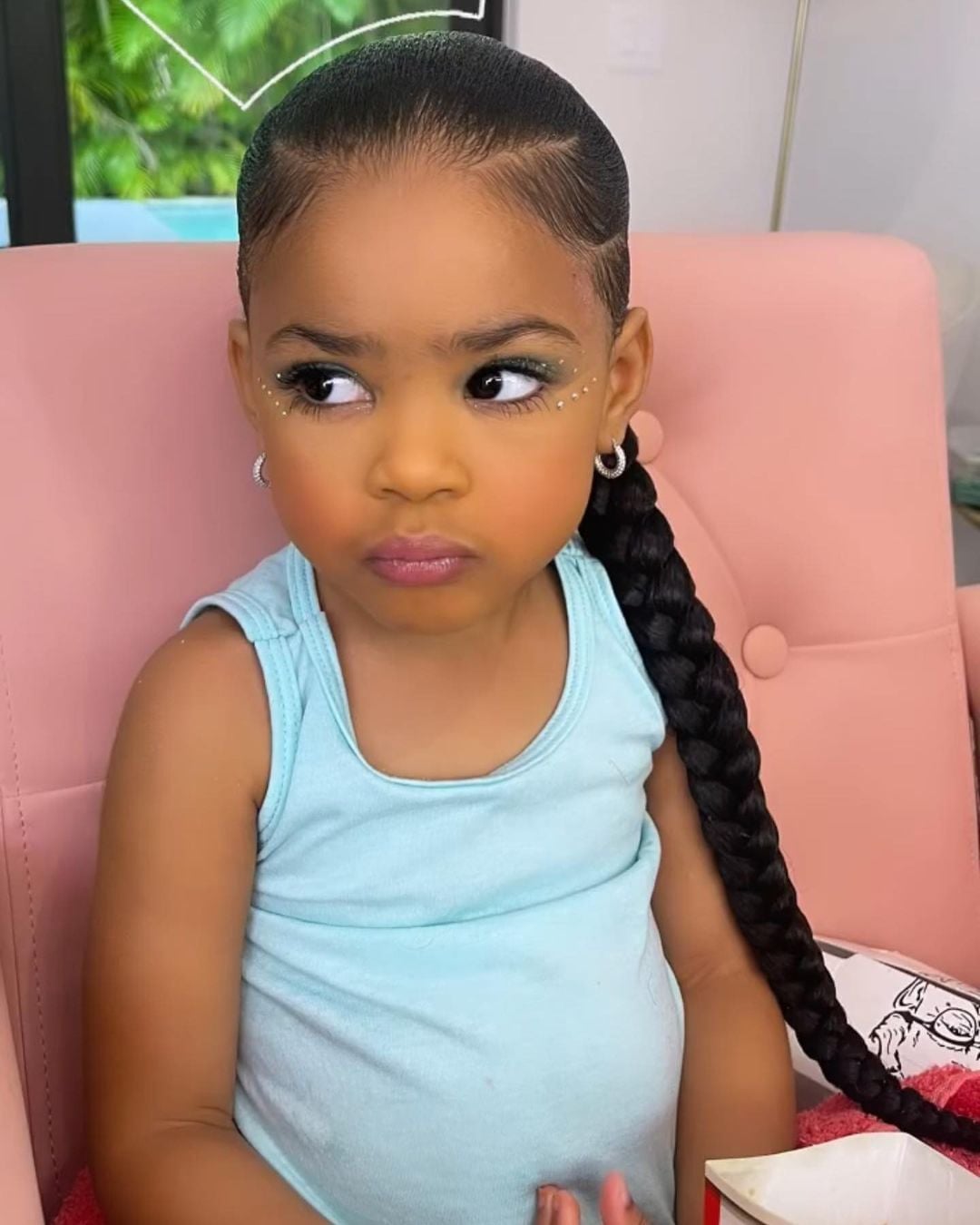
A high side braided ponytail on thick, straight black hair is a neat, put-together style that looks more complicated than it is. The hair is slicked back with defined edges, and the single long braid falls over one shoulder, reaching mid-back. This style suits most face shapes. Ask your stylist for a high side braided ponytail with slicked edges. Use a styling gel to keep the baby hairs in place and braid tightly for a clean finish. During active play, the braid can loosen or slide to the back, so a few extra elastics along the length help it hold its shape longer.
The side placement gives the ponytail a bit of asymmetry that keeps it from looking too uniform. It holds well through a school day but may need a touch-up for a full day of parties. A trim every eight weeks keeps the ends blunt and the braid looking its best.
Geometric Cornrows With Pigtails And Blue Bow
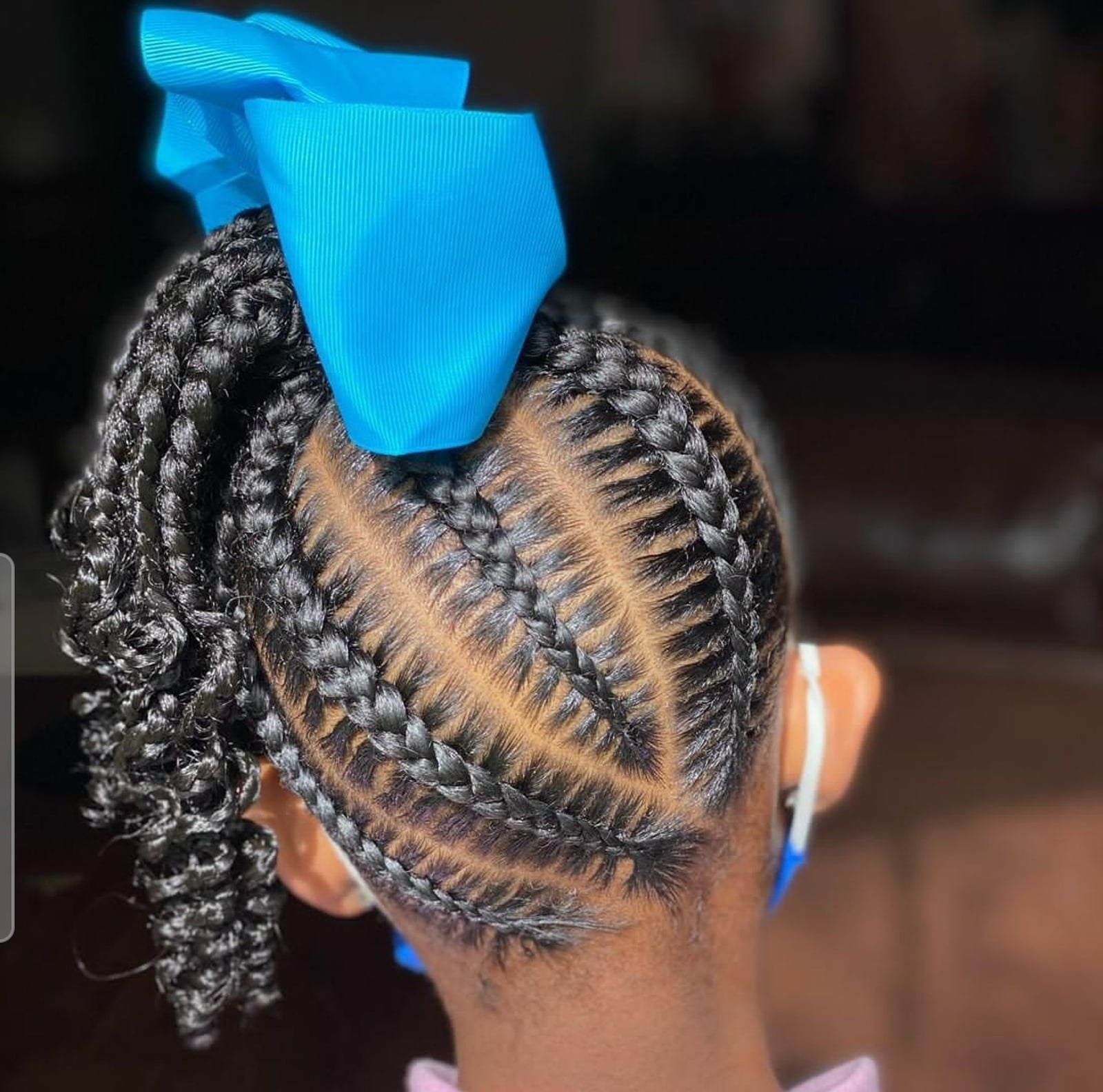
Geometric cornrows form a precise pattern on the scalp, and here they lead into two shoulder-length pigtails finished with a large blue bow. The coily, thick black hair is sectioned into clean lines, creating a design that is as functional as it is decorative. This style suits most face shapes and is especially practical for active days. Ask your stylist for geometric cornrows into two pigtails with a large blue bow. The parting pattern is the key detail, so bring a reference photo if you have one. Keep the scalp clean and moisturized, and make sure the braids are not too tight to avoid tension on the hairline.
Mid-Back Segmented Braid With Colorful Elastics
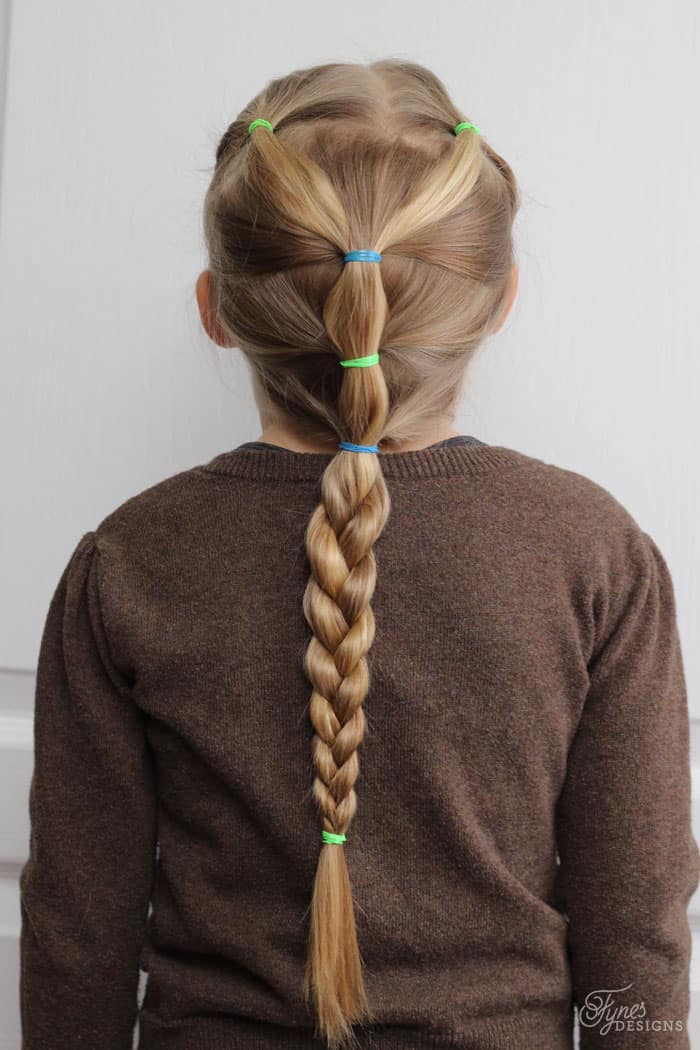
A single braid is a classic, but the segmented version adds visual interest with colorful elastics placed at regular intervals. Here, fine, straight blonde hair is braided from the crown to mid-back, with each segment separated by a bright elastic. The middle part keeps the look balanced, and the thin hair actually works in the style’s favor, since the segments are more visible. This is one of the easiest simple children hairstyles to do at home. Ask your stylist for a segmented braid with colorful elastics. Use small, snug elastics to create defined sections, and space them evenly for a consistent look. The braid holds all day and is easy to take out at night without pulling.
The technique is straightforward: braid as usual, then add an elastic every two inches or so, pulling gently to puff each segment. It works on any length past the shoulders and adds a playful touch to an otherwise simple plait. A trim every six to eight weeks keeps the ends from looking wispy.
Braided Mohawk With Ponytail And White Bow
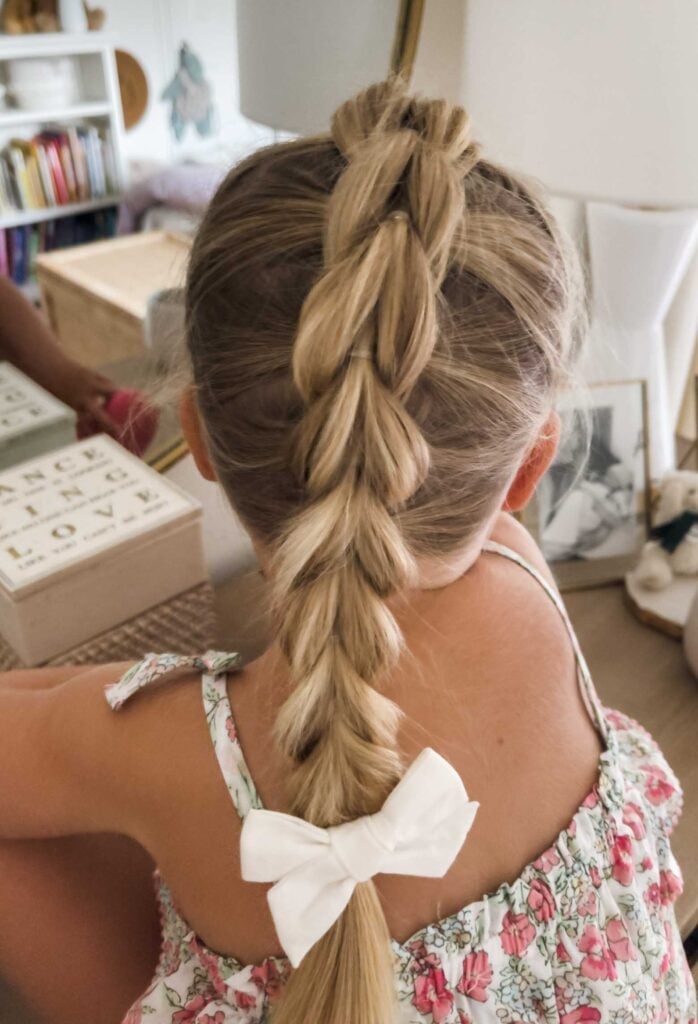
A central braid runs from the forehead to the nape, creating a braided mohawk effect, while the rest of the thick wavy blonde hair falls into a back ponytail tied with a white bow. The style combines a structured top with loose length, so it works best on hair that is at least mid-back and has some natural volume. The wavy texture gives the ponytail body without extra styling. Ask your stylist for a braided mohawk style with a back ponytail and white bow. Keep the central braid tight and neat, and secure the ponytail firmly with a strong elastic. This is a party or special event look, since the braid takes some precision to set up.
The white bow adds a finishing touch without overwhelming the design. The style holds well for a full day but may need a quick check on the braid tension after a few hours. A trim every eight weeks keeps the ponytail ends healthy.
Coily High Buns With Face-Framing Braids
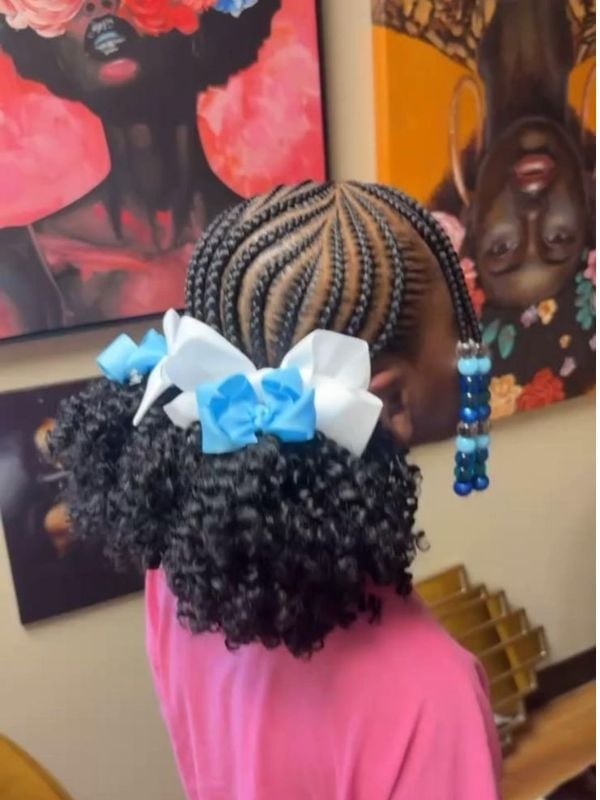
For coily hair, the higher the bun, the longer the style lasts. Here, two high buns sit on top of the head, each secured with a white and blue bow, while thin braids extend down with curly tendrils and beads at the ends. The middle part and baby hairs soften the look, and the beads add a bit of movement. This style suits children with coily hair of mid-back length, and the braids work well for any face shape. Ask your stylist for: two high buns with braids, curly ends, and beads. Moisturize the hair well before styling, keep the braids neat, and secure the buns tightly to avoid slippage. A trim every eight weeks and regular deep conditioning keep the coily texture healthy.
Collarbone Ponytail With Twisted Sections
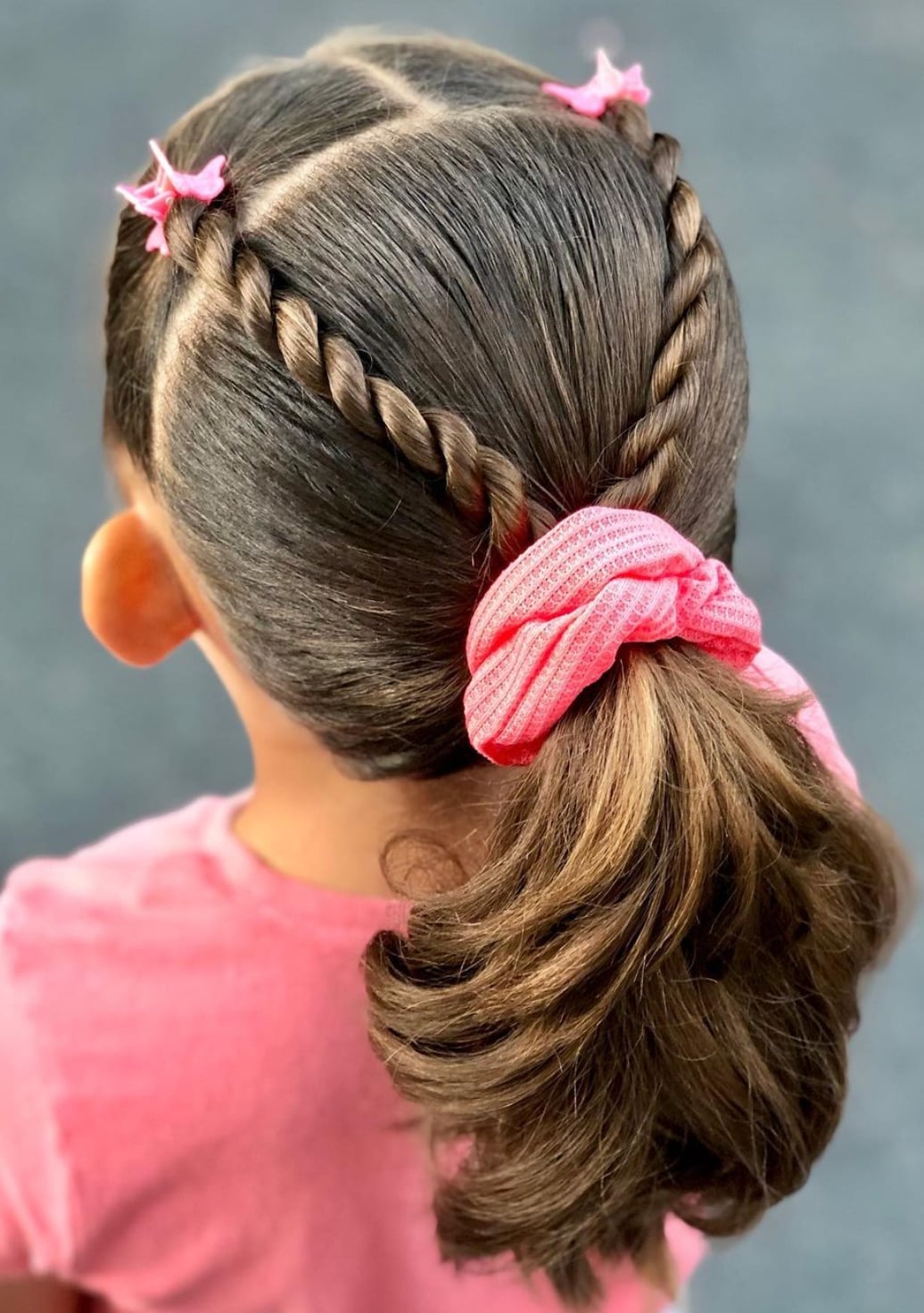
It is not a plain ponytail, but it is also not a full braid. Two twisted sections from the front meet at the base of a low ponytail on thick, wavy brown hair that hits the collarbone. A pink scrunchie holds it together. Ask your stylist for: low ponytail with twisted sections. The clean middle part makes this a versatile choice. Twist the sections tightly and smooth the crown with a comb before securing. The whole thing takes about five minutes. Doing it yourself is faster than booking a salon appointment, though a stylist can add more even tension if you are in a rush.
Two Shoulder Braids With Side Part
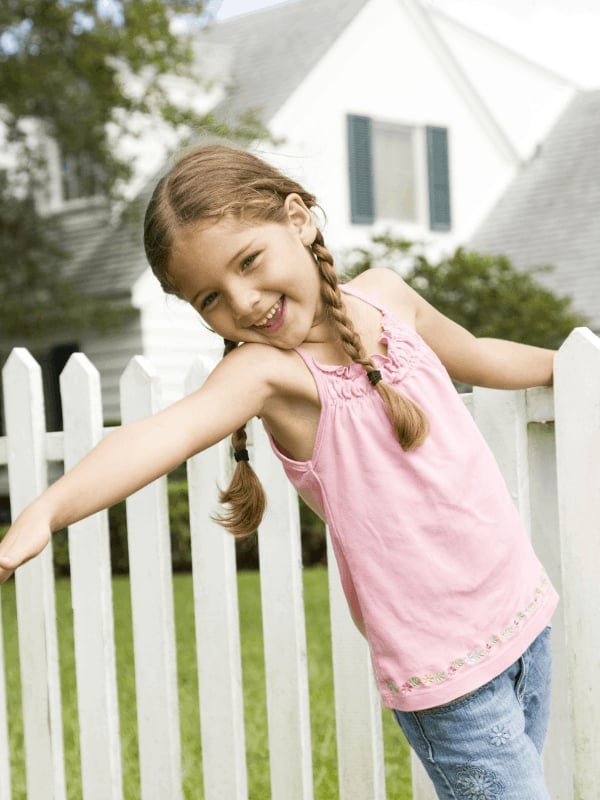
The side part is the detail that keeps two neat braids from looking like a default choice. On brown wavy hair that reaches mid-back, the part sits off-center, which adds visual asymmetry before you even start braiding. Each braid falls over a shoulder, secured with small dark ties. Ask your stylist for: two neat braids with a side part. This style suits children with wavy hair of mid-back length, and the side part can create extra volume on one side. To make it look intentional, part the hair cleanly with a fine-tooth comb, then divide the hair into two even sections. Braid each one to the ends and secure tightly. The whole process takes about ten minutes, and the braids hold well through a full day of school or play. For a softer effect, pull gently on the outer edges of each braid to loosen them slightly.
Collarbone Bubble Ponytail
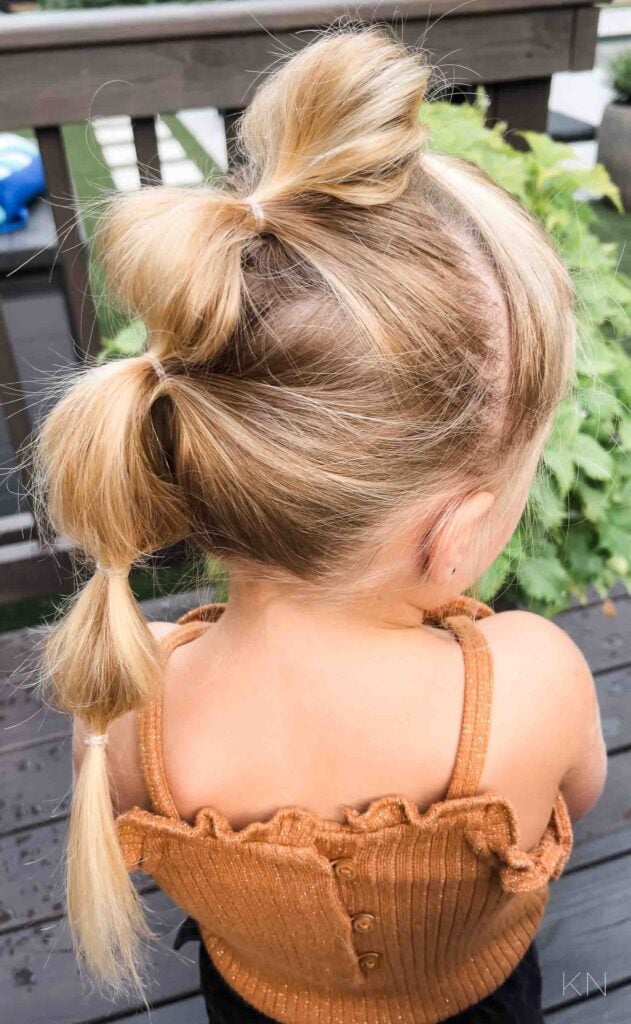
A bubble ponytail is a clever hack for fine, straight hair that struggles to hold volume. On collarbone-length blonde hair with a middle part, small elastics spaced evenly down the length create a stacked effect that looks more complicated than it is. Ask your stylist for: stacked bubble ponytail. It works best on fine, straight hair that reaches at least the collarbone. The vertical line elongates the silhouette. The bubbles can shift or flatten if the hair is very slippery, so a light texture spray or dry shampoo on the ends helps each section stay put. Gently pull each bubble outward after securing to add visible roundness.
Crown Braid With Mid-Back Braid And Flowers
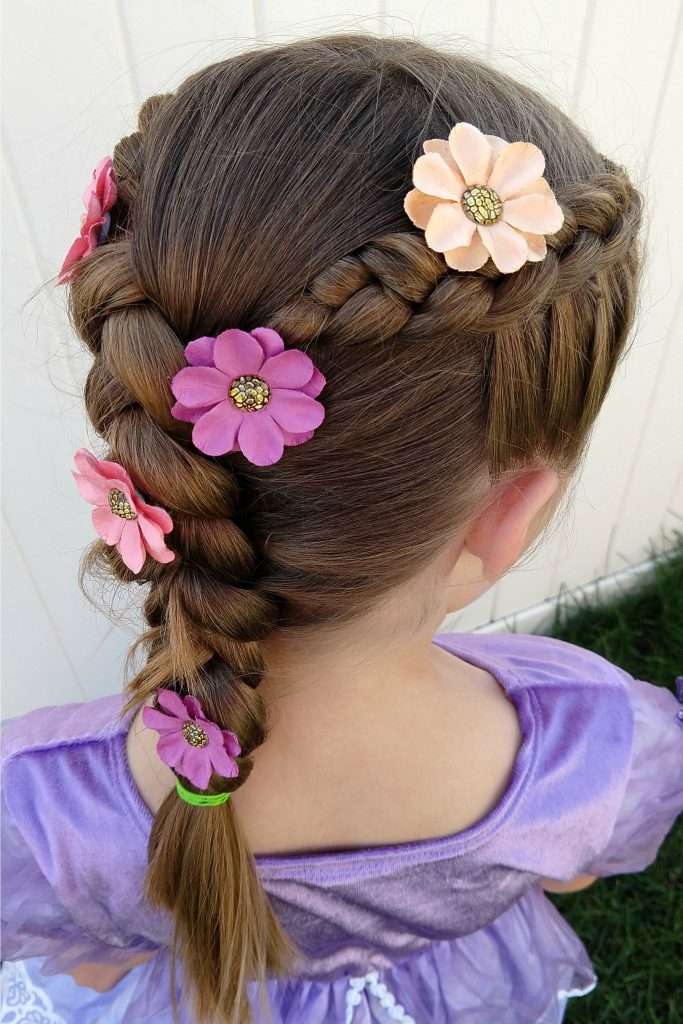
A practical rule for special occasions: start with the crown braid before you add the length. On thick, straight medium brown hair with a middle part, a crown braid wraps around the top of the head and continues into a single braid that reaches mid-back. Decorative fabric flowers are woven into the braids at regular intervals. Ask your stylist for: crown braid into a single braid with woven flowers. This style is best for weddings, parties, or any event where the hair needs to stay intact for hours. The thick texture holds the braid well, and the flowers should be placed where the braid changes direction or at the crown for balance. Book a salon for this one. The crown section requires even tension to sit flat, and DIY attempts often unravel before the first flower goes in.
Mid-Back Coily Braids With Curtain Bangs
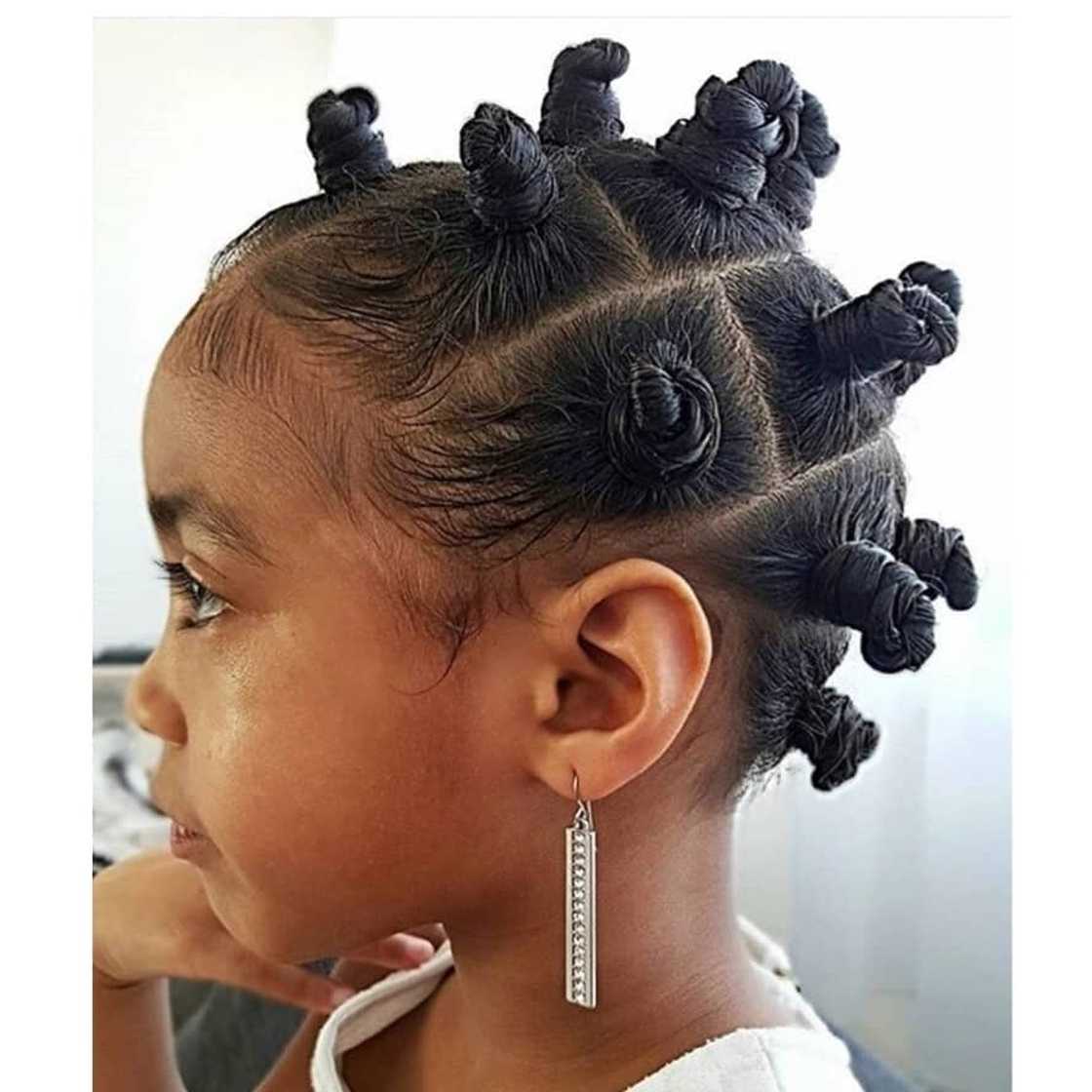
Thin coily braids usually mean a clean hairline, but here the curtain bangs and baby hairs soften the frame instead. On coily black hair at mid-back length, the braids are thin and even, with curly ends that add bounce. The middle part is precise, and the curtain bangs graze the cheekbones. Ask your stylist for: thin braids with curly ends and curtain bangs. This style suits children with coily hair of mid-back length, and the curtain bangs blend the braids into the face without a harsh line. Upkeep means keeping the braids moisturized and the ends conditioned; a light mist of water mixed with a leave-in refreshes the curls without frizzing them. Compared to box braids without bangs, this version needs more frequent edge care but creates a softer everyday look that works for school and parties alike.
Final Thoughts
For fine or thin hair, focus on styles that add volume like bubble ponytails or double buns. For thick or coily hair, opt for well-secured braids or cornrows to manage texture and prevent frizz.
- Trim split ends every 6-8 weeks for healthier hair.
- Refresh braids or buns daily to maintain neatness.
- Use gentle hair ties and accessories to avoid breakage.
- Apply a light leave-in conditioner to detangle before styling.
Simple styles can be the most memorable.