
Locs can be as simple or as intricate as you want them to be, and the current shift is toward clean lines and natural texture over complicated sculpting. What makes a style work is often just the right length and a color that feels lived-in rather than fresh out of the bowl.
These 17 ideas for Simple Length Locs range from sharp bobs to flowing, waist-grazing waves, with plenty of shoulder-grazing options in between. The collection works for fine locs that need density tricks, coily textures that demand moisture, and anyone tired of a visible grow-out line that shows up two weeks after a root touch-up.
In this article
- Chin Length Bob With Straightened Locs
- Shoulder Length Soft Locs With Curtain Bangs
- Shoulder Length Curly Locs
- Long Wavy Soft Locs With Subtle Highlights
- Dense Collarbone Length Locs
- Collarbone Length Coily Locs With Side Part
- Shoulder Length Micro Locs Half Up Style
- Collarbone Length Coily Locs Half Up Half Down
- Shoulder Length Locs With Ombre and Undercut
- Mid-Back Braided Locs Swept to One Side
- Mid-Back Wavy Locs With Blonde Highlights
- Mid-Back Coily Locs
- Mid-Back Soft Locs With Geometric Parting
- Long Thick Locs With Subtle Dimension
- Long Wavy Locs With Two-Tone Color
- Very Long Wavy Locs With Decorative Beads
- Mid-Back Ginger Locs With Thick Wavy Texture
- Final Thoughts
01Chin Length Bob With Straightened Locs
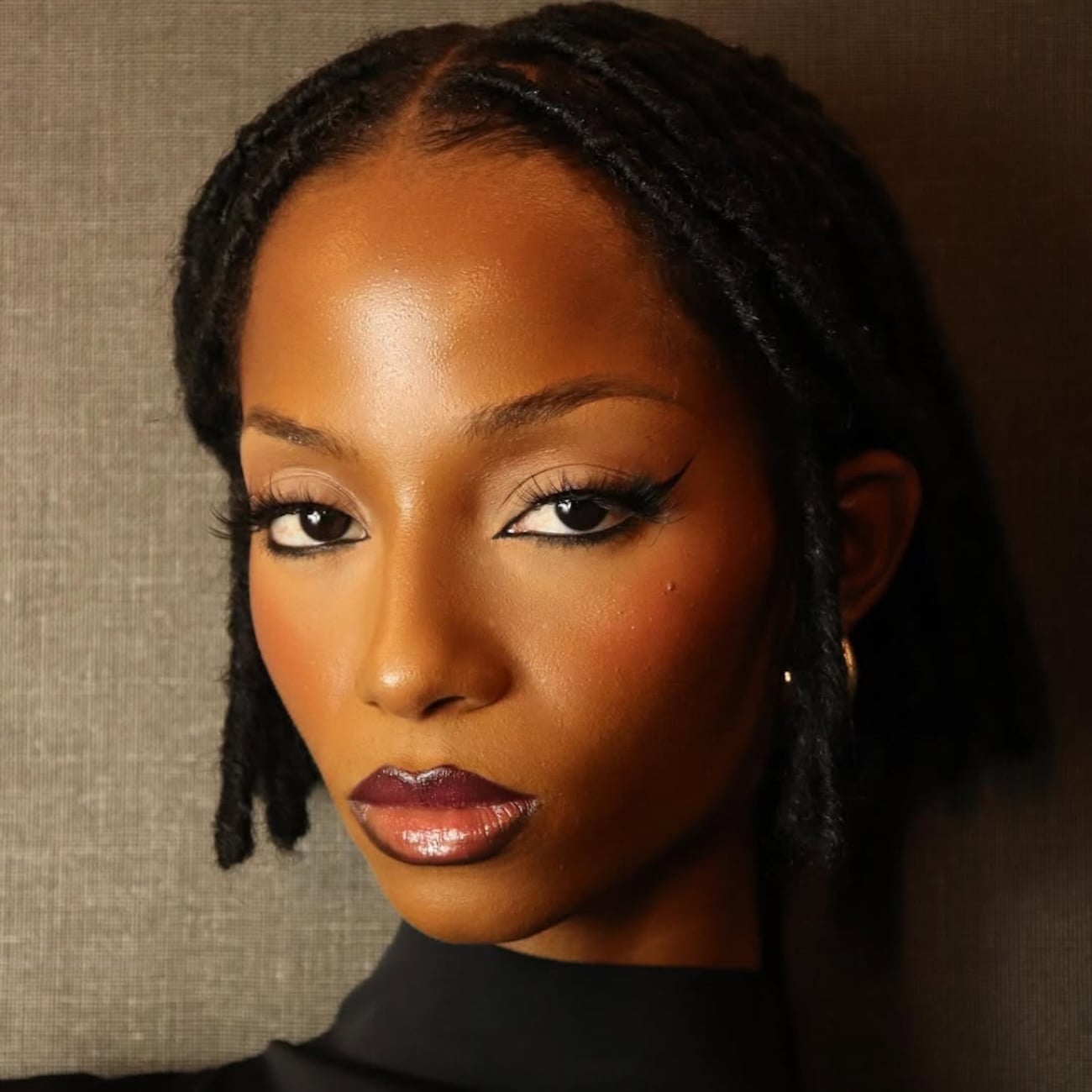
This bob does not rely on asymmetry or razored edges to make an impression. The straightening gives each loc a smooth, uniform surface, so the cut looks polished. A middle part and chin length work well for elongating round faces, and the density suits medium hair that starts at the collarbone. Ask your stylist for: chin length loc bob, straightened, middle part. Apply a heat protectant before straightening, and trim the baseline every six to eight weeks to keep the line sharp.
02Shoulder Length Soft Locs With Curtain Bangs
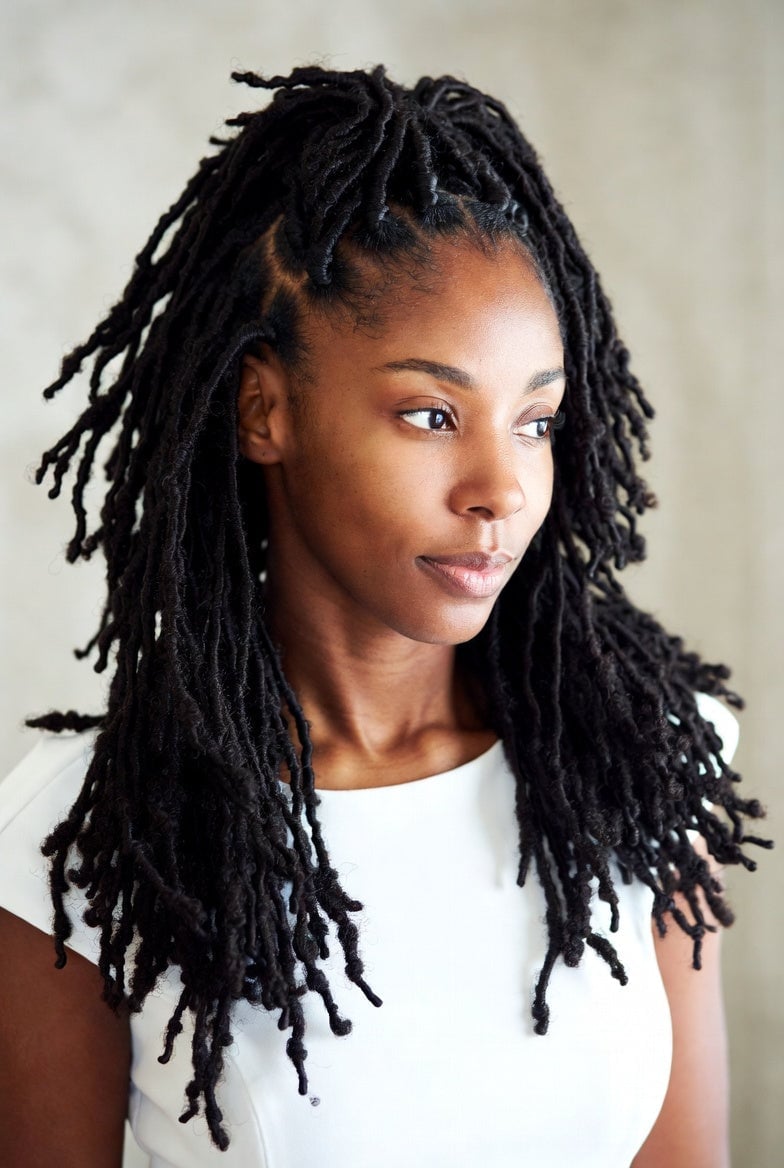
How do you ask for those face-framing pieces that land somewhere between bangs and the rest of the locs? Curtain bangs, soft locs, a middle part, and a shoulder length. The wavy texture and loose styling keep it from looking too polished, which is the point. Ask your stylist for: shoulder length soft locs, middle part, curtain bangs. Curtain bangs soften square and oval faces, so if your hair is thick and starts at the shoulder, this is a solid option.
03Shoulder Length Curly Locs
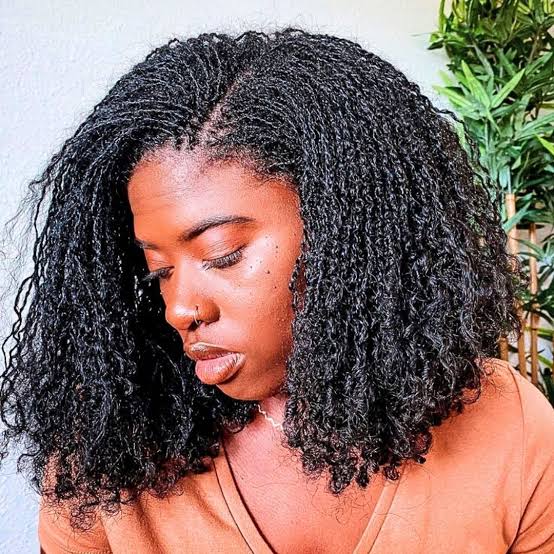
Straightened locs sit smooth against the head; curly locs take up more room and read as fuller. That is the trade-off, and it is a good one if volume is the goal. These shoulder-length locs have a distinct curl pattern and a middle part, and the solid black color keeps the texture prominent. Ask your stylist for: shoulder length curly locs, middle part. The curly texture adds volume to fine hair, so medium density starting at the collarbone is the ideal starting point.
04Long Wavy Soft Locs With Subtle Highlights
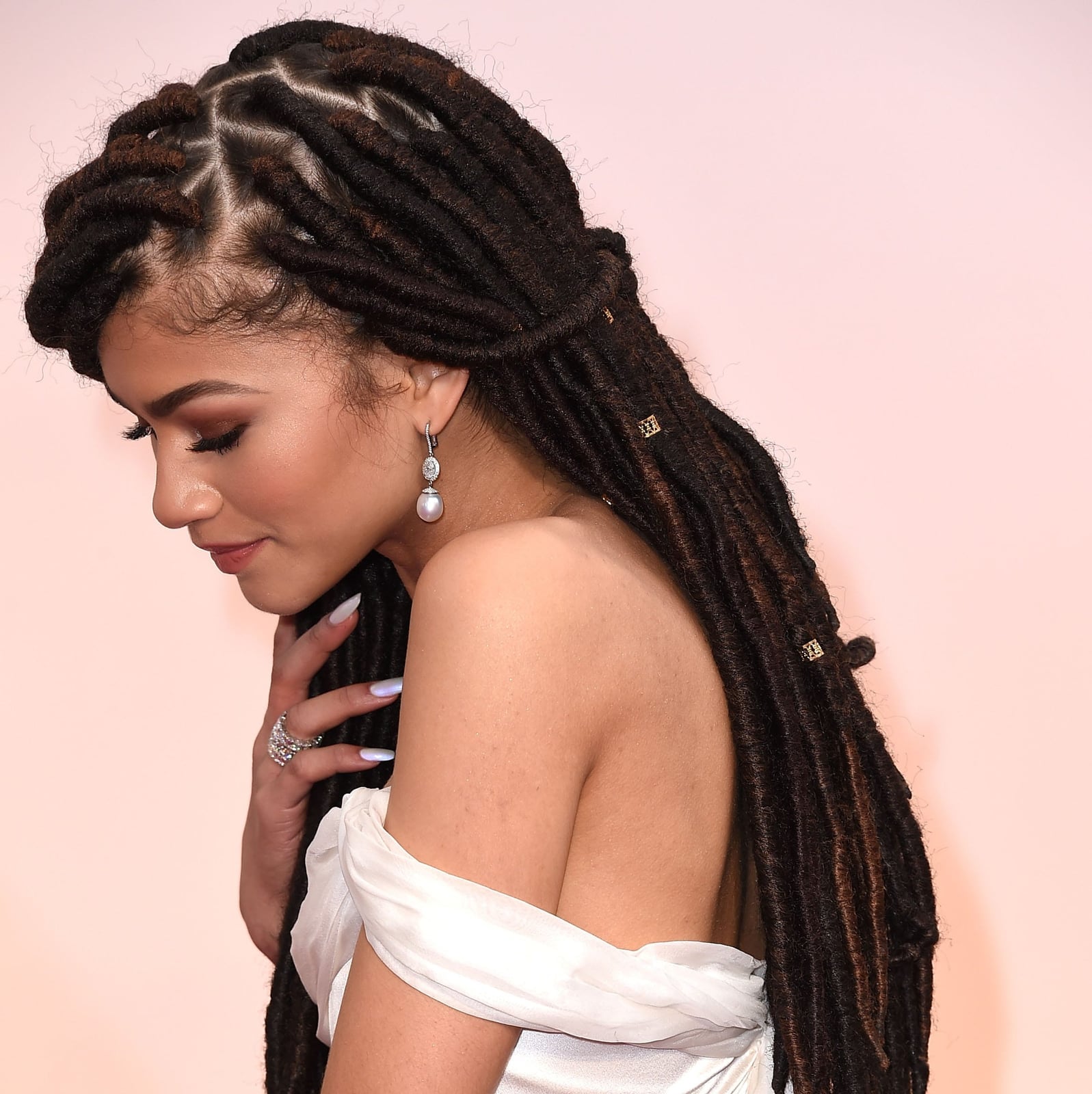
Long locs past the shoulders already carry a certain weight. Adding subtle blonde highlights to a dark brown base changes the visual weight without adding actual weight. The wavy texture keeps the highlights from looking stripey, because the light hits the curves differently along each loc.
Ask your colorist for: long soft locs, dark brown with subtle blonde highlights. Use a color-safe shampoo and conditioner to protect the lighter pieces. Trims are for shape, not length, so you can go eight to ten weeks between appointments if the ends stay healthy.
05Dense Collarbone Length Locs
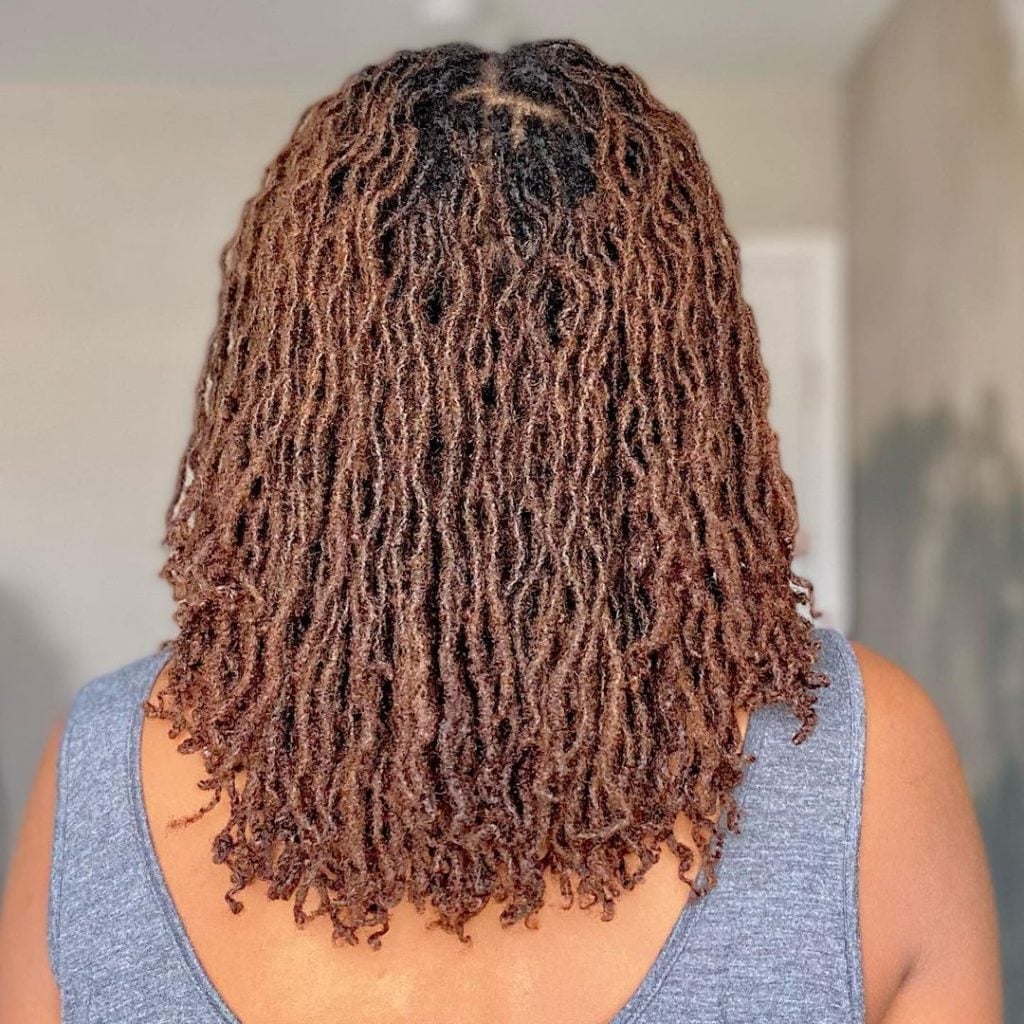
Dense locs at collarbone length hit a sweet spot between short and long. The coily texture keeps each loc defined, and the rich brown base with subtle lighter tones adds dimension without looking busy. A middle part and even fall suit most face shapes, including round and square, because the length lands below the jaw. Ask your stylist for: dense collarbone length locs, brown with subtle dimension. Keep the scalp moisturized, and trim every ten to twelve weeks to maintain the even line.
06Collarbone Length Coily Locs With Side Part
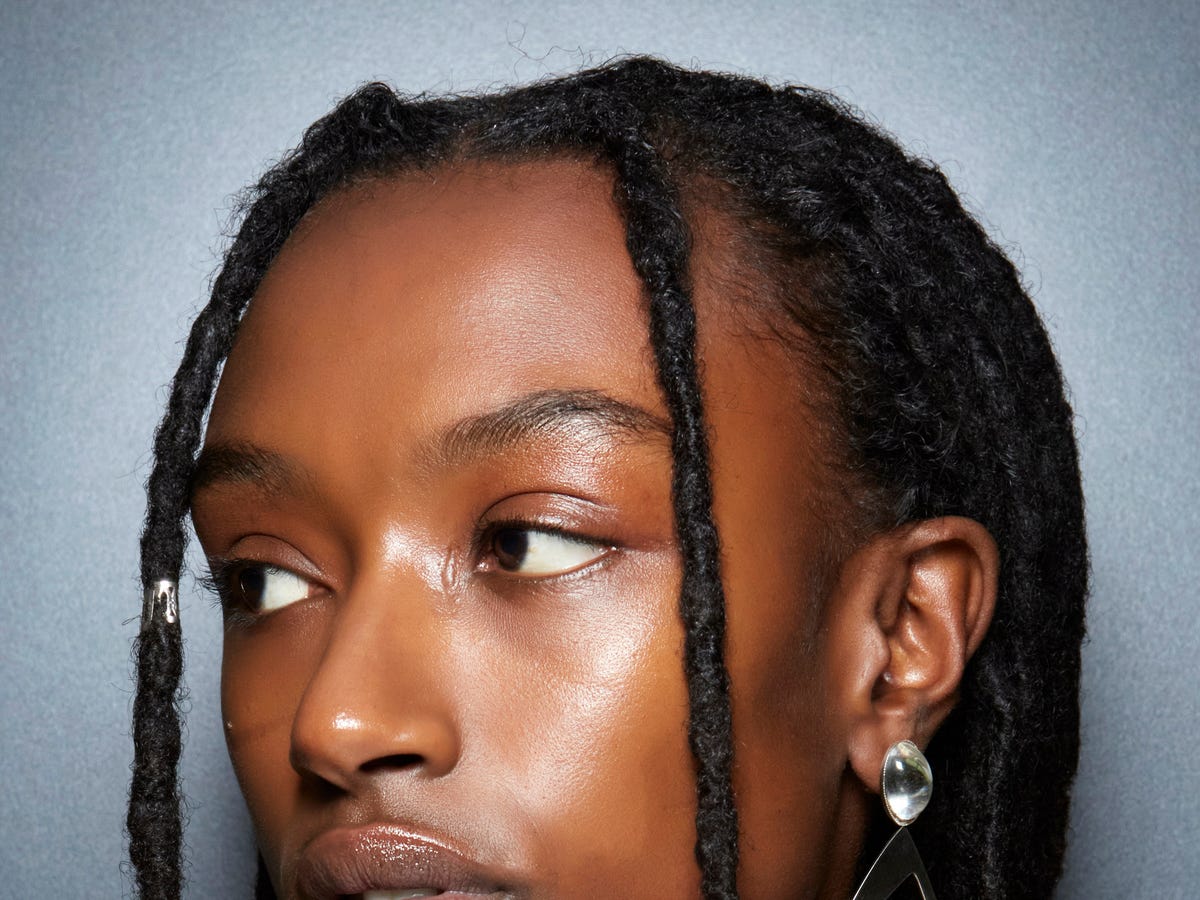
A clean side part on coily locs is not an accident; it takes a steady hand and a rat-tail comb to get that line straight. The collarbone length keeps the weight manageable, so the part stays put rather than drifting south by noon. Ask your stylist for: collarbone length coily locs, side part. Black hair with a natural coily texture holds the definition well, especially when the parting is carved into damp locs and allowed to dry. A few locs falling forward near the temple keep the silhouette from reading as rigid, and a small silver clip at one side adds a point of interest without bulk. Medium to dense coily hair starting at collarbone length benefits most from this precision; the side part also balances asymmetrical features.
07Shoulder Length Micro Locs Half Up Style
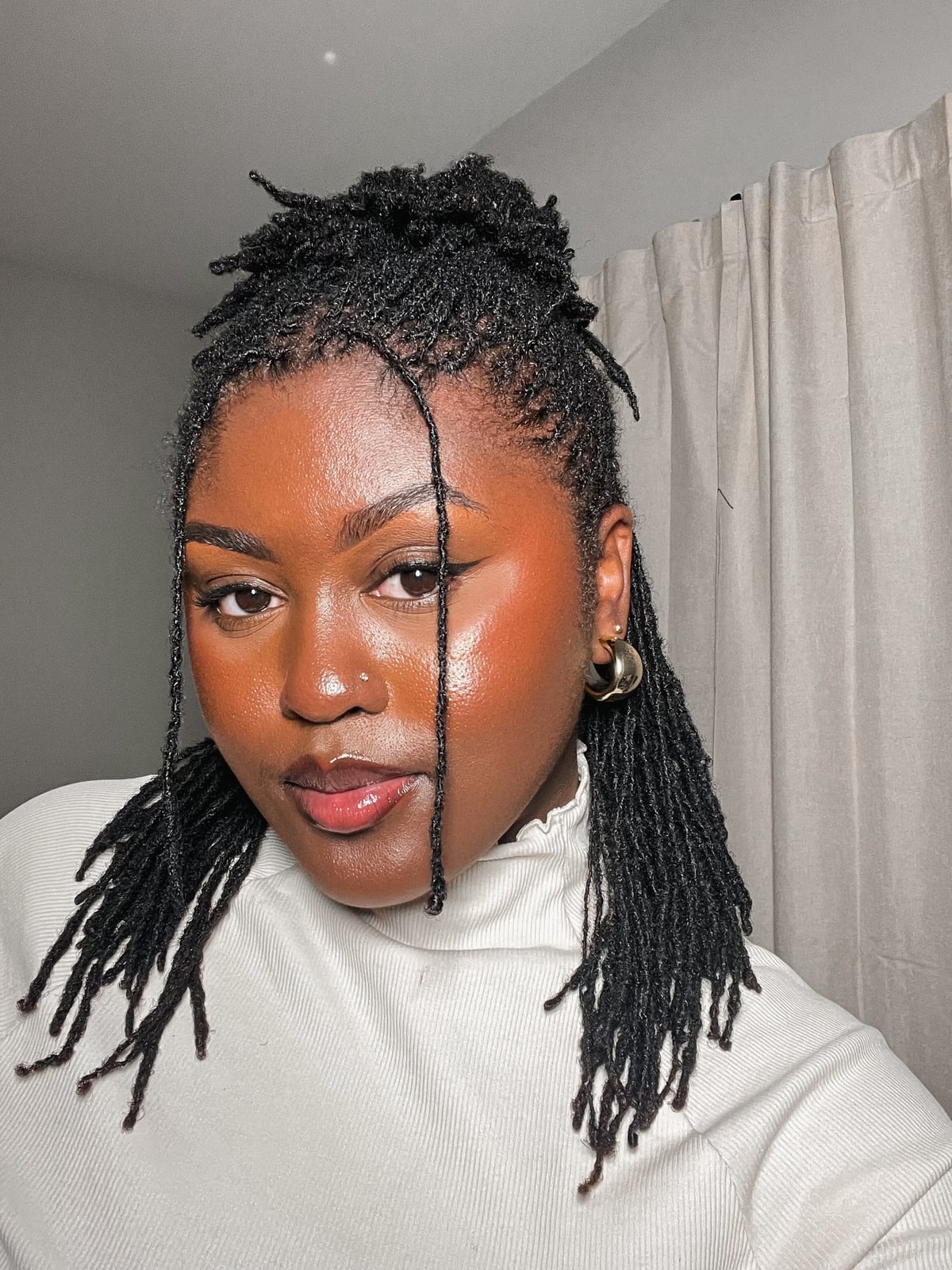
How do you get a half-up style on micro locs to actually hold without a dozen pins? The trick is a two-step anchor. First, gather the top section from the temples up to the crown, securing it with a firm hair tie at the nape of the crown. Second, twist the gathered locs into a neat bun at the very top of the crown and pin the base. Shoulder length micro locs with a wiry texture grip each other well, so the bun stays compact without slipping. The middle part keeps the front symmetrical, and the remaining locs fall loose to the shoulders. Ask your stylist for: shoulder length micro locs, half up style. This arrangement takes about ten minutes once you have the technique down.
08Collarbone Length Coily Locs Half Up Half Down
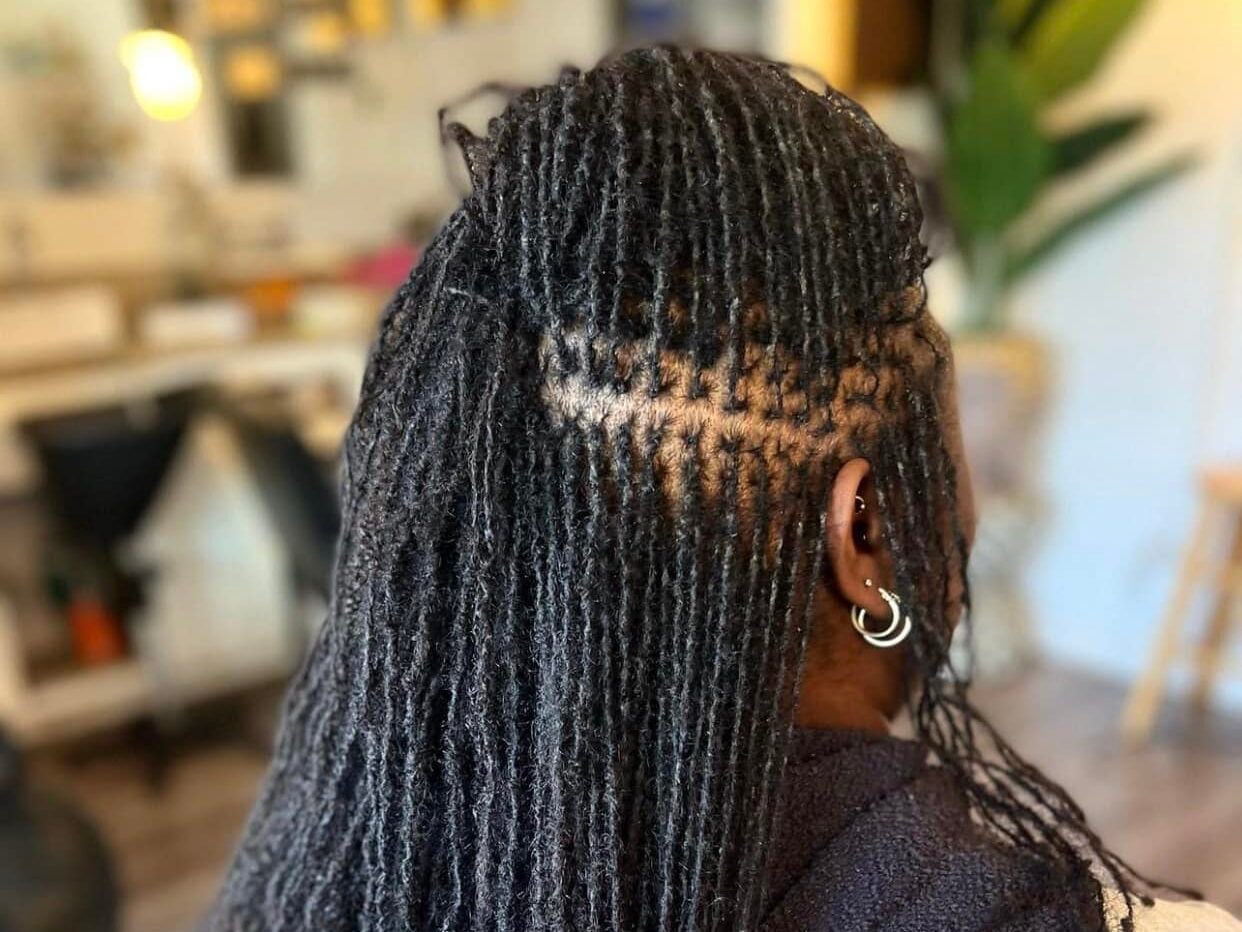
A neat middle parting on the top section of half-up, half-down coily locs creates a clean line that looks deliberate. The back view is where this style earns its keep: the part runs straight from the hairline to the crown, and the gathered locs sit smoothly before the rest cascade to collarbone length. Coily texture tends to frizz at the part within hours unless you smooth it with a brush and a mist of water before securing. Black hair with a natural coily texture holds the shape, but the top section needs re-smoothing each morning. Ask your stylist for: collarbone length coily locs, half up half down, neat middle part. Medium to dense hair at this length works for most face shapes.
09Shoulder Length Locs With Ombre and Undercut
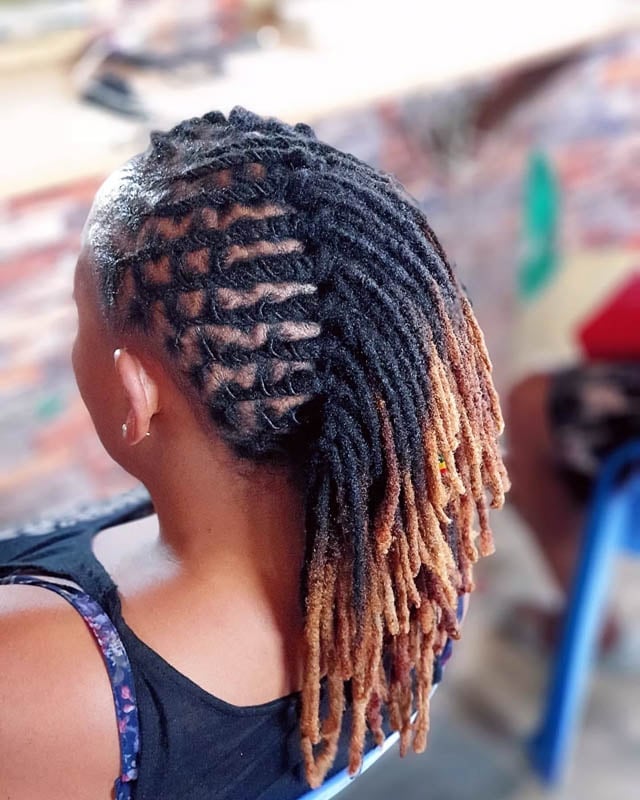
An undercut with an ombre is not the same as a simple loc style, and the difference matters when you sit in the chair. The undercut requires a clipper pass every three weeks to keep the sides clean, while the black-to-blonde ombre needs a toner refresh every six to eight weeks to prevent the blonde from pulling brassy. This is a salon-only commitment: the undercut shaping and the color transition both demand professional hands. The shoulder length keeps the locs off the neck, and the middle part shows off the color gradient evenly on both sides. Ask your stylist for: shoulder length locs with black to blonde ombre and undercut. Medium density hair works best here, as very thick locs can make the undercut look sparse by contrast.
10Mid-Back Braided Locs Swept to One Side
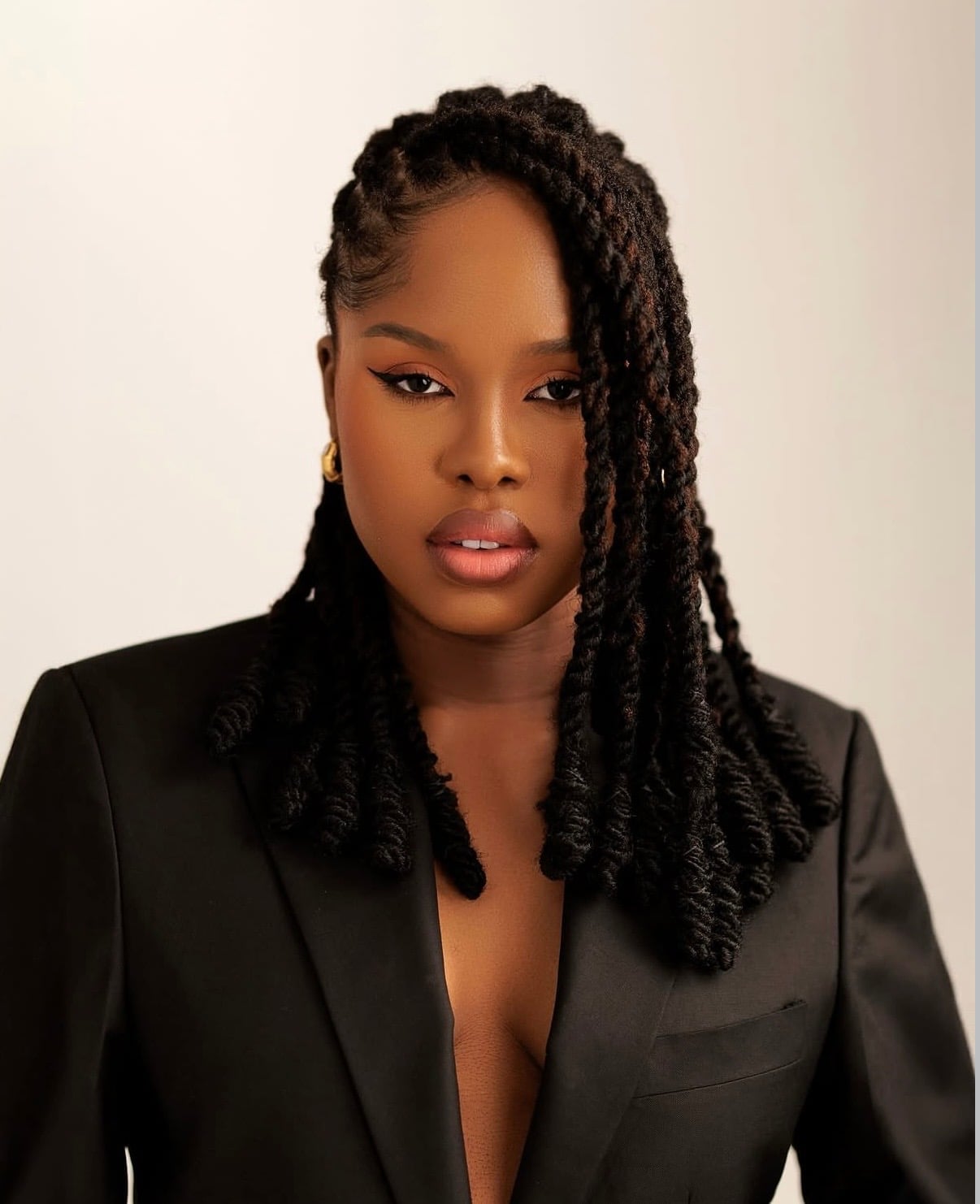
Braided locs swept to one side work because the braiding distributes the weight of mid-back length hair across the scalp instead of letting it pull at the roots. The side part starts the braid pattern low on one side, with sections braided upward and toward the ear before the remaining locs cascade loose. The wavy texture of the locs softens the braided sections, so the style looks intricate without appearing stiff. Ask your stylist for: mid-back locs styled in side-swept braids. This design suits an event or a long daytime occasion where you want the hair off the face without losing length. Medium to thick hair starting at collarbone length gives the braids enough substance to hold. A light oil on the loose locs adds shine, and the braids can stay for a few days with careful upkeep.
11Mid-Back Wavy Locs With Blonde Highlights
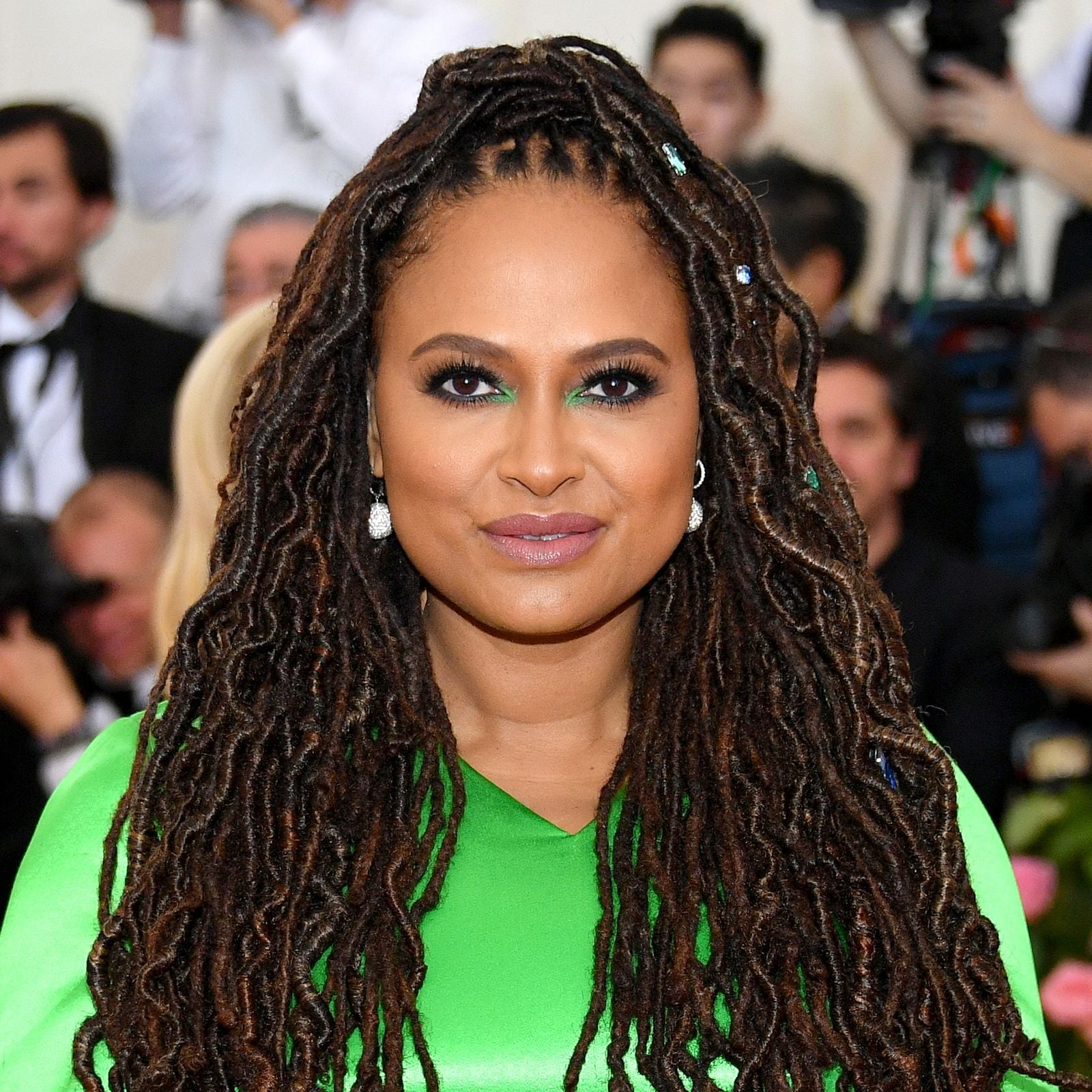
A dark brown base with subtle blonde highlights running through mid-back wavy locs creates dimension without veering into stripe territory. The thick, wavy texture holds the added color well, so the payoff is visible softness instead of a flat, solid block. Medium to thick hair starting at collarbone length can support the weight of these locs; the length and wave also balance oval and heart faces nicely.
Ask your colorist for: Mid-back wavy locs, dark brown with blonde highlights. Styling is refreshingly low-effort. A satin pillowcase at night keeps the waves intact and reduces frizz. Plan on a trim every 10 to 12 weeks to keep the shape tidy and the ends from looking ragged. That is the real maintenance: preventing the blonde from going brassy, which means a purple shampoo in the rotation roughly twice a month.
12Mid-Back Coily Locs
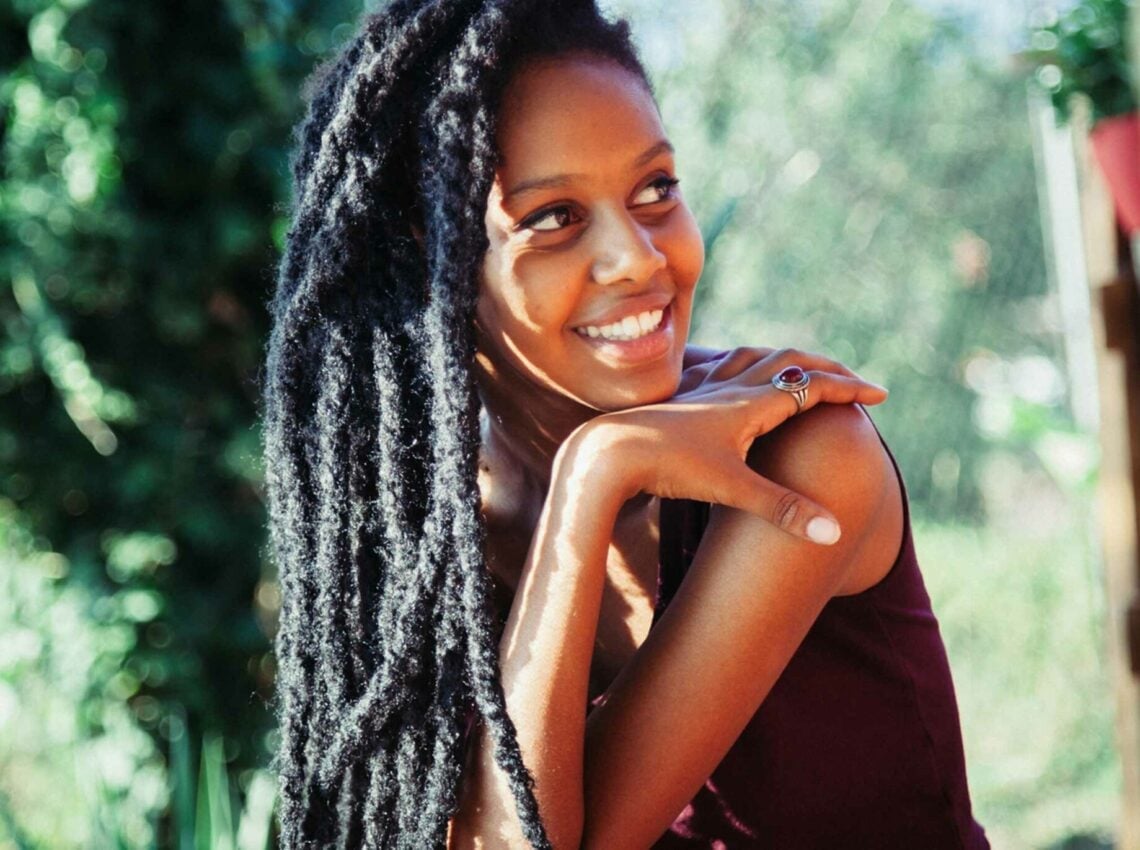
Mid-back coily locs with a middle part are a straightforward choice that works for a surprising range of face shapes. The natural volume at the sides particularly suits oval and diamond faces, where the width balances a narrower chin. Ask your stylist for: Mid-back coily locs, middle part. Medium to dense coily hair starting at collarbone length has enough heft to carry the length without looking sparse.
13Mid-Back Soft Locs With Geometric Parting
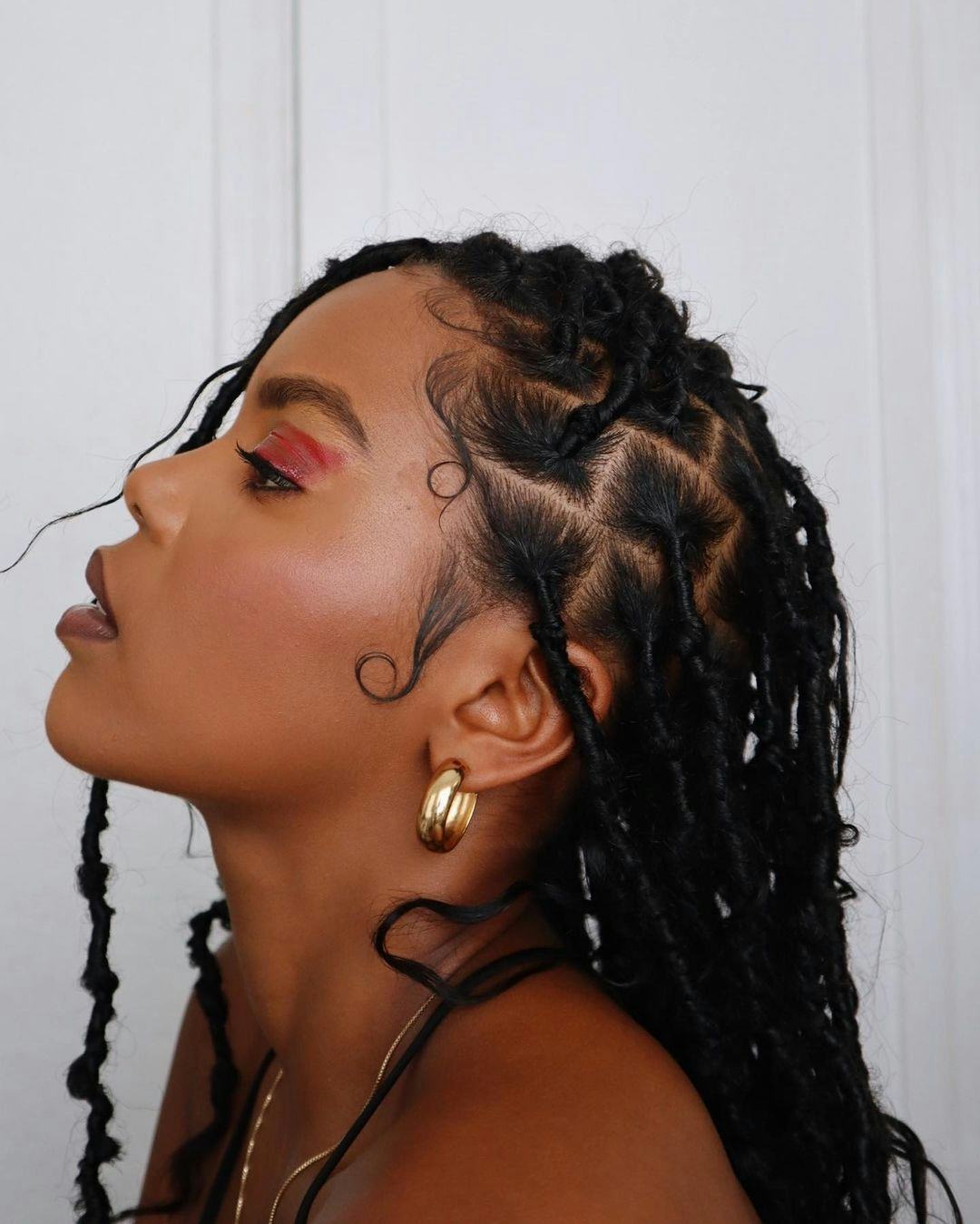
The geometric parting at the scalp in this style is the product of precise sectioning. A stylist maps out lines, triangles, zigzags, or diamonds before beginning the locs so the pattern is clean and symmetrical. Medium to thick hair starting at collarbone length holds the design best, and the soft wavy texture prevents the parting from looking too severe.
Ask your stylist for: Mid-back soft locs with geometric scalp parting. A few face-framing tendrils keep the look from feeling clinical. The skill here is entirely in the initial setup; once the locs are installed, the parting needs only occasional redefinition during washes to stay sharp. This is not a rushed style, expect a solid few hours in the salon.
14Long Thick Locs With Subtle Dimension
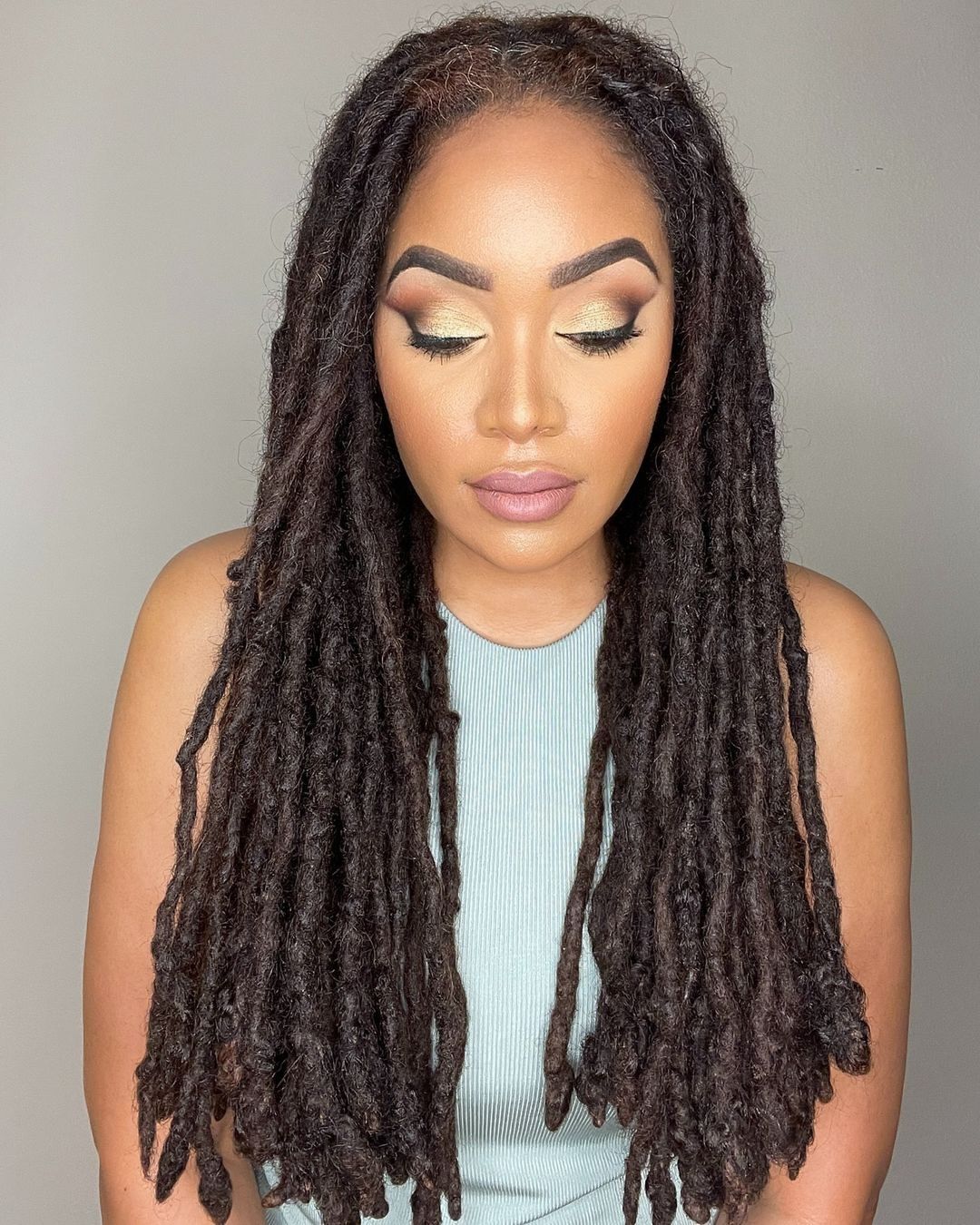
Extreme length and thickness look impressive, but the time it takes to get there and to maintain it is significant. Long thick locs past the collarbone with a middle part showcase natural texture and subtle lighter tones woven through for depth. Thick hair starting at collarbone length has the density needed; the length and bulk also balance a narrow face by adding width at the sides.
Ask your stylist for: Long thick locs, dark brown with subtle dimension. A salon is the only practical route for installation, doing this at home takes patience most people lack. The weight is a real drawback. Heavy locs can tug at the scalp, so a lightweight oil on the ends helps prevent dryness and reduces strain. Expect a trim every 12 to 16 weeks.
15Long Wavy Locs With Two-Tone Color
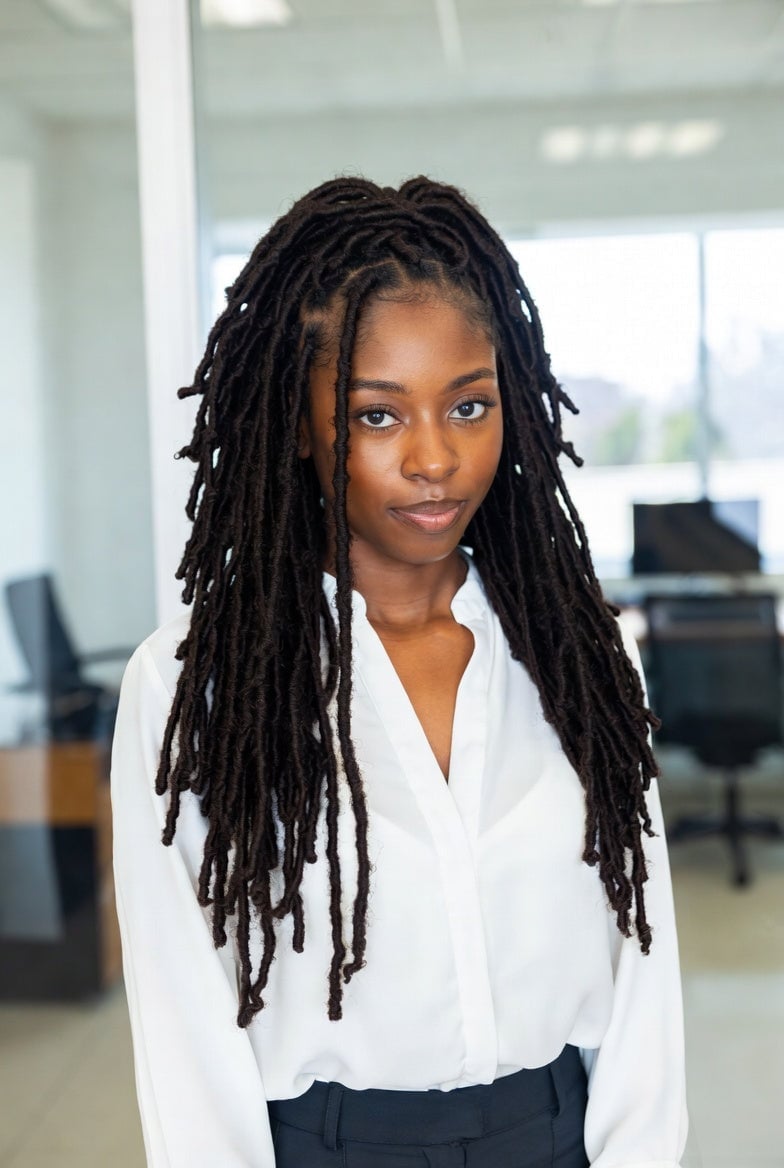
Solid color on long wavy locs looks classic; two-tone blonde and brown creates contrast. The contrast separates the locs into distinct light and dark bands that catch the eye. Ask your colorist for: Long wavy locs, two-tone blonde and brown. Medium to thick hair starting at shoulder length can handle the color process without damage, and the wavy texture keeps the dual shades from blending into a muddy middle. This is a bolder choice than a single shade, suited to those who want their hair to make a statement without elaborate styling.
16Very Long Wavy Locs With Decorative Beads
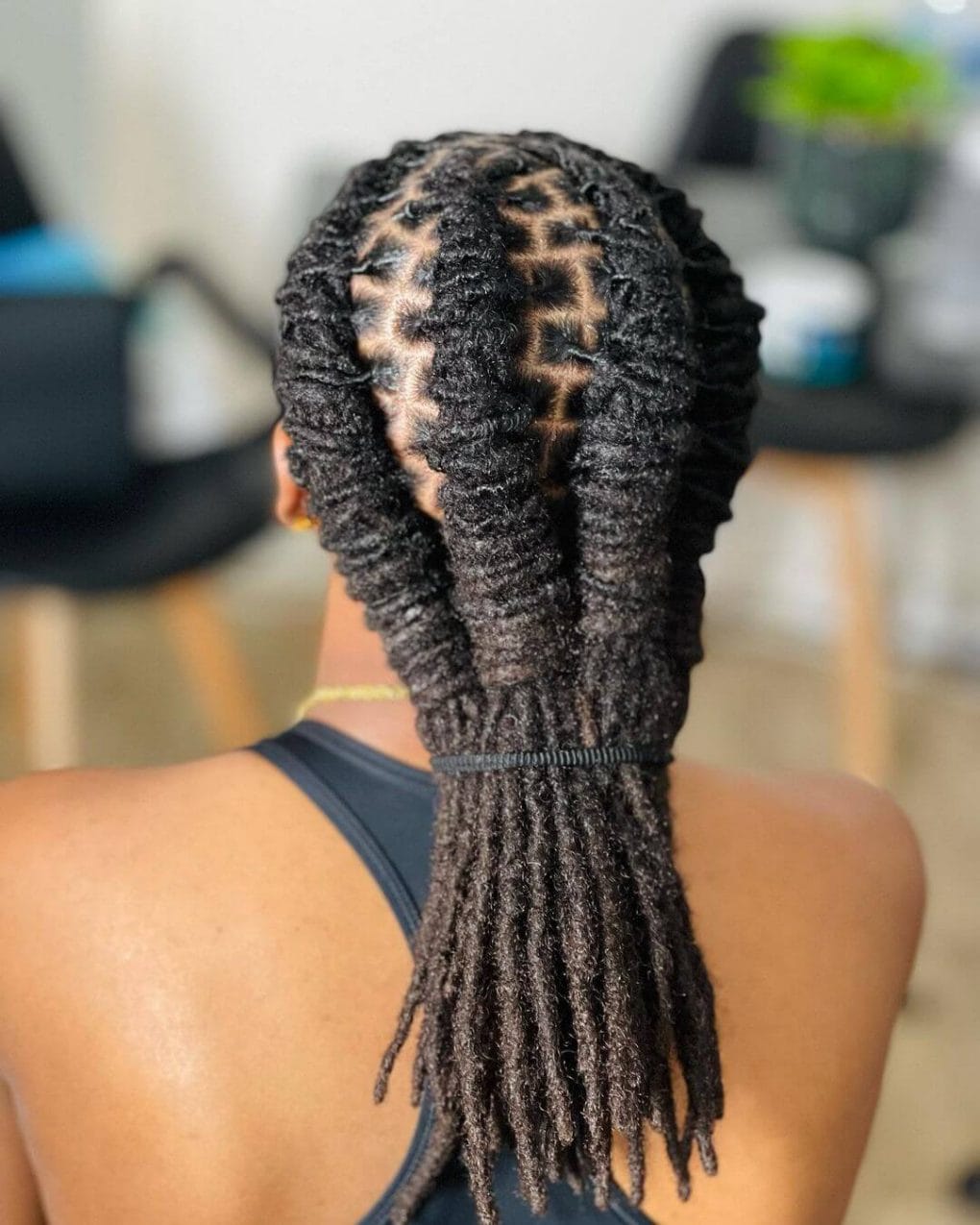
Very long locs with beads look intentional, but they also snag on collars and seat belts more than a bead-free set. Medium to thick hair that starts at collarbone length handles the weight best; the dark brown base with blonde streaks keeps the length from reading as one flat block. Ask your stylist for: very long wavy locs with decorative beads. Secure each bead yourself between retwists and check that the closure is tight, then moisturize the scalp beneath them so the beads do not trap dryness.
17Mid-Back Ginger Locs With Thick Wavy Texture
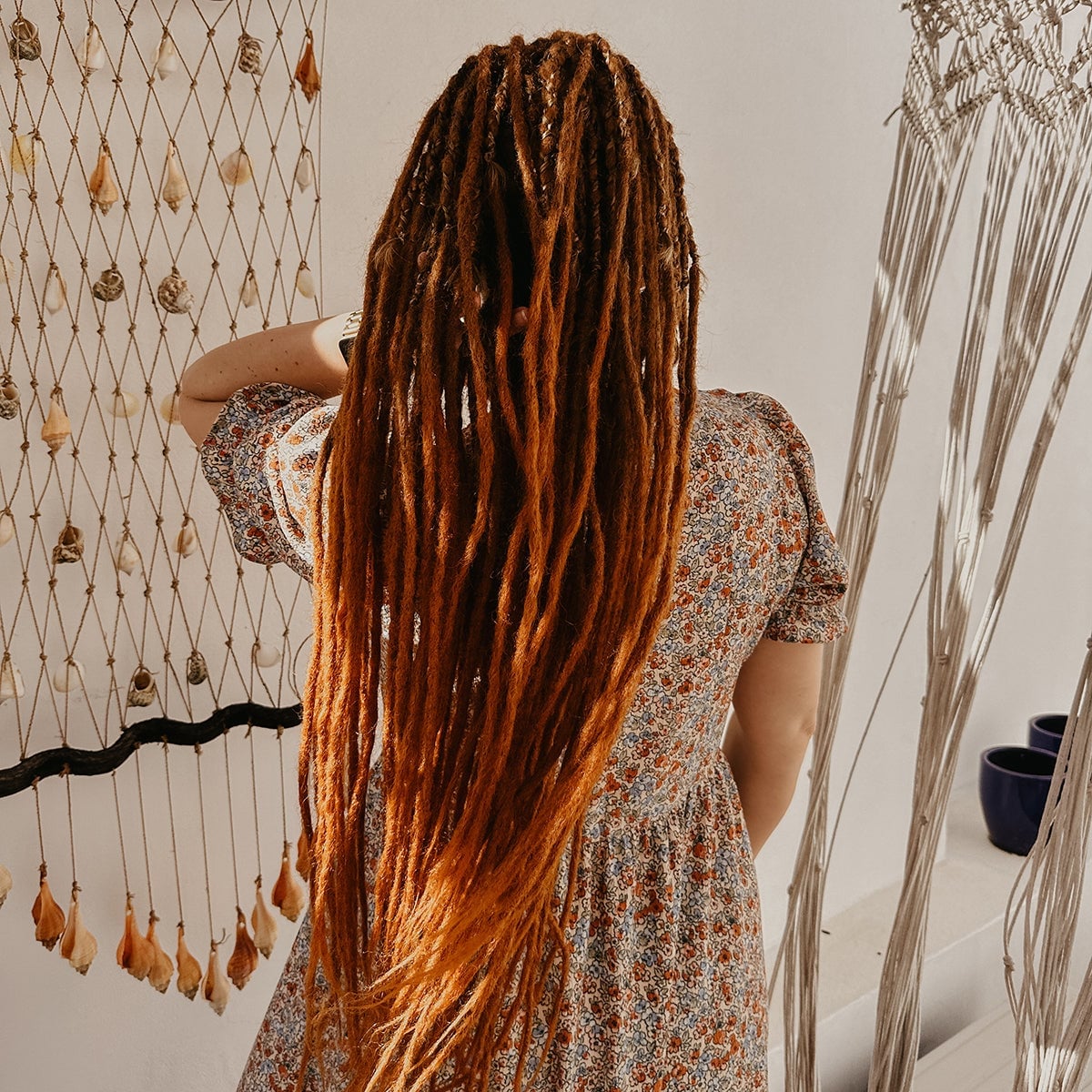
A bold color on locs needs a consistent base to stay vibrant without turning brassy. Mid-back length locs with a thick wavy texture hold the pigment well because the hair is dense enough to absorb it evenly. The back view here shows a uniform ginger that does not fade at the ends, which is the payoff of a colorist who saturates each loc individually.
This is a statement color for autumn events when warm tones feel right. Fair to medium complexions pair naturally with ginger, though the shade works beyond that range. Ask your colorist for: mid-back locs in vibrant ginger color. A color-depositing conditioner every two washes keeps the tone from shifting orange, and a trim every 12 to 16 weeks prevents the wavy ends from thinning out.
18Final Thoughts
For maximum impact with minimal styling, choose a length that complements your natural texture and face shape, and consider subtle color dimension for added depth. Fine locs benefit from a blunt baseline and minimal layering. Round faces look best when the length falls past the chin. Coily textures hold shape well at shorter lengths, while wavy locs shine when left long enough to swing.
- Retighten roots every 4-8 weeks, depending on hair growth.
- Moisturize locs regularly with water-based sprays or light oils.
- Protect locs at night with a silk or satin scarf or bonnet.
- Avoid excessive manipulation to maintain texture and shape.
Embrace the elegance of simple length locs.