

Braids are the backbone of protective styling, and in 2027 the focus is on clean parts, varied scales, and a lived-in finish that reads as deliberate rather than undone. Soft face-framing layers and glossy texture keep even the most intricate patterns feeling modern rather than fussy.
This collection of 20 trendy hairstyles for Black women braids covers the range from jumbo box braids to micro cornrows, with options for straight, wavy, and curly finishes. Whether you need a style that lasts through the week or one that turns a corner with beads and sculptural lines, each look answers a real problem: a part that won’t stay crisp, ends that fray too fast, or a fringe that refuses to sit.
Jumbo Dark Brown Box Braids Mid-Back
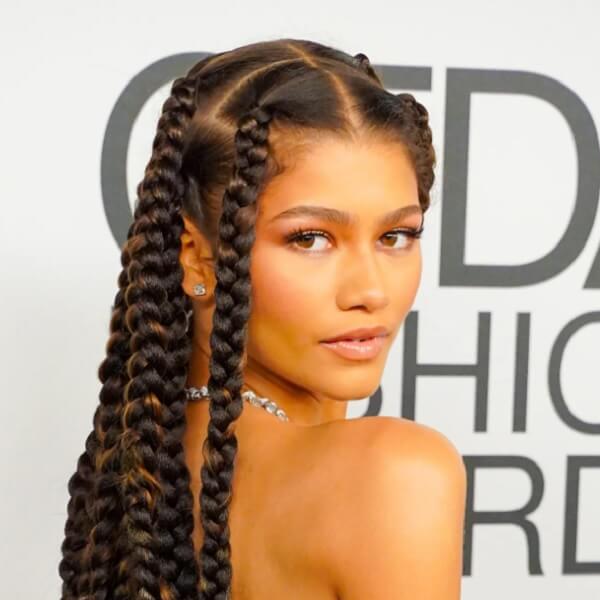
There is nothing subtle about a jumbo box braid, and this set wears that confidence well. The thick, straight sections fall to mid-back in a dark brown base with subtle lighter brown highlights. The middle part keeps the geometry clean, which matters when each braid has this much visual weight. Ask your stylist for: jumbo box braids, dark brown with subtle highlights, mid-back length.
For finer hair textures, this is a style to approach with caution. The weight of jumbo braids can pull at the roots faster than a smaller sectioned set, so strong natural density is your best friend here. Installation takes the better part of a day, but the payoff is a low-manipulation style that holds its shape for weeks. Keep the scalp moisturized with a light spray and you are set.
Cornrows Transitioning to Wavy Mid-Back Braids
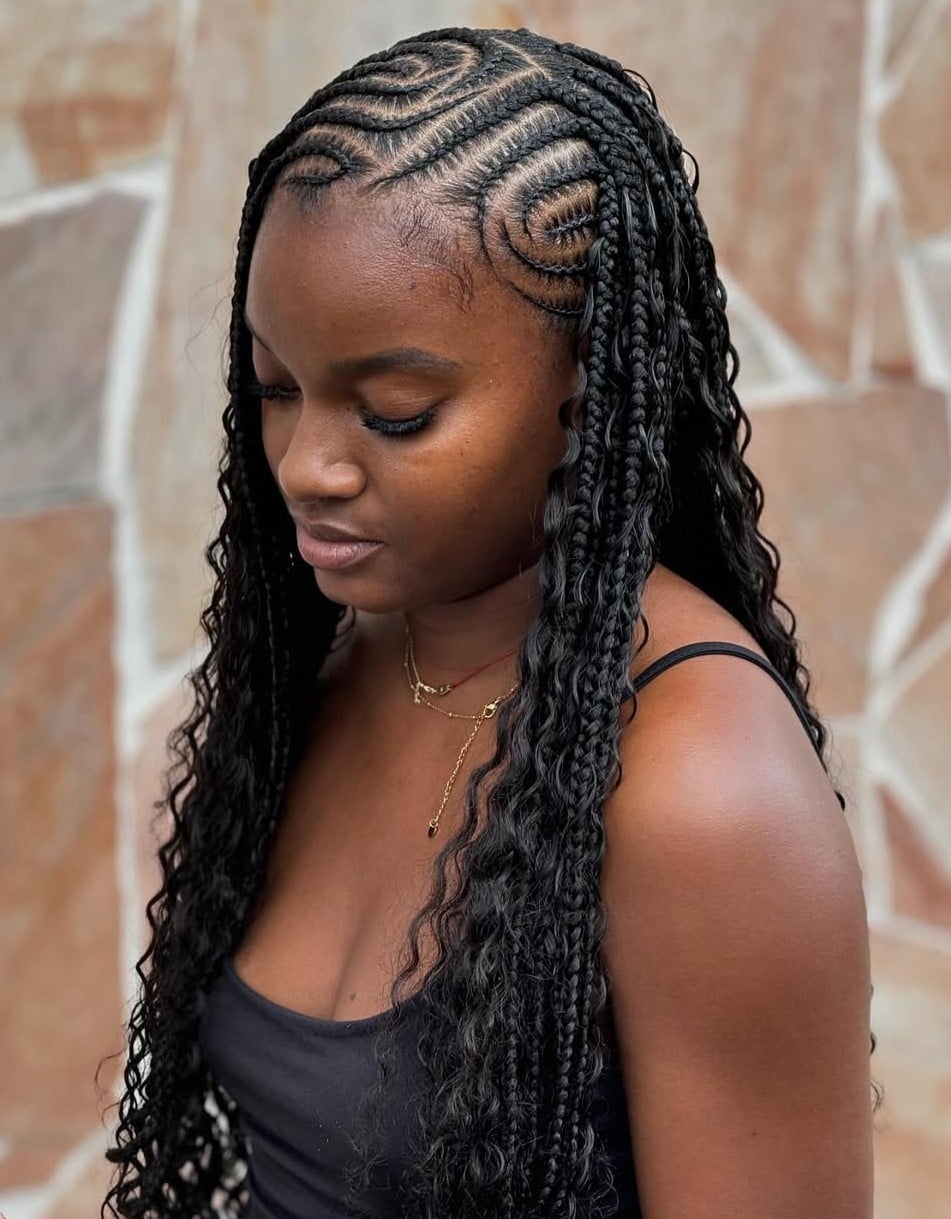
The transition from scalp-hugging cornrows to loose, wavy mid-back braids is a technical feat that relies on precise geometric sectioning. The cornrow pattern starts at the hairline and shifts into thick, wavy extensions that add movement without sacrificing the structure at the crown. The middle part here is a deliberate choice that shows off the symmetry on both sides. Ask your stylist for: cornrows transitioning to wavy mid-back braids.
This design works best for medium to thick hair density, where the cornrows have enough grip to stay neat. The wavy ends require a light hand with mousse or a curl refresher to keep their shape from falling flat by day three. A satin scarf at night helps the scalp rows stay crisp longer between touch-ups.
Large Black Box Braids With Curly Ends
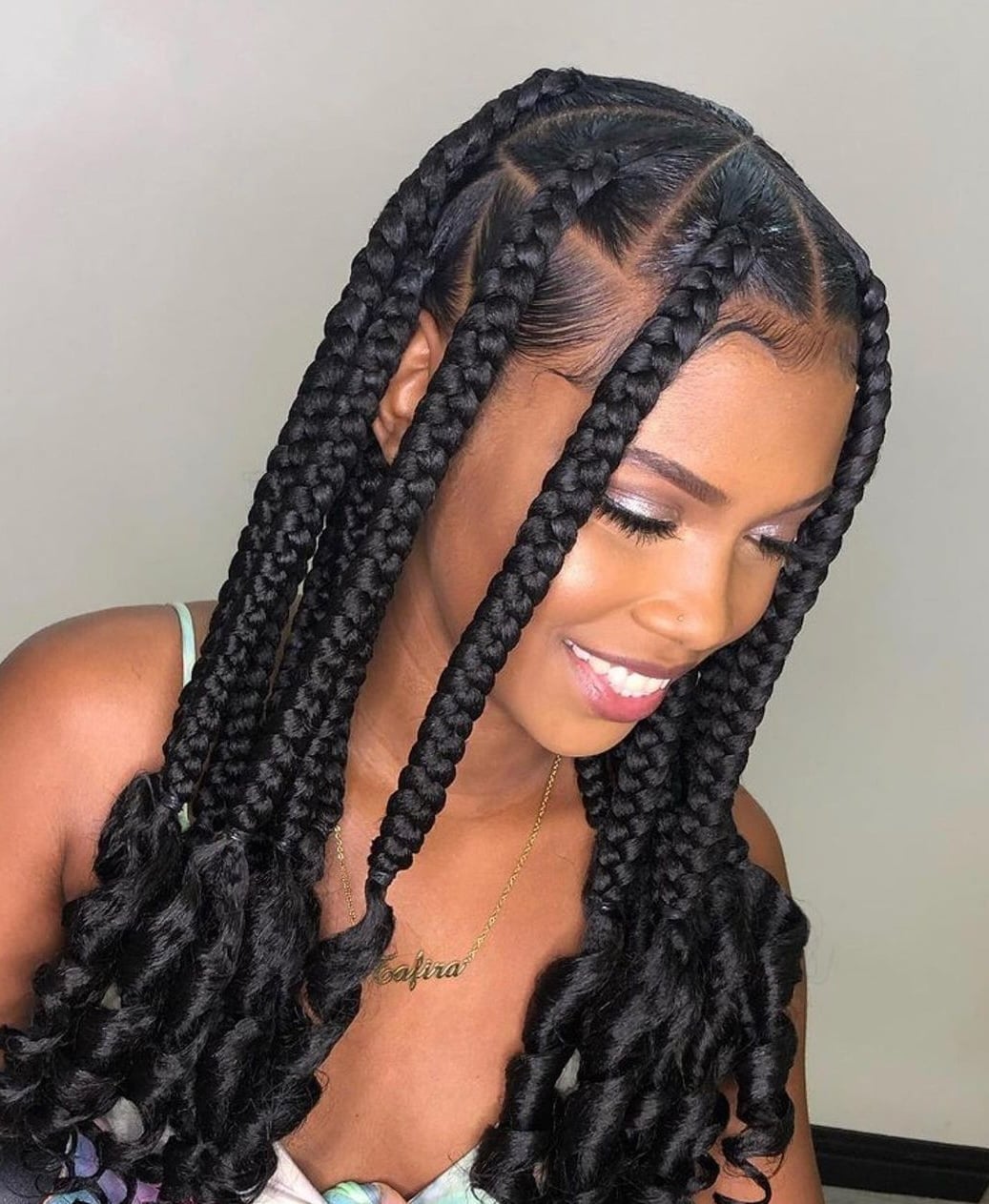
To get sleek braids that still move, add curly ends. These large black box braids are clean and defined from root to mid-back, then release into loose, wavy curls that give the whole style a softer silhouette. The middle part keeps it grounded; the curly ends keep it playful. Ask your stylist for: large box braids, mid-back length, with loose curly ends.
A curl-defining cream applied to the ends preserves their bounce and prevents them from unraveling into frizz. Re-braiding the last inch or two every week keeps the transition point from looking ragged. For oval and heart-shaped faces, this shape adds width at the bottom without overwhelming the jawline.
Dark Brown Twist Braids With Curly Ends
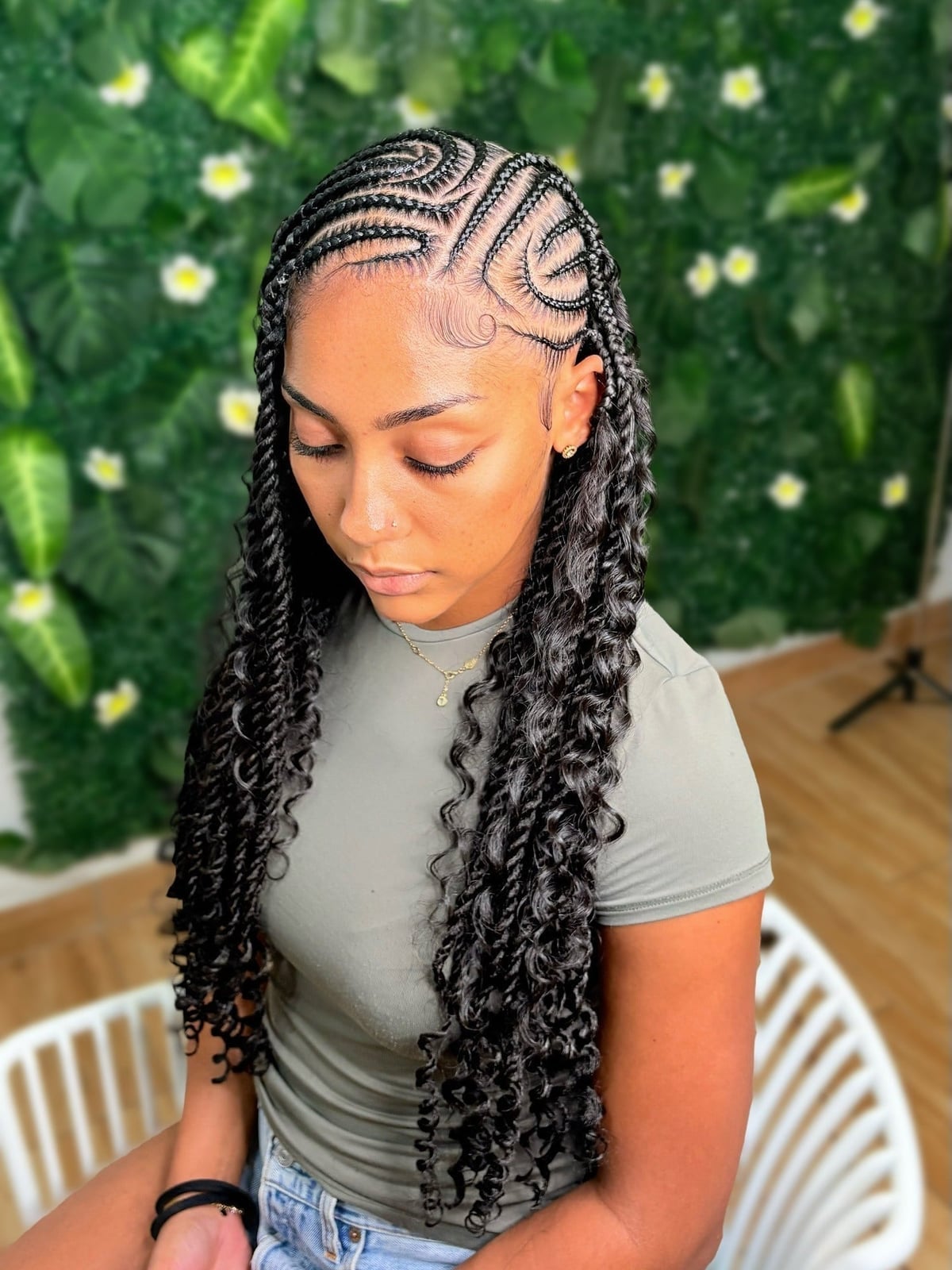
Twist braids have a flatter, more textured surface than traditional box braids, and these mid-back ones lean into it with loose, wavy curly ends that break up the uniformity. The dark brown shade keeps it grounded, while the middle part gives the twists room to show their spiral construction. Ask your stylist for: mid-back twist braids with loose wavy and curly ends.
The upkeep here is about the curls, not the twists. A light mist of water mixed with a leave-in serum keeps the ends defined without weighing them down. Avoid brushing the curly sections. The twist structure itself holds well for two to three weeks, though the scalp may need a dry shampoo refresh around week two. This texture works well for round and square face shapes, as the vertical lines of the twists add length.
Shoulder-Length Box Braids With Blonde Highlights
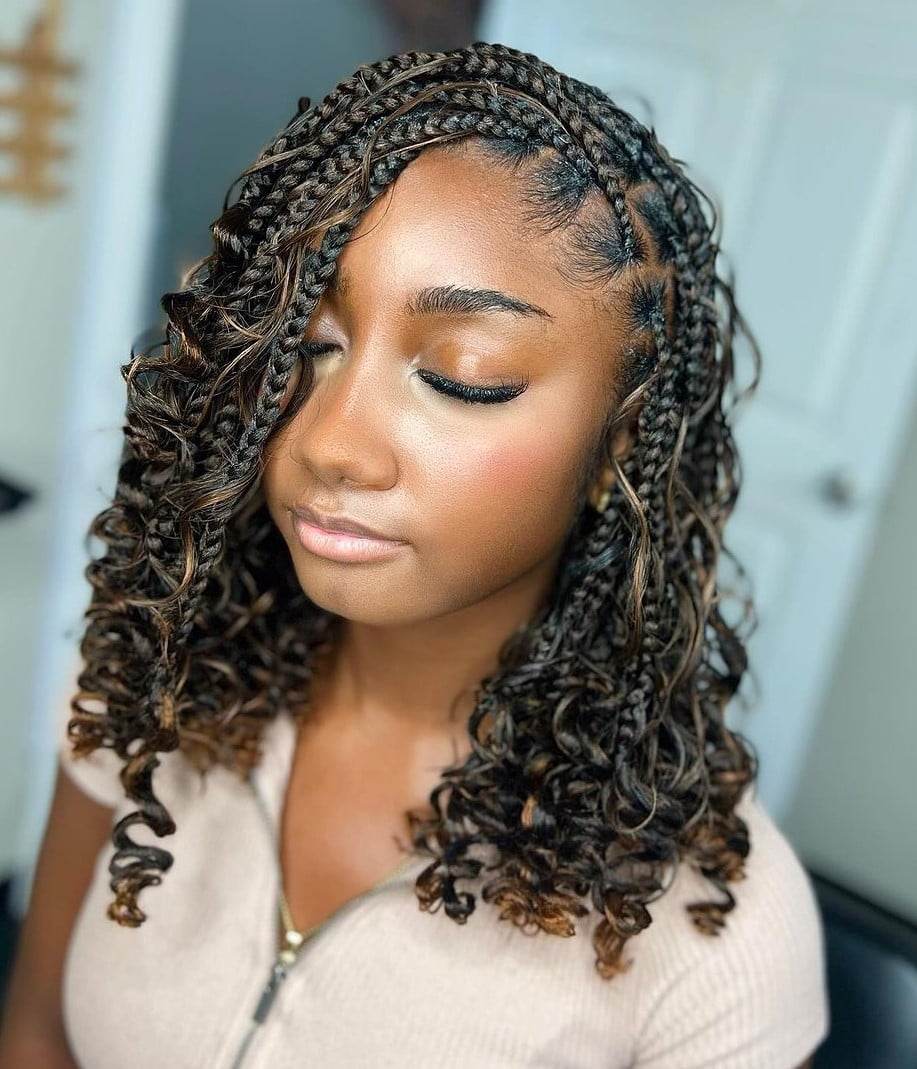
This length suits the warmer months especially well. Less weight means less tension on the roots, and the blonde adds a brightness that works with lighter scarves and sunlit settings. A color-safe shampoo keeps the highlights from turning brassy, and a trim on the curly ends every six to eight weeks prevents the tapered look from getting scraggly.
Neat Long Black Box Braids
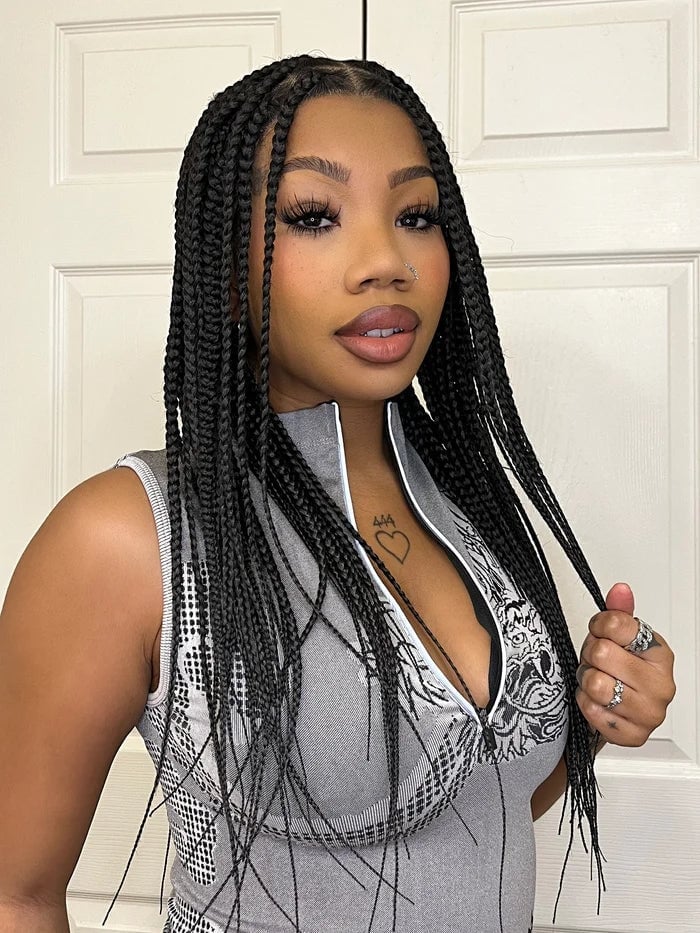
A precise middle part and uniform thickness from root to tip give these long black box braids a finish that looks more architectural than casual. The straight, mid-back length creates a clean line that works well for professional settings, but the visual polish comes with a trade-off. Ask your stylist for: long, neat black box braids, mid-back length.
This style demands a significant time commitment during installation, and any loose strand or fuzzy edge reads as a flaw rather than a relaxed detail. The neat texture holds well for several weeks with minimal daily effort, though the tight part needs a touch-up around the hairline every two to three weeks to stay crisp. The color is solid black, so there is no grow-out line to manage, but the uniform shade also means every imperfection in the braid is visible.
Voluminous Large Black Box Braids
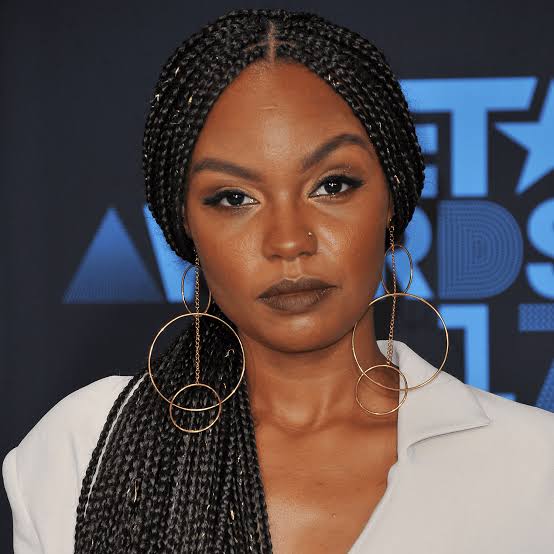
If standard box braids feel too delicate for your taste, the voluminous large version is a different animal entirely. Each braid is noticeably thicker, creating a bolder silhouette that reads as substantial rather than intricate. Ask your stylist for: voluminous large box braids, mid-back length.
Where smaller braids offer flexibility for updos and varied parts, these large sections are heavier and tend to fall with their own gravity, which suits a middle part and a straightforward drape. The volume works well for those with long faces, as the width at the sides softens the vertical line. The thick texture means less overall tension on the scalp compared to many smaller braids, but the individual braids are more prone to loosening at the ends over time.
Thick Long Black Box Braids
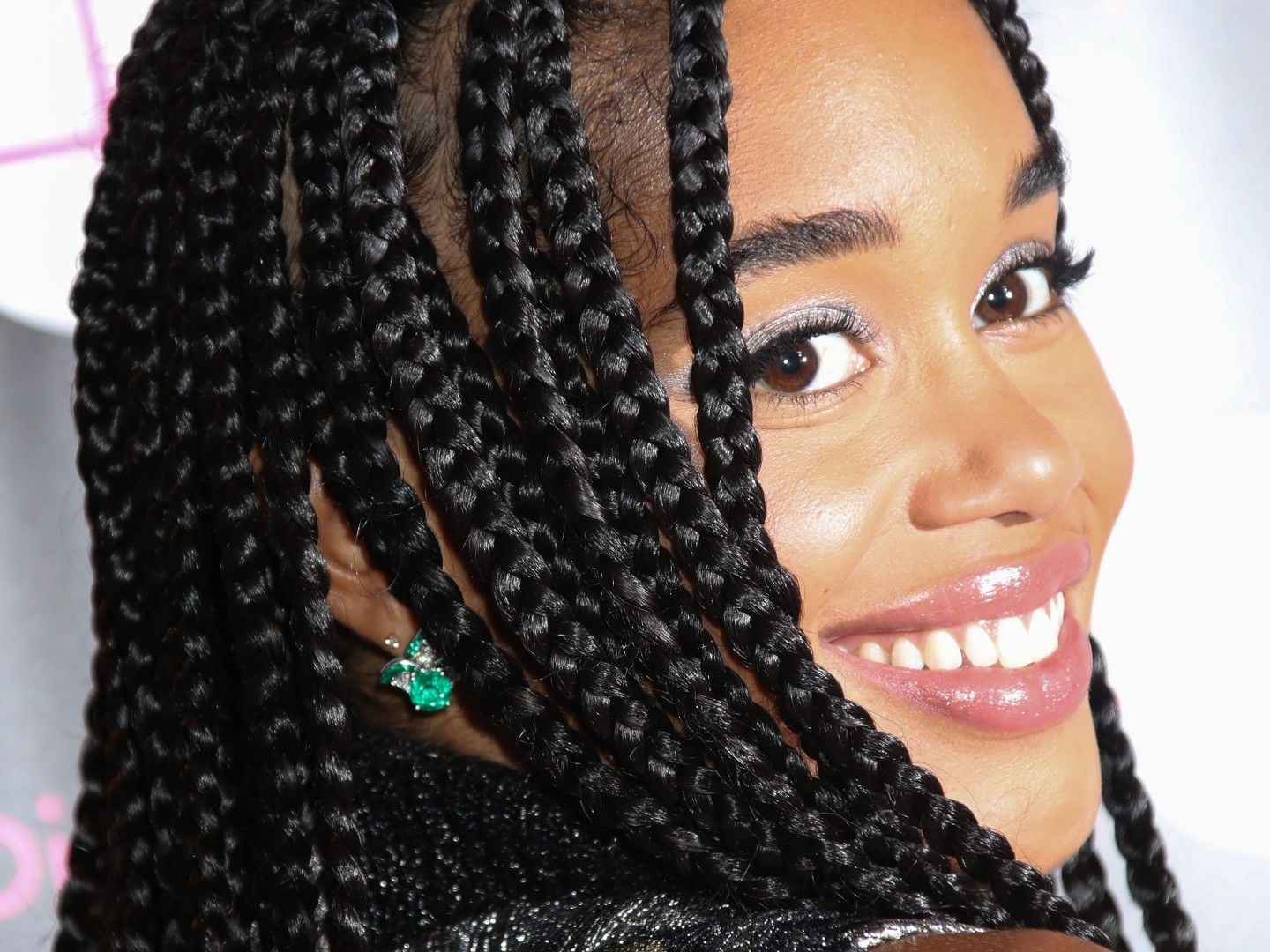
A front view with a middle part and dense black texture defines these thick long box braids, which rely on substantial natural density to carry the weight and structure of the style. The braids are full from root to tip, with no visible scalp between sections. Ask your stylist for: thick, long black box braids, mid-back.
This is a style for those who already have good density, because the braids need enough hair to wrap around itself without feeling thin. The thick texture holds its shape well and resists frizz longer than finer braids. Regular scalp moisturizing is necessary, as the density can trap product against the skin. A trim every eight to ten weeks keeps the ends from thinning out and maintains the uniform block of color.
Contrasting Black and Auburn Mid-Back Box Braids
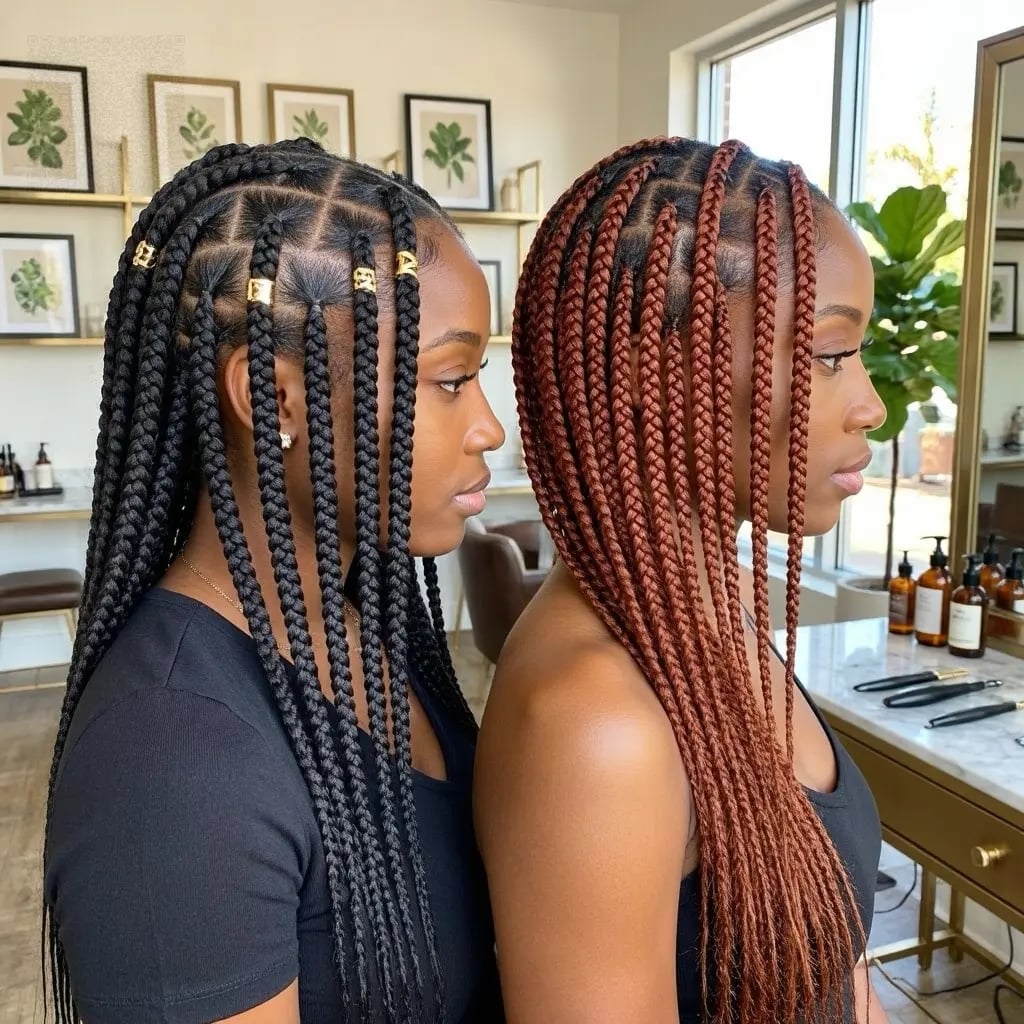
Ask your colorist for: box braids in black and auburn mix, mid-back length. The straight texture and middle part keep the focus on the color placement rather than the silhouette. A color-safe shampoo helps the auburn stay vibrant between appointments.
Brown Box Braids With Silver Beads
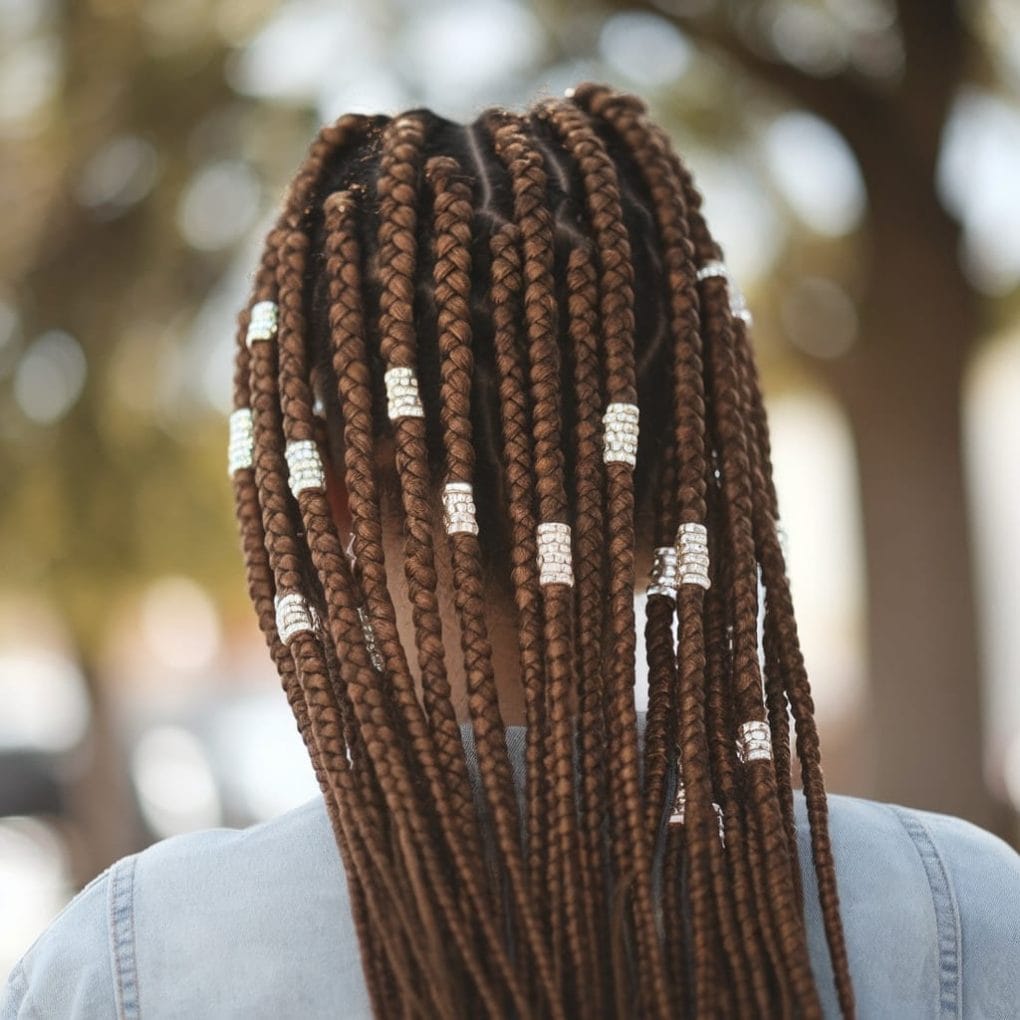
How do you add visual interest to a solid brown braid without changing the color? Silver beads, spaced evenly along the length. The back view shows the beads against the matte texture of the braids. Ask your stylist for: brown box braids with silver beads, mid-back length. The beads should be crimped on securely but not so tight that they pull on the hair. For the best effect, request beads in a single metal finish and ask for them placed every two to three inches, starting a few inches from the root to avoid scalp irritation during sleep.
Cornrows to Mid-Back Black Braids With Beads
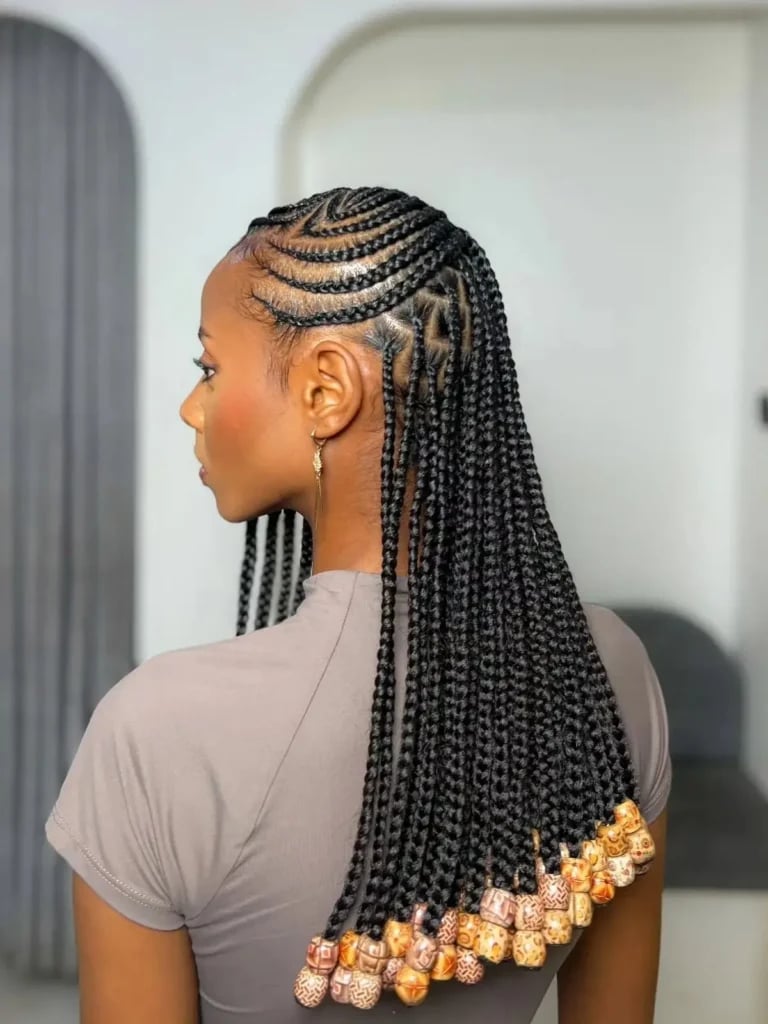
Cornrows that start at the scalp and graduate into straight black braids are a classic design, but the beads at the ends are what make this version memorable. A middle part keeps the geometry clean, and the braids fall to mid-back with a uniform thickness. Ask your stylist for: Cornrows transitioning to mid-back black braids with beaded ends.
This is a salon-only situation. Achieving neat, even cornrows that flow into braids without tension bumps takes a professional hand, and threading beads onto the ends adds another layer of precision. DIY attempts tend to look uneven or put uneven stress on the hair. The result holds well for four to six weeks, but the beads need a quick check each morning to make sure they haven’t slipped or snagged anything.
Afro-Textured Braids With Amber and Brown Beads
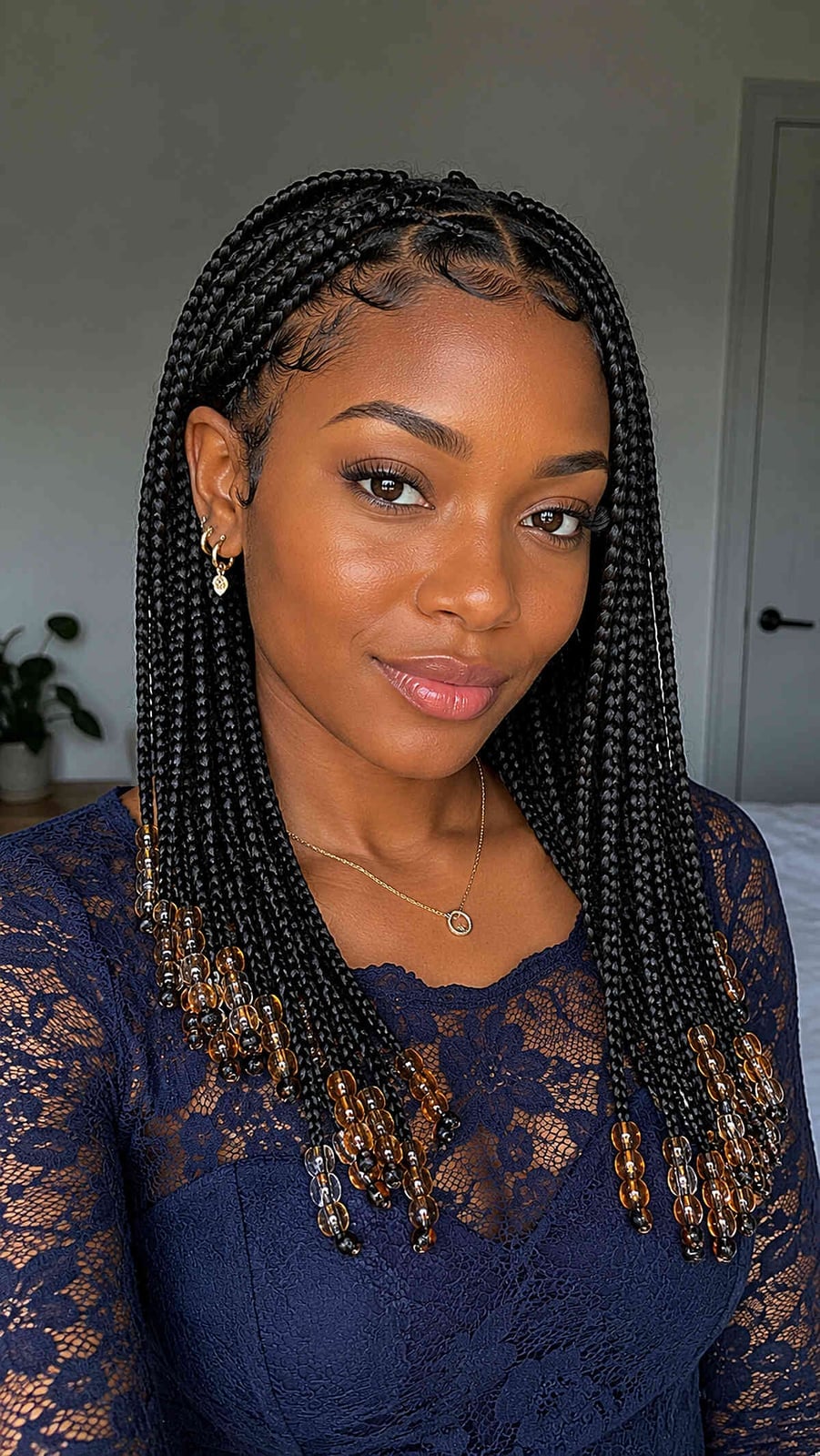
Afro-textured box braids in a deep black shade reach mid-back, and the translucent amber and brown beads catch the light in a way that flat hair cannot. The baby hairs along the hairline are brushed into soft swoops, adding a polished frame. Ask your stylist for: Afro-textured box braids with amber and brown beads, mid-back. This style works best for natural afro-textured hair, as the texture grips the braid and holds the beads securely. A leave-in conditioner keeps the strands flexible, and a gentle brush with a dab of gel sets the baby hairs for the day. The whole look needs a salon visit but stays wearable for several weeks with minimal daily fuss.
Cornrows to Loose Wavy Curly Braids
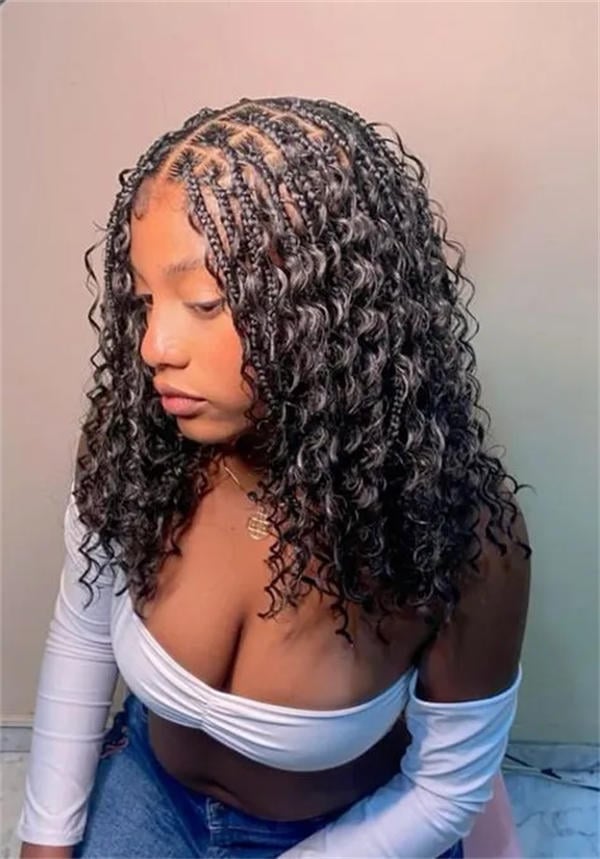
Intricate cornrows hug the scalp for the first few inches, then release into loose braids that end in wavy, curly tendrils. The black color keeps the focus on the texture shift, and the middle parting anchors the whole design. Ask your stylist for: Cornrows into loose, wavy, curly braids, mid-back. The curls at the ends loosen and frizz faster than the braided sections, especially in humidity. By week two, the waves may need a refresh with a damp cloth and a light curl cream to stay defined. The style suits anyone who wants the control of cornrows without sacrificing movement.
Micro Braids With Defined Baby Hairs and Curls
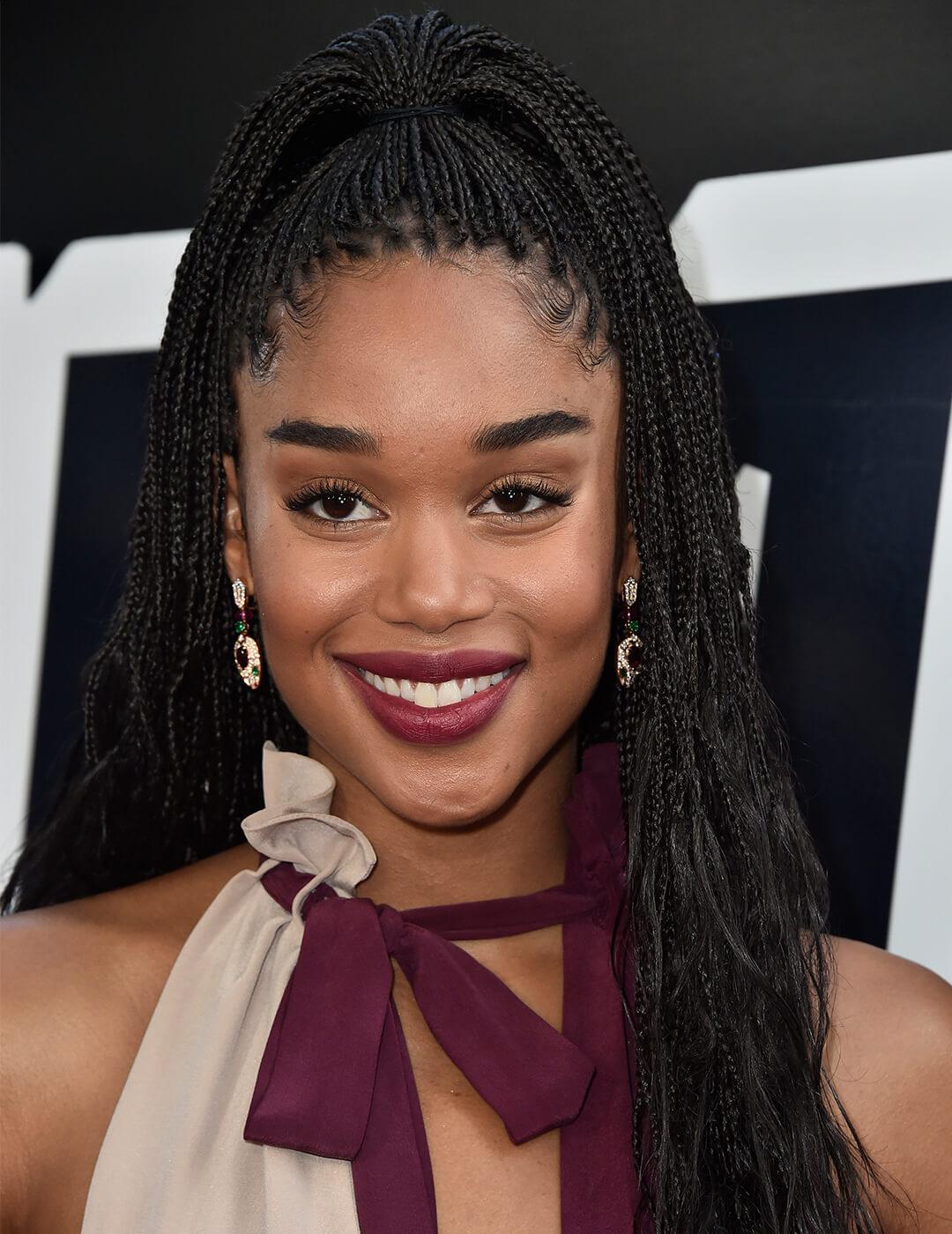
Micro braids with smaller sections offer more detail but require more time in the chair. Here, the braids are fine and uniform, falling to mid-back in a deep black shade, with the ends curled into loose, bouncy spirals. Ask your stylist for: Long micro braids with defined baby hairs and curly ends. This look suits date nights or events where you want a deliberate polished edge. The defined baby hairs along the hairline create a soft frame that appears finished, not leftover. Expect the salon session to take several hours, but the result holds its shape for a good three to four weeks.
Cornrows to Loose Black Curls
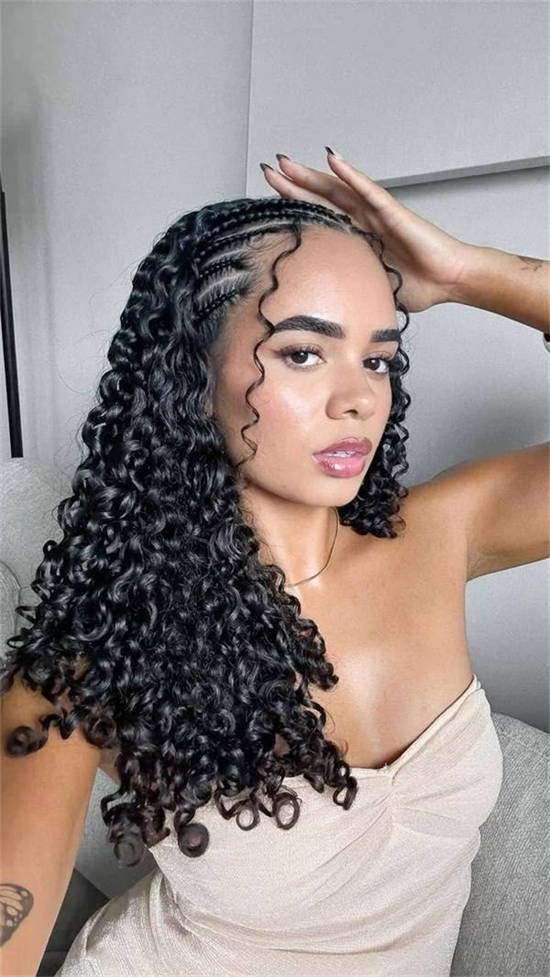
This is not a full braid-out, and it is not a wash-and-go. Cornrows at the front and crown transition into long, voluminous loose black curls that cascade past the shoulders. The mistake people make is assuming the two textures can be treated the same way. Ask your stylist for: Cornrows transitioning to loose, voluminous black curls. The cornrows need regular moisture at the scalp, while the curly sections need a curl enhancer and gentle handling to stay defined. Over-processing the loose parts with heat or heavy manipulation leads to breakage at the transition point. Keep the cornrows neat and the curls hydrated, and the contrast works beautifully.
Cornrows with Brown and Blonde Highlights
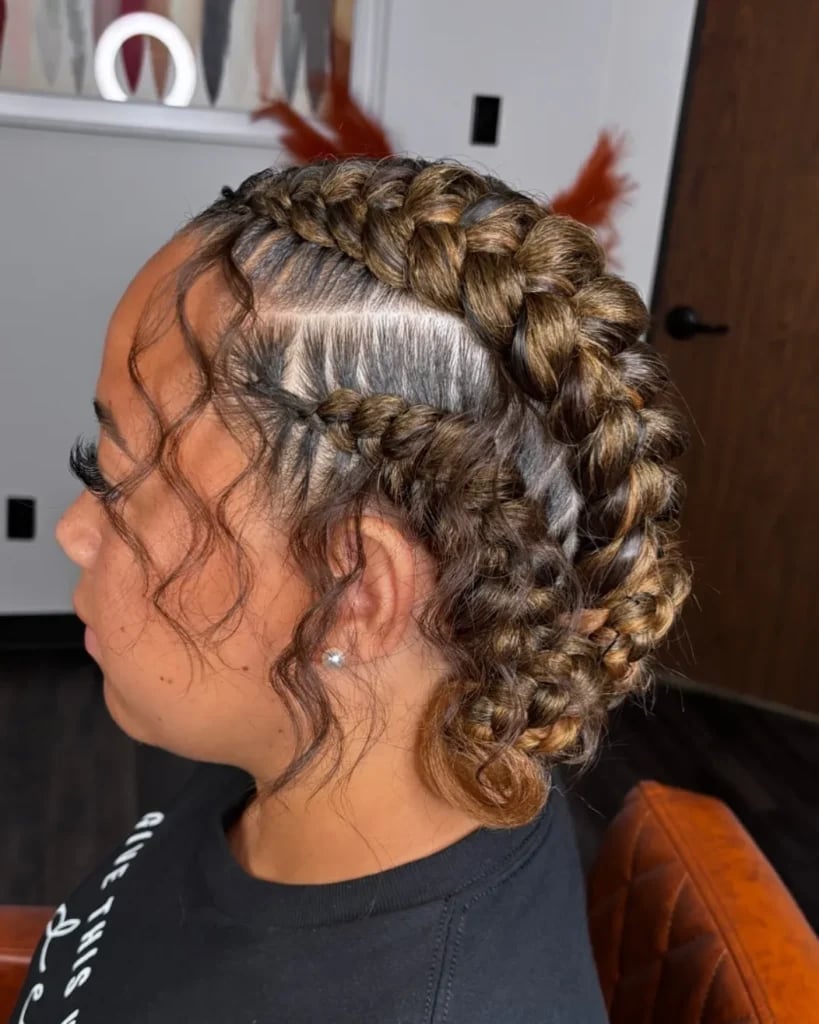
Cornrows that start at the scalp and flow into mid-back braids, threaded with brown and blonde highlights, give a lot of dimension for a style that can appear solid. The middle part keeps things symmetrical, and the wavy texture at the ends adds movement where cornrows can feel rigid. Ask your stylist for: cornrows with brown and blonde highlights, mid-back length, face-framing tendrils.
Getting blended highlights into a cornrow pattern is not a DIY afternoon. The color needs to be placed strand by strand, and the braiding has to account for where the lighter pieces fall so they appear planned. A color-depositing conditioner helps the blonde stay honey-toned and the brown stay rich between appointments. This one is a salon-only proposition, and you should budget for a thorough consultation before any hair goes in.
Short Sleek Black Cornrows
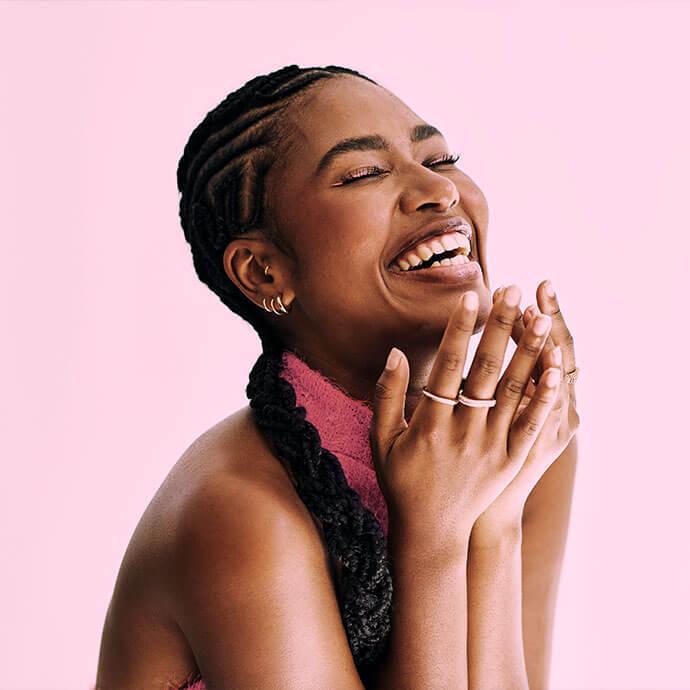
Short cornrows are not a compromise; they are a deliberate choice that cuts styling time to near zero. These thick black rows sit close to the scalp with a clean middle part and visible neatness between each braid. Ask your stylist for: short, sleek black cornrows all over. A scalp serum applied daily keeps the foundation healthy, and a soft brush on the edges every morning is the only styling required. The tight pattern holds its shape for about three weeks before the new growth starts to lift the rows.
Faux Locs With Side Part and Curly Ends
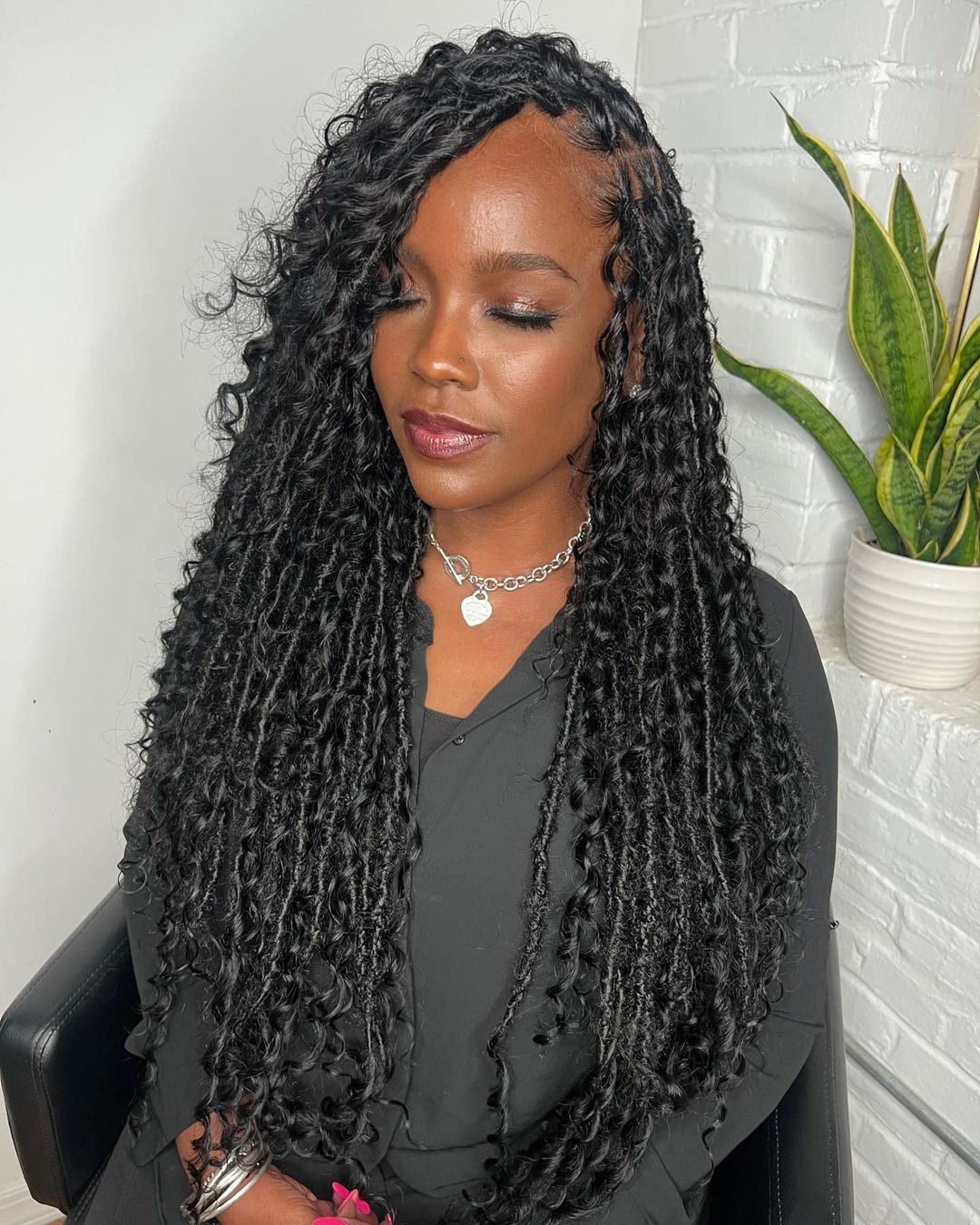
Faux locs with long curly ends need more frequent upkeep. Here the locs are black with a loose, wavy body and a deep side part that sweeps the bulk to one side, ending in defined curls that reach mid-back. Ask your stylist for: faux locs with a side part and long curly ends. The curls at the bottom will loosen faster than the wrapped locs above, requiring a re-dip or a curl refresher every two to three weeks to keep the texture consistent. The locs themselves last the usual six to eight weeks, but the ends are the tell.
Artistic Afro-Textured Braids Sculptural Style
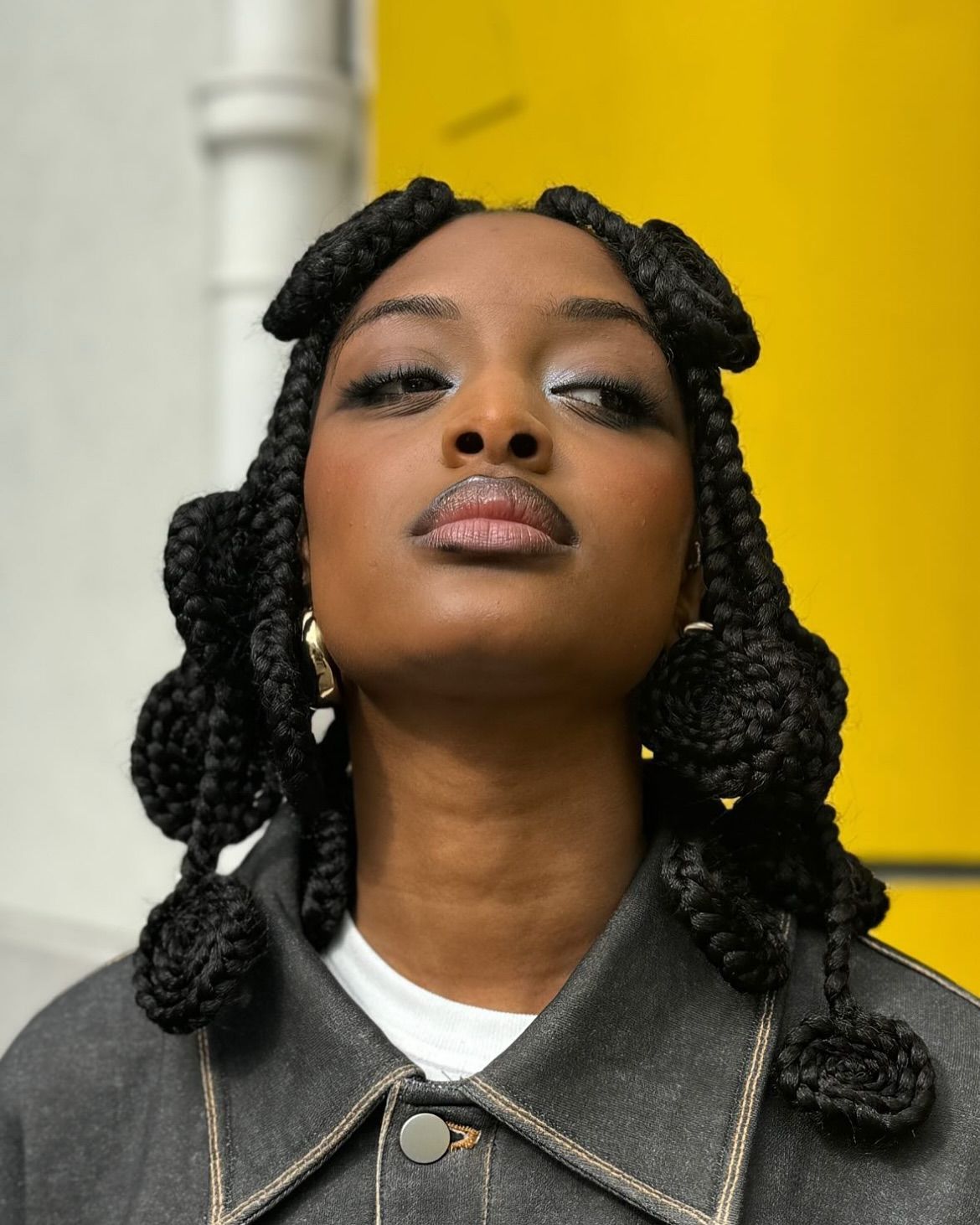
This is not a standard braid pattern; it is a construction. Thick afro-textured braids are shaped into rounded sections with smaller braids forming loops at the crown, creating a sculptural silhouette that relies on the hair’s natural volume and texture to hold its architecture. Ask your stylist for: artistic, sculptural afro-textured braids with looped top. The technique involves building the shape from the inside out, using the coarser texture to grip each section. A light-hold styling spray on the finished shape keeps the loops defined, but sleeping with a satin scarf is non-negotiable to avoid flattened sections by morning.
Honey Blonde Micro Braids With Side Fringe
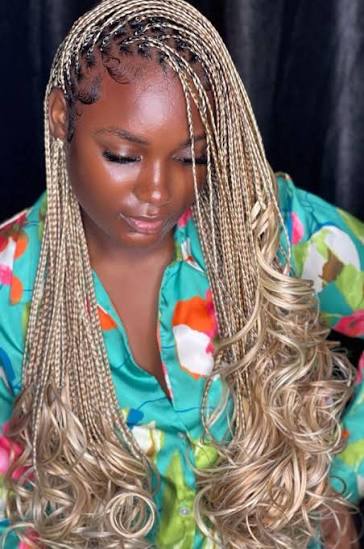
To get honey blonde micro braids right, bring a photo of the exact shade. Warm honey blonde can read brassy or ashy depending on the base, so the colorist needs a visual target. These shoulder-length micro braids have a side parting, a side-swept fringe, and wavy curly ends that soften the overall silhouette. Ask your stylist for: honey blonde micro braids, shoulder length, with side fringe and curly ends. The fringe should be cut after the braids are installed so the length lands correctly on your face, not somewhere near your eyebrow. A color-depositing conditioner in the same honey tone will stretch the time between touch-ups.
Final Thoughts
For a low-maintenance but impactful look, opt for classic box braids or cornrows with minimal embellishments. If you want more artistic expression, explore styles with intricate patterns, beads, or a mix of textures like curly ends. Consider your hairline sensitivity and styling time before committing to a high-tension style.
- Moisturize your scalp with a lightweight oil or spray to prevent dryness.
- Protect your braids at night with a silk or satin bonnet or scarf.
- Avoid excessive tension on the hairline to prevent breakage and thinning.
- Schedule a professional re-twist or touch-up every 6-8 weeks, depending on growth.
Braids offer a canvas for creativity and protection.
