
Two-strand twists are a cornerstone protective style for natural hair, offering a way to keep coils and kinks tucked away while still showing off texture. Lived-in color and glossy finishes are shifting the look from purely practical to something you actually want to be seen in.
This collection of 20 Two Strand Twist Styles covers the range from DIY-friendly shoulder-length sets to intricate braid-and-twist combinations that take a full salon session. Whether your hair is fine or thick, short or mid-back, there is a version here that keeps its definition past day one without demanding constant redoing.
In this article
- Long Uniform Two Strand Twists
- High Ponytail With Two Strand Twists
- Large Defined Twists With Side Part
- Collarbone Twists With Blonde Highlights
- Collarbone Twists With Blonde Tips, Coily
- Shoulder Length Twists With Caramel Highlights
- Glossy Collarbone Twists
- Neatly Defined Collarbone Twists
- Long Defined Twists Past Shoulders
- Thick Mid-Back Twists
- Shoulder Length Locs With Geometric Parting
- Shoulder Twists With Side Part
- Shoulder Twists With Face Framing Pieces
- Collarbone Twists For Home Styling
- Shoulder Length DIY Twists
- Ear Length Defined Twists
- Shoulder Twists With Grey Streaks
- Small Defined Twists With Auburn Highlights
- Collarbone Twists With Braids and Blonde Tips, Curly
- Mid-Back Twists With Braids and Blonde Tips
- Final Thoughts
01Long Uniform Two Strand Twists
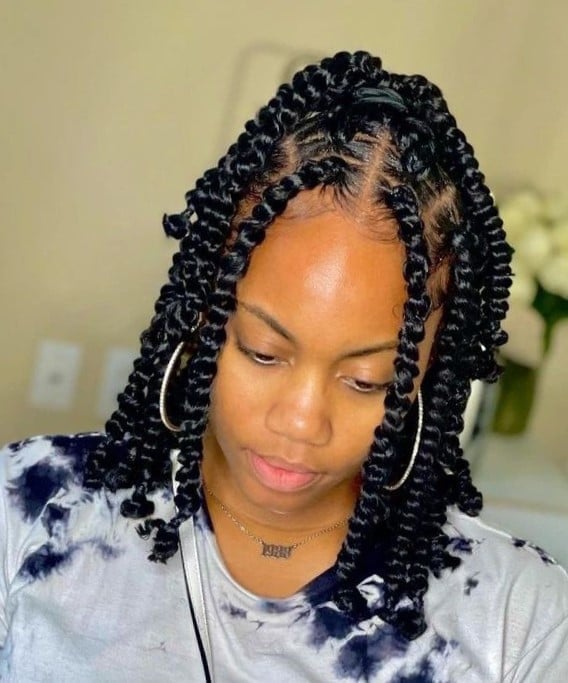
The precision in these twists comes from a uniform thickness and a clean middle parting that runs from hairline to nape. Every strand is the same size, which gives the style a deliberate, structured feel. Thick, coily hair of at least mid-back length holds the definition best, and a middle part naturally elongates oval and heart face shapes. Ask your stylist for: long, uniform two-strand twists to mid-back.
A light serum worked through the ends keeps the gloss visible and prevents fraying. The shape holds well for about two weeks with careful night protection. A trim every 10 to 12 weeks maintains the blunt ends that make the uniformity read as intentional.
02High Ponytail With Two Strand Twists
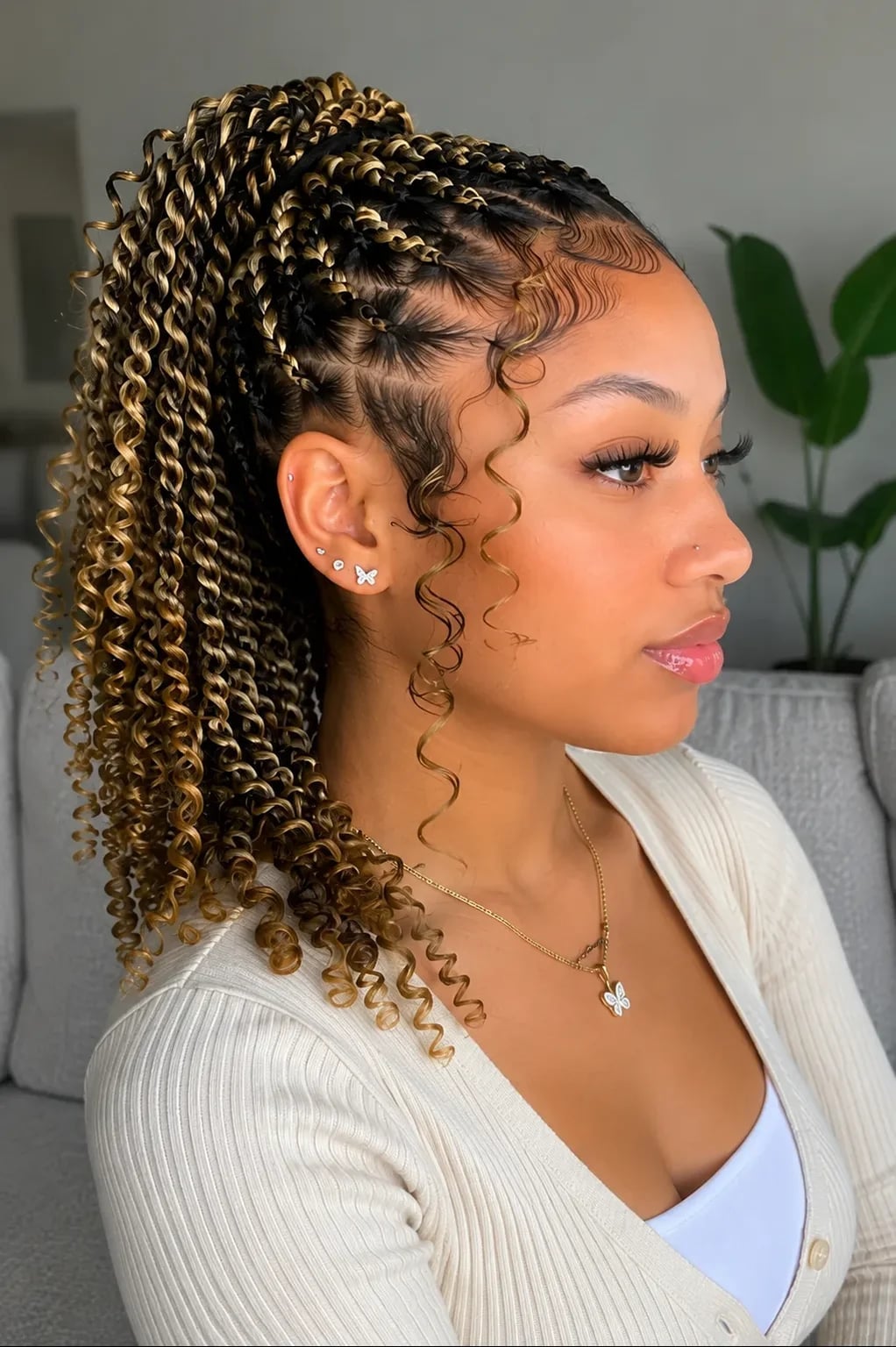
Can twists hold up in a ponytail without collapsing? Yes, when the base is reinforced with scalp braiding and the twists themselves are long enough to swing. Dark brown strands with blonde highlights create the dimensional effect here, and the braided scalp detail keeps the tension even. Thick, curly hair of mid-back length or longer is the minimum, and a high ponytail works with most face shapes. Ask your stylist for: two strand twists in a high ponytail with scalp braids.
This works best for active days or when you want the hair off the neck entirely. The ponytail holds for three to four days before the elastic needs retightening, so plan accordingly.
03Large Defined Twists With Side Part
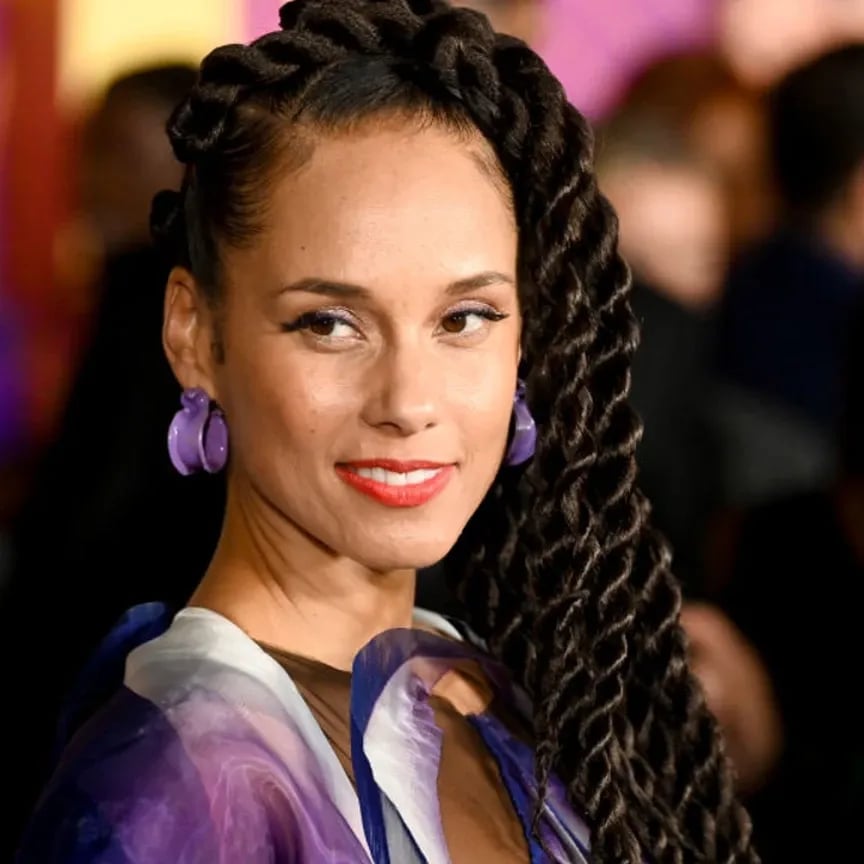
Smaller twists take longer to install and can feel busy on thick hair. These large, defined twists are the opposite: each twist is chunky enough to read as individual pieces, and the side part breaks up the density. Dark brown with subtle lighter undertones catches light without looking brassy. Thick, coily hair of mid-back length is the starting point, and a side part adds volume for finer textures. Ask your stylist for: large, defined two-strand twists to mid-back with a side part. A satin scarf at night preserves the definition longer than a bonnet.
04Collarbone Twists With Blonde Highlights
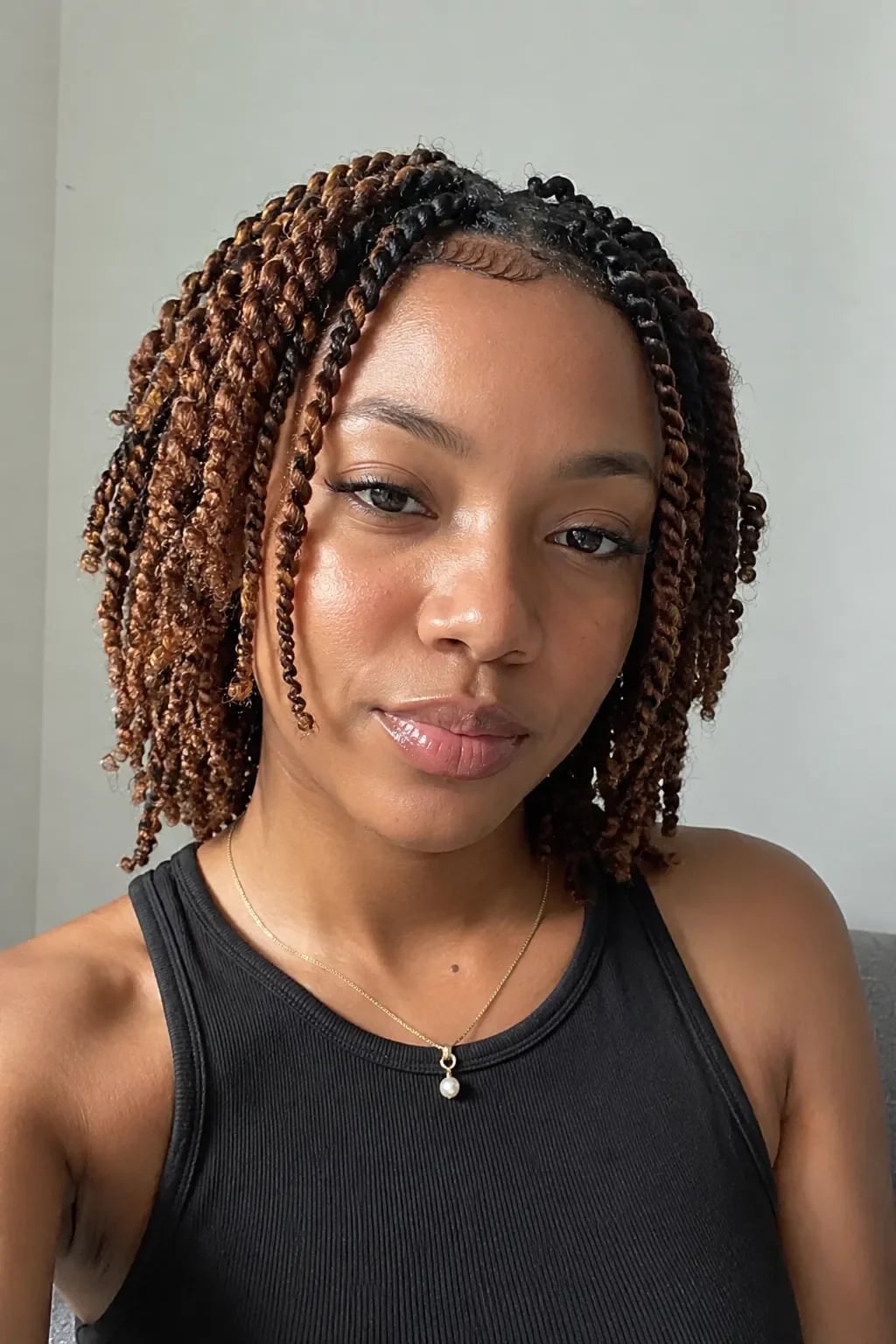
Blonde highlights on a warm brown base create depth without a full color commitment. The twists here fall between shoulder and collarbone, with a wavy texture that softens the lines. Thick, wavy hair of collarbone length works best, and the middle part creates symmetry for oval and heart face shapes. Ask your stylist for: collarbone length two strand twists with wavy texture and blonde highlights.
Use a small amount of hair oil on the ends of each twist to keep the blonde from looking dry. A trim every 6 to 8 weeks prevents the highlights from traveling too far down the strand, and a purple shampoo once a month keeps brassiness away.
05Collarbone Twists With Blonde Tips, Coily
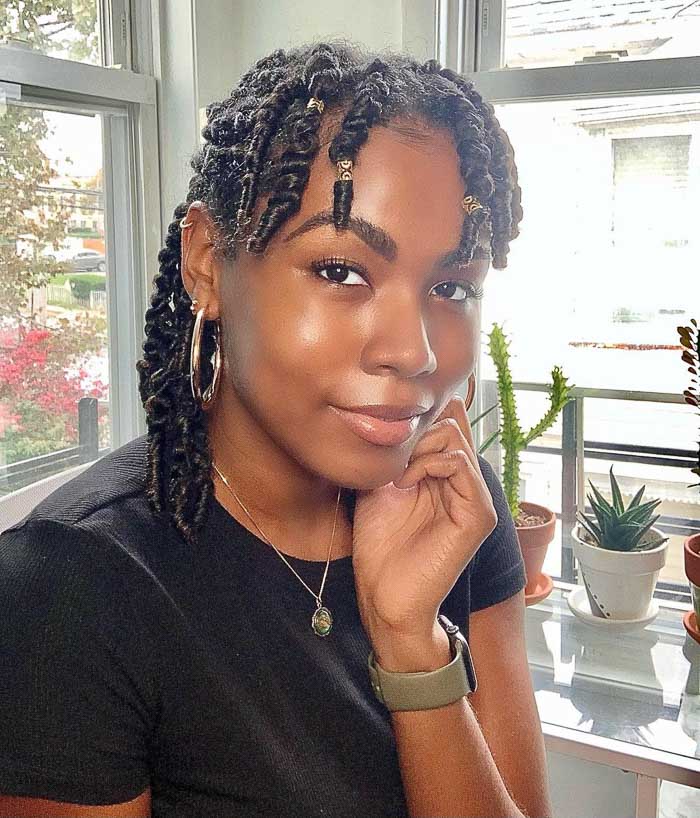
The contrast between dark brown roots and blonde tips creates a bold look, but it comes with a trade-off. Lightened ends on coily hair need extra moisture, or they can feel brittle faster than the rest of the twist. Thick, coily hair of collarbone length holds the shape well, and the middle parting keeps the color transition visible. Ask your stylist for: collarbone length two strand twists with blonde tips. The blonde tips require more frequent trimming to avoid split ends traveling upward, so plan for a trim every 6 weeks rather than every 10.
06Shoulder Length Twists With Caramel Highlights
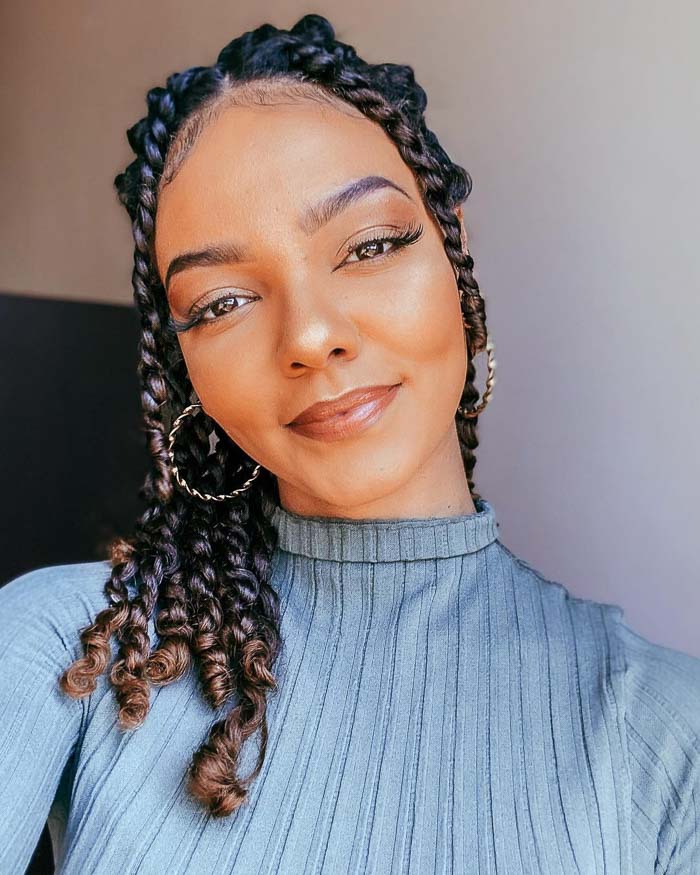
Ever wondered how to get those defined twists with perfectly curled ends? Dark brown two-strand twists ending at shoulder length get subtle caramel highlights woven through the coily thickness, with each tip curled under for a polished finish. Ask your stylist for: shoulder length two strand twists with caramel highlights and curled ends. A curl defining cream applied before twisting locks in that end shape, and a trim every eight weeks keeps the pattern intact. This one works for casual days and low-key evenings alike.
07Glossy Collarbone Twists
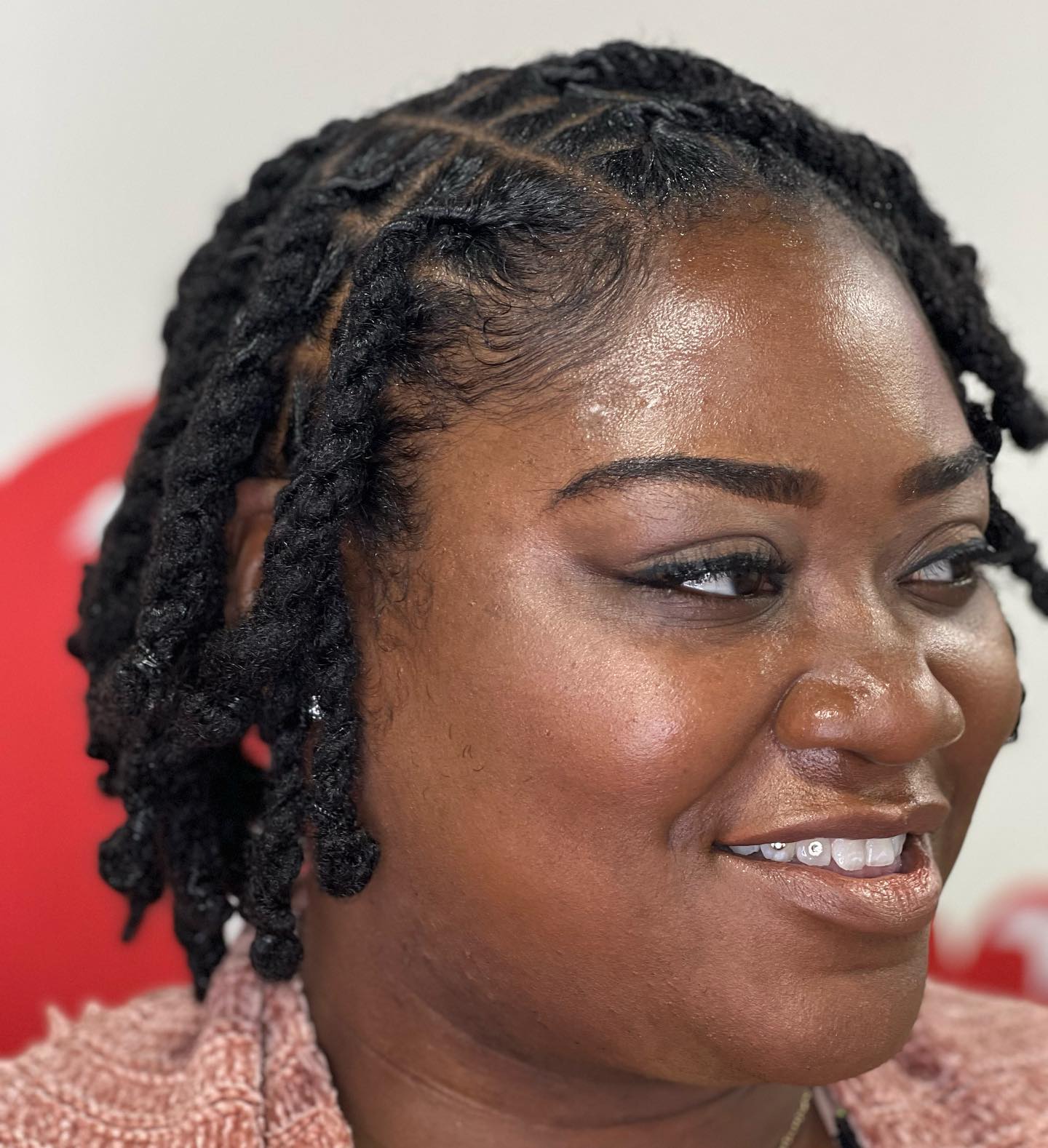
The middle part runs clean and straight, splitting neat two-strand twists that stop at the collarbone. Thick, wavy black hair takes on a glossy finish that catches soft light without product buildup. Ask your stylist for: glossy, defined two-strand twists to the collarbone. A silk or satin pillowcase keeps that shine intact overnight, and re-twisting the ends every week or so maintains the even line. This is the kind of polish that works for a dinner reservation or a presentation.
08Neatly Defined Collarbone Twists
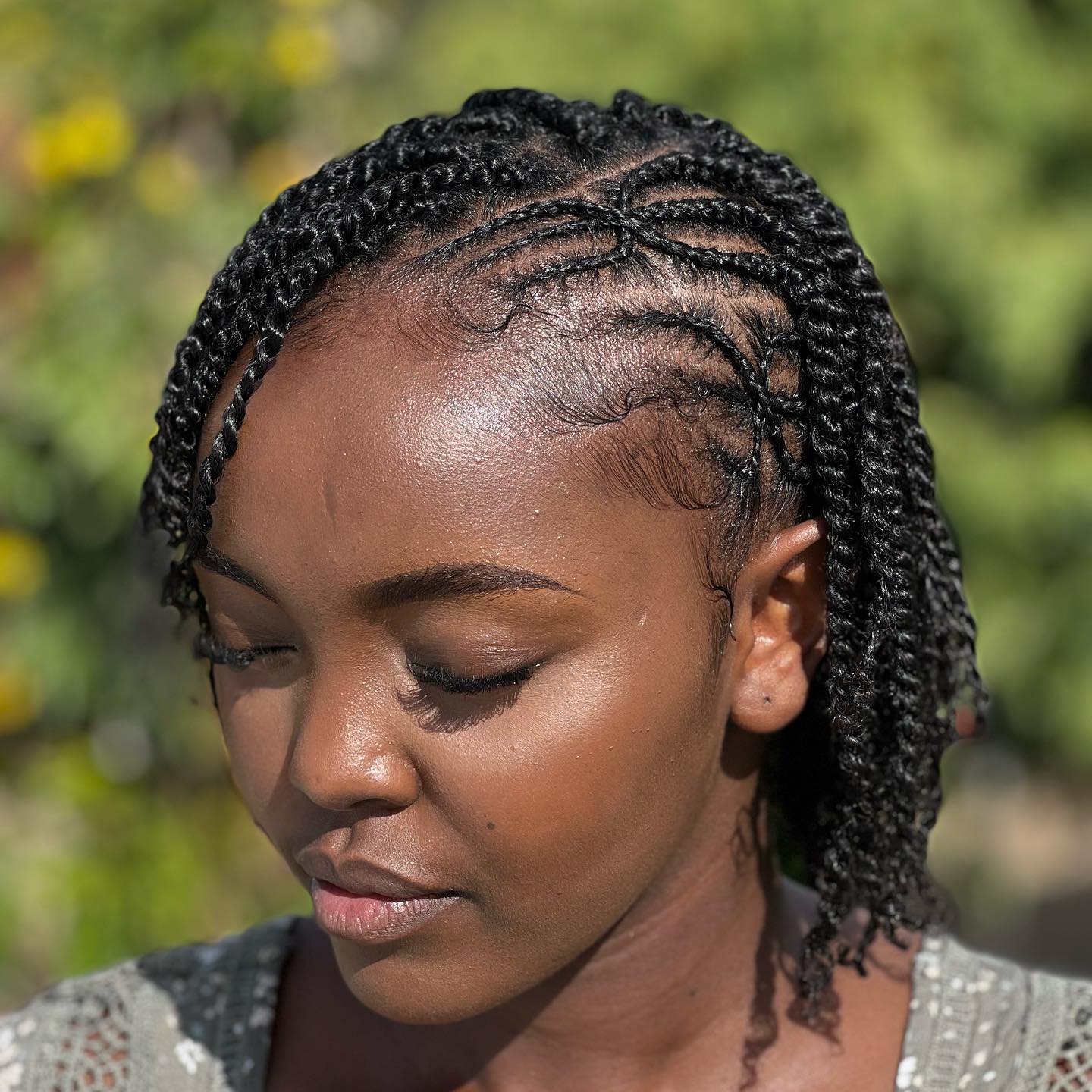
Salon level definition means the twist looks crisp from root to tip, with no fuzzy sections. Collarbone length black hair with a wavy, thick texture achieves this through a clean middle parting and consistent sectioning. Ask your stylist for: neatly defined two-strand twists to the collarbone.
The mistake people make is skipping the setting product. Mousse before twisting gives the hold needed to keep each twist separate and smooth. A trim every six to eight weeks removes any unraveling ends before they become a problem. The middle part also elongates a round face, so the geometry works in your favor.
09Long Defined Twists Past Shoulders
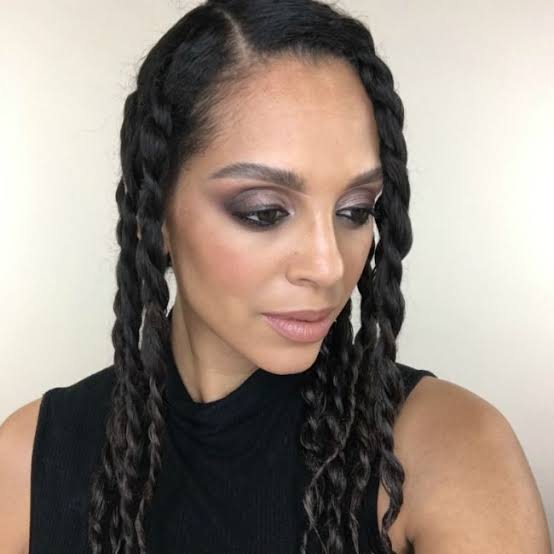
Long, defined two-strand twists that fall past the shoulders rely on a deep black base and a visible middle parting. The coily, thick texture holds the shape well, with each twist staying separated and uniform. Ask your stylist for: long, defined two-strand twists past the shoulders.
This length suits thick, coily hair because the weight of the twists pulls them into a smooth, even line. Anyone with finer or shorter strands should know that the same volume can look heavy. The middle part is neutral enough for most face shapes, and a satin wrap at night preserves the definition without redoing the whole set.
10Thick Mid-Back Twists
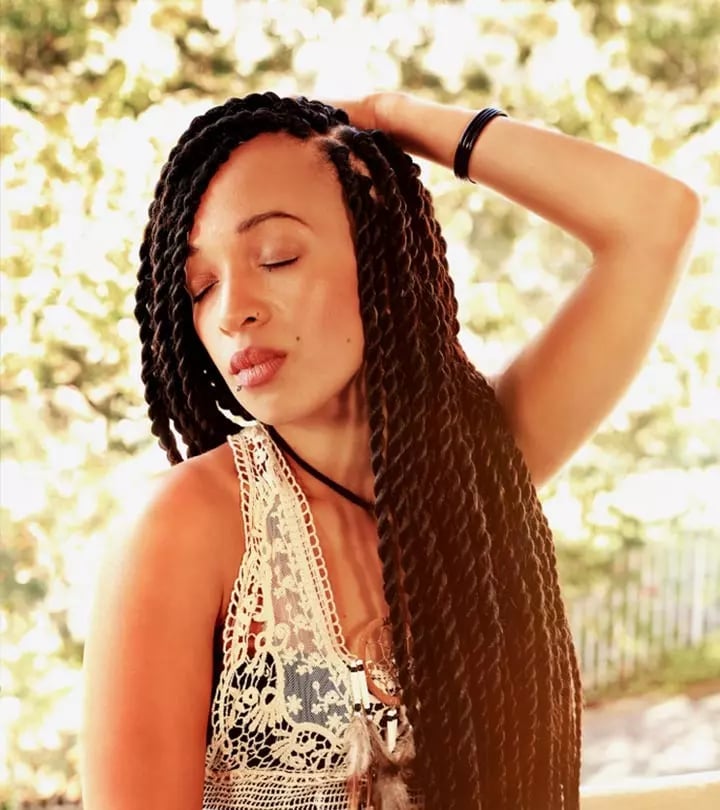
Thick two-strand twists that reach mid-back start with a deep black base color. The coily texture is the star here, with each twist thick enough to show the natural coil pattern clearly. Ask your stylist for: long, thick two-strand twists to mid-back.
The technique involves sectioning the hair into even squares, then twisting each section from root to tip with consistent tension. A sealing oil applied to the ends locks in moisture and adds healthy shine. A trim every ten to twelve weeks keeps the ends from thinning out, which is the main thing that makes long twists look tired. The middle part also helps elongate a round face, giving the whole style a longer line.
11Shoulder Length Locs With Geometric Parting
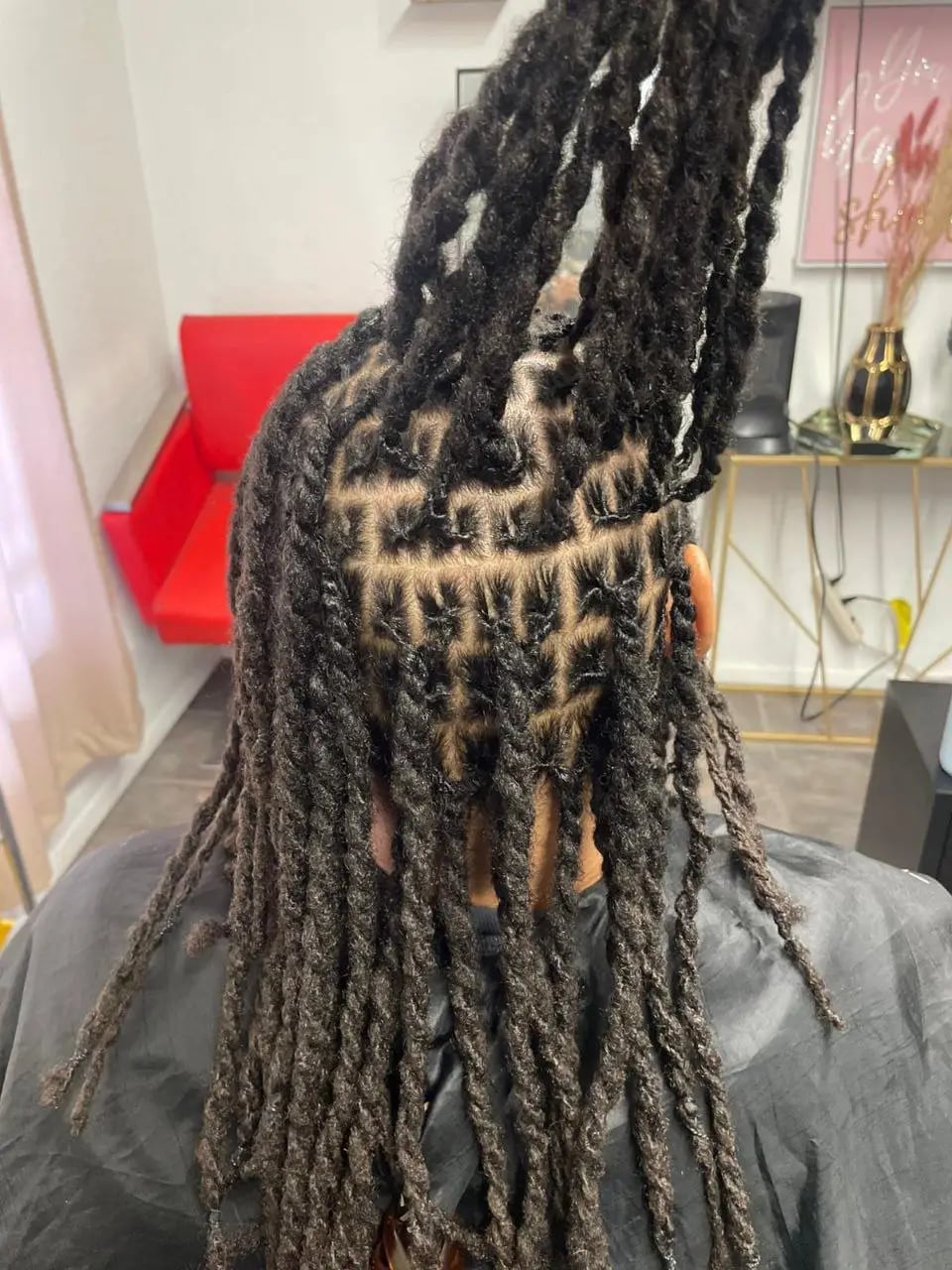
A geometric parting turns a standard twist style into a precise design, with the scalp sectioned into squares that form a pattern. It suits thick, coily locs of shoulder length, and the symmetry works for all face shapes. Ask your stylist for shoulder length two strand twists on locs with geometric parting. The hold depends on maintaining those sections during retwisting, so keep the scalp moisturized with a light oil or spray between appointments.
12Shoulder Twists With Side Part
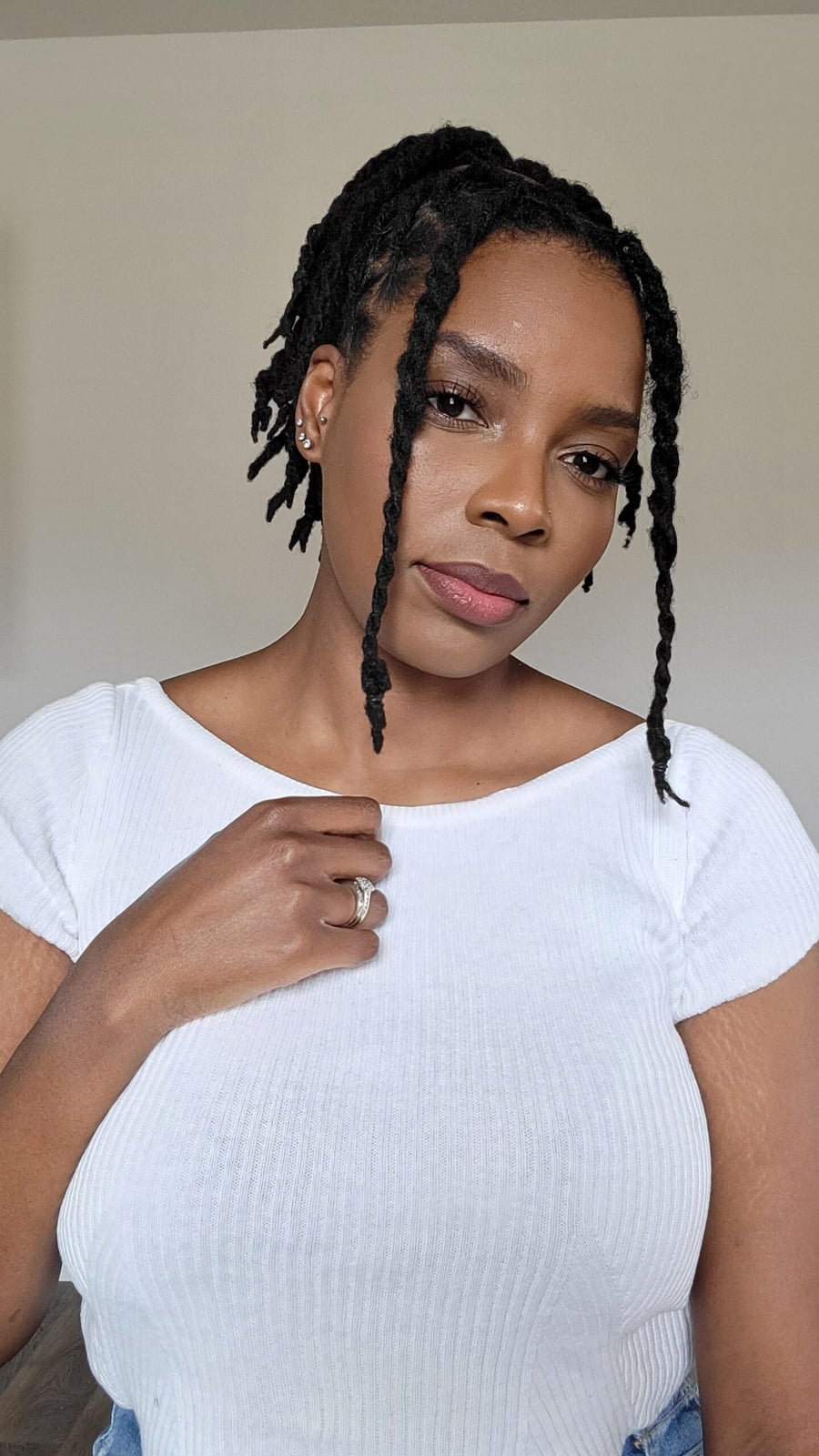
This salon-leaning style features a precise side part and face-framing pieces cut with precision, not just twisted. It suits thick, coily hair of shoulder length, and the side part can add volume to finer textures. Ask your stylist for shoulder length two-strand twists with a side part and face-framing pieces. Recreating it at home is possible, but expect the parting to take patience and a steady hand. A flexible hold spray keeps the shorter pieces in place, and a trim every six to eight weeks maintains the shape.
13Shoulder Twists With Face Framing Pieces
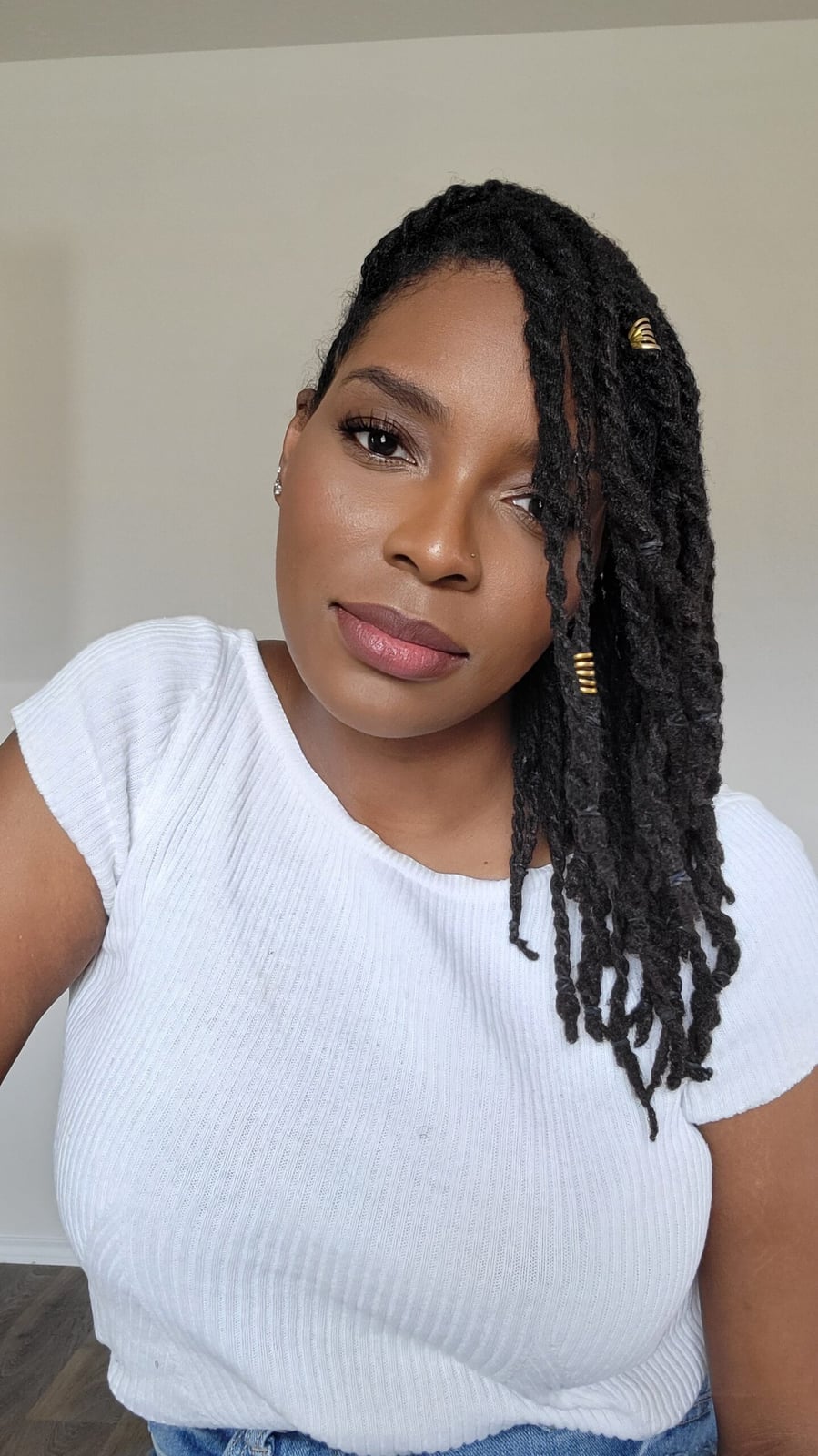
Shorter pieces around the face soften the line of shoulder-length twists, which is a practical choice for square or round face shapes. The side part adds asymmetry, and the thick, coily texture keeps the twists defined rather than wispy. Ask your stylist for shoulder length two-strand twists with face-framing pieces. To switch up the look, tuck the shorter pieces behind the ear or pin them away with bobby pins, which changes the silhouette without losing the framing effect.
14Collarbone Twists For Home Styling
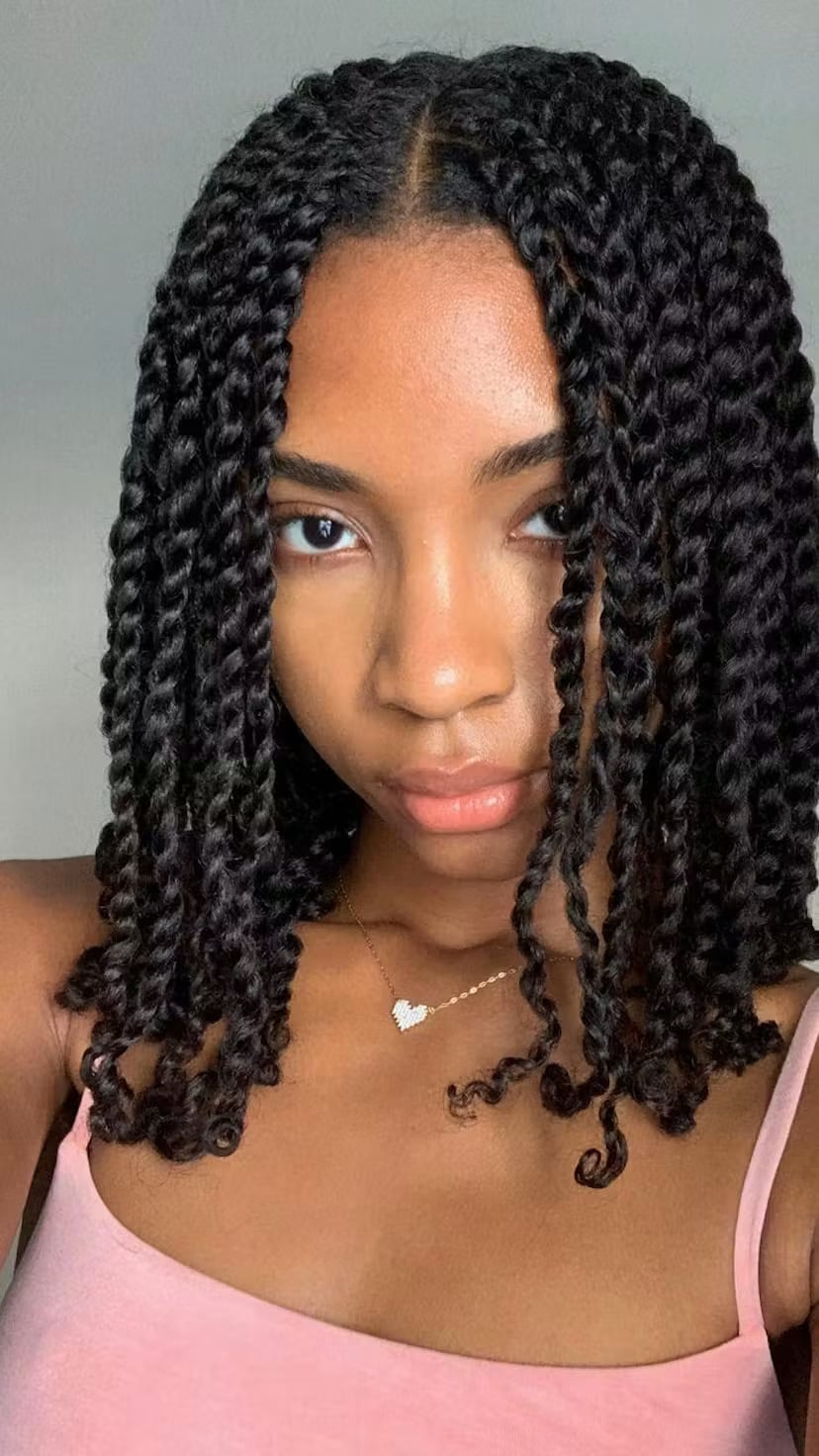
Start with clean, well-moisturized hair and a precise middle part, because the parting sets the tone for the whole style. Thick, coily hair at collarbone length holds twists well, and a middle part elongates a round face. Ask your stylist for collarbone length two-strand twists, easy to do at home. The key steps are simple: section with a rat-tail comb, apply a moisturizing balm, and twist each section from root to tip. The process requires patience, but it is a doable weekend project.
15Shoulder Length DIY Twists
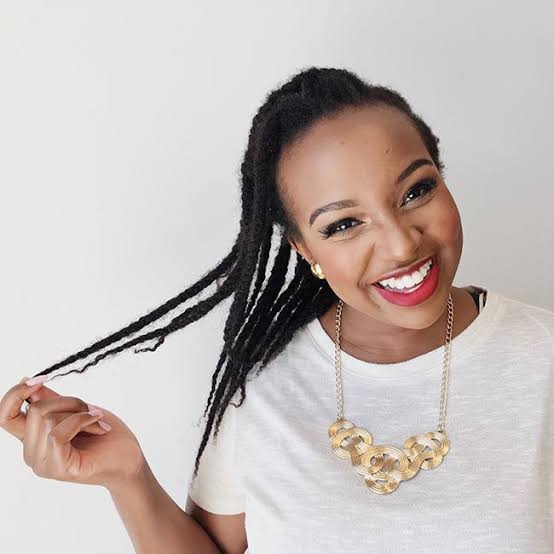
The satisfaction of DIY twists comes from the evenness, and this style delivers uniform sections that make the coily texture look deliberate. It suits thick, coily hair of shoulder length. Ask your stylist for shoulder length two strand twists, DIY friendly. Section the hair evenly before twisting to keep each twist the same size, and use a light hold gel for definition. The hold is solid for everyday wear, though you will need to refresh the parts as the hair settles.
16Ear Length Defined Twists
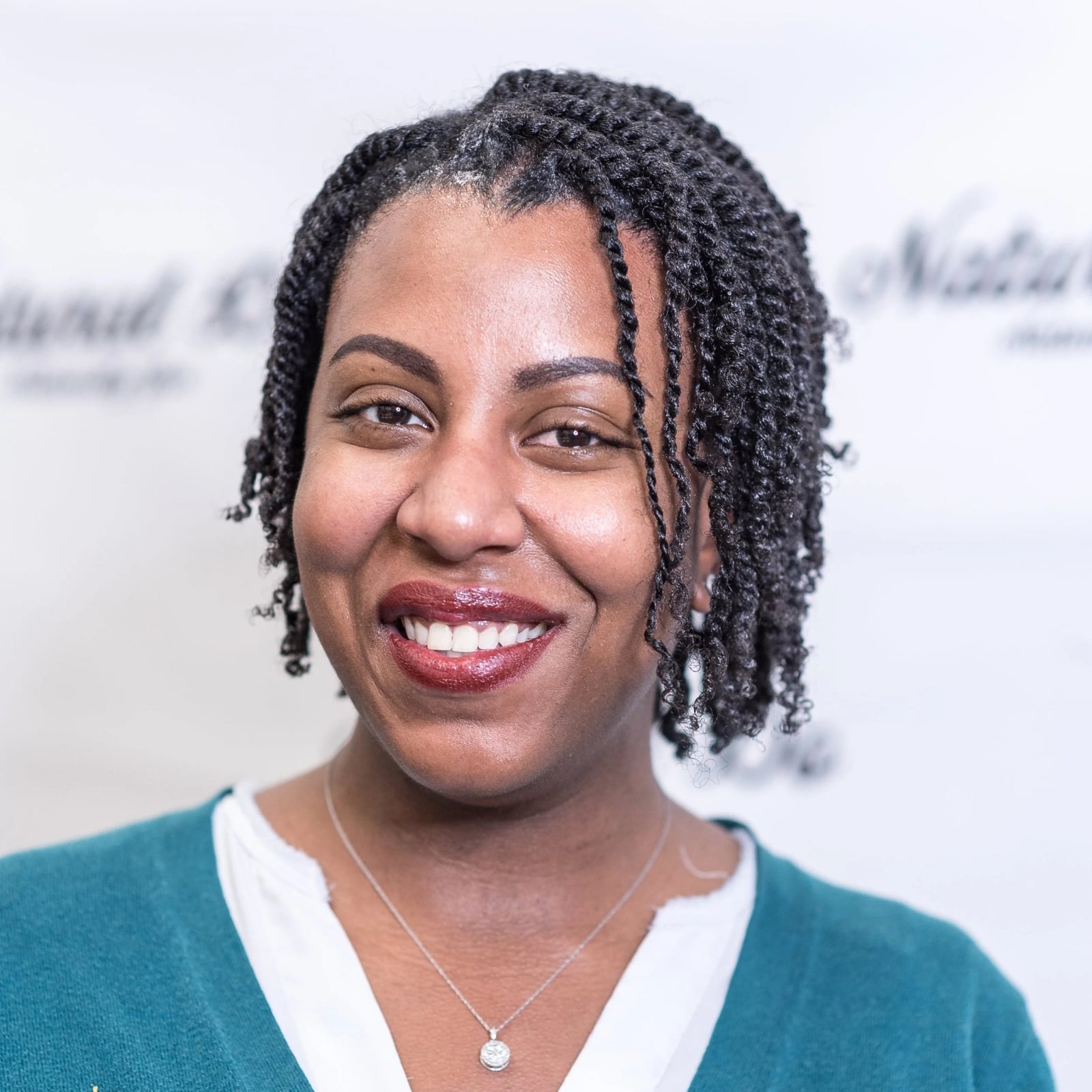
Ear-length two-strand twists offer a neat look with clear definition. A middle parting keeps the sections balanced and frames the face without needing any length to work with. Ask your stylist for short, defined two-strand twists to the ear. Thick, coily hair holds the definition best here; finer textures may need pomade at the roots to keep things neat. A trim every four to six weeks maintains the shape, but the style itself takes minimal daily effort once set.
17Shoulder Twists With Grey Streaks
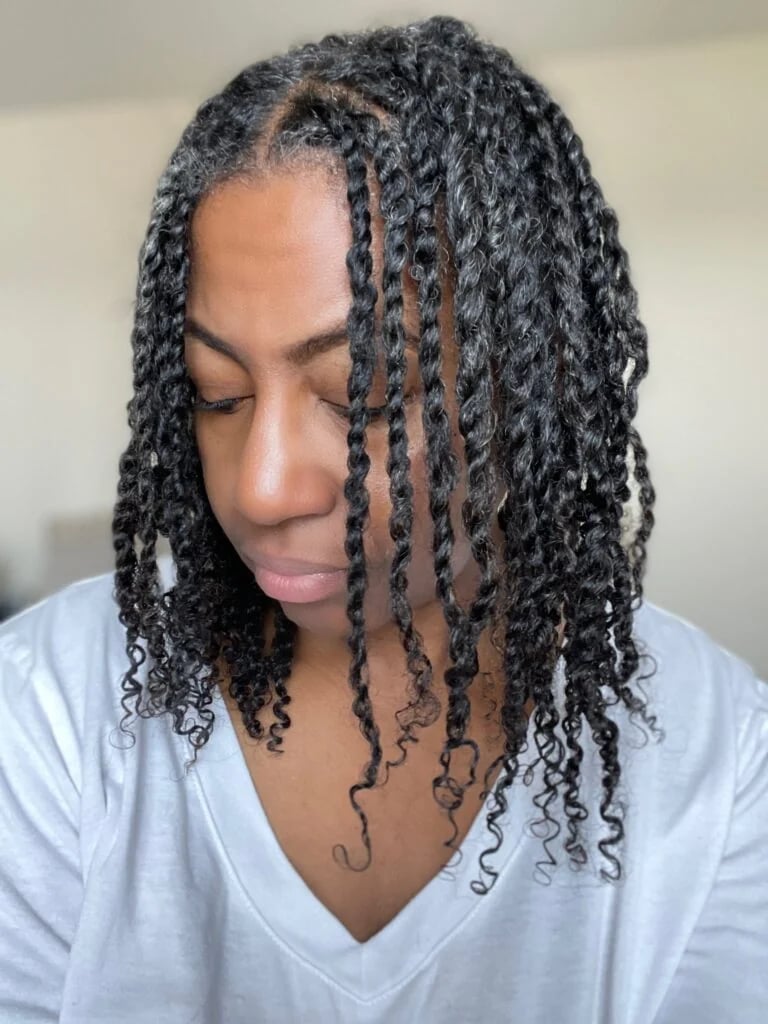
Grey streaks on black hair make for a sophisticated two-strand twist style that works any season. The contrast is subtle enough for the office. Ask your colorist for shoulder length two-strand twists with black and grey tones. A middle part suits most face shapes, and the shoulder length gives enough weight to keep the twists from shrinking up too fast. A color-safe shampoo preserves the grey tones, and re-twisting the ends as needed keeps the look fresh without a full reset.
This is a diy-friendly option for anyone with thick, coily hair and a patient afternoon. The grey grows out softly, so root touch-ups are less urgent than with a solid light shade.
18Small Defined Twists With Auburn Highlights
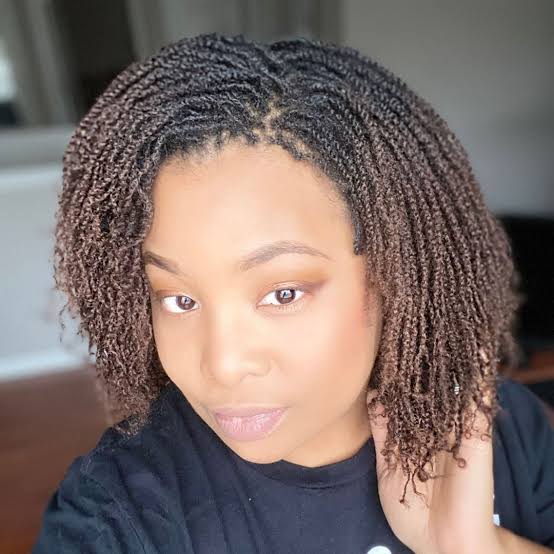
A practical rule for small twists: the finer the section, the longer the install. These shoulder-length twists use a dark brown base with subtle auburn highlights for dimension, but the real trade-off is time. Fine coily hair can unravel faster than thicker textures, so a light-hold gel is worth the extra step. Ask your stylist for small, defined two-strand twists with auburn highlights. A trim every six to eight weeks keeps the ends clean, though the middle part means less manipulation overall. If patience is not your strong suit, this one may test it.
19Collarbone Twists With Braids and Blonde Tips, Curly
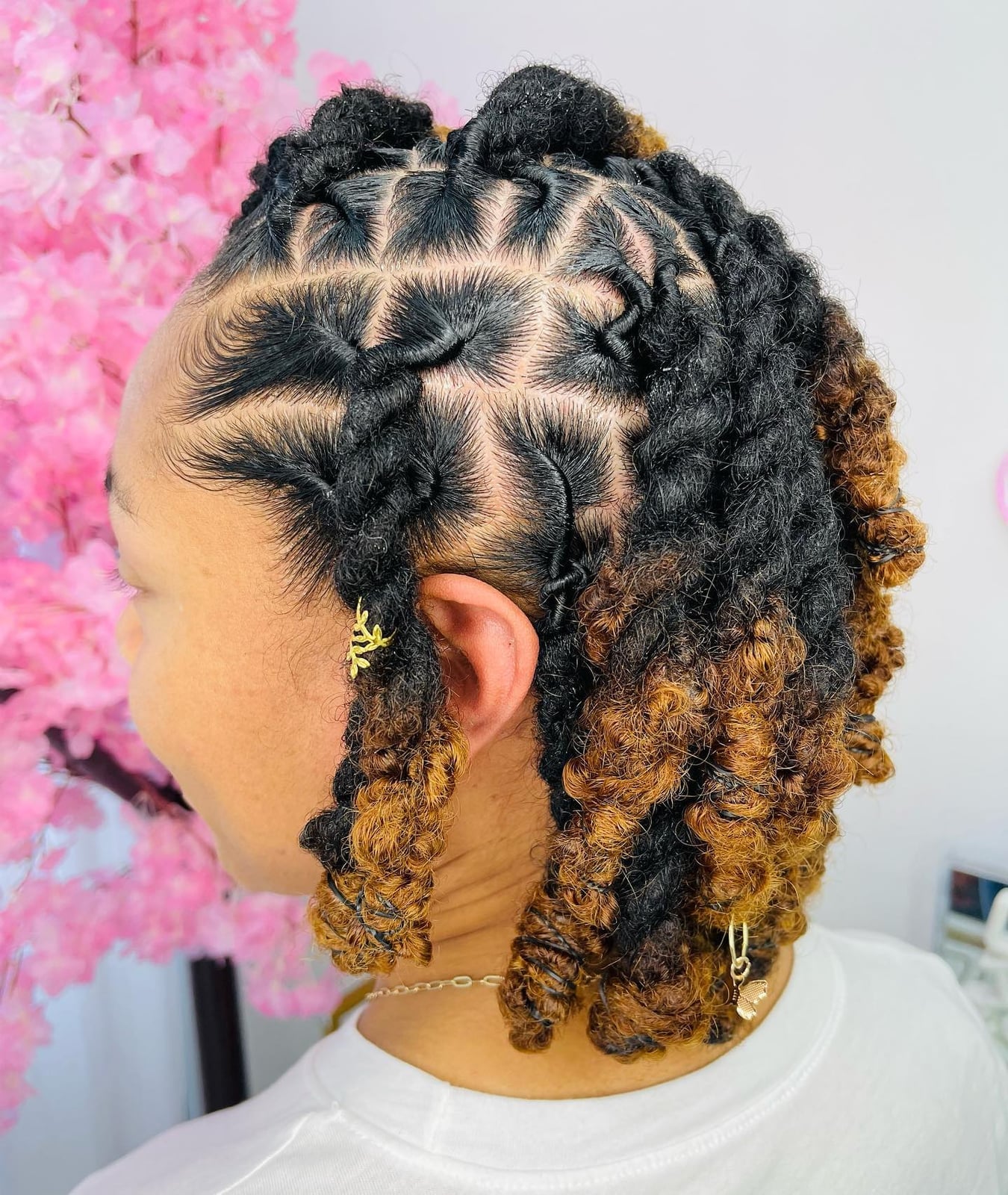
This is not a standard two-strand twist style; it is a hybrid that starts with scalp braids and finishes with twists. The braided sections at the root add structure and visual weight, while the blonde tips on black and brown hair create a deliberate contrast. Ask your stylist for two strand twists with scalp braids and blonde tips. Thick, curly hair at collarbone length holds the combination well, and the middle part keeps the braided patterns visible. A color-safe product on the blonde ends prevents brassiness, and keeping the scalp clean and moisturized extends the wear time between salon visits.
20Mid-Back Twists With Braids and Blonde Tips
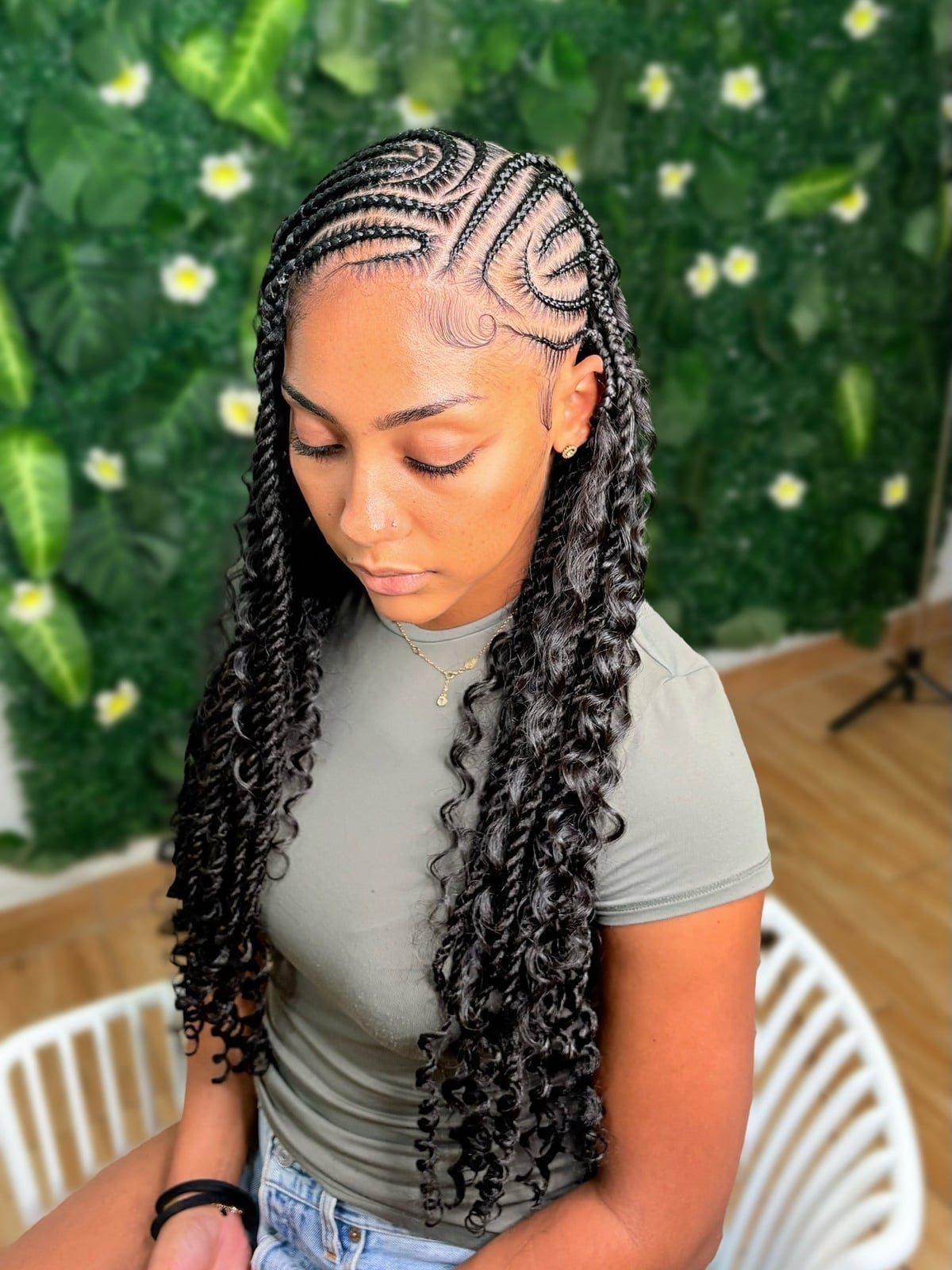
A practical rule for long, intricate styles: the braided foundation determines how long the twists hold. This mid-back length combines scalp braids with two-strand twists, using black hair and blonde tips for contrast. Ask your stylist for long two-strand twists with intricate scalp braids and blonde tips. Thick, curly textures handle the weight best, and the middle part keeps the braided patterns symmetrical. The blonde tips require a color-safe routine to stay bright, and a light oil on the twist ends prevents frizz between re-twists.
This is a salon commitment, not a weekend diy project. The payoff is a style that stays intact for weeks with minimal daily effort, as long as the braids at the scalp are neat and secure from the start.
21Final Thoughts
For maximum definition and longevity, ensure twists are started on clean, moisturized hair with consistent tension. Break the process into smaller sessions if patience runs thin; a section at a time still adds up.
- Refresh twists daily with a light leave-in spray or oil.
- Sleep in a satin bonnet or scarf to preserve the style.
- Re-twist roots every 4-6 weeks for upkeep.
- Avoid excessive manipulation to prevent frizz and breakage.
Two-strand twists offer a beautiful canvas for natural texture and creativity.