

Keeping your hair out of your face is paramount on the volleyball court. But that doesn’t mean sacrificing style for function. Secure styles can also look polished and intentional. The shift toward lived-in color and glossy natural texture means you don’t need a fresh blowout to look put together.
This collection of 20 Volleyball Hair Ideas spans from intricate box braids to sleek high buns, covering every length and density. Whether your fine hair falls flat in a ponytail or your thick hair makes a high bun feel like a workout, there is a solution here. These looks are built for play, not just for the photo.
Long Box Braids in High Ponytail
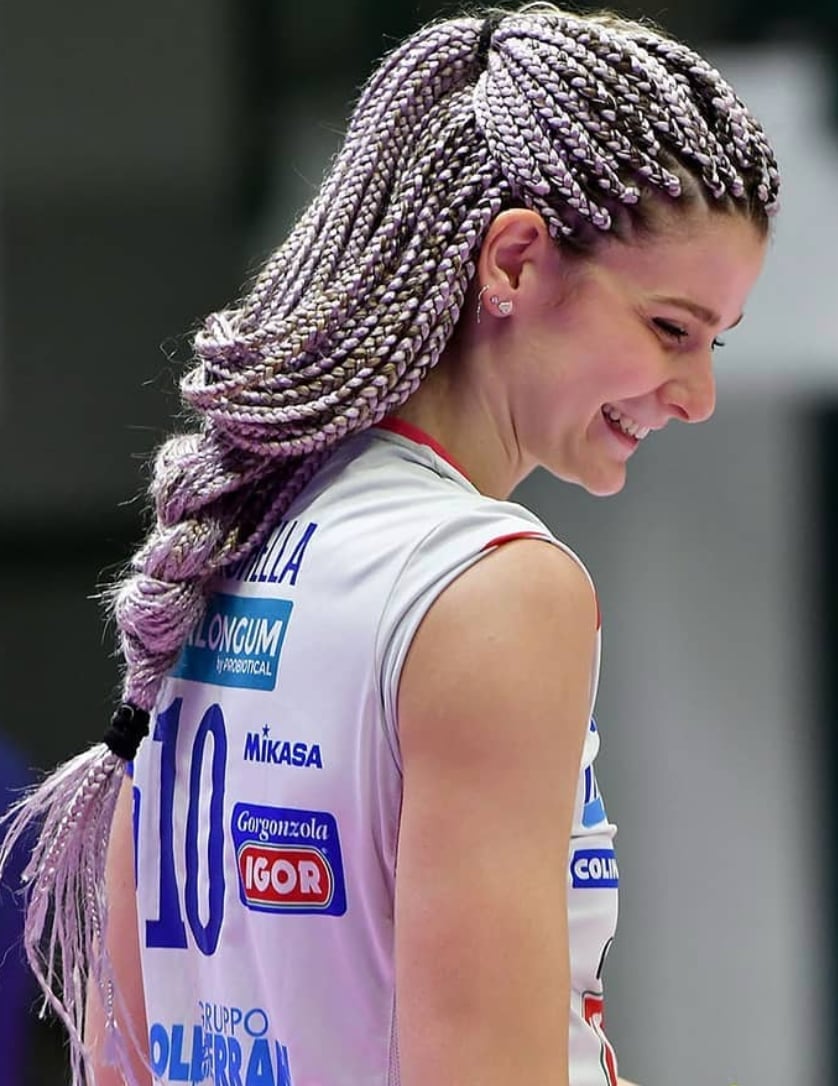
Mid-back length box braids with light gray and blonde highlights are gathered into a high ponytail, a design that keeps every strand off your neck and face. This protective style works best on thick, long hair that can handle the weight of extensions or natural braiding. The middle part draws the eye down the length, which suits oval and heart face shapes best.
Ask your stylist for: high ponytail with mid-back box braids. The braids should be installed tight enough at the scalp to hold during a dive, and a braid balm along the hairline will tame any wispy bits. Expect to refresh the braids every six to eight weeks as new growth appears at the root.
Double Braids into Ponytails
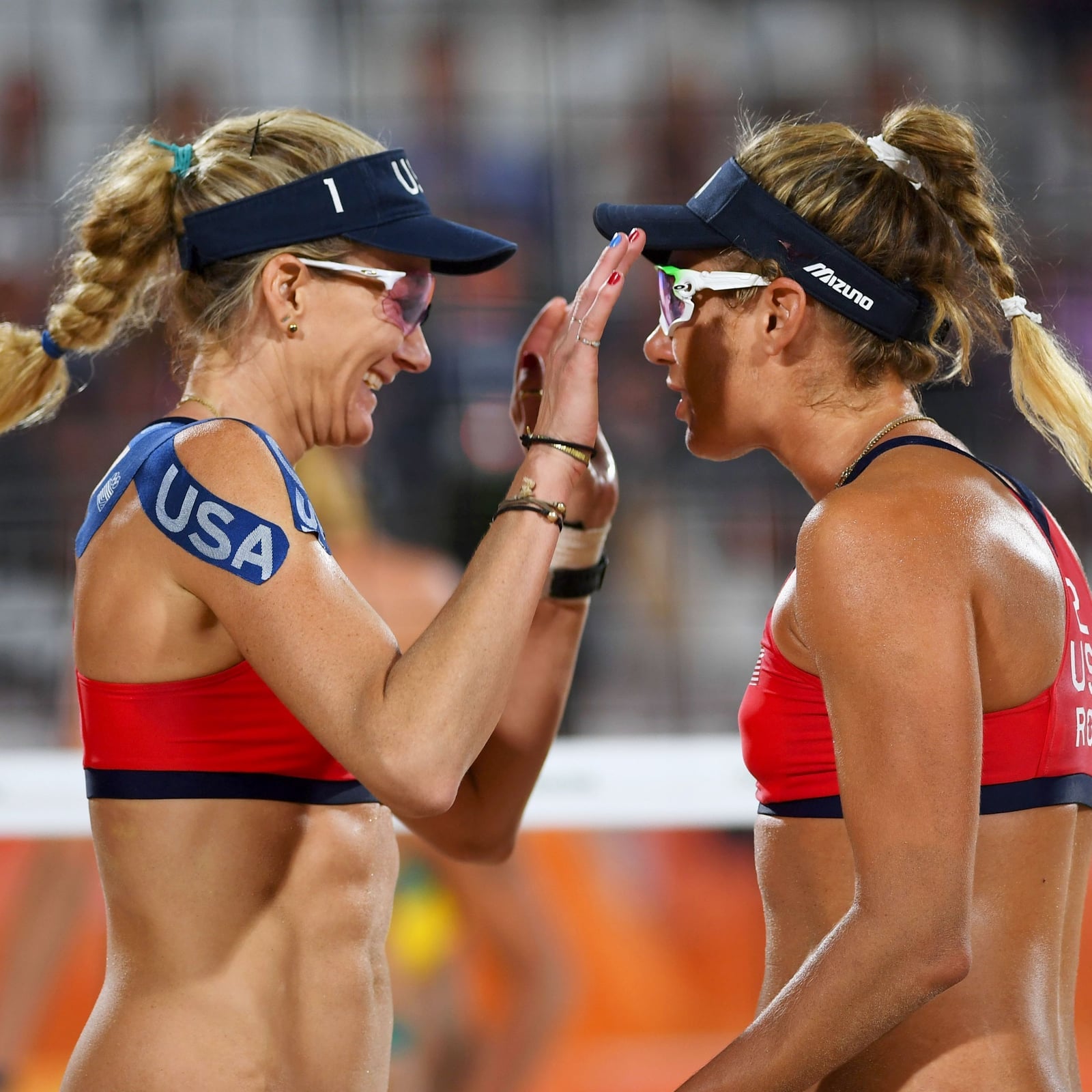
Two distinct braids are each secured into their own ponytail, a strategy that distributes bulk evenly and prevents a single heavy ponytail from pulling at the scalp. The blonde highlights add dimension, but the real win is the layers cut into the hair beforehand, which keeps the braids from looking lumpy.
Ask your stylist for: double braids into high ponytails. This setup holds best on mid-back length hair with a middle part. Thick and wavy textures stay put, while fine hair may need a texture spray to give the braids enough grip.
Two Tight Dutch Braids
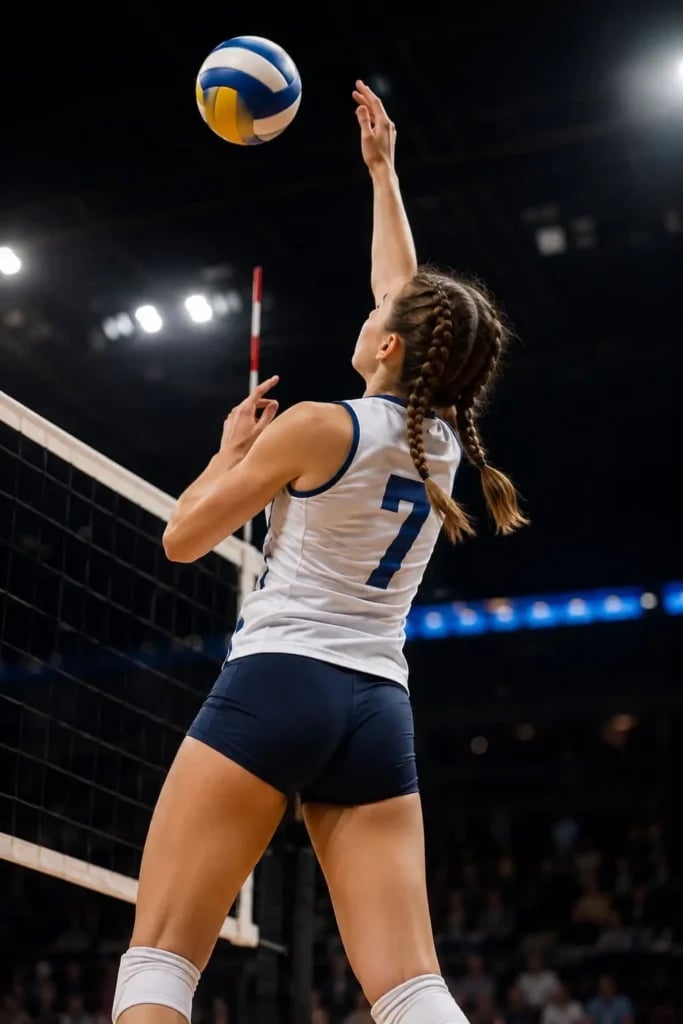
Two tight Dutch braids are essentially a helmet for your hair, and that is a compliment. The braids are woven close to the scalp, then continue down the length to the ends, leaving no loose sections to whip around during a serve. This style works on mid-back length dark blonde hair with a wavy, thick texture; the density helps the braids stay intact without slipping.
Ask your stylist for: two tight Dutch braids down the back. A dry shampoo refresh between washes keeps the scalp clean, and the braids themselves can hold for two to three days of practice before needing a redo.
Thick Neat Dutch Braid
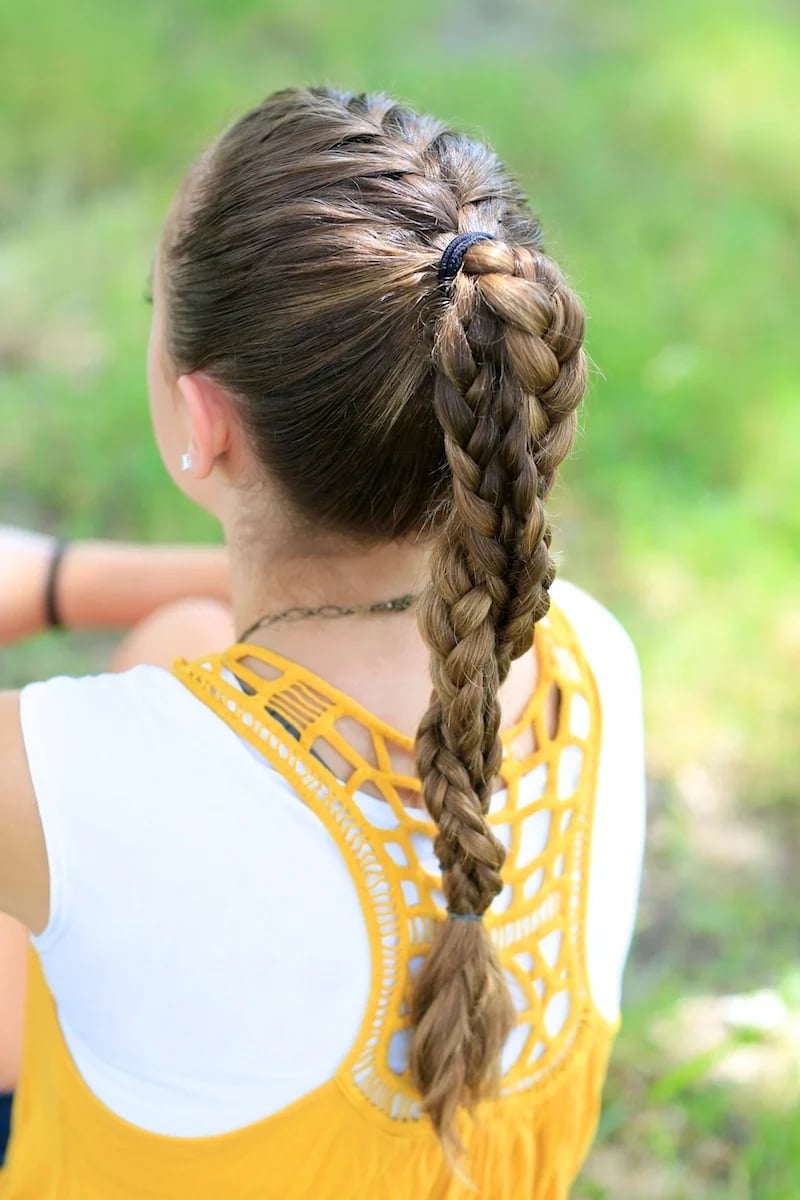
A single thick Dutch braid is the less complicated cousin of the double-braid look, but it is no less secure. The braid starts at the crown and travels down the center of the head, gathering all the hair into one neat rope. On brown hair with lighter brown highlights, the braid shows off the color variation better than a simple ponytail would.
Ask your stylist for: one thick, neat Dutch braid. The braid should be tight from the start to avoid loosening, and the ends should be smoothed to keep the finish polished. This style is a solid pick for anyone with wavy, thick hair who wants a one-and-done solution.
Detailed Fishtail Braid
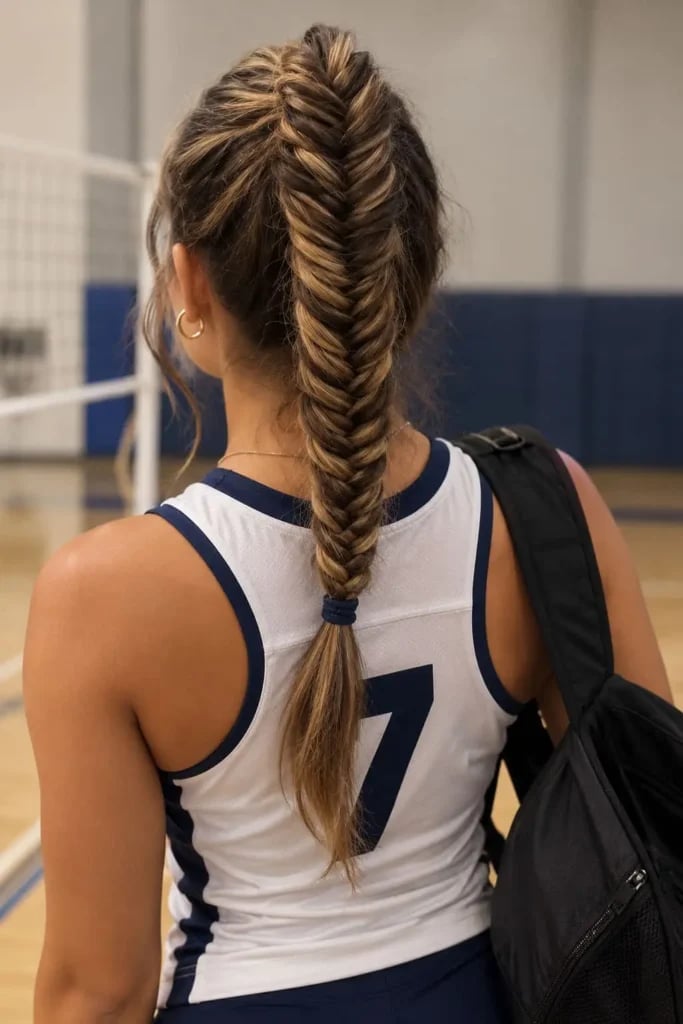
A detailed fishtail braid looks more intricate than a standard three-strand braid. The two-strand weaving creates a narrow, flat braid that stays put even during lateral movement on the court, making it a practical choice for active wear. On mid-back length blonde hair with balayage, the braid reveals the color transitions with every twist.
Ask your stylist for: detailed fishtail braid. The braid suits thick, wavy hair best, as fine hair may not create enough visible texture. A middle part balances the look on oval and heart face shapes.
Long Thick Fishtail Braid
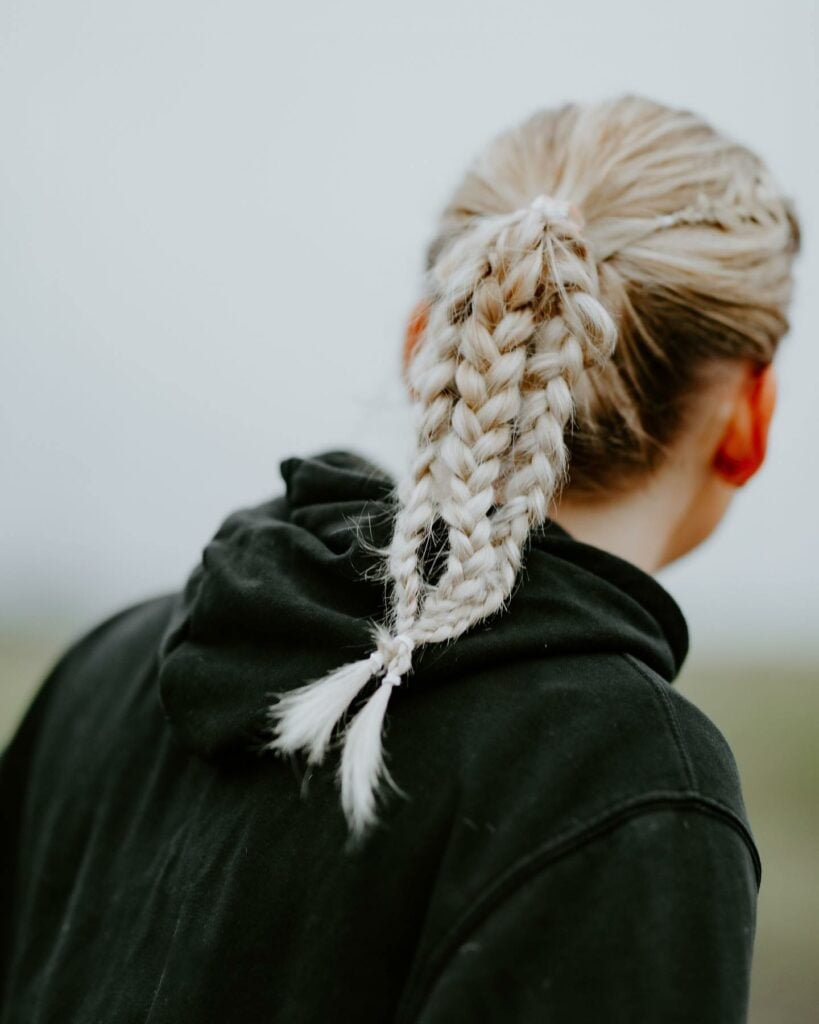
Hair this dense needs a trim every eight to ten weeks to keep the ends from looking ragged. The braid itself hides grow-out well, so you can stretch the appointment if you are between games. It is not a style you whip up between warm-ups, but it also does not need touch-ups once it is done.
Intricate Braided Ponytail
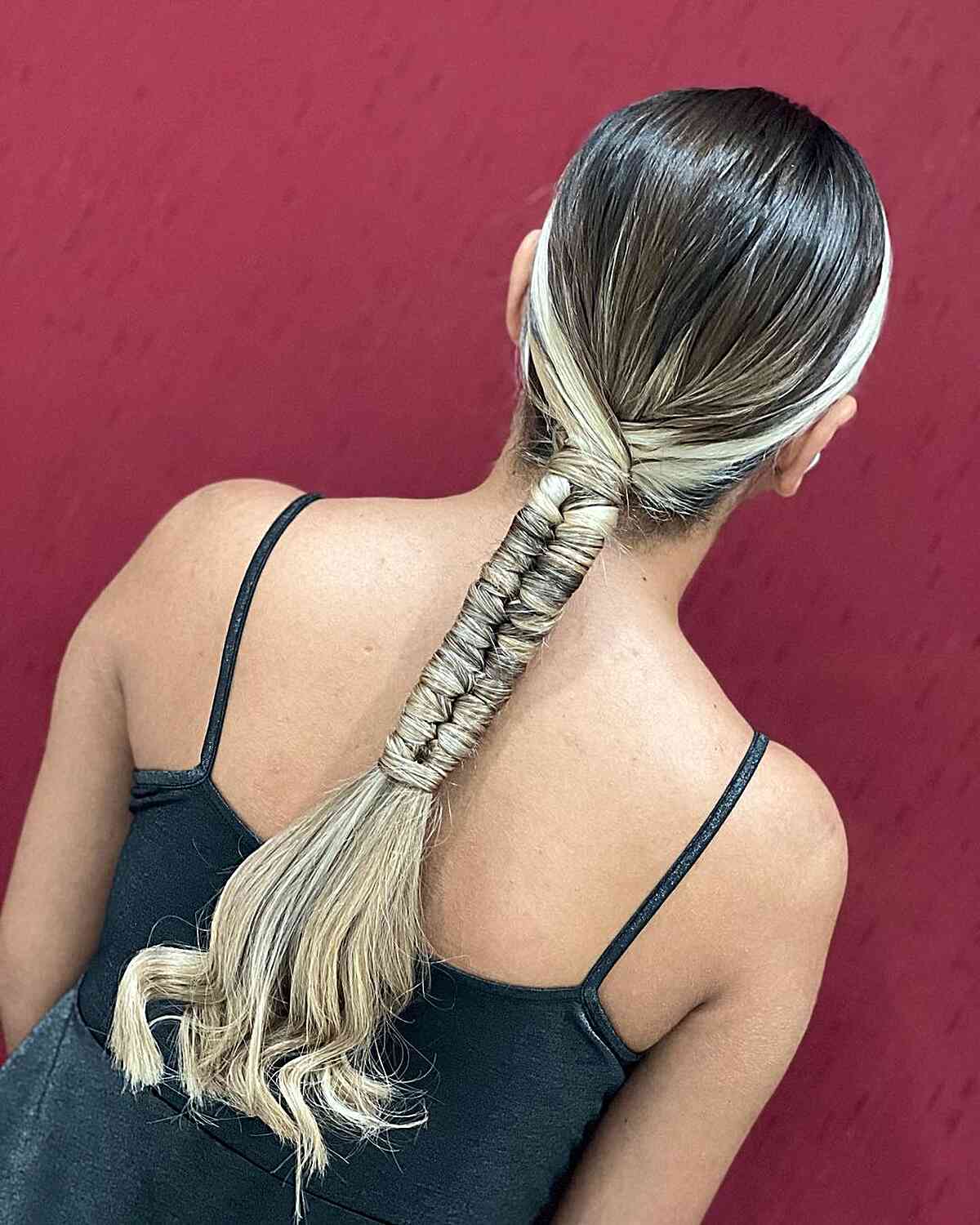
How do you get a ponytail that does not budge and still looks like you put in effort? This tightly woven, segmented braid on mid-back length straight dark brown hair with blonde highlights is the answer. Small elastics section the braid into uniform blocks, which locks down every strand and adds visual texture where the hair is otherwise sleek. Ask your stylist for: tightly woven segmented braided ponytail. A middle part keeps the weight balanced, and the straight texture makes the segments read cleanly rather than fuzzy. A trim every six to eight weeks prevents the ends from splitting, because broken tips show fast in a structured braid.
Braided Low Bun with Cornrows
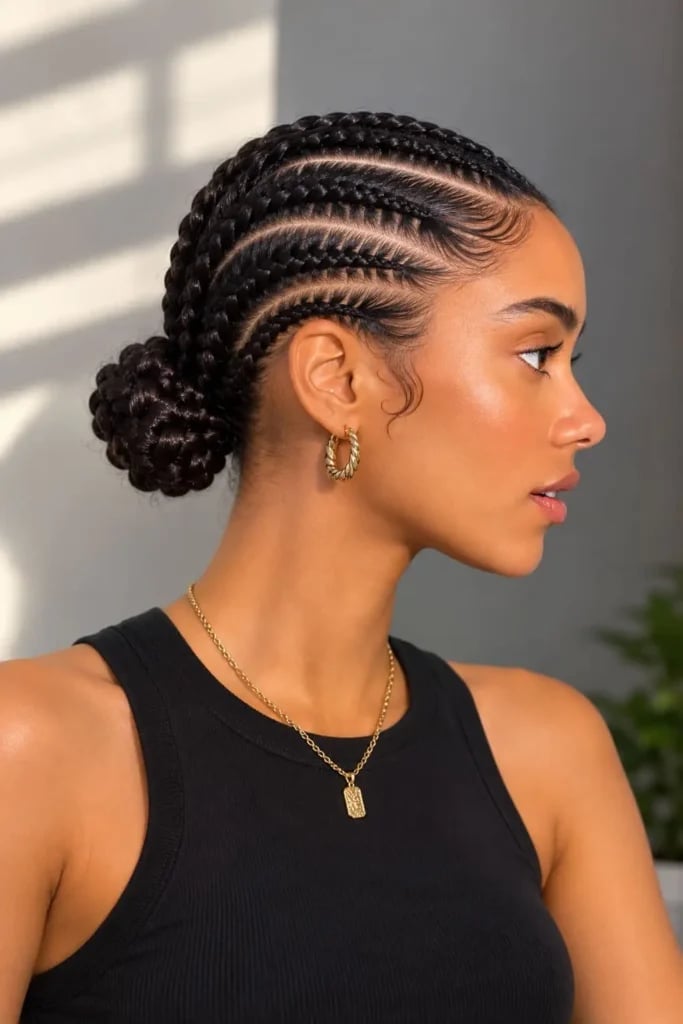
Cornrows that feed directly into a low bun solve two problems at once: they keep the hair off the face and they anchor the bun so it does not sag. On mid-back length, thick, wavy dark brown hair, the cornrows start at the hairline and travel back in neat lines, gathering into a braided bun at the nape. This is a strong option for oval and heart-shaped faces because the cornrows can be adjusted to widen or narrow the forehead visually. Ask your stylist for: low bun with neat cornrows framing the face.
A strong-hold gel along the cornrow lines keeps flyaways flat through sweat and movement. The bun itself benefits from a layer of hairspray for hold. Upkeep is minimal: the cornrows last about two weeks, and the bun can be refreshed by re-pinning. A trim every eight weeks keeps the ends healthy, though the style hides length well.
Braided Pigtails into Buns
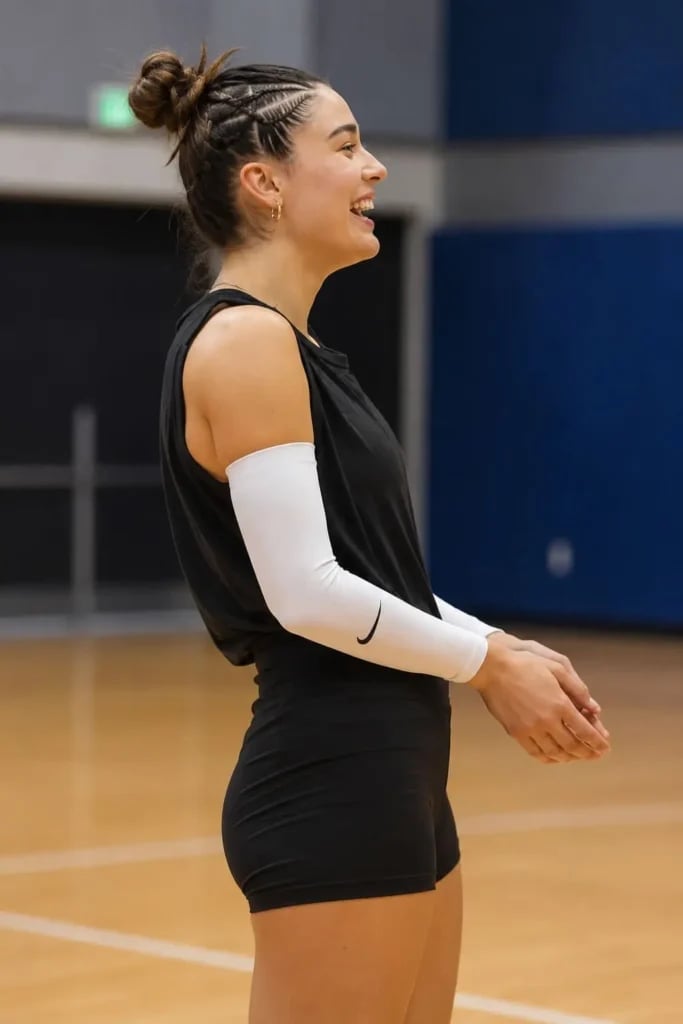
Two intricate braids on shoulder-length, thick, straight dark brown hair are twisted into buns at the top of the head, creating a style that is both playful and fully secure. The braiding process compacts the length so the buns sit neatly rather than flopping. A side part adds asymmetry, which keeps the look from reading as strictly juvenile. Ask your stylist for: two intricate braids into top buns. The drawback is that this is a salon-only design. The braiding detail requires someone working behind your head, and the buns need enough bobby pins to survive a dive. A trim every four to six weeks maintains the braid crispness, as shorter layers tend to escape.
Two Bubble Accent Braids
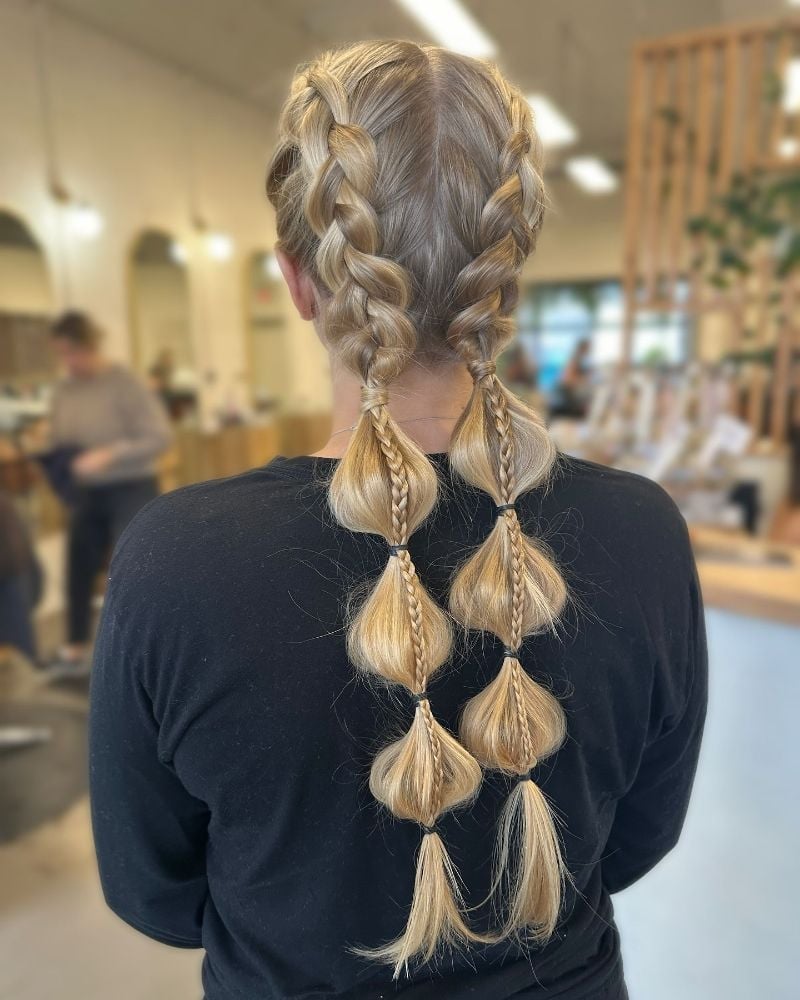
Bubble braids swap the uniform tension of a traditional braid for a series of puffed segments that read as playful. On mid-back length, thick, straight ash blonde hair, two braids with evenly spaced bubble accents create more visual texture than a standard three-strand braid, without requiring the dexterity of a fishtail. Ask your stylist for: two braids with bubble accents. A middle part keeps the symmetry clean. The bubbles hold best on straight hair with some natural weight; fine or layered hair tends to lose the puff shape within an hour. A texturizing spray refreshes the bubbles between wears.
Low Ponytail with Braided Accent
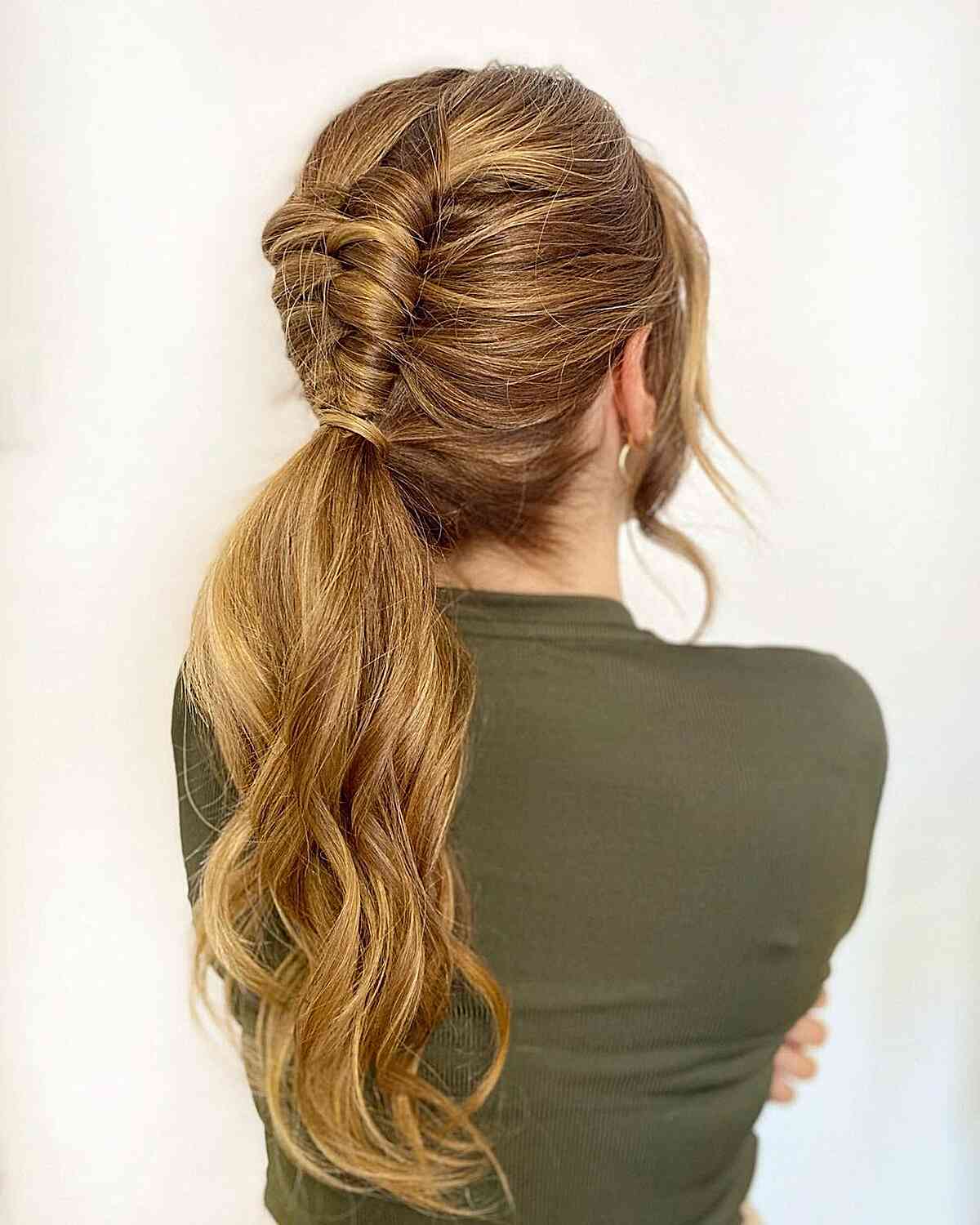
The braided accent at the crown is what separates this from every low ponytail you have worn since middle school. The honey blonde base with lighter highlights adds dimension as the thick, wavy length swings, and the side parting keeps the whole thing from feeling too severe. Ask your stylist for a low ponytail with a braided accent at the crown.
This suits thick, wavy hair of mid-back length, and the side part means it works with most face shapes. The braid pulls the hair off the face without the tension of a slicked-back style, so it holds through a long match. Wrap a strand of hair around the ponytail base to hide the elastic, and plan on a trim every six to eight weeks to keep the ends from looking ragged. It is a salon-level detail that looks assembled and polished.
Braided Ponytail with Intricate Detail, Mid-Back
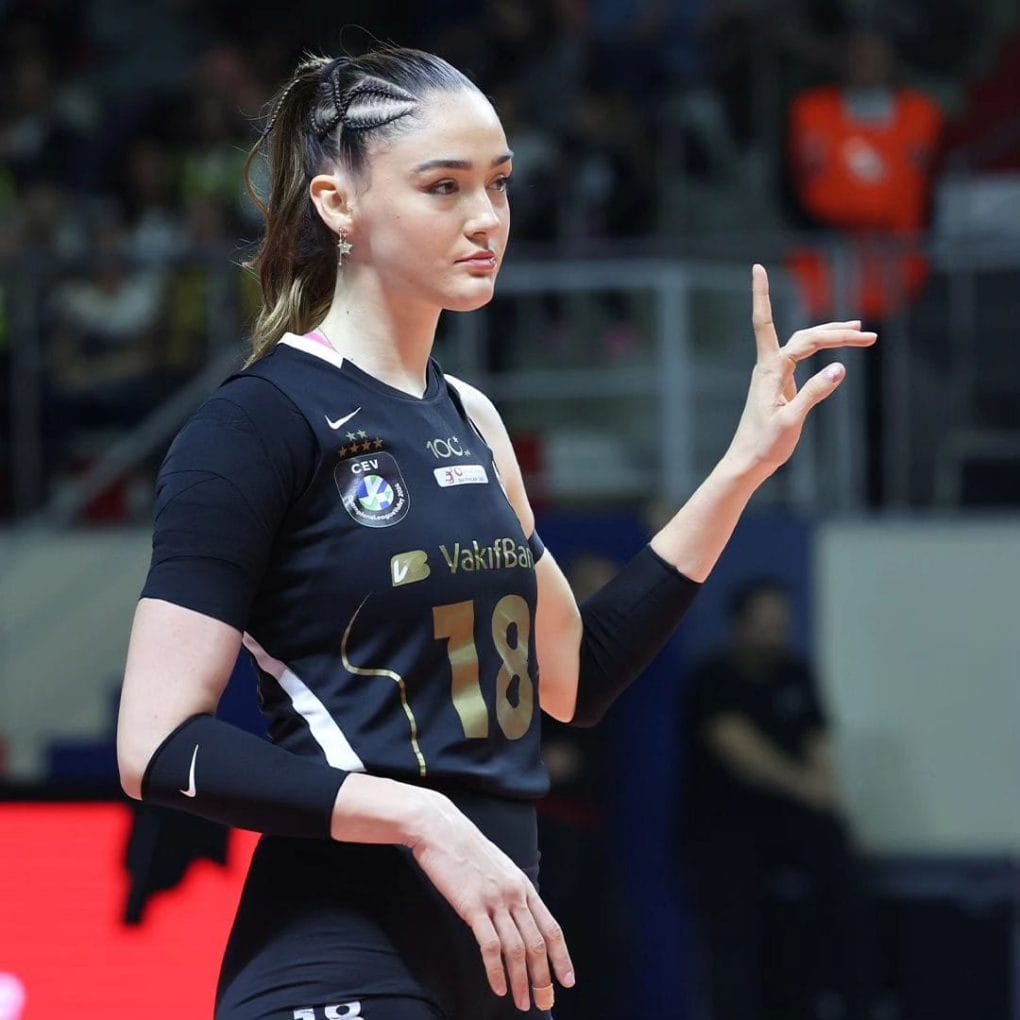
The technique here starts before the ponytail does, with intricate braiding that follows the hairline before feeding into the gathered length. The dark brown base with subtle lighter highlights gives the braided sections dimension, and the wavy, thick texture of the mid-back ponytail keeps it from looking too rigid. Ask your stylist for a high ponytail with intricate braiding along hairline and within. This suits oval and heart faces, especially with the side parting softening the forehead. The one drawback is the time it takes to construct: the braided detail means this is not a five-minute pre-game fix, so budget for a salon visit before you need it. The layers in the ponytail help the braided sections blend naturally rather than sit on top separately.
French Braid into Wavy Ponytail with Bow
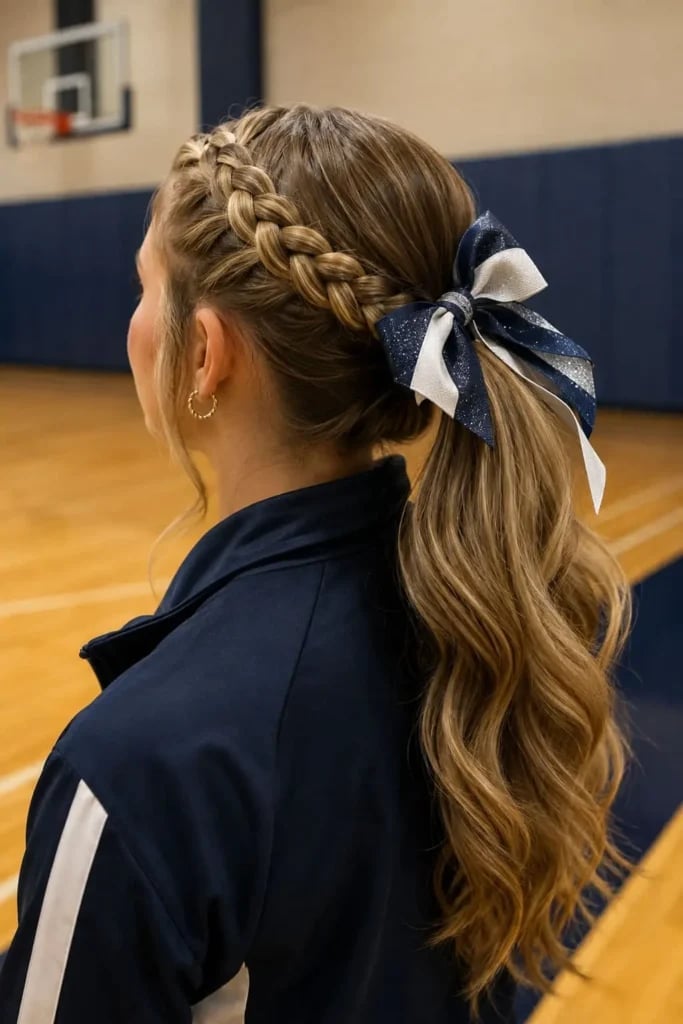
Add the bow for any tournament that falls near a holiday. The French braid transitions into a long, wavy ponytail, and the honey blonde highlights give the thick texture some movement once it is free of the braid. The large glittery bow sits at the base, turning a functional style into something that feels like an event. Ask your stylist for a French braid into a wavy ponytail with a large bow.
This lands well for a festive team event or a holiday tournament, where the sparkle is celebratory without being distracting. The side-swept bangs keep the face soft while the braid does the work of holding everything back. Suits thick, wavy hair of mid-back length and most face shapes. The bow is the weak point during actual play, so secure it over the elastic with an extra pin if you plan to move. A trim every six to eight weeks keeps the wavy ends from splitting and the braid from catching.
Ponytail with Fishtail Braid and Curls
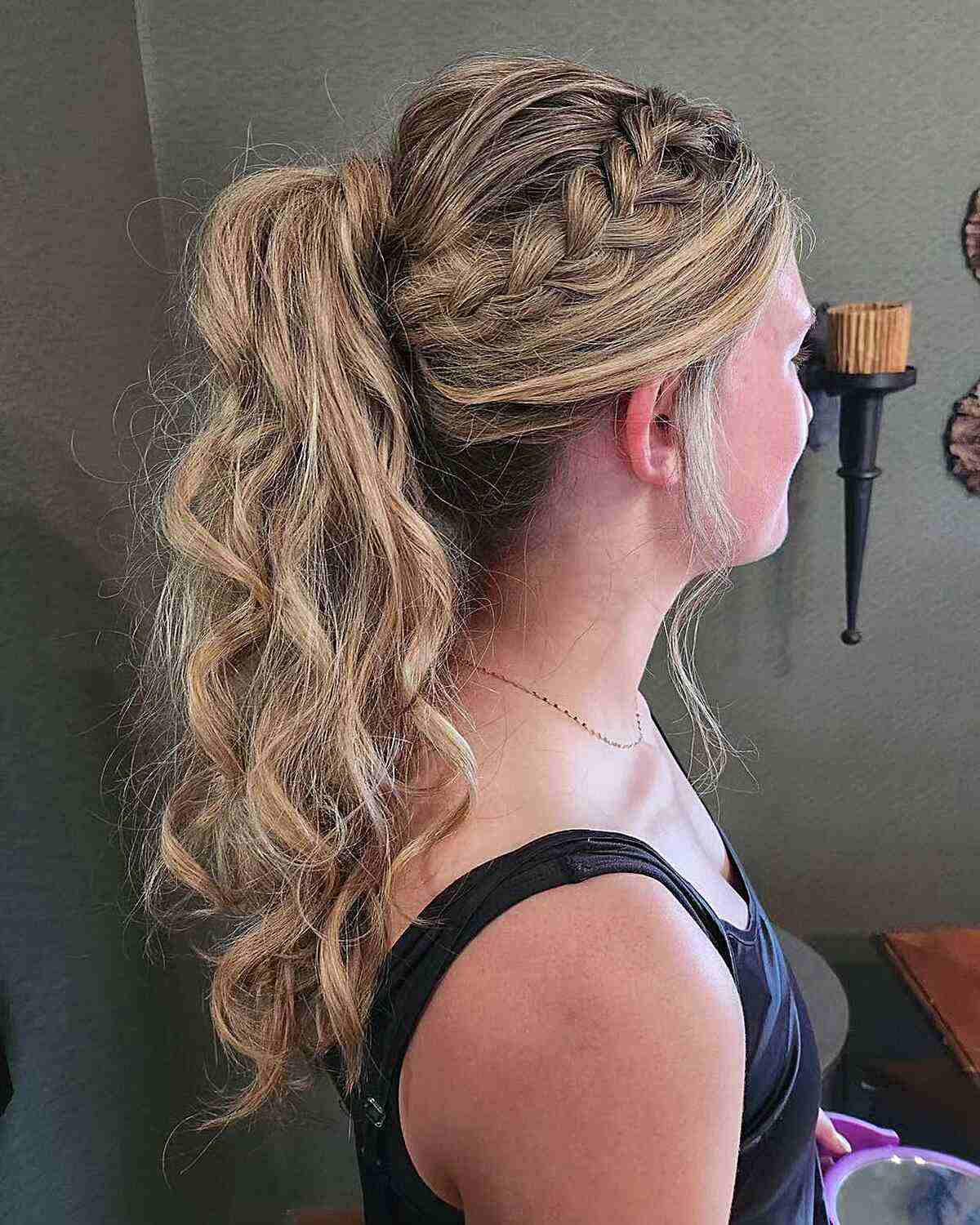
The fishtail braid running along the front of the high ponytail looks complicated until you realize it is just two strands crossing over each other. The blonde highlights give the wavy, thick texture some contrast, so the braid does not disappear into the length. Ask your stylist for a high ponytail with fishtail braid and face-framing curls.
This flatters oval and heart faces, because the face-framing pieces soften what would otherwise be a pulled-back style. The side part adds volume at the crown, which balances a narrower chin. Thick, wavy hair of mid-back length holds the braid and curls best, while fine hair might let the fishtail flatten out. Keep the braid tight and the curls defined with a texturizing spray, and the whole thing stays put through a match. The face-framing pieces will need a re-curl at halftime if you sweat a lot.
Voluminous High Ponytail with Curls
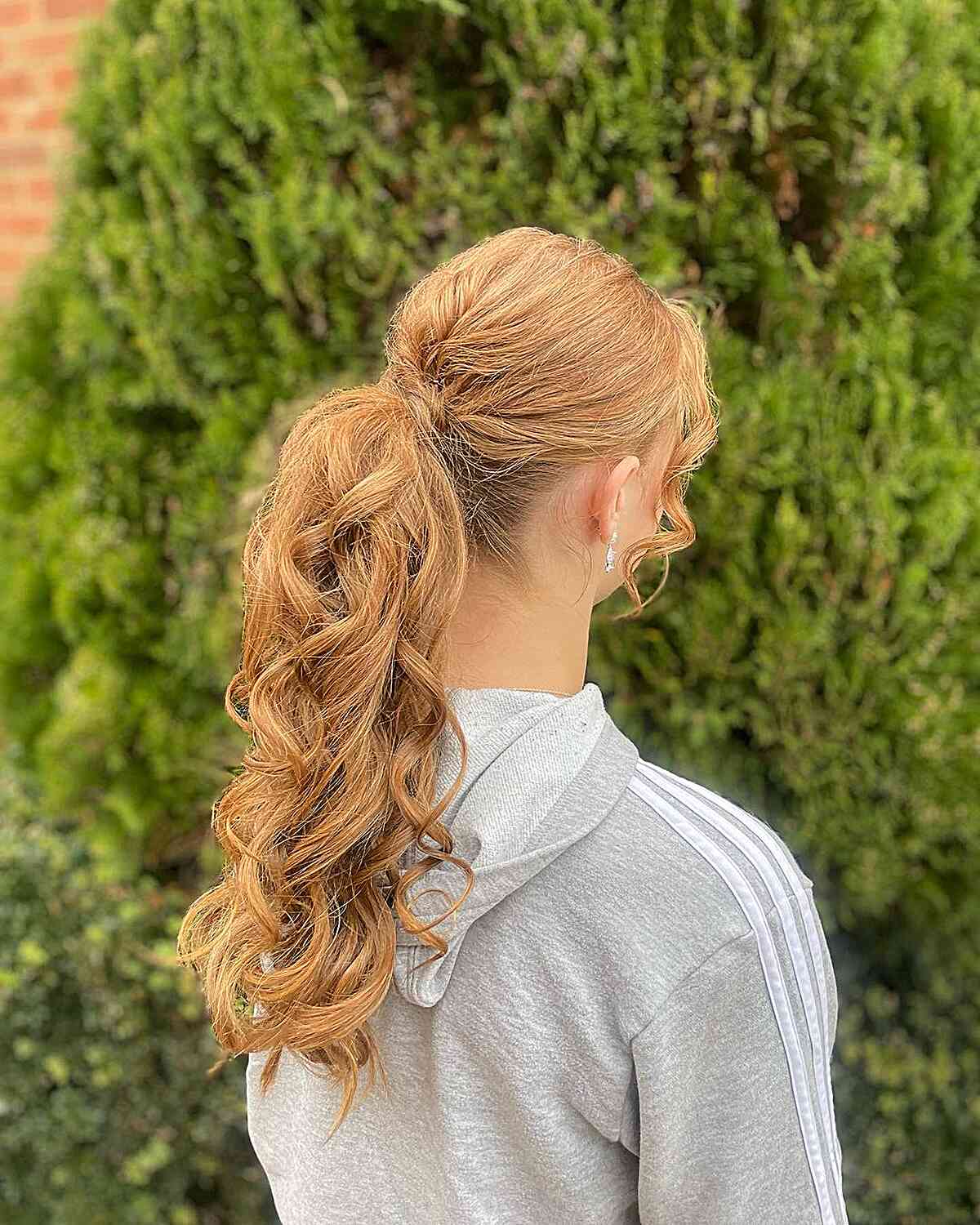
The volume in this high ponytail comes from long layers and a crown that is teased before the hair is gathered, not from any trick with the elastic. The strawberry blonde shade has a glossy finish, and the cascading curls give the wavy, mid-back length real weight as it moves. Ask your stylist for a voluminous high ponytail with cascading curls and face-framing pieces. Suits long and square faces, where the height and the soft pieces at the cheeks balance the angles. The challenge is keeping those curls from dropping during intense play, so a strong-hold hairspray is not optional. Backcomb the crown first for the lift, then smooth the top layer over it before securing the ponytail. A trim every six to eight weeks keeps the long layers from losing their shape.
High Ponytail with Loose Waves
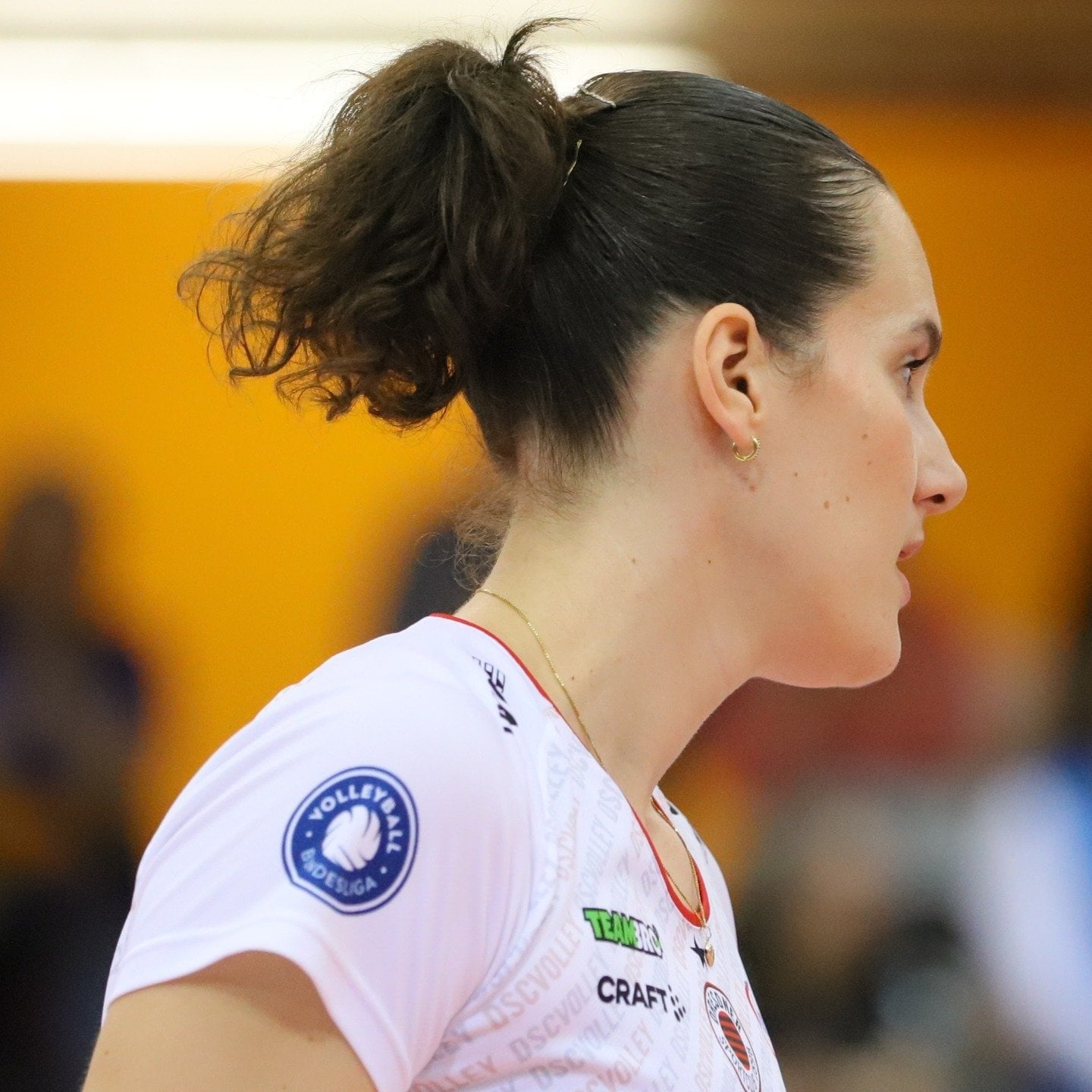
It is not a sleek, stiff ponytail; it is a high ponytail with loose waves that moves when you do. Thick, mid-back length dark brown hair is gathered high on the crown, and the waves give it body without the fuss of a full curl set. Ask your stylist for: high ponytail with loose waves. A strand wrapped around the elastic hides the band, and the middle part keeps the face clear. A trim every six to eight weeks maintains the shape, and a heat protectant before waving keeps the texture bouncy through warm-ups.
Multiple Dutch Braids into Fishtail Braids
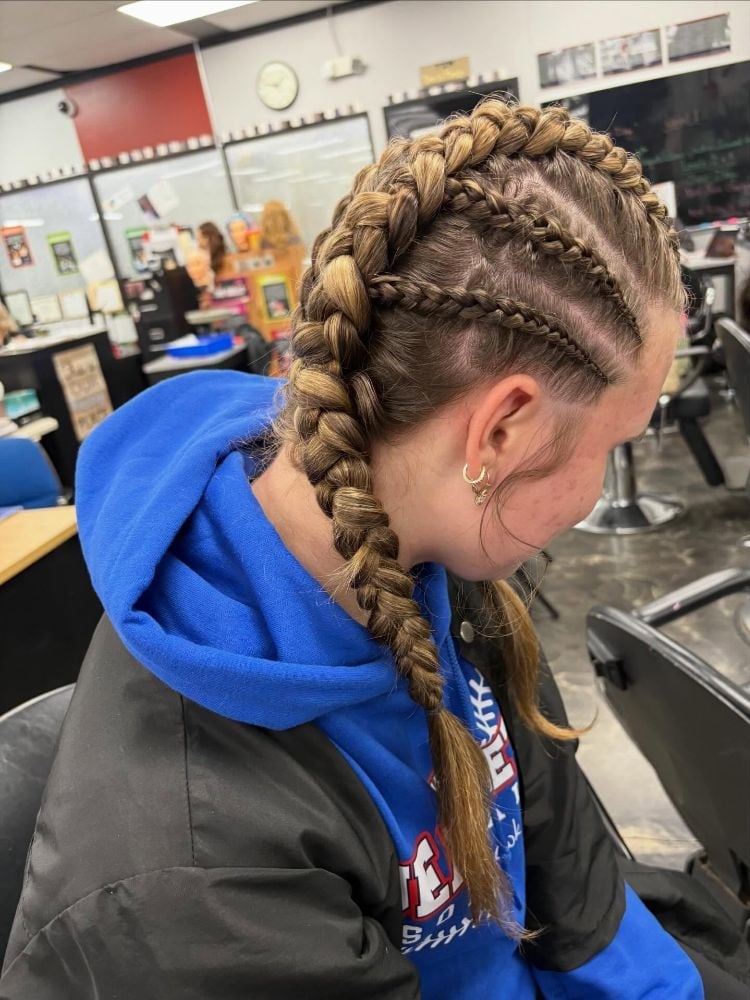
This one is an engineering project. Multiple Dutch braids start at the crown and transition into two fishtail braids, creating a secure, intricate structure from mid-back length thick, wavy dark blonde hair with lighter highlights.
The Dutch braids hug the scalp, while the fishtail sections add texture and weight distribution. Ask your stylist for: multiple Dutch braids into two fishtail braids. The middle part and side view show the precision of the pattern. It is a salon-only build, but once it is in, it holds through multiple sets without a touch-up.
Cornrows into Single Thick Braid
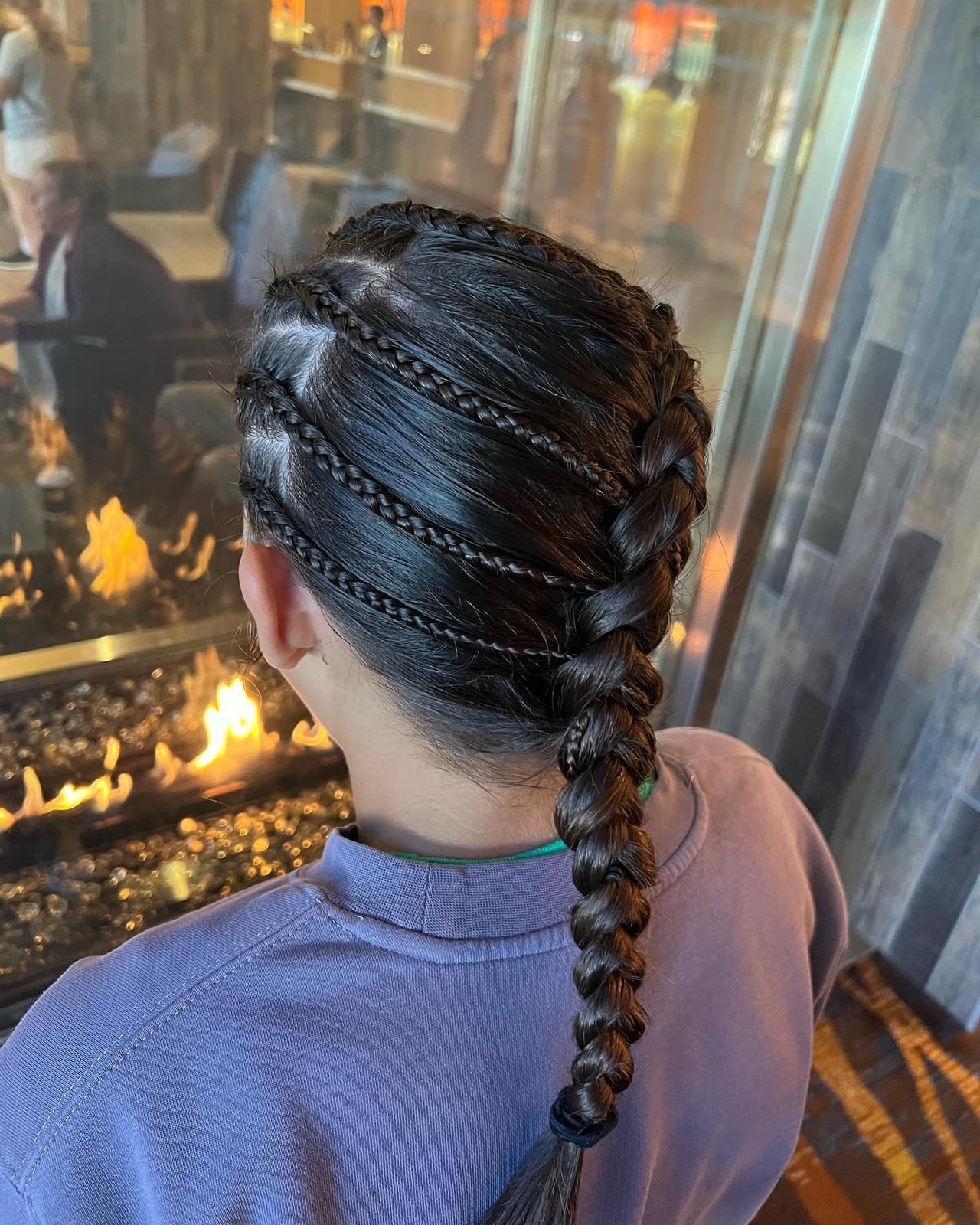
If you want every strand accounted for, cornrows beat loose braids every time. Long, thick, straight dark brown hair is parted in the middle, then cornrowed from the hairline into a single thick braid that falls straight down the back.
There are no flyaways, no bumps; the scalp parts are clean and precise. Ask your stylist for: cornrows leading into a thick braid. Apply a lightweight oil to the scalp between washes to keep the skin comfortable. The ends of the braid should be trimmed every eight to ten weeks to prevent fraying. It is a protective style that stays put for practices and games alike.
Intricate Braided Updo for Chin Length Hair
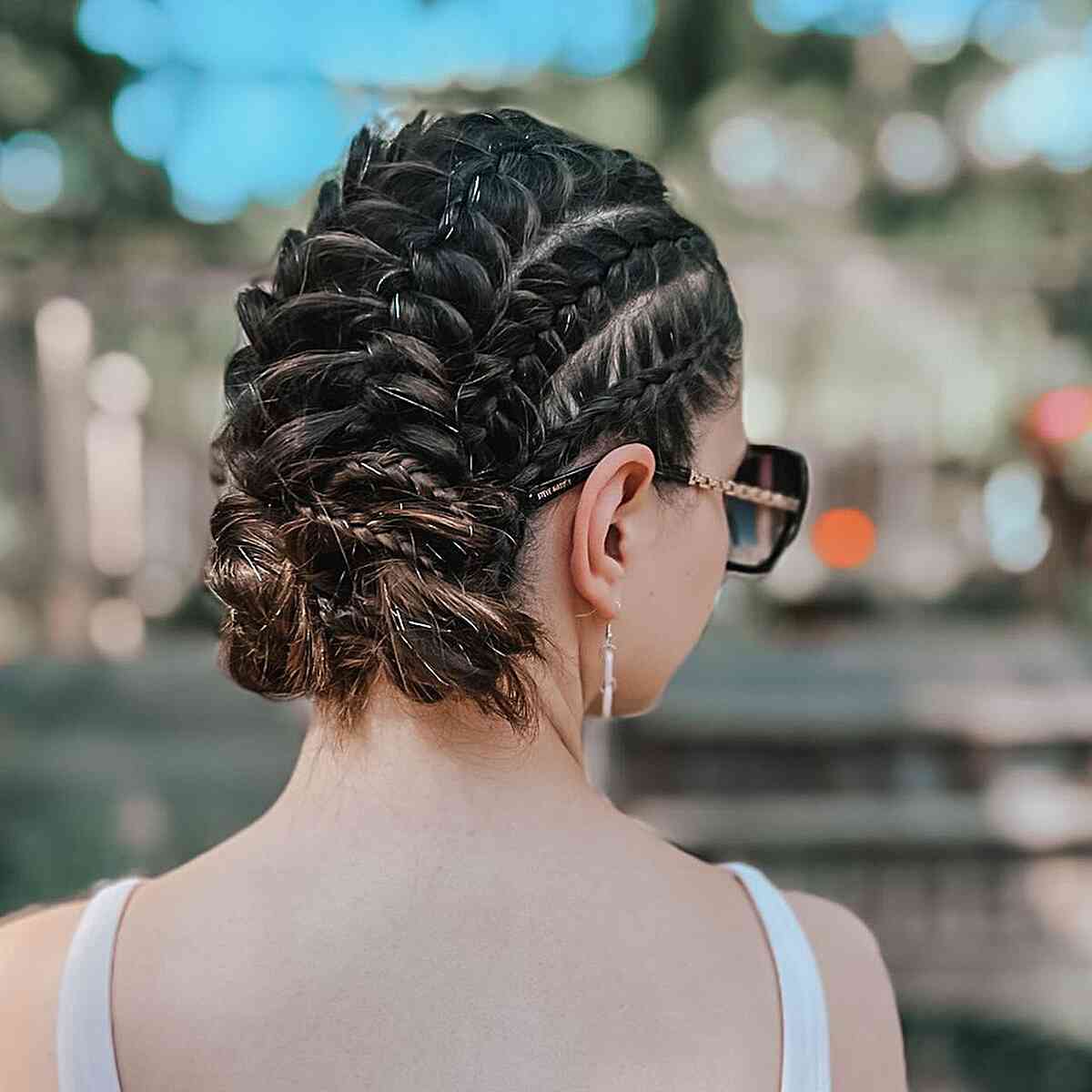
A braided updo on chin length hair is not impossible, but it is a salon job. Wavy, dark brown hair with subtle highlights is gathered at the nape of the neck into a complex braided pattern, the shorter lengths woven in so the updo stays compact. Ask your stylist for: intricate braided updo starting from chin length. Pieces can slip out during active play. A strong hold hairspray and plenty of pins are required. This is one for the athlete who wants an event-ready look that also clears the court.
Sleek High Bun
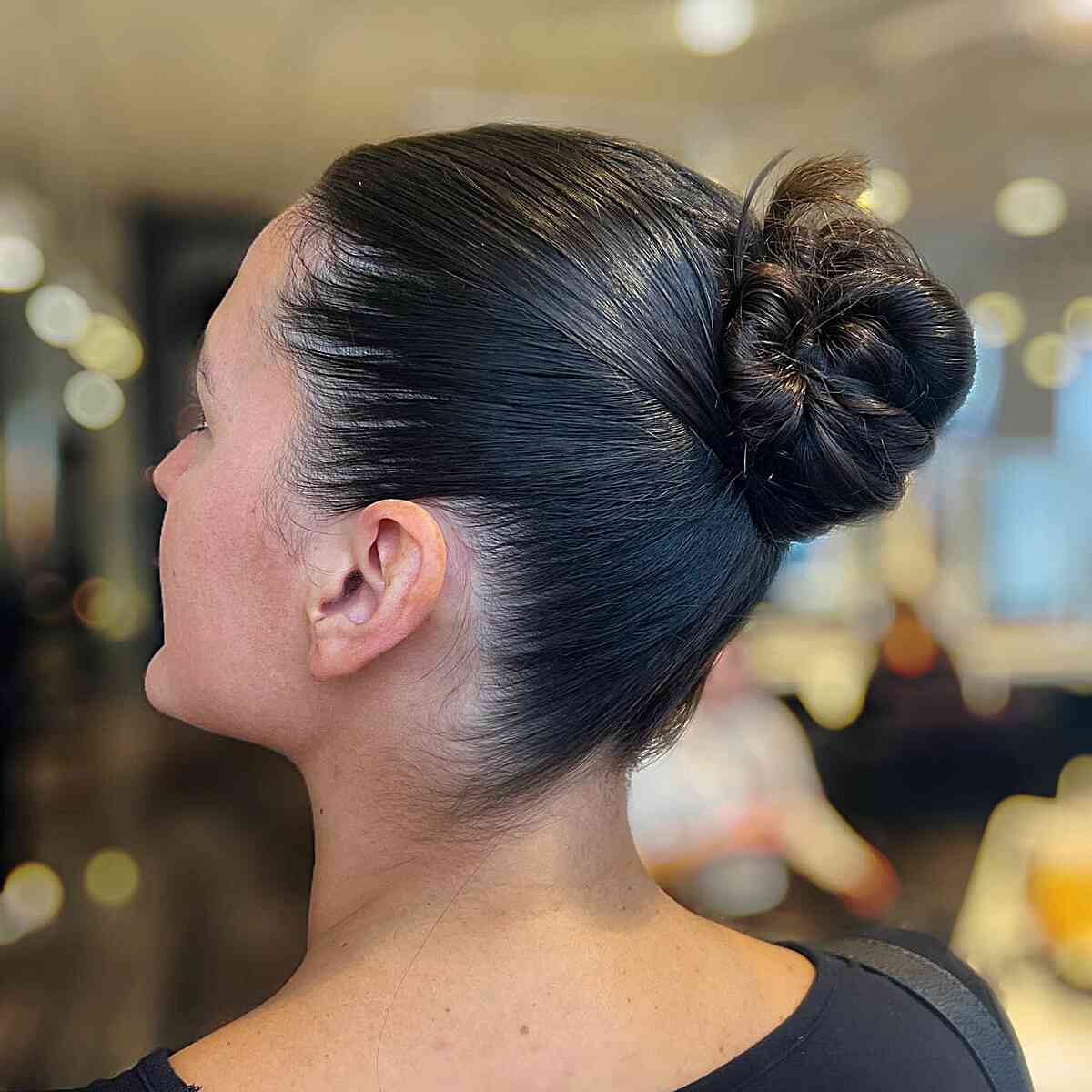
The side view shows the bun sitting high on the crown, balanced and secure. Ask your stylist for: sleek, high bun, slicked back. Use a gel or pomade to smooth the hair before twisting, then secure with strong pins. The slicked-back finish means zero distraction during a serve or a dig. A trim every six to eight weeks keeps the ends healthy, but the style itself takes under ten minutes to recreate at home.
Final Thoughts
For maximum security during play, prioritize styles with multiple anchor points like Dutch braids or intricate braided updos. If volume is a concern, opt for sleek buns or high ponytails. Play hard, look good. Secure hair is key.
- Trim braids and cornrows every 4-6 weeks to maintain neatness.
- Apply heat protectant before heat styling ponytails or buns.
- Use a silk or satin scrunchie to prevent breakage in ponytails.
- Wash braided styles less frequently, using a scalp-cleansing spray between washes.
