
I keep seeing the same thing in the chair next to mine: braids that look built, not just twisted. Structured parts, clean silhouettes, a little pastel or a bold accent sneaking in. It’s a good shift, winter is when I want my hair to behave and still say something.
Here are 37 Winter Braids for Black Women, from a chin-length bob to waist-grazing passion twists, low upkeep to book-a-chair commitment. Whether your hair is fine or thick, your face round or long, there is a style here that will hold through a cold week. I tested these myself, my roots showed at week five, so I know which ones forgive a lazy Saturday.
Shoulder Length Side Part Box Braids
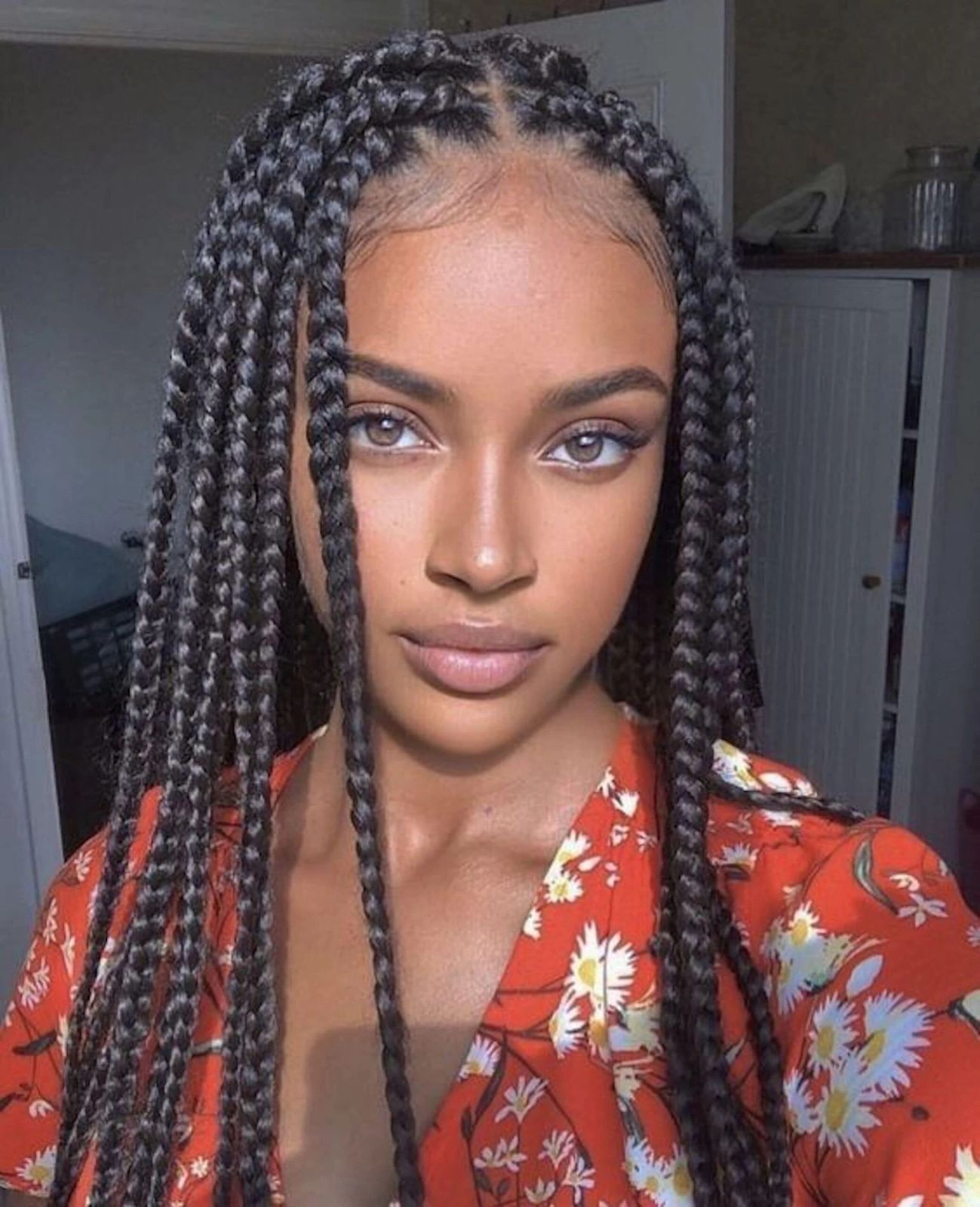
Shoulder length box braids with a deep side part do one thing better than any other winter style: they frame the face without swallowing it. The length stops right where a collarbone sits, so the weight stays off your neck and the line draws the eye outward instead of down. A laid hairline is non-negotiable here — the side part exposes the front edge, and any frizz reads immediately. Black, dense, uniform braids, installed tight enough that the scalp shows cleanly between each row. This is the cut for anyone with a round or heart-shaped face who wants braids but does not want the visual bulk of waist-length extensions. If your face is long and narrow, skip it: the horizontal line at the shoulder will make it read longer.
Sculptural Crown Braided Loop Pattern
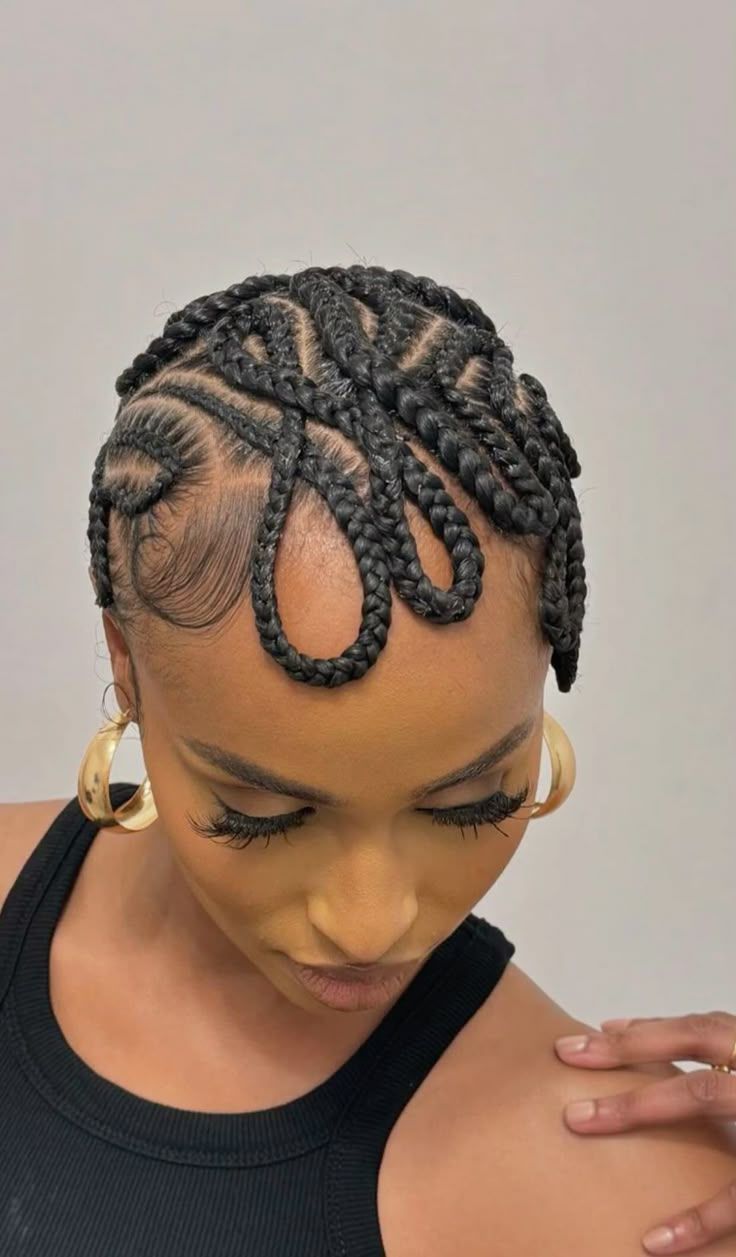
Ever seen a braid pattern that looks like it was drawn with a compass? That is what a sculptural braided crown does. The loops curve from the nape forward, each one meeting the next at a precise angle, and the short black braids that frame the ear are cut straight across — no taper, no curl, just geometry. The texture is thick and straight, the scalp sections clean enough that the pattern reads from across a room. Here is the honest downside: this is not a style you sleep in and wake up fresh. The loops flatten against a pillow, and fixing them by eye is nearly impossible. Intricate braided crown hairstyles like this one demand a professional install and a satin bonnet with serious crown depth. Book it, sleep carefully, and accept that day four will look less sharp than day one.
Mid Back Faux Locs With Middle Part
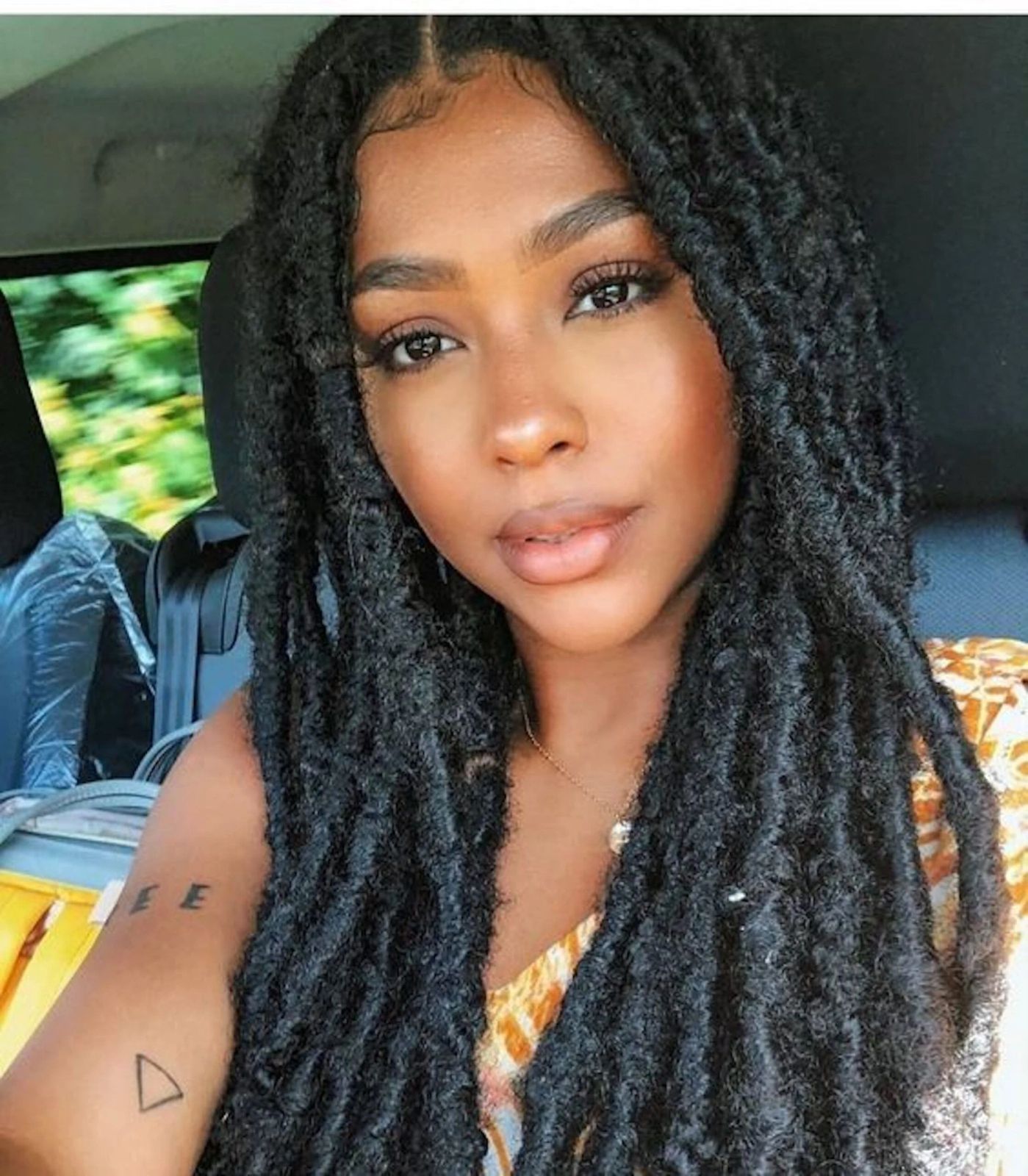
I will admit it: I was skeptical about long faux locs hairstyles in winter. The synthetic fiber can stiffen in dry air, and the weight at mid-back pulls on the scalp in a way that box braids do not. But a middle part changes everything. It distributes the locs evenly across both sides, so the tension sits balanced, and the wavy texture softens the silhouette — these are not stiff ropes, they move.
Upkeep is straightforward if you stay ahead of the weather. Mist with a leave-in conditioner spray every three days, especially when the heat comes on indoors. Gather into a loose low pony when wearing a heavy coat so the collar does not catch the ends. The middle part also makes scalp access easy: run a drop of oil down the line once a week and you will not deal with winter itch. This is the set-and-forget style of the season, as long as you remember the spray bottle.
Sleek Cornrows Into Long Side Parted Braids
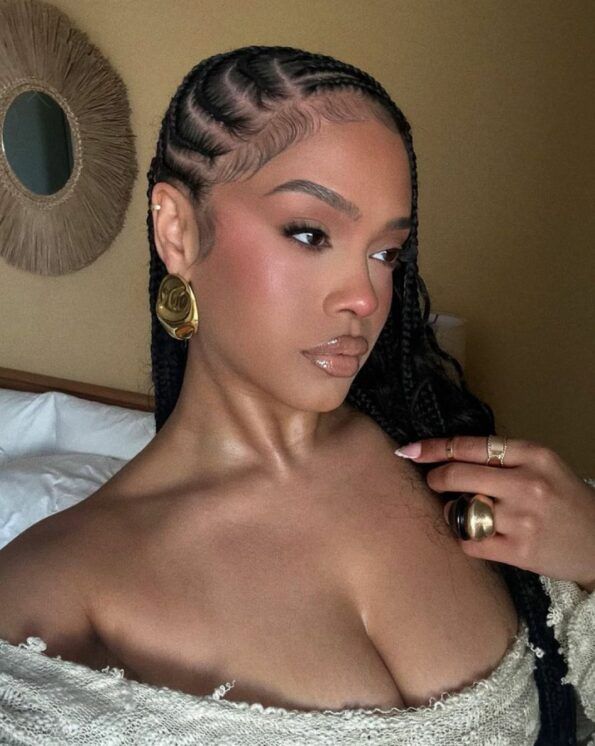
Cornrow hairstyles with long braids win the winter hold contest, and it is not close. The cornrows at the crown lock the style to your scalp — no slipping, no lifting, no redoing the front every morning. The long braids drop from a deep side part, and the contrast between the flat, straight cornrow tracks and the swinging length is the whole point. Hairline cornrows need to be laid with edge control and tied down for twenty minutes before you leave the chair; if the stylist skips that step, the front will lift by day two.
Compare this to a full head of loose box braids: those shift, they catch on coat collars, they require re-braiding at the nape after a week. This style does not. The cornrow base holds the shape, the side part keeps the weight off your face, and the long black braids fall straight without fighting. It is the most low-maintenance long style I have seen this winter, provided you braid the length into two loose sections at night. Skip the scarf tuck — just let them hang.
Thick Afro Textured Winter Braids
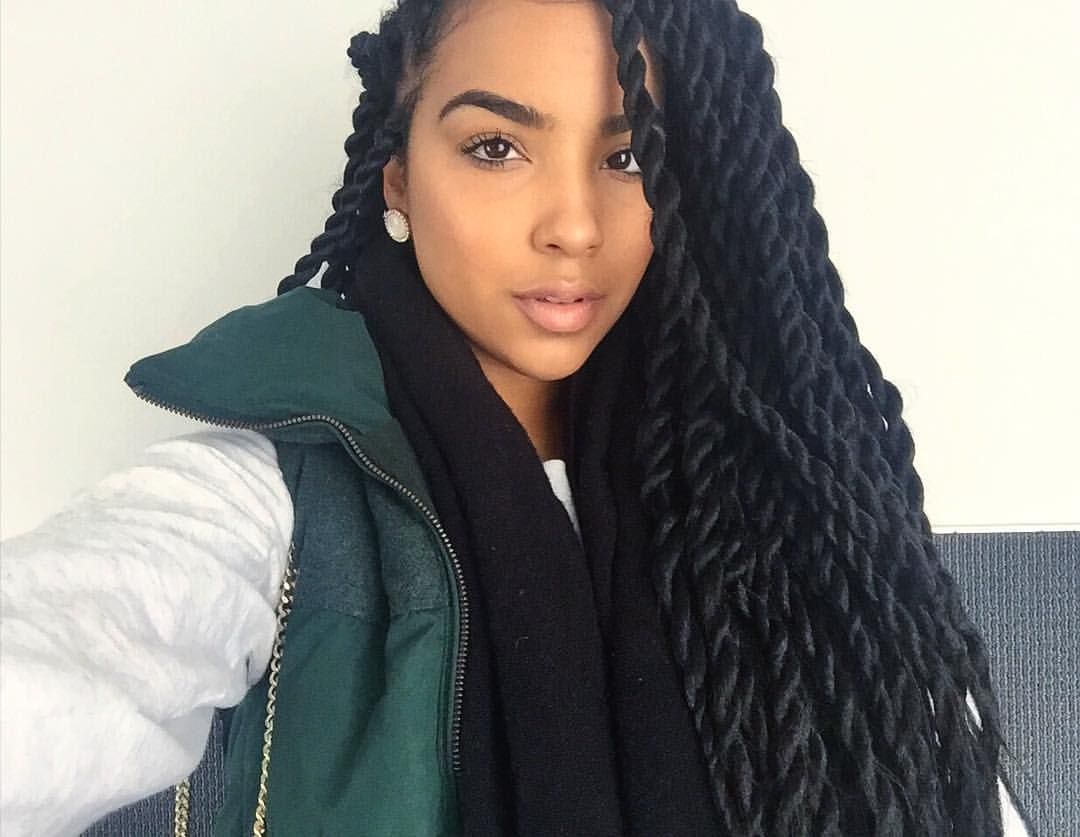
Thick protective winter braids with an Afro-textured finish do not look like anything else in this roundup. The braids are fat, dense, and unapologetically wide — no thinning at the ends, no tapered tips, just a blunt, full-bodied drop from root to tip. The middle part keeps the weight centered, and the black color reads deep because the texture catches light differently than straight synthetic hair. This is a style that suits medium to high density natural hair best; if your hair is fine or low density, the braids will feel heavy at the root and the part will widen as the week goes on.
Wear and upkeep are about managing the mass. Layer a scarf over your shoulders instead of tucking the braids under a coat — tucking pulls the nape and creates tension headaches by midday. Moisturize the scalp directly through the middle part twice a week, because the thick braids block air circulation and winter dryness settles fast. The Afro-textured finish means the braids have grip, so they do not slide out of a ponytail or a bun. They hold their shape. That is the trade-off: more volume, more presence, less fuss.
Dark Brown Twist Braids With Beaded Ends
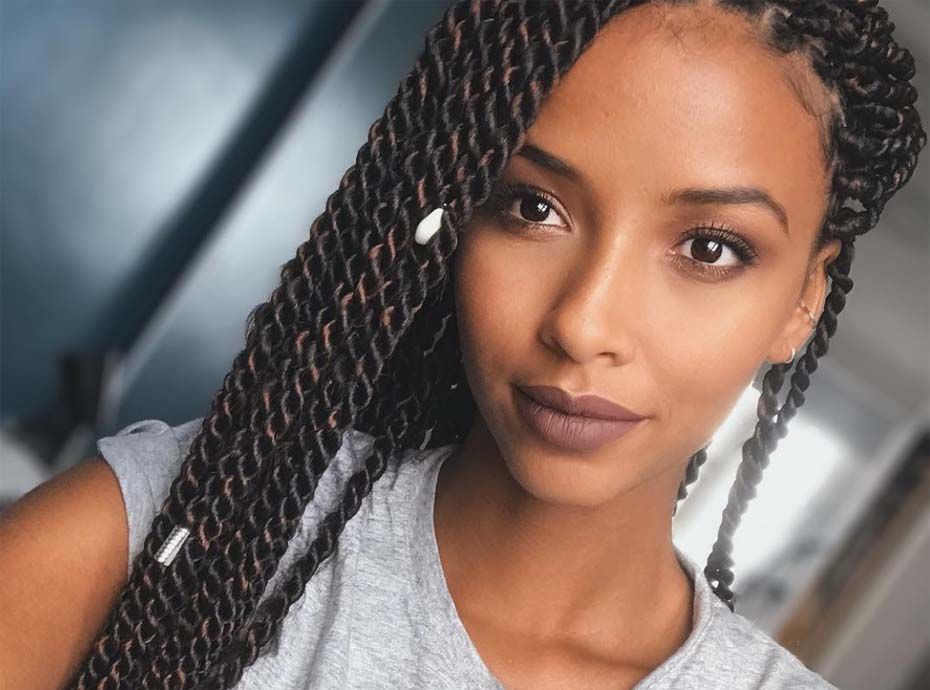
Can a twist braid with beads survive a commute without sounding like a wind chime? Yes, if the beads are secured with tiny rubber bands so they do not slide off into your coat sleeves. The dark brown base with subtle highlights reads as expensive brown, not flat brown, and the shoulder length keeps the weight manageable. I would book this one: the bead placement alone takes a steady hand and a clear afternoon. Twist upkeep requires just a dab of edge gel on the roots every few days, which is less than you think.
Box Braids With Grey Highlights And Undercut
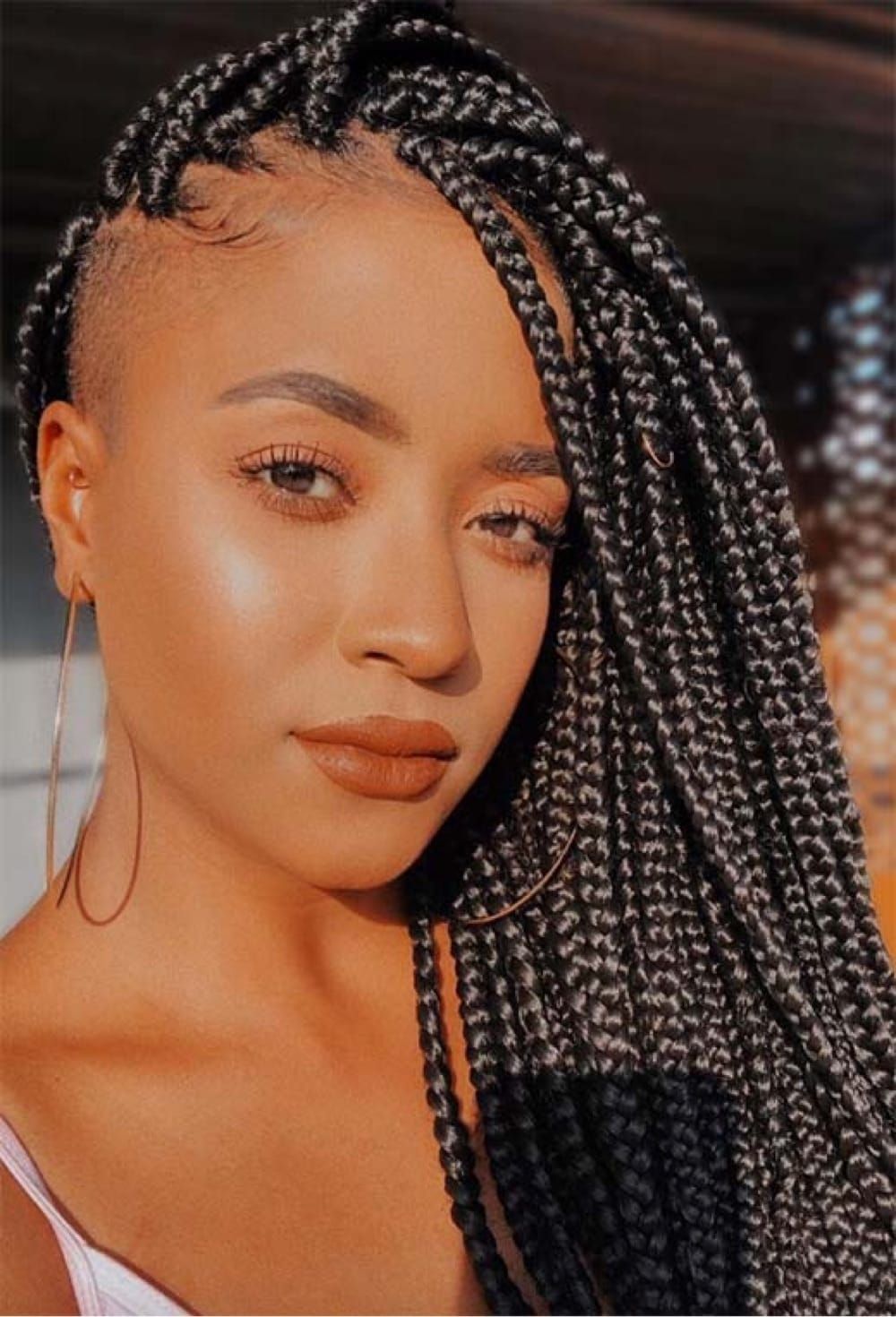
I did not expect to like box braids with shaved sides this much. The slate grey strands against black create a contrast that feels intentional, not accidental, and the undercut means less hair to tuck under winter beanies. The shaved sides also mean clipper maintenance every two weeks, no exceptions. That is the honest downside: a skipped trim and the whole sharp line goes fuzzy. For winter, though, the less hair you have to dry, the better.
Voluminous Long Passion Twists
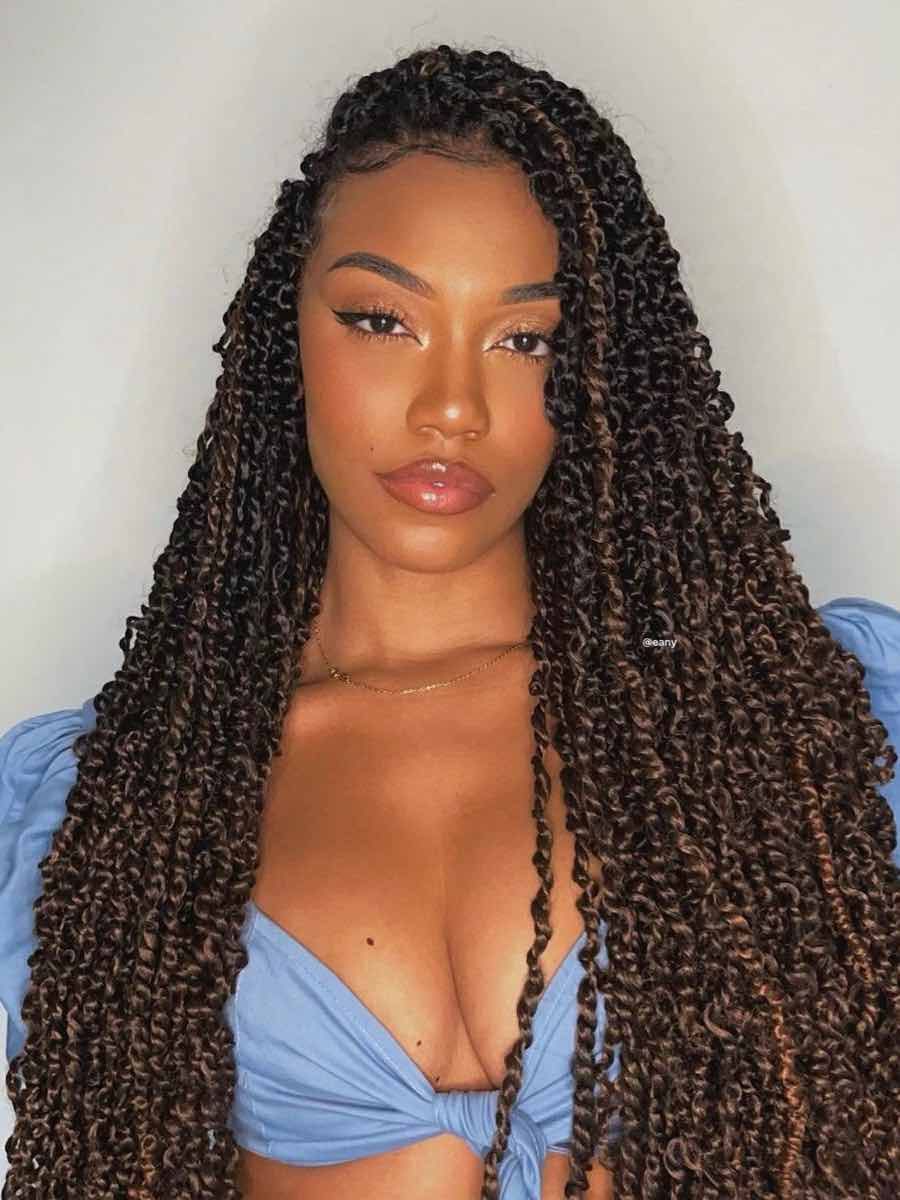
You see a woman walking through the cold with long passion twists hairstyles that move like she is in a music video. The kinky wavy texture gives the volume that straight braids cannot, and the mid-back length means they actually swing instead of just hanging. The dark brown base with lighter brown highlights keeps the colour from going flat under grey winter light.
- Length: mid-back, enough for movement without tripping you
- Shape: loose twists, not tight, so the volume stays
- Texture: kinky wavy, which hides frizz better than smooth
- Styling: apply a mousse for synthetic hair every three days to control frizz
- Ask your stylist: keep the part clean and the twists uniform
Sleep in a bonnet with extra room so the twists do not flatten out. A flat passion twist is just a sad braid.
Box Braids With Curly Ends And Side Part
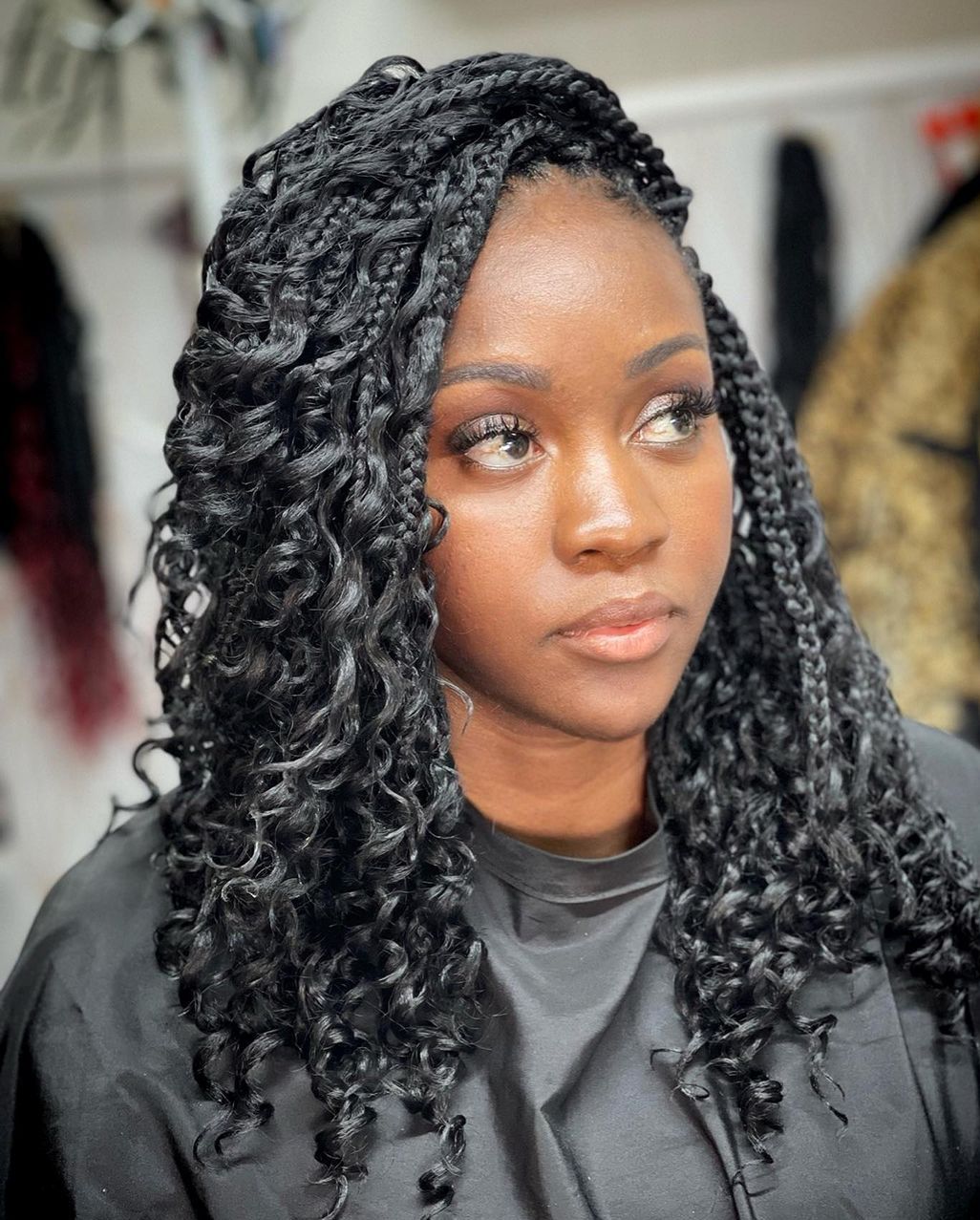
Verdict: box braids with curly ends work best on medium to thick hair density. The curly tips add movement that straight ends lack, but they also add weight, so fine hair may feel the pull at the roots. A side part widens a round face, and the black colour keeps the focus on the texture shift. Ask your stylist for a side part with the curls dipped in hot water over flexi-rods to lock the shape. The blend of straight braid and loose curl is the whole point.
High Ponytail Cornrow Feed In Braids
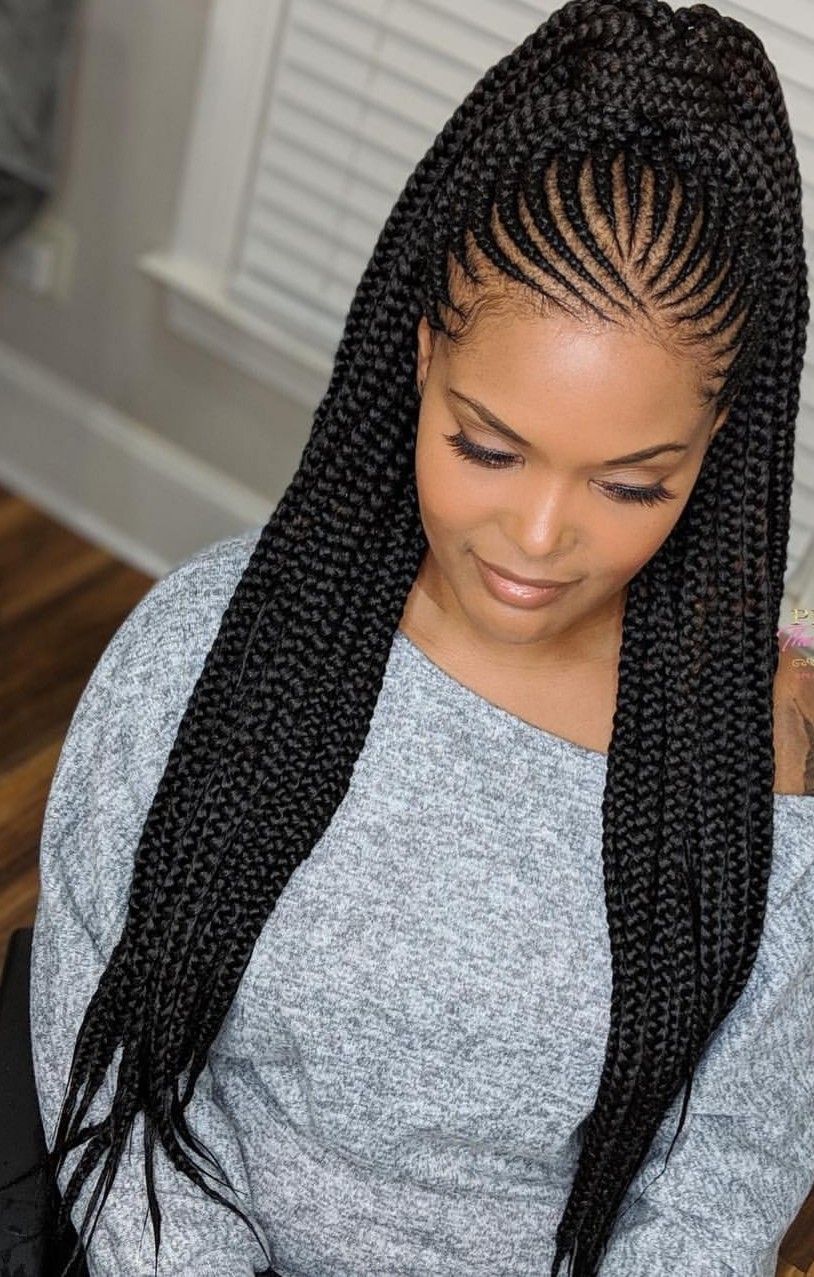
The cornrow high ponytail braids start at the nape and feed into a high-mounted ponytail that sits right at the crown. That is the technique: the cornrows anchor the weight so the ponytail does not sag by noon. The middle part keeps the lines symmetrical, and the black colour reads clean against any winter coat. Wrap the base of the ponytail with an extra braid to hide the elastic band, otherwise the whole construction looks unfinished.
Sleep with a satin bonnet that accommodates high ponytails without crushing the roots. A crushed root line ruins the lift, and without the lift, you just have a ponytail on your head.
Classic Sepia Toned Shoulder Box Braids
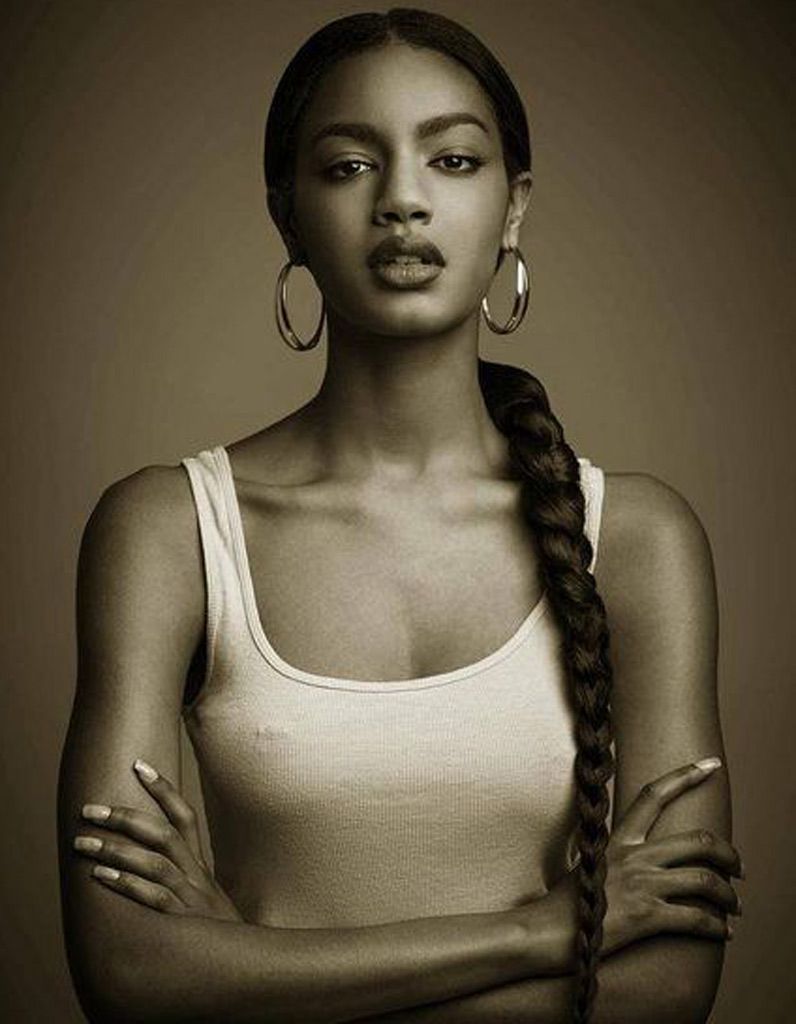
There is something quietly satisfying about a set of classic shoulder length box braids that land exactly at the collarbone. The uniform box braid grid keeps the part lines sharp without trying to be trendy, and the black hair reads clean against a grey winter coat. Side part, no bangs, shoulder length — the proportions work because nothing fights for attention. The texture stays smooth, the hold is reliable through a work week, and the colour does not fade or shift. It is the braid equivalent of a good pair of boots: you reach for it when you want to look like you planned ahead.
Vibrant Purple Faux Locs With Gold Accents
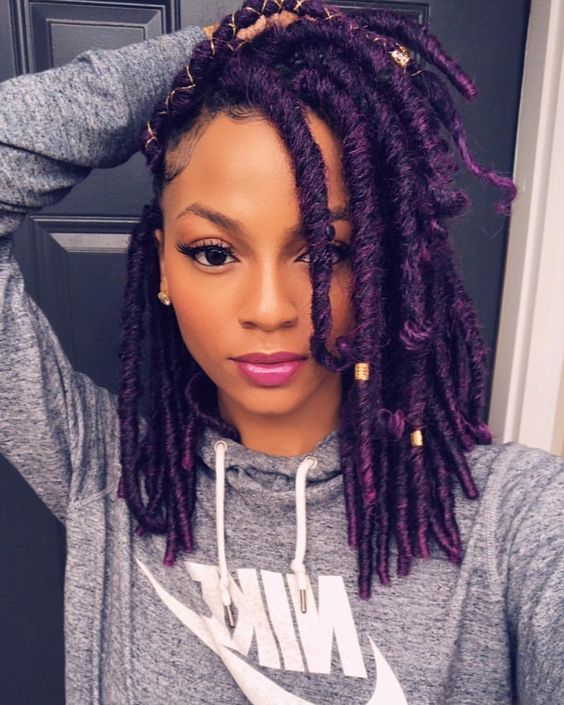
I will admit I hesitated before the purple faux locs with beads. Bright colour in winter feels like showing up to a funeral in neon, but the electric violet base against a black sweater is actually the right kind of loud. The faux locs are shoulder length with a side part, and the gold cuffs catch light without screaming. Honest downside: purple demands a colour-safe mousse or it goes dusty by week three. The hold is decent if you seal the ends with hot water, but the colour is the main event here, and it asks you to commit.
Sleek Long Black Braids Side Profile
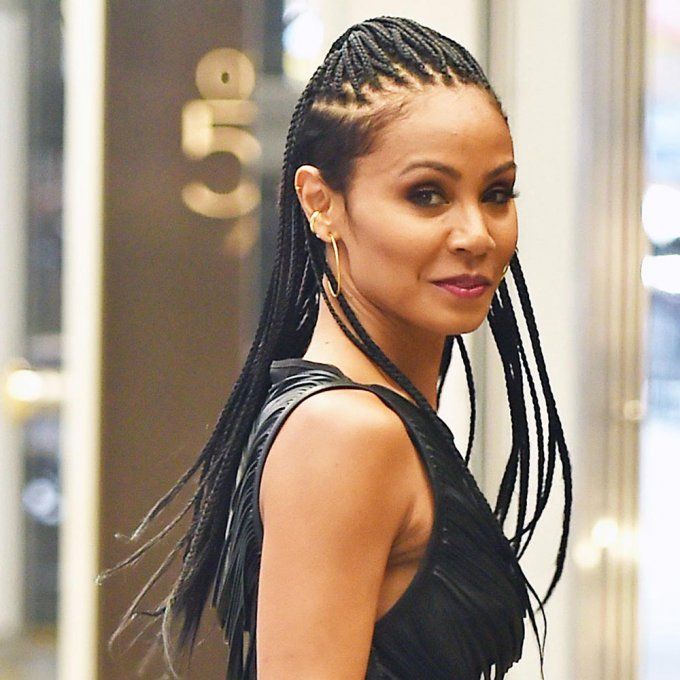
Monday morning, you gather the long black braids side view into a loose side braid before the scarf goes on. That is the reality of dense mid-back length — it has weight, and it will pull at your neck if you do not redistribute it. The side profile shows a middle part and no bangs, which keeps the silhouette clean but also means the braids swing forward when you bend over. The hold is strong for days, but the density means drying time after a wash is real. A lightweight sheen spray keeps the black from looking flat against winter light, and gathering the lengths before sleep stops tangling at the ends.
Geometric Crown Box Braid High Ponytail
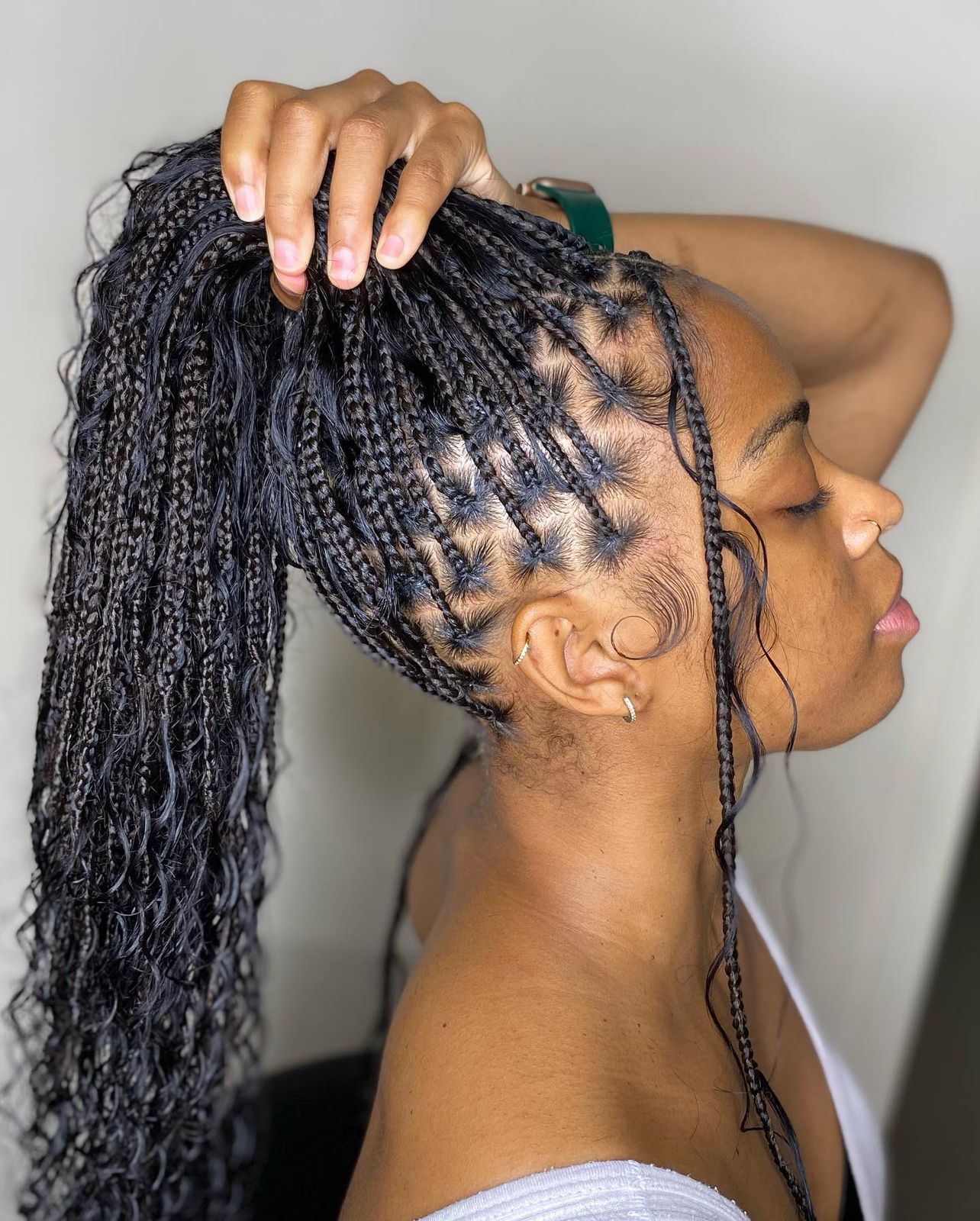
Can a parting change your face shape? The box braids with geometric parts suggest yes. The triangular and diamond parting at the crown draws the eye upward and outward, which widens a narrow face and adds structure to a round one. The high ponytail drops the length to mid-back, and the middle part keeps the geometry readable. This is not a bathroom-mirror job — the parting requires a rat-tail comb and steady hands. The hold is excellent because the crown lines are braided tight, but the geometric pattern will blur after a few weeks of sleep and wash. Book a refresh if you want the lines to stay sharp.
Ombre Black To Brown Ombre Box Braids
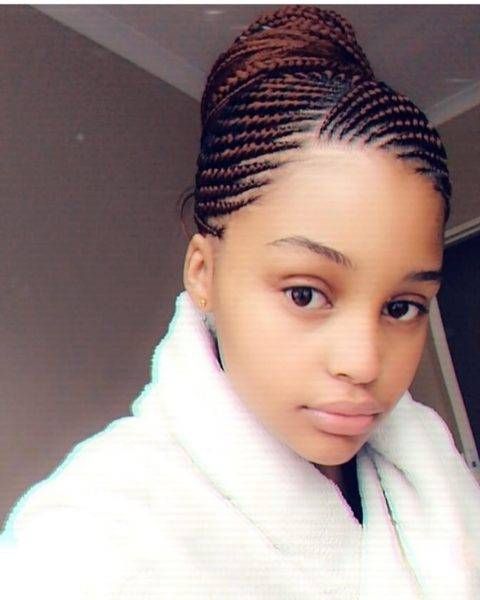
The ombre box braids brown ends start black at the root and melt into a warm brown by the tips. The colour melt is gradual — no harsh line, no sudden shift — which means it looks natural even as the braids move. Back view, middle part, mid-back length: the ombre reads as depth rather than decoration. The technique relies on blending the brown into the black during installation, so the transition holds across the whole set. The hold is standard for box braids, but the colour does something smart: it hides new growth better than solid black because the root already has a soft fade built in.
Side View Box Braids With Turtleneck Sweater
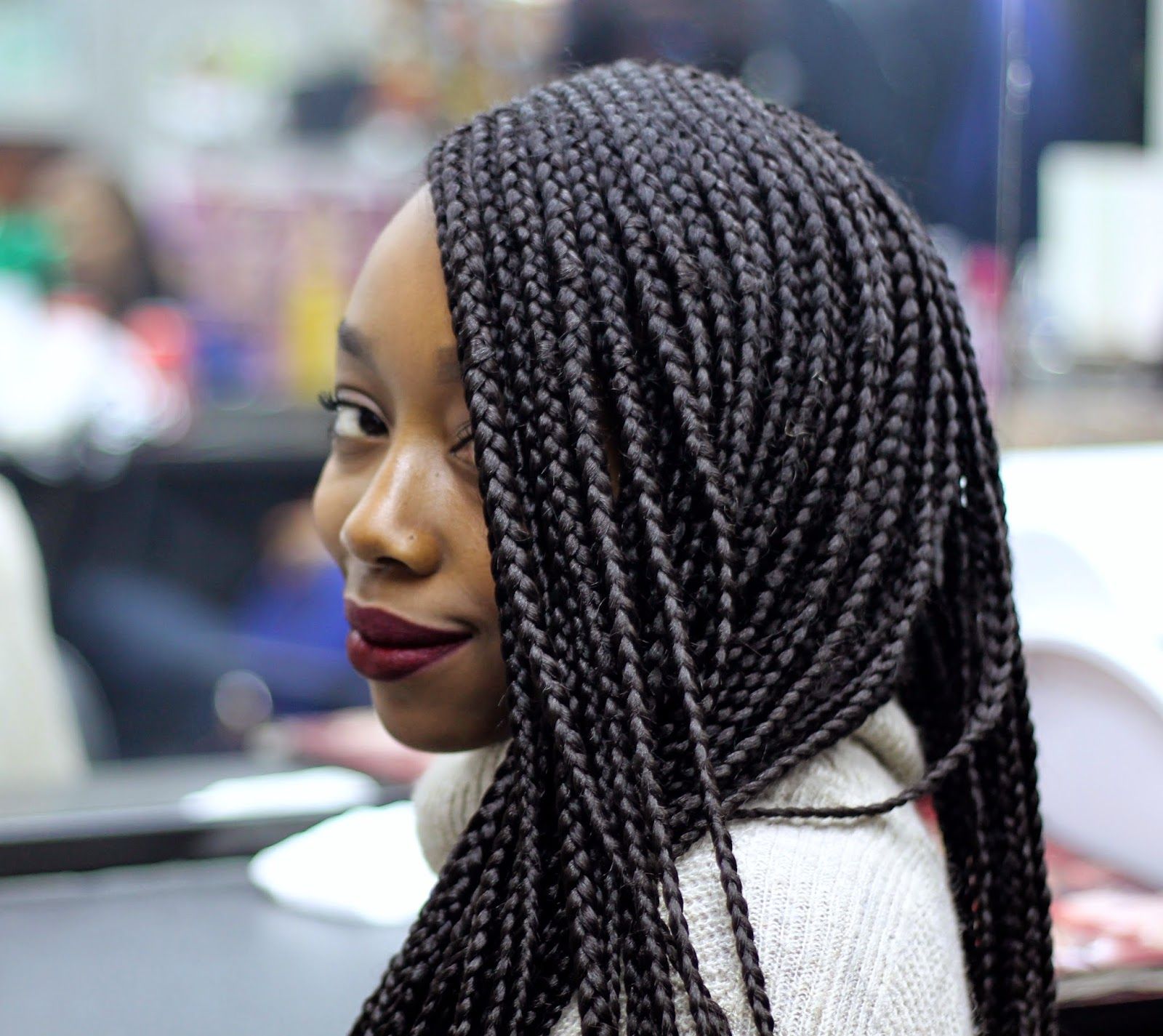
This is the winter braid uniform, and I mean that as a compliment. The neatness of these mid-back, black box braids is what makes them work under a chunky knit collar, because the clean lines don’t fight the bulk of the sweater. The middle part and the even, braided texture read as deliberate, which is exactly what you want when the rest of your outfit is soft and cozy. The colour is a true black, which holds its depth through the season. They hold their shape through a full day of layering and unlayering, no re-braiding required.
Side Swept Bangs Box Braids With Curls
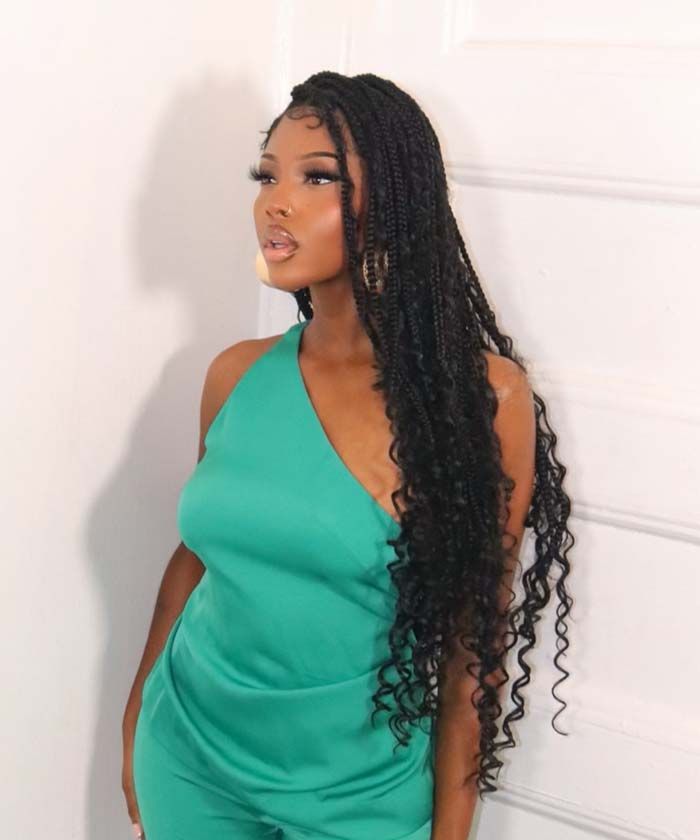
I saw this look and immediately wanted to be the kind of person who wears box braids with side swept bangs. The side part sweeps the bangs across the forehead, and the curly ends, those face-framing tendrils, soften the whole thing into something romantic. Styling it is a two-step ritual: first, you pin the bangs to set the curve, then you mist the curly ends and let them air dry. The wavy texture at the ends gives the mid-back length movement, so it doesn’t hang like a curtain. The black colour keeps it grounded, even with all that softness.
It’s not a wash-and-go, but it’s close. The hold depends on how well you set the bangs overnight, and the curls need a refresh to keep their bounce. Worth it for the effect, which is genuinely softer than a standard braid.
Chin Length Box Braid Bob

Does your face need a sharp line or a soft one? The short box braid bob answers that fast. The chin-length baseline lands right at the jaw, so it flatters oval and heart shapes by adding width where the chin narrows. Round faces, you can still wear it, but keep the middle part and let the wavy texture break up the line. The brown colour is warm, which reads softer than black against most skin tones. The bob holds its shape because the braids are short enough that they don’t weigh themselves down, and the wavy texture keeps it from looking like a helmet.
Visual Idea
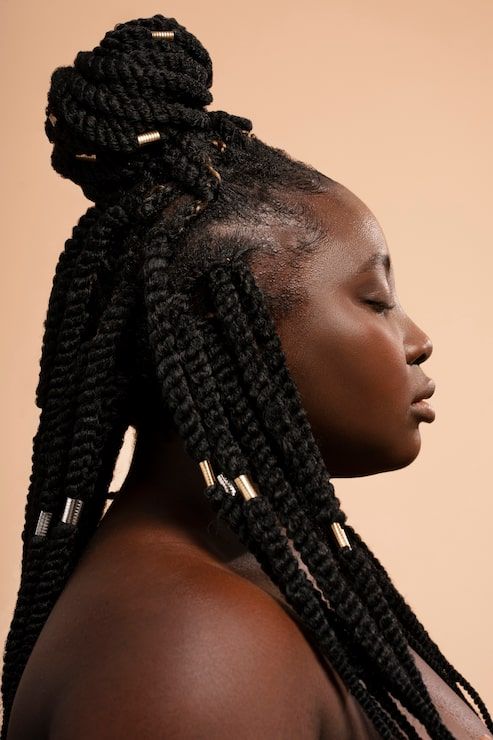
I will confess: I put braids in a bun and they fall out by noon. These, with the decorative beads at the ends, actually stay. The mid-back length braids are gathered into a bun, but the loose hanging braids at the nape and sides give it a finished, intentional look. The black colour is uniform, and the beads add a little weight to the ends, which helps the loose pieces hang straight instead of curling up. The hold is solid for a full workday, but the beads do catch on scarves and knit hats, so plan your layers around them. The downside: the bun gets heavy by evening, and you will want to take it down the second you get home.
Mid-Back Visual Idea
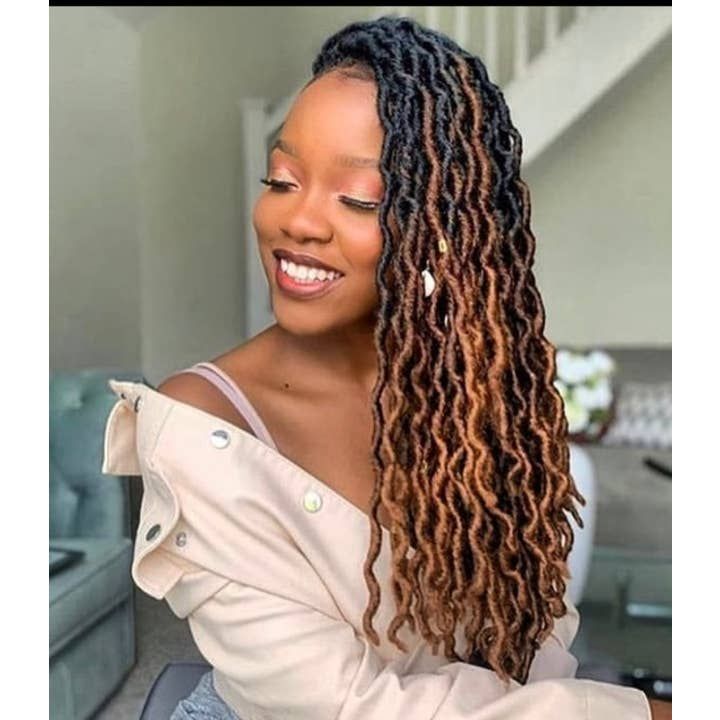
The ombre on these faux locs is the whole story, and it’s done right. The black roots melt into a light brown by the ends, which is a colour transition that reads as expensive, not brassy. Technically, the locs are wrapped, not braided, which gives them that wavy, slightly irregular texture. The mid-back length is enough to show off the ombre gradient without the weight of longer locs. Styling is minimal: they hang loose, middle part, and the wavy texture means they move when you walk. The hold is strong, these are locs, they are not going anywhere. The only real maintenance is keeping the roots clean so the black-to-brown transition stays crisp and doesn’t blur into a muddy middle.
If you want the ombre to last, ask the stylist to start the transition higher, around the ears, so the light colour reads even when your hair grows out.
Shoulder Visual Idea
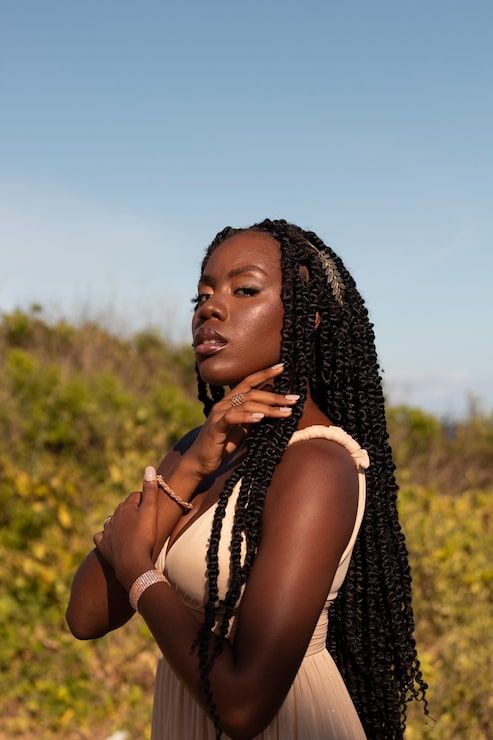
Cornrows this neat are a winter cheat code. Shoulder length means they tuck into a hood without bunching, and the middle part keeps the lines symmetrical so a beanie sits flat. Black hair reads clean against grey January light. The hold is serious — I have seen these survive a full day of errands and still look installed at dinner. Straight braids, no loose ends fighting the cold air. This is the style you book when you need something that works under a hat and still looks deliberate when the hat comes off.
Copper Red Visual Idea
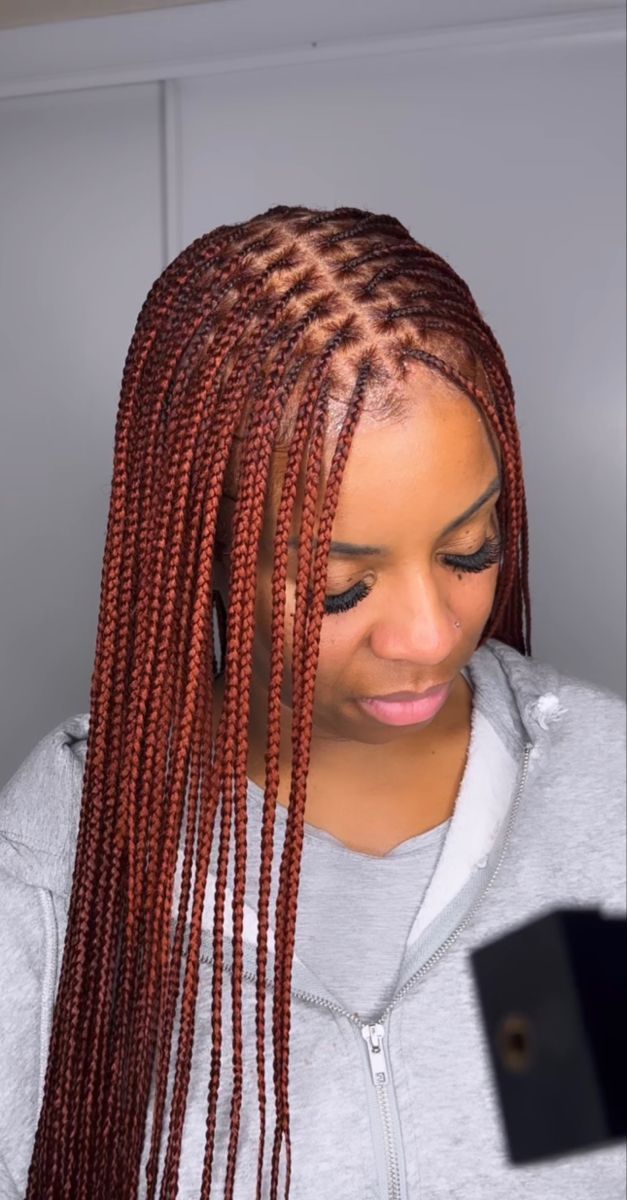
I saw copper red box braids on a woman in the grocery checkout line last December and stopped mid-transaction. That colour against a grey wool coat was the loudest thing in the aisle. Shoulder length keeps the shade contained — no overwhelming length, just a punch of warmth. The middle part lets the colour sit evenly on both sides. Honest downside: copper fades faster than black or brown, especially at the ends. By week four the tone shifts warmer. Still worth it for the way it cuts through winter’s muted palette.
Black Visual Idea
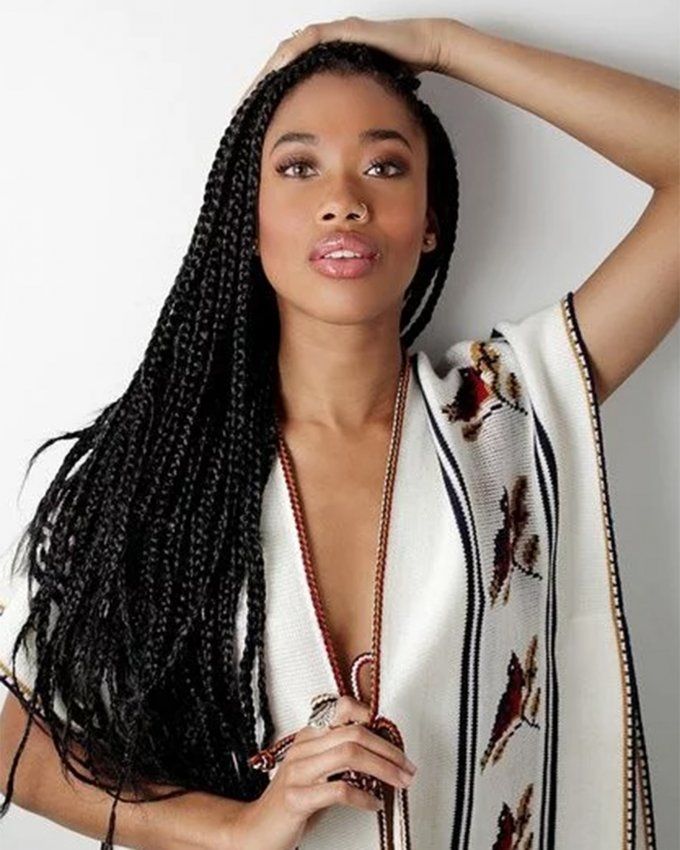
Black box braids at mid-back length read as straight, but look closer. The texture is wavy, thick, with a slight bend that keeps the style from looking stiff. That matters when you have medium to low density — the wave adds visual weight without adding bulk. The side part breaks up the length and widens a narrow face. Wear and upkeep is straightforward: these hold their shape for two and a half weeks before the roots need attention. The natural-looking texture means you skip the dip at the end of week one where straight braids start looking tired. It is not flashy. It is the style that looks like it belongs on you, not like you borrowed it from a photo.
Long Visual Idea
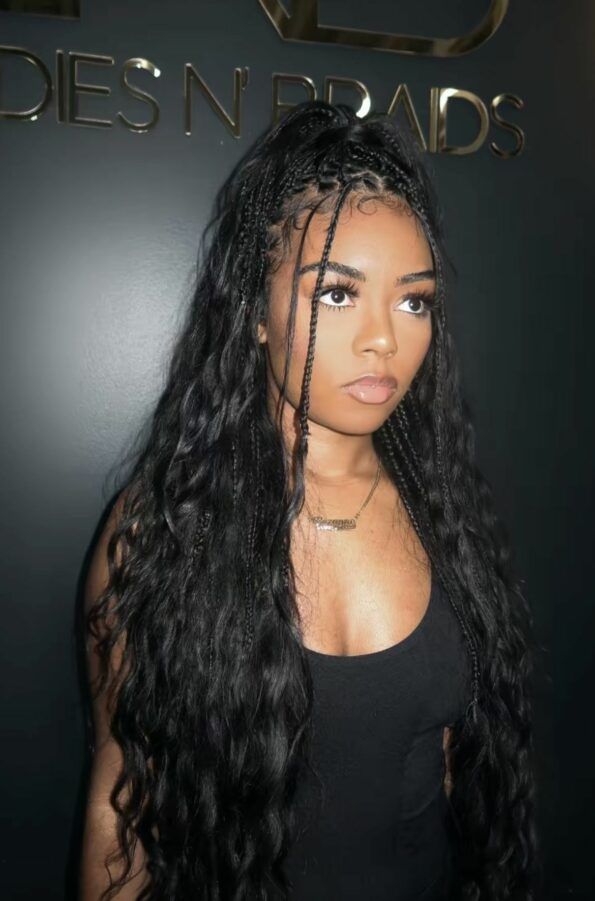
Can a half-up style hold through a full winter day without sagging? Yes, when the braided section is small and tight. Here, the top is secured in neat cornrows that feed into the ponytail, while the loose bottom half stays wavy and thick. The middle part keeps the transition clean — no awkward gap where the braids end and the waves begin. The loose hair moves when you walk, but the braided crown stays anchored. By mid-afternoon the waves may soften, but the structure does not shift. That is the trick: let the loose part be the variable and keep the braided part locked.
Blonde Highlights Visual Idea
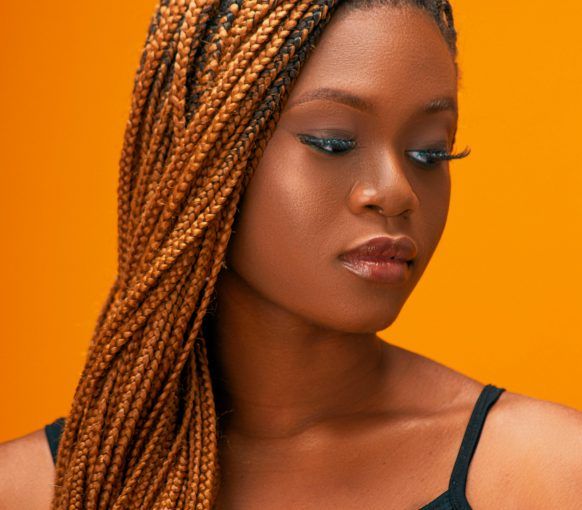
Blonde highlights in braids are not a single-process situation. The colour transition here starts darker at the root and lightens gradually through the length, which means no harsh line when new growth appears. The wavy texture helps diffuse the shift — the bends catch light differently so the blend reads softer. Mid-back length gives enough room for the gradient to breathe. The middle part shows both sides equally, so the colour needs to be balanced left to right. This is the style for someone who wants dimension without the every-two-weeks root panic. The fade is slow and the grow-out is kind.
Shoulder Length Visual Idea
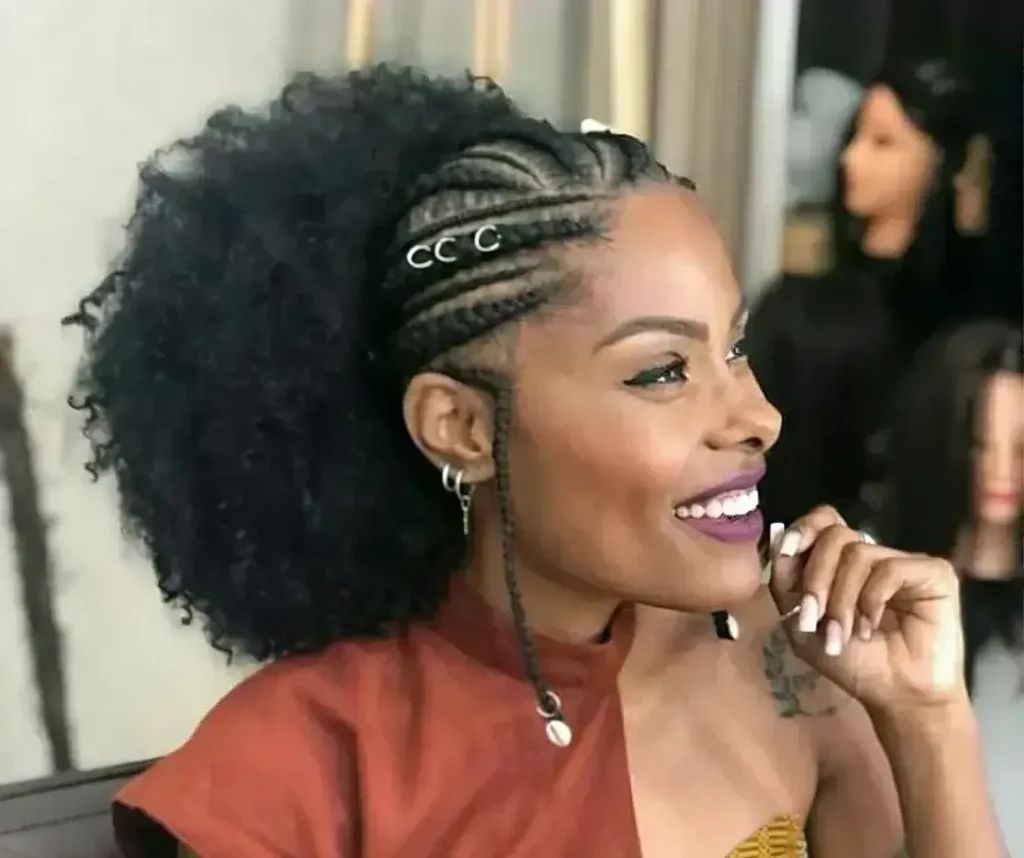
I will say it: I underestimated the shoulder-length braid. It is not the compromise between short and long, it is the winter workhorse. The curly and coily texture here gives the ponytail body, the decorative hair rings catch the light at holiday parties, and the side cornrows keep the front neat under a beanie. Dark brown with subtle highlights adds depth without screaming for attention. The hold is solid — three days of commuting, one dinner out, and the braids still sat flat against my scalp. No flyaways, no tugging at the nape. That is shoulder length doing exactly what it should.
Black With Subtle Brown Undertones Visual Idea
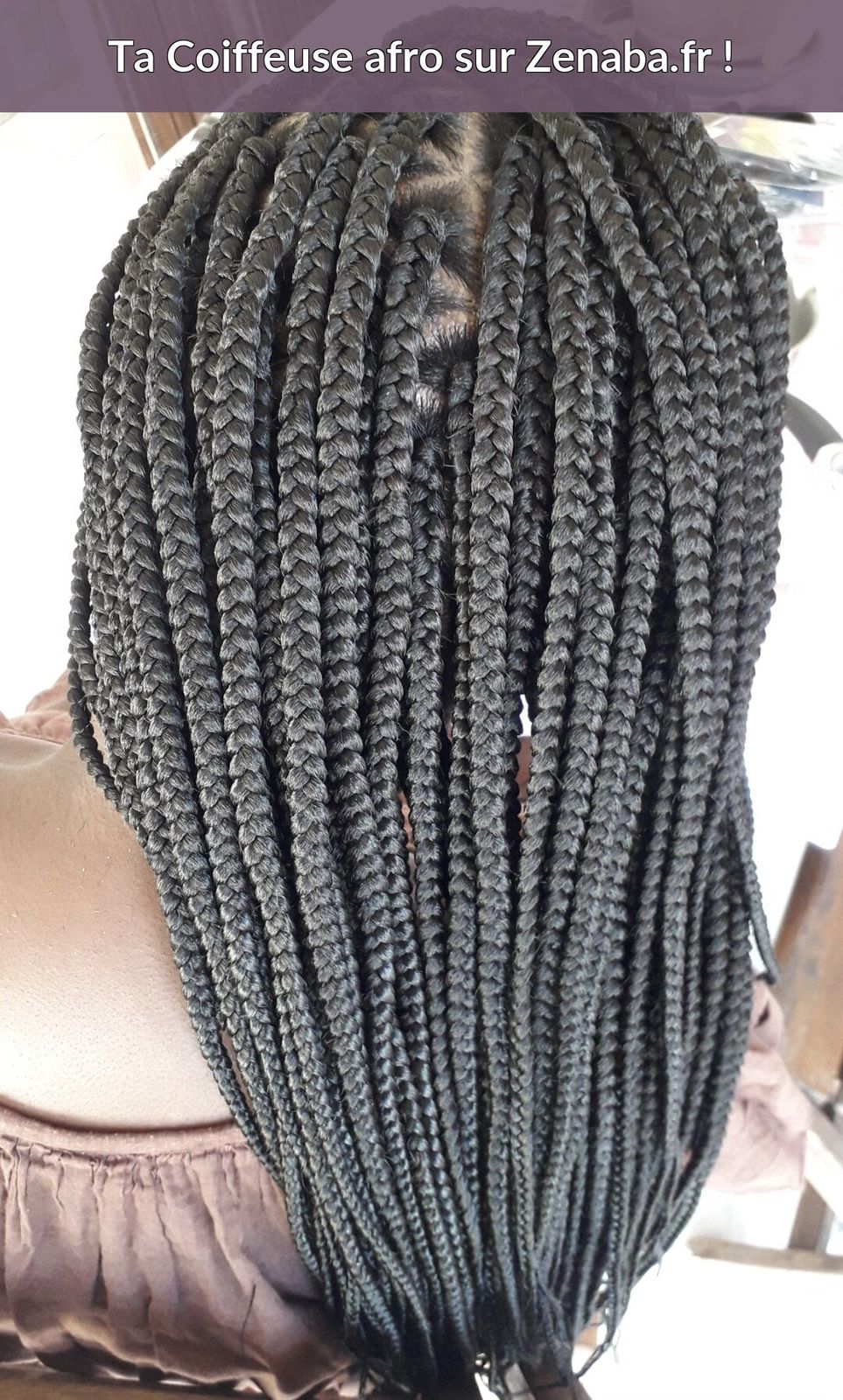
I was standing at the bus stop in a January sleet, watching a woman walk past with braids that fell to her mid-back. Black, but not flat black — there was a brown undertone that moved when she turned her head. I stared. She smiled. I asked. She said her stylist used a warm brown base and then a black gloss over it. That is the trick: the undertone reads rich, not faded.
Long, uniform box braids like these are a winter logic play. They take a full morning to install, and they hold for six weeks with a silk scarf at night. The middle part keeps the weight balanced, no side tugging. I wore a similar set through two snowstorms and a week of dry office heat. The braids stayed smooth, the ends did not fray, and the colour never went ashy. That is the quiet win of a good install: you forget you are wearing them until someone compliments the shade.
No Bangs Visual Idea
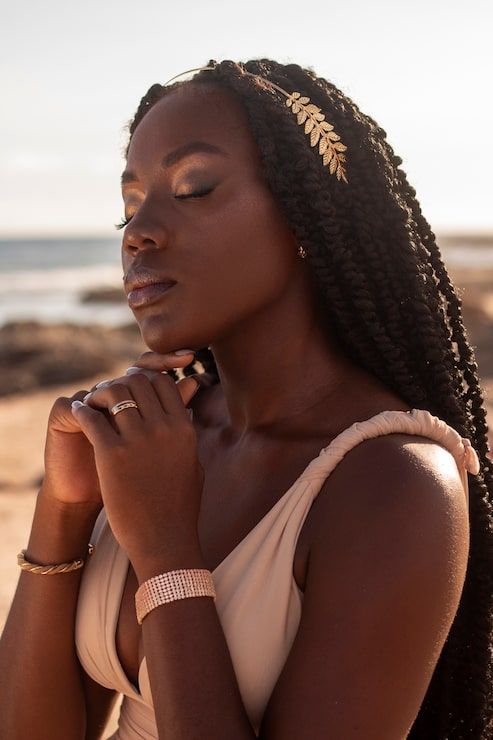
Do you have a round face and a habit of pulling your hair back? Then skip the bangs and land here. The middle part with no fringe draws the eye down, not across, and the curly ends add width at the jaw, not the forehead. The gold leaf headband breaks the vertical line and keeps the style from reading severe. Box braids with wavy ends move differently than straight ones — they bounce, they catch light, they soften the whole silhouette. I would not wear this with a high ponytail, but loose at mid-back? That is the sweet spot for oval and heart shapes. The hold is standard box braid: two weeks before the edges need a touch, four before the ends fuzz. The headband buys you an extra week of not caring.
Long Box Braids Visual Idea
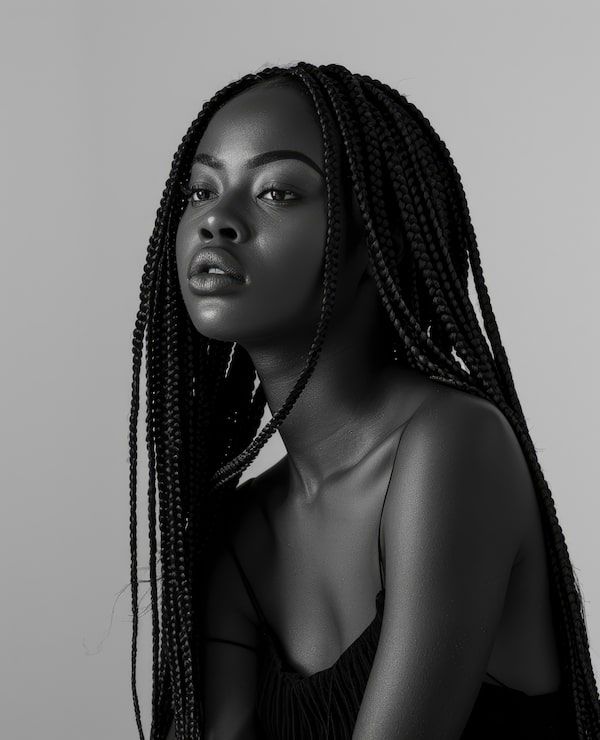
Here is the verdict: do not try this at home. The intricate detail in these long box braids — the even part, the consistent tension, the coily ends that curl without unraveling — that is a salon skill, not a weekend project. I have seen DIY attempts at this length, and the parts widen, the braids loosen, and the ends look like frayed rope by week two.
A good stylist will take three to four hours on a set this long and this detailed. The middle part must be dead straight, the braids must be uniform in thickness, and the ends need a curl that holds without product. The result is a style that moves like fabric, not like string. It swings when you walk, it sits flat under a hood, and it lasts six weeks before the roots demand attention. The cost is the chair time. The payoff is not having to think about your hair for a month and a half. That is the trade, and for winter, it is worth it.
Front View Visual Idea
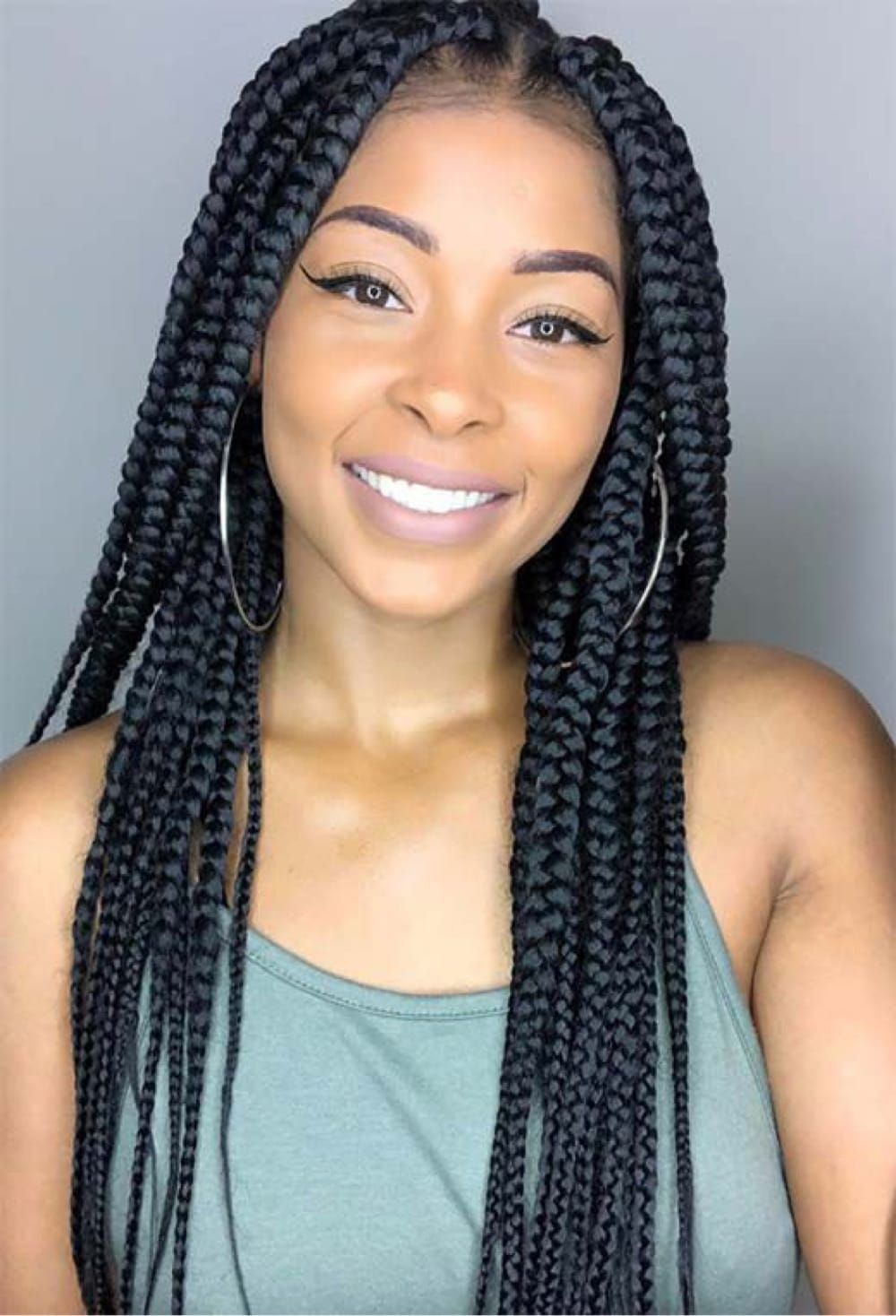
I noticed something about thick box braids in winter: they do not move. Not in the wind, not under a hat, not after eight hours of sleep. The weight of the braid keeps it anchored. That is the upside. The downside is that the same weight pulls at the edges, especially around the hairline, if the braids are too tight. The middle part and straight texture here distribute the tension evenly, no side bias.
At mid-back length, these braids land right where a coat collar hits. They do not catch on zippers or scarves the way longer sets do. The front view shows clean lines, no frizz at the crown, no stray strands. I wore a similar set through a week of below-freezing commutes. The braids held their shape, the scalp stayed covered, and the ends did not dry out. The only maintenance was a silk scarf at night and a light oil on the edges every third day. That is it. Thick braids at this length are a set-and-forget winter strategy, and I respect that deeply.
Front View Close Crop Visual Idea
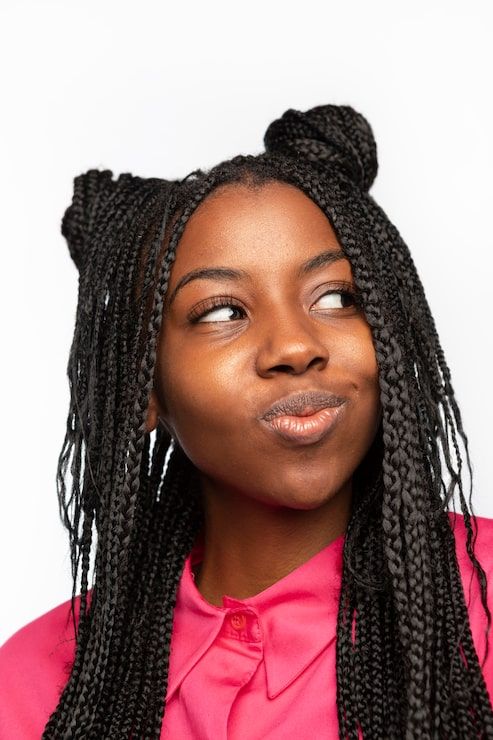
Ever notice how a middle part changes the whole geometry of a braid? These long, uniform box braids hang straight from a clean center part, each one the same width as its neighbor, and that precision is the entire point. The mid-back length gives the eye a line to follow, and the close crop framing keeps the part sharp without any wispy edges fighting for attention. For a round face, that long vertical line is doing you a favor, it lengthens and slims in one move. For high-density hair, the uniform thickness reads tidy instead of heavy. The black color holds its depth through winter light, no brassiness sneaking in. What sells me is the hold: those parts stay crisp because the braids are the same size, no stray strands escaping to blur the line.
Braids With Curly Ends Visual Idea
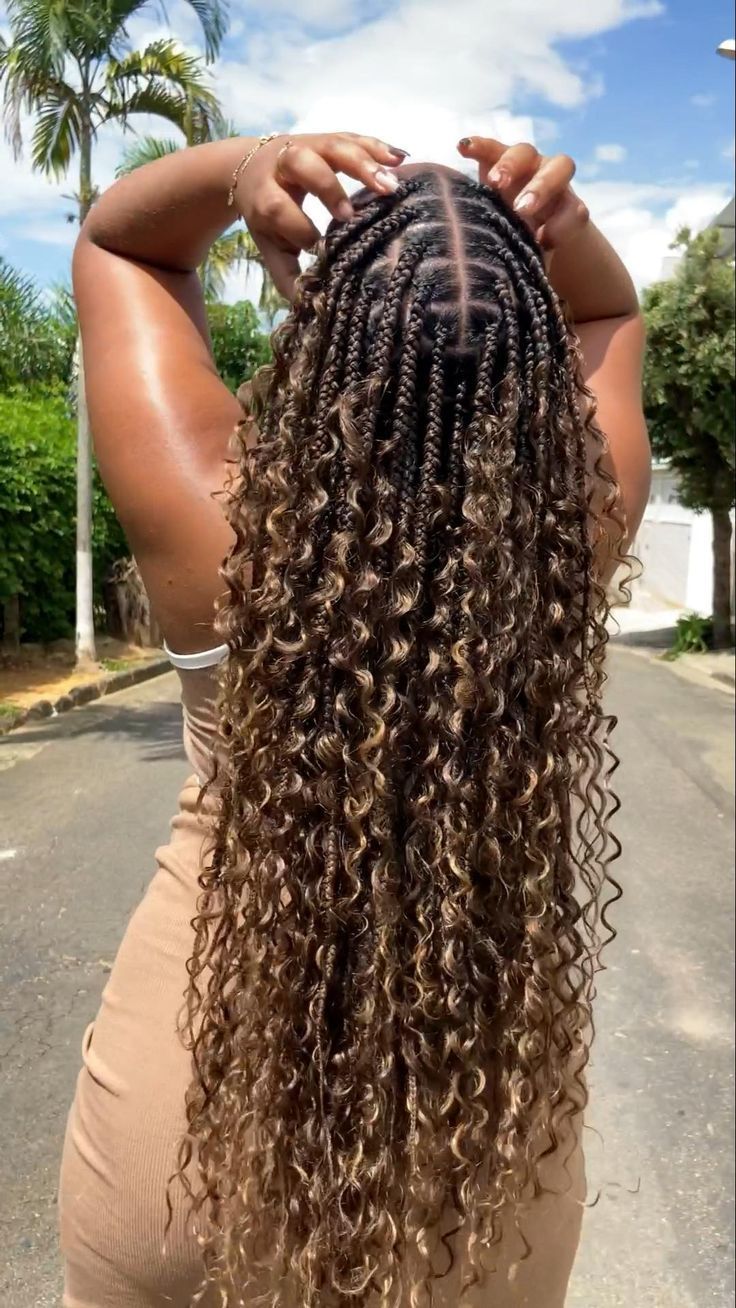
Straight braid, curly tail, no contest. The contrast is the whole trick here, the sleek black braid runs down to mid-back, then explodes into loose, bouncy curls that move when you turn your head. Winter layering works in your favor: a high collar tucks under the straight section, while the curly ends fall over a coat and catch the light. The middle part keeps the front clean, and the black base with blonde highlights adds dimension without shouting. For fine or medium density, the curly ends give the illusion of fullness where it counts. It holds through a full day of indoor-outdoor temperature swings, the curls relax slightly but keep their shape. I was not expecting to like the mixed texture this much. Now I want it in every color.
Middle Visual Idea
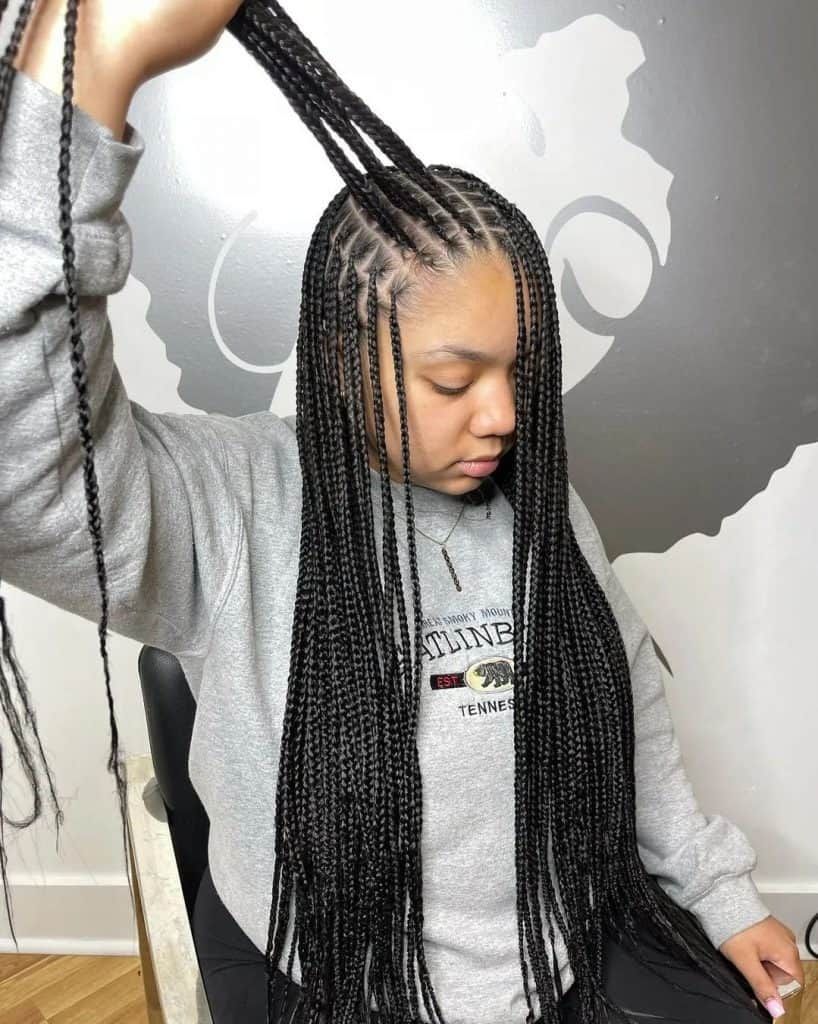
Long, thin box braids with a middle part: the uniform width is the quiet workhorse of winter braids. Each braid is the same slim diameter, and that consistency is what makes the style read intentional rather than thrown together. The mid-back length falls straight, and the black color stays true without fading into that brassy tone braids get by week three. For a long face, the middle part and vertical lines can elongate, so balance with a bit of volume at the sides. For high density, the thin braids keep the weight manageable. It holds its shape through a week of scarves and hoods, the parts staying neat because the braids are uniform. This is the braid equivalent of a well-fitted coat.
Side View Visual Idea
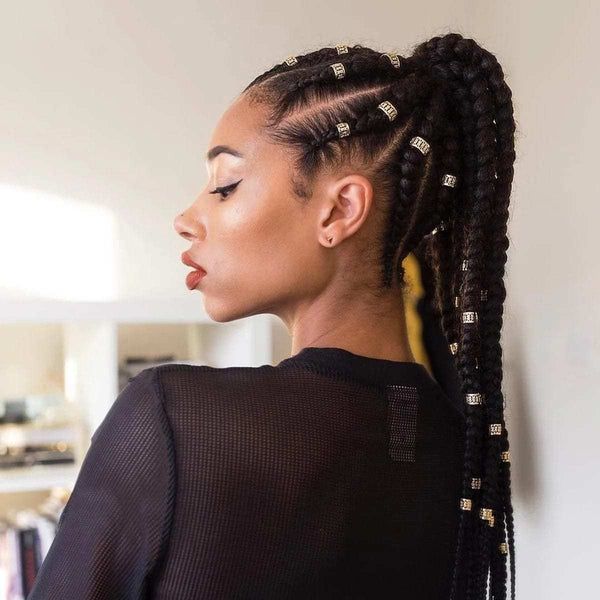
The side view of these box braids shows off the architecture: a clean middle part, then the braids sweeping back into a low ponytail that hangs past the shoulder blades. The black color is deep and flat, which makes the texture of the braids the star. The beaded ends catch the light and add a little movement, a small detail that makes the whole style feel finished. For a square jaw, the soft vertical lines of the braids soften the angles. The mid-back length works for most densities, though fine hair will want the braids a bit thicker to avoid looking sparse. It holds well, the ponytail staying put through a busy day. The beads are the kind of detail that makes you look twice.
Braids Visual Idea
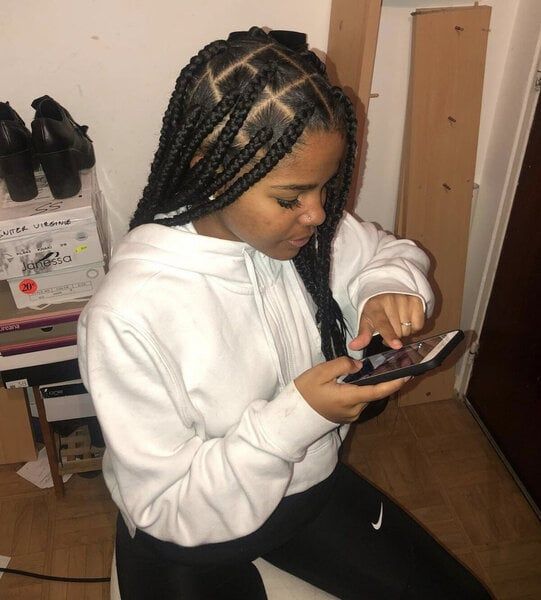
Neatly parted box braids are a study in precision. The key is the part: a clean, straight middle part that runs from the hairline to the nape, with each braid emerging from a perfect grid. The mid-back length falls evenly, and the black color is uniform, no highlights to distract from the line. The straight, smooth texture of each braid is what makes the style look polished, every braid lying flat and parallel. For a heart-shaped face, the middle part and long vertical lines balance the wider forehead. The uniform thickness means the braids hold their shape well, no frizz or flyaways to worry about. This is the braid equivalent of a tailored suit, sharp, clean, and endlessly reliable.
Cornrows Visual Idea
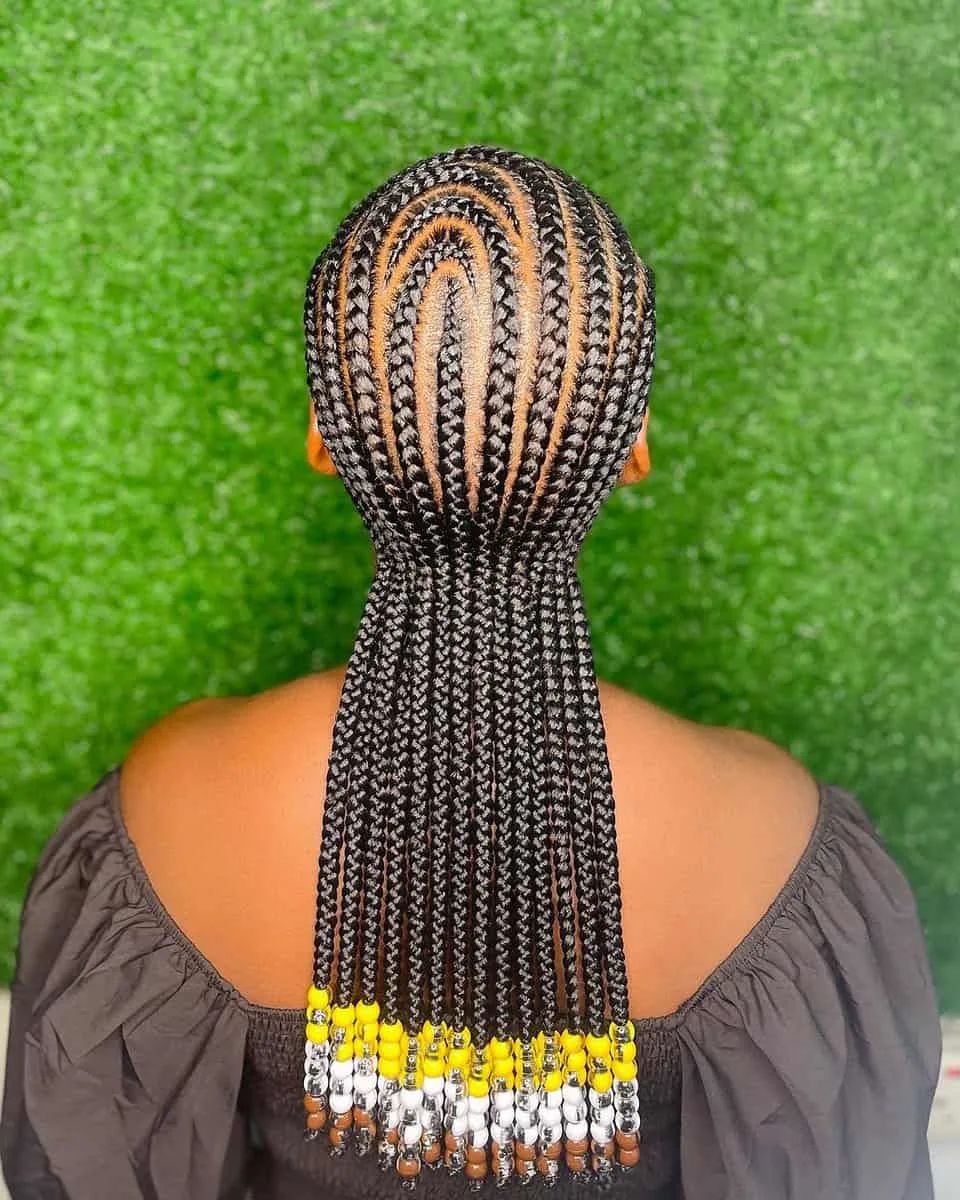
How does a straight-back cornrow style turn into a festive winter statement? Add beads. Lots of them. These are mid-back length, parted down the middle, black extensions braided close to the scalp, then released into long tails. The beads hit at the shoulders and again near the ends. They catch light when you move, which matters when the days are short and every gathering is lit by string lights or candles. The texture stays smooth, the colour is solid black, no warmth. The hold is concrete for three weeks minimum, assuming you wrap it at night. For December parties, January birthdays, the stretch between holidays where you still want to be dressed. It reads as effort but the effort is already done.
Faux Locs Visual Idea
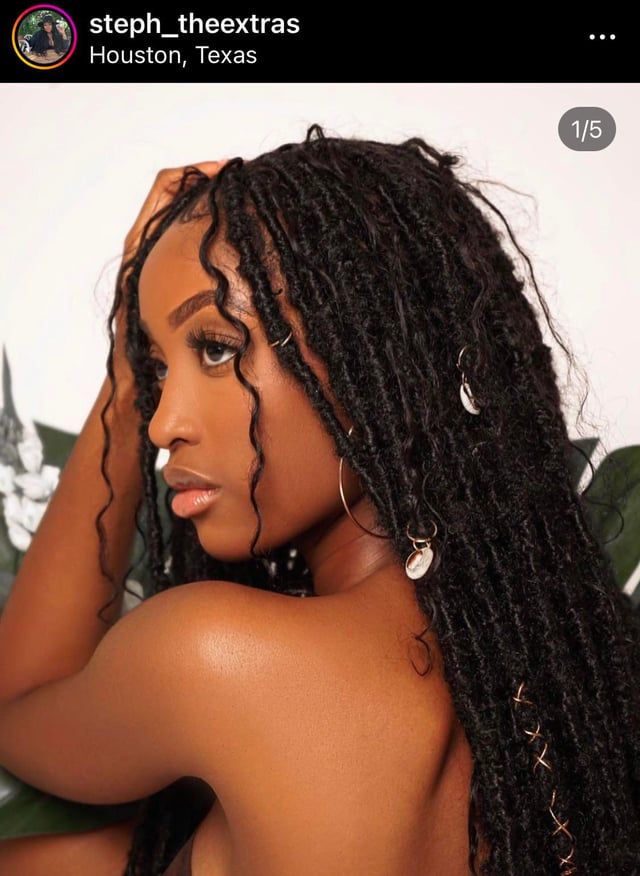
I will confess I avoided faux locs for years because I assumed the weight would bother me. Then I saw a set like this: mid-back, side part, wavy texture, black with no tint, and tiny wire wraps and beads scattered through the strands. The decorative elements change everything. They make the hair feel intentional, not just protective. The hold is excellent for a month. The honest downside is the tangling at the ends by week three, especially with the wavy texture. You will spend a Saturday afternoon detangling if you skip a silk scarf for the first two weeks. Worth it for the look. But I needed to say it out loud.
Final Thoughts
After writing all of these, I noticed the ones I kept coming back to were the ones with a clear shape, a blunt line, a defined part. The pastel accents are fun, but the structure is what carries them.
- Trim the baseline every eight weeks.
- Tone grey or pastel shades at week six.
- Take down braids by week eight max.
- Moisturize the scalp twice a week.
- Sleep on satin to keep edges crisp.
I am booking the chin-length bob next. It is the one I would not have tried two years ago, and now I cannot stop thinking about it.