
Rihanna’s creamy butterscotch blonde, Tyla’s honey-toned curls at the Met, SZA’s burnt sienna glow on the SOS Tour—suddenly every brown-skin hair moment on my feed is doing the same thing: proving that summer color doesn’t mean one-note. Syrup brunette, black cherry wine, linen beige—the salon conversations have shifted from “what color” to “which color actually works for my skin.” TikTok’s been ablaze with the difference, and three stylists I know this month alone said the same thing: clients aren’t asking for generic anymore.
Summer hair color for brown skin 2026 is about melanin-optimized tones paired with cuts that show them off—think the Italian Bob with syrup brunette dimensions, butterfly layers catching black cherry wine light, or a tapered afro that lets burnt sienna highlights breathe. These aren’t one-size-fits-all; they’re calibrated for warm undertones, cool undertones, neutral undertones, straight textures, coils, and the I-don’t-have-time-for-fuss crowd.
I spent $800 correcting a box-dye disaster two years ago and learned the hard way: the color matters less than the person doing it. Now I actually trust the process.
Terracotta Brown Crop Cut
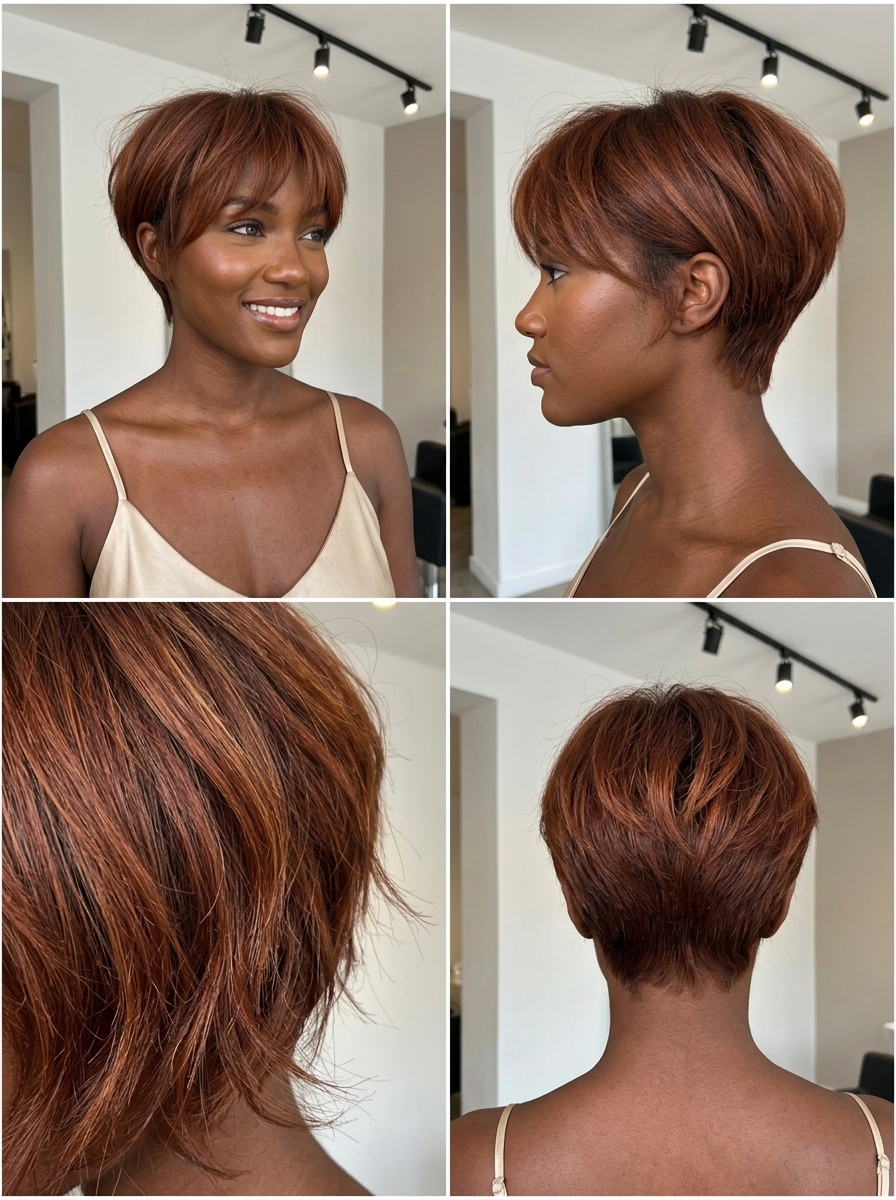
Short hair on brown skin reads differently than it does everywhere else—richer, warmer, more intentional. A crop cut with terracotta undertones isn’t just about length; it’s about how light catches the color and how the cut itself creates shape where there was none before. Layers concentrated at the crown provide volume and movement, preventing a flat, heavy look. The best versions of this cut work on textured, wavy, or fine hair that holds volume and can work on curly hair if styled to define the natural pattern rather than fight it.
The real test is maintenance. Point-cut ends maintained piecey texture for 3 weeks without needing a trim or heavy product, which means you’re not locked into a weekly salon visit cycle. That said, tapered sides need monthly trims to maintain the sharp, seamless blend—a cost and time commitment that matters if you’re considering this cut. The terracotta brown crop cut works because the color warms skin and the length flatters most face shapes when a stylist knows how to taper rather than just buzz. (The best $30 I spent on hair was on a good home trimmer for the sides.) This is the kind of cut that moves the way you actually move, not the way a photo does. Finally—a pixie that moves.
Natural Balayage Brown Skin
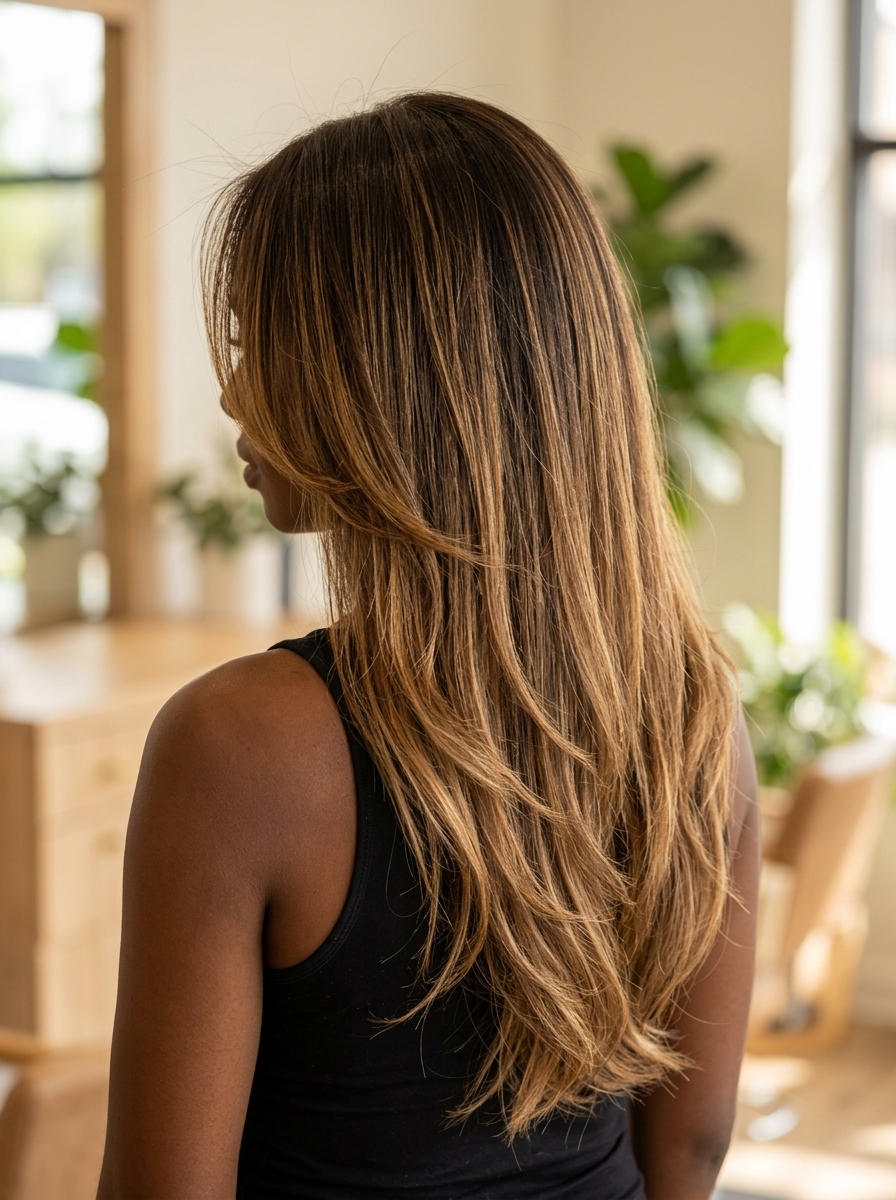
Cascading layers work differently on brown skin because the depth of the base color creates a natural contrast that subtler techniques sometimes miss. A natural balayage sits in that honest middle ground—visible enough to matter, blended enough to feel grown-out friendly. Soft cascading layers and a V-shape back maintain length while enhancing natural movement and body. The cut air-dries with defined waves, reducing styling time by 15 minutes daily compared to blunt, straight-cut versions that demand product and heat every single morning.
This is the cut for people who want texture without committing to a perm or heavy styling routine. Skip if you prefer sleek, straight hair because this cut genuinely thrives on natural texture—fighting it defeats the entire purpose. The layers do the work; the color just makes it visible. Or maybe just a good sea salt spray and the willingness to let your hair dry however it wants to on a given day. Hair doesn’t need to be perfect to be right for you. This is what effortless beach waves actually means—not the Instagram version, but the version that happens because the cut respects how your hair naturally falls. Effortless beach waves.
Espresso Brown Bob
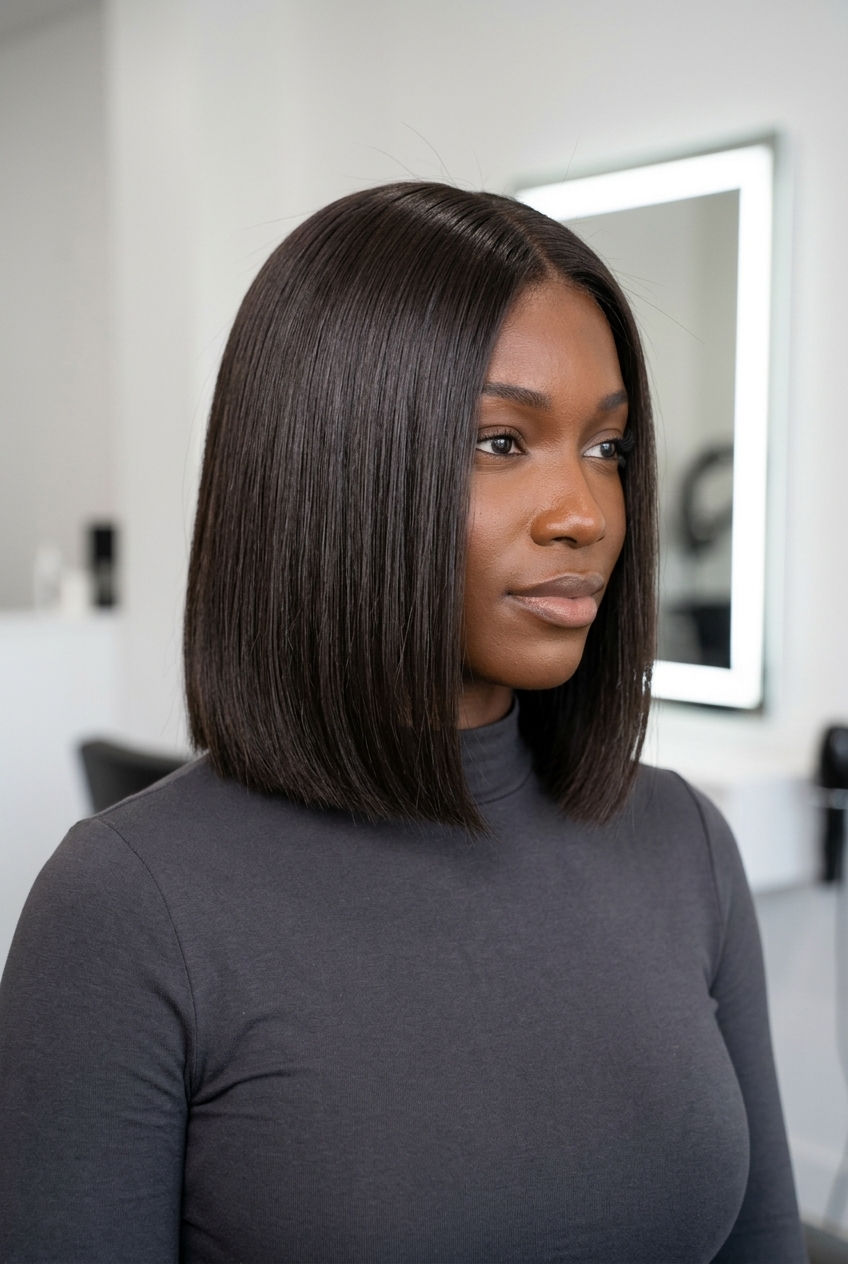
The blunt bob on brown skin is unforgiving and exactly that straightforward. There’s no way to hide indecision in this cut—either your stylist knows how to execute a sharp, chin-length line or they don’t. Subtle point-cutting on the blunt bob prevents a heavy, blocky look while maintaining a sharp line. The color sits as a statement rather than a detail, which is precisely why the espresso brown bob reads so distinctly on brown skin tones—the depth resonates instead of competing.
This cut requires commitment. Blunt perimeter requires trims every 4-6 weeks to prevent split ends and maintain sharpness, which means ongoing salon visits and a budget line for maintenance. The reward is that you walk into a room and people notice the cut before they notice anything else about you—which is either exactly what you want or not what you want at all. Subtle point-cutting keeps this from looking severe, adding a whisper of texture that prevents the severity from reading as cold. Which makes styling so much easier than you’d think. Sharp, chic, unforgettable.
Textured Lob with Color Pop
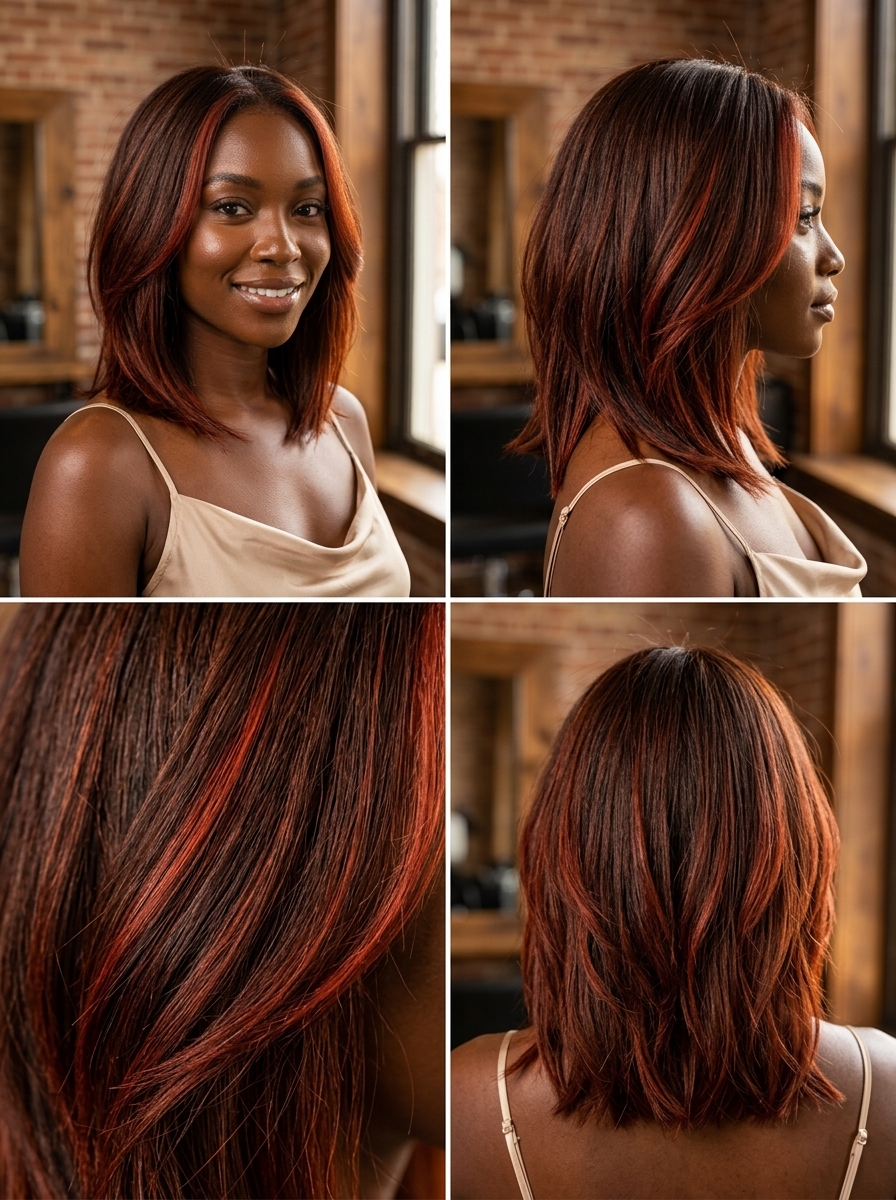
The lob sits in that dangerous middle territory where it can look either intentional or like you couldn’t decide on a length. The texture is what saves it. Internal layers maintained volume for 2 days without product, defying the flat-hair curse that usually hits fine-textured hair by midday. Internal texturizing and invisible layers create volume and movement without sacrificing the lob’s perimeter, which means you get both the length you want and the shape that actually holds.
A color pop—whether that’s honey undertones, caramel, or a warmer brown—reads as intention on a lob in a way it doesn’t on other lengths. Not for very fine hair because invisible layers might remove too much volume and leave you with a thin, wispy result instead of something shaped. The textured lob with color pop works because you’re building volume into the middle section rather than relying on length alone to create presence. Probably worth the consultation at least—your stylist needs to understand your hair’s actual behavior before committing to invisible layers. The investment in getting this right is front-loaded; the maintenance is genuinely easier after. Lob perfection, truly.
Espresso Ombré Long Hair
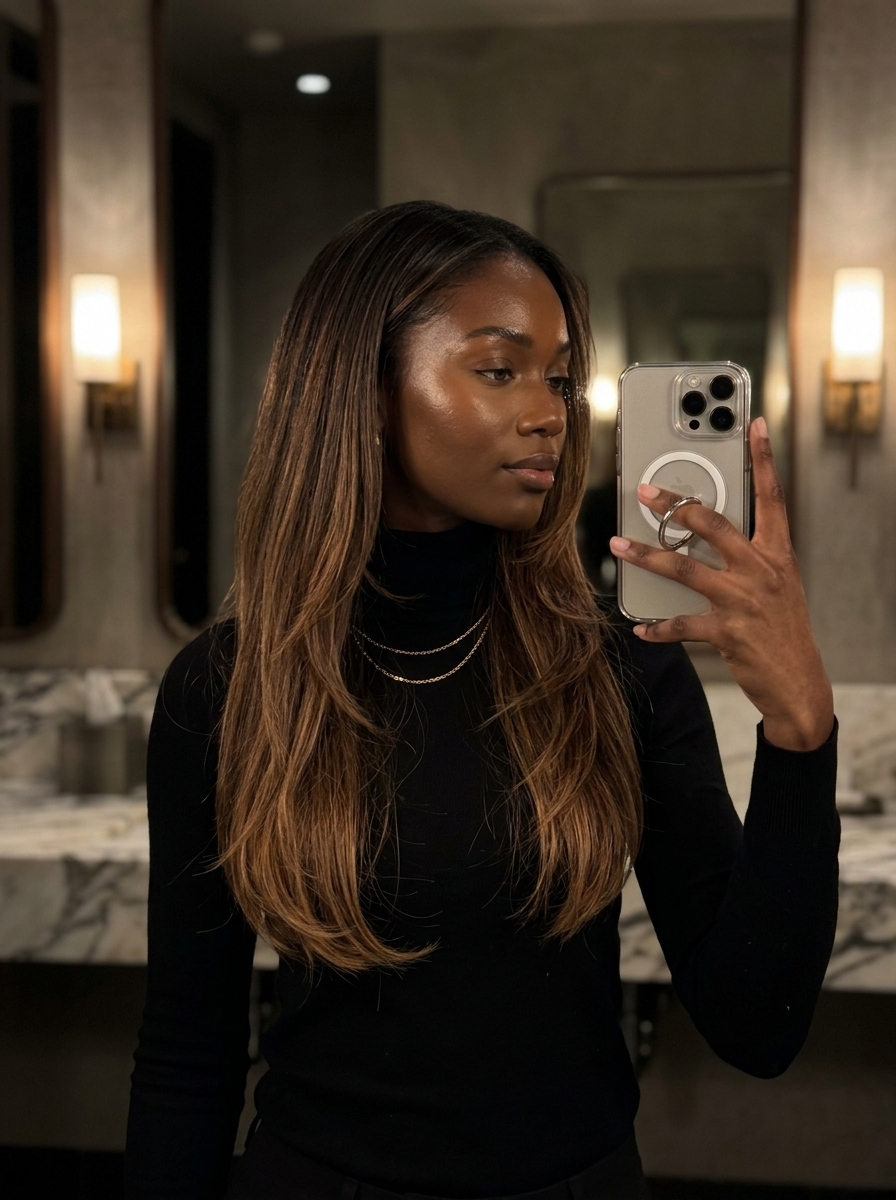
Long hair on brown skin can feel heavy if the cut doesn’t respect the weight of it. Subtle internal layers prevented a heavy feel for 8 weeks, maintaining natural movement without compromising the length you’re growing out. Soft internal layers below the chin prevent a heavy, triangular shape on long hair, adding movement without cutting away the length that took months to earn. The ombré sits underneath rather than on top, which means the depth reads as dimension instead of damage.
This is the cut for people who want length with actual shape—not just hair that grows longer and flatter every month. The layers are invisible when your hair is down and only visible when you move or style it differently, which means you’re not locked into one look. (Yes, the long one.) Espresso ombré works on medium to thick hair density, on naturally wavy or straight hair, because the internal structure does the work rather than relying on texture alone. Most of the maintenance happens in your routine rather than in the salon chair—which shifts the cost from cuts to products, but that’s a trade most people prefer. Long hair, light feel.
Deep Mocha Crop Cut
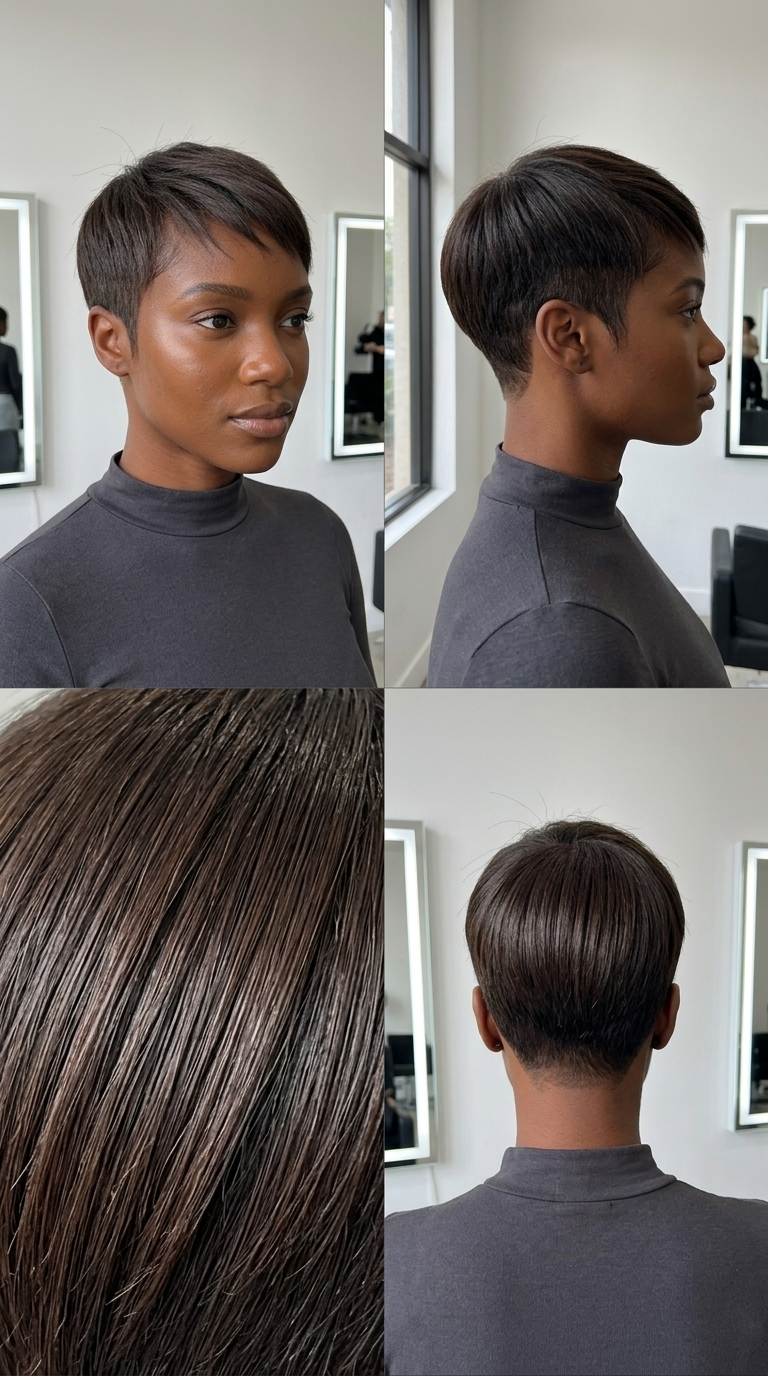
There’s a reason crop cuts have stayed relevant—they actually work on brown skin. The depth of a deep mocha crop brown skin tone absorbs light differently than on lighter complexions, which means the cut’s geometry becomes the star. Point-cutting on top layers creates piecey texture and versatile styling options, preventing a helmet-like look. You can style it sharp and defined one day, then mess it up intentionally the next (the best $30 I’ve spent on hair).
The clipper-fade grew out cleanly for 3 weeks before needing a touch-up, which is genuinely longer than most short styles hold their edges. Keep the sides close and taper at the nape—that’s where the shape lives. Requires monthly barber visits to maintain sharp lines and fade, so budget for that upfront. Short hair isn’t cheaper; it’s just different expensive. The density of coily or textured hair actually works in your favor here because the texture creates definition that a blunt cut would flatten. Sharp. Clean. Modern.
Caramel Balayage Long Layers
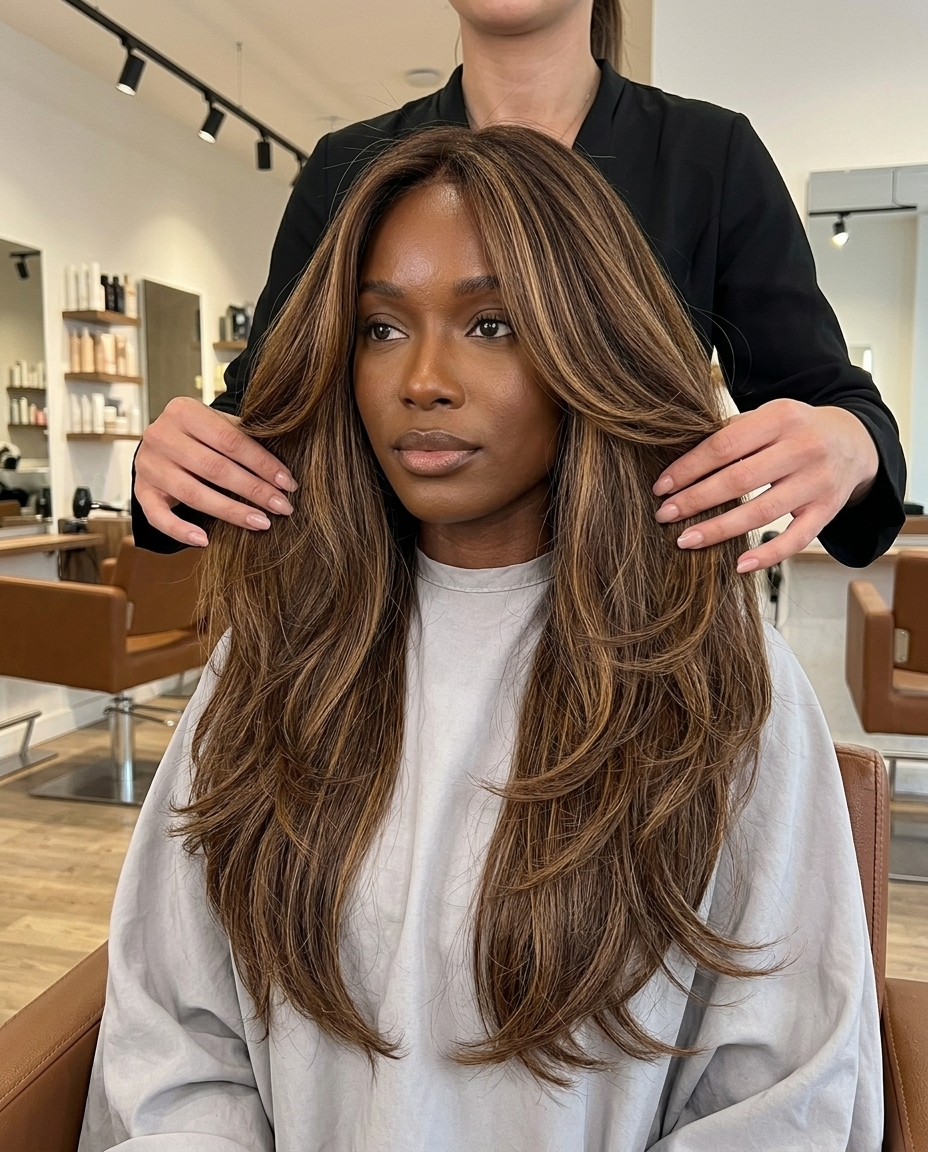
Long layers with caramel balayage long layers brown skin is the move if you want dimension without abandoning length. Soft V-shape in the back allows layers to cascade naturally, enhancing movement without looking choppy. The balayage sits on mid-lengths and ends, which means your base stays richer and less maintenance-heavy than full highlights. Layers maintained shape for 8 weeks with minimal split ends, so you’re not constantly chasing trims either.
This is where caramel actually reads on deeper skin tones—it glows instead of disappearing into your base color. You need at least 3-4 inches of length for the layers to actually move and show the color variation (which is all my fine hair can handle). Not for very fine hair—layers can remove too much volume. The stylist should use razor-cutting for softer ends, not blunt scissors, because the goal is movement, not structure. Caramel on brown skin wants to flow. Effortless beach waves.
Mushroom Brown Bob
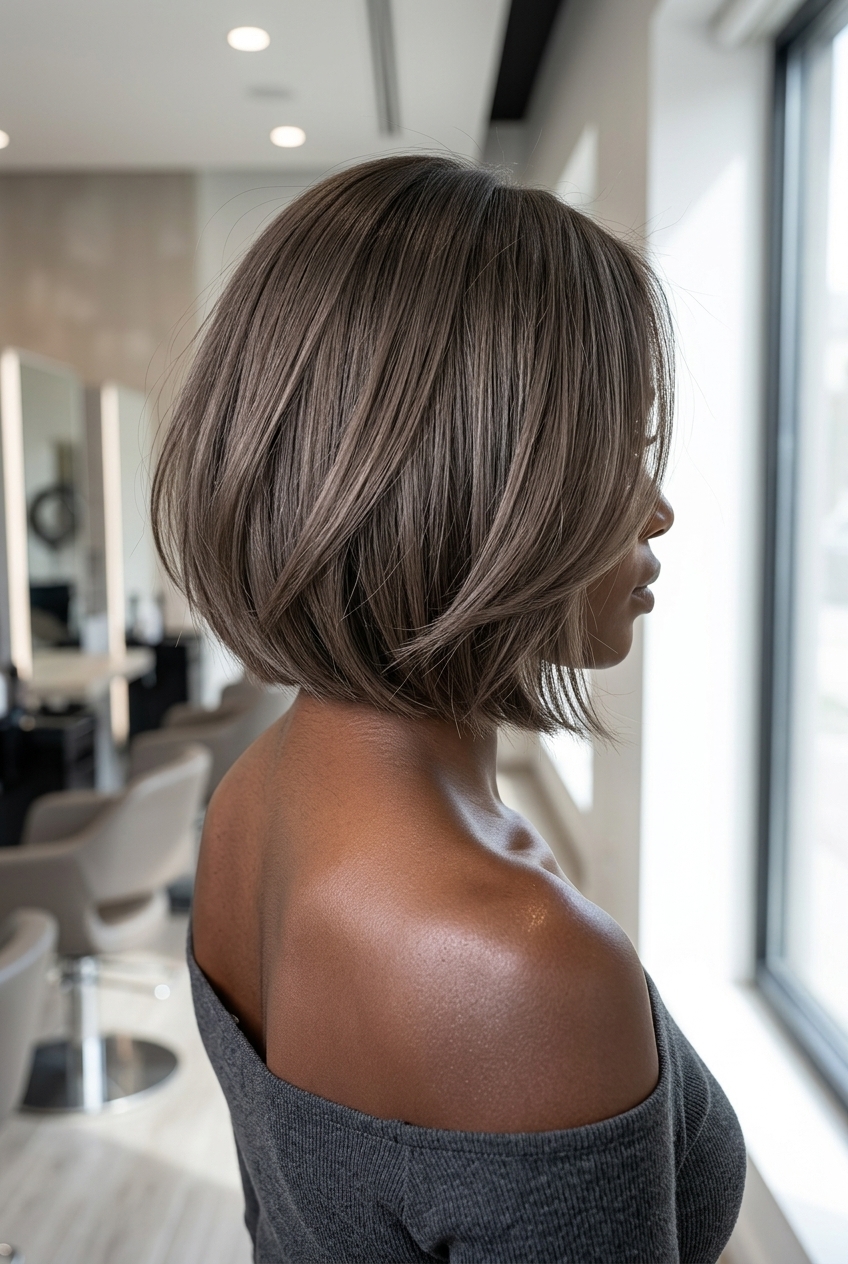
An asymmetrical bob in a warm mushroom brown is exactly what a person who wants to look put-together but isn’t trying too hard should get. Point-cutting throughout the interior removes bulk, creating soft movement without visible layers for a sleek finish. The asymmetry—slightly longer on one side—adds visual interest without requiring you to have an Opinion about your hair every single morning (or maybe a blunt bob, honestly). Asymmetrical bob held its line for 6 weeks before needing a trim, which is respectable for a precision cut.
Mushroom brown works on every brown skin tone because it’s warm without being yellow or orange. The color doesn’t fight your undertones; it just sits there looking intentional. Texture matters here more than length—if your hair is naturally straight, you might need a blow-dry to make the softness read. Fine to medium density hair shows off the cut’s interior detail better than very thick hair, which might need thinning sessions. The perfect power bob.
Warm Chestnut Shag Haircut

A shag with warm chestnut tones is for people who want the texture and movement of the 70s but the color palette of right now. Heavy face-framing layers starting at cheekbones create maximum volume and texture, enhancing natural waves. Shag layers air-dried with natural texture and volume on day 2, which honestly might be better than day 1 when everything’s too fresh. If you have wavy or curly hair, this cut stops fighting your texture and starts celebrating it. The length variation creates pockets of movement instead of one flat mass.
Warm chestnut—that middle ground between honey and espresso—reads differently on brown skin than on lighter tones. It’s saturated enough to seem intentional, not washed-out. Wispy fringe needs daily styling to avoid looking greasy or flat, so you need to actually style it, not just let it exist. The layers need to be cut dry (or at least styled while damp) so your stylist sees how your waves actually fall. Styling takes 10-15 minutes on most days if you have wavy hair, probably worth the consultation at least. Hello, rockstar vibes.
Chocolate Brown Undercut Short Hair
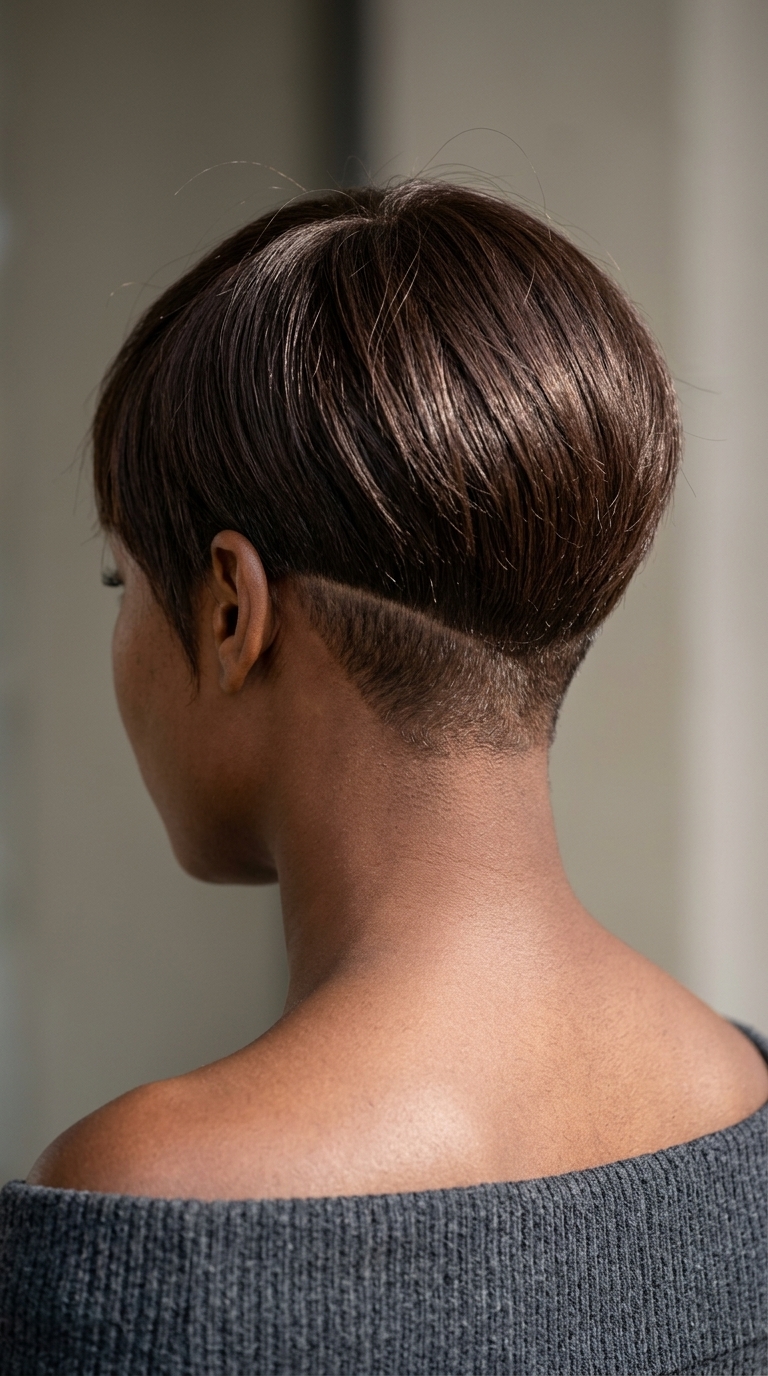
An undercut is for people who want a hairstyle that actually has a thesis. Seamless blending between longer top and shaved undercut allows versatile styling, revealing or concealing the edgy detail. On brown skin, a chocolate brown undercut short hair creates serious visual impact—the shaved sections catch light differently than the length on top. You can wear it slicked back and architectural, or tousle the top layers for something softer (yes, the short one). Undercut grew out gracefully for 3 months before needing a full re-shave.
Chocolate brown works because it’s deep enough to show the undercut’s geometry without needing bleaching or platinum contrast. The top needs to be textured—point-cut layers or a slight taper—so it doesn’t sit flat against your head. Works best on straight to wavy hair, fine to medium thickness, as it allows the top to lay smoothly while the undercut stays sharp. Skip if you can’t commit to frequent trims for the undercut—that shaved section grows out noticeably fast. The commitment is real, but the payoff is visual. Bold. Unexpected. Chic.
Spiced Honey Lob Brown Skin
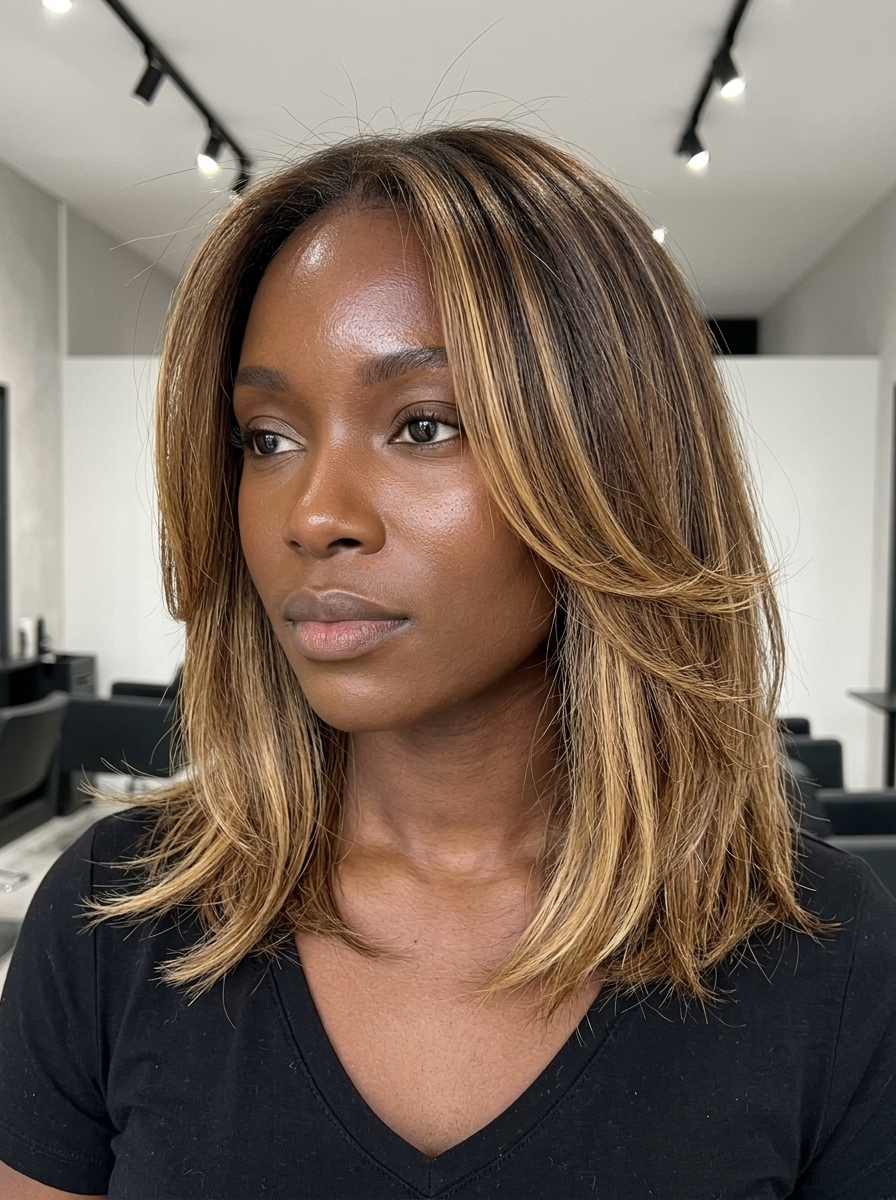
The spiced honey lob brown skin works because it refuses to commit to just one thing. You get the shoulder-skimming length people actually want to wear, but the internal layers do the heavy lifting—they create movement instead of letting the cut sit flat against your face. Internal layers and point-cutting create movement and texture, preventing a heavy, blocky look while maintaining perimeter bluntness. This matters if you have straight to wavy hair with medium density; the internal layers help create volume and texture without the bulk that makes thicker hair look like a shelf.
Here’s what actually happens: Internal layers created swing and movement for six weeks without feeling bulky, which means you’re not fighting your own hair for half the appointment cycle. The perimeter stays blunt (subtle bluntness is key), so from certain angles it reads as intentional, not grown-out. Not for very thick hair—internal layers might not be enough to reduce bulk on that texture. This cut wants to move, and if your hair doesn’t cooperate, you’re fighting physics. The perfect lob swing.
Dark Chocolate Layered Cut
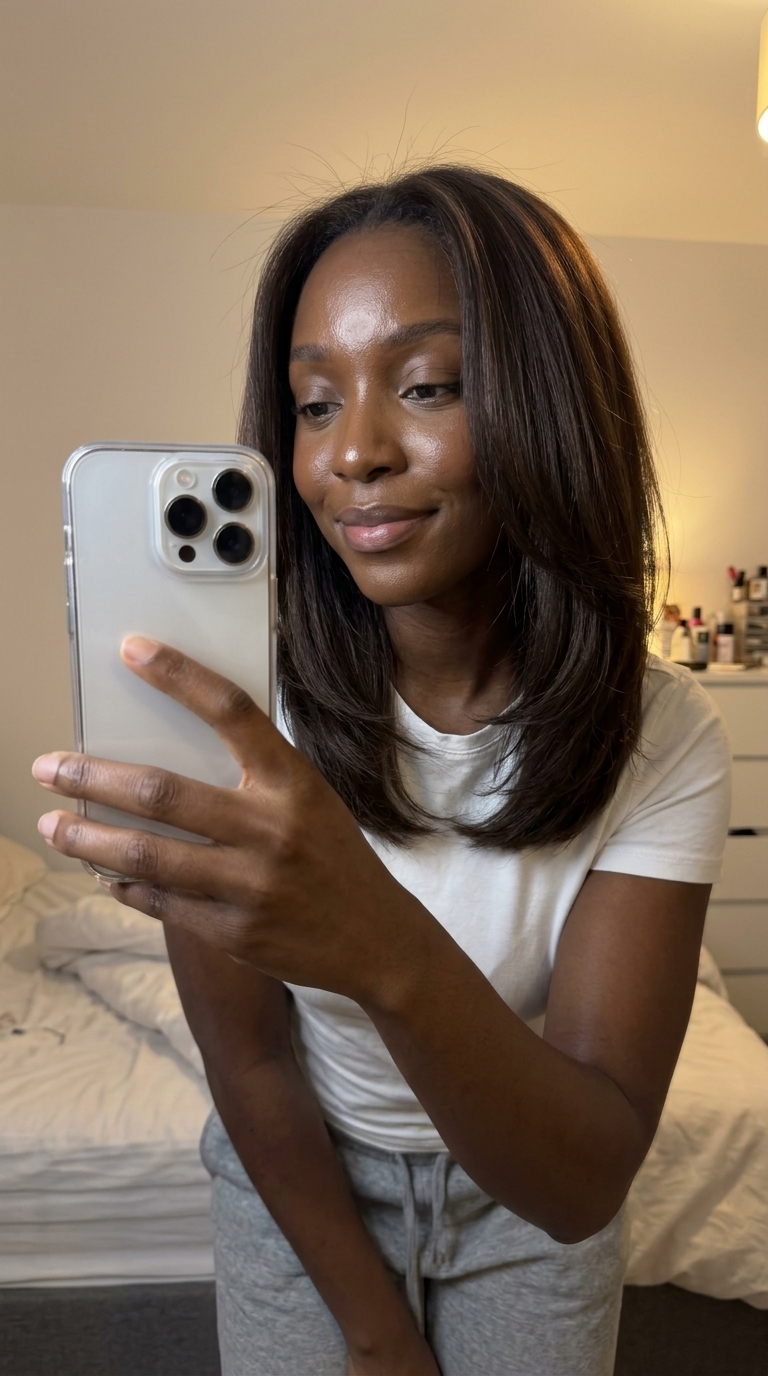
The dark chocolate layered cut is long, it has layers, and somehow it doesn’t read as “trying too hard”—or maybe it’s the styling that makes it. Seamlessly blended layers reduce bulk and create natural movement, giving body to both fine and thick hair types. Long layers added volume to fine hair without losing desired length for eight weeks, which is honestly the timeline most people want to work with before committing to another salon visit. The color stays dark, so root regrowth isn’t a performance piece every three weeks.
Blended layers can lose definition quickly without proper styling product use, so this isn’t a wash-and-go situation if you want the layers to read as intentional rather than just “long hair with some texture.” But if you’re fine-haired and tired of looking flat, this cut actually distributes weight in a way that doesn’t require you to blow-dry your entire head into submission. The layers aren’t choppy—they’re so soft you might miss them in bad lighting. Effortless length with movement.
Caramel Balayage Lob Brown Skin
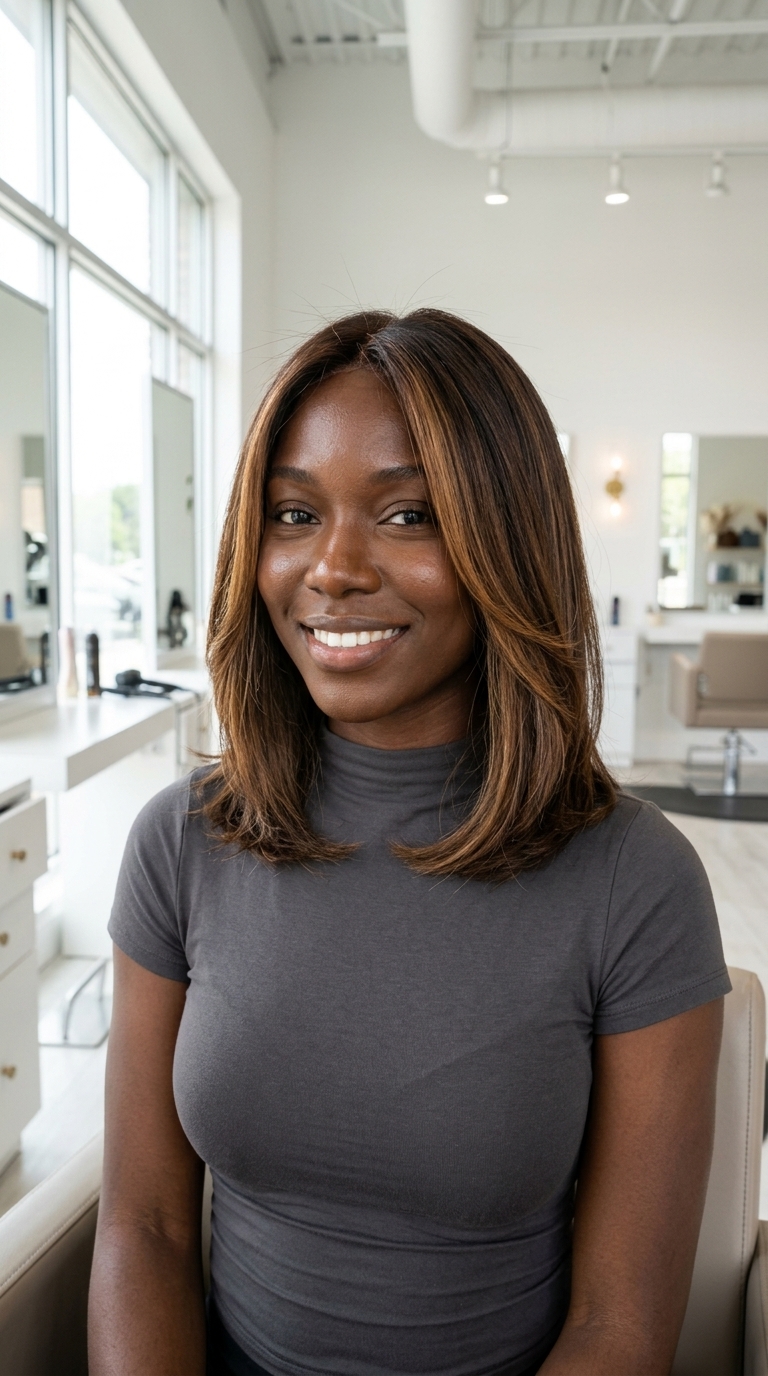
This caramel balayage lob brown skin cuts are built on softness as a principle, not an accident. Diffused internal layering and point-cutting create a soft, textured perimeter, giving natural movement without harsh lines. The balayage sits in the mid-lengths and deepens toward the roots—this placement matters because it makes root maintenance less visible and keeps the color looking dimensional instead of flat. Diffused internal layers allowed for soft movement and a graceful grow-out over ten weeks, meaning you can actually live with this cut for a real season.
The softness extends to how the cut moves, not just how it looks in a still photo. If you’re bringing product, a texturizing paste works better than nothing, though this cut was designed to work with or without heavy styling. Avoid if you prefer sharp, blunt lines—this cut is all about softness. Every element from the layering technique to the balayage placement is there to make the cut feel lived-in and movement-forward, probably worth the consultation at least to see how your specific hair texture reads with this approach. So soft, so chic.
Cool Beige Brown Lob
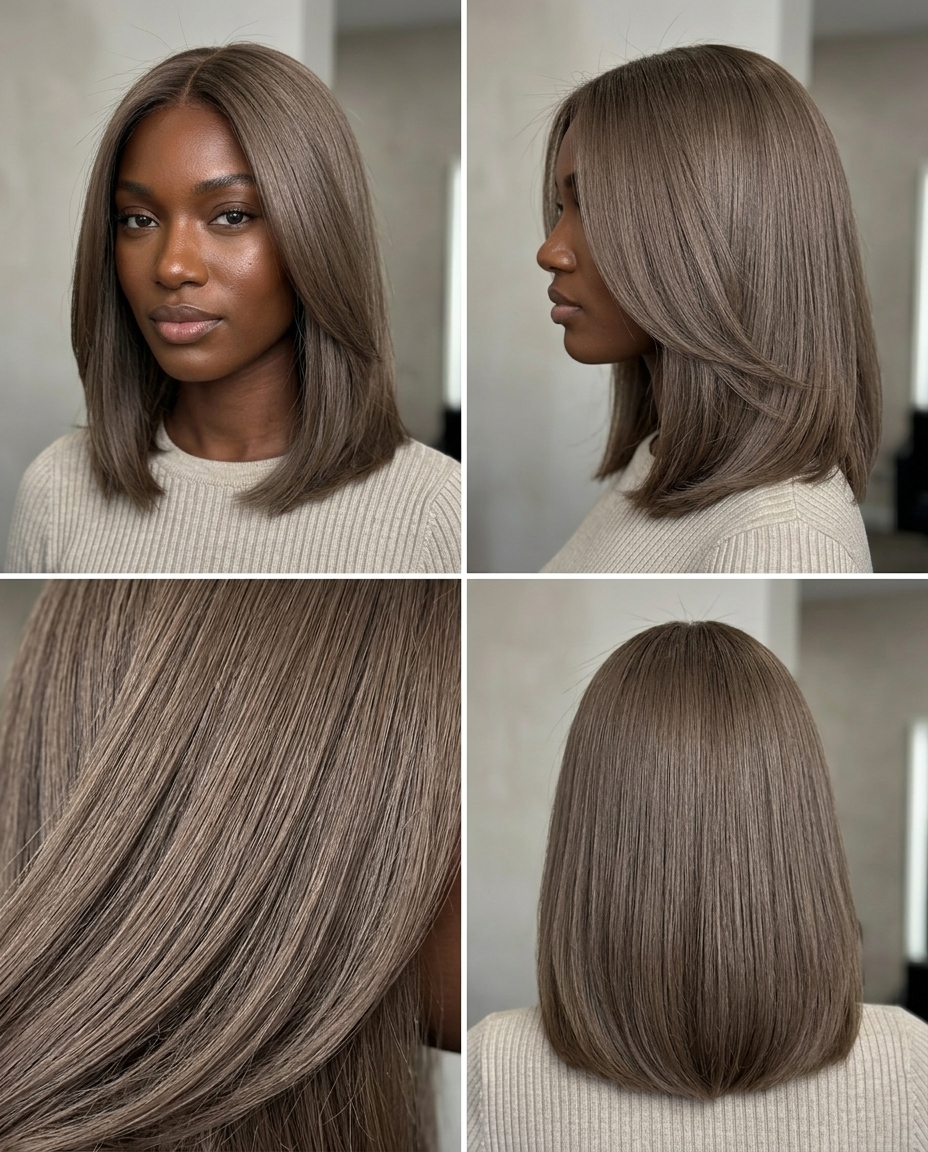
The cool beige brown lob is what happens when you want bluntness and movement to coexist in the same cut without one canceling the other out. Minimal internal layering removes weight for swing, while point-cut ends prevent a heavy ‘shelf’ look on a blunt perimeter. Blunt perimeter held its sharp line for eight weeks, with internal layers adding perfect swing—and this matters because most people don’t want to choose between looking intentional and looking like their hair moves. The cool beige tone reads differently on brown skin than it does on lighter complexions; it picks up the warmth underneath and creates contrast instead of washing you out.
Invisible internal layering requires a skilled stylist, increasing salon cost, so this isn’t the cut to book with someone who’s just figuring out their point-cutting technique. The precision is everything here. You’re paying for the stylist’s ability to layer so subtly that from the front the perimeter looks blunt, but when you move, the internal work releases movement. That’s not a technical fluke—that’s intentional design. Blunt, but with movement.
Toasted Almond Blunt Lob
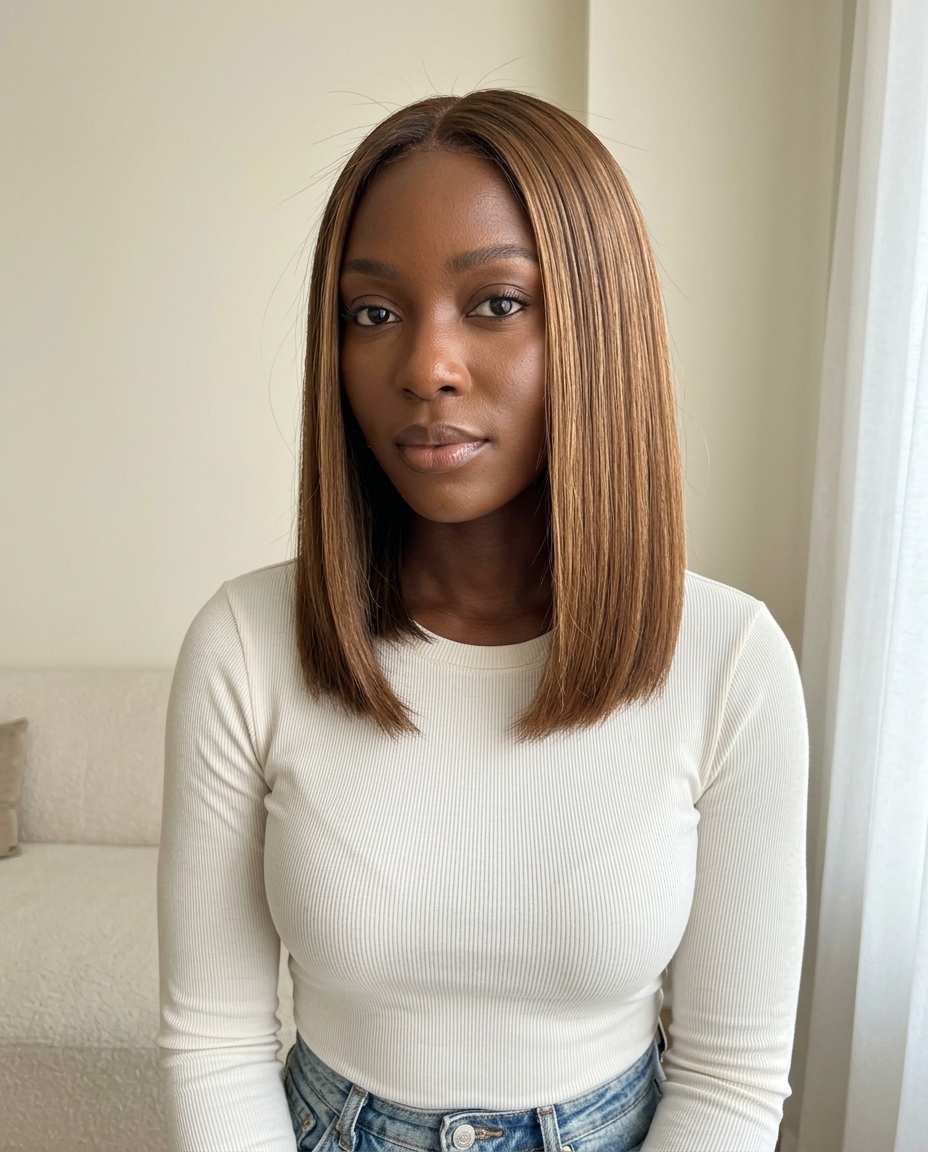
The toasted almond blunt lob doesn’t apologize for its sharpness. A razor-sharp blunt perimeter with minimal layering maximizes density and creates a strong, impactful visual line. Razor-sharp blunt perimeter maintained maximum density at ends for seven weeks without splitting, which tells you something important: this cut relies on precision, not trend. The toasted almond color sits warm without reading as “honey” or “golden”—it’s more sophisticated, more grounded, and on brown skin it creates a subtle depth shift that works in daylight and indoor lighting alike.
This razor-sharp blunt cut demands frequent trims every four to six weeks to maintain its pristine line, so budget accordingly if you’re considering this for the long term. The payoff is that your hair looks intentional and finished every single time, no styling required to make the cut read as a cut. Best on straight to wavy, fine to medium hair, though it can be adapted for thicker hair with careful weight removal that doesn’t tank your density. The internal work stays minimal—the line is the star—which is harder to achieve than it looks. Sharp, sleek, stunning.
Deep Auburn Pixie Cut
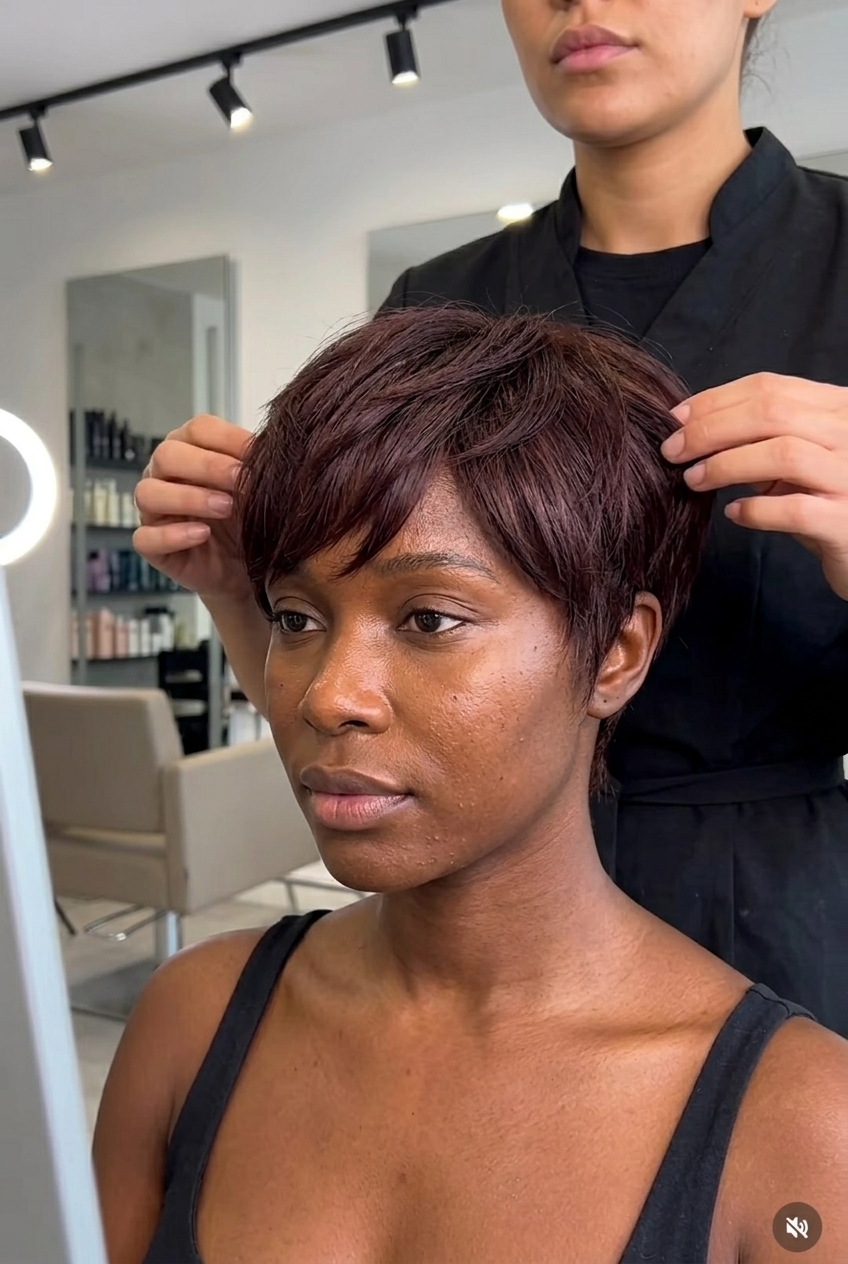
A pixie that actually moves—that’s the whole point here. The deep auburn pixie cut works because the stylist razors the texture instead of leaving blunt edges, which means you’re not stuck with that helmet feeling most pixies give you. The razored texture creates piecey, lived-in ends, giving the pixie movement and avoiding a helmet-like look. Styling took 5 minutes with texturizing paste, holding piecey texture all day. You’re applying product to damp hair, scrunching upward, and letting it dry—barely any heat required.
The honest part: this requires salon trim every 4-6 weeks to maintain sharp, tapered shape. That’s the trade-off for a cut that looks intentional and not overgrown by week three. The deep auburn brings warmth to brown skin without the commitment of lighter bronde—it’s just rich enough to read as intentional without constant root touch-ups. Ask your stylist specifically for point-cutting on the sides and crown, not clippers if you want that soft, textured finish. Finally, a pixie that moves.
Sandy Beige Ombré Brown Skin
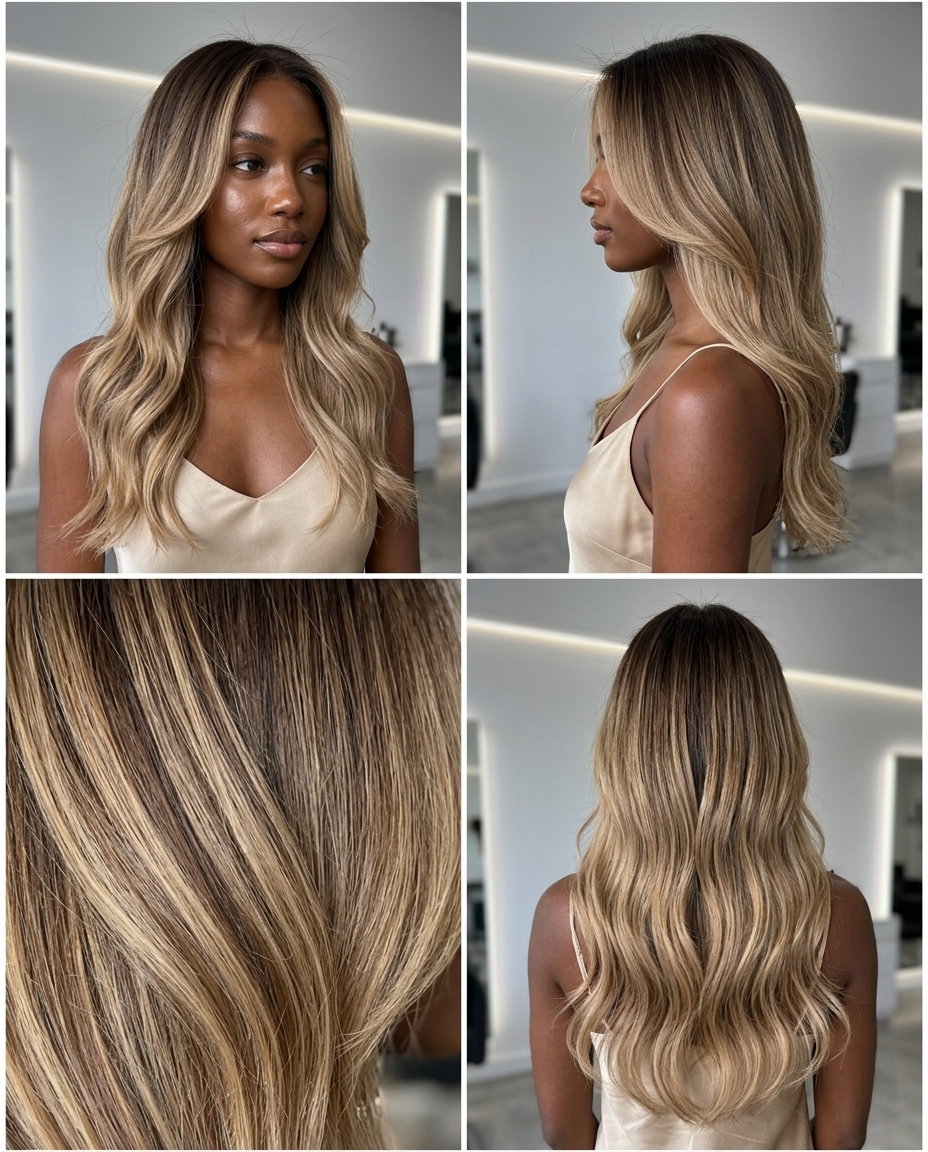
Extra-long hair with sandy beige ombré brown skin works when the layers actually encourage your natural wave pattern. The V-cut shape with long layers encourages natural wave, adding volume and movement to extra-long hair. Layers enhanced natural waves, requiring minimal heat styling for beachy look. You’re not fighting your texture here—you’re working with it, which is honestly the only way extra-long hair survives summer without turning into a humidity nightmare (the best vacation hair ever). The ombré starts at mid-length, so you’re not bleaching your entire length, which means less damage and better integrity at the ends.
But here’s the real talk: avoid if you only air-dry—this needs some styling to define waves. You want a diffuser on low heat or some texture spray to enhance what’s already there, not create something from nothing. The beige tones sit beautifully on deeper brown skin, reading as intentional warmth rather than washed-out or brassy. Get the layers cut dry if your stylist offers it, so they’re shaped around your natural wave pattern rather than guessed at on straight hair. Beachy waves perfected.
Honey Glazed Long Layers
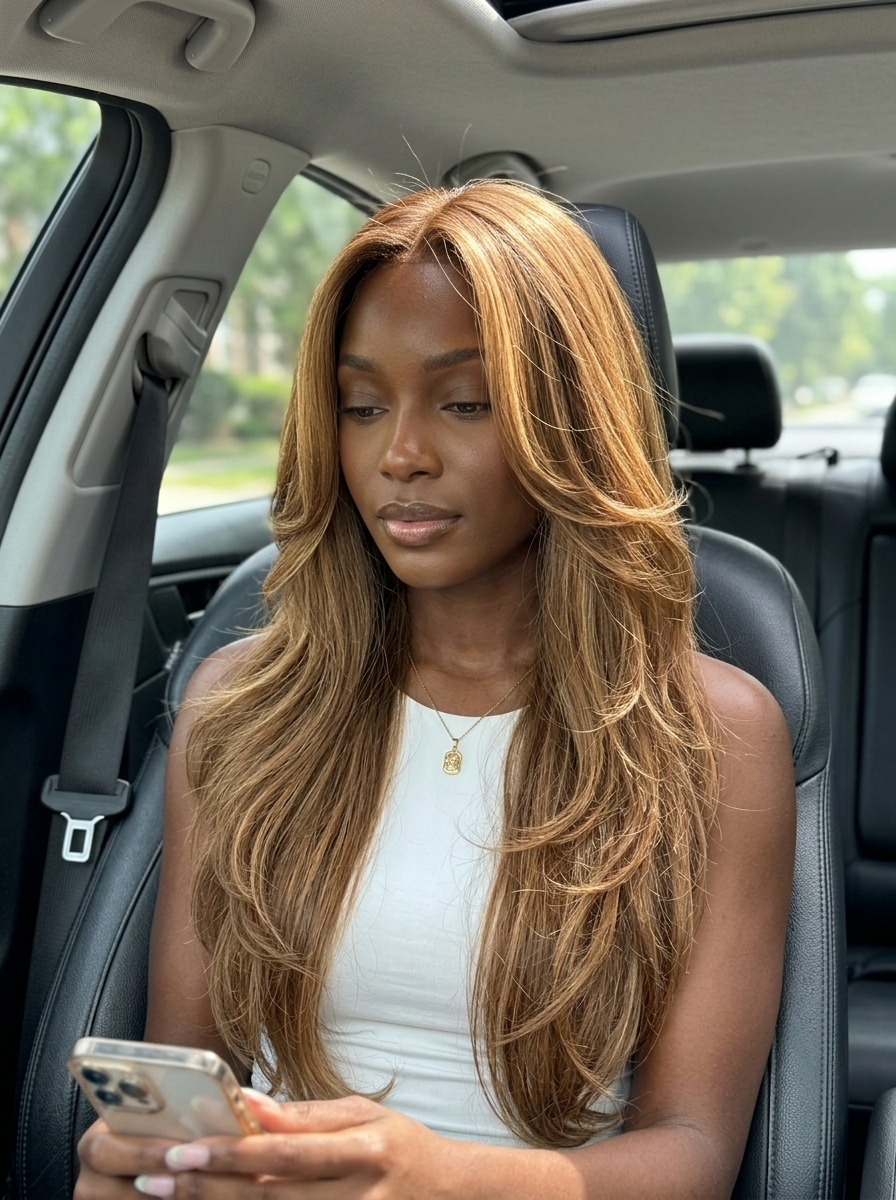
This is the cut that makes you look like you just left a salon even on day four. Cascading layers and a V-cut back allow hair to stack beautifully, enhancing movement and volume. The layers start around chin length and fall down through the mid-lengths, creating that effortless bounce without looking wispy. Cascading layers maintained volume and bounce for 3 days after styling. You’re blow-drying with a round brush, hitting the underneath sections first, and letting gravity do the rest—which is all my arms can handle with a round brush. The honey glaze sits warm against brown skin, with subtle highlights that catch light without screaming “I just got highlights.”
The catch: achieving this volume requires consistent heat styling and product use. This isn’t a wash-and-go cut, even if the layers are designed to move. You’ll need a volumizing mousse or texturizing spray on damp roots, then heat for definition. The honey glaze should be refreshed every 8-10 weeks to keep those warm tones from fading into flat brown. But if you’re willing to spend 15 minutes with a blow dryer, this is the payoff—hair that looks deliberately styled without looking overdone. Pure Hollywood glamour.
Syrup Brunette Long Layers
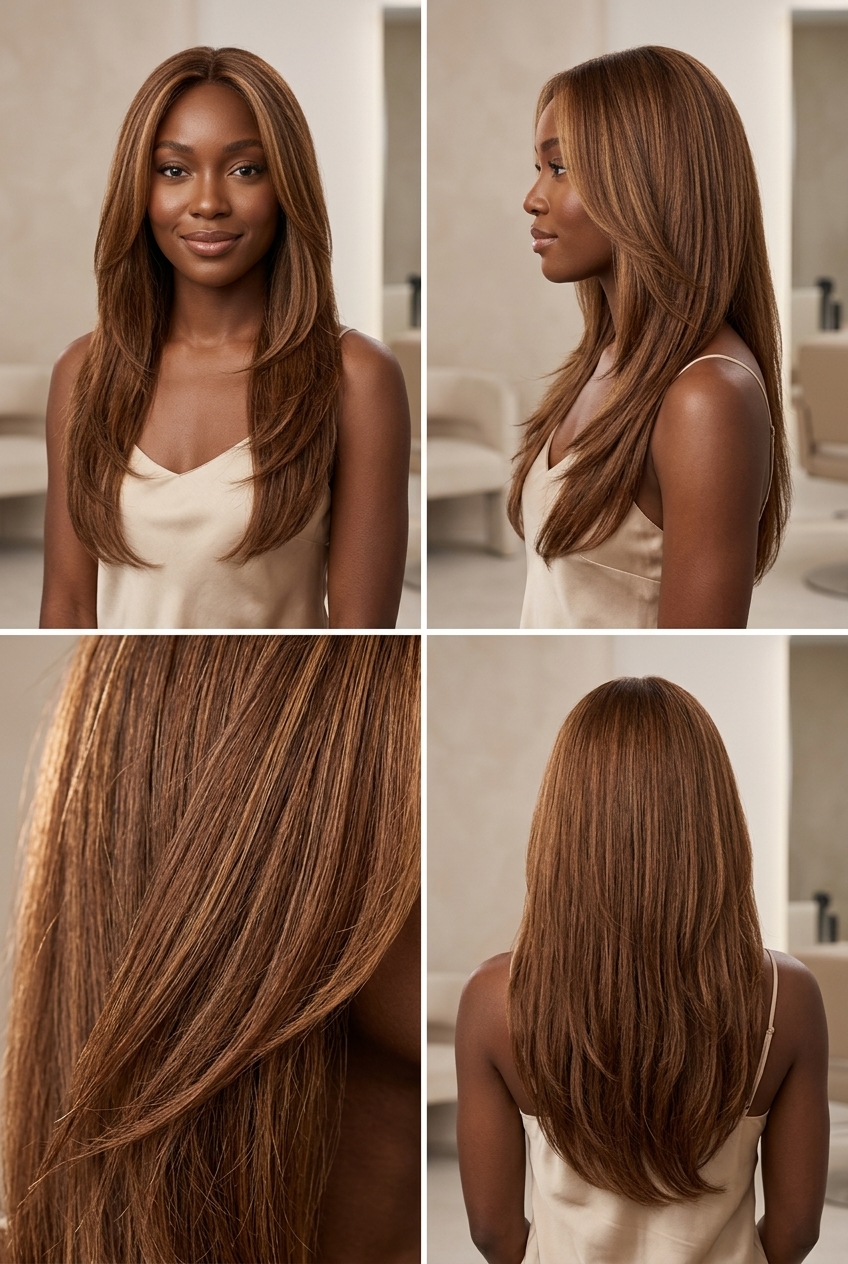
Here’s a cut that respects the fact that not everyone wants to blow-dry their hair into submission every morning. The syrup brunette long layers are built on a softer U-shape foundation with waterfall layers throughout, so you get movement without requiring perfect technique. Waterfall layers combined with a soft U-shape maintain density at the ends while maximizing bounce and movement. U-shape cut maintained density at ends while providing ample movement and bounce. The syrup tone is deep enough to look intentional on brown skin but warm enough to feel alive in sunlight—it’s that Goldilocks zone where the color works whether you’re indoors or outside, or maybe more for medium hair, honestly. You can get this colored in one session if you’re starting from a similar base, which saves your stylist appointment anxiety and your wallet.
Not for extremely fine hair—extensive layering can reduce overall fullness. But for medium to thick hair, this is the sweet spot where you get movement without thinning out completely. The waterfall layers on the underneath don’t get shorter, which preserves length for growth and styling flexibility. Ask your stylist about a shadow root or dimension that blends out by week six, so the grow-out looks intentional rather than neglected. The grow-out plan sold me.
Mushroom Blonde Bob Brown Skin
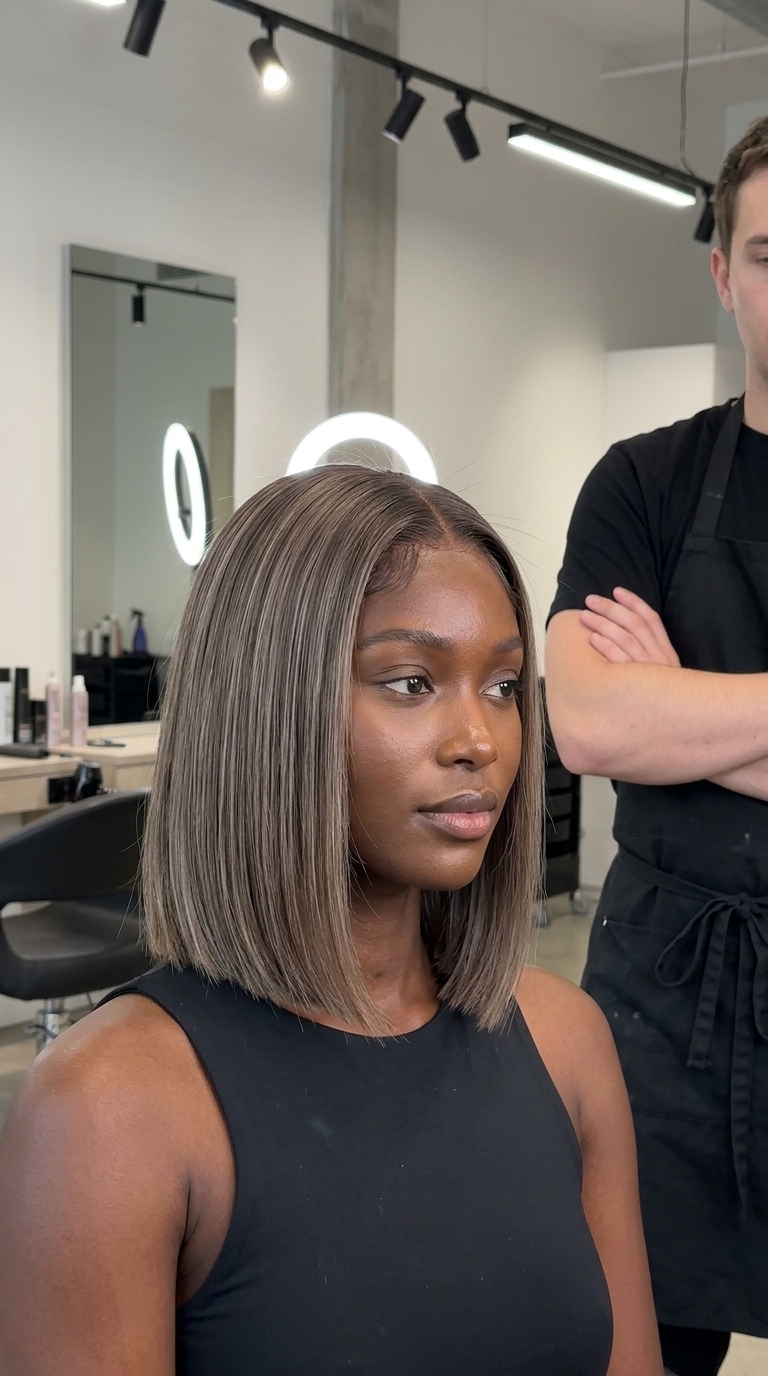
This bob is a commitment, and the mushroom blonde bob brown skin announces that commitment the second you walk in a room. Blunt perimeter creates a strong, clean line, while the A-line shape adds modern sophistication and density. The A-line silhouette (shorter in front, longer in back) gives brown skin a lifted quality that blunt bobs sometimes miss. Blunt perimeter held its sharp line for 6 weeks before needing a trim. You’re getting a geometric cut that demands precision, which means finding a stylist who actually understands A-line construction instead of just cutting blunt and calling it modern. The mushroom blonde sits cool against warm brown skin tones, creating contrast that reads as intentional and editorial—probably worth the consultation at least for the upkeep.
Maintaining this sleekness requires daily flat ironing for many hair types. This isn’t a textured bob; it’s a sculpted statement. You need a straightener, smoothing serum, and honestly maybe some professional drying at your salon every four weeks if you want it to photograph the way it does in your inspiration folder. The blonde requires root touch-ups every 4-5 weeks, so you’re looking at a real salon commitment. But if you want a cut that photographs like you’ve got a stylist on speed dial and a standing salon appointment, this delivers exactly that. Sharp. Chic. Unforgettable.
Golden Brown Blunt Bob
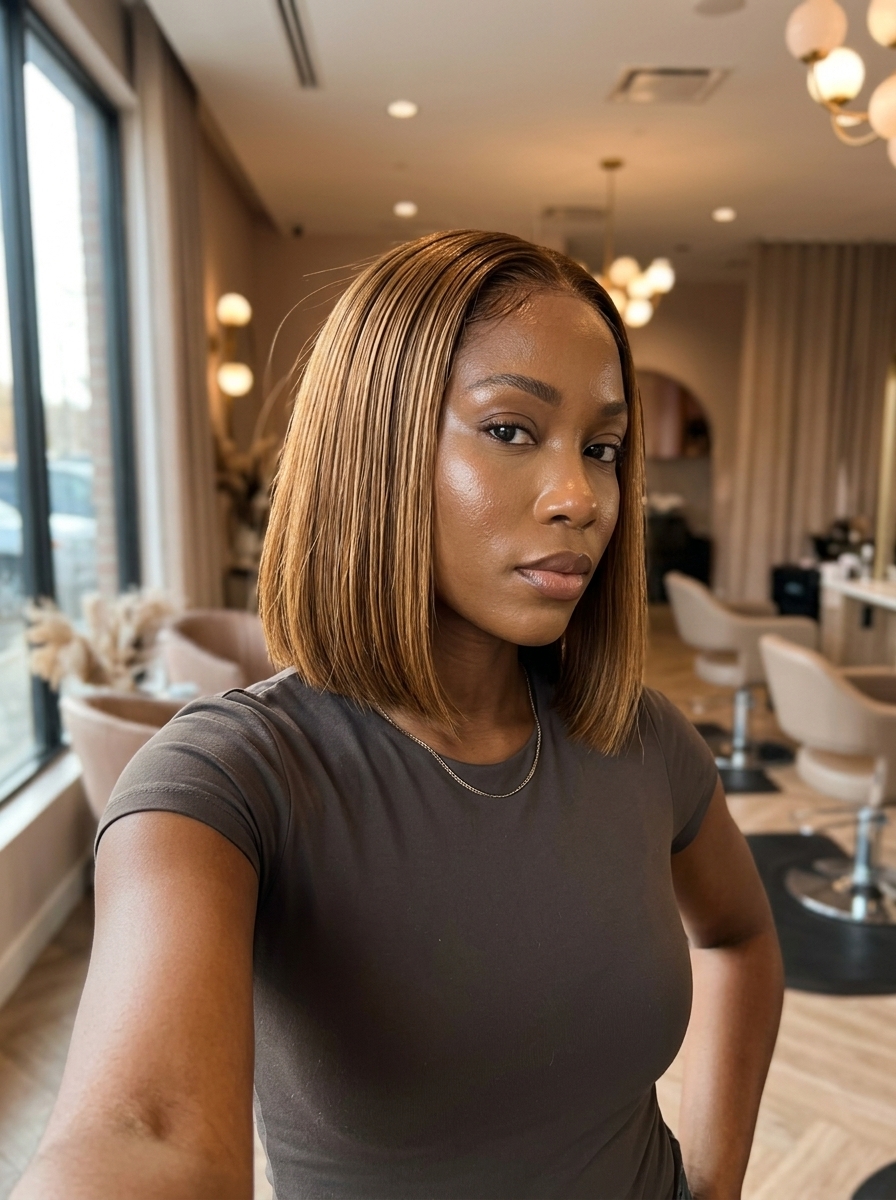
A blunt bob on brown skin reads either crisp and intentional or heavy and dated—the difference lives in the cut itself. Point-cutting the ends prevents a heavy ‘shelf’ look, allowing the blunt bob to move naturally instead of sitting flat against the head. This isn’t a one-length hack; it’s a precise technique that requires a stylist who understands how weight and texture work together. The blunt perimeter maintained its sharp line for 5 weeks before needing a trim, which is solid longevity for a precise cut (so much harder than it looks). Straight to slightly wavy hair makes this work best, while fine to medium density hair responds beautifully to the density it creates. Sharp. Clean. Timeless.
A golden brown blunt bob sits best on oval, heart, or diamond-shaped faces—the clean lines complement angular features without overwhelming softer face shapes. Not for very thick hair—requires significant thinning to avoid a bulky look. The color formula matters too: think warm undertones that sit somewhere between caramel and chocolate, hitting that zone where sunlight catches the dimension but doesn’t read as brassy. Root touch-ups every 5-6 weeks keep the color looking intentional rather than grown-out. If you’re considering this, bring a photo of the *back* view to your stylist, not just the front—that’s where most people get surprised by how precise the line actually is.
Caramel Ombré Long Hair Brown Skin
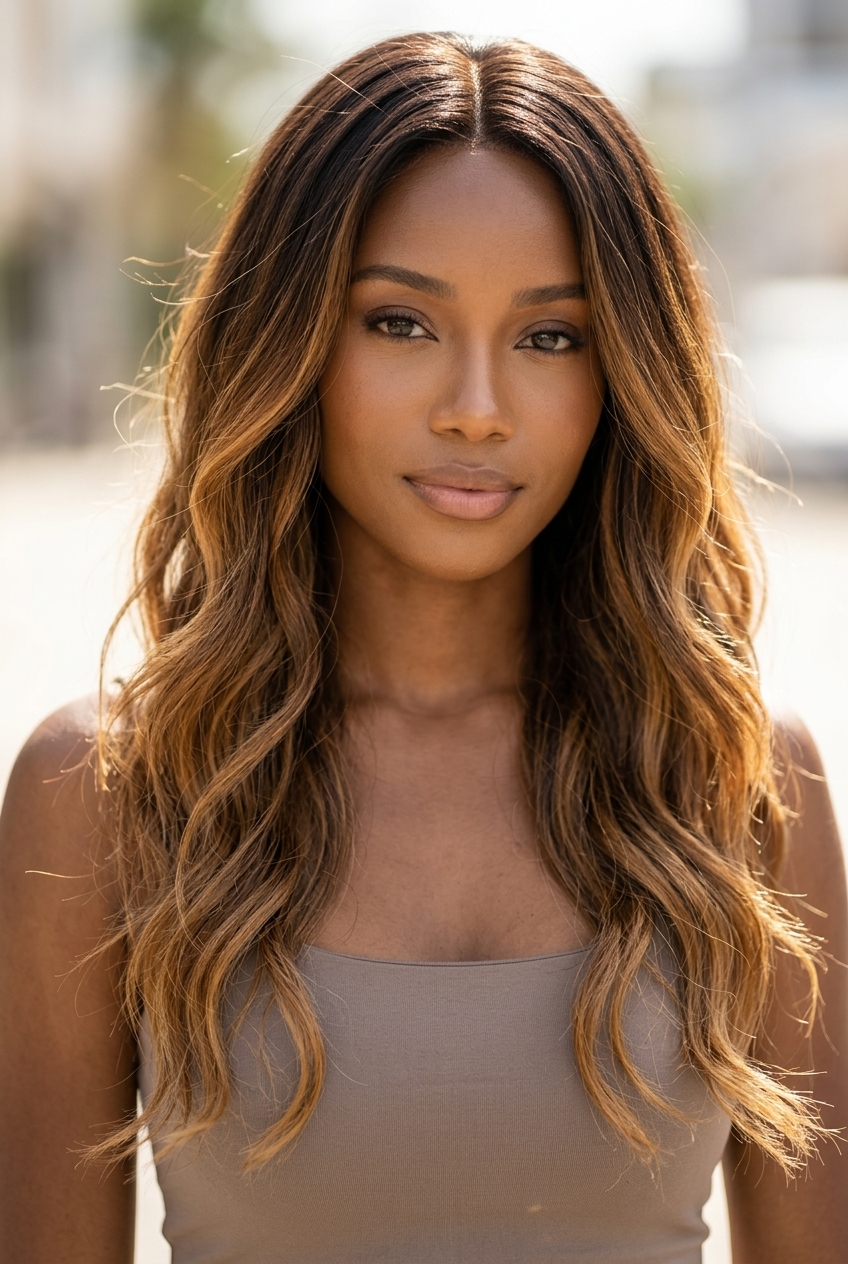
Long hair with ombré color is the move when you want impact without the salon visits. Soft internal layers enhance movement without removing density, allowing the ombre to flow naturally through the mid-lengths and ends. The transition works because it’s gradual—not a hard line dividing dark from light, but a soft smudge that lets each section fade into the next. Ombre color blended seamlessly for 4 months without harsh lines appearing, which means you’re not locked into constant touch-ups if you pick the right formula. This length (think hip-bone or just past) sits best on straight to wavy hair with medium density; very fine hair can look wispy at the ends, and very curly hair needs a stylist experienced in how ombre reads on texture. The styling payoff is real: these layers actually allow air to move through instead of just hanging heavy.
Balayage on dark hair takes 2-3 sessions, not one, for this level of lightness—that’s just physics, not your stylist being slow. A caramel ombre long hair brown skin strategy means booking session one and two close together, then spacing the third out to let your stylist see how the color is settling. Maintenance-wise, you’re looking at color-depositing shampoo twice a week and a trim every 8-10 weeks to keep the layers feeling intentional rather than scraggly. The caramel tone specifically—that warm, honeyed brown-into-blonde—photographs beautifully in natural light and holds surprisingly well without purple shampoo since the base is so warm. Effortless waves for days.
Copper Pixie Cut Brown Skin
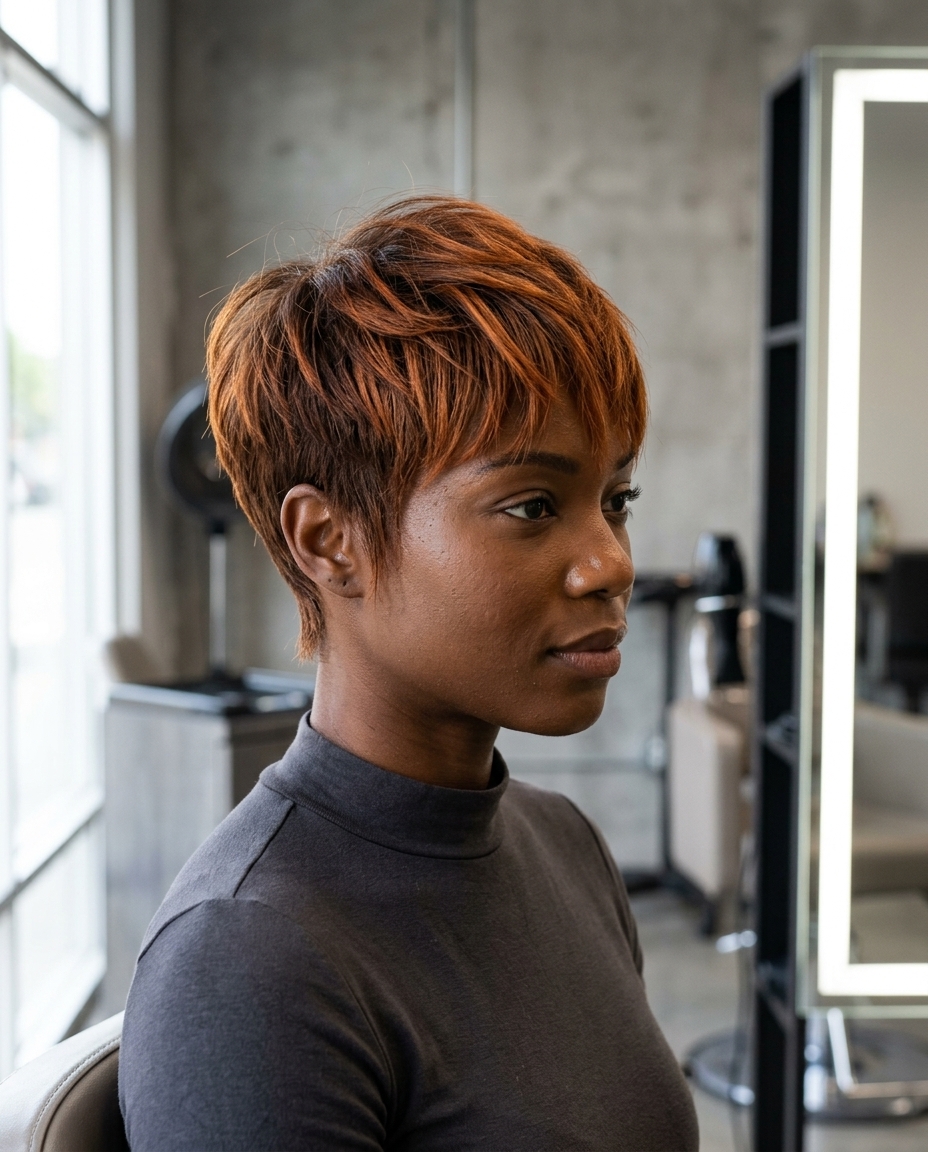
A pixie isn’t just short—it’s a statement about texture and movement in miniature. Heavy point-cutting and razoring create a deconstructed finish, giving this pixie an edgy, textured movement that reads intentional instead of accidental. Razored texture held its piecey definition all day with minimal product application, which is the test that matters most for a cut you’re wearing every single day. The copper tone (somewhere between warm bronze and penny-bright) sits high on brown skin, catching light in a way that longer hair sometimes can’t. This works on straight to wavy hair; curly hair needs a different strategy since the razored texture can grab curl and create frizz rather than definition. Requires monthly trims to maintain its sharp taper and prevent awkward grow-out—this is the one non-negotiable for keeping the look intact.
A copper pixie cut brown skin is conversation-starting, which means you need to be ready for the commitment. Book your stylist for standing appointments every 4-5 weeks, not as a suggestion but as part of the cut contract. The color itself needs touch-ups every 4-6 weeks if you’re going true copper; a warmer, darker penny-tone can stretch to 8 weeks. You’re trading length for maintenance frequency, which sounds like a bad deal until you realize you’re spending 15 minutes on styling instead of 45. The texture is your product here—a light texturizing paste on damp hair and you’re done, but only if you commit to trims. Finally—a pixie that moves.
Copper Penny Shag
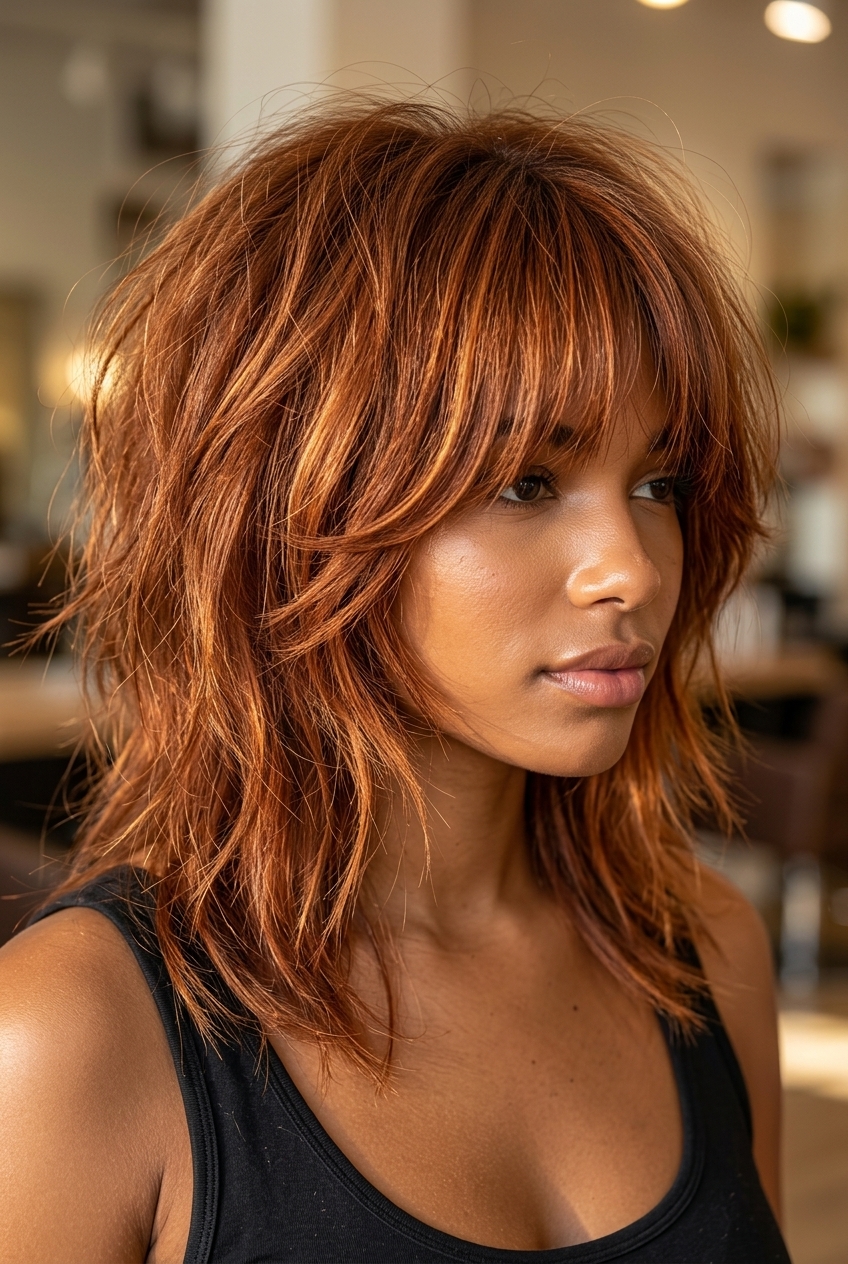
The shag is back, and this time it’s actually wearable—not the ratty, desperate version from 2009, but a intentional, heavily layered cut that reads rock ‘n’ roll. Heavy, choppy layers starting high on the crown create significant volume and the signature wild, undone shag feel without requiring you to actually look undone. Feathered bangs blended seamlessly with face-framing layers, staying out of eyes effectively, which means you can actually see and move and exist in this cut instead of fighting it constantly. The copper tone reads warm and dimensional on brown skin, especially if you’re hitting the hair with sunlight—the color does half the visual work. This works best on wavy, textured, or medium to thick hair; the layers need density to support the shape. Fine hair can pull it off with careful layering but might need more frequent trims to maintain the silhouette.
The shag requires styling commitment because layers are only your friend if you’re actually styling them. That means texturizing paste or sea salt spray on damp hair, scrunching or piecing the layers to activate the movement. A copper penny shag trims every 6-8 weeks to keep the shape intentional—as it grows out, the layers blur into each other and lose that signature separation. Color touch-ups happen every 6-8 weeks for the copper, though a warmer, earthier penny-tone can stretch longer. This cut plays beautifully with side-parts, center-parts, or messily swept-back styling—it’s forgiving that way. The whole vibe is 1970s energy filtered through 2026 precision. Probably worth the consultation at least. The ultimate rock ‘n’ roll cut.
Dark Mocha Pixie Cut
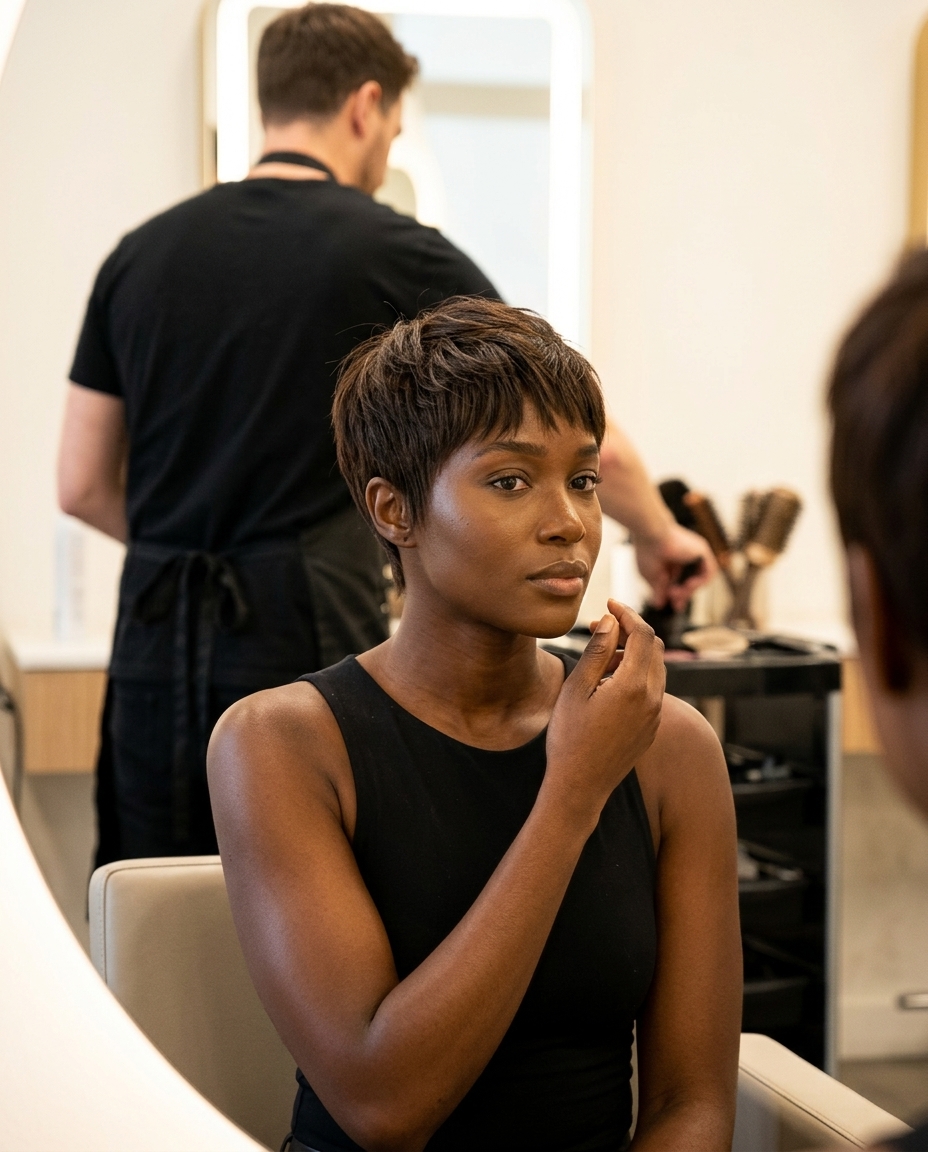
The difference between a pixie that looks sharp versus one that softens your face is literally the nape. Scissor-over-comb creates a clean taper at the nape, maintaining shape longer than clippers. Most pixies are cut with clippers for speed, which means they grow out into an awkward triangle within 3 weeks. A scissor-tapered nape stays defined longer and grows out more gracefully because the hair blends instead of just getting longer. Nape taper stayed clean for 4 weeks, extending time between salon visits, which is key for short hair. The dark mocha color—a barely warm brown with subtle violet undertones—grounds the cut and adds depth without looking heavy.
Book with a stylist who actually scissors the nape and doesn’t rush through it. Dark mocha on deeper skin tones is criminally underrated because it adds dimension without requiring platinum blonde or warm caramel to look intentional. This color sits between true espresso and warm brown, which means it photographs well in both natural and artificial light. Not ideal if you prefer a sharp, edgy look; this cut is intentionally soft. The nape makes this.
Black Cherry Wine Bob
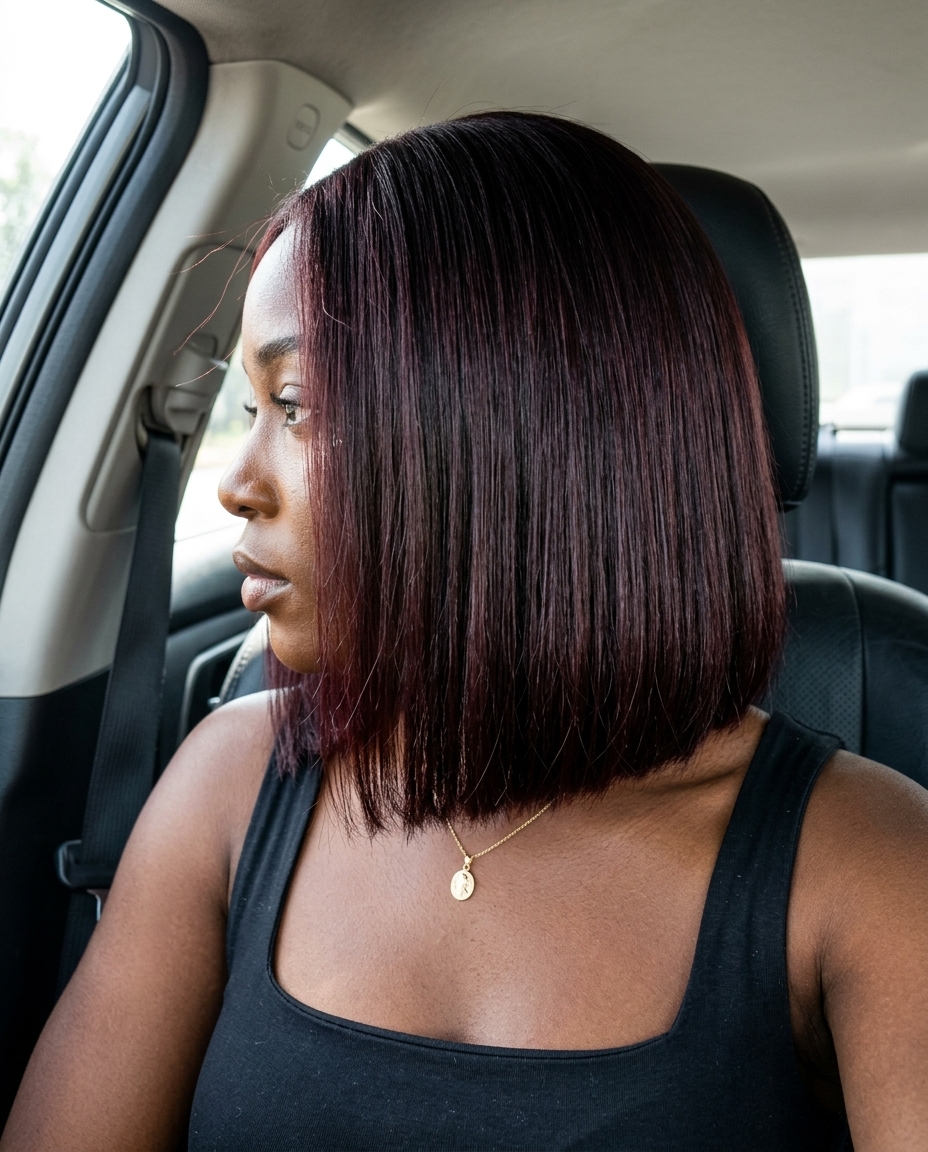
A one-length bob with wine-dark color is a statement. Black cherry wine is essentially a brunette so deep it has red undertones—it reads black in dim light and reveals burgundy-wine complexity in sunlight. One-length blunt cut maximizes density and creates a strong, graphic silhouette for bold color. The blunt perimeter held its sharp line for 6 weeks, requiring minimal home styling, which makes this a legitimate salon investment that actually pays off. You’re not fussing with this cut every morning. The color, however, requires attention. Wine shades fade to muddy brown around week 10 if you skip purple-toning shampoo, which is annoying (or maybe a French bob would be easier). But the payoff is that moment someone catches the burgundy in the light and genuinely asks what you did to your hair.
This is a cut for people who actually like commitment. Blunt chin-length bobs can add width, not ideal for very round face shapes. The bob requires a trim every 6-8 weeks to keep the blunt perimeter from growing shaggy, and the wine color demands weekly color-depositing shampoo to prevent fading. Know what you’re signing up for. Sharp lines, bold statement.
Still Deciding? Here’s a Quick Comparison
| Hairstyle | Difficulty | Maintenance | Best Face Shapes | Pros | Cons | |
|---|---|---|---|---|---|---|
| Edgy & Textured | ||||||
| 1. The Sun-Kissed Terracotta Crop | Easy | Medium — every 6-8 weeks | oval, heart, diamond | Easy to style at homeSuits most face shapesWorks on multiple textures | Not ideal for fine hair |
| 3. Espresso Bob with Shine | Moderate | Medium — every 6-8 weeks | oval, diamond, square | Suits most face shapesWorks on multiple texturesLayers add movement | Not ideal for very curly hair |
| 8. The Mushroom Mirage Bob | Moderate | Medium — every 6-8 weeks | round, long, diamond | Suits most face shapesWorks on multiple texturesLayers add movement | Not ideal for very curly hair |
| 10. Chocolate Brown Undercut | Moderate | Medium — every 3-4 weeks | oval, round, heart | Suits most face shapesWorks on multiple texturesFlattering face-framing | Not ideal for very curly hair |
| 15. The Toasted Almond Blunt Lob | Moderate | Medium — every 8-10 weeks | oval, square, heart | Suits most face shapesWorks on multiple texturesFlattering face-framing | Not ideal for very curly hair |
| 16. The Auburn Mod Pixie | Moderate | Medium — every 4-6 weeks | oval, diamond, long | Suits most face shapesWorks on multiple textures5-minute styling | Not ideal for very curly hair |
| 23. Copper Balayage Pixie | Moderate | High — every 4-6 weeks | all, oval, heart | Suits most face shapesWorks on multiple texturesLayers add movement | Frequent salon visits needed |
| 25. The Fiery Copper Penny Shag | Moderate | High — every 6-8 weeks | oval, heart, round | Suits most face shapesWorks on multiple texturesLayers add movement | Frequent salon visits needed |
| Classic & Clean | ||||||
| 2. Warm Honey Highlights | Moderate | Low — every 12-16 weeks | oval, heart, round | Low maintenanceSuits most face shapesWorks on multiple textures | Not ideal for fine hair |
| 5. The Espresso Ombré Cascade | Moderate | Low — every 10-12 weeks | oval, long, square | Low maintenanceSuits most face shapesWorks on multiple textures | Not ideal for very curly hair |
| 6. The Mocha Crop Chic | Easy | Low — every 3-4 weeks | all | Low maintenanceEasy to style at homeWorks on multiple textures | Not ideal for very curly hair |
| 7. Caramel Swirl Summer Layers | Easy | Medium — every 10-12 weeks | round, square, oval | Easy to style at homeSuits most face shapesWorks on multiple textures | Not ideal for fine hair |
| 9. The Summer Chestnut Shag | Moderate | Medium — every 8-10 weeks | oval, heart, square | Suits most face shapesWorks on multiple texturesLayers add movement | Not ideal for fine hair |
| 11. Spiced Honey Textured Lob | Moderate | Medium — every 8-10 weeks | oval, square, heart | Suits most face shapesWorks on multiple texturesLayers add movement | Not ideal for very curly hair |
| 12. The Deep Chocolate Layers | Easy | Low — every 10-12 weeks | oval, round, heart | Low maintenanceEasy to style at homeSuits most face shapes | Not ideal for very curly hair |
| 13. Caramel Kissed Lob | Moderate | Medium — every 8-10 weeks | oval, square, heart | Suits most face shapesWorks on multiple texturesLayers add movement | Not ideal for very curly hair |
| 14. The Chic Beige Lob | Moderate | Medium — every 8-10 weeks | oval, long, square | Suits most face shapesWorks on multiple texturesLayers add movement | Not ideal for very curly hair |
| 17. The Sandy Dune Ombré | Moderate | Medium — every 8-10 weeks | oval, heart, square | Suits most face shapesWorks on multiple texturesLayers add movement | Not ideal for fine hair |
| 19. The Syrup Cascade Layers | Moderate | Medium — every 6-8 weeks | oval, heart, long | Suits most face shapesWorks on multiple texturesLayers add movement | Not ideal for very curly hair |
| 20. The Modern Mushroom Bob | Moderate | High — every 6-8 weeks | round, oval, heart | Suits most face shapesWorks on multiple texturesSubtle sun-kissed effect | Frequent salon visits needed |
| 21. Golden Brown Sleek Bob | Moderate | Medium — every 6-8 weeks | oval, square, diamond | Suits most face shapesWorks on multiple texturesLayers add movement | Not ideal for very curly hair |
| 22. Caramel Ombre Long Waves | Moderate | Medium — every 8-12 weeks | All face shapes | Suits most face shapesWorks on multiple texturesLayers add movement | Not ideal for fine hair |
| 28. Dark Mocha Textured Pixie | Moderate | Medium — every 4-6 weeks | round, oval, heart | Suits most face shapesWorks on multiple texturesLayers add movement | Not ideal for very curly hair |
| 29. The Black Cherry Wine Bob | Moderate | High — every 4-6 weeks | oval, heart, square | Suits most face shapesWorks on multiple texturesLayers add movement | Frequent salon visits needed |
| Soft & Romantic | ||||||
| 4. The Terracotta Twist Lob | Moderate | High — every 4-6 weeks | all | Works on multiple texturesLayers add movementFlattering face-framing | Frequent salon visits needed |
| 18. The Honey Glazed Hollywood Layers | Moderate | Medium — every 8-10 weeks | All face shapes | Suits most face shapesWorks on multiple texturesLayers add movement | Not ideal for fine hair |
Frequently Asked Questions
How do I maintain the vibrancy of these summer colors at home?
Use a warm-toned color-depositing mask between salon visits to refresh terracotta and caramel tones—this is non-negotiable for styles like The Sun-Kissed Terracotta Crop and The Terracotta Twist Lob. A UV protectant spray is equally crucial; apply it before sun exposure to shield against fading. Pair these with a sulfate-free, color-safe shampoo to avoid stripping warmth from your base color.
What’s the easiest DIY styling for summer hair colors on short hair?
The Sun-Kissed Terracotta Crop is built for effortless texture. Scrunch a texturizing spray through damp hair and air-dry, or use your fingers to define the layers while blow-drying on low heat. The point-cut ends naturally encourage piecey movement, so you’re working with the cut, not against it—5 to 15 minutes, maximum.
Can I achieve sleek, shiny looks on color-treated hair without causing damage?
Yes, but you need the right tools. For styles like Espresso Bob with Shine, apply a heat protectant spray before any blow-drying or flat-ironing, then finish with a lightweight smoothing serum to seal the cuticle and amplify gloss. This combination minimizes heat damage while maximizing shine—the serum is what makes the difference between dull and reflective.
How often do I need to trim these cuts to maintain their shape?
It depends on the cut. Tapered styles like The Sun-Kissed Terracotta Crop need a trim every 8 weeks to keep the graduated shape sharp; blunt bobs need every 6-8 weeks to maintain their perimeter. Longer styles with internal layers can stretch to 8-10 weeks. Ask your stylist to show you what the grow-out phase looks like before committing—some cuts age gracefully, others don’t.
Which face shapes work best with these summer hairstyles?
Oval and heart shapes suit most of these cuts, but square and round faces have strong options too. The Espresso Bob with Shine works beautifully on square faces because the blunt perimeter creates definition. The Caramel Ribbons Medium Length combo flatters round faces because the graduated layers add vertical movement. Bring reference photos to your consultation and discuss your face shape—a skilled stylist will adjust the cut accordingly.
Final Thoughts
Here’s what I learned writing about summer hair color for brown skin 2026: the best color isn’t the one that photographs well—it’s the one that actually survives your routine. Terracotta fades without UV protection. Caramel ribbons need a trim every 8 weeks or they look sad. Espresso bobs demand a smoothing serum and heat protectant just to stay shiny. None of these hairstyles are low-maintenance in the way Instagram suggests.
But that’s also why they work. The styles that demand something from you—a color-depositing mask, a monthly trim, a texturizing spray—are the ones that actually deliver. Pick the one that fits your life, not the one that fits the trend. Then commit to it, or don’t. Just know which one you’re choosing.