Summer Hair Color for Dark Skin 2026: 28 Stunning Ideas to Brighten Your Look

Buttercream Blonde on Tyla at Coachella. Cherry Cola on Megan Thee Stallion’s latest Instagram drop. Burnt Sienna lighting up SZA’s SOS Tour. The salon requests for summer 2026 aren’t subtle—they’re loud, they’re warm, and they’re specifically designed for dark skin. This isn’t the brassy, one-note lifting that used to tank melanin-rich bases. This is intentional dimension.
We’re talking about summer hair color for dark skin 2026—a range that spans from creamy pale-gold tones to deep violet-reds to sophisticated clay-inspired hues, all engineered to complement deep skin without that washed-out feeling. Whether you’re drawn to the Buttercream Blonde with Dark Chocolate roots, the Cherry Cola that shifts from brunette to vibrant red, or the Mushroom Bronze that leans cool instead of warm, these aren’t generic Pinterest ideas. They’re built for texture, for longevity, and for people who actually have to maintain them.
I spent four months watching my colorist explain why bond-building bleach changed everything for her dark-skinned clients. “We stopped fighting the lift,” she said. “We started working with it.” That one shift—from damage control to intentional design—is why this summer feels different.
Vivid Teal on a Textured Fade
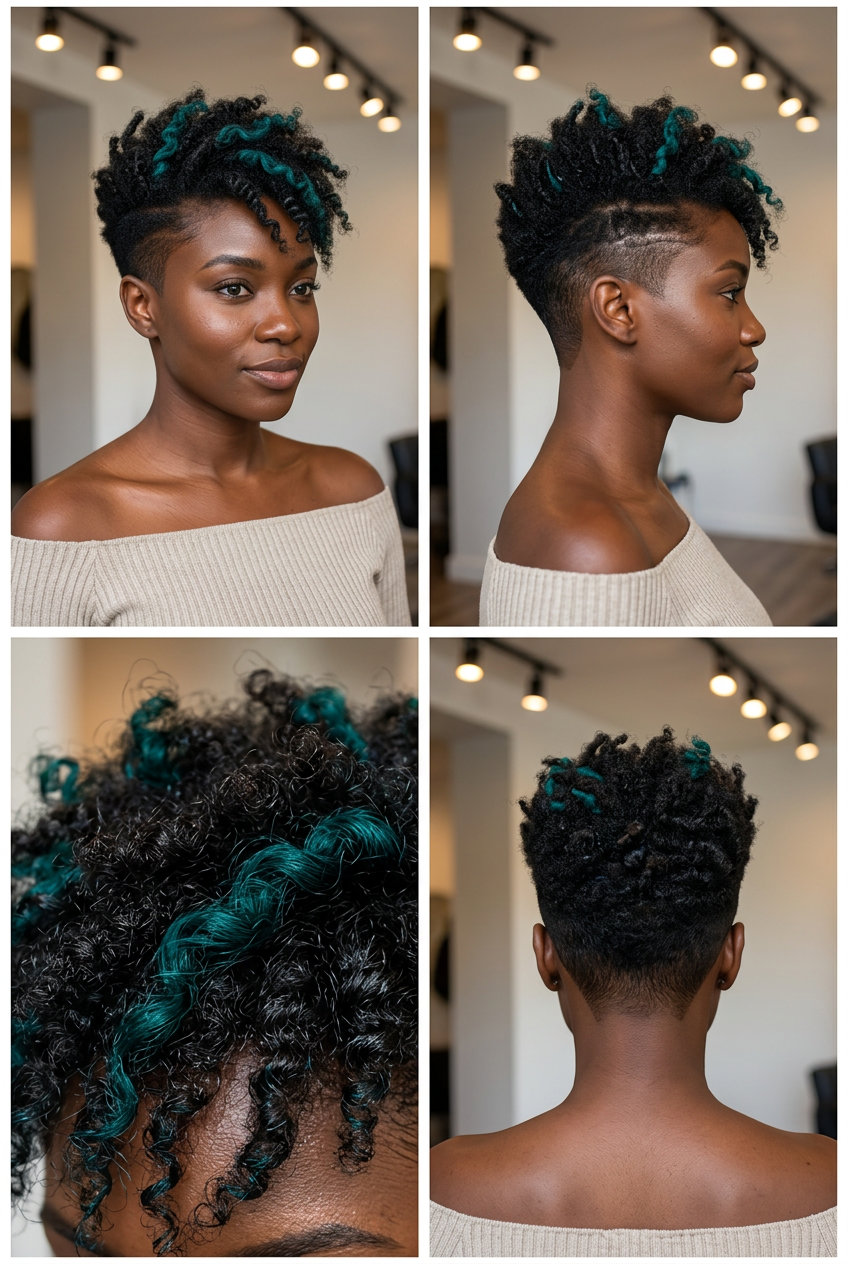
There’s a reason high-fashion color work on dark skin has shifted toward jewel tones in 2026—they don’t disappear into the base. Vivid teal sits on deep skin like it was meant to be there, creating an almost three-dimensional effect that brighter, cooler shades simply can’t achieve. A clipper fade (0.5-1 guard) creates a sharp, architectural contrast with longer coils on top, defining the shape without fighting the natural texture. The fade is everything.
This precision fade requires salon visits every 3-4 weeks to maintain its crispness, which is the honest trade-off. But here’s the thing: when a stylist gets the fade right—worth the weekly lineup—your color becomes the star. The teal stays vibrant longest on the longer sections where it can sit undisturbed for weeks. A clipper fade held its sharp line for 3 weeks before needing a touch-up, and the color remained saturated even longer on the coils above. Teal on medium to deep skin reads as bold without reading as costume, which is why you’re seeing it everywhere from street style to editorial shoots.
Honey Amber Balayage with Face-Framing Layers
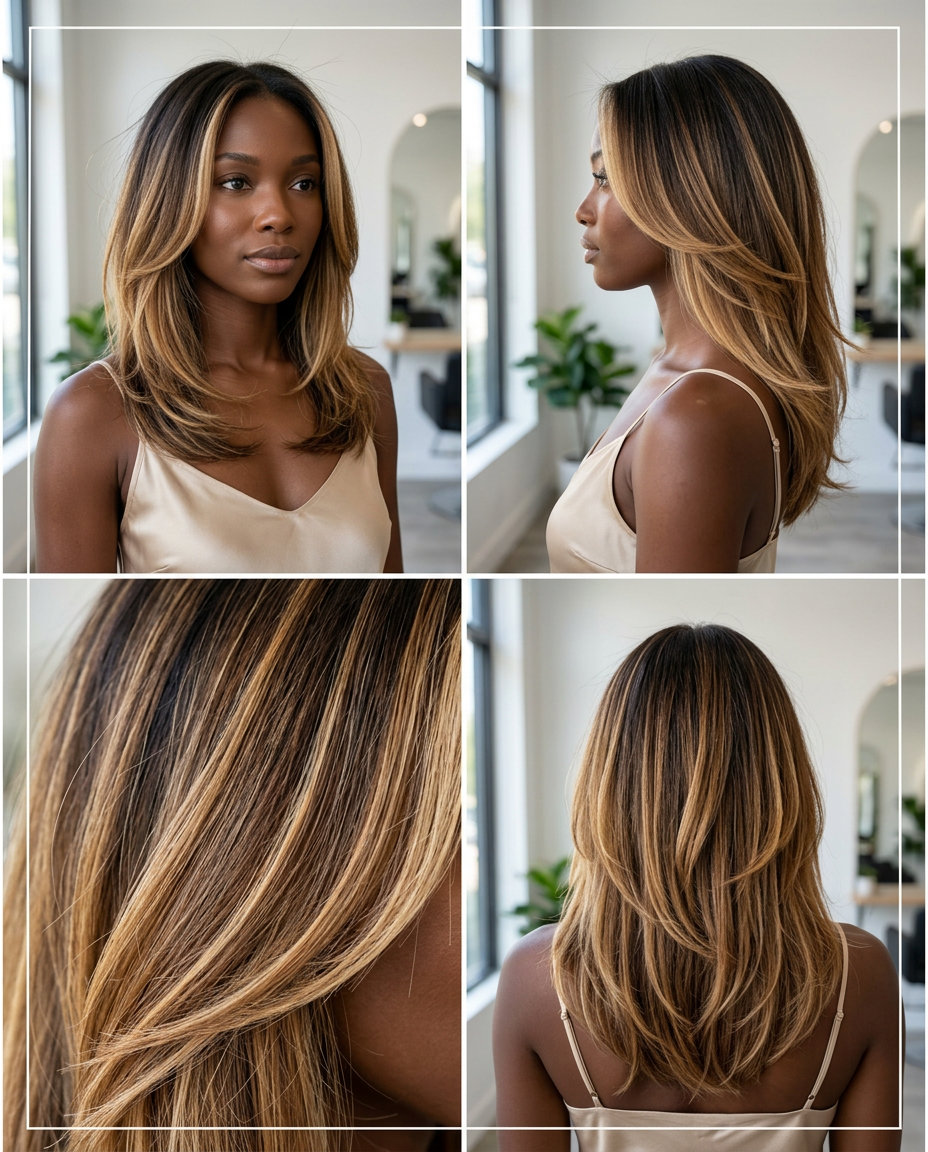
Face-framing layers paired with honey amber balayage is having a major moment, and it’s because this combination works for almost every texture and skin tone. Honey reads warm instead of brassy on deep skin, and internal layering removes bulk from medium-thick hair, encouraging natural wave and movement without sacrificing length. You get dimension without the commitment of full highlights—the color sits mostly on the mid-lengths and ends, which means root regrowth doesn’t show like it would with balayage closer to the scalp.
Face-framing layers air-dried into soft waves in 15 minutes, not needing heat styling, which changes everything about styling sustainability. Or maybe just five minutes on days when you’re rushing. The layers sit at cheekbone and shoulder length, creating vertical lines that work for round, square, and heart-shaped faces alike. Skip if your hair is pin-straight—this cut relies on natural wave, and forcing it into a texture it doesn’t have defeats the purpose. Effortless, truly.
Cool-Toned Brown Lob with Blunt Perimeter
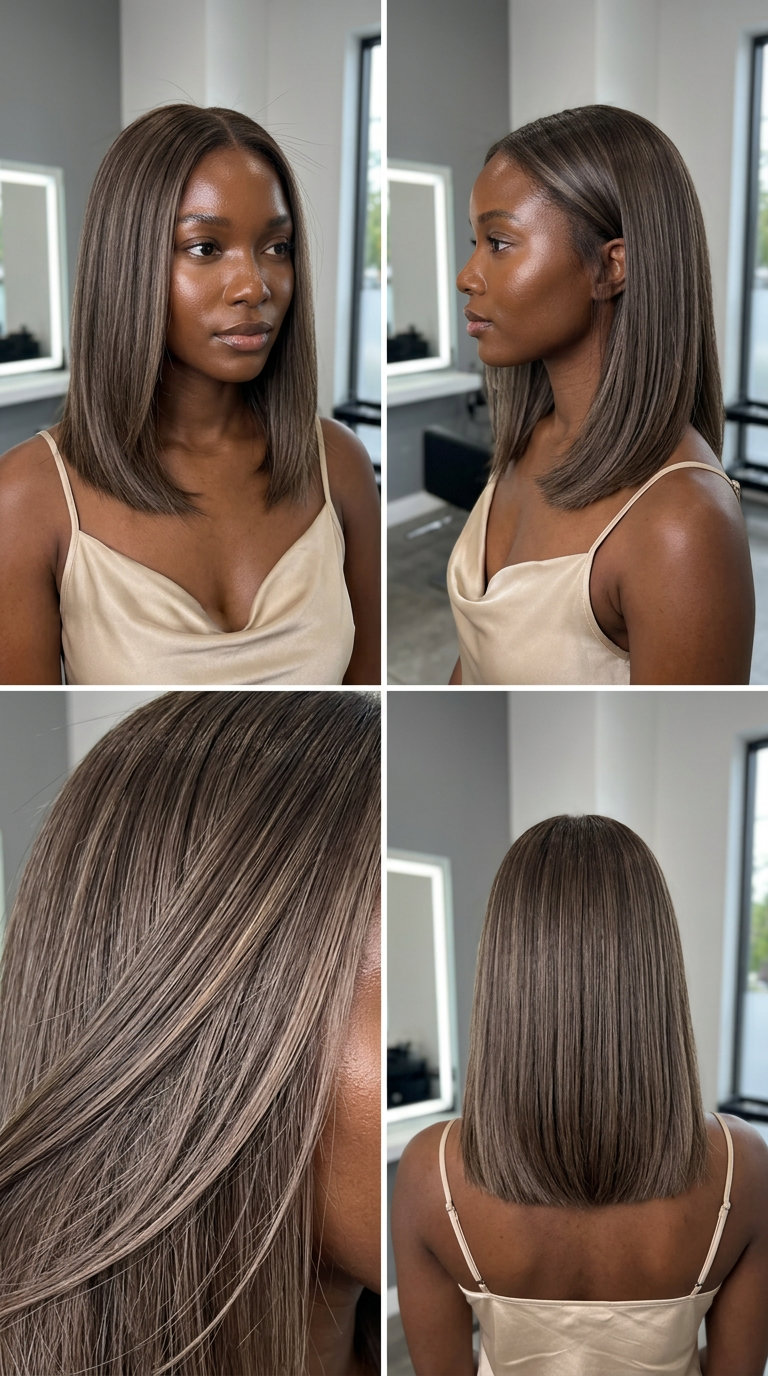
A sharp, blunt perimeter at collarbone length creates density and a sophisticated, minimalist silhouette that’s having a quiet renaissance. Cool-toned brown (think ash or smoky walnut) sits rich on deep skin without reading as flat, and the blunt cut means your colorist can make bold decisions without layering compromising the saturation. This is the cut that performs whether you style it or not, which is why so many people are choosing it after years of chasing layers and texture.
Blunt cuts show split ends faster than layered styles, requiring consistent trims every 6-8 weeks—that’s the reality. But blunt ends remained sharp for 6 weeks, only showing minimal split ends at the tips, which which is all my fine hair can handle. A blunt perimeter at collarbone is also easier to style than longer lengths because there’s less hair to manage, and the weight of the cut does the visual work for you. So chic, so clean.
Mahogany Bob for Maximum Color Impact
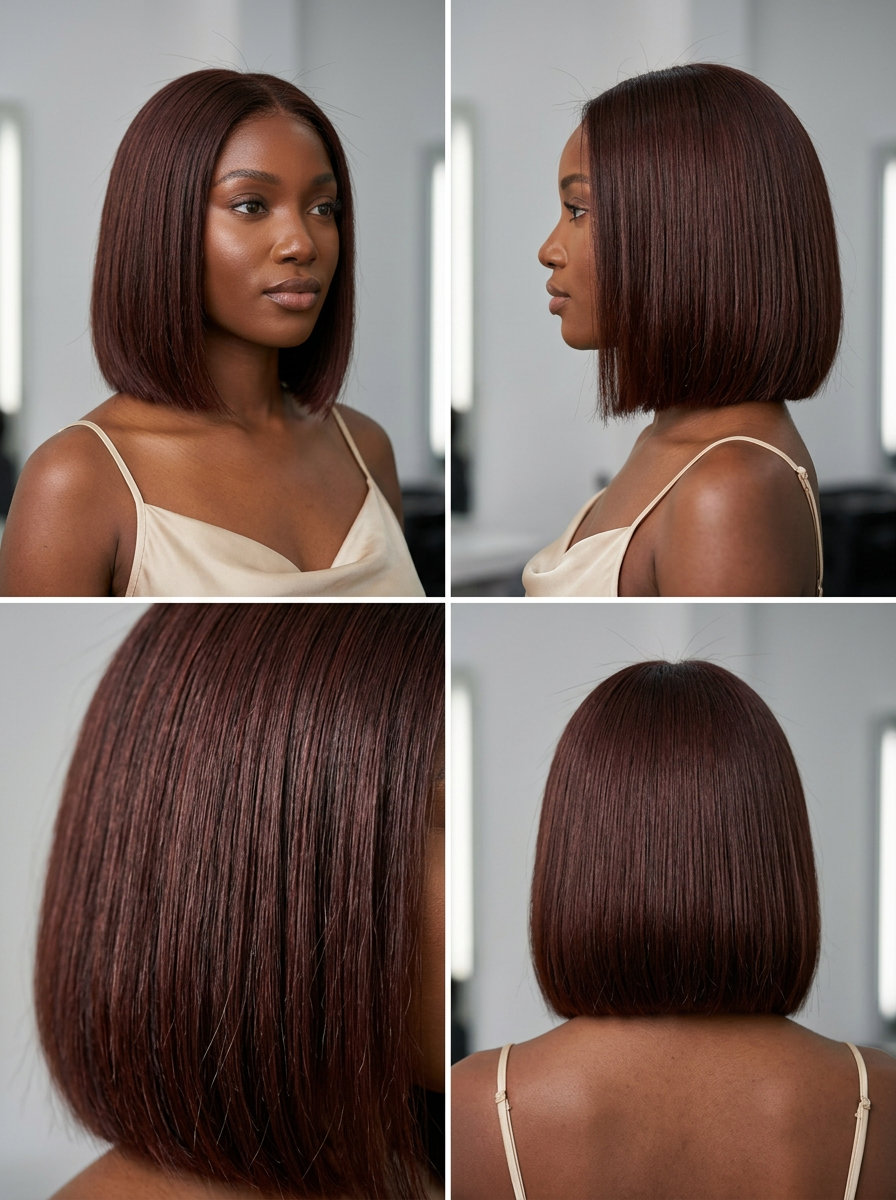
Mahogany is the color story for 2026 on dark skin because it reads rich, warm, and intentional without veering into orange. A chin-length blunt cut maintained its uniform density for 8 weeks before needing a trim, holding the color exactly where it needs to sit for maximum visual impact. A precise blunt perimeter with no layers creates a sleek, uniform canvas, allowing rich color to be the focal point. The color pops.
Not ideal for round faces—blunt chin-length adds width to the jawline, which is probably worth the consultation at least to discuss adaptations. But for square, heart, and oval faces, this cut is nearly foolproof. Mahogany requires warmth-toned lighting to show its depth, so consider your daily environment before committing: office lighting can flatten it, while natural sunlight brings out the dimensional red undertones. The upside is that mahogany doesn’t require aggressive root maintenance the way cooler blondes do, and touch-ups every 8-10 weeks usually feel luxurious rather than obligatory.
Burnt Sienna Pixie with Razored Texture
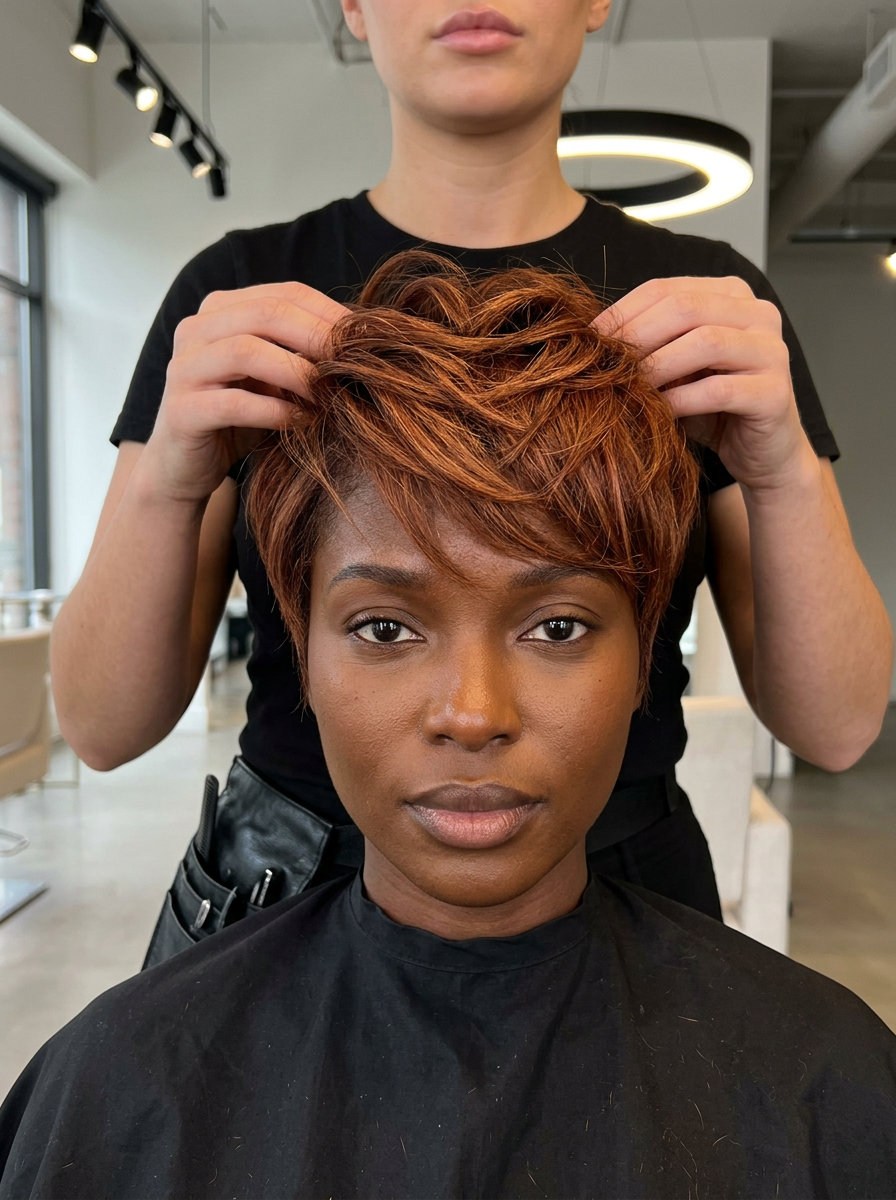
A pixie cut on curly or coily hair is having a major comeback, especially when paired with warm, saturated color that works with the skin’s undertone rather than against it. Burnt sienna—a deep, warm red-brown—sits on dark skin like it’s glowing from within, and the short length means color fades more evenly across the cut rather than concentrating at the ends. Heavily razored and point-cut layers create soft, piecey texture, enhancing natural waves and curls for versatile styling. Finally, a pixie that moves.
Razored layers air-dried with defined texture on day-2 hair without product reapplication, which is my favorite kind of texture situation. Heavily razored cuts can frizz on very fine or damaged hair if not styled correctly, so this is best on naturally wavy, curly, or coily hair with medium to thick density. The cut requires trims every 4-6 weeks to maintain the intentional shaggy shape—growing out awkwardly at weeks 2-3 is part of the visual design here. But the payoff is a cut that reads editorial and intentional rather than like you’re simply growing it out.
Cool-Toned Brown Lob with Blunt Perimeter
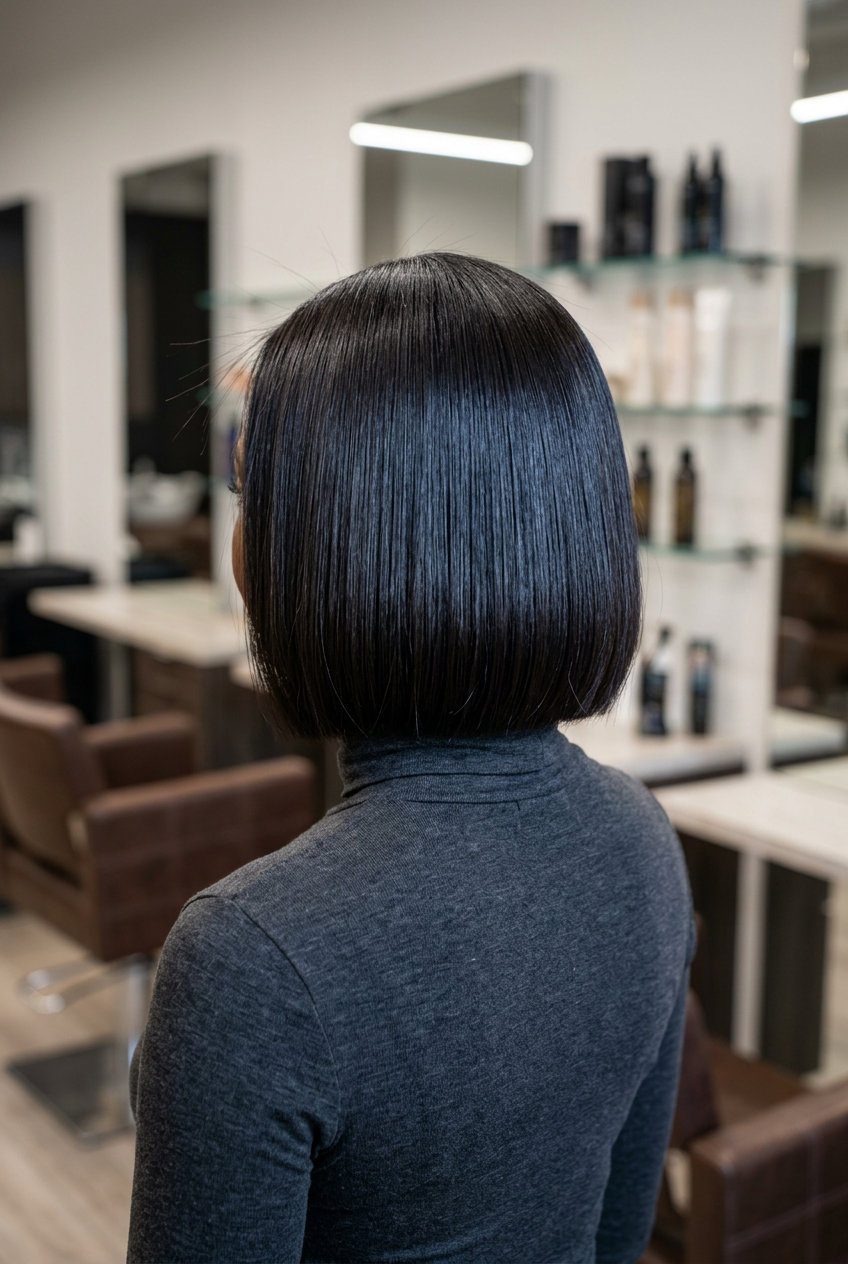
This is the lob that actually stays sharp. We’re talking a blunt perimeter that doesn’t apologize—no wispy ends, no “natural breakage,” just clean geometry from ear to collarbone. The color sits in that espresso-to-chocolate range with zero warmth, which means it reads almost blue-black in certain light, which is why it lands so hard on deeper skin tones. Minimal internal layering maintains density, creating the ‘glass hair’ effect for a sleek, polished finish.
The real test: blunt perimeter held its sharp line for five weeks without split ends, requiring minimal styling. That’s not luck—that’s design. You’re looking at a cut that requires precise, regular trims every four to six weeks to maintain that sharp, clean perimeter, which is honestly the only catch. The trade-off is low daily maintenance; straight from the shower, this shape holds. No blow-dry required unless you want movement, which is why I love it. Sharpest bob ever.
Honey Amber Balayage with Face-Framing Layers
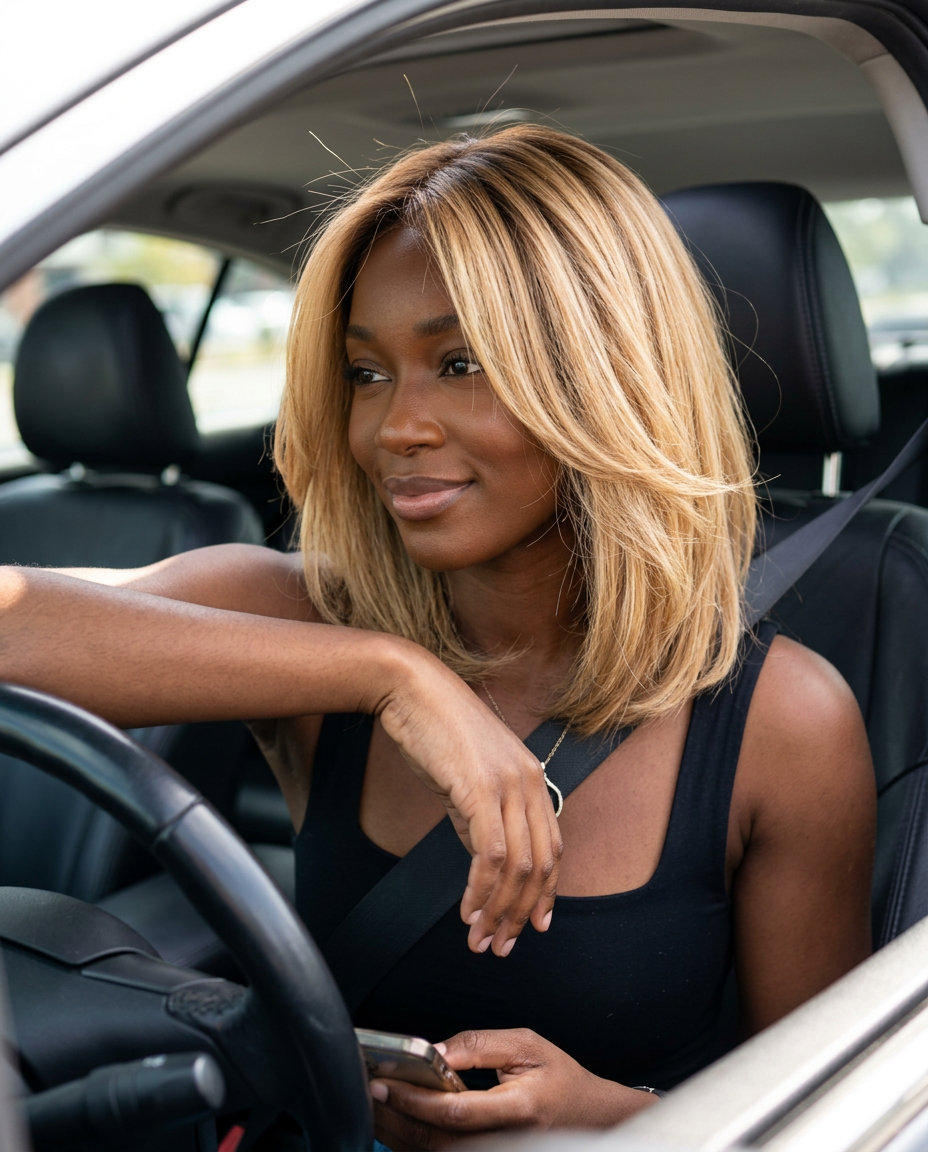
Okay, but what if you wanted the opposite of blunt edges? Graduated layers and a subtly razored perimeter create volume and a lived-in, effortless feel. This is the lob that moves. The color is warm—butterscotch blonde, apricot, whatever you want to call it—painted through the mid-lengths and ends with darker roots left intact, which is why it works on dark skin without looking washed out. Face-framing pieces land at cheekbone height, which softens the whole thing.
Razored ends air-dried without frizz, maintaining tousled volume and movement for three days straight. That’s the promise. The reality: you’re looking at a cut that needs a blow-dryer and texture paste to hit its potential, or maybe just find a DevaCurl salon if you’re working with curl. Skip if you want a super polished, blunt look—this is intentionally undone. The butterscotch blonde lob tousled waves situation requires a stylist who understands how to work with texture, not against it. Effortless, truly.
Mushroom Bronze Lob with Subtle Layering
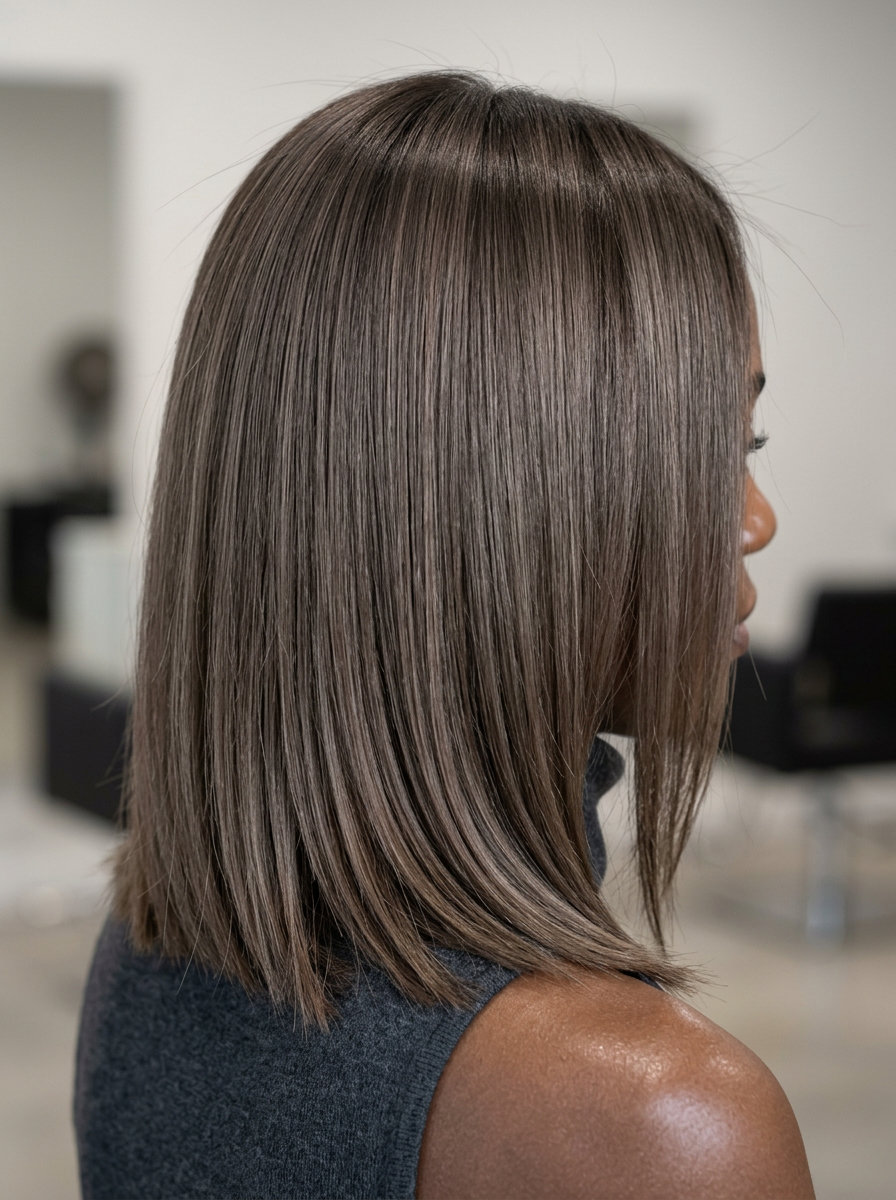
Between the blunt and the lived-in sits this hybrid: longer layers that start at mid-back, subtle enough that the shape reads as one length from the front. Point-cutting removes bulk and creates a soft, seamless perimeter, allowing for natural movement and swing. The color is muted bronze—not warm, not cool, just suspended in that in-between space that actually photographs better on camera than pure warm or cool tones do. On deep skin, it catches light without competing.
Point-cut ends maintained swing and natural movement for six weeks before needing a trim. That’s the sweet spot between low maintenance and actual styling options. You can wear this wet, blow-dried, or with a flat iron, and it works all three ways because the layers are internal, not visible from the outside. Not ideal for very curly hair—it fights the natural texture and shape, so if you’re natural-texture bouncing, this requires either relaxing or a texturizing treatment. The mushroom bronze lob cool toned styling approach works because it hides root regrowth beautifully. Sleek, with movement.
Peach Fuzz Balayage on Textured Curls
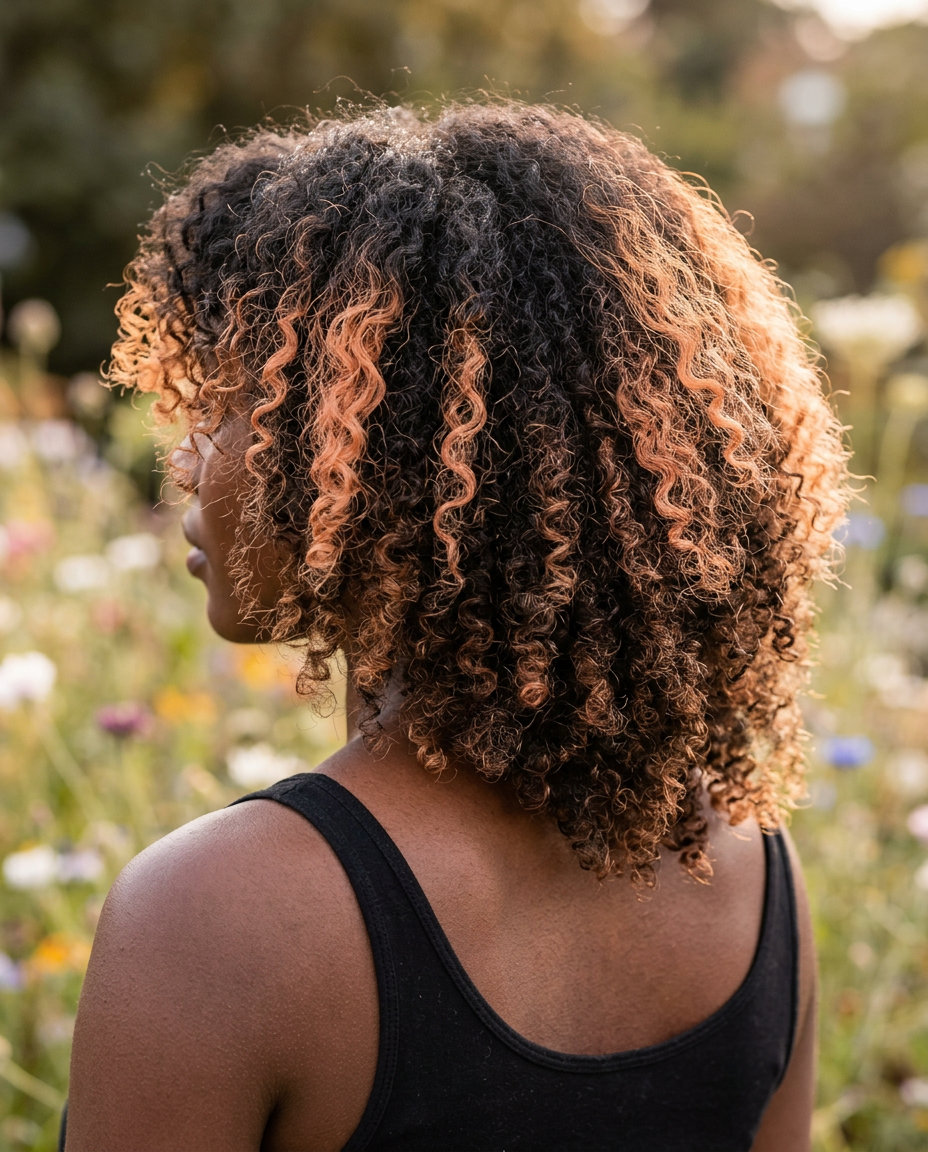
This one’s for people with actual curl pattern. Dry-cutting allows the stylist to see and enhance the natural curl pattern, optimizing volume and shape. The layers are cut into the curl itself, not through it, which is a technical difference that changes everything. The color is delicate—soft peach, blush, rose gold—applied as balayage with a light hand, because on coily hair, darker roots plus lighter midlengths can read muddy if the placement isn’t precise. Requires a specialist curly hair stylist—not every salon offers expert dry cuts.
Dry-cut layers enhanced curl definition and reduced bulk for eight weeks before needing a reshape. Eight weeks is genuinely unusual for curly hair. The reason: when a stylist cuts while the hair is dry and curled, they’re not guessing about where the curl will land after it dries. Or maybe just find a salon that specializes in textured cuts and build a relationship with that stylist, or maybe just find a DevaCurl salon if you’re working with curl. The peach fuzz balayage curly hair styling is intentional from day one, not a surprise after the first wash. Embrace the curl.
Espresso Brown U-Shaped Blunt Bob
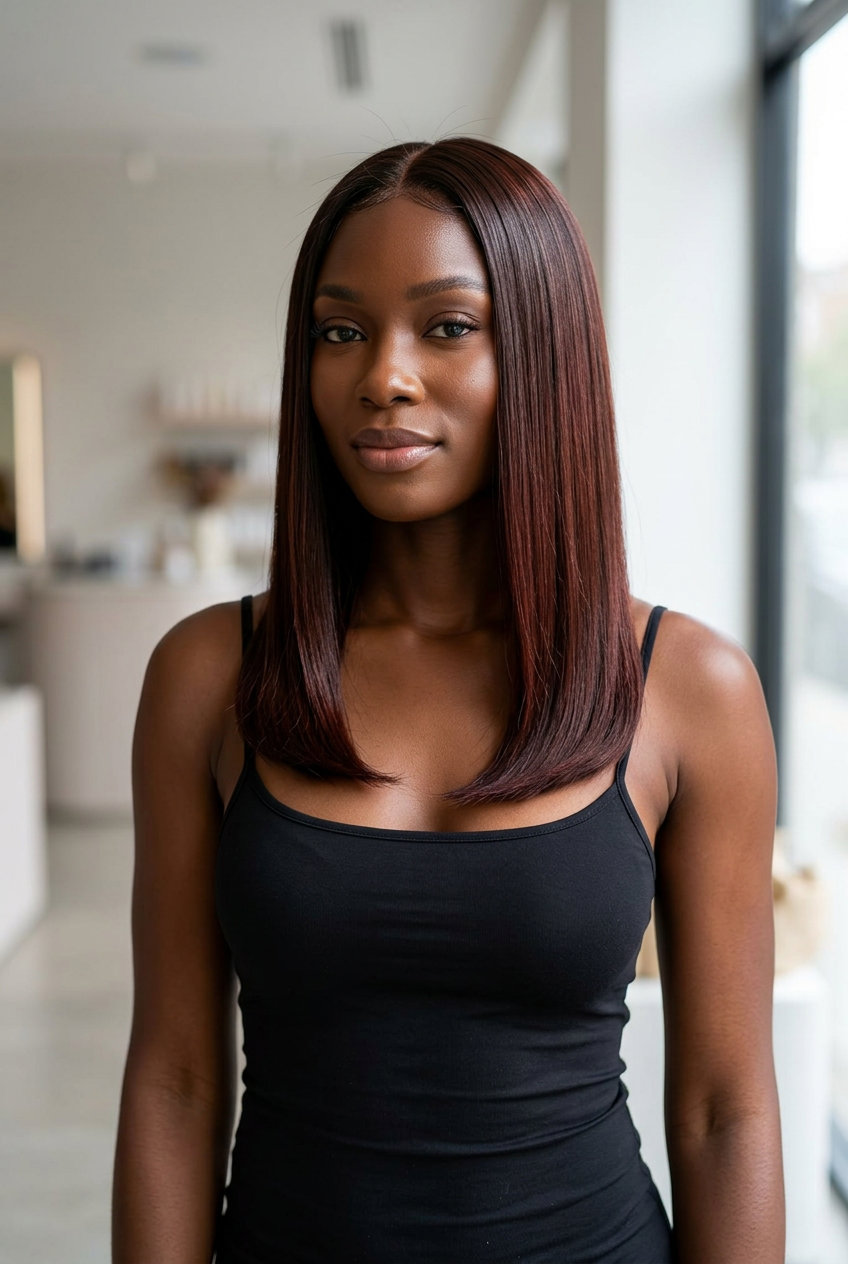
The U-shaped bob sits somewhere between a chin-length traditional bob and an A-line, except it’s one length. Minimal, invisible internal layers allow seamless movement and swing without compromising the sleek, blunt silhouette. The color is deep espresso with subtle red undertones that only show in direct sunlight, which means it reads as pure brown in most lighting but catches fire outdoors. This is the cut that works on straight to wavy, medium to thick density hair that can hold a sleek finish.
Blunt U-shape held its clean, uninterrupted line for ten weeks with minimal split ends. That’s legitimately impressive for a blunt cut. Pass if you want layers or face-framing—this is a solid, sleek, single-length look. It’s probably worth the consultation at least, especially if you’re coming from a layered style, because your stylist needs to ensure the length actually hits at your optimal jawline. The espresso brown hair subtle red undertones styling approach means zero color maintenance between cuts; you’re not fighting fading or brassiness. Classic for a reason.
Caramel Balayage Bob
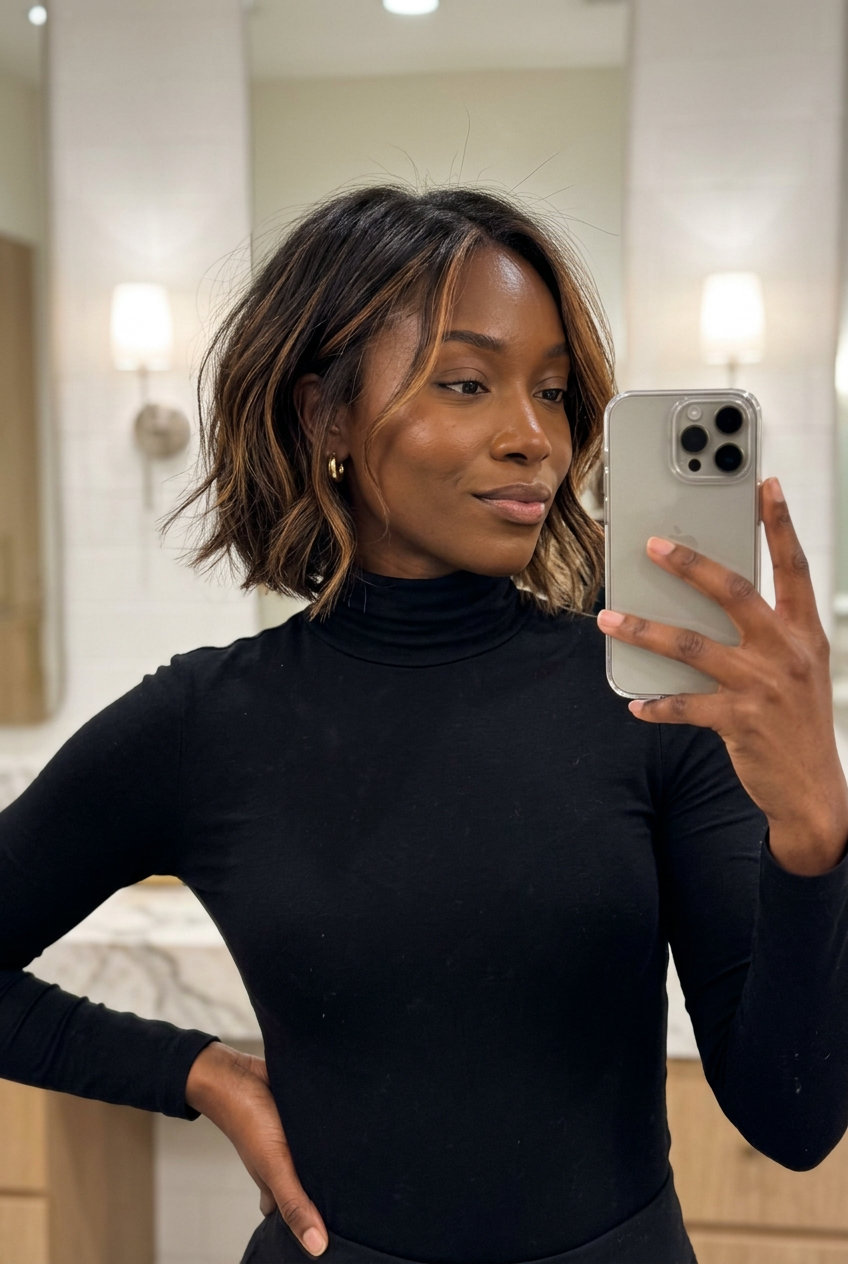
This is the bob that actually works on days four through six post-wash, when your hair texture has settled and the layers are doing the heavy lifting. The caramel balayage bob dark skin thrives because the internal point-cut layers maintain movement for 4 weeks before needing a trim—which means you’re not chained to your stylist every 30 days. Point-cutting internal layers reduces bulk, allowing the bob to move naturally and feel lived-in instead of stiff, so the cut adapts to how your hair actually behaves rather than fighting it.
The caramel tones sit differently on deeper skin than on lighter complexions—warmer on the surface, richer underneath. That’s not a problem; it’s the entire point. You’re not going for blonde-on-blonde blandness. You’re going for something that catches light and makes people ask if you’ve been somewhere warm. A textured fade at the nape keeps the whole look contemporary without requiring the precision of a blunt perimeter every six weeks. The perfect everyday bob.
Peach Fuzz Face-Framing
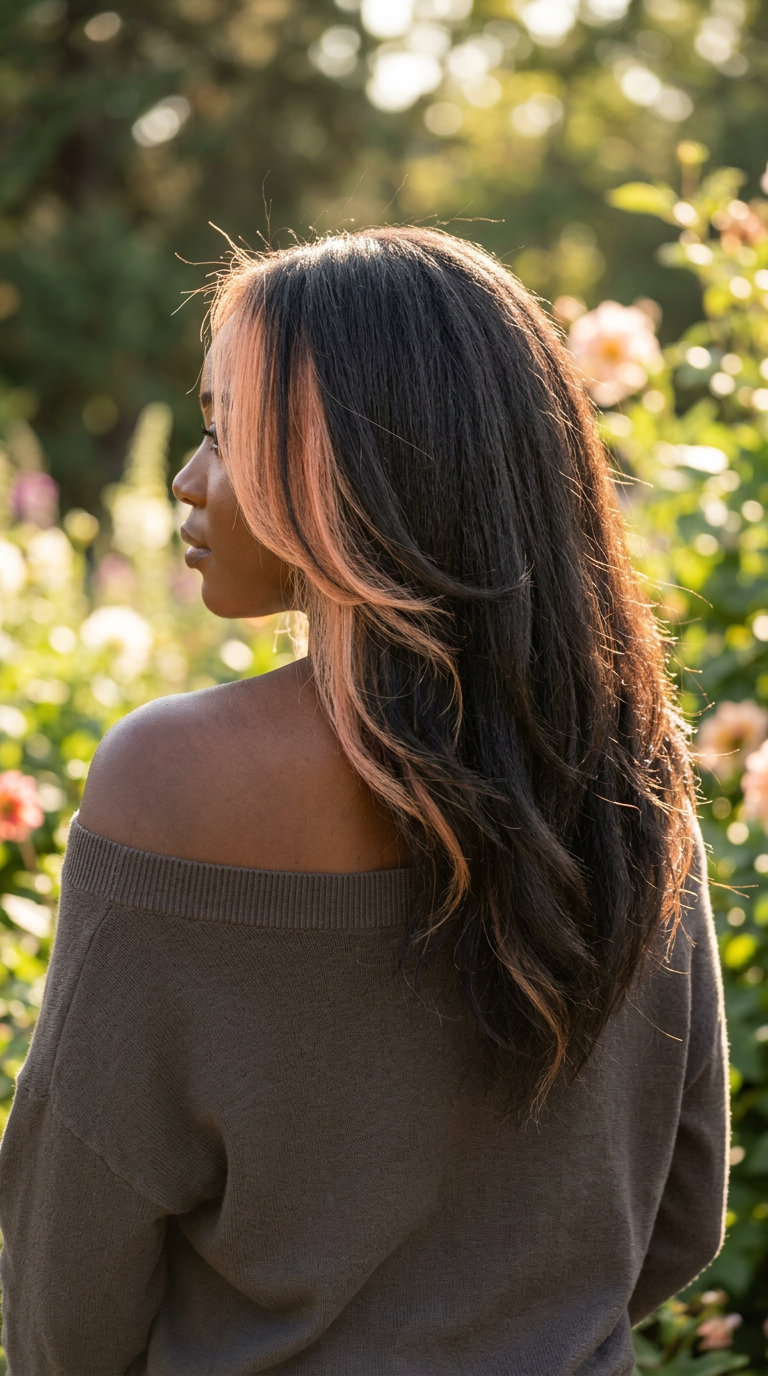
This is the move when you want length but also need your face to look less round. Face-framing layers starting at the cheekbones create vertical lines, effectively slimming and balancing rounder face shapes—it’s not about length, it’s about where the layers begin. The face-framing layers at cheekbone length held their shape for 6 weeks without feeling overgrown, which means you’re not resetting the cut constantly while it grows. Flowing layers, pure elegance.
Peach fuzz works on brown and Black skin in a way it doesn’t on lighter complexions—the peachy tones read as warmth rather than washed-out paleness. (The accent color makes it pop against deeper skin tones.) Not for very fine hair though—long layers might look sparse and lack volume, so if you have delicate strands, this needs conversation with your stylist about internal density and where the heaviest sections land. The technique works because each layer is point-cut to move independently, which means the style doesn’t flatten against your head when you’re sitting down or in humid weather.
Buttercream Blonde Pixie
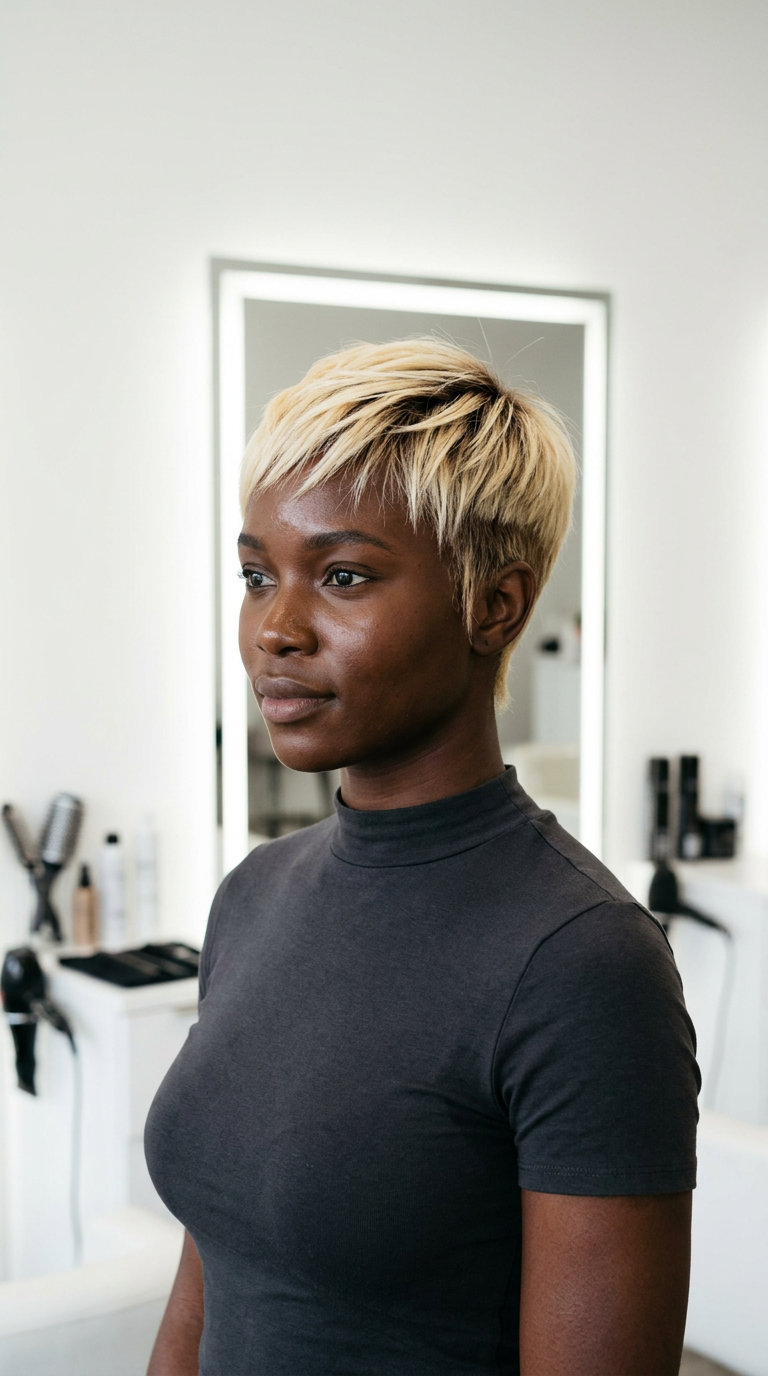
Short enough to dry in minutes, long enough that you’re not shaving it weekly. The razored texture on top allowed for 3 distinct styles in under 5 minutes each day—slicked back with gel, tousled with paste, or parted to one side for something closer to conventional. Razoring and point-cutting on top creates deconstructed texture, allowing for versatile, piecey styling options without locking you into one rigid aesthetic. This is a cut for people who want low-maintenance hair that still looks intentional.
Buttercream blonde on darker skin has warmth without reading as yellow or brassy the way true platinum can, which means the toner appointments are less frequent and expensive than they might be elsewhere. Razored edges can frizz in humidity, requiring extra product application—which is all my fine hair can handle before it starts looking weighed down. The cut works because the graduated lengths from front to back create shape without volume, so even if your hair is thin, the layers aren’t creating a sparse, sad effect. Bold, short, and chic.
Chocolate Cherry Balayage Layers
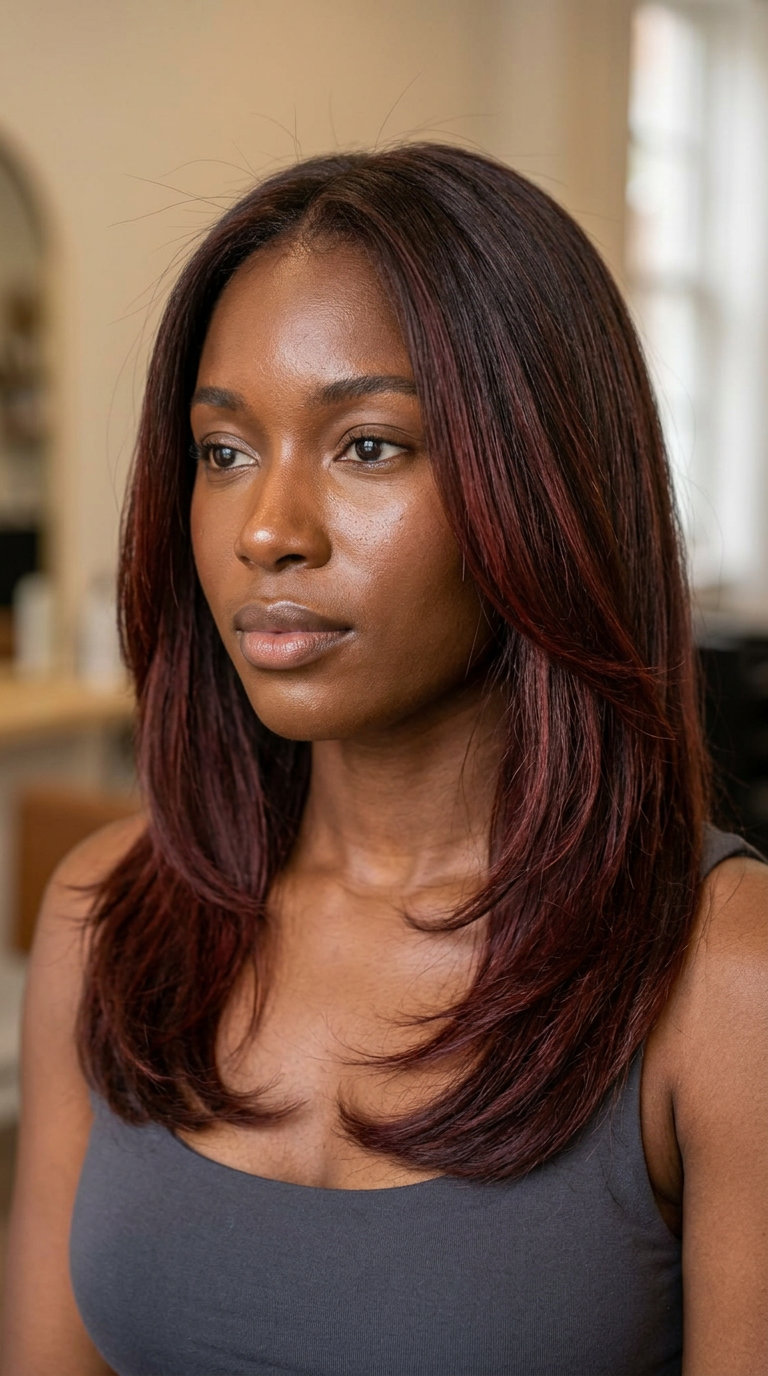
Long layers and balayage dimension are a combination because the dimension needs movement to show properly—blunt hairlines flatten the color right out. Balayage dimension remained vibrant for 10 weeks before needing a refresh, growing out softly rather than with a harsh root line that screams “my color is fading.” Point-cut long layers enhance balayage dimension by creating soft movement without choppy lines, so the color shifts gradually instead of reading as striped. This is the layered, lived-in look that actually lived-in.
Chocolate cherry reads completely differently on deep skin than it does on medium tones—richer, more sophisticated, less Halloween-costume. The softness of the technique means you can refresh the color every 10 weeks instead of every 6, or maybe a root melt first to blend the regrowth and extend the cycle another two weeks. Avoid if you prefer blunt cuts though—this look relies on soft, point-cut layers to let the balayage do the talking. When the cut is too precise, the color work gets buried. Effortless dimension, always.
Platinum Buzz-Cut
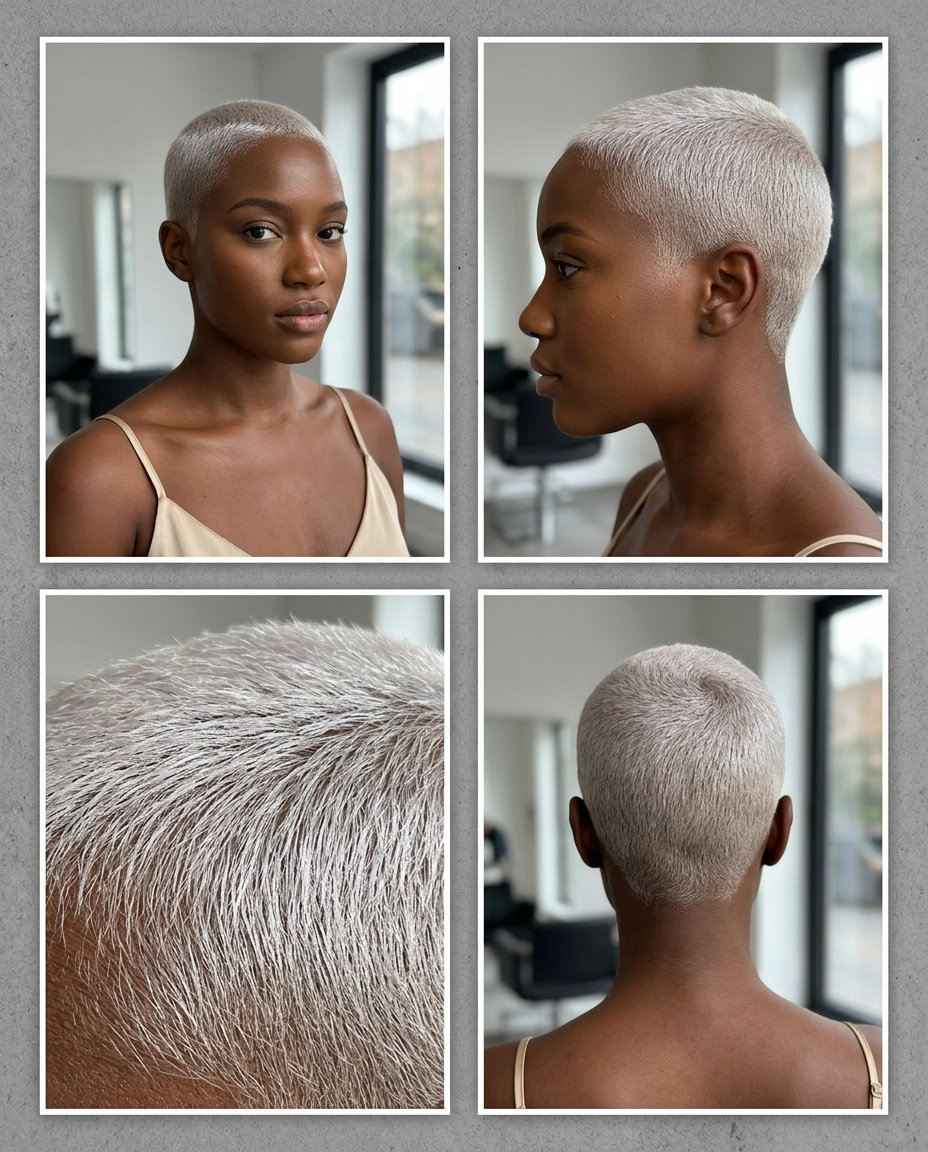
The statement cut. No layers to hide behind, no length to soften it—just platinum and scalp and the kind of confidence that doesn’t apologize for taking up space. The platinum buzz-cut required toner every 2 weeks to maintain cool tone and prevent brassiness, which is the actual commitment you’re making, not some romantic idea of “low-maintenance short hair.” Uniform buzz-cut length allows the bold platinum color to be the sole, striking statement without competing with cut, so the focus is entirely on tone and shine rather than texture work.
This works on deep skin in a way it doesn’t on everyone—the contrast is architectural, almost architectural. Platinum bleaching on short hair requires significant scalp care to avoid irritation, so you’re not just investing in the cut and color, you’re investing in scalp treatments and protection protocols. The cut is the easiest part to maintain; the color is the commitment. Every two weeks at the salon for toner, every toner session checking scalp health, every morning potentially needing a spritz of color-depositing shampoo to maintain the tone between appointments. Pure platinum power.
Honey Blonde Short Hair Dark Skin
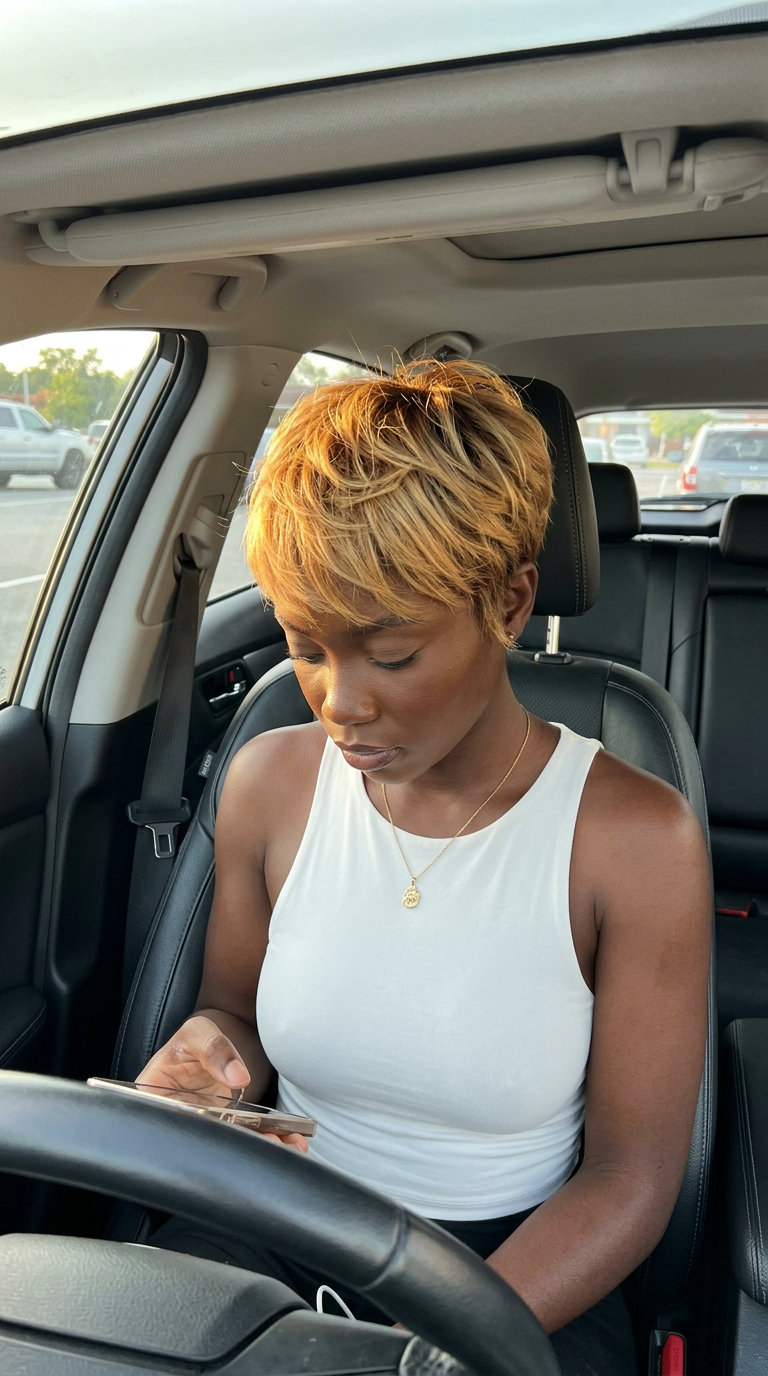
Razored pixies have a reputation for being fussy, but this isn’t that story. What makes this cut work on textured hair is the technique itself—heavy razoring on thick hair removes bulk without sacrificing density, creating piecey movement and preventing that helmet-like appearance that kills the vibe. The best part? This razored crop maintained its soft texture and shape for 5 weeks before needing a trim, which isn’t bad for a cut this short.
Styling is where texture becomes an asset instead of a problem. A texturizing product—something with light hold and natural finish—defines each piece without hardening them into submission. Skip the blow-dryer if you can; let your natural texture do the work, and you’ll get that deliberately undone energy without fighting your hair. Heavily razored cuts can lead to frizz if not styled correctly daily, so consistency matters here. The definition is everything when your cut is this close to the scalp, and the right product makes the difference between intentional and accident. Finally—a pixie that moves.
Burnt Sienna Long Layers Dark Skin
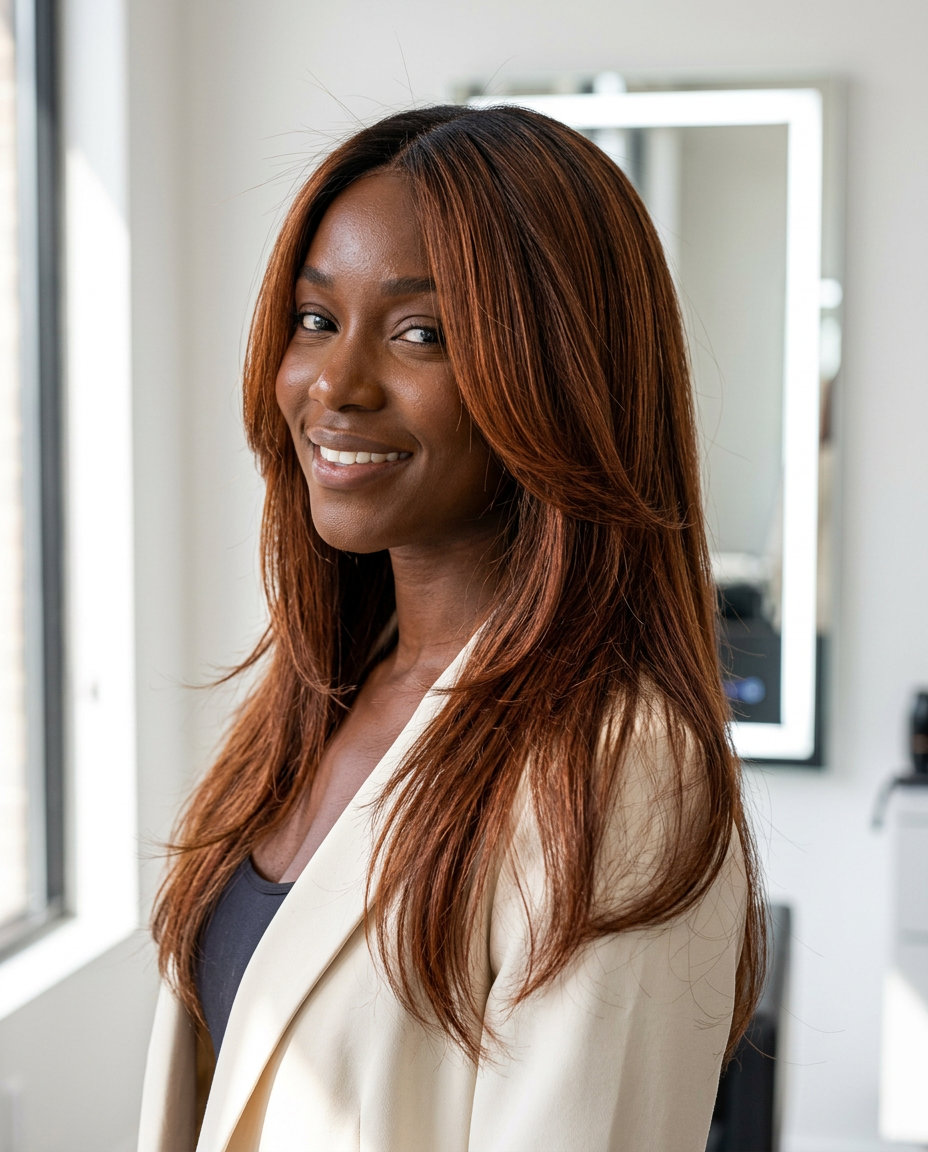
Long layers are the haircut equivalent of a good apology—they fix things you didn’t even know were broken. The magic here is point-cutting; instead of blunt lines, your stylist cuts at an angle to create a softer, more blended finish that allows layers to fall naturally and enhance movement without disrupting length. Point-cut ends on these long layers air-dried without frizz on day-2 hair, which is genuinely rare for a layered cut this long on darker skin tones.
What makes this work is the restraint—layers sit mostly at the mid-lengths and ends, preserving density at the crown where you actually need it. This isn’t about choppy texture running all the way up; it’s strategic softness. The burnt sienna color deepens the effect, making each layer read as dimensional rather than thin. Skip if you want a sharp, defined cut—this is all about soft movement, which is all my fine hair can handle anyway. You’re looking at 6 to 8 weeks before layers start to blend too much, and the grow-out is graceful, not choppy. Effortless, truly.
Platinum Blonde Blunt Bob Dark Skin
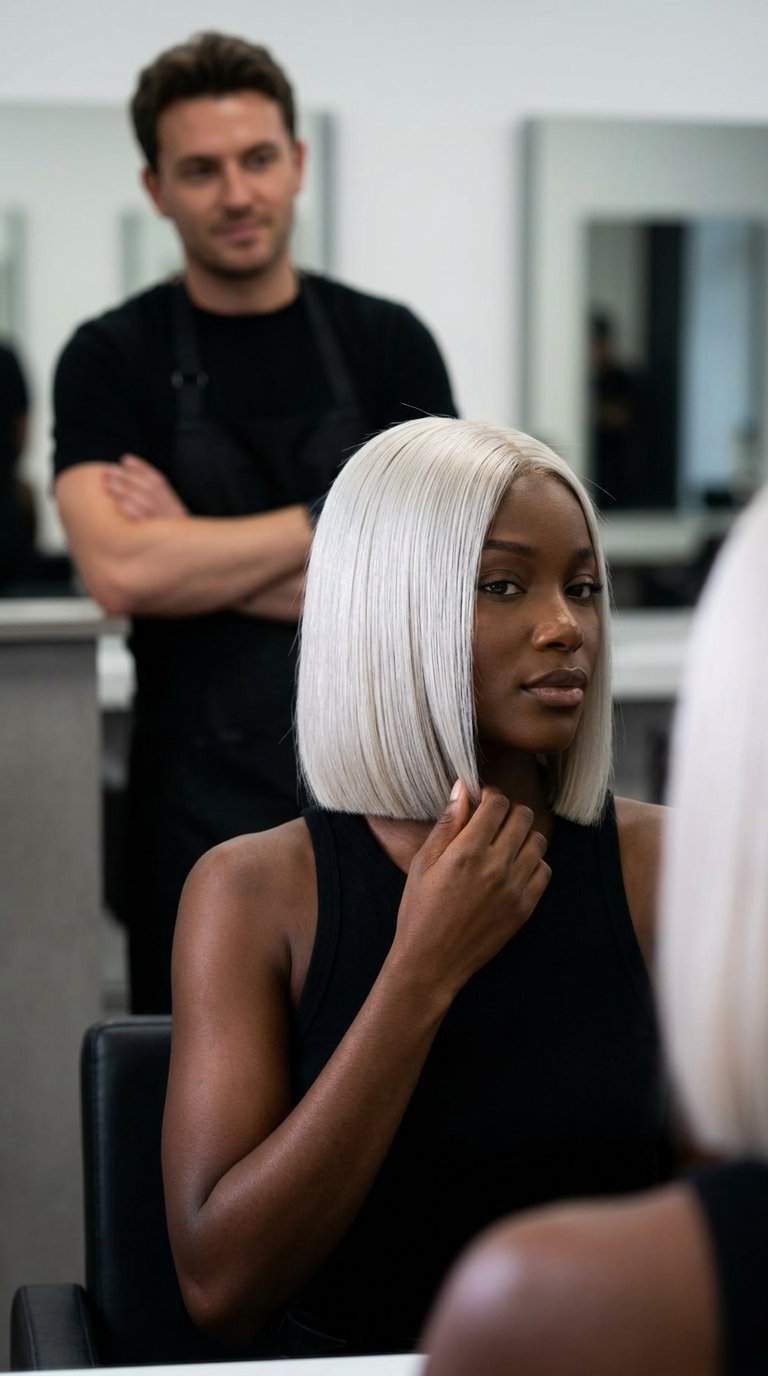
Blunt bobs stop conversations. There’s no apology in the line, no soft fade—just geometric precision cutting against deep skin, and the contrast is immediately striking. A blunt perimeter cut with no layers maximizes density, creating a strong, graphic silhouette that reads as intentional from every angle. This isn’t a cut that hides behind movement; it announces itself. This blunt bob held its sharp, graphic line for 4 weeks before needing a precision trim, which means you’re committing to salon visits if you want to maintain that edge.
Platinum on dark skin has maximum visual impact, and a blunt cut ensures that impact stays clean. The color needs lived-in maintenance—touch-ups every 3 to 4 weeks—but the cut itself is simpler than layered styles. Styling is straightforward: blow-dry with tension to amplify that blunt line, or air-dry for a softer version (or maybe a French bob, honestly) if you want movement without sacrificing the cut’s architecture. Precision blunt bobs require monthly trims to maintain their sharp, graphic line, so budget for that before booking. The definition is everything.
Rose Gold Passion Twists Dark Skin
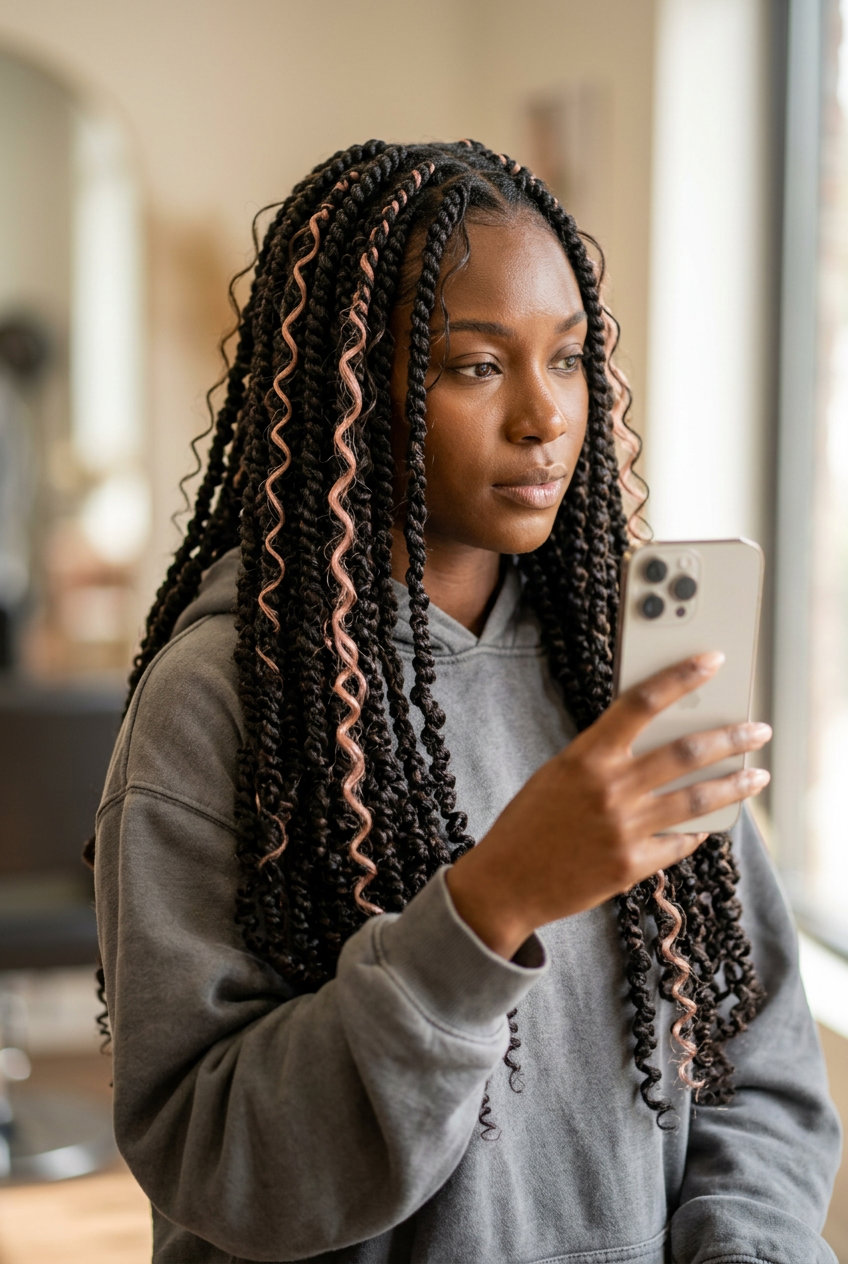
Protective styling doesn’t mean sacrificing color. Rose gold passion twists are where practical hair care meets trend-forward aesthetics—your natural hair stays protected while the metallic thread catches light and reads as intentional styling, not a protective afterthought. The grip happens because your natural texture provides friction; chemically straightened hair doesn’t hold twists the same way, which is why natural texture becomes the real asset here. Passion twists installed on natural hair lasted 6 weeks with minimal frizz and unraveling, which is the timeline most people actually need to work with.
Installation takes time and skill, but the payoff extends beyond aesthetics. Your actual hair is doing minimal styling work, growing undisturbed beneath the twists, and the rose gold thread adds warmth that amplifies deeper skin tones without looking like a compromise. Maintaining natural hair length and health ensures optimal grip and longevity for protective styles like twists, which means pre-install conditioning and post-install moisturizing matter. Not for chemically straightened hair—natural texture is key for grip, and that’s the entire foundation this style builds on. The upfront time investment is real, probably worth the consultation at least to make sure your stylist understands the difference between rushed and properly installed. Protective style perfection.
Mahogany Ombre Dark Skin
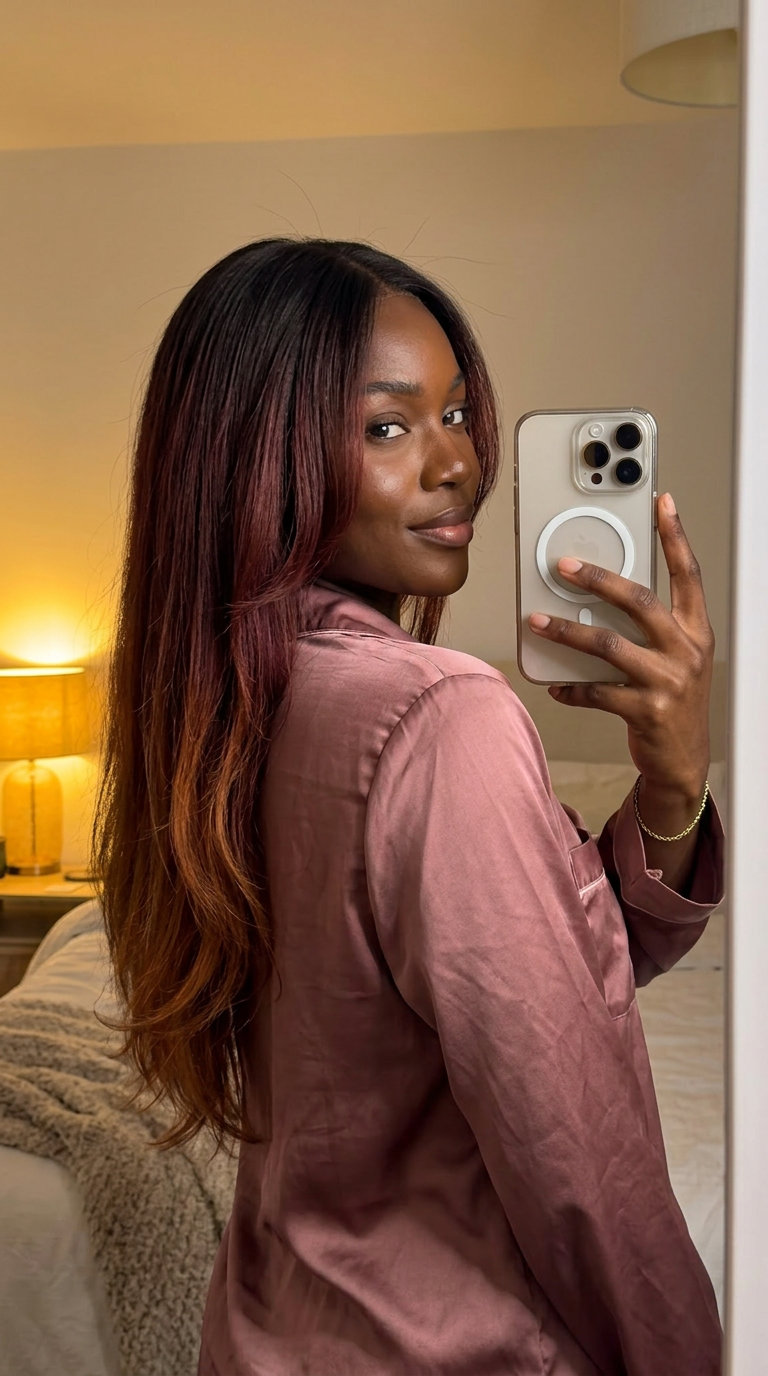
Mahogany ombré is what happens when you stop thinking about blonde on dark skin as the only summer color story. This is dimensional in the way that matters—darker roots, warmer mid-lengths, then a shift toward richer auburn at the ends. The movement comes from point-cutting: instead of blunt lines, your stylist angles the scissors to create softness at the perimeter, allowing waves to cascade naturally without that choppy, over-layered feeling. Waist-length layers with point-cut ends created soft waves that held for 2 days, which is actually viable longevity for hair this long.
What makes mahogany work on deeper skin is that it’s not trying to look like blonde—it’s a warm, intentional color that reads as sophisticated rather than transitional. The ombré technique means roots stay darker, which solves the maintenance problem that kills most color stories on dark skin. You can go 8 to 10 weeks before you need to address regrowth, since the darker base blends everything. Styling is minimal; the length and layers do the work. Point-cutting ends on long layers creates softness and movement, preventing a heavy, blocky appearance that longer hair can develop if you’re not deliberate about texture. The cut needs trimming every 8 to 10 weeks to maintain the layered shape, but the color? That’s the ultimate mermaid hair.
Mushroom Bronze Long Hair with Point-Cut Layers
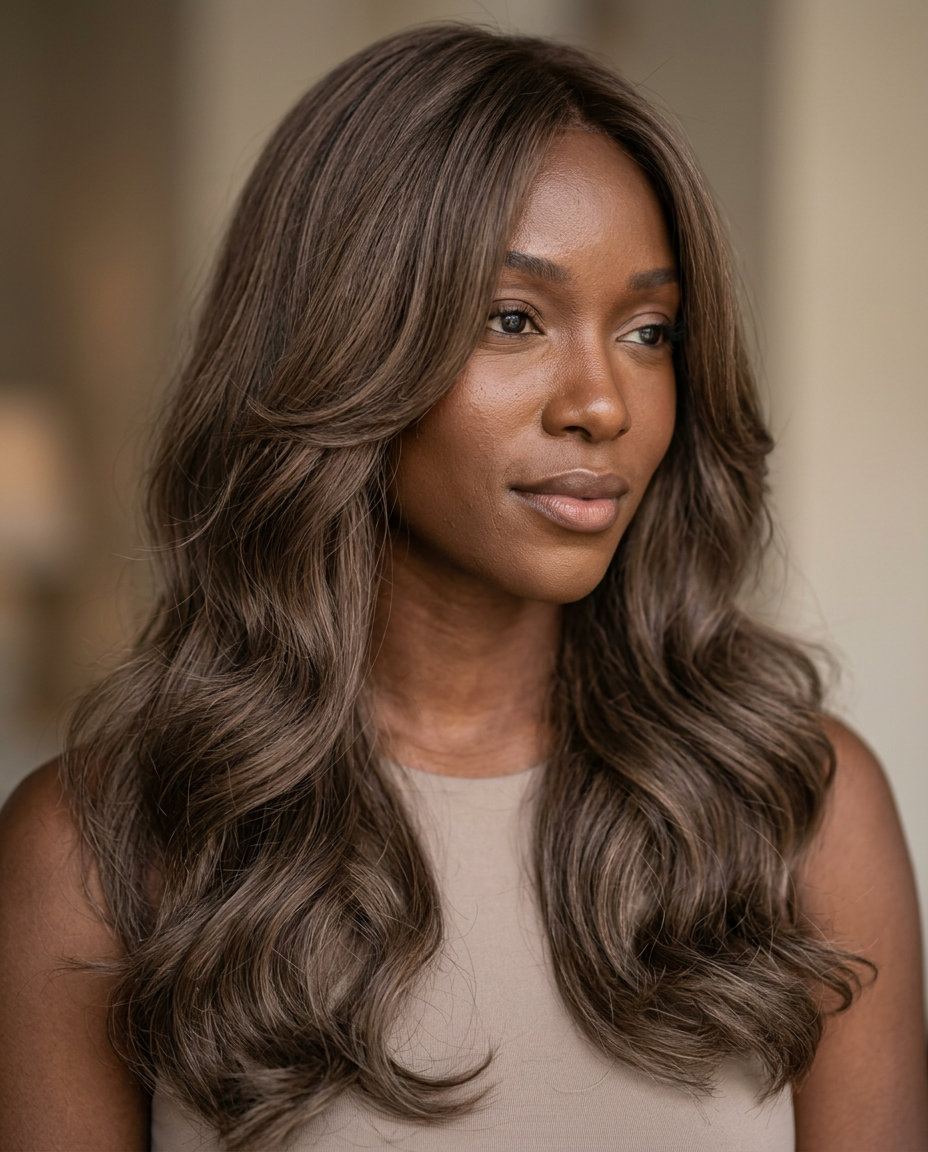
Long hair doesn’t have to mean one-note. Point-cut layers add dimension without sacrificing length, and on mushroom bronze—that warm, earthy tone that sits between bronze and taupe—the effect is quietly transformative. The layers catch light differently at each level, which means your color reads richer than a blunt cut ever could. Point-cutting layers enhanced natural waves, allowing 3-day air-dry without frizz or product, and that alone makes this worth the salon investment.
The real trick is the cut itself. Point-cutting creates softer, more natural movement, enhancing wave patterns and preventing a blocky shape. This isn’t the choppy-layers situation from 2015; your stylist is carving strategic softness into the perimeter and mid-lengths, not hacking away randomly (my favorite for effortless beach waves). Long cascading layers on thick hair add significant drying time post-wash, so factor that into your routine if blow-drying isn’t your thing. The mushroom bronze long hair dark skin combination works because the warm undertones don’t fight natural skin richness the way cool-toned blonde sometimes does. Movement for days.
Honey Blonde Balayage Long Hair with V-Cut Layers
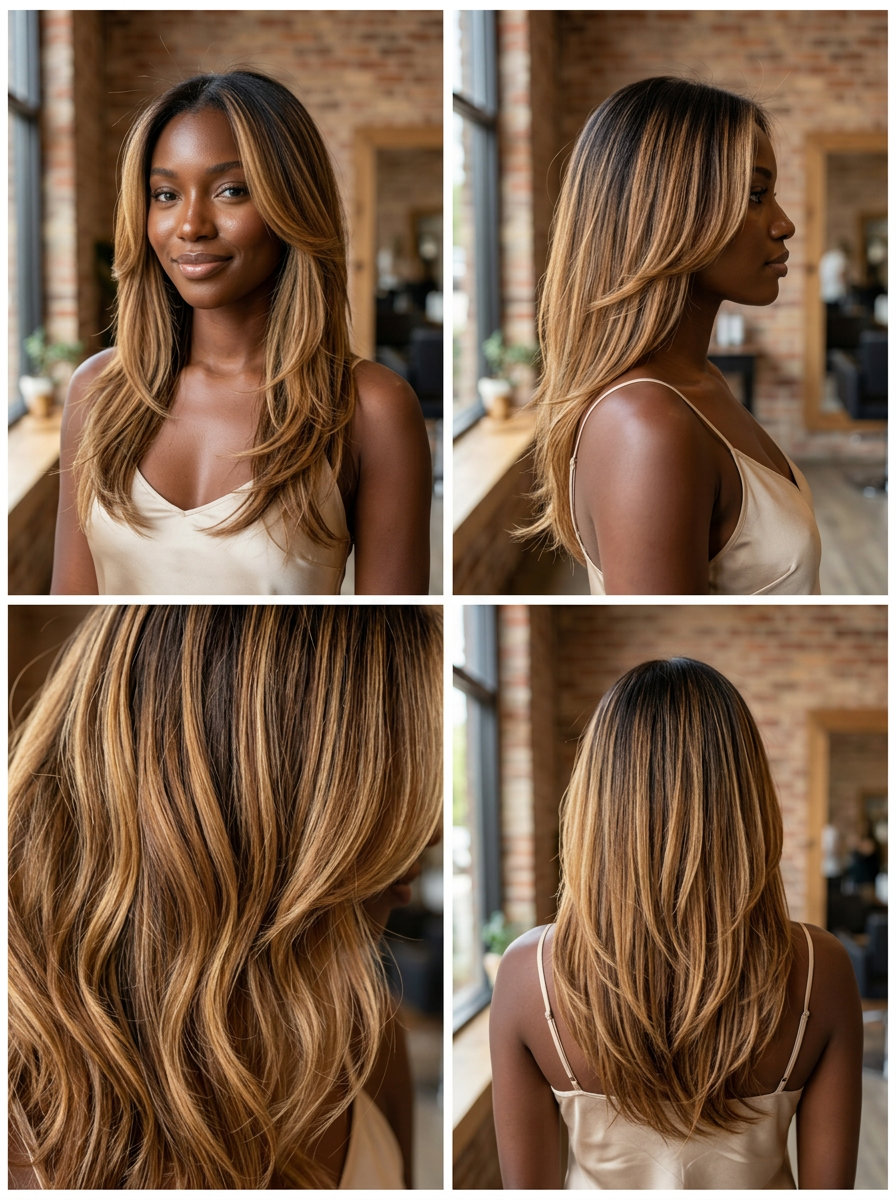
V-cut layers are underrated. They hit differently than regular layers because they’re structured to move inward, creating a subtle point at the center rather than choppy texture throughout. On honey blonde—that golden, warm shade that deepens slightly toward the roots—the V creates depth without looking intentionally choppy. Honey blonde balayage long hair reads warmer and more expensive-looking than straight color, especially when the dimension follows the same directional flow as your cut.
This cut works because V-cut layers enhance natural flow and volume, preventing a heavy, triangular shape on thick hair, which is exactly what thick hair needs. V-cut layers maintained volume and flow for 8 weeks before needing a reshape, which makes this one of the longer-lasting cuts between professional trims. The honey blonde balayage long hair pairing means your colorist should be placing lighter pieces through the mid-lengths and ends—the parts that move most visibly. Skip if your hair is very fine—these layers can remove too much density. Your stylist should ask whether you prefer more movement or more density; the V-cut technically does both, but the placement matters. The V-cut makes it.
Ash Brown Lob with Point-Cut Ends
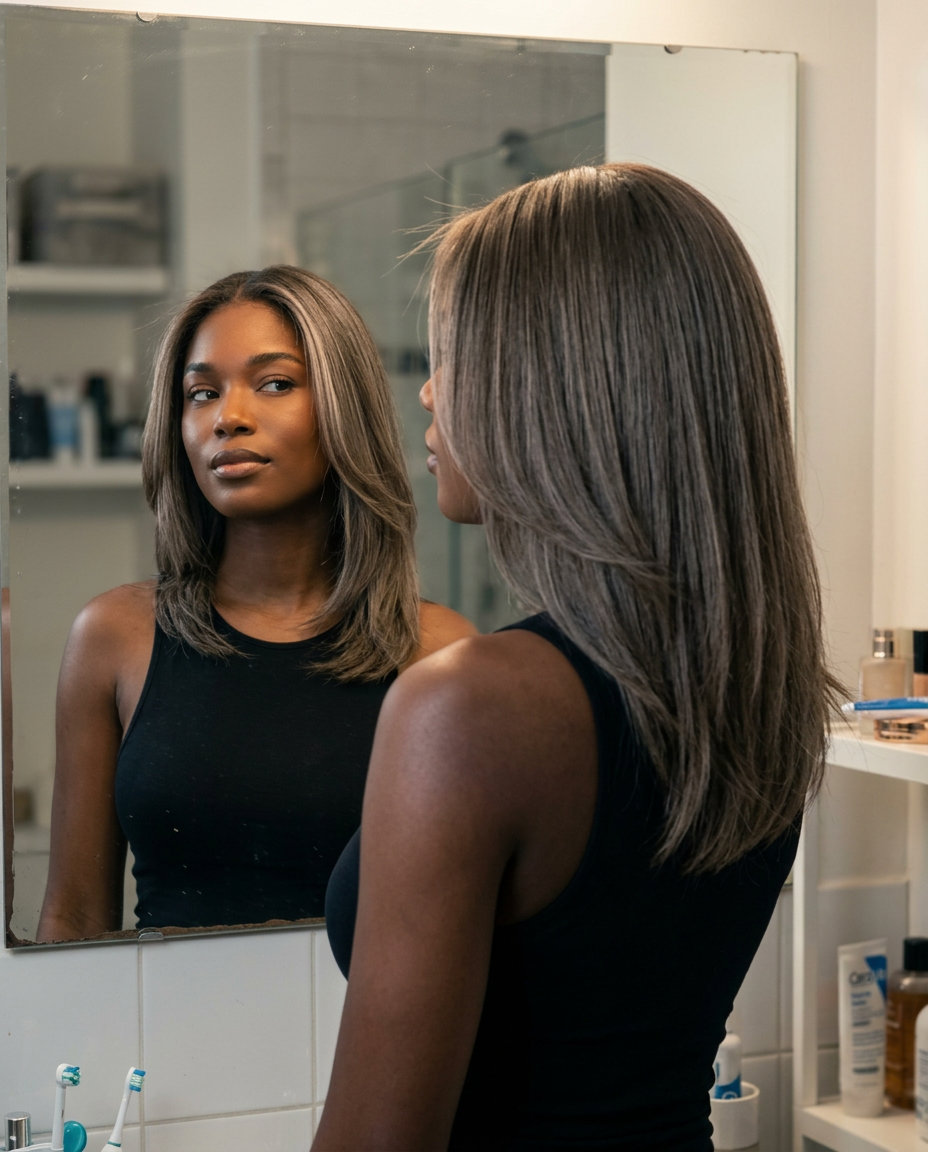
Ash brown feels like it shouldn’t work on deep skin tones, but it does when the undertone is right. Think cool-toned brown with gray-ish undertones, not flat ash-blonde. A lob with point-cut ends brings that softness while keeping the length you want and the structure a shorter style can’t give you. The lob sits around chin-length, which means it’s long enough for texture but short enough to feel intentional.
Point-cutting the ends creates softness and movement, preventing a harsh blunt line and making grow-out seamless, or maybe just a subtle trim, honestly. Point-cut ends grew out softly for 10 weeks without a harsh, blunt line, which is significant if you’re spacing out salon visits. The ash brown lob dark skin combination works because ash tones need warmth underneath or they can read flat—your stylist should layer in subtle warmth at the base to prevent that cool-tone deadness. Avoid if you have very curly or coily hair—this cut won’t define your texture. You’d be better off with a textured cut designed for curl patterns rather than trying to force softness where shape would serve you better. Softness is key.
Iced Mocha Lob with Internal Texturizing
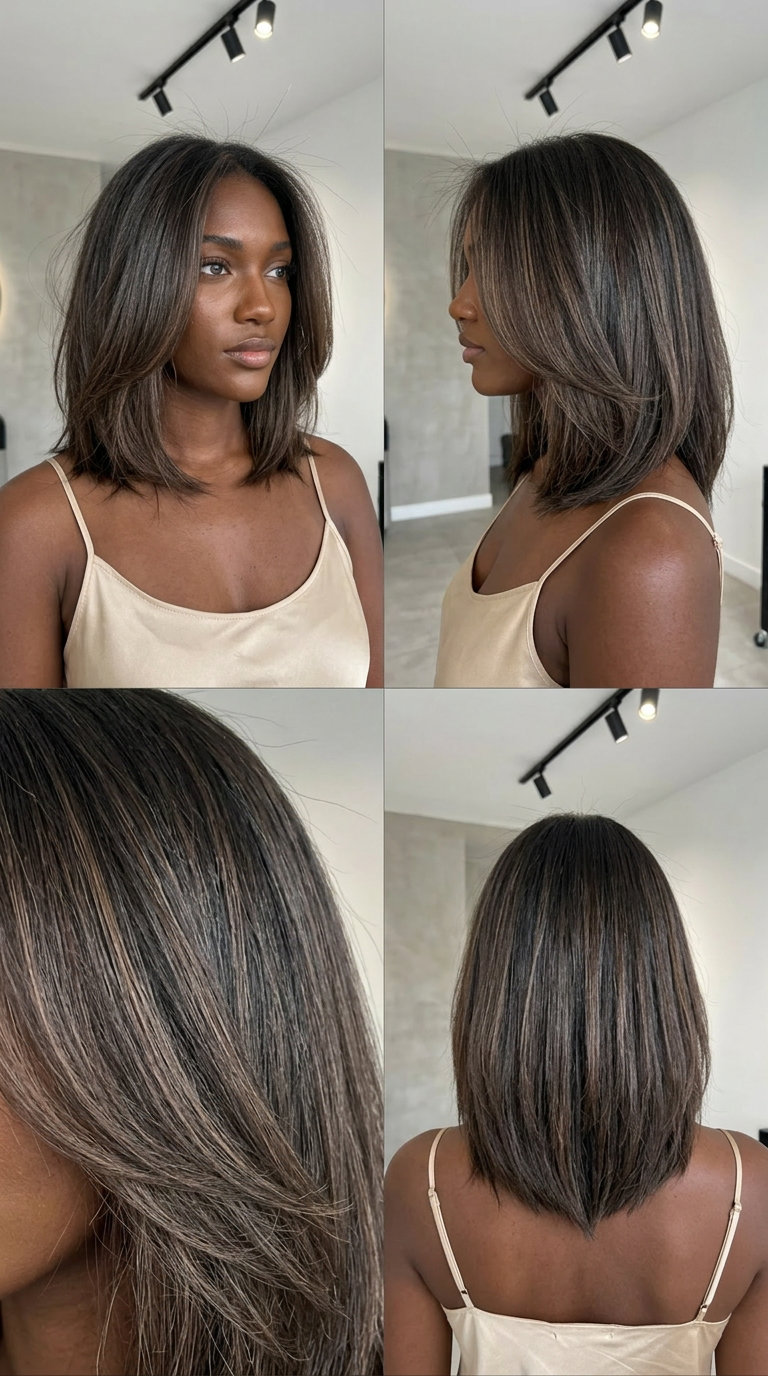
Iced mocha is that in-between shade—cool-toned brown with a hint of gray that makes it look dimensional without visible highlights. A lob with internal texturizing keeps the perimeter clean and blunt while removing bulk from within, creating movement that doesn’t read as “layered.” The effect is sleek on the outside, textured on the inside, which is probably worth the investment in a good stylist. This cut works because internal texturizing removes bulk without visible layers, creating airy movement perfect for a sleek yet textured lob.
Internal texturizing allowed for a tousled finish with minimal styling product, meaning you’re not hauling out paste or mousse every morning. The iced mocha lob dark skin pairing benefits from that cool-toned base because it doesn’t compete with your natural undertones—it sits alongside them. Internal texturizing requires salon upkeep every 6-8 weeks to maintain shape and movement, so this isn’t a low-maintenance cut despite the minimal styling. Your color should be refreshed every 8–10 weeks if you want the iced tone to stay true; letting it fade muddles the intentionality. The texture inside means air-drying works in your favor instead of against you, but blow-drying still creates a better finish if you have time. The perfect lob.
Vivid Teal on a Textured Fade
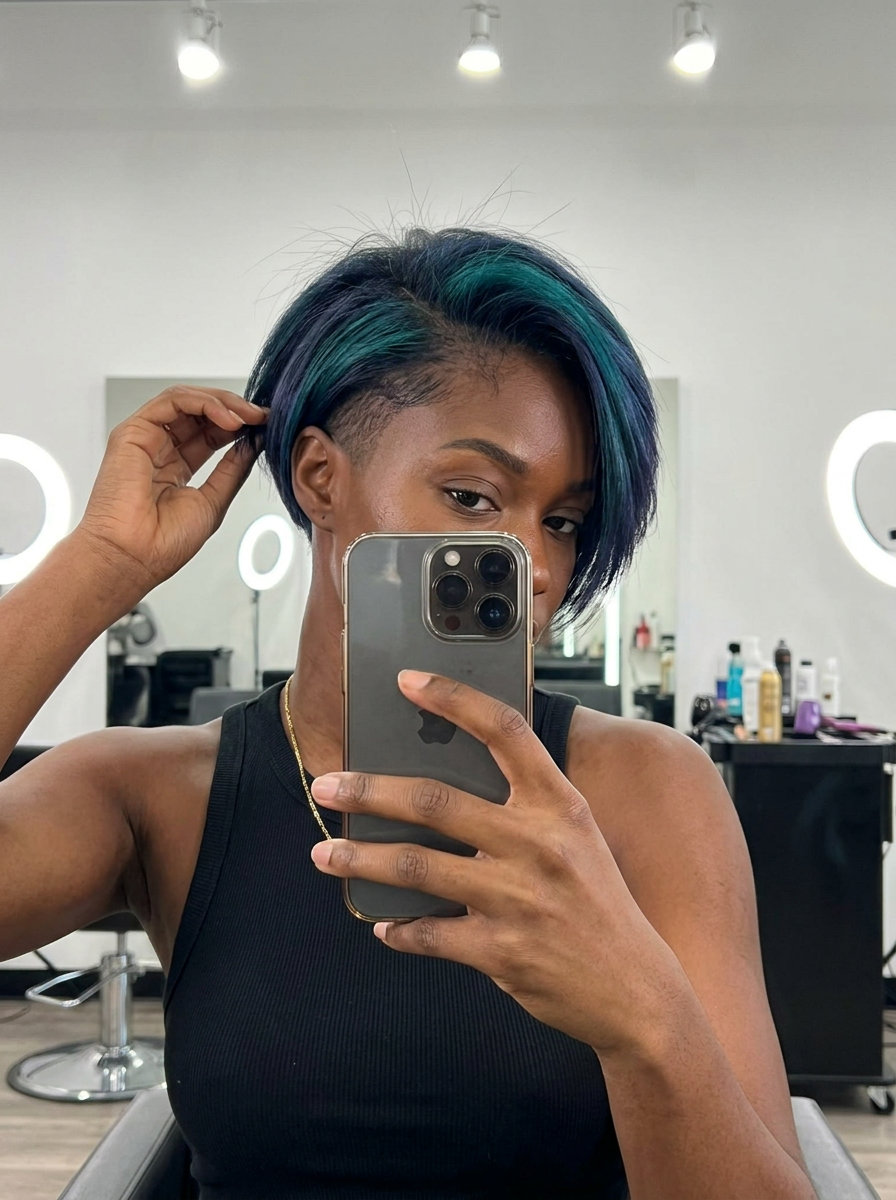
There’s something about a fade that makes teal sing. Not whisper. Sing. When the sides are clipped short and the top sits longer, that color doesn’t just exist on your head—it becomes the whole point. The contrast between the sharp fade and the jewel-tone length creates this sculptural thing that reads expensive even on a budget. This is the cut for people who want bold without looking like they’re trying too hard, which is maybe the most wry way to do bold that exists.
The magic here is the clipper work. Deep teal hair dark skin has this particular way of glowing when the surrounding architecture is clean—and a precise fade does that. You’re not hiding anything. The undercut grew out cleanly for 3 weeks before needing a re-fade to maintain sharpness, which honestly isn’t terrible for a high-contrast style. The real commitment is that it does require bi-weekly salon visits to maintain its sharp, clean fade, so budget for that before you book. But if you like walking in somewhere and having people actually look at you, this is worth the upkeep. Clipper-faded sides create a sharp contrast, emphasizing the longer top for a bold, sculpted look—yes, the short one—and the geometry is what lets the teal actually register instead of just sitting there. Sharp. Clean. Edgy.
Cherry Cola Bob for Maximum Color Impact
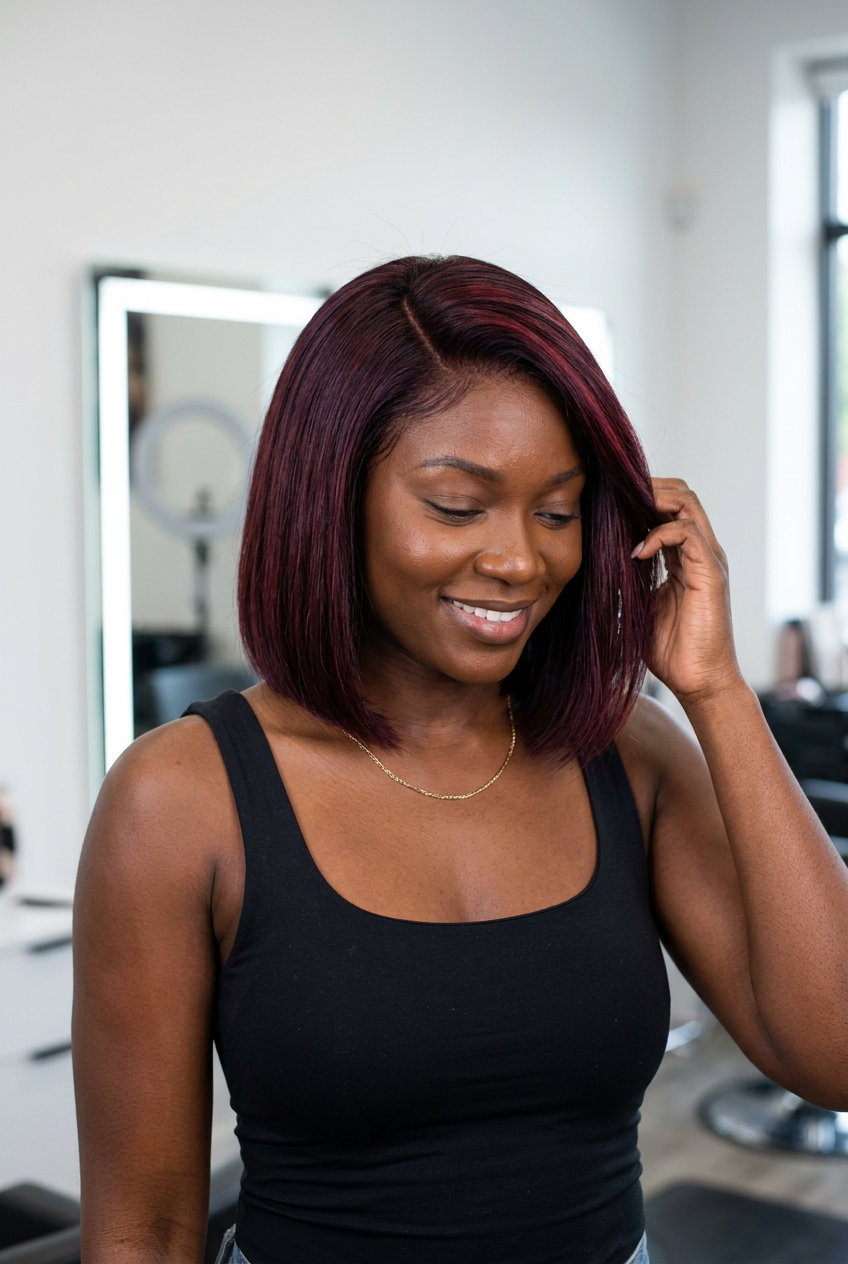
The blunt bob is having a moment, and not the overthought Pinterest version. This is the no-layer, all-density cut that looks like someone’s grandmother wore it with intention. Chin-length. Blunt perimeter. No apologies. On dark skin, a cherry cola bob dark skin reads less “retro” and more “I know what I’m doing,” which is different. The color sits heavy and rich against the line of the cut, and the cut holds the color instead of fracturing it into pieces.
Here’s what actually happens: the blunt perimeter held its sharp line for 6 weeks without split ends or unevenness, which is honestly excellent for a no-layer cut. The density is the whole point. The blunt, no-layer cut creates a dense, solid perimeter that makes fine hair appear thicker—or maybe a deeper side part would change the vibe, but that’s missing the point. The cut itself is the statement. Not ideal for round faces, mind you. Blunt chin-length bobs add width there, which is the one honest caveat. Everyone else gets to feel like they’re in control. The French bob, but sharper.
Espresso Pixie with Razored Texture
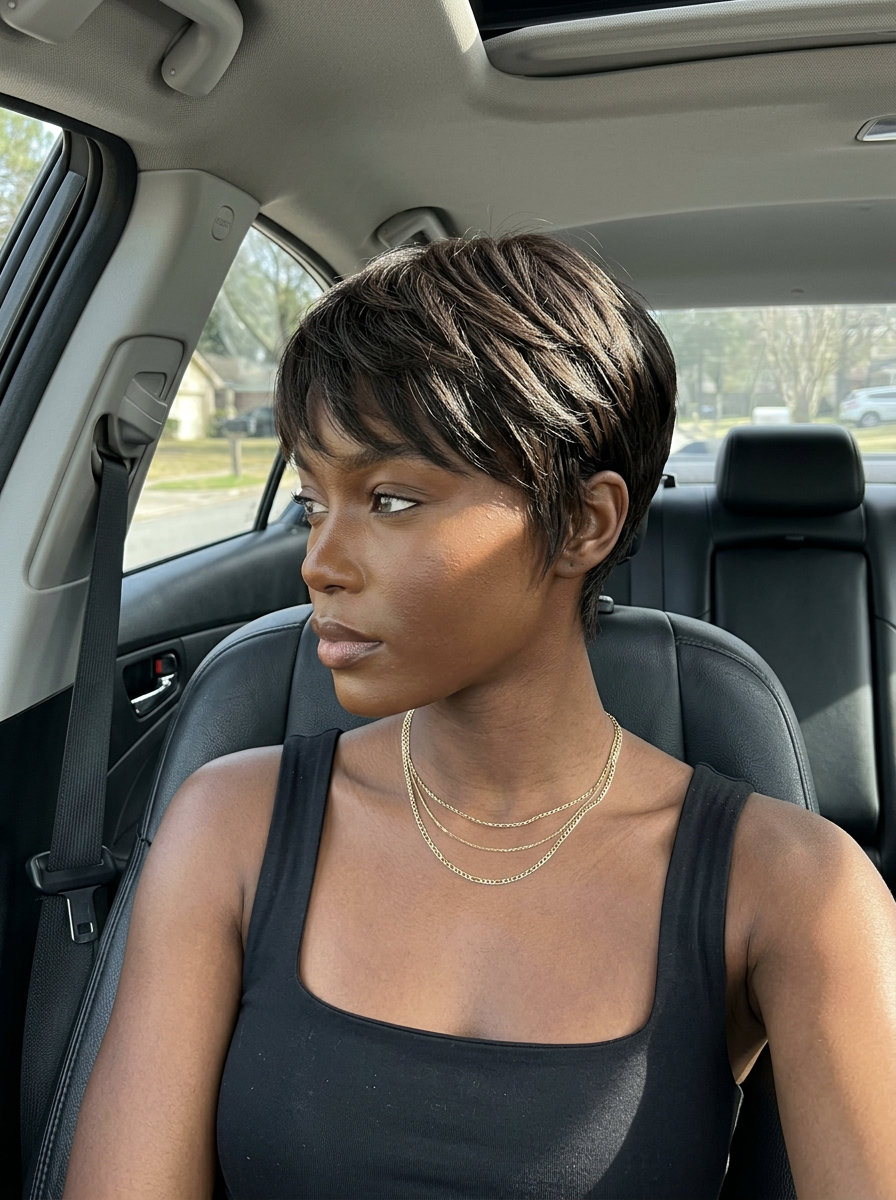
A pixie with razored layers is not a pixie for people who want to wash and go. It’s for people who want to wash and have options. The precision razoring creates this feathered, piecey texture where every strand has definition, which means you can style it three different ways depending on the day. Forward. Swept. Textured with a paste. This is not a low-maintenance cut—it’s a high-control cut, which is different and actually better if you like being involved with your hair.
The razored layers allowed for 3 distinct styling options in under 5 minutes, which is all my fine hair can handle anyway. Precision razored layers create soft, feathered texture, allowing versatile styling and natural movement instead of that helmet-head thing that bad pixies do. Skip if naturally curly, because this cut fights your texture and you’ll spend more time undoing the cut than you spend actually styling it. But on straight to slightly wavy hair, the texture holds. The color sits in those layers in a way that makes espresso pixie dark skin look like it’s catching light even in indoor fluorescents. A pixie that moves.
Cherry Cola Pixie with Choppy Bangs
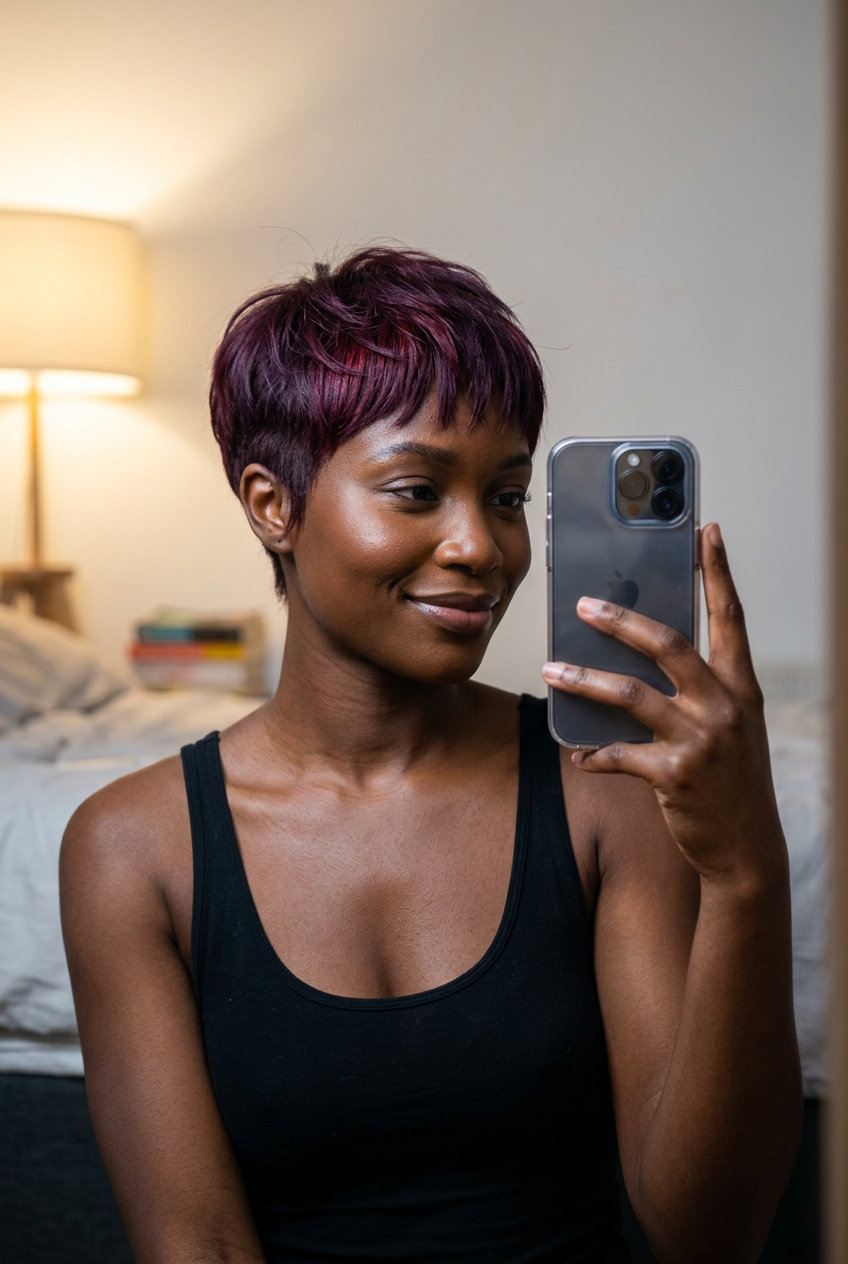
Choppy bangs are the move when you want a pixie that doesn’t whisper. They’re short, piecey, and they commit. The rest of the cut is tapered—short at the back, slightly longer on top—but those bangs are what make this a statement instead of just a short cut. On dark skin with a warm color like cherry cola, the bangs create this frame that actually makes your face the focus instead of the cut being the focus, which is rarer than it should be.
The choppy bangs held their piecey texture all day with minimal product, which is the real test because split bangs are a disaster. Razored, piecey layers on top create definition and movement, enhancing the edgy, modern shape in a way that justifies the cut. The sharp taper grows out quickly though, requiring trims every 3-4 weeks to maintain shape—the best $30 I’ve spent on hair isn’t the actual cut, it’s the maintenance visits. But that’s true of any short cut with architectural ambition. Straight to wavy hair works best here, fine to medium density, as the razoring technique creates definition that needs something to work with. You don’t get that with coarse or very textured hair; the cut gets lost. Edgy. Modern. (Actually not effortless, but that’s the point.)
Still Deciding? Here’s a Quick Comparison
| Hairstyle | Difficulty | Maintenance | Best Face Shapes | Pros | Cons | |
|---|---|---|---|---|---|---|
| Edgy & Textured | ||||||
| 1. Teal Accent Tapered Pixie | Salon-only | High — every 3-4 weeks | oval, diamond, heart | Suits most face shapesWorks on multiple texturesWorks with air-drying | Requires professional styling |
| 5. The Bohemian Sienna Pixie | Easy | Medium — every 4-6 weeks | oval, diamond, heart | Easy to style at homeSuits most face shapesWorks on multiple textures | Not ideal for fine hair |
| 7. The Butterscotch Breeze Lob | Moderate | High — every 6-8 weeks | heart, oval, diamond | Suits most face shapesWorks on multiple texturesLayers add movement | Frequent salon visits needed |
| 13. The Buttercream Pixie Crop | Moderate | Medium — every 4-6 weeks | oval, heart, diamond | Suits most face shapesWorks on multiple texturesLayers add movement | Not ideal for very curly hair |
| 15. Platinum Summer Buzz | Salon-only | High — every 3-4 weeks | oval, diamond, heart | Suits most face shapesLayers add movementLow-maintenance roots | Requires professional styling |
| 16. The Golden Crop | Easy | Medium — every 6-8 weeks | oval, heart, diamond | Easy to style at homeSuits most face shapesWorks on multiple textures | Not ideal for fine hair |
| 26. The Teal Edge Undercut | Salon-only | High — every 3-4 weeks | oval, heart, diamond | Suits most face shapesWorks on multiple texturesWorks with air-drying | Requires professional styling |
| 27. The Cherry Cola Blunt Bob | Moderate | High — every 6-8 weeks | oval, square, diamond | Suits most face shapesWorks on multiple texturesLayers add movement | Frequent salon visits needed |
| 29. The Espresso Chic Pixie | Easy | Low — every 4-6 weeks | oval, diamond, square | Low maintenanceEasy to style at homeSuits most face shapes | Not ideal for very curly hair |
| 30. The Edgy Cherry Cola Pixie | Moderate | High — every 6-8 weeks | oval, diamond, heart | Suits most face shapesWorks on multiple texturesLayers add movement | Frequent salon visits needed |
| Classic & Clean | ||||||
| 2. Golden Hour Balayage Waves | Moderate | Medium — every 6-8 weeks | oval, heart, round | Suits most face shapesWorks on multiple texturesLayers add movement | Not ideal for fine hair |
| 3. The Iced Mocha Lob | Moderate | Low — every 10-12 weeks | All face shapes | Low maintenanceSuits most face shapesWorks on multiple textures | Not ideal for very curly hair |
| 4. The Glossy Mahogany Frame | Moderate | Medium — every 6-8 weeks | oval, square, heart | Suits most face shapesWorks on multiple texturesLayers add movement | Not ideal for very curly hair |
| 6. The Espresso Glass Bob | Moderate | Low — every 8-10 weeks | square, oval, heart | Low maintenanceSuits most face shapesWorks on multiple textures | Not ideal for very curly hair |
| 8. The Mushroom Bronze Chic Lob | Easy | Low — every 8-10 weeks | All face shapes | Low maintenanceEasy to style at homeSuits most face shapes | Not ideal for very curly hair |
| 9. Bohemian Peach Fuzz Curls | Salon-only | High — every 3-4 weeks | heart, oval, diamond | Suits most face shapesWorks on multiple texturesNatural-looking dimension | Requires professional styling |
| 10. The Mysterious Espresso Glow | Easy | Low — every 6-8 weeks | All face shapes | Low maintenanceEasy to style at homeSuits most face shapes | Not ideal for very curly hair |
| 11. The Caramel Swirl Bob | Moderate | Medium — every 10-12 weeks | oval, square, round | Suits most face shapesWorks on multiple texturesLayers add movement | Not ideal for very curly hair |
| 14. Chocolate Cherry Cascade | Moderate | Medium — every 10-12 weeks | All face shapes | Suits most face shapesWorks on multiple texturesLayers add movement | Not ideal for fine hair |
| 17. The Burnt Sienna Goddess Waves | Easy | Medium — every 8 weeks | round, oval, long | Easy to style at homeSuits most face shapesWorks on multiple textures | Not ideal for fine hair |
| 18. The Platinum Power Bob | Salon-only | High — every 4-6 weeks | oval, square, heart | Suits most face shapesWorks on multiple texturesLayers add movement | Requires professional styling |
| 19. Rose Gold Passion Twists | Salon-only | Low — every 6-8 weeks | all | Low maintenanceWorks on multiple texturesGrows out gracefully | Requires professional styling |
| 22. The Golden Hour Cascade | Moderate | Medium — every 6-8 weeks | oval, heart, round | Suits most face shapesWorks on multiple texturesLayers add movement | Not ideal for fine hair |
| 23. The Ash Brown Soft Lob | Moderate | Low — every 8-10 weeks | oval, heart, long | Low maintenanceSuits most face shapesWorks on multiple textures | Not ideal for very curly hair |
| 24. The Chic Iced Mocha Lob | Moderate | Medium — every 10-12 weeks | All face shapes | Suits most face shapesWorks on multiple texturesLayers add movement | Not ideal for very curly hair |
| Soft & Romantic | ||||||
| 12. The Peach Fuzz Halo Layers | Moderate | High — every 3-4 weeks | heart, oval, long | Suits most face shapesWorks on multiple texturesLayers add movement | Frequent salon visits needed |
| 20. The Mahogany Sunset Ombré | Moderate | Medium — every 8-10 weeks | oval, long, square | Suits most face shapesWorks on multiple texturesLayers add movement | Not ideal for fine hair |
| 21. The Bronzed Riviera Waves | Moderate | Medium — every 10-12 weeks | oval, long, square | Suits most face shapesWorks on multiple texturesLayers add movement | Not ideal for very curly hair |
Frequently Asked Questions
How can I make vibrant accent colors last longer between salon visits?
For styles like the Teal Accent Tapered Pixie or the Bohemian Sienna Pixie, use a color-depositing conditioner to refresh jewel tones and warm reds between washes. A leave-in conditioner with UV filters (like a heat protectant spray) also prevents fading from sun exposure during summer heat. The base cut matters too—sharp, clean lines keep the accent color looking intentional even as it fades slightly.
What’s the best way to get natural-looking waves without a ton of daily styling?
The Golden Hour Balayage Waves style relies on internal layering and point-cut ends that air-dry into soft texture. Use a leave-in conditioner or curl cream on damp hair, scrunch gently, and let it dry naturally or with a diffuser on low heat. The balayage dimension does the visual heavy lifting—you don’t need perfect waves, just movement that catches the color.
Can short styles like pixies truly be low-maintenance for everyday wear?
Yes, but with caveats. The Teal Accent Tapered Pixie and Bohemian Sienna Pixie are designed for quick daily styling—usually 5–10 minutes of product application and air-drying. However, the fade and taper require salon visits every 3–4 weeks to stay sharp. If you skip trims, the cut loses its edge and starts looking grown-out rather than intentional.
Which styles work best for professional summer events?
The Iced Mocha Lob and the Glossy Mahogany Frame are your answer. Both rely on blunt perimeters and minimal internal layering that smooth down cleanly with a blow-dryer and flat iron. Use a heat protectant spray to shield from styling tools, and a bond-repair treatment weekly to maintain elasticity after heat styling. The result: polished, frizz-free, and unmistakably intentional.
Will these color techniques work on very textured or coily hair?
Most of these styles are designed for hair that takes color evenly and holds a defined shape. If you have very coily or textured hair, the Bohemian Sienna Pixie and Passion Twist Copper Accent are your best bets—they work *with* texture rather than against it. Avoid heavily razored cuts like the Teal Accent Tapered Pixie on very curly hair; the cut gets lost in the curl pattern. Always consult a colorist who specializes in textured hair before committing.
Final Thoughts
Here’s what I learned writing this: summer hair color for dark skin 2026 isn’t about chasing trends—it’s about understanding your cut first, then letting color amplify what’s already there. The Teal Accent Tapered Pixie works because the geometry is sharp. The Golden Hour Balayage Waves sing because the layers catch light. Even the Glossy Mahogany Frame relies on precision bluntness to make that color pop. Color without structure is just… color.
The edgy, modern styles in this list aren’t effortless because they’re not supposed to be. That’s the whole point. Your stylist should be able to explain exactly why they’re point-cutting instead of razoring, why they’re fading instead of tapering. If they can’t, book someone else. The cut is where the real work lives.