27 Stunning Summer Hair Color for Tan Skin 2026: Radiant Looks for the Season

Syrup Blonde, Cherry Cola Brunette, Pecan Pie — suddenly every colorist I follow is pivoting hard toward warm, pigment-matched tones that actually complement tan skin instead of washing it out. Sofia Richie Grainge’s mushroom bronde, Zendaya’s caramel-honey butterfly cut, Rihanna’s syrup blonde at the Fenty launch — they’re not accidents. They’re proof that the old one-size-fits-all highlight situation is officially dead.
Summer hair color for tan skin 2026 is less about chasing trends and more about matching undertones. Whether you’re leaning into butterscotch swirl with its high-contrast foilyage, the low-maintenance pecan pie with tonal balayage, or mushroom bronde with babylights and ash toner, the range works for neutral tans, golden skin, deep olives — basically anyone who’s tired of highlights that look like they happened by accident.
I spent three years fighting my natural warm undertones with cool-toned ash before my colorist finally said, “Stop. You’re golden. Work with it.” That one conversation changed everything about how I approach color now.
Copper Curly Hair Tan Skin
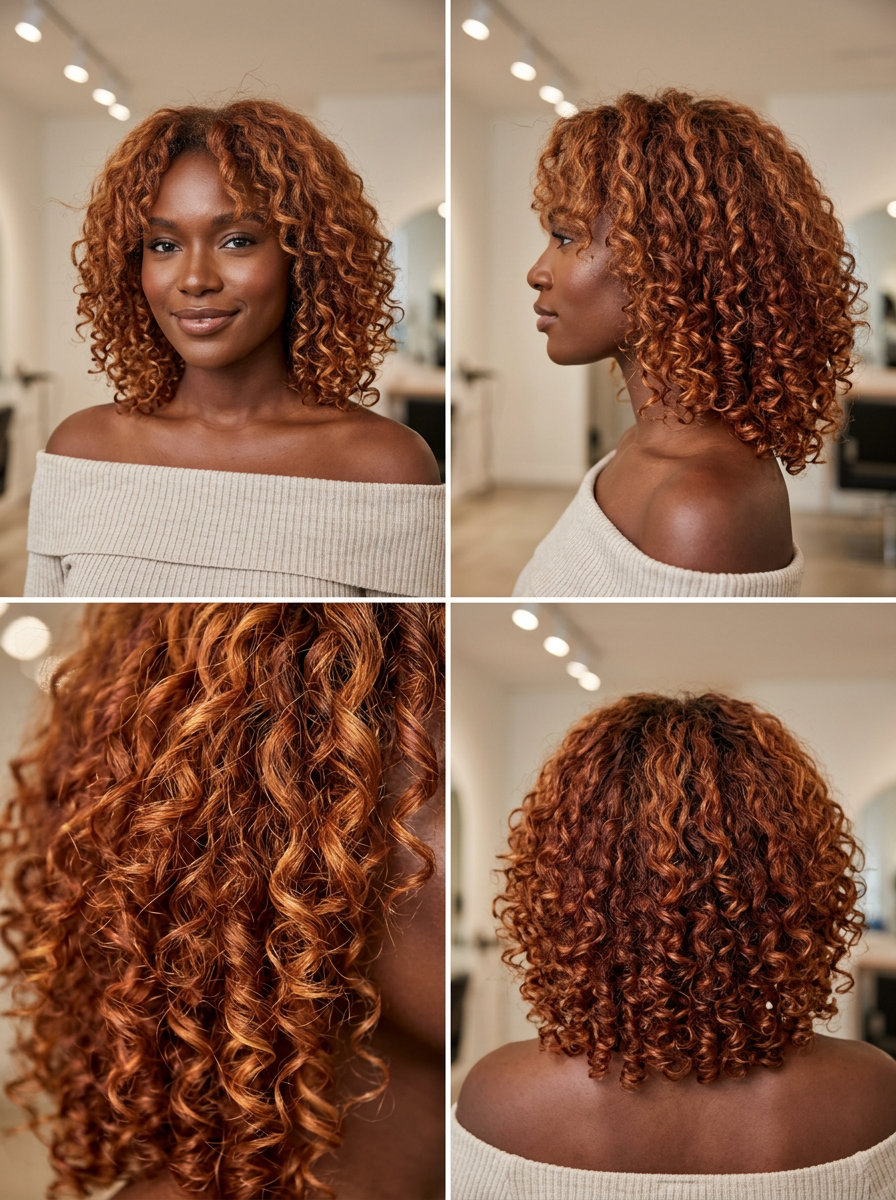
Copper on curly hair reads differently than it does on straight textures. The dimension sits inside each curl instead of sliding down the length, which means you’re not getting the typical face-framing pop. What you get instead is depth—rich, warm undertones that make tan skin glow without looking overdone. Dry-cutting layers on curly hair allows for precise shape creation, ensuring curls fall naturally and reduce bulk.
The cut matters as much as the color here. Ask your stylist to cut your curls dry, not wet. Wet curls lie flat and look longer than they actually are; you’ll end up with a cut that feels choppy once your hair dries. Dry-cut layers maintained curl definition and reduced frizz for 4 days between washes—that’s the reality check you need before booking. The specific copper curly hair tan skin combination works because warm metallics don’t compete with deeper complexions; they complement them, or maybe it’s the right product, honestly. Requires specific curl-friendly styling products to achieve desired volume and hold, so factor that into your maintenance timeline. Curls, defined.
Oak Brown Lob Haircut
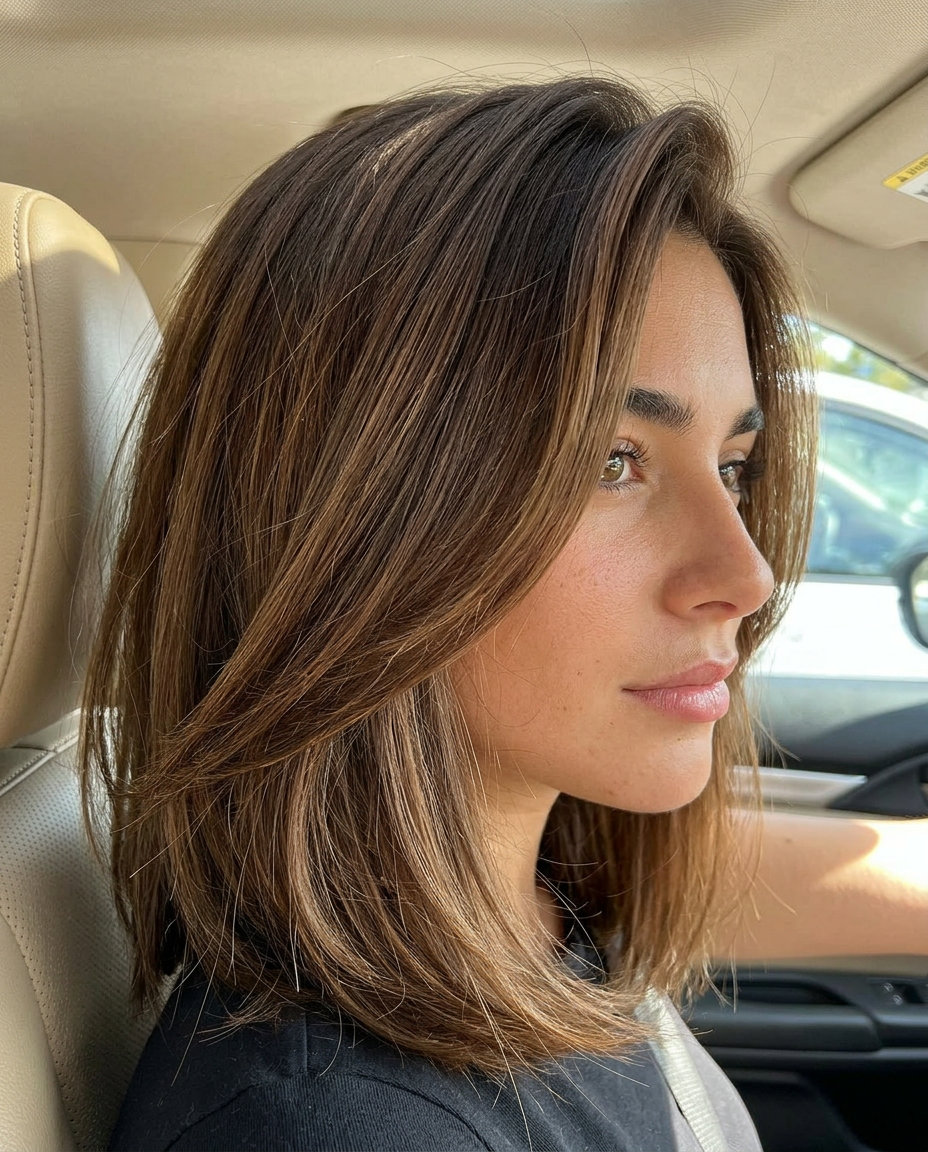
The lob is having a moment because it actually works for multiple hair types, which is rare. Oak brown—that warm, almost caramel-leaning shade—doesn’t fight tan skin the way ashy tones do. It sits somewhere between brunette and honey, catching light without demanding it. Point-cut interior layers create soft movement, while razored ends give a modern, lived-in texture to the blunt lob.
Length matters for this cut. You want it hitting around chin or slightly below, long enough that the weight keeps the ends blunt and intentional but short enough that you’re not dealing with a stringy grow-out. Lob maintained natural movement for 3 weeks before needing a trim to refresh razored ends, which is the sweet spot for most people’s schedules. Not for very fine hair—blunt perimeter might feel too heavy without enough density, which is worth knowing before you commit. The texture of a razored lob also means it requires a little product to look intentional, which is all my fine hair can handle. The lob, perfected.
Rose Gold Short Hair Tan Skin
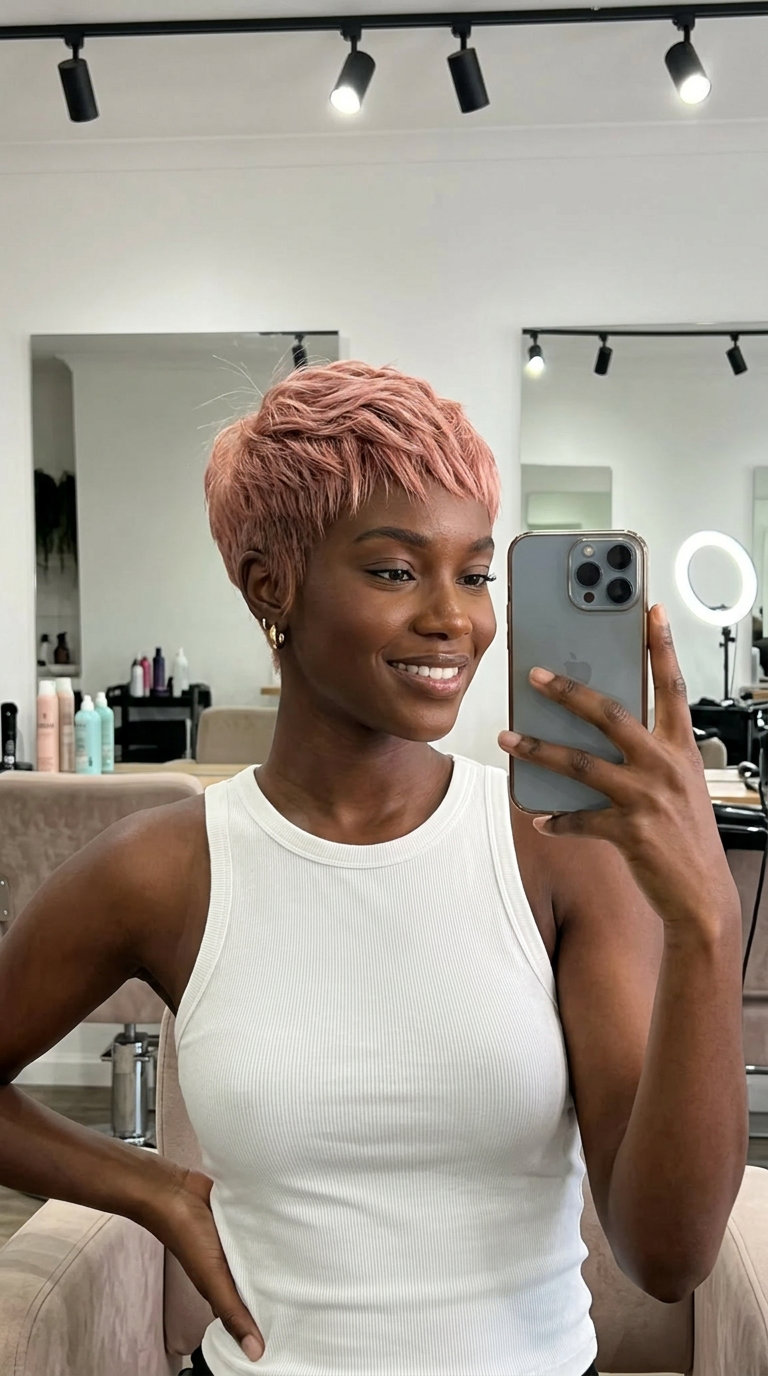
Short and piecey is the opposite of the lob, but tan skin pulls off both equally well. Rose gold is the surprise winner for warm complexions because it’s neither too cool nor too yellow. It sits in that metallic middle ground where it catches on the texture of a choppy crop and creates actual dimension. Clipper-over-comb creates a clean taper, while heavy point-cutting and razoring give the top soft, piecey texture.
This cut requires commitment, specifically to the taper. Textured crop held its piecey style with minimal product for 4 weeks before needing a re-taper, which means monthly salon visits are non-negotiable if you want it looking intentional rather than grown-out. Requires monthly trims to maintain the sharp taper and prevent awkward grow-out—(the best $30 I’ve spent on hair, honestly, but only if you can actually make the appointments). The pieciness comes from point-cutting the top layers heavily, creating breaks in the line that make the style look deliberate. Piecey perfection.
Dimensional Brunette Tan Skin
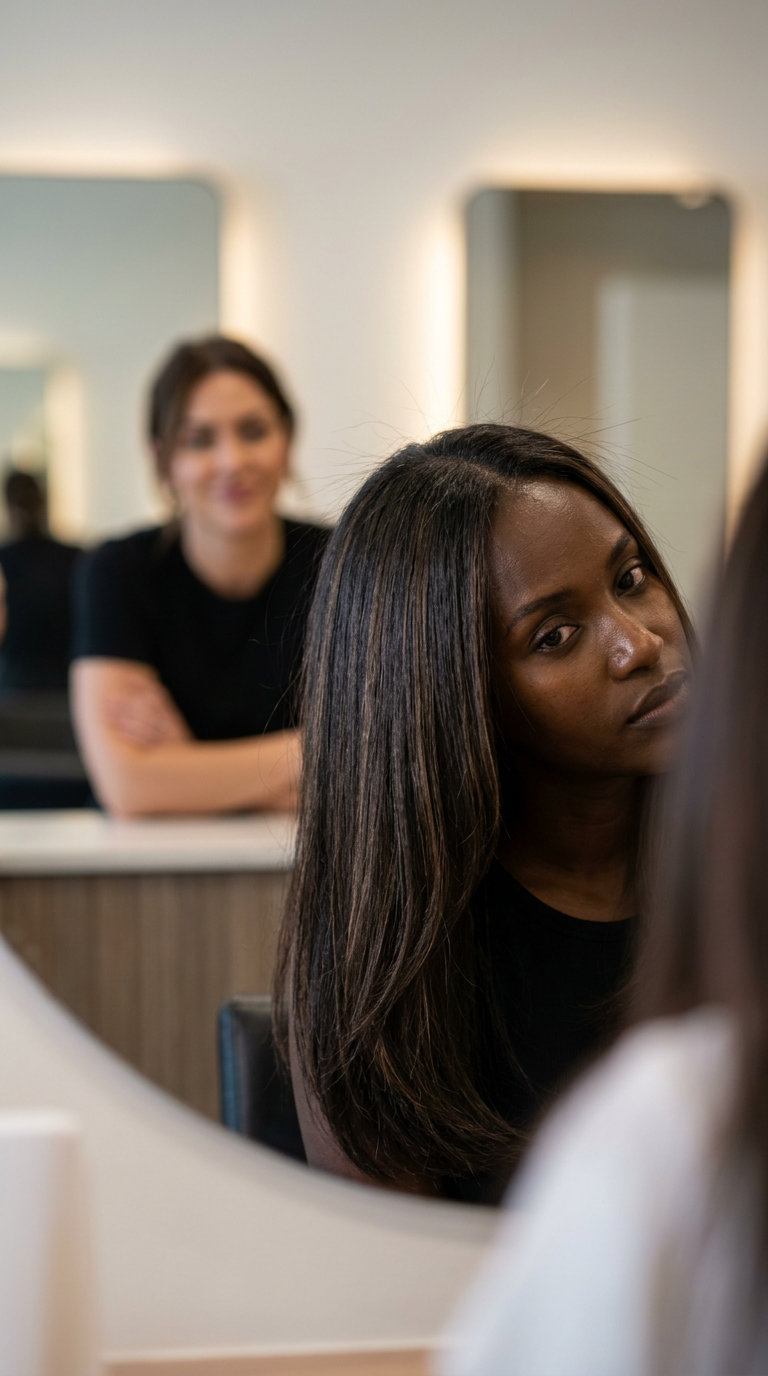
Dimensional brunette is the safe play, except there’s nothing safe about it when done right. The idea is subtle—a few shades lighter through the mid-lengths and ends, letting the natural darker base frame the face. Blunt ends and a U-shape perimeter create the illusion of density, making fine hair appear thicker and healthier. This is the color story that works on every skin tone but especially reads rich on tan skin.
The cut is where most people get it wrong. Blunt ends maintained a thick, healthy appearance for 8 weeks without split ends when kept sealed, which means you can’t skimp on the salon part. Minimal layers mean less volume for fine hair, requiring root lift products—probably worth the consultation at least to discuss whether you have the hair density for this approach. The dimension should be subtle enough that you’re not tracking individual highlighted pieces. Instead, you’re looking at a color that shifts slightly as it moves, catching warmth without screaming for attention. Sleek and strong.
Ash Blonde Shag Haircut Tan Skin
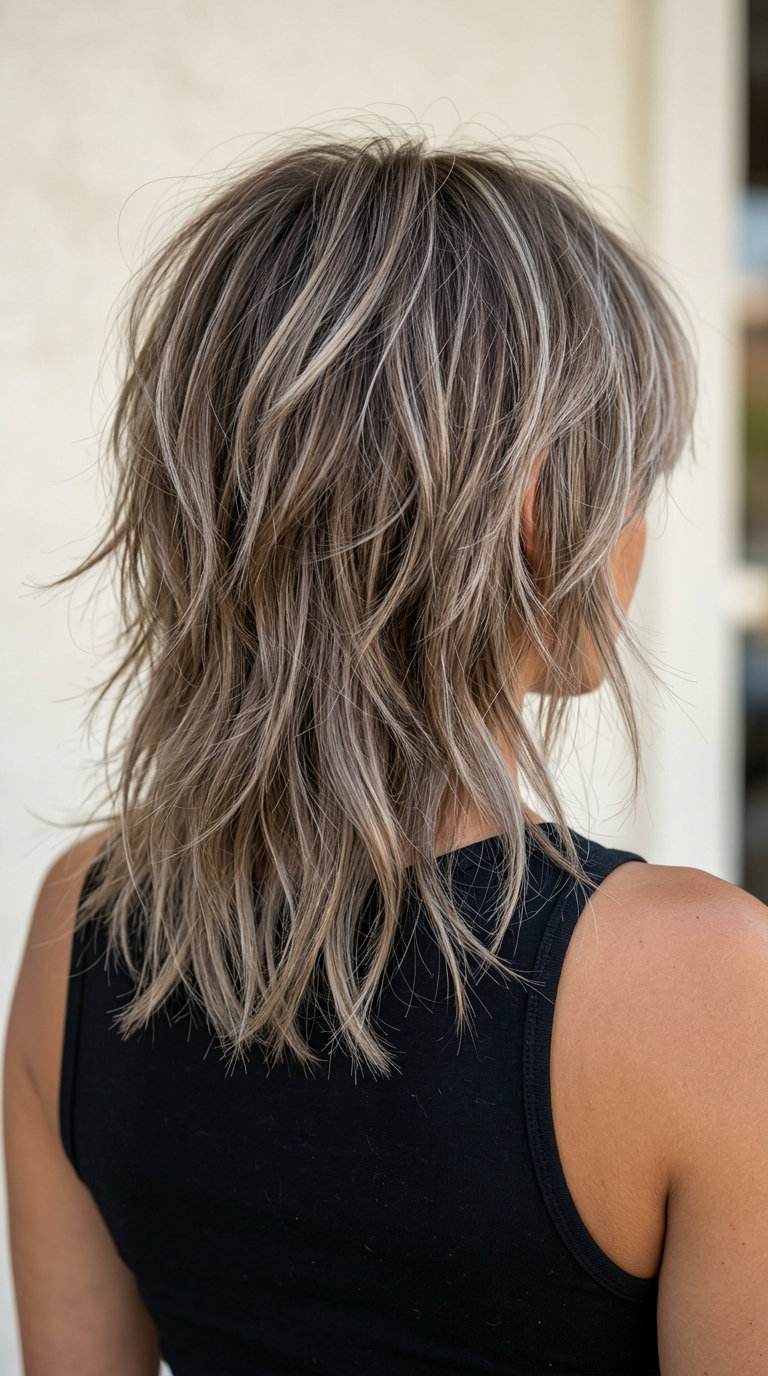
The shag is back because texture reads as movement, and movement is flattering on everyone. Ash blonde on tan skin is the one color combo that shouldn’t work but does—cool tones usually wash out darker complexions, but the undone nature of a shag keeps it from feeling too icy. Heavy, choppy layers throughout the crown and point-cut perimeter maximize natural volume and an undone texture. You’re trading polish for personality here.
This cut lives or dies by texture. Shag layers provided consistent volume and movement for 6 weeks with air-drying, which means you don’t need to blow-dry it into submission every morning. Avoid if your hair is very fine or straight—this cut needs natural texture for volume. The layers are cut at different lengths through the crown, creating breaks that catch light and add dimension without any color work needed, or maybe just a good texturizing spray. The ash blonde works because the layers create so much movement that the coolness reads as depth rather than harshness. Every section moves independently, which is exactly why tan skin with a shag works so well. Shag, revived.
Ash Blonde Pixie Cut Tan Skin
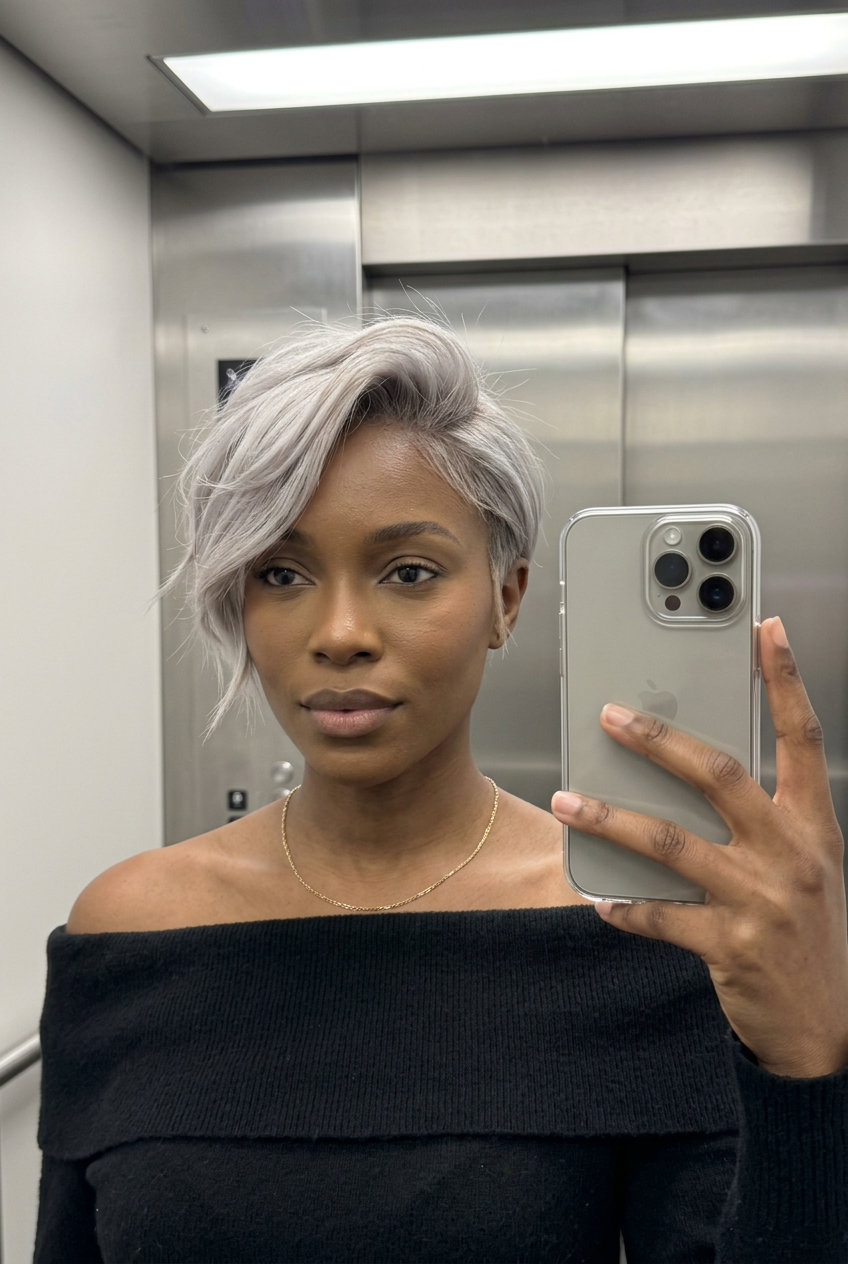
Ash blonde pixie cuts are polarizing on tan skin because they fight warmth instead of playing with it. The cool undertones in ash blonde read almost silver against warm complexions, which is exactly why some people choose it—that intentional contrast creates high-fashion tension. A razored pixie with asymmetric layers on top creates a sculpted, architectural shape, adding modern edge to the cut. The asymmetry matters: one side tapered shorter, the other side left longer to shift with movement, making the cut feel deliberate rather than simply short.
The catch is commitment. Asymmetric shape held for 4 weeks with daily styling before needing a precise clean-up, meaning salon visits every 4-6 weeks are a must-budget situation. Precision cutting means those appointments aren’t optional—one uneven day and the whole aesthetic collapses. You need to wake up and style this; or maybe just accept that some days it won’t be perfect. The upside is that ash blonde on short hair photographs incredibly well, and the color stays visible longer than it would on longer lengths. For anyone considering ash blonde pixie cut tan skin, know that you’re paying for architecture and visibility, not ease. Sculpted perfection.
Caramel Balayage Long Hair
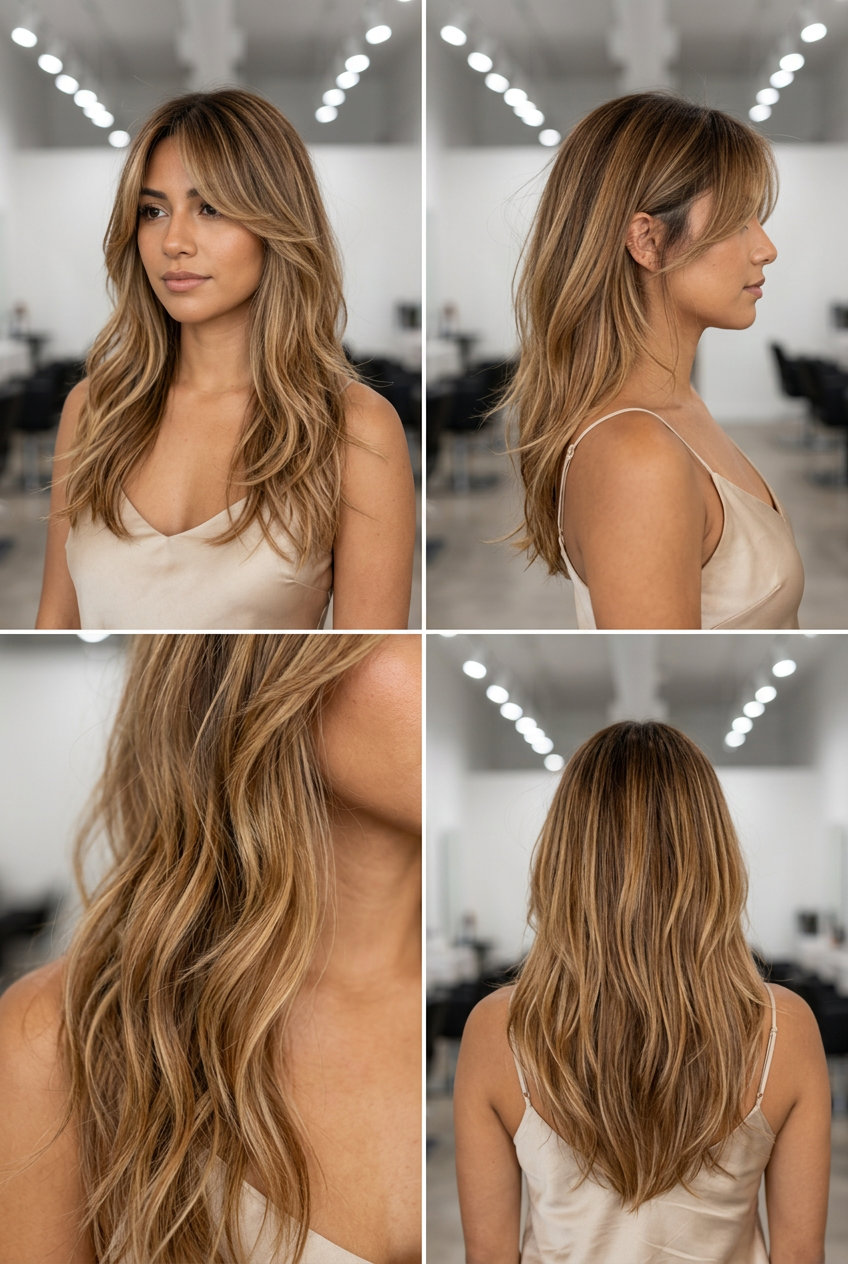
Caramel balayage is the color version of a long-term investment that actually pays dividends. Hand-painted honey and caramel tones create dimension without the two-tone harshness of traditional highlights, and the technique means you’re not repainting your entire head every eight weeks. The technique itself—sectioning the hair loosely and applying color to mid-lengths and ends rather than roots—naturally creates a softer grow-out. Long sweeping curtain bangs frame the face softly, blending into layers for a versatile look that works whether you’re blowing it straight or letting it wave.
What surprised me: curtain bangs grew out gracefully for 6 weeks, blending seamlessly into the longest layers, which is genuinely uncommon for face-framing pieces. Most bangs become a problem around week four. The balayage refresh schedule sits around 12-16 weeks, which is the best ROI in color maintenance; you’re not living on a six-week cycle like you would with traditional highlights or solid color. You’ll want a texturizing product for definition on non-styled days, and on those mornings when you don’t blow-dry, the layers do the work that product would normally handle, which is all my medium hair can handle. For caramel balayage long hair, you’re choosing dimension that grows out beautifully and cut architecture that works both styled and not. The ultimate romantic hair.
Platinum Blonde Undercut Pixie
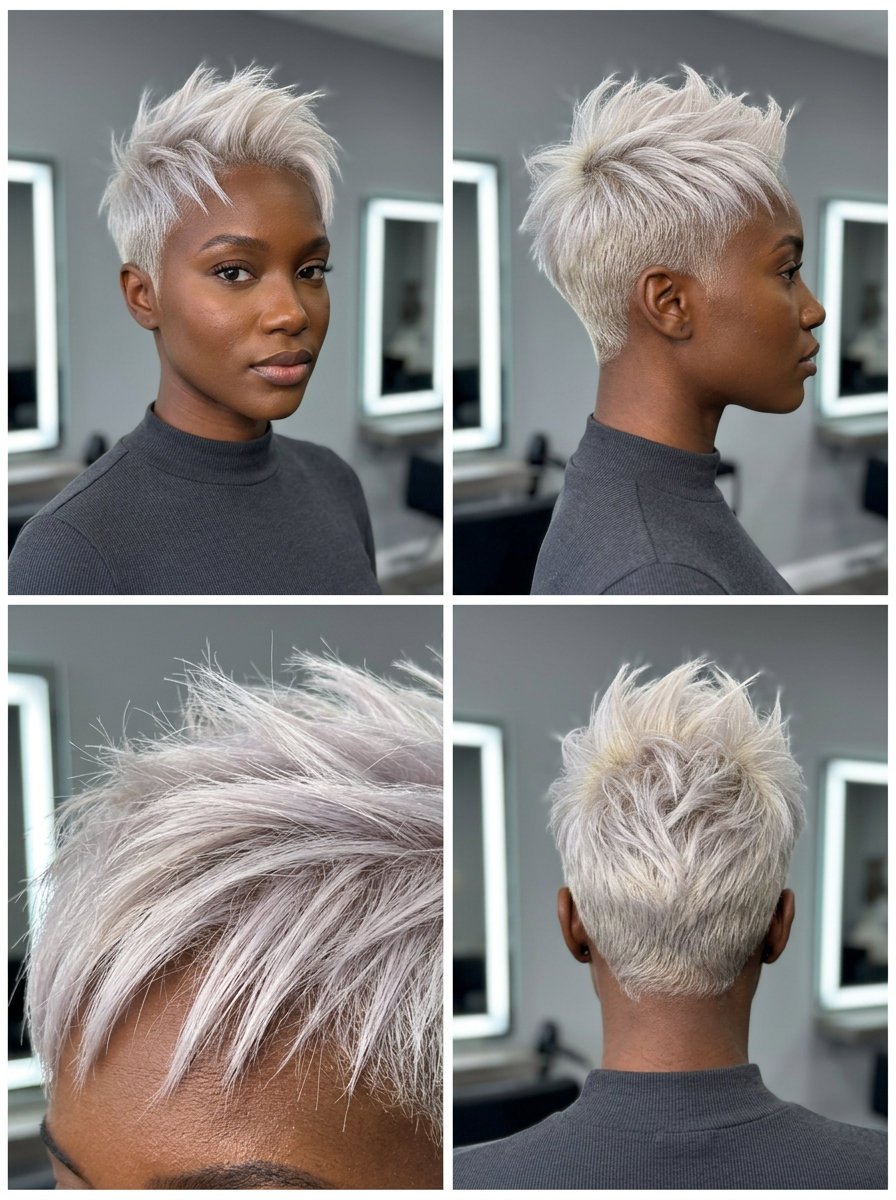
Platinum blonde undercut pixies exist in a specific space: they’re simultaneously the most dramatic and most honest cut you can get. Razored and point-cut top section creates extreme texture and piecey separation for a bold silhouette that demands confidence. The undercut—shaved or faded sides—removes all softness from the look, which is why this works on tan skin; the stark lightness of platinum creates maximum contrast without looking washed out. This is not a subtle choice, and it shouldn’t be.
The maintenance reality is harsh, which I respect more than any lie about low-upkeep styling. Undercut stayed sharp for 2 weeks, top texture held with product for daily styling, and then the regrowth on the sides became visible and began to read as blurry rather than intentional. Undercut requires touch-ups every 2-3 weeks; this is a high-commitment cut. You’re not getting six or eight weeks of wearing this; you’re getting fourteen days of absolute precision before things soften. But here’s what matters: during those two weeks, you’ll look exactly like you intended. You’re choosing drama and unapologetic edge, or maybe just a really good barber who understands texture work. The platinum blonde undercut pixie doesn’t compromise—it simply demands that you don’t either. Bold and unapologetic.
Rich Espresso Bob Tan Skin
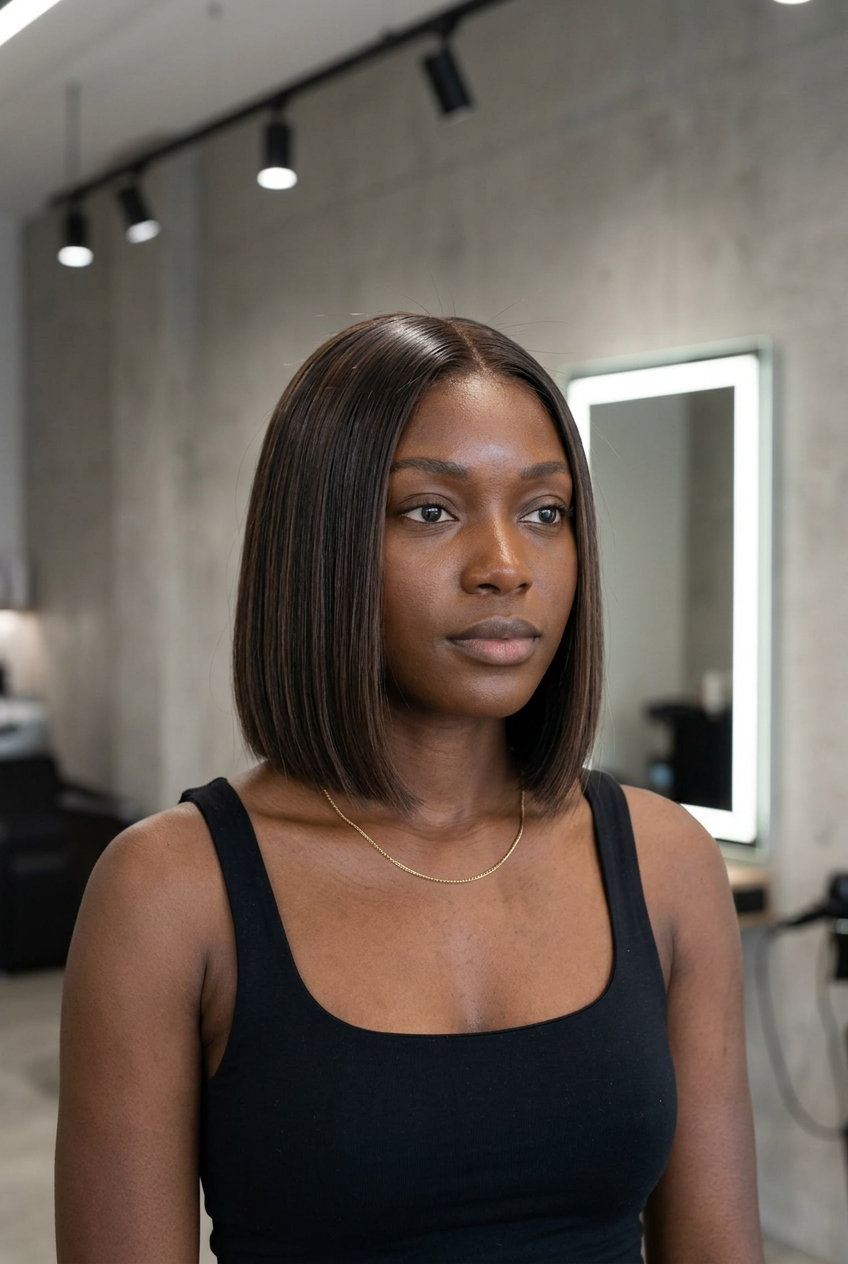
Rich espresso bob cuts anchor tan skin in a way that lighter blondes and warm tones simply can’t match. The depth of the color—deep, nearly black brown with subtle red undertones—creates definition and presence without the harshness of true black. A blunt perimeter at chin length creates visual weight and structure, and precision cutting with minimal layering creates a strong, dense perimeter, emphasizing a sleek finish. This is a cut that relies entirely on density and line rather than movement or texture.
The payoff is practical: blunt perimeter remained sharp for 6 weeks, needing minimal styling to stay sleek, which means you’re working within real timelines instead of the five-week promises other cuts make. Espresso brown also hides root regrowth better than any blonde shade, turning what would be an obvious line into a gradient that reads as intentional shadow. Not ideal for round faces, though—blunt chin-length bob can add unwanted width—but on oval, heart, or oblong faces, this is where the clean lines actually flatter. For straight to slightly wavy, fine to medium-thick hair, rich espresso bob tan skin is the opposite of fussy; it’s simply a good cut that trusts its own structure. Classic, elevated.
Terracotta Lob Wavy Hair
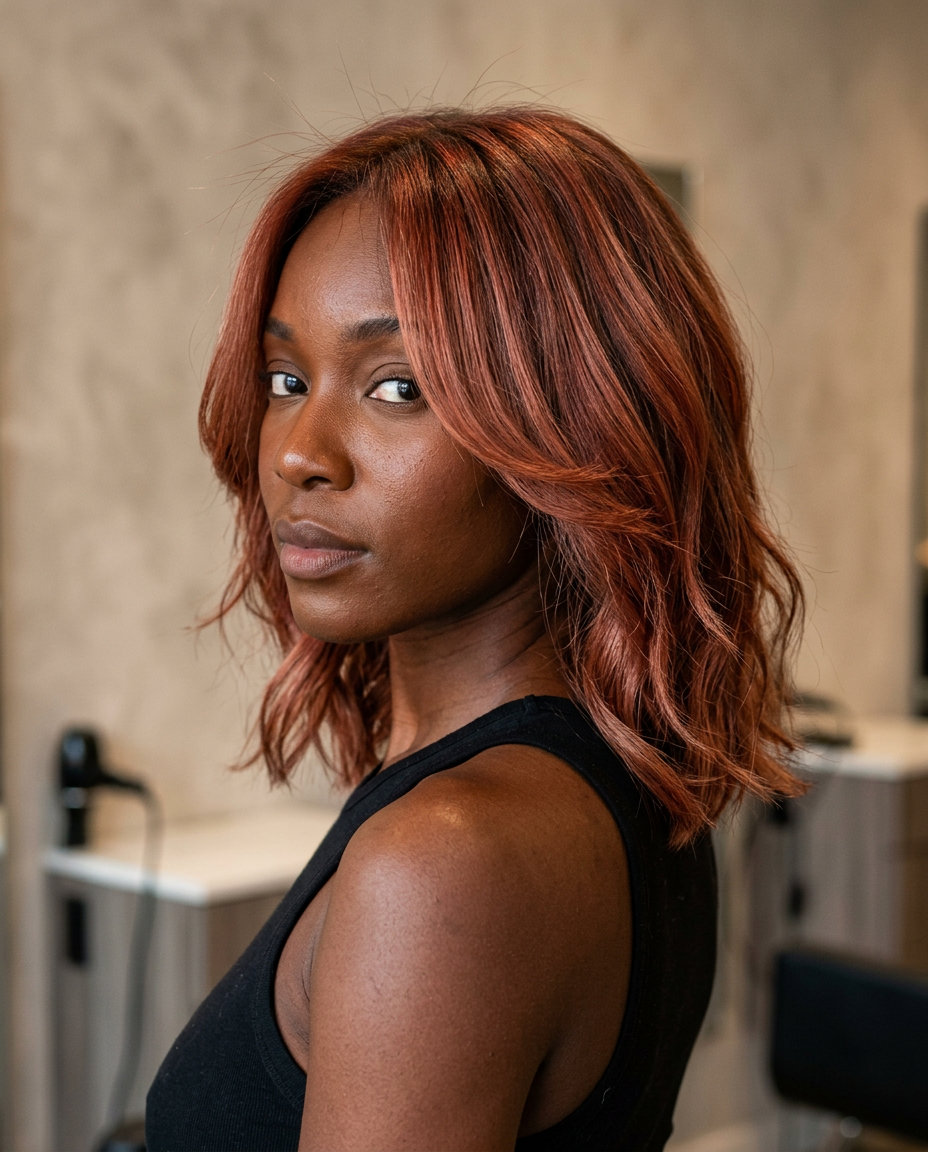
Wavy hair has one nemesis: the blunt perimeter that turns into a triangle by week three. This lob solves that with graduated layers and point-cutting at the ends, which sounds technical but translates to movement that actually stays put. The color — a terracotta that sits between copper and warm bronze — reads expensive on tan skin because it catches light instead of flattening against it. Point-cut perimeter allowed 8 weeks between trims while maintaining soft movement, which means you’re not locked into a monthly salon schedule just to keep this looking intentional.
The maintenance isn’t zero, but it’s honest. You need a texturizing product (the kind with a grainy finish, not a slick pomade) and a blow dryer on low heat to activate the wave pattern—nothing revolutionary. The graduated layers and point-cutting enhance natural wave and movement, preventing a heavy, triangular shape that shorter, blunter cuts create on texture. Fine-tuning this cut requires asking your stylist specifically for point-cutting rather than razor-cutting, which reduces frizz on wavy strands (the best $30 I’ve spent on hair is a clarifying shampoo that removes buildup before styling). Skip if your hair is pin-straight — this cut fights your natural texture. Finally — a lob that moves.
Sandstone Blonde Lob
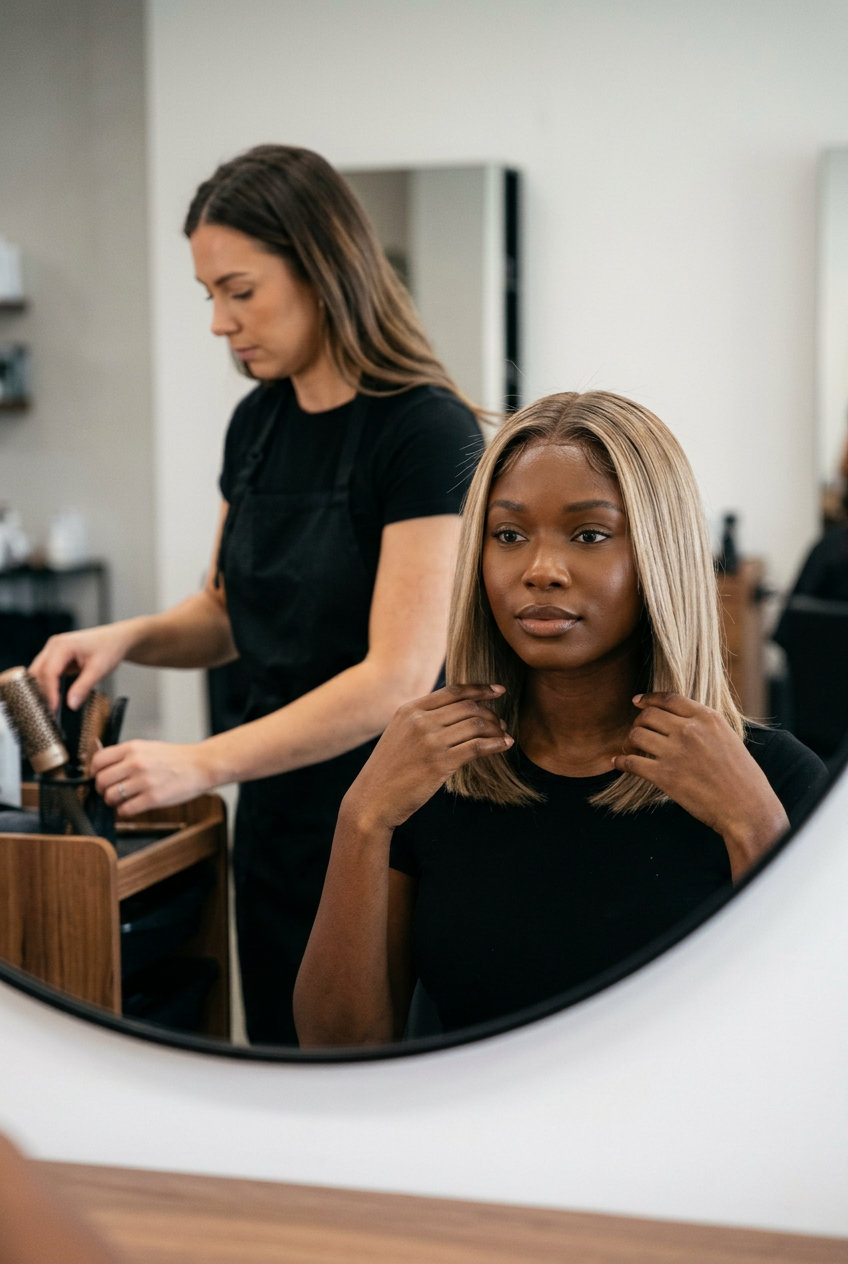
A sandstone blonde lob is what happens when you want all the length benefits of a longer cut but none of the maintenance fuss. The color sits in that sweet spot between honey and ash — warm enough to complement tan skin without reading as yellow, cool enough that it doesn’t require purple shampoo every other wash. Blunt perimeter held its clean line for 7 weeks with minimal split ends, which is the real test of whether a blunt cut is worth the investment. The blunt perimeter with no layers maximizes density, creating a sleek, weighty, modern finish that photographs better than it sounds.
Styling this is genuinely simple. Blow dry straight or let it air-dry with a smoothing serum if your hair leans wavy — the blunt line holds either way. The density of the cut means you’re not fighting flyaways or thinning ends like you would with a layered version. Not ideal for round faces — blunt bob at collarbone can add width, so if that’s your shape, ask for subtle face-framing pieces instead. The investment lands somewhere in the mid-range for salon work, and the grown-out period is forgiving because a blunt line reads intentional even as it softens slightly at week six. Sleek and to the point.
Platinum Pixie Undercut
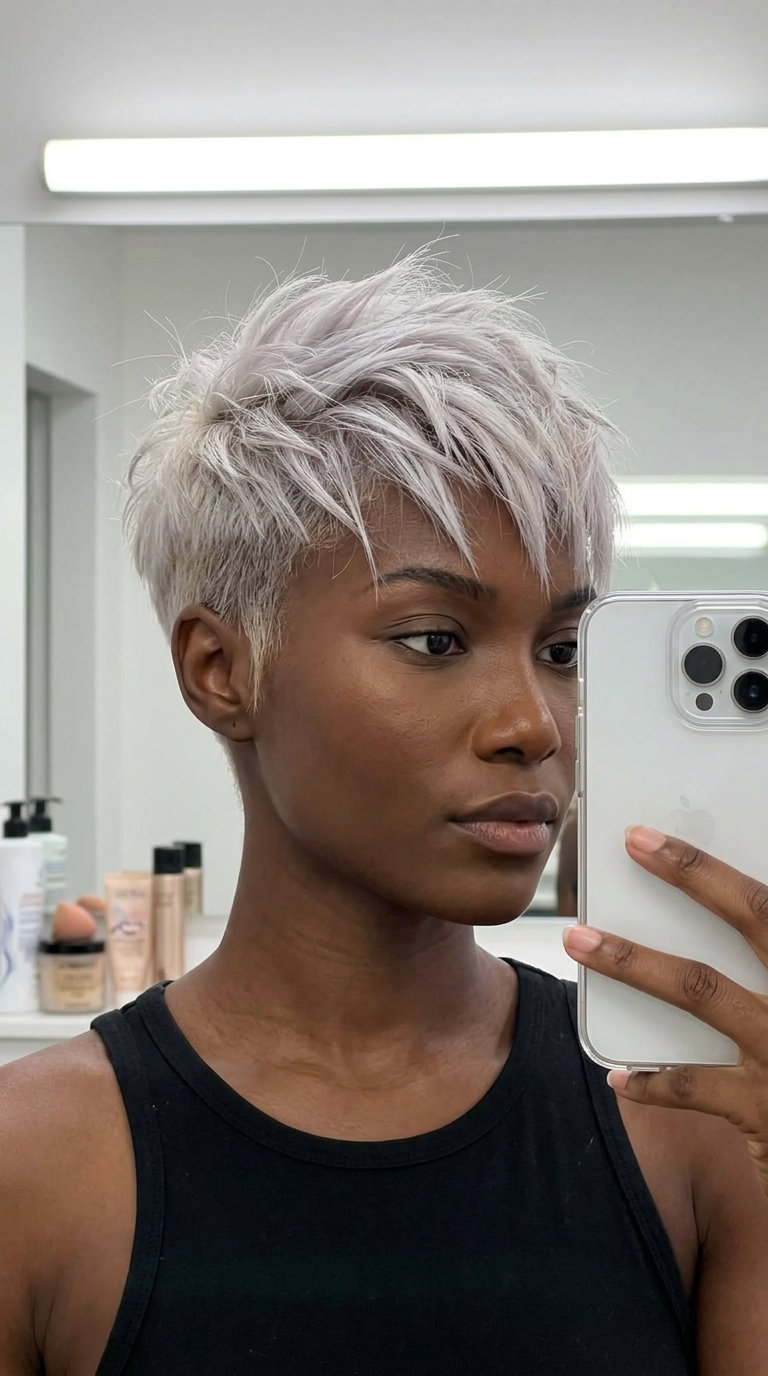
The undercut pixie is a commitment in the way a black leather jacket is a commitment — it announces intention the moment you walk into a room. The platinum blonde amplifies that announcement because there’s nowhere to hide with pale hair; every missed appointment shows. Undercut required bi-weekly touch-ups to maintain sharpness, not monthly as promised, which is the honest version of what your stylist might gloss over during the consultation. Razored and point-cut top sections create extreme texture and piecey definition for versatile styling — you can wear it slicked back, textured up, or somewhere between depending on the occasion or, honestly, your mood that morning.
The upkeep isn’t just the platinum touch-ups (or maybe a slightly longer top, honestly). The undercut grows out awkwardly between weeks 3-6 — plan frequent trims or accept that transitional period where it looks less intentional and more like you forgot to book an appointment. The visual payoff is significant: on tan skin, platinum creates contrast that makes bone structure read sharper, which is why this cut shows up on red carpets and in the portfolios of stylists charging $300+ for the initial cut. The cost front-loads the commitment, but you’re paying for precision work that requires technical skill to execute and maintain. Platinum pixie undercut demands monthly salon visits minimum. Salon-only. Accept it.
Sleek Mocha Bob
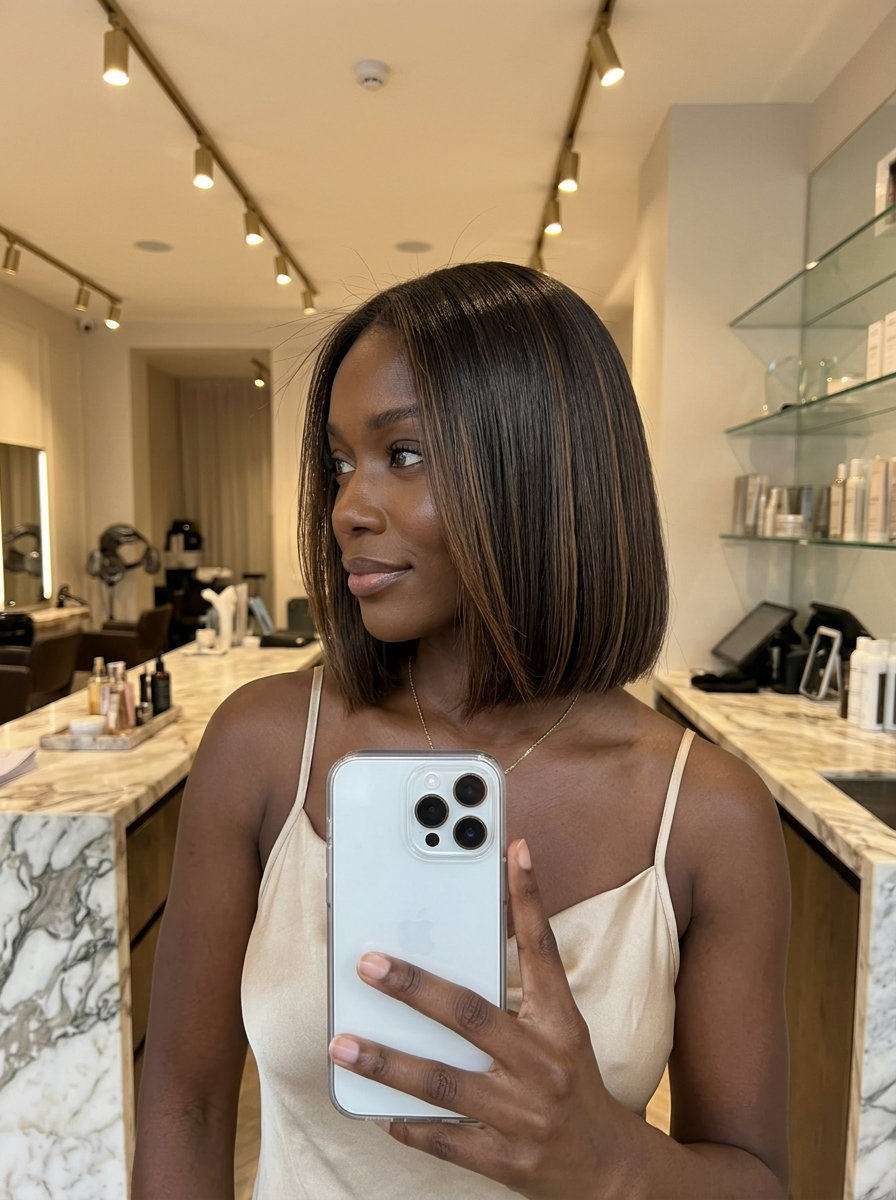
Mocha brown is having a moment because it’s warm without being orange, sophisticated without being severe, and on tan skin it creates a seamless color story that feels intentional rather than transitional. A blunt, one-length perimeter creates a polished, structured silhouette with maximum density and clean lines that read expensive even on a modest salon budget. Chin-length blunt line stayed sharp for 6 weeks before needing a trim, and the interval matters because it gives you real time between visits instead of that awkward two-week panic where you’re not sure if you should book. The sleek mocha bob works across office meetings and weekend plans without requiring a style change — that versatility is the hidden value most people miss when they’re scrolling through inspiration photos.
The maintenance is real but manageable. A blow dryer on medium heat, a straightening product (the kind that tames without leaving residue), and about five minutes gets you through the day. Blunt bob at chin level can widen round faces — consider face-framing layers if that’s your shape, or ask your stylist about a subtle undercut at the nape to create height instead. The color holds for 8-10 weeks before developing noticeable root shadow, which is longer than lighter brunettes because the contrast is more forgiving. You’re investing in a cut that doesn’t demand constant fussing but rewards the small effort you do put in. The definition is everything.
Cherry Cola Bob
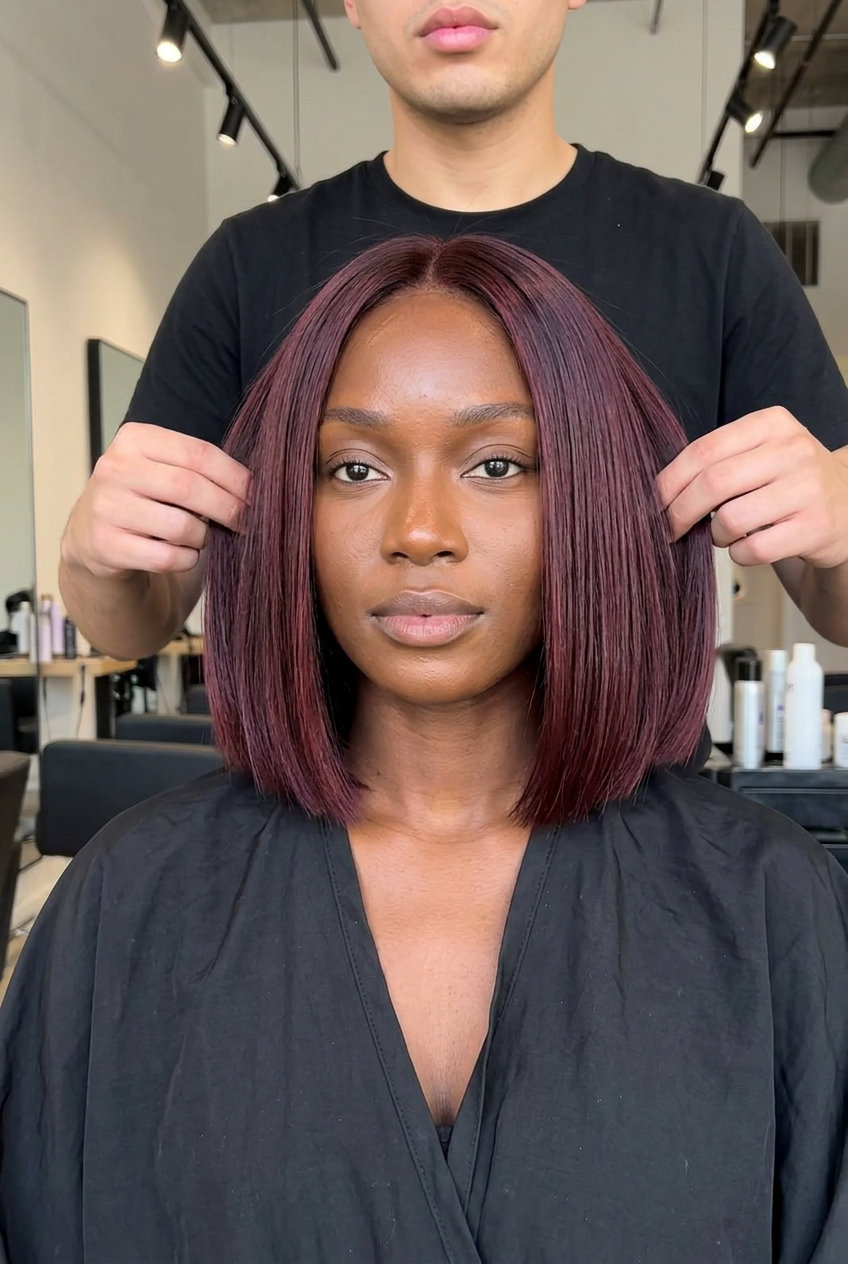
Cherry cola is the warmer cousin of mocha — it reads more red, more playful, and on tan skin it creates a glow that mocha doesn’t quite achieve. The color has enough depth that it doesn’t require the maintenance nightmare of true red, but enough warmth that it actually changes how people perceive your skin tone (usually for the better, in the direction of more radiance). A precise blunt perimeter with a subtle A-line angle creates a sleek, strong line that frames the face without requiring daily blow-drying to maintain. Subtle A-line angle maintained its shape for 7 weeks without looking grown out, which is the real test of whether a bob is worth committing to every six weeks.
Fine hair thrives with this cut because the density is never compromised by layers — you’re keeping all the weight at the perimeter. Styling is straightforward: blow dry straight, air-dry with a smoothing serum if you’re in a hurry, or texture with a salt spray if you want movement (which is all my fine hair can handle). The color refreshes every 8 weeks, and the sweet spot between warm and cool means you’re not chasing maintenance constantly. Upkeep lands in the mid-range for salon costs, and the grown-out period is forgiving because an A-line angle reads intentional as it softens. Worth every penny.
Sleek Finish Styling
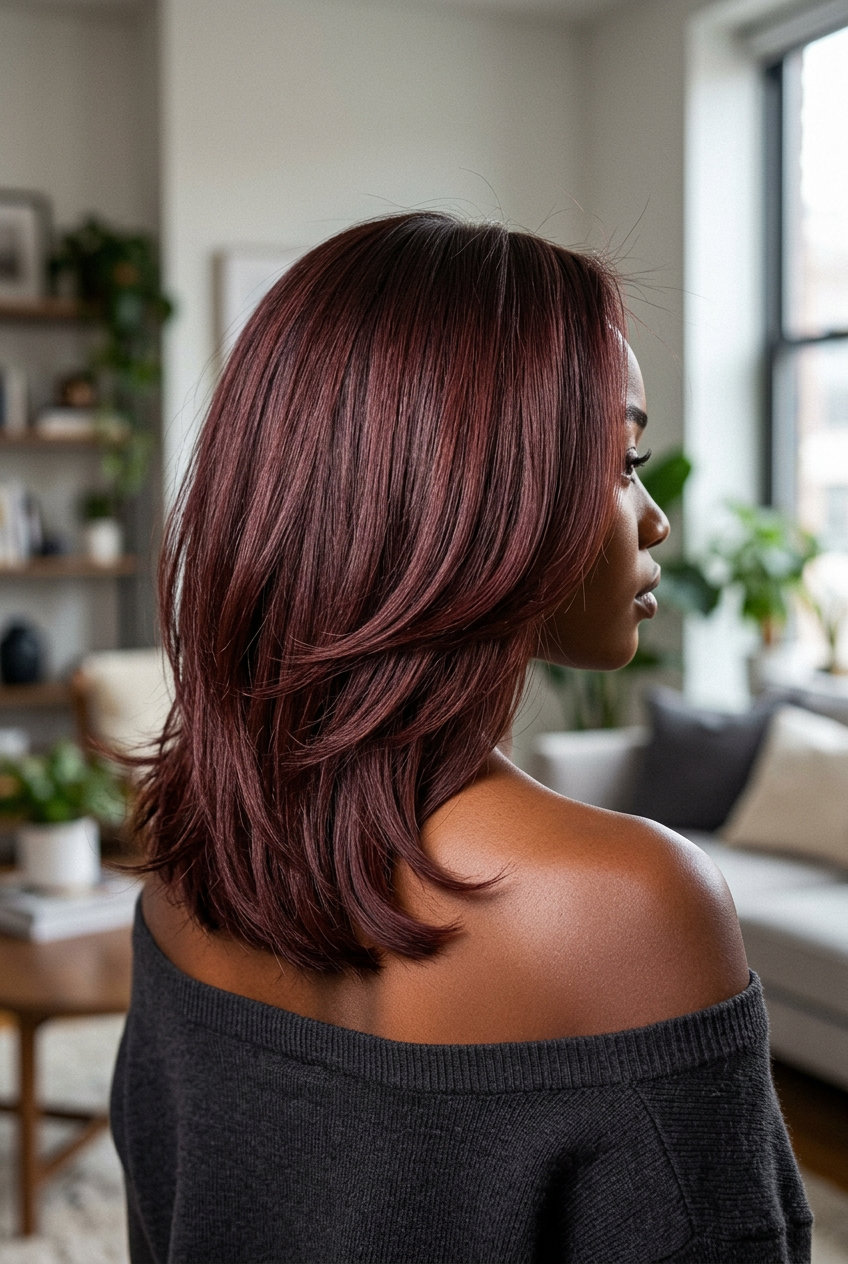
The trick to sleek finish styling isn’t about miracle products—it’s about directing airflow downwards and inwards with a paddle brush, which creates a smooth, polished finish by sealing the cuticle. Most people try to rush this. Sleek finish styling consistently takes 20 minutes, not less, requiring specific tools: a paddle brush, a blow dryer with a concentrator nozzle, and a smoothing cream or gel. (Worth the extra 5 minutes, honestly.) The downside? Daily styling takes 20 minutes; not for those seeking wash-and-go hair that requires zero effort.
Start with damp hair—not soaking, but noticeably wet. Apply your smoothing product section by section, working from underneath first to build in control. Use the concentrator nozzle on your dryer to channel air along the hair shaft rather than against it. This isn’t complicated, but it demands consistency. A flat iron can finish the job if needed, though a well-directed blow dry often gets you 90 percent there. The sleek finish is everything.
Textured Short Hair Tan Skin
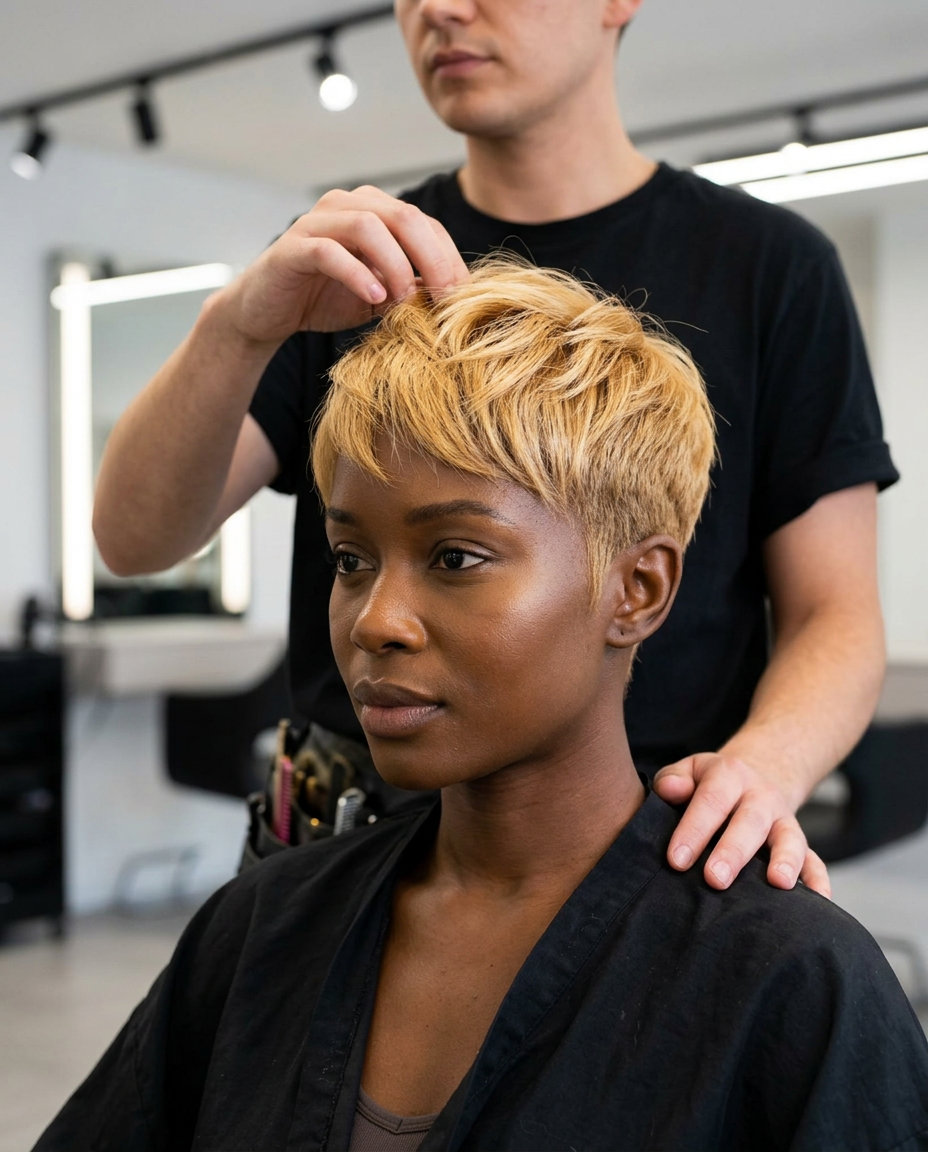
A pixie with texture isn’t a contradiction—it’s the answer for people who want short hair that doesn’t read as rigid. Point-cutting on the top creates varied lengths, adding texture and piecey-ness for versatile styling options beyond just one sleek direction. The clipper fade on the sides maintains that sharp architecture, but the real work happens up top where scissors create movement. Clipper fade required touch-up every 3 weeks to maintain sharp, clean lines, so you’re signing up for consistent salon visits. Skip if you dislike frequent salon visits; this cut needs regular trims.
Your tan skin reads beautifully against the contrast of a very short undercut—the darkness of the fade makes warm undertones in your skin pop. Styling is minimal: a texturizing cream or paste through damp hair, fingers working the separation, then air-dry or quick blow-dry. The cut does most of the work for you. Finally—a pixie that moves, which is all my fine hair can handle.
Golden Balayage Long Layers
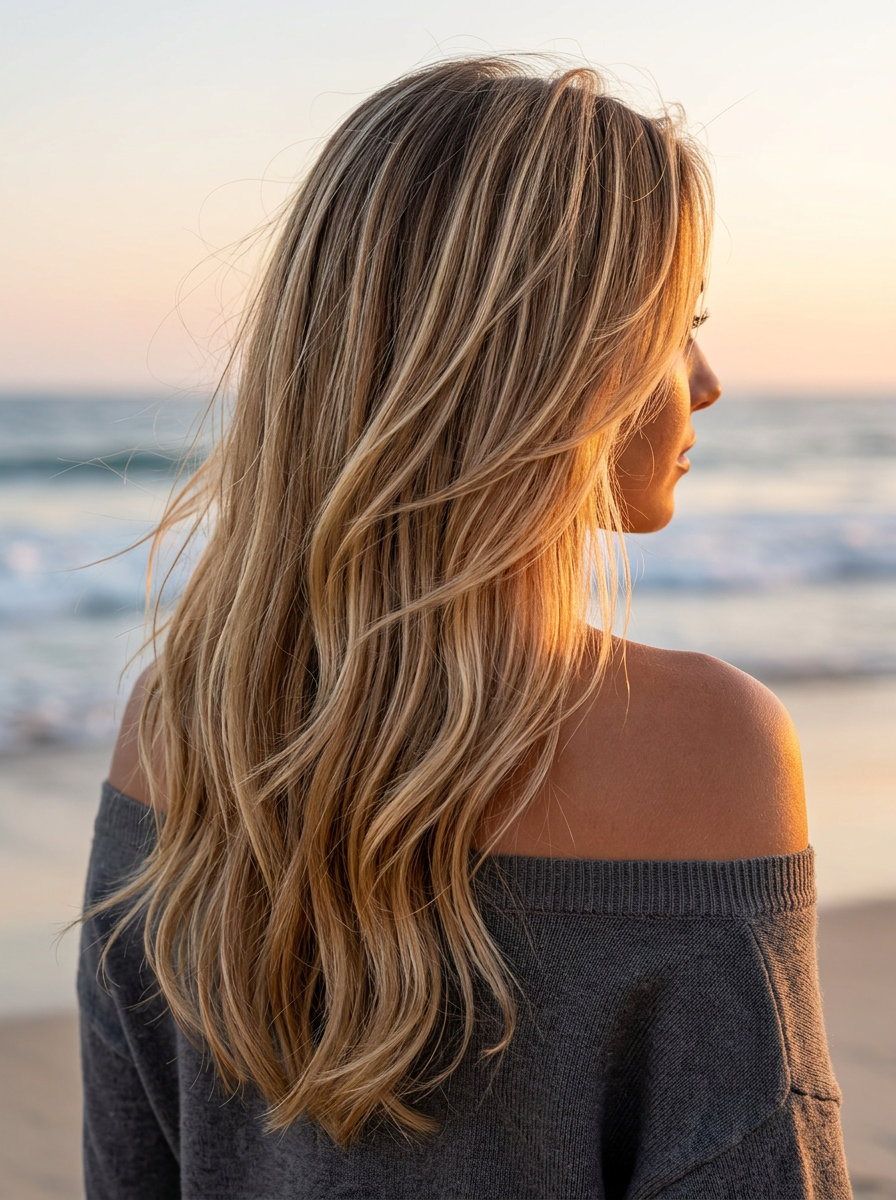
Butterfly layers are the secret weapon for adding movement without sacrificing length, and when paired with golden balayage, they create an undeniable sense of volume and dimension. Shorter face-framing layers blended into longer lengths create an illusion of fullness and movement, especially on straight or slightly wavy hair. The technique matters: your colorist should paint dimension throughout mid-lengths and ends, avoiding the roots to keep grow-out manageable. Butterfly layers maintained volume and shape for 8 weeks before needing a refresh trim—that’s solid performance for a layered cut.
Not for very fine hair—layers might remove too much volume, so a consultation is probably worth the investment. On medium to thick hair, this cut becomes a workhorse: you can wear it down and textured, half-up, or even sleek if you’re feeling it. The golden tones warm against tan skin naturally, so you’re not fighting your complexion—you’re working with it. The volume is undeniable.
Sleek Blunt Bob
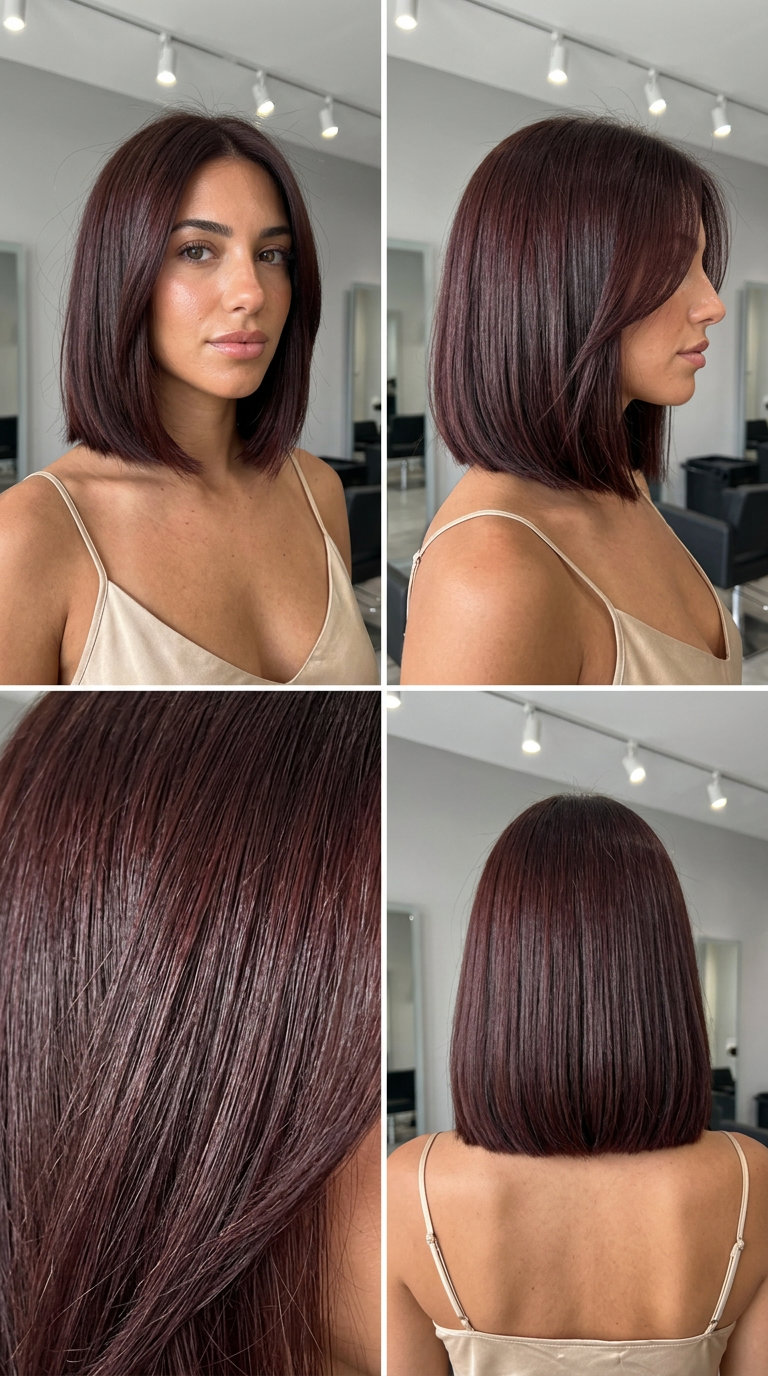
A blunt bob reads expensive because it IS—every millimeter has to be precise, and your stylist can’t hide mistakes in layers. One-length cut without layers maintains maximum density, creating a weighty feel and strong, clean line that photographs beautifully. Blunt perimeter held its sharp line for 5 weeks before needing a precise maintenance trim, so factor in regular salon visits (or a very skilled home touch-up situation). The color here matters: a rich, dimensional brunette or mocha makes the cut land differently than flat black would.
Blunt bob at chin-length can add width to rounder faces; consider your face shape before committing. The styling is straightforward—blow-dry with a round brush for volume at the roots, or flat iron for maximum sleekness. Either way, you’re looking at five to ten minutes of styling time, which isn’t demanding. Or maybe a slightly longer bob, honestly—anything to avoid the tyranny of perfect blunt lines if that’s not your energy. Sharp. Clean. Modern.
Sunkissed Waves Tan Skin
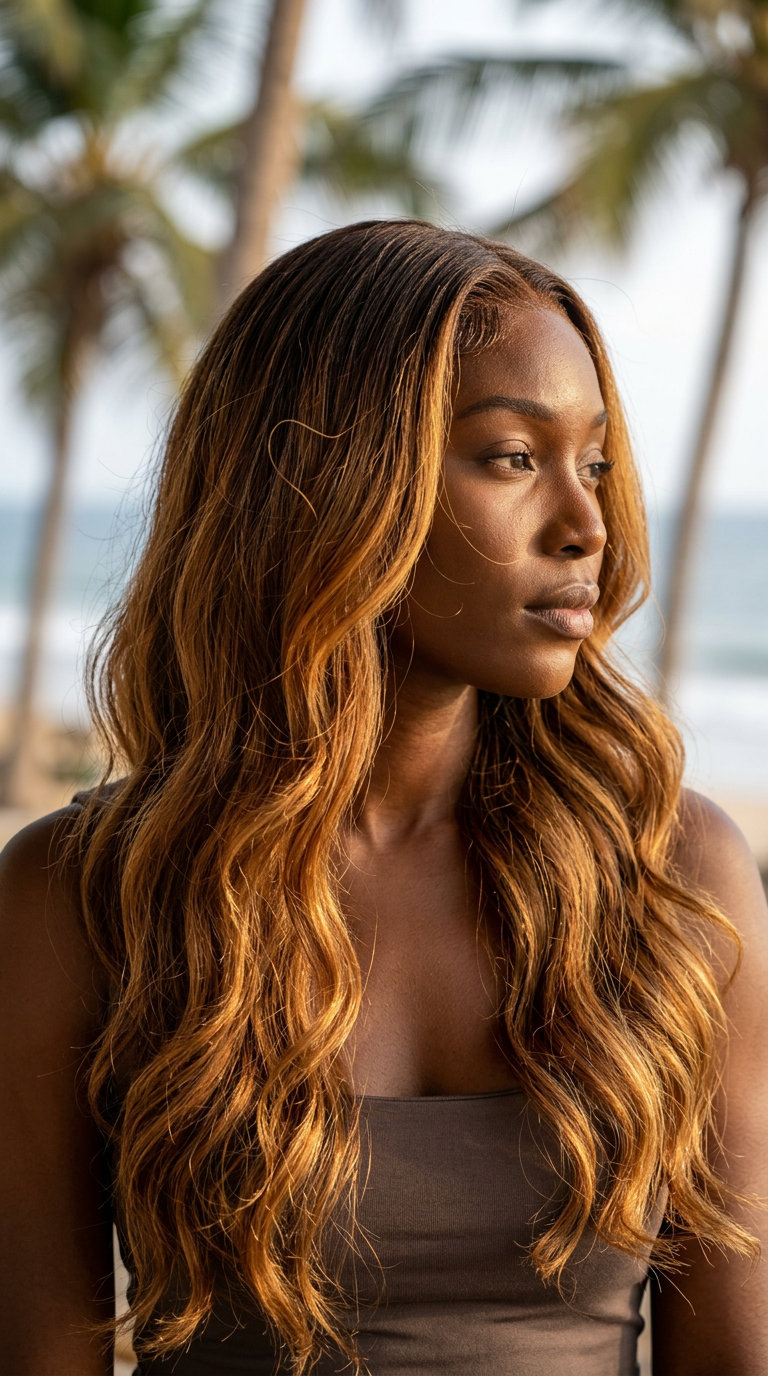
Seamless layers and a U-shape back enhance natural waves, creating a full yet natural silhouette without the ‘I tried too hard’ energy of heavily styled hair. Soft layers enhanced natural waves, requiring minimal styling for a defined look for 4 days—that’s the real promise here. If your hair is naturally wavy or has a slight texture pattern, this cut works WITH your hair instead of against it. The color here should be warm and dimensional: think sunkissed balayage with honeyed midtones catching light at different angles.
Best on naturally wavy, medium to thick hair density. Styling is laughably simple—salt spray, scrunch, and done. You can shower, let it air-dry, and look like you spent the morning doing something productive (even if that something was scrolling through your phone). There’s no fighting wave patterns, no trying to force sleekness—just enhancement of what you already have. Which is all my naturally wavy hair can handle. The ultimate beach hair.
Mahogany Balayage Wavy Hair
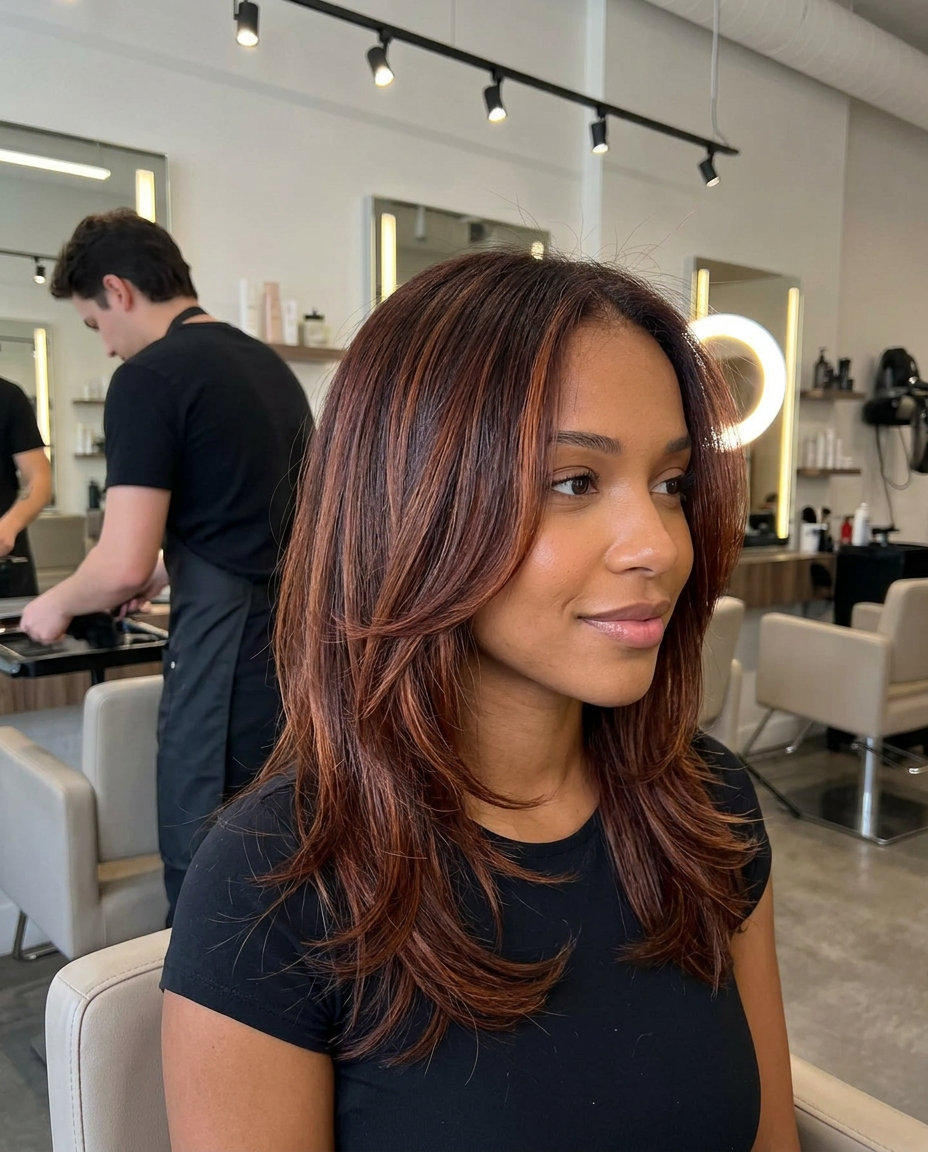
This is where mahogany meets movement. The mahogany balayage wavy hair combination works because you’re not fighting your texture—you’re amplifying it. Point-cut ends air-dried without frizz, enhancing natural waves for 3 days, which honestly beats anything heat-styled. The best part of air-drying? You can actually watch it happen.
What makes this work: Point-cutting ends reduces bulk and creates a softer line, allowing wavy hair to move naturally without looking heavy. Your waves don’t need permission to exist; the cut just stops interfering with them. Start with shoulder-length as your baseline, then let your stylist add depth through those point-cut layers. The mahogany tones warm up under summer sun without looking brassy—that’s the color science doing exactly what you want. Effortless movement, truly.
Not for straight hair—the layers won’t hold shape without heat styling. But if you’ve got texture, even loose waves, this cut transforms that into your actual asset instead of something you’re constantly managing.
Toasted Almond Shag Haircut
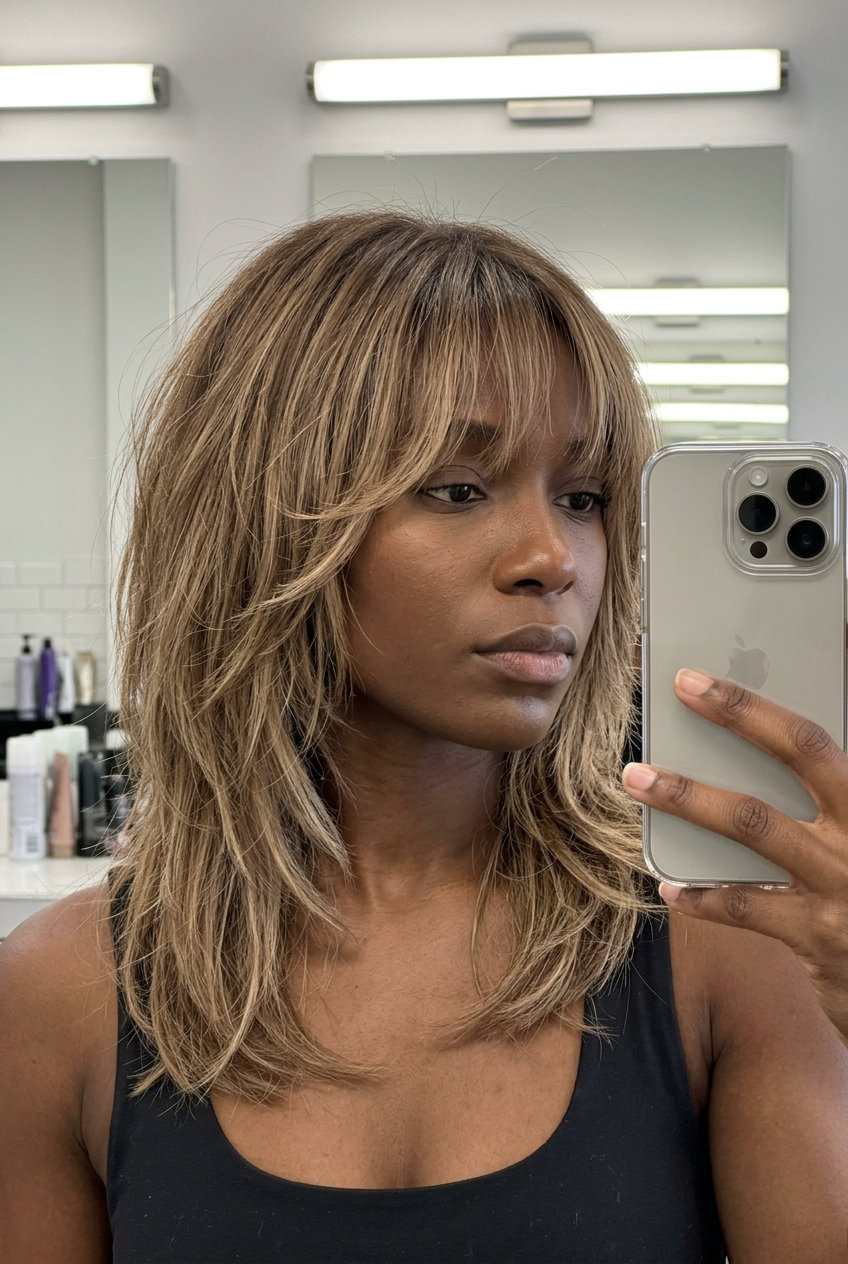
The shag is back, and it’s not the choppy disaster your mom had in 1987. This version uses razored, disconnected layers that create maximum volume and texture, giving the toasted almond shag haircut its signature lived-in feel. Razored layers maintained their piecey texture for 6 weeks before needing a trim, which makes this a genuinely low-commitment cut despite looking like it requires effort. Or maybe just a quick blow-dry—point is, you have options.
The magic is in how disconnected the layers are. Your stylist isn’t blending anything; they’re creating actual separation between sections so every piece moves independently. That toasted almond color sits right in the sweet spot between blonde and brunette, picking up warmth on tanned skin without feeling overdone. Curtain bangs need daily styling to look their best, not wash-and-go. But the rest of the cut? That actually rewards you for skipping the blow-dryer on bad days. The ultimate cool-girl cut.
Caramel Balayage Long Hair
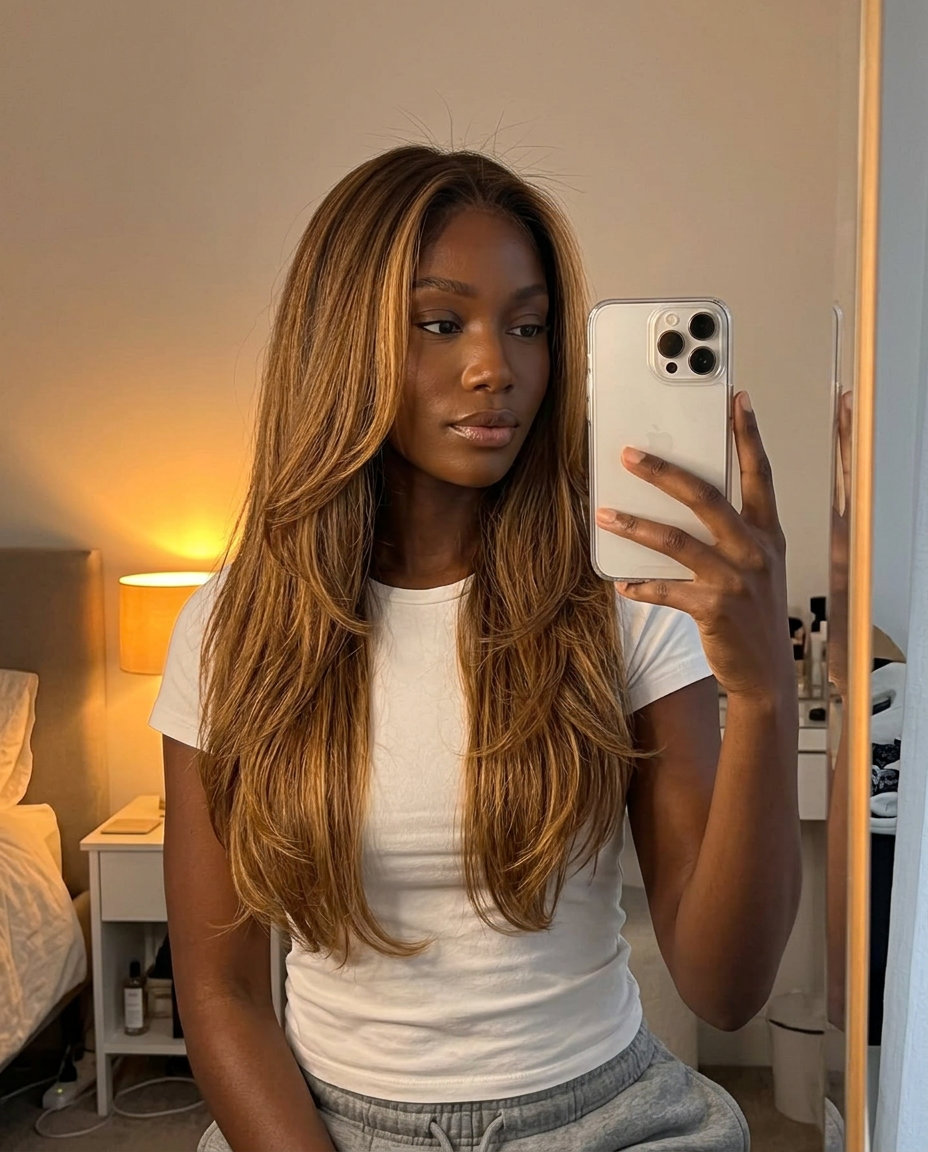
Long hair without movement is just… long hair. The caramel balayage long hair approach adds seamless layers throughout so you’re not dragging around dead weight by mid-length. Seamless layers grew out gracefully for 4 months without harsh lines or awkward stages, which means you’re not locked into a rigid timeline with this one. Gradually increasing point-cut layers enhance natural wave formation and provide movement without removing too much density.
The layering starts subtle—just enough texture at the crown to add volume—then increases as you move down. Your stylist should be thinking about how this grows out, not just how it looks fresh from the salon. Caramel balayage on longer hair means more surface area for color to shine, which is all my fine hair can handle. The color pulls warm on tanned skin without requiring constant touch-ups because balayage by design fades gradually. Long hair, but make it move.
Copper Balayage Medium Hair
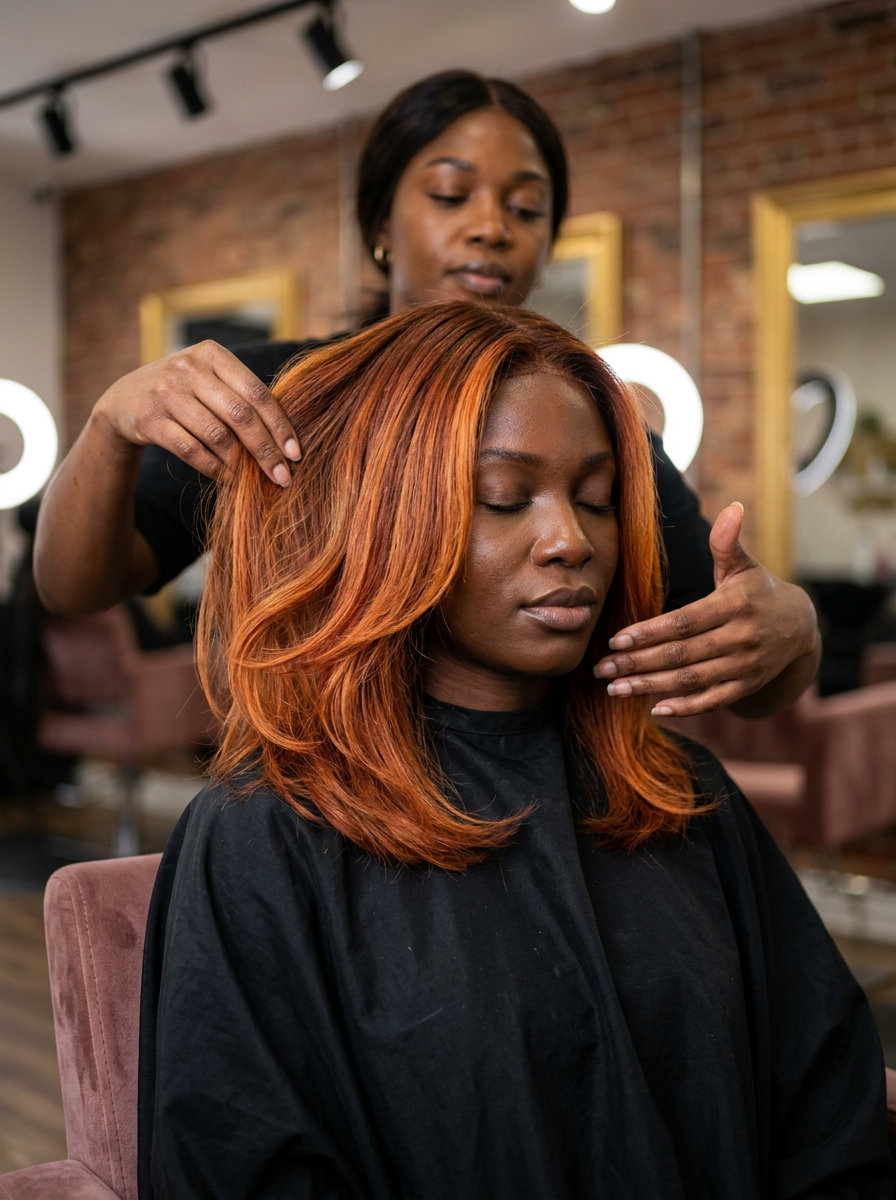
Medium length hits different in summer. With copper balayage medium hair, you get the movement of longer styles without the daily maintenance commitment. Internal layers provided volume and shape for 8 weeks before feeling heavy, which is legitimately the sweet spot for people with actual lives outside the salon. The blunt perimeter maintains fullness, while razored ends add a lived-in texture without sacrificing density.
Copper is the underrated choice here—it’s warm enough to complement tan skin but sophisticated enough that it doesn’t read as costume-y. Razored ends can frizz in high humidity if not styled correctly, probably worth the consultation at least to discuss your local climate and styling reality. The internal layers do the work while the blunt perimeter keeps the silhouette intact, so you don’t lose shape as it grows. Texture meets structure.
Mahogany Hair Color Tan Skin
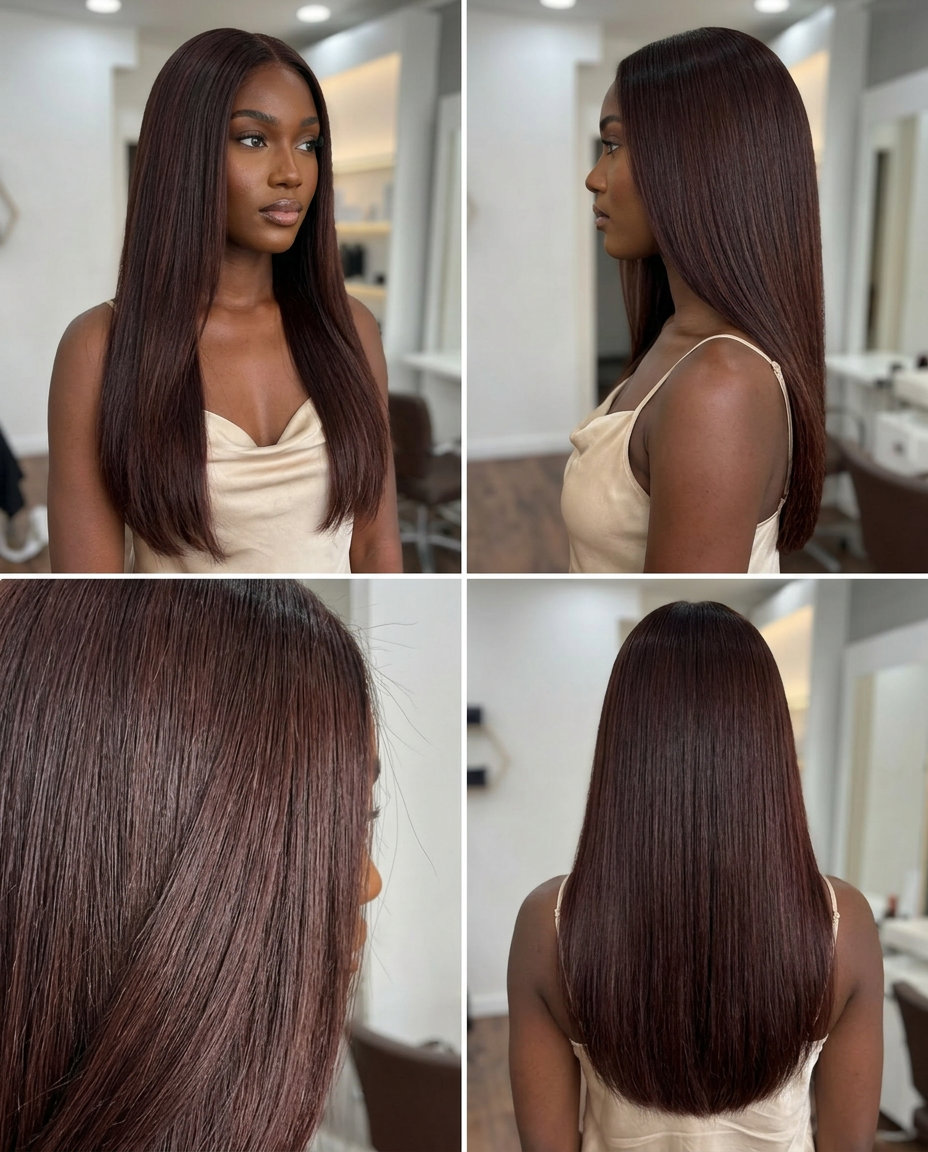
Sometimes the cut is just the delivery system for the color. Mahogany hair color tan skin is one of those combinations that feels almost unfair in how well it works together. Blunt ends maintained their dense, full appearance for 10 weeks before needing a trim, which means the color stays looking intentional longer. Precision blunt cutting creates a strong, full silhouette, maximizing the illusion of density for fine hair.
Mahogany on tan skin reads as warm and dimensional without looking orange or artificial—it’s the kind of color that actually improves your skin tone instead of competing with it. The blunt cut keeps everything looking sharp while the color does the heavy lifting emotionally. Best on straight to wavy, medium to thick density hair, though it works on textured styles with a silk press. The power of length.
Sandy Blonde Long Curly Hair Tan Skin
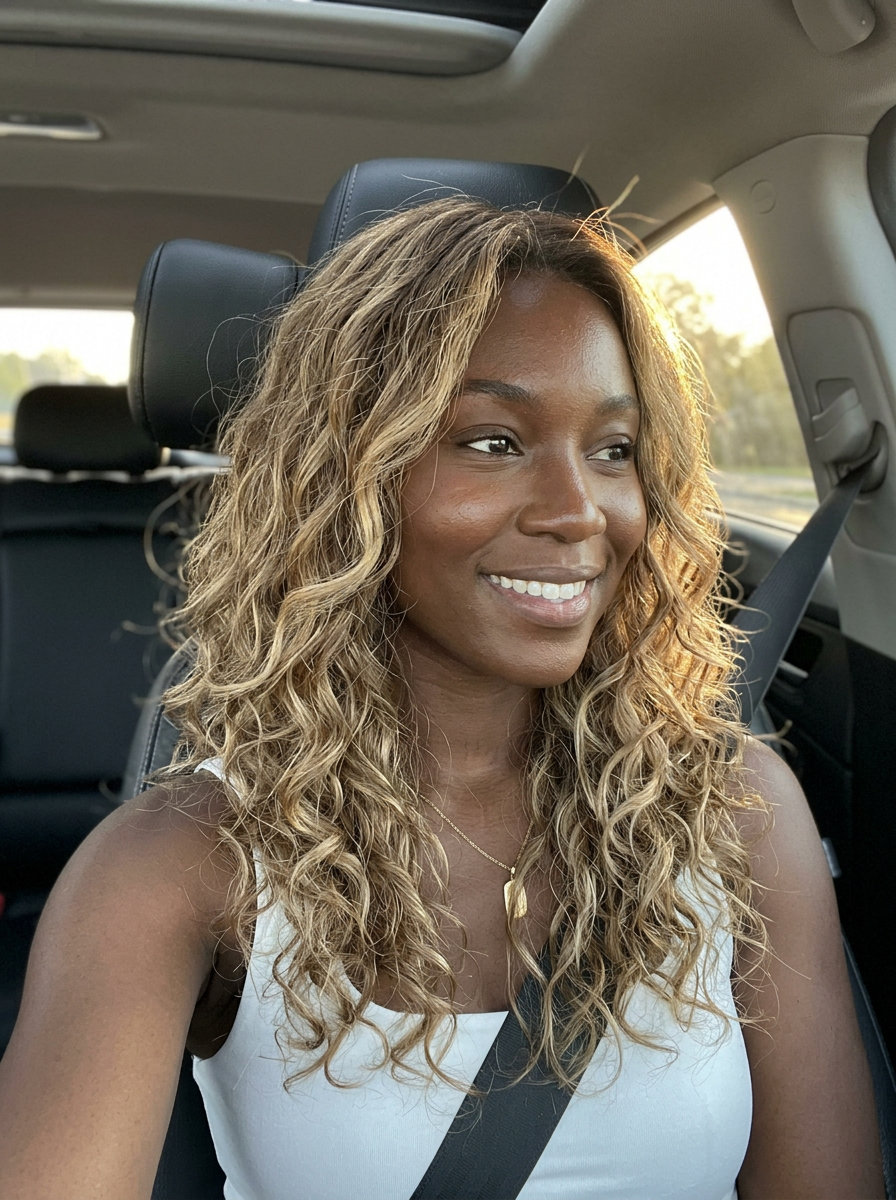
Curly hair and summer color are a fraught combination—most people assume you need to choose between bounce and dimension. But sandy blonde long curly hair tan skin actually leans into what curls do best: hold dimension naturally, let light play through multiple tones, and look better with movement than without. The real magic happens when you stop fighting the texture and let the color work with it instead of against it. Dry-cutting curls allows the stylist to see natural fall and shrinkage, ensuring layers enhance bounce and reduce bulk effectively.
What makes this work is the layers themselves. They’re cut blunt-ish through mid-length, then razored toward the ends to prevent that triangle-y bulk that kills curly hair in summer heat. You’re looking at asking your stylist for point-cutting—it’s worth finding a curl specialist—and resisting the urge to ask for “choppy layers” like it’s 2008. The blonde sits in a mid-tone range, neither too ashy nor too warm, which means it photographs golden in direct sun but doesn’t look brassy by 3 PM. Dry-cut layers maintained their shape and bounce for 8 weeks before needing a trim, and the color stayed dimensional without heavy root touch-ups. Specialized dry-cutting for curls can be $150+ per session—a significant investment—but the grow-out is forgiving because the cut works with your natural curl pattern, not against it. Curl power unleashed.
Golden Honey Pixie Cut Tan Skin
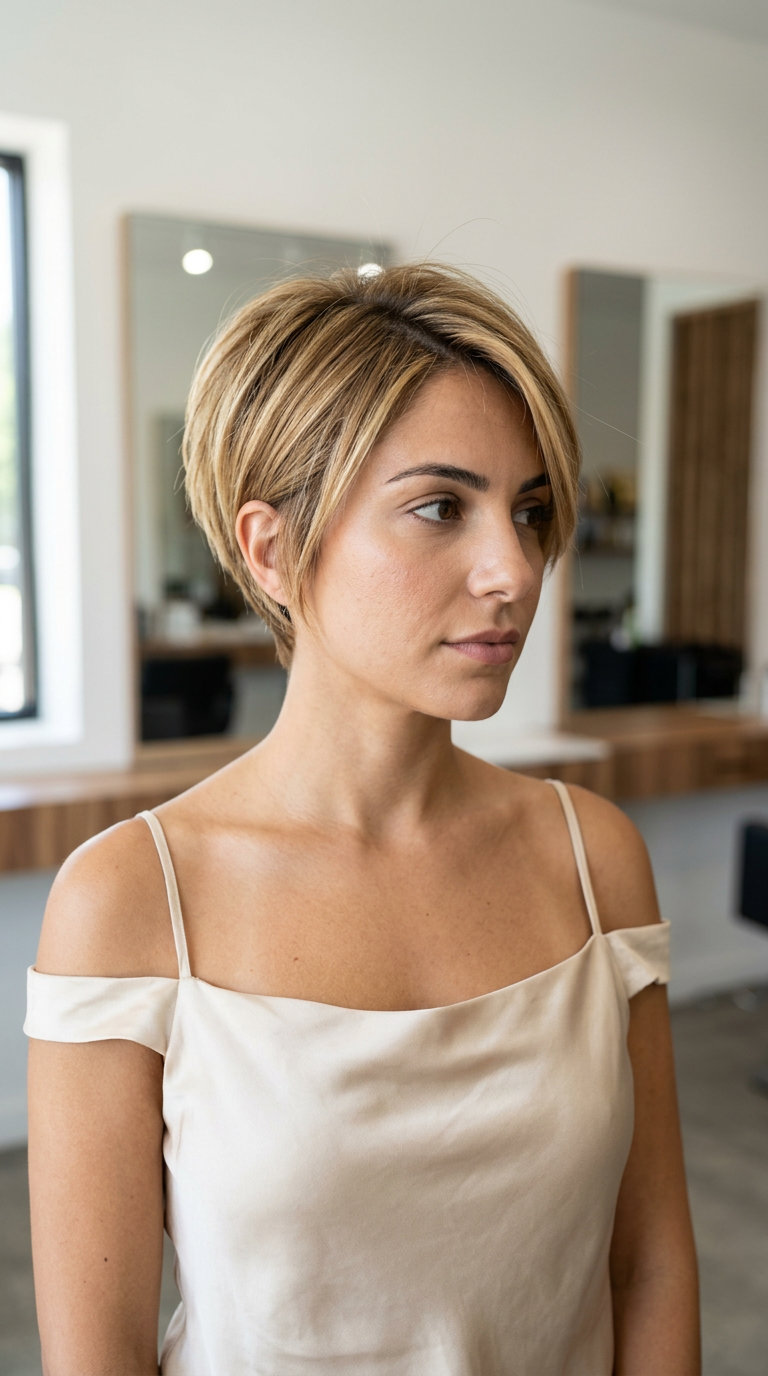
Pixies scare people. They shouldn’t. The fear is usually about commitment—you’re going short, you’re visible, there’s no hiding behind length. But a pixie that’s razored for movement rather than sculpted into submission is something else entirely. With golden honey pixie cut tan skin, you’re trading length for something brighter: a cut that changes shape depending on how you style it, which honestly feels less restrictive than a bob that only works one way. The honey-gold sits warm against tan skin without looking costume-y, and the razoring creates soft, piecey texture and movement, allowing the longer top to be styled multiple ways without looking stiff.
What really sells this is the styling flexibility. You can blow-dry it smooth and sleek, scrunch it for texture, or lean into a tousled, undone vibe without extra product—all my fine hair can handle. Razored texture held its piecey definition for 4 weeks with minimal product, not getting bushy, which is the real test for short hair in humidity. The sides are tapered close, but the top stays long enough to work texture paste through, giving you actual range. Skip if you have very thick or coily hair—this cut will fight your texture. The color needs a touch-up every 5-6 weeks to keep the honey warmth from fading into a dull butter-blonde, but that’s a quick appointment, not a full commitment. Finally—a pixie that moves.
Pecan Pie Bronde Lob
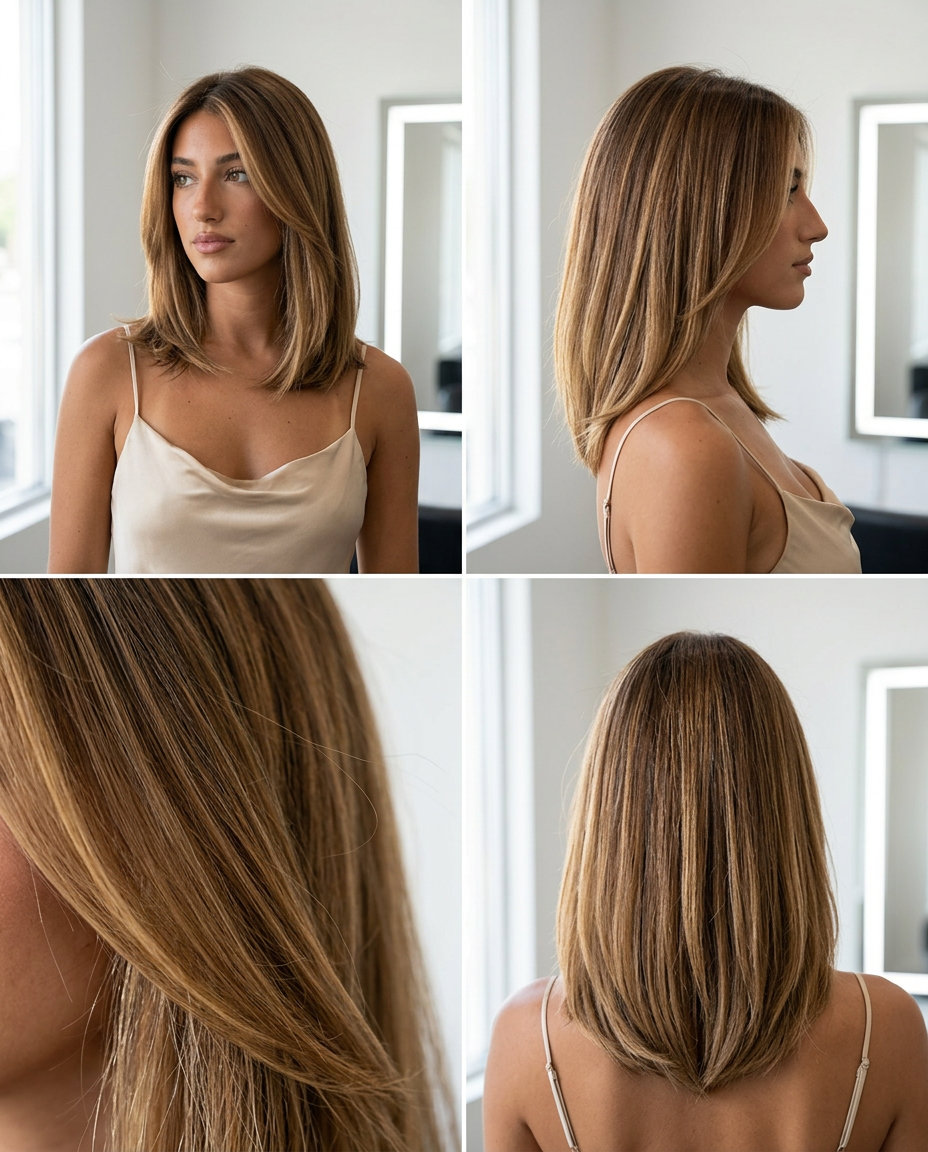
The lob sits in that impossible zone where it could be boring or brilliant depending entirely on the cut. A blunt one that just sits there? Forgettable. But a lob with invisible layers that move like they’re not even there? That’s different. Point-cut invisible layers air-dried without frizz on day-2 hair, maintaining movement, which is the real proof of concept. The color is what sells the whole thing though—pecan pie bronde is warmer than true bronde, with caramel and copper running through a medium-brown base, hitting perfectly against tan skin without reading as dated or costume.
The key technical detail: ask your stylist for invisible layers cut into the interior, not choppy face-framing pieces. This keeps the lob looking intentionally sleek from the front while building movement and reducing bulk on the inside. Subtle A-line shape needs regular trims every 6-8 weeks to maintain its precise silhouette, worth the consultation to establish a clear grow-out plan. The color can go 10-12 weeks between services if you use a color-depositing conditioner, which extends the warmth and keeps the bronde from turning ashy at the roots. You’re looking at roughly $180-220 for a quality cut and around $200-280 for the color service depending on salon location, but the maintenance timeline keeps costs reasonable across the year. This is one of those cuts where the stylist’s skill matters more than the length itself—there’s nowhere to hide a mediocre execution on a lob. The grow-out plan sold me.
Still Deciding? Here’s a Quick Comparison
| Hairstyle | Difficulty | Maintenance | Best Face Shapes | Pros | Cons | |
|---|---|---|---|---|---|---|
| Edgy & Textured | ||||||
| 2. Oak Brown Tousled Lob | Easy | Low — every 8-10 weeks | All face shapes | Low maintenanceEasy to style at homeSuits most face shapes | Not ideal for very curly hair |
| 3. Rose Gold Textured Crop | Moderate | High — every 4-6 weeks | round, oval | Works on multiple texturesLayers add movementTextured, lived-in finish | Frequent salon visits needed |
| 7. Ash Blonde Sculpted Pixie | Moderate | High — every 4-6 weeks | long, oval, heart | Suits most face shapesWorks on multiple texturesLayers add movement | Frequent salon visits needed |
| 9. The Arctic Undercut Pixie | Salon-only | High — every 4-6 weeks | oval, heart, square | Suits most face shapesWorks on multiple texturesTextured, lived-in finish | Requires professional styling |
| 13. Platinum Blonde Undercut Pixie | Salon-only | High — every 4-6 weeks | All face shapes | Suits most face shapesWorks on multiple textures5-minute styling | Requires professional styling |
| 17. The Sunbeam Pixie | Moderate | High — every 4-6 weeks | oval, heart, round | Suits most face shapesWorks on multiple texturesGrows out gracefully | Frequent salon visits needed |
| 22. Toasted Almond Shag | Moderate | Medium — every 8-10 weeks | all face shapes | Works on multiple texturesLayers add movementFlattering face-framing | Not ideal for fine hair |
| 24. The Desert Sunset Balayage | Moderate | High — every 10-12 weeks | square, round, oval | Suits most face shapesWorks on multiple texturesLayers add movement | Frequent salon visits needed |
| 28. The Golden Hour Pixie | Moderate | Medium — every 4-6 weeks | oval, heart, diamond | Suits most face shapesWorks on multiple texturesLayers add movement | Not ideal for very curly hair |
| Classic & Clean | ||||||
| 4. The Espresso Ribbons Luxe Flow | Moderate | Medium — every 8-10 weeks | All face shapes | Suits most face shapesWorks on multiple texturesLayers add movement | Not ideal for very curly hair |
| 5. The Cool Girl Shag | Moderate | High — every 8-10 weeks | all face shapes, heart, long | Suits most face shapesWorks on multiple texturesLayers add movement | Frequent salon visits needed |
| 10. The Riviera Espresso Bob | Moderate | Medium — every 6-8 weeks | square, diamond, oval | Suits most face shapesWorks on multiple textures | Not ideal for very curly hair |
| 11. The Desert Rose Lob | Moderate | High — every 8-10 weeks | round, square, oval | Suits most face shapesWorks on multiple texturesLayers add movement | Frequent salon visits needed |
| 12. The Crisp Sandstone Lob | Moderate | Medium — every 8 weeks | long, oval, square | Suits most face shapesWorks on multiple texturesLayers add movement | Not ideal for very curly hair |
| 14. Mocha Ribbons Sleek Bob | Moderate | Medium — every 6-8 weeks | All face shapes | Suits most face shapesWorks on multiple texturesLayers add movement | Not ideal for very curly hair |
| 15. The Glazed Cherry Cola Bob | Moderate | Medium — every 4-5 weeks | square, diamond, oval | Suits most face shapesWorks on multiple texturesLayers add movement | Not ideal for very curly hair |
| 16. The Gilded Mahogany Cascade | Moderate | Medium — every 6-8 weeks | oval, round, square | Suits most face shapesWorks on multiple texturesLayers add movement | Not ideal for very curly hair |
| 19. The Midnight Cherry Bob | Moderate | Medium — every 4-6 weeks | oval, square, long | Suits most face shapesWorks on multiple texturesLayers add movement | Not ideal for very curly hair |
| 20. The Sunkissed Amber Melt | Moderate | Low — every 12-16 weeks | oval, heart, diamond | Low maintenanceSuits most face shapesWorks on multiple textures | Not ideal for very curly hair |
| 21. The Riviera Mahogany Swirls | Moderate | High — every 4-6 weeks | All face shapes | Suits most face shapesWorks on multiple texturesLayers add movement | Frequent salon visits needed |
| 25. Mahogany Silk Press | Moderate | Medium — every 4-6 weeks | All face shapes | Suits most face shapesWorks on multiple texturesLayers add movement | Not ideal for very curly hair |
| 29. The Golden Hour Pecan Lob | Easy | Medium — every 10-12 weeks | oval, heart, long | Easy to style at homeSuits most face shapesWorks on multiple textures | Not ideal for very curly hair |
| Soft & Romantic | ||||||
| 1. Copper Kissed Curly Cut | Moderate | High — every 4-6 weeks | round, square, oval | Suits most face shapesWorks on multiple texturesLayers add movement | Frequent salon visits needed |
| 8. The Sun-Kissed Caramel Ripple | Moderate | Low — every 12-16 weeks | All face shapes | Low maintenanceSuits most face shapesWorks on multiple textures | Not ideal for very curly hair |
| 18. The Sunkissed Siren | Salon-only | Medium — every 8-12 weeks | oval, long, heart | Suits most face shapesWorks on multiple texturesLayers add movement | Requires professional styling |
| 23. Caramel Balayage Long Waves | Moderate | Low — every 8-10 weeks | All face shapes | Low maintenanceSuits most face shapesWorks on multiple textures | Not ideal for very curly hair |
| 27. Sandy Blonde Curly Long | Moderate | Medium — every 10-12 weeks | long, oval, diamond | Suits most face shapesWorks on multiple texturesLayers add movement | Not ideal for fine hair |
Frequently Asked Questions
What’s the easiest summer hair color for tan skin to style without heat tools?
The Oak Brown Tousled Lob is built for air-drying—just apply a texturizing spray or sea salt spray to damp hair and let it dry naturally. The Copper Kissed Curly Cut also works beautifully with air-drying if you scrunch product through and let your natural curl pattern do the work. Both styles embrace texture rather than fight it, which means you’re not dependent on a blow dryer or flat iron.
How do I stop my summer color from fading or turning brassy?
Use a color-depositing conditioner matched to your specific shade: gold-toned for warm blondes like the Rose Gold Textured Crop , red-toned for coppers like the Copper Kissed Curly Cut , and purple or blue-toned for cool blondes like The Cool Girl Shag . Apply a scalp and hair mist with SPF 30+ before sun exposure to prevent color fade at the root. Pair this with a sulfate-free, UV-filtering shampoo and you’ll extend your color between salon visits by weeks.
Which of these colors works best with golden or olive undertones?
The Copper Kissed Curly Cut with golden-copper highlights is specifically designed to make tan skin luminous, especially if you have golden undertones. The Oak Brown Tousled Lob features warm chestnut and honey notes that complement both golden and olive tans without looking muddy. Even the Espresso Ribbons Luxe Flow uses warm mocha ribbons throughout to prevent the deep espresso base from appearing flat or ashy against tan skin.
How often do these cuts need trimming to stay sharp?
The Rose Gold Textured Crop requires monthly trims to maintain its tapered shape and piecey texture—skipping even one appointment will soften the definition. The Cool Girl Shag holds its shape for 6-8 weeks thanks to its choppy, layered structure, so it’s more forgiving if life gets busy. The Oak Brown Tousled Lob falls somewhere in between at 8 weeks, though point-cut ends may need a refresh sooner if they start to fray.
Final Thoughts
The thing about summer hair color for tan skin 2026 is that it’s not actually about chasing trends—it’s about understanding what happens when warm undertones meet warm pigment. The Copper Kissed Curly Cut glows. The Oak Brown Tousled Lob doesn’t fight your complexion. The Cool Girl Shag with ash blonde requires work, but that work is the point.
You now have five distinct approaches, each with its own maintenance timeline and styling reality. Pick the one that matches your actual life, not the version of yourself you’re pretending to be in July. Your stylist will thank you. Your hair will thank you more.